

15 Scullery Kitchen Ideas for a Hidden Prep Space
The scullery is having a revival that reflects something genuine about how people want to live with their kitchens in the contemporary home.
For most of the twentieth century, the scullery — the secondary working kitchen that sits behind or beside the main kitchen and absorbs the less glamorous functions of food preparation, washing up, storage, and the general domestic infrastructure of a working household — was considered a vestige of an earlier era of domestic service, an anachronism in the modern open-plan home where the kitchen was the social center and everything was on display.

The pendulum has now swung decisively in the other direction. The open-plan kitchen that puts every aspect of the cooking routine on public display — the prep mess, the washing up, the overflowing pantry shelves, the evidence of a household in active domestic operation — turns out to be considerably less relaxing to live with than the kitchen that offers the option of concealment.
The scullery resolves the tension between the desire for a beautiful, show-ready main kitchen and the reality of a busy household’s actual domestic needs by providing a dedicated space where the messy, functional, and organizational aspects of kitchen life can happen out of sight of the main living areas. Here are fifteen ideas for designing one that earns its space completely.
1. Position the Scullery for Maximum Workflow Efficiency
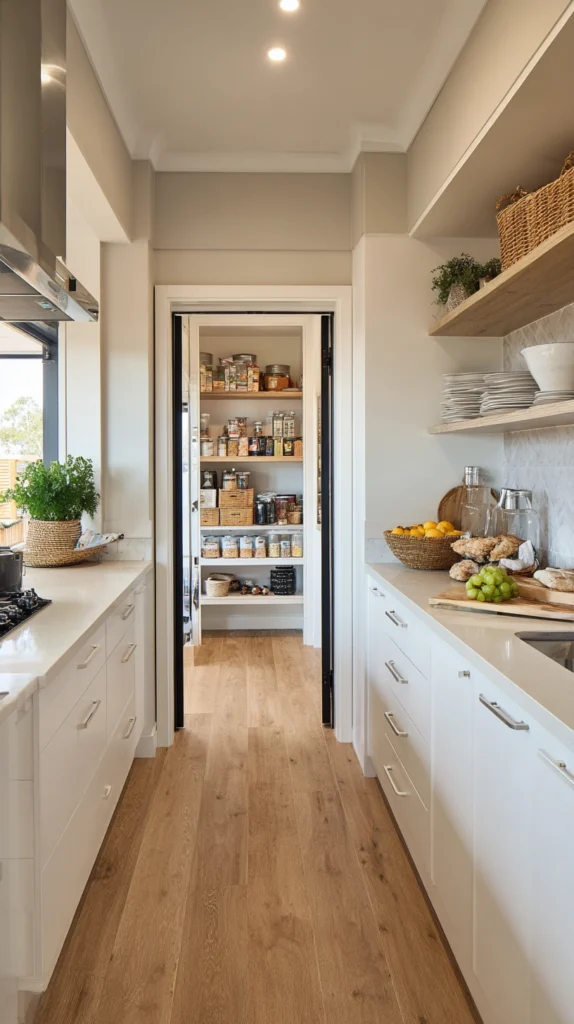
The scullery’s relationship to the main kitchen is the most important design decision in the entire project, because a scullery that is poorly positioned relative to the cooking workflow creates a space that is underused despite its potential and that adds steps and friction to the daily routine rather than removing them.
The ideal scullery is directly accessible from the main kitchen — through a doorway in the kitchen’s back wall, off a short connecting corridor, or simply as an L-shaped extension of the main kitchen layout — so that the movement between the two spaces is a step or two rather than a journey.
The scullery should also have direct or close access to the back door or service entrance, allowing grocery delivery to be unloaded directly into the storage space without passing through the main kitchen.
These two access requirements — direct connection to the main kitchen and convenient access from outside — should be the primary determinants of the scullery’s position within the house’s floor plan, and they should be established before any design work on the scullery’s interior begins.
2. Install a Second Sink as the Scullery’s Heart
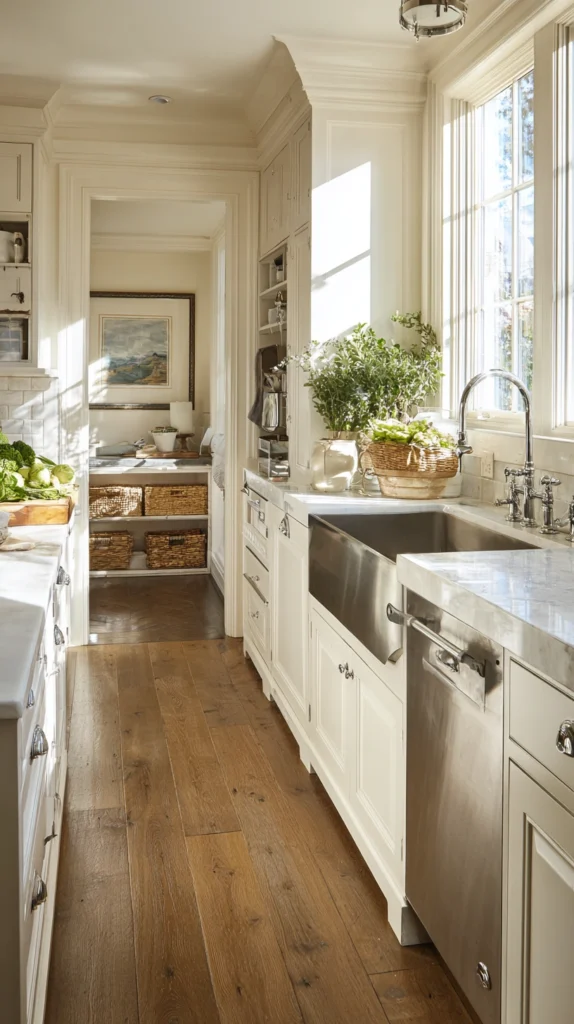
The secondary sink is the most important functional element in any scullery, and its installation immediately elevates the space from a simple storage room to a genuine working kitchen that takes real functional pressure off the main kitchen sink.
The scullery sink serves multiple functions that the main kitchen sink is freed from once the scullery is operational: vegetable washing, flower arranging, the filling and emptying of large pots and containers, the rinsing of recycling before it goes to the bin, the soaking of heavily soiled dishes before they go to the dishwasher, and the handwashing station for people who enter from the garden.
A large, deep single bowl sink — a butler’s sink in ceramic or a deep stainless steel catering sink — suits the scullery’s working character better than the smaller, more domestic sinks appropriate to the main kitchen, and its generous depth allows the large-scale washing and soaking tasks that the scullery is specifically designed to accommodate.
Install a mixer tap with a pull-out spray head for maximum flexibility in a working sink that handles a wide range of tasks.
3. Maximize Storage with Floor-to-Ceiling Shelving
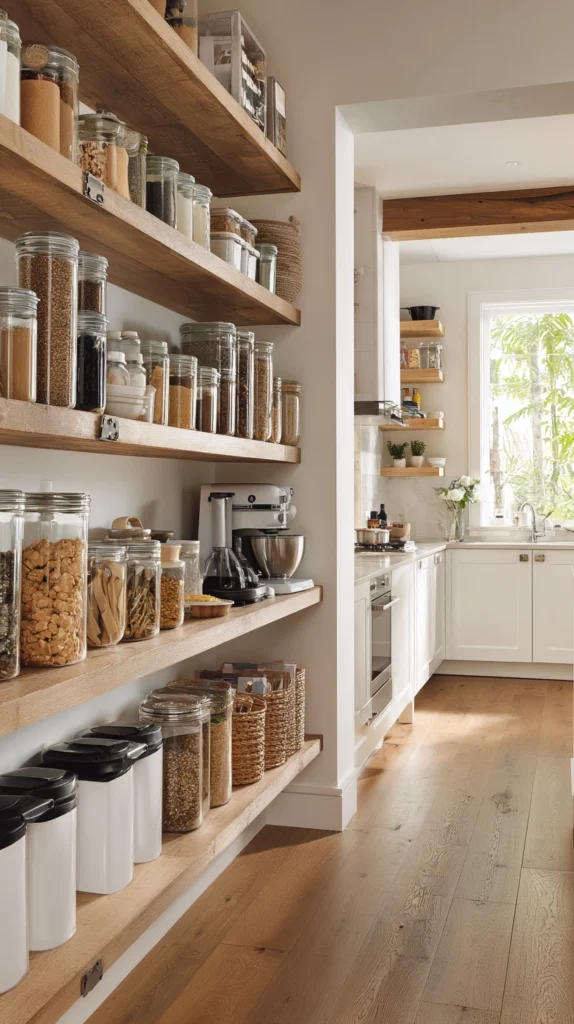
The scullery’s primary organizational function — the accommodation of the storage volume that the main kitchen cannot contain without visual clutter — demands a storage system of considerable capacity, and the most efficient way to deliver that capacity within a limited floor area is floor-to-ceiling open shelving that uses the full height of the space without the visual interruption of wall and base cabinets separated by a countertop zone.
Open shelving in a scullery is more practical than in a main kitchen — the scullery’s concealed location means that the visual tidiness standards required of open shelving in a public room are relaxed, allowing the shelves to hold the genuine working inventory of a household without the decorative editing that main kitchen shelving requires.
Install shelves at spacings calibrated to the specific items they will hold — generous shelf heights for large appliances and storage containers, tighter spacings for spices, jars, and smaller items — and use a consistent container and basket system to maintain organizational coherence across the shelving’s full extent.
4. Include a Dishwasher for Complete Washing Up Independence
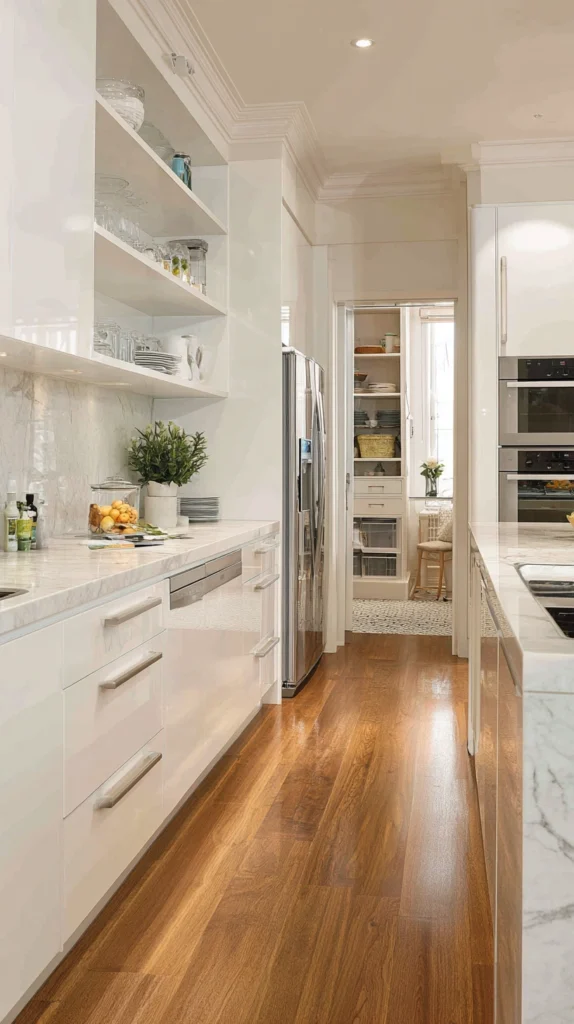
The scullery with a dishwasher achieves a complete functional independence from the main kitchen that transforms the hosting experience more completely than any other single addition. When the dishwasher is in the scullery, the main kitchen’s surfaces can be cleared after a dinner party in thirty seconds — everything moved through the connecting doorway — while the main kitchen itself remains presentable for the guests who inevitably drift into it during the clearing process.
The washing up happens in the scullery, out of sight, at the leisure of the host rather than in the compromised visibility of the main kitchen’s open environment.
A drawer dishwasher — a compact, half-depth dishwasher that opens as a drawer rather than a door — is particularly useful in sculleries where floor space is limited and the standard dishwasher door’s swing-out action would compromise the workflow of a narrow space.
Two drawer dishwashers stacked vertically allow one to run while the other is loaded, creating the continuous washing up capacity that high-volume entertaining demands.
5. Design a Dedicated Appliance Garage
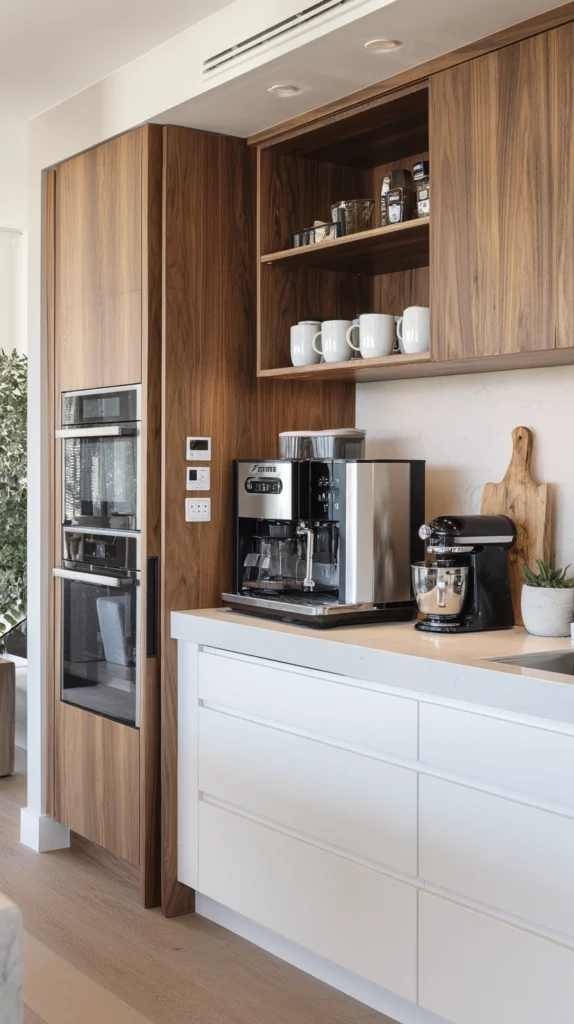
The small kitchen appliances that are used daily or weekly — the coffee machine, the toaster, the stand mixer, the food processor, the kettle — create significant visual clutter in the main kitchen if stored on the counter and significant access inconvenience if stored in a cabinet.
The scullery solves this problem with an appliance garage — a dedicated section of counter space with power outlets at counter height, appliance-specific storage above and below the counter, and potentially a tambour door or a simple cabinet door that closes to conceal the appliances when not in use.
The appliances remain accessible and operational in the scullery without their visual presence compromising the main kitchen’s aesthetics, and the scullery becomes the operational hub for the morning routine — coffee made, toast prepared, breakfast assembled — while the main kitchen remains clear for the day’s subsequent use.
6. Create a Wine and Beverage Station
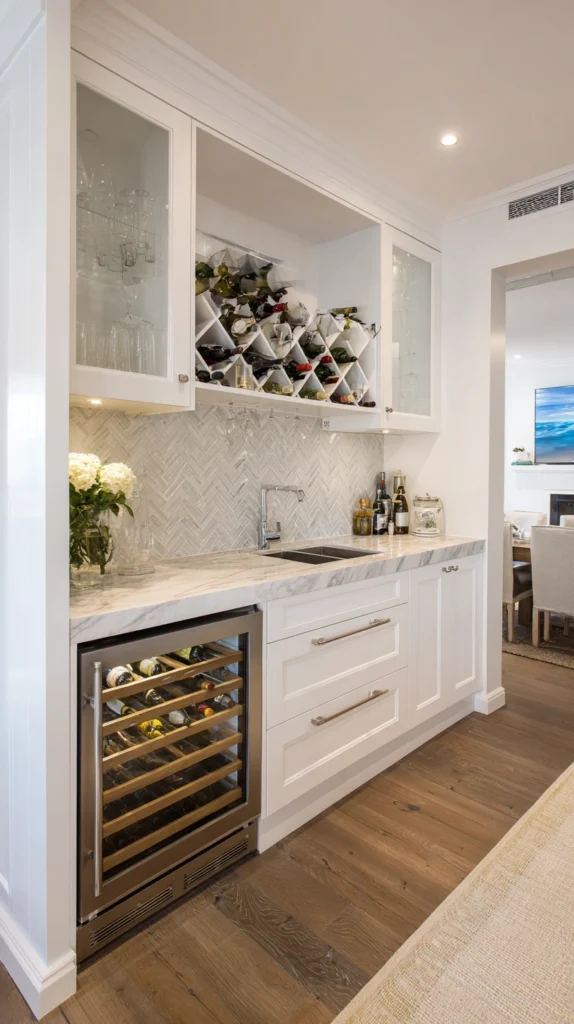
The scullery is the natural home for the household’s wine storage, beverage management, and drinks preparation infrastructure — the wine fridge, the built-in wine rack, the glasses storage, the cocktail equipment, the ice maker — that creates visual complexity and organizational challenge in the main kitchen but sits perfectly in the concealed, functional environment of the scullery.
A well-designed scullery beverage station makes every hosting event more efficient: glasses stored at easily accessible height, wine at the correct serving temperature, ice available without a trip to the freezer, and all the equipment for drink preparation organized in a single, dedicated zone that the host visits rather than the guests.
The beverage station can be designed with a slightly more decorative intention than the scullery’s purely functional areas — a beautiful wine rack, quality glass storage, attractive bottle display — because it is the section of the scullery most likely to be briefly visible to guests during the serving process.
7. Install a Utility Sink for Household Tasks Beyond Cooking
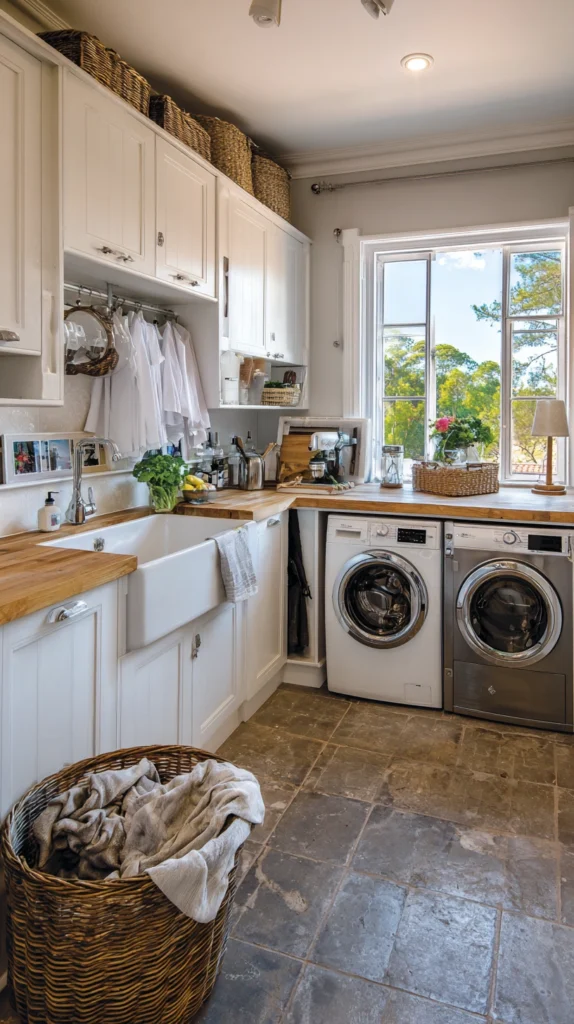
The scullery that serves not only the kitchen’s needs but the household’s broader utility requirements — the washing of muddy boots, the soaking of stained laundry, the filling of cleaning buckets, the hosing down of garden equipment — benefits from a utility sink of appropriate scale and robustness alongside or instead of the food preparation sink.
A freestanding or undermounted utility sink in a deep Belfast or farm sink format, or a two-basin arrangement with one side dedicated to food preparation and the other to household tasks, creates a scullery of complete domestic utility that takes every wet task in the household out of the bathroom and the main kitchen and centralizes it in a single functional space.
The utility sink area should have appropriate drainage at floor level for tasks that involve significant water spillage, and the floor surface should be slip-resistant and water-tolerant — ceramic tile, sealed concrete, or a commercial-grade vinyl that can be mopped without concern.
8. Design a Baking Zone Within the Scullery
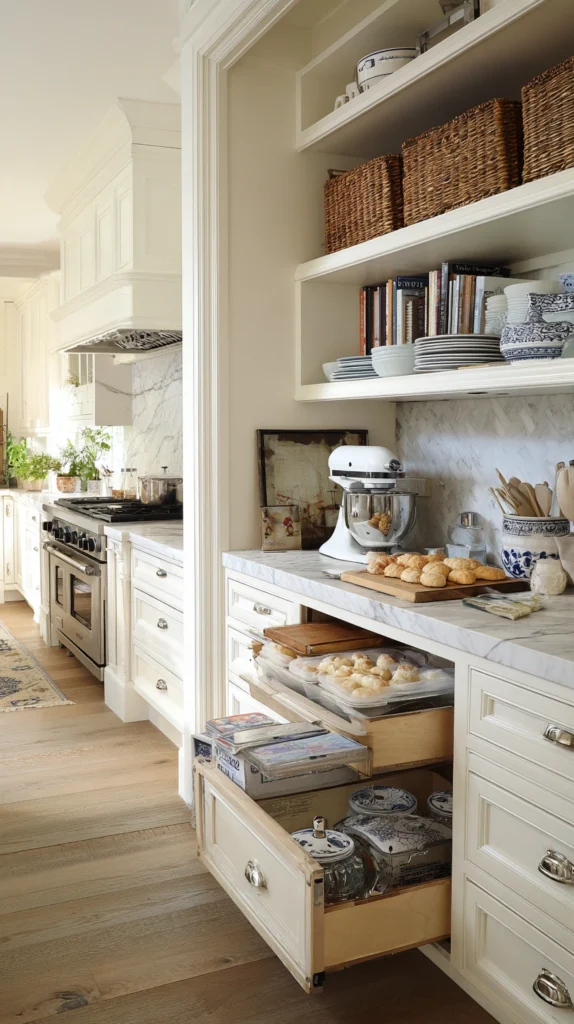
For households where baking is a regular activity, the scullery offers the opportunity to create a dedicated baking zone that liberates the main kitchen’s primary counter from the flour, mess, and equipment displacement that baking inevitably creates.
A marble or engineered stone counter section at a slightly lower height than the standard kitchen counter — sixty to eighty-five centimeters for most people, slightly lower than the standard ninety centimeters — creates the pastry and bread preparation surface that bakers know makes a practical difference to their comfort and output.
Below the baking counter, deep drawers for flour, sugar, and baking staples in pull-out containers, a drawer for baking tools, and a shelf for the stand mixer that can be slid forward for use and returned to its position without lifting.
Above the counter, a shelf for baking books, measuring equipment, and the small tools of the baking routine, organized at the working height where they are immediately accessible during a baking session.
9. Create a Flower Arranging Station
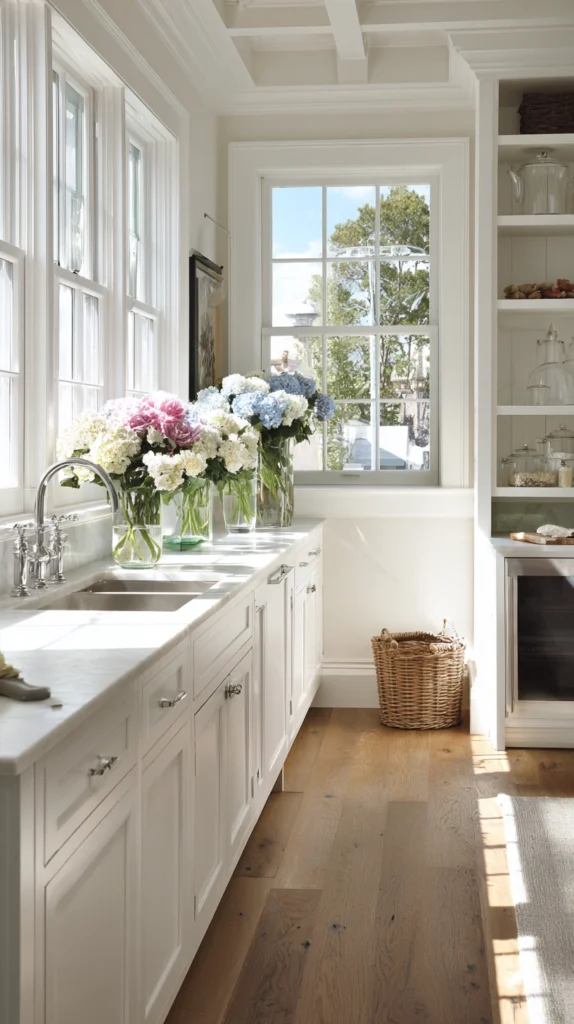
The scullery’s large sink, its generous counter space, and its proximity to the garden entrance make it the ideal location for a dedicated flower arranging station — a function that is frequently performed at the main kitchen sink with the considerable inconvenience of cut stems and leaf debris in the food preparation area.
A designated section of the scullery counter — with a deep sink at one end, a counter surface of sufficient length for laying out stems and building arrangements, and storage for vases, scissors, floral tape, and other arranging tools nearby — creates a flower station of genuine convenience that makes the regular arrangement of fresh flowers less effortful and more pleasurable.
A wall-mounted magnetic strip for scissors and cutting tools, a shelf for vases organized by size, and a compost collection point for cut material waste complete the station’s practical infrastructure.
10. Install Under-Counter Refrigeration for Overflow Storage
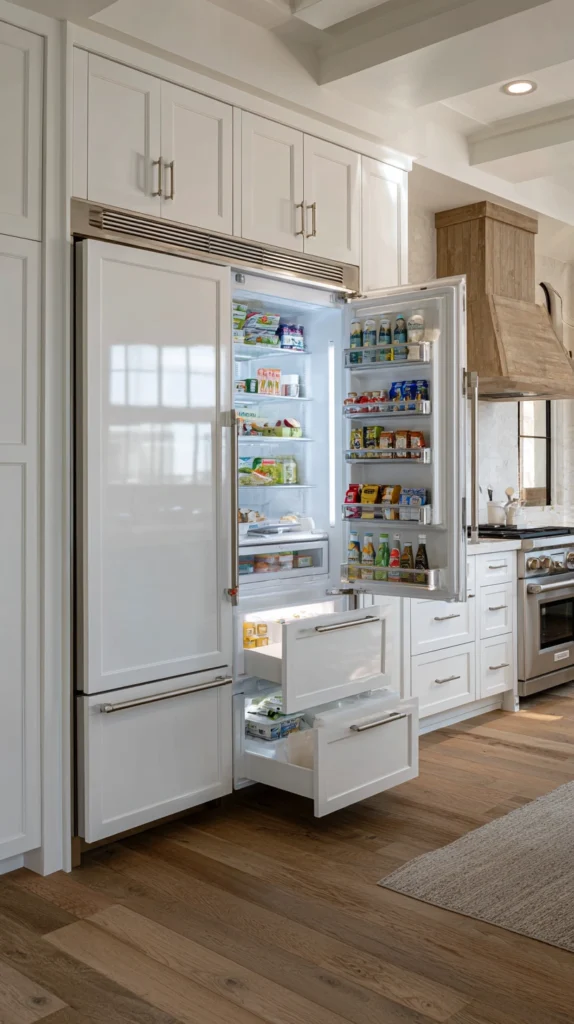
The main kitchen refrigerator is almost always the household’s most constrained storage space — never large enough during entertaining seasons, always full at the moments when additional capacity is most needed.
Under-counter refrigerator drawers in the scullery — compact, efficient, and organized specifically for the overflow storage that entertaining creates — provide the additional cold storage capacity that resolves this constraint permanently.
Under-counter refrigerator drawers suit the scullery environment better than a full-height refrigerator, which would create a domestic appliance presence inconsistent with the scullery’s working character, and they allow the cold storage function to be integrated into the counter run without interrupting the workflow of the space.
Dedicate specific drawers to specific categories — one for drinks and beverages, one for prepared food and ingredients, one for the overflow from the main kitchen’s general storage — and the scullery’s cold storage becomes as organized and as accessible as any other element of its carefully designed system.
11. Design the Scullery Door as a Design Statement
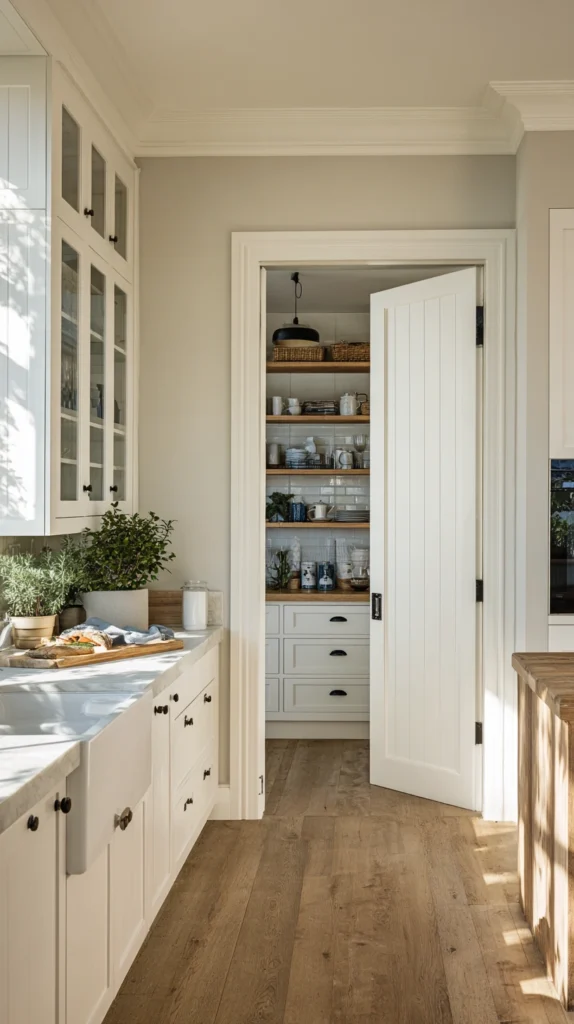
The scullery door — the primary point of transition between the main kitchen and the hidden prep space — is the element that most determines the scullery’s impact on the main kitchen’s aesthetic, because it is the only part of the scullery that is visible from the main living areas.
A poorly chosen or poorly detailed scullery door undermines the entire aesthetic of the main kitchen by introducing a visual element that does not belong to the main kitchen’s design language.
A well-chosen door — one that is integrated into the main kitchen’s cabinetry as a panel door that appears to be a cabinet until it is opened, or a beautifully detailed timber door that creates its own architectural moment — enhances the main kitchen by adding the suggestion of depth and spatial complexity that a single-room kitchen cannot achieve.
The hidden door — a scullery access point concealed within the cabinetry run and indistinguishable from the surrounding cabinets — is the most elegant solution available, maintaining the main kitchen’s visual coherence completely while providing seamless access to the working space beyond.
12. Incorporate a Laundry Function for Household Efficiency
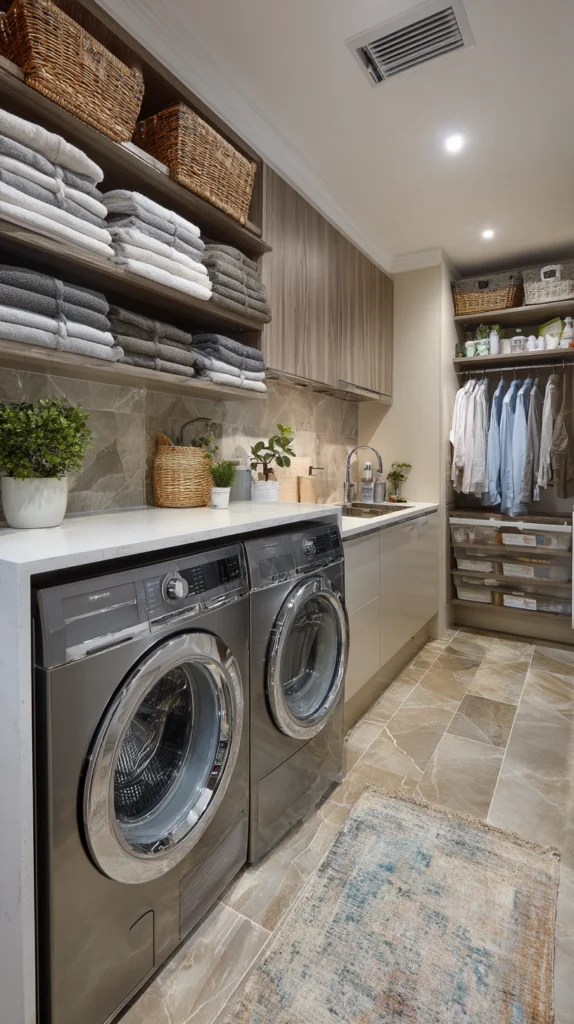
The scullery that also accommodates the household’s laundry function — a washing machine, a tumble dryer or drying rack, and laundry storage for detergents and household cleaning supplies — creates a domestic service hub of remarkable efficiency that centralizes all the wet, noisy, and visually untidy household functions in a single concealed space.
The combination of kitchen support and laundry function in a single room is the historical model of the Victorian scullery, and its contemporary revival reflects the recognition that the combination is practically excellent — the large sink serves both food preparation and laundry soaking, the shelving serves both kitchen storage and laundry organization, and the single concealed room handles the full range of domestic tasks that modern households need space for but prefer not to see.
Separate the laundry zone from the food preparation zone clearly — either through physical separation within the space or through a rigorously maintained organizational distinction — to avoid the hygienic and practical complications of mixing laundry and food preparation in an unorganized way.
13. Use Durable, Easy-Clean Materials Throughout
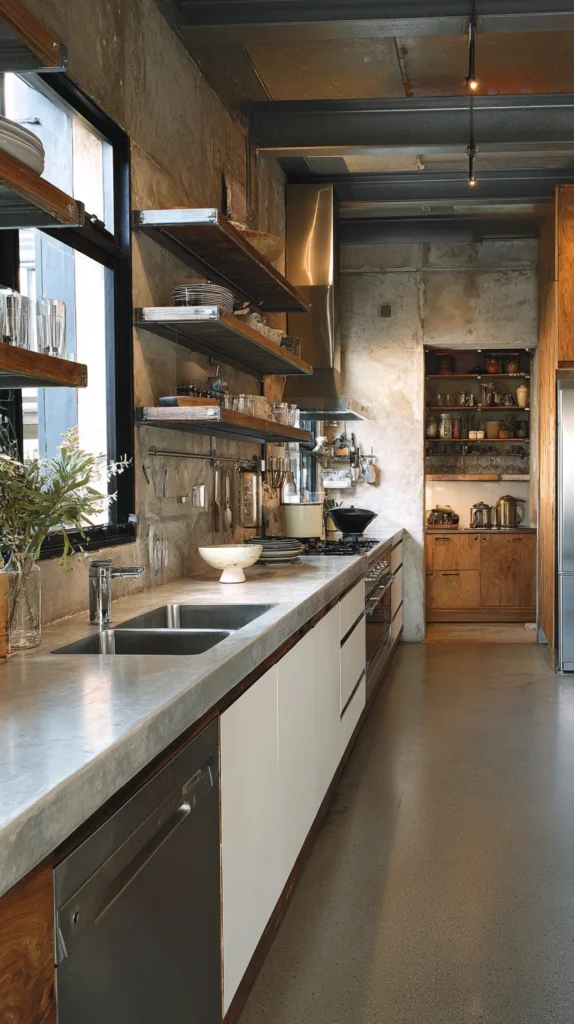
The scullery’s design should prioritize material durability and maintenance ease over the aesthetic considerations that dominate main kitchen design, because the scullery receives hard use — the messiest, most vigorous, most water-intensive tasks of the household’s domestic routine — and its surfaces must perform reliably under those conditions without deteriorating in appearance or requiring maintenance that interrupts the workflow.
Ceramic or porcelain tile is the most practical wall surface for a scullery — completely waterproof, easy to wipe clean, resistant to impact and heat, and available in the utilitarian white or neutral tones that suit the scullery’s working character. Sealed concrete, stone tile, or commercial-grade vinyl flooring provides the floor durability that the scullery’s wet, heavy-use environment demands.
Open shelving in painted MDF or powder-coated steel is easier to clean and more resistant to the steam and moisture of the scullery environment than timber shelving, which is susceptible to swelling and warping in consistently humid conditions.
14. Light the Scullery as a Working Space
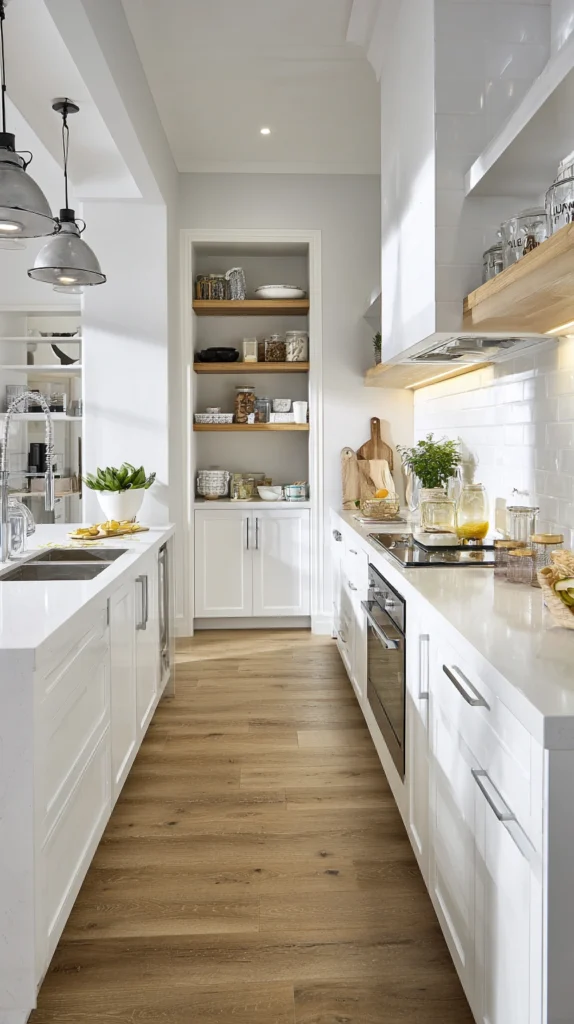
The scullery’s lighting requirement is primarily functional — it is a working space that needs clear, even illumination for the tasks performed within it — but its functional lighting should also be of sufficient quality and warmth to make the space genuinely pleasant to work in.
Under-shelf LED strip lighting at each shelf level in the shelving tower creates even illumination throughout the shelving zone without casting the shadows that ceiling-only lighting creates between shelf levels.
A pendant light above the main working counter provides the task illumination that detailed preparation work requires, and its style should relate to the scullery’s overall aesthetic — a simple industrial pendant in a functional scullery, a warmer artisanal form in a more considered space.
Ensure that all lighting in the scullery is rated for humid environments — the steam, splashing, and moisture of an active food preparation and washing space requires luminaires with appropriate IP ratings for safety and longevity.
15. Design the Scullery to Disappear When Not in Use
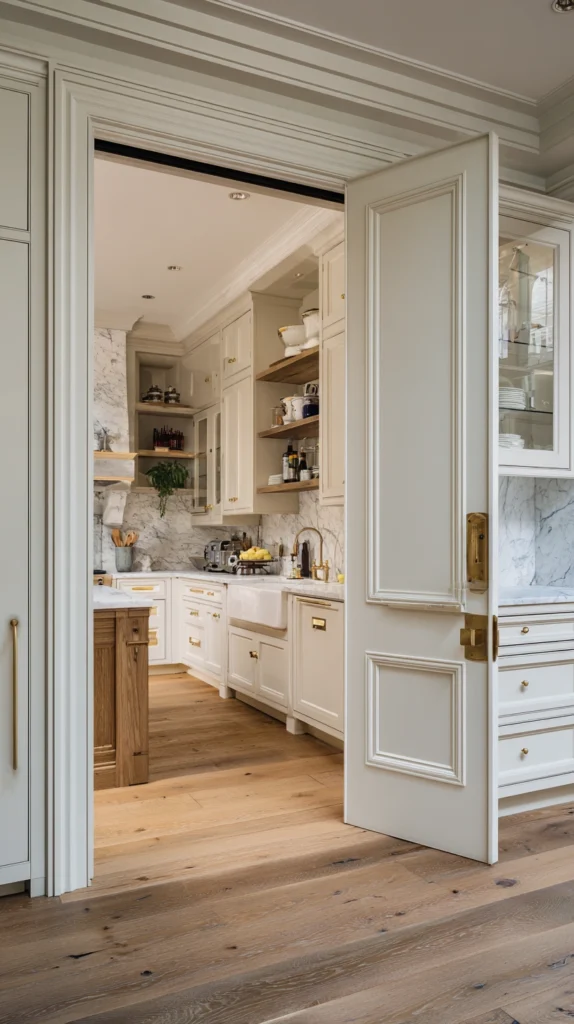
The final and most important scullery design principle is the one that makes the entire investment in the space worthwhile: the scullery should be designed to disappear completely when it is not in use, maintaining the clean, show-ready condition of the main kitchen at all times and fulfilling the fundamental promise of the concealed prep space — that the mess of domestic life can be real and fully present without being publicly visible.
This disappearing quality is achieved through a combination of the well-chosen door treatment, the organizational discipline of a space that has a defined place for every item it contains, and the daily reset habit of returning the scullery to its baseline condition at the end of each working session. A scullery that is organized and closed is a main kitchen that is always presentable. A scullery that is disorganized and open is simply a second messy kitchen visible to every guest.
The design of the scullery determines which of these outcomes is the default, and the design principles in this guide — the right position, the right storage, the right materials, and the right door — create a space that defaults to the first and delivers on the fundamental promise of the hidden prep space every single day.