
15 Small Space Living Room Ideas to Maximize Comfort
A small living room doesn’t have to feel cramped or compromised. With thoughtful design choices, even the most compact space can feel comfortable, inviting, and surprisingly functional.
The key lies in balancing layout, furniture scale, and visual flow while prioritizing comfort over clutter. When every piece has a purpose, small spaces begin to feel intentional rather than limiting.
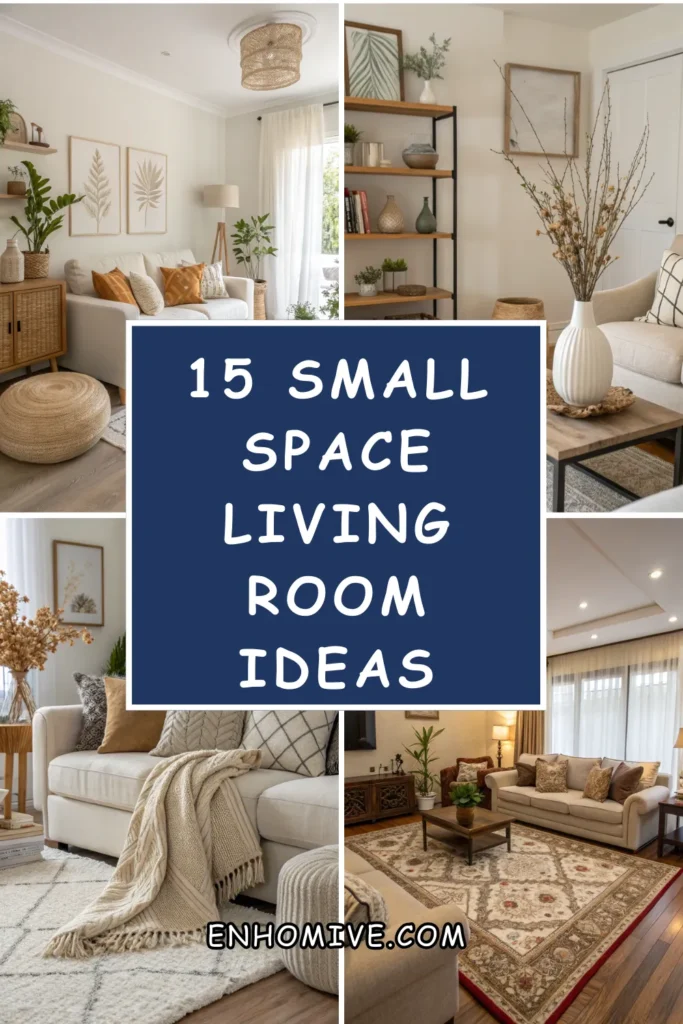
Whether you’re working with an apartment living room, a narrow layout, or a multipurpose space, smart design can transform how the room feels and functions. Below are 15 small space living room ideas that focus on maximizing comfort while maintaining a stylish, livable aesthetic.
1. Choose Furniture with the Right Scale
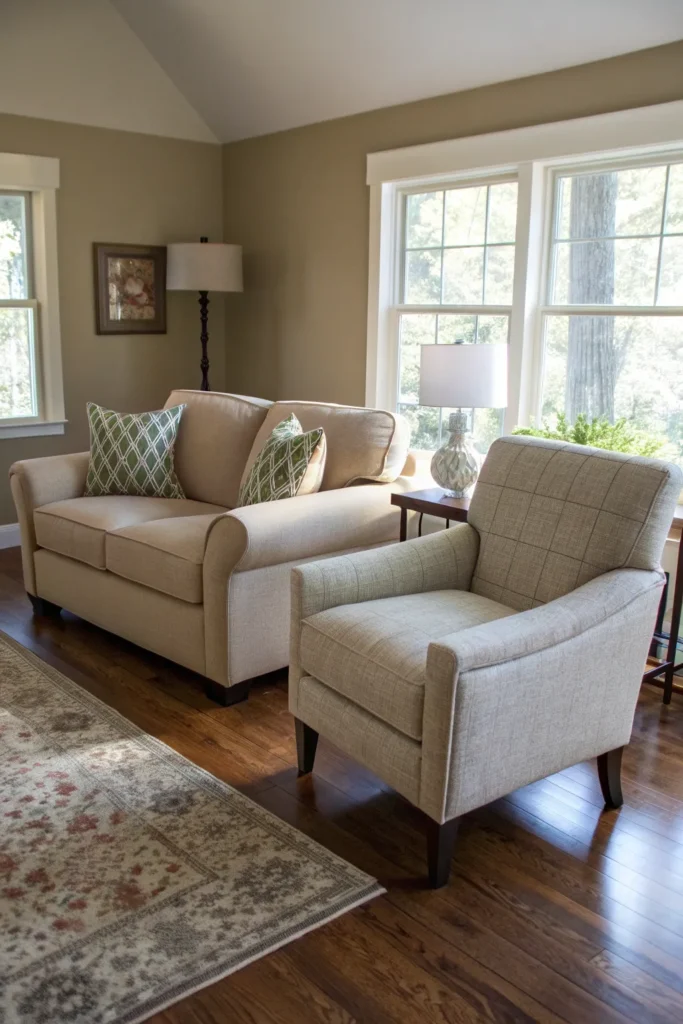
In small living rooms, furniture size matters more than quantity. Oversized sofas or bulky chairs can overwhelm the room and restrict movement. Instead, opt for furniture that fits the scale of the space.
Look for sofas with slim arms, low backs, and raised legs. These features visually lighten the room and make it feel more open. A loveseat or apartment-size sofa often provides enough seating without dominating the layout.
2. Use a Light, Neutral Color Palette
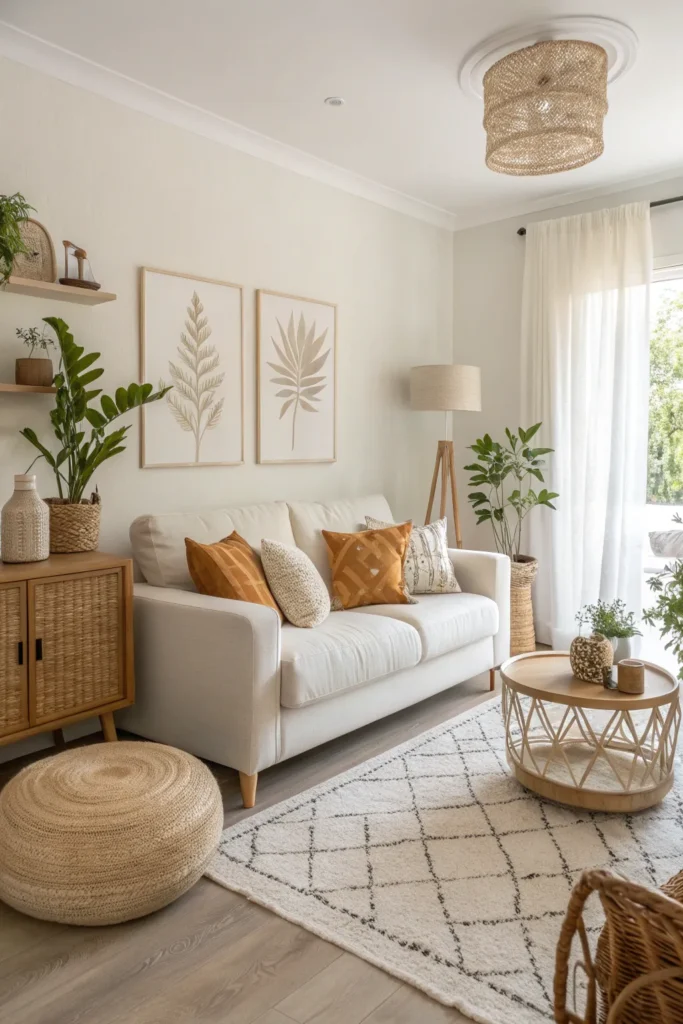
Light colors reflect natural light and help small rooms feel larger and airier. Soft whites, warm beiges, pale grays, and muted pastels create a calm foundation that enhances comfort.
This doesn’t mean the room has to feel bland. Layer subtle tonal variations through textiles, rugs, and accessories to add warmth and depth without visual clutter.
3. Maximize Natural Light
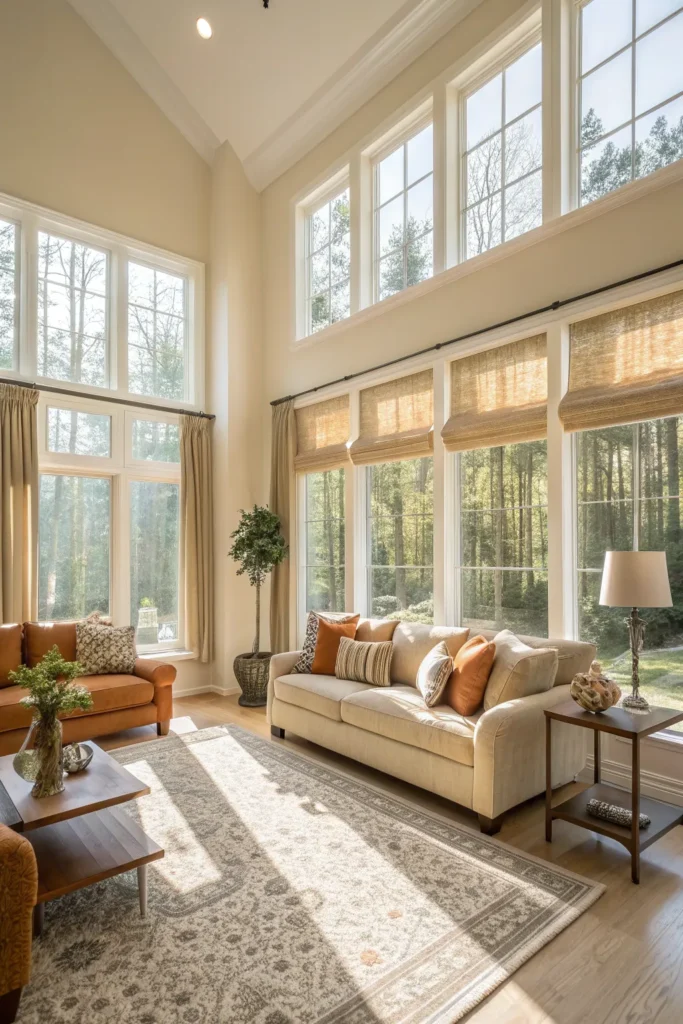
Natural light is one of the most effective ways to improve a small living room. Keep window treatments minimal to allow light to flow freely into the space.
Sheer curtains or light-filtering shades provide privacy without blocking brightness. If privacy isn’t a concern, consider leaving windows uncovered to visually connect the room to the outdoors.
4. Use Mirrors to Create Visual Space
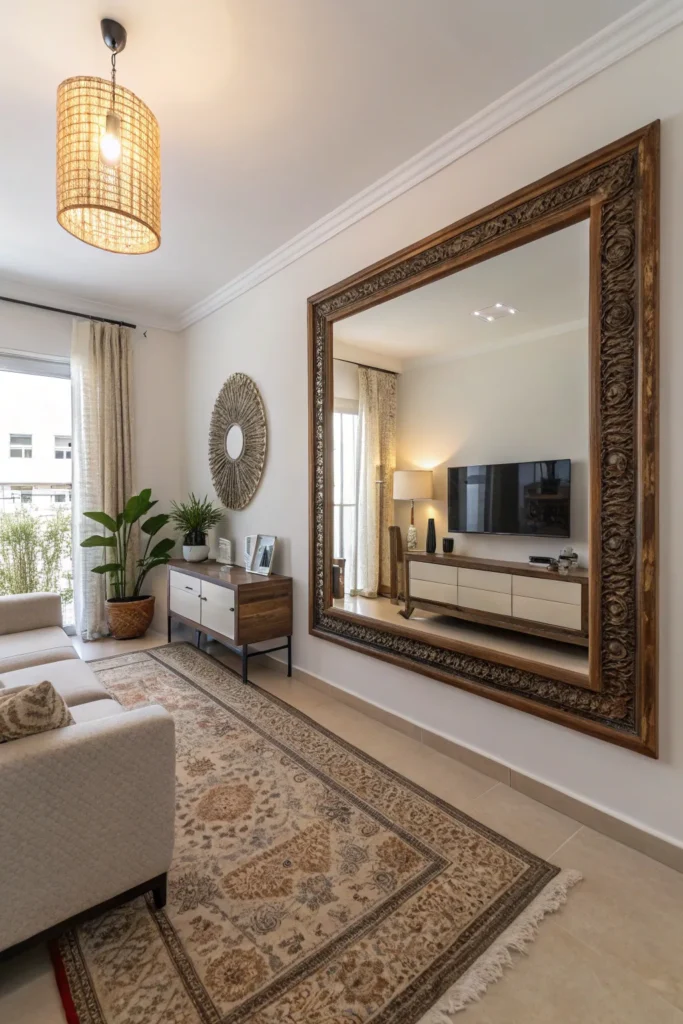
Mirrors are a classic small-space solution for a reason. When placed strategically, they reflect light and create the illusion of depth.
Position a mirror opposite a window to amplify natural light or place one behind a sofa to visually expand the room. Choose simple frames that blend seamlessly with the décor for a clean, comfortable look.
5. Opt for Multi-Functional Furniture
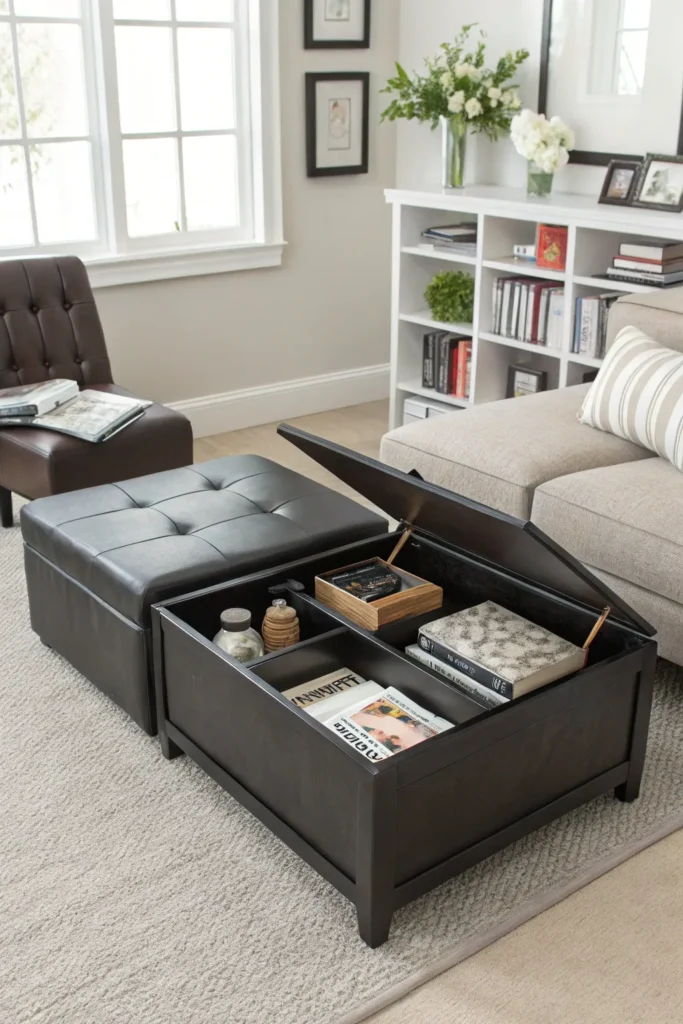
Furniture that serves more than one purpose is essential in compact living rooms. Ottomans with hidden storage, coffee tables with shelves, or sofas that convert into beds maximize functionality without adding clutter.
Multi-functional pieces reduce the need for extra furniture, keeping the room open and comfortable while meeting everyday needs.
6. Define the Seating Area with a Rug
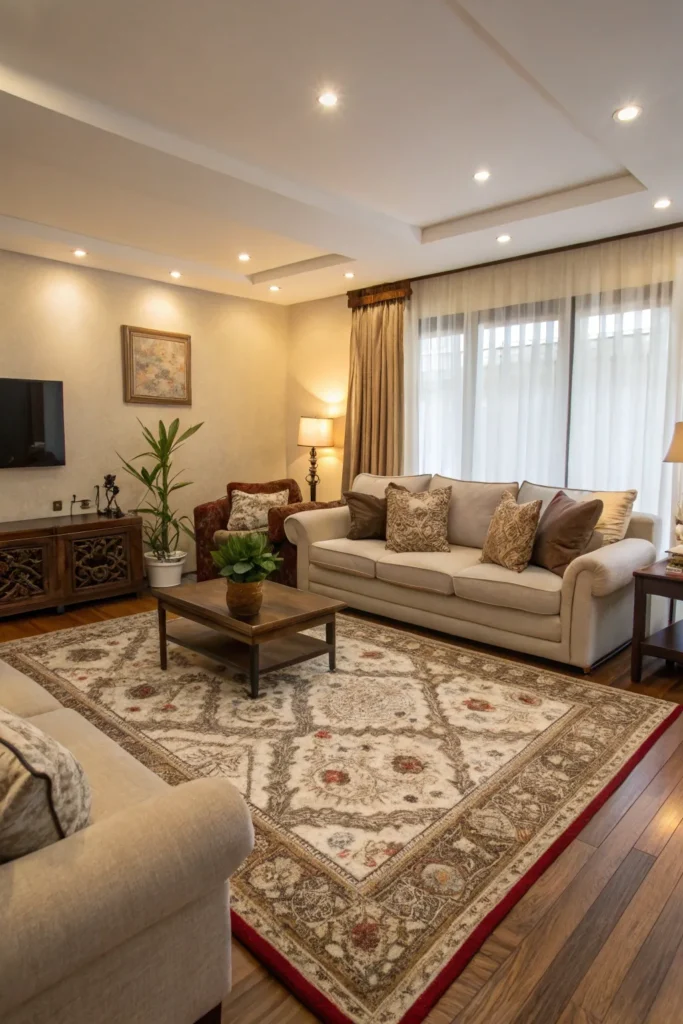
A well-chosen rug anchors the seating area and makes a small living room feel more cohesive. Contrary to popular belief, a slightly larger rug can actually make the space feel bigger.
Choose a rug that fits under the front legs of your seating furniture. This creates a unified zone and adds softness and warmth underfoot.
7. Keep the Layout Open and Simple
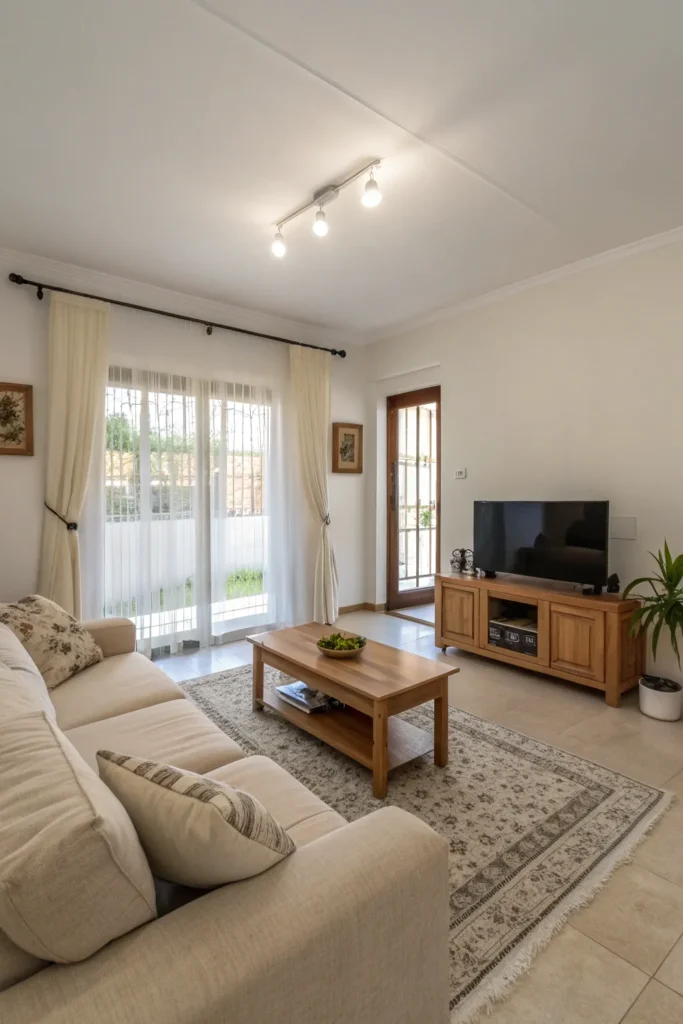
Avoid overcomplicating the layout in a small living room. Clear pathways and open sightlines help the space feel calm and easy to move through.
Place furniture against walls where possible and leave breathing room between pieces. An open layout supports comfort and prevents the room from feeling crowded.
8. Use Vertical Space Wisely
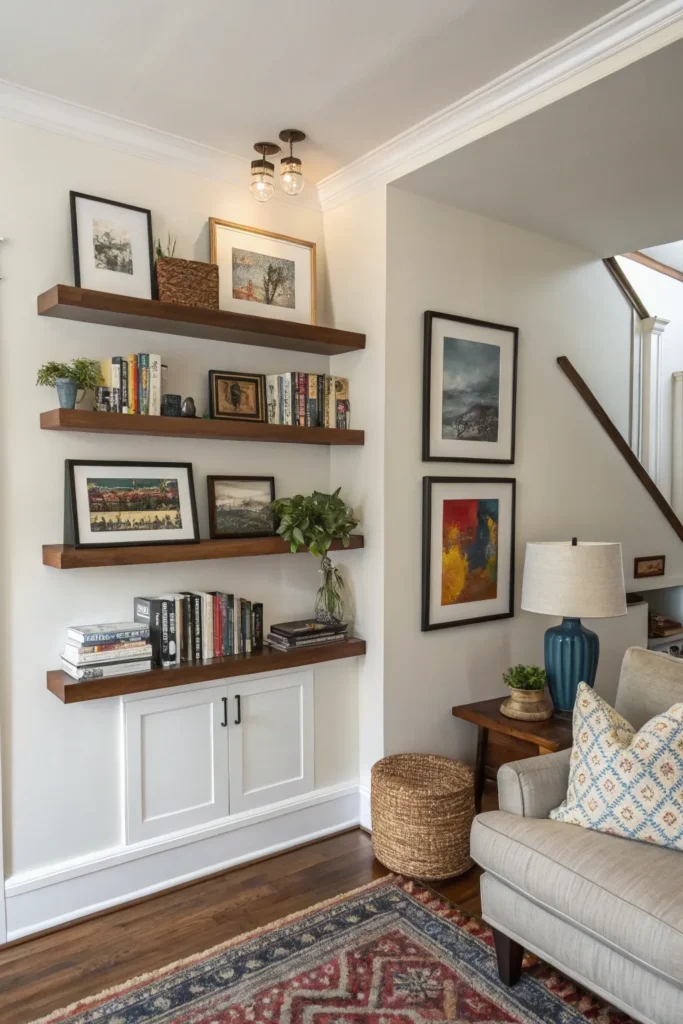
When floor space is limited, look up. Vertical storage and décor draw the eye upward, making the room feel taller and more spacious.
Wall-mounted shelves, tall bookcases, or vertical artwork maximize storage and style without taking up valuable floor area. Keep displays minimal to avoid visual clutter.
9. Add Soft Textures for Comfort
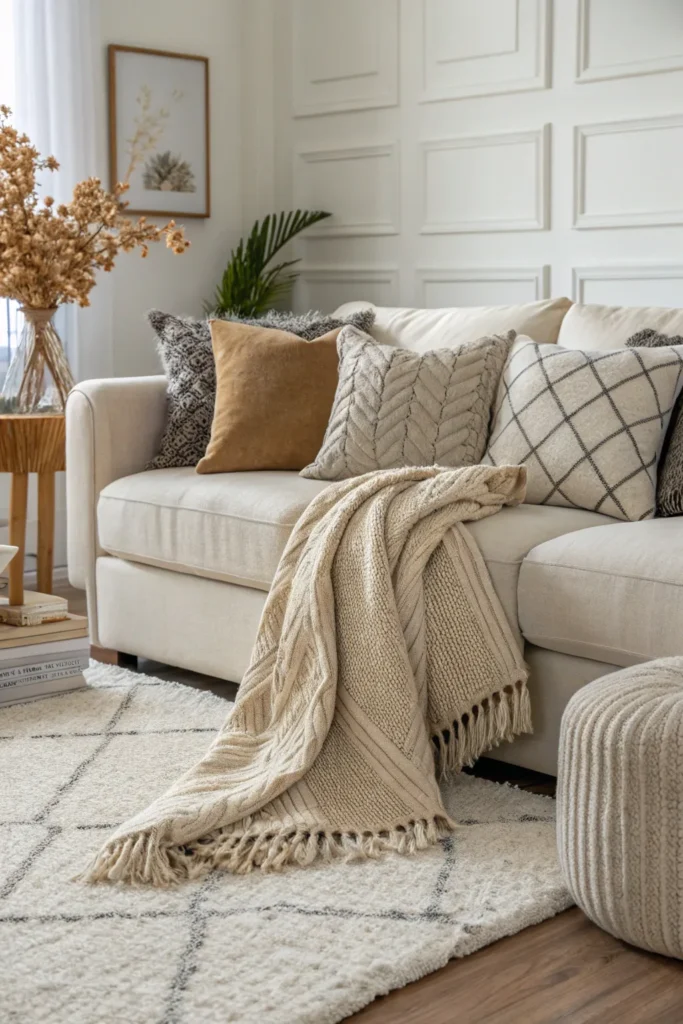
Comfort isn’t just about layout—it’s also about how the space feels. Soft textures like throw blankets, cushions, and rugs make a small living room feel cozy and welcoming.
Stick to a cohesive color palette and vary textures instead of patterns. This adds depth without overwhelming the space.
10. Choose Slim, Open-Leg Furniture
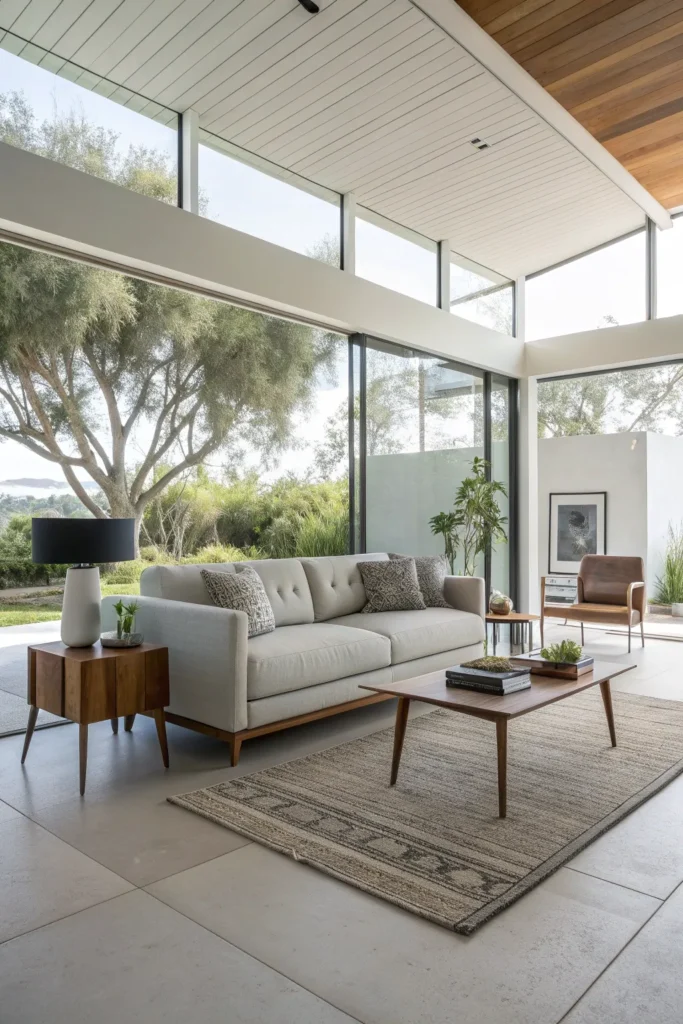
Furniture with exposed legs allows light to flow underneath, creating a sense of openness. This design trick keeps the room from feeling heavy or boxed in.
Open-leg chairs, sofas, and side tables visually expand the space while maintaining comfort and functionality.
11. Limit Decorative Accessories
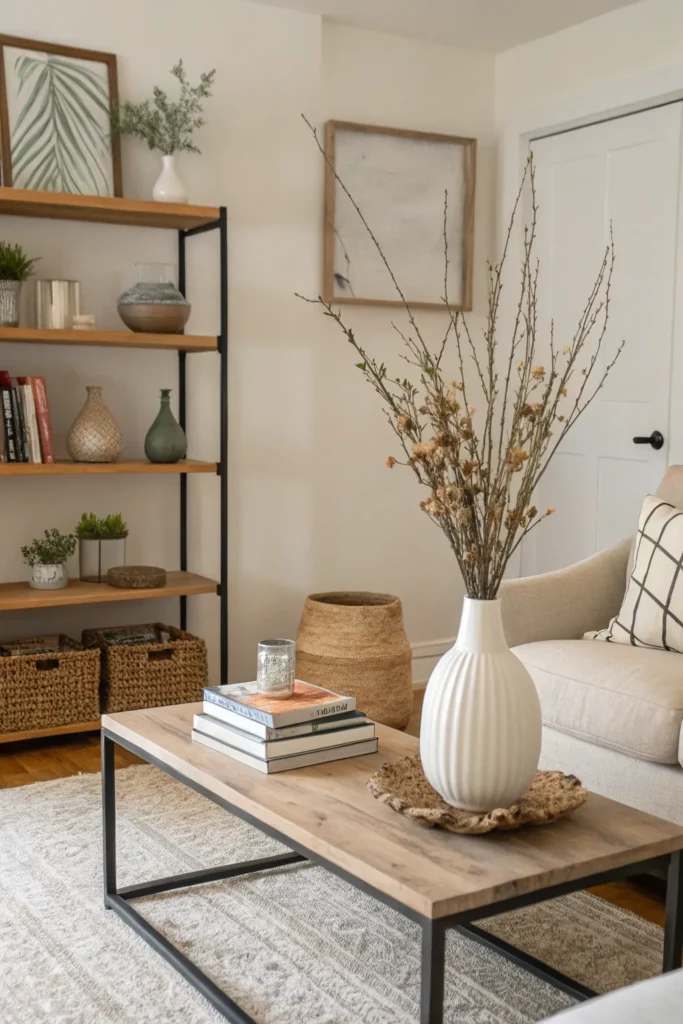
In small living rooms, less is often more. Too many decorative items can make the space feel busy and cramped.
Choose a few meaningful pieces and display them intentionally. This approach keeps the room feeling calm, organized, and comfortable.
12. Use Built-In or Floating Storage
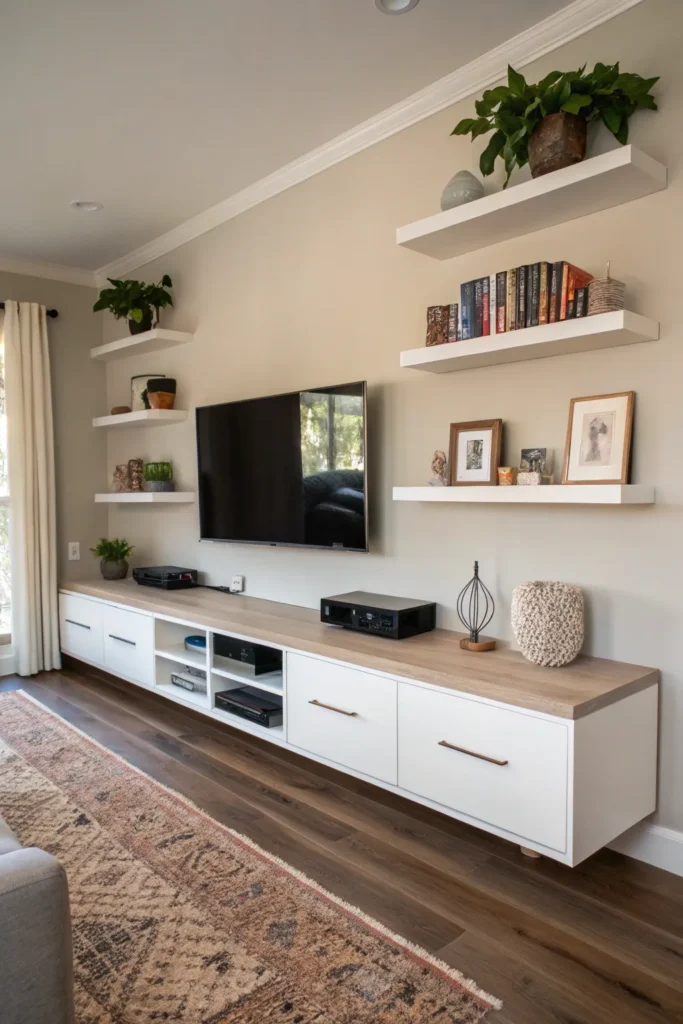
Built-in shelves or floating cabinets are excellent for small spaces. They provide storage without taking up floor space, keeping the room feeling open.
Floating media units or shelves also contribute to a clean, modern aesthetic that enhances comfort and usability.
13. Create Zones with Furniture Placement
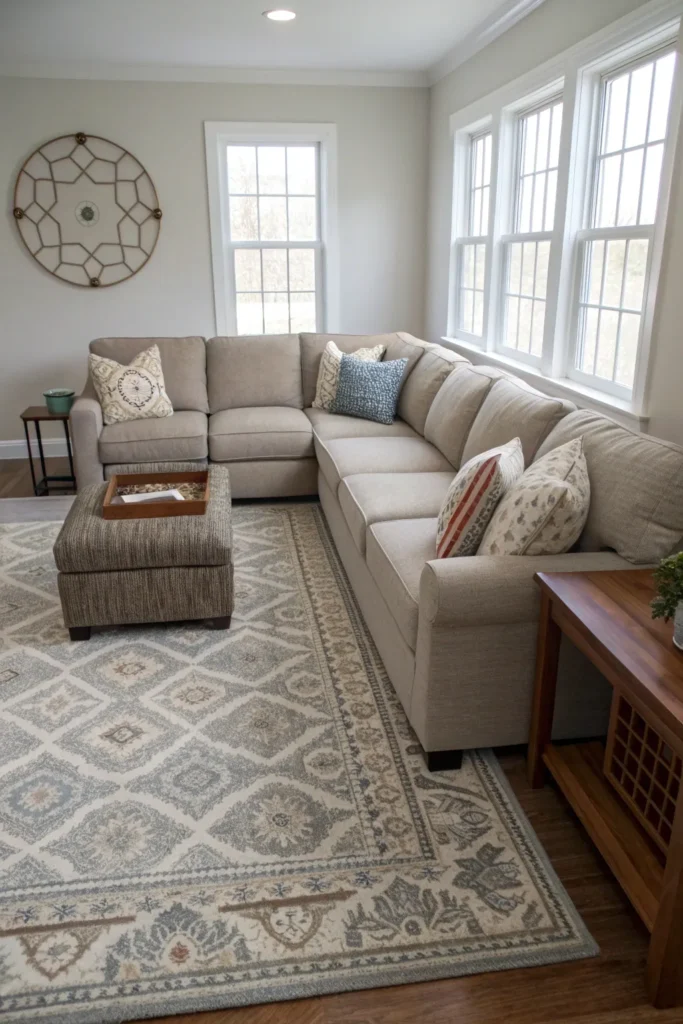
Even small living rooms can benefit from subtle zoning. A sofa placement, rug, or lighting choice can help define areas without physical barriers.
Zoning makes the room feel purposeful and organized, which contributes to overall comfort and flow.
14. Incorporate Warm Lighting
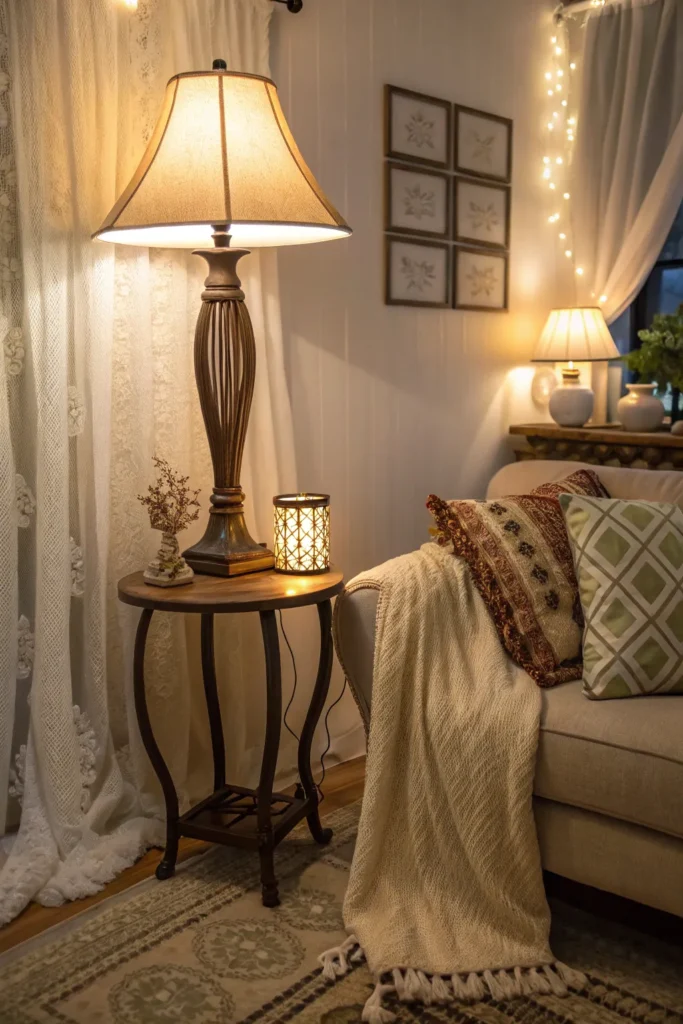
Lighting plays a major role in how comfortable a small space feels. Relying on a single overhead light can make the room feel flat or harsh.
Use a combination of table lamps, floor lamps, and ambient lighting to create a warm, layered glow. Soft lighting enhances relaxation and makes the room feel more inviting.
15. Keep the Space Personal and Lived-In
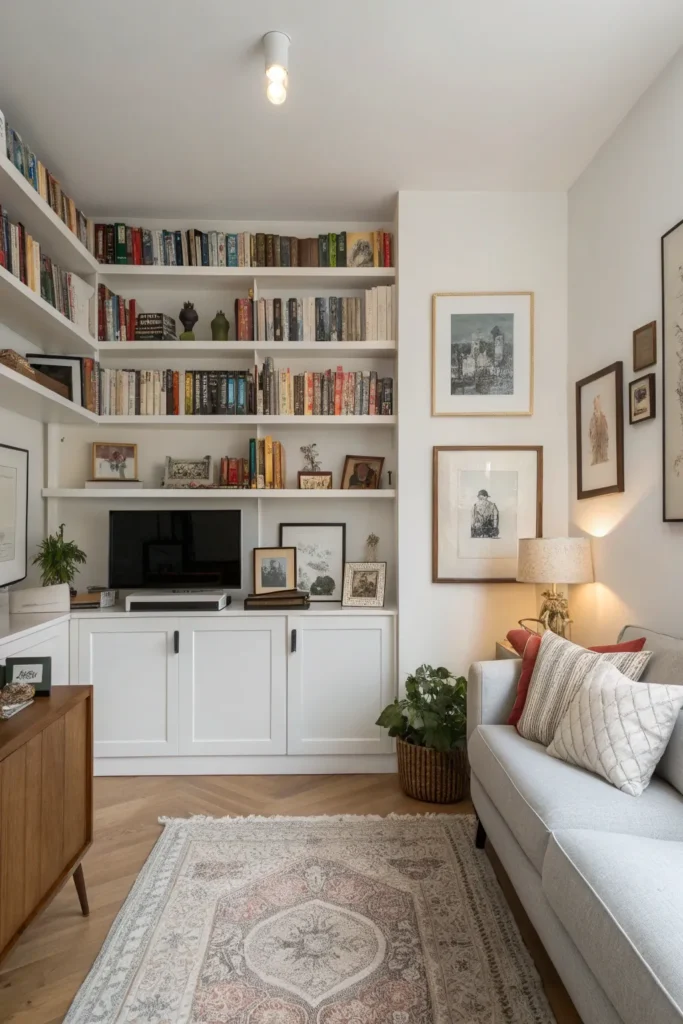
Comfort comes from personality. A small living room should reflect your lifestyle and taste, not feel like a showroom.
Add personal touches such as books, artwork, or meaningful décor. When the space feels authentic and lived-in, it naturally becomes more comfortable.
A small living room doesn’t require compromise—it requires intention. By focusing on scale, light, texture, and thoughtful layout, you can create a space that feels both comfortable and functional. With these ideas, even the smallest living rooms can become warm, inviting places where comfort truly comes first.