

15 Spring Biophilic Decor Ideas for Nature Lovers
There is a word that neuroscientists and environmental psychologists use to describe the deep, instinctive connection that human beings feel toward living systems and natural processes: biophilia. Literally translated from its Greek roots, it means love of life, and it describes something that is not a preference or a personality trait but a fundamental aspect of human biology.
We evolved over hundreds of thousands of years in intimate relationship with the natural world — reading light, responding to water, orienting ourselves by plants and seasons and the movement of living things — and our nervous systems still carry all of that ancient wiring, regardless of how many floors above street level we now spend our days.
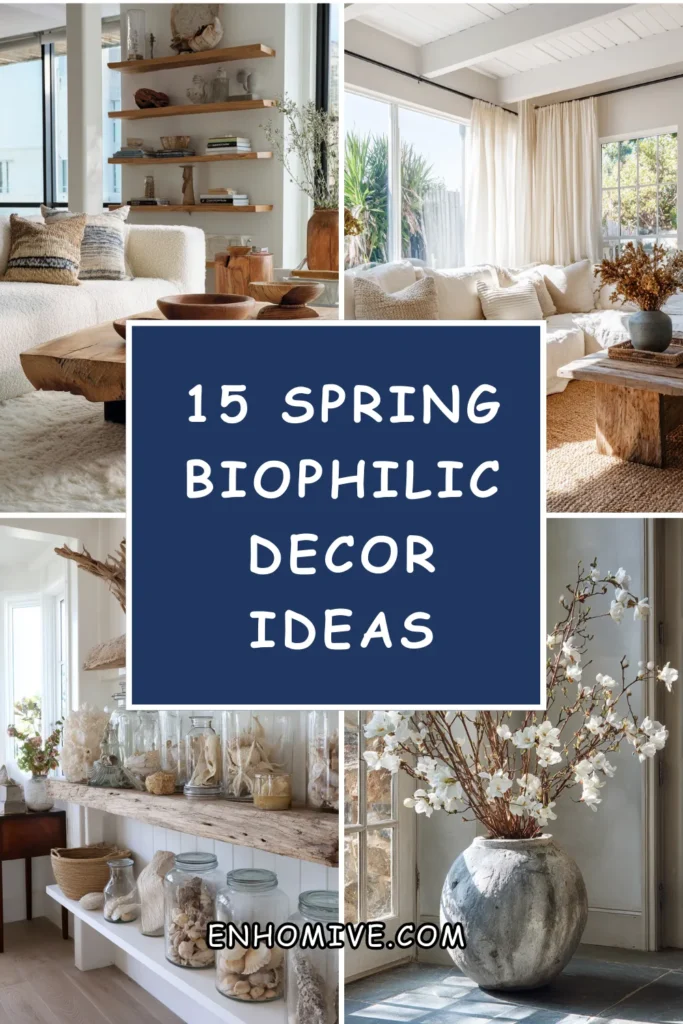
Biophilic design is the practice of honoring that wiring through the spaces we create and inhabit, and spring is the season when the impulse toward it feels most urgent and most natural. The world outside is erupting into life, and something in us wants the inside to follow. Here are fifteen ideas for bringing that connection into your home in ways that are beautiful, considered, and genuinely transformative.
1. Build a Living Moss Wall Panel
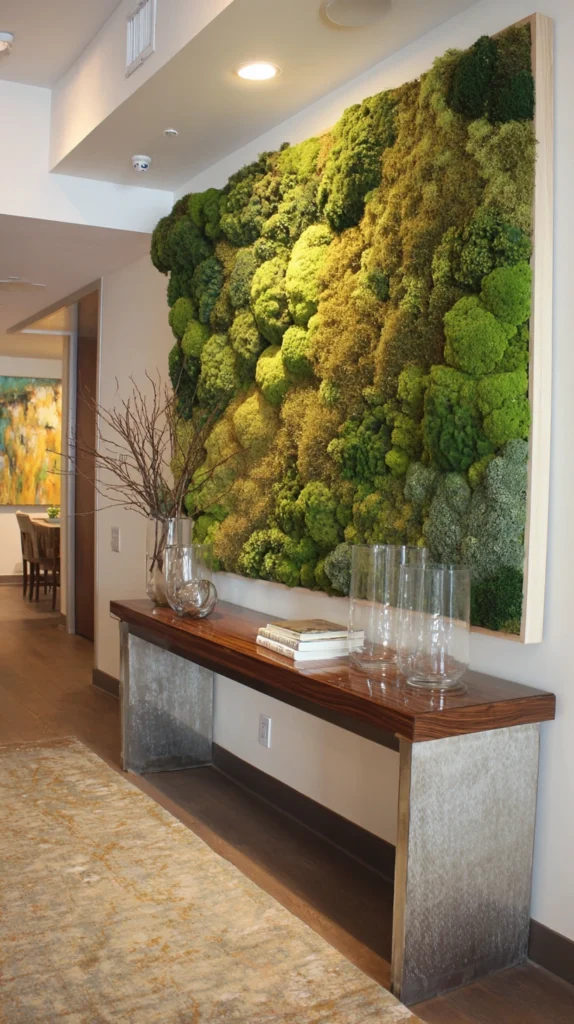
A living moss wall is one of those design interventions that changes the atmosphere of a room in a way that photographs cannot fully capture. Moss walls introduce genuine living material into an interior space without the watering demands, pest concerns, or light requirements of most houseplants, making them one of the most practically accessible forms of biophilic design available.
Preserved moss — which retains its color, texture, and tactile quality without requiring water or light — can be arranged in panels of varying species: the velvety cushion of bun moss, the delicate fronds of reindeer moss, the flat expanse of sheet moss, all composited together in a design that functions as both living art and acoustic material.
Mount a panel above a console table, behind a sofa, or as a headboard alternative in a bedroom. The effect is immediate — the room acquires a quietness, a depth, and a connection to the natural world that paint and wallpaper, however beautiful, cannot replicate.
2. Create a Dedicated Indoor Garden Shelf
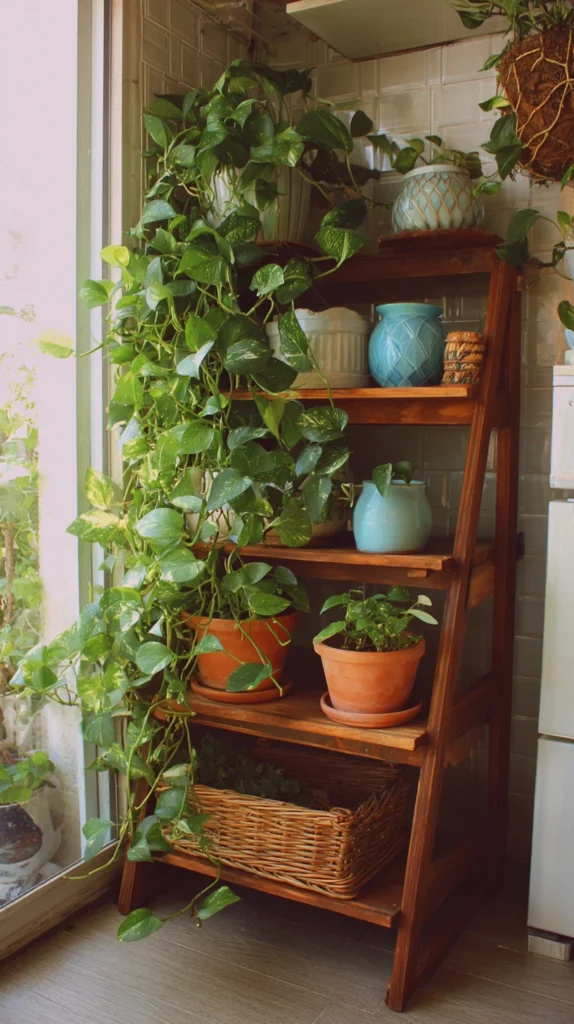
Rather than distributing plants individually throughout a space in the conventional approach to indoor gardening, the biophilic design philosophy encourages the creation of concentrated nature moments — specific areas where the density of living material creates something closer to an ecosystem than a collection.
A dedicated garden shelf, styled with layered plants at different heights and in different vessels, achieves this effect with remarkable power. Use a combination of trailing plants that cascade over the shelf’s edges — pothos, string of pearls, heartleaf philodendron — with upright structural plants behind them and small ground-level specimens in front.
Vary the containers across terracotta, ceramic, woven basket covers, and raw concrete. Add a small piece of driftwood, a handful of smooth river stones, and perhaps a small figure or object of personal meaning partially obscured by the foliage. The shelf becomes a miniature landscape, a window into a natural world that you have composed and curated.
3. Bring in Branches for Seasonal Drama
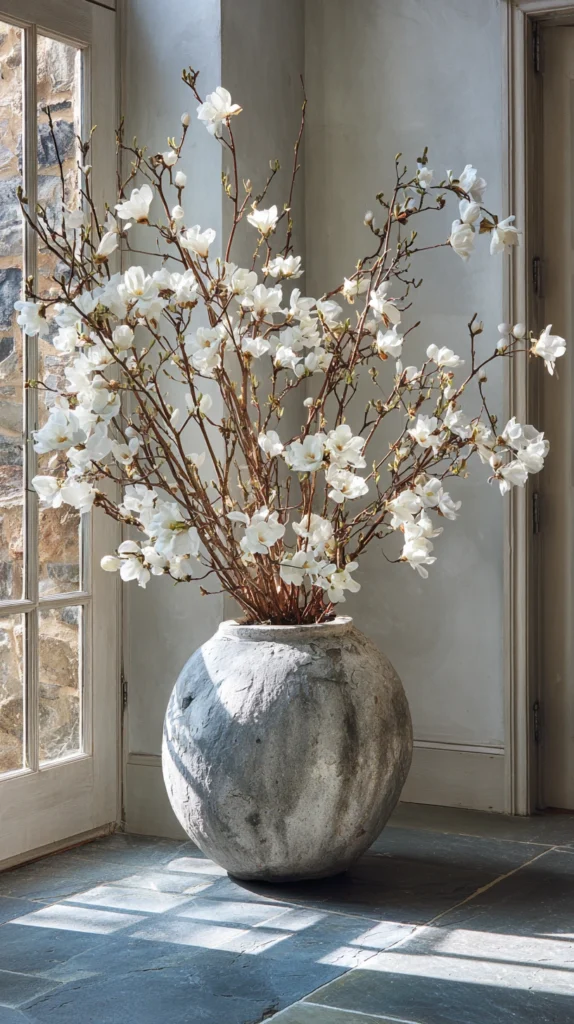
One of the most striking and most underutilized biophilic design moves available in early spring is the simple act of bringing cut branches indoors and allowing them to come into bloom in a warm interior environment.
Forsythia, cherry, quince, magnolia, and pussy willow branches cut from the garden or sourced from a florist in late winter or very early spring will open their buds indoors within days, producing the extraordinary effect of a full spring bloom happening inside your home weeks before the outdoor garden has caught up.
Place long branches in a tall floor vase — something generous in scale, in ceramic, stone, or simple glass — and position it where the light can catch it from behind. The silhouette of branches in bloom against a window is one of the most quietly spectacular things a room can contain, and it costs almost nothing.
4. Introduce a Water Feature for Sound and Movement
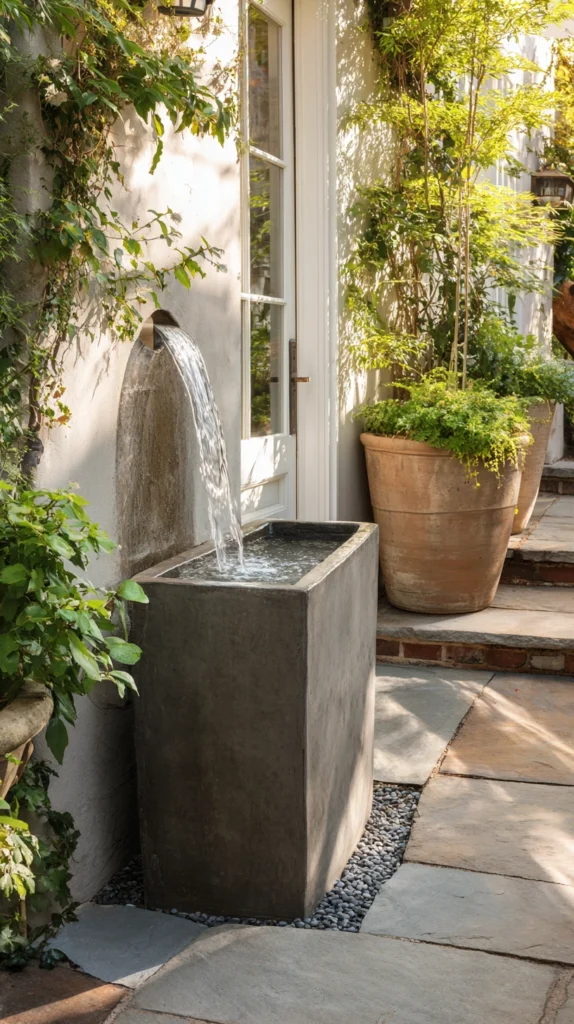
Biophilic design is deeply attentive to the role of sound in creating connection to nature, and nowhere is this more accessible than in the introduction of moving water into an interior space.
A small tabletop water feature — a simple bowl fountain in stone or ceramic through which water circulates via a small pump — introduces the sound of water movement into a room with a subtlety that is deeply calming to the human nervous system. Research consistently links the sound of flowing water to reduced cortisol levels and improved mood, which is why we find ourselves instinctively drawn to fountains, streams, and rainfall.
In a living room or bedroom, a modest water feature placed on a console or side table provides constant, gentle acoustic contact with one of nature’s most fundamental elements. Keep the design simple and the scale appropriate — this is not about spectacle but about the steady, background presence of something alive and moving.
5. Use Natural Fiber Textiles Throughout the Space
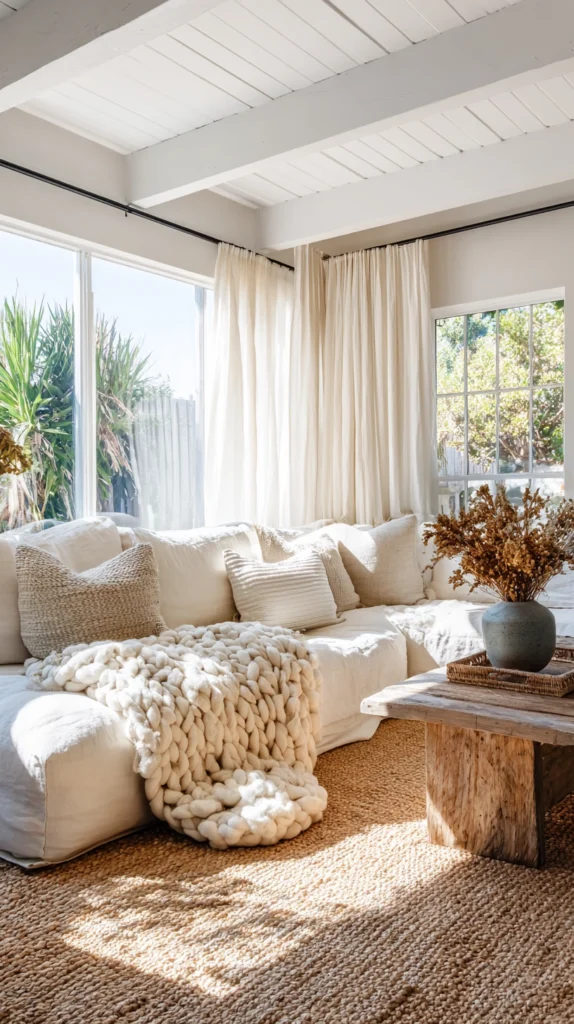
Biophilic design extends well beyond plants and water into the materials with which we furnish and clothe our spaces. Natural fibers — linen, cotton, jute, wool, hemp, and silk — connect us to the natural world through touch and texture in ways that synthetic materials simply cannot, and spring is the ideal season to audit your textiles and replace anything plasticky or artificial with something grown from the earth.
Linen cushion covers in undyed or naturally dyed tones, a jute or seagrass rug beneath the coffee table, a chunky cotton throw in a natural oatmeal or sage green, linen curtains that move visibly in a breeze — each of these small decisions contributes to an interior environment whose material reality is rooted in the natural world. The collective effect of natural fiber textiles throughout a space is one of warmth, authenticity, and ease — exactly the qualities that biophilic design at its best delivers.
6. Create a Window Sill Herb Garden
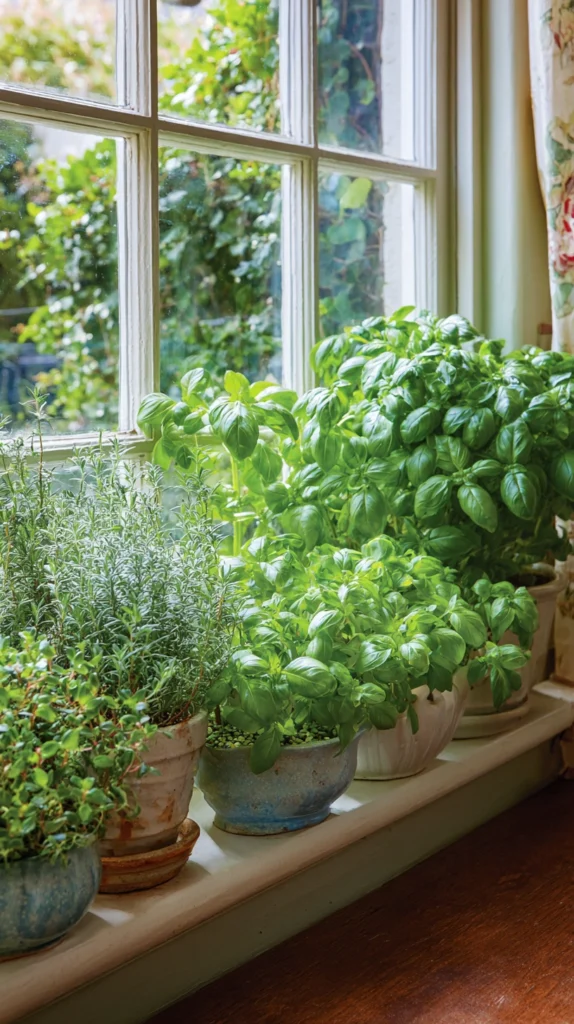
The window sill herb garden is so modest in scale that it risks being dismissed as a minor idea, but its biophilic impact is disproportionate to its physical footprint. A collection of small pots of living herbs — basil, mint, rosemary, thyme, chives, and lemon verbena arranged along a kitchen or living room window — introduces multiple dimensions of natural connection simultaneously.
There is the visual presence of living green things, the texture of their leaves, the fragrance that releases every time you brush past them or pinch a sprig for cooking, and the daily engagement of tending something alive that responds visibly to care. This last quality is perhaps the most psychologically significant — the herbs grow and change in response to light, water, and attention, making the relationship genuinely reciprocal in a way that a photograph of nature never can be.
7. Hang Botanical Art and Nature Photography at Scale
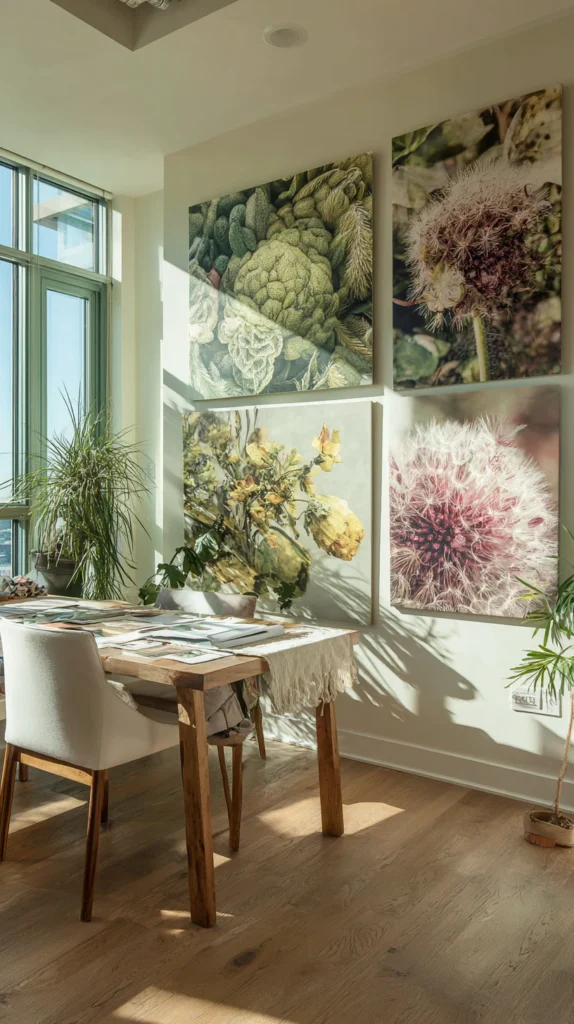
The walls of a biophilically designed space should feel like windows into the natural world rather than surfaces decorated with nature-adjacent imagery. The distinction lies in scale, quality, and intention. Large-format botanical prints — the kind that fill a significant portion of a wall and allow the viewer to see genuine detail in the rendering of leaf veins, flower structures, and plant forms — create a visual immersion that small framed prints cannot achieve.
Antique botanical illustrations sourced from specialist print dealers, oversized nature photography in simple frames, or large-scale watercolor studies of plants and landscapes all serve the biophilic function when given enough wall space to breathe and enough visual quality to reward close looking. Position them where natural light can illuminate them without creating glare, and resist the urge to crowd them with neighboring artwork that competes for attention.
8. Choose Wood in Its Most Natural Expression
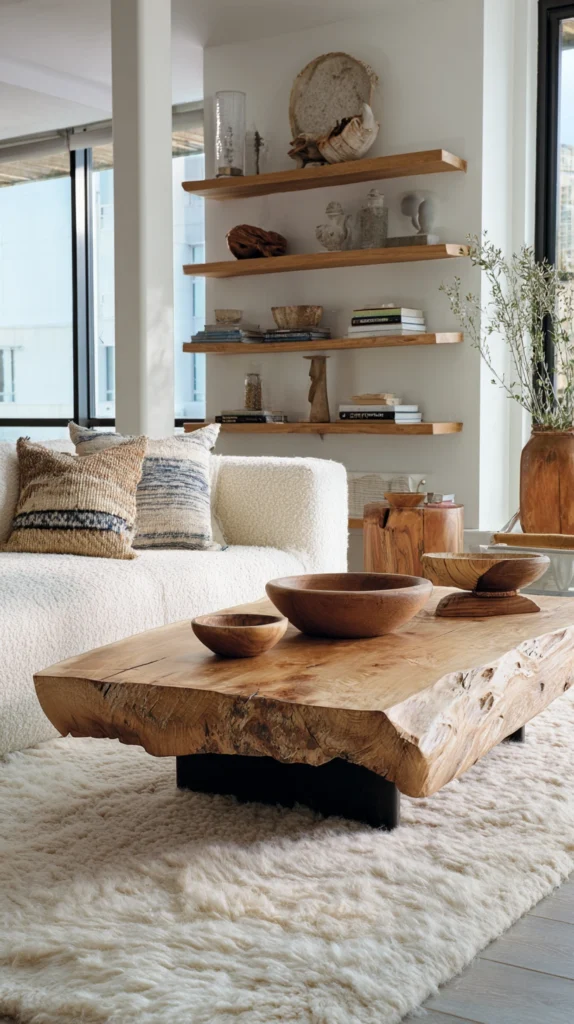
Wood is biophilic design’s most important hard material, and spring is an excellent time to audit the wooden elements in your home and consider whether they are expressing the material’s natural quality or suppressing it.
Heavily lacquered, perfectly uniform wood has lost most of its biophilic potency — the grain, the variation, the sense of the living thing it once was have been sealed beneath a surface designed for durability rather than connection. Oiled or wax-finished wood retains its grain, its warmth, its slight irregularity, and its responsiveness to touch in ways that speak directly to our evolved recognition of natural materials.
A live-edge coffee table, a hand-turned wooden bowl on the kitchen counter, a simple wooden stool in the bathroom, shelving in oiled oak rather than painted MDF — these choices collectively shift a space toward a material honesty that the human nervous system recognizes and responds to with something very close to relief.
9. Design a Spring Terrarium as a Tabletop Landscape
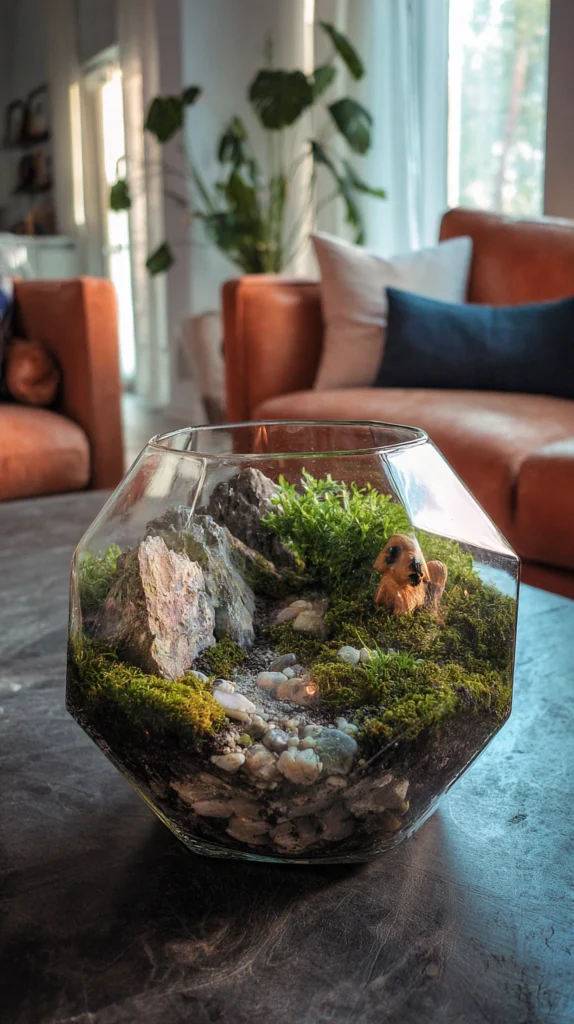
A terrarium is biophilic design in miniature — a complete, self-contained landscape that you compose and then watch evolve over time. Spring is the ideal season to create one, when garden centers are full of small ferns, mosses, succulents, and woodland plants that adapt beautifully to terrarium conditions.
An open terrarium in a geometric glass vessel suits succulents and cacti that prefer dry conditions and good airflow, while a closed terrarium with a lid creates the humid environment that ferns, mosses, and tropical plants require.
Layer the interior with drainage gravel, activated charcoal, and appropriate compost before planting, and then compose the landscape with attention to height variation, texture contrast, and the placement of natural decorative elements — small stones, a piece of bark, a tiny figurine half-hidden by foliage. The completed terrarium is simultaneously a living art object and a miniature nature connection available at any scale, on any surface.
10. Paint with Nature’s Own Color Palette
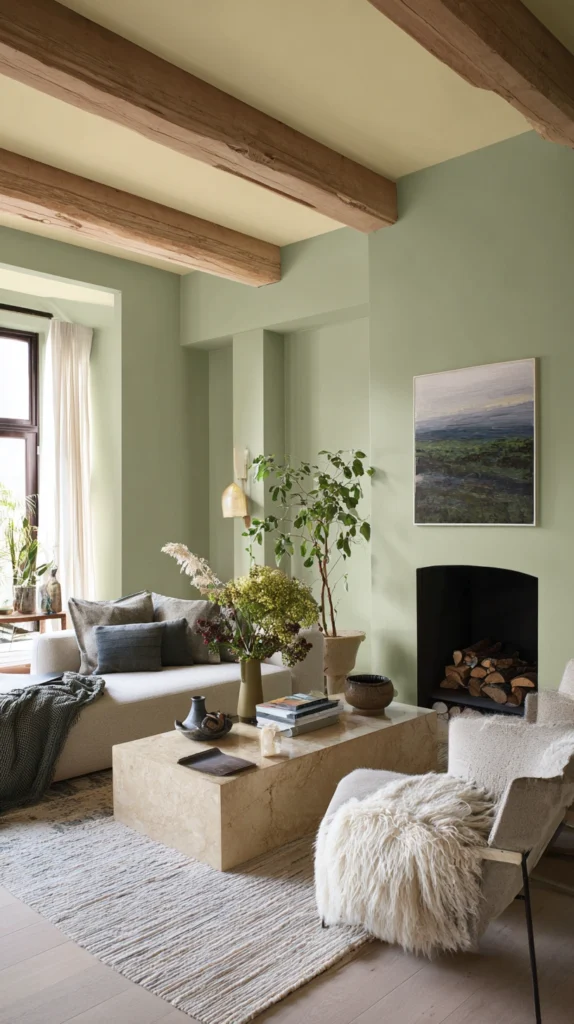
Color selection in a biophilically designed home should draw directly from the natural world rather than from trend forecasts or purely aesthetic preferences. This doesn’t mean every room should be green — nature’s palette is extraordinarily broad, ranging from the warm ochres and terracottas of exposed earth and sandstone, through the soft greens and grays of lichen-covered bark, to the deep blues of still water and clear sky at dusk.
What these colors share is a quality of depth and complexity — they are rarely flat or fully saturated, but instead carry the slight muddiness, warmth, or undertone variation of pigments derived from natural sources.
Choose paint colors the way a landscape painter would choose pigments: with reference to a specific natural environment whose atmosphere you want to bring indoors. A particular forest floor, a specific stretch of coastline, a remembered meadow at golden hour — these are better references for a biophilic color palette than any trend publication.
11. Display Natural Collections and Found Objects
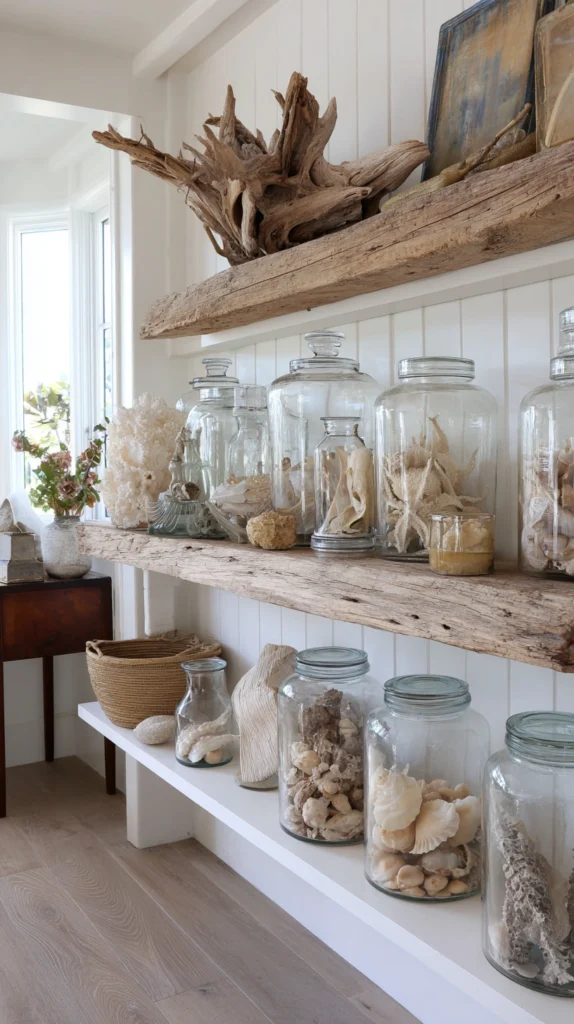
The biophilic home is one in which evidence of the natural world is woven into everyday display in a way that feels personal and accumulated rather than themed or purchased.
A collection of smooth stones gathered from a favorite beach arranged in a shallow ceramic dish. A piece of driftwood on a bookshelf, its surface worn to a silkiness by years of water and weather. A bird’s nest found in the garden after a storm, placed under a glass dome on the mantelpiece. Pine cones in a wooden bowl. Shells in a glass jar on the bathroom windowsill.
Each of these objects carries a story and a connection to a specific natural moment or place, and together they create an interior environment that is textured with the evidence of a life lived in genuine relationship with the natural world. There is nothing curated about this approach — it is simply the practice of keeping what you find beautiful and giving it a home.
12. Use Rattan, Wicker, and Bamboo Furnishings
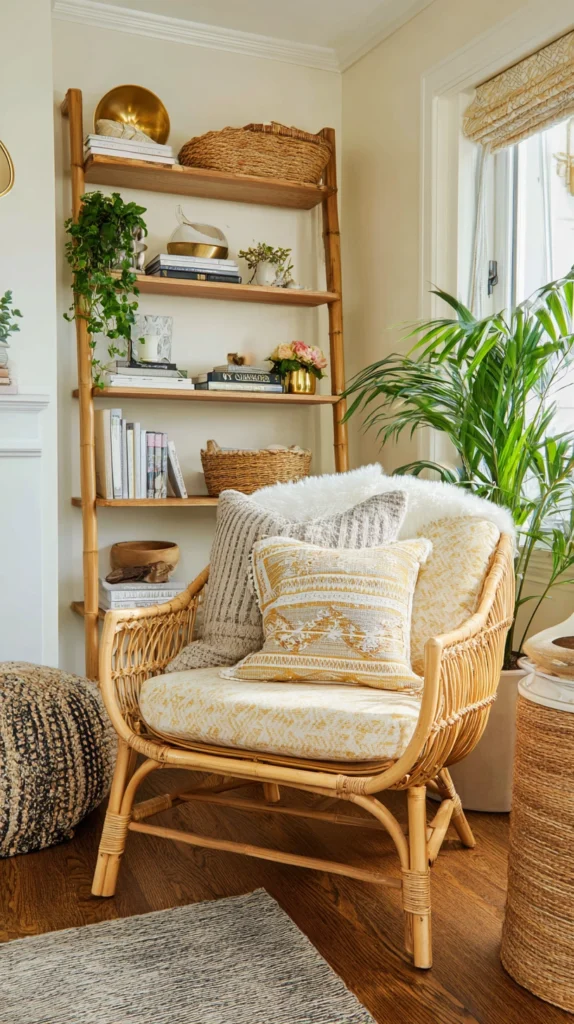
The revival of rattan and wicker furniture that has been building steadily over the past decade is not simply a trend cycle returning to the 1970s. It reflects a genuine appetite for materials that carry their natural origin visibly and honestly — that look like what they are, feel like what they are, and age in ways that reveal rather than conceal the passage of time. A rattan pendant light casting warm, patterned shadows across a ceiling.
A wicker side chair in a reading corner. A bamboo ladder shelf holding plants and books. These pieces introduce a tactile naturalness to a space that manufactured materials cannot replicate, and their warm honey tones work beautifully with the green of living plants and the neutral tones of natural textiles in a way that creates coherent, deeply livable biophilic interiors.
13. Position Furniture to Maximize Nature Views
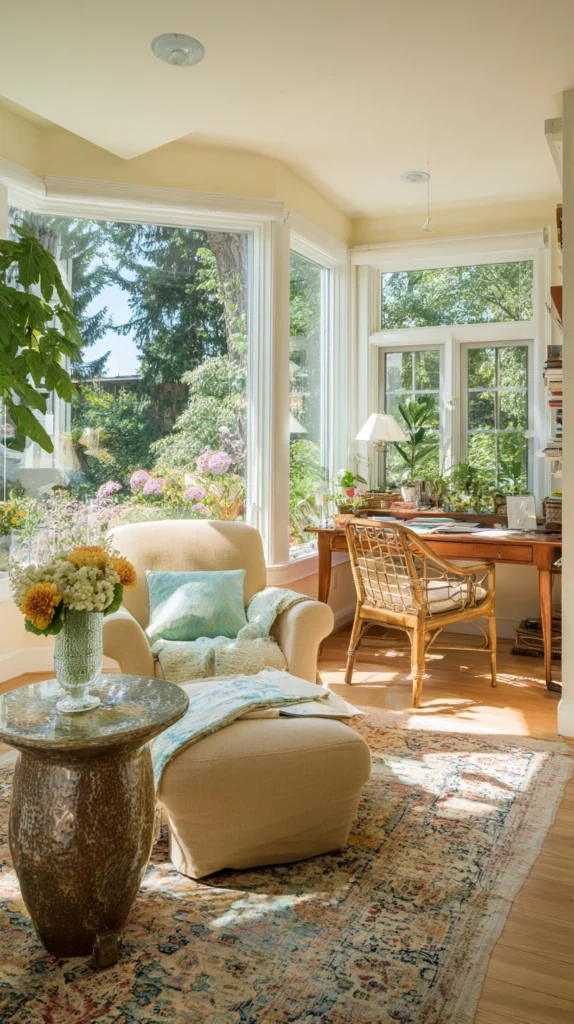
Biophilic design is as much about spatial arrangement as material choice, and one of its most fundamental principles is the careful positioning of furniture to maximize visual connection with the natural world outside. A reading chair turned to face the garden rather than the television. A desk positioned beside a window that looks onto a tree rather than a wall. A dining table placed where diners can see the sky and garden as they eat.
These decisions cost nothing — they are simply a matter of prioritizing the view of the living world over the convenience of facing a screen — and their cumulative effect on daily wellbeing is significant and consistent. We are constitutionally designed to want to see nature, and a home that provides that view freely and generously from the places where we spend the most time is one that supports us in ways that go far beyond aesthetics.
14. Incorporate Natural Scent Through Living Plants and Botanicals
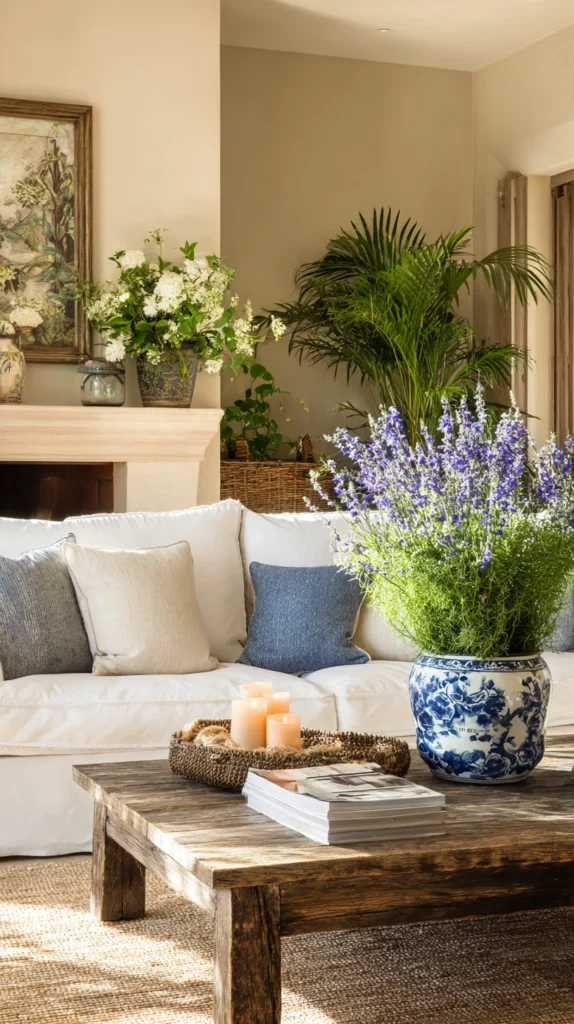
Scent is biophilic design’s most underestimated dimension, and also in some ways its most powerful. The olfactory system has a more direct connection to the brain’s emotional and memory centers than any other sense, which is why a particular natural scent can transport us to a specific place, season, or feeling with an immediacy that sight and sound cannot always match.
Living fragrant plants — gardenias, jasmine, paperwhites, hyacinths, and scented-leaf pelargoniums — introduce genuine botanical fragrance into the home in a form that shifts and develops throughout the day as temperature and humidity change.
Dried botanical elements — bundles of lavender, eucalyptus stems, dried orange slices with cloves — provide a more constant, lower-intensity fragrance. Together, these living and dried botanical scent sources create an olfactory environment that signals, at a level below conscious thought, that this is a space in genuine relationship with the natural world.
15. Let in as Much Natural Light as Your Space Allows
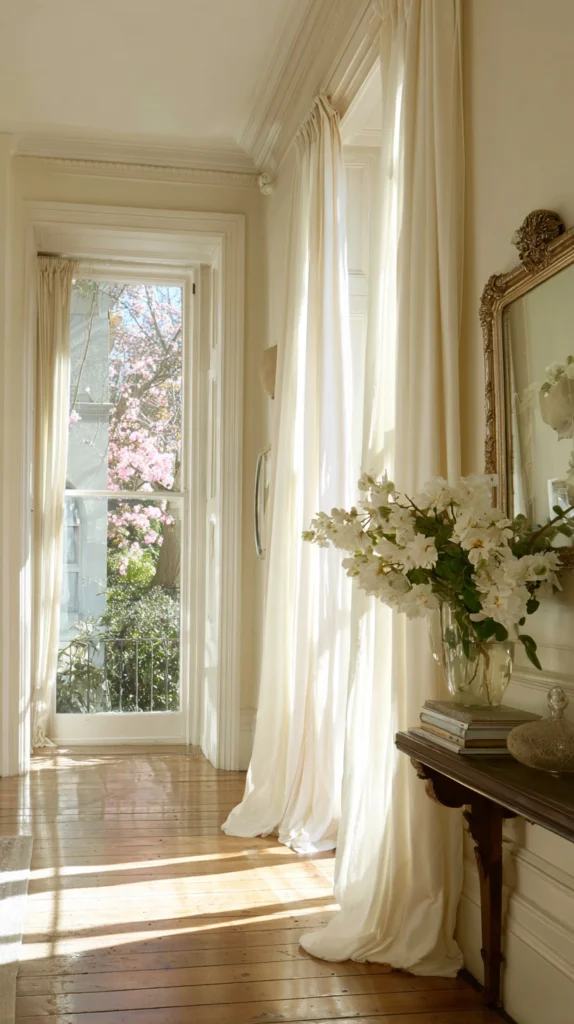
Every biophilic design principle eventually returns to light, because light is the most fundamental connection between interior spaces and the natural world outside. Natural light is not simply illumination — it carries information about time of day, season, weather, and the position of the sun that our bodies read continuously and use to regulate circadian rhythms, mood, energy levels, and sleep quality.
A biophilically designed home maximizes access to natural light by removing or replacing heavy window treatments with lighter alternatives, using mirrors strategically to bounce light deeper into rooms, keeping window sills clear of objects that block the view and the light simultaneously, and choosing paint colors and surfaces that reflect rather than absorb the light that does enter.
In spring especially, when the light is returning in quality and duration after the flat dimness of winter, treating it as the precious, life-giving resource it actually is — and designing your home to welcome as much of it as possible — is perhaps the most profound biophilic gesture available to any of us.