
15 Stairway Accent Wall Ideas to Make a Statement
A stairway is often treated as a purely functional passage—something you move through rather than linger in. Yet it’s one of the most visually powerful spaces in a home.
Because staircases naturally draw the eye upward, they offer a unique opportunity to create a striking design moment without overwhelming the rest of the interior. A well-designed stairway accent wall can turn an overlooked area into a defining feature that sets the tone for your entire home.
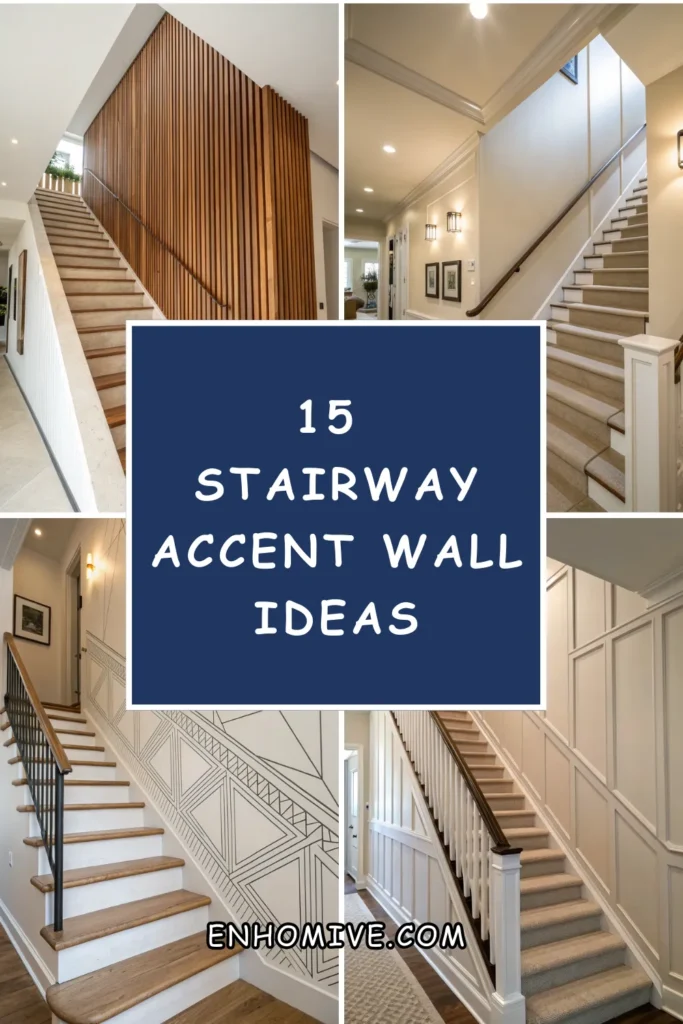
Whether your style leans modern, warm, minimal, or bold, stairway accent walls allow you to experiment with texture, color, and pattern in a controlled way. Below are 15 stairway accent wall ideas that focus on statement-making design, thoughtful balance, and real-world practicality, helping you elevate your home without sacrificing cohesion.
1. Painted Accent Wall with Architectural Depth
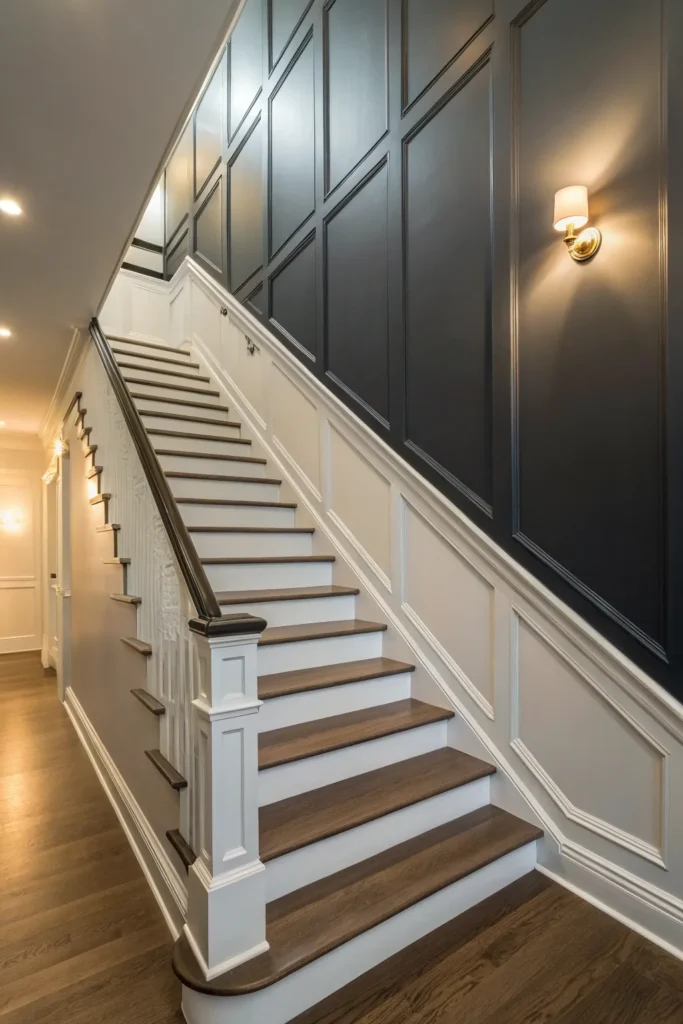
A painted stairway accent wall is one of the most approachable ways to make a statement. The key to keeping it impactful rather than flat is choosing a color with depth—think muted charcoal, warm clay, deep olive, or soft navy.
Because staircases already have natural movement, a single bold color can feel dynamic without additional decoration. Matte or eggshell finishes work best, as they reduce glare and enhance the architectural lines created by the stairs.
2. Vertical Paneling for Height and Drama
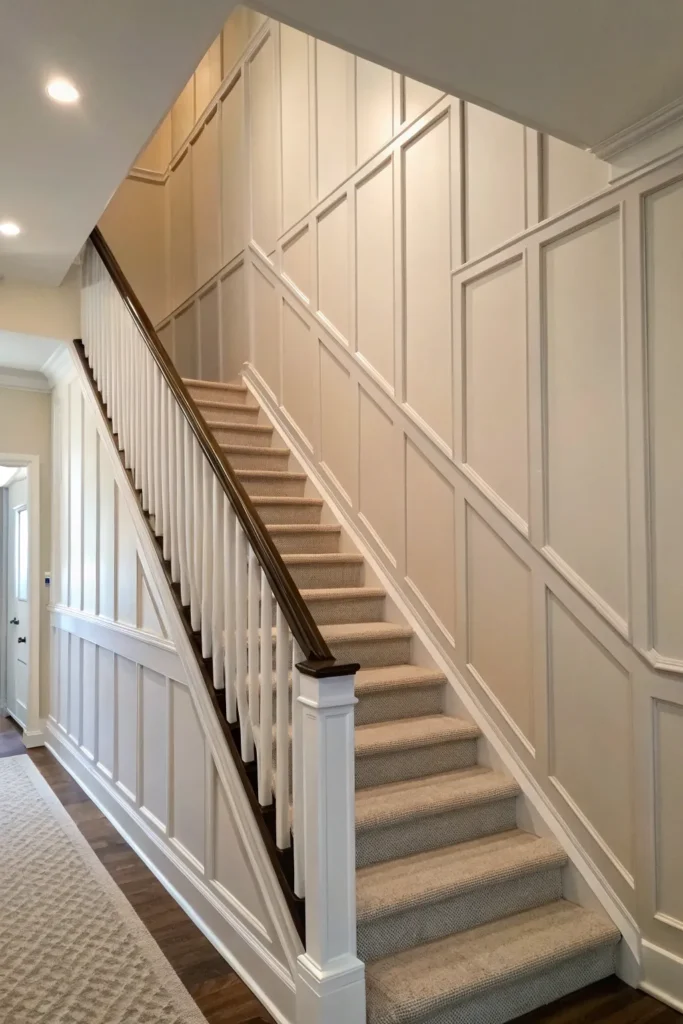
Vertical paneling draws the eye upward, making ceilings feel higher and stairways more expansive. This technique works especially well in narrow staircases where visual height is needed.
Painted wood slats or MDF panels in a consistent tone create rhythm and structure. Keeping the color neutral or softly saturated ensures the look remains modern and timeless rather than overly decorative.
3. Wallpaper with Subtle Pattern
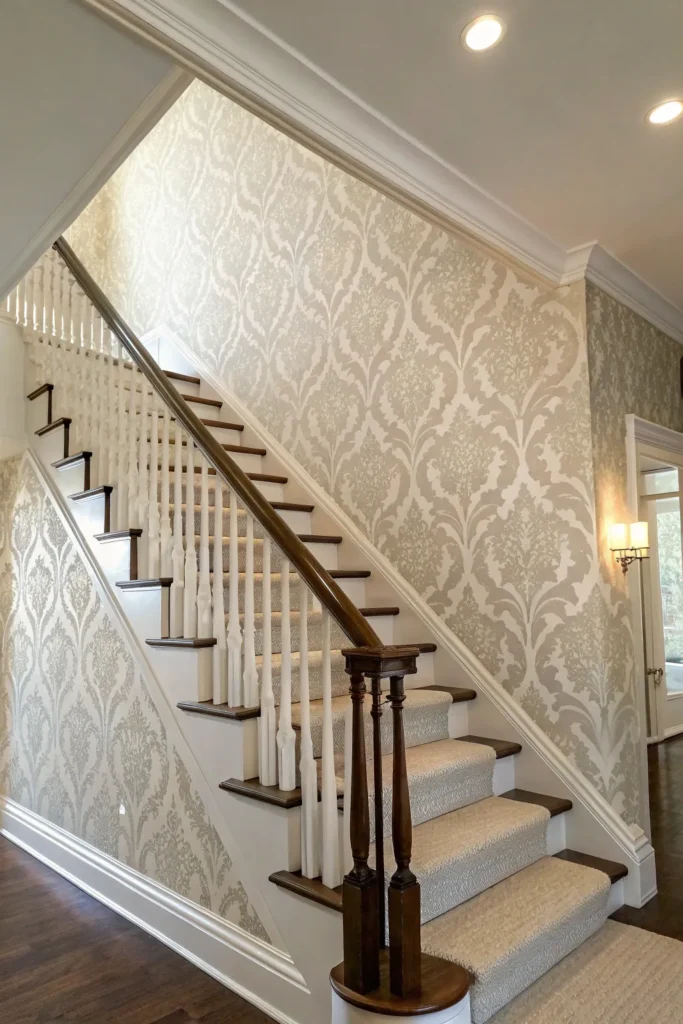
Wallpaper is a powerful tool for stairway accent walls because it introduces pattern without adding physical bulk. For modern homes, opt for subtle designs such as tonal geometrics, abstract textures, or nature-inspired motifs.
Because staircases are transitional spaces, wallpaper adds interest without overwhelming rooms on either side. Limiting wallpaper to one wall maintains balance and allows the pattern to shine.
4. Gallery Wall with Intentional Spacing
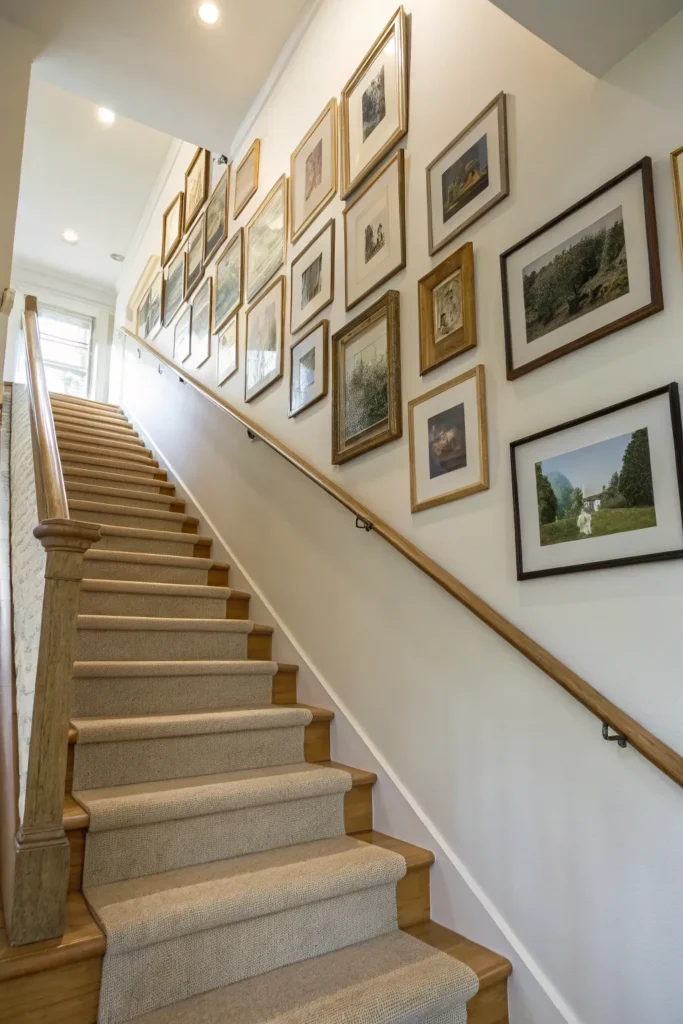
A stairway gallery wall can be both personal and visually striking when designed with intention. Instead of filling every inch, focus on spacing and alignment to create a curated look.
Choose frames in consistent finishes and keep artwork cohesive in tone or theme. The ascending layout naturally complements the staircase, turning family photos or artwork into a flowing visual narrative.
5. Textured Plaster Finish
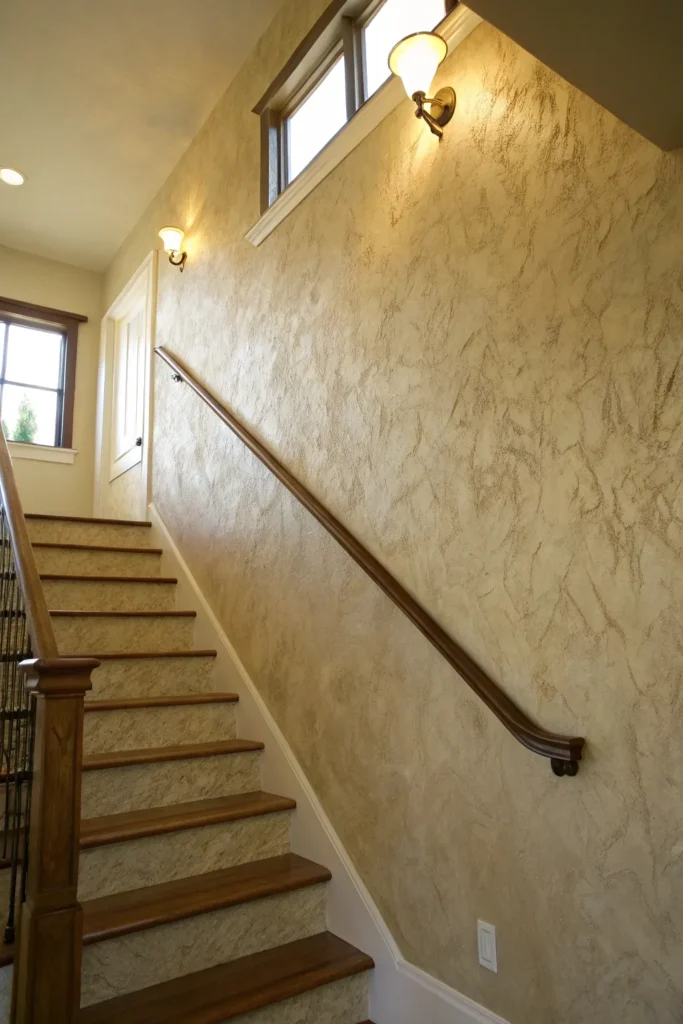
Textured plaster accent walls add depth and warmth while remaining understated. Finishes like limewash or Venetian plaster create subtle movement that shifts with the light throughout the day.
This approach works beautifully in modern, Mediterranean, or organic interiors. Because the texture is soft rather than bold, it adds character without competing with other design elements.
6. Wood Slat Accent Wall
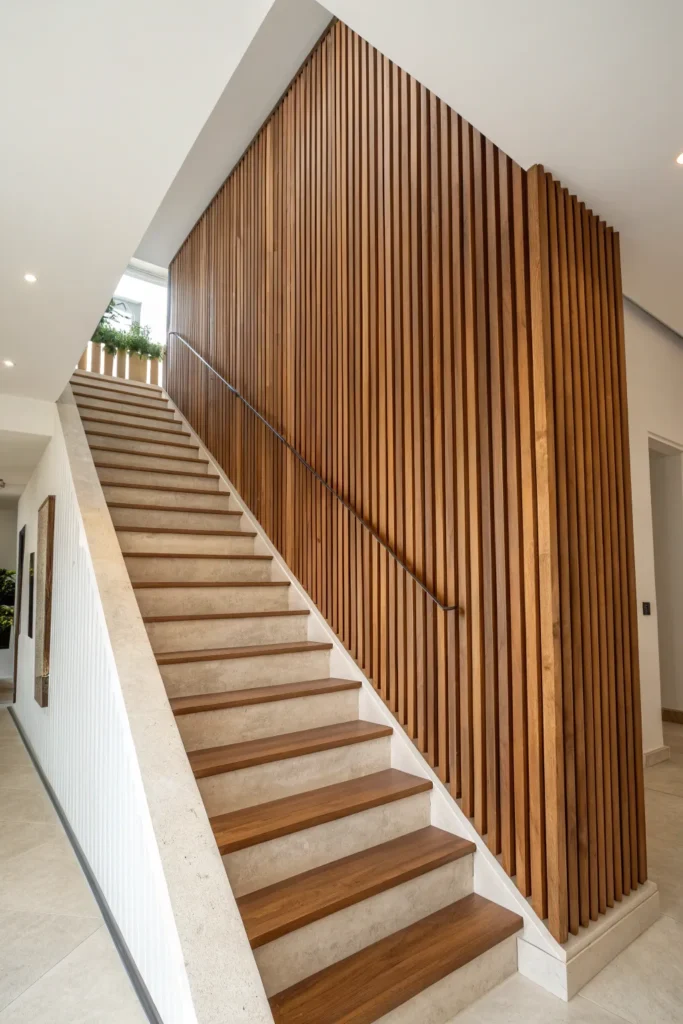
Wood slats bring warmth and rhythm to stairway walls while maintaining a modern edge. Installed vertically or diagonally, they create a strong visual statement that feels architectural rather than decorative.
Using light or medium wood tones keeps the space feeling open. This idea pairs especially well with minimalist staircases and simple railing designs.
7. Stone or Stone-Look Panels
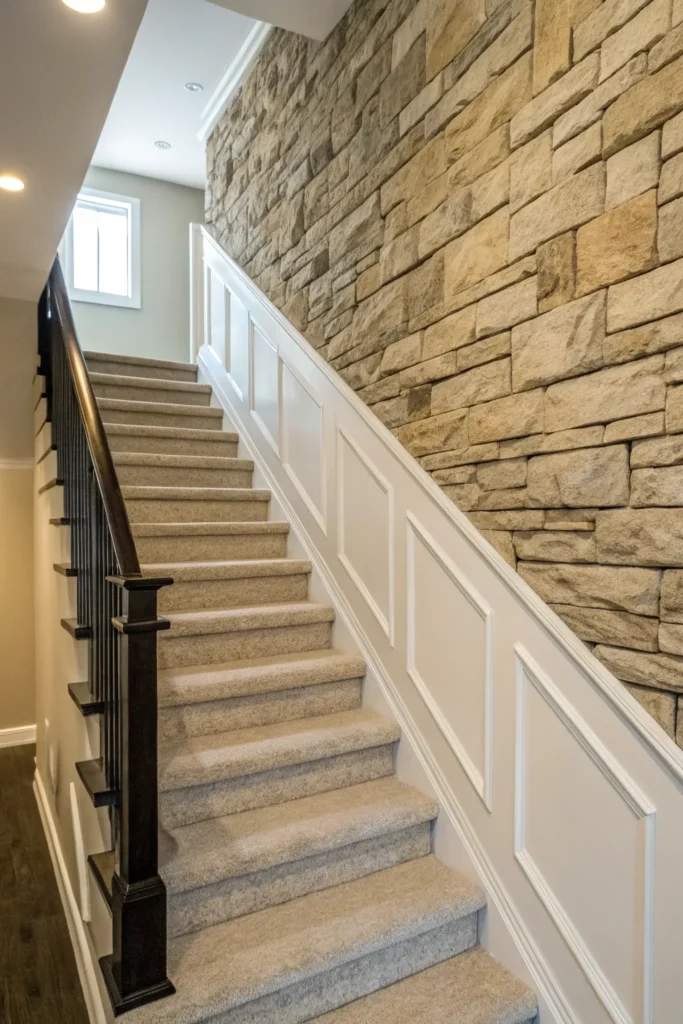
Stone accent walls introduce natural texture and weight, making stairways feel grounded and substantial. For modern homes, stone-look panels or thin veneer offer the same visual impact without overwhelming the space.
Limiting stone to a single wall keeps the effect dramatic yet controlled. Soft lighting enhances the texture and creates a refined, gallery-like atmosphere.
8. Color-Blocked Stairway Wall
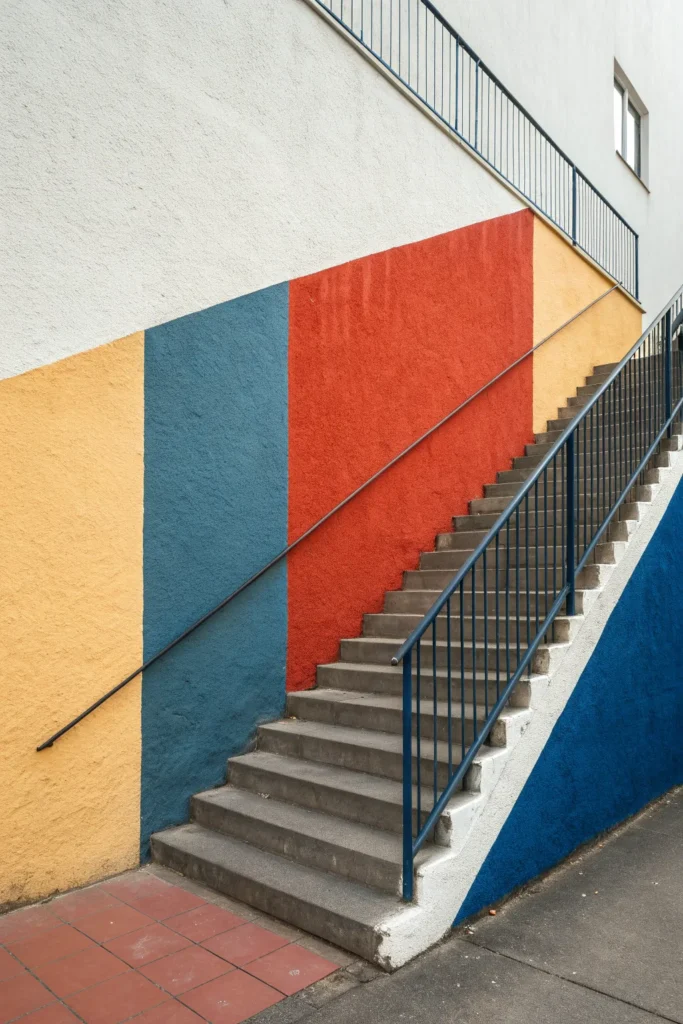
Color blocking adds a graphic, modern touch to stairway walls. Using two complementary tones—such as warm white and soft terracotta or grey and muted blue—creates visual interest while remaining cohesive.
Aligning the color transition with the stair railing or landing enhances the architectural flow. This technique is ideal for contemporary homes seeking a bold yet thoughtful statement.
9. Dark Accent Wall for Contrast
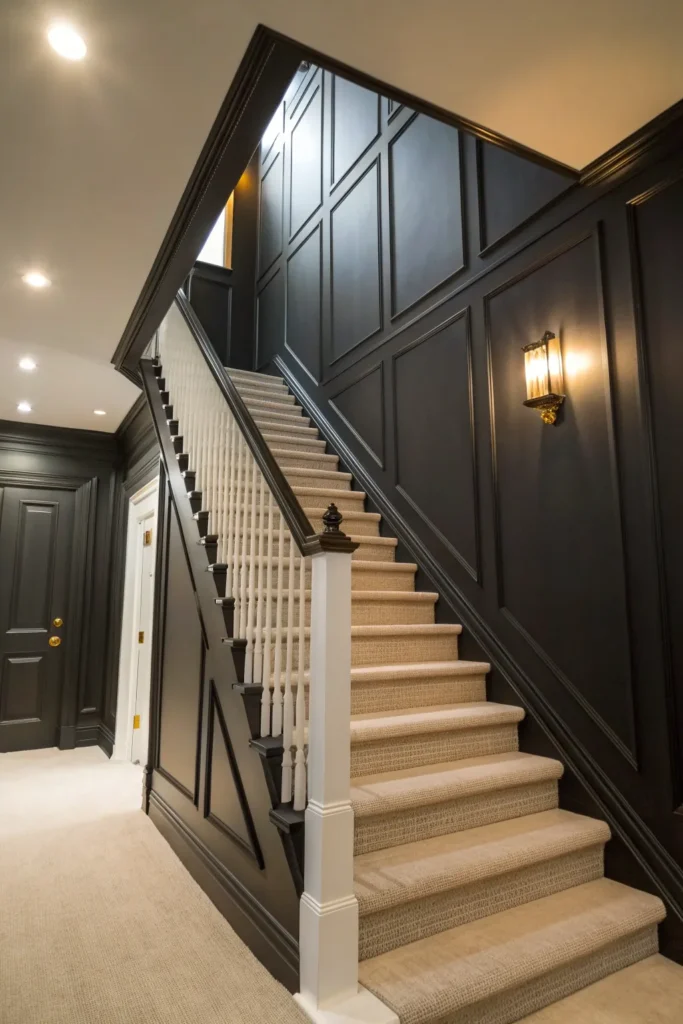
A dark stairway accent wall can feel dramatic and sophisticated when balanced correctly. Deep tones like charcoal, espresso, or inky blue create contrast that highlights the shape of the stairs.
To prevent the space from feeling heavy, pair dark walls with light stair treads, open railings, or ample lighting. The result is striking without being oppressive.
10. Mural-Style Wall Art
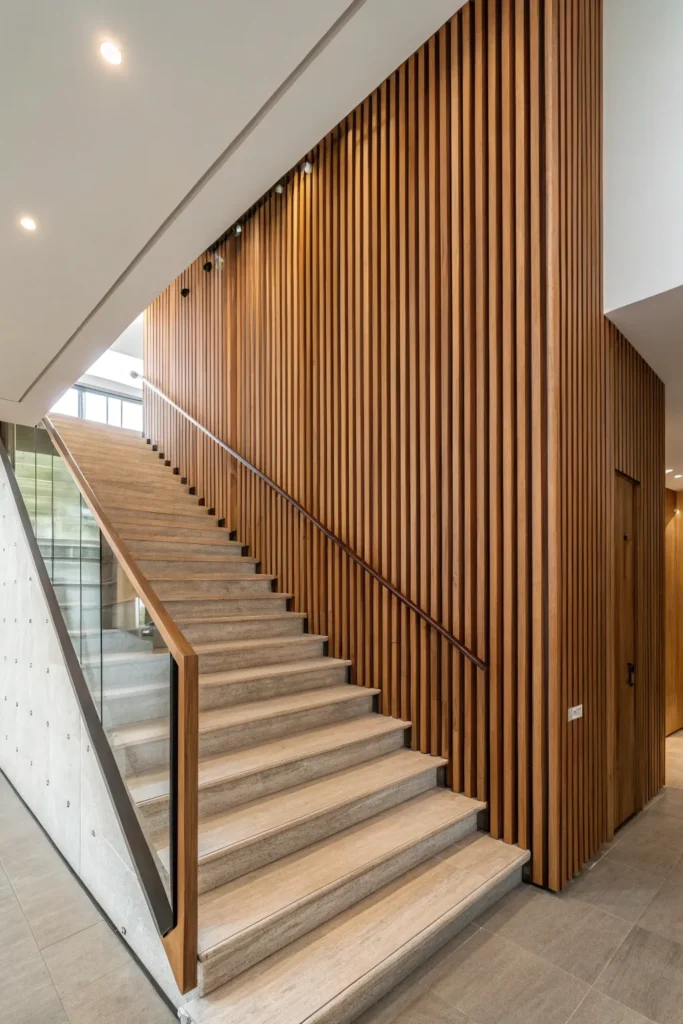
A mural-style accent wall transforms a stairway into a true art feature. Abstract landscapes, soft gradients, or large-scale patterns work especially well in staircases due to their vertical orientation.
Murals should feel integrated rather than overpowering. Choosing a restrained color palette ensures the wall remains a focal point without clashing with adjacent rooms.
11. Minimalist Line Art Wall
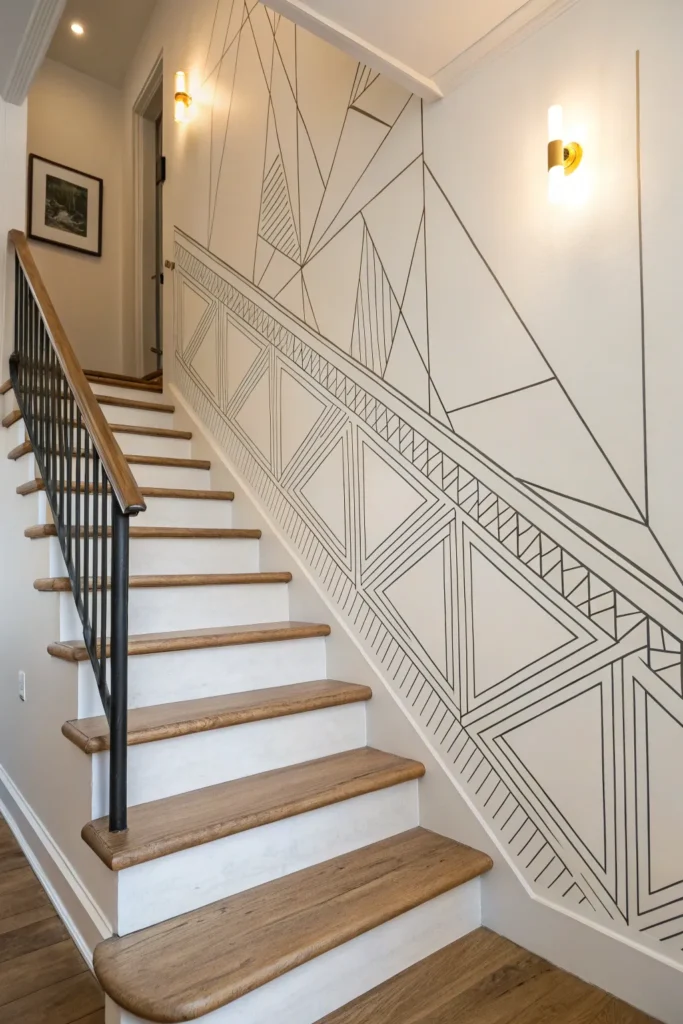
For a modern and understated statement, minimalist line art painted or applied directly onto the wall offers subtle sophistication. Linear designs complement the geometry of staircases and feel intentional rather than decorative.
This idea works particularly well in neutral interiors where small details make a big impact. The simplicity allows the design to age gracefully over time.
12. Stairway Wall with Built-In Shelving
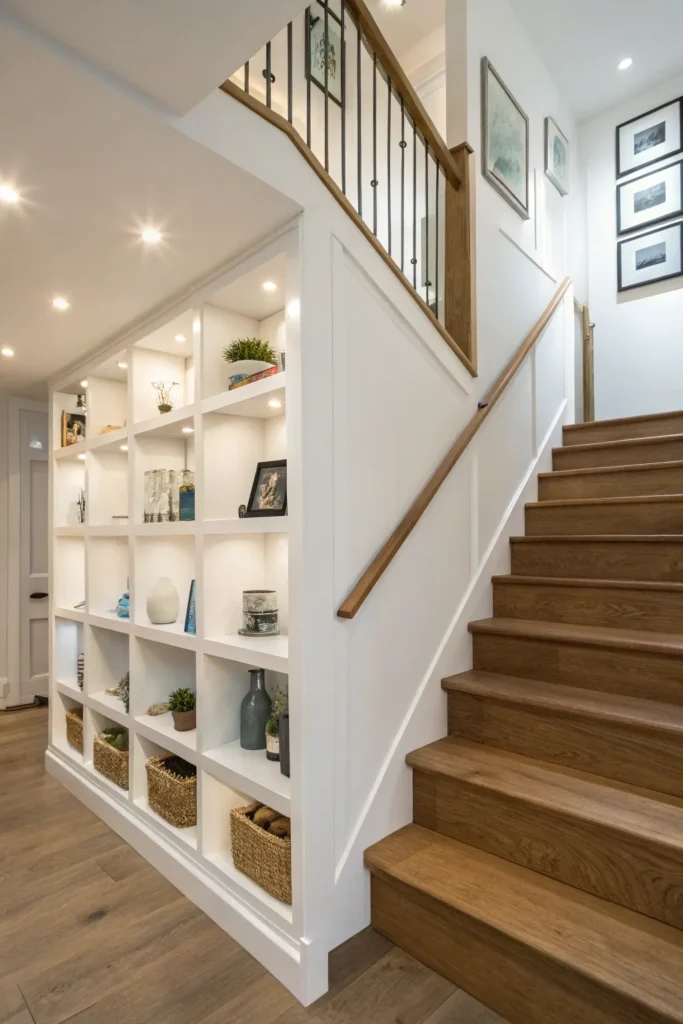
Built-in shelving along a stairway wall adds both function and visual interest. When styled minimally, shelves can display books, objects, or plants without cluttering the space.
Keeping the shelving shallow ensures safety and maintains clear passage. Painted or wood-finished shelves can either blend in or stand out as a design feature.
13. Accent Wall with Integrated Lighting
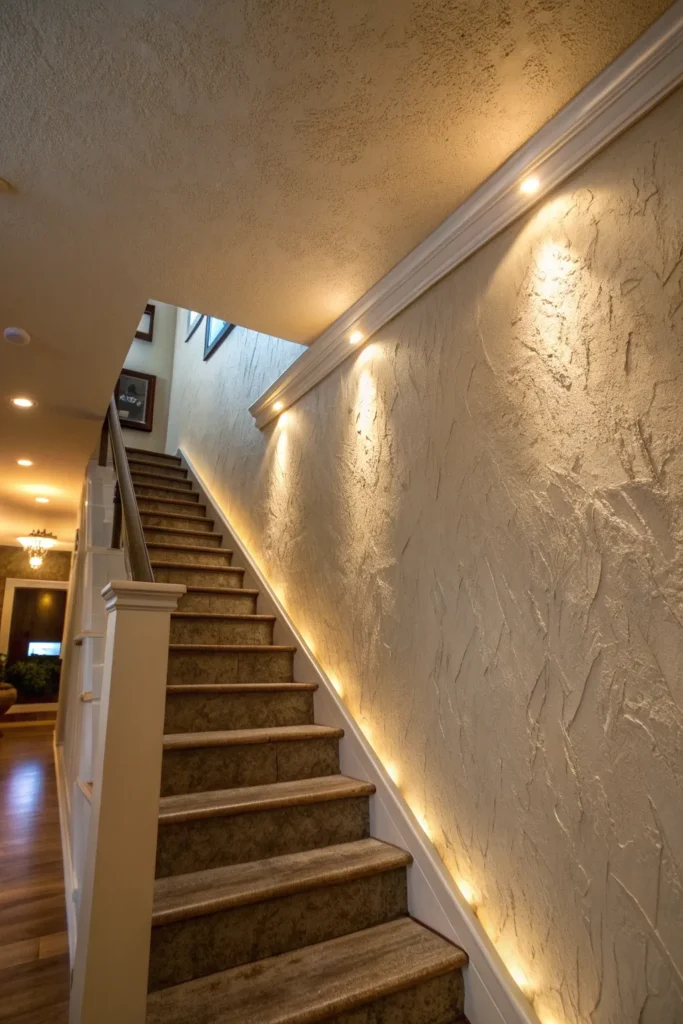
Lighting transforms stairway accent walls from static to dynamic. Integrated wall lighting, such as sconces or LED strips, highlights texture and creates depth.
Warm lighting enhances materials like wood and plaster, while cooler tones work well with modern finishes. Proper lighting ensures the accent wall remains visible and impactful at all times of day.
14. Patterned Tile Accent Wall
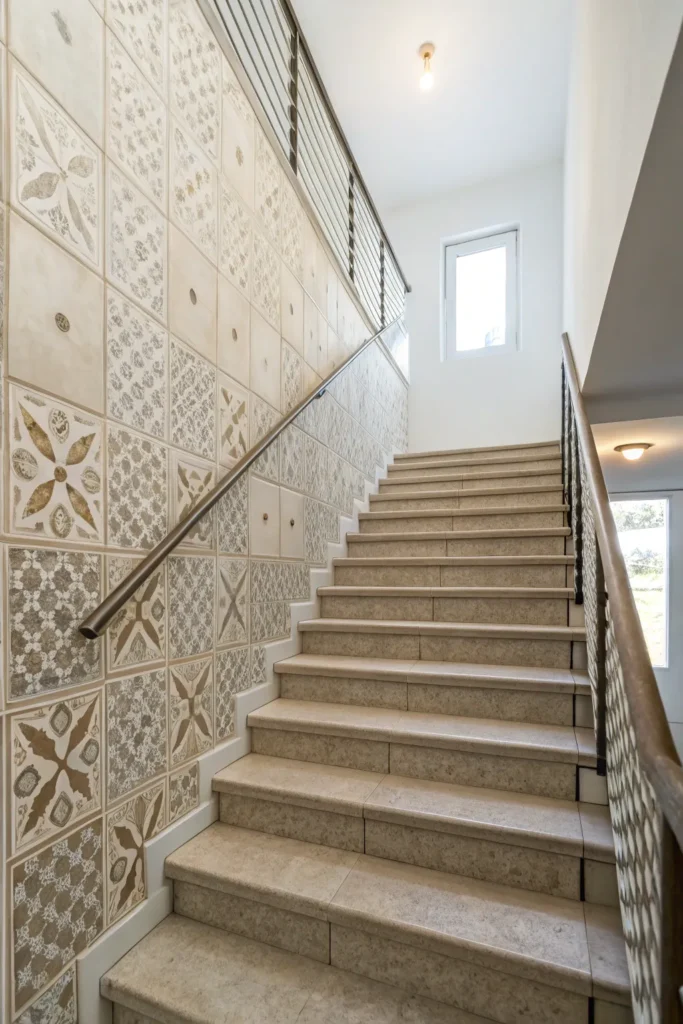
Patterned tile isn’t just for kitchens and bathrooms. When used on a stairway accent wall, tiles can create a bold, graphic statement that’s also durable and easy to maintain.
Choosing a restrained pattern and color palette keeps the look sophisticated. Tiles work especially well in homes with modern or Mediterranean influences.
15. Minimalist Accent Wall with Negative Space
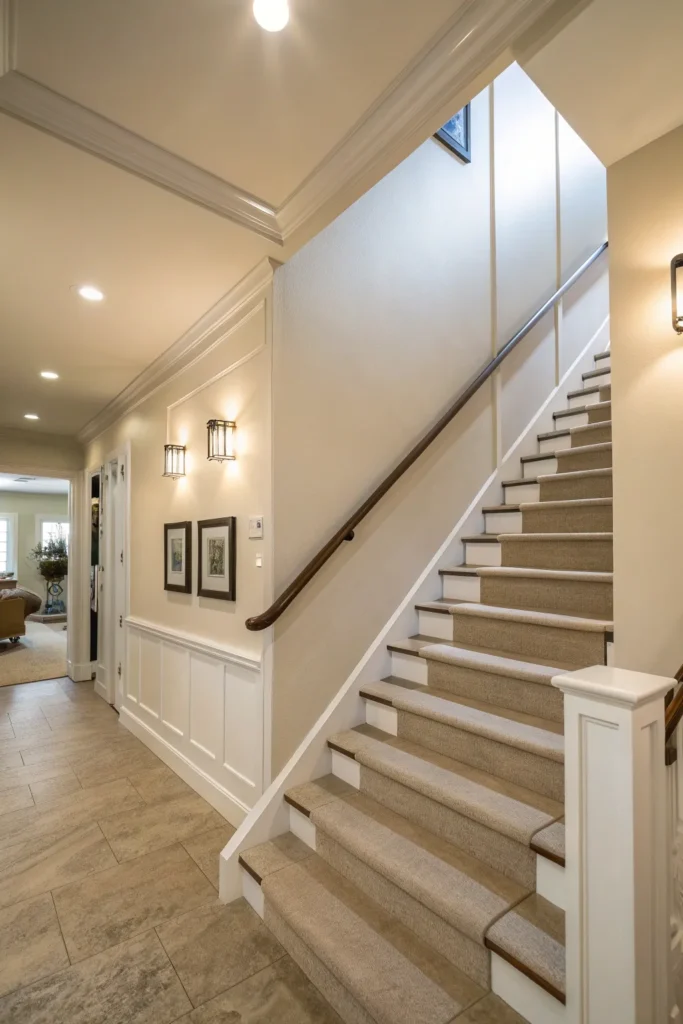
Sometimes, the strongest statement is restraint. A minimalist stairway accent wall relies on clean lines, subtle contrast, and intentional negative space to create impact.
This approach emphasizes architecture rather than decoration. By allowing space to breathe, the stairway feels calm, modern, and quietly confident.
Making a Statement Without Overwhelming Your Home
A stairway accent wall should feel like a natural extension of your home’s design, not a disconnected feature. The most successful designs balance boldness with restraint, using texture, color, or pattern thoughtfully.
By focusing on scale, lighting, and material choice, you can transform your stairway into a powerful design moment. Whether you opt for subtle texture or dramatic contrast, a well-designed stairway accent wall elevates the entire home—turning a functional space into a memorable one.