

Forget Chemical Sprays: Why Epsom Salt Potpourri is the New Go-To for Fresh Homes
Walk into any home goods store and you’ll be hit with an overwhelming wall of air fresheners. Aerosol sprays promising “mountain breeze.” Plug-ins that claim to transport you to a tropical paradise. But here’s what they don’t tell you on the label.
Most commercial air fresheners are chemical cocktails designed to overpower your sense of smell rather than genuinely freshen the air. They contain phthalates, formaldehyde, petroleum distillates, and volatile organic compounds that can trigger headaches, allergies, and respiratory issues.

Your home doesn’t need to smell like a department store perfume counter to be fresh and inviting. There’s a simpler, more natural approach that’s been quietly gaining traction: Epsom salt potpourri.
What Makes Epsom Salt Different from Regular Potpourri
Traditional potpourri looks pretty in a bowl but loses its scent quickly. You’re left with brittle plant material that does little more than collect dust.
Epsom salt potpourri works differently:
- Epsom salt (magnesium sulfate) has a crystalline structure that acts like a sponge for essential oils
- The salt crystals absorb and hold onto fragrance, releasing it slowly over time
- Creates longer-lasting scent without any synthetic chemicals
- No electricity, spraying, flames, or fuss required
The porous nature means it can hold significant amounts of essential oil without becoming greasy. As air circulates around the crystals, it picks up fragrance molecules and disperses them throughout your space. It’s passive diffusion at its finest.
The Health Benefits of Ditching Chemical Air Fresheners
Making the switch isn’t just trendy—it’s a legitimate health decision that improves indoor air quality.
What’s hiding in commercial air fresheners:
- The term “fragrance” can represent hundreds of undisclosed chemicals
- Many have never been tested for safety in combination
- Synthetic fragrances linger in air and accumulate on surfaces
- Can trigger asthma, allergies, and chemical sensitivities
People with respiratory issues are particularly vulnerable. But even healthy people might notice headaches, watery eyes, or feeling off without understanding why.
What you get with Epsom salt potpourri:
- Exactly two ingredients: Epsom salt and pure essential oils
- No mystery chemicals or unpronounceable ingredients
- You control what you breathe
- Essential oils offer benefits beyond pleasant scents
Lavender calms and supports sleep. Eucalyptus clears sinuses. Peppermint energizes and improves focus. Lemon uplifts and has natural antibacterial properties. You’re not masking odors—you’re creating an environment that supports wellbeing.
How to Make Epsom Salt Potpourri
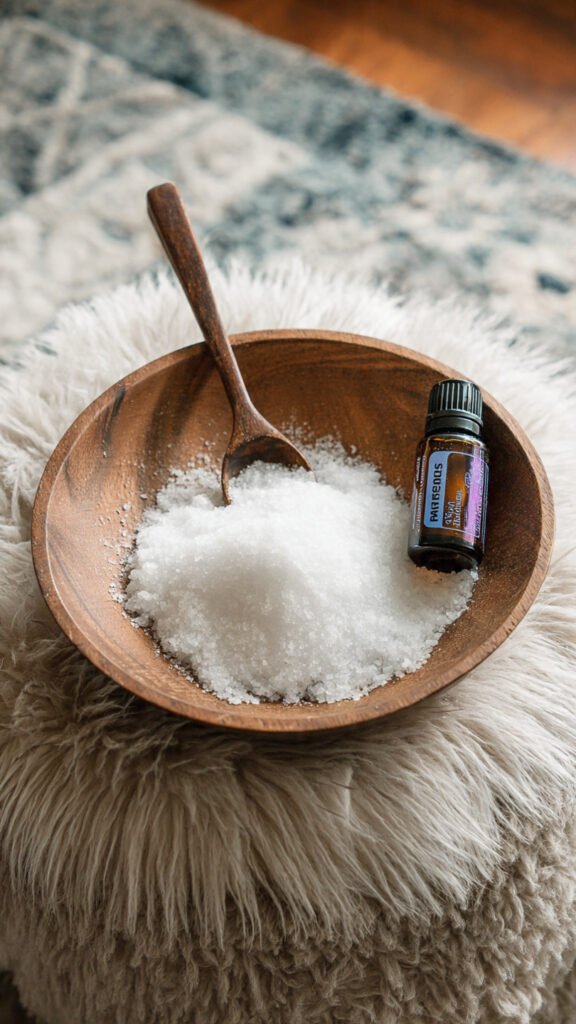
The beauty lies in simplicity. If you can measure and stir, you can make it.
Basic recipe:
- 2 cups Epsom salt (pure, unscented)
- 20-30 drops essential oils of your choice
- Optional: dried flowers, herbs, citrus peels for visual appeal
- Optional: food coloring for tinted salts
Popular scent combinations:
- Fresh & Clean: 15 drops lemon + 10 drops rosemary
- Calming Bedroom: 20 drops lavender + 5 drops chamomile
- Festive Warmth: cinnamon + clove + orange
- Spa Vibes: eucalyptus + mint
- Kitchen Fresh: citrus + basil + thyme
Instructions:
- Place Epsom salt in a large bowl
- Add your chosen essential oils
- Stir thoroughly to distribute oils evenly
- Keep stirring until clumps break apart
- Add dried botanicals if desired
- Transfer to decorative containers
The salt will clump where oils hit it initially, but keep mixing. You want every crystal coated with fragrant goodness. Start with fewer drops and add more if needed—you can always intensify, but you can’t take it away.
Where and How to Use It
Best locations for maximum impact:
Living areas:
- Coffee tables in small decorative bowls
- Entryway consoles for welcoming scents
- Bookshelves between decorative items
Bathrooms:
- Counters near the sink
- Shelf above the toilet
- Near the shower for spa atmosphere
- Naturally absorbs moisture while releasing scent
Bedrooms:
- Nightstands with calming blends
- Dresser tops
- No fire risk like candles, no electrical concerns like plug-ins
Kitchen:
- Window sills
- Counter corners
- Helps neutralize cooking odors
- Citrus and herb blends complement food aromas
Storage spaces:
- Closets in small sachets
- Drawers with fabric bags
- Gym bags
- Luggage between uses
Container ideas:
- Small decorative bowls or dishes
- Mason jars with mesh lids
- Vintage tea cups
- Small baskets lined with fabric
- Ceramic planters
Open containers work best for maximum air circulation. Mason jars with fabric tops look charming, protect from spills, and still allow scent to escape.
Refreshing and Maintaining Your Potpourri
One of the best aspects: incredibly easy to refresh when scent fades.
Maintenance schedule:
- Lasts 2 weeks to a month depending on location and air circulation
- Simply add a few drops of essential oil when scent weakens
- Stir and you’re back in business
- No need to throw out and start over
When to replace completely:
- Salt becomes discolored or dusty
- Every 1-2 months for best results
- Change scents seasonally for variety
Seasonal rotation ideas:
- Spring/Summer: fresh citrus, floral blends, light herbs
- Fall/Winter: warm spices, evergreen, vanilla, cinnamon
Because ingredients are inexpensive, replacing monthly won’t break the bank—especially compared to constantly buying aerosol sprays or plug-in refills.
The Cost Comparison
Let’s talk dollars and cents. Epsom salt potpourri is surprisingly economical.
Commercial air fresheners:
- Aerosol spray: $5-8, lasts about one month
- Plug-in starter kit: $10-15, refills $6-8 each (30 days)
- Specialty candles: $20-30, burns 40-60 hours
- Annual cost: $100-200+ easily
Epsom salt potpourri:
- Epsom salt bag (multiple batches): $5
- Essential oil: $8-15 (use less than 1/4 bottle per batch)
- First batch: $10-12
- Subsequent batches: $2-3 (oils already on hand)
- Annual cost: $30-50 maximum
Essential oils are concentrated and versatile. The same lavender oil works for potpourri, baths, diffusers, or homemade cleaning products. You’re not locked into single-use products.
Environmental Impact
Beyond personal health and savings, it’s the more environmentally responsible choice.
Commercial air freshener waste:
- Plastic aerosol cans (difficult to recycle)
- Plastic plug-in units
- Refill cartridges heading to landfills
- Aerosol propellants contribute to air pollution
- Synthetic fragrances require energy-intensive manufacturing
Epsom salt potpourri advantages:
- Epsom salt is a naturally occurring mineral
- Biodegradable and non-toxic to environment
- Essential oils from renewable plant resources
- Containers reused indefinitely
- No single-use packaging to dispose of
Your bowls, jars, and dishes can be used over and over. Thrift store finds work perfectly. No waste cycle every time your freshener runs out.
Making It Your Own

The real magic: complete creative freedom.
Why customization matters:
- Not limited to manufacturer’s scent choices
- Match your exact preferences
- Coordinate with home aesthetic
- Adjust for mood or season
- Create signature blends
Unexpected combinations to try:
- Coffee + vanilla (cozy café atmosphere)
- Cedar + sage (earthy, grounded)
- Grapefruit + mint (energizing morning blend)
- Sandalwood + rose (romantic elegance)
- Pine + orange (winter holidays)
- Grass + rain scents (spring freshness)
- Coconut + lime (summer vibes)
Special occasion blends:
- Guests coming over: impressive signature scent
- Holidays: festive combinations
- Seasonal changes: keep things fresh
- Mood boosting: energizing or calming as needed
The possibilities are limited only by available essential oils and your imagination. Build a collection of oils and experiment freely.
Additional Tips for Success

Getting the most from your potpourri:
- Use high-quality essential oils (not fragrance oils)
- Store backup batches in sealed containers
- Label jars with scent combinations you love
- Keep notes on ratios that work best
- Buy oils during sales to build your collection
Troubleshooting common issues:
- Scent too weak: add more drops, use fewer oils per batch for stronger concentration
- Scent too strong: use less oil next time, or mix in plain Epsom salt to dilute
- Salt clumping: needs more stirring, or oils are too concentrated in one spot
- Short scent life: increase oil amount, or location has too much air circulation
Safety considerations:
- Keep away from pets who might ingest it
- Some essential oils aren’t pet-safe (research before using)
- Place high enough that small children can’t reach
- Avoid oils that might cause skin sensitivity if touched
The Bottom Line
Chemical air fresheners have dominated so long we’ve forgotten alternatives exist. We’ve accepted that nice-smelling homes require specialized products full of synthetic ingredients we can’t pronounce.
Epsom salt potpourri challenges that assumption:
- Natural freshness without compromise
- Simple solution that actually works
- Know exactly what you’re breathing
- Cost less than commercial options
- More creative control than store-bought
What you gain:
- Healthier indoor air quality
- Customized scents for every room
- Money savings over time
- Reduced environmental impact
- Peace of mind about ingredients
What you lose:
- Chemical exposure
- Plastic waste
- Mystery ingredients
- Limited scent choices
- Overpowering artificial fragrances
Your home deserves to smell wonderful. You deserve to know what you’re breathing. The planet deserves fewer aerosol cans piling up in landfills.
Epsom salt potpourri delivers on all three counts while offering more control than anything on a store shelf.
So the next time you reach for that aerosol can or plug in another synthetic freshener, pause and consider whether there’s a better way. Your nose—and your lungs—will thank you.
Getting started is simple:
- Grab Epsom salt from any pharmacy
- Choose 1-2 essential oils you already love
- Mix, place in a bowl, enjoy
- Experiment and adjust as you go
No special skills required. No expensive equipment needed. Just simple, effective, natural freshness that puts you back in control of your home’s atmosphere.