
15 Backyard Pavilion Ideas
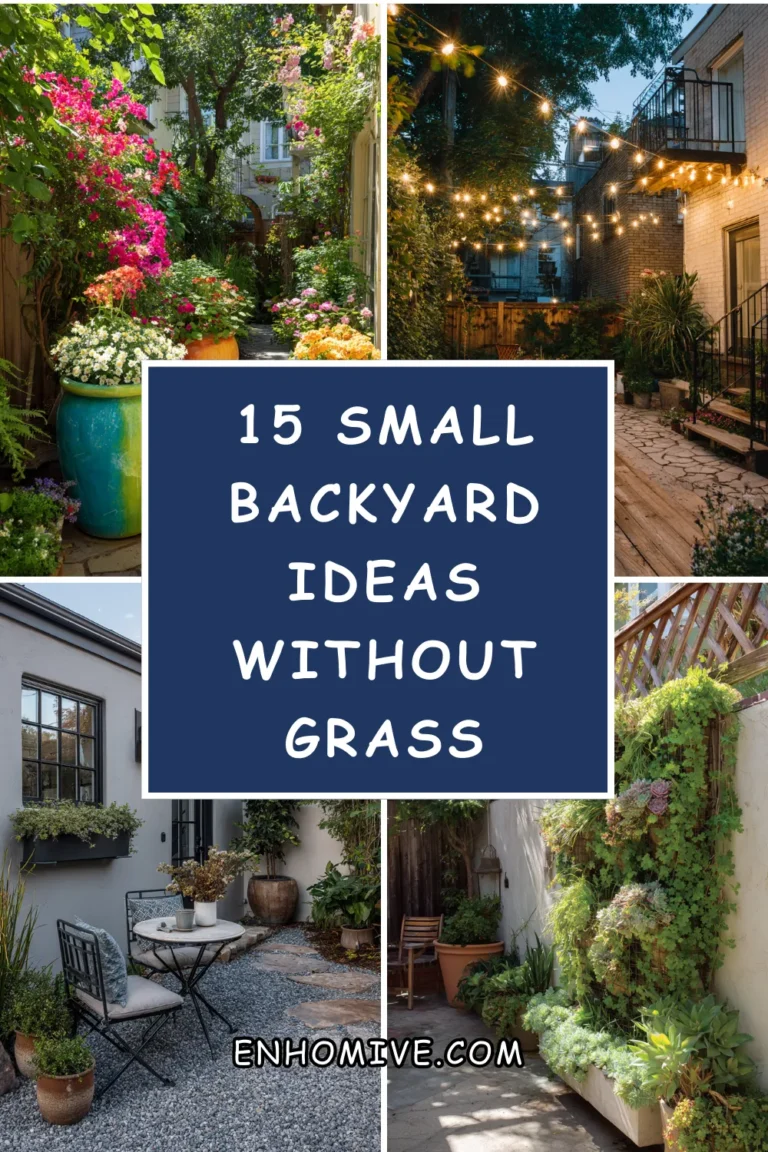
The backyard pavilion occupies a unique position in the hierarchy of outdoor structures. It is more substantial than a pergola, which provides overhead structure without enclosure. It is more open than a summerhouse or garden room, which creates a fully enclosed interior.
It sits at the precise intersection of inside and outside — a covered, defined outdoor space that provides genuine weather protection and architectural presence while maintaining the fundamental quality of being outdoors: the open air, the garden visible on every side, the sounds and scents of the outdoor environment present and unfiltered.
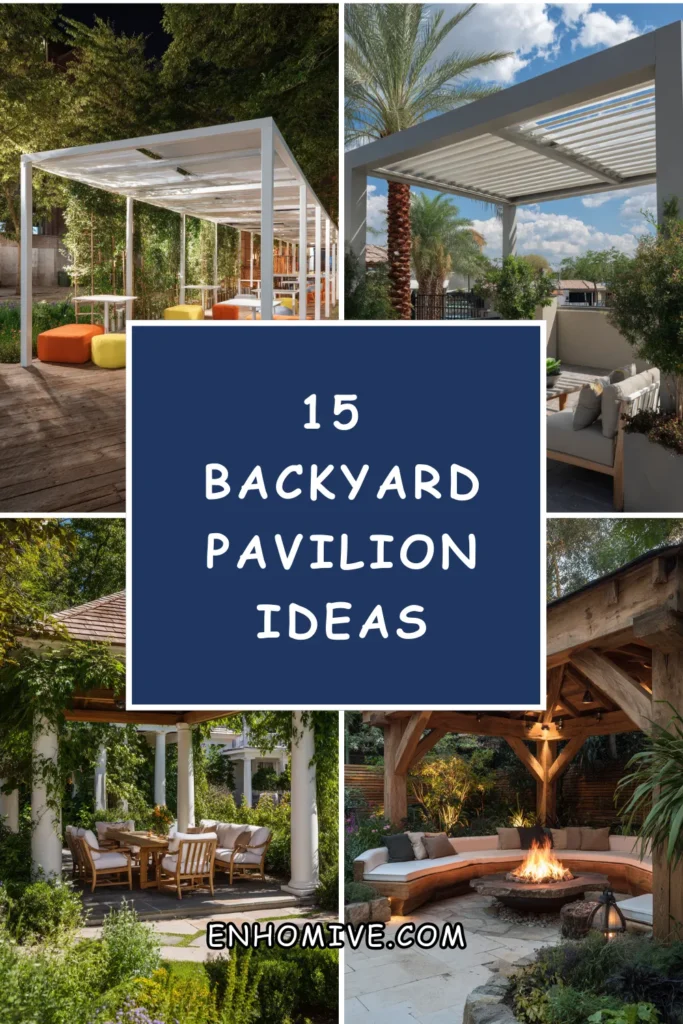
This intersection is the pavilion’s great strength and the reason it has appeared in the finest gardens of every culture and every period — from the classical garden temples of Renaissance Italy to the painted wooden pavilions of traditional Chinese gardens to the sleek contemporary structures that appear in the most admired residential landscape architecture of the present day.
In a backyard context, the pavilion transforms the outdoor space from a collection of functional areas — lawn, planted beds, perhaps a patio — into a landscape with an architectural destination, a place that has been specifically designed for the pleasure of being outside in comfort and beauty. Here are fifteen backyard pavilion ideas that span the range from simple and economical to architecturally ambitious, covering every style, budget, and garden context.
1. The Classic Timber Pavilion with Hip Roof
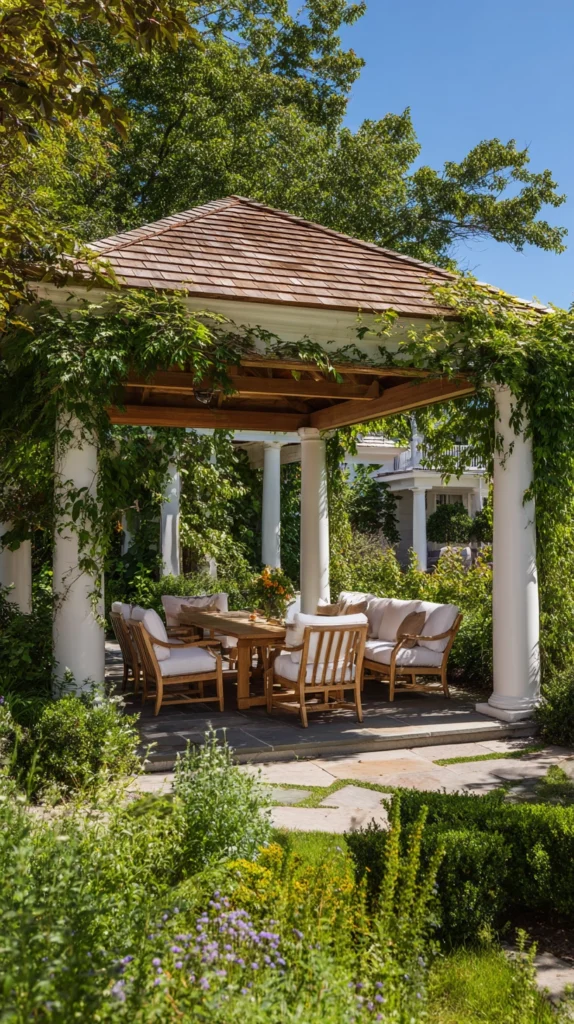
The timber pavilion with a hipped roof — four sloping roof faces meeting at a central ridge or peak, supported on four or more timber posts at the corners — is the pavilion in its most classically resolved form, and its enduring popularity across centuries of garden design reflects the fact that the combination of the hipped roof’s elegant geometry and the open timber post structure creates an outdoor room of genuine architectural authority that suits virtually every garden style with appropriate contextual adaptation.
In a formal garden, the classic timber pavilion with regular post spacing, a painted white or heritage green finish, and a cedar shingle or slate roof creates a garden building of considerable dignity.
In a more relaxed cottage garden, the same structural form in rough-sawn oak with a living sedum roof and climbing plants beginning their ascent on the corner posts creates a pavilion of completely different character — romantic, naturalistic, embedded in the garden’s landscape rather than imposed upon it.
The interior should be furnished with the weather-appropriate comfort that a structure of this permanence justifies: a dining table, substantial upholstered outdoor furniture, a fire pit or heater for shoulder-season use.
2. A Modern Flat-Roof Steel Pavilion
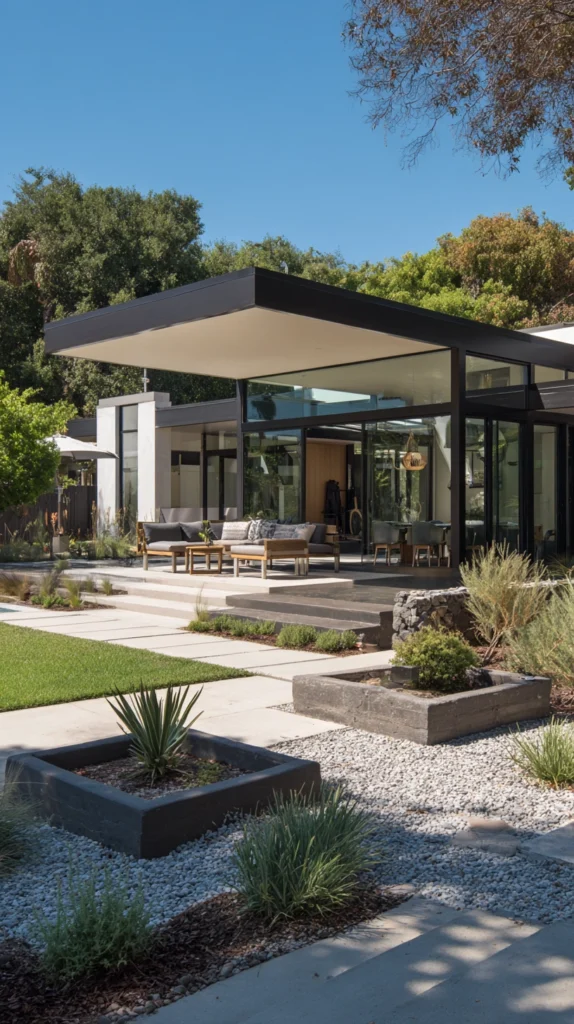
The flat-roof steel pavilion — a structure of welded steel posts and beams supporting a flat roof in steel, polycarbonate, or composite decking material — is the contemporary garden architecture at its most precise and most minimalist, and in a garden with strong modernist design sensibilities it creates an outdoor structure of complete architectural coherence with the surrounding landscape.
The flat roof’s clean horizontal line against the sky and the slim steel posts’ minimal visual footprint create a pavilion that is almost transparent in its lightness — the structural frame seems barely present, and the covered space beneath it retains the open-sky quality of an uncovered outdoor space while providing genuine rain protection.
Powder-coat the steel frame in matte black, dark charcoal, or a deep architectural green for the most contemporary result, and extend the pavilion’s roof as a cantilevered overhang beyond the post line on one or more sides to create generous shade coverage without additional posts that would compromise the design’s clean geometry.
3. A Thatched Pavilion for Tropical Warmth
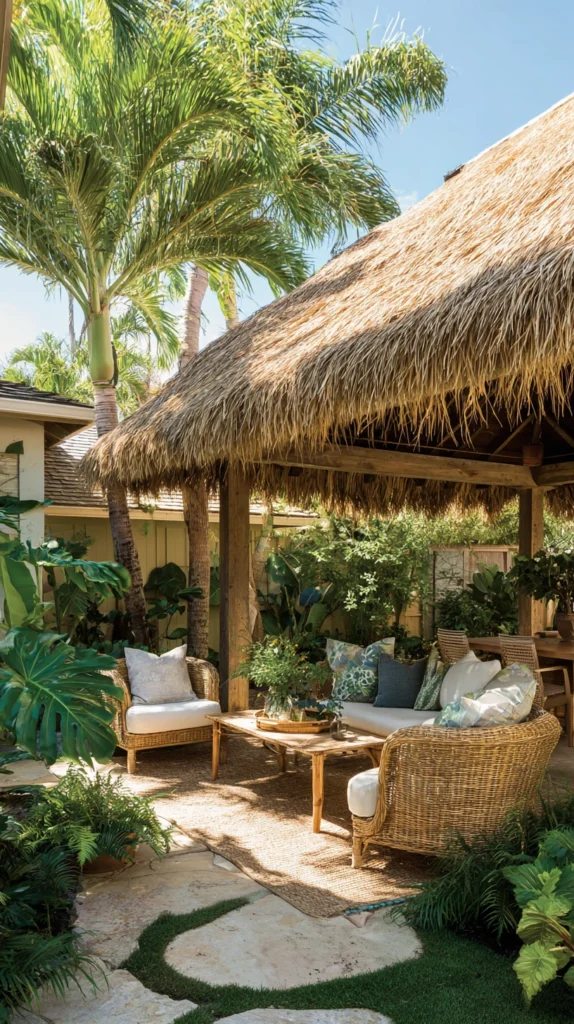
A pavilion roofed with natural or synthetic thatch — the tight-packed dried grass or palm frond material whose insulating and rain-shedding qualities have made it one of the world’s oldest roofing materials — creates a backyard outdoor structure with a quality of warmth, naturalness, and cultural richness that no manufactured roofing material can replicate.
Thatched pavilions are most naturally associated with tropical and subtropical garden styles — the deep, overhanging thatch roof shading a rattan-furnished interior, surrounded by tropical planting, creating an experience of luxurious island escape within a domestic backyard.
But the thatched pavilion translates into temperate gardens and more formal landscape styles with considerable success when the surrounding context — mature trees, generous planting, a naturalistic pond or water feature — supports the material’s organic character. Natural thatch requires periodic maintenance and replacement; high-quality synthetic thatch in UV-resistant materials provides the visual effect with significantly reduced maintenance and greater longevity.
4. A Pergola-Pavilion Hybrid with Retractable Shade
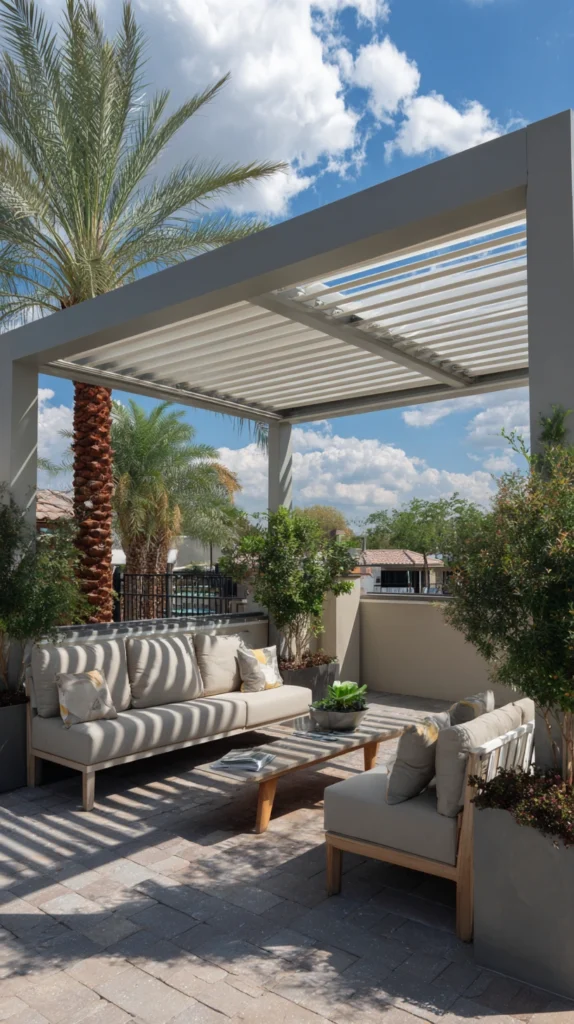
The hybrid structure that combines the open overhead framework of a pergola with a retractable fabric or louvred roof system creates the most versatile of all backyard covered structures — one that can be fully open to the sky on clear days, partially shaded through adjustable louvers or a retractable canopy during intense afternoon sun, and fully closed to provide rain protection when weather demands it.
The retractable element — whether a motorized louvred aluminum system, a manually operated fabric awning, or a tensioned cable-supported sail — gives the structure a flexibility of use across a much wider range of weather conditions than a fixed-roof structure of equivalent footprint.
This versatility makes the hybrid pavilion the preferred choice for gardens in climates where sun, rain, and variable weather are all regular features of the outdoor season, and where the investment in a covered outdoor structure needs to deliver year-round rather than seasonal value.
5. A Rustic Stone and Timber Pavilion
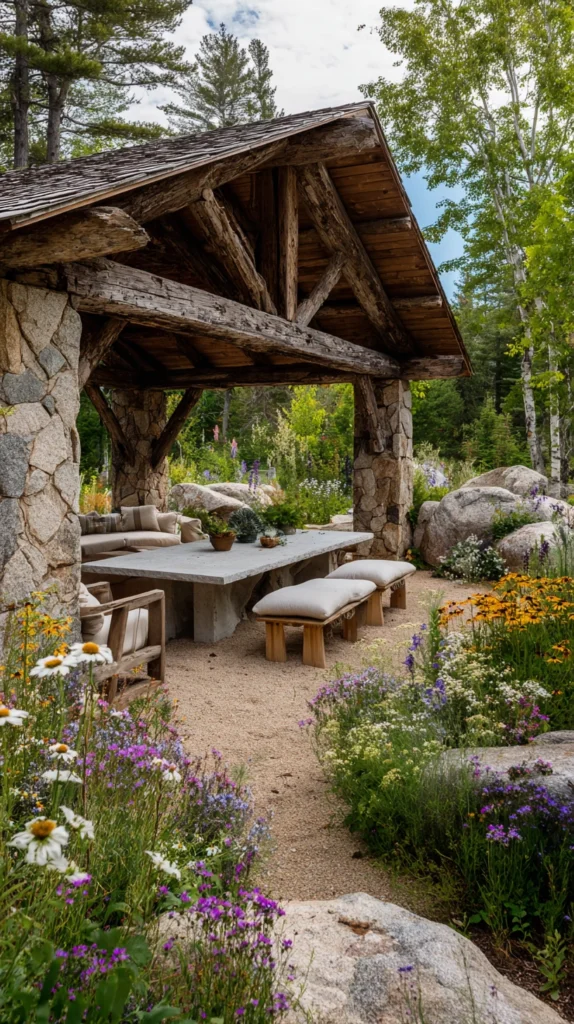
A pavilion built from natural stone walls — either full walls on two or three sides or low knee-height walls that provide windbreak without enclosure — combined with a timber post and beam roof structure creates an outdoor building of extraordinary permanence and material quality that integrates into the garden landscape with the naturalness of something that has always been there.
The stone walls provide thermal mass and wind protection that open-post pavilions cannot offer, creating a sheltered microclimate within the pavilion that allows comfortable outdoor living in conditions that would make a fully open structure too exposed.
The combination of rough stone and timber is one of the most elementally beautiful material pairings available in architecture — the contrast between the mineral weight of the stone and the organic warmth of the timber creating a building that belongs to the natural world as much as to the designed garden.
6. An Asian-Inspired Pavilion with Curved Roofline
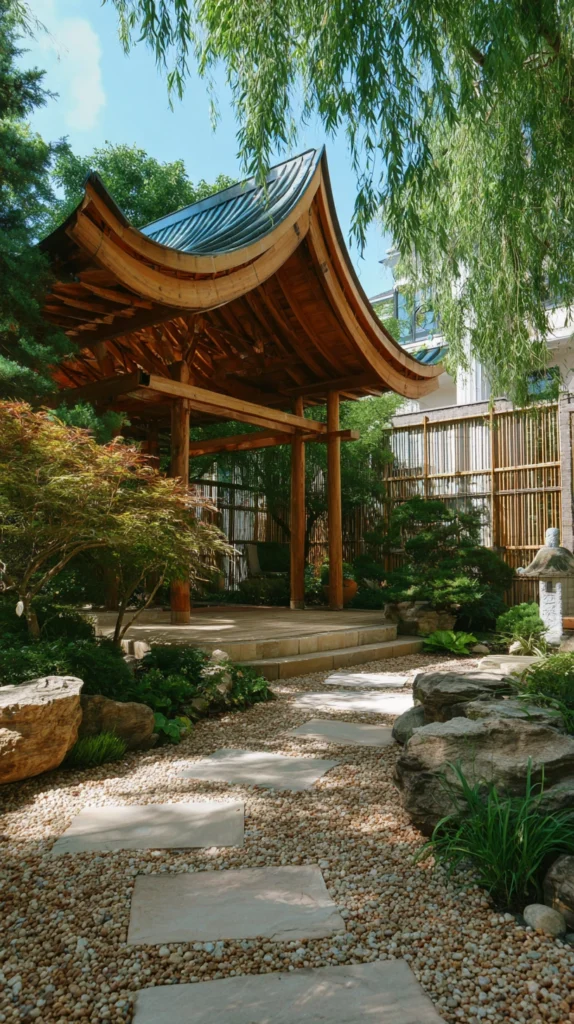
The pavilion whose roof adopts the upturned eaves and curved ridge of traditional East Asian architecture — the distinctive silhouette that is immediately associated with Japanese garden pavilions, Chinese pleasure houses, and the classical outdoor structures of Vietnamese and Thai garden tradition — creates a garden building with a specific quality of tranquility and cultural elegance that no Western architectural form quite replicates.
The curved roofline requires more skilled carpentry than a standard gabled or hipped roof and is consequently more expensive to construct, but the result — a pavilion whose silhouette is visible from the garden’s main vantage points and creates an architectural focal point of considerable beauty — justifies the additional investment in the right garden context.
Surround the Asian-inspired pavilion with appropriate planting — bamboo, Japanese maples, ornamental grasses, moss-covered stones — and a gravel or raked stone ground surface to create the complete garden picture that the pavilion’s architectural character suggests.
7. A Glass and Steel Garden Pavilion
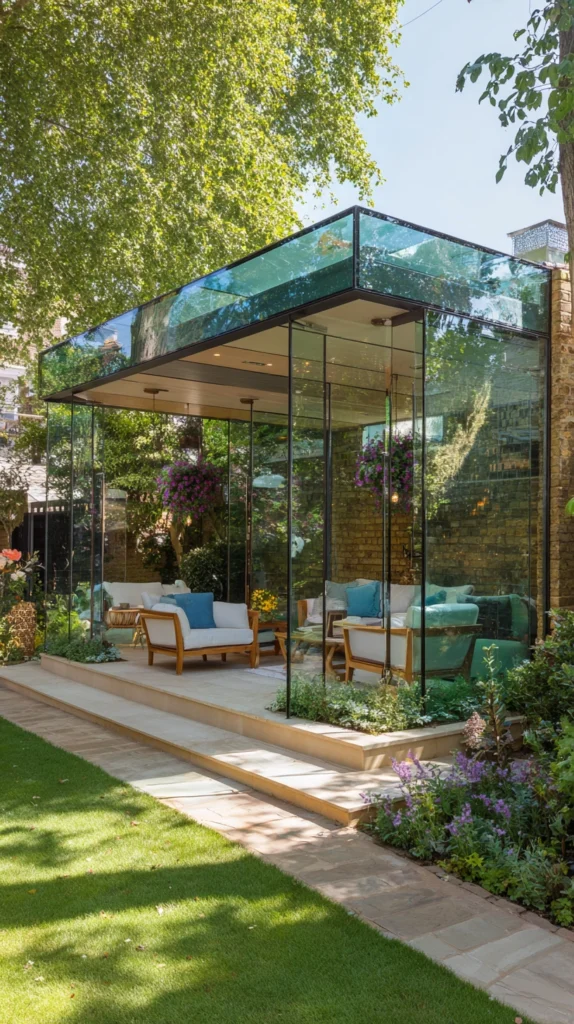
A pavilion with glass walls — full-height glass panels between the structural posts, creating a glazed enclosure that is simultaneously fully transparent and weather protected — creates the most complete integration of inside and outside available in the pavilion category.
The glass pavilion allows the garden to be seen from every position within it, maintains the visual connection to the surrounding landscape that an opaque-walled structure cannot provide, and creates a remarkable quality of enclosed openness — you are protected from wind and rain while being visually immersed in the garden environment.
The glass pavilion is also the most architecturally demanding construction on this list — structural glass requires engineering, specialist installation, and a significant budget — but the result is a garden building of extraordinary quality that functions as a true four-season outdoor room in all but the coldest climates.
8. A Pavilion with Integrated Outdoor Kitchen
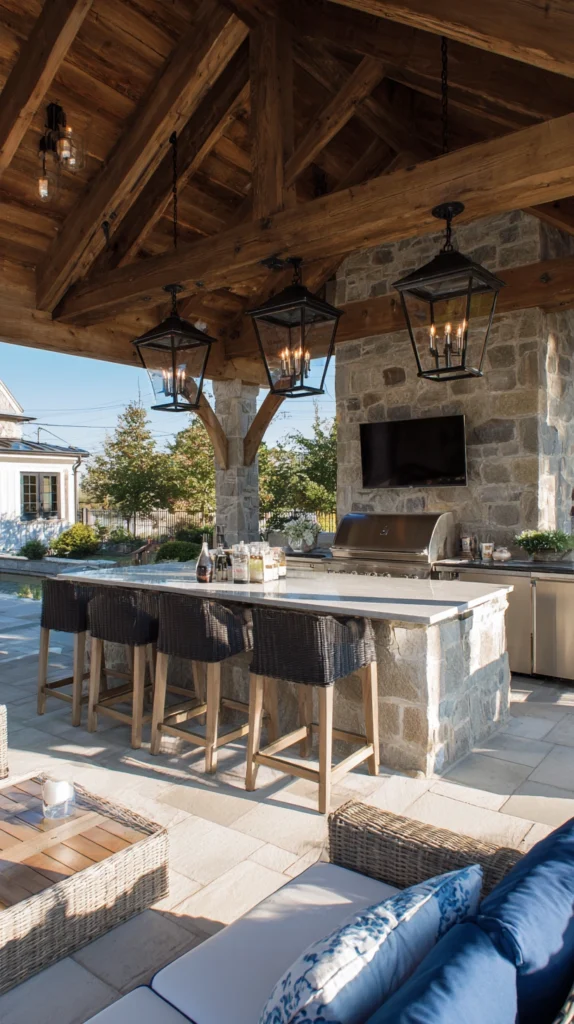
The backyard pavilion that incorporates a built-in outdoor kitchen — a grill station, a preparation counter, a sink, a refrigerator, and bar seating — creates the most complete outdoor entertaining environment available in the residential market, combining the shelter and architectural presence of a permanent covered structure with the food preparation and service capability that transforms outdoor gatherings from simple socializing into genuine hospitality events.
The kitchen counter should be positioned on the pavilion’s most accessible side — facing the main seating area and oriented so that the cook can engage with guests while working — and should be constructed in materials appropriate to the outdoor environment: stainless steel appliances, concrete or stone countertops, and waterproofed cabinet construction.
The pavilion’s roof provides the essential overhead protection for the kitchen equipment, extending the outdoor cooking season from the fine-weather-only window of an exposed outdoor kitchen to a genuinely year-round facility.
9. A Floating Timber Deck Pavilion Over Water
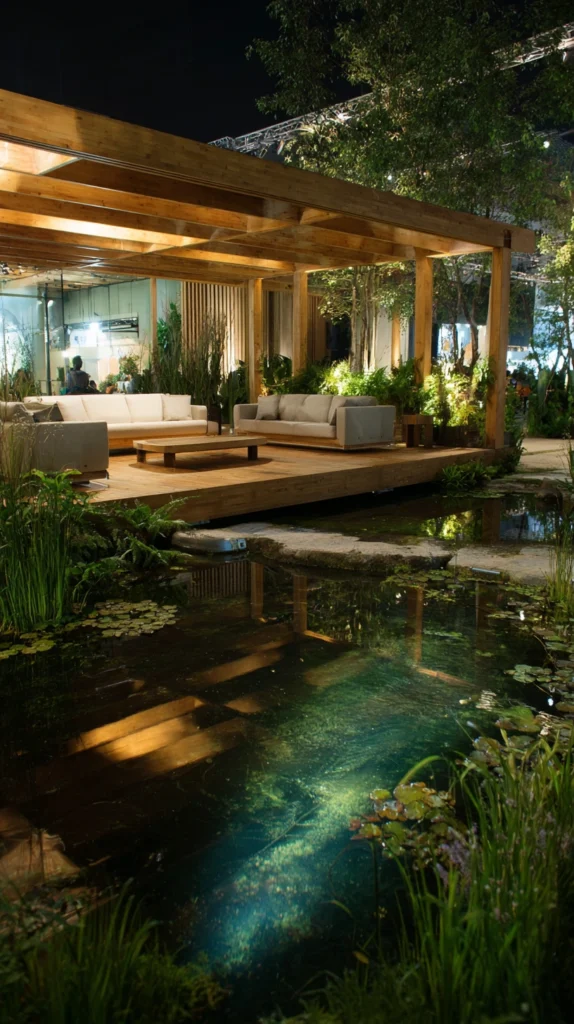
In gardens with a pond, a natural water feature, or sufficient space and engineering capability to create a shallow reflecting pool, a pavilion constructed over or partially over the water creates an outdoor experience of extraordinary beauty and sensory richness.
The sound of water beneath and around the pavilion structure, the reflections of the pavilion and the garden in the water surface visible from within the structure, and the specific quality of the light that water reflects upward onto the overhead structure create an environment unlike anything available in a land-based pavilion of equivalent design and material quality.
The structural requirements of a water-adjacent or water-spanning pavilion are more demanding than those of a standard ground-level structure — waterproofed foundations, corrosion-resistant structural fixings, and adequate load-bearing capacity for the cantilevered sections — but the experience created by the completed structure justifies every aspect of the additional engineering investment.
10. A Pavilion with Built-In Seating and Fire Pit
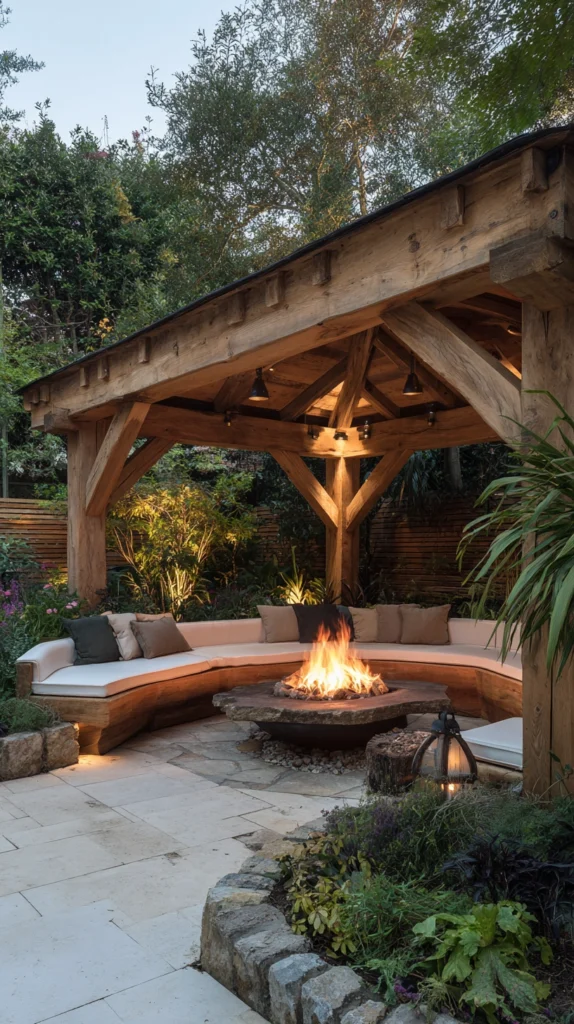
A pavilion designed around a central sunken fire pit — the fire element positioned at the geometric center of the covered structure, with built-in bench seating on all four sides creating a social circle around the flames — is the backyard pavilion at its most socially concentrated and most atmospherically powerful.
The combination of overhead cover that contains the fire’s warmth and smoke within the pavilion’s volume and the built-in seating that positions every person in direct proximity to the heat and light of the fire creates an outdoor social environment of extraordinary intimacy and warmth.
This is the pavilion for cool-climate gardens where the fire’s heat is genuinely necessary for comfortable outdoor living beyond the summer months, and where the social magnetism of a covered fire pit creates the kind of gathering that continues well past the point that an uncovered outdoor fire would have dispersed its participants indoors.
11. A Sail-Shade Pavilion for Contemporary Minimalism
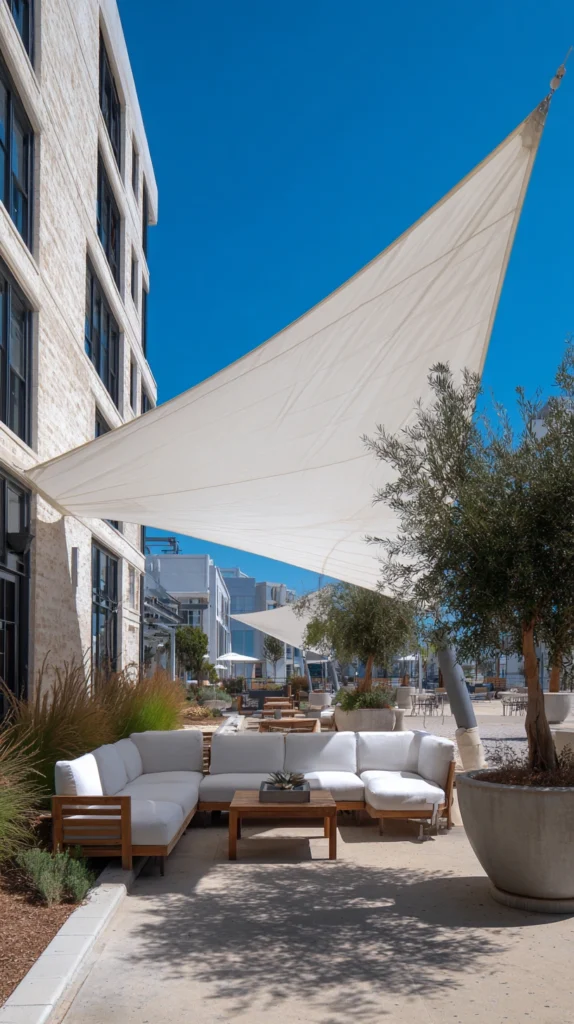
A pavilion created from multiple tensioned sail shades — three or four large fabric panels anchored at different heights to a simple framework of powder-coated steel posts — is the most economical and the most visually dynamic of all backyard pavilion configurations, creating a covered outdoor area of considerable drama through the sculptural, billowing geometry of the tensioned fabric forms.
The sail shades can be in a consistent color for maximum visual simplicity or in two complementary tones for a more complex overhead composition, and their adjustable anchor points mean that the coverage and shade pattern can be modified as the garden’s use and the sun’s seasonal position changes.
The sail pavilion suits contemporary and minimalist gardens with a clean, architectural aesthetic, and its relative ease of installation — compared to any timber or steel structure of equivalent coverage — makes it the most accessible of all pavilion options for homeowners who want a significantly covered outdoor space without major construction.
12. A Victorian-Style Wrought Iron Pavilion
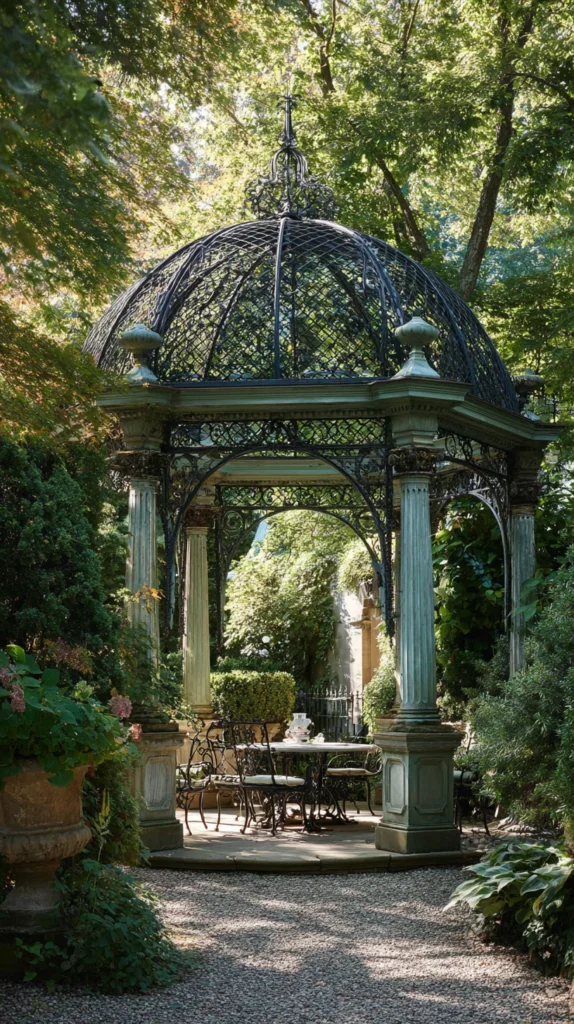
A pavilion constructed from ornate wrought iron — cast iron columns with foliate capitals, decorative ironwork spandrels between the columns and the roof beam, and a roof in painted iron sheeting or glass — creates a Victorian garden building of considerable period authenticity and decorative richness.
The wrought iron pavilion relates to the glasshouses, conservatories, and ornamental garden structures of the Victorian era with obvious historical continuity, and in a period garden — one associated with a Victorian or Edwardian house, or one designed in a deliberately historicist style — it creates an outdoor structure of genuine architectural appropriateness.
The ornate ironwork provides a level of decorative detail that timber structures of equivalent size cannot approach, and the material’s weight and permanence give the pavilion the quality of serious garden architecture rather than temporary outdoor furniture.
13. A Pavilion Designed as a Garden Focal Point
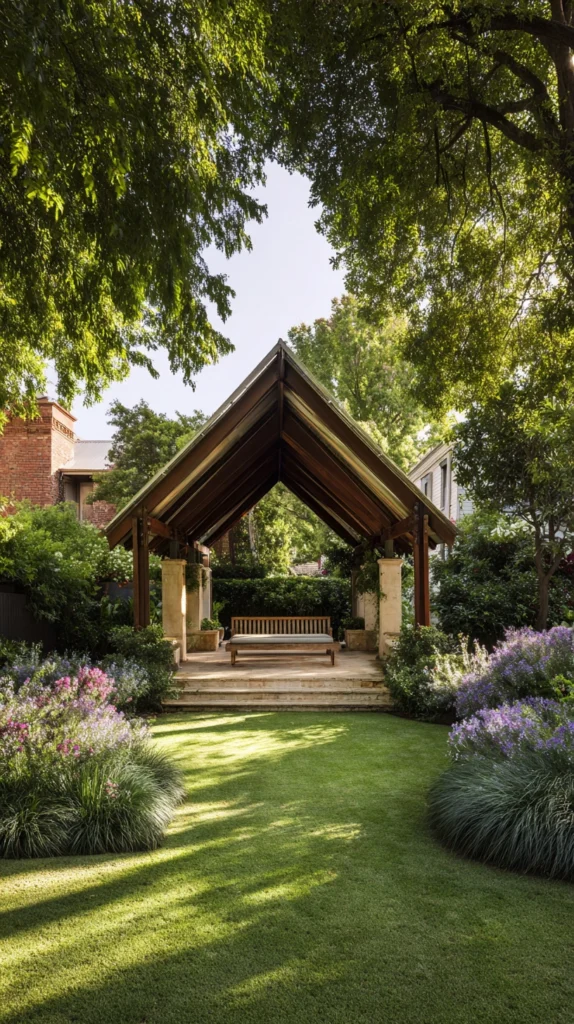
The pavilion positioned at the garden’s primary visual axis — at the end of a formal lawn, at the termination of a garden path, at the center of a circular planting arrangement — functions as a focal point rather than simply as a covered outdoor space, giving the garden a visual destination that draws the eye from the house and organizes the surrounding landscape around its architectural presence.
A pavilion designed for this focal role should be architecturally considered from every angle of approach — its form, its color, and its material quality visible and rewarding from the garden’s main vantage points — and surrounded by planting that frames rather than obscures it.
The interior of a focal pavilion can be relatively simply furnished — a bench, a statue, a simple table and chairs — because the primary function is the architectural contribution to the garden’s visual composition rather than the comfort of extended occupation.
14. A Modular System Pavilion for Expandability
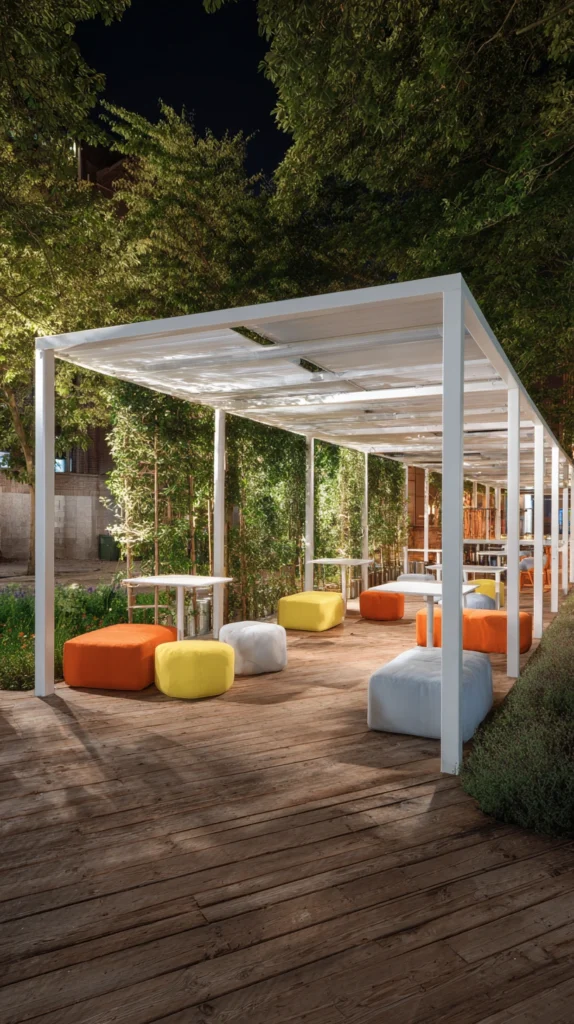
A pavilion constructed from a modular system — standardized post, beam, and panel components that can be assembled in multiple configurations and expanded over time by adding additional modules — offers a practical flexibility that custom-designed structures cannot match.
The modular pavilion can begin as a small, two-post shade structure and expand over successive seasons as budget and need dictate, adding covered area, additional posts, integrated lighting, and roof upgrades without requiring the demolition and reconstruction that expanding a custom-built structure would demand.
The aesthetic quality of modular systems has improved significantly, with powder-coated aluminum frames, composite decking components, and quality fabric roof panels creating structures of genuine design appeal rather than the utilitarian appearance of earlier modular products.
15. A Pavilion with Outdoor Sleeping Capability
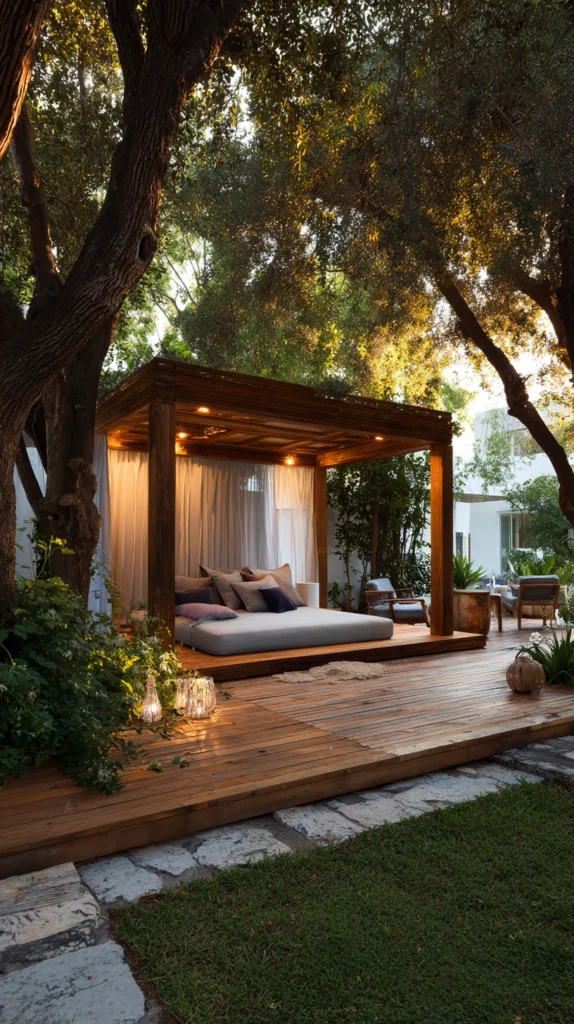
The final backyard pavilion idea is the one that takes the outdoor living concept to its most complete expression — a pavilion equipped and designed for overnight outdoor sleeping, creating the experience of camping with the comfort of a well-designed permanent structure.
A pavilion with a fully weatherproof roof, solid flooring of sufficient quality for bare feet, insect screening on all open sides, integrated warm lighting, and a permanent or semi-permanent outdoor daybed of sufficient quality for genuine overnight sleeping creates a backyard sleeping experience that is entirely unlike any indoor alternative.
The sound of rain on the pavilion roof, the garden visible through the insect screens, the cool outdoor air in contrast to the warmth of good bedding — these are experiences of specific and memorable beauty that the backyard pavilion alone can provide within the domestic landscape.