
The Best Natural Cleaners for Every Room in Your Home
I spent years buying a different cleaning product for every surface in my home—bathroom spray, kitchen degreaser, glass cleaner, floor cleaner, wood polish, tile cleaner. My cleaning cabinet looked like a chemistry lab, cost me $80-100 annually, and half the bottles sat barely used.
Then a plumber pointed out that several products I was using were slowly degrading my pipes and grout. That conversation sent me researching natural alternatives seriously for the first time.
What I discovered surprised me. Four basic ingredients—white vinegar, baking soda, dish soap, and hydrogen peroxide—handle virtually every cleaning task in my home more effectively than the specialized products they replaced. My cleaning cabinet now contains six items total. My annual cleaning cost dropped to under $25.
Here’s exactly what works in each room, what doesn’t, and why.
The Core Natural Cleaning Arsenal
Before getting room-specific, understanding these four ingredients explains why they work and where they fail.
White vinegar is acetic acid (pH 2.4), excellent for dissolving mineral deposits, cutting through grease, killing some bacteria, and removing odors. Ineffective on alkaline stains like soap scum when used alone. Never use it on natural stone, cast iron, or waxed surfaces—the acid causes permanent damage.
Baking soda is sodium bicarbonate (pH 9), a mild abrasive and alkaline cleaner that neutralizes acidic odors, scrubs without scratching, and tackles organic stains. Ineffective on mineral deposits that require acid.
Dish soap contains surfactants that break down oils and grease, lifting them off surfaces for easy rinsing. Works on almost everything but requires thorough rinsing to prevent residue.
Hydrogen peroxide (3% solution from drugstores) kills bacteria, viruses, and mold more effectively than vinegar. Breaks down into water and oxygen, leaving no harmful residue. Avoid mixing with vinegar—creates peracetic acid that irritates skin and lungs.
These four ingredients cover different pH ranges and cleaning mechanisms, which is why together they handle virtually everything.
Kitchen
The kitchen faces the toughest cleaning challenges—grease, food residue, bacteria, and mineral deposits all in one space.
Countertops and surfaces
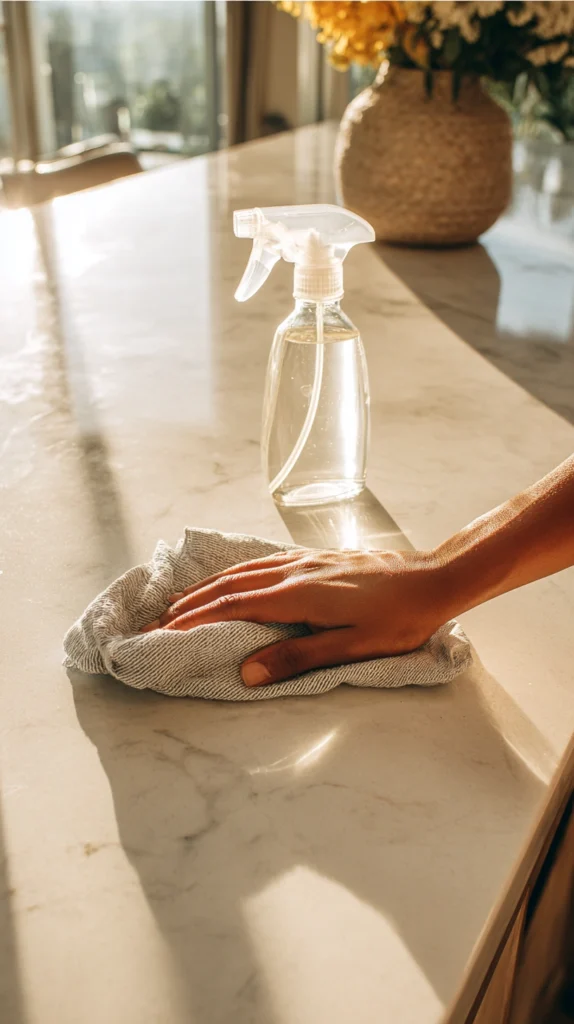
All-purpose spray: mix equal parts water and white vinegar in a spray bottle. Add 10-15 drops of essential oil if you dislike the vinegar smell—it dissipates as it dries regardless.
Spray, wipe with microfiber cloth, done. This handles daily grime, light grease, and general bacteria effectively.
For greasy counters after heavy cooking, add 2-3 drops of dish soap to the spray bottle. The surfactants cut through cooking oils that vinegar alone struggles with.
Important exception: Never use vinegar on granite, marble, or stone countertops. The acid etches natural stone permanently. Use diluted dish soap and water instead.
Stovetop and grease buildup
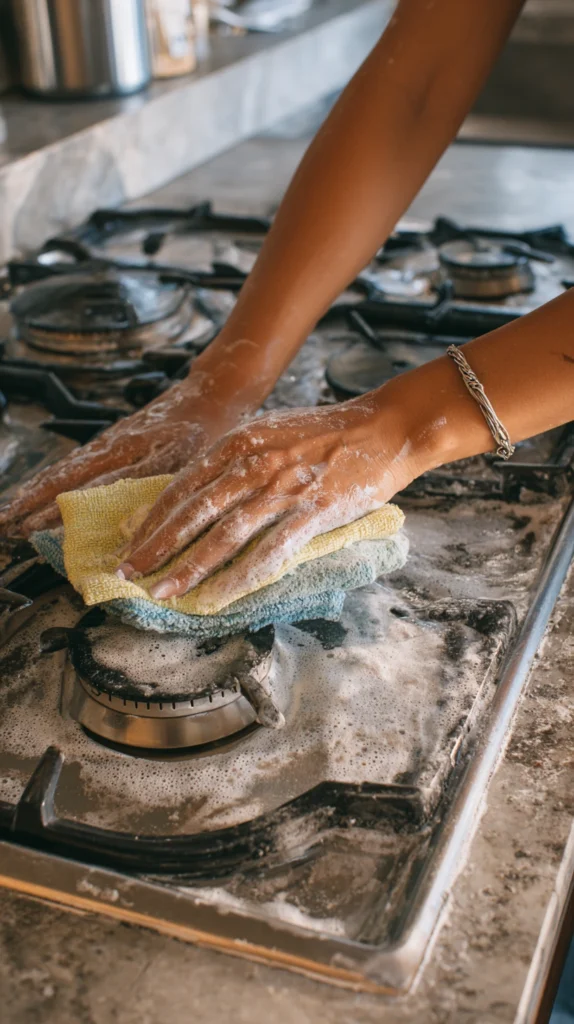
Baking soda paste handles baked-on grease better than most commercial products. Mix baking soda with enough dish soap to form a thick paste, apply to greasy areas, let sit for 15 minutes, scrub with a damp cloth.
For gas burner grates with serious buildup, place them in a sealed plastic bag with 1/4 cup ammonia overnight. The ammonia fumes (not direct contact) loosen baked-on grease completely. Rinse thoroughly in the morning.
Microwave
Vinegar steam cleaning works better than any spray product. Bowl of equal parts water and vinegar, microwave 5 minutes, let sit for 3 minutes, wipe everything clean effortlessly.
Sink and drain
Weekly: pour 1/2 cup baking soda down the drain followed by 1 cup vinegar. Let fizz for 15 minutes, flush with hot water. Prevents odor buildup and minor clogs.
For the sink basin, baking soda as a scrubbing agent with a few drops of dish soap removes stains and food residue without scratching stainless steel or porcelain.
Refrigerator interior
Equal parts water and vinegar wipes shelves and drawers effectively while neutralizing food odors. The mild acid kills bacteria without leaving chemical residue near food.
For stubborn spills, baking soda paste loosens dried residue without scratching glass shelves.
Cutting boards
Sprinkle coarse salt on the board, rub with half a lemon. The salt provides abrasion while lemon’s citric acid kills bacteria and removes odors. Rinse thoroughly and allow to dry completely.
For deep disinfection of plastic cutting boards, spray undiluted hydrogen peroxide, let sit for 5 minutes, and rinse. More effective than vinegar for killing bacteria on food-contact surfaces.
Bathroom
Bathrooms combine mineral deposits, soap scum, mold, and bacteria—requiring both acidic and alkaline approaches depending on the specific problem.
Toilet bowl
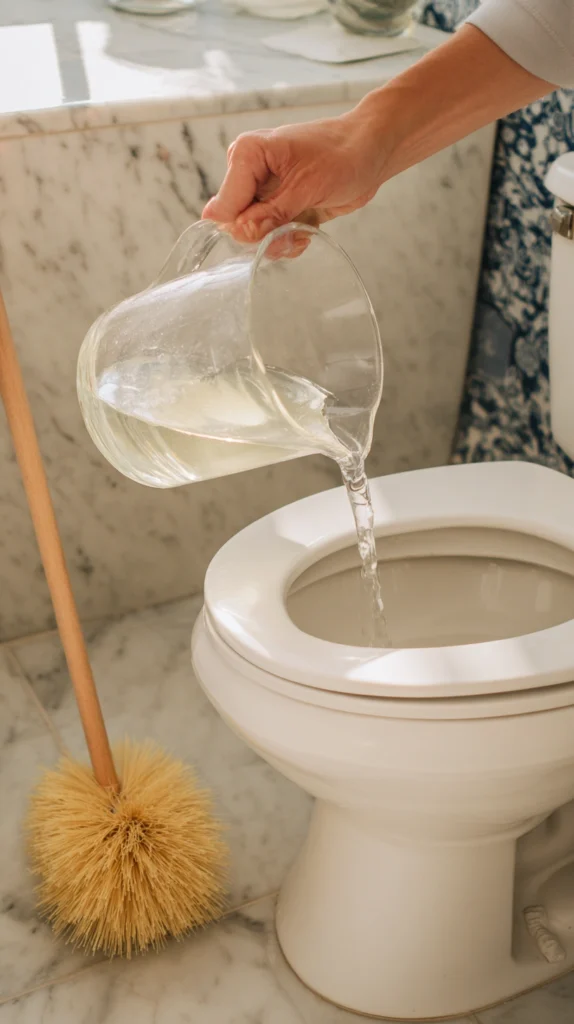
Pour 1 cup white vinegar into the bowl, let sit for 30 minutes, scrub with a toilet brush. Handles mineral rings and general cleaning effectively.
For disinfection, follow with 1/2 cup hydrogen peroxide, let sit for 10 minutes before flushing. This combination addresses both mineral deposits and bacterial contamination without bleach.
For stubborn mineral rings, full-strength vinegar overnight treatment removes what diluted solutions can’t touch.
Shower and tub
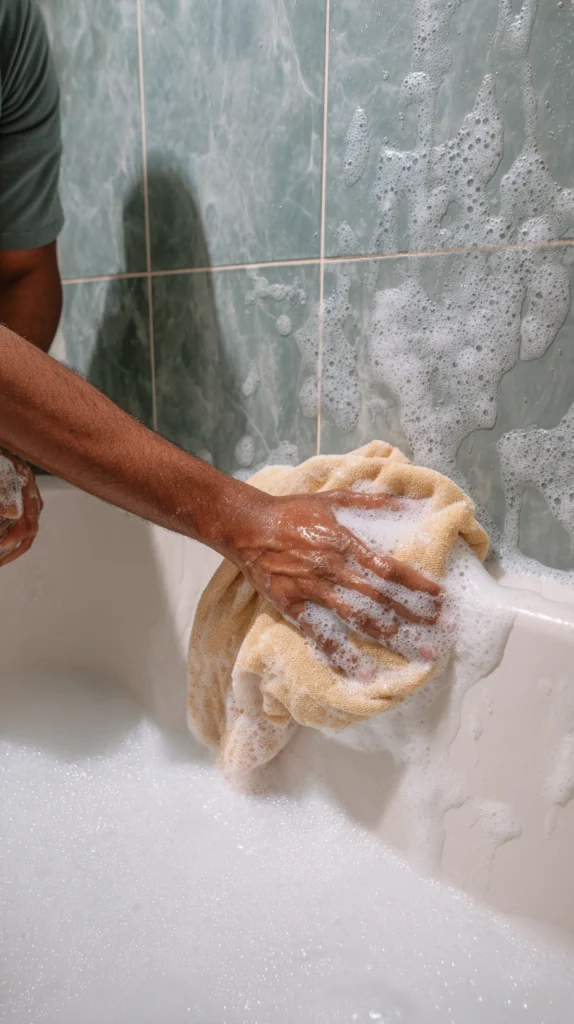
Soap scum requires alkaline cleaning—baking soda paste with dish soap scrubs it away without scratching fiberglass or acrylic surfaces.
Spray vinegar solution first to soften deposits, apply baking soda paste over it, scrub, rinse. The sequential application works better than mixing them together, which neutralizes both.
For shower doors with heavy water spots, undiluted vinegar on a cloth held against the glass for 5 minutes dissolves mineral deposits that spray applications can’t penetrate.
Shower grout
Hydrogen peroxide applied directly to the grout, left 10 minutes, scrubbed with an old toothbrush removes mildew and brightens discolored grout without the harshness of bleach.
For severely stained grout, make a paste with hydrogen peroxide and baking soda. Apply, let sit for 20 minutes, scrub thoroughly.
Bathroom sink and fixtures
The same baking soda and vinegar approach from the kitchen works identically in bathrooms. Vinegar for mineral deposits and water spots, baking soda paste for scrubbing and toothpaste residue.
Chrome fixtures shine beautifully after vinegar treatment—the acid dissolves water spots instantly.
Mirrors
Undiluted white vinegar on a microfiber cloth delivers streak-free results equal to or better than commercial glass cleaners. Wipe in circular motions, buff dry with a second dry cloth.
For hairspray buildup on mirrors, rubbing alcohol on a cloth cuts through the residue that vinegar can’t dissolve.
Mold and mildew
Hydrogen peroxide at 3% concentration kills mold more effectively than vinegar while being gentler than bleach. Spray undiluted onto affected areas, let sit for 10 minutes, scrub and rinse.
For persistent mold in caulk or grout, hydrogen peroxide followed by baking soda scrubbing addresses most cases. Severely moldy caulk needs replacement—no cleaner fully restores compromised caulk.
Living Room and Bedrooms
These rooms have lower contamination levels but specific challenges around dust, fabric, and varied surface materials.
Glass and windows
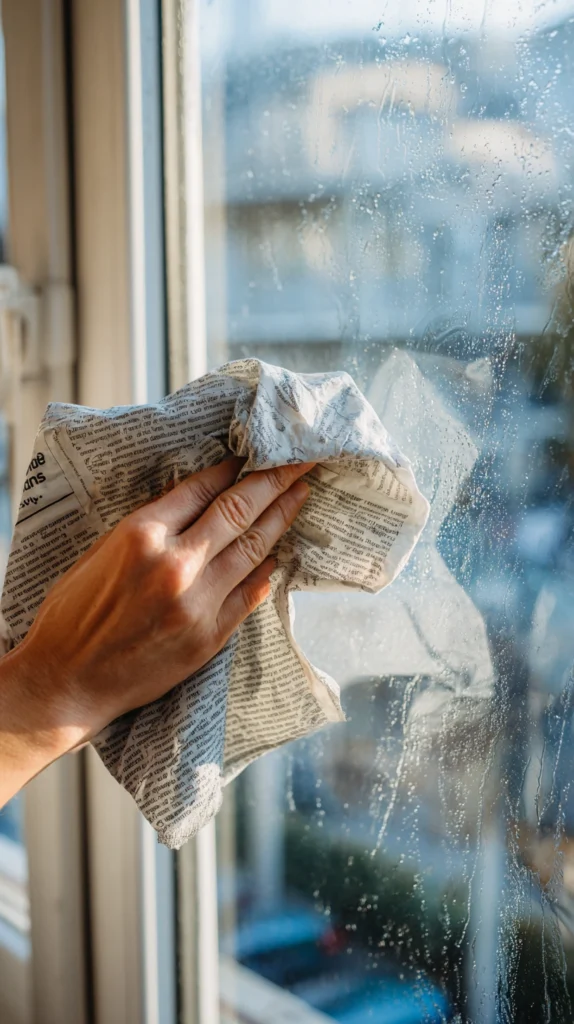
Equal parts water and white vinegar in a spray bottle, wiped with a microfiber cloth, delivers professional results. Work on cloudy days or when windows are in shade—direct sunlight causes rapid evaporation and streaking.
Buff with crumpled newspaper after wiping for extra clarity. The slight texture polishes glass in ways cloths can’t replicate.
Wood furniture
Vinegar and water works on sealed wood but should be used sparingly—excessive moisture damages wood over time. Mix 1 part vinegar with 8 parts water, wipe quickly, and dry immediately.
For conditioning and polishing, mix equal parts olive oil and white vinegar. Apply sparingly with a soft cloth, buff in the direction of the grain. This cleans and conditions simultaneously.
Never use straight vinegar on antique, waxed, or unsealed wood—the acid strips wax and damages unprotected surfaces.
Upholstered furniture
Mix 1 tablespoon dish soap, 1 tablespoon white vinegar, and 2 cups warm water. Apply with a clean cloth using blotting motions—never rubbing, which spreads stains and damages fibers.
For odors absorbed into fabric, sprinkle baking soda liberally, let sit for 15-30 minutes, vacuum thoroughly. This neutralizes pet odors, smoke, and general mustiness effectively.
Carpets and rugs
For fresh spills, blot immediately with clean cloth, then apply club soda and continue blotting. The carbonation lifts the spill from fibers before it sets.
For dried stains, mix equal parts dish soap and hydrogen peroxide, apply to stain, let sit for 5 minutes, blot clean. Test on inconspicuous areas first—hydrogen peroxide can lighten some carpet colors.
For general carpet freshening, baking soda sprinkled before vacuuming deodorizes effectively. Leave for 15 minutes minimum, longer for stronger odors.
Dust and general surfaces
Lightly dampened microfiber cloth picks up dust more effectively than dry dusting, which just redistributes particles into the air. Add a small amount of diluted vinegar solution to the cloth for light cleaning simultaneously.
For electronics and screens, distilled water on a microfiber cloth only—vinegar can damage anti-reflective coatings on screens.
Laundry Room
Washing machine drum
2 cups white vinegar in the drum, run a hot empty cycle. Follow with 1/2 cup baking soda in the drum, another hot cycle. This combination removes detergent buildup, mineral deposits, and bacterial growth.
For front-loader gaskets, wipe with undiluted vinegar solution weekly. Leave the door open after every cycle to prevent mold growth in the rubber folds.
Laundry itself
Add 1/2 cup baking soda to laundry along with regular detergent. It softens water, boosts cleaning power, and neutralizes odors—particularly effective for workout clothes and towels.
White vinegar in the rinse cycle (1/2 cup in the fabric softener compartment) acts as a natural fabric softener, removes detergent residue, and keeps towels absorbent. Clothes come out softer without the chemical coating commercial softeners leave behind.
Floors
Different floor types need different approaches.
Hardwood floors
Minimal moisture is essential. Mix 1/2 cup white vinegar per gallon of water—this dilution is safe for sealed hardwood. Wring the mop nearly dry before touching the floor.
Excessive moisture warps wood regardless of the cleaning agent. Work in small sections and dry immediately if needed.
For unsealed or waxed hardwood, use only a barely damp mop with plain water. Vinegar strips wax finishes.
Tile floors
Vinegar and water handles tile cleaning effectively. For grout lines that have darkened, baking soda paste applied with an old toothbrush followed by vinegar spray creates fizzing action that loosens dirt.
Laminate floors
Similar to hardwood—moisture is the enemy. Diluted dish soap solution with very wrung-out mop handles laminate without the risk of warping. Avoid vinegar on laminate regularly—over time it can dull the finish.
Vinyl and linoleum
Most forgiving surface. Dish soap and water, vinegar and water, or baking soda for scuffs all work well without risk of damage.
What Natural Cleaners Can’t Do
Honesty matters here. Natural cleaners have real limitations.
Disinfection: Vinegar kills some bacteria but isn’t EPA-registered as a disinfectant. During illness, hydrogen peroxide provides better disinfection. For genuine sterilization needs, commercial disinfectants remain more reliable.
Severe mold: Established mold colonies require stronger treatment. Hydrogen peroxide handles surface mold, but mold penetrating grout, caulk, or walls needs commercial treatment or professional remediation.
Very hard water: Vinegar handles moderate mineral deposits well. Severe hard water buildup sometimes requires commercial acid cleaners for complete removal.
Heavily soiled surfaces: Natural cleaners work best for maintenance cleaning. Years of neglected grease or deeply embedded stains often need commercial degreasers for first-time deep cleaning, after which natural maintenance keeps them clean.
The Complete Natural Cleaning Kit
| Ingredient | Cost | Lasts | Replaces |
| White vinegar (gallon) | $3-4 | 3-4 months | Glass cleaner, bathroom spray, floor cleaner |
| Baking soda (large box) | $2-3 | 3-4 months | Scrubbing powder, deodorizer, soft abrasive |
| Dish soap (bottle) | $3-4 | 2-3 months | Degreaser, general cleaner |
| Hydrogen peroxide (bottle) | $1-2 | 6 months | Disinfectant, mold treatment |
| Spray bottles (3-4) | $8-10 | Years | — |
| Microfiber cloths (pack) | $8-10 | Years | Paper towels, disposable wipes |
| Total | ~$25 | Per year | $80-100 in commercial products |
The Final Verdict
Natural cleaners aren’t a compromise. For the vast majority of household cleaning, they perform identically to or better than commercial products while costing a fraction of the price and avoiding harsh chemicals in your living environment.
The key is understanding which ingredient addresses which problem. Vinegar for minerals and water spots. Baking soda for scrubbing and odors. Dish soap for grease and general cleaning. Hydrogen peroxide for disinfection and mold.
Match the cleaner to the problem and you’ll rarely need anything else. My cleaning routine is simpler, cheaper, and more effective than when I had a cabinet full of specialized products.
The switch takes one shopping trip and costs under $25. Everything you need is probably already in your home.