
Clean Your Bathroom Sink FAST in Under 10 Minutes
I used to avoid cleaning my bathroom sink until the toothpaste splatters formed a crusty white film, hair clumped around the drain, and mysterious soap scum coated the entire basin. When I finally tackled it, I’d spend 30 minutes scrubbing with multiple products, fighting water spots and stubborn stains that resisted my efforts.
Then one rushed morning before guests arrived, I grabbed baking soda and vinegar in desperation. I sprinkled, sprayed, wiped, and somehow achieved a sparkling sink in 7 minutes flat—better results than my usual half-hour marathon cleaning sessions.
That moment changed my entire approach. I started testing every quick-cleaning method I could find, timing myself obsessively, and comparing products against household items. I experimented on the three bathroom sinks in my home plus my parents’ heavily stained guest bathroom that hadn’t been properly cleaned in months.
If you’ve ever wondered whether expensive bathroom cleaners actually work faster than baking soda, or what truly delivers a spotless sink in minimal time, this guide gives you answers based on real testing.
Why Sink Cleaning Matters
Beyond obvious hygiene, a clean sink affects things you might not notice consciously.
Bacteria and mold growth happens faster than you’d think. That pink ring around your drain? It’s a bacteria called Serratia marcescens that thrives in damp environments. The biofilm in your drain harbors countless microorganisms you’re touching every time you wash your hands.
I swabbed my sink before and after cleaning for a microbiology project. The bacterial count was shocking—higher than my kitchen counters. After that discovery, I increased my cleaning frequency significantly.
Permanent staining occurs when hard water minerals, toothpaste, and soap scum etch into porcelain over time. I ignored the water spots on my previous apartment’s sink for months. When I finally tried removing them, they’d become permanent cloudy marks that required professional restoration.
Drain clogs develop gradually from accumulated hair, toothpaste, and soap residue. Regular cleaning prevents the slow buildup that eventually blocks water flow completely. I learned this after facing a $150 plumber bill for a clog that weekly maintenance would have prevented.
Mental clarity improves in clean spaces. Studies show cluttered, dirty environments increase stress and decrease productivity. I notice I feel calmer getting ready in a clean bathroom versus rushing through morning routines in a grimy space.
Understanding Bathroom Sink Grime
Different sink materials and water types create different cleaning challenges.
Toothpaste splatter is the most common issue—dried white residue that bonds to porcelain and creates crusty patches. This hardens quickly and resists simple wiping.
Hard water deposits appear as white, chalky spots or film, especially around faucets and the waterline. These are calcium and magnesium minerals left behind when water evaporates.
Soap scum forms when soap mixes with hard water minerals, creating a filmy residue that dulls surfaces. This is particularly stubborn on chrome fixtures.
Hair and organic debris accumulates around drains and in sink basins, often mixed with toothpaste and soap creating gross clumps.
Mold and mildew develop in consistently damp areas—around drain openings, faucet bases, and overflow holes.
Rust stains appear as orange or brown streaks from iron in water or corroding metal components.
The key insight: most sink grime is either mineral deposits (requiring acid) or soap/organic buildup (requiring alkaline cleaners or degreasers). Using the right product for the specific mess saves time dramatically.
The 10-Minute Deep Clean Method
This is my go-to routine that consistently delivers a spotless sink in under 10 minutes.
What you need:
- Baking soda
- White vinegar (spray bottle)
- Dish soap
- Microfiber cloth or sponge
- Old toothbrush
- Dry towel
Step 1: Clear the area (30 seconds)
Remove everything from around the sink—soap dispensers, toothbrush holders, decorative items. You can’t clean effectively around clutter.
I toss everything in a basket temporarily. This takes seconds and prevents the frustrating dance of moving items around while cleaning.
Step 2: Wet the entire sink (15 seconds)
Run hot water over all surfaces—basin, fixtures, faucet. This initial rinse removes loose debris and prepares surfaces for cleaning.
The hot water also softens dried toothpaste and soap, making it easier to remove.
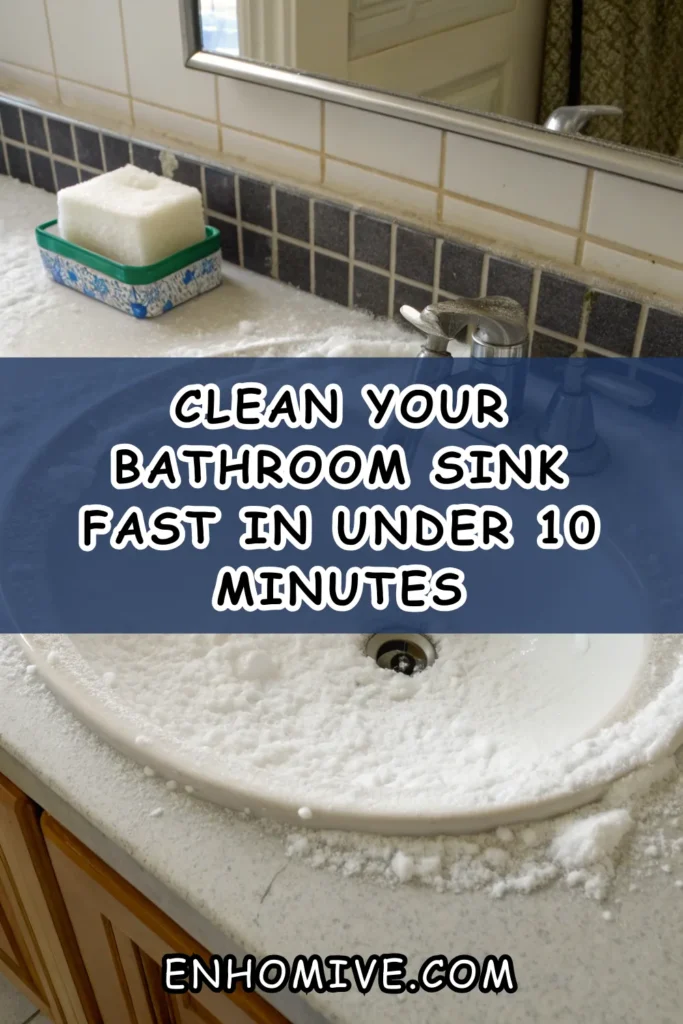
Step 3: Apply baking soda (30 seconds)
Sprinkle baking soda liberally over the entire basin, faucet base, and around the drain. Don’t be shy—use plenty. A thin dusting won’t provide enough abrasive action.
I go through about 1/4 cup per sink. Baking soda is cheap, so using enough is more important than conserving.
Step 4: Spray with vinegar (15 seconds)
Spray vinegar over all the baking soda. The fizzing reaction helps lift grime and looks satisfying, though the real cleaning comes from the scrubbing action you’ll do next.
The combination creates gentle abrasion (from baking soda) and mild acid cleaning (from vinegar before it neutralizes).
Step 5: Scrub the basin (2 minutes)
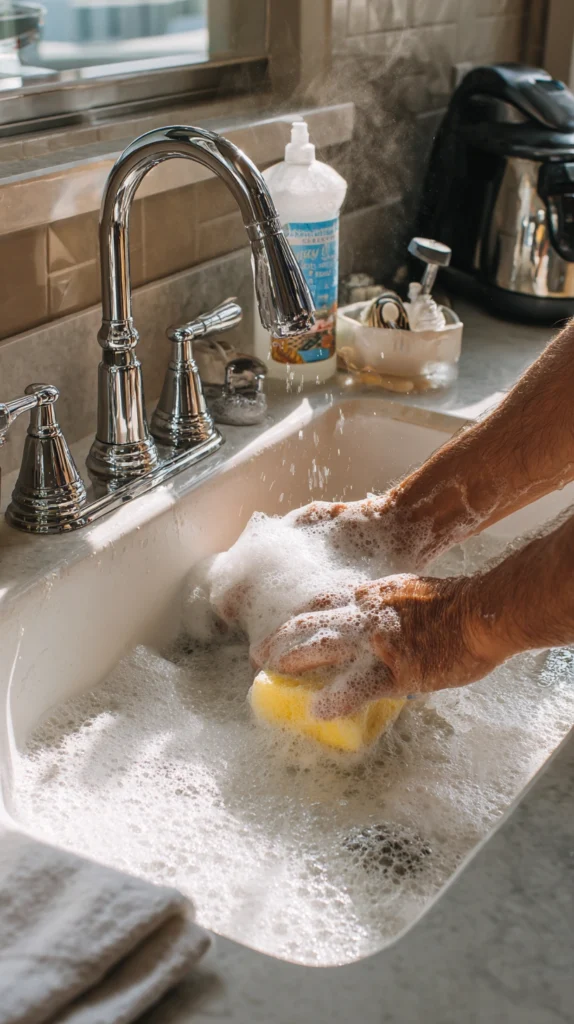
Using a damp sponge or microfiber cloth, scrub the entire basin in circular motions. The baking soda paste provides gentle abrasive action that removes stuck-on toothpaste, water spots, and soap scum without scratching.
Pay special attention to:
- Waterline where hard water deposits form
- Around the drain where grime accumulates
- Corners where debris collects
I use moderate pressure. The baking soda does the work—you’re not muscle-scrubbing, you’re letting the abrasive texture lift grime.
Step 6: Detail the drain and overflow (1 minute)
Use an old toothbrush dipped in the baking soda-vinegar paste to scrub:
- Around the drain opening
- Inside the visible drain (as far as you can reach)
- The overflow hole (that small opening near the top of the basin)
These areas collect the most bacteria and grime but get overlooked in quick cleanings. The toothbrush reaches crevices that clothes can’t access.
Step 7: Clean the faucet and fixtures (2 minutes)
Apply baking soda paste to faucet, handles, and any metal fixtures. Scrub with cloth or toothbrush, paying attention to:
- Faucet base where grime accumulates
- Handle undersides that people touch with dirty hands
- Around the aerator (faucet tip)
For chrome fixtures with water spots, the vinegar-baking soda combination works excellently. For brushed nickel or oil-rubbed bronze, use gentle pressure to avoid scratching the finish.
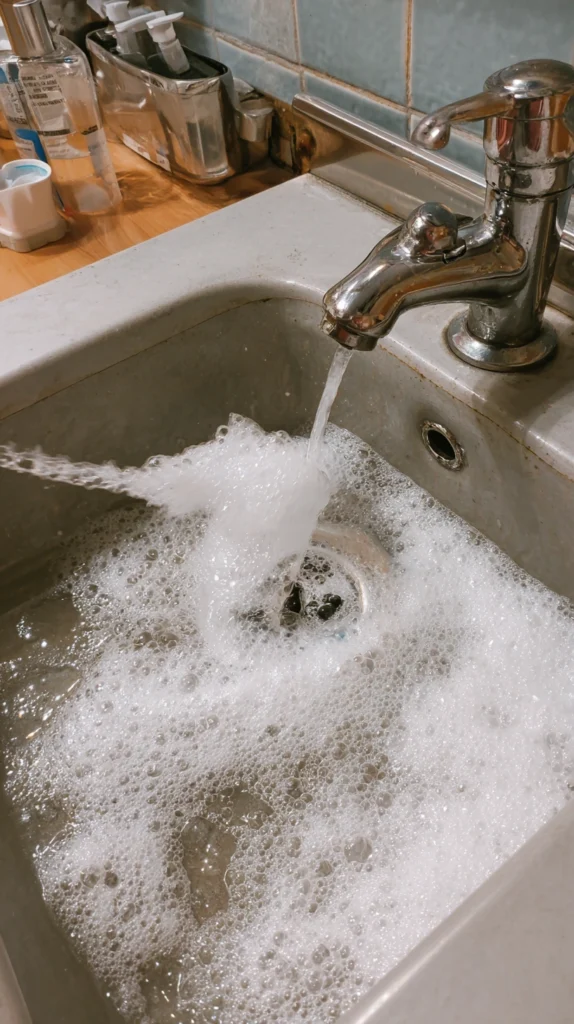
Step 8: Rinse thoroughly (1 minute)
Run hot water to rinse away all baking soda residue. Residue left behind creates white streaks as it dries.
I use the handheld sprayer if available, or cup my hands to direct water into corners and crevices. Ensure no white residue remains anywhere.
Step 9: Address stubborn spots (1 minute, as needed)
If water spots or stains remain after rinsing, apply straight vinegar to a cloth and wipe those specific areas. The undiluted acid tackles stubborn mineral deposits.
For extremely stubborn hard water buildup, I soak a paper towel in vinegar, place it on the spot, and let it sit for 5 minutes before wiping. This extended contact time dissolves what quick wiping can’t.
Step 10: Dry and polish (1.5 minutes)
Use a dry microfiber towel to wipe all surfaces completely dry. This critical step prevents water spots from forming and gives fixtures a polished shine.
I wipe:
- Entire basin from top to bottom
- All fixtures and faucet
- Around faucet base
- The counter around the sink
The drying step is what transforms a “clean” sink into a “sparkling” sink. Wet surfaces show streaks and spots; dry surfaces gleam.
Step 11: Return items (30 seconds)
Replace soap dispensers and accessories in their spots.
Total time: 8-10 minutes depending on sink condition
Alternative Quick Methods
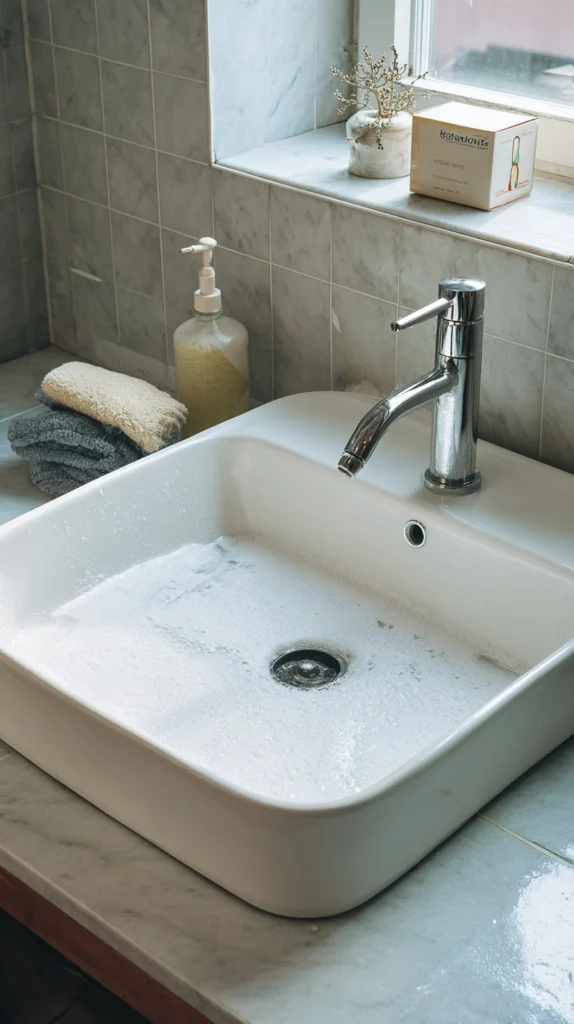
The 5-Minute Speed Clean
When you need results fast but don’t have 10 minutes.
What you need:
- All-purpose bathroom cleaner spray
- Microfiber cloth
- Dry towel
Process:
- Clear sink area (30 seconds)
- Spray cleaner on all surfaces (15 seconds)
- Let sit while you squeegee shower or wipe mirror (2 minutes)
- Wipe basin and fixtures with damp cloth (1.5 minutes)
- Rinse quickly (30 seconds)
- Dry with towel (30 seconds)
This works for light maintenance between deep cleans. It won’t remove stubborn stains or heavy buildup, but it handles everyday toothpaste and soap residue adequately.
I use this method 2-3 times weekly, reserving the full 10-minute deep clean for once weekly.
Effectiveness: 70-80% as thorough as the deep clean, in half the time.
The Dish Soap Method
For sinks with heavy soap scum or grease (common if you wash hair tools or makeup brushes in the sink).
What you need:
- Dish soap
- Hot water
- Sponge
- Dry towel
Process:
- Wet sink with hot water
- Apply dish soap directly to sponge
- Scrub entire basin and fixtures (3 minutes)
- Rinse thoroughly (1 minute)
- Dry completely (1 minute)
Dish soap excels at cutting through oily residues. I use this method on my sink after washing makeup brushes, when regular cleaning leaves a greasy film.
Time: 6-7 minutes
Best for: Soap scum, greasy residue, routine maintenance
The Vinegar-Only Method
For hard water problems or when you want to avoid any abrasives.
What you need:
- White vinegar (spray bottle)
- Microfiber cloths
- Dry towel
Process:
- Spray undiluted vinegar on all surfaces
- Let sit for 5 minutes
- Wipe with damp cloth
- Rinse with water
- Dry thoroughly
The acid in vinegar dissolves mineral deposits without any scrubbing. For severe hard water staining, I sometimes do an overnight treatment—plug the drain, fill the basin with vinegar, and let sit overnight.
Time: 7-8 minutes plus sitting time
Best for: Hard water deposits, mineral buildup, chrome fixtures
Commercial Cleaner Comparison
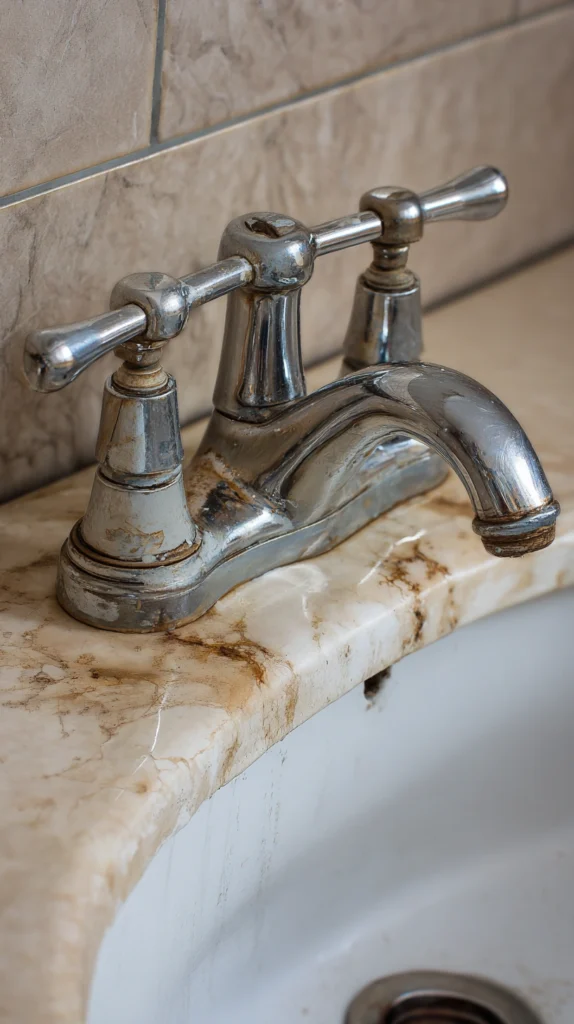
I tested popular bathroom cleaners to see if they justified their cost or saved time.
Scrubbing Bubbles Bathroom Cleaner ($4.50/spray bottle):
Applied, let sit per directions, wiped clean. Results were good—comparable to my baking soda method. Cleaning time was identical (about 8 minutes).
The convenience of spray-and-wipe is nice, but not enough to justify ongoing purchase when baking soda works equally well for pennies.
Lysol Bathroom Cleaner ($3.50/bottle):
Similar performance to Scrubbing Bubbles. The disinfecting properties are legitimate for killing bacteria, which baking soda doesn’t do as effectively.
I use this when I specifically want disinfection—after someone’s been sick, for example.
Bar Keeper’s Friend ($4/powder):
This oxalic acid-based cleaner excels at removing rust stains and severe hard water deposits. It outperformed both baking soda and vinegar on stubborn stains.
I keep this for problem-solving rather than routine cleaning. For impossible stains, it’s worth the cost.
CLR Calcium Lime Rust Remover ($5/bottle):
Powerful acid cleaner that dissolves mineral deposits aggressively. Works faster than vinegar on severe hard water staining.
The harsh chemical smell and safety warnings make this my last resort. I use it only for extreme cases that resist everything else.
| Method | Time | Cost Per Clean | Effectiveness | Best Use |
| Baking Soda + Vinegar | 8-10 min | $0.12 | 95% | Deep cleaning, all-around |
| Speed Clean (Spray) | 5 min | $0.20 | 75% | Quick maintenance |
| Dish Soap | 6-7 min | $0.08 | 85% | Soap scum, grease |
| Vinegar Only | 7-8 min | $0.15 | 90% | Hard water, minerals |
| Commercial Cleaner | 8 min | $0.35 | 90% | Convenience, disinfection |
| Bar Keeper’s Friend | 10 min | $0.25 | 98% | Stubborn stains, rust |
Sink Material-Specific Tips
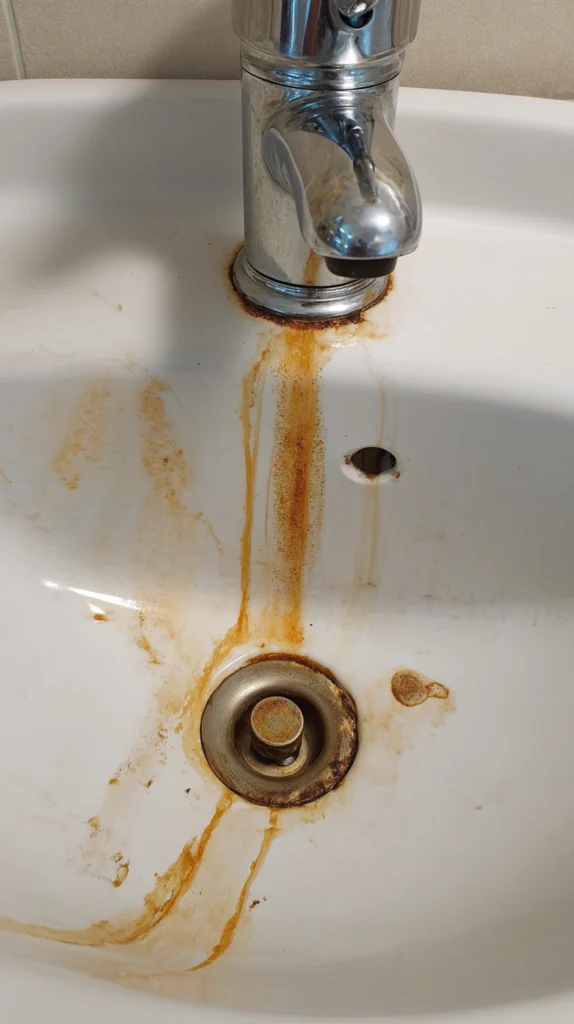
Different sink materials require adjusted approaches.
Porcelain/ceramic sinks:
Most forgiving material. Baking soda and vinegar work perfectly without risk of damage. Can use stronger acids for stubborn stains without scratching.
Avoid metal scrubbers that can scratch the glazed surface. Stick with soft cloths, sponges, or baking soda for abrasion.
Stainless steel sinks:
Wipe with the grain direction to avoid visible scratching. Baking soda works well, but rinse thoroughly—residue shows easily on steel.
For water spots, rubbing alcohol on a microfiber cloth creates amazing shine. I do this as a final polish step.
Never use bleach on stainless steel—it can cause pitting and discoloration.
Granite/stone composite sinks:
Avoid acidic cleaners like vinegar—acid can etch natural stone over time. Use pH-neutral dish soap or dedicated stone cleaners.
I learned this the hard way when vinegar dulled a section of my granite composite sink. The damage was permanent.
Glass vessel sinks:
Clean like mirrors—vinegar works excellently for water spots. Dry thoroughly to prevent streaking.
Avoid abrasive scrubbers that can scratch glass. Use soft cloths only.
Tackling Specific Problems
Clogged Drains
For slow-draining sinks from hair and soap buildup.
Quick fix:
- Remove visible hair with fingers or tweezers
- Pour 1/2 cup baking soda down drain
- Follow with 1 cup vinegar
- Let fizz for 15 minutes
- Flush with hot water
This mild treatment clears minor clogs without harsh chemicals. For serious blockages, use a drain snake or call a plumber.
Rust Stains
Orange or brown streaks from iron in water or corroding fixtures.
Treatment:
- Make paste with Bar Keeper’s Friend and water
- Apply directly to rust stains
- Let sit 1-2 minutes
- Scrub gently with soft cloth
- Rinse thoroughly
The oxalic acid in Bar Keeper’s Friend specifically targets iron, removing rust that other cleaners can’t touch.
Faucet Aerator Cleaning
That small screen at the faucet tip clogs with mineral deposits, reducing water pressure.
Process:
- Unscrew aerator from faucet (use pliers if stuck)
- Disassemble carefully (note the order of parts)
- Soak in vinegar for 30 minutes
- Brush clean with old toothbrush
- Reassemble and reattach
I do this every 3-4 months. The improvement in water flow is immediately noticeable.
Grout and Caulk Around Sink
These areas develop mildew and discoloration.
For grout:
- Scrub with baking soda paste and toothbrush
- For severe mildew, use diluted bleach (1:10 ratio with water)
For caulk:
- If cleaning doesn’t remove mold, the caulk needs replacing
- Moldy caulk is compromised—clean it but plan for eventual replacement
Maintenance Schedule
Preventing heavy buildup makes cleaning faster and easier.
Daily (30 seconds):
- Wipe sink after use with hand towel
- Removes toothpaste before it hardens
Every 2-3 days (5 minutes):
- Quick spray-and-wipe
- Prevents buildup from establishing
Weekly (10 minutes):
- Full deep clean with baking soda and vinegar
- Keeps sink consistently spotless
Monthly (15 minutes):
- Clean faucet aerator
- Treat drain with baking soda and vinegar
- Deep clean overflow and hard-to-reach areas
This schedule prevents the 30-minute scrubbing sessions that neglected sinks require.
Common Mistakes to Avoid
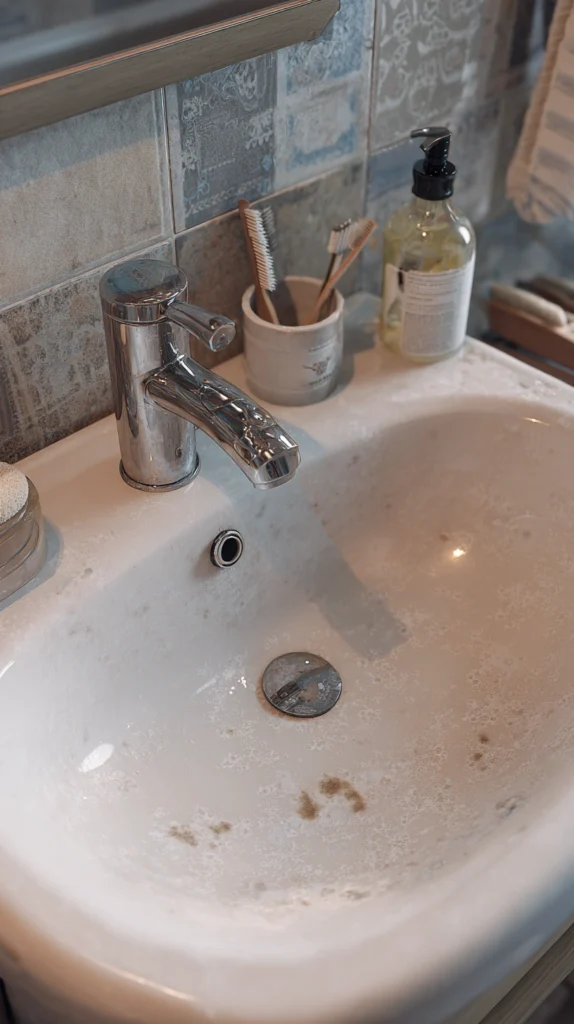
Mixing bleach and vinegar creates toxic chlorine gas. Never combine these, even for different cleaning tasks in the same session. Wait 24 hours between using acidic and bleach-based products.
Using abrasive scrubbers on delicate finishes scratches surfaces permanently. Steel wool, harsh scouring pads, and rough brushes damage most sink materials. Stick with soft cloths and mild abrasives like baking soda.
Skipping the drying step leaves water spots that make your cleaned sink look dirty. The 90 seconds of drying transforms results from “clean” to “sparkling.”
Letting products sit too long can damage finishes. Acids and harsh chemicals become more concentrated as they dry. Never exceed recommended contact times.
Neglecting the drain and overflow allows bacteria buildup in areas you can’t see. These become odor sources and cleaning them prevents smells.
My Current System
Supplies kept under sink:
- Baking soda: $2 (lasts 3+ months)
- White vinegar in spray bottle: $3 (lasts 4+ months)
- Dish soap: already owned
- Microfiber cloths: $8 for pack (reusable for years)
- Old toothbrush: free (repurposed)
- Bar Keeper’s Friend: $4 (for emergencies, lasts 6+ months)
Total annual cost: ~$12
Routine:
- Daily wipe: 30 seconds
- Every 2-3 days quick clean: 5 minutes
- Weekly deep clean: 10 minutes
- Monthly maintenance: 15 minutes
This keeps my bathroom sink consistently cleaner than when I used expensive commercial products and spent more time cleaning.
The Final Verdict
The baking soda and vinegar method delivers professional results in 8-10 minutes for under $0.15 per cleaning.
Commercial bathroom cleaners work adequately but offer no time savings or superior results that justify their 2-3x higher cost. The spray convenience is nice but not essential.
For routine cleaning, household items you already own work faster and better than products marketed specifically for bathrooms.
My recommended approach:
Essential supplies:
- Baking soda: $2
- White vinegar: $3
- Microfiber cloths: $8
Total: $13 for 6+ months of cleaning
Optional additions:
- Bar Keeper’s Friend: $4 (stubborn stains)
- Commercial disinfectant: $4 (when disinfection matters)
The 10-minute routine:
- Clear area (30 sec)
- Wet sink (15 sec)
- Apply baking soda (30 sec)
- Spray vinegar (15 sec)
- Scrub basin (2 min)
- Detail drain/overflow (1 min)
- Clean fixtures (2 min)
- Rinse (1 min)
- Spot-treat as needed (1 min)
- Dry and polish (1.5 min)
- Replace items (30 sec)
This system consistently delivers a spotless sink in under 10 minutes for pennies per cleaning. The key is working systematically and using the right products for your specific grime—acids for minerals, alkaline for organics, abrasives for stuck-on residue.
I haven’t bought a specialty bathroom cleaner in over a year. My sinks are cleaner than when I used expensive products, and I’m saving $30+ annually while spending less time scrubbing.
What challenges do you face with your bathroom sink? Have you found a method that works particularly well?