

Deep Clean Your Dishwasher FAST Using Stuff You Already Own
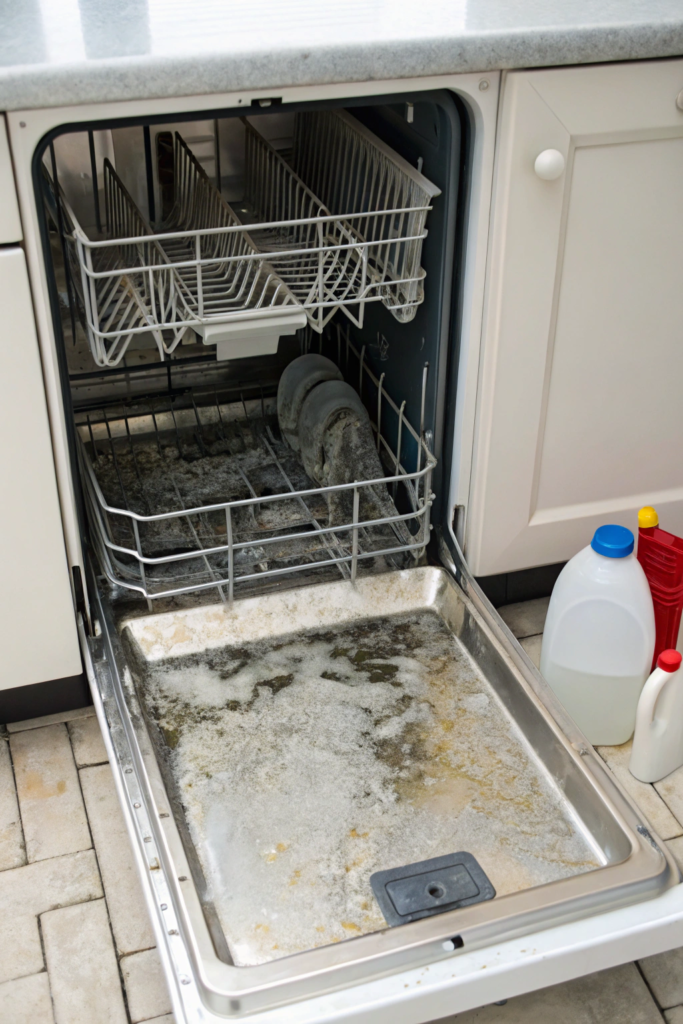
Your dishwasher is designed to clean, but over time it quietly collects grease, soap residue, food particles, and hard water buildup. When this happens, dishes may come out cloudy, smell unpleasant, or still feel greasy. The good news is that you do not need special cleaners or expensive products to fix this.

With a few common household items and less than 30 minutes of active effort, you can deep clean your dishwasher quickly and effectively.
This guide shows you how to deep clean your dishwasher fast using items you already have at home.
Why Deep Cleaning Your Dishwasher Matters

Even though water runs through your dishwasher daily, it still needs regular deep cleaning.
Benefits of deep cleaning include:
- Cleaner, fresher-smelling dishes
- Improved water flow and drainage
- Better cleaning performance
- Removal of hidden grease and grime
- Longer appliance lifespan
- Prevention of mold and bacteria buildup
Skipping deep cleaning can cause lingering odors and poor wash results.
What to Do Before You Start
Before cleaning your dishwasher:
- Empty the dishwasher completely
- Remove any dishes or utensils
- Turn off the dishwasher
- Check the bottom for visible debris
No disassembly or special tools are required.
Common Household Items You’ll Use
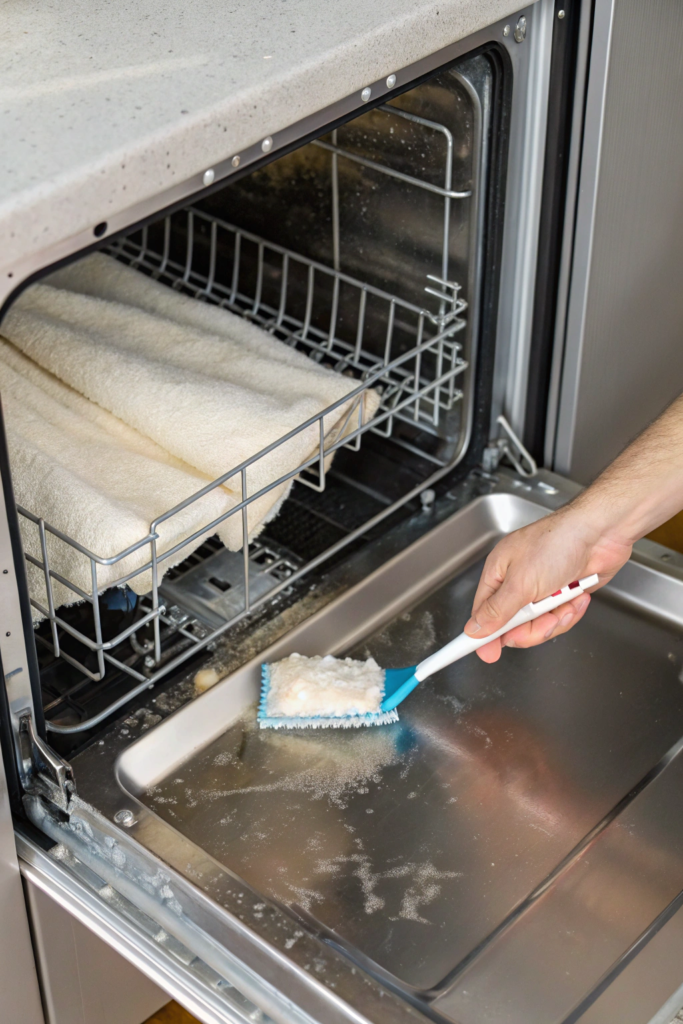
Everything you need is likely already in your kitchen.
Basic supplies:
- White vinegar
- Baking soda
- Dish soap
- Warm water
- Microfiber cloth
- Old toothbrush
- Paper towels
Optional but helpful:
- Toothpick or skewer
- Lemon slices
Avoid bleach unless your manufacturer explicitly allows it.
Quick Comparison Table: Dishwasher Cleaning Methods
| Cleaning Method | Best For | Time Needed | Cost | Notes |
| Vinegar wash cycle | Grease and odors | 10 min setup | Very low | Deep cleans interior |
| Baking soda cycle | Freshening and stains | 5 min setup | Very low | Removes residue |
| Manual filter cleaning | Food debris | 10 minutes | Free | Improves drainage |
| Door seal wiping | Mold and grime | 5 minutes | Free | Prevents smells |
| Spray arm cleaning | Poor water flow | 10 minutes | Free | Boosts performance |
This table helps you choose the fastest solution for your issue.
Step 1: Clean the Dishwasher Filter
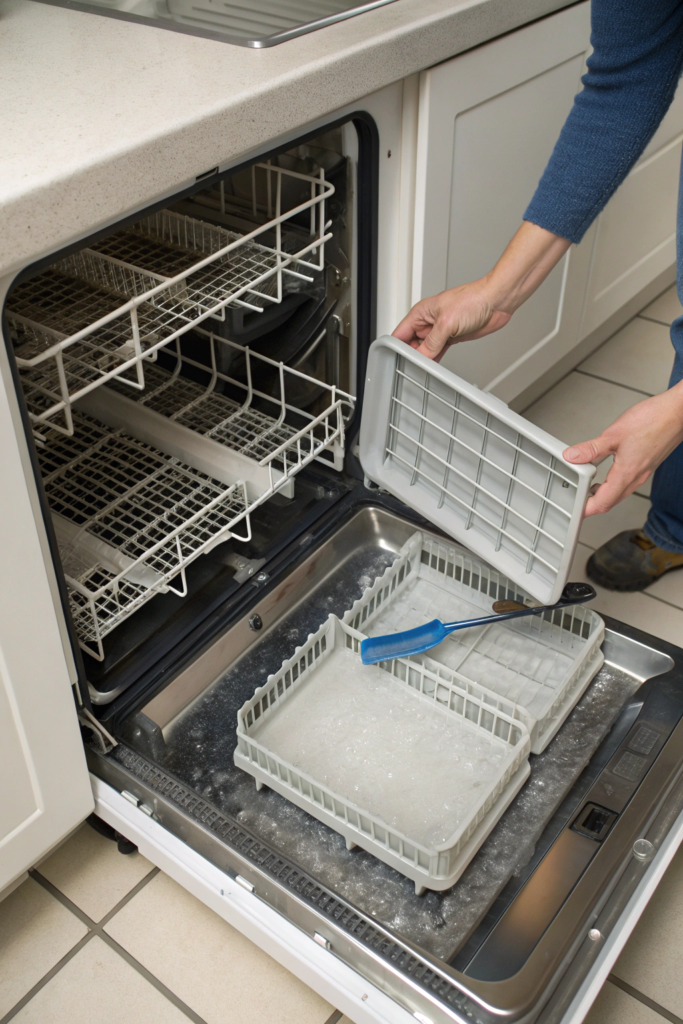
The filter traps food debris and is often the main cause of bad smells.
How to clean it:
- Remove the bottom rack
- Twist or lift out the filter
- Rinse under warm water
- Use dish soap and a toothbrush to scrub
- Rinse thoroughly
Let it air-dry while you clean the rest of the dishwasher.
Step 2: Wipe Down the Door and Rubber Seal
Food splashes and moisture collect around the door.
Cleaning steps:
- Dip a cloth in warm soapy water
- Wipe the door edges and corners
- Clean the rubber gasket carefully
- Use a toothbrush for tight areas
- Dry with a clean towel
This step helps prevent mold and lingering odors.
Step 3: Clear the Spray Arms
Clogged spray arms reduce cleaning power.
Steps:
- Inspect spray arm holes
- Use a toothpick to remove debris
- Wipe arms with a damp cloth
- Spin arms to ensure free movement
You do not need to remove the spray arms unless heavily clogged.
Step 4: Run a Vinegar Cleaning Cycle
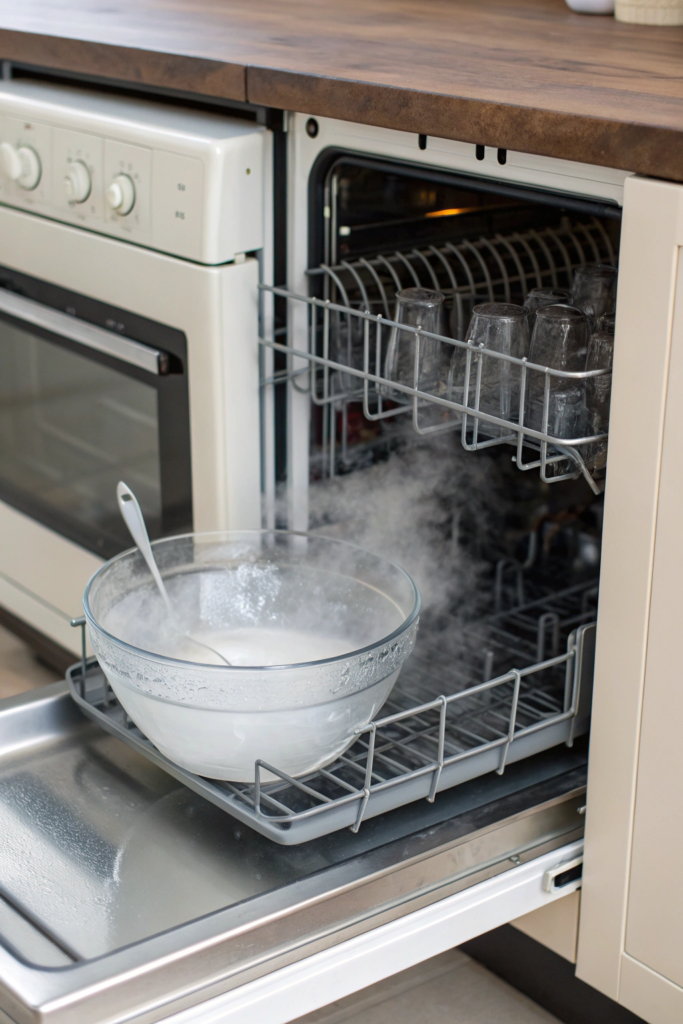
Vinegar breaks down grease, mineral deposits, and odors.
How to do it:
- Place a cup of white vinegar in a dishwasher-safe bowl
- Set it on the top rack
- Run the hottest cycle
- Do not add detergent
This cleans the interior walls, spray arms, and drain area.
Step 5: Run a Baking Soda Freshening Cycle
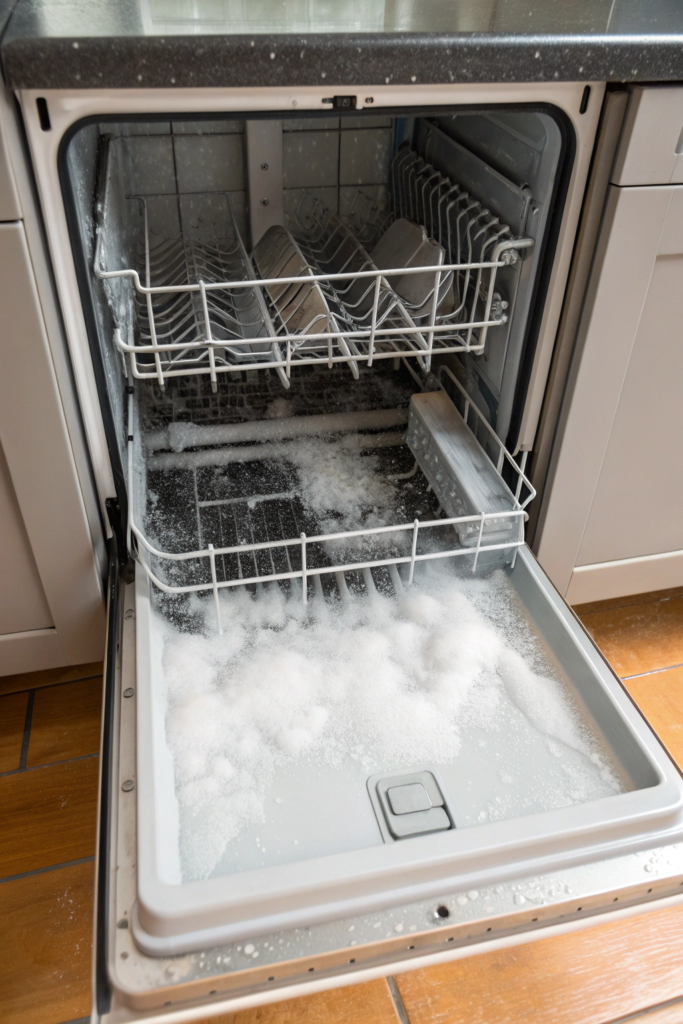
Baking soda removes stains and neutralizes odors.
Steps:
- Sprinkle 1 cup of baking soda across the bottom
- Run a short hot cycle
- Allow dishwasher to air dry
This leaves your dishwasher smelling fresh and clean.
Step 6: Wipe the Exterior and Controls
The outside collects fingerprints and splashes.
Cleaning tips:
- Use a damp microfiber cloth
- Add a drop of dish soap if greasy
- Dry immediately to prevent streaks
- Polish stainless steel with a little oil if needed
Clean controls gently to avoid moisture damage.
How Long Does This Deep Clean Take?
Total active time:
- About 20–30 minutes
- Most of the work happens while the machine runs
This makes it easy to fit into a busy schedule.
How Often Should You Deep Clean Your Dishwasher?
Recommended schedule:
- Light wipe weekly
- Filter cleaning monthly
- Full deep clean every 1–2 months
More frequent cleaning may be needed in hard-water areas.
Common Mistakes to Avoid
Avoid these dishwasher cleaning mistakes:
- Using bleach without checking manufacturer guidance
- Mixing vinegar and bleach
- Ignoring the filter
- Overusing detergent
- Skipping drying after cleaning
These mistakes can damage parts or reduce effectiveness.
Tips to Keep Your Dishwasher Clean Longer
Simple habits make a big difference:
- Scrape food off dishes before loading
- Run hot water before starting a cycle
- Leave the door slightly open after use
- Clean spills and residue early
Preventive care reduces deep cleaning frequency.
Budget vs Premium Dishwasher Deep Cleaning: What’s the Difference?
| Category | Budget Cleaning (Household Items) | Premium Cleaning (Store-Bought Products) |
| Products used | Vinegar, baking soda, dish soap | Dishwasher cleaner pods, descalers, degreasers |
| Cost per clean | Very low (almost free) | Medium to high |
| Time required | 30–40 minutes | 15–25 minutes |
| Ease of use | Simple but manual | Very convenient |
| Odor removal | Very effective | Very effective |
| Grease removal | Effective with soaking | Fast and powerful |
| Hard water buildup | Moderate | Strong |
| Eco-friendly | Yes | Depends on product |
| Availability | Already at home | Requires purchase |
| Best for | Regular maintenance, light to moderate buildup | Heavy buildup, hard water areas |
Which Option Should You Choose?
Choose budget cleaning if:
- Your dishwasher is cleaned regularly
- You want a natural, eco-friendly solution
- You prefer using items you already own
- You are maintaining, not fixing severe buildup
Choose premium cleaning if:
- Your dishwasher smells even after vinegar cleaning
- You live in a hard-water area
- There is visible limescale or heavy grease
- You want faster results with less effort
Smart Tip for Best Results
Many homeowners get the best results by combining both:
- Use vinegar and baking soda monthly for maintenance
- Use a premium dishwasher cleaner every 3–4 months for deep descaling
This approach keeps costs low while maintaining peak performance.
FAQ: Deep Cleaning a Dishwasher
Can I clean my dishwasher with vinegar only?
Yes. Vinegar is excellent for grease, odors, and mineral buildup.
Is baking soda safe for dishwashers?
Yes. Baking soda is safe and helps remove stains and odors.
Why does my dishwasher still smell after cleaning?
The filter or door seal may still contain trapped debris. Clean those areas thoroughly.
Can I use lemon instead of vinegar?
Lemon helps with odor but is less effective for grease and hard water.
How do I clean dishwasher spray arms naturally?
Use warm water, a toothpick for holes, and vinegar wiping if needed.
When to Call a Professional
Consider professional help if:
- Water does not drain properly
- Dishwasher leaks persist
- Dishes remain dirty after cleaning
- You hear unusual noises
Mechanical issues should not be ignored.
Final Thoughts
Deep cleaning your dishwasher does not require special cleaners or hours of effort. Using simple household items like vinegar and baking soda, you can remove grease, odors, and buildup fast.
With regular maintenance and quick monthly cleaning, your dishwasher will perform better, last longer, and leave your dishes cleaner every time. A clean dishwasher truly starts with a few easy habits and the right routine.