
Get Rid of Entryway Clutter for Good: Simple Tricks That Really Work
The entryway is one of the smallest spaces in most homes, yet it becomes cluttered faster than any other area. Shoes pile up, bags land on the floor, keys disappear, and coats end up draped over chairs. Even if the rest of your home is tidy, a messy entryway instantly creates a stressful first impression.
The problem isn’t that you’re disorganized. It’s that most entryways aren’t set up to handle daily life. People come and go quickly, drop items without thinking, and move on. Without simple systems in place, clutter builds up automatically.
The good news is that you don’t need a renovation, expensive furniture, or strict rules to fix it. With a few smart changes and realistic habits, you can get rid of entryway clutter for good and keep it under control long-term.
Why Entryways Get Cluttered So Easily
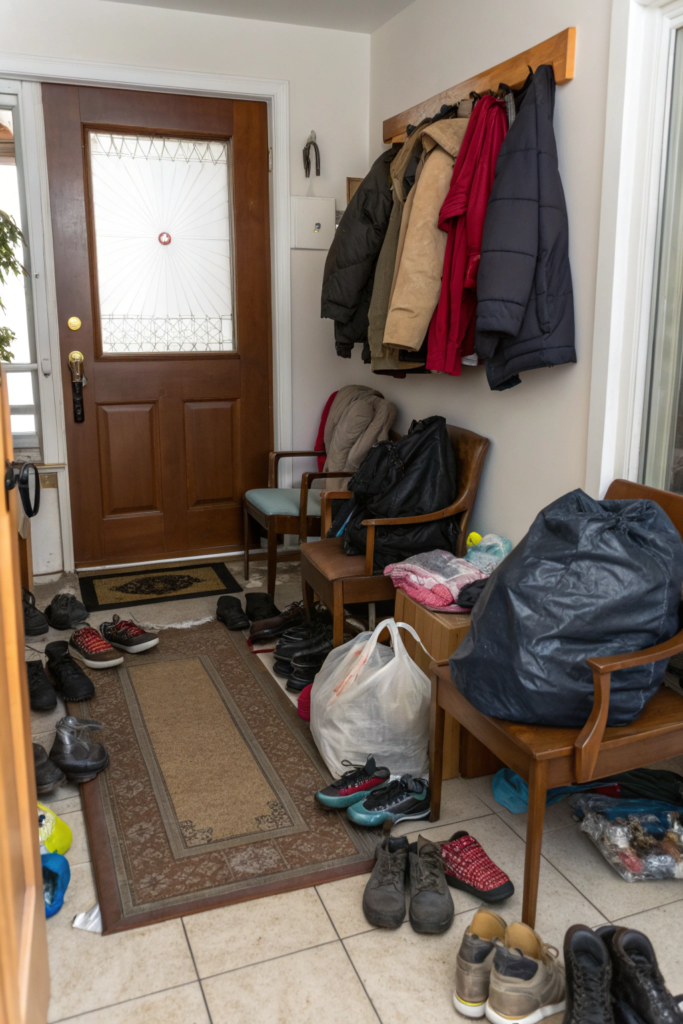
Understanding the problem makes it easier to solve.
Common reasons entryways become cluttered:
- No designated place for everyday items
- Too many items trying to live in a small space
- Lack of storage near the door
- Everyone in the household has different habits
- Shoes, bags, and coats are used daily
Clutter isn’t a personal failure. It’s usually a layout issue.
FAST Version for Busy Readers
If you want quick results, start here.
Do this today:
- Remove everything from the entryway
- Keep only daily-use items
- Add one shoe solution
- Add one drop zone for keys and bags
- Put coats on hooks, not chairs
Five-minute daily reset:
- Put shoes back
- Hang bags
- Clear flat surfaces
These small actions prevent clutter from returning.
Step 1: Declutter Before You Organize
Organizing clutter doesn’t work. Decluttering does.
What to remove immediately:
- Shoes no one wears
- Old jackets
- Broken umbrellas
- Random mail
- Items that belong in other rooms
Ask one simple question:
Do I use this every week?
If not, it doesn’t belong in the entryway.
Step 2: Decide What Actually Belongs in the Entryway
Your entryway should only hold items used when leaving or entering your home.
Essential entryway items:
- Shoes worn regularly
- Everyday coats or jackets
- Keys
- Wallets or purses
- Sunglasses
- Dog leash
Everything else should live elsewhere.
Step 3: Create a Shoe System That Matches Real Life
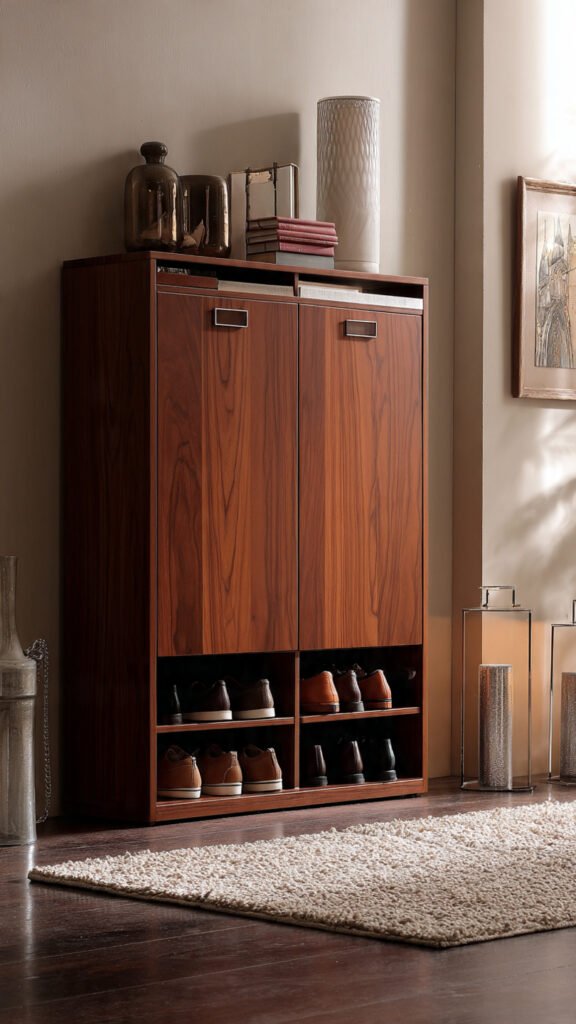
Shoes are usually the biggest clutter culprit.
Smart shoe solutions:
- Slim shoe racks
- Stackable shoe shelves
- Shoe cabinets with doors
- Baskets for quick storage
- Boot trays for wet shoes
Tips that actually work:
- Store only current-season shoes
- Limit each person to 2–3 pairs
- Keep extras in a closet
If shoes don’t have a clear home, they’ll end up on the floor.
Step 4: Use Hooks Instead of Closets
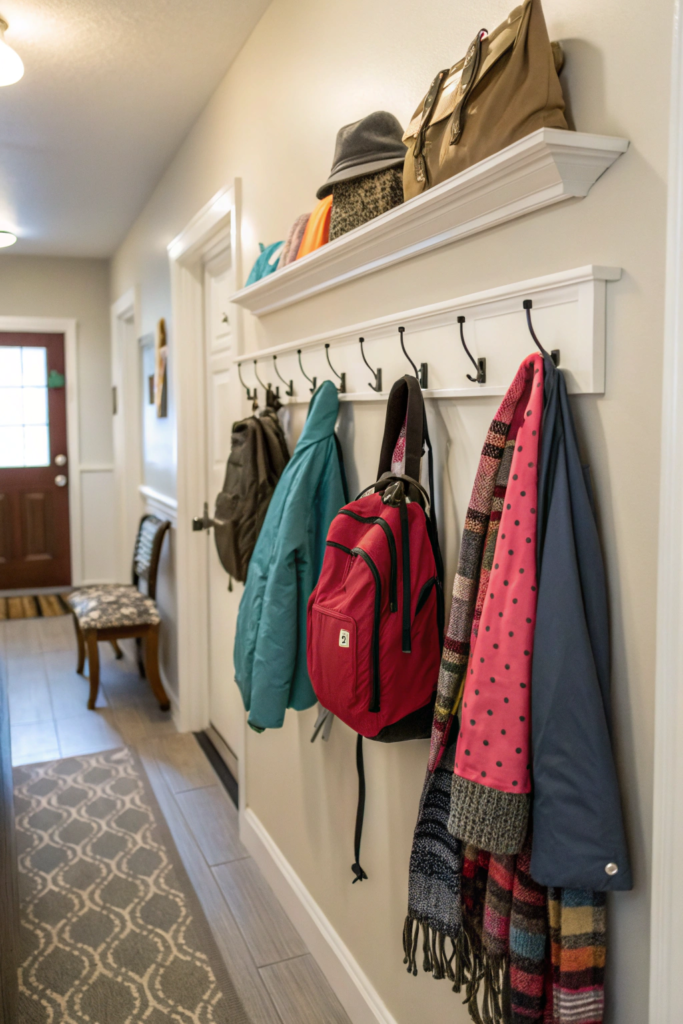
Closets are great, but hooks are faster.
Why hooks work better:
- No opening doors
- Easier for kids
- Encourages putting things away
- Saves space
What to hang on hooks:
- Coats
- Bags
- Backpacks
- Hats
- Scarves
Install hooks at different heights so everyone can use them.
Step 5: Add a Simple Drop Zone for Small Items
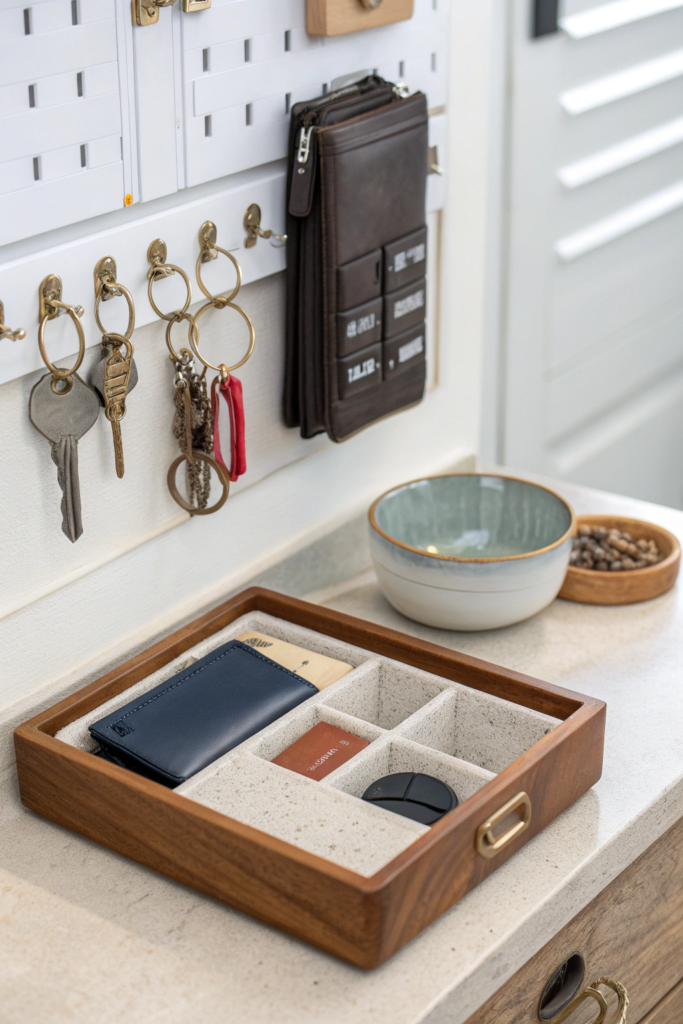
Keys and wallets disappear when there’s no landing spot.
Easy drop zone ideas:
- Small tray
- Wall-mounted key holder
- Shallow bowl
- Drawer organizer
- Shelf with baskets
The rule:
Everything that enters your hand at the door must land in one place.
Step 6: Stop Using Flat Surfaces as Storage
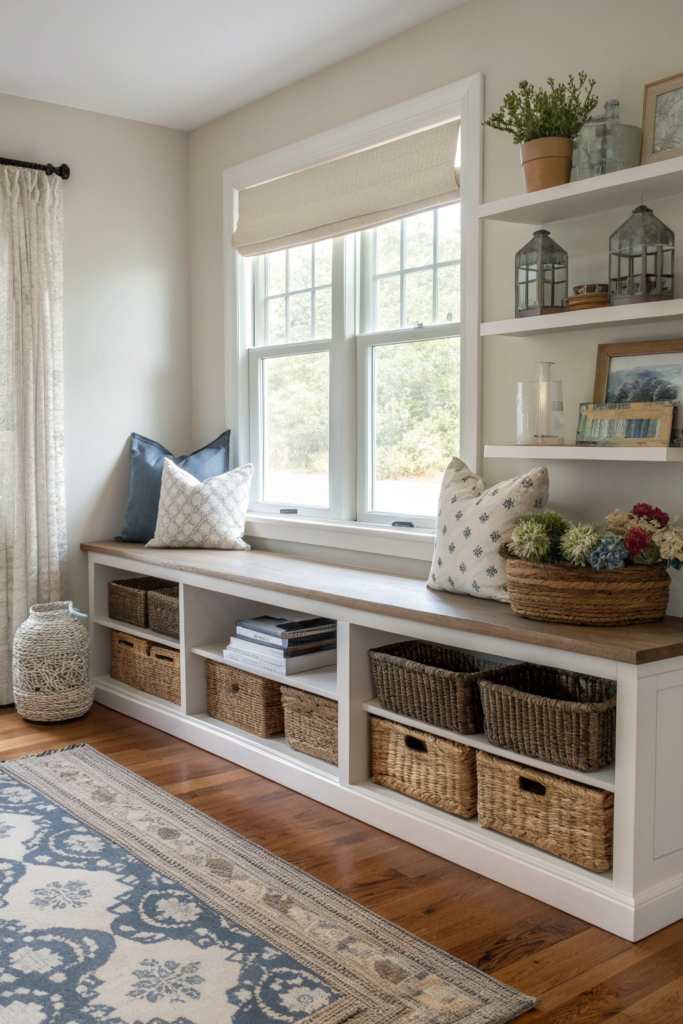
Tables and benches attract clutter fast.
Common clutter magnets:
- Console tables
- Benches
- Shelves
- Window sills
How to fix it:
- Keep surfaces mostly empty
- Use baskets underneath
- Limit decor to one or two items
Clear surfaces signal order and calm.
Step 7: Make It Easy for Everyone in the House
Systems fail when they’re too complicated.
Make it effortless:
- One hook per person
- One basket per person
- Clearly visible storage
- No lids for daily items
If it takes more than two steps, people won’t do it.
Step 8: Use Vertical Space Wisely
Small entryways need vertical storage.
Vertical storage ideas:
- Wall hooks
- Floating shelves
- Tall shoe cabinets
- Over-the-door organizers
Using walls keeps the floor clear and makes the space feel larger.
Step 9: Control Paper Clutter at the Door
Mail and paperwork add up quickly.
Smart paper solutions:
- Open mail immediately
- Recycle junk mail daily
- Keep a small file or tray for important papers
- Move paperwork out of the entryway weekly
The entryway is not a filing cabinet.
Step 10: Use Baskets for Visual Calm
Baskets hide clutter without effort.
Great uses for baskets:
- Shoes
- Gloves and hats
- Dog supplies
- Kids’ accessories
Choose baskets that:
- Fit under benches
- Slide into shelves
- Are easy to grab and go
Step 11: Establish a Daily 2-Minute Reset
Clutter stays gone when it’s addressed daily.
Daily reset routine:
- Put shoes away
- Hang bags
- Return keys to their spot
- Clear surfaces
Two minutes a day saves hours later.
Step 12: Weekly Entryway Reset
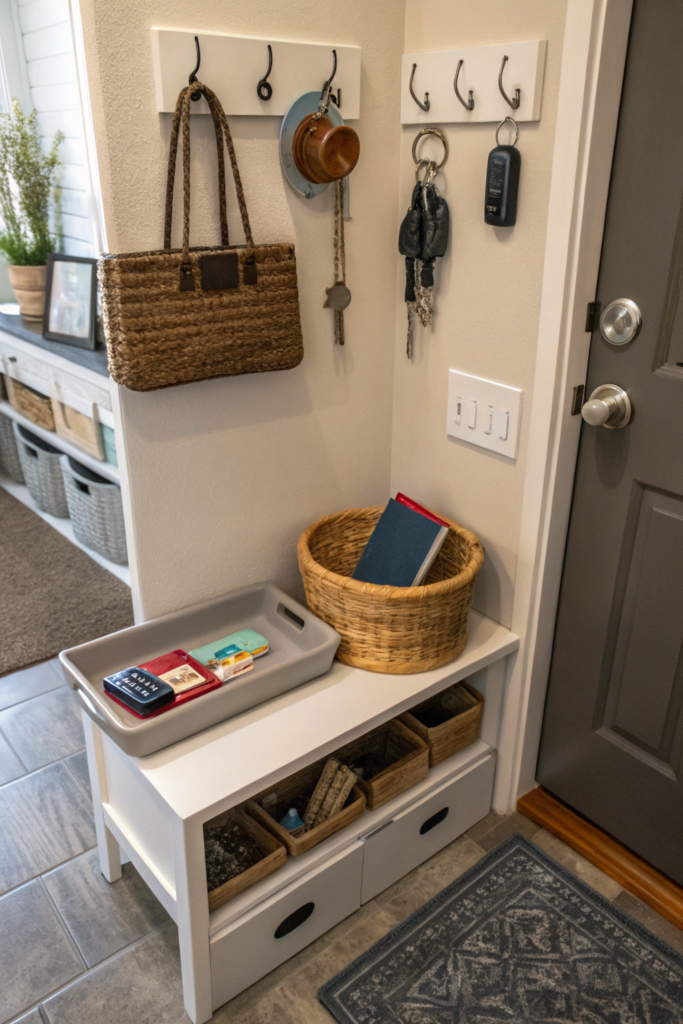
Once a week:
- Wipe surfaces
- Shake out mats
- Remove items that don’t belong
- Return misplaced items
This keeps clutter from creeping back.
Budget vs Premium Entryway Organization Comparison
| Feature | Budget Setup | Premium Setup |
| Cost | Low | Medium to high |
| Storage | Hooks, baskets | Custom cabinetry |
| Setup time | Fast | Longer |
| Flexibility | High | Fixed |
| Best for | Most homes | Large entryways |
Budget systems work just as well when used consistently.
Common Entryway Organization Mistakes
Avoid these:
- Overfilling storage
- Keeping too many shoes
- Using decorative items instead of functional ones
- Expecting perfection
- Ignoring daily habits
Organization should support life, not fight it.
Small Entryway Tips That Make a Big Difference
- Use a mirror to visually expand space
- Choose light colors
- Keep lighting bright
- Use washable mats
- Label baskets if needed
Small tweaks create big improvements.
How to Keep Entryway Clutter From Coming Back
The secret isn’t better storage. It’s consistency.
Simple rules:
- One in, one out for shoes and coats
- Clear the floor every night
- Reset surfaces daily
- Reassess seasonally
Clutter stays gone when habits match systems.
FAQ: Entryway Clutter Solutions
How do I keep shoes from piling up?
Limit shoe storage and keep only current pairs.
What if I don’t have an entryway?
Create one with a rug, hooks, and a small tray.
How do I organize an entryway with kids?
Lower hooks and baskets make cleanup easier.
Should entryways be minimalist?
They should be functional first, minimal second.
How often should I declutter?
Seasonally or when clutter returns.
Final Thoughts
Entryway clutter isn’t inevitable. With a few simple changes and realistic systems, you can transform this high-traffic area into a calm, organized space that actually works for your lifestyle. The goal isn’t perfection. It’s ease.
When everything has a place and daily habits support the setup, clutter stops building automatically. A clean entryway sets the tone for your entire home, welcoming you in and sending you out the door feeling organized and in control.