

How Often Should You Clean Each Kitchen Appliance
Most people clean kitchen appliances reactively—when something looks visibly dirty, smells bad, or stops working properly. By that point, you’re dealing with baked-on grease, mineral buildup, or bacterial growth that requires significantly more effort to address.
Knowing exactly how often each appliance needs attention prevents that cycle entirely. Here’s a practical schedule based on actual cleaning needs, not arbitrary recommendations.

Daily Cleaning (After Every Use)
Coffee Maker Carafe and Filter Basket
Coffee oils turn rancid within hours at room temperature. Leaving them in the carafe or basket transfers bitterness to the next pot and gradually degrades plastic components.
Rinse both with warm water immediately after use. Full washing with dish soap every day or every other day depending on usage frequency.
Toaster Crumb Tray
Crumbs accumulating in the tray don’t just smell when they burn—they’re a genuine fire hazard. Pull the tray out, shake crumbs into the trash, and wipe with a damp cloth.
Takes 30 seconds. Worth doing every single day the toaster is used.
Blender Jar

Food residue left sitting in a blender jar develops bacteria rapidly. Add warm water and a drop of dish soap immediately after use, blend for 20 seconds, rinse thoroughly.
Waiting until later means dried residue that requires soaking and scrubbing.
Weekly Cleaning
Microwave Interior
Weekly steam cleaning prevents splatters from hardening into stubborn deposits that require aggressive scrubbing.
Place a microwave-safe bowl containing water and a few tablespoons of vinegar inside. Microwave for 3-5 minutes, let sit for 3 minutes with the door closed, then wipe all surfaces with a damp cloth. Everything wipes away effortlessly.
The turntable plate should come out weekly for washing in the sink.
Stovetop
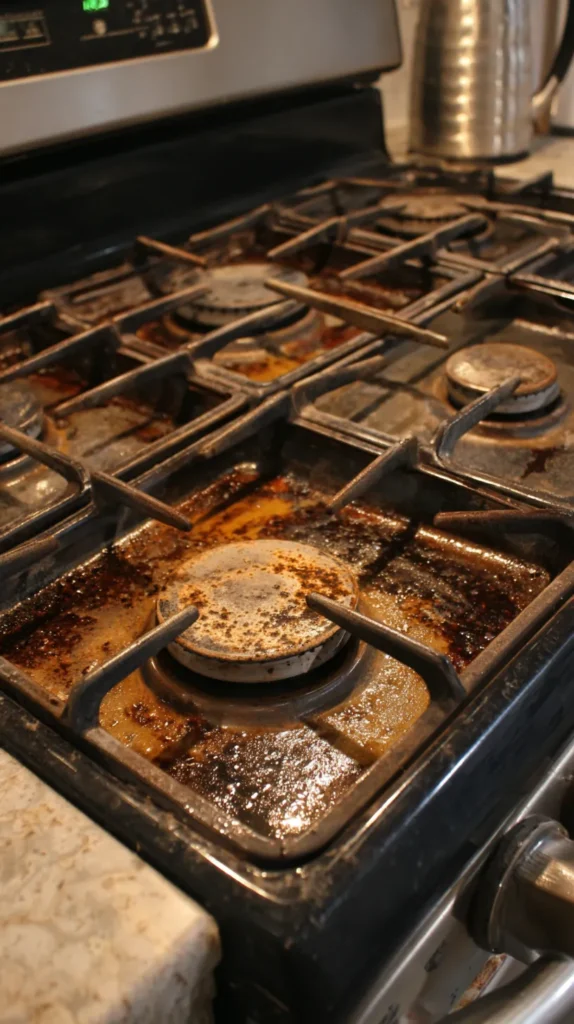
Weekly cleaning prevents grease from baking onto burner grates and drip pans during subsequent cooking sessions.
For gas stoves, remove grates and wash with hot soapy water. Wipe the stovetop surface thoroughly. For electric or induction, wipe the surface with appropriate cleaner weekly.
Grease left on stovetops for weeks requires significantly more scrubbing and sometimes never fully comes off.
Refrigerator Interior Shelves and Drawers
Spills and food residue left on shelves spread bacteria and create odors that absorb into other food.
A quick weekly wipe of visible spills takes 5 minutes and prevents the monthly deep clean from becoming an overwhelming task.
Dish Rack
If you hand wash dishes, the dish rack accumulates moisture, soap residue, and bacteria constantly. Wash weekly with hot soapy water and allow it to dry completely before reassembling.
Monthly Cleaning
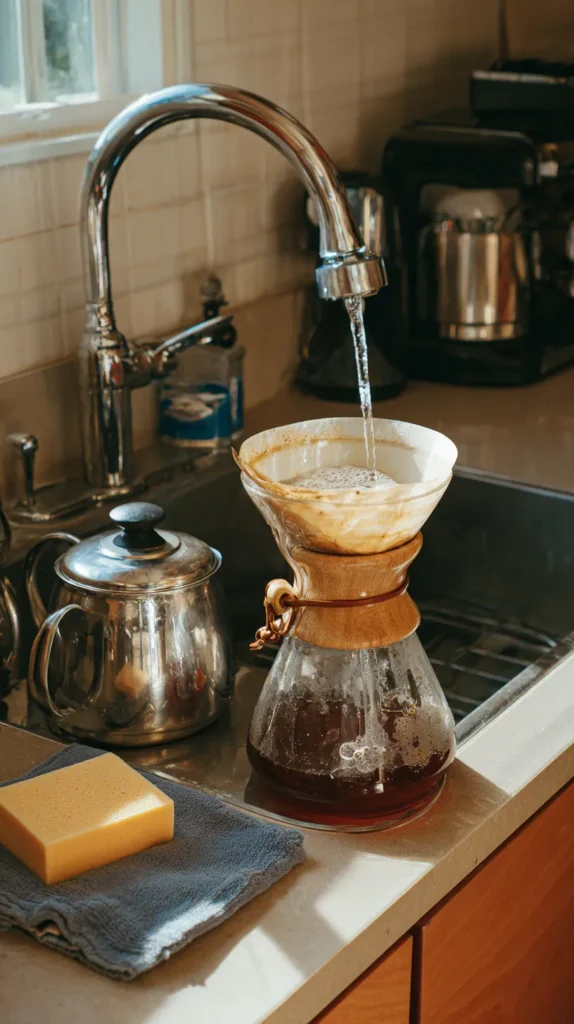
Coffee Maker Descaling
Mineral deposits from water gradually coat internal components, restricting flow and burning out heating elements prematurely. Monthly descaling with vinegar solution or commercial descaler keeps the machine running efficiently.
Run equal parts vinegar and water through a cycle, let sit for 30 minutes, then run two plain water cycles to rinse.
Dishwasher Filter and Interior
As covered in previous articles, the dishwasher filter requires monthly cleaning to prevent performance degradation and pump motor strain.
Remove the filter, scrub under running water, wipe the door gasket, run a vinegar cycle. The entire process takes 20 minutes and dramatically extends machine lifespan.
Refrigerator Door Gaskets
The rubber seals accumulate food debris and moisture that prevent proper sealing and encourage mold growth. Wipe monthly with warm soapy water, paying attention to the folds where debris hides.
Garbage Disposal
The disposal develops bacterial biofilm and odors from accumulated food particles. Monthly cleaning with ice cubes and salt scours the grinding chamber, followed by citrus peels to neutralize odors.
Range Hood Filter
Grease filters above the stove trap cooking vapors. Monthly removal and washing in hot soapy water—or dishwasher if the filter is dishwasher-safe—prevents grease buildup that reduces ventilation efficiency and creates fire risk.
Stand Mixer Exterior and Attachments
Even with careful use, flour dust and food residue accumulate around the mixer head and in crevices. Monthly wipe-down of all exterior surfaces and thorough washing of all attachments maintains hygiene and prevents residue from working into mechanical components.
Air Fryer Basket and Interior
Grease accumulates in the basket and on interior walls with every use. Weekly for heavy users, monthly minimum for occasional users. Soak the basket in hot soapy water, wipe interior walls with damp cloth.
Every 3-6 Months
Refrigerator Condenser Coils
Dust and pet hair coating condenser coils forces the compressor to work harder, increasing energy consumption and shortening compressor lifespan.
Pull the refrigerator away from the wall or remove the front toe grille to access coils. Vacuum thoroughly with a brush attachment. Every 6 months for most households, every 3 months with pets that shed heavily.
Dishwasher Spray Arms
Mineral deposits gradually clog the small holes in spray arms, reducing water pressure and cleaning coverage. Remove both arms, clear holes with a toothpick, soak in vinegar for 30 minutes.
Oven Interior
Frequency depends entirely on how often you bake or roast and how carefully you contain spills.
For regular bakers: every 3 months. For occasional oven users: every 6 months. For people who primarily use stovetop: annually may suffice.
Use the self-clean function sparingly—it runs at extreme temperatures that stress oven components. Manual cleaning with oven cleaner or baking soda paste is gentler on the machine.
Freezer
Most modern frost-free freezers don’t require defrosting, but the interior benefits from a thorough wipe-down every 6 months. Remove all items, wipe shelves with warm water and mild cleaner, check door gaskets.
Annual Tasks
Refrigerator Water Filter
If your refrigerator has a water dispenser or ice maker, the filter requires replacement every 6-12 months depending on usage and water quality. An expired filter stops removing contaminants and can restrict water flow.
Washing Machine Drum
Technically not a kitchen appliance, but worth including—monthly cleaning tablets or a hot empty cycle with vinegar monthly, with a thorough drum inspection annually.
Range Hood Fan Motor
Beyond the monthly filter cleaning, the fan motor and housing accumulate grease internally over a year of cooking. Annual professional cleaning or careful DIY cleaning of the motor housing prevents fire risk and maintains ventilation efficiency.
Complete Cleaning Schedule
| Appliance | Daily | Weekly | Monthly | Every 6 Months | Annually |
| Coffee Maker | Carafe/basket rinse | — | Descale | — | Deep clean |
| Toaster | Crumb tray | — | Interior wipe | — | — |
| Microwave | — | Steam clean | — | — | Vent cleaning |
| Stovetop | — | Full wipe | Burner deep clean | — | — |
| Refrigerator | — | Spill wipe | Gaskets | Coils | Water filter |
| Dishwasher | — | — | Filter/descale | Spray arms | Full inspection |
| Blender | Jar rinse | — | Base wipe | — | — |
| Stand Mixer | — | — | Full exterior | Attachments | — |
| Air Fryer | — | Basket wash | Interior wipe | — | — |
| Range Hood | — | — | Filter wash | — | Motor cleaning |
| Garbage Disposal | — | — | Scrub/deodorize | — | — |
| Oven | — | — | — | Interior clean | Full inspection |
The Practical Approach
Reading a full cleaning schedule can feel overwhelming. The practical reality is simpler than it looks.
Daily tasks take under a minute each and happen naturally as part of using appliances. Weekly tasks take 5-10 minutes and slot easily into a regular cleaning routine. Monthly tasks require dedicated time but prevent the serious problems that develop from neglect.
The most commonly skipped tasks—condenser coil cleaning, dishwasher filter maintenance, and coffee maker descaling—cause the most premature appliance failures. Prioritize these above everything else if you’re going to be selective about what you maintain.
A realistic approach: pick one appliance monthly and give it thorough attention beyond your regular routine. Rotating through your kitchen this way ensures everything gets proper care without requiring marathon cleaning sessions.
Your appliances will last longer, perform better, and cost less to run. That’s the entire point.