

How to Make Your Dishwasher Last Longer
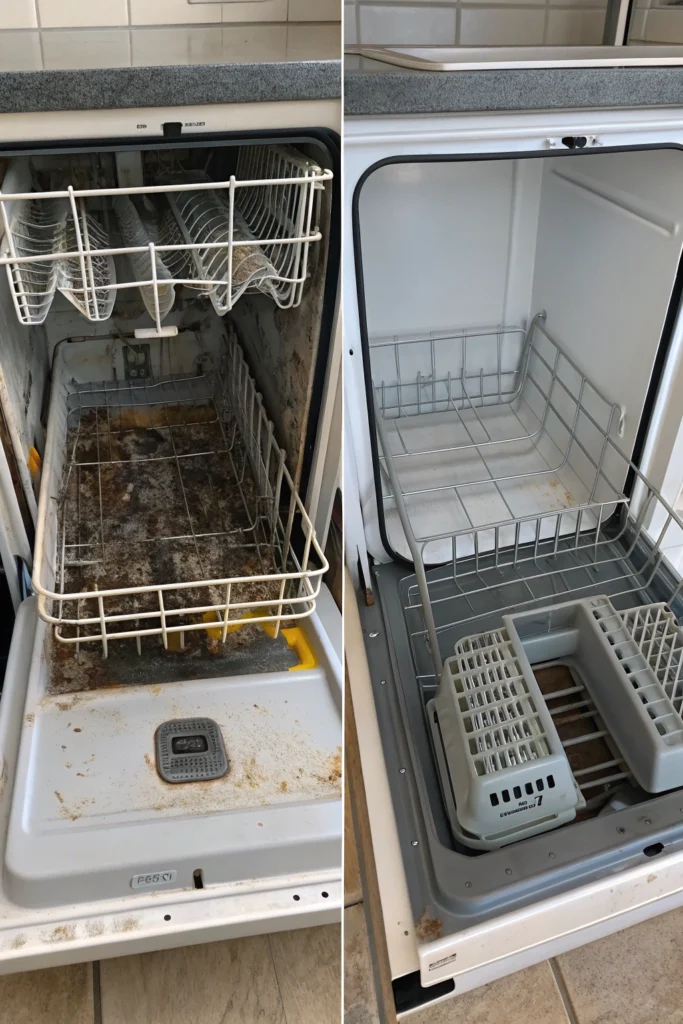
I replaced my first dishwasher after just four years. The repair technician looked at the interior, asked when I’d last cleaned the filter, and watched my blank expression tell him everything. I’d never cleaned it once.
The replacement cost $650 plus installation. The filter cleaning that would have prevented the problem takes 5 minutes monthly.
That expensive lesson sent me researching everything about dishwasher maintenance—talking to repair technicians, reading manufacturer guidelines, and testing different approaches on my current machine. Seven years later, it runs perfectly.
If you want to avoid premature replacement and keep your dishwasher running efficiently, here’s exactly what actually matters.
Why Dishwashers Die Early
The average dishwasher should last 10-15 years. Most that fail prematurely do so from neglect rather than mechanical failure.
The three main culprits are clogged filters that strain the pump motor, hard water mineral buildup that damages components, and improper loading that causes mechanical wear. All three are completely preventable with simple maintenance.
Understanding what kills dishwashers early makes the maintenance habits make sense rather than feeling like pointless chores.
Clean the Filter Regularly
This is the single most important maintenance task, and most people don’t know it exists.
Modern dishwashers have manual filters at the bottom of the machine that trap food particles. Unlike older self-cleaning models with loud grinders, newer machines use quiet manual filters that require regular cleaning.
Finding your filter:
Remove the bottom rack and look at the floor of the dishwasher. You’ll see a cylindrical filter assembly, usually with a flat mesh screen surrounding it. Twist the cylindrical piece counterclockwise and lift it out, then remove the flat screen beneath it.
Cleaning process:
Rinse both pieces under hot running water. Use an old toothbrush to scrub away trapped food, grease, and debris. For greasy buildup, soak in warm soapy water for 5 minutes before scrubbing.
Reinstall by replacing the flat screen first, then twisting the cylinder back into place until it locks.
How often:
Monthly for average households. Every two weeks if you cook frequently or have a large family. I set a monthly phone reminder and the entire process takes 5 minutes.
A clogged filter forces the pump motor to work harder, shortening its lifespan significantly. It also causes poor cleaning results, which tricks people into running extra cycles—compounding the wear.
Address Hard Water Buildup
Hard water is the silent dishwasher killer. The minerals—primarily calcium and magnesium—accumulate on every internal surface, coating the heating element, spray arms, and pump components over time.
Signs of hard water damage:
White film or chalky residue inside the machine, spotted or cloudy dishes despite proper loading, and reduced water pressure from spray arms.
Monthly vinegar treatment:
Place a dishwasher-safe bowl containing 2 cups of white vinegar on the bottom rack. Run a hot water cycle with no detergent and no other dishes. The vinegar dissolves mineral deposits throughout the machine’s interior.
Don’t pour vinegar directly into the detergent compartment—it releases too early in the cycle and doesn’t reach all areas effectively.
Use rinse aid consistently:
Rinse aid isn’t just for spot-free dishes. It helps water sheet off surfaces rather than pooling and evaporating, which dramatically reduces mineral deposit formation. Keep the rinse aid dispenser filled at all times.
I ignored rinse aid for years thinking it was a scam. After two months of consistent use, the white film inside my machine nearly disappeared.
Consider a water softener:
If you have severely hard water, the mineral problem compounds faster than maintenance can address. A whole-house water softener eliminates the problem at the source. The investment pays off through extended appliance lifespans across your entire home.
Load It Correctly
Improper loading causes mechanical damage that accumulates over time, in addition to poor cleaning results.
Don’t overload:
Cramming dishes together blocks spray arm rotation and forces the machine to compensate. Items that stick up into the spray arm path snap the arms or crack the arm bearings over time.
I broke a spray arm by consistently loading tall items without checking clearance. The replacement cost $45 and required partial disassembly.
Angle dishes properly:
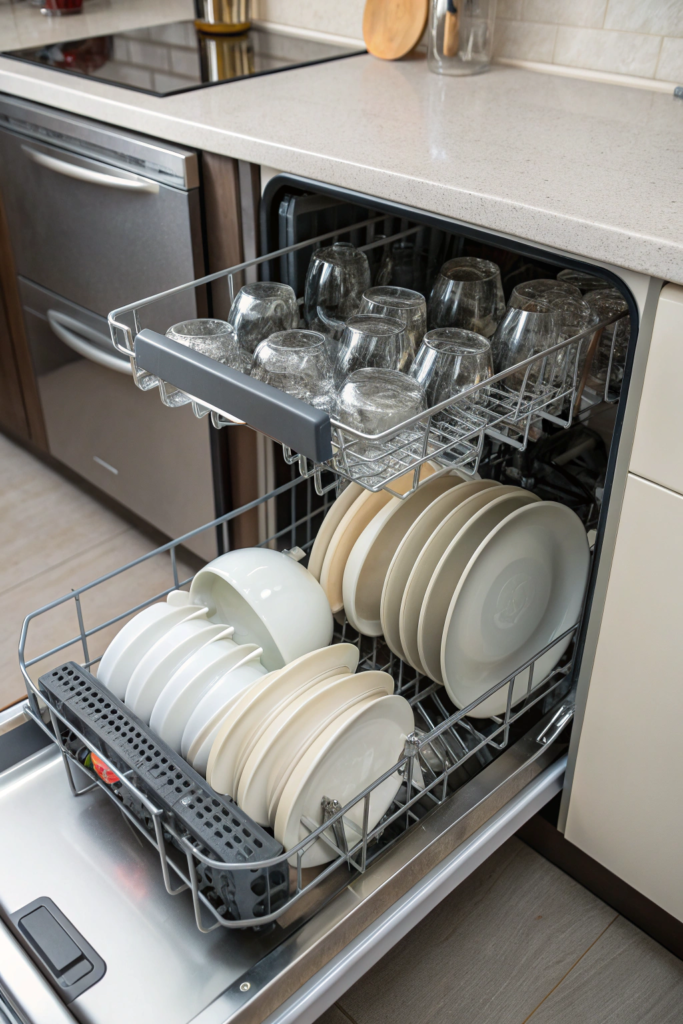
Bowls, cups, and glasses should face downward and angle toward the spray arms. Flat dishes stacked vertically block water from reaching neighboring items. The spray arms can only clean what water actually reaches.
Keep the spray arms clear:
Before every cycle, manually spin both spray arms to confirm they rotate freely. If a handle or utensil blocks rotation, the arm motor works against resistance—wearing it out prematurely.
Items that shouldn’t go in:
Cast iron (rusts and damages racks), good knives (dulls blades and damages handles), wooden items (warps and cracks), copper cookware (discolors), and delicate crystal (etches and cracks). Running these items accelerates wear on racks and interior components.
Run Full Cycles Only
Running half-empty dishwashers wastes water and energy, but more importantly, it runs the motor and components the same number of cycles for less work.
More cycles means more wear. A dishwasher that runs 14 cycles weekly wears out faster than one running 7 full loads with identical dish quantities.
Wait until the machine is full before running. If you need specific items sooner, hand-wash those and wait for a full load otherwise.
Use the right cycle:
The heavy-duty cycle uses more water, higher temperature, and longer run time—causing more wear when unnecessary. Use normal cycles for normal loads. Reserve heavy-duty for genuinely stuck-on messes.
Similarly, the heated dry cycle uses the heating element, which experiences wear from thermal cycling. Air dry when possible by opening the door slightly at the end of the cycle.
Monthly Deep Cleaning

Beyond filter cleaning, monthly deep cleaning addresses areas that gradually accumulate buildup.
Clean the spray arms:
Remove both spray arms (they typically unscrew or pop off) and hold them under running water. Use a toothpick or thin wire to clear any clogged holes—mineral deposits and food particles block these over time, reducing water pressure.
Restricted spray arm holes mean poor cleaning, causing you to run additional cycles. More cycles mean more wear.
Wipe the door gasket:
The rubber seal around the door traps food particles and moisture, developing mold and mildew over time. Wipe the entire gasket with a damp cloth and mild cleaner monthly.
A deteriorating gasket causes leaks that damage your floor and the machine’s base components. Replacing a gasket costs $20-40 and is straightforward—ignoring it until it fails can mean water damage repairs costing hundreds.
Clean the detergent dispenser:
Old detergent residue accumulates in the dispenser mechanism, eventually preventing it from opening correctly during cycles. Wipe it clean with a damp cloth and check that the door opens and closes freely.
Run a baking soda cycle:
After the vinegar treatment, sprinkle 1 cup baking soda across the bottom of the empty machine and run a short hot cycle. This deodorizes and provides mild cleaning of interior surfaces.
Use Detergent Correctly
Detergent type and amount affects both cleaning performance and long-term machine health.
Pods versus powder versus gel:
Pods deliver pre-measured doses that dissolve completely, reducing residue buildup. Powder allows quantity adjustment based on load size and water hardness. Gel tends to leave residue over time and doesn’t clean as effectively.
I switched from gel to pods after a technician mentioned that gel is the most common contributor to detergent dispenser clogs.
Don’t use too much:
Excess detergent creates suds that interfere with cleaning and leave residue throughout the machine. More is not better—use manufacturer recommended amounts or slightly less if your water is soft.
Skip the pre-rinse:
Modern dishwashers are designed to sense soil levels and adjust accordingly. Thoroughly rinsing dishes before loading confuses this system and can result in under-washing. Scrape off food chunks but don’t rinse.
Pre-rinsing also wastes significant water—studies show pre-rinsing uses an additional 6,000 gallons annually in a typical household.
Annual Maintenance Checklist

Once yearly, spend 30 minutes on comprehensive inspection and maintenance.
Check and clean the drain area:
Beyond the filter, the drain beneath it can accumulate debris. With the filter removed, use a damp cloth to wipe the drain area and remove any accumulated particles.
Inspect door hinges and springs:
Open and close the door several times, checking for resistance or unusual sounds. Door springs wear out over time, eventually causing the door to drop suddenly—potentially cracking the door or damaging hinges. Replacement springs cost $10-15 and are easy to install.
Check rack coating:
Examine the plastic coating on dish racks for chips or rust spots. Exposed metal rusts and spreads rust stains to dishes and the machine interior. Touch up small chips with dishwasher rack repair paint ($8), available at hardware stores. Replace severely damaged racks before rust spreads.
Test water temperature:
Run your kitchen faucet until the water is hot before starting the dishwasher. This ensures the machine fills with already-hot water, improving cleaning effectiveness and reducing how hard the heating element works.
Inspect water supply hose:
Pull the machine out slightly and inspect the water supply hose for cracks, bulges, or corrosion at connection points. A failing supply hose causes sudden water leaks that can cause serious damage. Hoses cost $15-25 to replace—far cheaper than water damage restoration.
Warning Signs to Address Immediately
Catching problems early prevents minor issues from becoming expensive failures.
Unusual noises like grinding, knocking, or rattling during cycles suggest objects are caught in the pump or spray arms are hitting something. Stop the cycle, investigate, and remove the obstruction before continuing.
Water not draining completely indicates a clogged filter, kinked drain hose, or failing pump. Start with filter cleaning. If the problem persists after cleaning, the drain hose or pump needs professional attention.
Dishes not getting clean despite proper loading signals a clogged filter, blocked spray arms, or failing water inlet valve. Work through these systematically before assuming the machine needs replacement.
Rust anywhere inside requires immediate attention. Locate the source—usually damaged rack coating or a corroding component—and address it before rust spreads and damages the machine’s interior surfaces permanently.
Leaking water around the door suggests a damaged gasket, while leaking from underneath indicates supply hose or pump issues. Both need immediate attention to prevent floor and cabinet damage.
The Real Cost of Neglect Versus Maintenance
| Task | Frequency | Time Required | Cost |
| Filter cleaning | Monthly | 5 minutes | Free |
| Vinegar treatment | Monthly | 2 minutes active | $0.50 |
| Spray arm cleaning | Monthly | 10 minutes | Free |
| Gasket wiping | Monthly | 3 minutes | Free |
| Annual inspection | Yearly | 30 minutes | $0-25 |
| Total annual investment | ~2 hours | ~$20 |
Compare this to premature replacement at $500-1,200 plus installation, or even common repairs—pump replacement runs $150-300, control board failure costs $200-500, and water damage from ignored leaks can cost thousands.
Two hours and $20 annually is an obvious investment.
The Final Verdict
Dishwashers don’t wear out—they get neglected into failure. The machines are mechanically simple and genuinely durable when given basic attention.
The hierarchy of importance:
Most critical: Clean the filter monthly. This single habit prevents the majority of premature failures.
Very important: Address hard water with monthly vinegar treatments and consistent rinse aid use.
Important: Load correctly, run full cycles, and wipe the door gasket regularly.
Annual: Inspect all components, check hoses, and treat rack chips before rust spreads.
My current dishwasher is seven years old and runs identically to when it was new. I expect another seven years with continued maintenance. That’s $650+ in avoided replacement costs for about $140 in total maintenance investment over a decade—plus the time saved not dealing with breakdowns and repair appointments.
The 5 minutes monthly for filter cleaning alone is the best return on time investment in my entire home maintenance routine.