

15 Amazing Indoor Herb Garden Ideas
Bringing an herb garden indoors is one of the most rewarding ways to add freshness, flavor, and beauty to your home. Whether you’re short on outdoor space or simply love the convenience of snipping herbs right from your kitchen, an indoor herb garden offers endless inspiration.
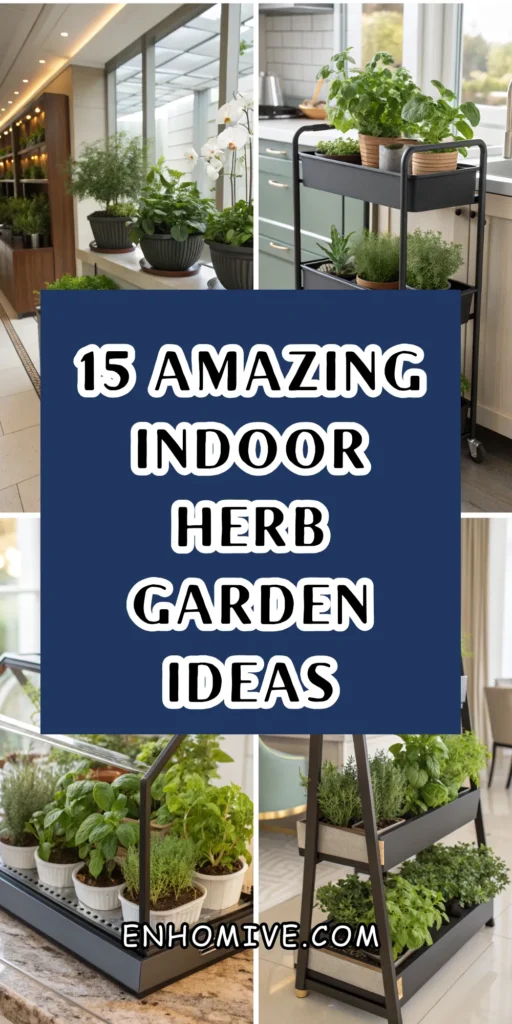
From vertical planters to DIY shelves and smart systems, these ideas help you grow thriving herbs year-round while enhancing your home’s aesthetic. Here are 15 amazing indoor herb garden ideas to spark your creativity and elevate your culinary routine.
1. Create a Windowsill Herb Garden
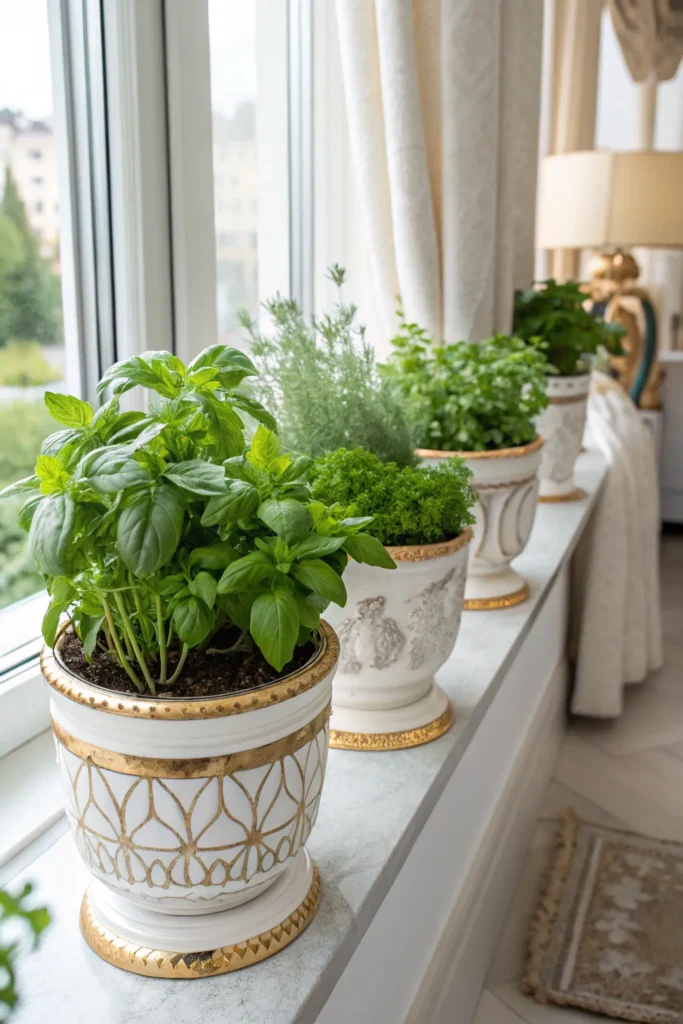
A sunny windowsill is one of the simplest and most effective places to grow herbs indoors. Choose herbs that thrive in bright, direct light such as basil, rosemary, thyme, oregano, and cilantro. Use small pots or long, narrow planters that fit the sill perfectly. This classic approach keeps fresh herbs within arm’s reach while adding vibrant greenery to your kitchen or dining area. Consider grouping containers by water needs to make care even easier.
2. Install a Vertical Wall Planter
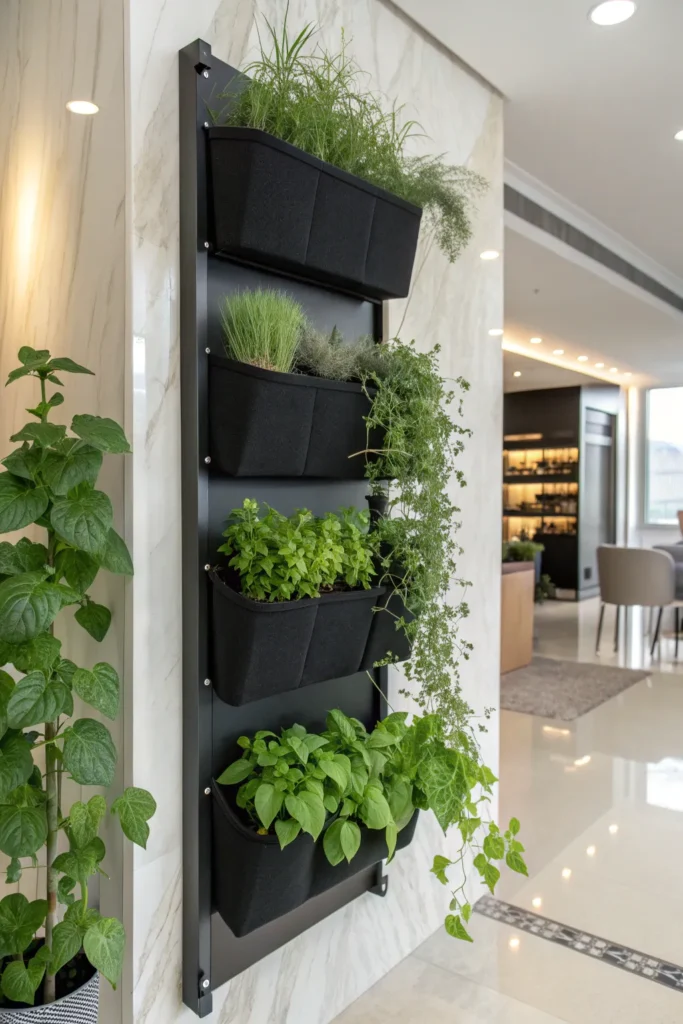
If you’re tight on counter space, a vertical wall planter offers an attractive and space-efficient solution. Wall-mounted pockets, ladder shelves, or modular planters make it possible to grow multiple herbs on a single wall. Vertical gardens maximize your growing capacity while doubling as living décor. Choose trailing herbs like mint or cascading oregano for added visual interest.
3. Build a Tiered Herb Shelf
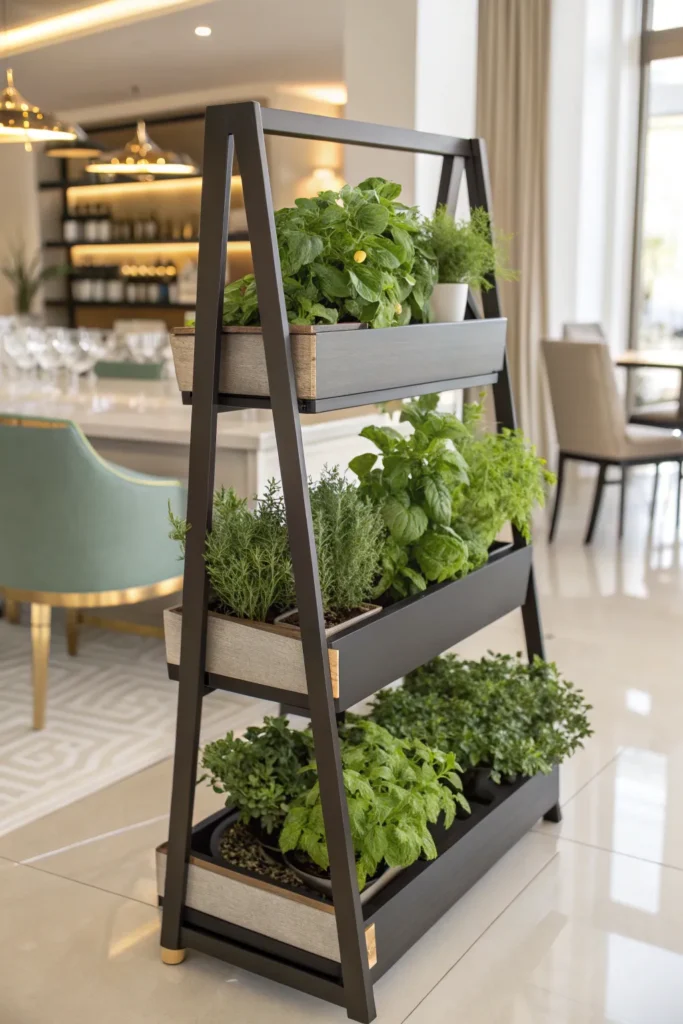
A tiered shelf allows you to grow a variety of herbs without taking up much floor space. You can use a multi-level plant stand, a corner rack, or a DIY wooden shelf to create layers of greenery. Place herbs requiring brighter light on the top tier, and shade-tolerant ones like mint and parsley on lower levels. This setup creates a lush, organized display that’s as decorative as it is practical.
4. Use Mason Jars for a Rustic Herb Display
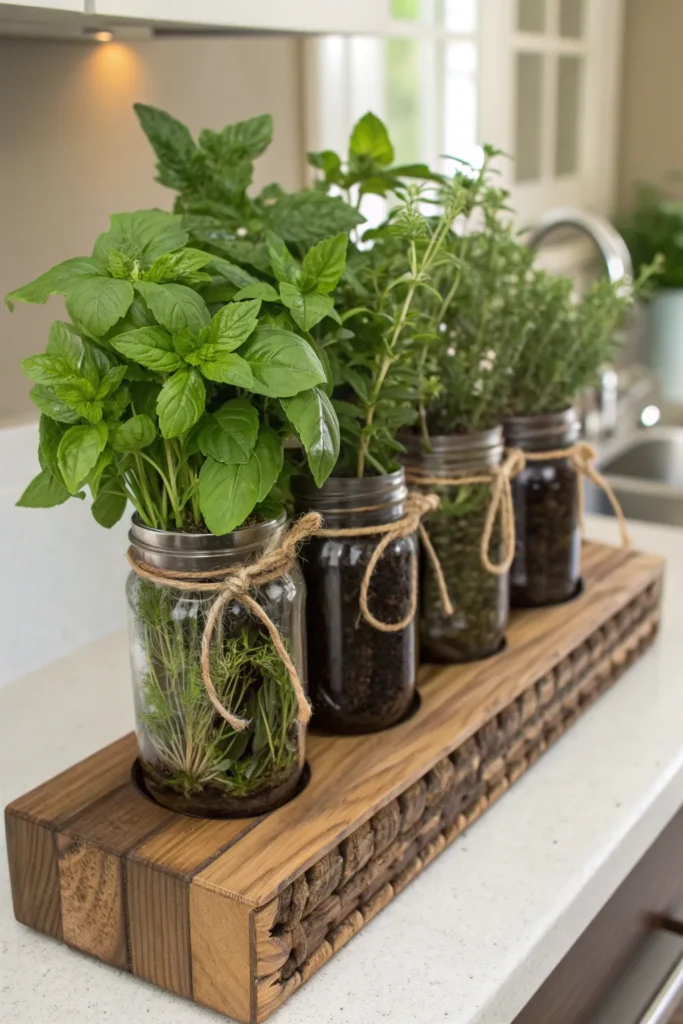
Mason jars are budget-friendly, charming, and perfect for growing small herbs indoors. Attach them to a wooden board, line them up on a windowsill, or place them on floating shelves. While mason jars don’t have drainage holes, you can add pebbles at the bottom to help excess water settle. Their clear design allows you to monitor soil moisture and root growth easily.
5. Try an Indoor Hydroponic Herb Garden
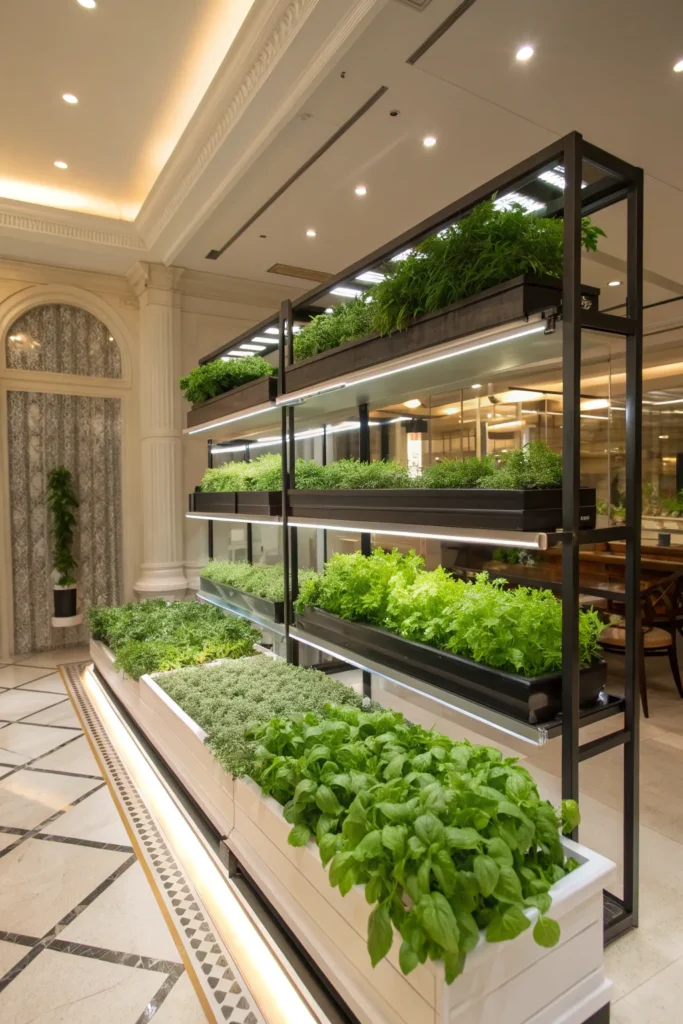
Hydroponic systems make indoor gardening even easier by eliminating the need for soil. These systems use water mixed with nutrients to grow herbs quickly and efficiently. Many countertop hydroponic units come with built-in LED grow lights, timers, and automatic watering, making them ideal for beginners or busy households. Basil, chives, dill, and mint flourish beautifully in hydroponic setups.
6. Hang a Kitchen Herb Garden
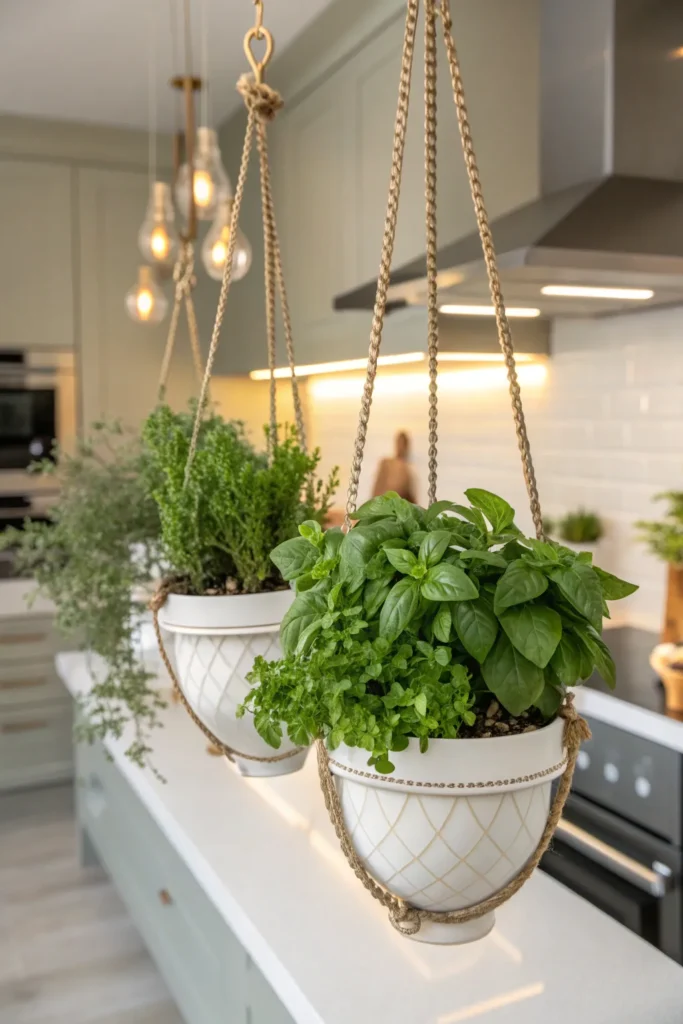
Hanging planters free up surface space while adding a refreshing suspended look to your kitchen. Macramé hangers, ceiling hooks, or hanging shelves allow you to create a floating herb garden that doubles as stylish décor. Hang pots near a bright window to ensure your herbs receive enough light. This approach adds vertical interest and keeps herbs at eye level for easy trimming.
7. Build a Rolling Herb Cart
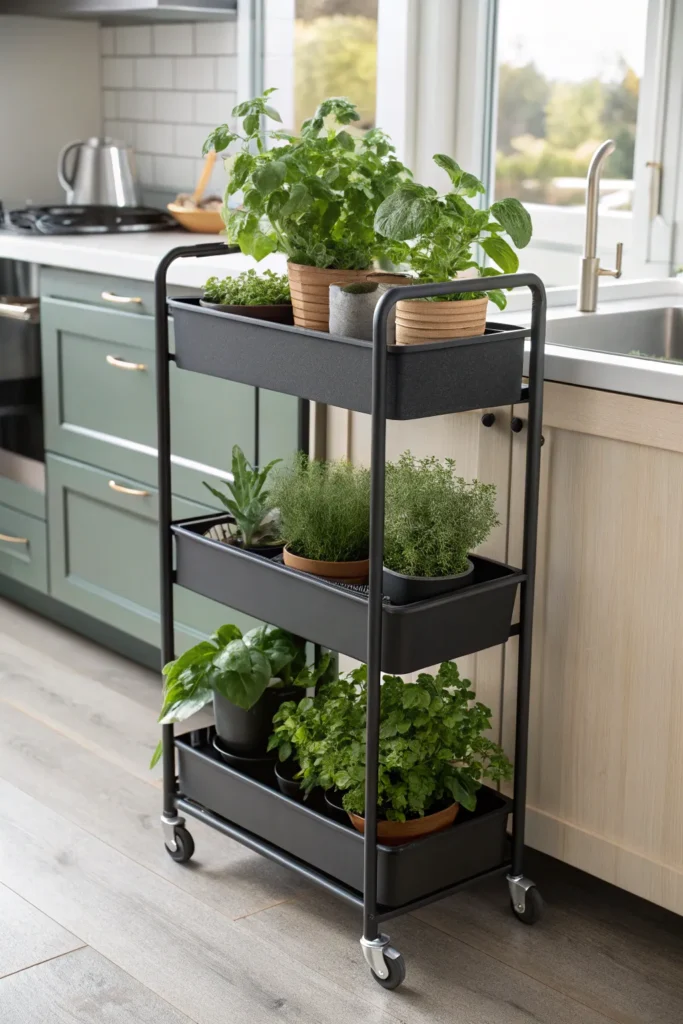
A mobile herb cart is perfect for those who like flexibility. A bar cart, trolley, or tiered rolling stand can serve as a portable herb garden station. Move it closer to windows during the day to provide optimal light, then wheel it to your prep area when cooking. This setup also keeps your herbs organized and makes watering a breeze.
8. Use Repurposed Items as Planters
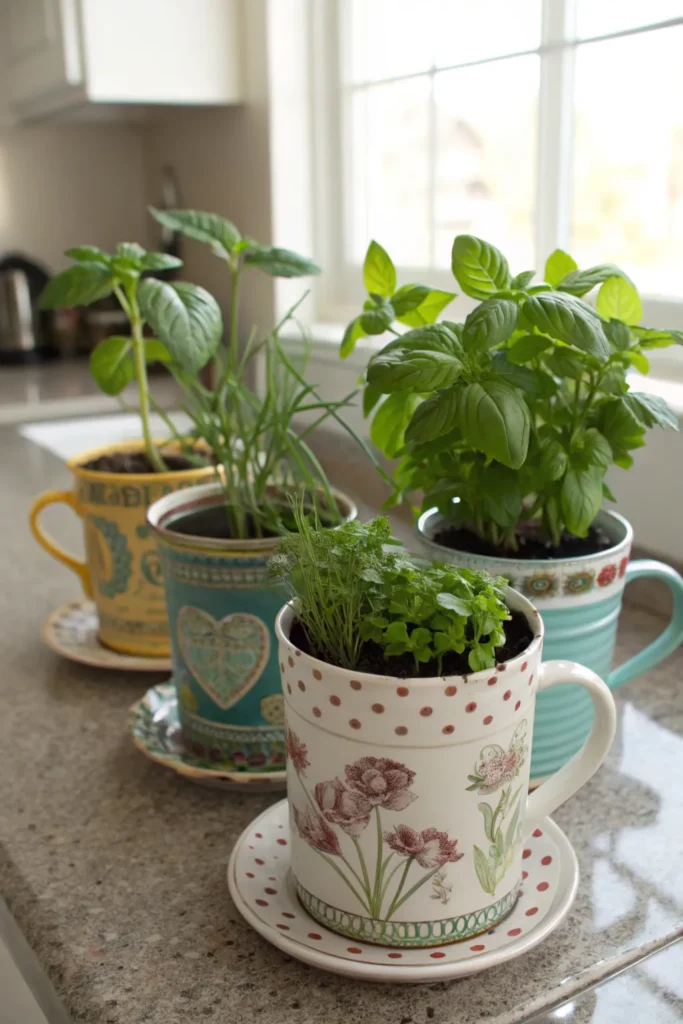
Repurposing household items for your herb garden adds charm and sustainability to your indoor space. Old teacups, tin cans, wooden crates, ceramic bowls, or vintage colanders can make delightful herb planters. These unique containers create personality and help your herb garden stand out. Just make sure to add drainage solutions if needed.
9. Install Shelf-Mounted Grow Lights
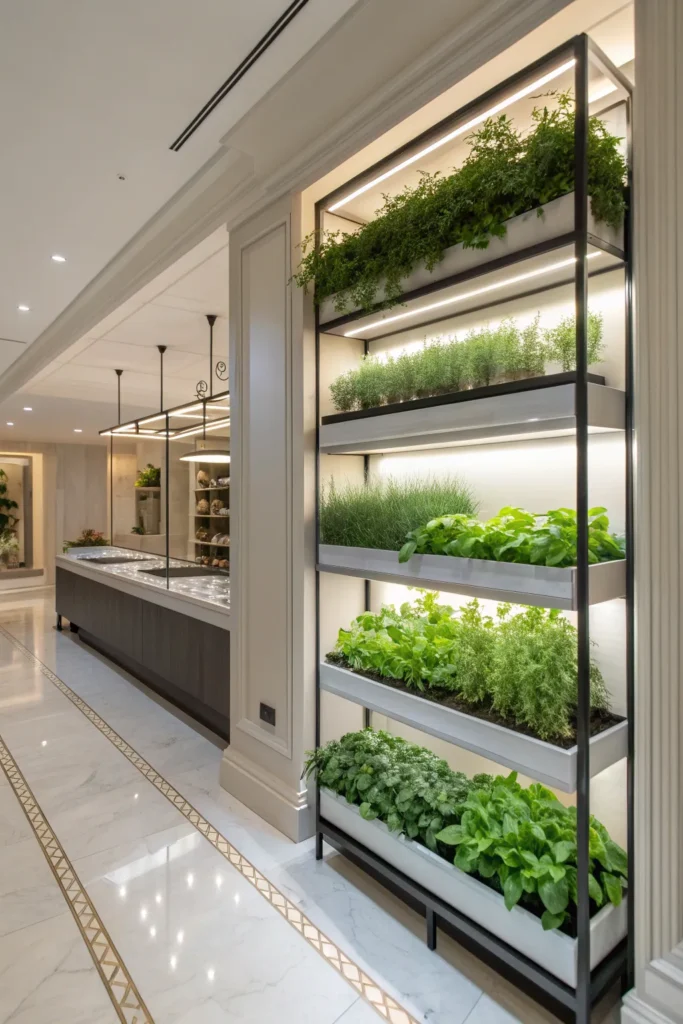
If your home doesn’t receive enough natural light, grow lights can save the day. Mount LEDs grow lights under shelves or cabinets to give your herbs the consistent light they need. Adjustable grow lights allow you to cater to each herb’s specific light requirements. A shelf system with built-in lighting creates an efficient and attractive growing area perfect for small apartments or dark kitchens.
10. Use a Kitchen Counter Herb Garden
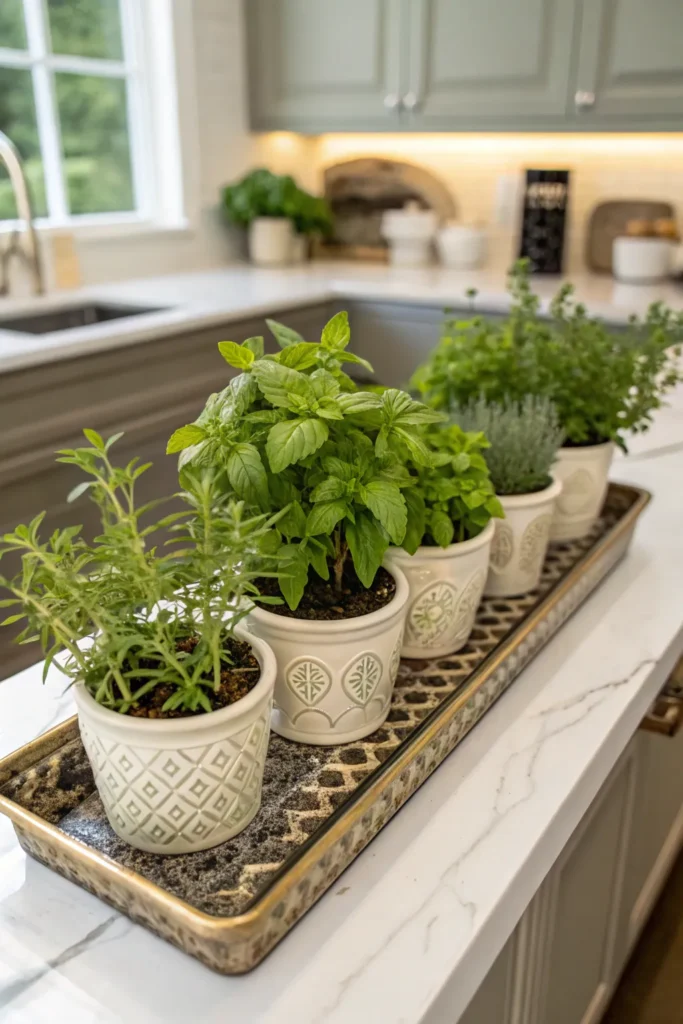
Creating an herb garden right on your kitchen counter provides easy access while you cook. Choose small pots or a long, narrow tray to keep everything compact and neat. Many modern kitchen herb planters come with built-in drainage trays or self-watering mechanisms, making maintenance simple. This convenient placement means you’ll use your herbs more often, reducing food waste and enhancing flavor.
11. Grow Herbs in a Glass Terrarium
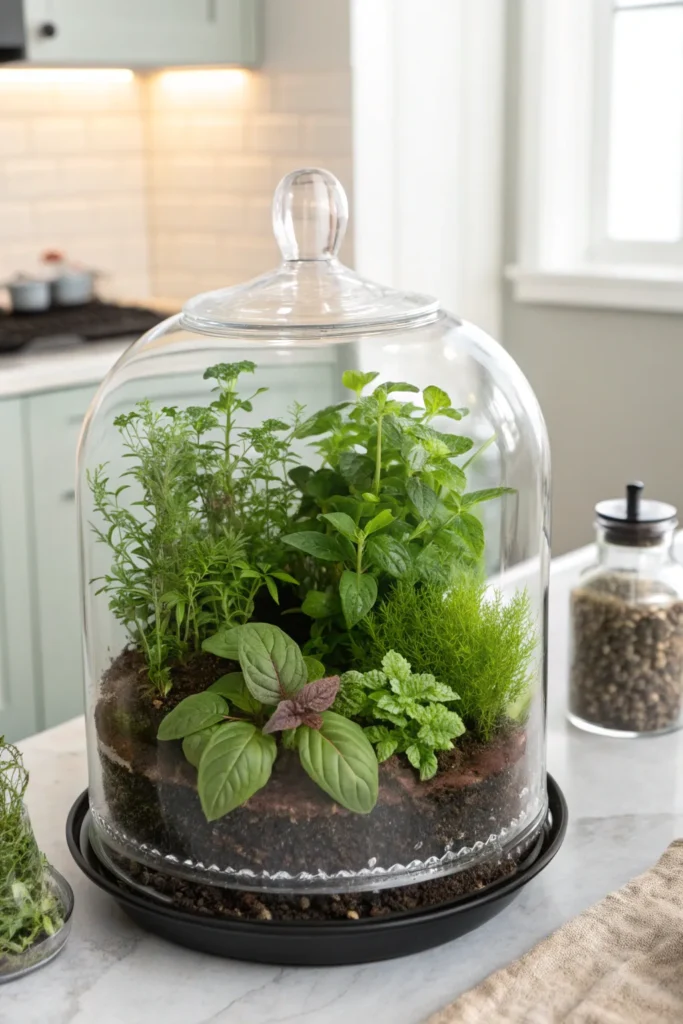
A terrarium adds a touch of elegance to your indoor herb garden. Closed terrariums work best for humidity-loving herbs like chervil or parsley, while open terrariums suit Mediterranean herbs like rosemary and thyme. Terrariums keep the environment stable and visually striking, turning your herb garden into a beautiful centerpiece.
12. Create a Mini Greenhouse Herb Station
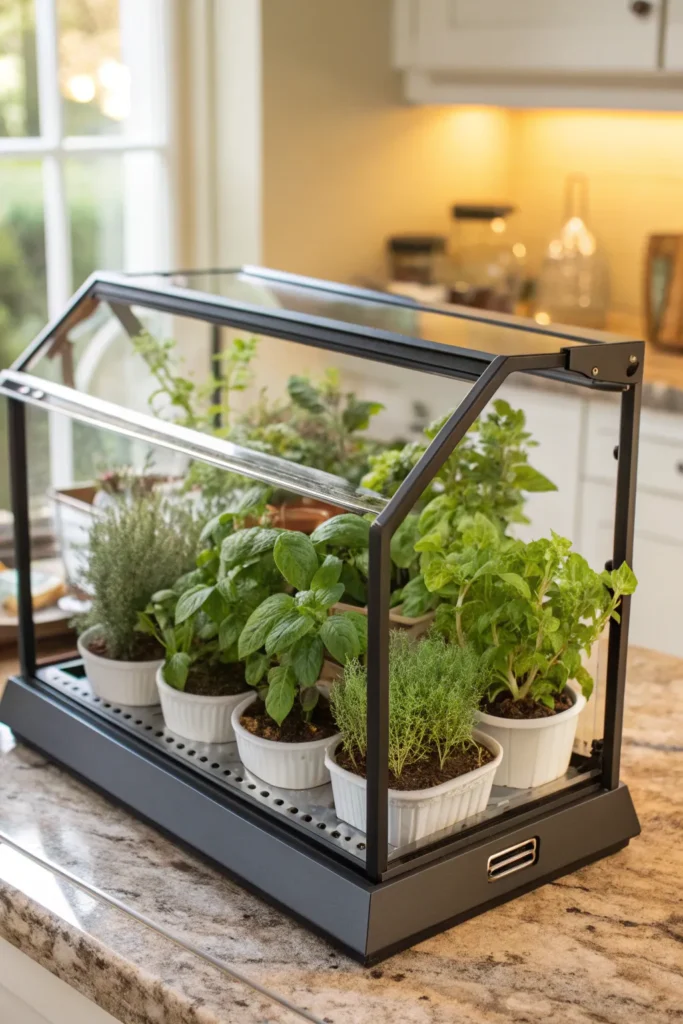
A tabletop mini greenhouse protects delicate herbs from temperature fluctuations while providing a warm, bright growing environment. These small structures mimic greenhouse conditions on a miniature scale, helping seedlings and sensitive herbs thrive. Mini greenhouses with clear panels also channel sunlight effectively, making them ideal for winter growing.
13. Use a Pegboard Herb Organizer
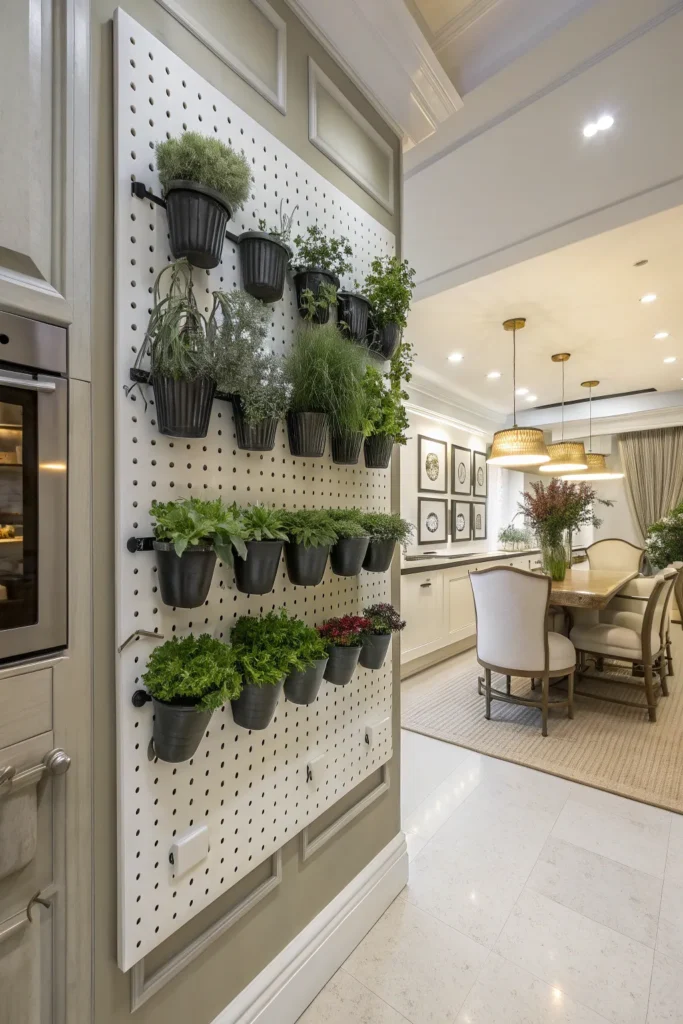
A pegboard is a creative and functional way to organize your indoor herb garden. Mount the board on a kitchen or dining room wall, then hang small pots, baskets, and shelves on pegs. This customizable system lets you rearrange your herbs anytime. Pegboards also maximize vertical space while creating a stylish, modern display.
14. Try a Rail-and-Hook System
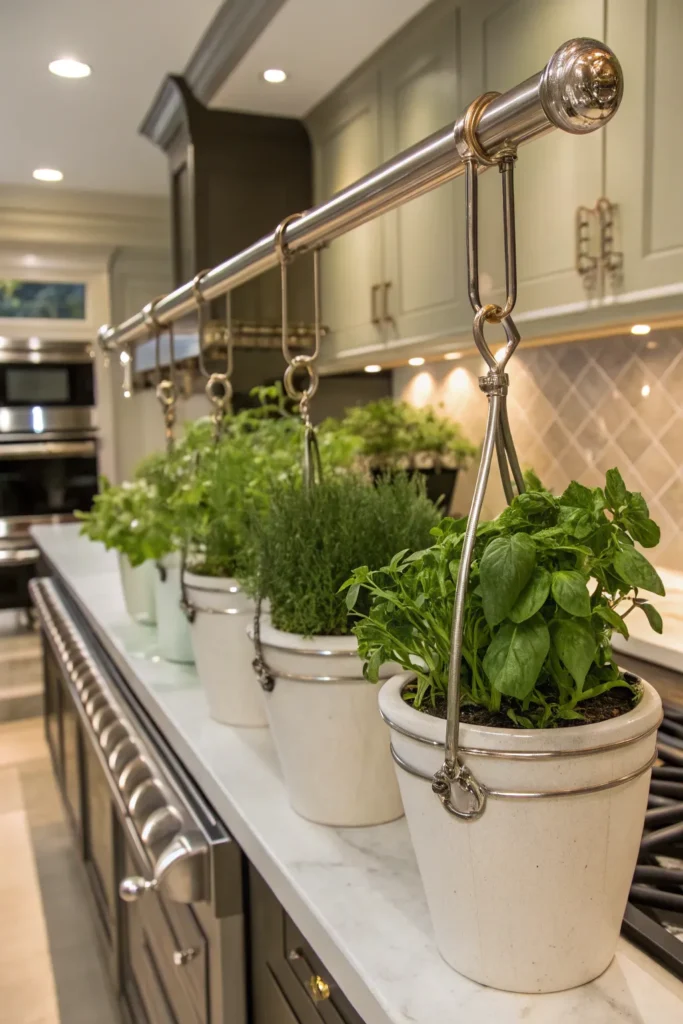
Rail systems commonly used for kitchen utensils can easily be transformed into a sleek herb garden. Attach pots with hooks or hanging planters to the rail and position it near a window or under grow lights. This design keeps herbs off the counter while making them accessible for daily cooking. It’s an excellent solution for compact kitchens where space is at a premium.
15. Combine Herbs with Decorative Plants
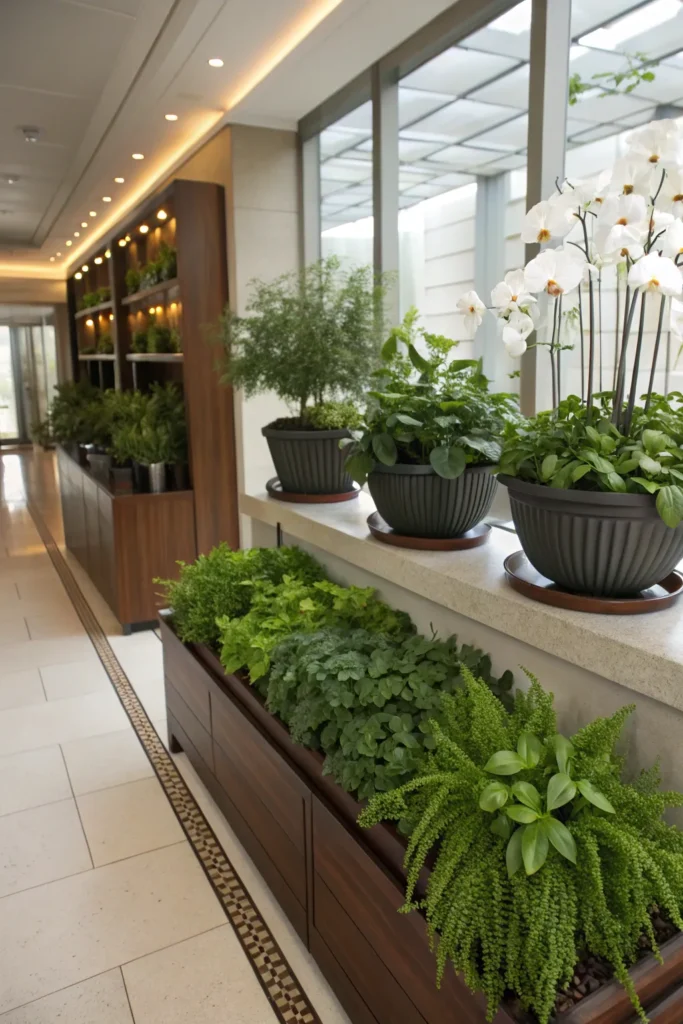
Mixing culinary herbs with decorative indoor plants creates a dynamic, lush display. Pair herbs like basil, sage, or mint with indoor-friendly foliage plants such as pothos, ferns, or succulents. This blend softens the look, adds visual contrast, and introduces more variety into your indoor garden. Just ensure that plants with different watering needs are grouped accordingly.
Final Thoughts
Creating an indoor herb garden allows you to enjoy fresh flavors, delightful scents, and lush greenery year-round. Whether you choose a hydroponic system, a windowsill setup, a rolling cart, or hanging planters, each idea brings both beauty and practicality into your home. Indoor herb gardens are more than just functional—they elevate your living space, spark creativity, and enrich your daily cooking. These 15 amazing ideas will inspire you to bring nature indoors and design a thriving herb sanctuary that fits your style, space, and lifestyle perfectly.