
Small Entryway Organization Guide: Smart Solutions That Make Tiny Spaces Work Harder
A small entryway can feel like a constant battle. Shoes pile up, bags land on the floor, keys disappear, and coats end up draped wherever there’s space. When square footage is limited, clutter builds faster, and even a few misplaced items can make the entire area feel chaotic.
The problem isn’t the size of your entryway. It’s the lack of systems that match how people actually enter and leave their homes. Small entryways need intentional organization, flexible storage, and realistic habits to function well.
This guide will show you how to organize a small entryway step by step, whether you have a narrow hallway, a tiny apartment entrance, or no formal entryway at all. You’ll learn what to keep, what to remove, how to store essentials efficiently, and how to maintain order long-term without spending a fortune.
Why Small Entryways Get Cluttered So Fast
Small spaces magnify mess. A few items can quickly overwhelm the area.
Common reasons clutter builds:
- No defined storage near the door
- Too many items competing for limited space
- Flat surfaces becoming drop zones
- Shoes and bags used daily
- No routine for resetting the space
Clutter usually means the entryway isn’t set up to support daily life, not that you’re doing something wrong.
FAST Setup for Busy Homes
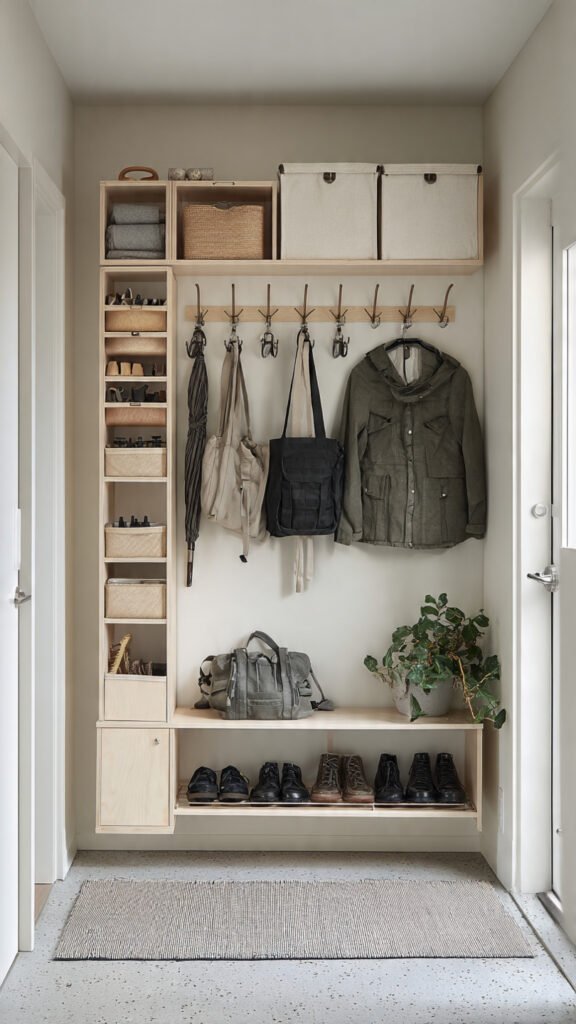
If you want immediate improvement, start here.
Do this first:
- Remove everything from the entryway
- Keep only items used daily
- Choose one shoe solution
- Choose one place for keys and bags
- Install hooks if possible
Daily maintenance:
- Put shoes away
- Hang bags
- Clear surfaces
Five minutes a day keeps clutter from coming back.
Step 1: Declutter Ruthlessly Before Organizing
Organization never works on top of clutter.
Remove these immediately:
- Shoes not worn this season
- Old or unused coats
- Broken umbrellas
- Random mail
- Items that belong in other rooms
Ask yourself:
Do I use this when leaving or entering my home?
If the answer is no, it doesn’t belong in the entryway.
Step 2: Define What Belongs in a Small Entryway
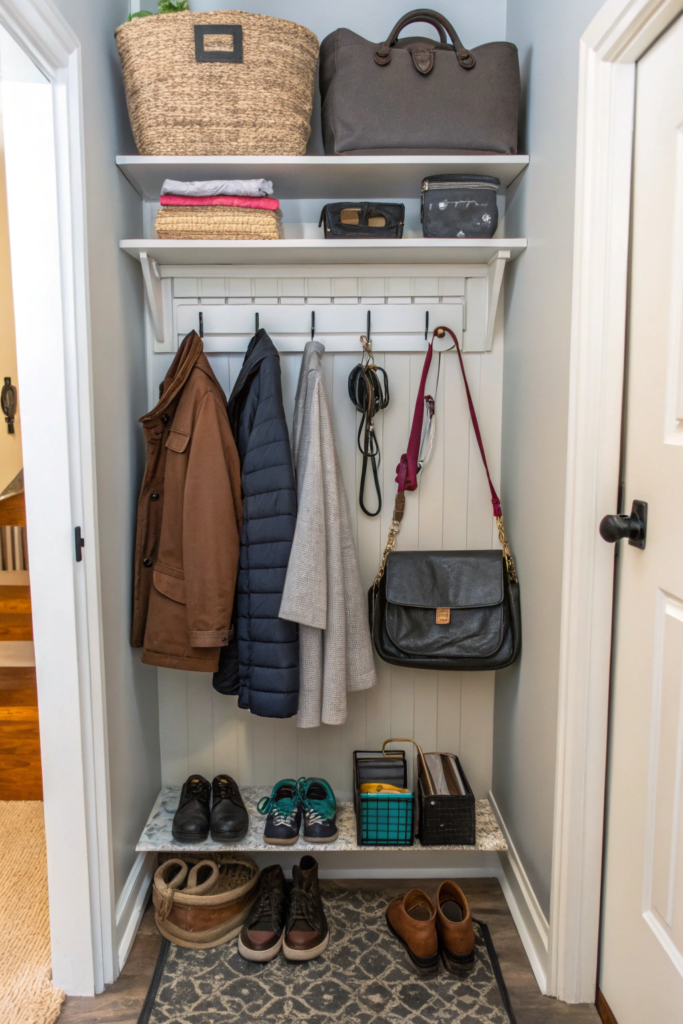
Small entryways need strict limits.
Entryway essentials:
- Everyday shoes
- Current season coats
- Keys
- Wallets or purses
- Sunglasses
- Dog leash
- Reusable shopping bags
Anything else should be stored elsewhere.
Step 3: Create a Shoe System That Fits Your Space
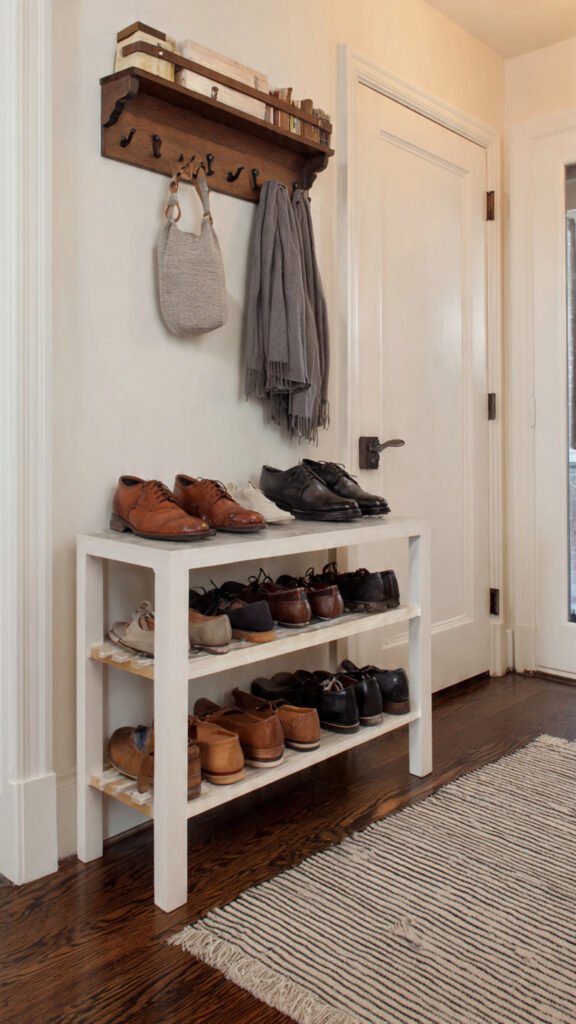
Shoes are usually the biggest clutter source.
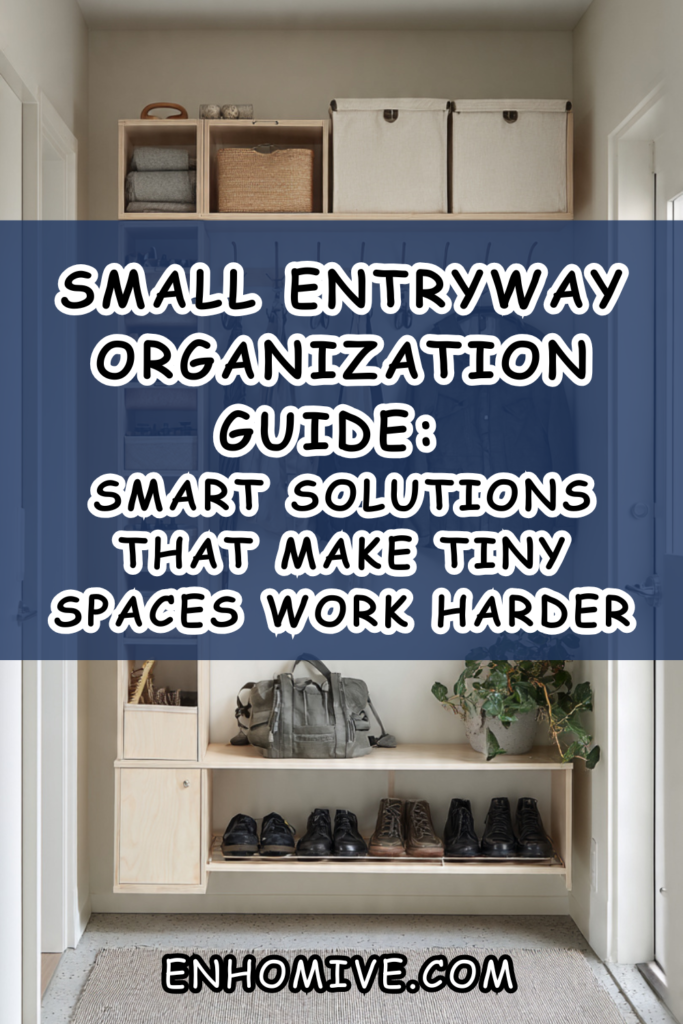
Best shoe storage options for small entryways:
- Slim shoe racks
- Vertical shoe towers
- Closed shoe cabinets
- Under-bench storage
- Baskets for grab-and-go shoes
Smart shoe rules:
- Store only current season shoes
- Limit each person to 2–3 pairs
- Keep extras in a closet or bedroom
No shoe system works if it holds too many shoes.
Step 4: Use Hooks Instead of Traditional Closets
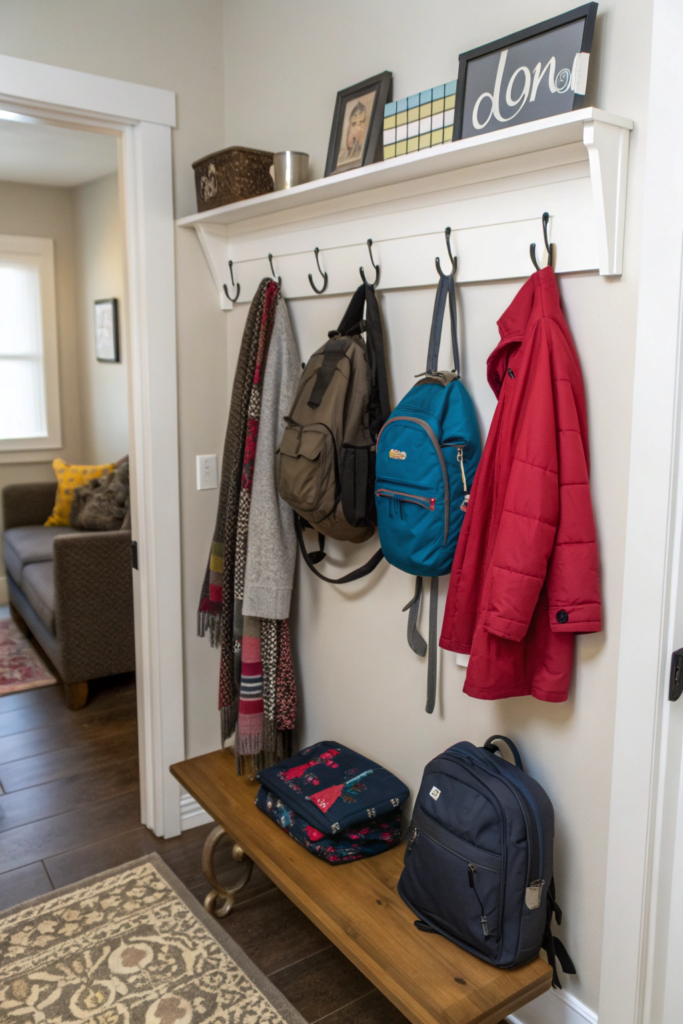
Hooks are ideal for small spaces.
Why hooks work:
- Faster than hangers
- Easier for kids
- Take up minimal space
- Encourage habits
Use hooks for:
- Coats
- Bags
- Backpacks
- Hats
- Scarves
Install hooks at different heights so everyone can reach them.
Step 5: Create a Simple Drop Zone for Small Items
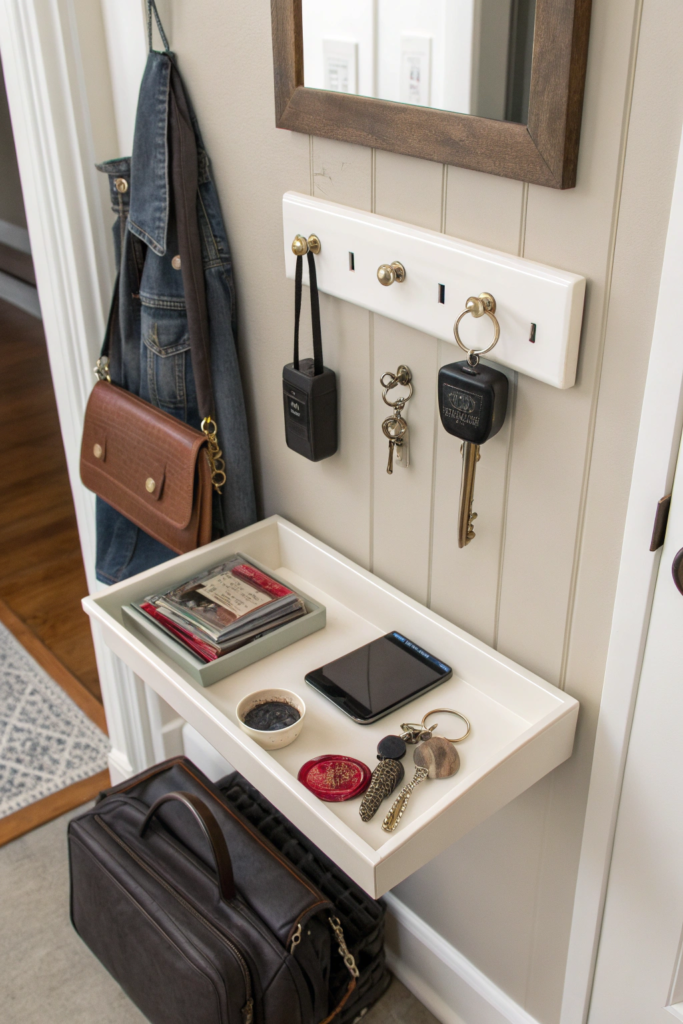
Keys and wallets disappear without a landing spot.
Easy drop zone ideas:
- Small tray on a shelf
- Wall-mounted key holder
- Shallow drawer
- Small bowl
- Narrow console shelf
Rule:
Anything in your hand when you walk in must land in one place.
Step 6: Stop Flat Surfaces From Becoming Clutter Magnets
Small entryways can’t afford cluttered surfaces.
Common problem areas:
- Console tables
- Benches
- Shelves
How to fix it:
- Limit decor to one or two items
- Use baskets underneath
- Avoid stacking items
Clear surfaces make small spaces feel larger.
Step 7: Use Vertical Space Strategically
When floor space is limited, walls do the heavy lifting.
Vertical storage ideas:
- Wall hooks
- Floating shelves
- Tall narrow cabinets
- Over-the-door organizers
Vertical storage keeps the floor clear and improves flow.
Step 8: Make Storage Visible and Accessible
Hidden storage only works if it’s easy to access.
Tips:
- Avoid lids for daily items
- Use open baskets
- Keep storage at eye level
- Label bins if needed
If people can’t see where items go, they won’t put them away.
Step 9: Entryway Organization for Apartments and Renters
You don’t need to drill holes to stay organized.
Renter-friendly solutions:
- Adhesive hooks
- Tension rods
- Over-the-door organizers
- Slim freestanding racks
- Peel-and-stick shelves
Choose removable options that leave no damage.
Step 10: Organizing a Narrow or Hallway Entryway
Long, narrow entryways need slim solutions.
Best options:
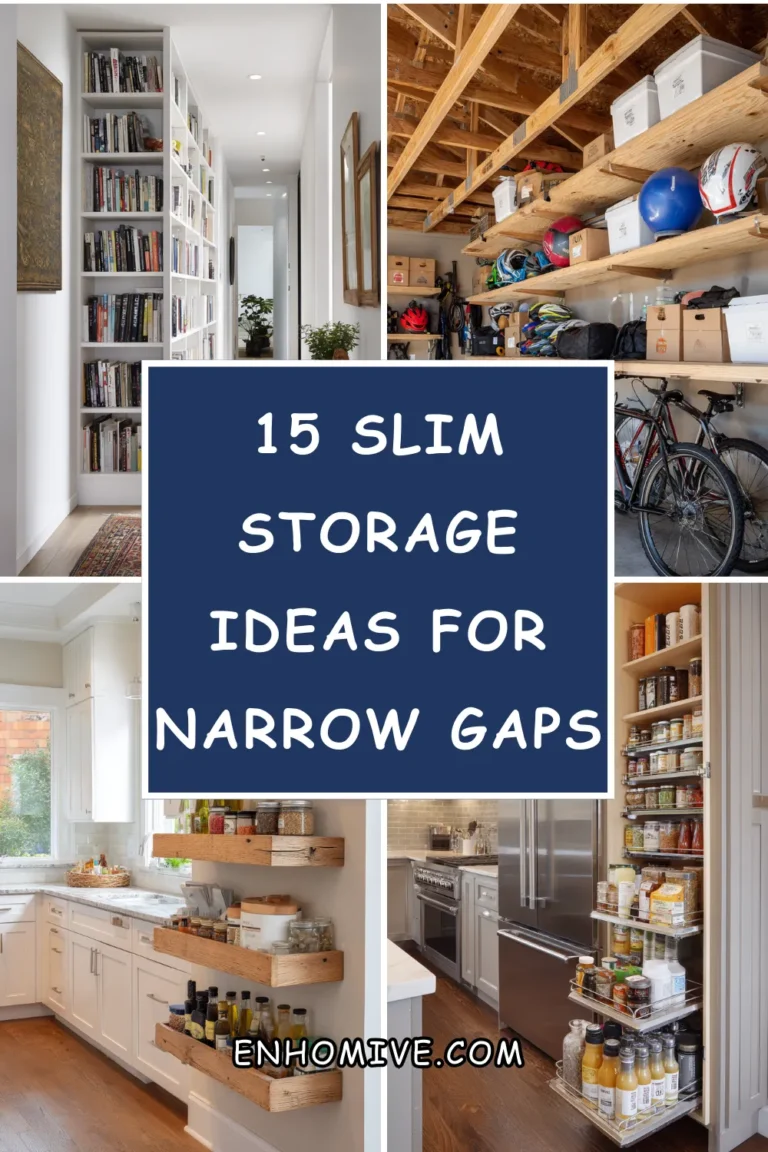
- Narrow shoe cabinets
- Wall hooks instead of furniture
- Floating shelves
- Minimal decor
Avoid bulky furniture that blocks walkways.
Step 11: How to Organize an Entryway With No Entryway
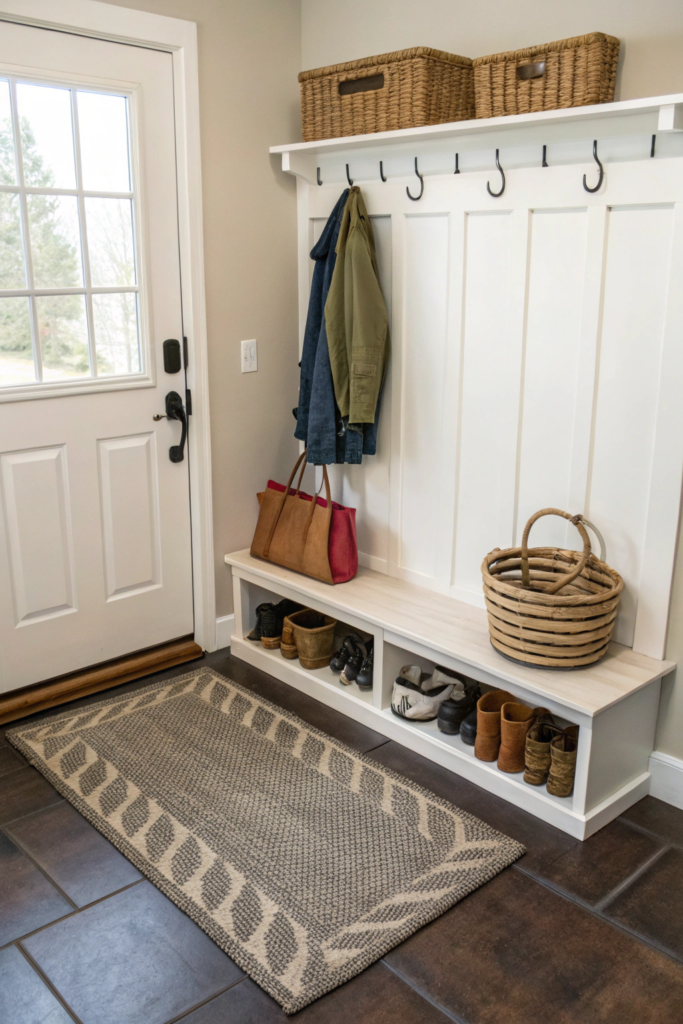
Many homes open directly into the living room or kitchen.
Create a “fake” entryway:
- Use a rug to define the zone
- Add hooks near the door
- Place a small tray or shelf
- Add a shoe basket nearby
Visual boundaries create functional spaces.
Step 12: Entryway Organization for Families and Kids
Kids need systems they can use independently.
Kid-friendly ideas:
- Lower hooks
- Individual baskets
- Labels or pictures
- Simple rules
Give each child:
- One hook
- One basket
- One shoe spot
Simplicity encourages participation.
Step 13: Managing Bags, Backpacks, and Purses
Bags pile up fast without limits.
Solutions:
- One hook per person
- Weekly bag clean-out
- Store occasional bags elsewhere
Everyday bags stay by the door. Extras don’t.
Step 14: Handling Seasonal Items Without Clutter
Seasonal rotation is essential in small spaces.
Rotate:
- Coats
- Boots
- Accessories
Store off-season items in:
- Closets
- Under beds
- Storage bins
Seasonal swaps prevent overcrowding.
Step 15: Control Paper and Mail at the Door
Paper clutter spreads quickly.
Smart paper habits:
- Open mail immediately
- Recycle junk mail daily
- Move important papers out of the entryway weekly
- Keep one small tray for temporary papers
The entryway is not a filing cabinet.
Step 16: Use Baskets to Hide Visual Clutter
Baskets add storage without visual noise.
Great uses:
- Shoes
- Gloves and hats
- Dog supplies
- Kids’ accessories
Choose baskets that:
- Fit under benches
- Slide into shelves
- Are easy to grab
Step 17: Lighting and Mirrors for Small Entryways
Lighting affects how organized a space feels.
Tips:
- Use bright lighting
- Add a mirror to reflect light
- Avoid dark corners
A well-lit entryway feels cleaner and larger.
Step 18: Establish a Daily 2-Minute Reset
Clutter stays gone with daily habits.
Daily reset:
- Shoes back in place
- Bags hung
- Keys returned
- Surfaces cleared
Two minutes prevents chaos.
Step 19: Weekly Entryway Reset
Once a week:
- Wipe surfaces
- Shake out mats
- Remove items that don’t belong
- Return misplaced items
Weekly resets keep systems working.
Step 20: Common Small Entryway Organization Mistakes
Avoid these pitfalls:
- Over-filling storage
- Keeping too many shoes
- Buying decor instead of storage
- Expecting perfection
- Ignoring daily habits
Organization should support your life, not complicate it.
Step 21: How to Keep Your Small Entryway Organized Long-Term
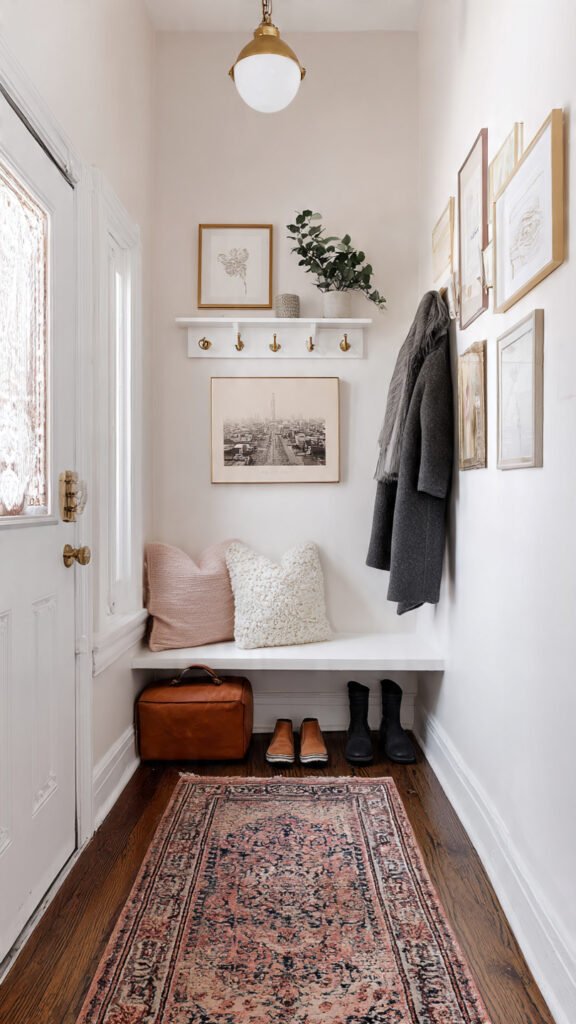
Consistency matters more than storage.
Simple rules:
- One in, one out
- Clear floors daily
- Reset surfaces nightly
- Reassess seasonally
Small habits maintain big results.
FAQ: Small Entryway Organization
How do I organize a very small entryway?
Use wall storage, limit items, and avoid bulky furniture.
What’s the best shoe storage for small spaces?
Slim shoe cabinets or vertical racks.
How do I organize an entryway without drilling?
Use adhesive hooks, over-the-door organizers, and freestanding storage.
How often should I declutter my entryway?
Seasonally or when clutter returns.
Should entryways be minimalist?
They should be functional first, minimal second.
Final Thoughts
A small entryway doesn’t have to feel messy or stressful. With intentional decluttering, smart storage choices, and realistic daily habits, even the tiniest entrance can feel organized, welcoming, and easy to maintain.
The goal isn’t perfection. It’s function. When everything has a place and your systems match how you live, clutter stops building automatically. A calm, organized entryway sets the tone for your entire home and makes daily life smoother from the moment you walk in the door.