
15 Dark Moody Dining Room Ideas for New Orleans Historic Homes
New Orleans and the dark, moody interior were made for each other with the specific, inevitable rightness of two things that were always going to find their way together — the rightness of a city whose entire cultural identity is built on the beautiful tension between light and dark, between the joyful and the melancholy, between the exuberant street life of the French Quarter at midnight and the quiet, candlelit, deeply intimate world of the historic home’s interior spaces.
The New Orleans dining room of genuine dark moody ambition is not a room designed to be frightening, oppressive, or aggressively theatrical — it is a room designed to be extraordinary, to create the specific quality of atmospheric depth, historical layering, and deeply romantic domestic intimacy that the most beautiful dining rooms in the most beautiful historic city in the American South have always possessed.

It is a room lit by candlelight, furnished with the accumulated weight of history, colored with the depth and the complexity of pigments that took years to acquire their full beauty, and inhabited with the specific, warm, completely New Orleans quality of generous, soulful, magnificently unhurried hospitality. Here are 15 dark moody dining room ideas for New Orleans historic homes that honor the city’s extraordinary architectural heritage with complete decorative seriousness and complete atmospheric ambition.
1. Paint Every Surface in a Deep, Complex Jewel Tone
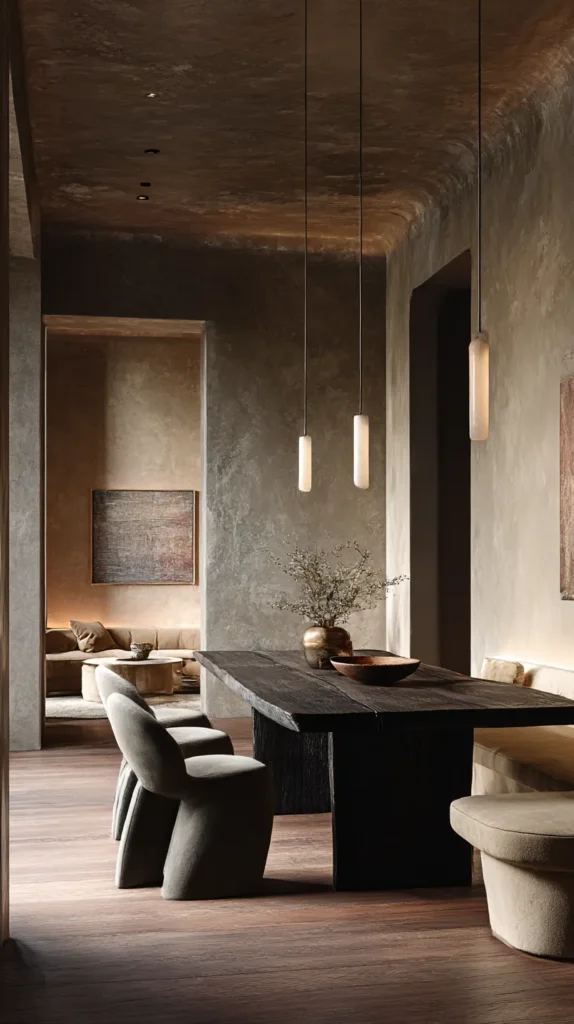
The dark moody New Orleans dining room begins with the commitment to color — the complete, unhesitating, completely confident commitment to a color of such depth, such chromatic complexity, and such genuine atmospheric power that it transforms the room’s four walls, its ceiling, and its trim from architectural surfaces into the atmospheric envelope of a genuinely extraordinary interior environment.
For the New Orleans historic dining room, this color should be chosen from the deepest and the most historically resonant end of the jewel tone spectrum — the specific emerald green of aged verdigris on a Creole cemetery iron gate, the deep, complex navy of the Louisiana sky in the hour before a summer storm, the rich, layered burgundy of a French Quarter bar’s walls that have absorbed decades of candlelight and conversation, or the extraordinary forest green of the live oak canopy above St. Charles Avenue in the specific, dappled, completely extraordinary quality of light that New Orleans produces on a Sunday morning in October.
Apply the chosen color to every surface — walls, ceiling, and trim alike — for a dining room of complete, immersive chromatic depth that makes every person within it feel simultaneously enclosed and completely at ease.
2. Install a Chandelier of Theatrical New Orleans Grandeur
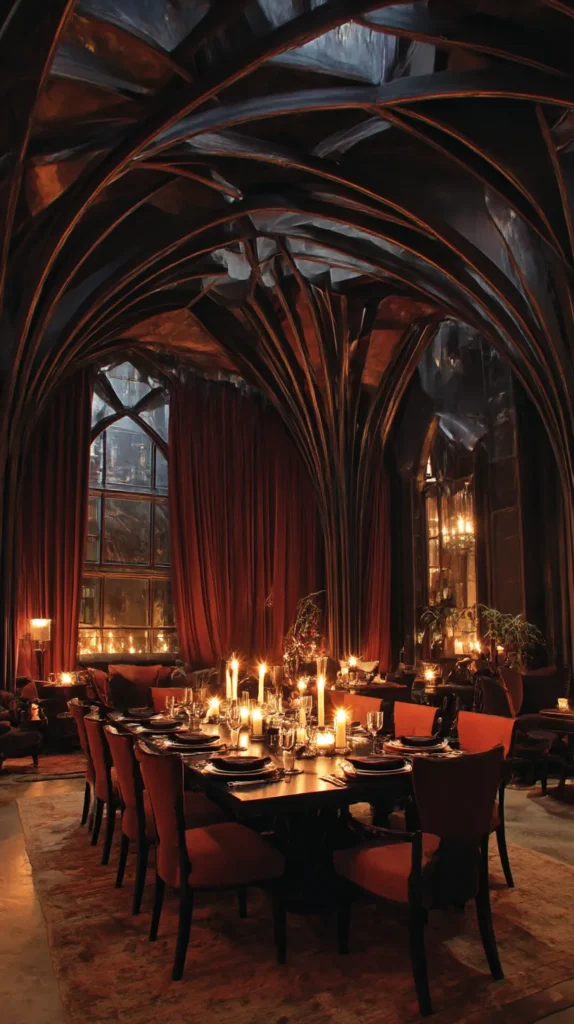
The chandelier is the dark moody New Orleans dining room’s most important single decorative element and its most immediately theatrical — the overhead statement of such complete atmospheric authority that the entire character of the room below it is determined, in large part, by the quality, the scale, and the specific aesthetic character of the light fitting that hangs at its centre.
For the New Orleans historic dining room of genuine dark moody ambition, the chandelier must be extraordinary — not the understated, carefully proportioned pendant of a contemporary dining room designed for gentle, diffused overhead illumination, but the genuinely theatrical, historically resonant, dramatically scaled chandelier of a room designed for the candlelit dinner parties of the Antebellum South.
A crystal chandelier of generous proportions whose drops catch the candlelight from below and scatter it across the dark walls in constantly shifting prismatic patterns of extraordinary beauty. A wrought iron chandelier of genuine Gothic character whose arms bear real or electric candles at a scale that fills the room’s vertical space with decorative authority.
3. Layer the Room with Antique and Vintage Furniture
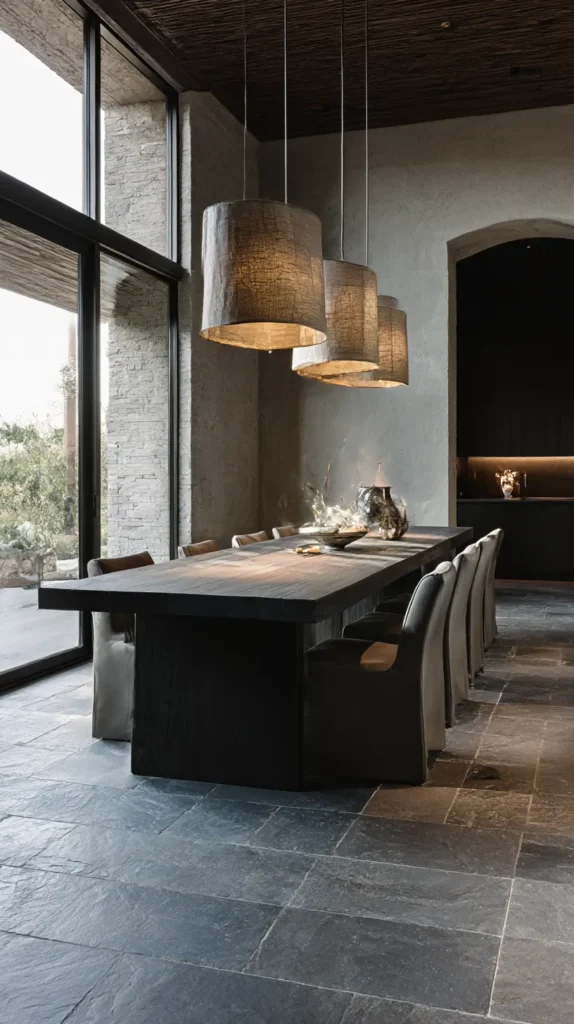
The furniture of a dark moody New Orleans historic dining room must carry the specific weight of genuine age — the quality of objects that have lived through multiple generations of the city’s extraordinary history and that bear in their surfaces, their patinas, and their specific forms the evidence of that history with an honesty and a depth that reproduction furniture, however skillfully made, can never fully replicate.
Source the dining table from the antique markets of the Magazine Street corridor — a wide, dark mahogany or walnut table of genuine nineteenth-century character, its surface bearing the specific, irregular, completely extraordinary beauty of wood that has been used and polished and used again over more decades than anyone in the room can accurately count.
Surround it with mismatched chairs of complementary period character — a set of eight that are clearly related by era and by material quality without being identical — for a dining furniture arrangement of complete, accumulated, genuinely New Orleans historic authenticity.
4. Hang Dark, Dramatic Portraiture and Artwork
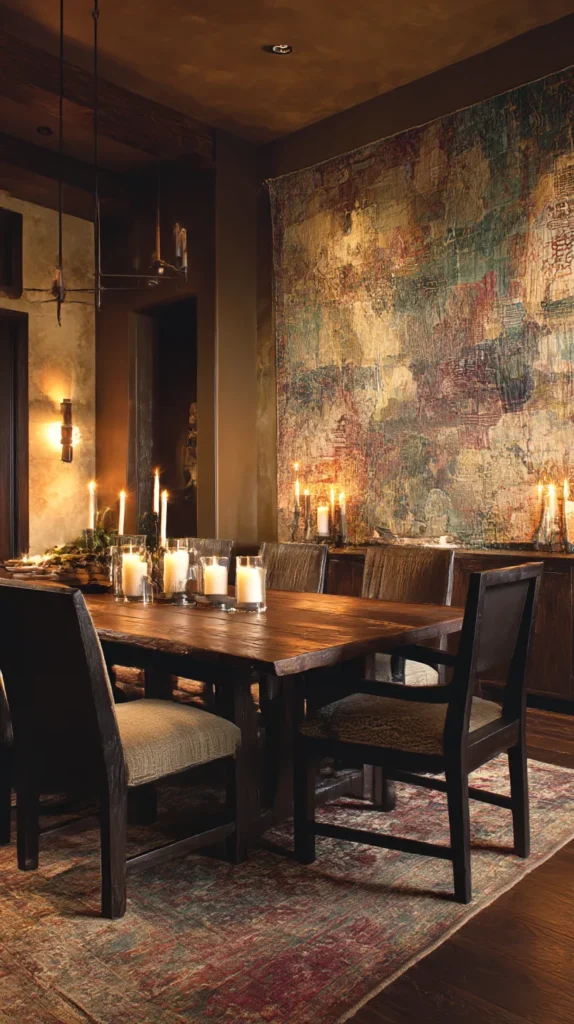
The walls of a dark moody New Orleans dining room should be hung with artwork of sufficient historical weight, sufficient visual drama, and sufficient genuine decorative authority to hold their own against the depth of the surrounding color and the complexity of the room’s layered atmospheric character.
Dark, large-format oil paintings of genuine character — portraits of unidentified nineteenth-century subjects in the specific formal, slightly melancholy pose of the period portrait tradition, landscapes of the Louisiana bayou in the specific, extraordinary, dusky palette of the Southern landscape school, or still life compositions of the abundant, slightly decadent, deeply sensory kind that the Dutch Golden Age tradition produced and that the New Orleans dining room tradition has always appreciated with complete and genuine cultural understanding.
Frame each painting in a gilded or darkly patinated frame of appropriate historical character and hang the collection with the generous density of a room that has been accumulating art for generations.
5. Install Tall, Dark-Stained Wainscoting and Millwork
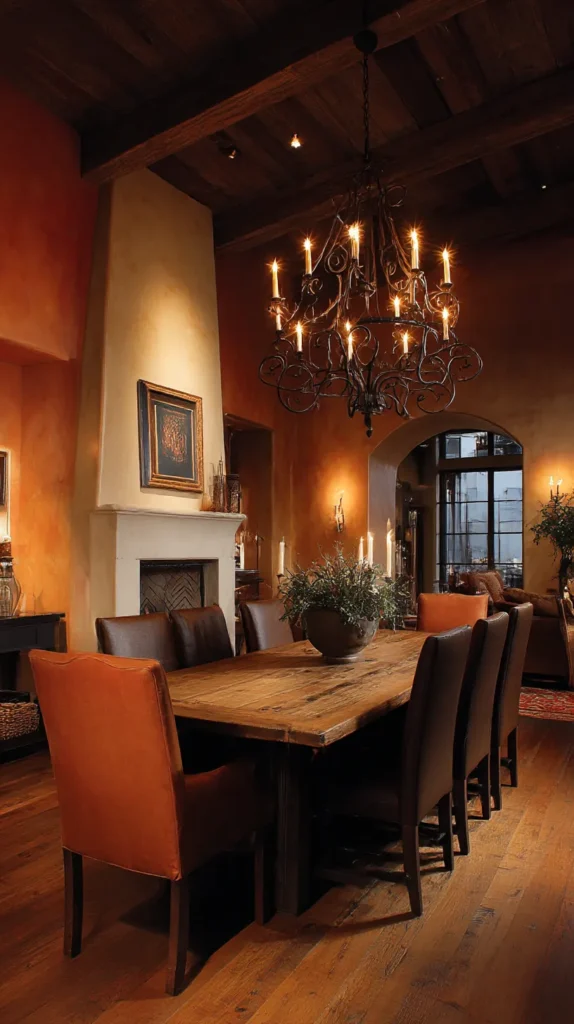
The millwork of a New Orleans historic home — the wainscoting, the crown molding, the door surrounds, the chair rails, and the elaborate plaster ceiling medallions that the city’s finest nineteenth-century domestic architecture produced in such extraordinary abundance and such extraordinary ornamental complexity — is the architectural inheritance of the New Orleans historic dining room and the foundation upon which every dark moody decorating decision is built.
Enhance the existing millwork by painting it in a color several tones darker than the wall — or in a rich, dark stain of genuine mahogany or walnut character if the millwork is genuine timber — for a wainscoting and trim treatment of extraordinary architectural presence and complete dark moody decorative coherence.
Where original millwork has been lost or damaged, restore it with reproduction elements of appropriate period character for a dining room that honors its architectural heritage with complete historical respect.
6. Use Candlelight as the Primary Dining Atmosphere
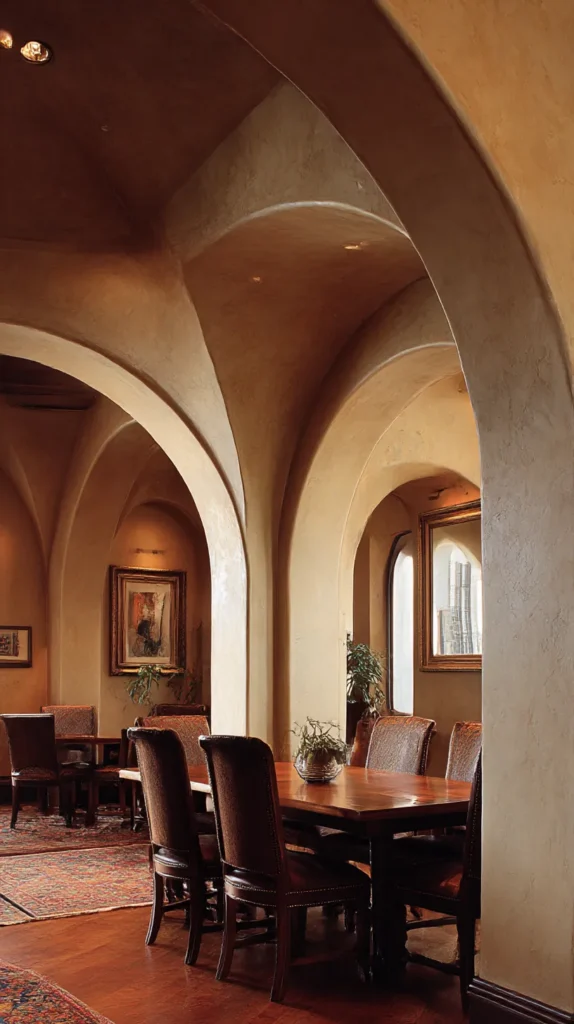
The lighting of a dark moody New Orleans dining room is not merely a functional decision — it is the single most important atmospheric decision available to any room designed for the specific, deeply pleasurable, genuinely New Orleans experience of a long, lingering, candlelit dinner in a historic house whose walls have witnessed more extraordinary evenings than anyone present can fully imagine.
Use candlelight as the primary dining atmosphere — real candles on the table in silver or wrought iron holders of genuine quality, real candles in the wall sconces that flank the artwork along the dining room’s walls, real candles in the chandelier above if its design accommodates them, and the accumulated warm, flickering, deeply golden light of all of these sources together creating a dining environment of such extraordinary atmospheric beauty and such genuine New Orleans historic character that every meal eaten within it feels like an occasion of the first order.
7. Layer the Table with Dark, Sumptuous Textiles
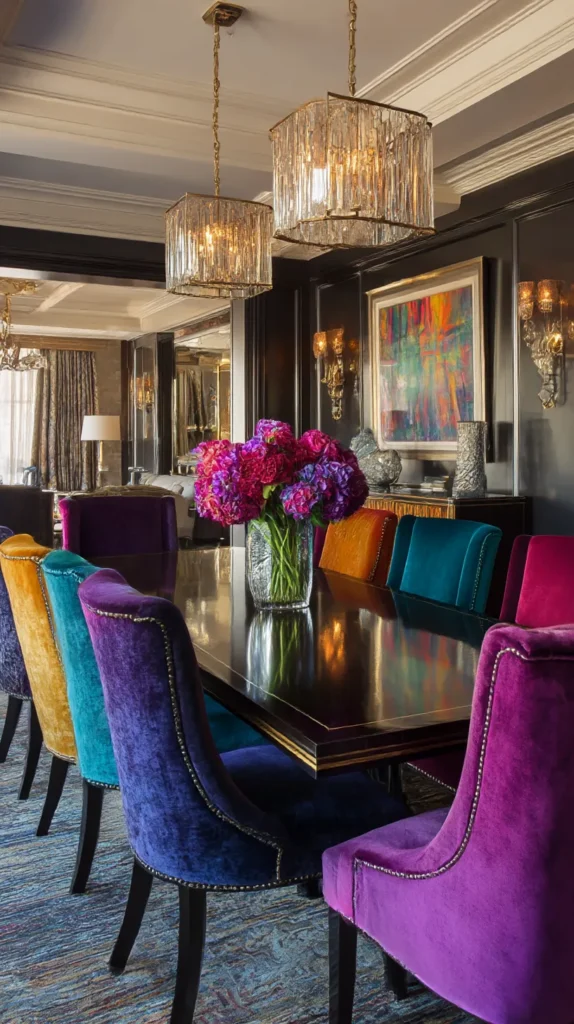
The dining table of a dark moody New Orleans historic dining room should be dressed with the same seriousness, the same material quality, and the same genuine appreciation for the specific beauty of dark, sumptuous, historically resonant textiles that the room’s walls, its furniture, and its lighting have established as the decorative standard.
A deep, dark linen tablecloth in a color drawn from the room’s established palette — the same forest green as the walls, or a complementary tone of deep burgundy or charcoal navy — provides the table’s chromatic foundation. Layer it with a table runner of dark damask, brocade, or embroidered linen of genuine textile quality.
Set it with ceramic or porcelain tableware in the darkest, most dramatically colored patterns available — deep indigo blue and white transferware, black matte ceramics of genuine artisanal quality, or the specific, extraordinary richness of dark, hand-painted European porcelain in the gilt and jewel-toned palette of the nineteenth-century dining tradition.
8. Incorporate a Dark, Dramatic Bar Cabinet
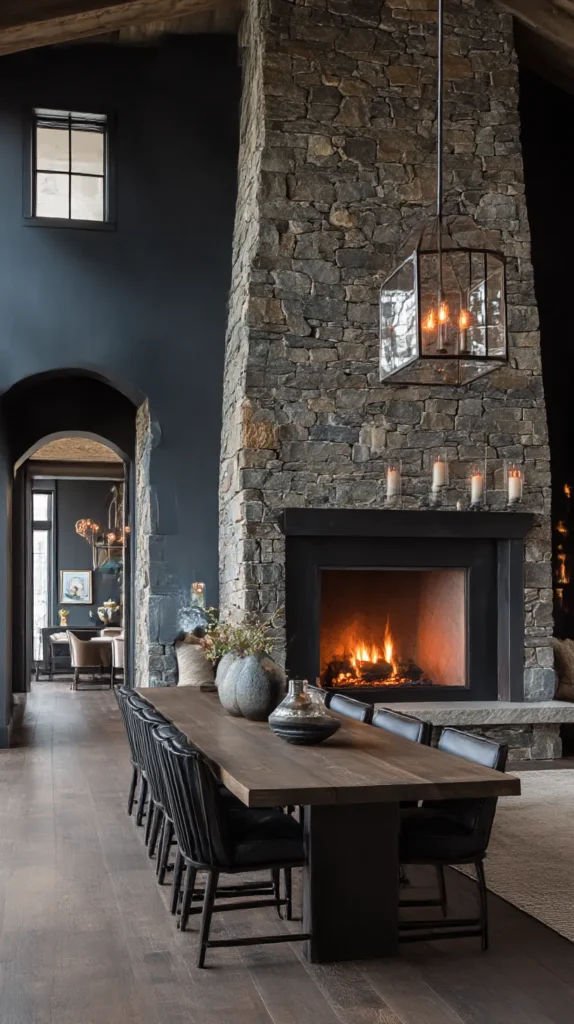
A bar cabinet of genuine character — a wide, dark-stained armoire or breakfront of authentic period character, its shelves displaying the New Orleans cocktail tradition’s specific, beautifully bottled spirits alongside the crystal decanters and the heavy crystal glassware of a serious home bar — is the dark moody New Orleans dining room’s most characteristically, most specifically, and most joyfully New Orleans decorative element.
New Orleans is the cocktail capital of America, and a dining room that honors this tradition with a genuinely, beautifully equipped and genuinely, beautifully displayed home bar creates a social environment of complete New Orleans hospitality and complete dark moody atmospheric coherence. Style the bar cabinet interior with the same care and the same aesthetic seriousness applied to every other display surface in the room.
9. Add Velvet Upholstered Dining Chairs
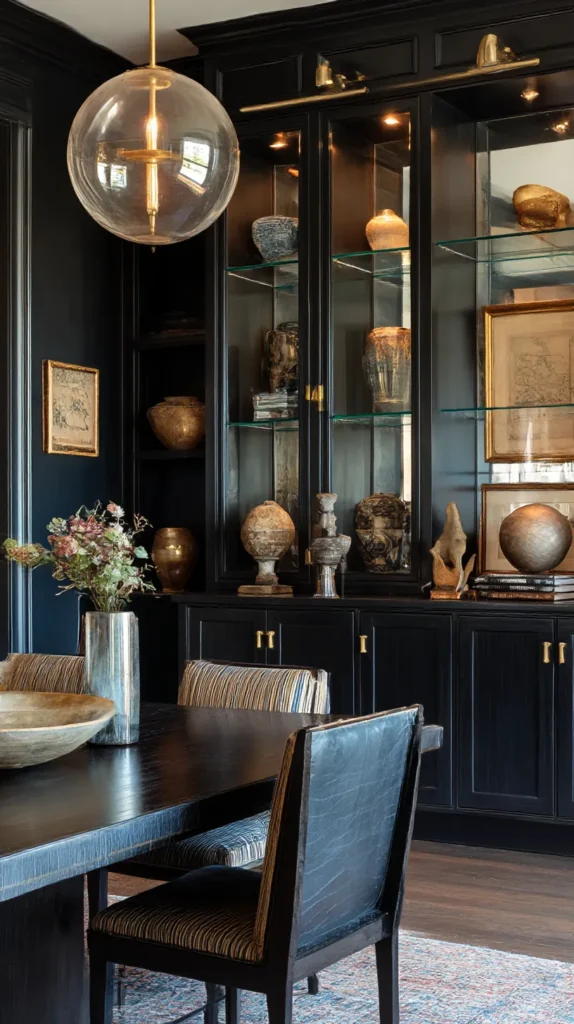
The dining chairs of the dark moody New Orleans historic dining room should be upholstered in velvet — the fabric that most completely captures the specific combination of chromatic depth, tactile luxury, and atmospheric richness that the room’s overall decorative character requires in its most frequently occupied furniture pieces.
Deep jewel-toned velvet in the dining room’s accent color — a burgundy that picks up the painting’s most saturated tone, a forest green that echoes the wall color in a lighter, more textile-appropriate value, or a deep sapphire blue that introduces a new jewel tone of complementary chromatic relationship — upholstered on chairs of genuine period character in carved dark timber frames creates a dining furniture arrangement of complete, opulent, historically resonant New Orleans dining room magnificence.
10. Install Dramatic Wallpaper on One Feature Wall
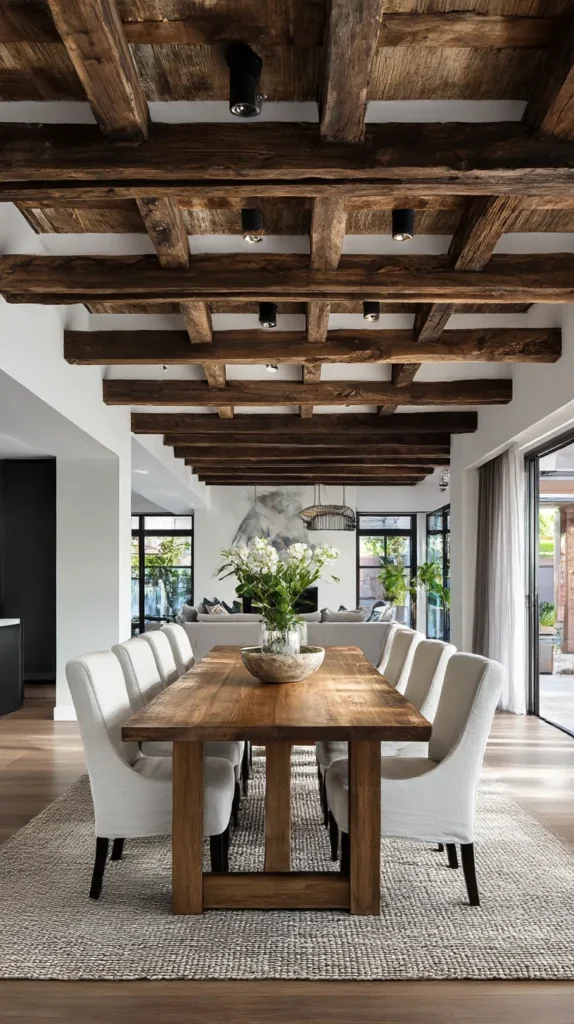
A feature wall of dramatic, historically resonant wallpaper — the deep, dark, pattern-rich wallpapers of the nineteenth-century tradition in botanical, toile, or damask patterns of genuine period character — creates a dark moody New Orleans dining room focal point of extraordinary visual complexity and extraordinary decorative depth that painted walls alone, however beautifully colored, cannot achieve.
Choose a wallpaper of sufficient pattern scale and sufficient color depth to hold its own against the dark, saturated tones of the surrounding painted surfaces — a large-format botanical in deep greens and burgundy on a black ground, a classic toile in deep blue on dark navy, or a damask of complex geometric pattern in the gold and black of the New Orleans Mardi Gras palette. The feature wall wallpaper gives the dark moody dining room its most visually rich and its most historically specific surface.
11. Hang Ornate, Gilded Mirrors for Depth and Drama
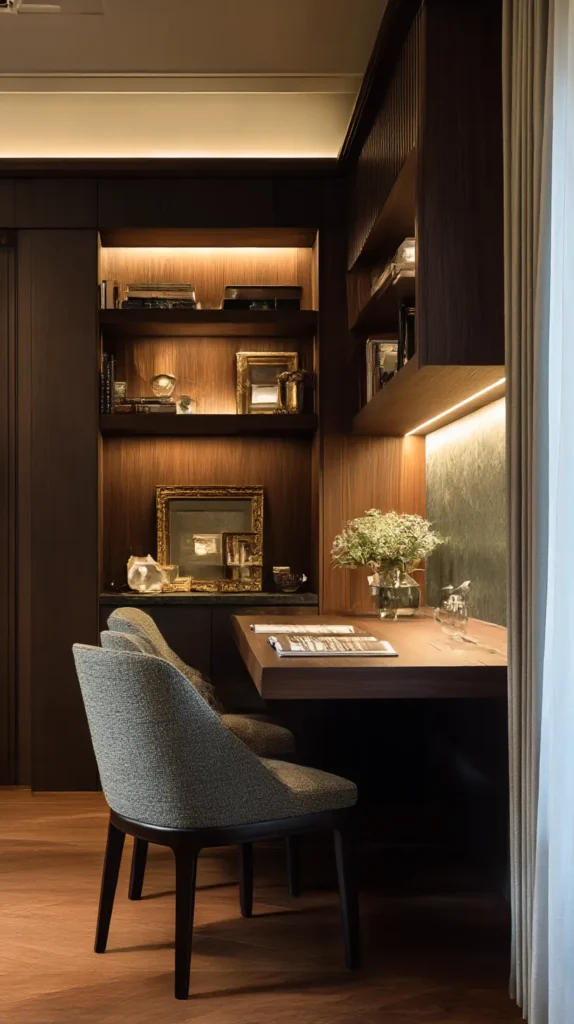
The gilded mirror is the dark moody dining room’s most powerful tool of visual expansion and atmospheric amplification — the decorative element that takes the room’s candlelight, its deep colors, its layered textiles, and its accumulated decorative richness and reflects them back into the space with a depth, a complexity, and a warm, golden, slightly distorted beauty that the direct view of any surface alone cannot produce.
A large, ornately framed gilded mirror hung above the sideboard or the bar cabinet reflects the chandelier’s candlelight across the room in warm, fractured patterns of extraordinary atmospheric beauty. A pair of narrower gilded mirrors flanking the room’s most dramatic artwork creates a visual triptych of considerable decorative grandeur and considerable historical character.
12. Use Dark Hardwood Floors with Persian Rugs
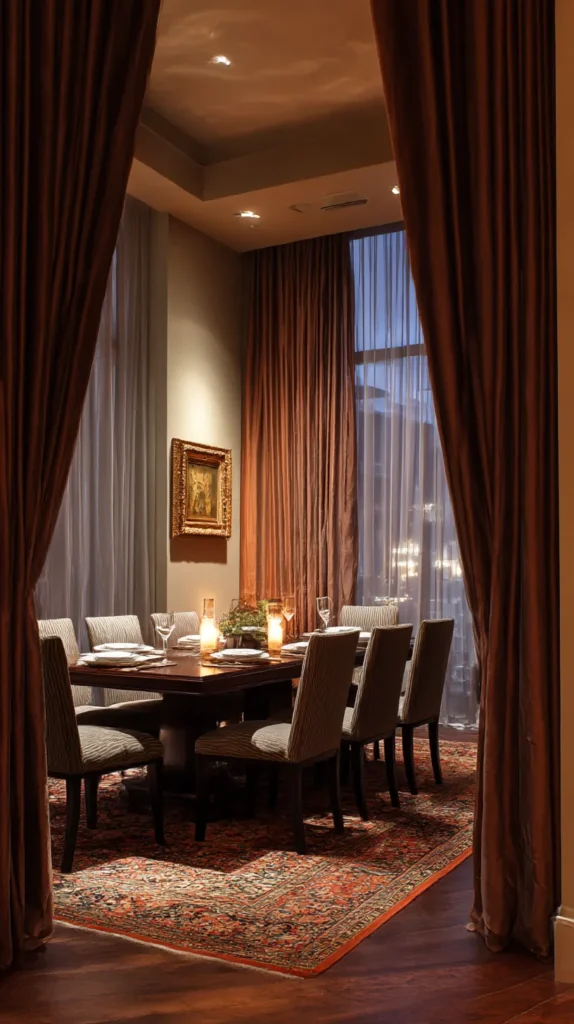
The floor of the dark moody New Orleans historic dining room should be dark timber of genuine character — the wide-plank, dark-stained, deeply grained hardwood floors of the historic New Orleans home that carry the specific beauty of wood that has been walked upon by multiple generations of a city’s most interesting inhabitants and that has acquired, through decades of use and periodic restoration, a patina of extraordinary depth and extraordinary warmth.
Layer the dark hardwood floor with a Persian rug of generous proportions — a rug in the deep reds, blues, and golds of the traditional Persian weaving palette, sized to extend beyond the dining table and chairs on all sides and to create a textile island of extraordinary pattern richness and extraordinary chromatic warmth at the room’s social centre.
13. Incorporate Living Plants of Dark, Dramatic Character
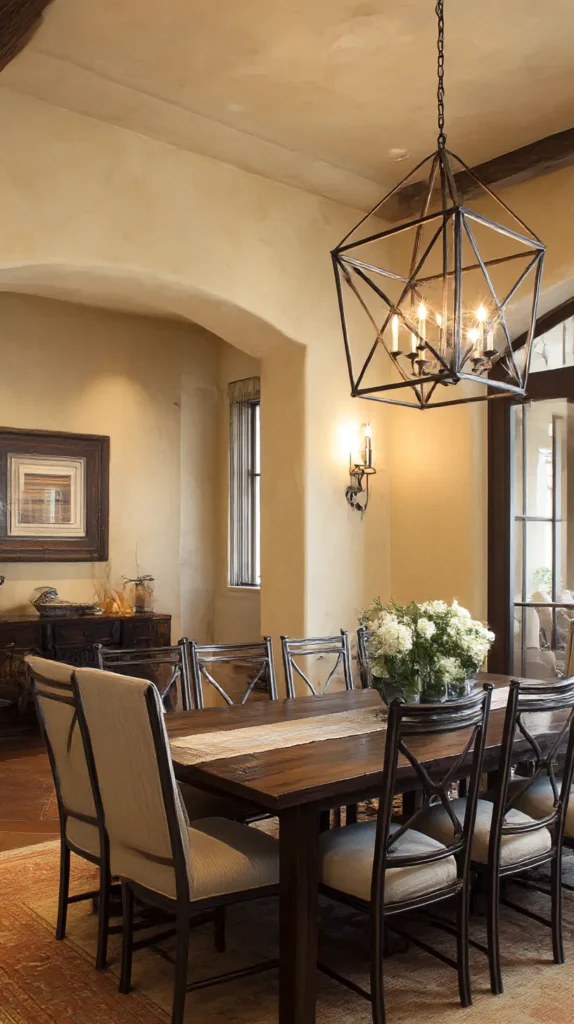
The botanical dimension of the dark moody New Orleans historic dining room should reflect the extraordinary botanical richness of the Louisiana landscape — the specific, lush, subtropical plant life that the New Orleans climate produces with such effortless generosity and that the historic home’s interior has always welcomed as a living connection to the extraordinary natural world just beyond its garden walls.
Choose plants of sufficiently dark, dramatic foliage character to hold their own within the room’s deep color environment — the near-black leaves of the black elephant ear, the deep, glossy, almost purple-toned foliage of the burgundy rubber plant, and the dramatic, deeply architectural presence of a large, mature fiddle-leaf fig positioned in the room’s most generously proportioned corner as a living sculpture of genuine botanical authority.
14. Design the Sideboard as a Display of Complete Abundance
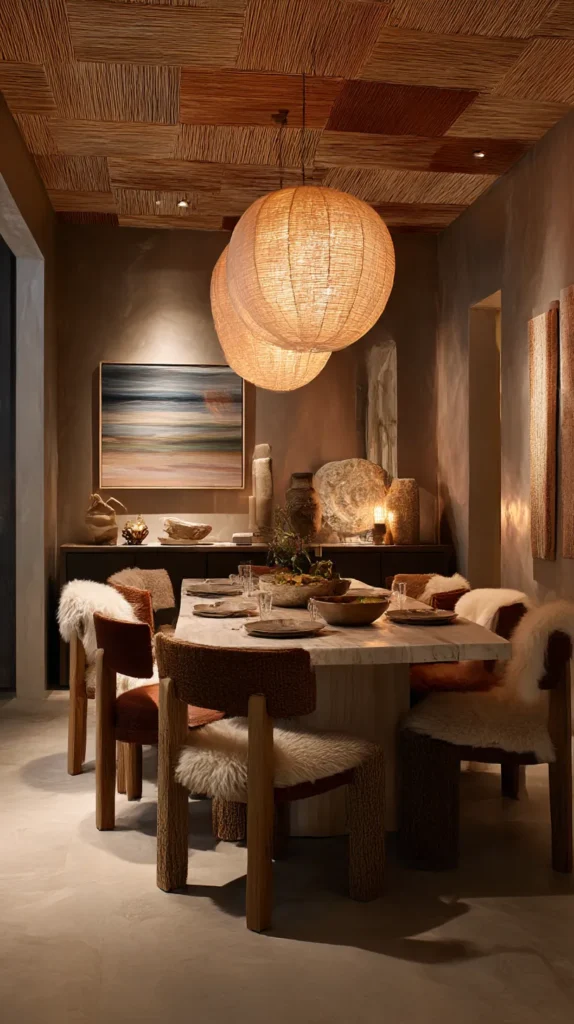
The sideboard of a dark moody New Orleans historic dining room is not merely a storage surface — it is the room’s most important secondary decorative installation, the surface whose styling communicates the host’s decorative intelligence, the household’s accumulated material beauty, and the specific, generous, deeply New Orleans quality of domestic abundance and domestic pride that the city’s finest historic dining room tradition has always valued and always expressed with complete, unapologetic decorative commitment.
Style the sideboard with layered height — tall silver candelabra at the outer edges, a pair of dark ceramic vessels of genuine artisanal quality flanking a large, dramatic floral arrangement in the deepest possible tones of burgundy, black, and forest green at the centre, and a selection of smaller objects — a silver bowl, a crystal decanter, a collection of antique serving pieces — arranged in the foreground with the generous density of a surface that has been dressed for a genuinely extraordinary occasion.
15. Make the Room as Magnificent as New Orleans Itself
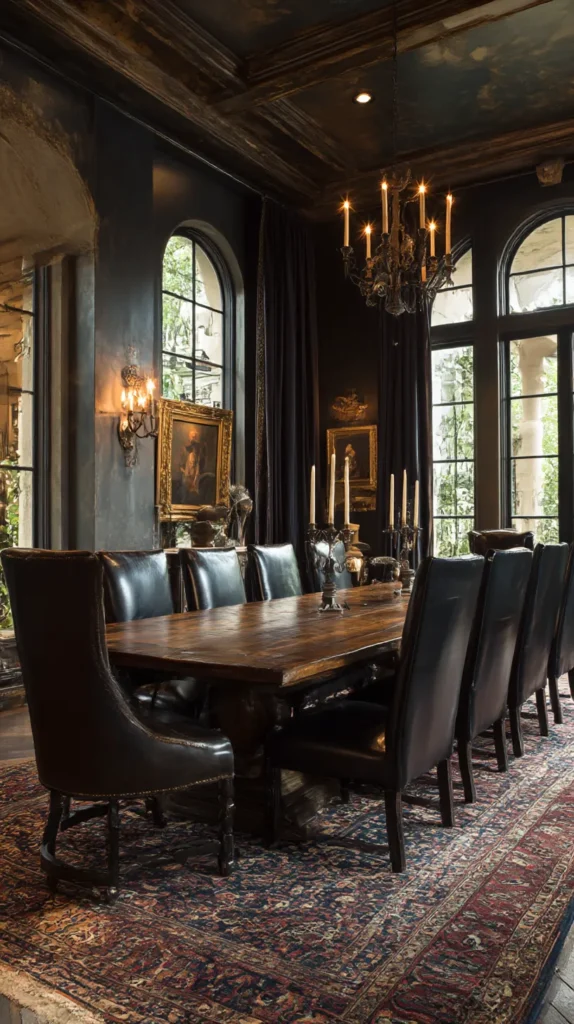
The final and most important dark moody New Orleans historic dining room idea is the one that gives every other decision on this list its purpose, its direction, and its ultimate decorative justification — the decision to approach the dining room not as a room being decorated in a dark, moody style for aesthetic interest, but as a room being designed to honor, to reflect, and to genuinely embody the specific, extraordinary, completely irreplaceable magnificence of the city whose historic architectural heritage it inhabits.
New Orleans is a city of such complete, such layered, such genuinely and historically extraordinary beauty that the homes built within its boundaries carry a decorative responsibility of unusual cultural weight — the responsibility of living up to the city’s own extraordinary standard of atmospheric depth, historical richness, and genuine, soulful, completely unironic commitment to beauty in all its most dramatic, most generous, and most magnificently excessive forms.
Make the dining room as magnificent as the city deserves — and it will be, every evening it is candlelit and every morning it is encountered in the specific, golden, completely extraordinary quality of New Orleans light, one of the most beautiful rooms in one of the most beautiful cities in the world.
The dark moody New Orleans historic dining room designed with genuine atmospheric ambition, genuine historical knowledge, and genuine love for the extraordinary city whose decorative tradition it embodies is one of the most powerful and most genuinely moving interior environments that domestic design can produce.
It honors the past without being imprisoned by it, embraces the dark without losing the warmth, and creates in every person who dines within it the specific, irreplaceable, completely New Orleans feeling of being exactly where the most beautiful version of the evening was always going to take place.