
14 Brilliant Summer Vertical Garden Ideas That Transform Bare Walls Into Living Beauty
There is a particular moment in a small garden, a narrow balcony, or a paved courtyard when the ground runs out entirely. Every bed is planted, every pot is occupied, every square centimetre of soil has been spoken for — and yet the walls, the fences, the structures that define the space are still bare from foundation to roofline.
Looked at horizontally, a small outdoor space is a small outdoor space. Looked at vertically, the same space has more growing surface than the ground beneath it will ever provide.
Vertical gardening is not a compromise for people without ground. It is a genuinely different approach to growing things that produces results impossible in the horizontal garden — plants at face height where they can be smelled and touched, a fence that flowers rather than fences, a wall that is alive rather than inert.
In summer, when the growing season is at its most productive and the walls receive their maximum sun, the vertical garden performs at its fullest capacity and earns the time spent building it many times over.
Each idea below is a specific, buildable approach to one type of vertical garden. Each includes what you will need, what it will cost, and a practical tip to make the whole thing grow as well as it deserves.
1. The Timber Pallet Planter Wall
Budget: $10 – $60
A heat-treated wooden pallet stood upright against a fence or wall, its horizontal gaps lined with landscape fabric to form planting pockets, then filled with compost and planted with herbs, strawberries, trailing annuals, or succulents is the most accessible entry point into vertical gardening available. It costs almost nothing, installs in an afternoon, and looks considerably more considered once planted than the bare pallet suggests it will.
Heat-treated pallets marked HT cost $0–$10 each. Landscape fabric to line the pockets runs $5–$10. A staple gun and staples cost $10–$20. Compost to fill the pockets requires $8–$15 per bag. Lay the planted pallet flat for two to three weeks before standing it upright — the horizontal period allows roots to establish in the compost before gravity begins pulling the growing medium downward through the pockets.
Style tip: Paint or stain the pallet in an exterior finish before planting rather than after. A pallet painted in charcoal, forest green, or warm terracotta reads as a designed planting structure rather than a repurposed industrial object. The colour of the pallet is the backdrop for every plant that grows against it, and a considered background colour makes every plant read better than a raw timber one.
2. The Tensioned Wire Trellis System
Budget: $30 – $100
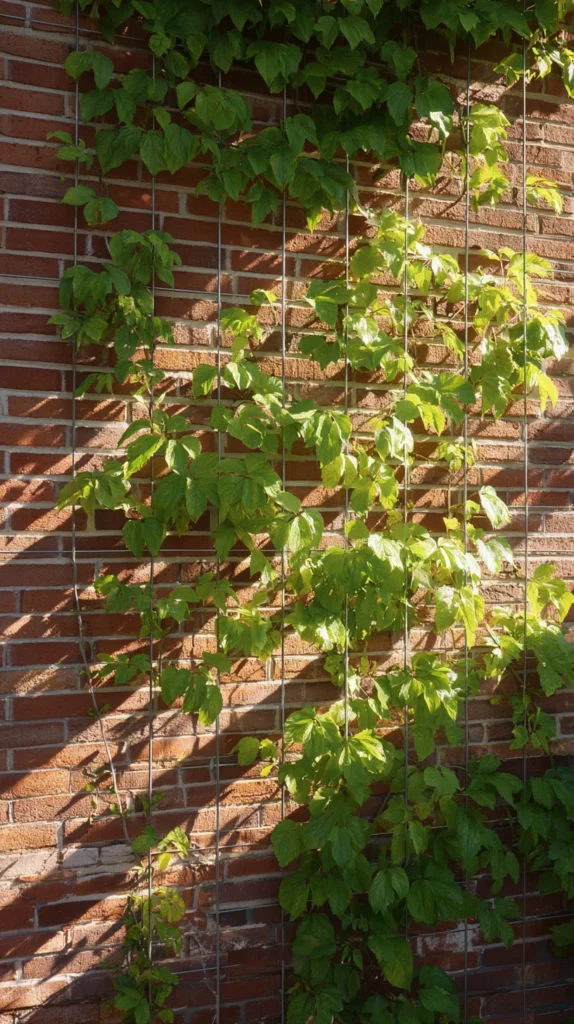
Horizontal stainless steel wires stretched taut across a wall or fence at 30-centimetre intervals — fixed with vine eye bolts at each end and tensioned with turnbuckles — create a permanent, nearly invisible support system for any climbing or wall-trained plant. The wires are the infrastructure; the plants are the display, and because the wires are thin and silver, the display is always the plant rather than the support.
Stainless steel wire at 1.5-millimetre gauge costs $8–$15 for a 10-metre reel. Vine eye bolts run $5–$10 for a pack. Turnbuckle tensioners cost $3–$6 each — one per wire per span. Drill vine eyes into mortar joints between bricks or stones rather than into the masonry face — mortar joints are easier to repair if the fixings ever need to be moved and provide equally sound anchorage for the loads a wire trellis carries.
Style tip: Space the wires at 25 centimetres rather than the 40-centimetre spacing that most instructions suggest. The closer spacing gives climbing plants more frequent contact points with the support and produces more even coverage across the wall surface. A climber reaching upward in search of the next wire produces gaps in the wall coverage; one finding support every 25 centimetres grows across the full wall surface consistently.
3. The Pocket Felt Planter Panel
Budget: $25 – $80
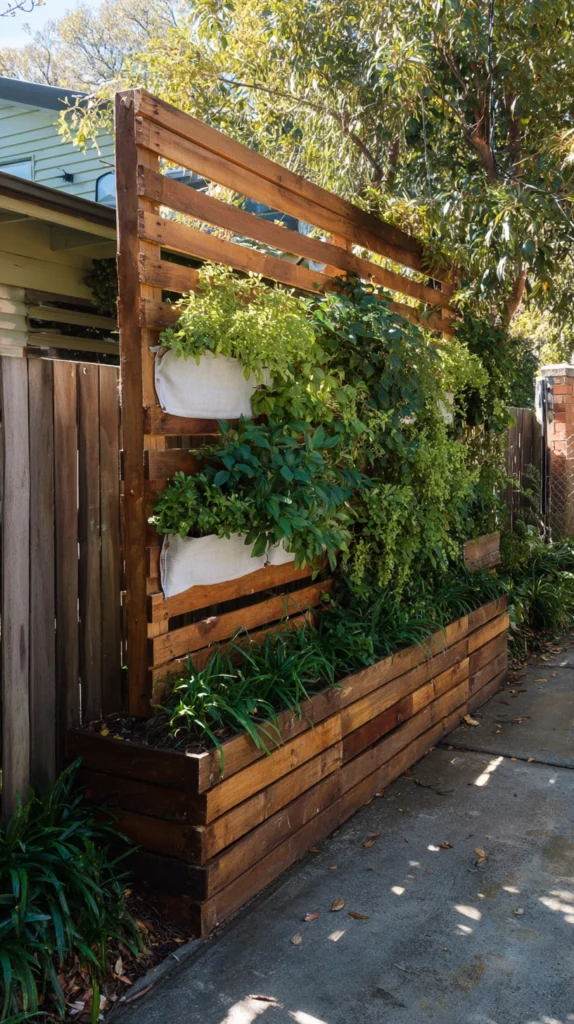
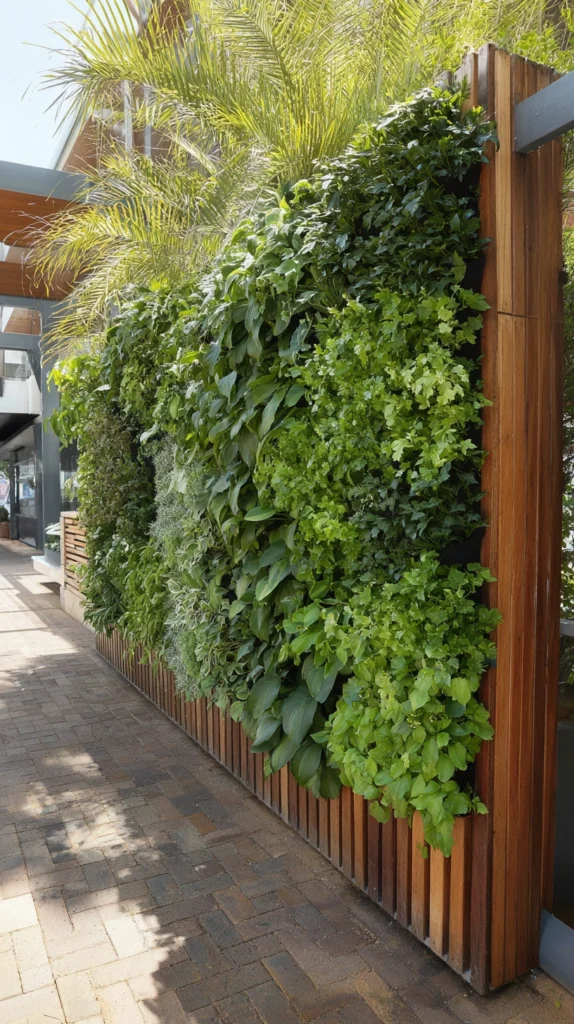
A UV-stabilised felt planting panel — a sheet of outdoor felt with pre-formed planting pockets sewn in a grid — fixed to a wall or fence with screws through reinforced eyelets creates an instant vertical garden that can be planted immediately. Pocket felt panels are lighter than any rigid system, require no structural support beyond four wall fixings, and can be removed, replanted, and repositioned without tools.
A 12-pocket felt panel costs $20–$40. A 24-pocket panel runs $35–$70. Fix the panel to a timber batten screwed to the wall rather than directly to the wall surface — the batten creates a gap that allows air to circulate behind the panel and prevents moisture from sitting against the wall. Water drains from the lower pockets after heavy rain, so plant moisture-tolerant species in the bottom pockets and drought-tolerant varieties at the top.
Style tip: Plant the panel densely — more plants per pocket than seems necessary at installation. A vertical planting panel at half capacity looks sparse for the entire growing season; one planted at full capacity looks abundant within four to six weeks as the plants establish and begin to grow outward from the pockets. The apparent over-planting at installation is the correct planting for a vertical panel.
4. The Climbing Rose Fence Cover
Budget: $15 – $60
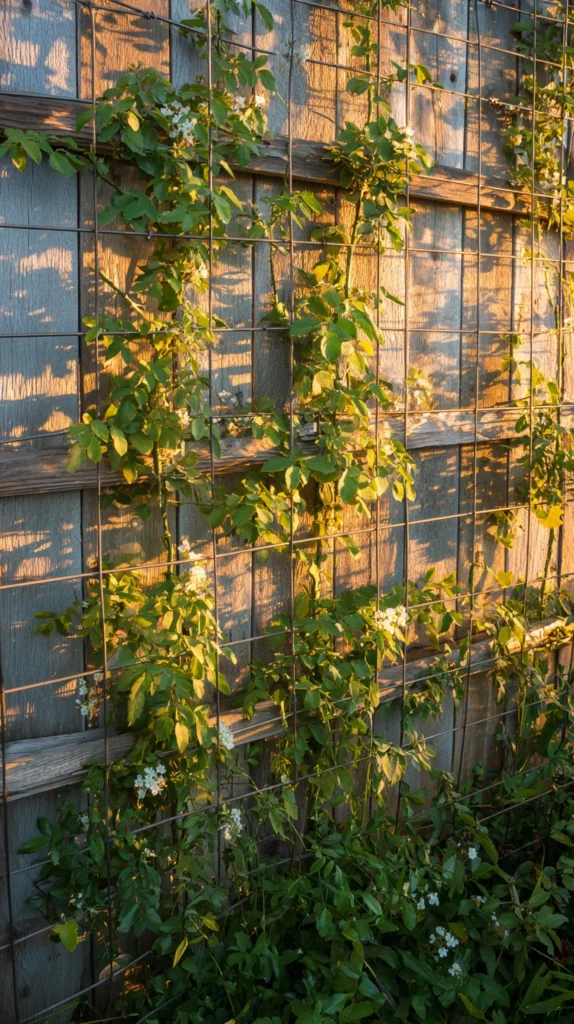
A repeat-flowering climbing rose trained along horizontal wires against the most visible fence panel in the garden is the vertical garden element that provides more colour, more fragrance, and more visual impact than any manufactured alternative at any price. A climbing rose in full summer flush, covering a fence panel from rail to rail, is one of the most beautiful things a garden can contain, and it costs a single plant and an afternoon of training.
A climbing rose in a 5-litre pot costs $15–$35. Wire and fixings for training run $10–$20. Choose a repeat-flowering variety rather than a once-flowering one — a rose that blooms from June through to October earns its fence space across the full season that the garden is used; one that flowers magnificently in June and then produces only foliage for the remaining five months earns it for four weeks.
Style tip: Train the first shoots horizontally from the base of the plant rather than allowing them to grow straight up. Horizontal training produces multiple flowering side shoots from along the length of each horizontal stem; vertical growth produces a long stem with flowers only at the tip. The horizontal training takes twenty minutes at the beginning of each season and determines whether the rose produces a wall of flowers or a single column of growth.
5. The Guttering Herb Garden
Budget: $20 – $70
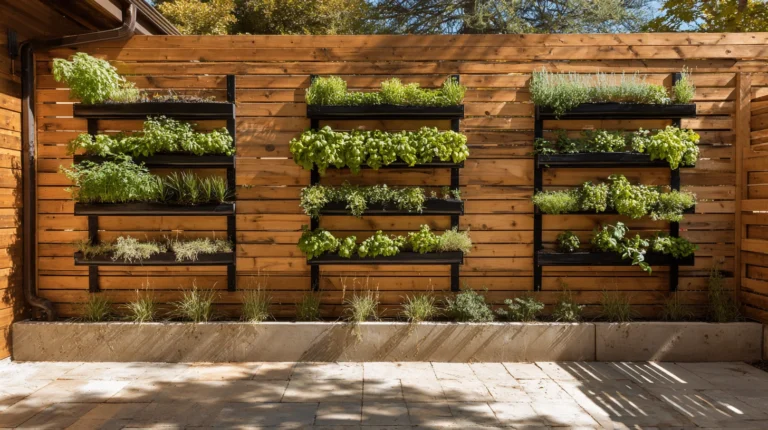
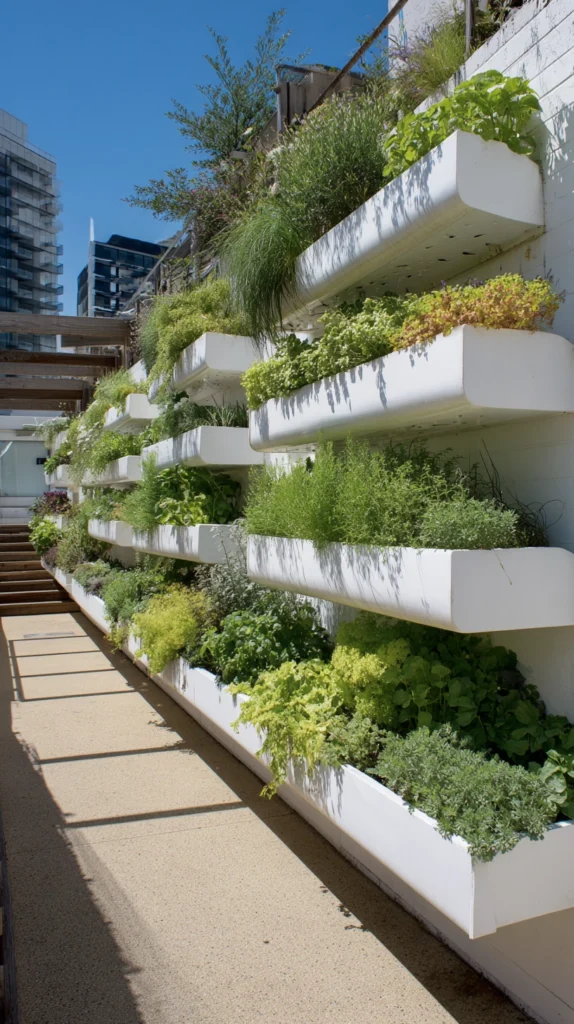
Lengths of plastic guttering fixed horizontally to a fence or wall at staggered heights — sealed at each end with gutter caps, drilled with drainage holes along the base, filled with compost, and planted with herbs — create a productive and visually interesting vertical food garden from one of the cheapest building materials available. The shallow depth of the gutter suits shallow-rooted herbs precisely, and the long narrow format produces a generous harvest from a minimal wall footprint.
A 2-metre length of plastic guttering costs $5–$10. End caps run $1–$2 per pair. Brackets to fix the gutter to the wall cost $2–$4 each — two per length. Drill drainage holes every 15 centimetres along the base of each gutter length before filling. A staggered arrangement of four guttering lengths at different heights covers a fence panel of 1.8 metres with an effective herb growing surface at a total cost of $30–$60.
Style tip: Offset each gutter level horizontally from the one above it rather than aligning them in a straight vertical column. Offset guttering allows each level to receive direct light rather than being shaded by the one above it, and the visual result is a more dynamic and more interesting wall composition than a straight vertical stack.
6. The Modular Wall Planter Rail System
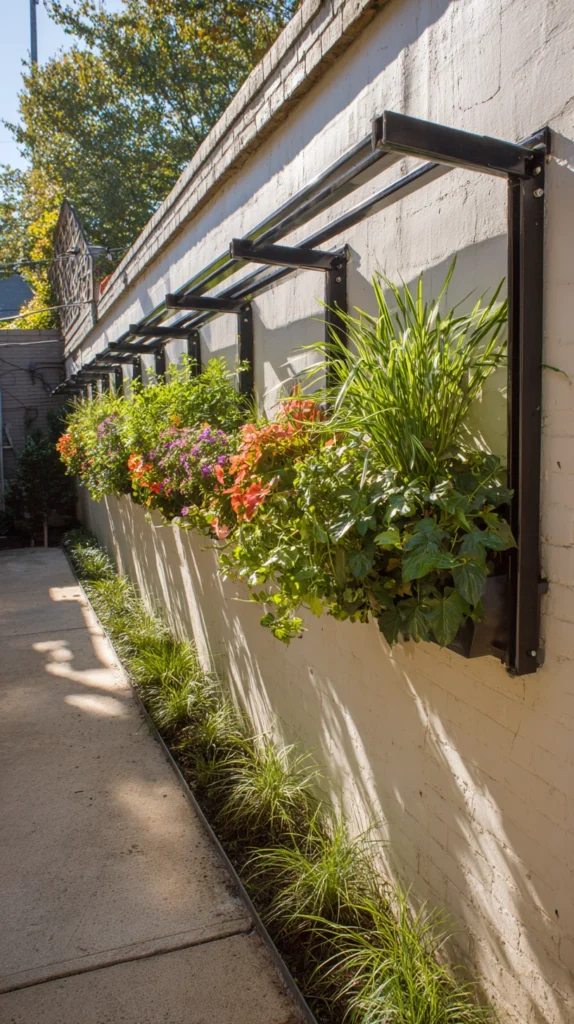
Budget: $40 – $200
A rail system fixed to a fence or wall — with individual planter units that hook onto the rail and can be rearranged, added to, and replanted without disturbing the overall structure — provides the most flexible vertical garden format available. The rail and hook system means the configuration of the planting wall can change with the season and with the growing needs of the plants, and the modular format allows the garden to expand gradually without requiring structural change to the fixing.
A starter rail kit with six planter units costs $40–$100. Individual additional units run $8–$20 each. A full wall of 24 units costs $150–$200. Choose a system with removable inner liners rather than fixed containers — liners that slide out of the wall unit make replanting straightforward; fixed units require the whole piece to be removed from the wall each time the plant needs to be changed.
Style tip: Use the modular system to create a visual pattern as well as a planting arrangement — alternating colours of flower across the grid, or graduating from dark foliage at the base to pale flowers at the top — so the wall planting reads as a composed piece of planting design rather than a collection of individual pots that happen to be arranged vertically.
7. The Clinging Climber Direct Wall Cover
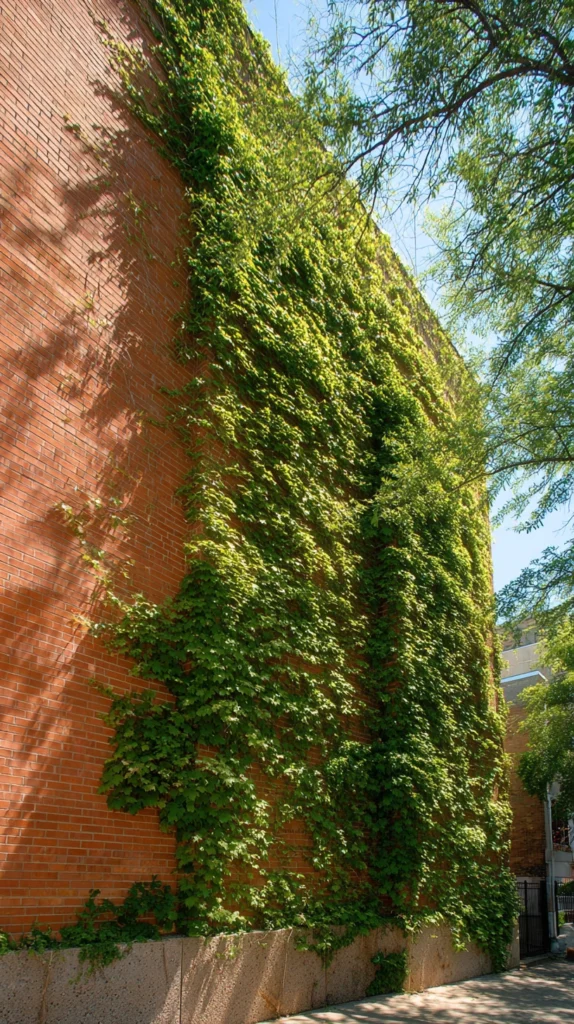
Budget: $10 – $40
Self-clinging climbers — Virginia creeper, Boston ivy, climbing hydrangea — that attach directly to a wall surface without requiring wires, fixings, or any support structure at all are the lowest-effort vertical garden available. They require only a plant and a wall, and given two to three seasons they cover that wall completely, producing a living surface of considerable beauty that changes through the year — spring green, summer lush, autumn crimson, winter structural.
A Virginia creeper in a 3-litre pot costs $8–$20. A Boston ivy runs $10–$25. A climbing hydrangea costs $12–$30. Self-clinging climbers attach via adhesive pads or aerial roots rather than twining tendrils, which means they grip any rough surface — brick, stone, rendered wall — without any assistance. The one maintenance requirement is trimming the growth away from window frames and eaves annually before it enters the building structure.
Style tip: Plant self-clinging climbers at least 30 centimetres from the wall base rather than directly against it — plants established in better soil away from the wall’s moisture shadow grow faster, root more strongly, and reach the wall surface within the first season while building the root system that sustains the coverage for decades. The counterintuitive distance from the wall is the planting decision that most determines the long-term success of the self-clinging climber.
8. The Bamboo Vertical Screen Garden
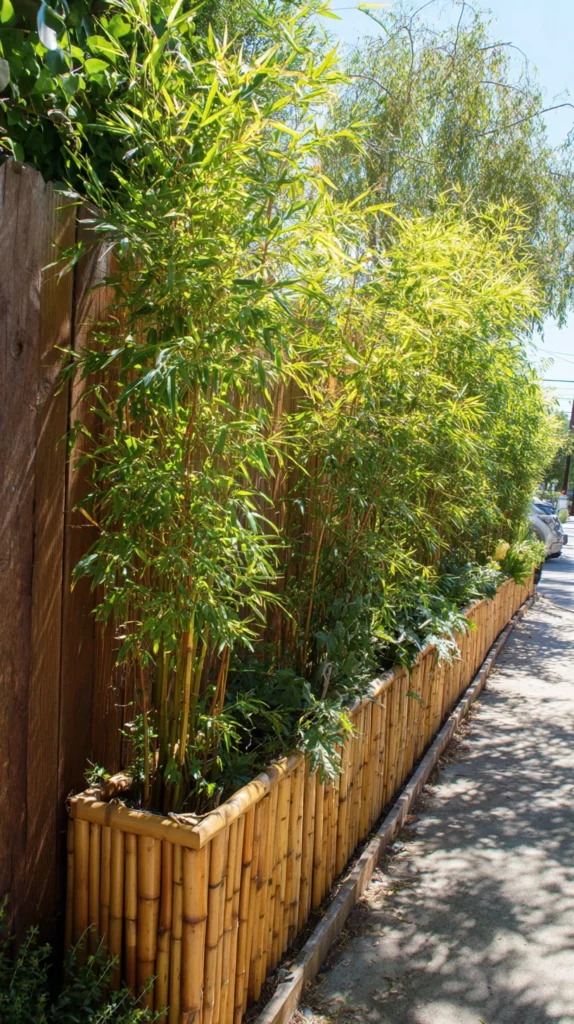
Budget: $50 – $200
A row of clump-forming bamboo planted in a long trough container against a fence or wall — growing upward to create a living vertical screen — simultaneously solves the privacy problem and provides the vertical garden element. Bamboo grows faster in the vertical direction than any other screening plant, reaching useful height within a single season in a warm summer, and its specific combination of movement, sound, and visual density makes it the most complete vertical garden screen available.
A long trough container of 150 centimetres in length and 30 centimetres in depth costs $30–$80. Clump-forming Fargesia bamboo in a 5-litre pot costs $20–$40 each — three plants per metre of trough provides immediate density. Ensure the trough has drainage holes — bamboo in waterlogged growing medium yellows rapidly. Plant Fargesia species only: running bamboo in a container eventually escapes and becomes one of the most persistent removal problems in gardening.
Style tip: Plant the bamboo trough with the plants slightly crowded — closer than the plant label recommends — to achieve immediate screening density. Bamboo at the recommended spacing takes two to three seasons to achieve the density required for a privacy screen; at closer planting it achieves the same density in one season. In a container, the restricted root space prevents the plants from growing to the size they would in open ground, so the crowded planting in a trough produces the same density as the recommended spacing in a garden bed.
9. The Espalier Fruit Tree Wall
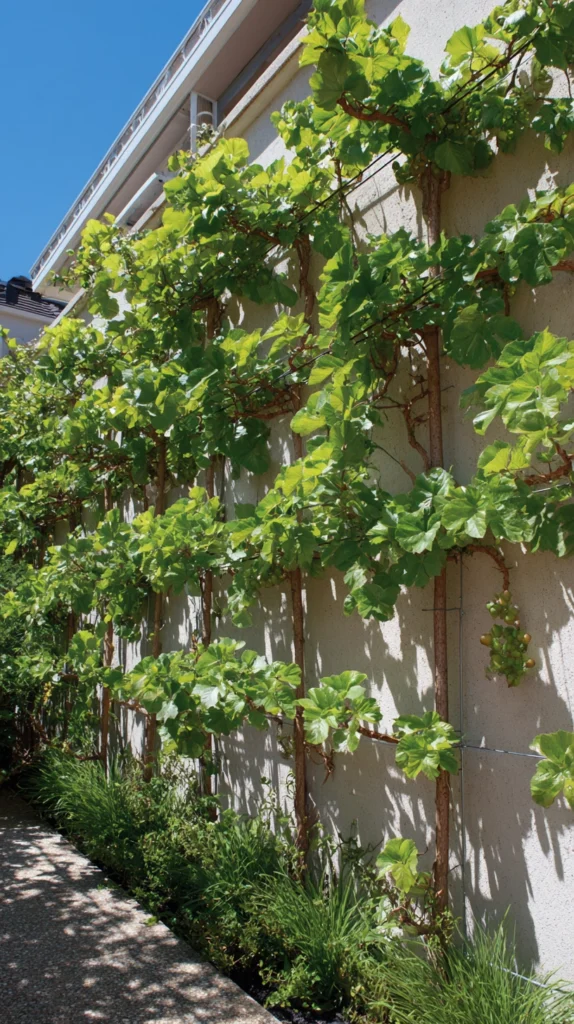
Budget: $40 – $150
A fruit tree trained flat against a wall or fence in a formal pattern of horizontal tiers — apple, pear, cherry, or plum — produces food from a vertical surface that otherwise grows nothing. The espalier form is not a compromise for small gardens; it is a training method developed specifically to maximise yield from wall space, and a mature espaliered apple on a south-facing wall produces more fruit per square metre than almost any other growing method.
A young apple or pear tree suited to espalier training costs $30–$60. Horizontal training wires at 40-centimetre intervals across the wall cost $15–$25 in wire and fixings. The training itself requires no specialist knowledge — the fundamental principle of tying new growth horizontally and removing growth that points away from the wall takes twenty minutes per season and produces results within two to three years that look as if a professional trained them.
Style tip: Choose a fruit variety whose fruiting season you will actually be present for. An espalier that produces fruit in August is a productive vertical garden if you are in the garden in August; one that fruits in September when the summer is over and the garden is rarely visited is producing abundance that is neither harvested nor enjoyed. The fruiting season is the practical criterion that the variety selection should begin with.
10. The Living Moss Wall Panel
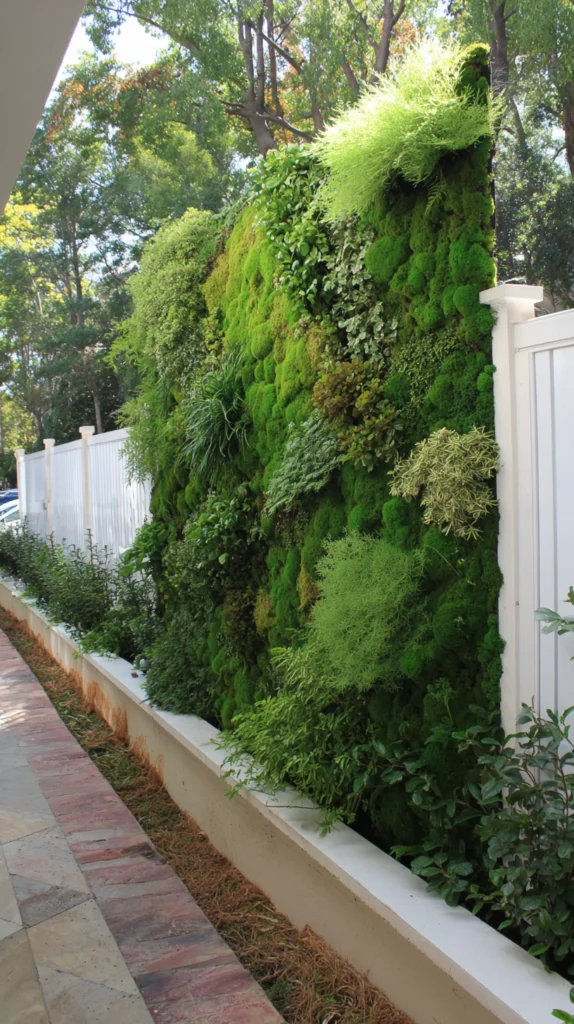
Budget: $25 – $100
A panel of living or preserved moss — sheet moss, cushion moss, or reindeer moss fixed to a timber backing board and mounted on a shaded fence or wall — creates the most tactile and most visually unusual vertical garden element available. Living moss requires no soil, no feeding, and in a shaded, moist position no watering either — it takes its moisture from the air and the ambient humidity of the surrounding environment.
A sheet of living cushion moss costs $8–$20 for enough to cover a 30 by 40 centimetre backing board. A coir mat backing board of the same size costs $5–$10. Preserved moss panels cost $25–$60 for a ready-made 40 by 60 centimetre version. Mount on a north or east-facing fence rather than a south or west-facing one — moss is a shade and moisture-loving plant that deteriorates rapidly in direct summer sun.
Style tip: Combine two or three different moss varieties on the same panel rather than using a single type. Sheet moss, cushion moss, and reindeer moss have different textures and growth forms that create a surface of genuine depth and visual interest; a single moss variety across an entire panel reads as a uniform texture that becomes invisible at normal viewing distance. The textural variation between species is what gives a moss wall its quality of being genuinely looked at.
11. The Herb Spiral Vertical Structure
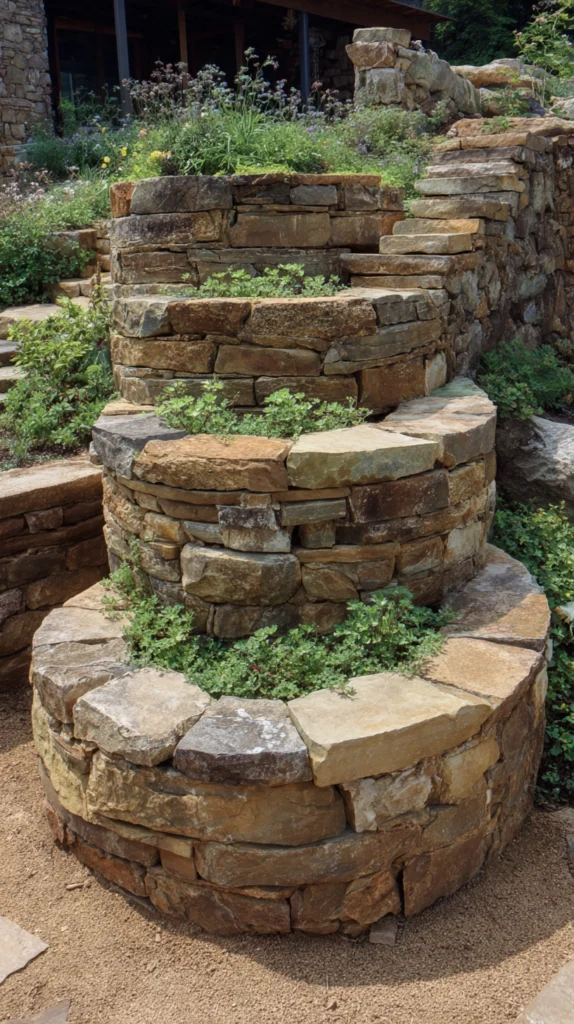
Budget: $30 – $120
A herb spiral — a three-dimensional spiral structure built from bricks, stones, or timber that rises from ground level to 60–90 centimetres — creates multiple distinct growing environments in a single small footprint. The top is dry and free-draining in full sun — perfect for Mediterranean herbs. The base is moisture-retentive and partially shaded — perfect for mint, chives, and parsley. One structure, two feet square at its base, produces a genuinely diverse herb collection.
Reclaimed bricks or stones cost $0–$20. A bag of topsoil and a bag of grit ($15–$25 total) fill the structure. Herb plants cost $2–$4 each — a standard herb spiral needs eight to twelve plants. Orient the spiral so it opens toward the south — a south-opening spiral concentrates warmth at the top where heat-loving Mediterranean herbs perform best, and the structural advantage of the spiral form is fully exploited only when the orientation is correct.
Style tip: Add a small water reservoir at the base of the spiral by burying a half-submerged pot, open side up, in the lowest growing zone. The buried pot creates the moist conditions that mint, chives, and parsley prefer without requiring separate watering for the base plants — the reservoir fills naturally from rain and from the drainage of the tiers above it.
12. The Stacked Strawberry Tower
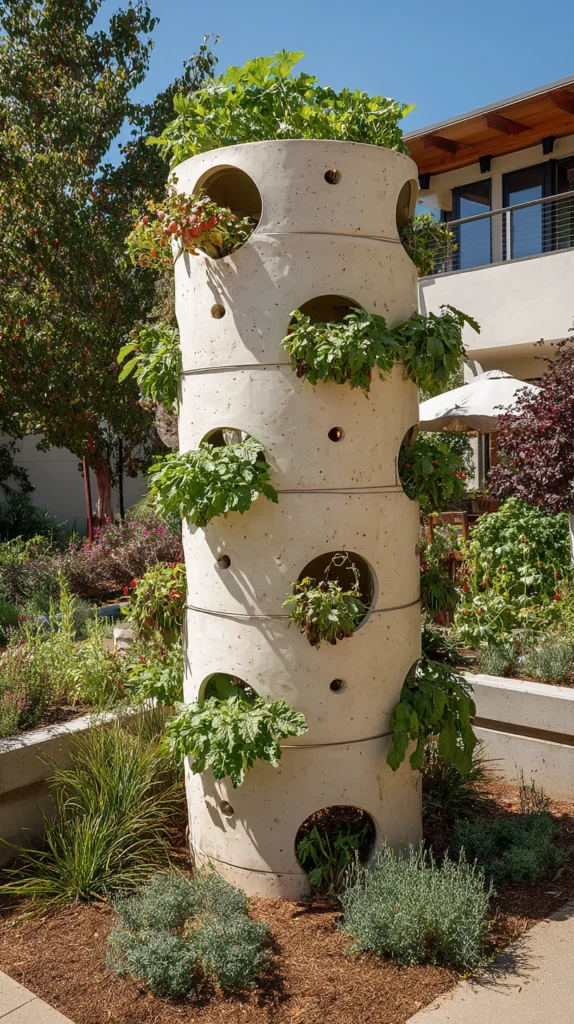
Budget: $20 – $80
A tower planter — a tall column with planting holes at multiple levels — planted entirely with strawberries creates a vertical food garden of considerable productivity in the smallest possible floor footprint. A tower of 90 centimetres in height with twenty planting pockets produces more strawberries per square metre than a traditional strawberry bed and allows each plant to cascade its runners and fruit downward rather than along the ground.
A purpose-built strawberry tower in terracotta or plastic costs $20–$50. A DIY version from a length of large-diameter drainage pipe with holes cut at intervals costs $10–$25 in materials. Strawberry plants run $2–$4 each — a standard tower needs twelve to sixteen plants. Position the tower in the sunniest available position rather than against a wall — strawberries in partial shade produce less fruit and more foliage regardless of how well they are watered and fed.
Style tip: Fill the tower from the bottom upward while inserting the plants simultaneously rather than filling first and planting afterward. A tower filled with compost and then planted requires the roots to be pushed through the planting holes from outside — which damages the root structure and reduces establishment success. Filling and planting simultaneously allows each plant’s roots to be spread naturally within the growing medium as each layer is added.
13. The Repurposed Ladder Planter Display
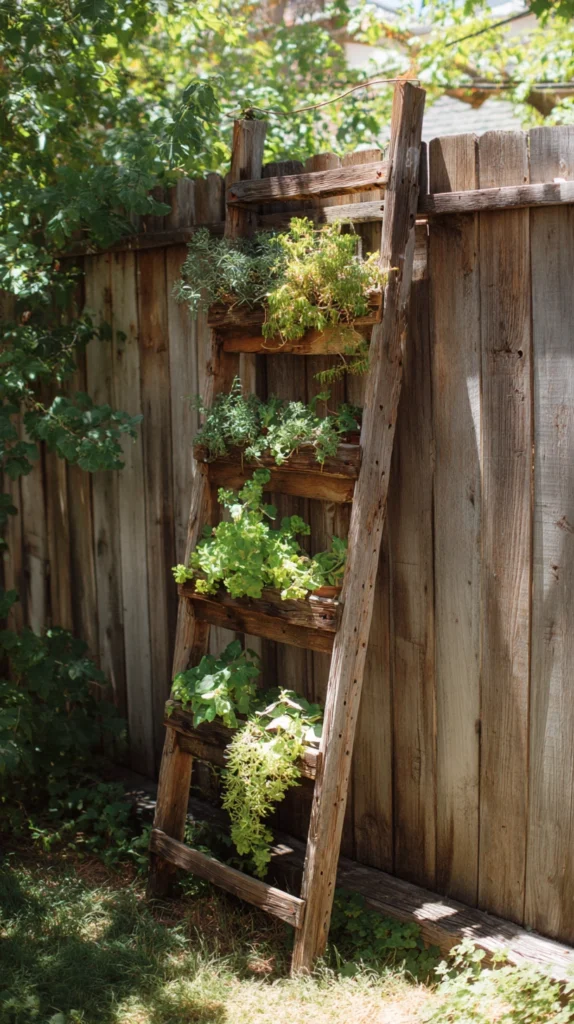
Budget: $15 – $60
An old wooden or metal ladder — leaned against a wall or fence and stabilised with a single fixing at the top — becomes an instant vertical display when pots are placed on each rung. The graduated height of the rungs provides natural tier variation, the ladder structure requires no construction, and the repurposed quality of an old ladder gives the display a character that purpose-built plant stands rarely achieve regardless of their cost.
An old ladder costs $0–$20 from a car boot sale or secondhand listing. A screw eye in the wall and a length of wire around the top rung stabilises the ladder at $3–$5 in fixings. Use pots of graduating sizes on the ladder rungs — larger at the base, smaller toward the top — to echo the natural proportion of a planted border and give the ladder display the visual stability that uniform pots at every level lack.
Style tip: Plant the ladder display with a single theme throughout — all herbs, all succulents, all one colour of flower — rather than a varied collection of different plants in different types of pot. A themed ladder display reads as a considered vertical garden; a miscellaneous one reads as a collection of pots stored on a ladder. The theme is the curatorial decision that transforms the practical storage into the display.
14. The Sweet Pea Wigwam and Obelisk
Budget: $10 – $50
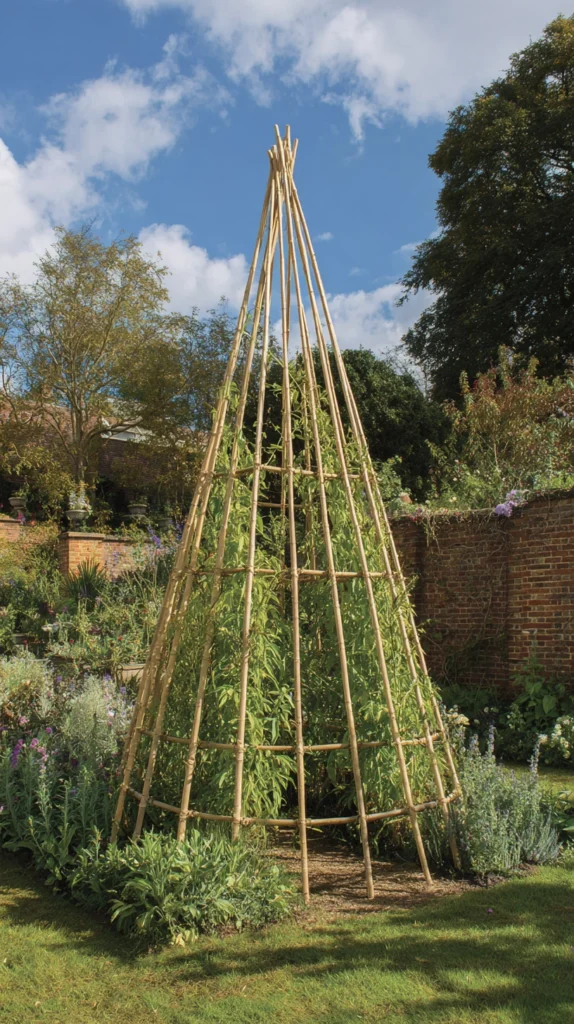
A bamboo wigwam or a timber obelisk planted with sweet peas at its base creates the vertical garden element that provides more fragrance per pound spent than any other growing structure available. Sweet peas planted in spring reach the top of a 1.8-metre wigwam by July and cover it in flowers continuously from June to October when regularly cut — the more sweet peas are cut, the more they produce, and a wigwam of sweet peas cut for the house twice a week flowers more prolifically than one left to set seed.
A bamboo wigwam of eight 180-centimetre canes tied at the top costs $5–$15. A timber obelisk of the same height runs $15–$35. Sweet pea seeds cost $2–$4 per packet — enough for one full wigwam with seeds left over. Plant three seeds at the base of each cane and thin to the strongest seedling once they reach 10 centimetres in height. Train the first tendrils around the canes by hand rather than waiting for the plant to find its own way — early training at the base of the wigwam prevents the tangle of competing growth that occurs when multiple plants are left to self-direct.
Style tip: Position the sweet pea wigwam where it will be walked past daily rather than in a corner that is visited occasionally. Sweet peas release their fragrance most intensely when their flowers are at face height and when the air is warm — a wigwam on a path that is walked every morning provides a daily fragrance experience that a wigwam in the back corner of a garden, however beautifully grown, provides only when it is specifically visited.
The vertical garden that works is not the most elaborate structure or the most expensively planted one — it is the one that suits the wall it grows on, the light that wall receives, the maintenance commitment of the person responsible for keeping it alive, and the specific purpose it was built to serve. A single well-trained climbing rose on a sunny fence requires annual tying-in and occasional pruning; a pocket felt panel requires daily watering in hot weather; a self-clinging climber on a shaded wall requires almost nothing for decades.
Match the vertical garden to the wall and the wall to the grower, and the result is a living surface that justifies every bit of the space it occupies — which, in a small garden where every square metre is already doing something, is the only justification that matters.