
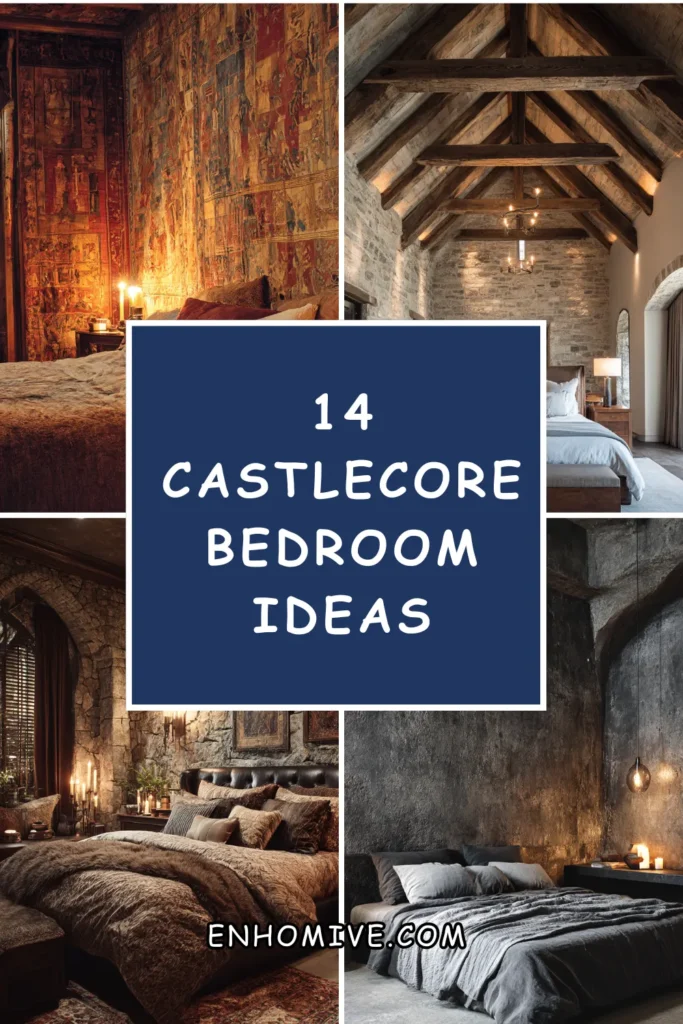
14 Castlecore Bedroom Ideas
Castlecore is the aesthetic of the romantic imagination fully, gloriously, and completely unleashed upon the domestic interior — the design philosophy that takes the specific visual vocabulary of the medieval fortress, the Gothic cathedral, the ancient tower room, and the great hall of a centuries-old estate and translates it into a bedroom environment of such extraordinary atmospheric depth, such genuine historical resonance, and such complete, unapologetic commitment to the drama, the darkness, and the breathtaking romantic beauty of the castle as an architectural ideal that every person who enters the room feels, immediately and completely, as though they have crossed not merely a bedroom threshold but a genuine temporal boundary
As though the world beyond the door belongs to one century and the world within it belongs to another, older, more beautiful, and more magnificently mysterious one. Castlecore is not Halloween decor retained past its seasonal welcome. It is not the Gothic aesthetic of teenage rebellion softened into domestic acceptability.
It is something considerably more sophisticated, more historically informed, and more genuinely beautiful than either of those things — a design language of complete decorative seriousness and complete aesthetic ambition drawn from one of the most visually extraordinary architectural traditions in human history. Here are 14 castlecore bedroom ideas that will transform the most personal room in your home into the most dramatically, most romantically, and most completely extraordinary room you have ever had the privilege of inhabiting.
1. Paint the Walls in a Deep, Stone-Inspired Color
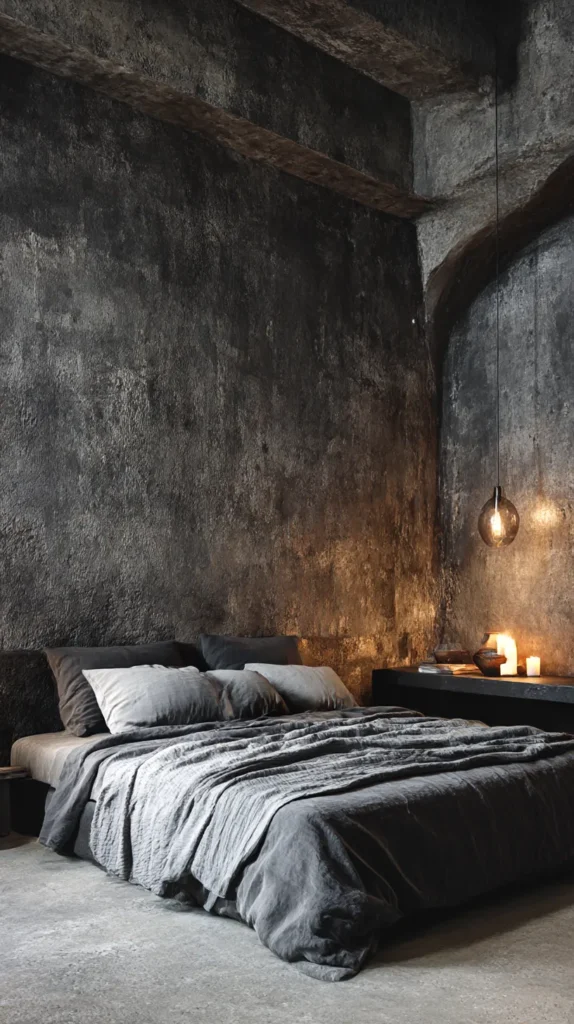
The castlecore bedroom begins at the walls — the surfaces that most immediately and most completely establish the room’s atmospheric register and communicate, before any other element has been encountered, the specific quality of ancient, stone-walled, torchlit darkness and mystery that the castle interior at its most atmospheric always possesses.
Choose a wall color that evokes the specific quality of aged stone — not the flat, manufactured grey of a paint chart’s neutral selection, but the deep, complex, slightly warm, slightly cool, geologically rich colour of actual castle stone as it appears in the candlelight of a great hall or the filtered light of a narrow lancet window. Warm charcoal with green undertones.
Deep slate with blue-grey complexity. The rich, dark, slightly mossy tone of aged limestone in a northern European fortress. Apply the color in a limewash or a textured finish that replicates the specific surface quality of genuine stone rather than the smooth uniformity of a modern plastered wall.
2. Install a Canopy or Four-Poster Bed as the Room’s Architectural Centrepiece
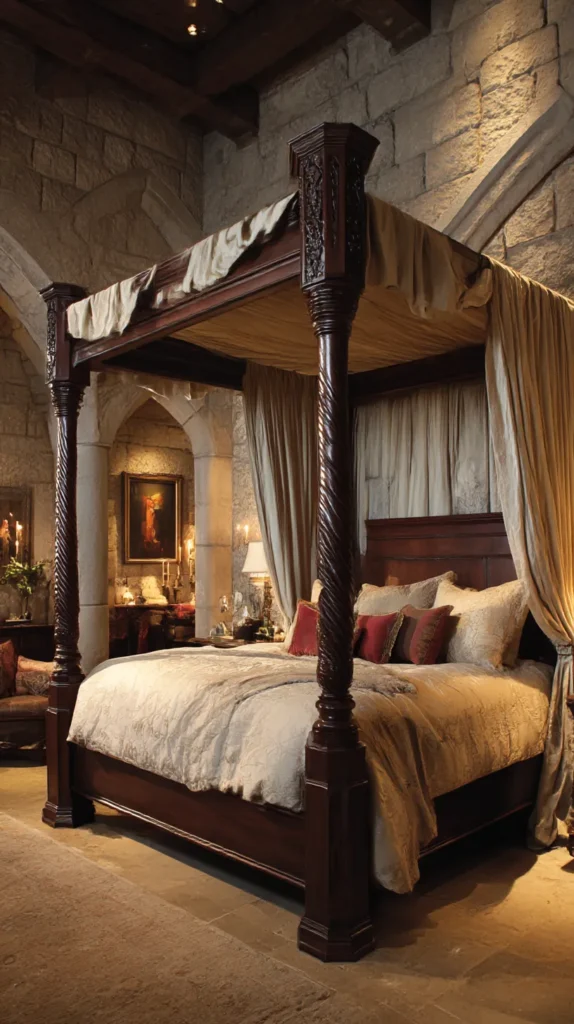
The bed is the castlecore bedroom’s most important and most architecturally powerful element — the piece of furniture that most completely transforms the room’s spatial character from a contemporary bedroom into something approaching the sleeping chamber of a medieval lord or lady, and that most powerfully communicates the castlecore aesthetic’s fundamental commitment to the dramatic, the enveloping, and the historically magnificent.
A four-poster bed of genuine architectural scale — its posts of dark, carved timber reaching toward the ceiling with the specific authority of structural elements designed to support a canopy of considerable weight and considerable textile beauty — dressed with heavy drapes of velvet, brocade, or aged linen in the deepest possible tones of forest green, midnight blue, or burgundy creates a sleeping enclosure of extraordinary intimacy and extraordinary castlecore drama.
A simpler iron canopy frame draped with sheer, gauzy fabric provides the essential vertical presence and the essential sense of a canopied enclosure at considerably lower cost and considerably lower structural commitment.
3. Use Stone, Slate, or Flagstone for the Floor
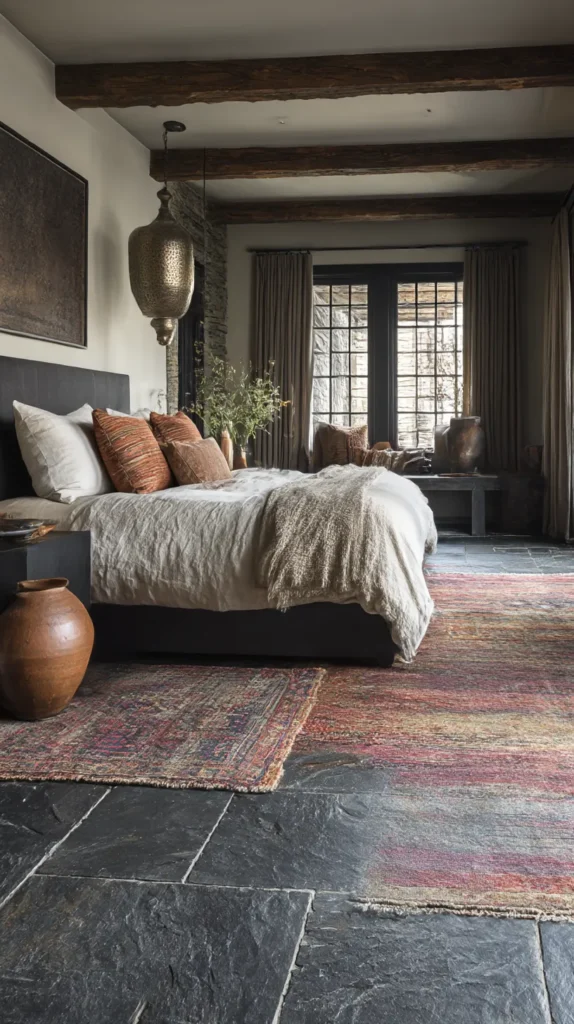
The castlecore bedroom floor should evoke the specific, resonant, completely extraordinary material quality of the castle’s ground-level surfaces — the flagstone of the great hall, the slate of the tower room, the worn, smoothed, centuries-old stone that carries the specific beauty of a material that has been walked on by generations of people whose lives were lived in the shadow of the same walls.
Large-format stone-effect porcelain tiles in a warm grey or cool slate tone create the visual quality of a genuine stone floor at a fraction of the weight and a fraction of the installation complexity of actual stone. Natural slate tiles of genuine geological character in a dark, slightly blue-grey tone provide the most authentically castlecore flooring surface available in any real material.
Soften the stone floor with layers of thick, dark-toned rugs — Persian rugs in deep reds and blues, sheepskin throws, or densely woven wool rugs in the earthy, muted tones of medieval textile tradition — for the specific combination of cool stone underfoot and warm textile comfort overhead that the castle interior at its most liveable always provided.
4. Hang Heavy, Dramatic Tapestry or Textile Wall Hangings
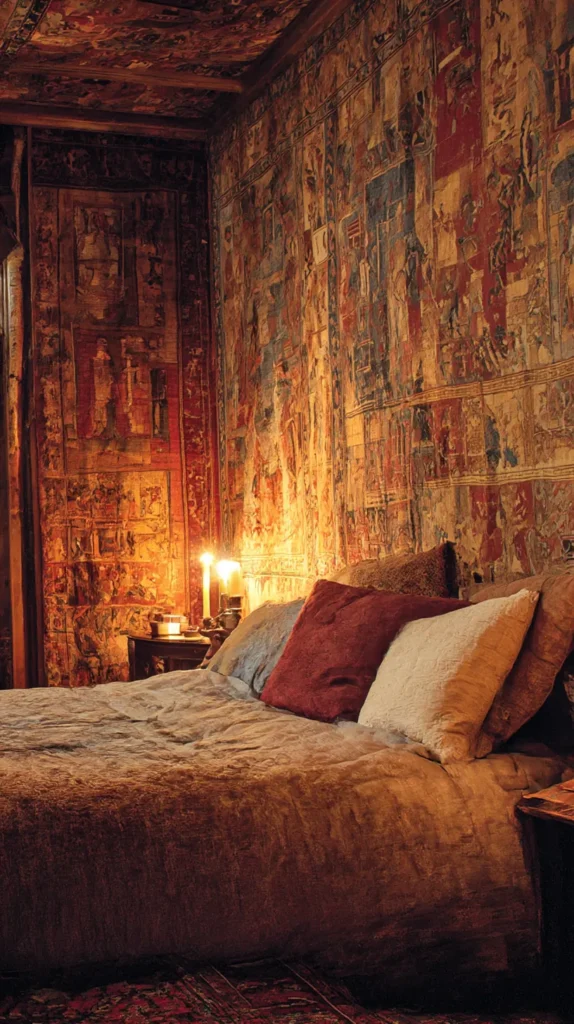
The tapestry is the castlecore bedroom’s most historically specific and most immediately atmospheric decorative element — the wall treatment that most directly references the great medieval tradition of woven textile art produced for exactly the same purpose in the same architectural context for which castlecore design now deploys it in the contemporary bedroom: the purpose of warming a cold stone wall, softening a harsh interior acoustic environment, and creating a surface of extraordinary visual richness and extraordinary narrative depth in a room whose architectural character would otherwise be austere to the point of severity.
A large-format tapestry reproduction of a medieval hunting scene, a botanical millefleur composition, or an abstract design in the muted, earthen tones of natural vegetable dye recreates the specific visual warmth and the specific decorative richness of the castle interior’s most defining textile element. Supplement with smaller textile panels, embroidered wall hangings, or woven pieces in complementary tones for a bedroom wall treatment of complete, layered, historically informed decorative depth.
5. Light the Room with Candles and Candle-Style Fixtures
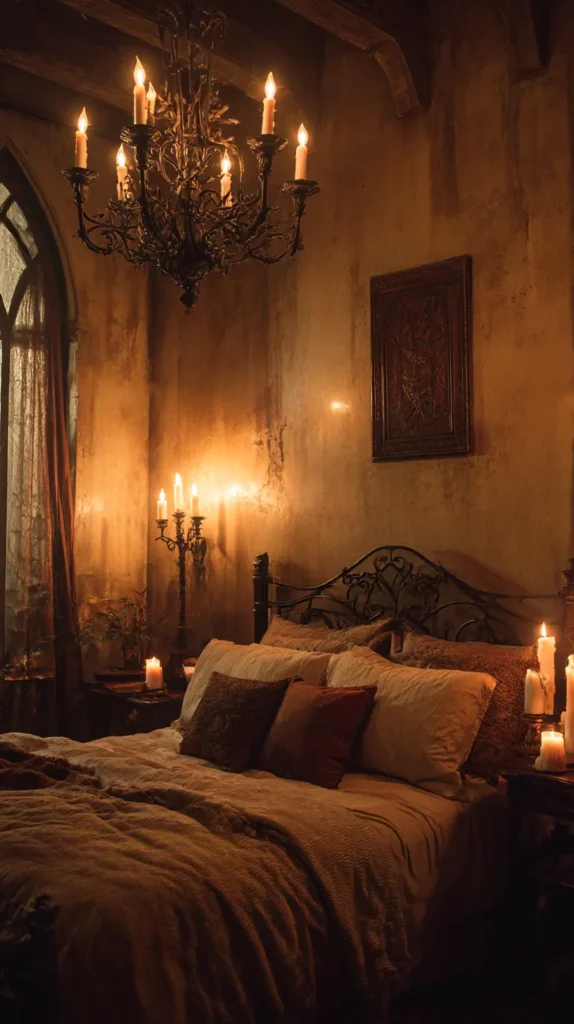
The lighting of a castlecore bedroom must above all things be warm — warm with the specific, flickering, deeply golden warmth of candlelight that the castle’s atmospheric beauty has always depended upon and that the contemporary bedroom can approximate, with sufficient creative commitment and sufficient fixture selection intelligence, to an extraordinarily convincing and extraordinarily beautiful degree.
A chandelier of wrought iron or aged bronze, its arms fitted with candle-style bulbs of warm, flame-shaped form, hung at the room’s centre creates the castlecore bedroom’s primary lighting statement of considerable theatrical grandeur. Wall sconces in matching wrought iron or aged metal, fitted with the same warm, flame-shaped bulbs, supplement the chandelier with pools of warm light at the room’s perimeter.
Real candles — pillar candles of generous proportion grouped on stone or timber surfaces throughout the room — provide the specific quality of genuine, moving, living flame that no electric bulb, however warmly coloured and however convincingly flame-shaped, can fully replicate.
6. Incorporate Arched Architectural Details
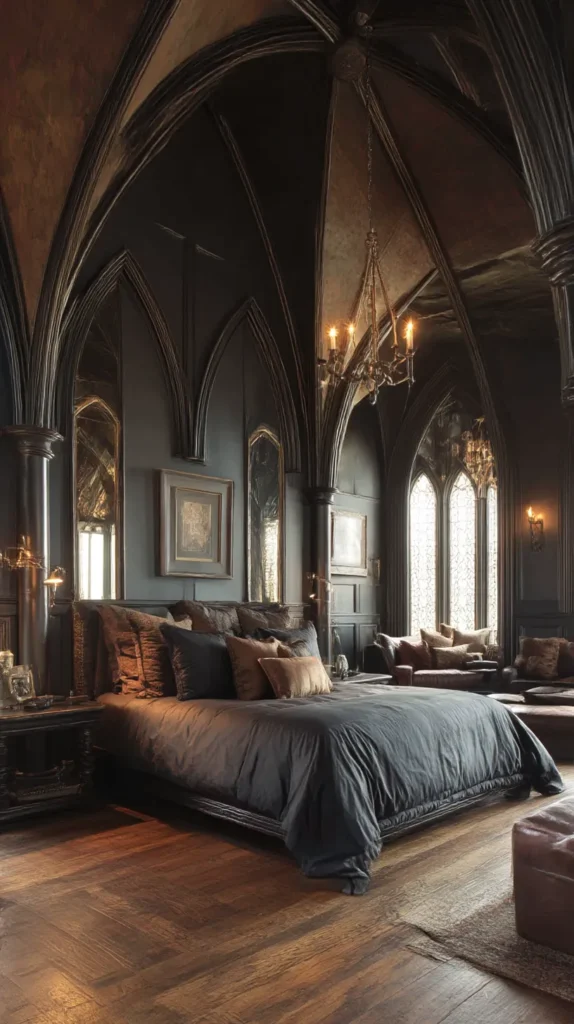
The pointed arch is the most immediately and the most universally recognisable single architectural element of the Gothic and medieval castle tradition — the structural and decorative form that defines the cathedral window, the castle gateway, the great hall’s window opening, and the cloister arcade with such complete visual authority that its presence in any interior context immediately and irrevocably establishes the castlecore atmospheric register.
Introduce arched architectural details into the bedroom through the application of arched mirror frames — a tall, pointed-arch mirror of Gothic form leaning against the wall or mounted as a statement piece above the fireplace.
Arched headboard panels in painted timber or carved stone-effect resin. Arched cabinet doors replacing the straight-topped alternatives on existing bedroom storage. Arched window treatments that extend the existing window’s visual height into a pointed Gothic form through clever application of trim and molding. Each arched element reinforces the castlecore vocabulary with complete architectural authority.
7. Dress the Bed in Jewel-Toned Velvets and Rich Brocades
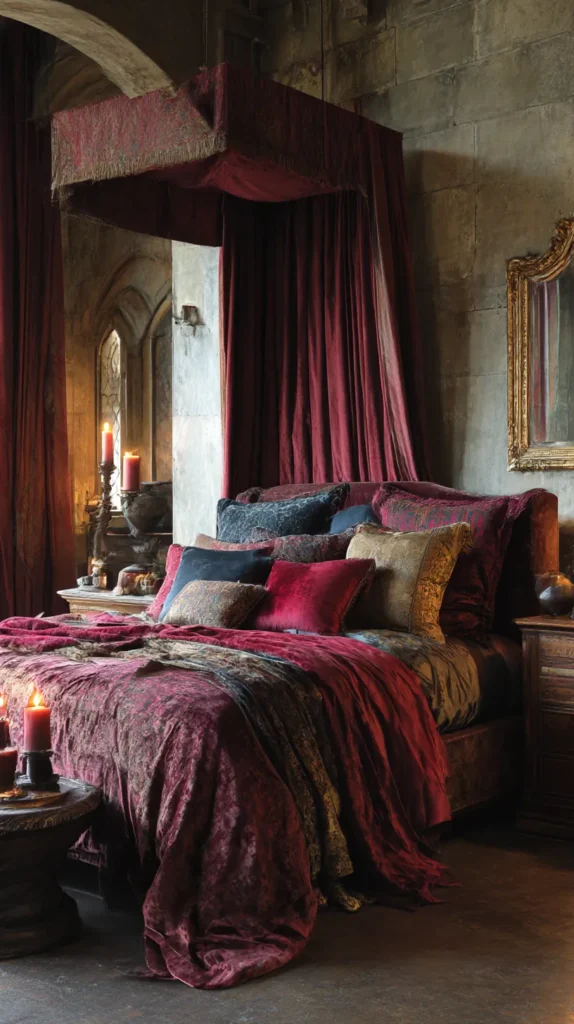
The textiles of the castlecore bed must communicate the specific quality of medieval textile luxury — the deep, saturated, jewel-toned fabrics that the wealthiest inhabitants of the great European castles used to insulate their sleeping chambers from the cold, to display their wealth and their status through the magnificence of their material possessions, and to create within the bed’s enclosed canopy a private world of warmth, color, and extraordinary tactile richness.
Dress the four-poster or canopy bed in layers of deep velvet — a duvet cover of midnight blue or forest green velvet, cushions of burgundy and gold brocade, a throw of rich purple or deep teal velvet folded across the foot — for a bed of such complete, jewel-toned, castlecore magnificence that the act of retiring to it each evening becomes, in its own small but genuine way, a genuinely extraordinary experience.
8. Add a Stone or Cast Iron Fireplace
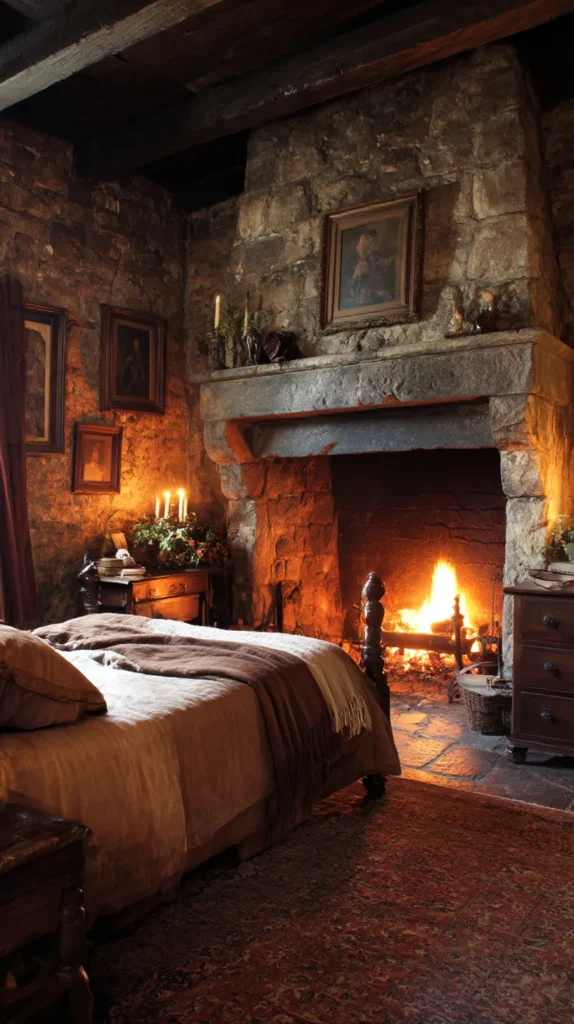
The fireplace is the castlecore bedroom’s most powerful atmospheric anchor — the architectural element that most completely transforms a decorated contemporary bedroom into something approaching a genuine castle chamber, and whose presence in the room creates an atmosphere of warmth, history, and deeply romantic domestic intimacy that no other single architectural addition can replicate.
A genuine stone or cast iron fireplace of appropriate historical character installed in the bedroom’s primary wall creates a castlecore feature of complete architectural authority.
Where installation of a functioning fireplace is not structurally or practically possible, a cast iron fireplace surround of genuine antique or high-quality reproduction character, fitted with a bioethanol burner or a high-quality electric fire of convincing flame effect, provides the visual and atmospheric presence of the castle hearth with complete decorative conviction and considerably less structural intervention.
9. Display Collections of Gothic and Medieval-Inspired Objects
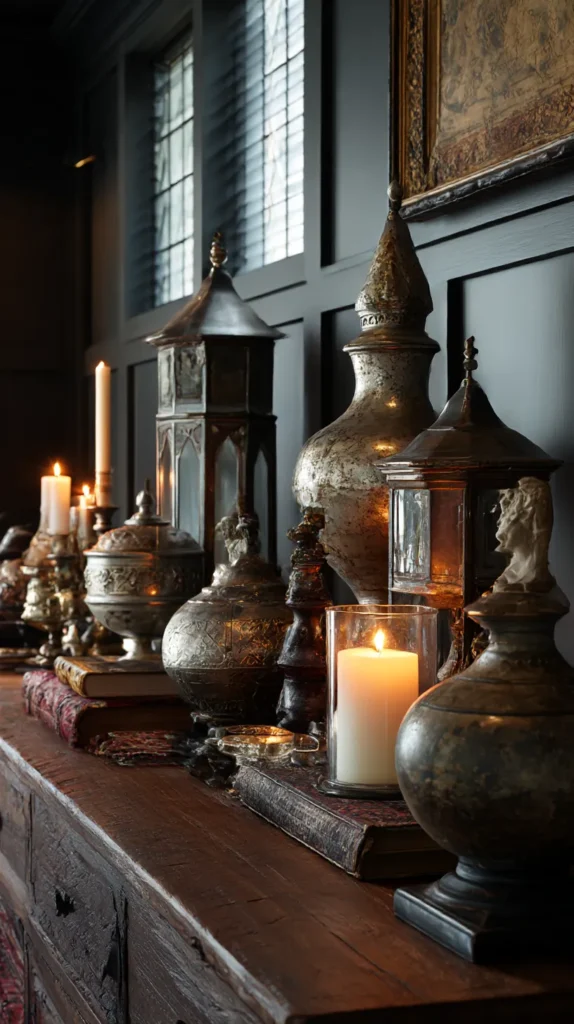
The castlecore bedroom is a room of collected objects — of the specific, historically resonant, visually extraordinary objects that the medieval and Gothic aesthetic traditions have produced across centuries of extraordinary creative output and that the contemporary castlecore bedroom deploys as decorative elements of genuine cultural depth and genuine visual power.
A collection of antique or reproduction keys displayed on a timber board above the writing desk. Gothic candlesticks of wrought iron or aged bronze grouped on the mantelpiece. A globe or an astrolabe of antique reproduction characters on the bookshelf beside the volumes of medieval history and Gothic literature.
A collection of dark, dramatic crystals — black tourmaline, smoky quartz, and amethyst — arranged on a velvet-lined tray on the bedside table. These are the castlecore bedroom objects that give the space its quality of genuine, accumulated, deeply personal historical inhabitation.
10. Install Dark Timber Beams on the Ceiling
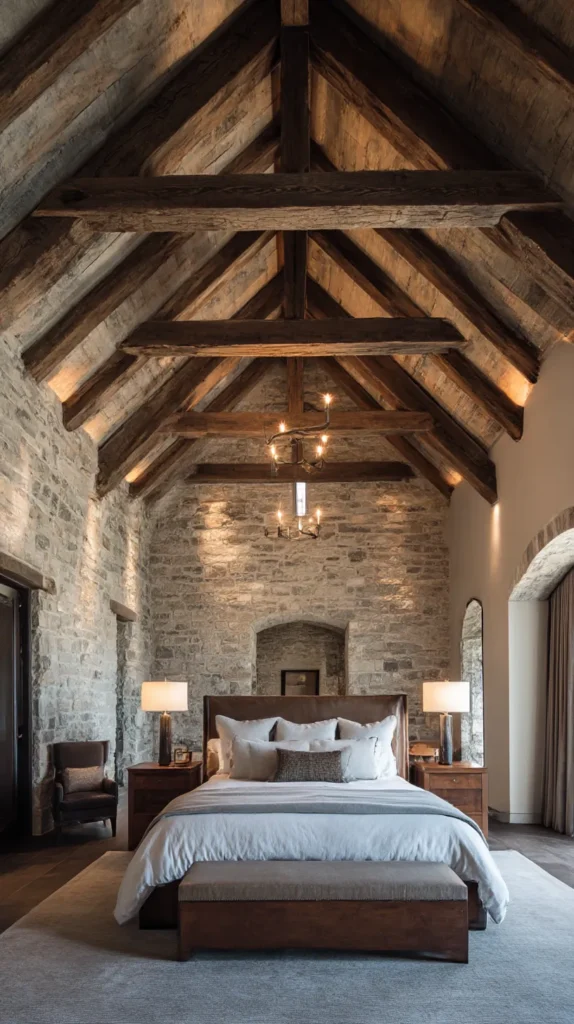
The exposed timber beam is the castlecore bedroom ceiling’s most powerful and most historically authentic architectural element — the structural feature of the great hall, the barn conversion, and the castle’s upper chambers that carries the specific warmth, the specific darkness, and the specific quality of handcrafted historical construction that the castlecore aesthetic requires as its overhead counterpart to the stone walls and the flagstone floor below.
Apply dark timber beams — genuine reclaimed oak beams of appropriate scale for the room’s ceiling height, or high-quality reproduction beams of lightweight polymer in a convincing dark timber finish — across the bedroom ceiling at regular intervals for an architectural treatment of extraordinary historical resonance and extraordinary visual drama. Paint the ceiling between the beams in the same deep, stone-inspired color as the walls for a bedroom interior of complete, immersive castlecore atmospheric coherence.
11. Incorporate a Writing Desk of Medieval Character
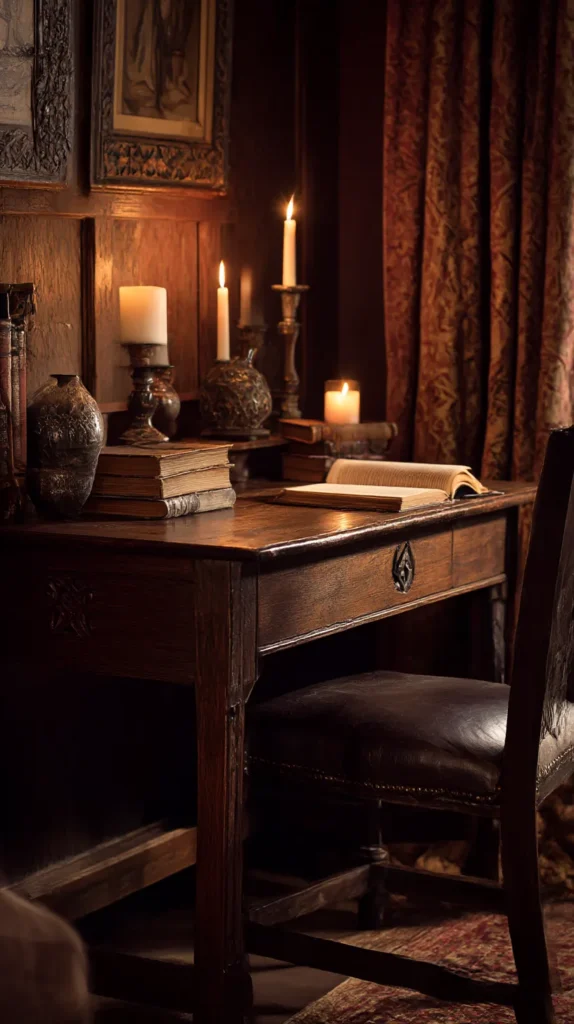
The writing desk is the castlecore bedroom’s most intellectually specific furniture piece — the element that introduces the specific, quietly powerful atmosphere of medieval scholarship, of letters written by candlelight in the hours before sleep, and of the particular quality of private, candlelit intellectual life that the castle chamber has always represented in the cultural imagination of anyone who has ever been moved by the romance of historical domestic life.
Choose a writing desk of dark, carved timber in a form that references the medieval scriptorium or the period writing table — a secretary desk with a drop-front writing surface, a simple plank-top desk on trestle supports of wrought iron, or a carved and panelled desk of genuine antique character. Dress its surface with a leather writing pad, an inkwell, a candlestick, and a small collection of volumes in beautiful bindings for a desk arrangement of complete castlecore atmospheric conviction.
12. Use Dark, Heavy Curtains to Enclose the Space
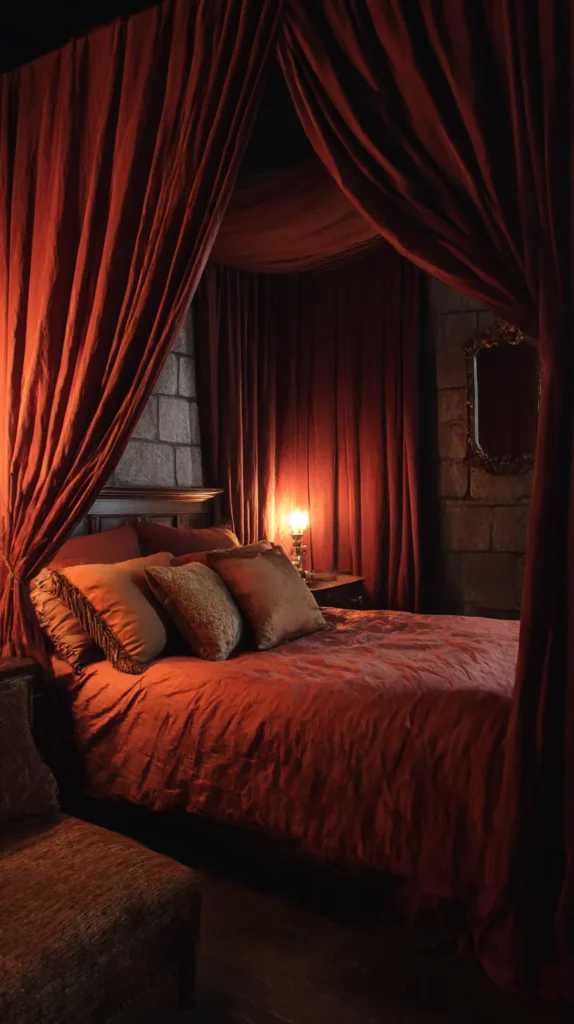
The curtains of the castlecore bedroom are not sheer, not pale, and not chosen for their ability to admit light or create a sense of airy spaciousness. They are dark, heavy, deeply colored, and chosen with the complete understanding that the castlecore bedroom’s atmospheric power depends on the same quality of enclosed, insulated, dramatically curtained darkness that the castle’s great chambers have always possessed — the quality of a room that keeps its own atmospheric climate of warmth and mystery independent of the weather and the light outside its walls.
Floor-to-ceiling curtains in deep velvet or heavy brocade, hung from iron or dark timber rods on rings of matching character, drawn closed against the world outside the bedroom window, create the castlecore bedroom’s most complete and most immediately transformative atmospheric element — the sense of a room that has sealed itself against the contemporary world and opened itself entirely to its own, more beautiful, more dramatically extraordinary interior reality.
13. Introduce Gothic Ironwork Throughout the Room
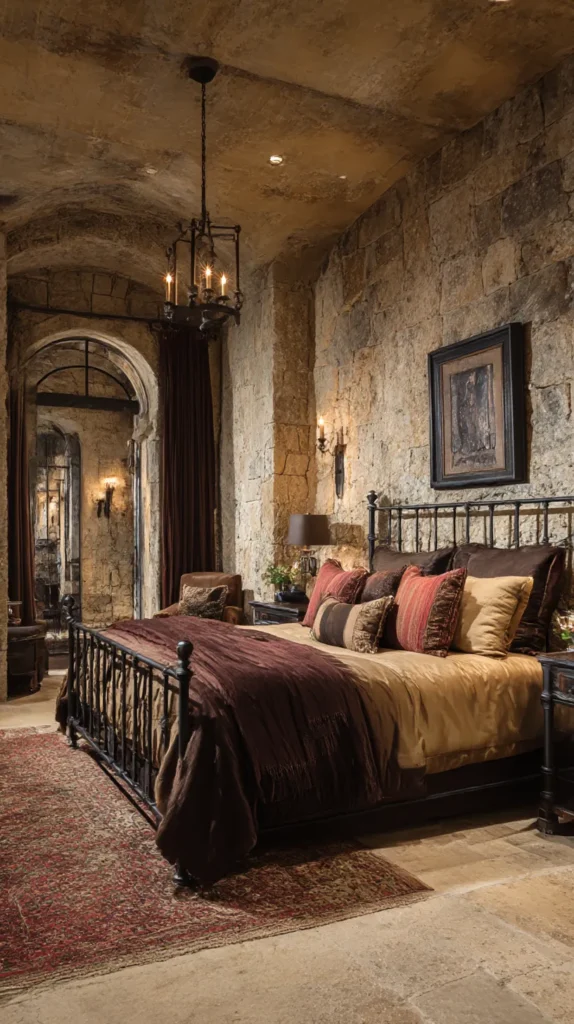
Wrought iron is the material of the castle’s structural and decorative vocabulary — the medium in which medieval craftspeople produced the gates, the hinges, the brackets, the candlestick holders, and the decorative grilles that gave the great castles their specific combination of functional strength and ornamental beauty.
Introduce wrought iron into the castlecore bedroom through the room’s hardware and fixtures with complete consistency and complete material commitment — the iron curtain rod and rings, the iron chandelier, the iron candle sconces, the iron handles on every door and every drawer, the iron towel hooks in the adjacent bathroom, and the iron frame of the mirror leaning against the bedroom’s darkest wall.
Each iron element reinforces the castlecore material vocabulary with the quiet, structural confidence of a material that has been making interiors extraordinary for a thousand years.
14. Make the Castlecore Bedroom Completely, Magnificently Yours
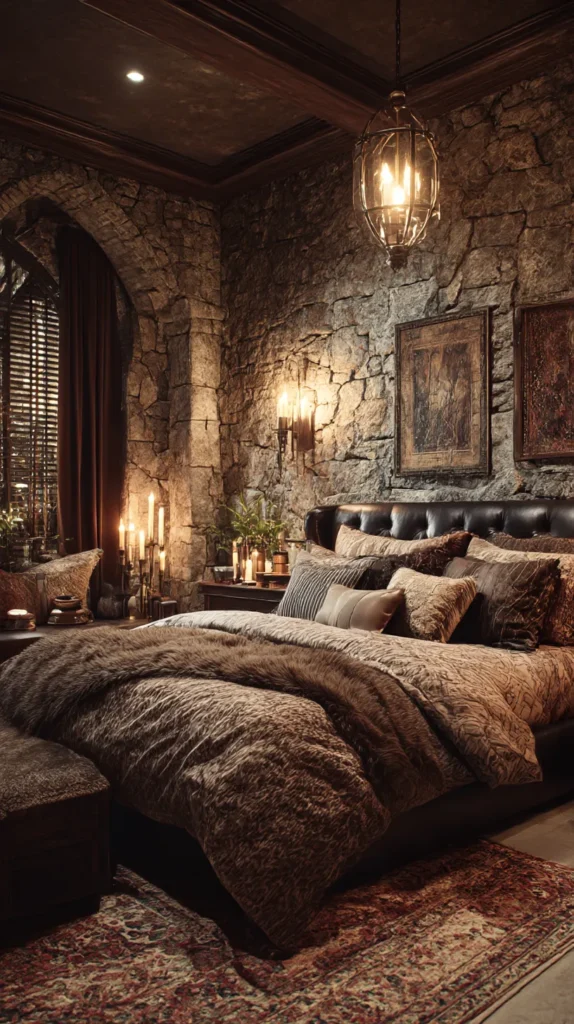
The most extraordinary and the most genuinely beautiful castlecore bedroom is ultimately the one that takes every element of this historically rich, visually dramatic, and completely romantic aesthetic and filters it through the complete, honest, and deeply personal creative vision of the person who will inhabit it. The castlecore bedroom that contains the specific books that have always transported their reader to another century.
The specific crystals and objects that carry personal meaning alongside visual beauty. The specific color of velvet was chosen because it is the exact color of the castle imagined in the childhood novel that first made the medieval world feel more real and more beautiful than the contemporary one.
The specific arrangement of candles that recreates the specific quality of light that has always, in some private and completely personal way, felt most like home. Make it completely, magnificently, and unapologetically yours — and the castlecore bedroom you create will be not merely a beautifully designed room but a genuinely, deeply, and permanently extraordinary domestic world.
The castlecore bedroom designed with genuine historical knowledge, genuine atmospheric ambition, and genuine personal love for the romantic, dramatic, and completely extraordinary visual tradition of the medieval castle is one of the most powerful and most emotionally resonant interior environments that any bedroom can aspire to become.
It transforms the most personal room in the home into the most historically magnificent, the most atmospherically immersive, and the most genuinely, unapologetically beautiful room that the domestic imagination — given complete creative freedom and complete aesthetic courage — is capable of producing.