

Signs Your Dishwasher Needs Cleaning
Most people run their dishwasher daily without ever cleaning it. The logic seems reasonable—it’s cleaning itself with hot water and detergent every cycle, right?
Wrong. Dishwashers accumulate food particles, grease, mineral deposits, and bacteria in ways that regular cycles never address. And unlike most appliances, a dirty dishwasher gives clear warning signs before serious problems develop.
Here’s exactly what to look for and what each sign means.

Your Dishes Come Out Dirty
This is the most obvious signal, but people often blame the wrong cause.
If dishes consistently come out with food residue, spots, or a filmy coating despite proper loading, the dishwasher itself is the problem—not the detergent or water pressure.
The most common culprit is a clogged filter. The filter at the bottom of the machine traps food particles from every cycle. When it becomes packed with debris, water recirculates through dirty water rather than clean, redistributing grime onto your dishes.
Pull out the bottom rack, locate the cylindrical filter, twist it out, and inspect it. If it’s coated with food debris and grease, that’s your answer. A 5-minute cleaning often immediately restores washing performance.
Cloudy glasses specifically indicate mineral buildup from hard water. This isn’t a cleaning failure—it’s a descaling problem requiring vinegar treatment rather than more detergent.
Unpleasant Odors
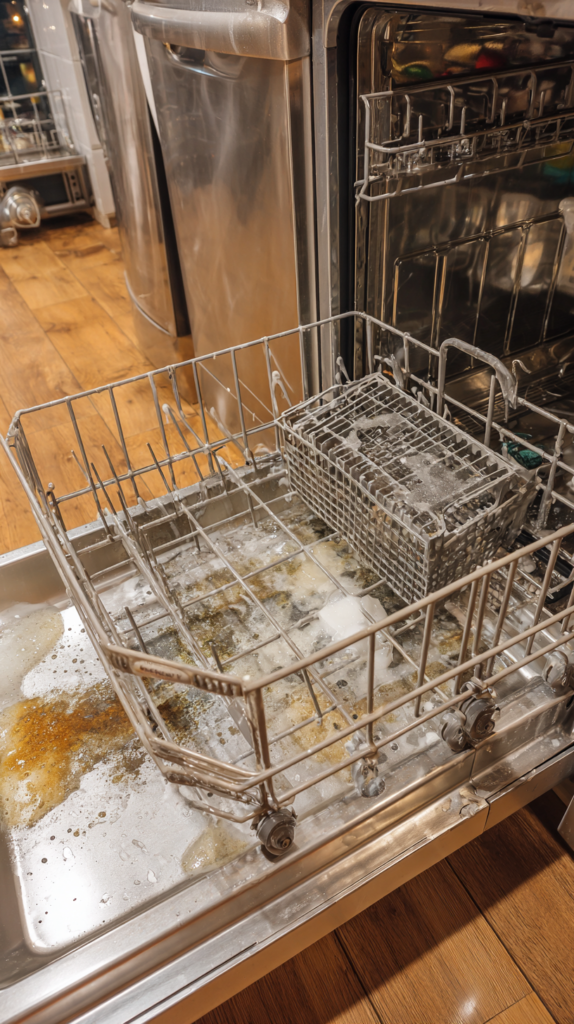
A dishwasher that smells bad is telling you something specific.
Rotten or sewage smell indicates food particles decomposing inside the machine. Check the filter first—trapped food rotting in a warm, moist environment creates exactly this odor. Also check the drain area beneath the filter and the rubber door gasket where food debris accumulates.
Musty or mildew smell suggests mold growth, typically in the door gasket folds or the interior walls of the machine. Mold thrives in the consistently damp environment inside a dishwasher that isn’t cleaned regularly.
Chemical or burning smell is more serious—it can indicate detergent residue burning on the heating element or a mechanical issue. If cleaning doesn’t resolve a burning smell, have the machine inspected.
Any persistent odor that survives a normal wash cycle means the machine needs cleaning, not just another cycle. Running more loads through a smelly dishwasher doesn’t solve the problem—it often makes it worse by adding more organic material to already-dirty components.
Visible Residue Inside the Machine
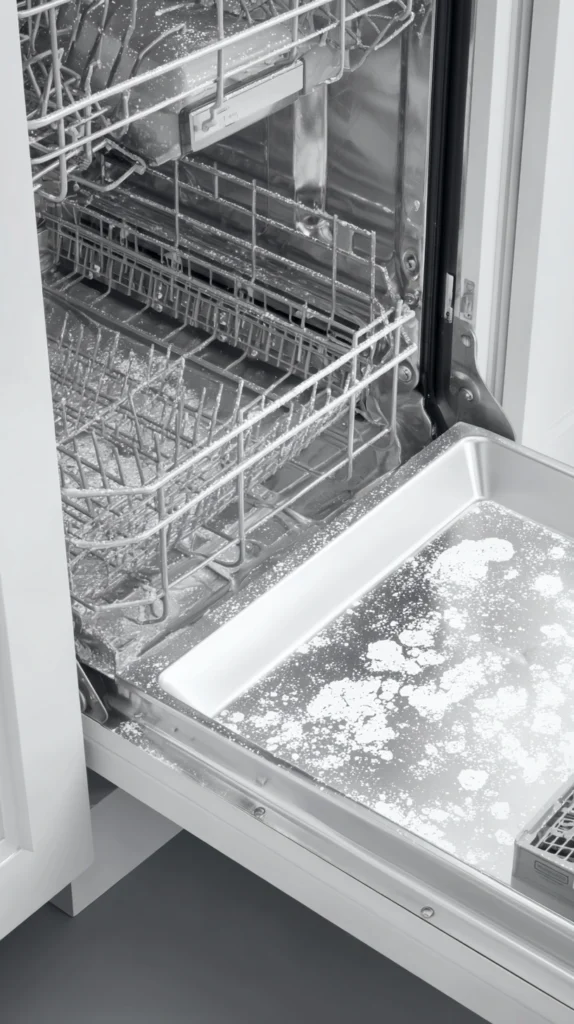
Open your dishwasher and look carefully at the interior walls, door, and bottom.
White or chalky film coating interior surfaces is mineral buildup from hard water. This is extremely common and builds gradually, which is why people often don’t notice until it’s significant. The film reduces cleaning efficiency because mineral-coated spray nozzles and heating elements can’t perform at full capacity.
Brown or greasy film on interior walls indicates accumulated grease that regular cycles aren’t removing. This typically comes from washing heavily greased pans or from infrequent cleaning allowing grease to build up over time.
Black spots or dark residue usually means mold. Check especially along the door gasket folds, around the drain, and in the corners where the door meets the tub.
Food particles or debris sitting at the bottom of the machine after a cycle indicates the filter is clogged and needs immediate cleaning.
If you can see any of these with a casual glance, the machine is overdue for cleaning.
The Door Gasket Looks Grimy
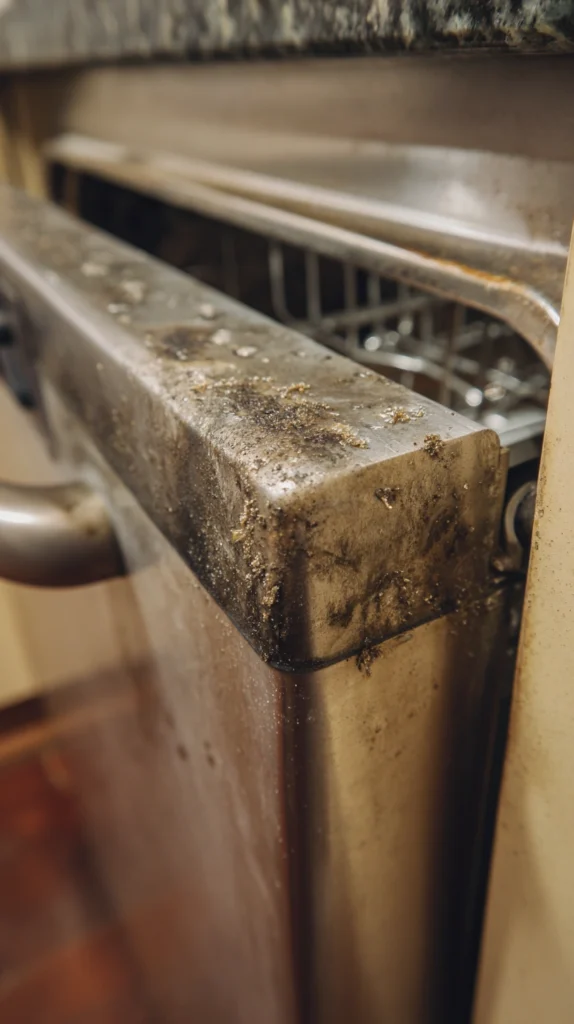
Most people never examine the rubber seal running around the dishwasher door. This is a mistake.
The gasket traps food particles, grease, and moisture in its folds with every cycle. Over time, this creates visible grime buildup and mold growth that you’ll notice as dark streaking or discoloration in the rubber folds.
Run your finger along the gasket interior. If it comes away with brown or black residue, the gasket needs immediate cleaning. Beyond the hygiene issue, a grimy gasket doesn’t seal as effectively, reducing cleaning performance and potentially causing minor leaks.
Wipe the entire gasket with a damp cloth and mild cleaner, paying attention to the folds where debris hides. This takes 3 minutes and should happen monthly.
Standing Water After Cycles
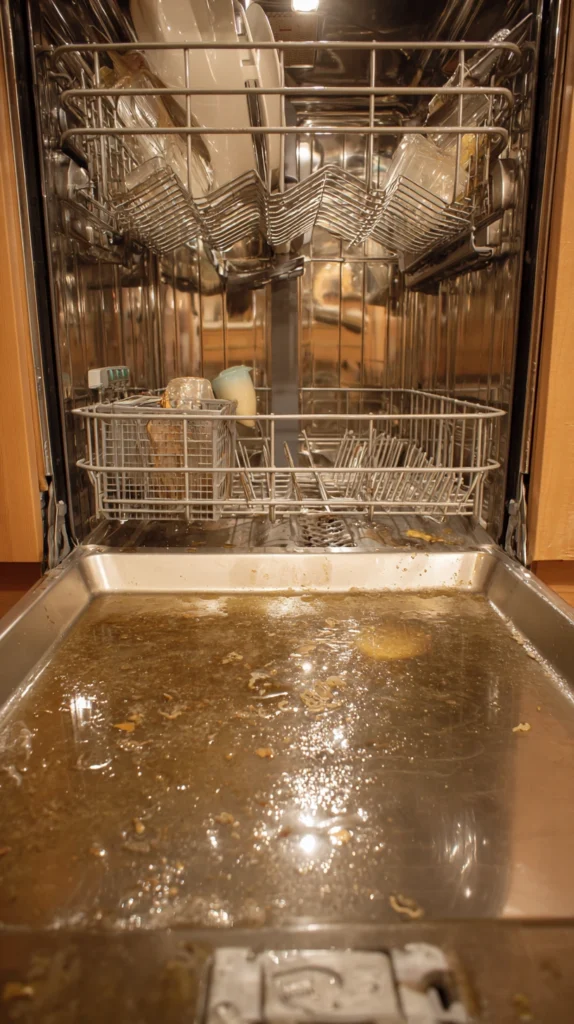
Finding water pooled at the bottom of your dishwasher after a completed cycle indicates a drainage problem almost always caused by a clogged filter or drain.
The filter traps debris to prevent it from clogging the drain. When the filter becomes severely clogged, water can’t drain properly and sits in the machine after the cycle ends.
This standing water is warm, filled with food particles, and becomes a bacterial breeding ground between cycles. It also means your dishes are sitting in dirty water during the final stages of the cycle.
Clean the filter and drain area immediately if you find standing water. If the problem persists after thorough cleaning, the drain hose or pump may need professional attention.
Spray Arms Are Clogged
The spray arms distribute water throughout the machine during washing. They contain small holes that can become clogged with mineral deposits and food particles over time.
Remove the spray arms (they typically unscrew easily) and hold them up to light. If the holes appear partially blocked or show white mineral deposits, they need cleaning.
Clogged spray arms reduce water pressure and coverage, meaning portions of every load aren’t getting properly washed. People often assume their dishwasher is aging or underpowered when the actual problem is blocked spray holes that take 10 minutes to clean.
Use a toothpick or thin wire to clear individual holes, then soak the arms in vinegar for 30 minutes to dissolve mineral deposits.
How Often Should You Clean It
| Component | Cleaning Frequency | Time Required |
| Filter | Monthly | 5 minutes |
| Door gasket | Monthly | 3 minutes |
| Spray arms | Every 2-3 months | 10 minutes |
| Vinegar descaling | Monthly | 2 minutes active |
| Full interior wipe | Monthly | 5 minutes |
The Simple Fix for Most Problems
If you’re seeing multiple signs from this list, a single deep cleaning session addresses most of them simultaneously.
Clean the filter, wipe the gasket, clear the spray arm holes, run a vinegar cycle, and follow with a baking soda cycle. This full reset takes about 30 minutes of active work and resolves the majority of dishwasher cleaning problems immediately.
Most people who do this for the first time are shocked by what comes out of the machine—and how much better it performs afterward.
Don’t wait until dishes consistently come out dirty. The earlier signs—mild odors, slight residue, occasional spots—appear well before performance degrades significantly. Catching them early means a quick clean rather than a major intervention.
Your dishwasher works hard every day. Fifteen minutes monthly keeps it working properly for years longer than neglect allows.