
14 Ways to Build a Genuinely Cozy Camper Living Room Nook
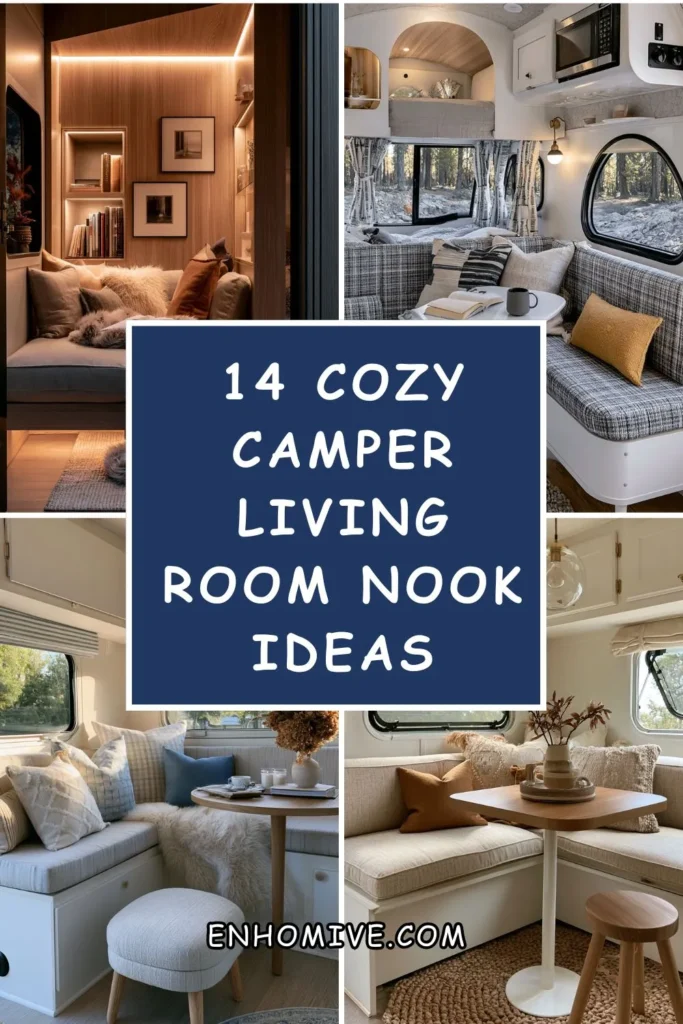
My camper’s dinette area stayed exactly as it came from the factory for years, a hard bench, a small table, and nothing about it that ever invited anyone to actually relax there. It functioned fine for meals and nothing else. Tried adding one throw pillow to the bench once. Sat there against the same stiff factory cushion and bare little window, a single soft object in an otherwise unchanged hard space.
Then I stopped adding single comfort items and started building an actual small nook, cushioning, lighting, layout, and a few personal touches all working together at the camper’s specific scale. The dinette area finally feels like somewhere to spend an evening, not just somewhere to eat breakfast.
Why One Soft Object Resists Making a Camper Nook Feel Cozy
The factory-bench problem:
What an unmodified factory dinette or bench area does:
- Provides a flat, often stiff cushion designed for brief meals, not extended lounging
- Reads as purely functional seating, never as an actual destination within the camper
- Leaves lighting, layout, and personal touches completely unaddressed
- Resists the layered comfort that turns a seat into somewhere people actually want to stay
The small-space-layering principle:
- A genuinely cozy nook needs cushioning, lighting, and personal detail working together, scaled to the camper’s compact size
- Every choice has to account for both comfort and the practical realities of a mobile, multi-use space
- This is a different goal than simply decorating the area; it is about making a small zone genuinely inviting to sit in for a while
- A single pillow added to an otherwise unchanged bench still reads as one soft object, not a finished nook
My revelation: A cozy camper living room nook is a complete small system of cushioning, light, and personal touches, not one pillow added to a factory bench. Comfort, light, and a sense of belonging all need to work together before the space actually invites anyone to stay.
1. A Thick Bench Cushion Topper Over the Factory Seat
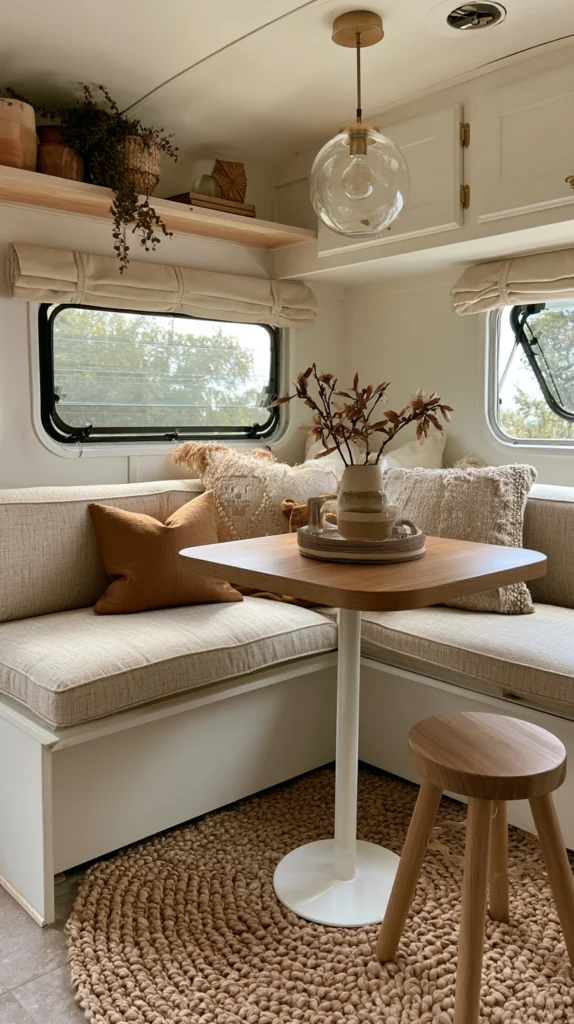
A dense foam cushion topper, cut to fit the dinette bench exactly, layered over the original factory cushion.
Why the seat cushion itself is the foundation of real comfort
The comfort-foundation-first principle:
- Most factory dinette cushions are built for brief meals, not the extended sitting a true cozy nook depends on
- A thicker foam topper, fitted precisely to the bench’s dimensions, addresses this at the most basic physical level before any other styling matters
- This single change often determines whether anyone actually wants to linger in the space at all
Best cushion topper choices
- A 2 to 3 inch high-density foam topper, cut to the bench’s exact shape
- A removable, washable cover in a warm fall tone over the foam itself
Budget pick: a basic foam topper cut to size, $40-80 Splurge: a custom upholstered cushion topper with a removable cover, $120-250
My cushion topper result
Adding a simple 2-inch foam topper over my dinette bench’s original cushion, with a removable rust-toned cover, changed how long I actually want to sit there in the evening, from a quick ten minutes to a full hour with a book.
Cushion Topper Tips
Measure around any seatbelt mounts or hardware before cutting foam:
- Many dinette benches have seatbelt anchors or hardware that the topper needs to accommodate
- Checking for these obstructions before cutting the foam prevents an awkward, ill-fitting result
2. A Low-Profile Battery Lantern for Ambient Evening Light
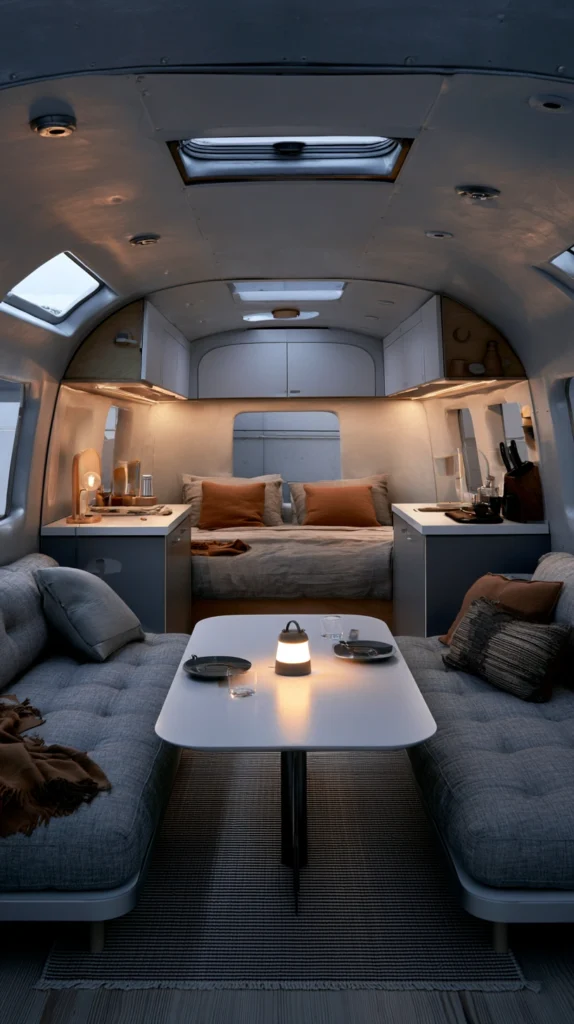
A small, dimmable battery-powered lantern placed on the dinette table or a nearby shelf, used instead of the camper’s main overhead light in the evening.
Why ambient light matters as much in a camper as in any home
The overhead-light-override principle:
- Most campers rely on one bright overhead light for the entire living area, with no softer alternative for evening use
- A small battery lantern, dimmed low, provides the same kind of warm ambient light a home living room would have from a table lamp
- This addition requires no wiring at all, making it one of the easiest comfort upgrades available in a camper
Best lantern choices
- A dimmable LED lantern with a warm color temperature setting
- A lantern styled with a glass or fabric shade for a softer, more diffused glow
Budget: $20-40 for a quality dimmable battery lantern
My lantern result
Switching to a small dimmable lantern on my dinette table for evening hours, instead of the camper’s harsh overhead light, made the entire nook feel considerably calmer to sit in after dark.
Lantern Tips
Choose rechargeable batteries or a USB-rechargeable model:
- A lantern used nightly can drain disposable batteries quickly
- A rechargeable option reduces both cost and waste over a full season of regular use
3. A Folded Wool Blanket Draped Within Reach
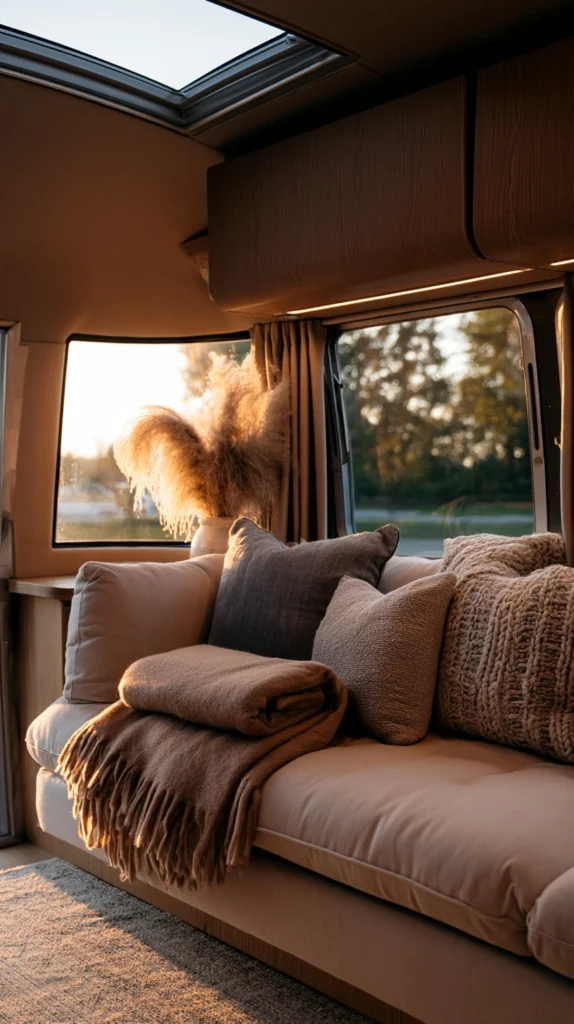
A substantial wool or sherpa throw, folded and kept directly on or beside the seating area, rather than stored away in a cabinet.
Why visible, reachable blankets matter more than stored ones
The within-reach principle:
- A blanket tucked away in a cabinet rarely gets used, regardless of how soft or appropriate it is for the season
- Keeping one folded directly on the bench or on a nearby hook means it actually gets reached for the moment the evening cools down
- This small placement decision matters as much as the blanket’s quality itself
Best blanket choices
- A chunky knit wool throw in a warm fall tone
- A sherpa-lined throw for maximum softness in a small space
Budget: $25-50 for a quality folded throw
My blanket result
Keeping a folded wool throw directly on the end of my dinette bench, rather than in a cabinet across the camper, means it actually gets used almost every evening instead of sitting forgotten and unused the way my previous stored blanket did.
Blanket Tips
Choose a throw sized appropriately for a smaller bench:
- An oversized throw meant for a full home sofa can overwhelm a compact camper bench
- A throw in the 50-by-60-inch range generally suits a dinette bench’s proportions better than a larger home-scale option
4. A Small Folding Side Table for a Drink or Book
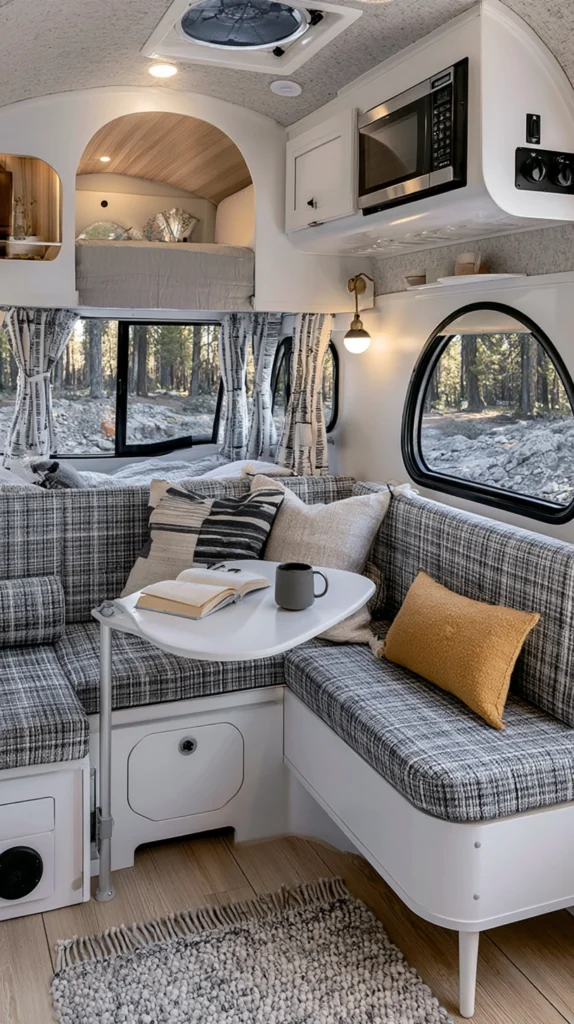
A compact folding tray table, positioned beside the main seating area, providing a surface that the dinette table alone may not adequately serve once people are lounging rather than eating.
Why a dedicated side surface changes how the space gets used
The lounging-versus-dining-distinction principle:
- A dinette table is positioned and sized for meals, not necessarily for someone reclining sideways with a book or a drink
- A small folding side table, positioned closer to a relaxed seating position, serves that different use case directly
- This addition also folds flat for storage, respecting the camper’s limited space when not in use
Best folding side table choices
- A lightweight bamboo or wood folding tray table
- A small metal folding table with a non-slip surface for drinks
Budget: $20-40 for a basic folding side table
My side table result
Adding a small folding wood tray table beside my reading spot on the bench gave me a surface for tea and a book that did not require turning fully toward the main dinette table, and it folds completely flat into a cabinet when not needed.
Folding Side Table Tips
Choose a table with a locking mechanism for travel:
- An unlocked folding table can collapse unexpectedly if bumped or shifted during a drive
- A model with a secure locking hinge avoids this risk both in use and during storage
5. A Window Curtain Swap to a Warmer Fabric and Tone
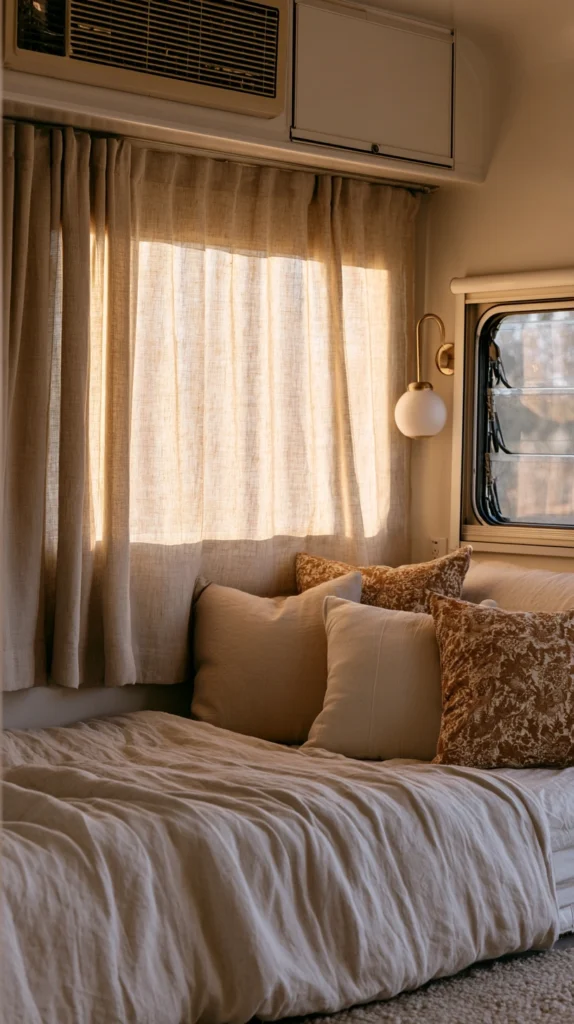
Replacing the camper’s factory curtain or shade with a warmer fabric, in a deeper fall tone, at the nook’s main window.
Why the window treatment affects the whole nook’s character
The largest-visible-surface principle:
- The window is often the single largest visible surface within a small camper nook, more so than any wall space
- A warmer fabric and tone at this window shifts the entire area’s feeling more than almost any smaller decorative addition could
- This swap also typically layers over the existing factory shade, preserving its function while adding the seasonal warmth on top
Best curtain fabric and tone choices
- A heavier linen or cotton-blend fabric in rust, oat, or deep green
- A pattern such as a small plaid or check for added seasonal character
Budget: $20-40 for a curtain panel sized to a camper window
My curtain swap result
Replacing the thin factory curtain at my dinette window with a heavier rust-toned linen panel changed the entire feeling of the nook the moment it was hung, even before any other change was made.
Curtain Swap Tips
Measure the camper window precisely, including any curved corners:
- Camper windows often have rounded corners or unusual proportions compared to standard home windows
- Confirming the exact shape and size before ordering avoids a curtain that does not properly cover the window
6. A Small Battery-Powered Heated Throw or Foot Warmer
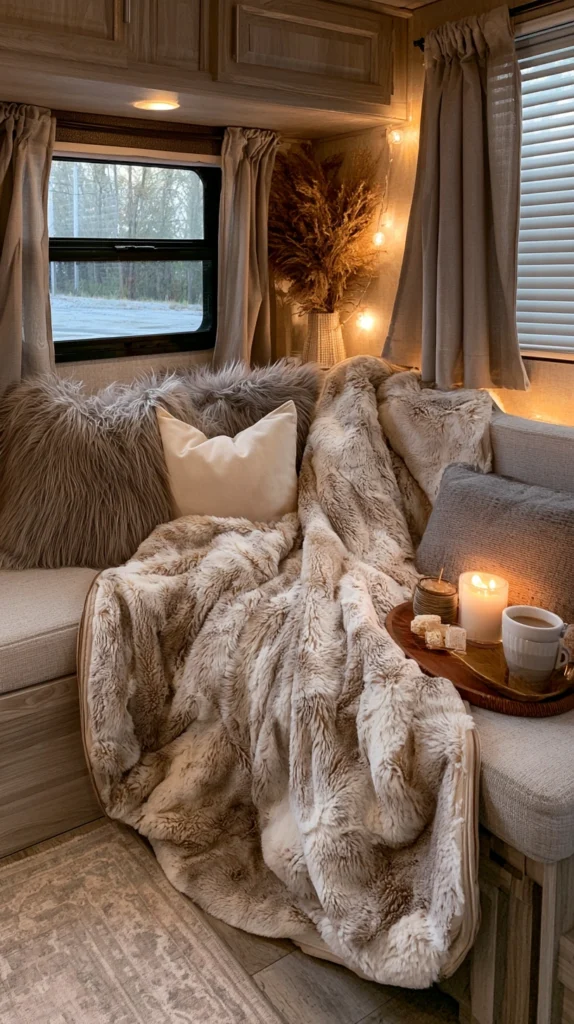
A low-wattage battery or USB-powered heated throw or foot warmer, used specifically during cooler fall evenings when the camper’s main heat may not be running constantly.
Why targeted warmth matters more than running the whole furnace
The efficient-comfort principle:
- Running a camper’s full furnace just to keep one person’s feet warm in the evening is inefficient, both for fuel and battery use
- A small heated throw or foot warmer addresses that specific comfort need directly, without requiring the whole space to be heated
- This is a particularly valuable addition for cooler fall trips, when daytime temperatures may not justify the furnace but evenings still feel chilly
Best heated comfort options
- A small USB-powered heated lap blanket
- A battery-operated heated foot warmer pad
Budget: $25-50 for most small heated throws or foot warmers
My heated throw result
Using a small USB-powered heated lap blanket during cool fall evenings in my camper has meant I no longer need to run the furnace just to stay comfortable while reading, saving both battery and propane in the process.
Heated Throw Tips
Check the device’s auto-shutoff feature before relying on it overnight:
- A heated throw left running unattended for too long can pose a safety concern
- Confirming an automatic shutoff timer is built in adds an important layer of safety for unattended or overnight use
7. A Small Framed Photo or Print Secured to the Wall
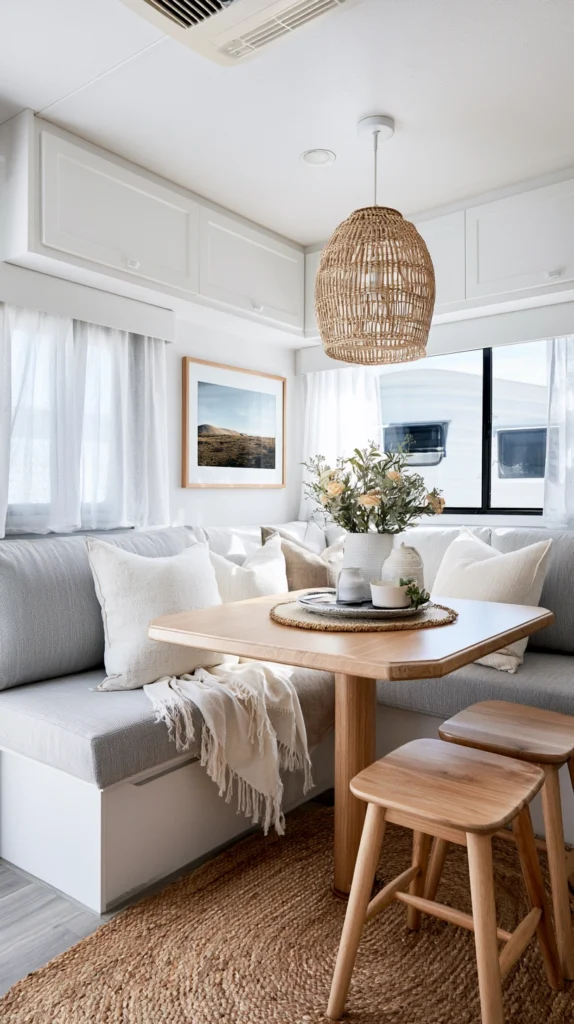
A single small, securely mounted photo or print, added to an otherwise bare stretch of wall near the seating nook.
Why even a tiny camper benefits from one piece of personal art
The personal-anchor principle:
- A camper interior, however well laid out, can feel impersonal without a single piece of art or personal imagery
- One small, securely mounted piece near the seating area gives the nook a personal anchor point, much like art functions in a home living room
- This single addition, kept small and properly secured, respects the space’s limits while still adding meaningful character
Best mounting approaches for camper walls
- A lightweight frame secured with strong adhesive mounting strips rated for the frame’s weight
- A small gallery-style clip frame, easy to swap without leaving marks
Budget: $15-35 for a small securely mounted print or photo
My framed print result
Adding one small framed photo from a favorite past trip, secured with heavy-duty adhesive strips beside my dinette window, gave the nook a personal touch that none of the camper’s factory finishes ever provided on their own.
Framed Print Tips
Choose adhesive strips rated well above the frame’s actual weight:
- Vibration during travel puts more stress on a mounted item than typical stationary home use
- Choosing strips rated for double or more the frame’s actual weight provides a meaningful safety margin
8. A Small Battery Speaker for Quiet Evening Music
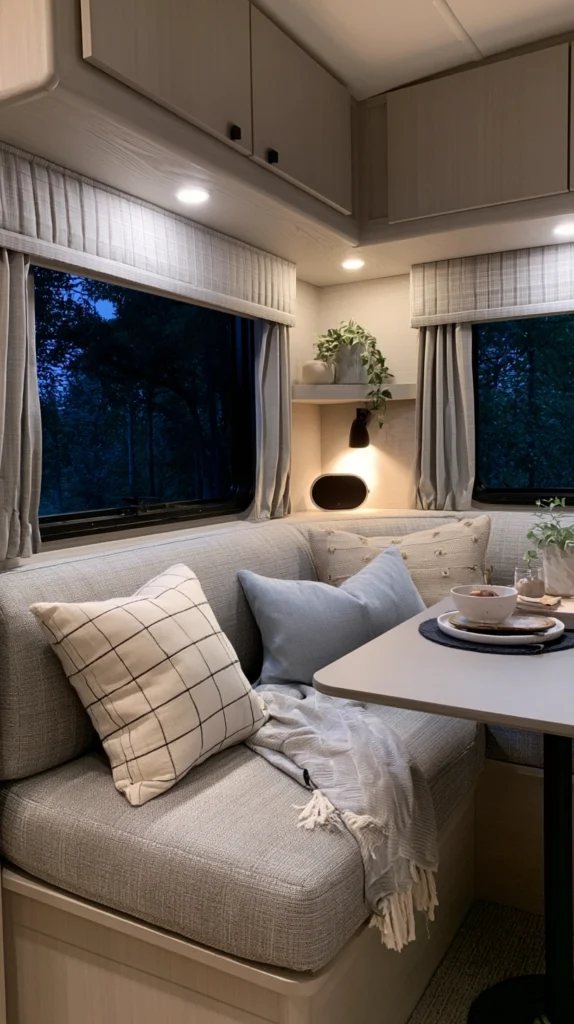
A compact battery-powered speaker, kept specifically in the living nook, used for quiet music or a podcast during relaxed evening hours.
Why a dedicated nook speaker differs from a phone propped on a shelf
The dedicated-ritual principle:
- Music played from a phone’s small built-in speaker, propped against a window, rarely sounds good enough to genuinely enhance a relaxing evening
- A small dedicated speaker, kept specifically in this spot, makes evening music an actual deliberate ritual rather than an afterthought
- This addition pairs naturally with the lantern from idea 2, both contributing to the same intentional evening atmosphere
Best small speaker choices
- A compact battery-powered Bluetooth speaker rated for long battery life
- A speaker with a fabric or wood finish that suits the nook’s warmer styling
Budget: $25-50 for a quality compact battery speaker
My speaker result
Keeping a small battery speaker specifically in my dinette nook, paired with a quiet evening playlist, has made that hour after dinner feel genuinely relaxing in a way it never did when my only music option was a phone propped against the window.
Speaker Tips
Charge the speaker during travel days, not evening relaxation time:
- A speaker that needs charging right when it is wanted defeats its purpose
- Charging it during driving hours, when its use is unnecessary anyway, ensures it is ready by the time evening relaxation begins
9. A Small Collapsible Footrest or Ottoman
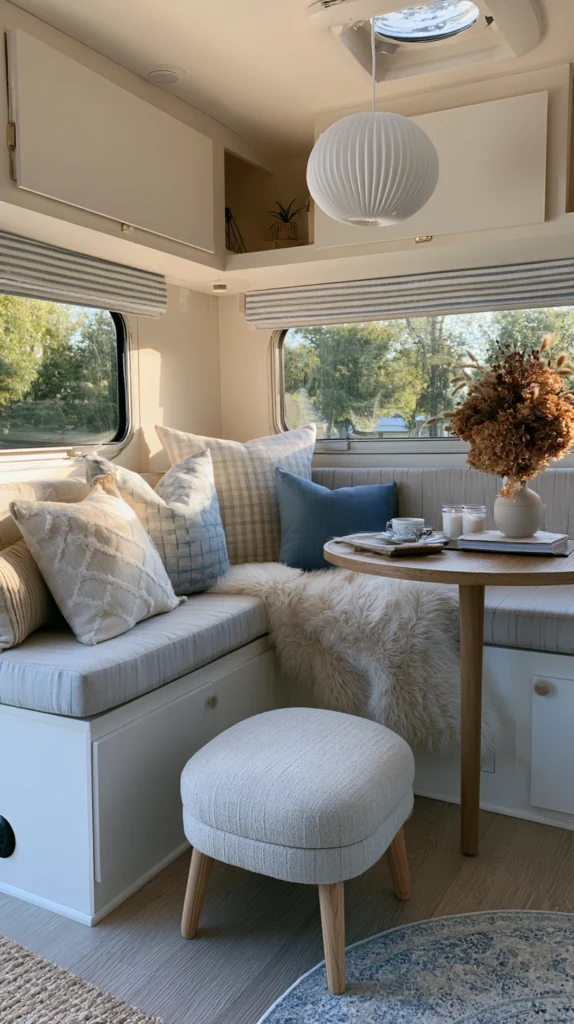
A lightweight, collapsible footrest or small ottoman, used to extend the seating area into a more fully reclined position.
Why elevating the feet changes how restful the nook actually feels
The recline-completion principle:
- Sitting upright on a bench, however cushioned, differs meaningfully from being able to recline with feet elevated
- A small collapsible footrest completes that more restful position without requiring a larger, fixed piece of furniture
- This item folds flat for storage, respecting the camper’s space constraints when a footrest is not currently needed
Best collapsible footrest choices
- A folding fabric ottoman with a flat top surface
- An inflatable or pop-up footrest for maximum packed-down compactness
Budget: $20-40 for a basic collapsible footrest
My footrest result
Adding a small folding fabric ottoman in front of my dinette bench let me actually recline with my feet up for the first time, turning a quick sit-down into a genuinely restful end to the day, and it folds away completely flat when we are driving.
Footrest Tips
Secure the footrest during travel rather than leaving it loose:
- An unsecured footrest can become a tripping hazard or shift dangerously during a drive
- Folding it flat and storing it in a cabinet, rather than leaving it out, keeps it from becoming a hazard on the road
10. A Small Battery-Operated Candle Cluster on the Table
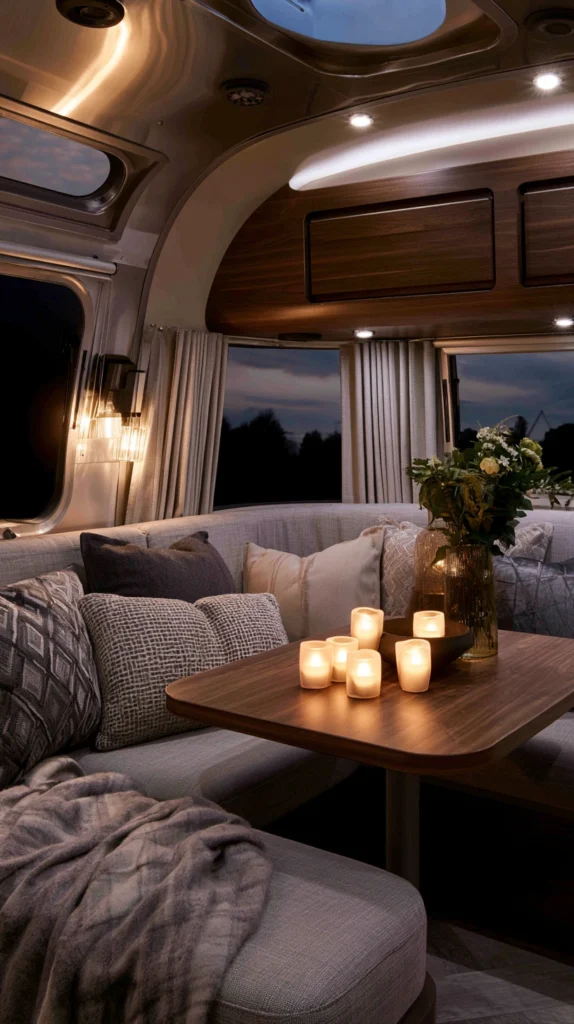
A small cluster of flameless LED candles, grouped on the dinette table, used during evening hours for a soft, flickering light layer.
Why a candle cluster adds a layer the lantern alone cannot
The flicker-versus-steady-light-distinction principle:
- A dimmable lantern, while warm, still provides a steady, unwavering light
- A small candle cluster adds genuine flicker and movement, a quality that contributes meaningfully to a cozy atmosphere beyond what steady light alone achieves
- Flameless versions provide this benefit with no fire risk in a tight, often well-used space
Best flameless candle cluster choices
- Three to four small flameless pillar candles in varying heights
- A scented flameless candle option, adding a layer of fragrance alongside the light
Budget: $15-30 for a small cluster of flameless candles
My candle cluster result
Grouping three small flameless candles on my dinette table alongside the dimmed lantern added genuine flicker and warmth to the evening nook, a layer the steady lantern light alone had never quite achieved on its own.
Candle Cluster Tips
Secure the cluster from sliding during any movement before settling in:
- Even when parked, a camper can shift slightly when someone moves around inside
- A small non-slip mat beneath the candle cluster keeps them from sliding off the table’s edge unexpectedly
11. A Soft Area Rug Layered Over the Camper’s Factory Flooring
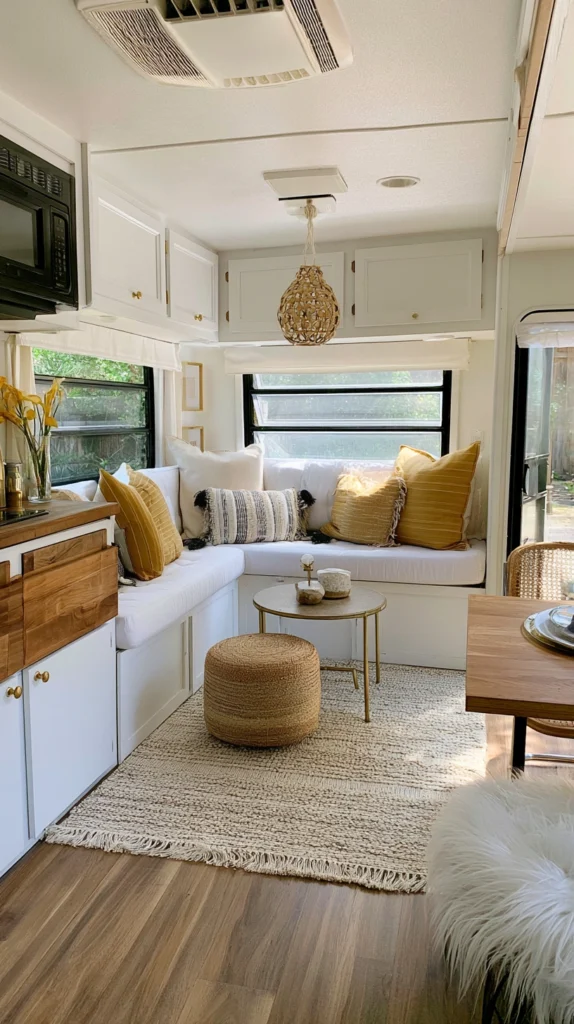
A small, soft area rug placed specifically in front of the seating nook, layered over the camper’s typically harder factory flooring.
Why flooring comfort matters even in a seated nook
The underfoot-comfort principle:
- Camper flooring is often a hard, easy-clean vinyl or laminate, comfortable for cleaning but not for bare feet
- A small soft rug placed specifically in front of the seating area addresses this directly, without requiring a rug large enough to cover the whole camper
- This addition also adds visual warmth and texture to a typically hard, utilitarian floor surface
Best area rug choices
- A small washable cotton or wool-blend rug, sized to fit just in front of the bench
- A low-pile rug specifically, since a high-pile option can interfere with cabinet doors or storage access nearby
Budget: $20-40 for a small washable area rug suited to camper flooring
My area rug result
Adding a small washable rug just in front of my dinette bench gave my feet a soft landing spot after a day in hiking boots, and the warm rust tone added visual coziness to what had been entirely hard, plain flooring.
Area Rug Tips
Choose a rug with a non-slip backing or pad:
- A rug without proper grip can slide on smooth camper flooring, particularly during travel or sudden stops while parked on an incline
- A non-slip backing or a thin rug pad underneath keeps the rug securely in place
12. A Small Wall-Mounted Bookshelf or Magazine Rack
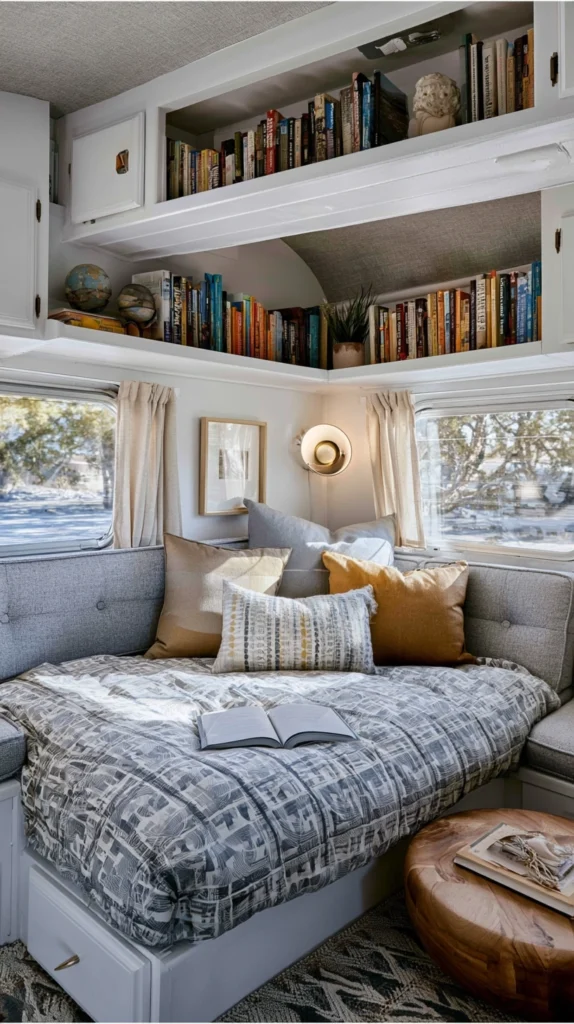
A slim wall-mounted shelf or fabric magazine rack, installed near the seating nook to hold a few favorite books or magazines within easy reach.
Why visible reading material encourages actual reading
The visible-invitation principle:
- Books stored in a closed cabinet rarely get picked up as often as ones left visibly accessible nearby
- A small wall-mounted shelf or rack beside the seating area keeps a few favorites in clear view, genuinely inviting someone to pick one up during a relaxed evening
- This addition also adds a small personal, lived-in detail to the nook beyond purely decorative objects
Best small shelf or rack choices
- A slim floating wood shelf, sized for just three or four books
- A fabric over-the-bench magazine rack, requiring no wall mounting at all
Budget: $15-35 for a small wall shelf or fabric rack
My bookshelf result
Adding a small fabric magazine rack beside my dinette bench, holding three or four current reads, has genuinely increased how often I actually pick up a book in the evening instead of reaching for my phone out of habit.
Bookshelf Tips
Secure any wall-mounted shelf into a stud or solid backing:
- Camper interior walls are often thinner than standard home drywall
- Confirming solid backing or using appropriate camper-rated mounting hardware prevents the shelf from pulling loose over time
13. A Window Clip Light for Reading Without Overhead Glare
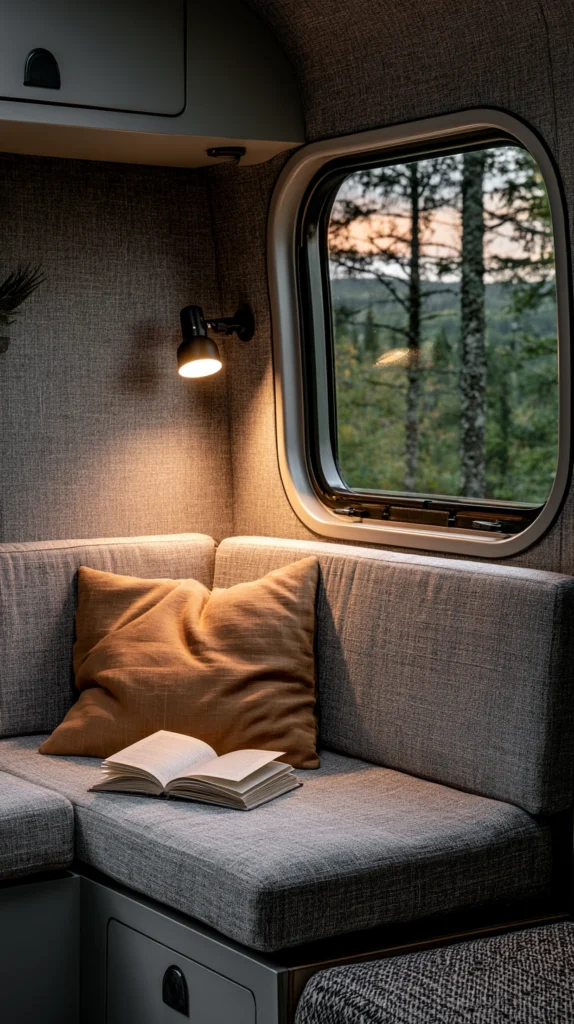
A small clip-on reading light, attached directly to the window frame or a nearby shelf edge, providing direct light for reading without relying on the main overhead fixture.
Why a dedicated reading light completes the lounging setup
The targeted-task-light principle:
- General ambient lighting, however warm, is rarely strong enough for comfortable reading on its own
- A small clip-on light, aimed directly at a book or magazine, solves this without requiring the brighter, less cozy overhead fixture
- This addition pairs naturally with the cushion topper, footrest, and throw, completing a genuinely functional reading setup within the nook
Best clip light choices
- A small battery-powered LED clip light with an adjustable gooseneck arm
- A warm-toned bulb specifically, matching the rest of the nook’s lighting temperature
Budget: $12-25 for a basic clip-on reading light
My clip light result
Clipping a small adjustable LED light to the edge of my dinette window frame gave me focused reading light exactly where I need it, without needing to switch on the camper’s brighter, less cozy overhead fixture every evening.
Clip Light Tips
Choose a light with a secure, tight-gripping clip:
- A loosely gripping clip can shift or fall during travel or even ordinary movement around the nook
- Testing the clip’s grip on the intended surface before relying on it nightly avoids this small but recurring annoyance
14. A Fully Layered Cozy Nook System
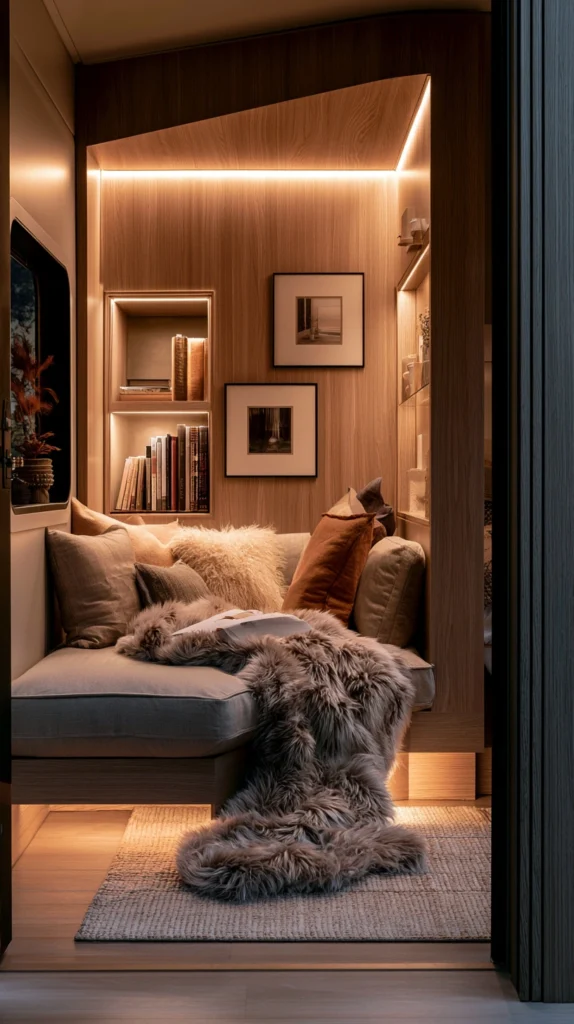
Combining a cushion topper, warm lighting, a folded throw, a small rug, and a personal touch into one complete, evening-ready camper living room nook.
Why combining every layer outperforms any single comfort addition
The complete-small-nook philosophy:
- Several of the ideas on this list (a cushion topper, ambient and task lighting, a throw blanket, a soft rug, a personal print) address different aspects of comfort, from physical seating to atmosphere to personal connection
- Relying on just one addition solves one specific comfort gap but leaves the overall nook only partially transformed
- This is the most complete and most genuinely restful version of a camper living room nook on this list, suited to anyone who wants the dinette area to function as an actual evening retreat
How the combination works together
The cushion topper and rug (the physical comfort foundation):
- Address seating and underfoot comfort directly, the basis everything else builds upon
Ambient lighting and a candle cluster (the atmosphere layer):
- Shift the evening mood away from the harsh default overhead fixture
A folded throw and heated lap blanket (the warmth layer):
- Provide targeted, adjustable comfort for cooler evenings
A framed print and small bookshelf (the personal layer):
- Give the nook the lived-in, personal character a purely functional dinette area lacks
Building the full layered nook
- Start with the cushion topper and rug, addressing the most basic physical comfort first
- Add the dimmable lantern and a small candle cluster for evening atmosphere
- Include a folded throw within reach for adjustable warmth
- Finish with one personal touch, such as a small framed print or a few favorite books
Budget: $150-400 for a fully layered cozy nook system, combining several of the ideas above
My fully layered result
Combining a foam cushion topper, a dimmed battery lantern, a folded wool throw, a small washable rug, and one framed photo from a favorite trip turned my camper’s purely functional dinette area into the spot I genuinely look forward to settling into every single evening of a trip, not just where meals happen to occur.
Full Nook Tips
Add comfort layers gradually across more than one trip if needed:
- This system does not need to be completed before a single trip
- Adding one or two elements each outing still results in the same fully cozy nook over time, while spreading out both the cost and the effort involved
Choosing Your Camper Nook Approach
By what bothers you most about the current space:
- Seating feels too hard or stiff: cushion topper (idea 1), small rug (idea 11)
- Lighting feels harsh in the evening: battery lantern (idea 2), candle cluster (idea 10), clip reading light (idea 13)
- The space feels impersonal: framed print (idea 7), small bookshelf (idea 12)
By how the nook gets used most:
- Mostly reading or quiet evenings: clip reading light (idea 13), small bookshelf (idea 12), footrest (idea 9)
- Mostly relaxing with music or conversation: battery speaker (idea 8), candle cluster (idea 10)
By budget level:
- Lower budget: folded throw (idea 3), framed print (idea 7), candle cluster (idea 10)
- Moderate budget: cushion topper (idea 1), curtain swap (idea 5), small rug (idea 11)
- Higher budget: fully layered nook system (idea 14)
The non-negotiable rules across every option:
Always:
- Secure any mounted or freestanding addition for travel, not just for stationary comfort while parked
- Choose rechargeable or low-power options for any electric comfort item, given a camper’s limited power supply
- Match lighting temperature across every added source to maintain a consistently warm, cozy feeling
Never:
- Leave a heated throw or candle unattended without confirming an automatic shutoff or using a flameless option
- Assume a home-scale furniture or rug size will fit a camper nook’s actual smaller proportions
- Leave footrests, rugs, or other loose items out and unsecured during travel
Remember: a cozy camper living room nook depends on comfort, light, and personal touches all working together at the camper’s specific small scale, not on one pillow added to an unchanged factory bench, and the nooks people actually want to spend an evening in are the ones built as a complete small system rather than a single decorative addition.