

14 Fall Laundry Room Organization Hacks Worth Stealing
My laundry room had plenty of pretty bins and a decent shelf system for years, and it still somehow felt disorganized every single week. The containers looked fine, but nothing inside them had an actual system, just stuff sorted loosely into whichever bin happened to be closest. Tried buying one more labeled bin once.
It sat there clearly labeled, holding a vague mix of things that did not really belong together, solving nothing about the underlying lack of a real process. Then I stopped buying more containers and started building actual systems and small habits, ways of sorting, tracking, and routing items that worked regardless of how nice or plain the containers themselves were. The laundry room finally runs smoothly, not because it looks better, but because it actually functions better.
Why Pretty Containers Resist Solving Real Organization Problems
The container-without-a-system problem:
What bins and baskets do on their own:
- Provide a place to put things, without dictating what actually goes where or why
- Look organized in photos while hiding loose, inconsistent sorting underneath the lid
- Solve visual clutter without solving the actual workflow problems that created the mess
- Resist staying organized once the household stops being especially careful about putting things back correctly
The systems-and-habits principle:
- A genuine organization hack changes a process or a habit, not just where something is stored
- Small, repeatable systems (a specific sorting method, a tracking habit, a designated routing point) hold up over time better than containers alone
- This is a different focus than simply buying better-looking storage, and most laundry rooms need this more than they need another bin
- A single new labeled container without any underlying system still ends up disorganized again within a few weeks
My revelation: A real laundry room organization hack changes a system or a habit, not just the container something sits in. The process behind the room matters more than how pretty the bins look holding it.
1. A Three-Zone Floor Sorting System Using Painter’s Tape
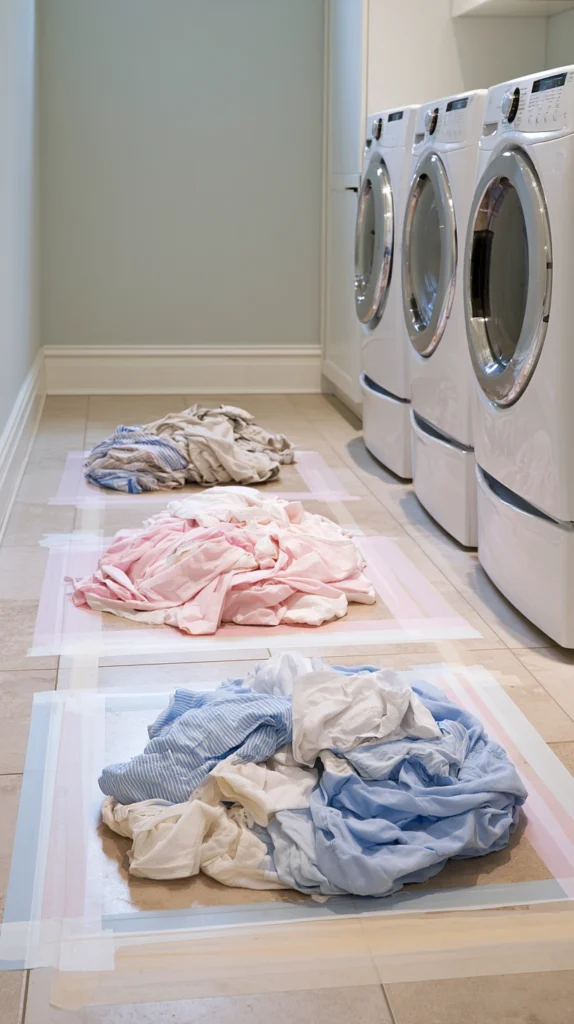
Marking three small floor or low-shelf zones with subtle painter’s tape lines, designated specifically for darks, lights, and delicates before anything reaches a hamper.
Why a designated floor zone beats a single hamper
The pre-sort-at-the-source principle:
- A single hamper or basket means all sorting happens later, in one larger, more tedious batch
- Marking three small zones, even just with discreet tape lines on the floor or a shelf, allows sorting to happen the moment an item enters the room
- This system costs nothing beyond a roll of tape and removes the single largest time cost in most laundry routines: the sorting itself
How to set up the zones
- Choose a corner of the room with enough floor or shelf space for three small, separated areas
- Mark each zone with a thin strip of painter’s tape, labeled simply if helpful
- Encourage every household member to drop items directly into the correct zone rather than one shared pile
Budget: under $5 for a roll of painter’s tape
My zone system result
Marking three small taped zones on my laundry room floor meant sorting happened automatically as clothes were dropped off throughout the week, and wash day itself became simply moving each zone’s contents into the machine, not sorting from scratch.
Zone System Tips
Reinforce the system with the whole household, not just yourself:
- A sorting system only works if everyone using the room actually follows it
- A quick explanation and a visible label for each zone helps the habit stick across the whole household, not just for the person who set it up
2. A Stain Treatment Triage Station
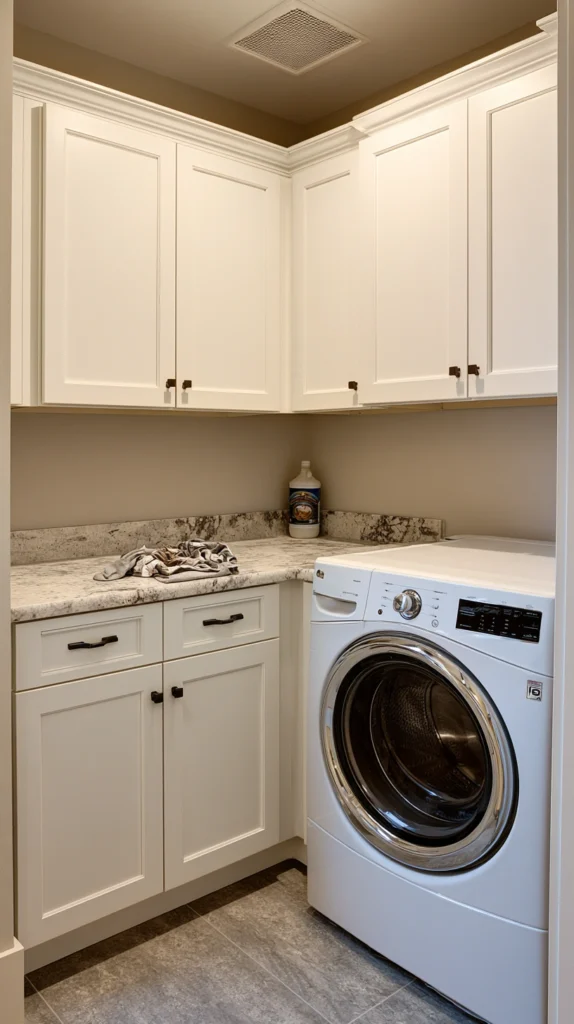
A small designated spot specifically for items needing stain treatment before washing, kept separate from the general sorting zones.
Why stained items need their own holding spot
The bottleneck-isolation principle:
- Items needing stain treatment often get washed without it simply because they were mixed in with everything else and forgotten
- A separate, clearly designated spot isolates these items specifically, ensuring they get treated before joining a regular load rather than after the stain has set further
- This small system prevents one of the most common and avoidable laundry mistakes
Setting up the triage spot
- A single small basket or a marked section of counter, used only for items awaiting treatment
- A stain treatment spray or stick kept directly beside this spot, removing any excuse to skip the step
Budget: $5-15 for a small basket and a stain treatment product, if not already owned
My stain triage result
Designating one small basket specifically for stained items, with the stain spray kept right beside it, means almost nothing gets washed untreated anymore, since the item simply will not move forward in the process until it has been addressed.
Stain Triage Tips
Treat items as soon as they land in the spot, not in a batch later:
- Letting several stained items sit untreated for days allows the stains to set further
- Treating each item as it arrives, even briefly, produces better results than waiting for a larger batch
3. A Lost Sock and Small Item Jar With a Monthly Check-In
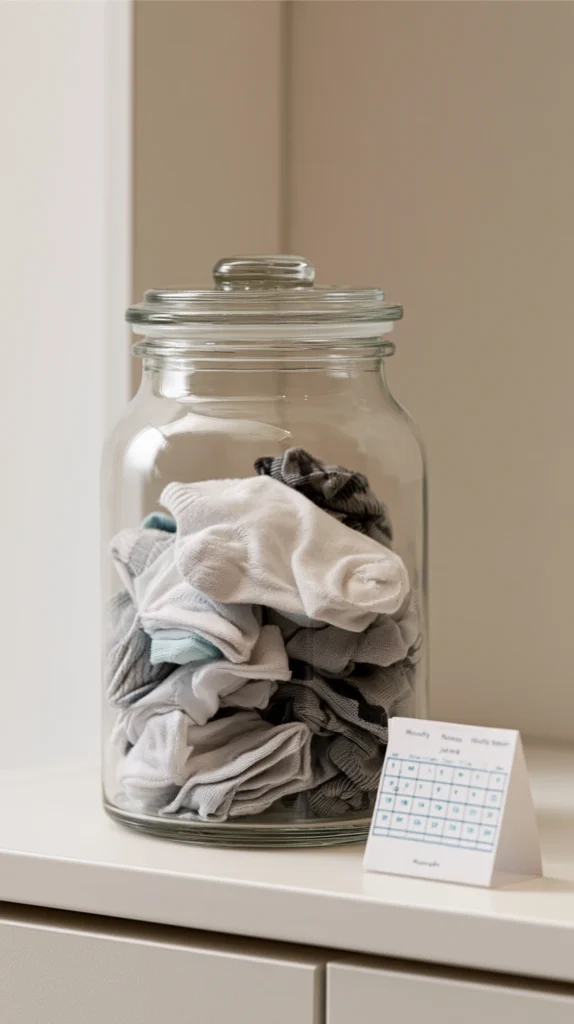
A single clear jar designated for unmatched socks and small lost items, paired with a recurring monthly habit of reviewing and matching its contents.
Why a holding jar plus a scheduled review solves the lost sock problem permanently
The capture-and-review principle:
- Most households already have some version of a lost sock pile, but without a scheduled review, that pile only grows
- Pairing the holding jar with an actual monthly check-in habit ensures items either get matched and returned or properly discarded, rather than accumulating indefinitely
- This system requires no new purchase beyond a simple jar, since the habit itself is doing the real organizing work
Setting up the system
- A clear jar or small bin, easy to see into at a glance
- A recurring reminder, even a simple note on a calendar, to review and sort its contents once a month
Budget: $5-10 for a basic jar if one is not already on hand
My lost sock jar result
Setting a simple monthly reminder to go through my lost sock jar, rather than letting it accumulate indefinitely, has kept the jar from ever becoming the chaotic, overflowing mess it always turned into before this small scheduling habit existed.
Lost Sock Jar Tips
Discard unmatched items after two or three review cycles:
- A sock that remains unmatched after several months is unlikely to ever find its pair
- Setting a simple rule for when to let go of persistent unmatched items keeps the jar from growing indefinitely despite the regular reviews
4. A Color-Coded Hanger System for Air-Drying Items

Using a small set of colored hangers, each color assigned to a specific household member or category, for anything pulled out to air dry.
Why color coding solves a common air-drying mix-up
The at-a-glance-ownership principle:
- Air-dried items often end up mixed together on a single rack, making it unclear later whose item belongs to whom
- Assigning a specific hanger color to each household member, or to a specific category like delicates versus outerwear, allows instant visual sorting without reading a single label
- This system also works well in households where laundry responsibilities are shared, since ownership becomes immediately obvious
Setting up the color system
- A simple set of colored plastic or rubber-coated hangers, four to six colors depending on household size or categories
- A small posted key, if helpful, reminding everyone which color belongs to which person or category
Budget: $10-20 for a basic set of colored hangers
My color-coded hanger result
Assigning each family member their own hanger color for air-dried items eliminated the constant “whose shirt is this” question that used to come up every single laundry day, since ownership is now visible from across the room.
Color-Coded Hanger Tips
Keep the color key simple and visible near the drying rack:
- A small printed or handwritten key posted nearby reinforces the system for anyone who has not fully memorized it yet
- This is particularly useful for younger household members still learning the system
5. A Repeating Weekly Load Schedule Posted on the Wall
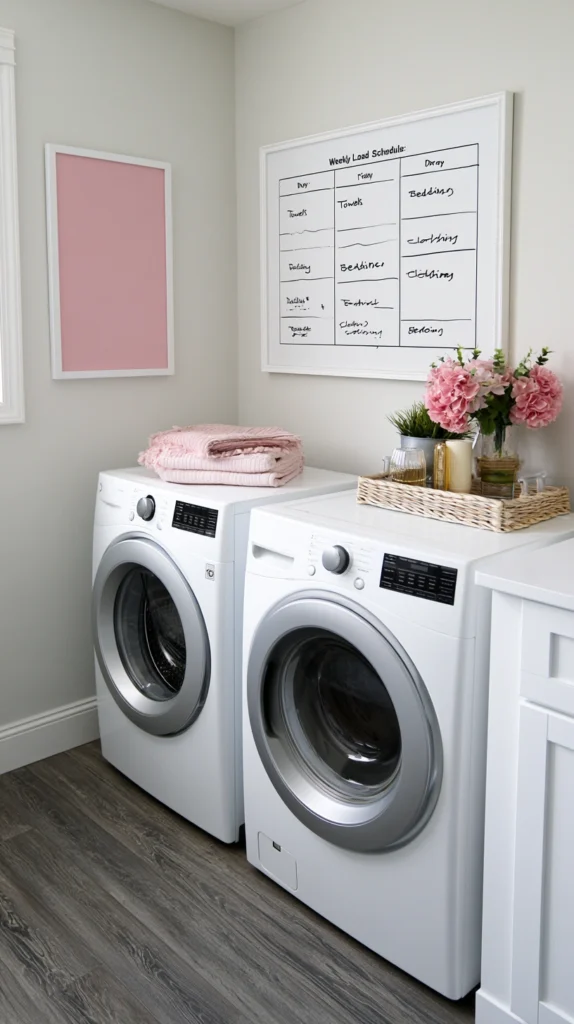
A simple posted schedule assigning specific load types to specific days of the week, rather than washing reactively whenever a pile builds up.
Why a schedule beats reactive washing
The proactive-versus-reactive principle:
- Reactive laundry, washing only once something runs out or piles up, tends to create larger, more overwhelming loads done under more time pressure
- A simple repeating schedule, such as towels on Monday and bedding on Thursday, spreads the task out predictably and prevents any one day from becoming overwhelming
- This system requires no physical organization changes at all, just a small posted reminder and the habit of following it
Building the schedule
- Assign two to four specific load types to specific days based on household needs
- Post the schedule somewhere visible in the laundry room itself, not just in a phone app likely to go unchecked
Budget: free, using a printed sheet or a small whiteboard already on hand
My weekly schedule result
Posting a simple schedule assigning towels to Monday and bedding to Thursday turned what used to be an unpredictable, occasionally overwhelming pile-based system into a much calmer, more evenly distributed weekly rhythm.
Weekly Schedule Tips
Build in one flexible day for catch-up or overflow:
- A schedule that is too rigid can break down the first time life gets busy
- Leaving one day genuinely open for whatever did not get done, or for an unexpected extra load, keeps the system realistic and sustainable
6. A Pre-Measured Detergent Pouch System for Guests or Kids
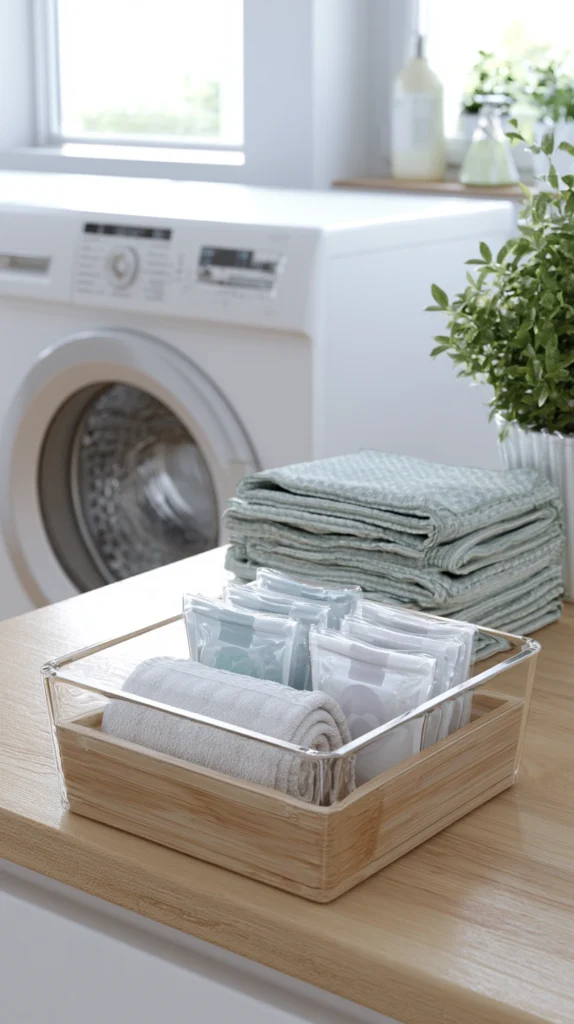
Pre-measuring detergent into small, clearly labeled reusable pouches or cups, specifically for household members still learning the routine or for guests doing their own laundry.
Why pre-measuring solves both a mess and a guessing problem
The error-prevention principle:
- New or younger household members, or guests unfamiliar with a specific detergent’s measuring cap, often guess at the correct amount, leading to either residue or ineffective washing
- Pre-measured pouches remove all guesswork, ensuring a correct amount every time regardless of who is doing the laundry
- This system also reduces detergent spills and overflow, a common source of mess in shared laundry spaces
Setting up the pouch system
- Small reusable silicone pouches or measuring cups, filled in advance with a single correct dose
- A clearly labeled container holding several pre-measured doses, ready to grab
Budget: $10-20 for a set of small reusable measuring pouches or cups
My pre-measured pouch result
Filling a small set of silicone pouches with pre-measured detergent doses, kept in a labeled jar beside the machine, has eliminated both the guesswork and the spilled detergent that used to happen whenever my kids did their own laundry.
Pre-Measured Pouch Tips
Refill the pouches during a regular laundry session, not as a separate task:
- Pre-measuring a batch of pouches while already doing a load adds almost no extra time
- Treating this as part of the existing routine, rather than a separate chore, keeps the system easy to maintain
7. A Repair and Alterations Holding Bin With a Deadline Tag
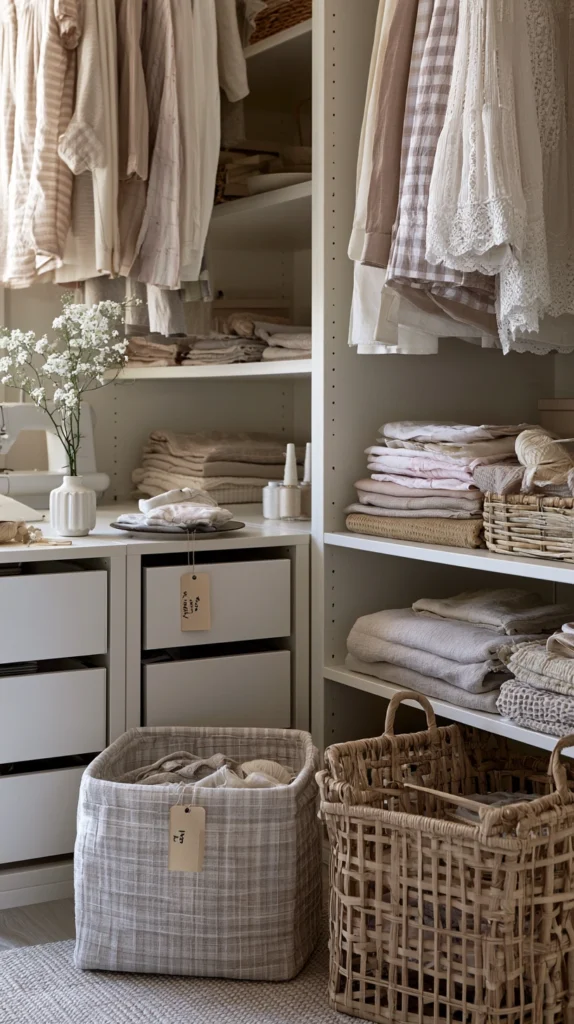
A small designated bin for items needing repair or alteration, paired with a simple tag noting when the item entered the bin.
Why a deadline tag prevents the bin from becoming permanent storage
The accountability-tag principle:
- A repair bin without any time tracking tends to become a place where items disappear indefinitely, never actually getting fixed
- Adding a simple tag noting the date an item entered the bin creates a visible reminder of how long it has been waiting
- This small addition turns a vague intention to “get to it eventually” into a more concrete, trackable commitment
Setting up the tagged bin
- A single small basket or bin, designated only for items awaiting repair
- A simple paper tag or sticky note attached to each item, noting the date it was added
Budget: $5-10 for a basket and a small pack of tags, if not already on hand
My tagged repair bin result
Adding a simple dated tag to each item in my repair bin made it obvious which items had been sitting for months, and that visible accountability finally got me to actually schedule a mending session rather than letting the bin grow indefinitely.
Tagged Repair Bin Tips
Set a maximum holding period and stick to it:
- Items that sit untouched for more than a set period, such as three months, are unlikely to ever get repaired
- Deciding in advance to donate, repurpose, or discard items past that point keeps the bin from becoming permanent overflow storage
8. A Magnetic Strip for Metal Laundry Tools

A simple magnetic strip mounted on the wall or side of a machine, holding small metal tools like scissors, a seam ripper, or safety pins.
Why a magnetic strip solves a common small-tool problem
The visible-and-accessible principle:
- Small metal laundry tools often end up lost in a drawer, mixed in with unrelated items, or simply missing when actually needed
- A magnetic strip keeps these tools fully visible and instantly accessible, eliminating the search time that comes with drawer storage
- This is one of the lowest-cost organization hacks on this list, given how inexpensive a basic magnetic strip is
Best tools to keep on the strip
- A small pair of scissors
- A seam ripper for quick repairs
- A small tin or magnetic cup of safety pins and loose buttons
Budget: $10-15 for a basic magnetic strip
My magnetic strip result
Mounting a simple magnetic strip beside my folding counter, holding scissors and a seam ripper, means these small tools are never missing or buried in a drawer when a quick repair comes up mid-fold.
Magnetic Strip Tips
Mount at a height out of reach of small children if relevant:
- Scissors and pins on an easily accessible magnetic strip can pose a safety concern in households with young children
- Mounting the strip slightly higher, or choosing a location not at a child’s eye level, addresses this consideration
9. A “One In, One Out” Rule for Linens and Towels
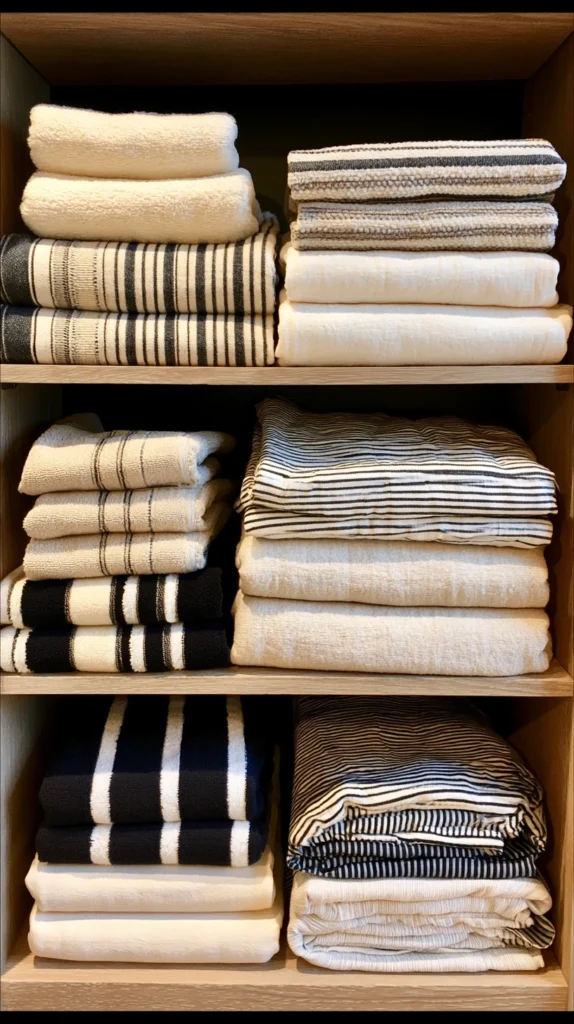
A simple household rule requiring one old towel or linen to be donated or discarded for every new one brought into rotation.
Why this rule prevents linen closet overflow at the source
The inflow-control principle:
- Linen and towel overflow is rarely solved by better folding or storage alone; it is solved by controlling how much comes in relative to what leaves
- A simple one-in-one-out rule keeps the total volume roughly constant over time, regardless of how organized the storage itself looks
- This system requires no purchase at all, just a household agreement consistently followed
How to apply the rule
- Whenever a new towel or sheet set is purchased, select one existing item of the same category to donate or repurpose as a cleaning rag
- Apply the rule at the point of purchase, not after the new item has already been added to rotation
Budget: free
My one-in-one-out result
Committing to retire one old towel for every new one purchased has kept my linen closet at roughly the same manageable size for over a year, solving a problem that better folding techniques alone had never actually fixed.
One-In-One-Out Tips
Repurpose retired towels as cleaning rags rather than discarding immediately:
- A retired towel still has useful life left for cleaning tasks before final disposal
- Keeping a small designated rag bin extends the item’s usefulness one step further before it leaves the household entirely
10. A Cycle-Length Sticky Note System for Shared Households

Small sticky notes placed on the machine noting the expected finish time of a current load, useful in shared households or laundry rooms.
Why a simple time note prevents common shared-space conflicts
The shared-resource-communication principle:
- In shared households, a running machine with no indication of finish time often leads to confusion about whether a load can be interrupted or when the machine will be free
- A simple sticky note with the expected finish time removes this ambiguity instantly, without requiring any app or shared calendar
- This is a particularly useful, nearly free hack for multi-person households, roommates, or shared laundry facilities
How to use the system
- Note the load’s start time and the machine’s typical cycle length directly on a sticky note
- Place the note directly on the machine, removing it once the load is collected
Budget: under $5 for a pack of sticky notes
My cycle note result
Adding a simple sticky note with the expected finish time to my washer whenever a roommate or family member starts a load has eliminated the repeated “is this still going” interruptions that used to happen multiple times a week.
Cycle Note Tips
Round up slightly when estimating finish time:
- A note that estimates finish time too precisely can lead to someone interrupting a load that is running just a few minutes long
- Rounding the estimate up by five or ten minutes avoids this minor but recurring friction
11. A Designated “Currently Wearing It Out” Hook by the Door
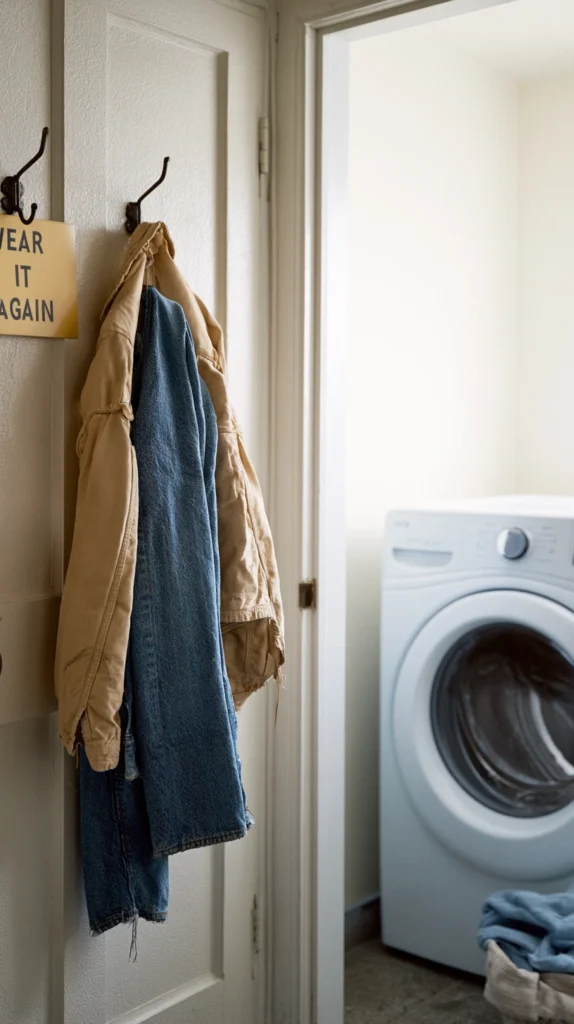
A single hook near the laundry room door specifically for items that should skip the regular laundry cycle and instead be worn a few more times before washing.
Why this hook solves an overwashing problem
The intentional-skip principle:
- Many households default to washing every item after a single wear, even ones that do not strictly need it, like certain outerwear or jeans
- A designated hook specifically for these “wear it a bit more” items gives them an intentional home outside the regular wash cycle, rather than getting swept into a load by default
- This small system reduces both unnecessary washing and unnecessary wear on certain fabrics over time
Setting up the hook
- A single sturdy hook, positioned near the laundry room or bedroom door
- A simple household agreement about which item types are appropriate for this designation
Budget: $5-15 for a basic wall hook if one is not already available
My wear-it-out hook result
Adding a single hook by my laundry room door specifically for jeans and a favorite jacket has meaningfully cut down how often those items get washed, since they now have an obvious, intentional spot instead of automatically landing in the hamper.
Wear-It-Out Hook Tips
Agree on clear categories as a household, not just a personal habit:
- This system works best when everyone in the household understands which item types qualify for the hook
- A brief conversation establishing the categories prevents confusion or inconsistent use of the system
12. A Pre-Treatment Checklist Taped Inside a Cabinet Door
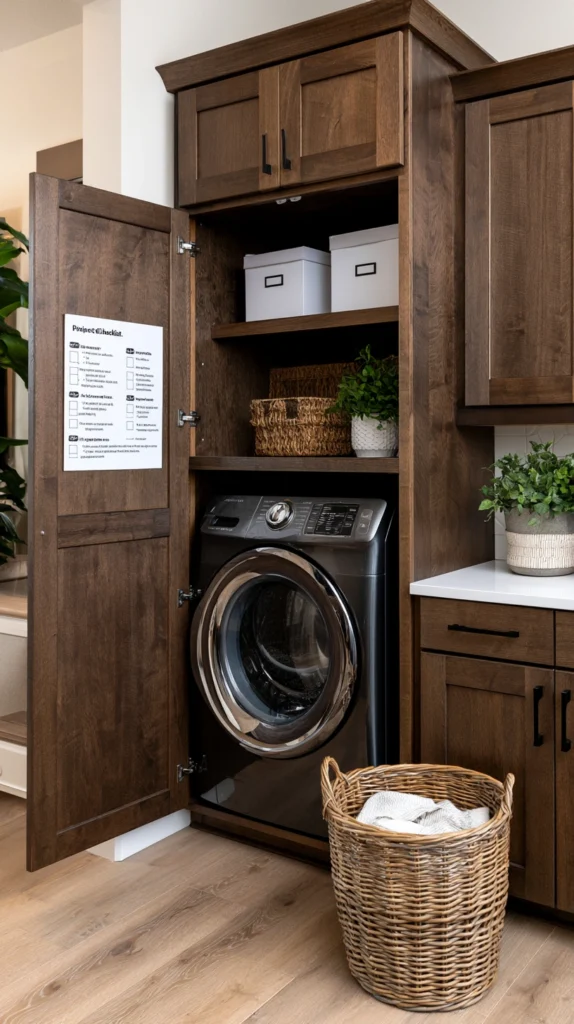
A simple printed or handwritten checklist of common stain treatments, taped inside a cabinet door for quick reference.
Why a reference list beats relying on memory
The remove-the-guesswork principle:
- Most households know roughly how to treat common stains but do not remember the exact method consistently under time pressure
- A simple checklist, kept exactly where the stain treatment products are stored, removes the need to search online or guess each time
- This is a particularly useful hack for anyone who shares laundry duties with someone less experienced with stain treatment specifically
Building the checklist
- A short list covering the household’s most common stain types: grass, oil, wine, blood, ink
- A brief, simple instruction for each, taped or printed directly inside the cabinet door nearest the stain products
Budget: free, using a printed sheet or handwritten note card
My pre-treatment checklist result
Taping a simple printed stain treatment checklist inside my laundry cabinet door means I no longer pull out my phone to search “how to get wine out of fabric” every single time it happens, the answer is already right there.
Pre-Treatment Checklist Tips
Update the list as new stain situations come up:
- A static list eventually misses a stain type the household actually encounters
- Adding a new line whenever an unusual stain happens keeps the reference genuinely useful over time
13. A Repeating Lint Trap and Vent Check Reminder

A simple recurring reminder, tied to a specific regular event like the first of the month, to check and clean the dryer lint trap and vent thoroughly.
Why a scheduled reminder solves a safety and efficiency issue, not just a tidiness one
The safety-habit principle:
- Lint trap cleaning often happens passively between loads, while the deeper vent and trap area gets overlooked for months at a time
- A scheduled, recurring reminder prompts the more thorough check that passive between-load cleaning misses
- This system addresses both dryer efficiency and a genuine fire safety consideration, making it one of the more important habits on this entire list
Setting up the reminder
- A recurring phone or calendar reminder tied to a specific, easy-to-remember date each month
- A small checklist of what the thorough check actually involves, kept near the machine for reference
Budget: free, using an existing phone or calendar reminder feature
My lint check result
Setting a recurring reminder for the first of every month to do a deeper lint trap and vent check has caught buildup that regular between-load cleaning was clearly missing, and the dryer noticeably runs more efficiently as a result.
Lint Check Tips
Check the exterior vent opening as part of the same routine:
- The interior lint trap is only part of the full system
- Including a quick check of the exterior vent opening, where lint can also accumulate, completes the safety habit properly
14. A Fully Combined Organization System Built Around Habits, Not Containers
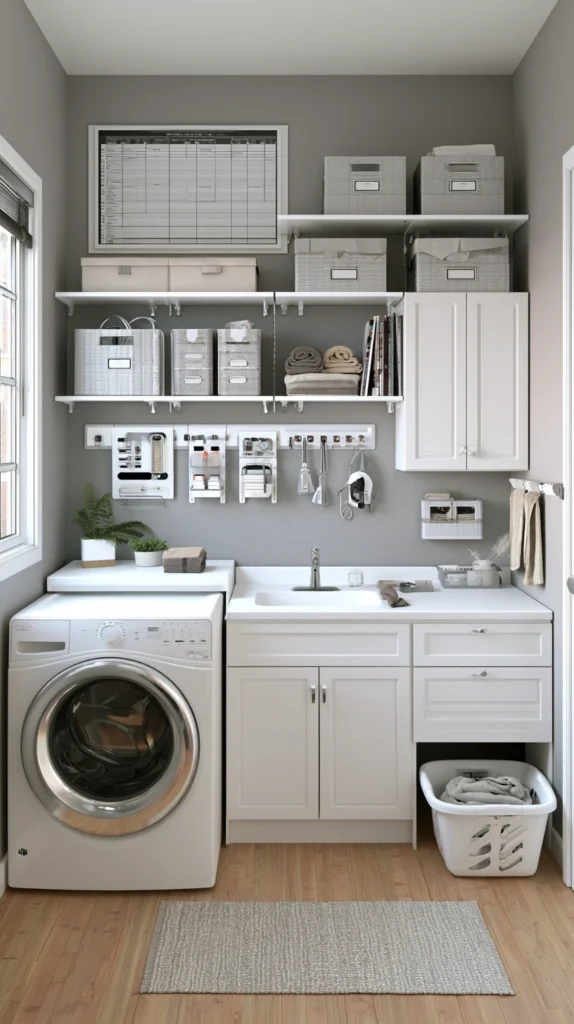
Combining a sorting zone, a stain triage spot, a posted schedule, and a scheduled lint check into one complete, habit-based laundry room system.
Why combining systems and habits outperforms any single hack alone
The complete-system philosophy:
- Several of the hacks on this list (sorting zones, a stain triage spot, a posted schedule, scheduled checks) address different points in the laundry process, from before a load starts to ongoing maintenance
- Relying on just one hack solves one specific friction point but leaves the rest of the process exactly as disorganized as before
- This is the most complete and most genuinely transformative version of a laundry room organization overhaul, achievable without buying a single new container
How the combination works together
The sorting zones and stain triage spot (the intake layer):
- Address how items enter the system, before any actual washing begins
The posted schedule (the workflow layer):
- Spreads the actual washing tasks evenly rather than reactively
The lost sock jar and repair bin with deadlines (the accountability layer):
- Ensures nothing lingers indefinitely without a clear next step
The lint check reminder (the maintenance layer):
- Covers the ongoing safety and efficiency tasks easy to forget between regular loads
Building the full combined system
- Start with the sorting zones and stain triage spot, since these affect every load from the start
- Add the posted weekly schedule to spread out the actual washing workload
- Include the lost sock jar and tagged repair bin for ongoing accountability
- Finish with the recurring lint check reminder for safety and efficiency
Budget: under $40 total for tape, a jar, tags, and a magnetic strip, since this system relies on habits more than purchases
My fully combined result
Combining the taped sorting zones, a posted weekly schedule, a tagged repair bin, and a monthly lint check reminder changed how my laundry room actually functions far more than any of the pretty storage bins I had bought in years prior, and the total cost was barely noticeable.
Full System Tips
Introduce one new habit at a time rather than all at once:
- Adopting every system simultaneously can feel overwhelming and increases the chance that none of them stick
- Introducing one habit every week or two, building on what is already working, leads to a more durable, lasting system overall
Choosing Your Organization Hack Approach
By the specific problem to solve:
- Sorting confusion: floor zone system (idea 1), color-coded hangers (idea 4)
- Items disappearing or lingering: lost sock jar (idea 3), tagged repair bin (idea 7)
- Shared household friction: pre-measured pouches (idea 6), cycle-length sticky notes (idea 10)
- Safety and maintenance: lint check reminder (idea 13)
By effort level:
- Lowest effort: posted schedule (idea 5), one-in-one-out rule (idea 9), pre-treatment checklist (idea 12)
- Moderate effort: magnetic strip (idea 8), wear-it-out hook (idea 11), color-coded hangers (idea 4)
- Full system: fully combined organization system (idea 14)
By household type:
- Solo or couple households: posted schedule (idea 5), pre-treatment checklist (idea 12)
- Families with children: color-coded hangers (idea 4), pre-measured pouches (idea 6)
- Shared or roommate households: cycle-length sticky notes (idea 10), zone sorting system (idea 1)
The non-negotiable rules across every option:
Always:
- Pair any new container or label with an actual underlying system or habit, not just a place to put things
- Set a clear time limit or review schedule for any holding bin, to prevent it from becoming permanent overflow storage
- Communicate any new household system clearly to everyone who shares the space
Never:
- Assume a new bin or labeled container alone will fix a process problem underneath it
- Let a repair, lost item, or stain treatment bin sit indefinitely without ever circling back to it
- Skip the deeper monthly lint and vent check in favor of only the quick between-load cleaning
Remember: a real laundry room organization hack changes a system or a habit, not just where something is stored, and the rooms that stay organized over time are the ones built around small, repeatable processes rather than another round of prettier containers.