
15 Outdoor Modular Seating Ideas for Easy Entertaining and Rearranging
My patio had one fixed sectional facing one direction for three years. Same conversation pit, same six guests max, same layout whether it was a quiet dinner or a full backyard party. Tried adding a couple of extra folding chairs once.
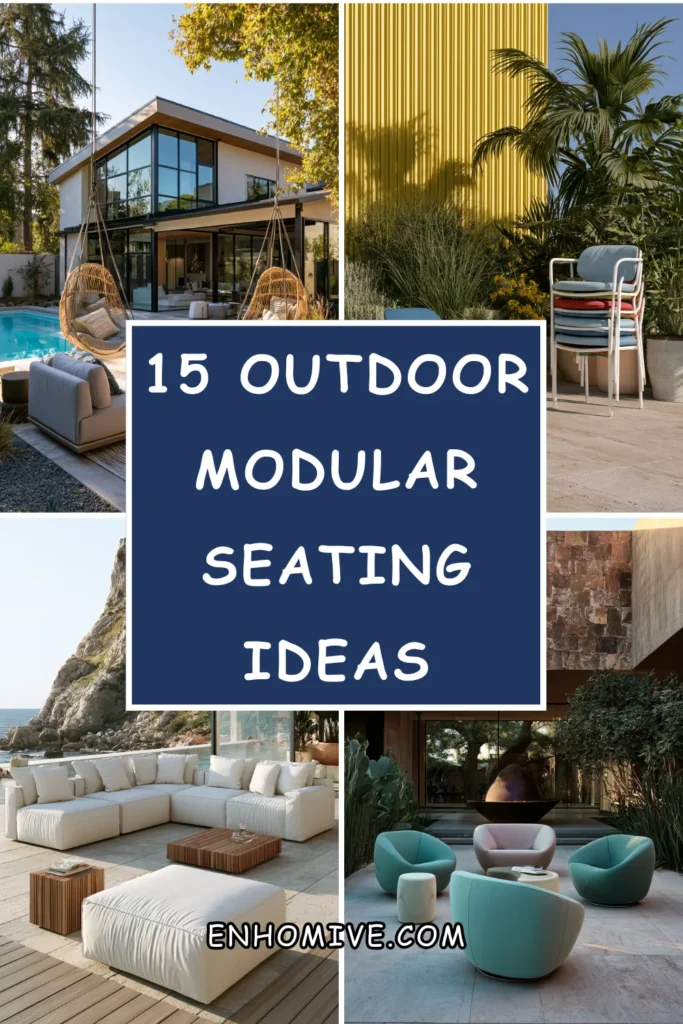
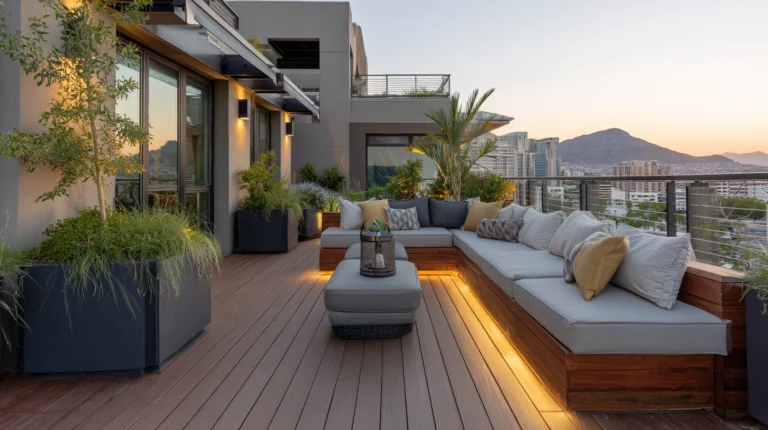
They sat at odd angles against the sectional, never quite part of the group. Then I stopped thinking about seating as one fixed piece and started building modular units that could split, combine, and turn however the gathering needed. The patio finally adapts to whoever shows up, instead of forcing whoever shows up to adapt to it.
Why Fixed Outdoor Seating Resists Easy Entertaining
The rigidity problem:
What fixed seating sets do:
- Lock the room into one configuration regardless of group size
- Force overflow guests onto stray chairs that never match the set
- Make small gatherings feel like they are lost in too much furniture
- Resist quick changes when the entertaining purpose shifts mid-event
The modularity principle:
- Individual units that can be pushed together or pulled apart adapt to two people or twenty
- Modular pieces let the same furniture serve a quiet morning coffee and a full dinner party
- This is the opposite goal from a matched, fixed sectional, and outdoor entertaining benefits from that flexibility
- A single oversized fixed piece, however nice, still cannot reconfigure itself for a different group size
My revelation: Modular outdoor seating is a system of independent pieces, not one large set bolted into a single layout. Every unit needs to work alone and in combination before the flexibility actually pays off.
1. Single-Seat Cube Ottomans (The Building Block Starter)
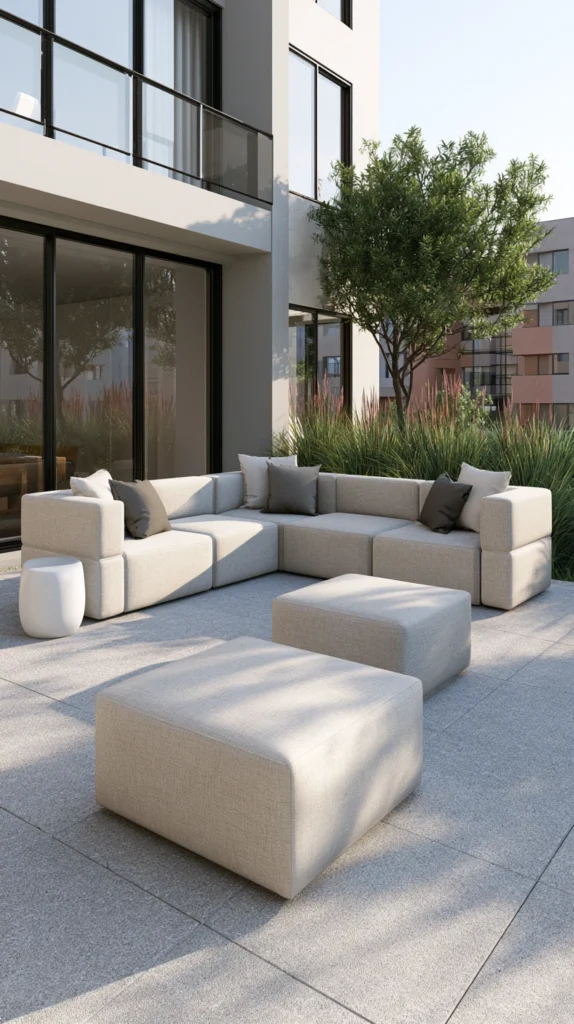
Lightweight square ottomans that function as extra seats, footrests, or side tables depending on the moment.
Why cube ottomans are the most flexible single unit
The multi-use principle:
- A cube ottoman can be a seat, a footrest, or a drink table without any modification
- Stacking two creates an impromptu side table; lining several up creates an instant bench
- This single piece does more reconfiguration work per dollar than almost any other modular option
Best materials for outdoor use
- Powder-coated aluminum frames with quick-dry outdoor fabric cushions
- All-weather wicker over a resin frame
- Concrete or stone cubes for a more permanent, low-maintenance option
Budget pick: fabric-and-frame cube ottomans, $40-90 each Splurge: solid teak or concrete cube seating, $150-350 each
My cube ottoman result
Buying six lightweight cube ottomans instead of a few oversized chairs meant I could seat two people around a small table one evening and twelve scattered across the lawn the next, the same pieces working both times without any extra storage needed.
Cube Ottoman Tips
Buy more than the average gathering needs:
- Extra cubes tuck easily into a shed or under a bench when unused
- Having two or three spares on hand means never scrambling for seating when a gathering grows unexpectedly
2. A Modular Sectional With Detachable Sections
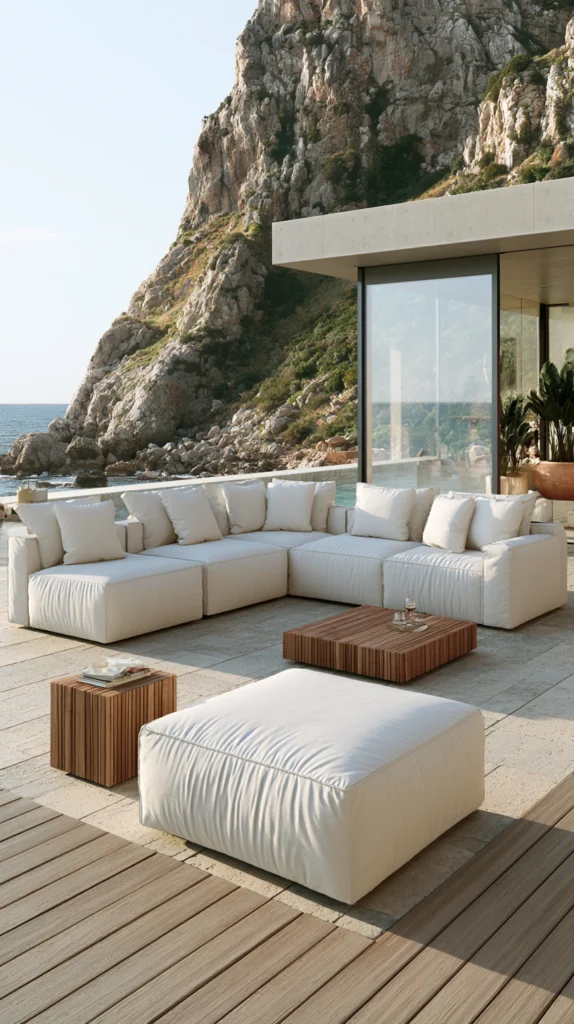
An outdoor sectional built from individual corner, armless, and chaise units that connect and separate as needed.
Why true modular sectionals outperform fixed ones
The reconfiguration principle:
- Detachable sections can form an L-shape, a straight line, a U-shape, or scattered single chairs
- This single furniture investment effectively replaces several different fixed-layout sets
- Most modular sectional systems use simple clip or peg connectors, making reconfiguration a five-minute task
What to look for when buying
- Individual pieces sold separately, not only as a fixed bundled set
- Consistent cushion depth across all units so mixed configurations stay visually unified
- A connector or clip system rather than pieces that simply sit adjacent without securing
Budget pick: resin wicker modular sets, $600-1,400 for a six-piece starter set Splurge: powder-coated aluminum or teak modular systems, $2,000-5,000
My modular sectional result
Switching from a fixed L-shaped sectional to a six-piece modular system let me rearrange the same furniture into a tight conversation circle for four or an open U-shape for a dozen guests, all without buying a single additional piece.
Modular Sectional Tips
Buy a few more armless units than corner units:
- Armless pieces are the most versatile for filling gaps and extending length
- Corner units anchor a shape but cannot substitute for the flexible middle sections
3. Stackable Bistro Chairs for Overflow
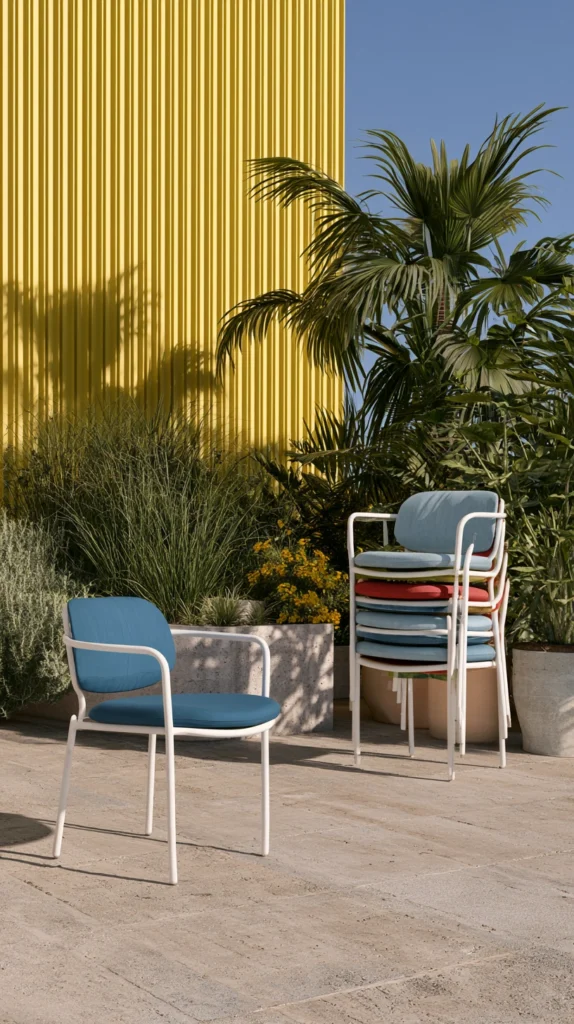
Lightweight chairs designed to stack vertically for compact storage when not needed.
Why stackability matters more than style here
The storage-as-flexibility principle:
- Seating that cannot be easily stored tends to stay out permanently, cluttering the space between gatherings
- Stackable chairs can multiply seating capacity for a party and then disappear into a closet or shed afterward
- This makes them the easiest way to plan for a larger gathering without committing that capacity to daily use
Best stackable chair materials
- Powder-coated aluminum, light enough for one person to carry several at once
- Molded resin for the lowest cost and easiest cleaning
Budget: $25-60 per chair for basic stackable resin or aluminum options
My stackable chair result
Keeping eight stackable aluminum chairs folded against the garage wall means I can set a dinner table for four most weeks and double the seating in under ten minutes when extended family visits.
Stackable Chair Tips
Check the stack height before buying a full set:
- Some stacking systems only nest cleanly to four or five chairs before becoming unstable
- Test or research the stack limit if storage space is tight
4. A U-Shaped Sectional Anchored Around a Fire Pit
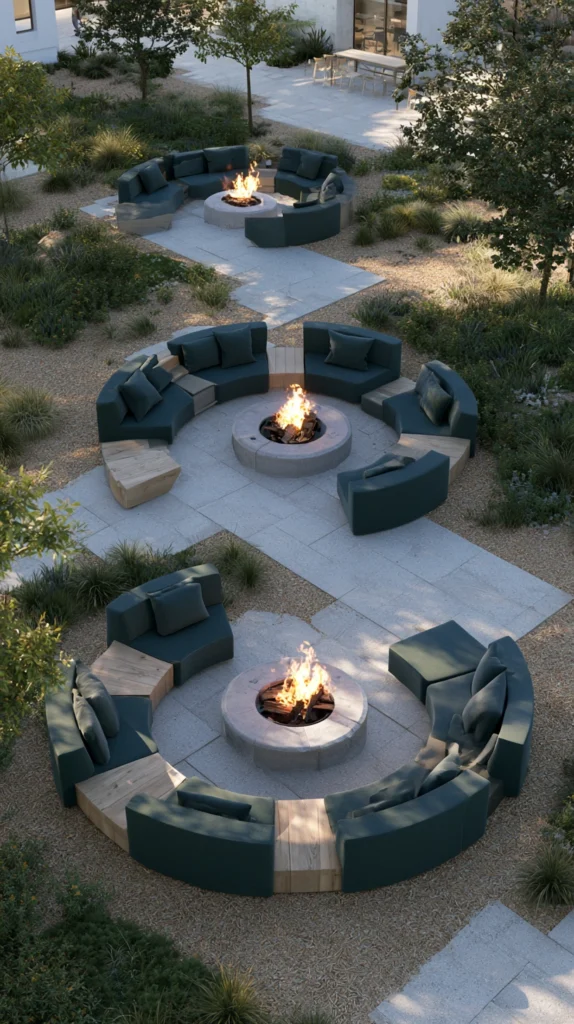
Modular seating arranged specifically around a fire pit, with sections that can open or close the circle.
Why fire pit seating benefits from modularity specifically
The temperature and group-size variable:
- A fixed seating arrangement around a fire pit cannot adjust for changing weather or group size across a season
- Modular sections let the circle tighten on a cold night and open up on a warm one
- This adaptability is especially valuable for a feature most people use across many different occasions throughout the year
Building the configuration
- Three to four modular sections forming most of the circle
- One or two sections left detachable to open a gap for additional chairs or easy entry
- A consistent low coffee-table height across all units so drinks and plates sit level throughout
Budget pick: resin wicker sectional pieces, $150-300 per section Splurge: powder-coated steel sectional with built-in firepit table, $1,200-3,000
My fire pit seating result
Building the fire pit seating from four individual sectional pieces instead of one fixed curved bench means I close the circle tight on cool fall nights and open it into a wider arc for summer gatherings with more guests.
Fire Pit Seating Tips
Leave breathing room from the flame:
- Maintain manufacturer-recommended clearance between any cushioned seating and the fire pit itself
- Modular pieces make it easy to widen this gap temporarily during active burning and close it again once the fire is out
5. Floor Cushions and Poufs for Ground-Level Flexibility
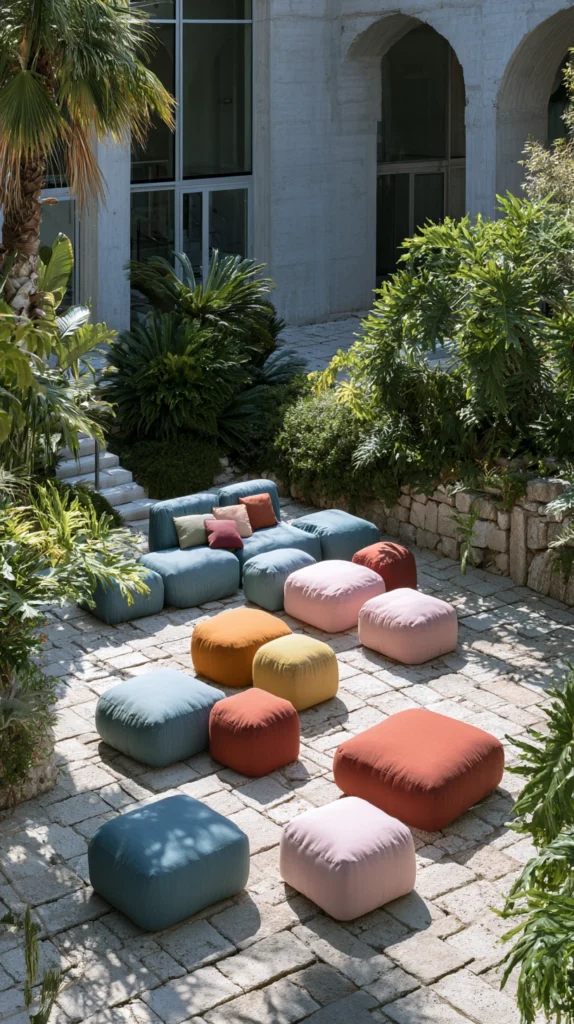
Large floor cushions or poufs that supplement chair seating or create an entirely different lounge configuration.
Why ground-level seating adds a flexibility dimension chairs cannot
The low-profile principle:
- Floor cushions can fill gaps between chairs, surround a low table, or scatter loosely across a lawn
- This seating style works in spaces too tight or too irregular for standard chair arrangements
- Poufs in particular double as footrests when not needed as seats
Best outdoor floor cushion materials
- Quick-dry outdoor foam with weather-resistant fabric covers
- Removable, machine-washable covers for easier seasonal cleaning
Budget: $25-60 per floor cushion or pouf
My floor cushion result
Scattering six floor cushions around a low fire pit table for a casual evening turned the same patio that normally seats people in chairs into a relaxed lounge setup, and the cushions store flat in a deck box when not in use.
Floor Cushion Tips
Bring them in during heavy rain:
- Even weather-resistant foam degrades faster with prolonged soaking
- A simple deck box or storage bench nearby makes this an easy habit rather than a chore
6. A Modular Daybed Built From Connecting Loungers
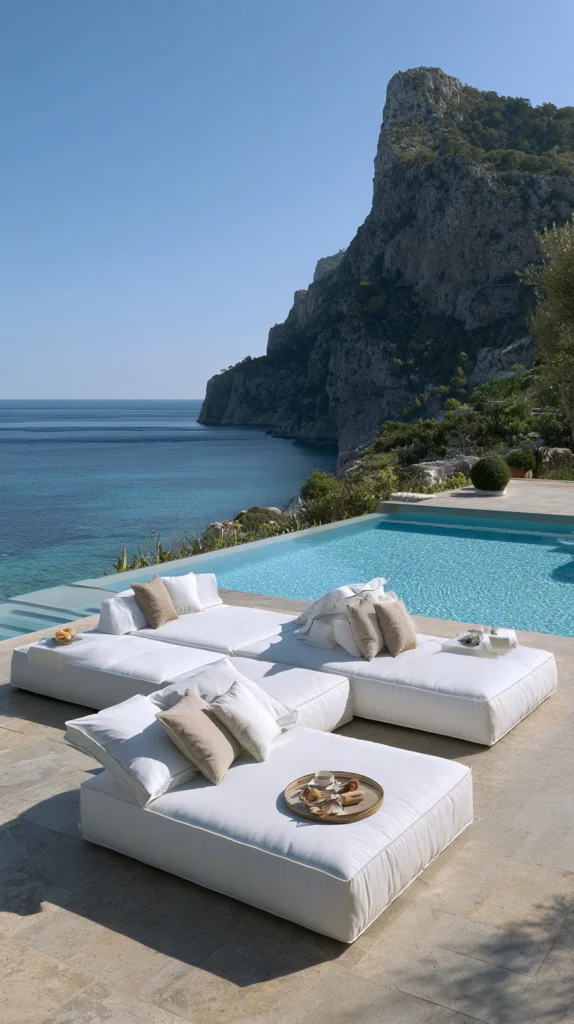
Individual outdoor loungers or chaise units that connect side by side to form a single oversized daybed.
Why connecting loungers outperforms a fixed daybed
The dual-function principle:
- Connected, the units form a wide daybed for lounging or napping
- Separated, each unit becomes an individual chaise that can angle toward the sun, a view, or a conversation
- A fixed daybed cannot split apart when individual lounging is preferred over a shared one
What to look for
- Wheels or locking casters on at least some units for easier repositioning
- Matching cushion thickness so the combined surface feels seamless when connected
Budget pick: basic connecting chaise loungers, $150-300 each Splurge: teak-framed modular daybed systems, $800-2,000 for a multi-piece set
My modular daybed result
Two connecting loungers form a wide daybed for weekend naps in the sun, then split apart most weekday evenings into separate chaises angled toward opposite ends of the yard.
Modular Daybed Tips
Check connector hardware before buying secondhand:
- Connecting mechanisms vary by brand and rarely mix and match
- Buying a full matched set from one manufacturer avoids ending up with units that cannot actually connect
7. Nesting Side Tables That Travel With the Seating
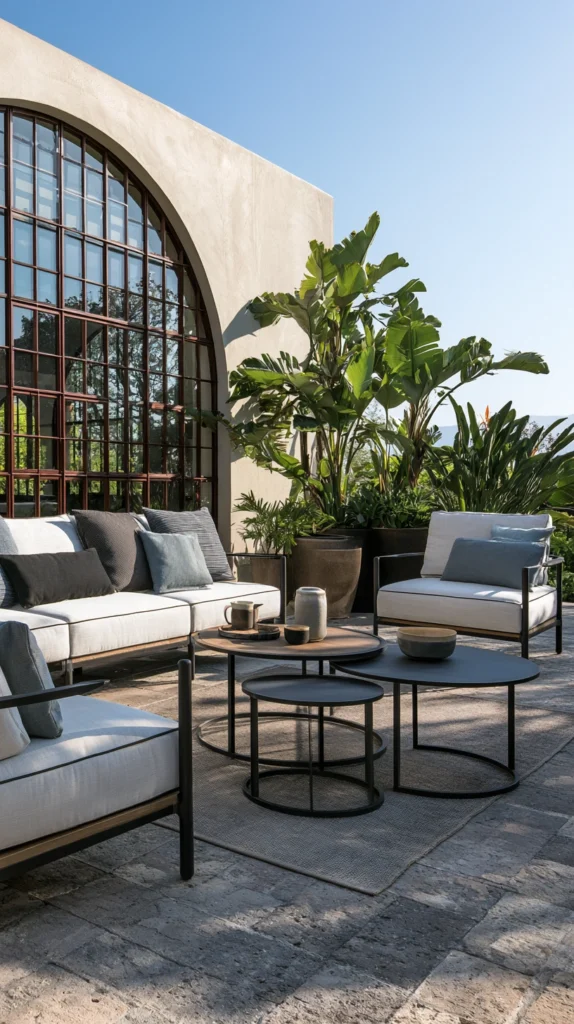
A set of two or three nesting tables sized to slide between or alongside any modular seating arrangement.
Why nesting tables matter as much as the seats themselves
The companion-piece principle:
- Modular seating that constantly moves needs surfaces that move with it
- Nesting tables store compactly when not needed and separate easily when a new configuration calls for more surfaces
- A single fixed coffee table cannot follow a seating arrangement that splits into multiple smaller groupings
Best materials
- Powder-coated metal for lightweight repositioning
- Weather-resistant resin or teak for a softer, more furniture-like look
Budget: $60-150 for a nesting set of two or three
My nesting table result
A set of three nesting metal side tables means every new seating arrangement, whether it is two chairs or a full sectional circle, ends up with a surface for drinks within easy reach.
Nesting Table Tips
Choose a height that matches multiple seat heights:
- A single table height should work reasonably well with both standard chair seating and lower lounge seating
- Test the table against the shortest seating in the collection before finalizing the purchase
8. Bench Modules That Double as Storage
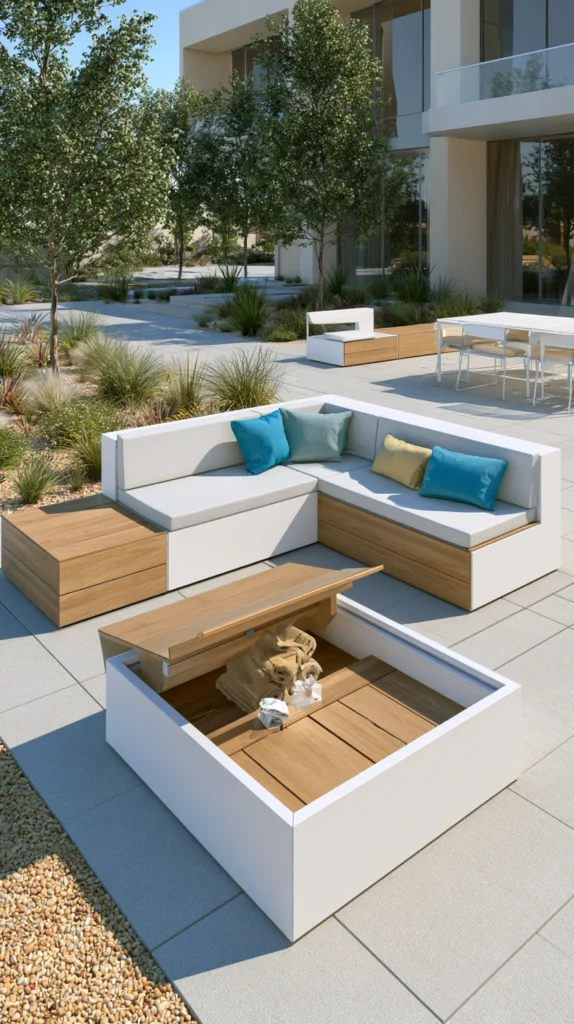
Modular outdoor benches with hinged or lift-up seats concealing weatherproof storage beneath.
Why storage-integrated seating solves the modularity problem
The clutter-prevention principle:
- Modular seating systems generate more loose cushions, cushion covers, and small accessories than fixed furniture
- A bench that stores its own cushions or nearby cushions from other units keeps the patio tidy between reconfigurations
- This solves the most common practical complaint about modular outdoor furniture: where everything goes when not in use
Best storage bench materials
- Resin or polyethylene for genuinely weatherproof interior storage
- Wood benches with a waterproof liner inside the storage compartment
Budget pick: resin storage benches, $150-350 Splurge: built-in cedar bench seating with custom storage, $500-1,200
My storage bench result
Two resin storage benches flanking the patio hold extra cushions, throws, and citronella candles, and having that storage built into actual seating means nothing extra needs to be found a home elsewhere.
Storage Bench Tips
Check the seal quality before buying:
- Some lower-cost storage benches allow water seepage at the seams
- Read reviews specifically mentioning the bench’s performance after rain, not just its seating comfort
9. A Swivel Lounge Chair Cluster
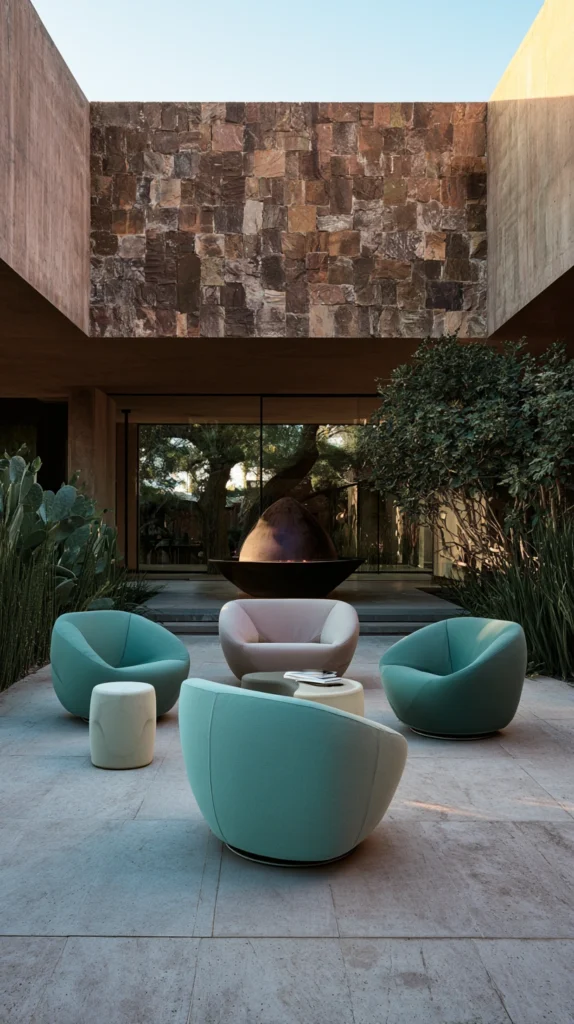
Individual swivel-base lounge chairs that rotate independently to face different directions within the same grouping.
Why swivel bases add flexibility without physically moving furniture
The rotation principle:
- A swivel chair can face a conversation, a view, or the sun without anyone lifting or dragging the piece
- Clustering several swivel chairs allows a group to shift its collective orientation in seconds
- This adds a layer of flexibility distinct from rearranging entire modular sections
Best swivel chair styles
- Powder-coated aluminum frames with a smooth, weather-sealed swivel base
- All-weather wicker for a softer, more traditional look
Budget: $150-300 per swivel lounge chair
My swivel chair result
Four swivel lounge chairs around a low fire table can face each other for conversation or all turn toward the yard for watching the kids play, and that adjustment takes seconds compared to physically repositioning fixed chairs.
Swivel Chair Tips
Check the swivel resistance before buying:
- Some bases swivel too freely, drifting out of position in wind
- A base with slight tension or a locking mechanism holds its facing direction better outdoors
10. Modular Outdoor Sofa Sections Sold Individually
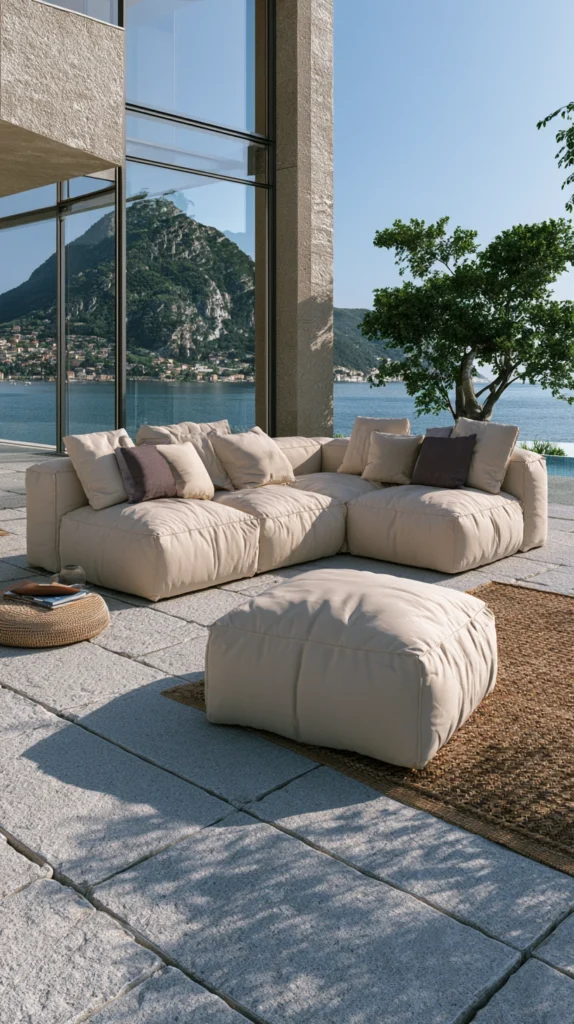
Single sofa-style sections, available without requiring purchase of a full matched set, that combine into a couch of any length.
Why buying sections individually beats buying a set
The exact-fit principle:
- A pre-bundled outdoor sofa set assumes a fixed space and fixed guest count
- Individual sections let the final length match the actual available patio space precisely
- Future additions are simple: buy one more matching section rather than replacing an entire set
What to verify before buying
- That the manufacturer sells single sections long-term, not just as part of a limited bundle
- Consistent frame color and cushion fabric across any future section purchases
Budget pick: resin wicker single sofa sections, $250-450 each Splurge: teak-framed individual sofa sections, $700-1,500 each
My modular sofa result
Starting with three individual sofa sections and adding a fourth the following season let the couch grow exactly as the patio’s actual seating needs grew, rather than guessing the right size in one single purchase.
Modular Sofa Tips
Buy from a brand with a long product cycle:
- Some manufacturers discontinue specific fabric or frame colors within a year or two
- Confirm the expected availability window before committing to a system meant to expand over several seasons
11. A Convertible Bench-to-Table Module
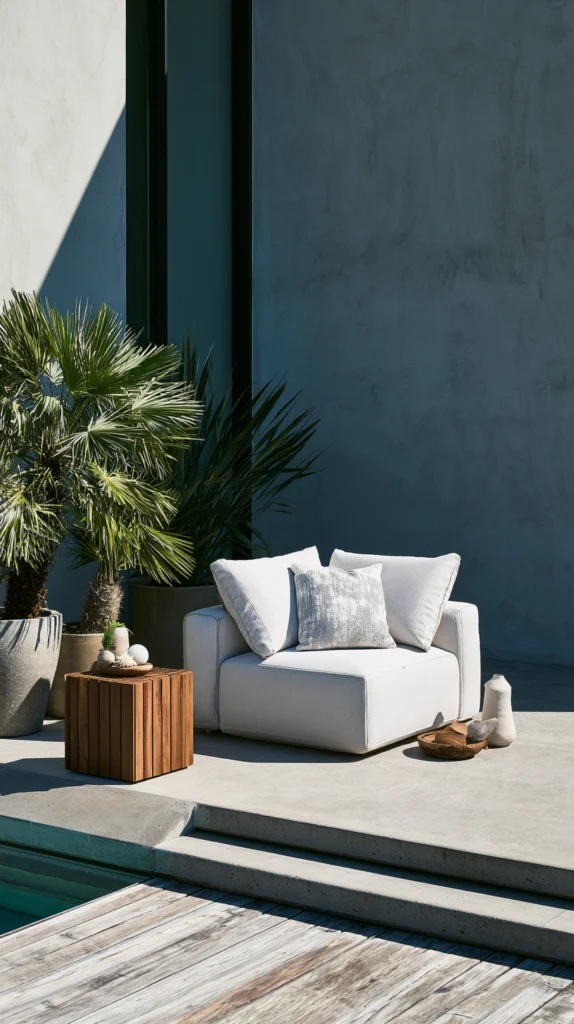
A single piece of furniture that folds or flips between a bench and a low table depending on the moment’s need.
Why convertible pieces solve the small-patio version of modularity
The space-constrained principle:
- Small patios and balconies often cannot accommodate enough separate pieces for true modular flexibility
- A single convertible module effectively becomes two pieces of furniture in the footprint of one
- This is the most practical entry point into modular thinking for limited outdoor space
Best convertible designs
- A flip-top bench that becomes a coffee table when closed
- A stackable ottoman-table hybrid with a removable tray top
Budget: $80-200 for a basic convertible bench-table piece
My convertible module result
A single flip-top bench on my small balcony serves as a coffee table most evenings and flips into an extra seat the moment a second guest arrives, solving a space problem that a separate bench and table never could have in the same footprint.
Convertible Module Tips
Test the flip mechanism in the store or before final purchase:
- Some hinge mechanisms feel sturdy in product photos but loosen quickly with outdoor use
- A mechanism with a firm, audible lock in place is worth prioritizing over a slightly cheaper unlocked flip design
12. Outdoor Pouf Ottomans With Wheeled Bases
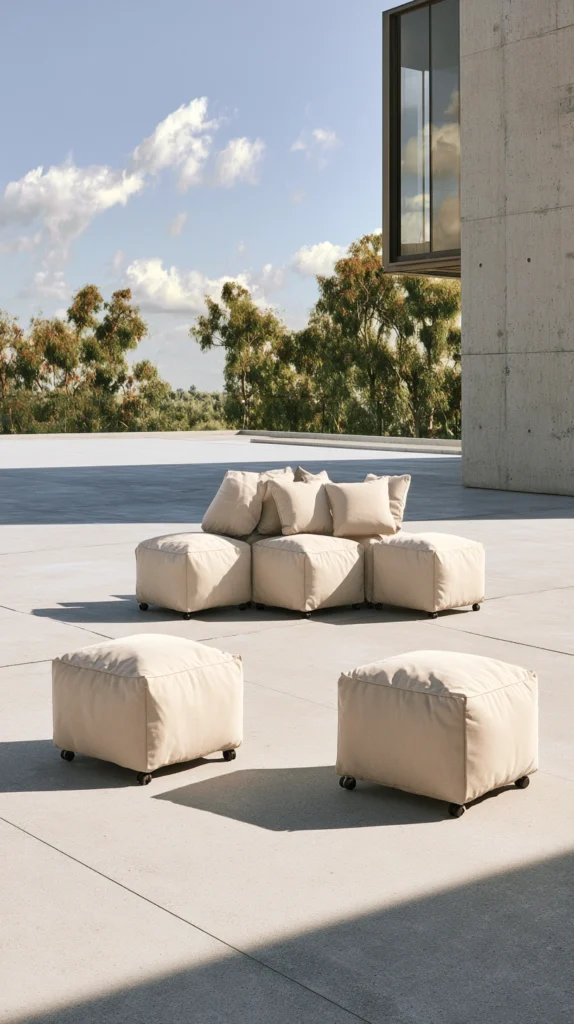
Poufs or ottomans mounted on small caster wheels, allowing one-handed repositioning without lifting.
Why wheels solve the heaviest-piece problem
The effortless-reconfiguration principle:
- Even lightweight modular pieces become a chore to rearrange in volume
- Caster wheels let a single person reposition several pieces quickly without strain
- This is particularly useful for larger gatherings requiring frequent on-the-fly adjustments
Best wheeled ottoman options
- Locking caster wheels rated for outdoor use and uneven surfaces
- A low profile that keeps the wheels from being visually distracting
Budget: $50-110 per wheeled ottoman
My wheeled ottoman result
Four wheeled ottomans roll into a tight cluster for a small group and spread easily across the patio for a larger one, all repositioned by one person in under a minute without any lifting.
Wheeled Ottoman Tips
Lock the wheels once positioned:
- Unlocked casters can drift in wind or on a sloped patio
- Confirm the locking mechanism engages firmly before guests sit down
13. A Hanging or Suspended Modular Chair Grouping
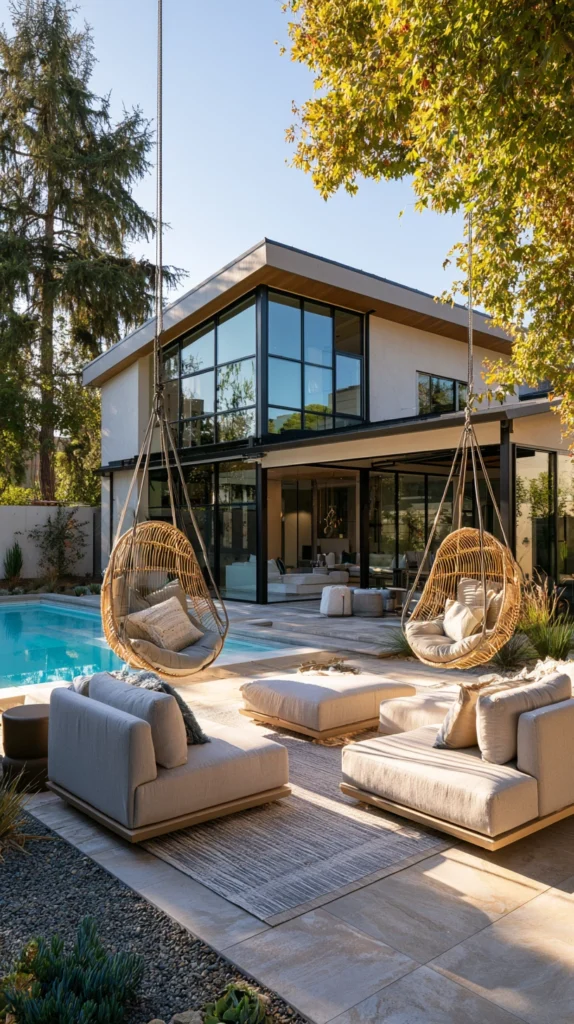
Multiple hanging chairs or swing seats mounted on a shared frame or individual stands, positioned and repositioned as a group.
Why hanging seating adds a different kind of flexibility
The vertical-variety principle:
- Hanging chairs introduce a gentle motion and different sightline than standard fixed seating
- Freestanding hanging chair stands can be repositioned around the yard, unlike chairs hung from a fixed structure
- Grouping several creates a lounge area distinct in character from the rest of the modular seating
Best hanging chair setups
- Freestanding metal stands for full repositioning flexibility
- Egg-style or basket hanging chairs with weather-resistant cushions
Budget pick: basic hanging chair with stand, $150-300 Splurge: teak-framed hanging daybed with stand, $600-1,400
My hanging chair result
Two freestanding hanging chairs moved to a shaded corner for the afternoon and back toward the open lawn for evening gatherings have become one of the more requested seats whenever guests visit.
Hanging Chair Tips
Anchor freestanding stands on uneven ground:
- Most stands are stable on flat patio surfaces but can tip on soft grass or a slope
- Check the manufacturer’s ground-stability guidance before placing one away from a hard, level surface
14. A Modular Sectional With a Built-In Corner Table
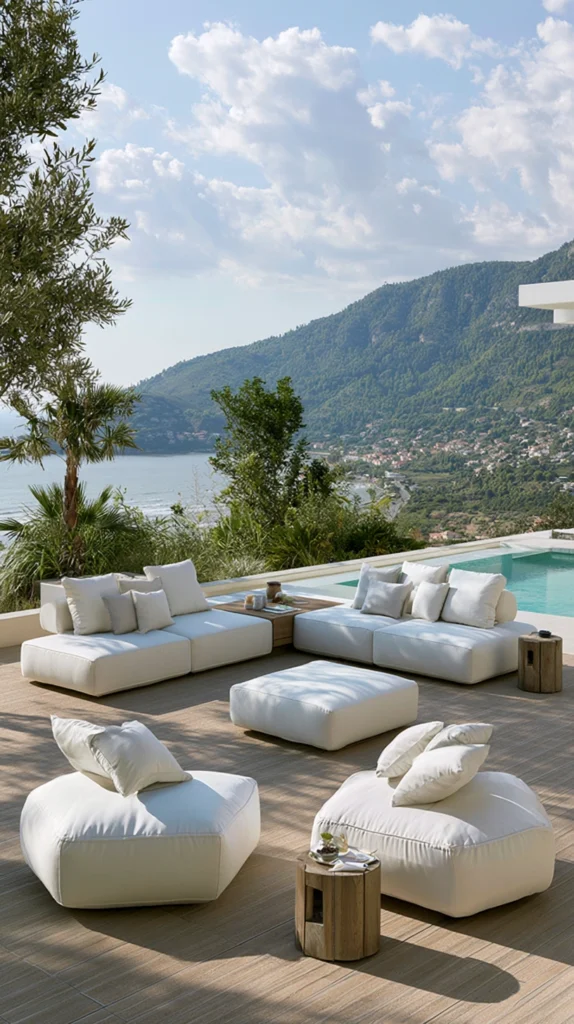
Sectional pieces that include a corner unit with an integrated side table surface rather than a fully upholstered corner seat.
Why a built-in table corner adds function without losing flexibility
The dual-purpose corner principle:
- A fully upholstered corner seat is comfortable but offers nowhere nearby to set a drink
- Swapping that corner for an integrated table unit solves this without needing a separate side table that might not fit every configuration
- This single substitution often resolves the most common complaint about modular sectional layouts
What to look for
- A table corner unit sold as part of the same modular system, matching height and frame finish
- A surface large enough for at least two drinks and a small plate
Budget pick: resin wicker sectional with table corner, $200-400 for the corner unit alone Splurge: teak sectional systems with a matching built-in table corner, $600-1,200
My built-in table corner result
Swapping one upholstered corner seat for the same brand’s table-corner unit gave every seating configuration a reliable surface for drinks, no matter how the rest of the sectional gets rearranged around it.
Built-In Table Corner Tips
Buy the matching corner unit from day one if possible:
- Matching a table corner’s finish to an already-purchased sectional months later can be difficult if the color run has changed
- Purchasing the full intended configuration together avoids this mismatch risk
15. A Fully Mixed System Combining Multiple Modular Types
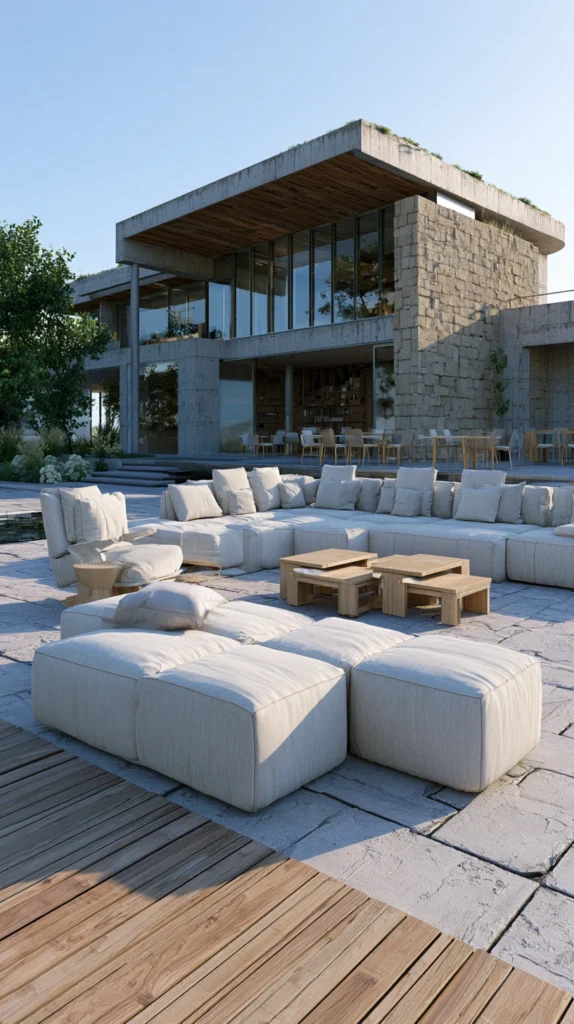
Combining sectional pieces, cube ottomans, swivel chairs, and nesting tables into one cohesive but highly adaptable seating ecosystem.
Why combining types outperforms committing to just one
The maximum-flexibility philosophy:
- Several of the modular types on this list (sectional pieces, cube ottomans, swivel chairs, nesting tables) share enough consistent scale and finish to combine successfully
- Rather than choosing a single modular system, this approach layers multiple flexible elements together
- This is the most advanced and most adaptable setup on this list, suited to those who entertain frequently and at varying scales
How the combination works together
Sectional pieces (the seating foundation):
- Provide the bulk of comfortable seating and the core conversation anchor
Cube ottomans (the flexible filler):
- Fill gaps, extend seating capacity, or serve as footrests and tables as needed
Swivel chairs (the orientation flexibility):
- Allow quick changes in facing direction without full repositioning
Nesting tables (the surface flexibility):
- Travel with whichever configuration the group settles into that evening
Building the full mixed system
- Start with three to four sectional pieces as the foundation
- Add four to six cube ottomans for flexible overflow seating
- Include two to four swivel chairs at the configuration’s edges
- Keep one nesting table set per main seating cluster
Budget: $1,200-3,500 for a full mixed system across all four furniture types
My mixed system result
Combining a four-piece sectional, six cube ottomans, two swivel chairs, and a nesting table set has handled everything from a quiet two-person evening to a forty-person backyard party using the exact same furniture, just arranged differently each time.
Mixed System Tips
Keep finishes consistent across all types:
- Mixing modular types works best when frame color and cushion fabric stay within the same general palette
- A single defining material (such as one finish of powder-coated aluminum) across every type keeps the variety from feeling mismatched
Choosing Your Modular Approach
By patio size:
- Small space: convertible bench-to-table module (idea 11), nesting tables (idea 7)
- Medium patio: modular sectional with detachable sections (idea 2), cube ottomans (idea 1)
- Large yard: fire pit U-shaped sectional (idea 4), fully mixed system (idea 15)
By entertaining frequency:
- Occasional gatherings: stackable bistro chairs (idea 3), floor cushions (idea 5)
- Frequent or large gatherings: modular sectional sold by section (idea 10), fully mixed system (idea 15)
By budget level:
- Lower budget: floor cushions and poufs (idea 5), stackable chairs (idea 3)
- Moderate budget: cube ottomans (idea 1), nesting tables (idea 7), swivel chair cluster (idea 9)
- Higher budget: modular daybed (idea 6), built-in table corner sectional (idea 14), fully mixed system (idea 15)
The non-negotiable rules across every option:
Always:
- Verify connector or stacking compatibility before assuming pieces will combine as expected
- Plan dedicated storage for cushions and small modular pieces between uses
- Match frame finishes and cushion fabrics across any pieces meant to combine
Never:
- Buy a single oversized fixed piece expecting it to substitute for true modularity
- Leave foam cushions out uncovered through extended rain regardless of the fabric’s water resistance
- Assume all modular systems from different brands will physically connect to one another
Remember: every approach on this list depends on individual pieces working alone and in combination, not on one large set locked into a single layout, and the right mix of seating types will let the same backyard host a quiet evening and a full party without buying new furniture for either occasion.