
15 Curved Kitchen Island Ideas That Feel Custom and Expensive
The curved kitchen island is the design decision that most immediately and most completely distinguishes a kitchen that has been genuinely designed from one that has been simply fitted.
The element that demonstrates, from the first moment of entry into the space, that someone made a considered architectural decision about the kitchen’s primary furniture element rather than accepting the default rectangular configuration that most kitchen installations default to without consideration of the space’s specific proportions, circulation patterns, or social requirements.
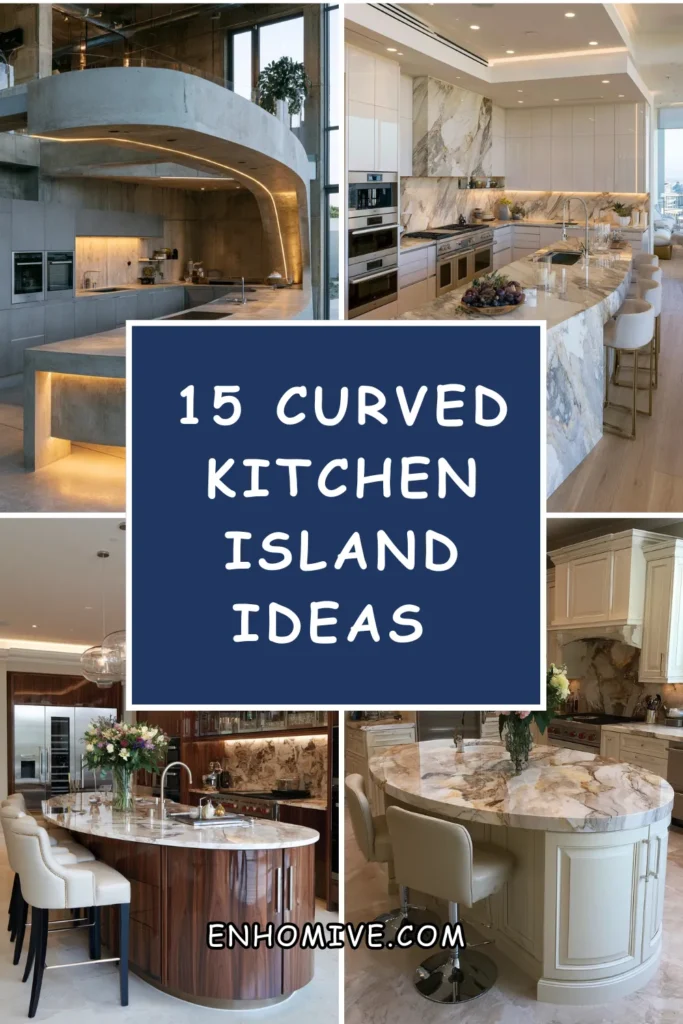
The curve transforms the island from a piece of functional kitchen infrastructure into an object of genuine sculptural presence — something that the eye moves around with genuine pleasure, that changes character from every approach angle, and that creates the specific quality of organic, composed, genuinely custom beauty that no standard kitchen configuration can replicate.
These fifteen ideas demonstrate exactly how to design and specify a curved kitchen island that feels genuinely custom and genuinely expensive — whether the budget is modest or generous, and whether the kitchen is large or compact.
1. The Full Oval Island for the Open Plan Kitchen
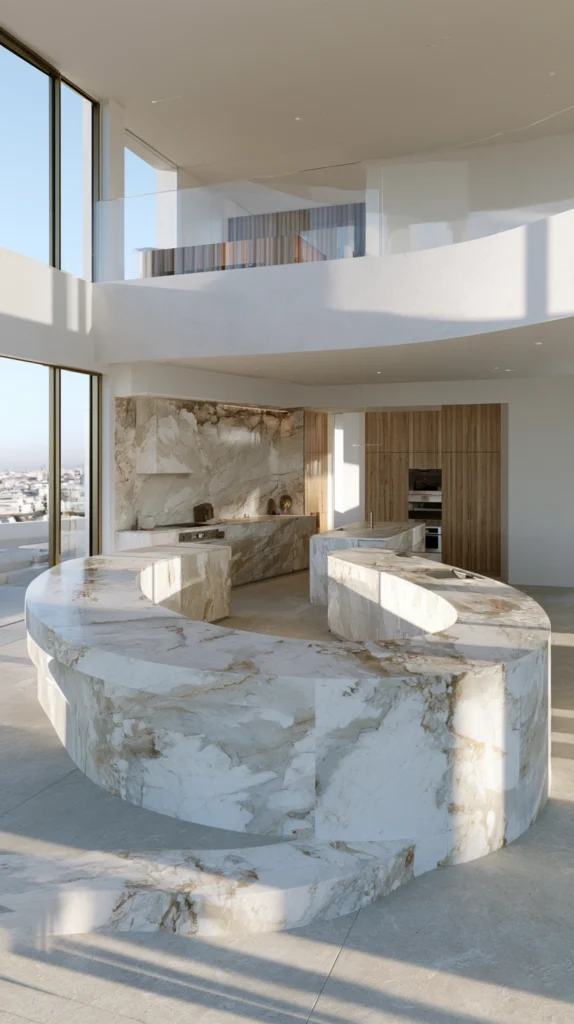
A full oval island — its continuous curved perimeter eliminating every corner and every straight edge from the kitchen’s primary furniture element, its form creating a composed, sculptural object that reads as genuinely extraordinary from every position in the open plan space it occupies .
It is the curved island configuration of greatest visual drama and greatest spatial sophistication, its elliptical form sitting within the open plan kitchen and living space as a composed architectural object whose presence organises the surrounding space around it rather than simply occupying a zone within it.
The full oval island works most completely in an open plan space of genuine generosity — it requires adequate clearance on all sides for comfortable circulation and comfortable seating, and it rewards a space large enough for its sculptural presence to be fully appreciated from the multiple viewpoints that the open plan provides.
Specify the oval island in a single, strong material — a continuous marble slab top on a painted or limewashed base, or a continuous timber surface on a concrete base — for the material unity that makes the sculptural form most powerfully and most cleanly expressed.
2. The Curved Peninsula That Blurs the Kitchen Boundary
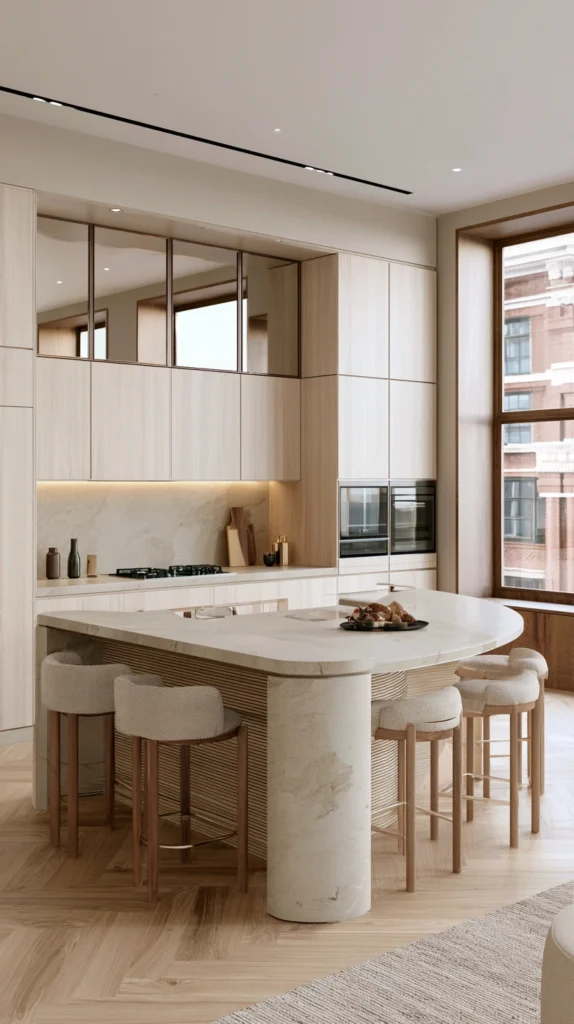
A curved peninsula — attached to the kitchen’s perimeter at one end and curving outward into the adjacent living or dining space in a generous arc, its curved free end carrying the bar seating that creates the social connection between the kitchen and the room beyond it — is the curved island configuration most suited to kitchens where a fully freestanding island is spatially impractical but where the curved form’s social and aesthetic qualities are still the priority.
The curved peninsula’s free end — the arc that sweeps into the living space and carries the seating — is the element that does the most design work, its curve creating the specific quality of inviting, generous, socially open kitchen boundary that the straight-edged peninsula’s blunt terminus cannot achieve with the same warmth or the same compositional elegance.
Specify the curved end in a contrasting material or a contrasting colour to the peninsula’s main body — the curved end in marble where the body is in timber, or the curved end in a contrasting paint colour — for the design emphasis that makes the curve’s sculptural quality read most clearly.
3. The Waterfall Curve in Continuous Marble
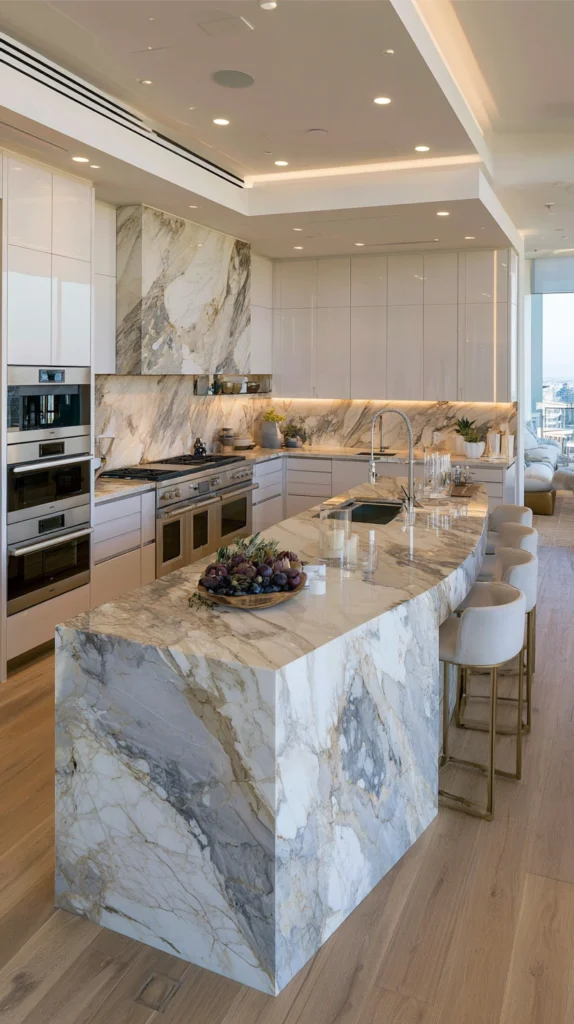
A curved island whose marble top — in Calacatta, Statuario, or a warm-veined quartzite — continues in a waterfall edge over both curved ends, the stone wrapping the island’s ends in a continuous surface that follows the curve of the island base from the horizontal countertop to the vertical end panel and down to the floor, creates the curved kitchen island of greatest material luxury and greatest sculptural completeness.
The marble waterfall on a curved island is the specification detail that most completely justifies the island’s custom status — the engineering required to bend or book-match the stone around a curved form is genuinely specialist work, the result is genuinely extraordinary, and the combination of the marble’s geological beauty and the curve’s sculptural form creates an island of such complete and such immediately apparent material quality that every other element in the kitchen is elevated by proximity to it.
4. The Sinuous Double-Curve Island
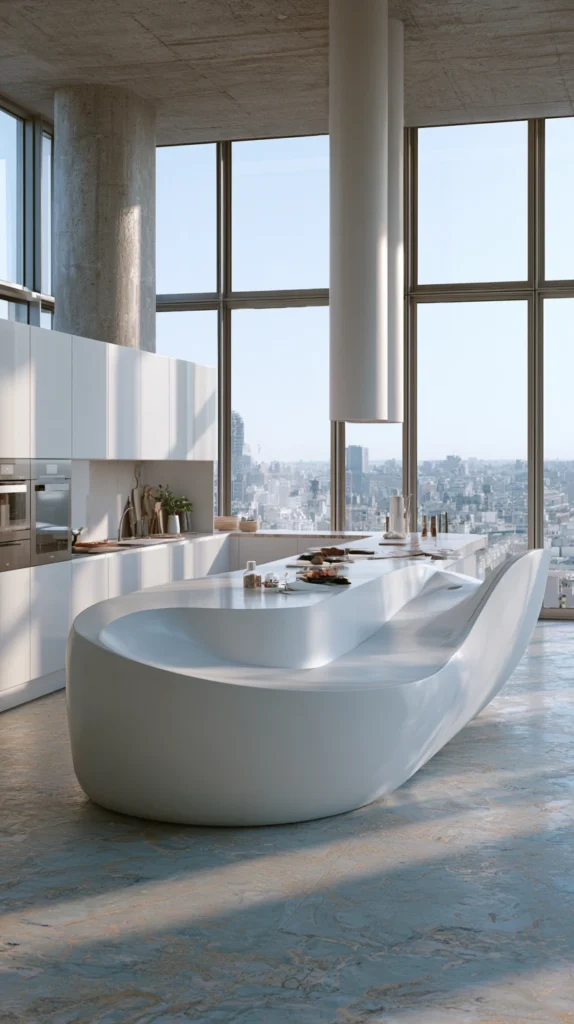
A kitchen island whose plan is not a simple arc but a sinuous double curve — concave on the kitchen-facing side where the cook stands, creating an ergonomic working position that brings the cook into the island’s curve rather than standing straight against a flat surface, and convex on the living-facing side where the seating is positioned, creating the generous, rounded, welcoming form that the seated guest experiences.
It creates the curved island of greatest functional intelligence and greatest formal complexity, its double-curve geometry serving both the cook’s ergonomic requirements and the guest’s social experience simultaneously.
The concave working side of a sinuous island positions the cook within an arc of work surface that keeps every preparation zone within easy reach without requiring the sideways movement that a straight island demands — a functional advantage as significant as the aesthetic quality of the curved form itself.
5. The Curved Island With Integrated Curved Seating
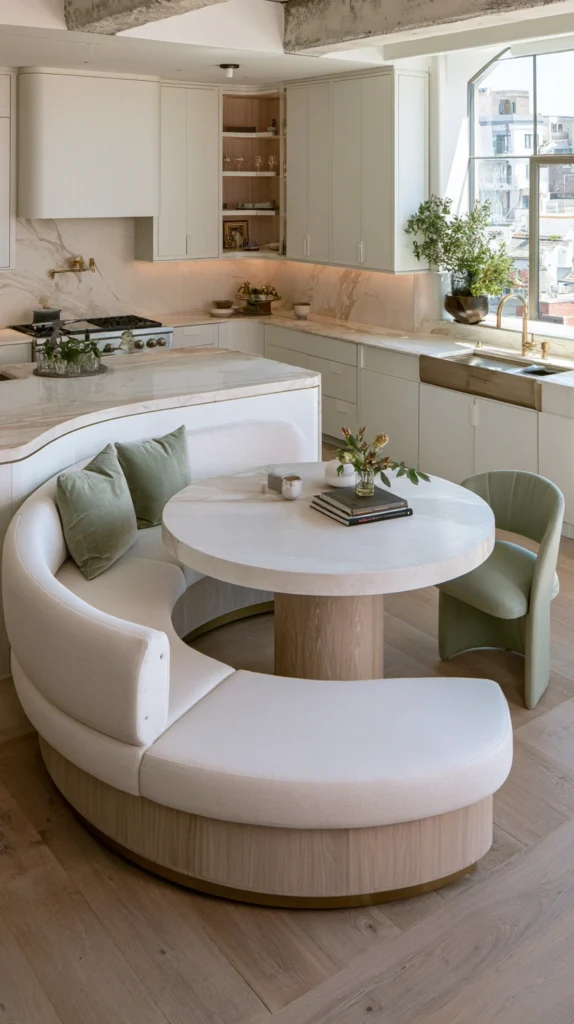
A curved island designed with integrated seating — a banquette or bench seat built as a continuous curved element that follows the island’s perimeter on the seating side, its upholstered seat and back creating an enclosed, intimate seating experience of extraordinary social warmth.
Creates the kitchen’s most completely resolved and most architecturally sophisticated social zone, the island and its seating reading as a single designed composition rather than an island with chairs placed beside it.
The integrated curved bench beside a curved island creates the specific quality of a composed, enclosed dining and gathering space within the kitchen that makes the room feel more like a restaurant booth or a designed interior destination than a domestic kitchen with a seating provision attached.
Upholster the integrated bench in a quality leather or a durable outdoor-rated fabric in a warm neutral tone that suits the kitchen’s palette and handles the inevitable food and drink exposure of kitchen seating without deteriorating.
6. The Curved Island in Unlacquered Brass or Corten Steel
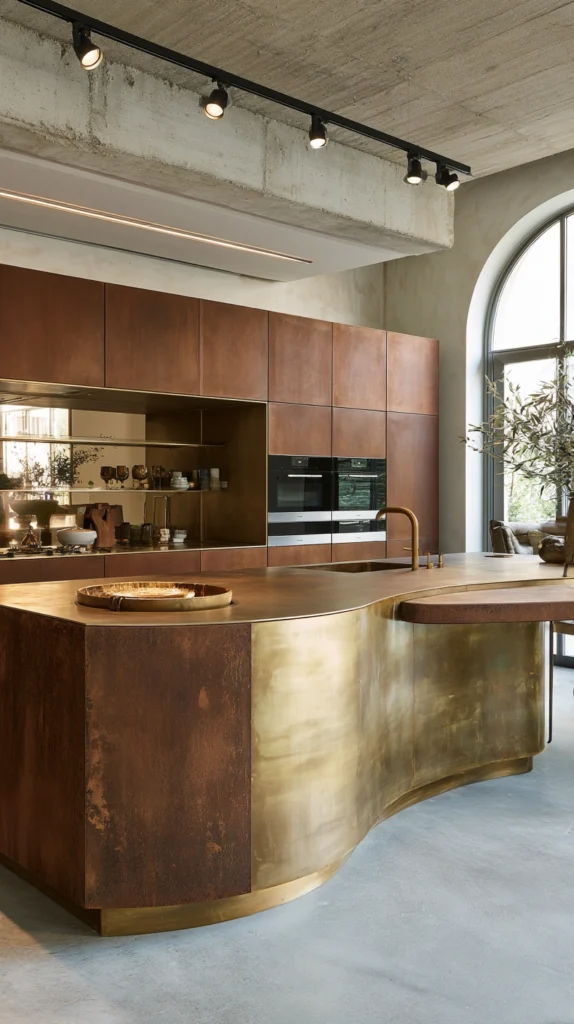
A curved island whose base is clad in unlacquered brass panels or Corten steel — the metal’s warm, slightly imperfect surface develops a natural patina over time in the kitchen environment, its colour and its character changing slowly and beautifully through years of use.
Creates the curved kitchen island of greatest material originality and greatest genuine custom character, the metal cladding on a curved form being an installation of sufficient specialist skill and sufficient material distinctiveness to read as entirely and unmistakably custom-made rather than adapted from a standard specification.
The unlacquered brass curved island base develops the specific quality of warm, aged, genuinely precious material character over time that makes it more beautiful in year five than it was in year one — the patina darkening at the most frequently touched points, the surface developing the colour variation of a material that has been used and touched and lived beside rather than simply installed and preserved.
7. The Curved Concrete Island With Integrated Lighting
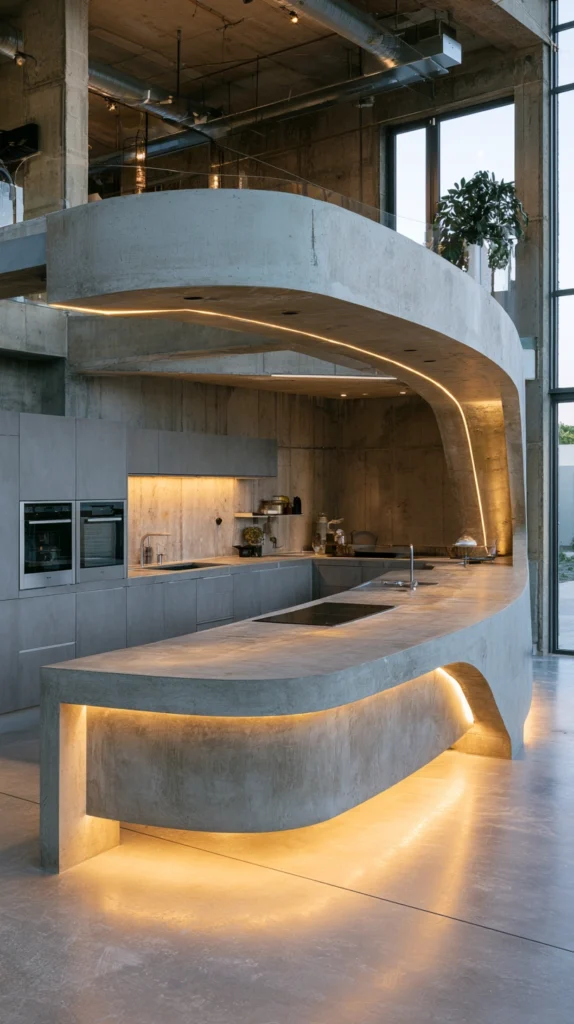
A poured concrete island — its curved form cast in a single pour that eliminates every joint and every material transition from the island’s surface, its warm grey or honey-toned concrete surface providing the honest, slightly industrial material quality that suits the contemporary kitchen’s commitment to material authenticity .
With integrated LED lighting recessed beneath the countertop overhang, the warm light washes the curved base surface and illuminates the floor below the island in a continuous warm band that makes the island appear to float above the kitchen floor, creating the curved island of greatest contemporary design sophistication and greatest material confidence.
The concrete curved island’s integrated lighting is the custom detail of greatest practical impact and greatest evening atmosphere — the island that glows warmly from its base after dark, its curved form emphasised by the direction and the warmth of the light washing its surface, is genuinely extraordinary in a way that the same island without the integrated lighting is not.
8. The Curved Island as a Colour Statement
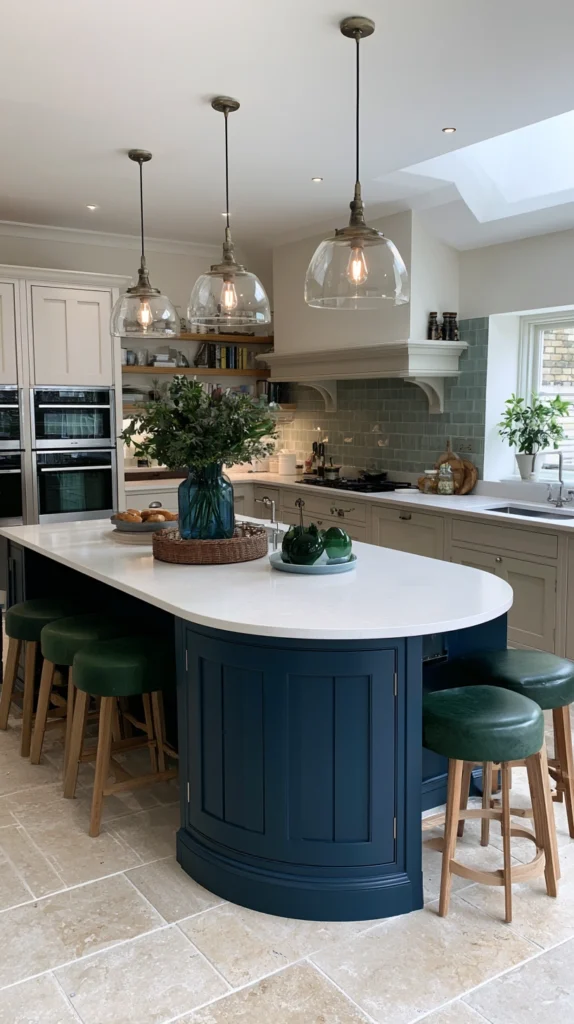
A curved island whose base is painted in a deep, saturated, genuinely bold colour — emerald, navy, terracotta, or the deep sage that the contemporary kitchen uses with such consistent confidence.
While the surrounding perimeter cabinetry remains in white or a warm neutral creates the kitchen’s most immediately impactful and most joyfully confident design statement, the curved form and the bold colour working together to make the island the kitchen’s unmistakable centrepiece of colour and sculptural presence simultaneously.
The bold colour on a curved island reads more powerfully and more completely than the same colour on a straight-edged island because the curve eliminates the visual rigidity of the rectangular form and creates a colour statement of genuine organic warmth — the colour moving around the curved surface in a way that draws the eye continuously rather than defining a static, bounded zone.
9. The Curved Island With a Fluted or Reeded Base
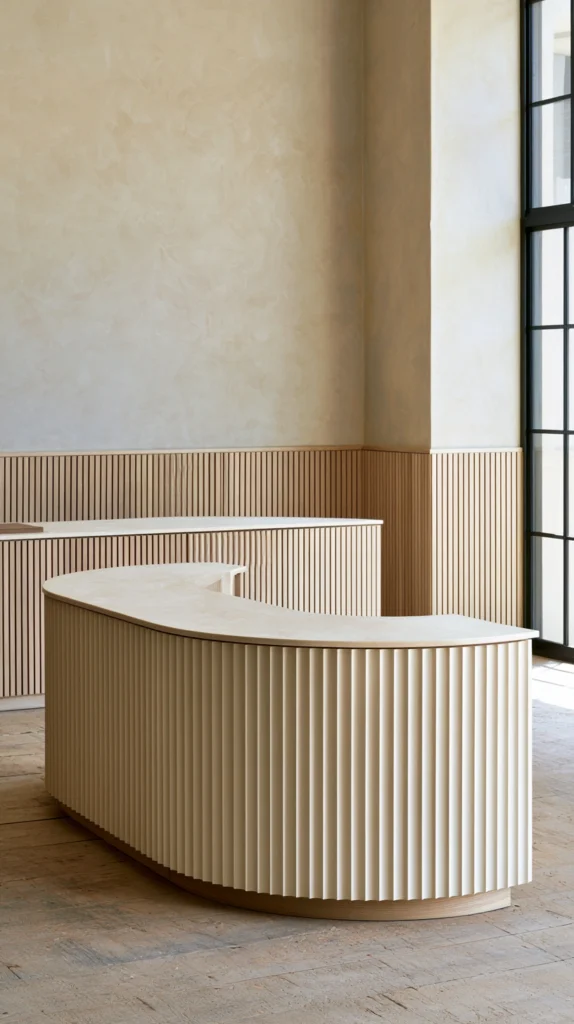
A curved island whose base is finished in a fluted or reeded surface treatment — vertical channels cut or moulded into the island base material at regular intervals, their shadow lines creating a continuous vertical texture of considerable architectural interest and genuine decorative richness .
Creates the custom kitchen island detail of greatest craft quality and greatest historical resonance, the fluted column reference connecting the island to the classical architectural tradition while its application to a curved contemporary island form creates a design moment that is simultaneously deeply historical in its reference and entirely contemporary in its application.
The fluted curved island base in a quality painted MDF or plaster finish is achievable at a modest material cost — the craft quality comes from the precision of the channel cutting and the quality of the paint finish rather than from the intrinsic expense of the base material.
10. The Curved Island With a Honed Stone Waterfall Apron
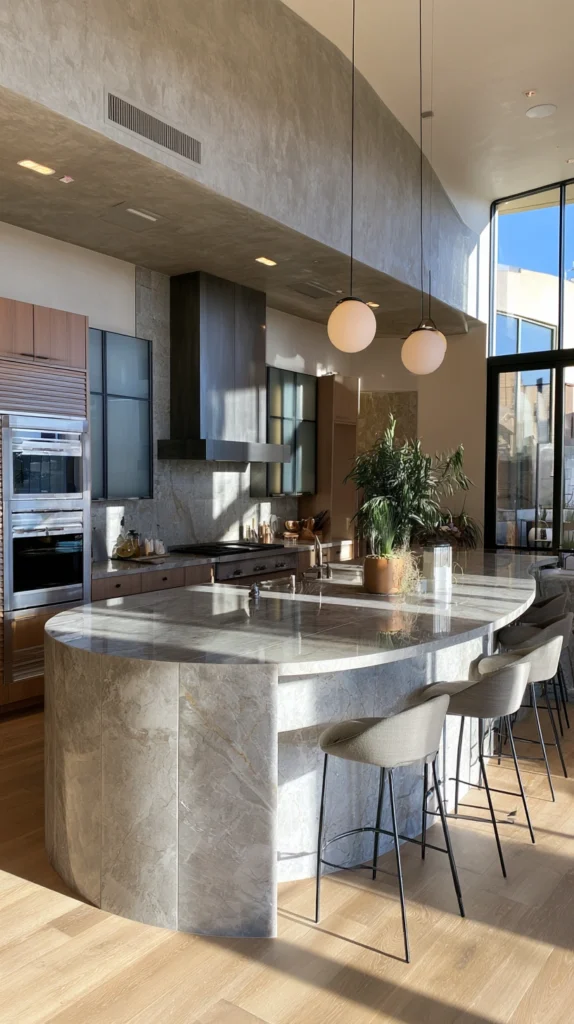
A curved island with a honed stone apron — the countertop material extending vertically down the curved front face of the island in a continuous waterfall panel rather than stopping at the counter edge, the stone wrapping the curve from horizontal to vertical in a single uninterrupted slab .
Creates the most materially complete and most architecturally resolved version of the curved island, its stone covering both the work surface above and the furniture face below in a single continuous material statement of genuine geological beauty.
The honed rather than polished stone specification is the critical detail — the matte surface of a honed stone reads as warm, soft, and organic rather than reflective and hard, creating the specific quality of quiet material luxury that polished stone’s mirror finish, however beautiful, sometimes prevents in favour of a more dramatic, more visually demanding surface character.
11. The Curved Island With Built-In Curved Shelving
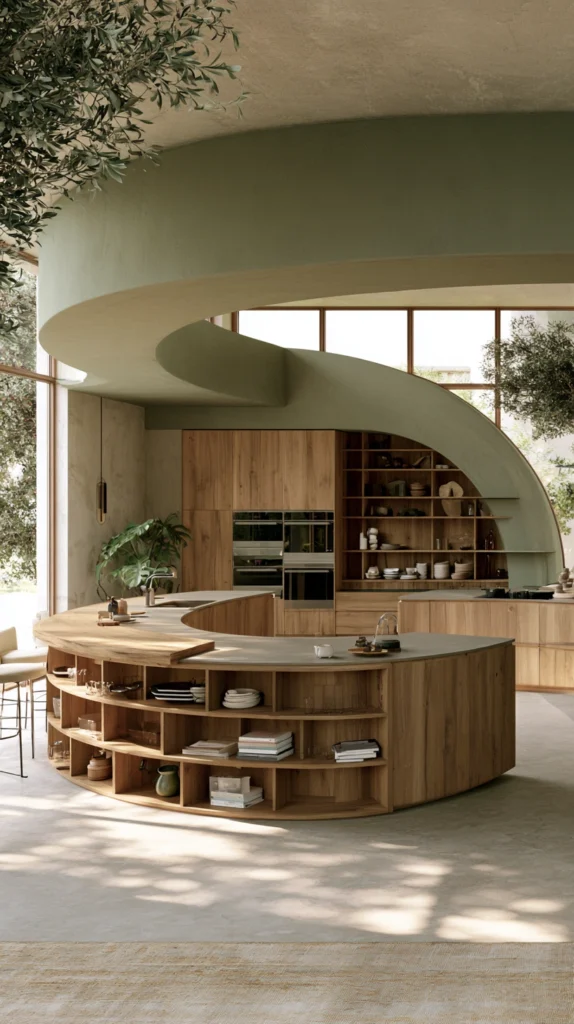
A curved island whose seating-side face incorporates open curved shelves — their shapes following the island’s curvature, their timber or marble surfaces carrying displayed objects that benefit from the island’s social position and its visibility from both the kitchen and the adjacent living space .
creates the curved island of greatest functional complexity and greatest decorative generosity, its shelving contributing to the island’s display potential while its curve creates the specific quality of enclosed, gallery-like display space that straight-edged shelving on a straight-edged island cannot achieve with the same warmth or the same sense of genuine three-dimensional spatial interest.
12. The Curved Island in a Compact Kitchen
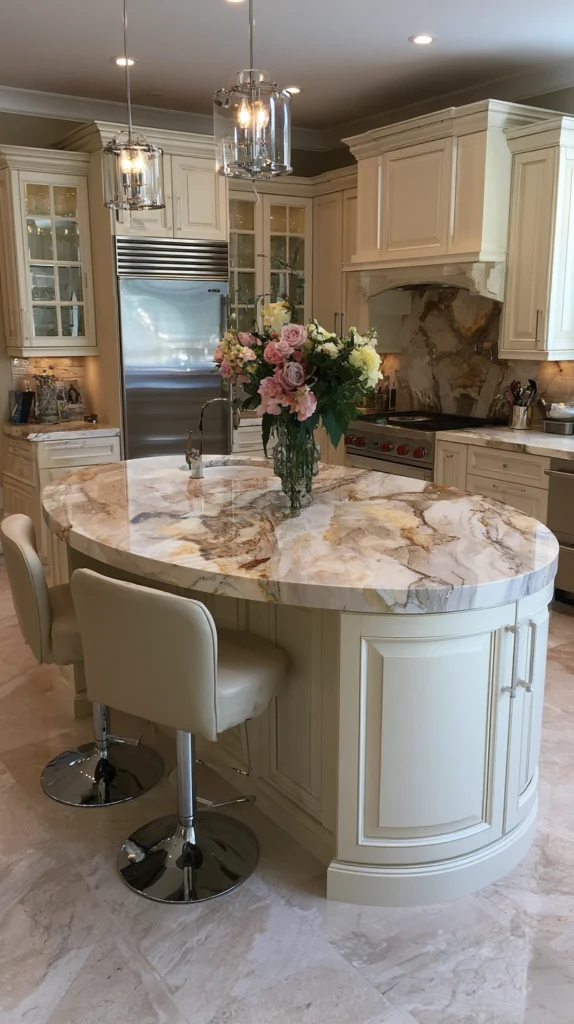
A curved island scaled for a compact kitchen — its dimensions modest but its curve genuine rather than nominal, its form creating the same quality of sculptural presence and organic warmth as a larger curved island while fitting comfortably within the spatial constraints of a smaller kitchen — demonstrates that the curved island’s design quality is not dependent on generous dimensions.
A compact oval island of 120 by 80 centimetres, its curved perimeter providing seating for two on bar stools, its curved base in a bold colour, and its countertop in a quality honed stone, creates the compact kitchen’s most custom-feeling and most spatially generous single element, its curve making the small kitchen feel designed with genuine architectural ambition rather than furnished with whatever fitted within the available space.
13. The Curved Island With Integrated Appliances
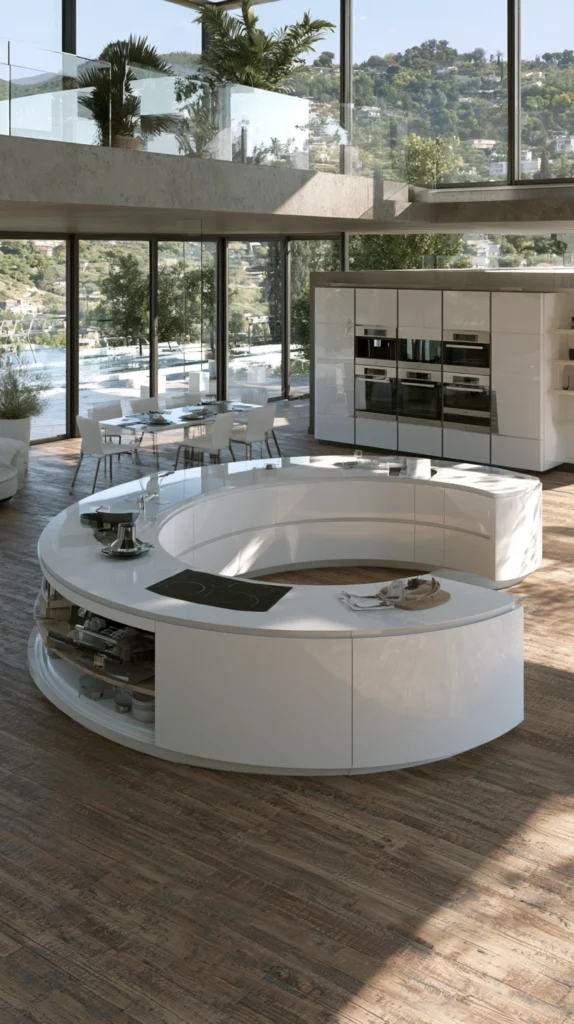
A curved island whose internal structure incorporates integrated appliances — a warming drawer recessed into the curved end, a wine refrigerator integrated into the base on the seating side, a dishwasher positioned within the island’s body with its door flush with the curved base surface.
Creates the curved island of greatest functional completeness and greatest custom engineering sophistication, its hidden appliance integration making the island’s sculptural form the dominant visual experience rather than the practical equipment visible within it.
The curved island with fully integrated appliances requires specialist cabinetmaking that accounts for the non-standard dimensions created by the curved form — the internal carcass geometry of a curved island base is genuinely more complex than a rectangular equivalent, and the integration of standard-dimensioned appliances within a curved structure requires the specific engineering knowledge that distinguishes genuinely custom kitchen cabinetmaking from standard installation.
14. The Curved Island With a Hand-Trowelled Plaster Finish
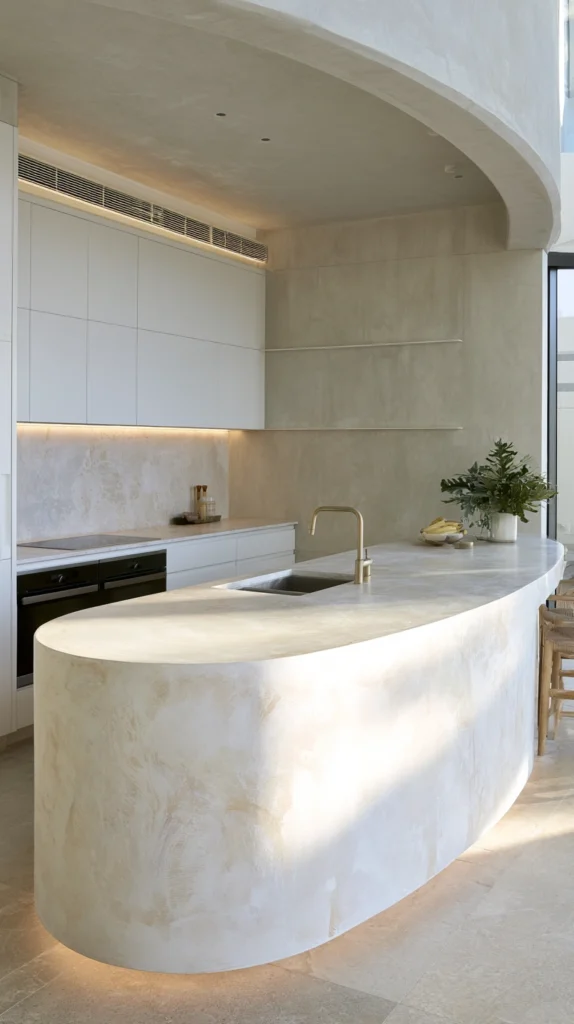
A curved island base finished in a hand-trowelled plaster or Venetian plaster — its slightly textured, slightly irregular surface creating the organic warmth and the handcrafted quality of a material applied with genuine human skill rather than manufactured precision — is the curved island finish that creates the most complete and most authentically custom impression of any non-specialist base treatment available.
The plaster finish on a curved island base is particularly effective because the plaster’s application method — hand-trowelled, the tool marks and the surface variation inherent in the process .
Creates a surface whose texture and slight irregularity are genuinely beautiful rather than simply acceptable, and whose curved application requires the specific skill of a plasterer working around a three-dimensional form rather than across a flat surface.
15. Commission the Curved Island From a Bespoke Kitchen Maker
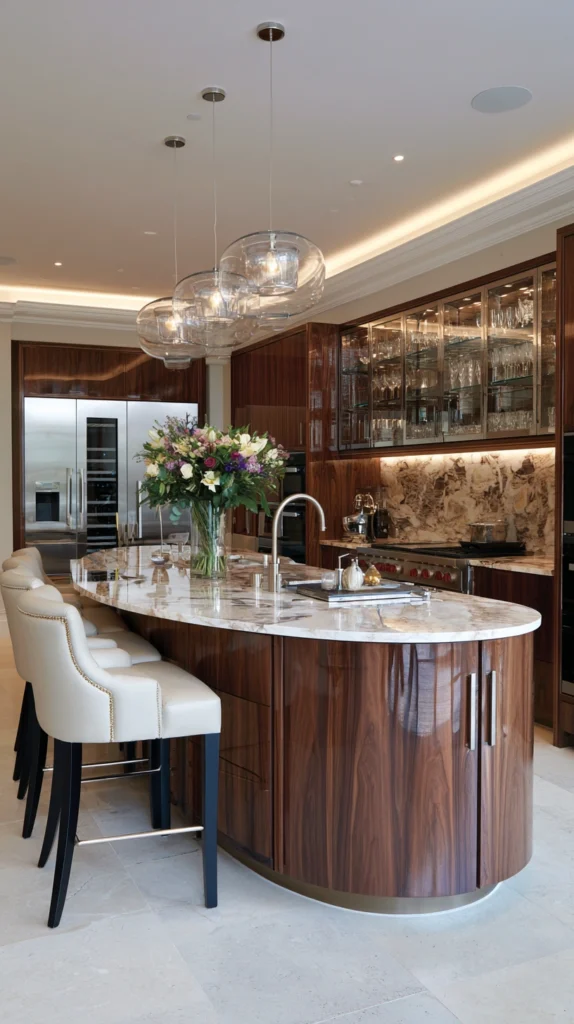
The curved kitchen island that most completely and most genuinely feels custom and expensive is the one that actually is — designed and built by a bespoke kitchen maker whose craft knowledge, whose material sourcing, and whose design collaboration with the client produces an island of genuine individuality and genuine quality that no adapted standard product can replicate.
The bespoke kitchen island commission is the kitchen investment of greatest long-term value and greatest daily satisfaction.
an object designed specifically for the room it occupies, the people who use it, and the life lived around it, built to a quality standard that improves rather than deteriorates with use, and carrying the specific quality of genuine custom design that makes every interaction with the kitchen island a small reminder that this specific object was made for this specific kitchen and exists in no other form anywhere in the world.
Final Thoughts: Choosing the Curved Island That the Kitchen Deserves
The curved kitchen island that genuinely feels custom and genuinely feels expensive is not necessarily the most technically complex or the most materially luxurious of the options on this list.
It is the one chosen and specified with the clearest understanding of the specific kitchen’s proportions, the specific household’s use patterns, and the specific design language of the broader kitchen within which the island will exist as its primary sculptural and social element.
Measure the space with precision, specify the material with genuine commitment to quality, execute the curve with the craftsmanship it requires, and allow the island’s form — its organic, generous, sculptural curve — to do the design work that only a genuinely curved, genuinely considered island can accomplish.
The kitchen with a beautiful curved island is always the kitchen that feels most genuinely, most completely, and most expensively designed — because the curve communicates, immediately and unmistakably, that every decision in this kitchen was made with genuine architectural intention.