

14 Statement Ceiling Ideas That Completely Transform a Room
Most people never look up when they walk into a room.
Designers always do.
The ceiling is the one surface in any room that nobody competes with. No furniture sits on it. No doors interrupt it. No windows cut through it. It is the largest unbroken canvas in the entire space and most homeowners leave it completely blank.
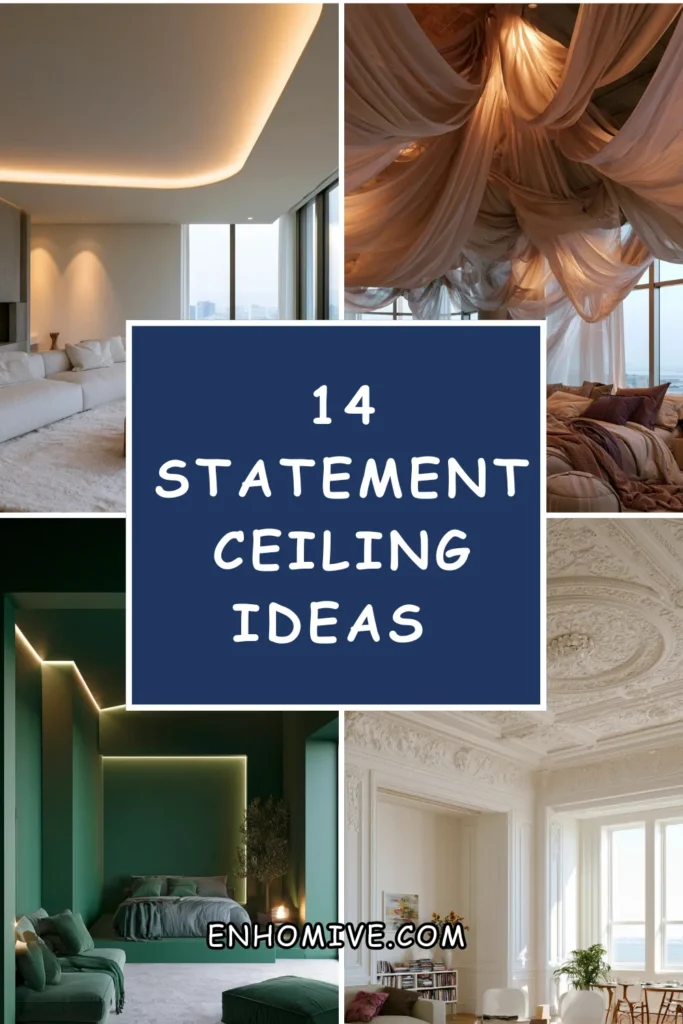
Flat. White. Ignored.
That is a significant missed opportunity. Because a ceiling done well does not just add something to a room. It changes the entire experience of being in it. It makes the room feel taller or more intimate, grander or cosier, more architectural or more human, depending entirely on what you choose to do with it.
The rooms people remember always have something happening overhead.
Here are 14 statement ceiling ideas that prove exactly that.
Why the Ceiling Is the Most Underused Surface in Interior Design
Think about the last room that genuinely stopped you in your tracks.
The chances are very high that something was happening on the ceiling. A dramatic chandelier. Exposed timber beams. A painted colour that made the whole room feel different. Wallpaper that turned a box into an experience.
The ceiling is the fifth wall. Every interior designer knows this. Most homeowners do not act on it.
Part of the reluctance is practical. Ceilings are harder to access than walls. Painting them is awkward. Wallpapering them requires scaffolding or a very tall ladder and a very patient helper.
But the other part is psychological. We default to white ceilings because that is what every room we have ever lived in has had. It never occurs to most people that a ceiling can be treated as a genuine design decision rather than a finishing requirement.
The rooms in this article will change that.
1. Paint It the Same Colour as the Walls
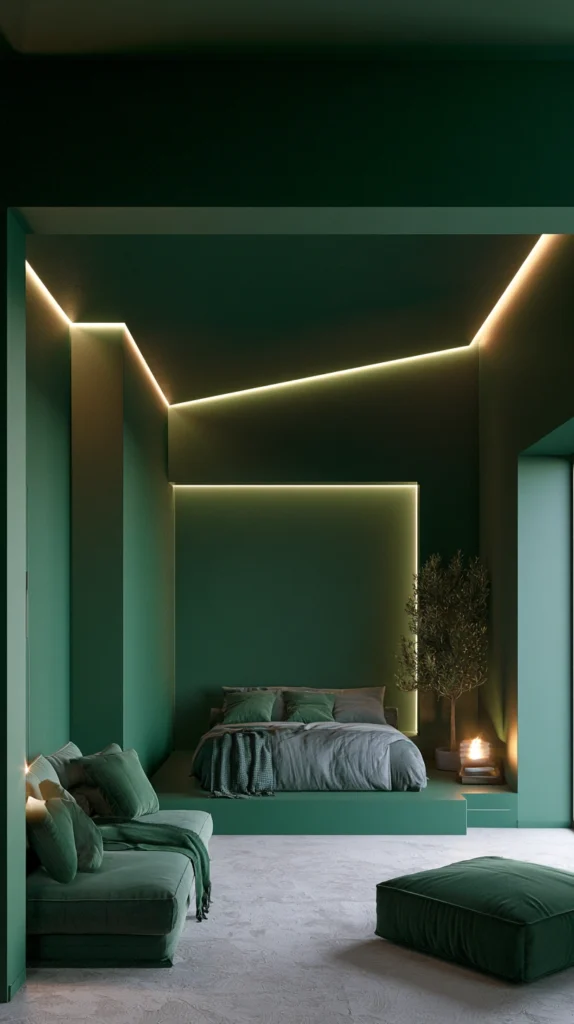
This is the most immediately transformative ceiling decision you can make and it costs nothing extra over a standard ceiling paint job.
When the ceiling is the same colour as the walls the room stops being a box with a lid on it and becomes a fully enclosed space. The eye reads it as intentional rather than incomplete. The colour wraps around you rather than sitting on four sides with a white interruption above.
This works particularly powerfully with deep, dark colours. A forest green room with a forest green ceiling feels like a jewel box. A navy dining room with a navy ceiling feels dramatic and intimate in a way that the same navy on four walls with a white ceiling simply does not.
It also works beautifully with warm neutrals. A terracotta room ceiling-to-floor reads as genuinely enveloping and warm. A warm greige that continues overhead creates a softness that stops anywhere short of the ceiling cannot match.
Paint the trim in the same colour too for maximum effect. Skirting boards, door frames, window architraves all in the same tone as the walls and ceiling. The room becomes a single cohesive experience rather than a collection of surfaces.
Colours that work best ceiling-to-floor:
- Deep forest green with brown or blue undertones
- Warm charcoal that reads almost black in lower light
- Navy blue in a matte finish
- Dusty terracotta in a warm mid-tone
- Rich plum that shifts in different light conditions
- Warm cream or off-white for a softer version of the same idea
2. Exposed Timber Beams
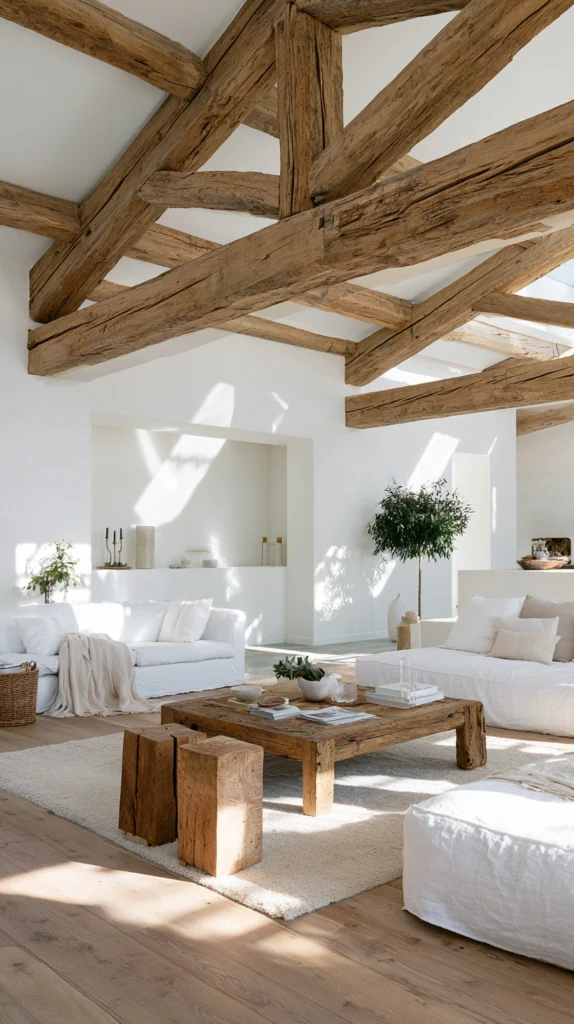
Exposed timber beams on a ceiling do something that no other architectural element can quite replicate.
They add scale, history, warmth, and structural honesty simultaneously. They make a room feel like it was built to last. They connect the interior to the natural world in a way that is organic and immediate rather than decorative and self-conscious.
In a home that genuinely has original timber beams hidden above a plasterboard ceiling, exposing them is one of the highest-impact renovation decisions available. The structural beauty that was covered in a misguided twentieth-century modernisation is revealed and the room is transformed.
In a home without original beams, installing decorative timber beams achieves a remarkably similar effect. Hollow box beams in real hardwood are available in a range of profiles and species. Installed correctly they are virtually indistinguishable from structural beams and the rooms they inhabit gain the same warmth and character.
Dark-stained oak beams on a white plastered ceiling is the classic combination. It creates maximum contrast and the beams read clearly as architectural features. Natural unstained beams on a warm cream ceiling feel softer and more Scandinavian. Painted beams in a contrasting colour to the ceiling offer something more unexpected and contemporary.
The beam spacing matters as much as the beam material. Beams spaced too closely together make a low ceiling feel lower. Beams spaced too far apart on a high ceiling look undersized. Work with the proportions of the room to find the spacing that feels architecturally credible.
3. Ceiling Wallpaper
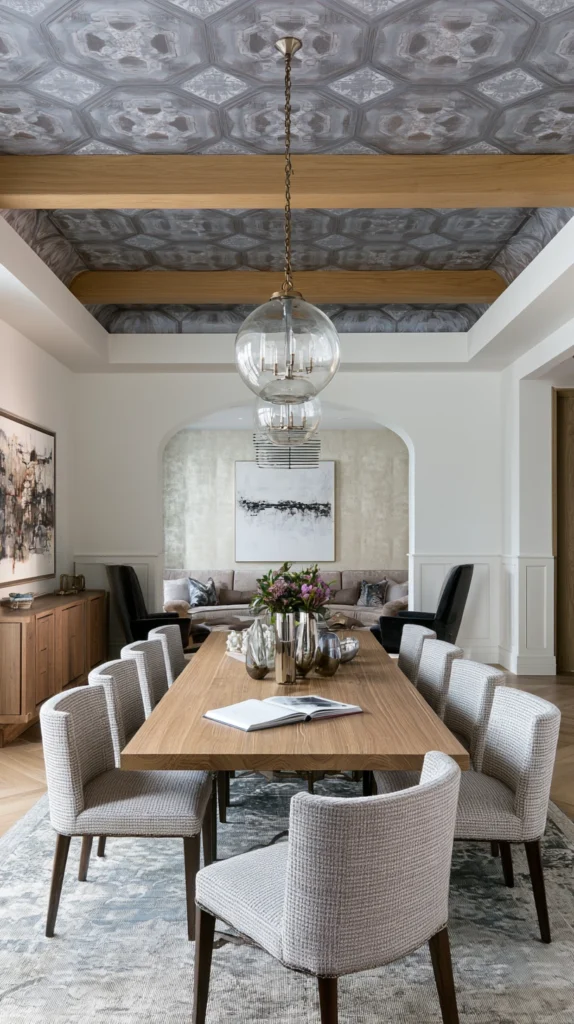
Wallpapering a ceiling is one of the boldest and most rewarding design decisions a homeowner can make.
It is also one of the most frequently recommended ideas that the fewest people actually execute. The installation is genuinely more challenging than wall papering. It requires careful planning, the right tools, and either professional installation or a very committed DIY approach with a helper.
But the result is worth every moment of the effort.
A botanical print wallpaper on a bedroom ceiling creates an experience of lying beneath a canopy of leaves. A geometric pattern on a hallway ceiling draws the eye upward and makes a narrow space feel dramatically taller. A dramatic floral print on a dining room ceiling turns a room that would otherwise be forgettable into the room everyone talks about for years.
Choose the wallpaper with the ceiling scale in mind. A pattern that reads beautifully on a sample card can become overwhelming at ceiling scale if the repeat is very small and busy. Larger scale patterns tend to work better overhead because they can be read from the distance of a full room.
Paste-the-wall wallpapers are significantly easier to install on ceilings than paste-the-paper alternatives. This is worth specifying when choosing the product.
The ceiling is also the ideal place for a wallpaper that feels too bold or expensive for a full room. Half a roll of a spectacular designer wallpaper can cover a ceiling. The effect is extraordinary and the cost is a fraction of papering four walls.
4. Coffered Ceilings
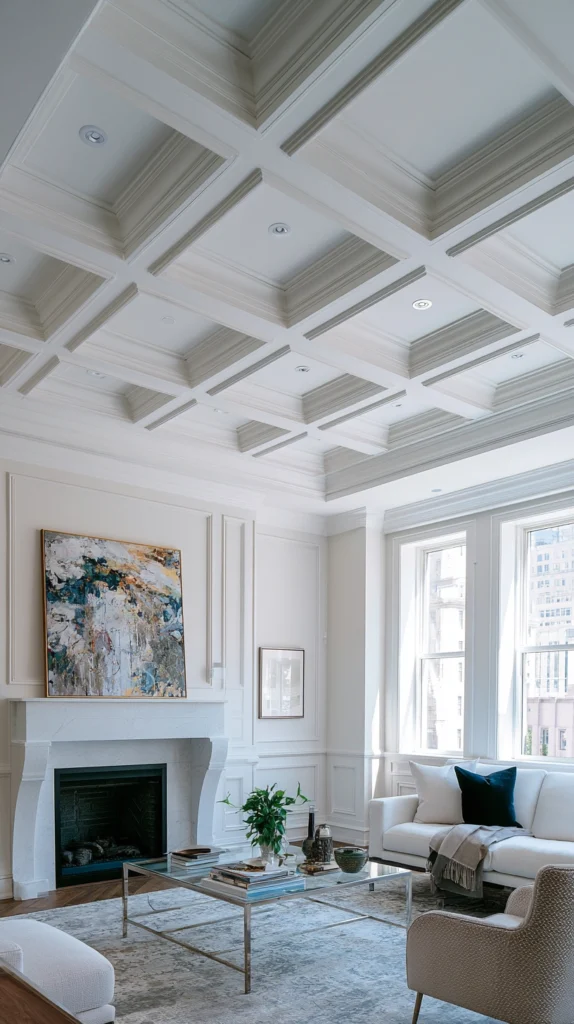
The coffered ceiling is one of the oldest and most enduring architectural details in the history of interior design.
A grid of recessed panels formed by intersecting beams creates a ceiling with depth, shadow, and a sense of craftsmanship that flat ceilings can never achieve. Coffered ceilings appear in Georgian townhouses, American Federal architecture, grand European country homes, and contemporary new builds that want to communicate quality and permanence.
They make a room feel finished in a way that is difficult to articulate but immediately apparent to anyone who experiences it. The three-dimensional quality of the coffers creates shadow patterns that shift throughout the day as the light changes. The room looks different at noon than it does at four in the afternoon.
Traditional coffered ceilings are formed from plaster and timber by skilled tradespeople. This is beautiful but expensive. Contemporary coffered ceilings using MDF panels and timber mouldings achieve very nearly the same effect at a fraction of the cost and can be installed by a competent joiner or ambitious DIYer.
Paint the coffered ceiling a single colour for a clean, contemporary interpretation. Paint the recessed panels a slightly different tone from the beams for something more traditional and layered. Or paint the entire ceiling and surrounding walls the same colour and let the shadow patterns in the coffers do the decorative work.
5. Tongue-and-Groove Wood Panelling
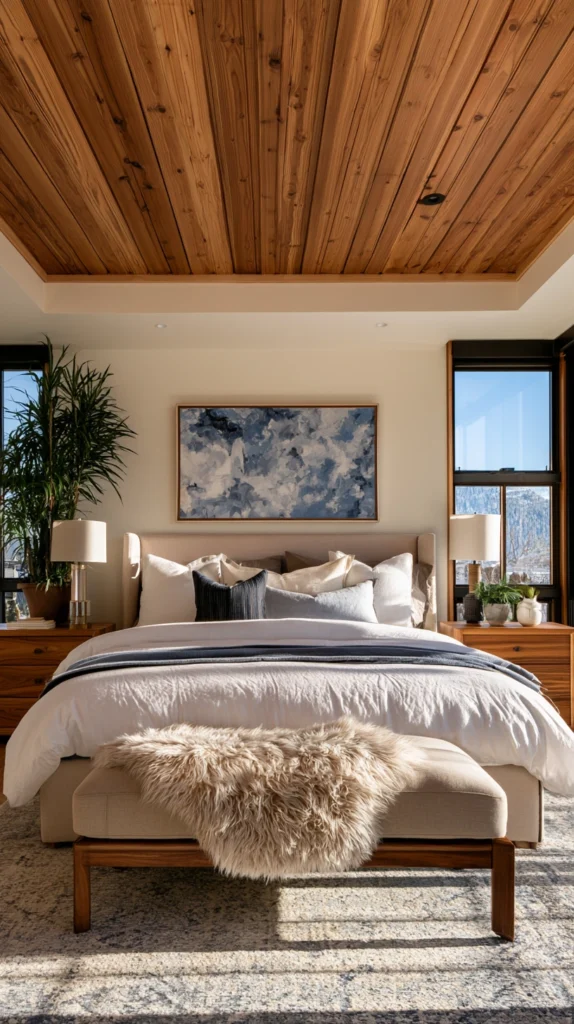
A tongue-and-groove wood-panelled ceiling transforms a room in a way that is difficult to achieve with any other material.
It adds warmth. It adds texture. It adds an immediate connection to natural materials that painted plaster cannot replicate. In a room with dark walls and layered textiles, a wood-panelled ceiling is the element that brings the whole scheme together.
Painted tongue-and-groove in a ceiling is different from stained or natural wood. Paint it white for a beach house or Hamptons aesthetic. Paint it the same colour as the walls for the fully enveloping approach described earlier. Paint it black for something genuinely dramatic and unexpected.
Left natural or lightly oiled, tongue-and-groove wood panelling has a Scandinavian sauna quality that works beautifully in bathrooms and bedrooms. It makes a bathroom feel like a spa retreat. It makes a bedroom feel like a mountain cabin in the best possible way.
The direction of the boards matters to the perceived shape of the room. Running boards along the length of a rectangular room makes the room feel longer. Running them across the width makes it feel wider. Running them from the door to the far wall draws the eye in and makes the room feel deeper.
6. A Dramatic Chandelier as the Ceiling Statement
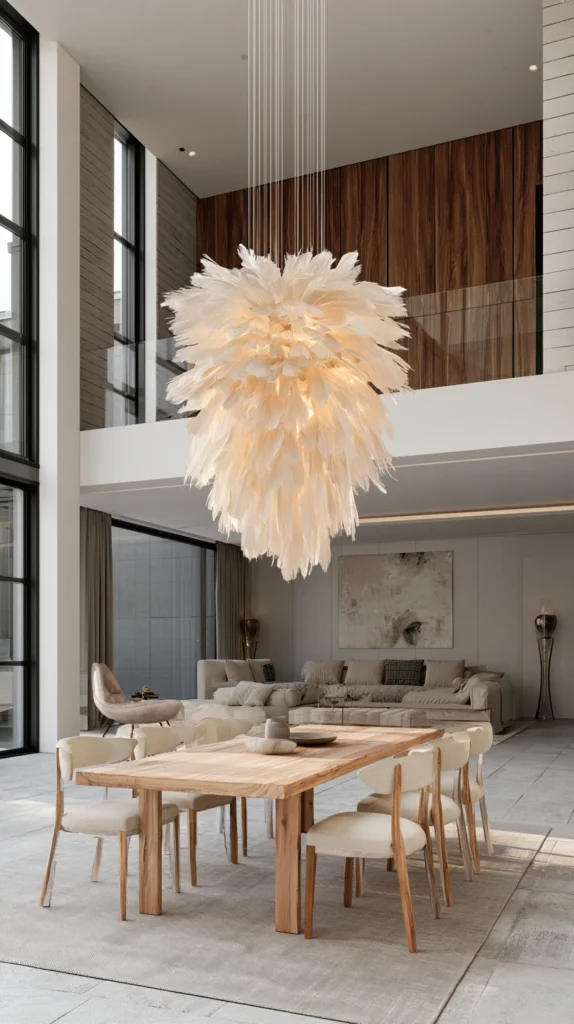
Sometimes the ceiling treatment is not about what you do to the surface itself.
It is about what you hang from it.
A single extraordinary chandelier is a ceiling statement as powerful as any architectural treatment. It draws the eye upward, anchors the room beneath it, creates a focal point that every other design decision organises around, and fills the overhead space with light, material, and visual interest simultaneously.
The chandelier for a statement ceiling is not a modest, appropriately scaled fitting. It is deliberately oversized. It fills the space with confidence. It makes you look up the moment you enter the room.
In a dining room a chandelier hung low over the table creates an intimate canopy of light that changes the entire atmosphere of eating there. In a hallway a dramatic chandelier visible from the front door communicates everything about the character of the home beyond it. In a living room a sculptural chandelier in rattan, glass, or blackened steel becomes the first thing every visitor looks at and the last thing they forget.
Scale up. The most common chandelier mistake is choosing one that is too small for the space. A chandelier that looks right in the showroom almost always looks underwhelming once it is hanging in the actual room.
7. Painted Ceiling Medallions and Decorative Plasterwork
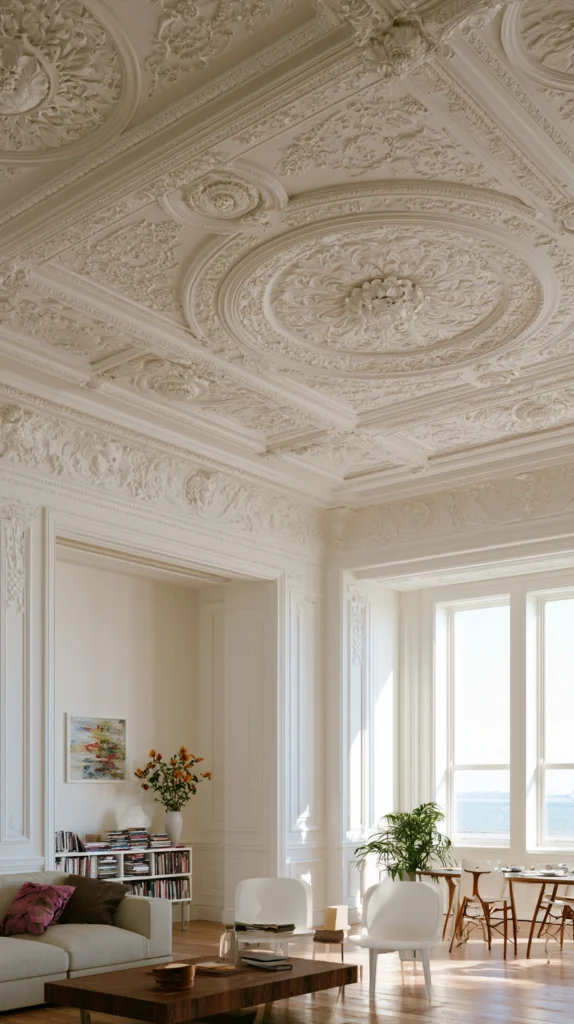
Before wallpaper, before exposed beams, before every contemporary ceiling treatment in existence, there was painted plasterwork.
The great houses of Europe covered their ceilings in elaborate plaster mouldings, painted in contrasting colours, gilded, and decorated with scenes from mythology. The result was ceilings so beautiful that tourists still travel specifically to look up at them.
You do not need a castle or a country house to use this approach.
A simple plaster ceiling rose painted in a contrasting or complementary colour to the ceiling is the most accessible version. A ceiling rose that has been ignored and painted over white for decades, stripped back and repainted in a deep tone, becomes an architectural feature that makes the entire room feel more considered.
More elaborate plasterwork borders, cornice details, and ceiling panels painted in two or three carefully chosen tones add extraordinary richness to a period room. The layering of colours in plasterwork requires a careful hand and a well-chosen palette but the result is genuinely extraordinary.
Contemporary homes can use a simpler version of the same principle. A geometric design painted directly onto a flat ceiling in two contrasting tones. A painted ceiling border that frames the room. A freehand mural that turns the ceiling into the most spectacular piece of art in the house.
8. Mirrored or Reflective Ceiling Panels
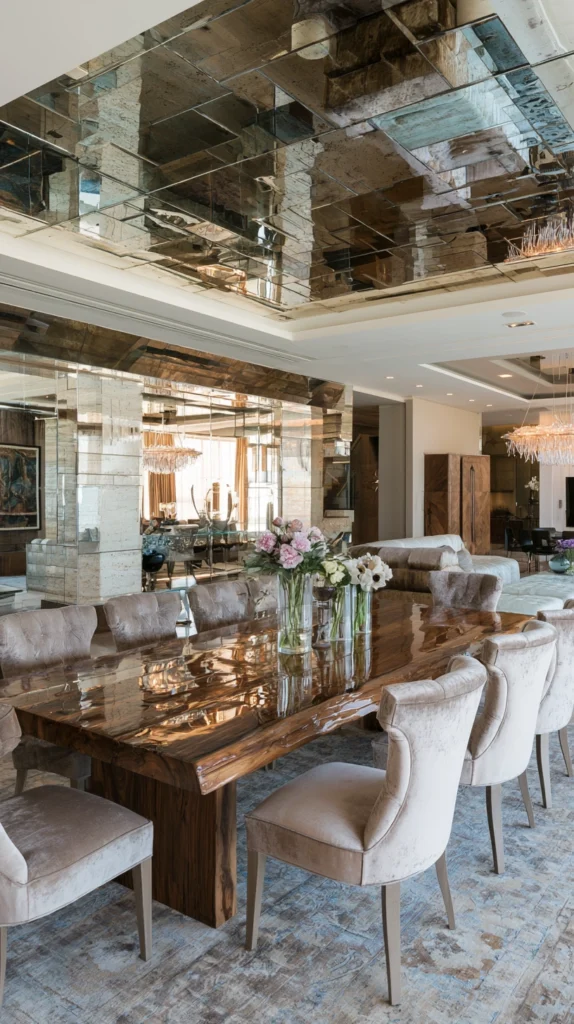
A mirrored ceiling is the most dramatic and divisive statement ceiling on this list.
Done wrong it looks like a 1970s nightclub. Done right it looks like the most considered and spectacular room you have ever been inside.
The difference is in the application and the room.
Full mirrored ceilings in a large room feel overwhelming and slightly vertiginous. Mirrored ceiling panels in a specific zone, above a dining table, over a bathtub, or in the central section of a hallway, feel considered and intentional rather than excessive.
Antique mirror glass rather than standard mirror is the version that works in a domestic interior. Antique mirror has a clouded, foxed quality that is warm and imperfect rather than sharp and reflective. It bounces light and doubles the visual depth of a room without creating the hard, precise reflections of standard mirror.
Used in a bathroom above a freestanding bath, antique mirror ceiling panels create an atmosphere that is genuinely unlike anything else in residential design. Used in a dining room they make the room appear to continue upward indefinitely.
The structural requirements for ceiling mirrors are significant and professional installation is essential.
9. A Canopy of Fabric or Draped Textiles
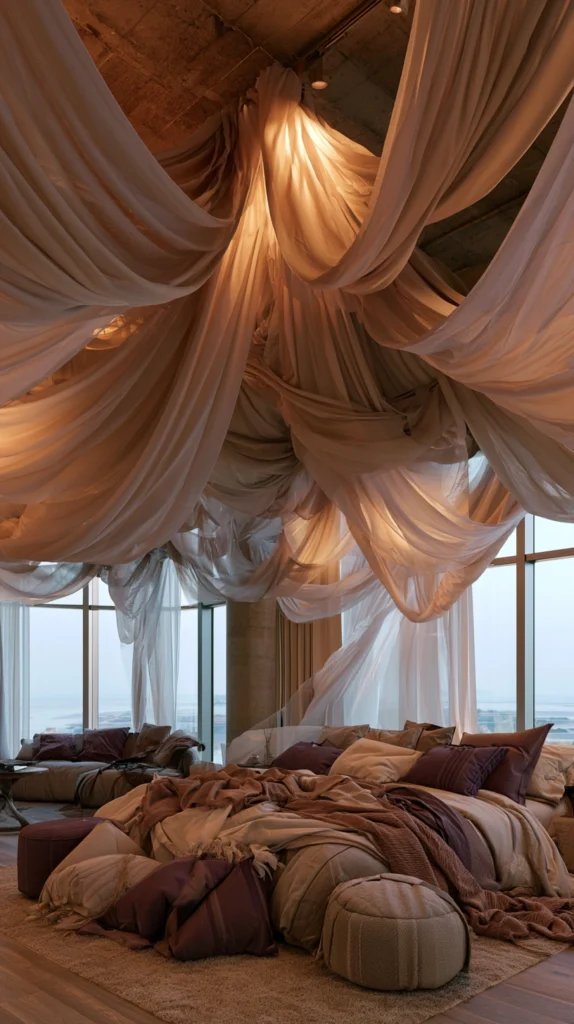
A fabric canopy over a bed is one of the oldest and most romantic ceiling treatments in the history of interior design.
And in the right bedroom it still feels as extraordinary as it ever did.
Floor-to-ceiling fabric panels gathered at a central point in the ceiling above the bed, then cascading down to the four corners of the room, create an enclosed, canopied sleeping space that feels both intimate and spectacular. The fabric softens sound, creates visual warmth, and transforms an ordinary bedroom into something that feels genuinely special.
The fabric choice defines the mood entirely. Sheer white voile creates a romantic, ethereal quality. Heavy linen in a warm neutral feels earthy and grounded. Deep velvet in a jewel tone is maximalist and dramatic. Printed cotton in a botanical pattern brings a garden quality indoors.
This treatment works beyond bedrooms too. A fabric canopy above a dining table, gathered at a central chandelier point, creates an extraordinary ceiling in a room that might otherwise have nothing interesting happening overhead. A draped textile ceiling in a snug or reading room makes the most intimate possible space within a larger home.
10. Industrial Ceiling With Exposed Ductwork and Pipework
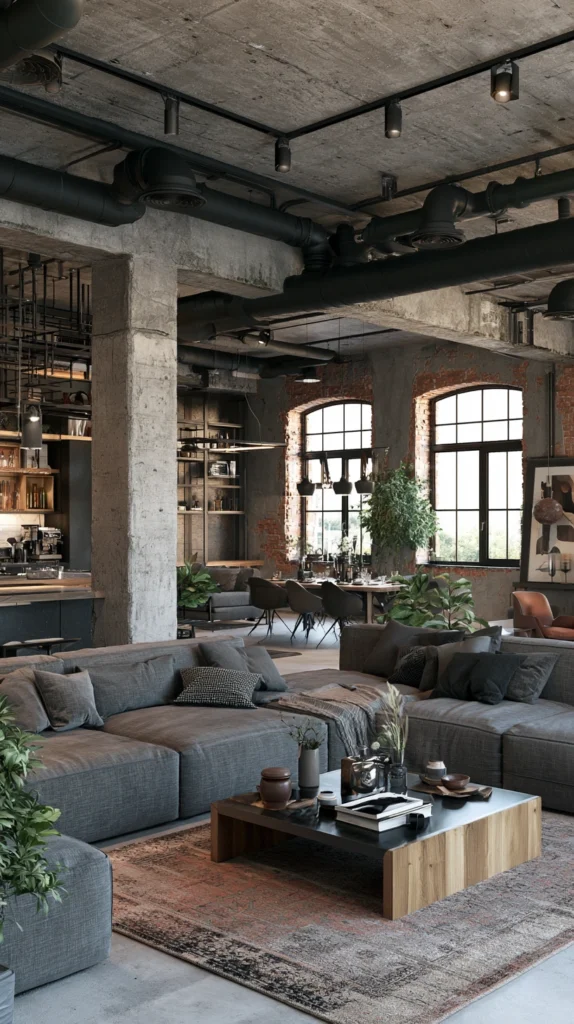
The industrial aesthetic borrowed exposed ceiling infrastructure from warehouses and factories and turned it into one of the most distinctive and influential looks in contemporary interior design.
An exposed concrete ceiling with visible structural steel. Metal ductwork left unpainted and celebrating its utilitarian origins. Electrical conduit running openly along ceiling joists. Pipework that would have been boxed in and hidden now left in full view as an architectural feature.
This is not a look that suits every home. It belongs to loft conversions, warehouse apartments, and contemporary new builds that want to reference industrial heritage. In a period cottage or a traditional family home it reads as incongruous rather than cool.
But in the right space it is spectacular.
The key to making exposed industrial ceiling elements work is the contrast with everything below. Soft furnishings, warm wood tones, plants, and layered textiles against an exposed concrete and steel ceiling create a tension that is genuinely compelling. The raw above and the refined below tell a story about the building’s history and its current life simultaneously.
Paint exposed ductwork and pipework in a consistent colour rather than leaving it in mixed original finishes. All black. All white. All the same deep grey. Consistency makes industrial elements feel designed rather than unfinished.
11. A Hand-Painted Mural
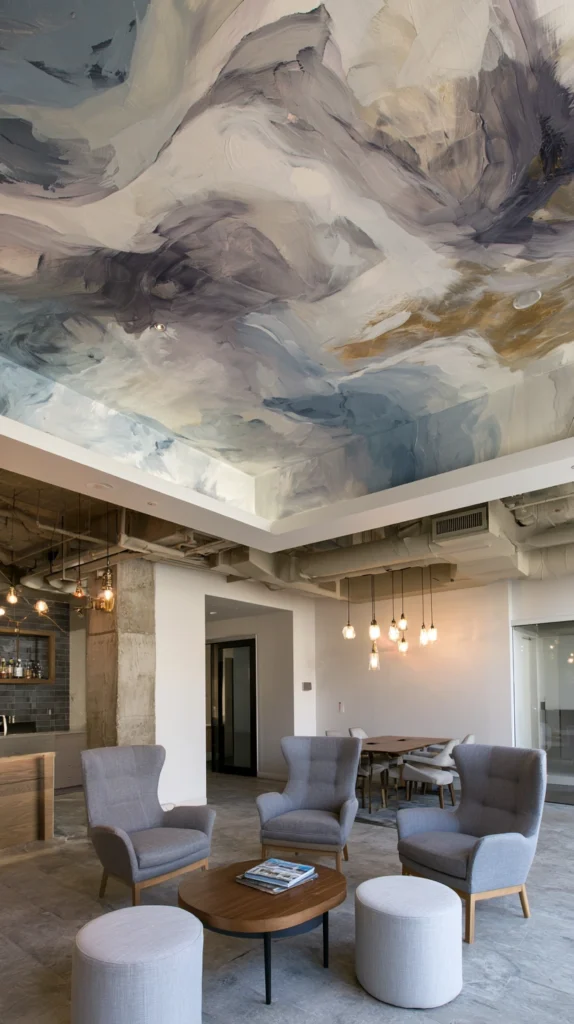
A hand-painted ceiling mural is the most committed, most personal, and most irreplaceable ceiling statement available.
No two are the same. Once painted it cannot be replicated anywhere else. It is specific to the room, the home, and the hand of the artist who made it.
Sky ceilings in a bedroom, painted to look like a clear blue sky with soft clouds, have been making children’s rooms magical for generations. In an adult bedroom the same concept executed by a skilled muralist creates something between a sleeping space and a work of art.
Abstract painted ceilings, botanical scenes, geometric patterns, trompe l’oeil architectural details that make a room appear taller than it is. The possibilities are genuinely limitless.
The investment in a skilled muralist is significant but the result is permanent, unique, and completely personal. It is the ceiling that never needs to be changed because it is already exactly right for the room it was made for.
For homeowners who want to attempt it themselves, a simple geometric design taped and painted in two carefully chosen tones is achievable without professional artistic skill. The ceiling scale makes even a simple painted pattern look deliberately dramatic.
12. Stretched Fabric Ceiling Systems
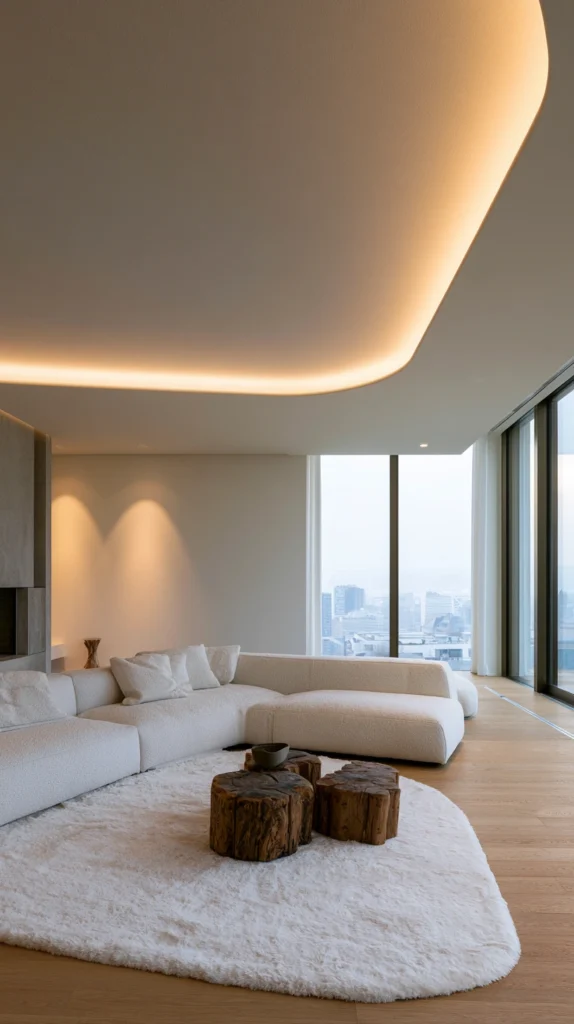
Stretched fabric ceiling systems are one of the most professional and least-known ceiling treatment options available to homeowners.
A lightweight fabric panel is stretched across a proprietary aluminium track system and fixed to the ceiling perimeter. The result is a perfectly smooth, seamless surface in any colour or printed design that the homeowner chooses.
The practical advantages over wallpaper are significant. The fabric can be removed and replaced without damaging the ceiling below. Lighting can be integrated behind the fabric panel for a backlit ceiling effect that is genuinely extraordinary. The system conceals imperfect ceilings, old stains, and uneven surfaces without any plastering or preparation work.
A backlit stretched fabric ceiling in a home cinema room creates a ceiling that glows softly, eliminates harsh overhead light, and gives the room a quality that no other ceiling treatment achieves.
In a bathroom a stretched fabric ceiling in a botanical print or calm abstract design adds the kind of personality that bathrooms almost never have above head height.
The installation requires professional fitting but the ceiling can subsequently be changed by the homeowner without professional help once the track system is in place.
13. Ceiling-Mounted Curtain Tracks for Drama and Flexibility
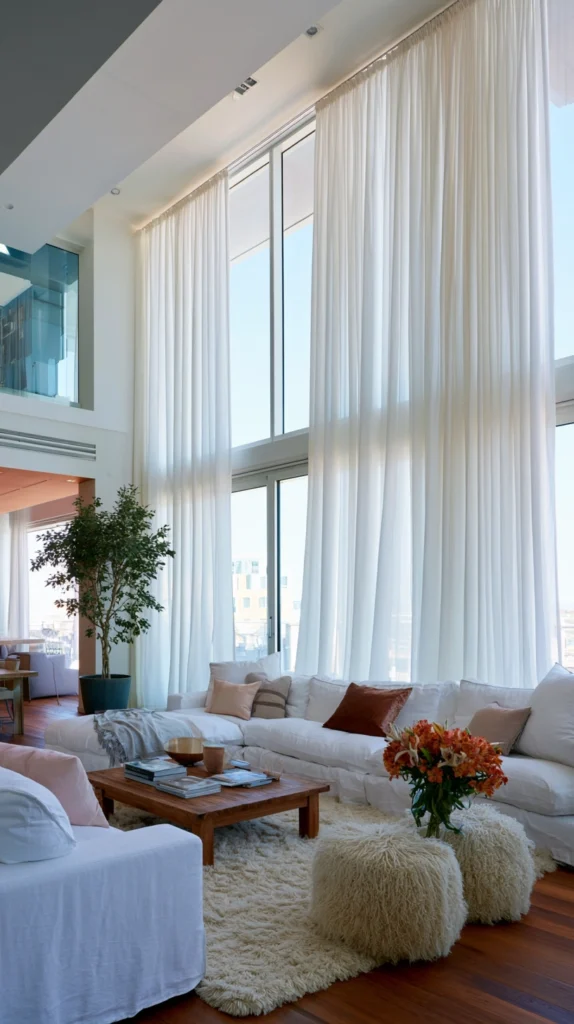
Ceiling-mounted curtain tracks running wall to wall are one of the most architecturally dramatic things you can do to any room.
Not curtains on a window. Curtains that hang from the ceiling across the full width of the room. Floor to ceiling fabric panels that can be drawn to divide the space, conceal storage, frame a bed, or simply create a dramatic textile backdrop that transforms the room when closed.
In a bedroom, ceiling-mounted curtains drawn around the bed create a four-poster effect without the four-poster frame. The room within the room quality is intimate and beautiful.
In an open-plan space, ceiling-mounted tracks allow flexible division of the area without permanent walls or partitions. The curtains drawn create separate zones. The curtains open return the space to its full scale.
In a studio apartment, ceiling curtains conceal an entire wardrobe or storage wall behind beautiful fabric. The practical solution is simultaneously the most dramatic element in the room.
The ceiling track itself is part of the statement. A visible ceiling-mounted track in blackened steel or polished brass communicates quality and intention. The curtain panels should be floor-length, generously full, and made from a fabric heavy enough to hang beautifully without billow or sag.
14. Acoustic Panels Designed to Be the Feature
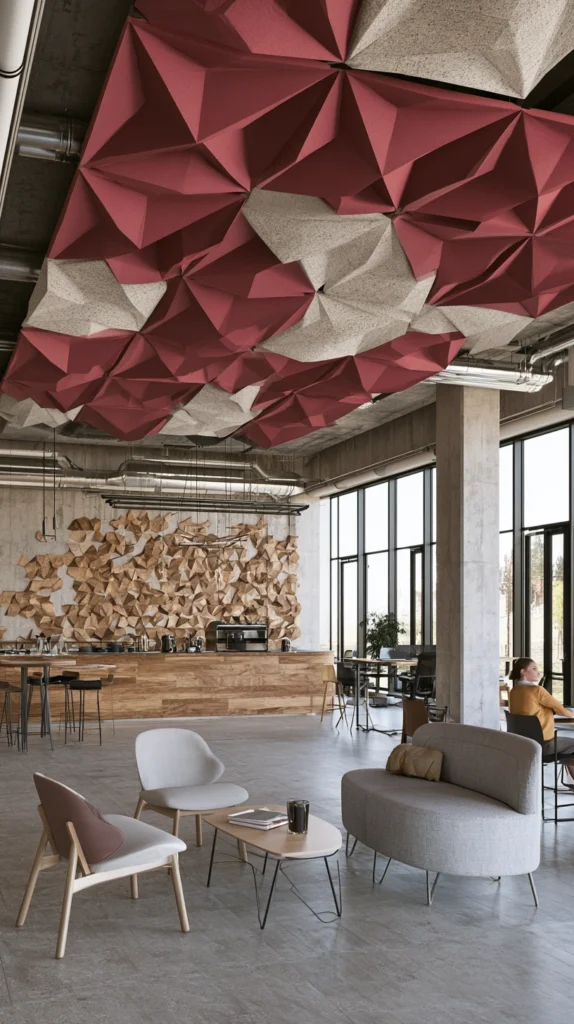
Every interior designer’s most practically justified ceiling treatment is also, increasingly, one of the most beautiful.
Acoustic ceiling panels absorb sound, reduce echo, and transform the acoustic quality of a room that suffers from noise bounce. In open-plan spaces, home offices, music rooms, and any room with hard surfaces and high ceilings, acoustic panels are not a luxury. They are a necessity.
For years the standard acoustic panel was a grey rectangle of compressed mineral wool that communicated industrial function with no aesthetic consideration. They worked. They looked terrible.
Contemporary acoustic panels are designed objects. Geometric forms in bespoke colours that can be configured in patterns across a ceiling. Wave forms that create a three-dimensional ceiling landscape. Baffle systems that hang at different heights, creating depth and movement overhead. Natural material panels in felt, wool, and timber that look beautiful in any domestic interior.
Commission acoustic ceiling panels in your wall colour and they read as a sculptural installation rather than a sound management solution. Choose them in a contrasting bold colour and they become the most striking feature of the room.
The functional and aesthetic benefits are completely unified. The room sounds better and looks better simultaneously.
How to Choose the Right Statement Ceiling for Your Room
The proportions of the room should be the first consideration.
A room with low ceilings needs a treatment that creates the illusion of height. Vertical elements like ceiling-mounted curtains or wallpaper with a strong vertical pattern draw the eye upward. Painting the ceiling the same light colour as the walls removes the visual boundary and makes the room feel taller.
A room with high ceilings can handle treatments that bring the scale down. Exposed beams, coffered grids, and draped fabric canopies make tall rooms feel more intimate and human without reducing their architectural grandeur.
The style of the home matters equally. An exposed industrial ceiling belongs in a loft conversion. Coffered plasterwork belongs in a Georgian townhouse. Tongue-and-groove panelling belongs in a coastal or woodland setting. A hand-painted mural belongs wherever the homeowner has the courage to commission one.
Consider the relationship between the ceiling and the room below it. The most successful statement ceilings work in dialogue with the floors, walls, and furniture rather than competing with them. A spectacular ceiling in a room with equally spectacular walls and furniture creates chaos. A spectacular ceiling in a relatively calm room creates a clear focal point that the eye finds and returns to with pleasure.
Common Mistakes With Statement Ceilings
Choosing a treatment that fights the room’s proportions. Heavy coffered ceilings in a room with low ceilings make the room feel lower. Delicate wallpaper in a room with very high ceilings disappears into the distance. Always work with the proportions rather than against them.
Under-scaling the chandelier. The most universal ceiling mistake. Measure the room, follow the sizing guidelines, and then size up one level from there. Chandeliers that are too small look apologetic.
Using the wrong paint finish on a ceiling. Matte finish hides imperfections in plasterwork. Eggshell or silk on an imperfect ceiling highlights every bump and flaw with unflattering reflection. Always use matte on ceilings unless the surface is perfectly smooth.
Ignoring the ceiling in a room refresh. Repainting four walls and doing nothing with the ceiling wastes an enormous opportunity. The ceiling is always part of the design whether it is treated as such or not.
Wallpapering the ceiling without preparing properly. Ceiling wallpaper that lifts, bubbles, or peels at the seams is significantly more difficult to fix than wall wallpaper. The preparation, priming, and adhesive selection must be correct before a single panel goes up.
Making the ceiling the only statement in the room. A statement ceiling works best when the room beneath it is interesting too. A spectacular ceiling over bare walls and no furniture is a ceiling in search of a room.
Quick Summary
- Painting walls and ceiling the same dark colour creates a fully enveloping space that transforms any room
- Exposed or decorative timber beams add warmth, scale, and natural material connection simultaneously
- Ceiling wallpaper is the most impactful surface treatment most homeowners never attempt
- Coffered ceilings add three-dimensional depth and shadow that flat ceilings can never achieve
- Tongue-and-groove wood panelling brings natural warmth overhead in any direction you choose to run the boards
- An oversized chandelier is a ceiling statement as powerful as any architectural treatment
- Painted plasterwork and ceiling medallions in contrasting tones honour period architecture beautifully
- Antique mirrored ceiling panels add depth and light reflection without the harshness of standard mirror
- Fabric canopies and draped textile ceilings create intimate enclosure in bedrooms and dining rooms
- Exposed industrial infrastructure works spectacularly in loft and warehouse spaces with warm contrast below
- A hand-painted mural is the most personal and irreplaceable ceiling statement of all
- Stretched fabric ceiling systems allow backlit effects and easy future changes
- Ceiling-mounted curtain tracks create drama, flexibility, and room-within-room possibilities
- Acoustic panels designed as decorative objects solve a functional problem and look extraordinary doing it
- Always work with the proportions of the room and choose a scale appropriate to the ceiling height
- Size your chandelier larger than feels comfortable and you will almost always be right
Nobody remembers the white ceiling.
Everybody remembers the room where something extraordinary was happening overhead.
The ceiling is waiting. It has always been waiting.
Look up.