
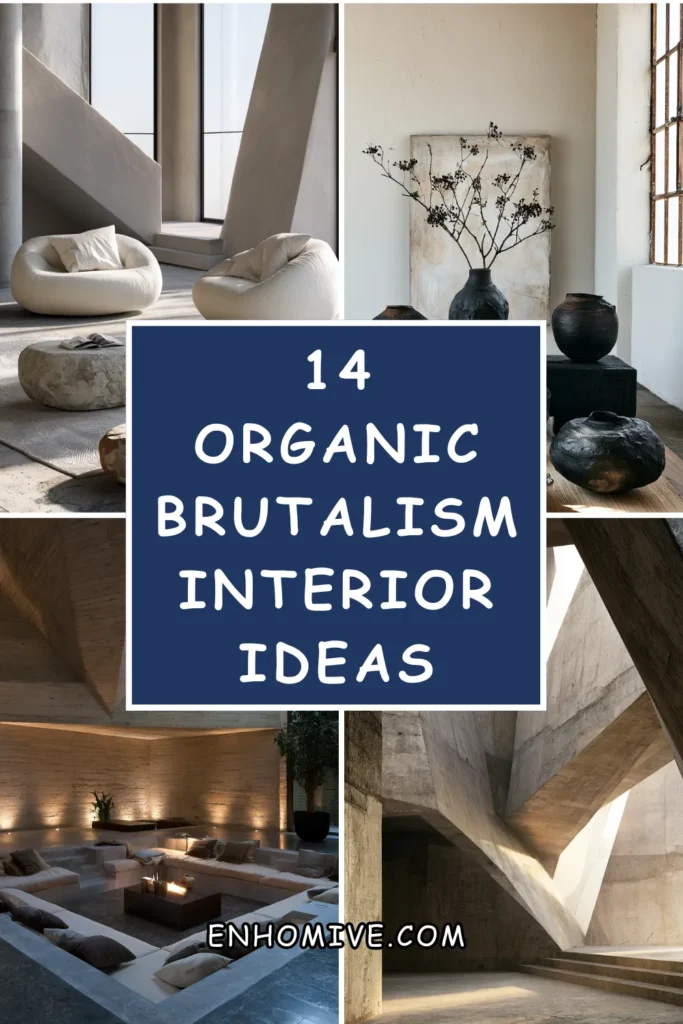
14 Organic Brutalism Interior Ideas
Organic brutalism is one of the most intellectually serious, most visually arresting, and most genuinely original interior design sensibilities available to the contemporary homeowner who wants something beyond the predictable comfort of mainstream aesthetic categories. It sits at the productive, sometimes uncomfortable, always visually extraordinary intersection of two design philosophies that appear at first consideration to be irreconcilable opposites. Brutalism.
The architectural tradition of raw, unfinished, structurally honest material expression, of exposed concrete and visible construction, of mass and weight celebrated rather than concealed — and the organic design tradition — the biomorphic, nature-referencing, softly curved, living-material-embracing philosophy that finds beauty in the imperfect forms of the natural world rather than the precise geometries of industrial manufacture. Where these two traditions meet, something remarkable happens.
The harshness of raw concrete is softened by the warmth of living moss. The weight of exposed stone is counterbalanced by the delicate complexity of trailing plants. The angular geometry of brutalist form is interrupted and humanized by the biomorphic curve of a hand-shaped vessel or a naturally formed boulder. These fourteen ideas will help you create an interior of genuine organic brutalist character, lasting visual power, and the specific quality of raw, living, deeply atmospheric beauty that the aesthetic achieves at its most extraordinary.
1. Expose the Concrete and Celebrate It
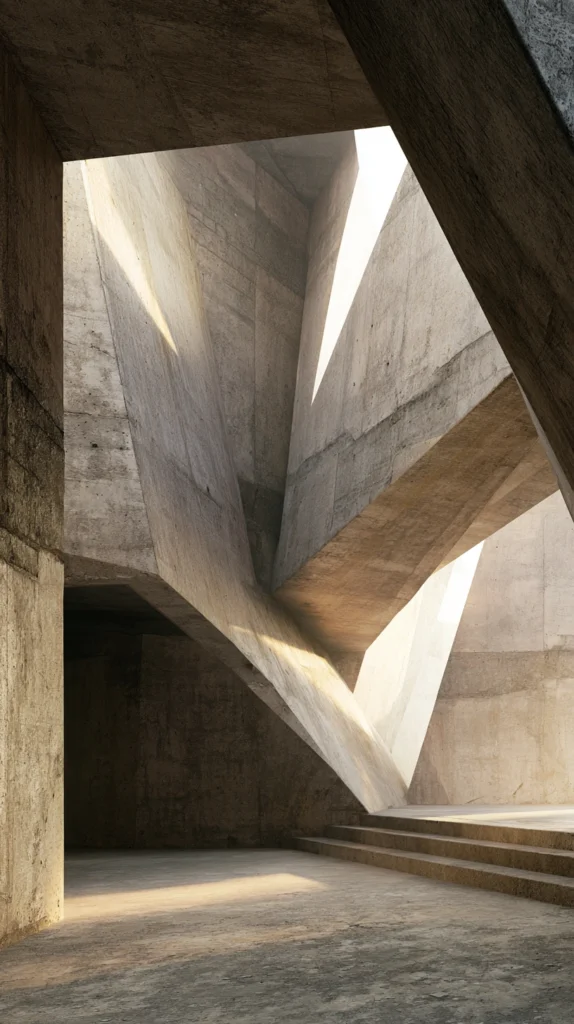
The foundation of any genuine organic brutalist interior is the honest, unadorned, structurally expressive exposure of concrete — whether as a poured concrete wall left completely raw from the formwork, a polished concrete floor that reveals the aggregate and the tonal variation of the mixed material, or a concrete ceiling that shows the marks of the timber shuttering used to form it.
Raw concrete is not a neutral backdrop in the organic brutalist interior — it is the primary material protagonist, the surface that sets the tonal, textural, and atmospheric key for everything that follows. Its specific grey, the particular quality of its surface texture, and the way it absorbs and reflects light at different hours of the day create a room of constantly shifting, deeply atmospheric visual beauty that painted plaster and manufactured wall finishes cannot replicate.
2. Introduce a Living Moss Wall
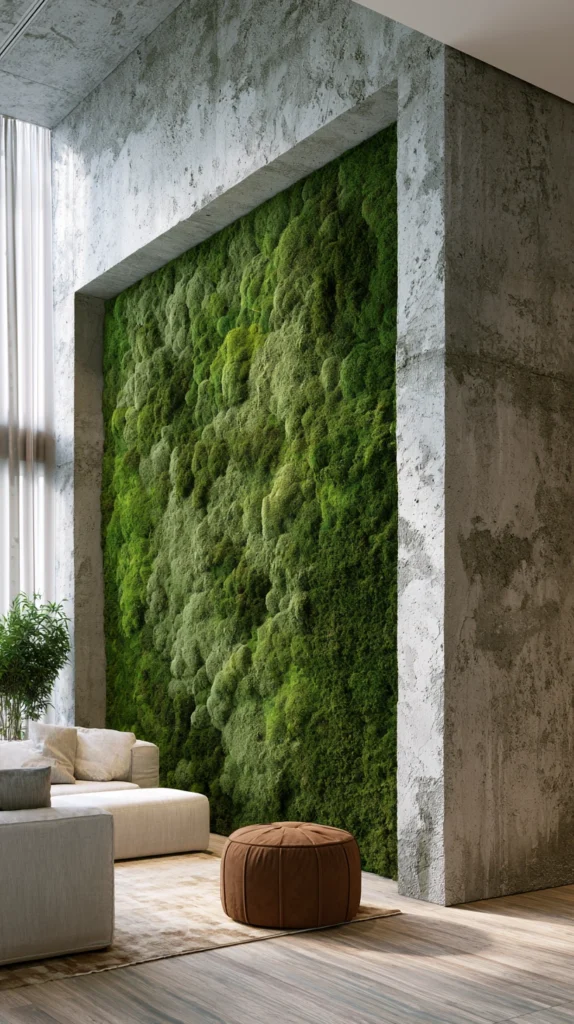
The living moss wall is the single most powerful and most visually dramatic expression of the organic dimension of organic brutalism available in any interior design decision, and its placement against a raw concrete or exposed stone surface creates a juxtaposition of extraordinary visual tension and genuine natural beauty.
The deep, saturated, living green of preserved or living moss against the cool, grey neutrality of raw concrete creates the specific color and material contrast that defines the organic brutalist aesthetic at its most immediately recognizable and most genuinely compelling. A large moss wall panel behind the primary seating area, on the staircase wall, or as the primary feature of an entrance hall creates an interior of remarkable biophilic richness and genuine atmospheric power.
3. Use Boulders and Raw Stone as Furniture
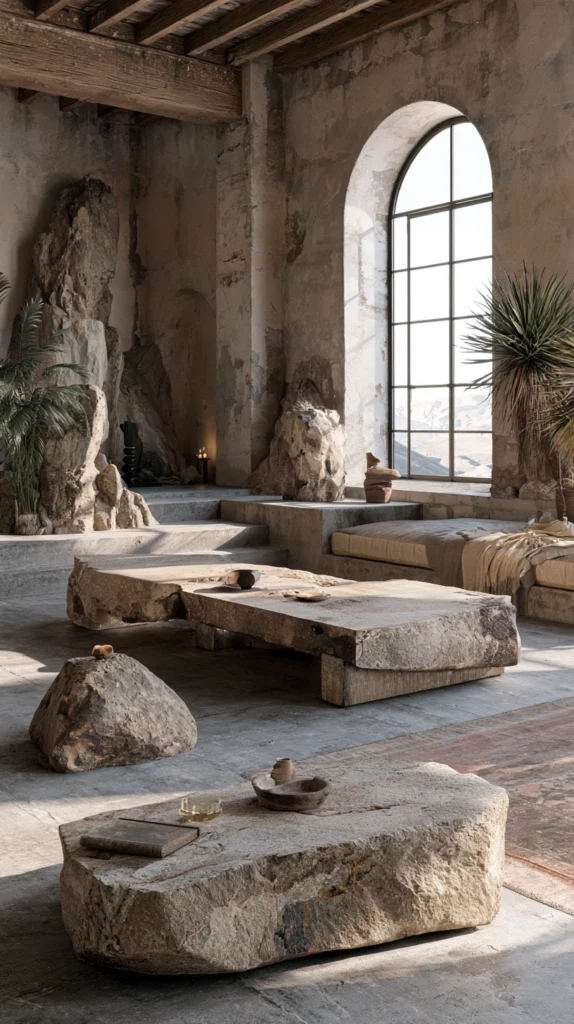
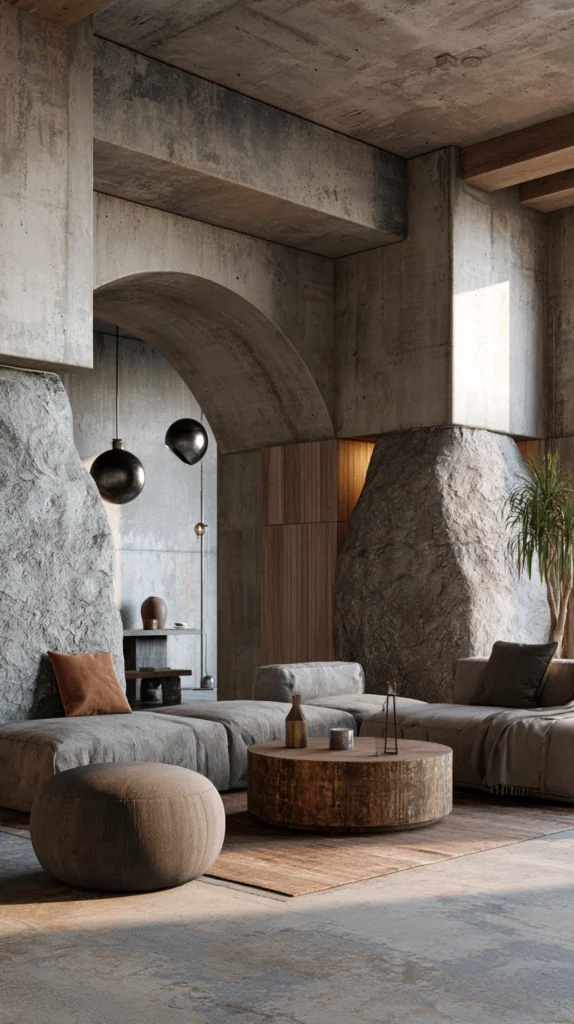
The organic brutalist interior treats the natural boulder and the piece of raw, uncut stone not as landscaping material but as genuine interior furniture of considerable design authority and extraordinary material presence. A single large boulder of smooth river granite used as a side table beside a raw concrete sofa base.
A slab of rough-cut basalt as a coffee table surface supported on simple steel legs. A piece of uncut travertine used as a sculptural object on the floor beside the fireplace. These raw stone furniture pieces bring the geological weight, the surface complexity, and the specific organic imperfection of the natural landscape into the interior with a directness and a material honesty that manufactured furniture cannot approach.
4. Choose Biomorphic Furniture Forms
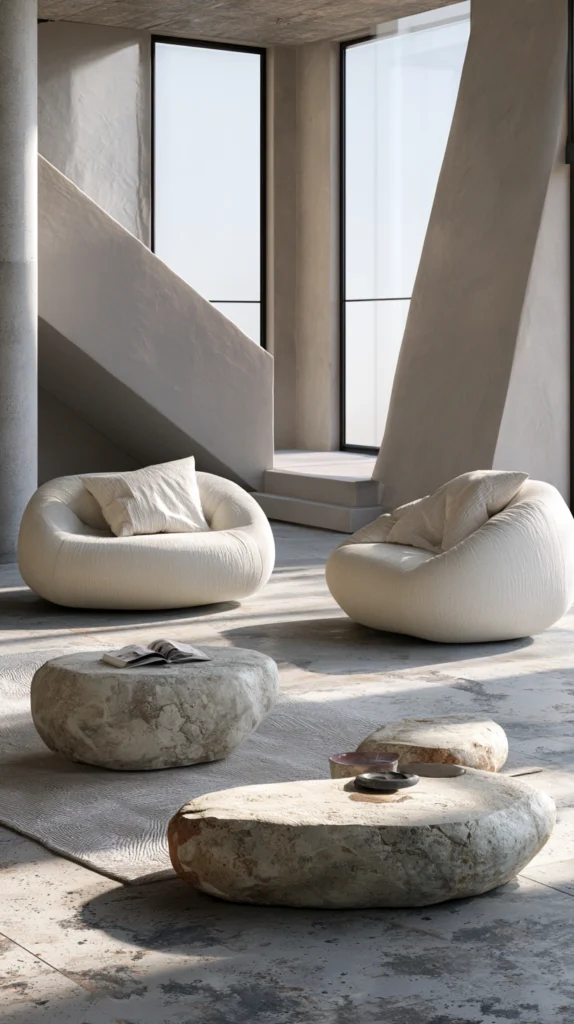
The furniture of the organic brutalist interior should be specified in biomorphic — organically curved, nature-referencing, geometrically imperfect — forms that create a powerful visual counterpoint to the angular, rectilinear geometry of the brutalist architectural elements surrounding them. A sofa with a gently curved, asymmetric silhouette in warm boucle fabric.
A dining table with a freeform, organically shaped concrete or stone top on raw steel legs. A lounge chair with the smooth, continuous curve of a form that references the ergonomic logic of the human body rather than the geometric convenience of the right angle. These biomorphic furniture forms soften the brutalist interior without diminishing its raw material power, creating a space of genuine complexity and considerable visual intelligence.
5. Install an Exposed Steel Staircase
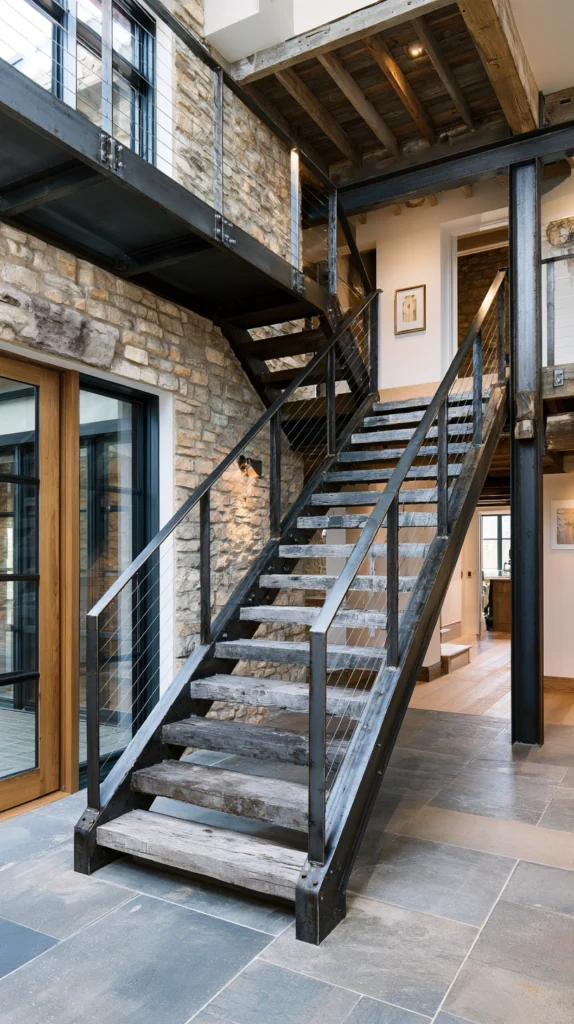
The exposed steel staircase — raw, welded, structurally expressive, with visible joins and honest material finish — is the most architecturally ambitious brutalist element available in any interior renovation and its combination with organic materials throughout the surrounding space creates a staircase of extraordinary visual drama and genuine design integrity.
Pair the raw steel structure with timber treads in a warm, heavily grained wood for the most beautiful organic brutalist material combination available in staircase design. Add a trailing plant arrangement at the base of the staircase and allow climbing plants to thread through the steel balustrade over time for the slow, living, organic intervention into the industrial structure that the aesthetic demands at its most fully realized.
6. Embrace Wabi-Sabi Ceramic Objects
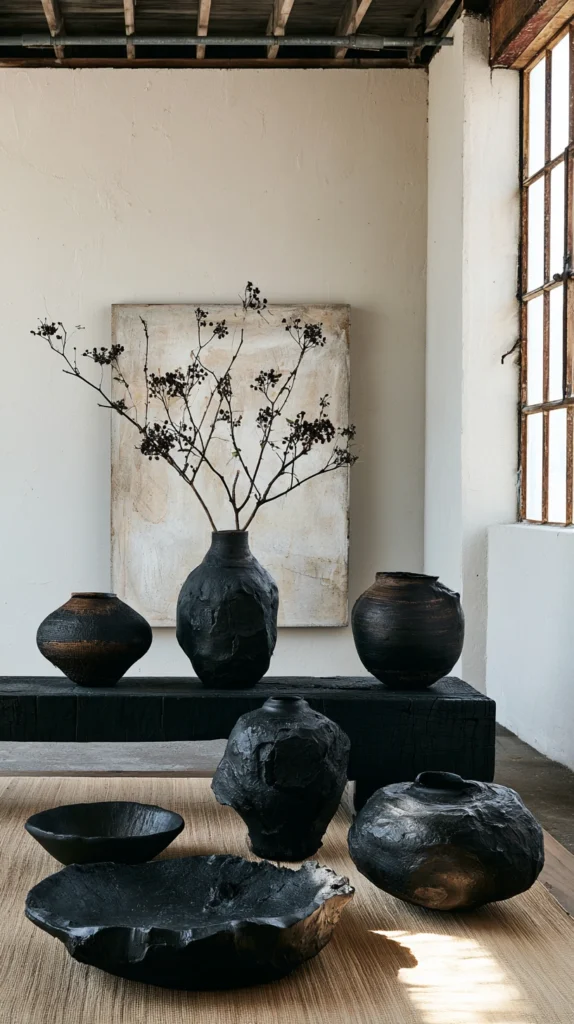
The ceramic objects of the organic brutalist interior — vessels, bowls, sculptural forms, and functional objects in hand-thrown, deliberately imperfect, organically glazed stoneware and earthenware — bring the wabi-sabi philosophy of imperfect, transient, incomplete beauty into the raw material environment of the brutalist interior with remarkable naturalness and genuine aesthetic coherence.
A collection of large, roughly thrown ceramic vessels in warm, earthy glazes arranged on a raw concrete shelf. A hand-built stoneware bowl with an ash glaze and a deliberately uneven rim on the coffee table. These objects create a domestic environment of genuine craft, warmth, and living organic beauty within the raw, structurally honest material world of the brutalist interior.
7. Use Rammed Earth Walls
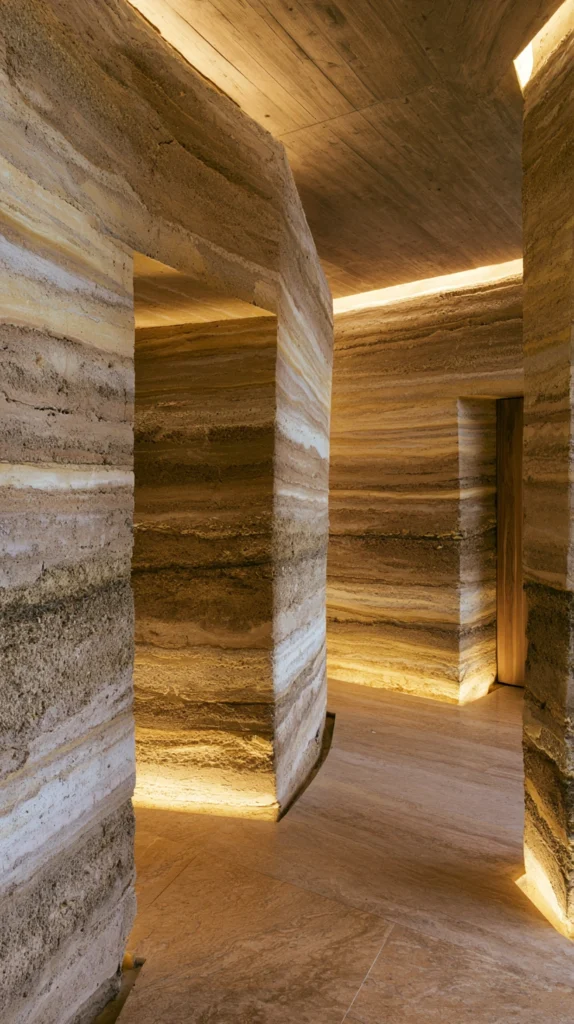
Rammed earth — the ancient building technique of compressing layers of raw earth, clay, sand, and gravel into a dense, structurally stable, and visually extraordinary wall surface — creates the most organically beautiful and the most materially authentic wall finish available in the organic brutalist interior.
The characteristic horizontal stratification of rammed earth walls, with its subtle color variation between compressed layers of differently toned earth, creates a surface of extraordinary natural beauty and genuine geological resonance that references both the raw material honesty of brutalist design and the layered, time-rich beauty of the natural landscape simultaneously. Rammed earth walls in a warm, sandy earth tone create a room of profound atmospheric warmth and genuinely ancient material presence.
8. Install Dramatic Clerestory or Skylight Glazing
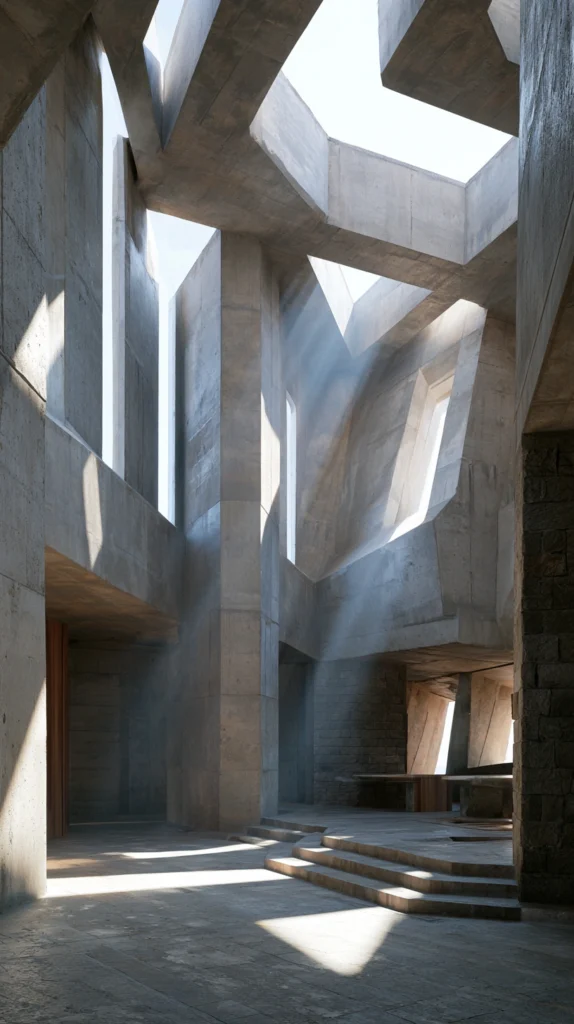
The quality of natural light in the organic brutalist interior is not incidental but architecturally deliberate — light is treated as a material in its own right, shaped and directed by the strategic placement of clerestory windows, skylights, and light slots in the concrete or stone structure to create specific, dramatically beautiful pools and shafts of natural illumination that animate the raw surfaces of the interior throughout the day.
A long clerestory window running the full length of a concrete wall creates a band of raking light that reveals the texture of the concrete surface with extraordinary beauty. A skylight positioned directly above a boulder or a large ceramic vessel creates a dramatic, almost theatrical pool of natural light that transforms the object below it into a genuinely sculptural interior feature.
9. Incorporate Reclaimed Timber Generously
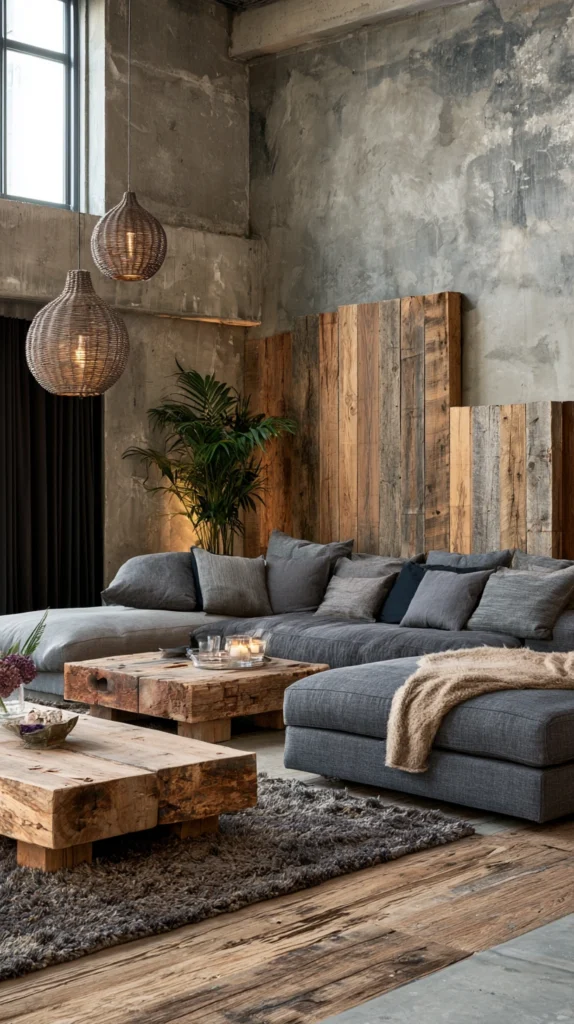
Reclaimed timber — salvaged from demolished industrial buildings, old barns, decommissioned railway infrastructure, or river-recovered logs — brings the organic warmth, the historical resonance, and the surface complexity of genuinely aged wood into the organic brutalist interior with a material authenticity that new timber cannot provide.
A reclaimed timber dining table with the patina, the nail holes, the saw marks, and the surface variation of a piece of wood that has lived a previous life of genuine use.
Reclaimed timber wall paneling in a warm, weathered grey tone on a single feature wall. These reclaimed timber elements create the organic warmth and the material depth that the raw concrete and stone surfaces of the brutalist interior need for genuine human comfort and daily livability.
10. Add Dramatic Oversized Pendant Lighting
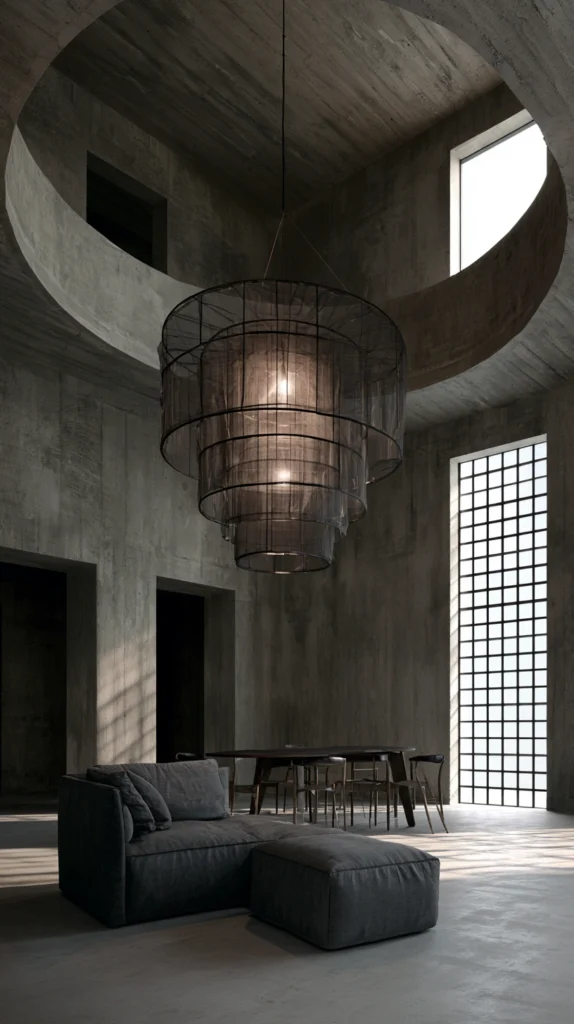
The lighting fixtures of the organic brutalist interior should be specified with the same commitment to material honesty, formal drama, and genuine design ambition that characterizes every other element of the aesthetic.
Oversized pendant lights in raw steel, hand-blown smoked glass, or woven natural fiber create ceiling fixtures of considerable sculptural presence and genuine atmospheric power that suit the scale and the material character of the brutalist interior.
A single massive pendant of raw steel and smoked glass above the dining table creates a lighting fixture of genuine architectural presence. Multiple large woven fiber pendants clustered at varying heights above the living area create an overhead installation of organic warmth and considerable visual drama.
11. Create a Sunken Living Area
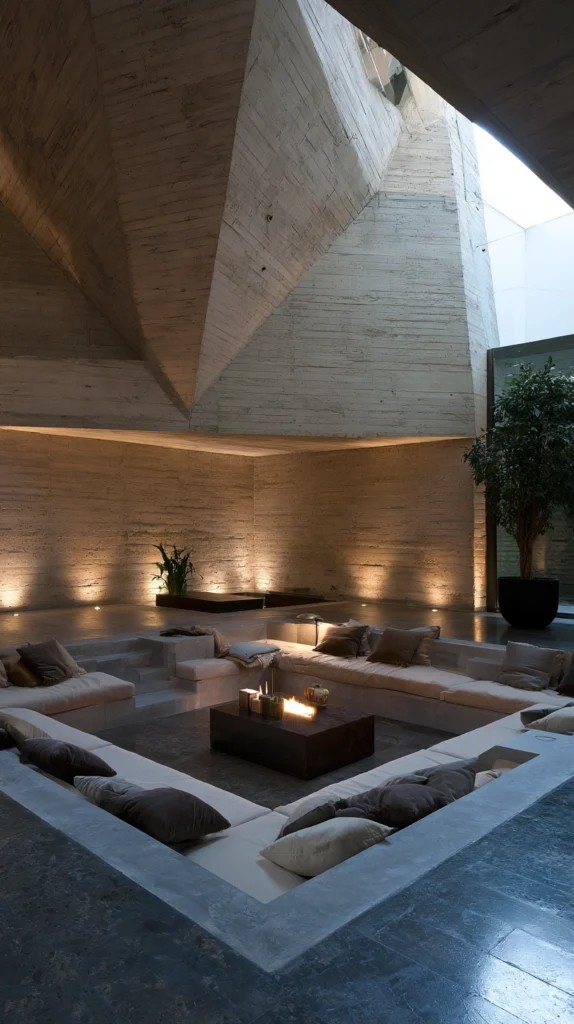
The sunken living area — a recessed seating pit within the floor plane of the main living space — is the most spatially dramatic and most genuinely brutalist interior design gesture available in any residential renovation, and its combination with organic materials, biomorphic furniture forms, and living plants creates a domestic interior of extraordinary spatial intelligence and genuinely immersive atmospheric quality.
Line the sunken walls in raw concrete or rammed earth, furnish the pit with a continuous low seating platform in warm boucle or heavy linen, add a central coffee table of raw stone or reclaimed timber, and surround the perimeter with trailing plants at floor level for a living room feature of remarkable spatial beauty and genuine organic brutalist character.
12. Let Plants Grow Without Constraint
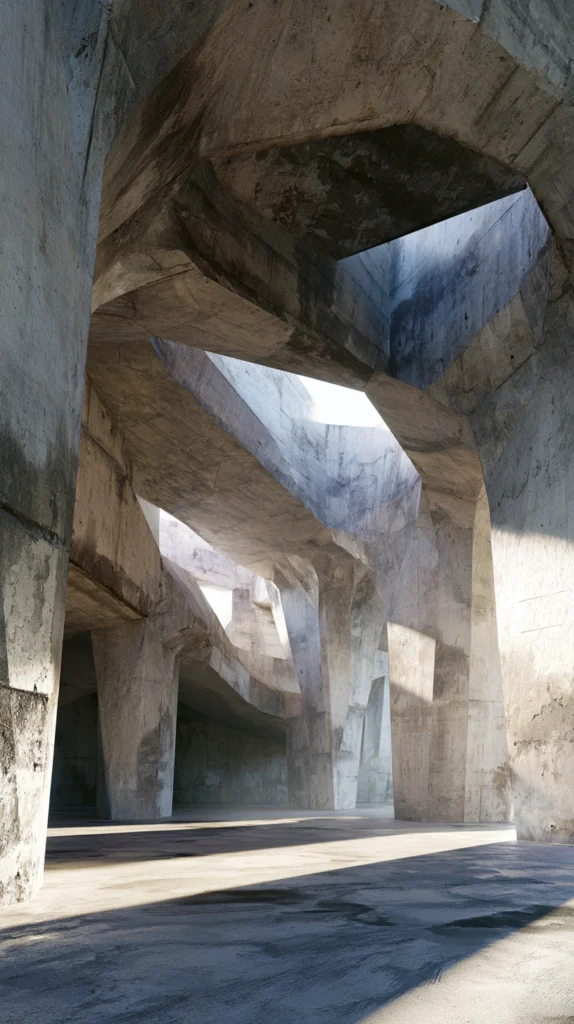
The plants of the organic brutalist interior are not decoratively positioned accent pieces — they are genuine living presences allowed to grow, trail, climb, and occupy the space with the same organic freedom and the same structural authority as the concrete and stone that surrounds them. A large fiddle leaf fig allowed to grow to ceiling height against a raw concrete wall.
Trailing pothos and philodendron cascading from a concrete shelf over a period of years until they reach the floor below. A climbing plant trained along the raw steel balustrade of the exposed staircase over time. This approach to plants as genuinely free, genuinely growing, genuinely interventionist living elements creates an interior that changes slowly over time, becoming more organically rich and more genuinely beautiful with every year of growth.
13. Choose a Monochromatic Earthy Palette
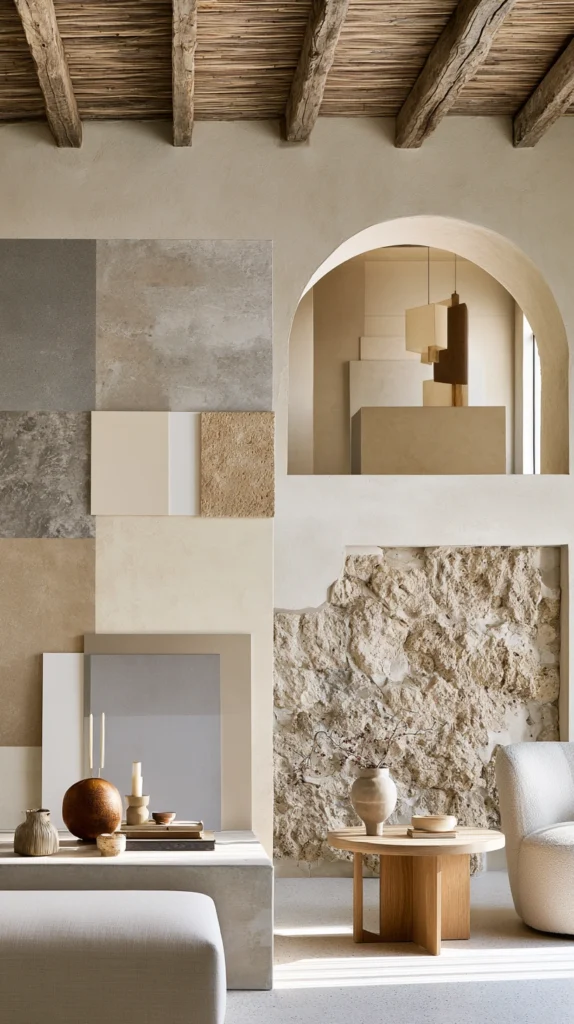
The color palette of the organic brutalist interior achieves its most powerful and most genuinely coherent atmospheric effect through a disciplined commitment to the monochromatic earthy tones of the natural material world .
The warm greys of concrete and stone, the sandy beiges and dusty terracottas of rammed earth and raw clay, the warm dark browns of aged timber and worn leather, and the deep, saturated greens of living plants as the single significant color accent within an otherwise entirely neutral material environment.
This restrained, earth-toned palette creates an interior of remarkable visual calm and extraordinary material depth — a space where the beauty comes entirely from texture, form, and material quality rather than color variety.
14. Design for Slowness and Genuine Inhabitation
The final and most essential principle of the organic brutalist interior is one that resists the pace, the disposability, and the trend-responsiveness of mainstream interior design culture with genuine philosophical conviction.
The organic brutalist interior is designed to be inhabited slowly, to age beautifully, and to become more itself — more organically rich, more materially complex, more genuinely personal — with every year of genuine use. The concrete develops its patina. The plants grow into the space.
The reclaimed timber deepens in tone. The ceramic objects accumulate the marks of daily handling. This quality of designed-for-time, designed-for-living, designed-for-the-long-term inhabitation is the organic brutalist interior’s most radical and most genuinely beautiful design principle — and the one that makes it, for those who fully commit to it, the most deeply satisfying interior of all.