
15 Backyard Wellness Garden Ideas (Sauna, Cold Plunge, Zen Corners)
The backyard has quietly become one of the most valuable pieces of real estate in the modern home — not because of square footage or resale calculations, but because of what it can do for the person who lives there.
As the boundary between work and rest has collapsed, as urban noise has intensified, and as the cost and inconvenience of commercial wellness facilities has become harder to justify, the case for building genuine wellness infrastructure at home has never been stronger or more practical.
A backyard wellness garden is not a luxury addition for the few. It is a considered investment in daily quality of life — a space designed around recovery, stillness, physical health, and the particular kind of mental clarity that only comes from deliberate disconnection.
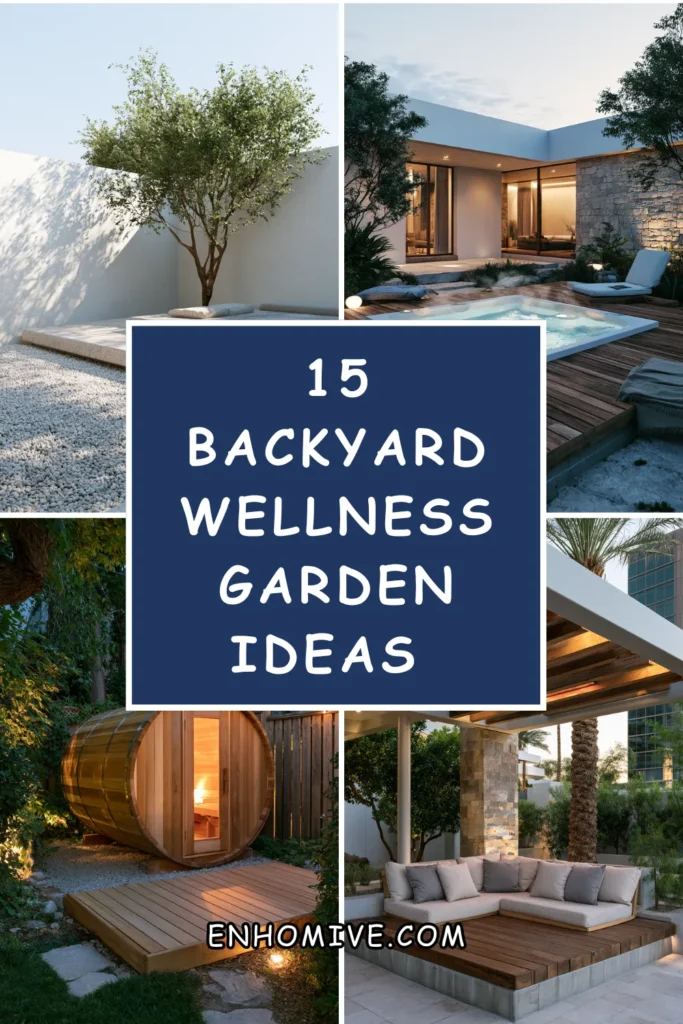
These fifteen ideas range from significant installations like saunas and cold plunge pools to simple, low-cost interventions like a gravel meditation corner or a properly planted sensory border. Together they demonstrate that a functional wellness garden can be built incrementally, scaled to any budget, and designed to look as beautiful as it performs.
1. Install a Barrel Sauna as the Centrepiece
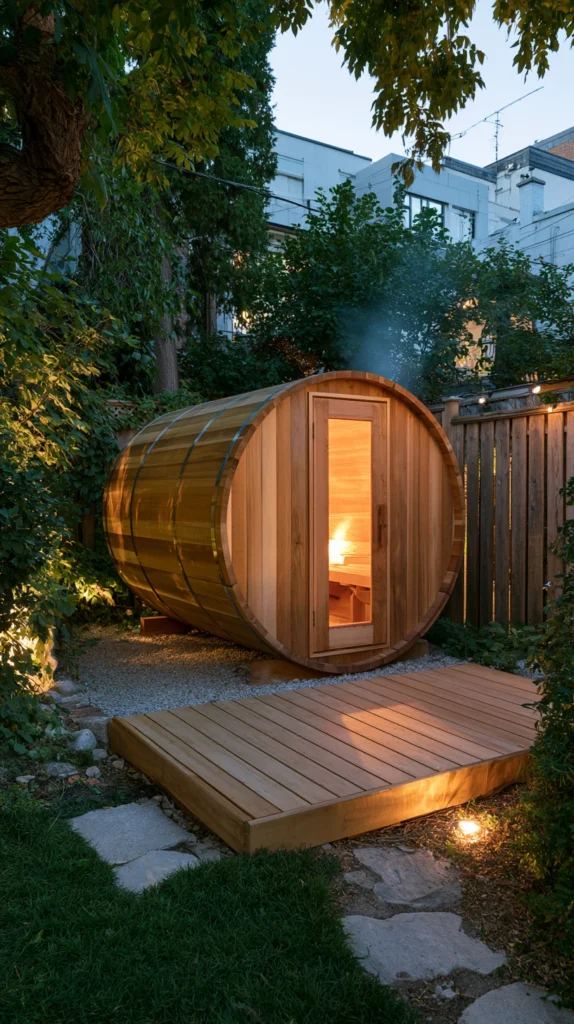
The barrel sauna has become the defining outdoor wellness structure of the past decade, and for good reason. The cylindrical form is structurally efficient, aesthetically distinctive, and far easier to install than a traditionally built sauna room — most arrive as prefabricated kits that can be assembled in a single weekend without specialist trades.
Positioned at the far end of a garden on a simple gravel or timber deck base, a cedar barrel sauna reads as a genuine architectural feature rather than a bolt-on addition.
The health case for regular sauna use is substantial and well-documented — cardiovascular benefits, muscle recovery, improved sleep quality, and meaningful stress reduction among them.
But the daily reality is simpler than the research: a sauna at the bottom of your garden that you can step into at seven in the evening, after a difficult day, changes the texture of ordinary life in ways that are difficult to overstate. Cedar is the material of choice for its natural resistance to moisture, its beautiful warm tone, and the pleasant scent it releases with heat.
2. Add a Cold Plunge Pool or Ice Bath
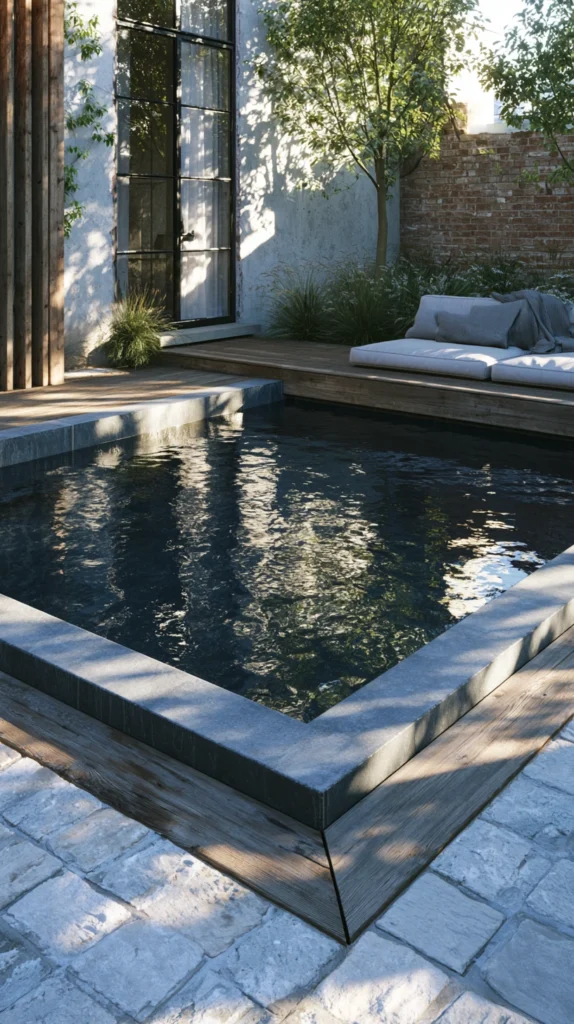
The cold plunge has moved from the territory of elite athletic recovery into mainstream wellness culture, and the domestic versions available today range from entry-level insulated tubs that require nothing more than a garden hose and a bag of ice to purpose-built fibreglass plunge pools with integrated chillers that maintain precise temperatures year-round.
The physiological benefits — reduced inflammation, improved circulation, mood elevation through noradrenaline release, and a sharpened mental clarity that lasts for hours after a session — are increasingly well-supported by research.
Positioned alongside a sauna to enable the contrast bathing practice of moving between heat and cold, the cold plunge becomes part of a genuine recovery circuit rather than a standalone novelty. A simple timber surround, a gravel base, and clean, simple planting around the perimeter are all that is needed to make the installation look considered and permanent rather than improvised.
3. Create a Dedicated Meditation Corner
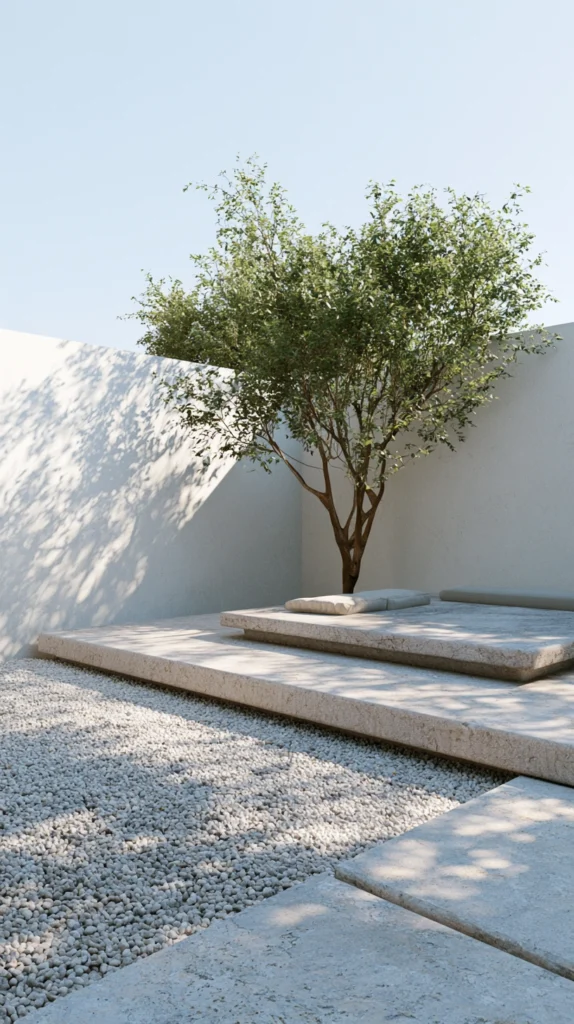
A meditation corner does not require a separate structure, significant budget, or architectural intervention. It requires a clearly defined, visually calm area of the garden that communicates — through its planting, materials, and careful removal of visual noise — that this space exists for stillness rather than activity.
A simple gravel circle surrounded by low clipped hedging, a single stone bench facing a water feature or a planted view, a timber platform beneath a canopy tree with one cushion and nothing else: any of these creates the kind of dedicated space that makes a daily practice feel supported rather than improvised on a patch of lawn.
The design principle is subtraction rather than addition. Remove everything from the space that does not contribute to quiet. Then stop. The best meditation corners are the ones where there is genuinely nothing left to take away.
4. Build an Outdoor Cold Shower Station
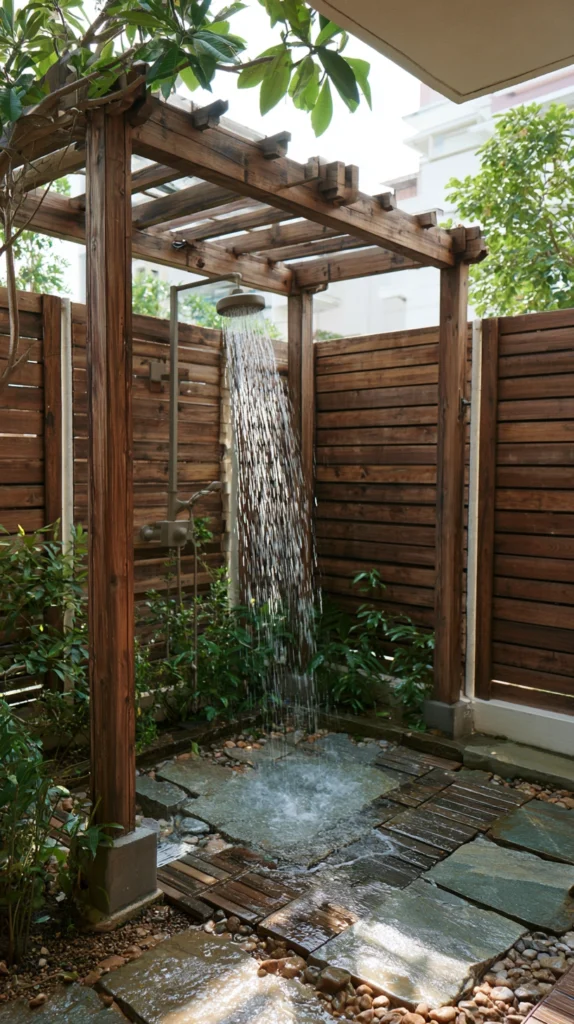
An outdoor shower is one of the most practical and most underused wellness additions available to a backyard garden, and the cold shower — used deliberately as a morning practice or as part of a heat-and-cold contrast circuit — delivers many of the same physiological benefits as a full cold plunge at a fraction of the cost and installation complexity.
A simple timber-framed shower enclosure with a quality rainfall head, a gravel drainage base, and a surrounding screen of tall bamboo or dense evergreen planting creates a genuinely beautiful, private outdoor bathing experience.
The enclosure design matters as much as the shower itself. Tall planting, a solid timber privacy screen, or a combination of both should create a complete visual enclosure from the house and neighbouring properties.
The experience of showering outdoors in cold water, surrounded by planting and open to the sky, is one of the most effective morning rituals available for mental clarity and physical alertness.
5. Design a Barefoot Walking Path
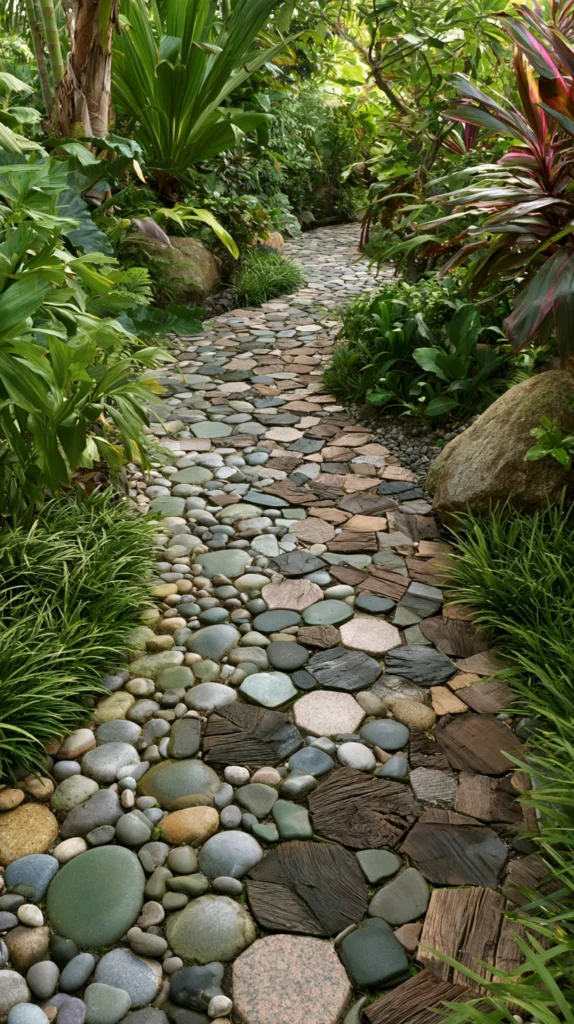
The practice of walking barefoot on natural surfaces — grass, gravel, smooth stone, damp earth, timber decking — is one of the oldest and most accessible wellness practices in human experience, and a deliberately designed barefoot path gives it a permanent, beautiful home in the garden.
The path moves through a sequence of different surface textures — smooth river pebbles, cool moss, warm timber, fine gravel, clipped grass — each offering a different sensory experience underfoot and collectively engaging the nervous system in ways that shoes categorically prevent.
Design the path as a loop rather than a straight line, keep it at a width that feels intimate rather than utilitarian, and surround it with low fragrant planting at foot level — thyme, chamomile, creeping mint — that releases scent with every step. The barefoot path is low-cost, visually beautiful, and one of the most quietly effective wellness features a garden can contain.
6. Install a Garden Hot Tub With Considered Surrounds
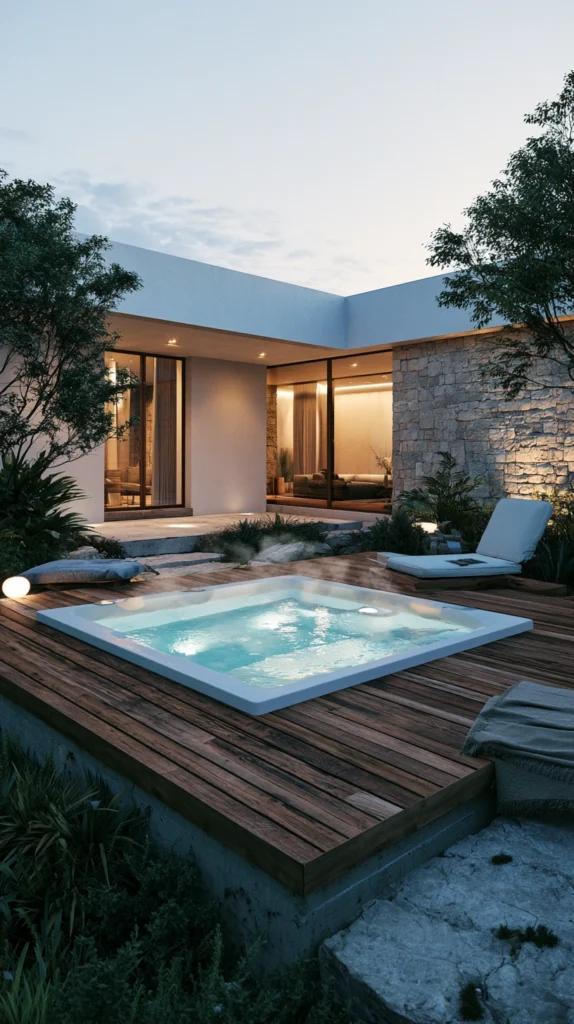
The hot tub’s reputation has suffered from decades of association with dated timber decks and harsh artificial lighting — an aesthetic problem that is entirely a matter of installation context rather than the object itself.
A quality hot tub set into a beautifully designed surround — flush with a timber deck, edged in Corten steel, surrounded by tall evergreen screening and lit with low warm lighting — is a genuinely elegant garden feature that serves a real daily wellness function.
Hydrotherapy for muscle recovery, the parasympathetic nervous system activation that warm water immersion produces, and the social dimension of a shared soaking experience are all genuine, evidence-based benefits.
The surroundings are everything. Commission a simple flush-mounted timber deck, plant dense screening on three sides, install warm low-level lighting rather than overhead floods, and the result is a spa-quality environment that happens to be in your own garden.
7. Plant a Dedicated Sensory and Medicinal Herb Garden
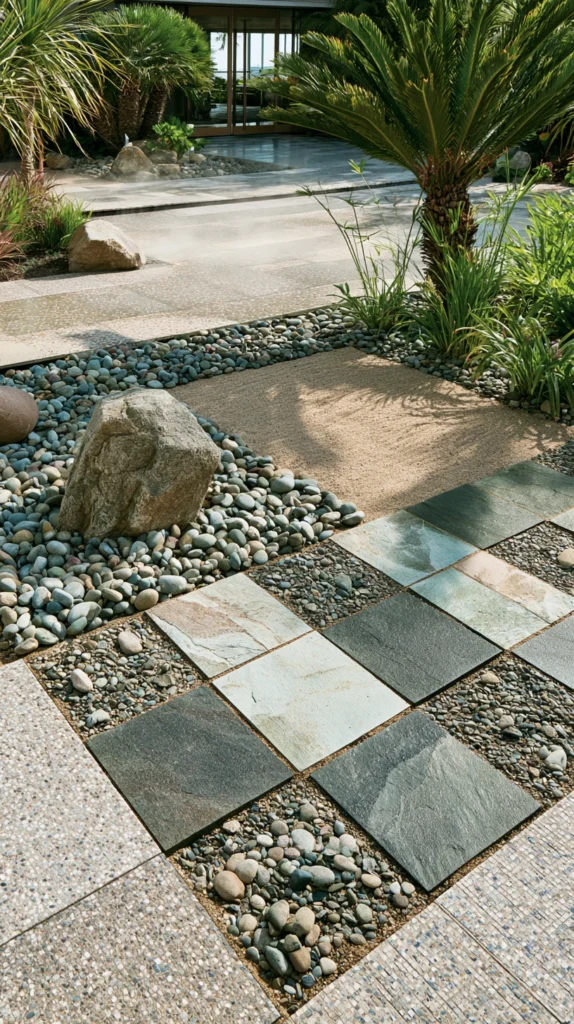
A garden planted specifically for sensory engagement and medicinal use — lavender, chamomile, lemon balm, valerian, echinacea, passionflower, rosemary, holy basil — is a wellness resource that contributes to daily life in multiple overlapping ways. The fragrance released as you brush past lavender or rosemary has documented effects on cortisol levels and anxiety.
Chamomile and lemon balm, harvested fresh from the garden and brewed as evening tea, are genuinely effective sleep and relaxation aids. The act of tending a herb garden — the physical engagement with soil, the sensory richness of handling fragrant plants, the rhythm of regular maintenance — is itself a well-documented stress reduction practice.
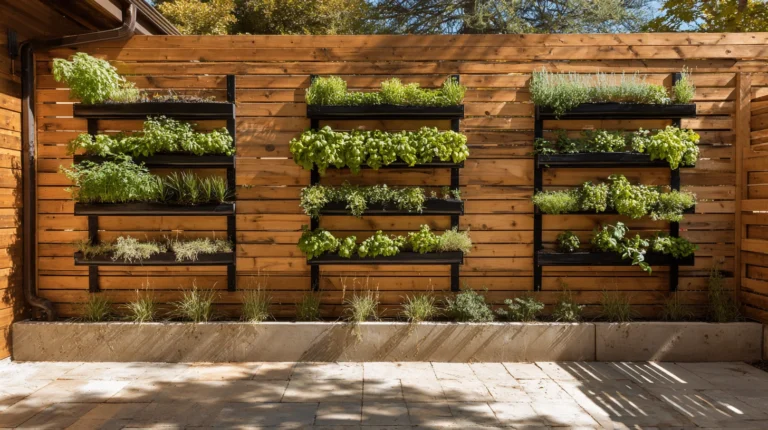
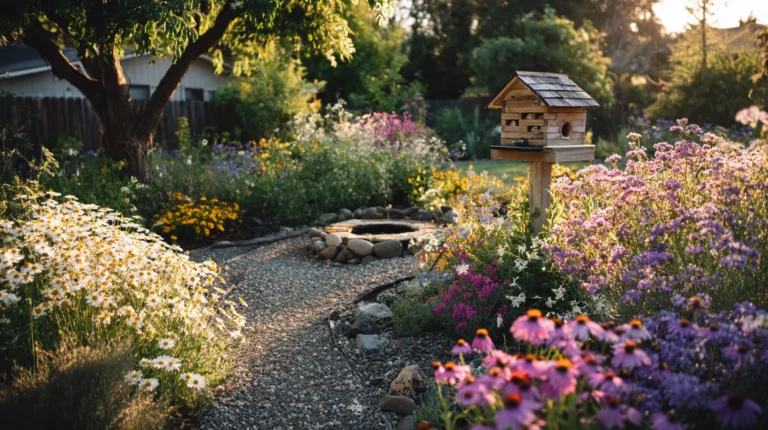
Design the medicinal herb garden with the same formal care applied to any ornamental planting. Geometric beds, clean edges, and bold single-variety masses look beautiful and make harvesting organised and easy.
8. Create a Japanese-Inspired Zen Garden
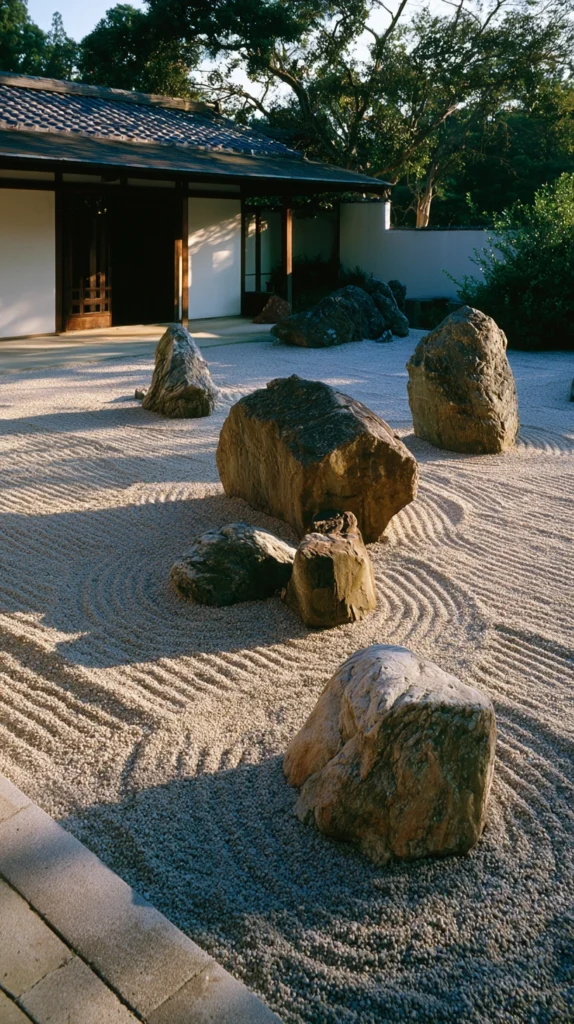
The Japanese dry garden — raked gravel representing water, carefully placed stones representing mountains or islands, minimal planting chosen for form rather than colour — is one of the most deliberately wellness-focused garden forms ever developed, designed specifically to quiet the mind through visual simplicity, rhythmic maintenance, and the contemplation of natural forms abstracted into composed arrangements.
The domestic version requires no elaborate construction — a contained rectangular area of fine gravel, three to five large stones placed with genuine care for their individual character, and a simple timber raking tool is a complete and fully functional Zen garden.
Keep the surrounding planting dark, simple, and evergreen — clipped box, bamboo in a contained planter, a single Japanese maple — so the raked gravel reads as a calm visual centre rather than a bright patch surrounded by competing colour. The daily practice of raking is the point as much as the visual result.
9. Build an Outdoor Yoga and Movement Platform
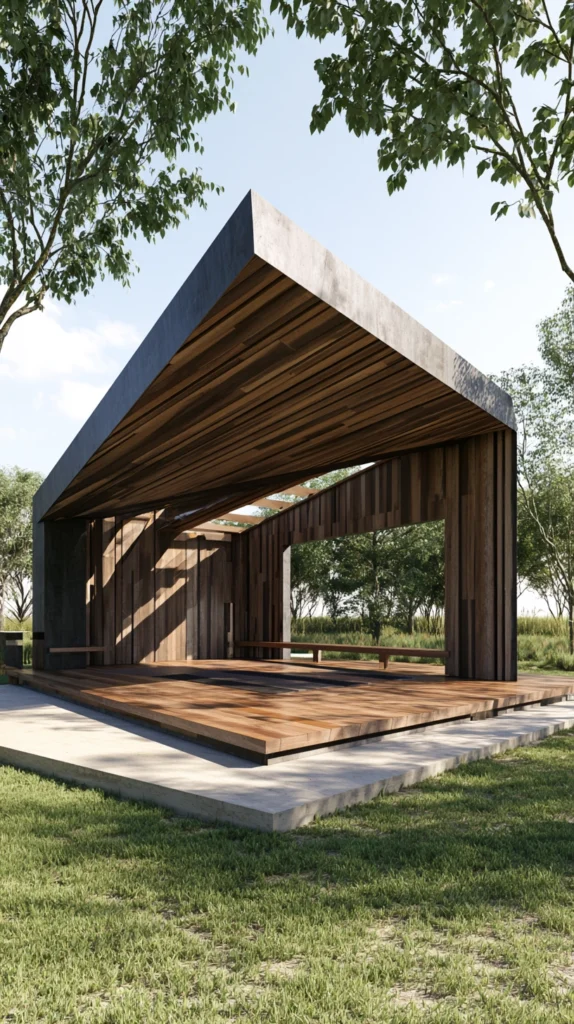
A dedicated outdoor movement platform — level, non-slip, sized to accommodate a yoga mat with generous space on all sides, and positioned to capture morning light and a pleasant garden view — removes every practical friction point from an outdoor movement practice.
The platform itself can be as simple as a well-laid composite decking area of three by four metres, slightly elevated from the surrounding garden surface and surrounded by low planting that provides visual privacy without enclosure.
Face it east for morning sun if the garden layout allows. Add a simple timber storage box at one edge for mat, blocks, and a blanket. Keep the surrounding planting low and fragrant rather than tall and visually busy — the practice space benefits from an open sky above and a calm green middle distance rather than high screening that creates a sense of enclosure.
10. Install a Garden Water Feature for Acoustic Wellness
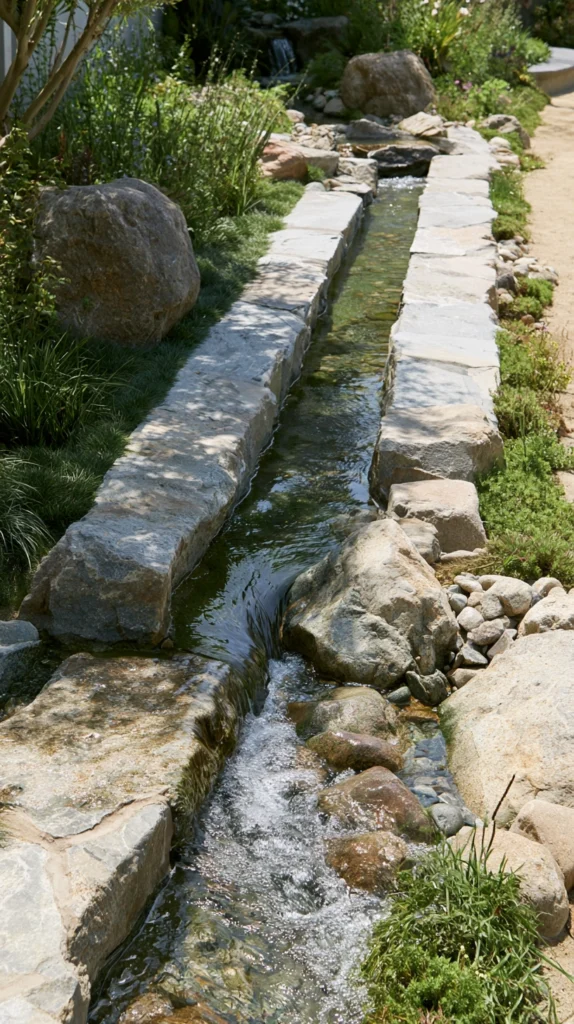
The specific sound of moving water — not the aggressive splash of a high-powered fountain, but the gentle, continuous sound of water flowing over stone or timber — has a measurable effect on the nervous system, masking intrusive noise, reducing perceived stress, and creating the auditory equivalent of visual calm.
A simple recirculating water feature — a millstone bubbler, a narrow rill running along a garden edge, a small cascade falling into a stone basin — does not need to be large or expensive to be genuinely effective as an acoustic wellness tool.
Position the water feature close to the seating or meditation area where its effect will be most directly experienced, rather than at the garden’s far end, where it becomes a visual feature only. The sound is the function — design for proximity to where stillness is intended.
11. Design a Restorative Hammock Garden
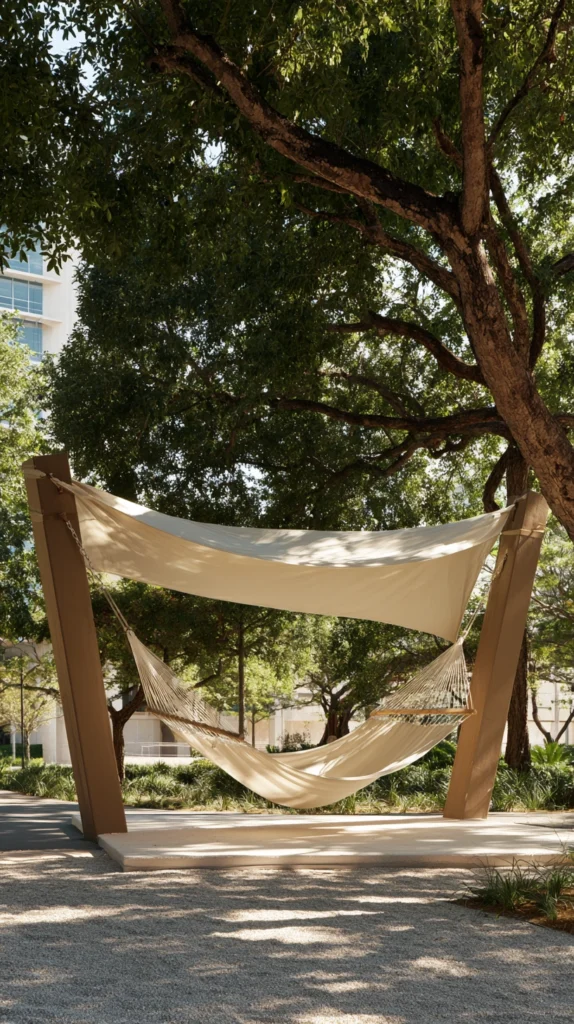
A hammock strung between two mature trees and left permanently in position — rather than brought out, assembled, and put away each time — becomes a genuine daily rest infrastructure rather than an occasional leisure item.
The practice of horizontal rest outdoors, in natural light, in contact with moving air and surrounding sound, has measurable restorative effects on cognitive fatigue that indoor rest does not replicate to the same degree. The surrounding garden design should support rather than compete with the rest of the experience.
Keep the planting around the hammock area calm and green — no bright flowers, no visual busyness. A simple gravel or bark chip ground surface, a side table at an accessible height for a book or a drink, and dense overhead canopy filtering light into the dappled patterns that the nervous system finds most restorative: these are the design elements that make a hammock position a genuine wellness feature.
12. Create a Fire Pit Gathering Circle
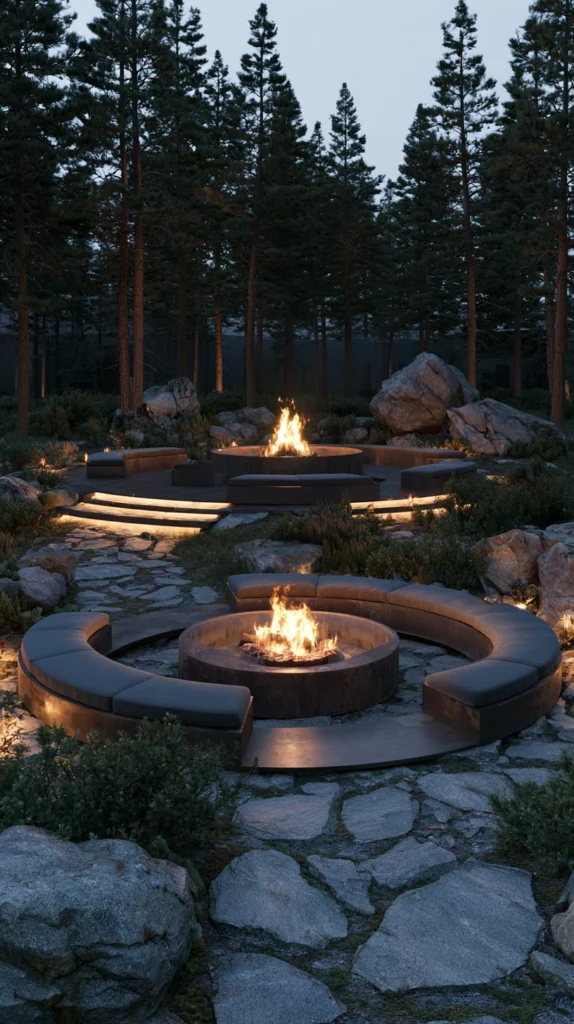
The fire pit has been a wellness space in human cultures across every geography and every historical period — the gathering around fire is one of the oldest and most instinctively comforting human experiences, and its effects on social connection, nervous system regulation, and the quality of evening rest are not trivial.
A well-designed fire pit circle — quality seating in a clear geometric arrangement around a simple in-ground or raised pit, surrounded by planting that creates enclosure without claustrophobia — is one of the most used and most genuinely valued features in a backyard wellness garden.
Use matching seating rather than a mixed collection of chairs brought out for the occasion. A simple circle of four to six quality outdoor chairs around a clean steel or stone fire pit, on a gravel or stone base, with low planting around the perimeter: this arrangement looks considered, functions perfectly, and creates the conditions for the kind of genuine evening connection that wellness culture increasingly recognises as foundational to mental health.
13. Install Outdoor Infrared Panels for Year-Round Use
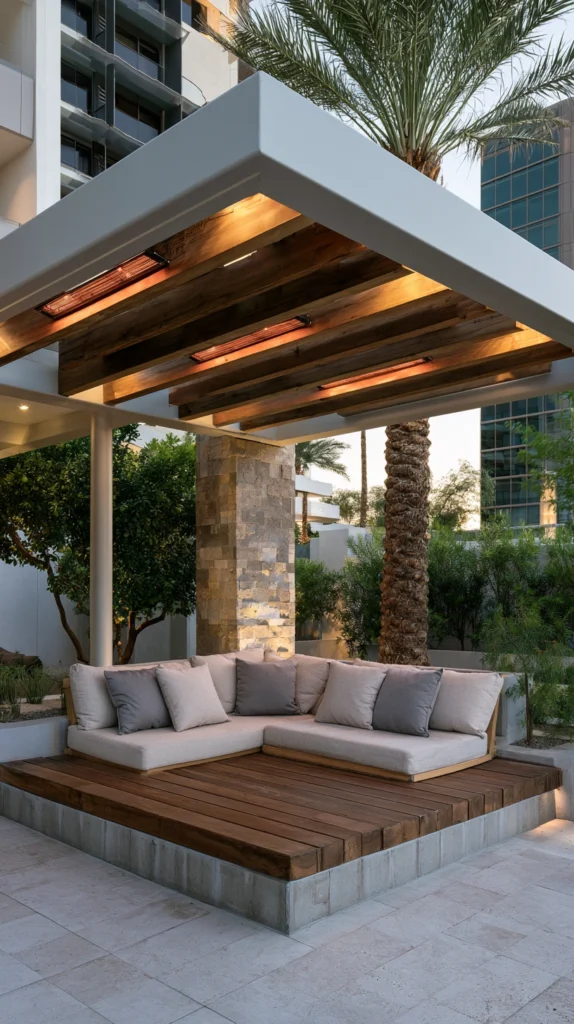
For gardens where a full sauna installation is not feasible — whether due to space constraints, planning restrictions, or budget — outdoor infrared heating panels mounted on a covered pergola or garden room wall deliver many of the same therapeutic benefits in a far smaller footprint and at significantly lower cost. Infrared heat penetrates tissue directly rather than heating the surrounding air, making it effective for muscle recovery, joint pain, and circulation even at relatively low ambient temperatures.
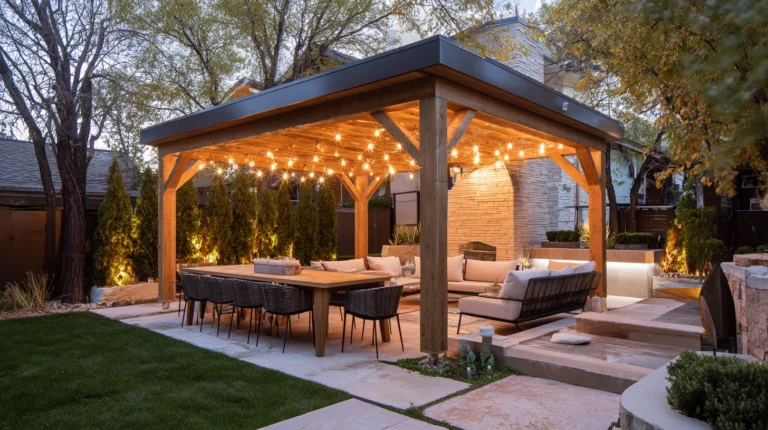
Mounted on the underside of a pergola roof above a comfortable outdoor seating area, a pair of quality infrared panels extends genuine year-round outdoor use in cooler climates while providing a meaningful therapeutic function beyond simple comfort heating. The installation is straightforward, the running costs are modest, and the resulting covered outdoor space becomes a usable wellness area across all but the most extreme weather conditions.
14. Design a Sleep Garden for Evening Wind-Down
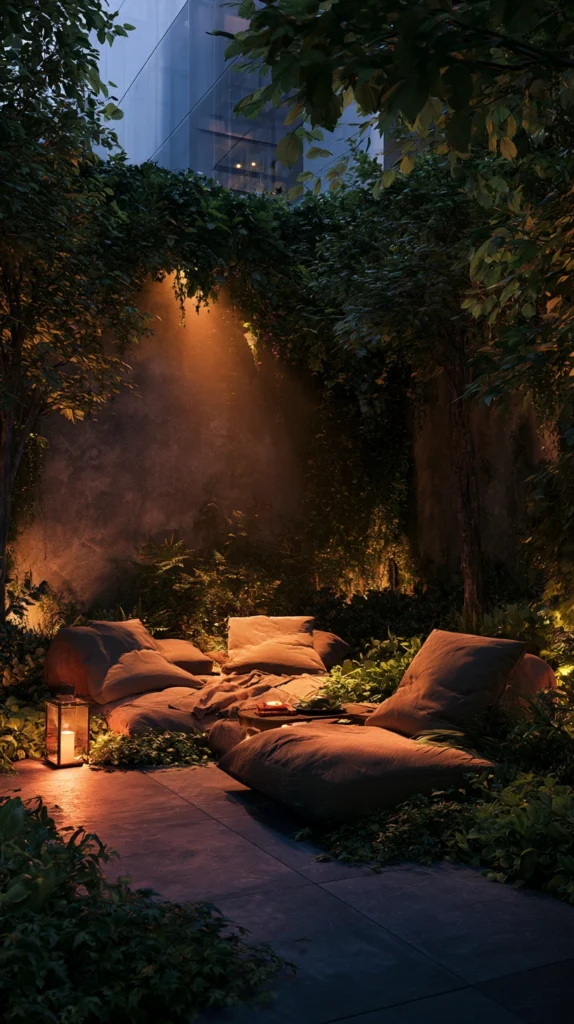
The sleep garden is a specific garden zone designed entirely around the conditions that support good sleep preparation — dim warm lighting, fragrant evening-scented plants, comfortable seating oriented away from house light and screen glow, and a visual and acoustic environment calm enough to begin the nervous system downregulation that quality sleep requires.
Evening-scented plants — night-scented stock, jasmine, nicotiana, sweet peas, moonflower — release their fragrance after dark, creating a genuinely therapeutic olfactory environment during the hours it is most useful.
Light the space exclusively with low-level warm lighting — ground-level path lights, candles, or low-mounted wall lights at seating height rather than overhead. The combination of darkness overhead, fragrance at nose level, and comfortable seating facing away from the house creates a genuinely powerful wind-down environment that costs very little to establish and delivers meaningful sleep quality improvements with regular use.
15. Build a Garden Room as a Dedicated Wellness Studio
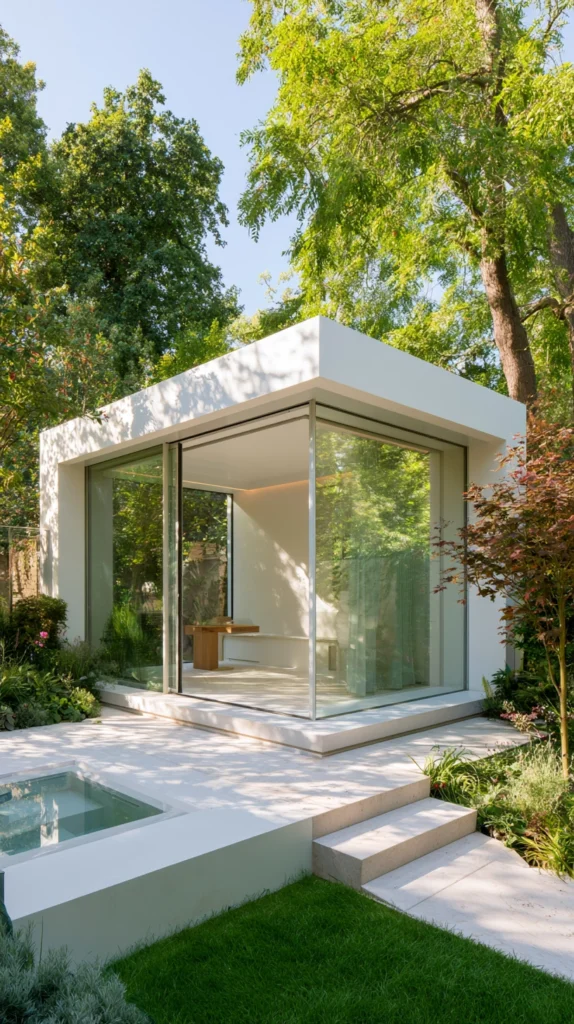
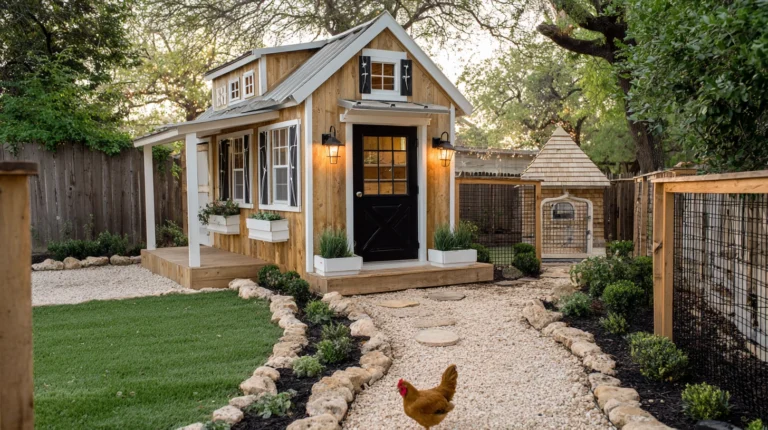
A purpose-built garden room — insulated, heated, and finished as a dedicated wellness space — is the most significant and most transformative investment in this list, and it is increasingly practical as prefabricated garden room options have improved dramatically in quality and reduced significantly in cost.
A single room of twelve to fifteen square metres, fitted with a wall-mounted infrared sauna panel, a small cold plunge on the adjacent decking, a movement area with sprung flooring, and a simple shower, creates a complete home wellness studio that rivals commercial facilities in function while being available at any hour without travel, cost, or social friction.
The garden room also adds measurable property value, functions as a genuine architectural feature in the garden, and — perhaps most importantly — signals a permanent commitment to daily wellness practice that a collection of portable equipment on a patch of lawn simply cannot replicate. Design the exterior to complement the house and garden rather than contrast with it, and invest in proper insulation and heating from the outset rather than retrofitting later.
Final Thoughts: Building a Wellness Garden That Actually Gets Used
The wellness garden that delivers genuine daily benefit is designed around friction reduction rather than aspiration. The sauna that requires thirty minutes of preparation before each use gets used twice a month.
The one that heats in twenty minutes and sits permanently ready at the garden’s edge gets used four times a week. Every design decision — placement, access, storage, lighting, privacy screening — should be evaluated against the question of whether it makes the space easier or harder to use spontaneously and consistently.
Start with one or two installations that address your most pressing wellness needs, design them with genuine care for both function and aesthetics, and build outward from there as budget and clarity of use allow. The backyard wellness garden is not built in a single season. It is grown incrementally, deliberately, and in direct response to the life being lived in it.