
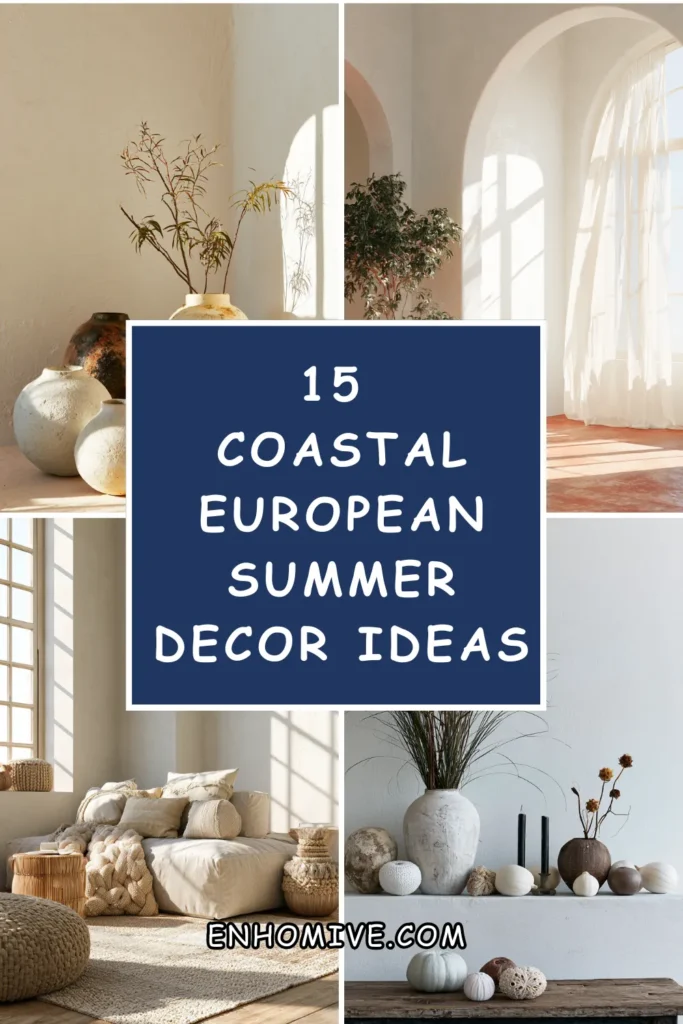
15 Coastal European Summer Decor Ideas (Think Amalfi Meets Minimalism)
There is a specific visual language that belongs to the European coastal summer — the whitewashed walls of a Positano terrace, the bleached linen of a Mykonos bedroom, the terracotta and bougainvillea of an Amalfi courtyard, the blue-shuttered simplicity of a Provençal harbour house — that communicates leisure, warmth, and a kind of unhurried beauty that feels genuinely different from any other aesthetic tradition in residential design.
What makes it so enduringly compelling is not the maximalism of its colour or the abundance of its decoration but precisely the opposite — the restraint, the whiteness, the generous negative space, the reduction of everything to its most essential and most beautiful form.
The Amalfi-meets-minimalism aesthetic takes the warmth, the natural materials, and the sun-drenched colour palette of the Mediterranean coastal tradition and strips away everything decorative that does not earn its place — leaving a design language that is simultaneously deeply warm and deeply calm, abundant in texture and material richness but never cluttered, never busy, never trying too hard.
These fifteen ideas translate that aesthetic into practical, achievable decor decisions for any home that wants to feel, through the summer months and beyond, like a room with a view of the Tyrrhenian Sea.
1. Commit to Warm White on Every Wall
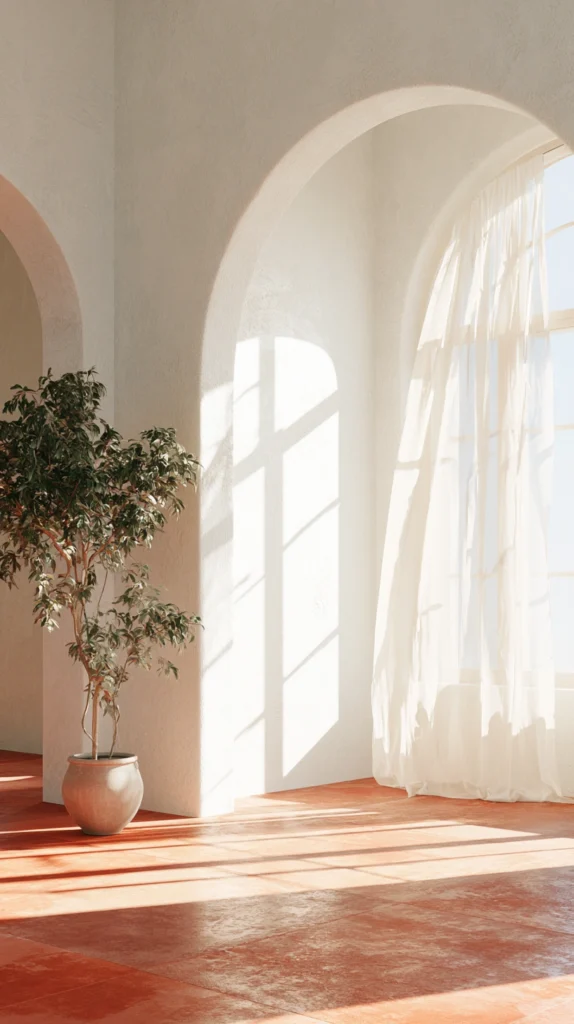
The foundation of the coastal European aesthetic is whiteness — not the cold, blue-toned white of Scandinavian minimalism but the warm, slightly chalky, sun-baked white of a Mediterranean render wall that has absorbed decades of southern light and returned it in a softer, warmer form.
Paint every wall, ceiling, and architectural surface in the same warm white — a single uninterrupted colour that makes the space feel larger, calmer, and more luminous simultaneously. Farrow and Ball’s All White, Wimborne White, or James White all carry the correct warm undertone; avoid brilliant white with blue or grey bias, which reads as cold rather than coastal.
2. Use Terracotta as the Primary Accent Colour
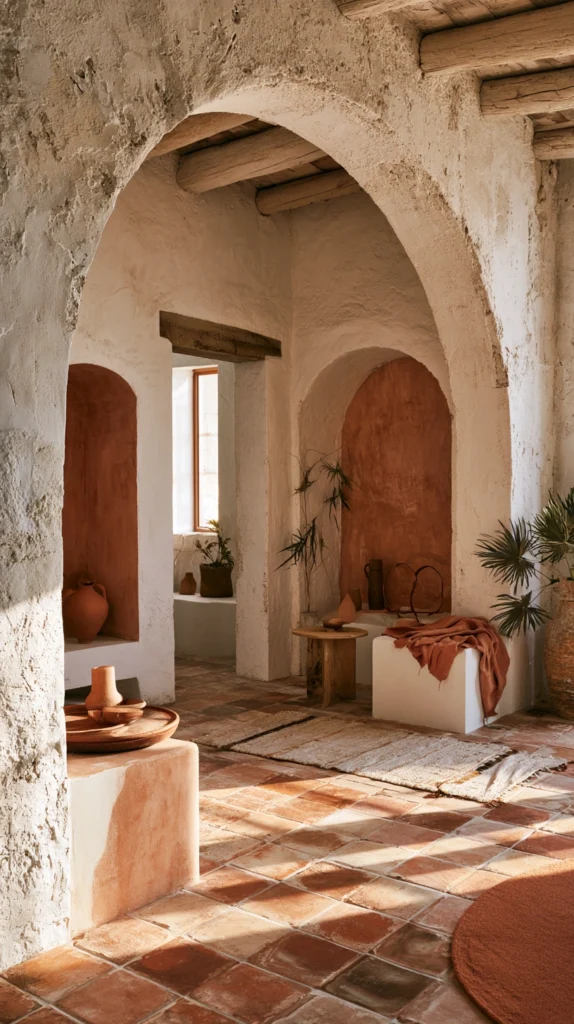
Terracotta — the warm, earthy, fired-clay tone that appears in the roof tiles of every Amalfi village, in the traditional floor tiles of every Sicilian farmhouse, in the pots of every Italian garden — is the accent colour that most completely and most authentically connects an interior to the Mediterranean coastal aesthetic.
Use it in floor tiles, in ceramic vessels, in a single painted wall or architectural arch, in the woven texture of a cushion or throw — always in the natural, slightly muted, sun-weathered tone of genuine fired clay rather than the brighter, more orange-toned versions that read as tropical rather than European. Terracotta against warm white is the coastal European colour combination that requires nothing else to be complete.
3. Choose Linen for Every Soft Furnishing
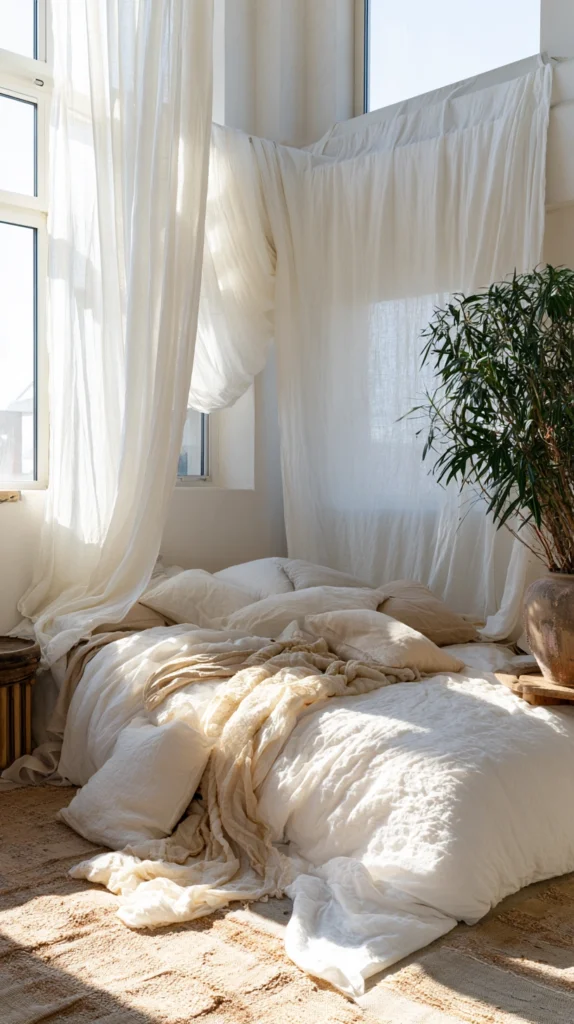
Linen — unwashed, washed, or stonewashed, in natural, white, or the warm oatmeal tone that sits between the two — is the fabric of the European coastal summer in the same way that cedar is the material of the Texas Hill Country: it is simply the correct answer, the material that belongs to the place and the season most completely and most honestly.
Use it for curtains, sofa covers, cushion cases, table runners, bed linen, and napkins — the same fabric repeated across every soft surface creates a textural consistency and a quiet material richness that mixed fabric schemes cannot achieve. Linen wrinkles, softens, and develops character with use and washing, which is precisely the quality that makes it feel genuinely lived-in rather than showroom-fresh.
4. Bring In Handmade Ceramic Objects
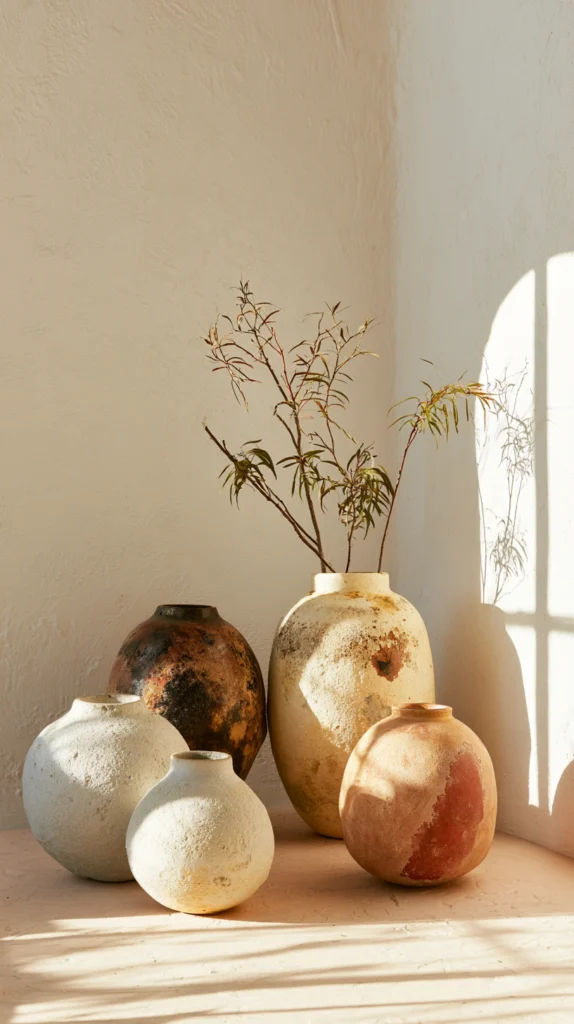
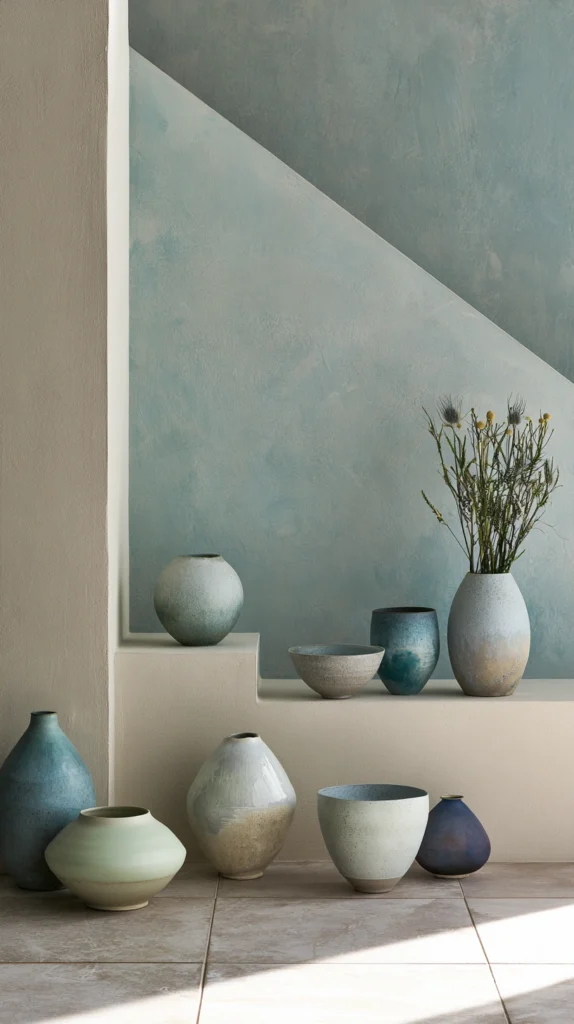
The Mediterranean craft tradition of handmade ceramics — the hand-painted plates of Positano, the simple thrown vessels of Puglia, the rough-glazed pots of rural Greece — gives coastal European interiors their most distinctive and most authentic decorative character, the visible evidence of human craft that machine-made objects cannot replicate, regardless of their quality or their design sophistication.
Group three or four ceramic pieces of varying scale on a console, a windowsill, or a dining table — simple forms in warm white, terracotta, or the soft blue-green of aged Mediterranean glaze — and resist the impulse to add anything else to the same surface. The negative space around handmade ceramic objects is what allows them to be properly seen and properly appreciated.
5. Install Terracotta or Limestone Floor Tiles
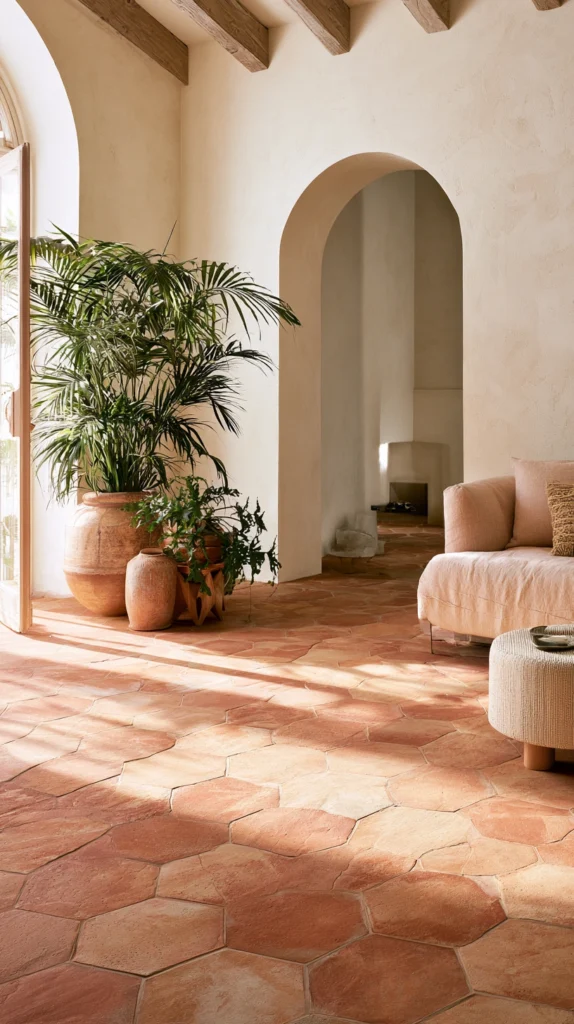
The floor is the largest surface in any room and the one that most completely establishes the material character and regional identity of the space — and in a coastal European interior, that floor should be terracotta tile, limestone flagstone, or a large-format porcelain that reads with the same warm, matte, slightly imperfect quality as either of the genuine materials.
Large Saltillo or traditional Italian cotto tiles in a warm mid-tone terracotta, laid in a simple grid or diagonal pattern with narrow grout lines, create the foundational material layer that makes every other element in the room read as correctly placed and correctly toned. Layer with natural fibre rugs — jute, sisal, or a flat-weave cotton kilim in warm earth tones — for warmth underfoot in living and sleeping areas.
6. Use Arches Wherever the Architecture Allows
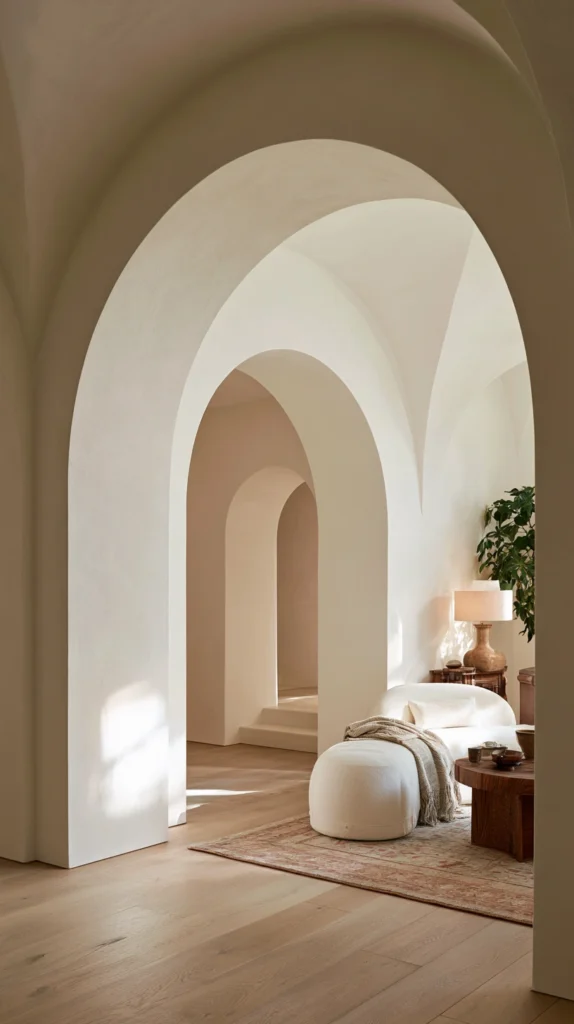
The arch — in doorways, in window openings, in niches, in the painted panel on a flat wall — is the single architectural element most associated with Mediterranean coastal architecture and the one that most immediately and most powerfully communicates the aesthetic of the European summer in an interior context.
Where existing architecture provides arched openings, keep them clear and uncluttered so the form reads without interruption. Where the architecture is flat and rectilinear, paint a simple arched panel on the wall in a warm terracotta, dusty sage, or deeper warm white — the painted arch costs almost nothing and delivers an immediate transformation of the room’s architectural character and regional identity.
7. Keep Furniture Low, Simple, and Natural
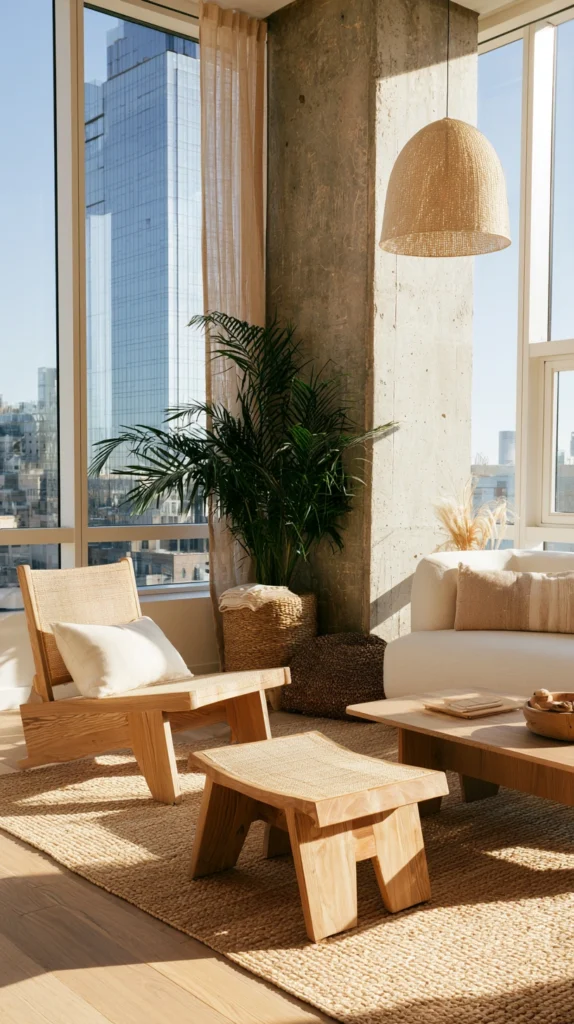
The furniture of the coastal European aesthetic is low, clean, and made from natural materials — rattan, cane, bleached timber, simple white-painted wood, linen-upholstered frames with no decorative detail beyond their honest construction — and the rooms it furnishes feel spacious, calm, and genuinely comfortable as a result of that simplicity rather than despite it.
A low rattan sofa with loose linen cushions, a simple bleached oak coffee table, a pair of cane dining chairs around a rough-hewn timber table: this is furniture that disappears into the room rather than dominating it, allowing the quality of light, the texture of walls and floors, and the view to the outside to remain the primary experience of the space.
8. Introduce Bougainvillea or Mediterranean Planting
A terracotta pot of bougainvillea on a terrace or beside a doorway, a simple olive tree in a plain ceramic container on a windowsill, a bunch of dried lavender hung from a linen ribbon above a doorframe — these botanical references to the Mediterranean landscape bring the coastal European summer into an interior with a directness and an authenticity that purely decorative objects cannot achieve.
Keep the planting restrained and architectural — one large statement plant rather than many small ones, one significant branch of fresh eucalyptus or dried Mediterranean herbs rather than a complex floral arrangement. The single, well-chosen plant in the right container in the right position is the botanical equivalent of the handmade ceramic: it needs space around it to be fully seen.
9. Hang Simple Sheer Curtains That Billow in the Breeze
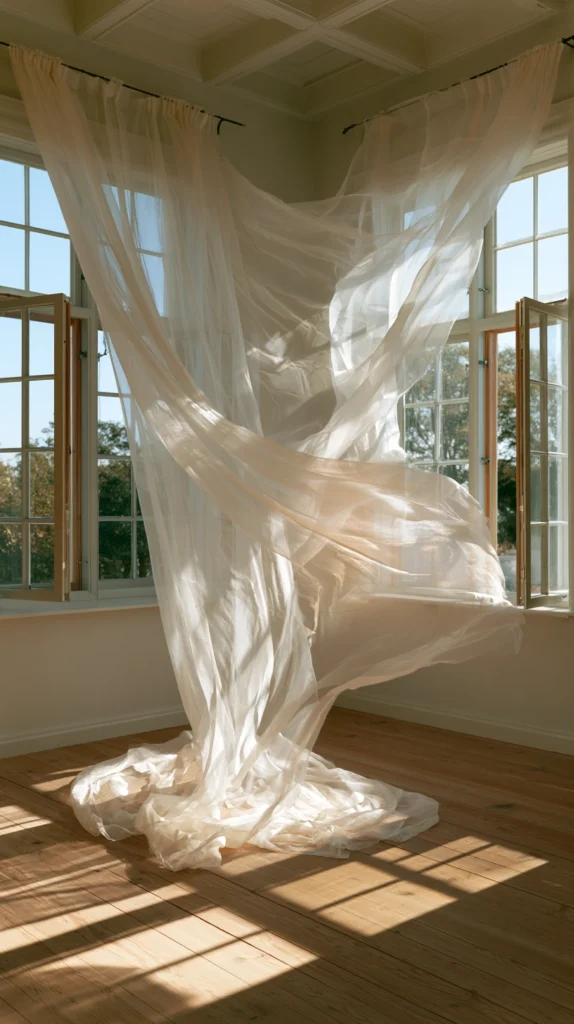
The billowing sheer curtain — white or natural linen, floor-to-ceiling, moving in a sea breeze through an open window or door — is one of the most iconic and most immediately evocative images of the European coastal summer interior, and it costs very little to recreate in any room with windows generous enough to hang fabric across.
Use lightweight linen voile or cotton muslin on simple brass or black iron rods, hang the fabric generously so it pools slightly on the floor, and allow it to move freely rather than tying it back. The movement of the fabric in the room’s air current is the point — the curtain that billows is a room that breathes, and a room that breathes is a room that feels genuinely coastal regardless of its actual geography.
10. Display Collected Objects From the Natural World
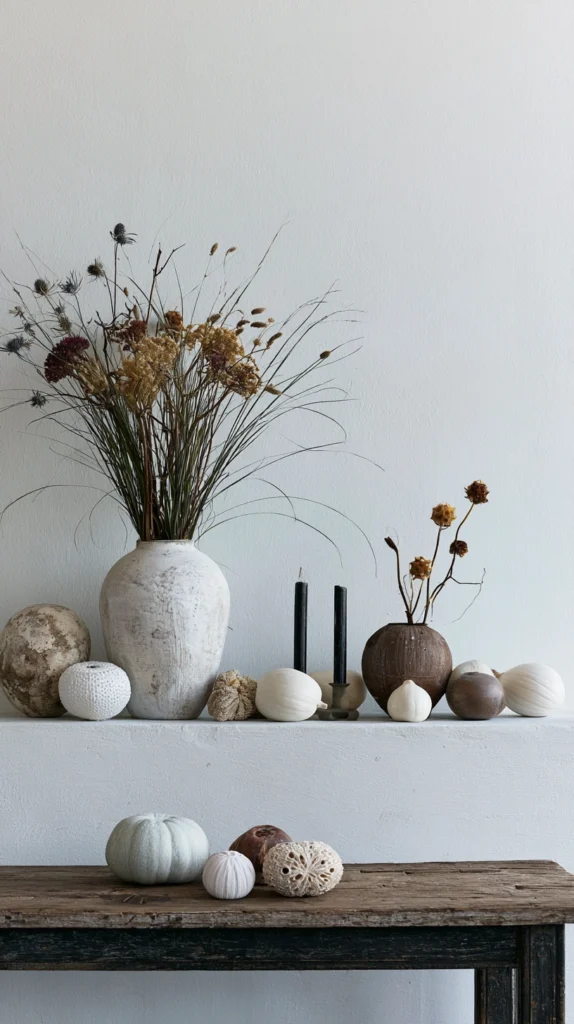
Shells gathered from a specific beach, smooth sea glass arranged in a simple glass vessel, driftwood placed on a console as a sculptural object, a collection of interesting stones from a coastal walk displayed on a windowsill in a row of descending size: these are the decorative objects of the coastal European aesthetic, and they work because they carry genuine provenance — the evidence of actual time spent in the places the aesthetic references.
Display them with the same restraint and the same attention to negative space applied to every other surface in the room, allowing each object to be seen individually rather than presenting them as an undifferentiated collection that reads as clutter rather than curation.
11. Use Blue as a Deliberate Accent, Not a Theme
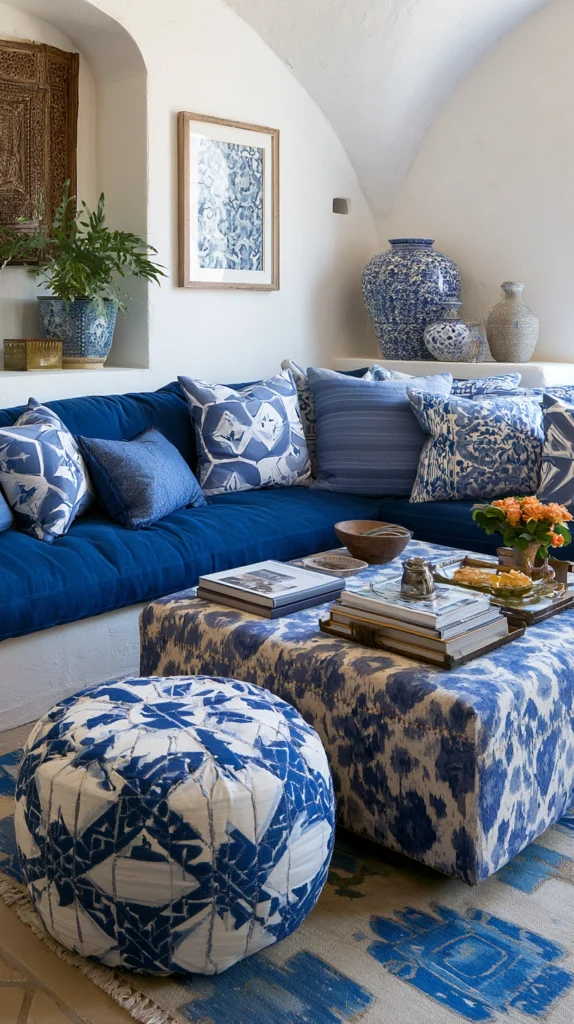
The blue of the Mediterranean — the deep cobalt of a Greek door, the faded periwinkle of a Provençal shutter, the clear turquoise of the Tyrrhenian in full summer light — is a colour that works in a coastal European interior as a deliberate, considered accent used in two or three specific places rather than as a room-wide theme that tips the aesthetic from refined to themed.
A pair of blue ceramic vessels on a white console, a single blue linen cushion among white ones on the sofa, a blue-painted interior window frame against a white wall: these isolated uses of blue carry enormous visual impact precisely because of their restraint. The moment blue becomes the room’s dominant colour rather than its most considered accent, the Amalfi reference becomes a costume rather than an identity.
12. Incorporate Woven Textures Throughout
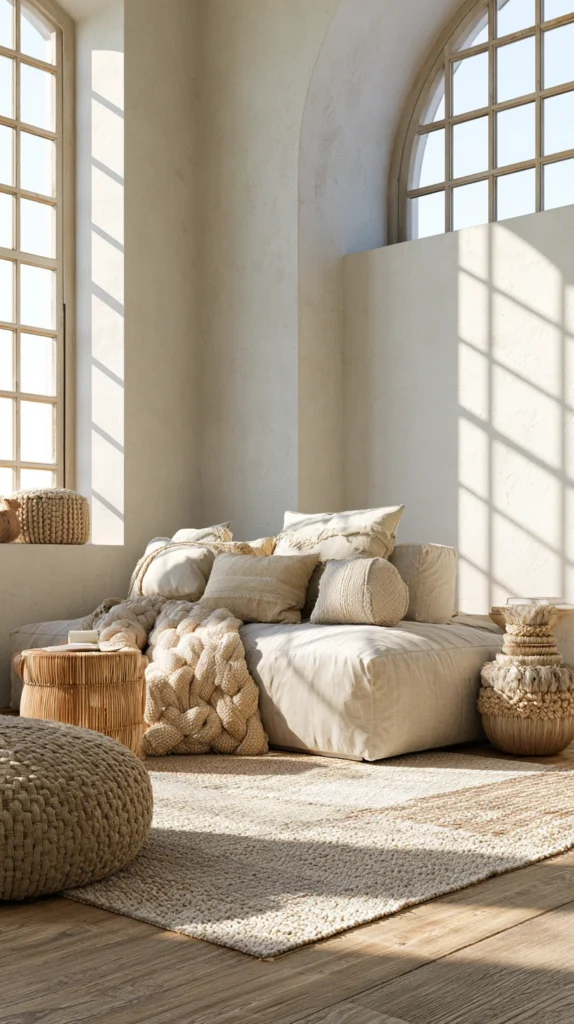
The woven textures of the Mediterranean craft tradition — basket-weave rattan, hand-plaited seagrass, woven cotton in simple geometric patterns, the rough-woven quality of an undyed linen throw — are the material detail that gives the coastal European aesthetic its particular tactile richness without introducing colour, pattern, or visual complexity that disrupts the room’s fundamental calm.
A rattan pendant light shade above a dining table, a woven seagrass storage basket beside a sofa, a hand-plaited placemat on a linen tablecloth: each one adds a layer of texture that the eye reads as warmth and as craft without demanding specific attention or creating visual competition with any other element in the room.
13. Let the Table Setting Do the Decorative Work
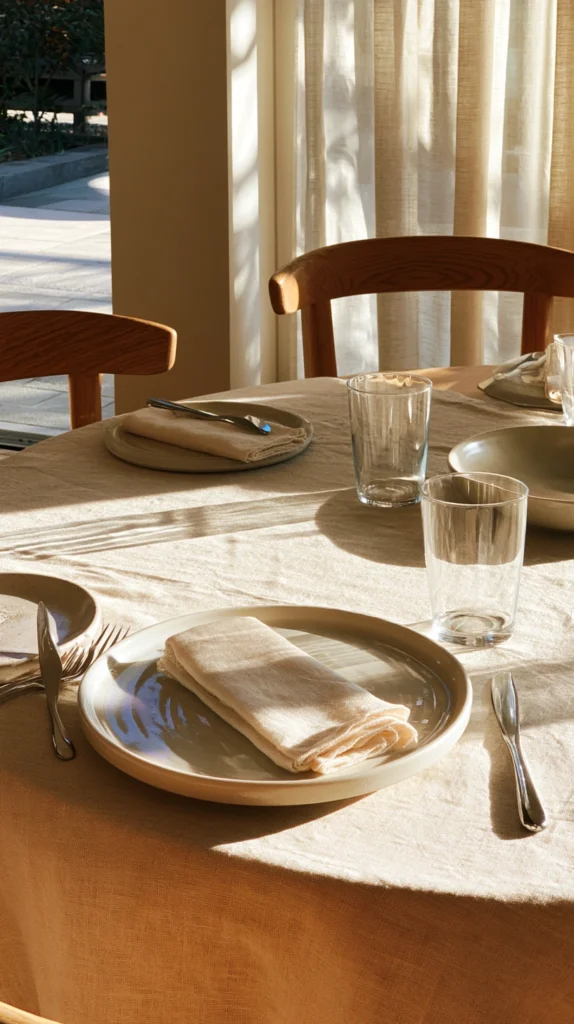
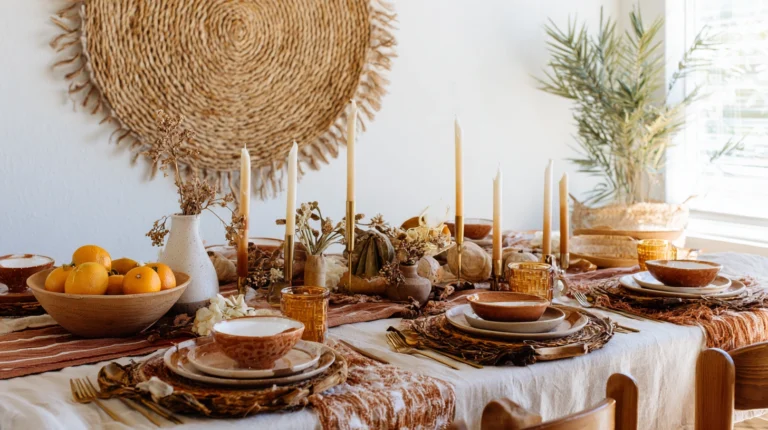
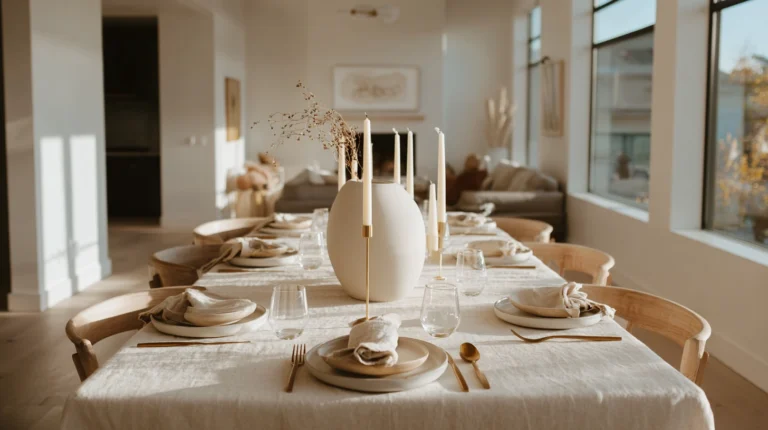
A table set for summer — rough linen runner, simple white ceramic plates with hand-painted rims, a single terracotta pot of fresh herbs as the centrepiece, water glasses in clear or pale green blown glass, linen napkins folded without precision and placed without ceremony — is a coastal European still life of extraordinary beauty that requires almost no individual object of any particular value or any particular design distinction.
The beauty is entirely in the combination and the restraint: the honest materials, the natural colours, the absence of anything formal or forced. A summer table set in this way communicates the essential quality of the Mediterranean coastal aesthetic — the sense that beauty here is natural, uncontrived, and entirely available to anyone willing to choose simplicity over elaboration.
14. Use Candlelight as the Primary Evening Light Source
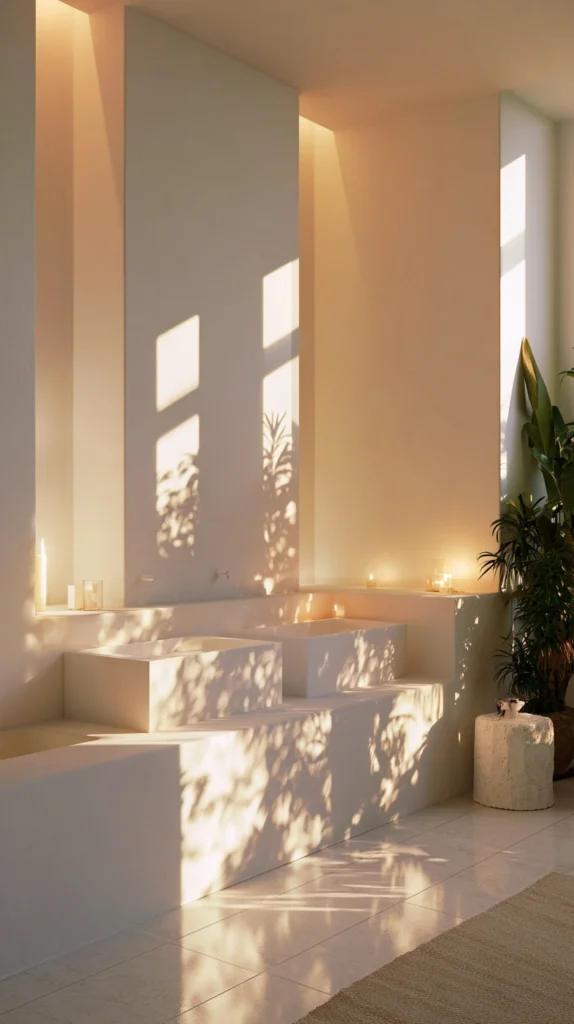
The coastal European summer evening is lit by candlelight — clustered pillar candles on a terrace table, a single taper in a simple ceramic holder on a nightstand, tea lights in clear glass vessels along a windowsill — and the quality of atmosphere that candlelight creates in a white-walled, linen-furnished, terracotta-floored room is one that no artificial lighting scheme, however sophisticated, can fully replicate.
Use candles generously through the summer months, supplement with warm low-wattage bulbs in simple ceramic or rattan fittings for practical illumination, and turn off overhead lights entirely in the evening hours. The room that is lit primarily by flame in the summer months feels genuinely European in a way that is immediately and viscerally different from the same room lit by overhead artificial light.
15. Edit Every Surface to Its Absolute Minimum
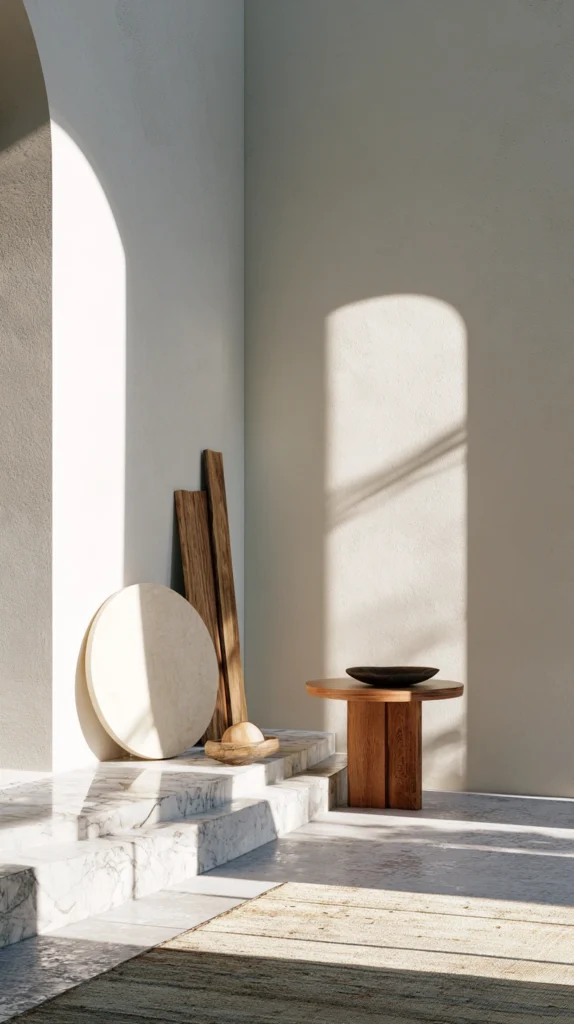
The coastal European aesthetic at its most refined and its most beautiful is the product of subtraction rather than addition — the progressive removal of everything from a surface, a shelf, a console, a table that does not contribute something genuinely essential to the composition of that specific area of the room.
One ceramic vessel, one branch of dried botanicals, one smooth stone: a surface edited to this degree of restraint communicates confidence, intentionality, and the particular quality of calm that the Amalfi-meets-minimalism aesthetic is built entirely upon. The editing process is the design process in this aesthetic — and the willingness to leave a surface empty when nothing on it earns its place is the single most important design skill the coastal European interior demands and rewards.
Final Thoughts: Achieving the Amalfi-Meets-Minimalism Aesthetic
The coastal European interior that genuinely captures the quality of the Amalfi summer is not assembled from a shopping list of themed objects — it is built from honest materials, warm restraint, and the discipline to stop adding things before the room loses the quality of calm that is its entire point and its entire pleasure.
Start with the warm white walls, the terracotta or limestone floor, and the linen — the three foundational elements that establish the room’s essential character before a single decorative object is introduced. Add handmade ceramics, natural textures, and botanical references with genuine restraint and genuine patience.
Edit every surface to its minimum, allow generous negative space around every object that remains, and trust that the quality of light, material, and atmosphere will do everything that decoration is conventionally enlisted to achieve — and do it more beautifully, more lastingly, and more completely than decoration alone ever could.