
15 Rain Garden Ideas for a Sustainable & Stylish Yard
A rain garden is one of the most intelligent and most genuinely rewarding investments any homeowner can make in their outdoor space. It is a shallow, strategically planted depression that captures stormwater runoff, filters pollutants naturally, and returns rainfall slowly and cleanly to the ground beneath it.
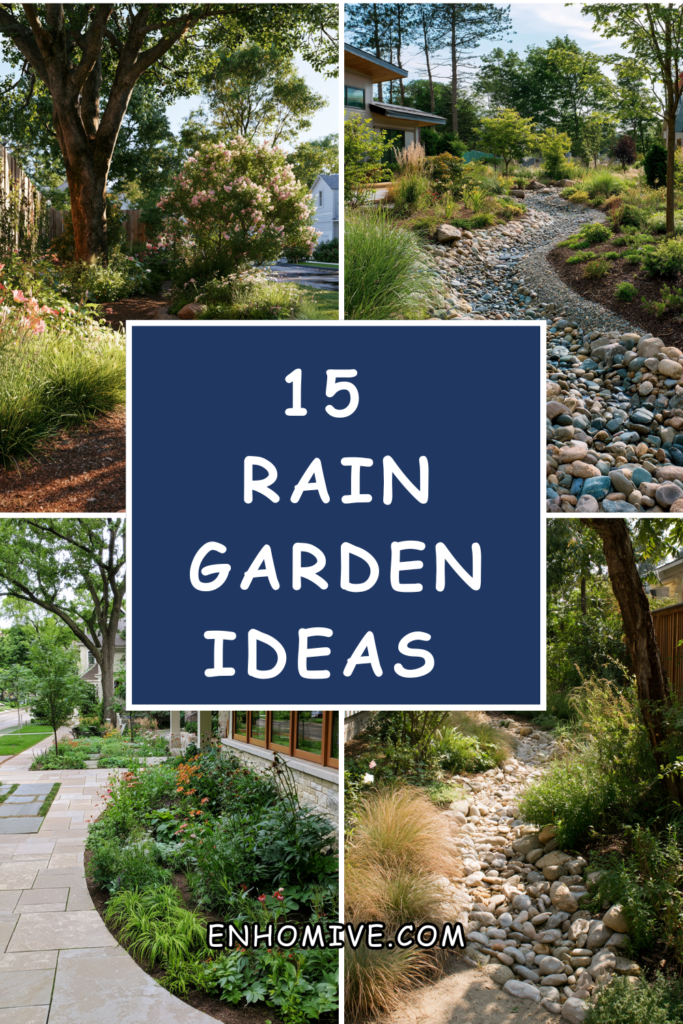
Done with genuine care and genuine design intention, a rain garden is both ecologically purposeful and visually beautiful in every season it grows through.
1. Start with a Native Plant Foundation
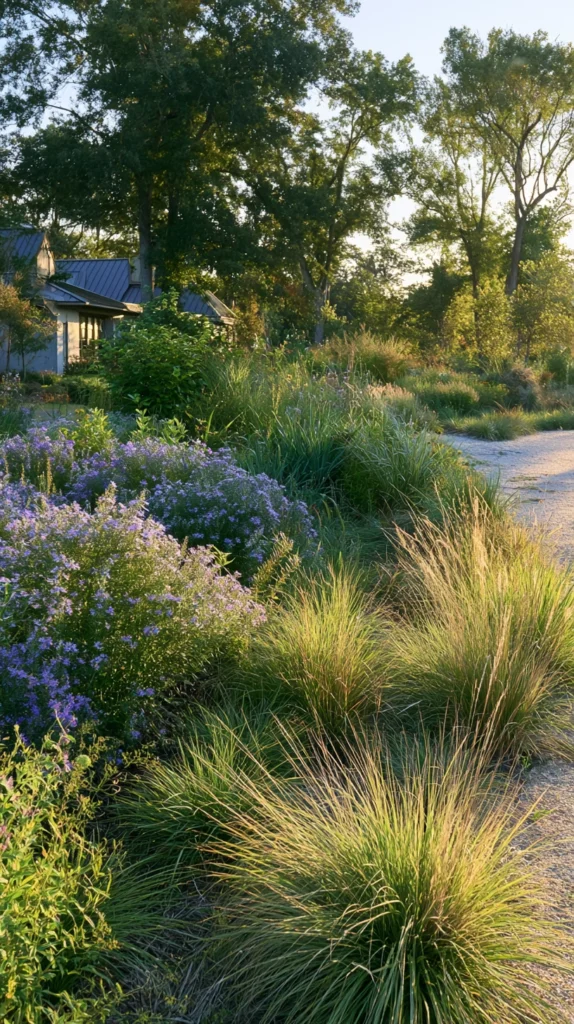
Native plants are the backbone of every successful rain garden because they are perfectly adapted to local rainfall patterns, soil conditions, and seasonal temperature extremes. Species like coneflowers, black-eyed Susans, wild bergamot, and switchgrass thrive in both temporary flooding and prolonged summer drought without any special intervention.
Their deep, fibrous root systems also improve soil drainage dramatically and permanently over time.
2. Place the Garden Where Water Already Flows
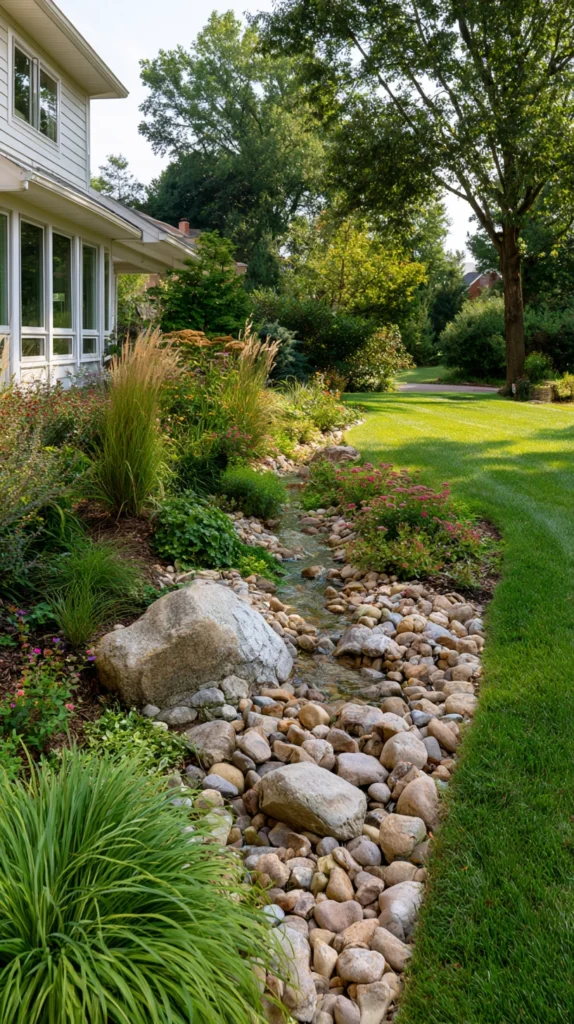
The most effective rain garden sits in the spot where water already naturally collects after a heavy storm — the low corner of the lawn, the base of a gentle slope, the area beside the driveway that never quite dries out.
Directing downspout runoff toward this existing low point amplifies drainage performance without requiring significant earthmoving or grading work. Let the landscape itself show you exactly where the garden belongs.
3. Edge It with Natural Stone
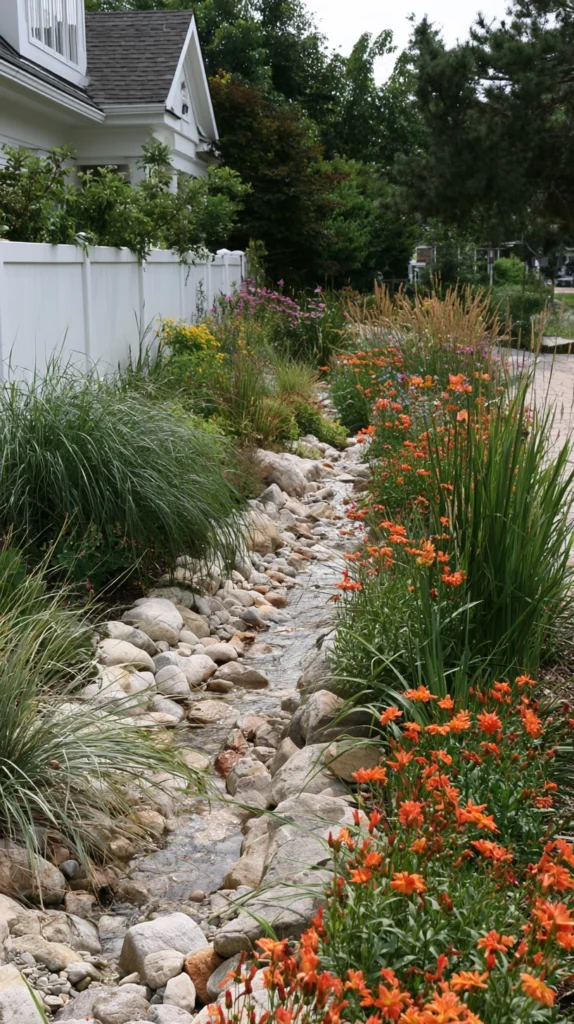
A clean border of fieldstone, flagstone, or smooth river rock gives the rain garden a polished, intentional edge that visually separates it from the surrounding lawn and communicates genuine design confidence.
Stone edging also slows incoming water at the garden’s inlet, preventing soil erosion and protecting plant roots during the heaviest downpours of the season. The garden immediately reads as carefully planned rather than accidentally wet.
4. Add a Gravel Inlet Channel
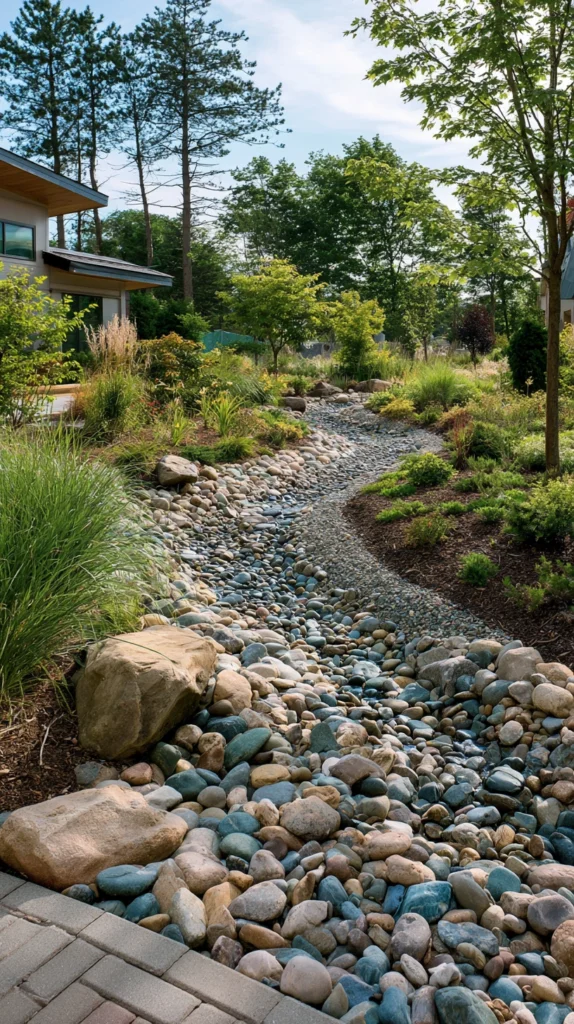
A narrow channel of smooth river pebbles running from the downspout or driveway edge to the garden distributes incoming water evenly across the planted area and prevents channeling damage to soil and roots.
Choose pebbles in a natural grey or warm tan that complement the surrounding landscape and make the channel feel like a deliberate design feature. This single addition improves both the garden’s drainage function and its overall visual coherence significantly.
5. Layer Plants by Water Tolerance
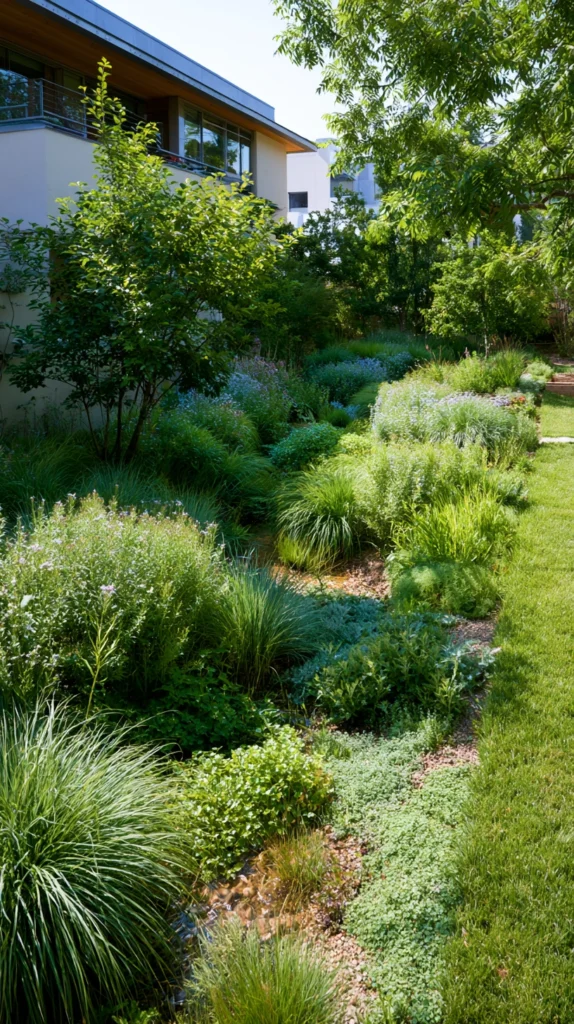
Rain gardens experience three distinct moisture zones — a wet center, a moist middle ring, and a drier outer edge — and matching the right plants to each zone produces a healthier, more resilient, and more visually dynamic garden.
Place water-loving sedges and cardinal flowers at the center, medium-tolerance plants like Joe-Pye weed in the middle band, and drought-tolerant prairie species along the outer rim. This thoughtful layering ensures that every plant in the garden thrives regardless of how much or how little rain falls.
6. Use Ornamental Grasses for Year-Round Structure
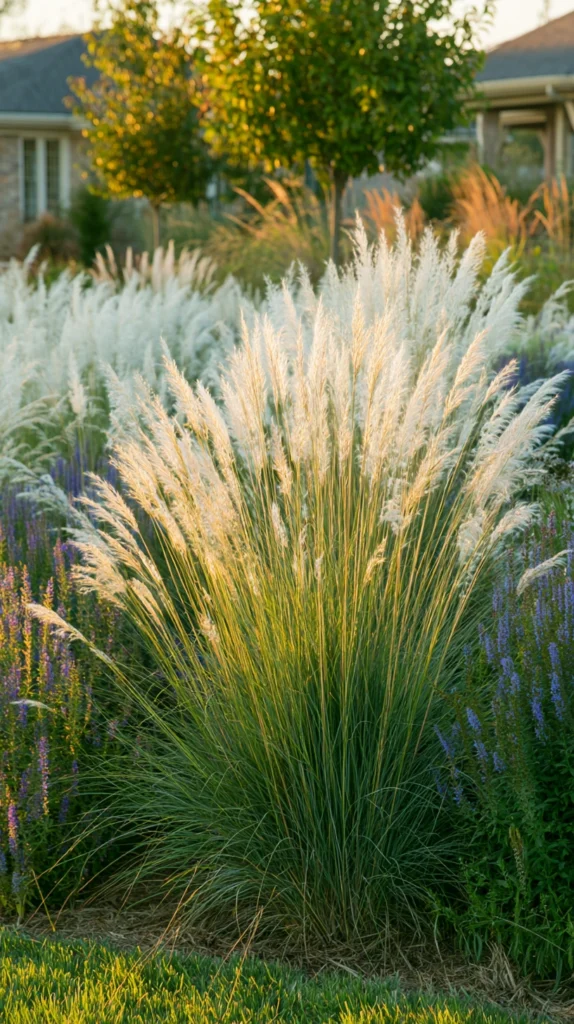
Ornamental grasses like little bluestem, prairie dropseed, and tufted hair grass bring structure, graceful movement, and genuine winter interest to a rain garden that might otherwise look sparse and bare after summer blooms have faded.
Their fine-textured, arching forms contrast beautifully with the broader foliage of flowering perennials throughout the growing season. Their seed heads persist through winter and provide a valuable food source for birds during the coldest months of the year.
7. Mulch Generously and Naturally
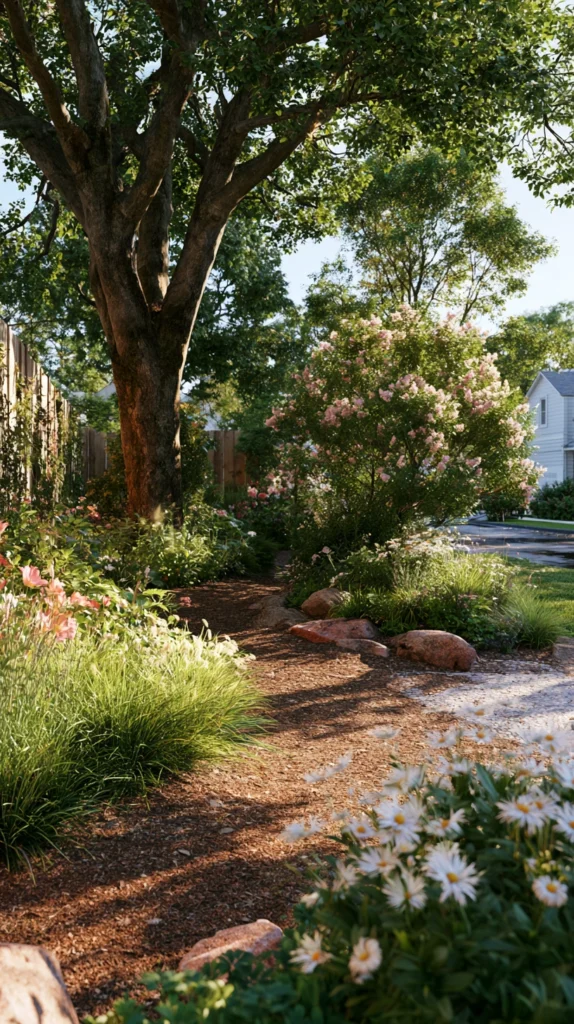
A generous layer of shredded hardwood mulch — applied at least three inches deep across the entire planted surface — suppresses weeds, moderates soil temperature, and helps young plants establish strong root systems through their critical first growing season.
Always choose natural, undyed mulch that weathers to a warm, soft brown rather than artificially dyed varieties that leach chemicals into the soil being actively protected. Proper mulching is one of the simplest and most impactful things a gardener can do for a new rain garden.
8. Design It as a Pollinator Habitat
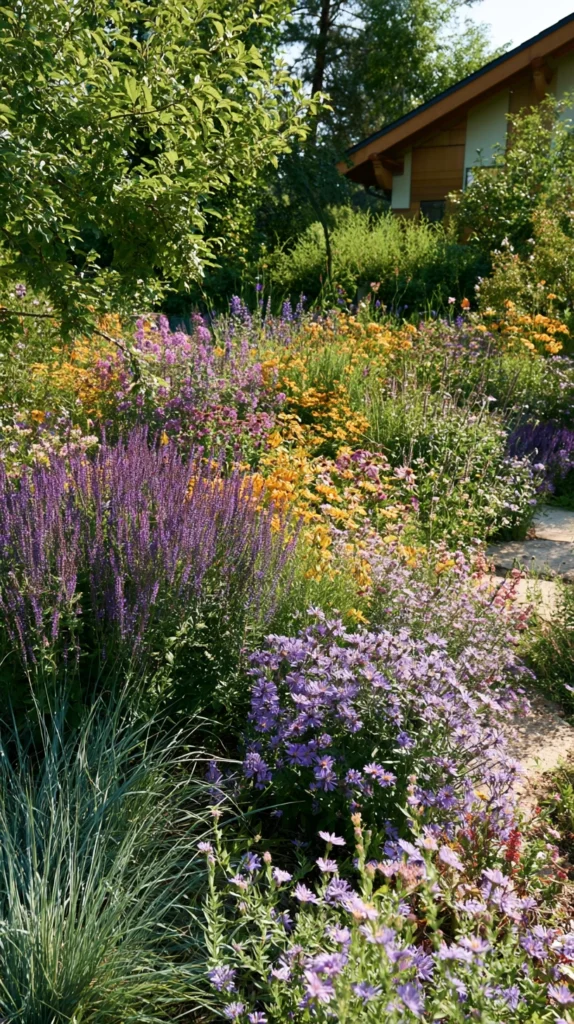
Planting with pollinators in mind transforms a functional drainage solution into a genuine wildlife sanctuary that contributes ecological value well beyond the boundaries of the yard itself.
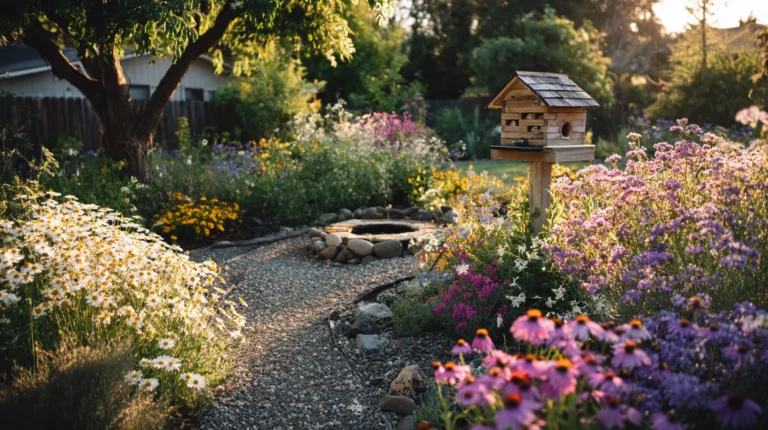
Nectar-rich natives like milkweed, anise hyssop, purple coneflower, and goldenrod attract butterflies, native bees, and beneficial insects from early spring through late autumn. A pollinator-focused rain garden is one of the most visually dynamic and most ecologically generous garden styles available to any sustainable yard.
9. Replace the Downspout with a Rain Chain
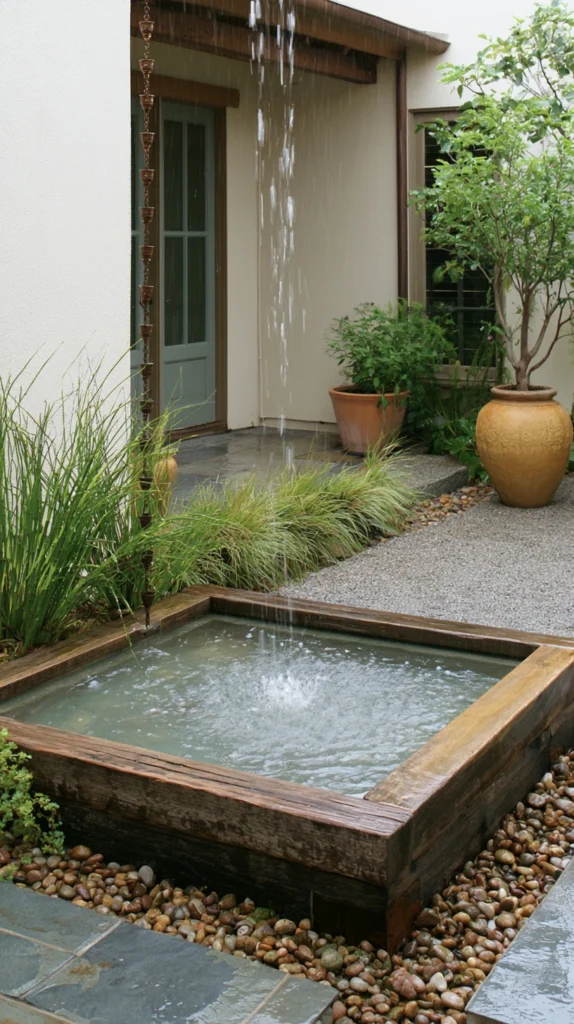
A copper or aluminum rain chain replaces the standard downspout with a series of linked cups or loops that guide roof water visibly, slowly, and beautifully down to the garden below.
Rain chains reduce water velocity, minimize splashing damage to soil, and introduce a gentle, meditative sound during rainfall that makes the entire garden experience more sensory and more genuinely pleasant. They are one of the easiest single upgrades for elevating the aesthetics of any rain garden system.
10. Build a Dry Creek Bed as an Overflow Path
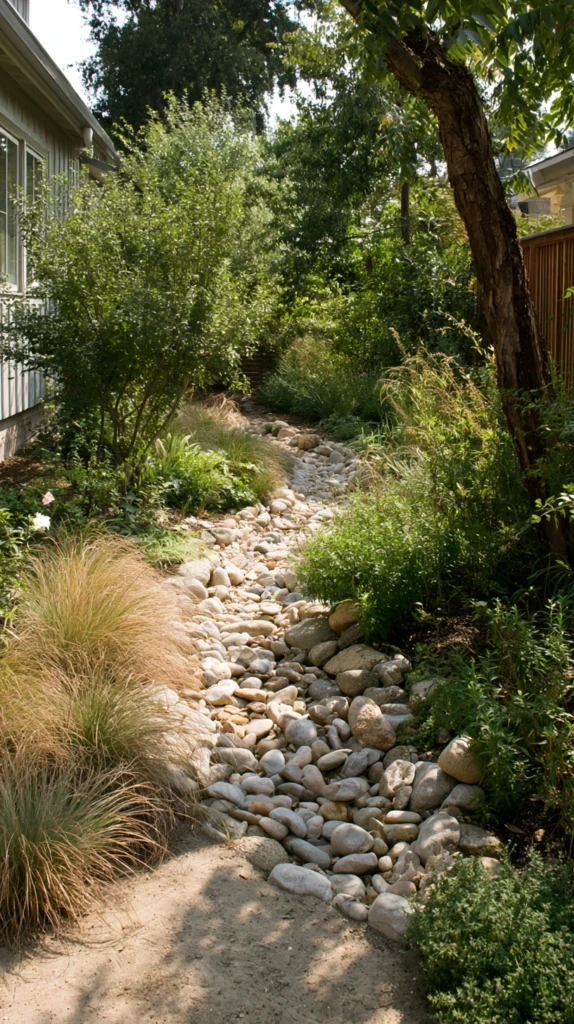
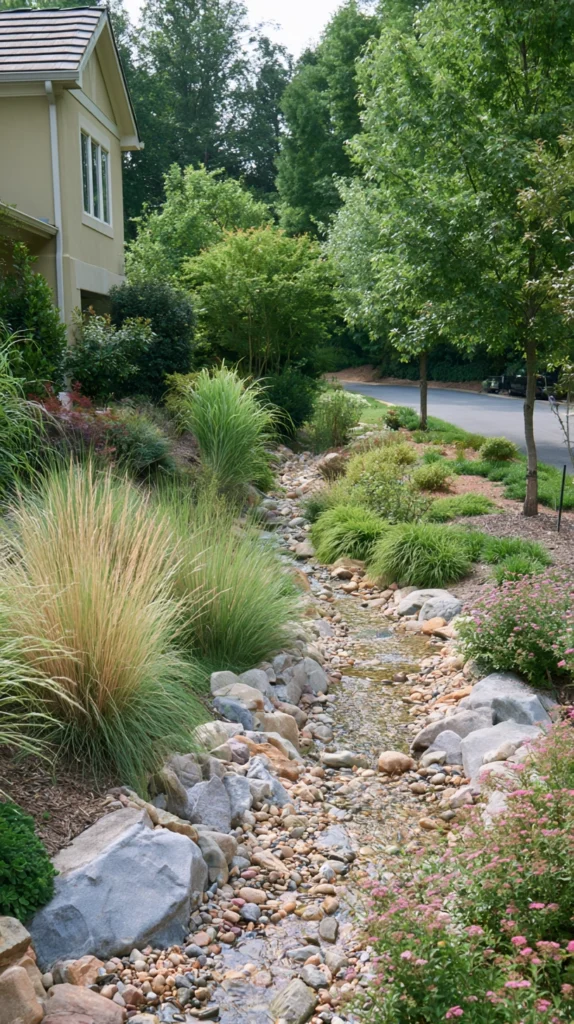
A winding channel filled with smooth river rocks of varying sizes provides an elegant overflow route for water during storms that exceed the rain garden’s absorption capacity.
During dry weather, the same creek bed functions as a naturalistic landscape element that adds texture, visual movement, and genuine organic charm to the yard. A well-built dry creek bed looks as though the landscape always had it, rather than something recently installed to manage a drainage problem.
11. Try a Woodland Rain Garden in the Shade
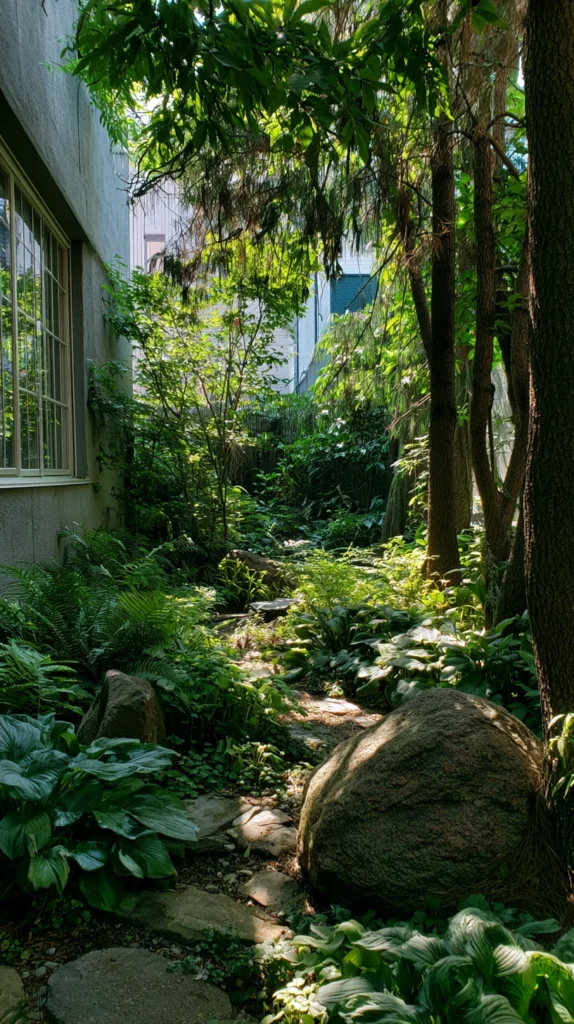
A shaded rain garden planted beneath an existing tree canopy handles stormwater just as effectively as a sunny one while working beautifully with the cool, moist, filtered-light conditions that many homeowners find genuinely difficult to plant.
Shade-tolerant natives like ferns, wild ginger, Virginia bluebells, and foamflower are perfectly adapted to exactly these conditions and thrive with minimal intervention. The result is a quietly beautiful, moss-edged garden that feels genuinely wild and genuinely restful in equal measure.
12. Build a Small Berm on the Downhill Edge
A low earthen berm — a gently compacted mound of soil — built along the downhill edge of the rain garden holds incoming water in place long enough for it to infiltrate rather than flow straight through and away.
The berm can be planted with the same native species as the rest of the garden, making it invisible as a structural element and seamlessly integrated into the overall planting design. This one addition can effectively double the garden’s water-holding capacity without increasing its planted footprint at all.
13. Use It to Frame a Patio or Walkway

Positioning the rain garden along the edge of a stone patio or garden path does double duty — it captures runoff from the hardscaped surface while creating a soft, planted buffer that elegantly transitions between built and natural elements.
A gently curved rain garden planted with low flowering natives along a gravel path feels both intentional and relaxed, the kind of considered landscape detail that reads as genuinely designed rather than purely reactive. It transforms a drainage necessity into one of the yard’s most defining and beautiful features.
14. Go Meadow-Style for a Natural, Low-Maintenance Look
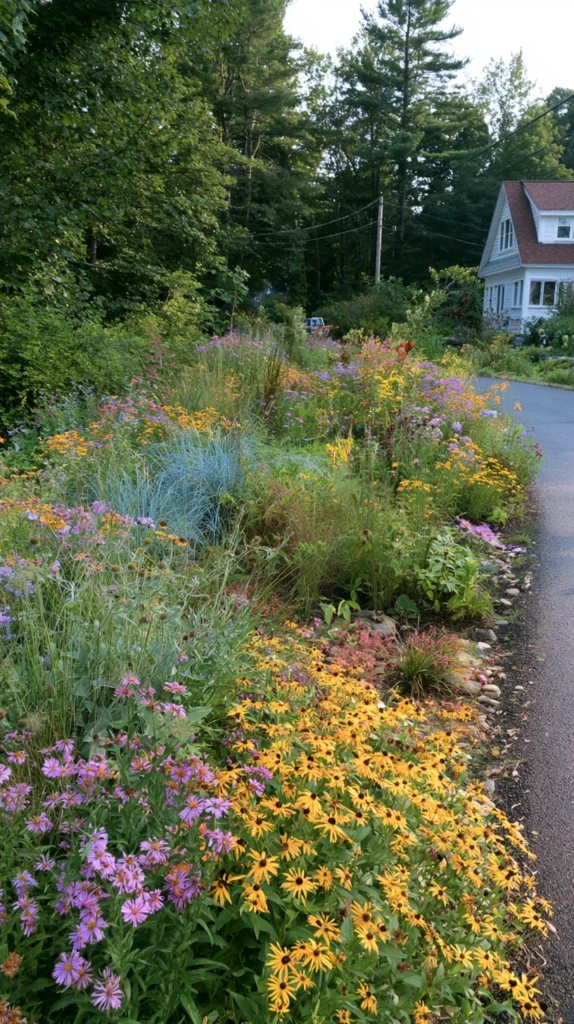
A rain garden planted in the loose, abundant, slightly wild spirit of a native meadow — with plants allowed to self-seed, intermingle, and fill gaps naturally — is one of the most low-maintenance and most visually rewarding approaches available to any gardener.
Allow volunteers to establish freely, let seed heads stand through winter, and resist the urge to over-tidy a garden that performs its ecological function most effectively when it looks most genuinely alive. The meadow-style rain garden rewards patience with extraordinary, ever-changing seasonal beauty.
15. Photograph It Through Every Season and Improve Over Time

A rain garden improves every single year as plants mature, root systems deepen, and the soil becomes progressively better adapted to absorbing and filtering stormwater. Photograph the garden in early spring, midsummer, autumn, and midwinter to understand what each season reveals about gaps, growth, and genuine opportunities for refinement and improvement.
The most beautiful and most sustainable yards are never truly finished — they are continuously, thoughtfully, and lovingly improved by gardeners who pay genuine attention to what the living landscape is always quietly communicating.
A thoughtfully designed rain garden is living proof that the most sustainable choice and the most beautiful choice are very often the same choice — a garden that solves a real drainage problem with real plants, real craft, and genuine ongoing care that rewards the yard, the watershed, and the gardener in equal and lasting measure.