
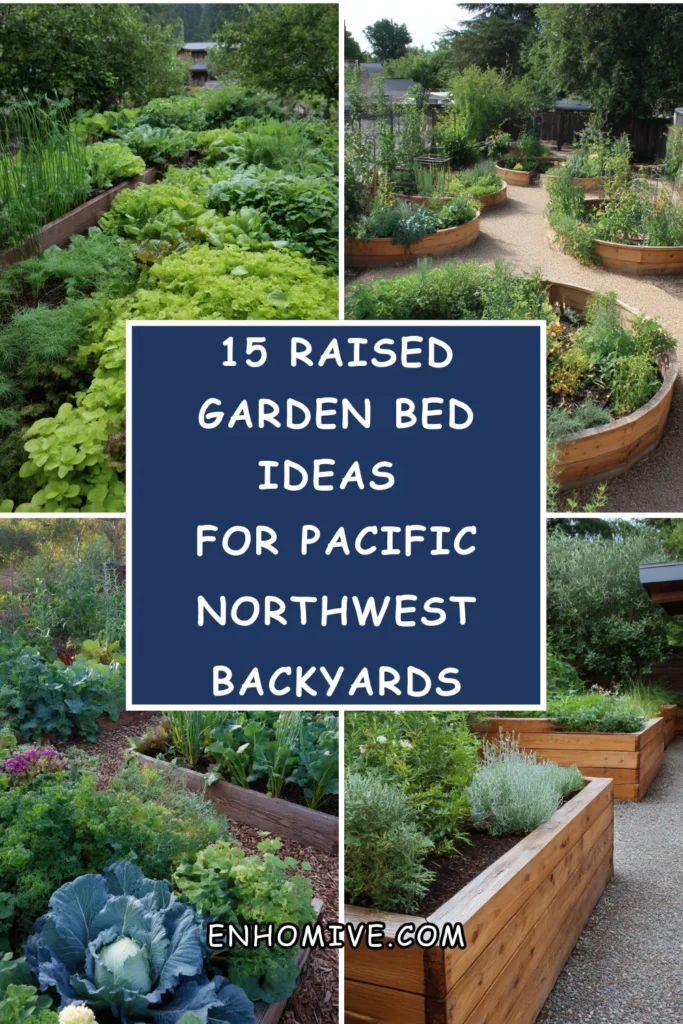
15 Raised Garden Bed Ideas for Pacific Northwest Backyards
The Pacific Northwest is one of the most botanically extraordinary regions on earth — a landscape of such rainfall generosity, such temperate consistency, and such genuinely remarkable growing potential that the question facing any serious gardener in Seattle, Portland, Olympia, or the hundreds of smaller communities scattered through the green, rain-washed valleys and the forested slopes of the Cascades and the Coast Range is never whether things will grow but rather which of the extraordinary abundance of things that will grow should be given the finite resource of the backyard’s available space.
Into this botanical paradise of genuine growing wealth, the raised garden bed arrives not as a solution to difficult growing conditions — the Pacific Northwest has no difficult growing conditions in the conventional sense — but as the most productive, the most visually organised, the most efficiently managed, and the most genuinely beautiful approach to gardening in a region where the soil’s specific challenges of drainage, clay content, and the accumulated compaction of the Northwest’s legendary rainfall make the controlled, amended, perfectly draining environment of a raised bed the most intelligent and the most rewarding growing system available.
Here are 15 raised garden bed ideas for Pacific Northwest backyards that will transform the region’s extraordinary growing potential into a garden of complete beauty, complete productivity, and complete seasonal joy.
1. Build with Western Red Cedar for Regional Authenticity and Natural Durability
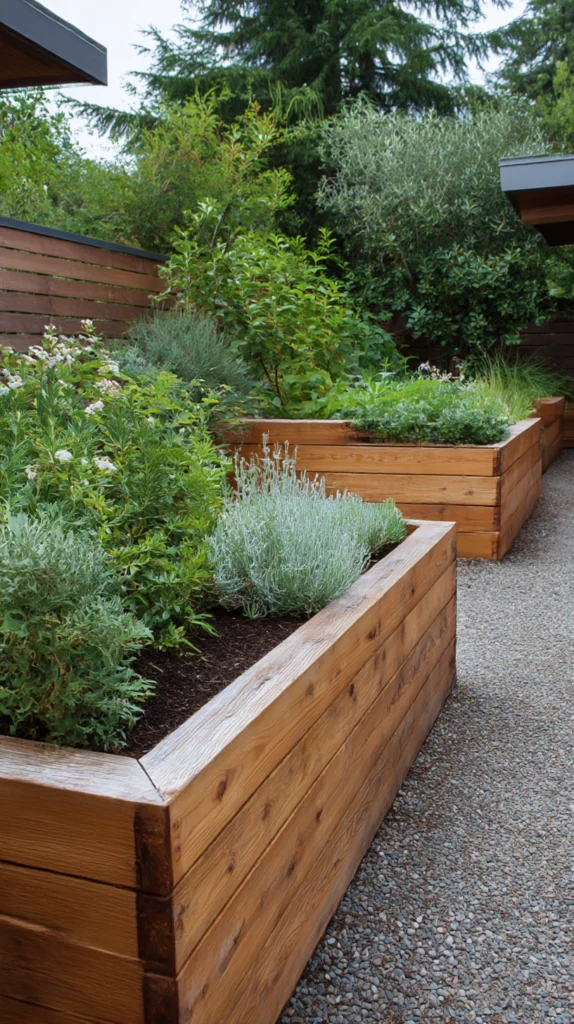
The material choice for Pacific Northwest raised garden beds begins and ends, for any gardener with genuine knowledge of the region’s timber resources and genuine concern for the longevity and the authentic character of their outdoor growing structures, with western red cedar.
Western red cedar is the Pacific Northwest’s most extraordinary and most completely appropriate raised bed construction material — a timber of such natural resistance to moisture, rot, and insect damage that untreated cedar beds regularly outlast the decade in the specific, wet, consistently damp conditions of the Northwest garden without any protective treatment, any preservative application, or any maintenance intervention beyond the occasional tightening of the hardware that holds the boards together.
It weathers to the specific, silver-grey, deeply atmospheric tone of aged Pacific Northwest timber — the tone of the driftwood on the Oregon coast, of the old-growth snag standing in the Cascade forest, of the historic barn boards of the Willamette Valley — with a natural grace and a natural beauty that makes the garden’s growing structures genuinely more beautiful with each successive Pacific Northwest winter they survive.
2. Design a Rain-Harvesting System Integrated with the Bed Layout
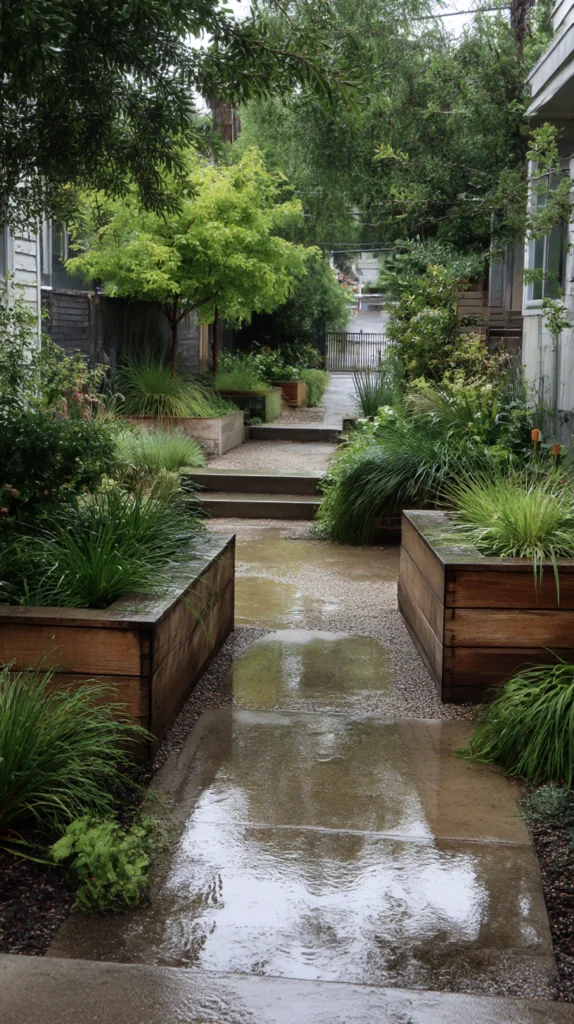
The Pacific Northwest gardener’s most distinctive and most regionally specific design challenge — the management of the extraordinary rainfall that the region receives in such abundance during the long, grey, genuinely extraordinary wet season that runs from October through May and that fills every unmanaged garden surface with standing water, compacted soil, and the specific growing problems that permanent soil saturation inevitably creates — is most elegantly and most productively resolved through the integration of a rain-harvesting system into the raised garden bed layout.
Position the garden beds to channel the overflow from a rain barrel collection system directly into the growing space during the dry summer months when supplemental irrigation is genuinely necessary.
Grade the pathways between the beds to direct excess winter rainfall away from the bed foundations and toward a central collection point. The raised garden bed layout that manages Pacific Northwest rainfall with genuine horticultural intelligence is the layout that produces the most beautiful and the most productive garden in the most botanically generous and the most hydrologically challenging growing region in the country.
3. Create a Keyhole Design for Maximum Space Efficiency
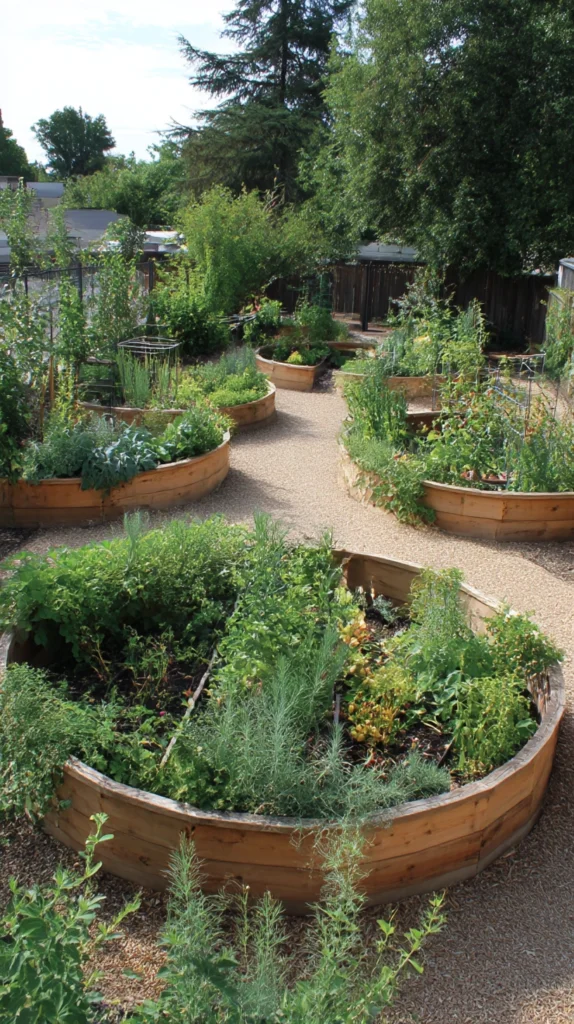
The Pacific Northwest backyard garden of serious growing ambition but limited available space — the urban Seattle or Portland lot whose backyard dimensions are measured in feet rather than acres but whose occupants’ horticultural ambitions are not diminished by the spatial constraints of the urban residential condition — is the garden for which the keyhole raised bed design was specifically and most intelligently conceived.
The keyhole bed — a circular or horseshoe-shaped raised bed with a narrow access path cut into its interior that allows the gardener to reach every point of the growing surface from a central standing position without ever stepping onto the growing medium — maximises the productive use of every square foot of available backyard space while minimising the soil compaction that conventional rectangular bed access paths inevitably produce.
Build keyhole beds in the most space-efficient materials available — galvanized steel rings of appropriate diameter, or cedar boards curved and fastened into the specific circular form of the keyhole design — and fill them with the most nutritionally complete growing medium that the Pacific Northwest’s remarkable composting tradition can produce.
4. Install Galvanized Steel Beds for Industrial Pacific Northwest Aesthetic
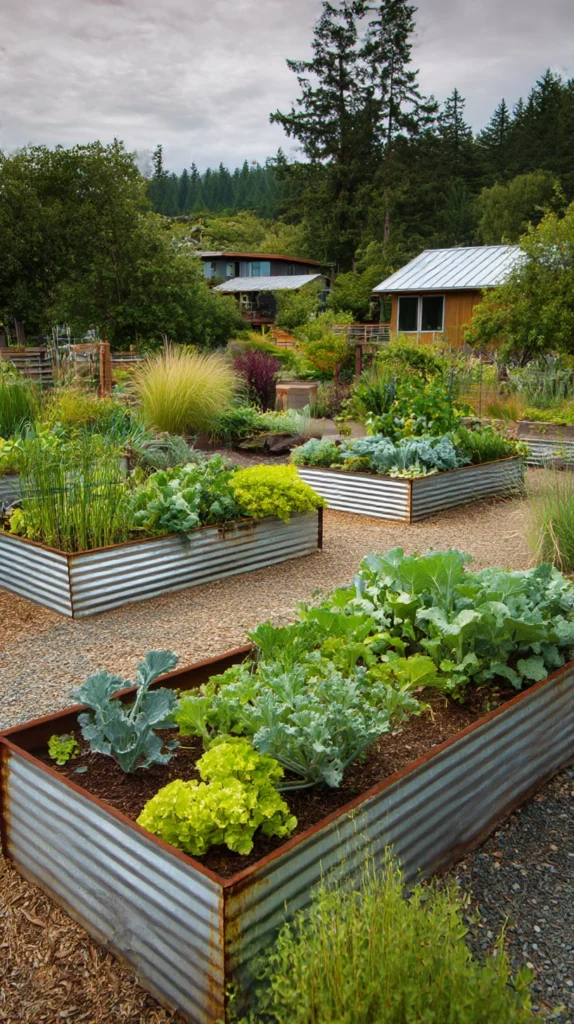
The galvanized steel raised garden bed — the corrugated metal stock tank, the flat-walled galvanized steel panel bed, or the purpose-manufactured steel raised bed of contemporary agricultural aesthetic — is the Pacific Northwest gardener’s most durably functional and most visually striking alternative to the cedar plank construction that the region’s timber tradition naturally suggests. Galvanized steel is the material of the Pacific Northwest’s fishing industry, its agricultural infrastructure, and the specific industrial-meets-natural aesthetic of the urban farming movement that has flourished most completely and most creatively in the cities of the Northwest’s urban corridor.
A row of galvanized steel beds in a Portland backyard, their corrugated sides weathering to the warm, slightly rusty patina of steel exposed to the Northwest’s persistent moisture, planted with the full abundance of the Pacific Northwest growing season, creates a kitchen garden of extraordinary visual strength and extraordinary regional character.
5. Build a Three-Sisters Companion Planting Bed
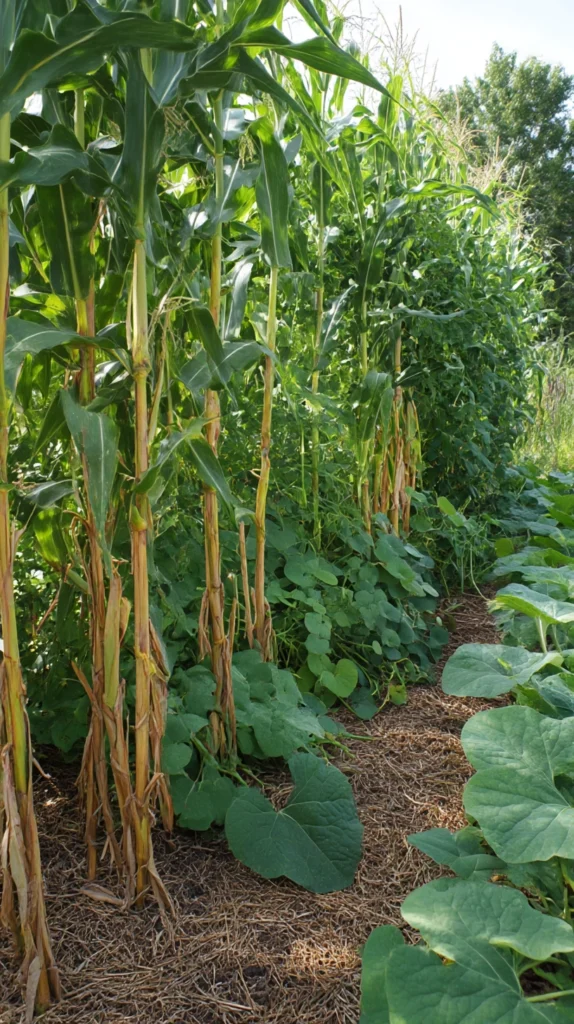
The three-sisters planting — the specific, ancient, completely extraordinary companion planting system of corn, beans, and squash developed by the Indigenous peoples of North America over centuries of agricultural observation and that the Pacific Northwest’s own Native agricultural
traditions practiced in the valley and coastal lowland environments of the pre-contact Northwest It is the raised garden bed planting system of most complete ecological intelligence and most complete growing efficiency available to any Pacific Northwest backyard gardener of genuine horticultural ambition.
Plant the corn first at the bed’s centre, allow it to establish its vertical structure, introduce the climbing beans at the corn’s base to fix atmospheric nitrogen into the growing medium and to use the corn’s stalk as a natural climbing support, and plant the squash around the perimeter to spread its large leaves across the bed surface as a living mulch that suppresses weeds, retains moisture, and creates the specific, mutually beneficial microclimate that three-sisters planting has produced for the Indigenous gardeners of this continent for generations beyond counting.
6. Create a Tiered Hillside Bed System for Sloped Pacific Northwest Lots
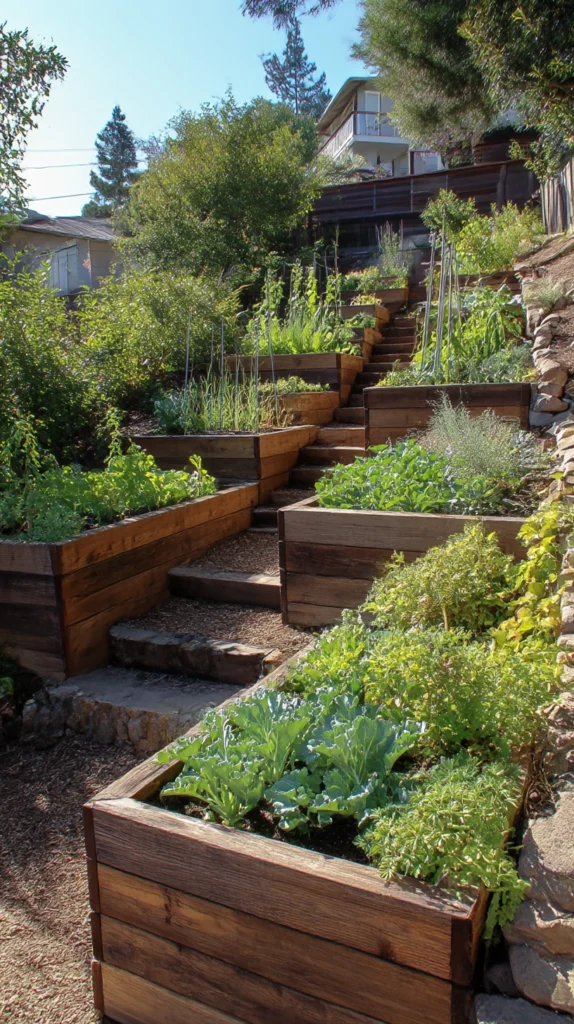
The Pacific Northwest backyard that occupies a sloped site — the Seattle hillside lot with its dramatic Puget Sound view and its genuinely challenging gradient, the Portland West Hills garden whose slope provides extraordinary visual drama and equally extraordinary gardening complexity, or the Eugene backyard whose gentle but consistent slope makes conventional flat bed gardening a perpetual battle against erosion and nutrient runoff — is the garden for which the tiered raised bed system was most intelligently conceived and for which it delivers its most complete and its most visually extraordinary results.
A series of tiered raised beds constructed on the slope’s contour lines, each bed retained by a wall of cedar timber, natural stone, or gabion baskets filled with the Pacific Northwest’s extraordinary abundance of available river stone, creates a terraced kitchen garden of extraordinary visual drama and extraordinary productive efficiency that transforms the challenging sloped backyard from a horticultural problem into a horticultural opportunity of the first and most beautiful order.
7. Plant a Dedicated Salad and Greens Bed for Year-Round Pacific Northwest Harvesting
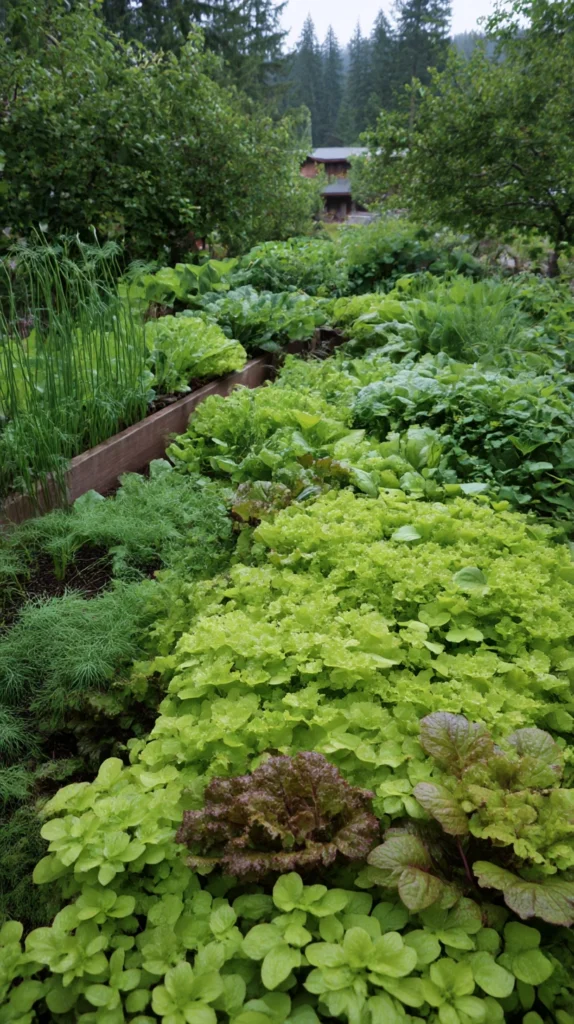
The Pacific Northwest’s most remarkable and most frequently underappreciated horticultural gift to its resident gardeners is the specific capacity of the region’s mild, wet, temperate climate to support the continuous production of salad greens, winter brassicas, and cold-tolerant leafy vegetables through the full twelve months of the calendar year — a growing season of such extraordinary year-round continuity that the Pacific Northwest kitchen gardener with a single, well-managed raised bed of appropriate variety selection never needs to purchase salad greens from any commercial source at any point in the year.
Plant a dedicated salad and greens bed in varieties chosen specifically for the Pacific Northwest’s specific seasonal conditions — the cut-and-come-again lettuce varieties of extraordinary colour and extraordinary flavour that provide continuous harvest from spring through autumn, the Asian greens of the mustard family that thrive in the cool, moist conditions of the Northwest winter, and the corn salad, the claytonia, and the spinach varieties of genuine winter hardiness that maintain continuous production through the coldest and the darkest months of the Pacific Northwest growing year.
8. Incorporate Irrigation Infrastructure from the Beginning
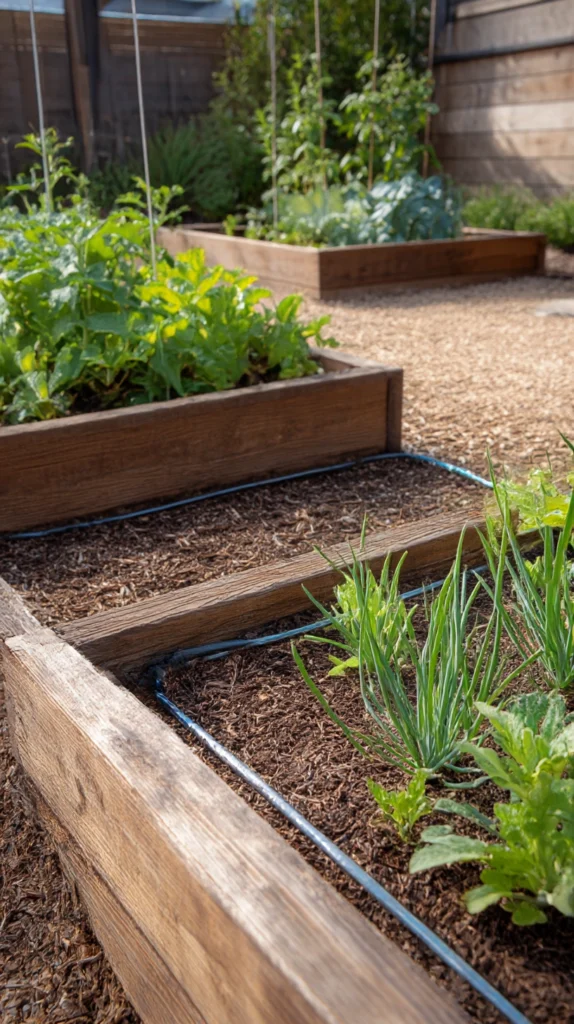
The Pacific Northwest gardener who designs a raised bed system without incorporating efficient irrigation infrastructure from the earliest stage of the planning and construction process creates a garden of considerable immediate beauty and considerable future inconvenience — a growing system that performs magnificently during the long, wet months of the Northwest’s natural rainfall season and that requires a daily, labour-intensive, hose-based watering regime during the specific, genuinely dry Pacific Northwest summer that catches every first-year gardener by complete surprise.
Install a drip irrigation system within each raised bed at the time of construction — the soaker hose or the drip tape laid at the growing medium’s surface, connected to a main supply line running beneath the pathway between the beds, and controlled by a programmable timer that delivers the precise quantity of water required by the specific crops growing in each bed at the specific stage of their growth cycle — for a raised bed garden of complete growing efficiency and complete summer watering independence.
9. Design a Pollinator Garden Bed Adjacent to the Productive Beds
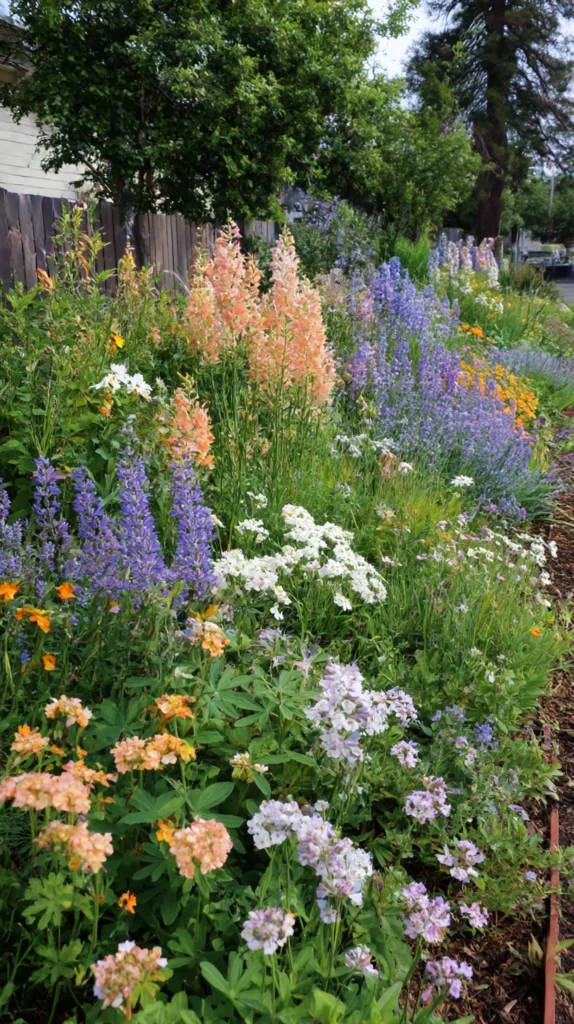
A raised bed dedicated specifically to the cultivation of pollinator-attracting flowering plants — positioned adjacent to the kitchen garden beds whose fruit and vegetable productivity depends directly on the pollination services of the bees, the butterflies, the hoverflies, and the native pollinators of the Pacific Northwest ecosystem — is the raised bed investment of most complete ecological intelligence and most complete long-term garden productivity available to any Pacific Northwest backyard of genuine growing ambition.
Plant the pollinator bed with the native flowering species of the Pacific Northwest that the region’s native bee populations have evolved alongside and depend upon most completely — the native asters, the camas, the native penstemons, the Oregon grape, and the Pacific bleeding heart — supplemented with the non-native but powerfully pollinator-attractive flowering herbs of lavender, borage, and phacelia that the Pacific Northwest’s mild growing climate supports with such extraordinary abundance and such extraordinary flowering generosity.
10. Build a Cold Frame or Low Tunnel Above One Bed
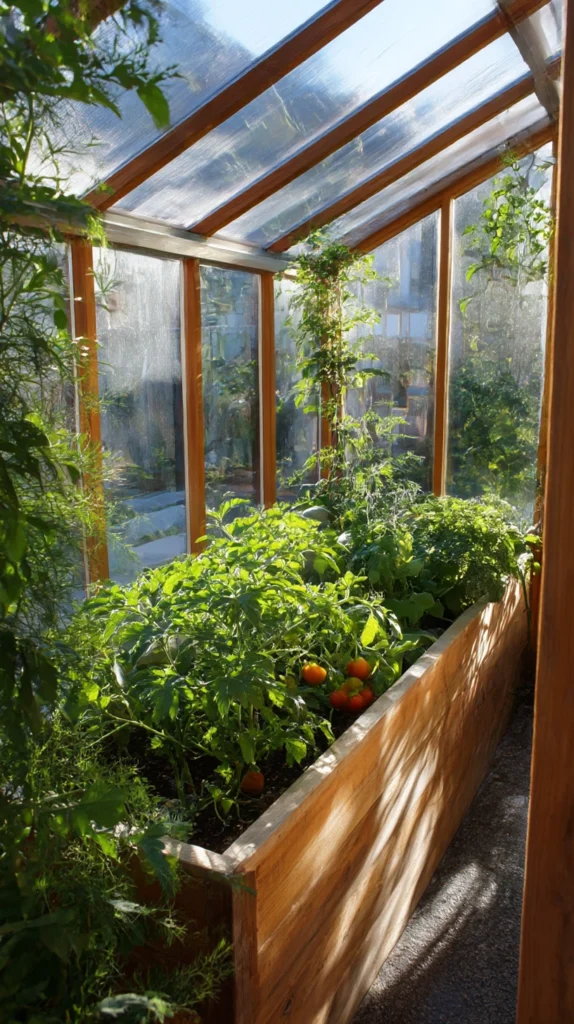
A cold frame or low polytunnel structure built above one of the raised bed system’s most productive units extends the Pacific Northwest growing season at both ends of the calendar — protecting tender seedlings from the late frosts of the Northwest’s unpredictable spring shoulder season and maintaining productive growing conditions for cold-hardy crops through the deepest and the darkest weeks of the Pacific Northwest winter that would otherwise slow or stop their growth completely.
Build the cold frame in cedar to match the aesthetic of the surrounding raised bed system, glaze it with twin-wall polycarbonate of appropriate light transmission quality, and hinge the glazing panel for easy ventilation during the mild periods that punctuate even the most genuinely cold Pacific Northwest winter weeks. The cold frame raised bed is the productive garden upgrade of most complete year-round growing ambition and most complete Pacific Northwest climate management intelligence.
11. Create a Hugelkultur Bed for Long-Term Fertility
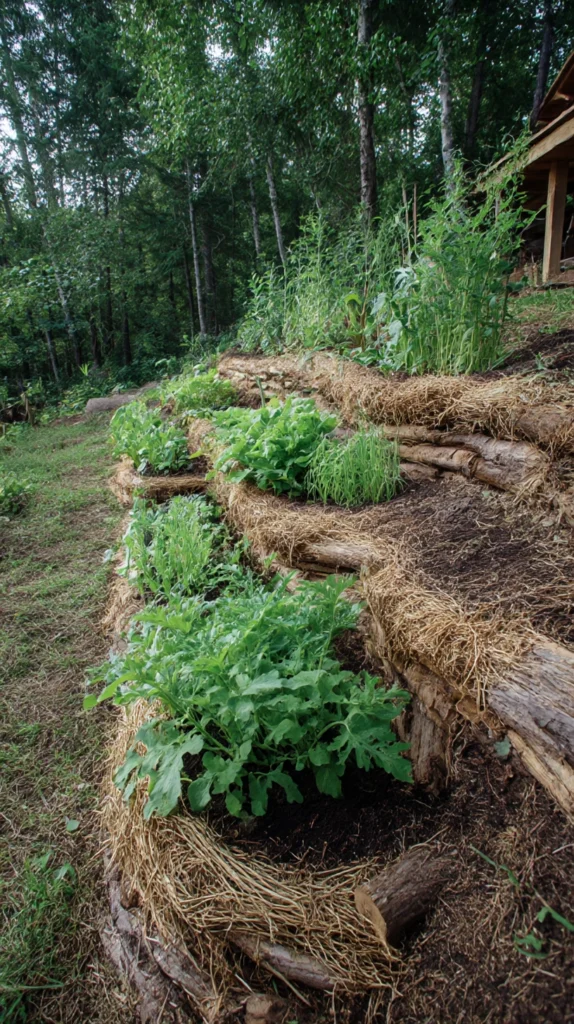
Hugelkultur — the ancient Germanic and Eastern European agricultural practice of burying decomposing wood within the soil as a long-term source of nutrition, moisture retention, and microbial activity.
It is the raised bed construction technique of most complete ecological intelligence and most complete long-term fertility building available to the Pacific Northwest gardener, in a region whose forests produce such extraordinary quantities of fallen timber, decomposing wood, and arboricultural waste material that the raw material for hugelkultur construction is available in quantities of essentially unlimited agricultural generosity.
Build a hugelkultur raised bed by layering logs, branches, and woody material of varying decomposition stages at the bed’s base before filling with compost, topsoil, and growing medium, and plant into a bed that will self-fertilise through the decomposition process for years without any additional nutritional intervention. The hugelkultur bed is the Pacific Northwest raised garden’s most ecologically complete and most genuinely sustainable growing system.
12. Plant Heritage and Heirloom Varieties Specific to the Pacific Northwest
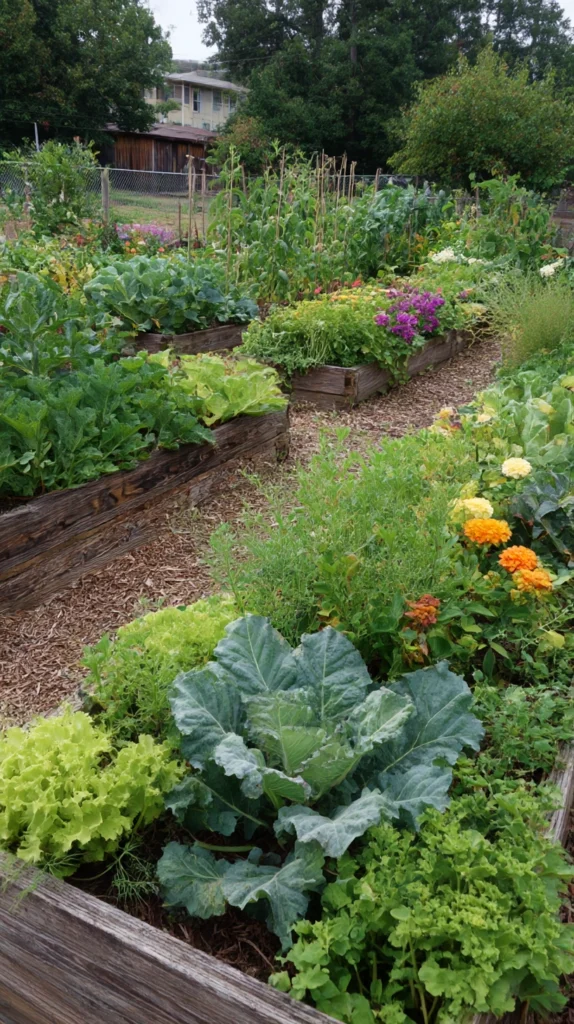
The Pacific Northwest’s specific growing conditions — the cool, moist springs, the warm, dry summers, the mild, wet autumns, and the consistently maritime winters of the coastal lowland zone — select strongly for specific variety characteristics of early maturity, cool-climate performance, and tolerance for the specific disease pressures of the moist Northwest environment, and the heritage and heirloom varieties that have been selected, saved, and traded within the Pacific Northwest growing community for generations are the varieties most completely adapted to these specific conditions.
Grow Willamette Valley dry beans and the Cascade hops. Grow the Blue Lake pole bean that the Oregon growing tradition developed and perfected.
Grow Walla Walla sweet onions whose specific combination of the Columbia Basin’s soil and the Pacific Northwest’s climate produces a sweetness and a size unmatched by any onion grown anywhere else in the country. These are the varieties of a Pacific Northwest raised garden bed of complete regional authenticity and complete growing intelligence.
13. Design the Bed Layout Around the Pacific Northwest Light
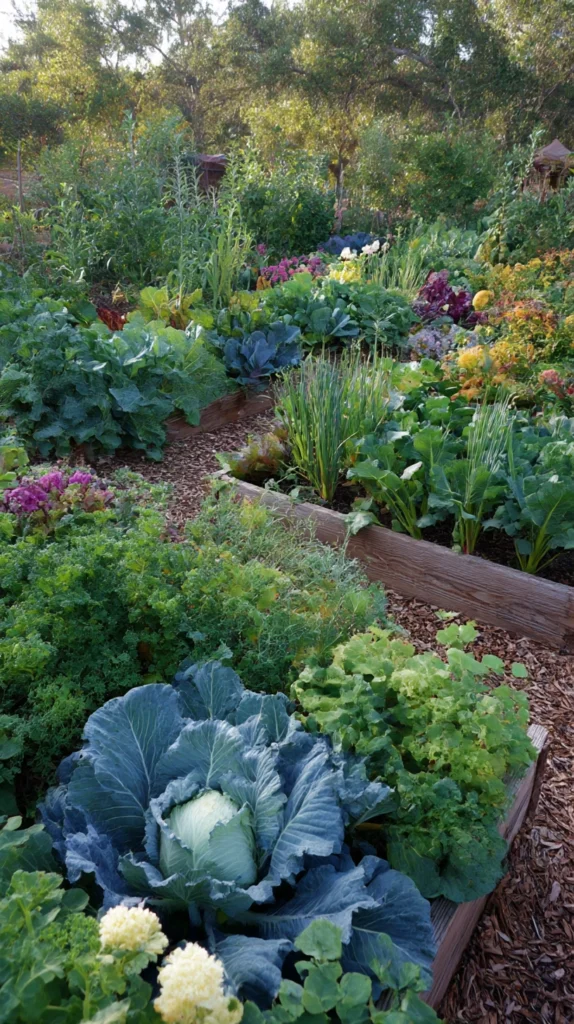
The specific quality of Pacific Northwest light — the soft, diffused, grey-filtered luminosity of the overcast season that runs from autumn through spring, and the extraordinary, intense, low-angle brilliance of the clear summer light at the specific latitude of the Northwest coastal zone — creates a garden light environment of genuinely unusual character that the raised bed layout should be designed to accommodate with complete horticultural intelligence.
Orient the beds on a north-south axis for the most even light distribution across the growing surfaces throughout the full daily arc of the summer sun.
Position the tallest growing structures — the bean trellis, the tomato cage, the pea netting — at the bed’s northern end so that their shade falls away from rather than onto the lower-growing crops sharing the same bed. Design the pathway widths between the beds to allow the maximum possible light penetration to every growing surface during the low-angle light of the Pacific Northwest’s shoulder seasons.
14. Incorporate a Composting System Into the Garden Design
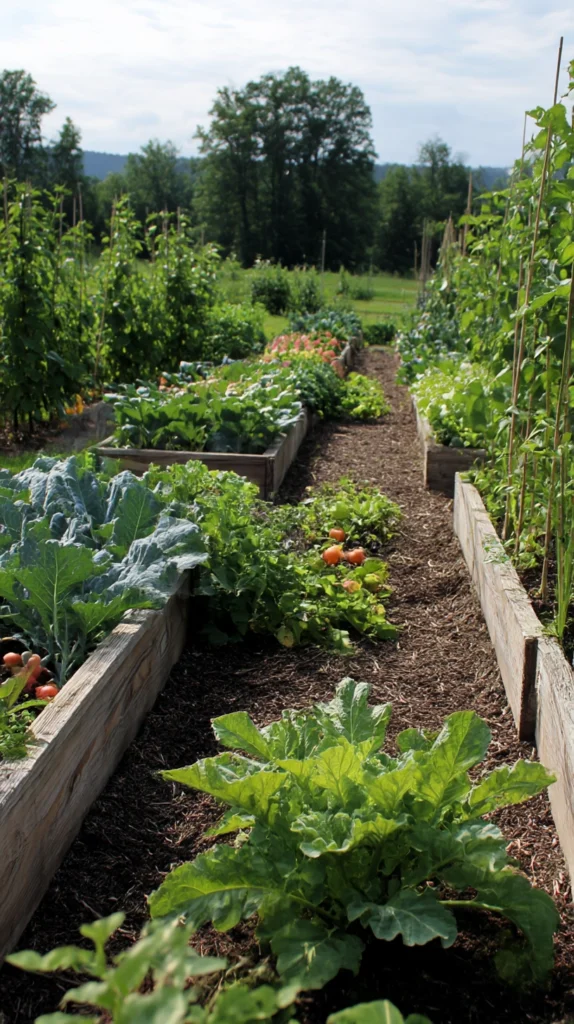
A composting system integrated directly into the raised garden bed layout — positioned at the garden’s most convenient access point, sized to process the full output of the household’s kitchen and garden waste, and designed with the same aesthetic seriousness and the same material quality applied to the growing beds themselves — is the raised garden bed system’s most ecologically essential and most practically rewarding supporting infrastructure.
The Pacific Northwest’s remarkable composting climate — the persistent moisture and the moderate temperatures of the maritime environment creating ideal conditions for the rapid, complete, genuinely extraordinary decomposition of organic material that the region’s gardeners have always exploited with such productive efficiency — makes the composting system a Pacific Northwest horticultural asset of particular power and particular productivity.
15. Make the Garden a Complete Pacific Northwest Outdoor Room
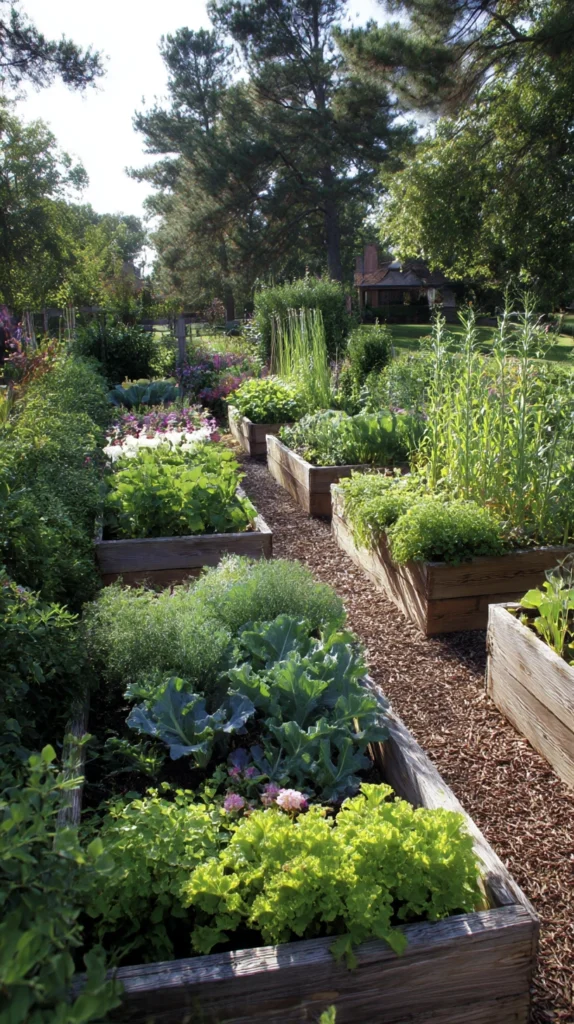
The final and most important raised garden bed idea for the Pacific Northwest backyard is the one that transforms the productive growing space from a utilitarian kitchen garden of functional adequacy into a genuinely beautiful, genuinely personalised, completely Pacific Northwest outdoor room of such complete aesthetic ambition and such complete horticultural intelligence that spending time within it .
Whether in the act of planting, of harvesting, of maintaining, or simply of being present in a space of extraordinary botanical beauty in one of the most botanically extraordinary growing regions on earth — becomes one of the most genuinely pleasurable and the most genuinely nourishing experiences available in the entire domestic environment. Design the pathways between the beds in reclaimed Pacific Northwest stone or in aged gravel that reflects the soft grey of the Northwest’s signature sky.
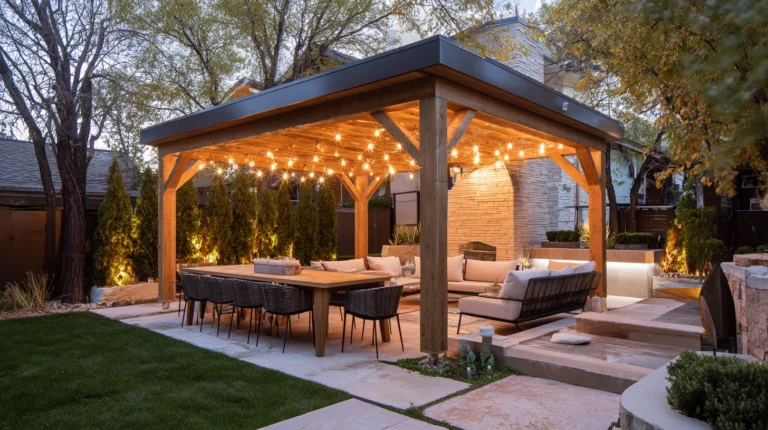
Install a simple, beautiful seat at the garden’s most sheltered and most botanically magnificent position. Hang a string of warm lights above the garden for the specific, warm, completely magical quality of a Pacific Northwest evening in a beautifully planted garden as the long summer daylight finally, reluctantly, and completely beautifully retreats.
Make it the most complete and the most genuinely Pacific Northwest outdoor room the backyard can produce — and the raised garden bed system you design will be not merely a productive growing space but a genuinely, daily, and completely extraordinary domestic garden of the first and most beautiful order.
The Pacific Northwest raised garden bed system designed with genuine regional knowledge, genuine horticultural intelligence, and genuine love for the specific, extraordinary, completely irreplaceable growing environment of the rain-washed, forest-bordered, botanically magnificent Pacific Northwest is one of the most rewarding and most genuinely productive domestic garden investments available to any household in the region.
Design it with complete commitment to both the beauty and the productivity it is capable of achieving in one of the most botanically generous growing regions on earth — and the garden you create will deliver seasons of such complete, such daily, and such deeply personal horticultural joy that the Pacific Northwest’s legendary rainfall will feel, every growing season without exception, not like an obstacle to be endured but like the most generous and the most completely extraordinary growing gift that any regional climate has ever offered to any garden.