
14 Edible Landscaping Ideas That Look Decorative (Not Like a Farm)
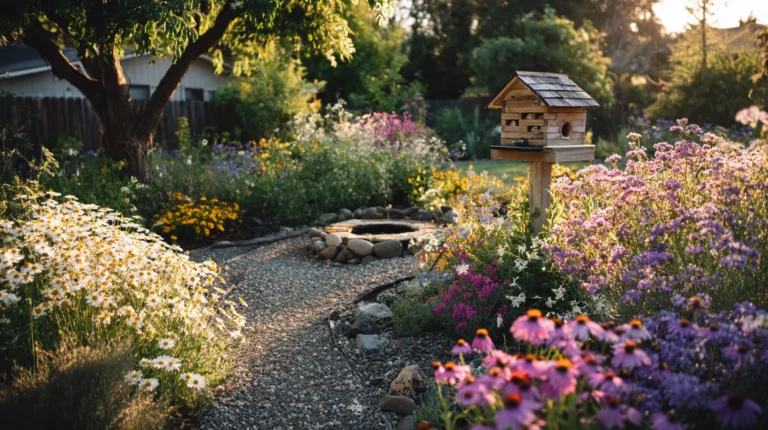
The idea that a garden must choose between being beautiful and being productive is one of the most persistent myths in residential landscaping. The reality is that food-producing plants — when selected thoughtfully, placed deliberately, and maintained with the same care applied to purely ornamental plantings — are frequently more visually interesting than the decorative alternatives.
A well-placed fig tree has better architectural presence than most ornamental specimens. A border of rainbow chard outperforms petunias in colour. A climbing rose trained alongside a fruiting grape vine is more layered and complex than either plant grown alone.
Edible landscaping is the practice of integrating food-producing plants into designed garden spaces in ways that prioritise both aesthetics and yield — neither a kitchen garden hidden behind a fence nor a purely decorative border that produces nothing. These fourteen ideas demonstrate how to grow real food in a front garden, a courtyard, a suburban backyard, or a rooftop terrace without sacrificing a single ounce of visual sophistication.
1. Use Raised Beds as Architectural Elements
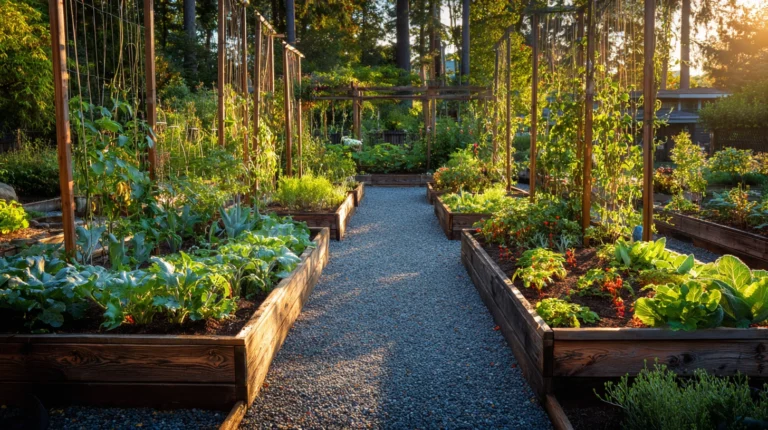
The raised bed that looks like an afterthought — raw timber boards hammered together at odd angles on a patch of lawn — is the version that gives edible landscaping its unfair reputation for looking utilitarian.
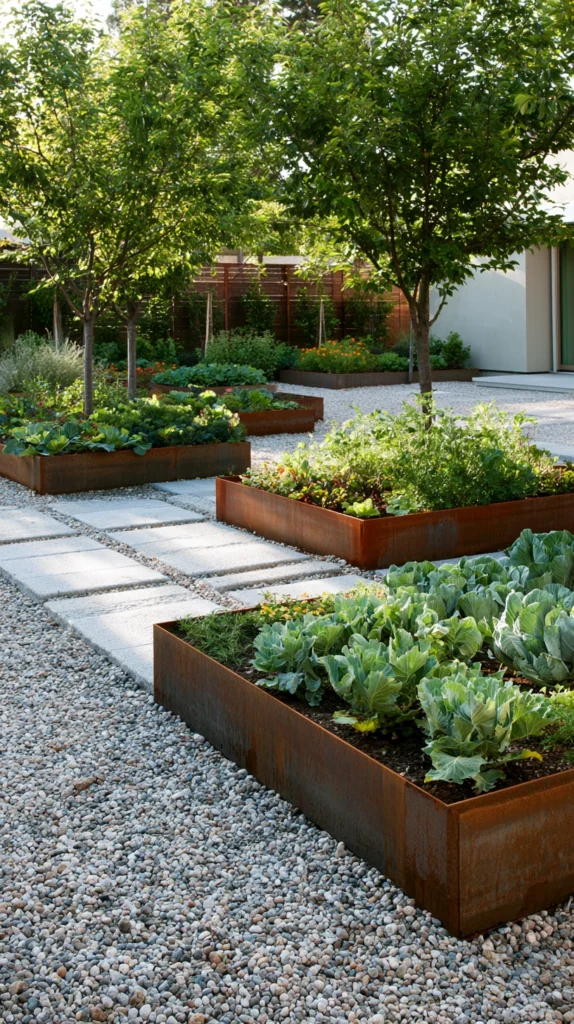
The raised bed that looks like a design decision is an entirely different object. Built from Corten steel, painted hardwood, powder-coated aluminium, or dry-stacked stone, a well-proportioned raised bed reads as a genuine landscape feature rather than a growing container.
The key decisions are material, proportion, and placement. Keep heights consistent, align beds on a clear geometric axis, and leave generous pathways between them. A series of three matching steel beds arranged symmetrically on a gravel terrace looks considered and deliberate — and grows an extraordinary quantity of vegetables in the process.
2. Train Fruit Trees as Espaliers Against Walls and Fences
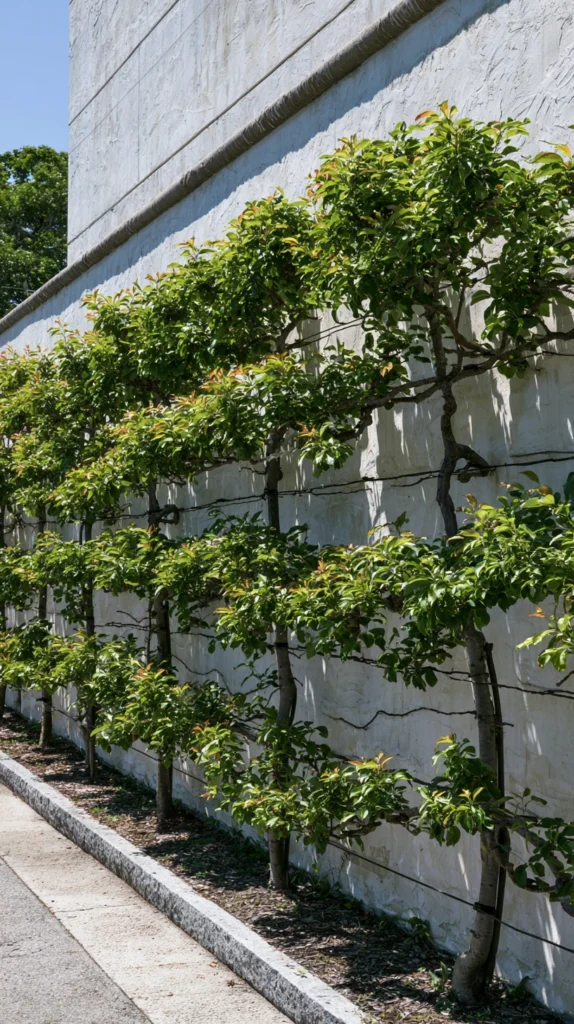
Espaliered fruit trees — apple, pear, quince, or fig trained flat against a wall or fence in geometric patterns — are among the most elegant plant forms in garden design, and they happen to produce significant quantities of fruit in the process.
The flat, two-dimensional growth habit makes them ideal for narrow spaces, boundary walls, and the sides of buildings where a freestanding tree would be impractical. Against a painted render wall or a dark timber fence, a well-trained espalier reads as living wall art.
The training process requires patience and annual pruning but no specialist skill. Start with a young whip, attach horizontal wires to the wall at 45-centimetre intervals, and tie new growth into the desired pattern each growing season. Within three to five years, the result is a mature, productive, visually extraordinary garden feature.
3. Replace Ornamental Hedging With Fruiting Hedges
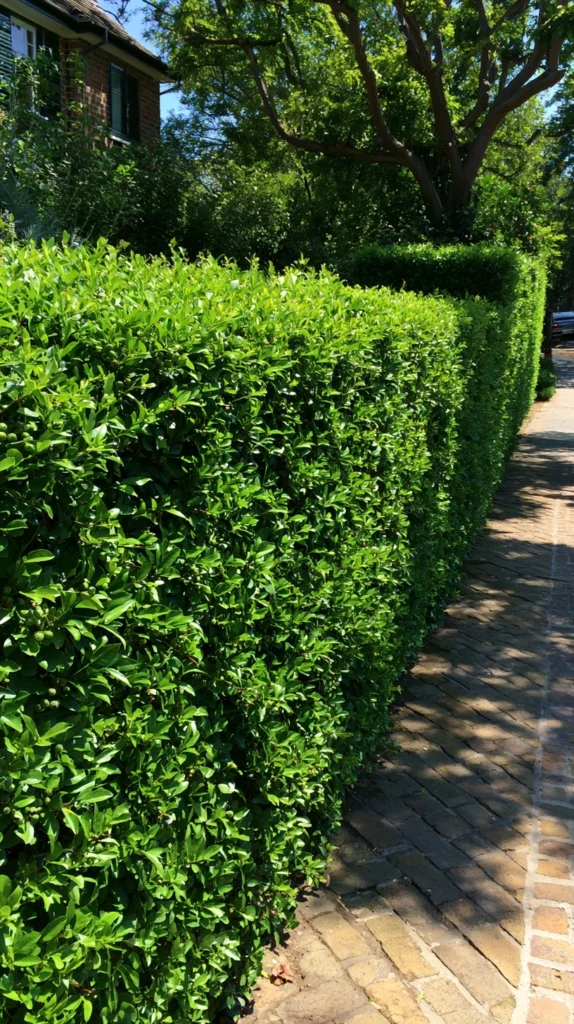
The garden hedge is one of the most underutilised opportunities in edible landscaping. Most residential gardens use clipped privet, box, or laurel as boundary hedging — plants that provide structure and privacy but contribute nothing edible.
The same structural functions can be performed by a clipped hedge of blueberry, gooseberry, or Chilean guava, all of which respond well to shaping, maintain clean edges when regularly trimmed, and produce fruit prolifically throughout the growing season.
For a more informal boundary, a mixed fruiting hedge combining hawthorn, elderberry, blackthorn, and dog rose creates a dense, wildlife-friendly barrier with four-season visual interest — blossom in spring, fruit in summer and autumn, and structural branching through winter. It looks entirely intentional and naturalistic rather than agricultural.
4. Use Herbs as Edging and Border Plants
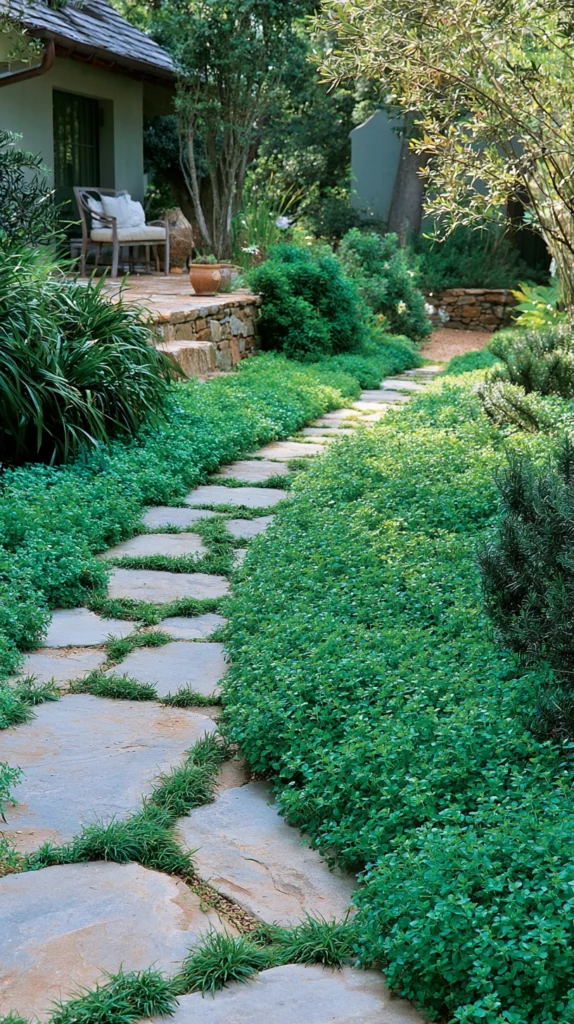
The front edge of a planted border — the line where planting meets path or lawn — is one of the most visually important zones in any garden. Most gardeners fill it with low ornamentals: lobelia, alyssum, and small dianthus.
The better choice, aesthetically and practically, is a clipped edge of culinary herbs. Dwarf basil holds a remarkably clean edge through summer. Thyme, planted densely and clipped lightly, forms a fragrant low mat that spills gently over path edges in exactly the way that expensive ornamental groundcovers do.
Rosemary clipped into low mounds, chives allowed to flower in lavender-purple drifts, and flat-leaf parsley massed in generous clumps all work as border edging that is simultaneously decorative and genuinely useful in the kitchen every single week.
5. Grow Climbing Edibles on Pergolas and Archways
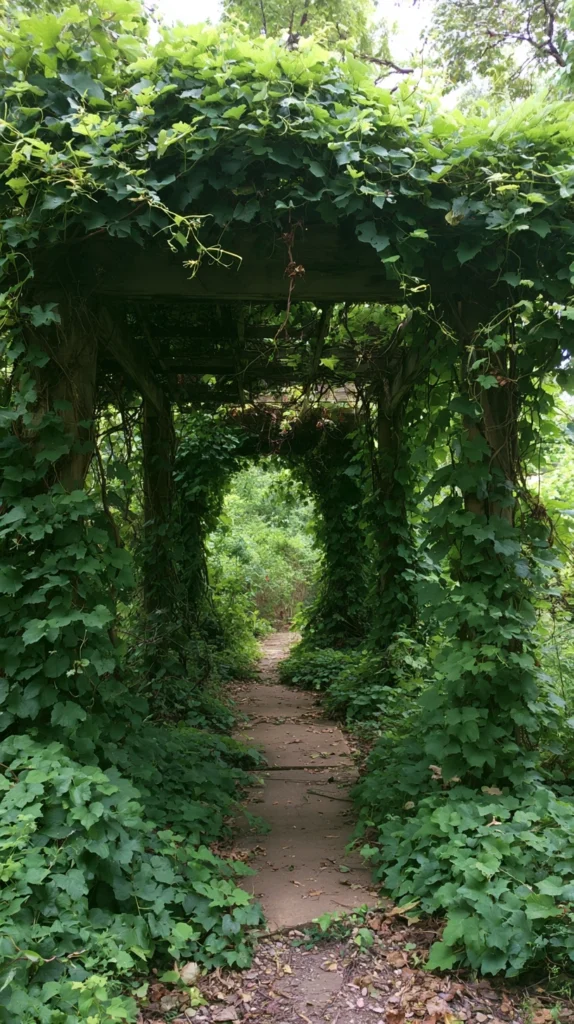
A pergola or garden archway draped in climbing plants is one of the most classically beautiful features in residential garden design — and there is no practical reason those climbing plants need to be ornamental rather than edible.
Grape vines are among the most beautiful of all climbers, their large palmate leaves creating generous summer shade and their fruit hanging in decorative clusters through late summer and autumn. Kiwi vines are similarly vigorous and handsome, with large heart-shaped leaves and significant fruit production once established.
Climbing beans trained over a simple timber arch, espaliered blackberries covering a boundary fence, or a passion fruit vine scrambling over a pergola all deliver the vertical green coverage that makes outdoor living spaces feel enclosed and intimate — while producing real, usable harvests through the season.
6. Plant a Fig Tree as a Specimen Feature
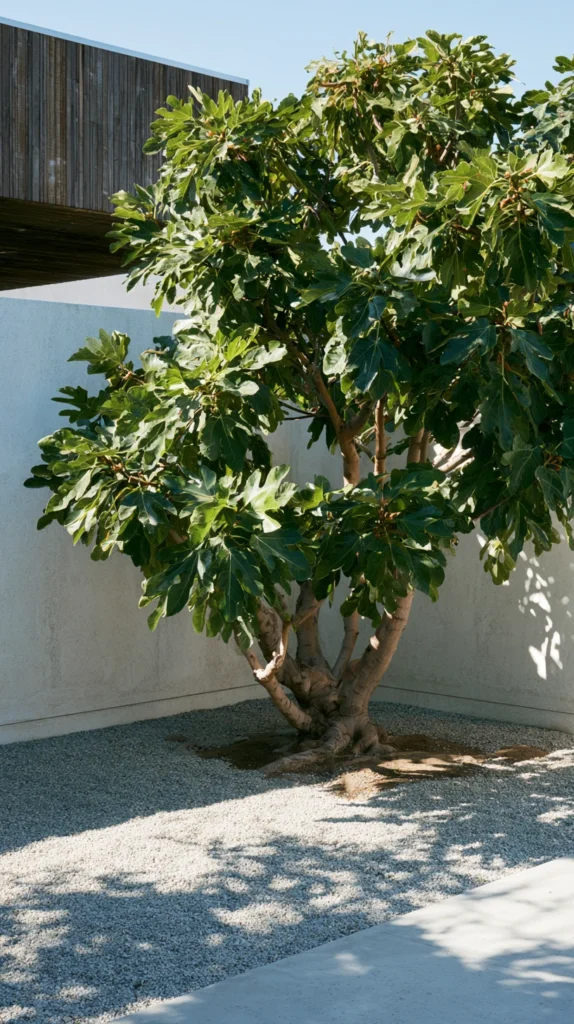
The fig tree is one of the most architecturally beautiful plants available to garden designers, and its edible credentials are impeccable. The large, deeply lobed leaves have a sculptural quality that reads magnificently against rendered walls, gravel surfaces, and contemporary hard landscaping.
As a freestanding specimen in a gravel garden or a courtyard, a mature fig brings the kind of structural presence that ornamental trees three times the price cannot match. Against a south-facing wall, it fruits prolifically in most temperate climates.
A fig in a large ceramic or Corten steel container works equally well on a terrace or rooftop, where its Mediterranean character suits warm, sun-drenched paving beautifully. Few plants simultaneously deliver this level of visual drama and genuine culinary reward.
7. Create a Potager-Style Layout in the Front Garden
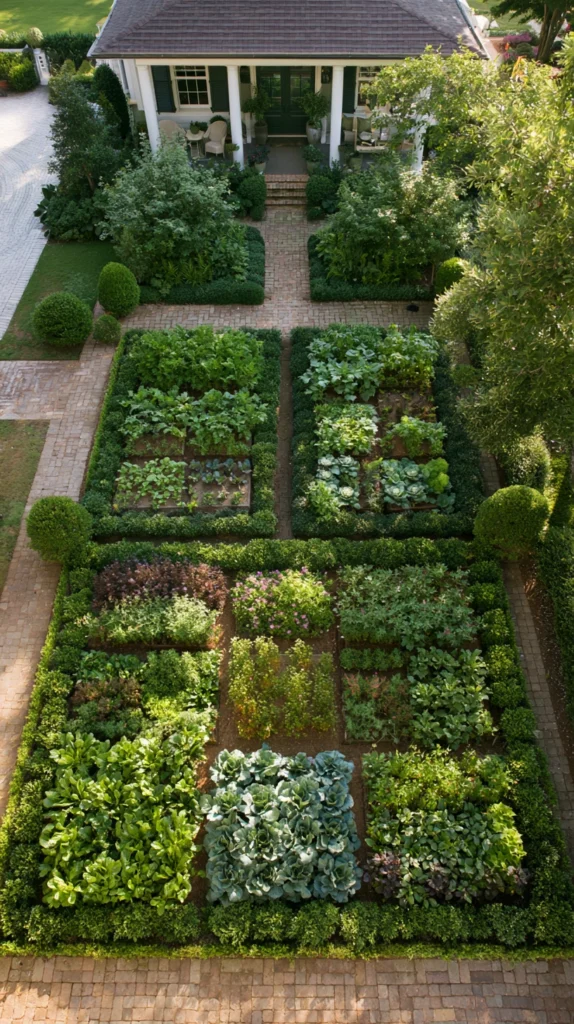
The potager — the French kitchen garden tradition of arranging edible plants in formal geometric patterns — is perhaps the most visually sophisticated approach to edible landscaping ever developed, and it translates perfectly to the residential front garden.
The structure comes from geometry: square or diamond-shaped beds arranged symmetrically, defined by low clipped hedges of dwarf box or rosemary, with each bed planted in a single variety for maximum visual impact.
Scarlet runner beans climbing a central obelisk, a block planting of purple basil beside one of bright green lettuce, a row of flowering artichokes anchoring a corner — the potager approach treats vegetables as design elements to be arranged with the same care applied to ornamental planting, and the results are genuinely beautiful by any standard.
8. Mass Plant Vegetables for Visual Impact
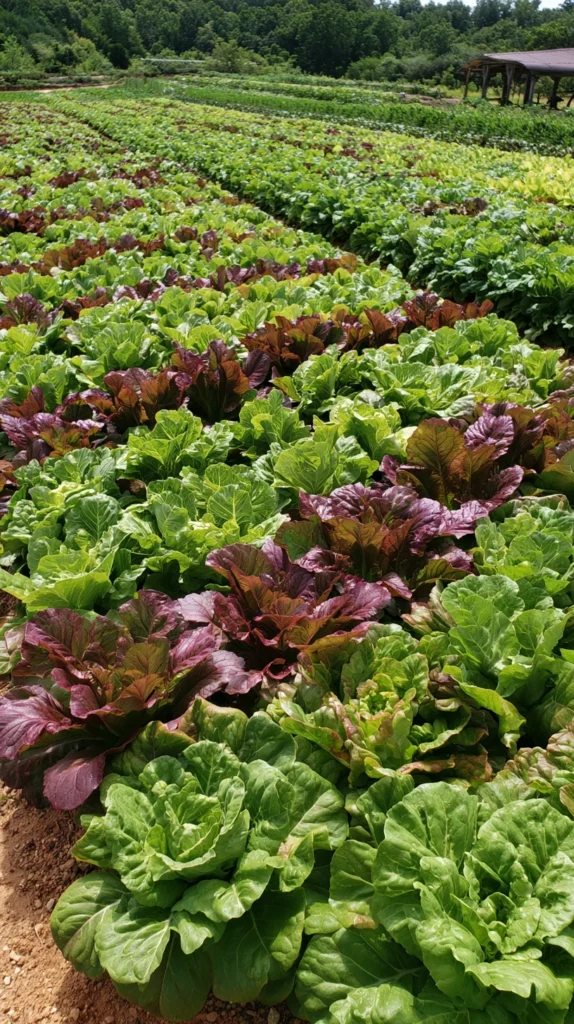
A single cabbage plant surrounded by bare soil looks like a vegetable garden. Twenty cabbage plants of the same variety, planted at consistent spacing across a dedicated bed, looks like a designed landscape. The shift from scattered to massed planting is the single most important visual principle in edible landscaping — and it costs nothing beyond the additional plants.
Purple kale massed across a large raised bed creates a wash of blue-grey colour that works as well as any ornamental grass. A bed planted entirely in ‘Rainbow’ chard — stems in red, orange, yellow, and white — is more colourful than most dedicated flower borders.
The discipline of planting in quantity rather than variety is what separates decorative edible gardens from the kitchen-garden aesthetic most people are trying to avoid.
9. Incorporate Edible Flowers Throughout the Planting
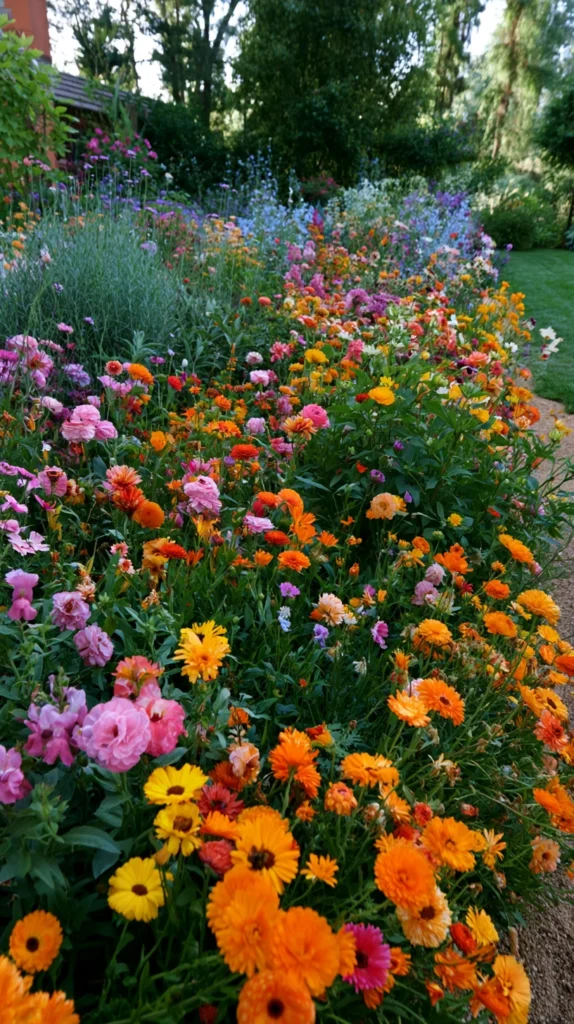
Edible flowers are among the most effective bridging plants in a mixed ornamental and edible garden — visually indistinguishable from purely decorative annuals, but genuinely useful in the kitchen and valuable to pollinators throughout the season.
Nasturtiums in burnt orange and deep gold tumble beautifully over the edges of raised beds or cascade down a bank. Borage produces the most extraordinary electric-blue star flowers of any annual plant. Calendula in warm amber and rust tones ties seamlessly into an earthy garden palette.
Violas, sweet peas, and squash blossoms all serve the same dual purpose — contributing colour and texture to the garden composition while providing a continuous supply of flowers for garnishing, salads, and cocktails through the growing season.
10. Use Blueberry Bushes as Ornamental Shrubs
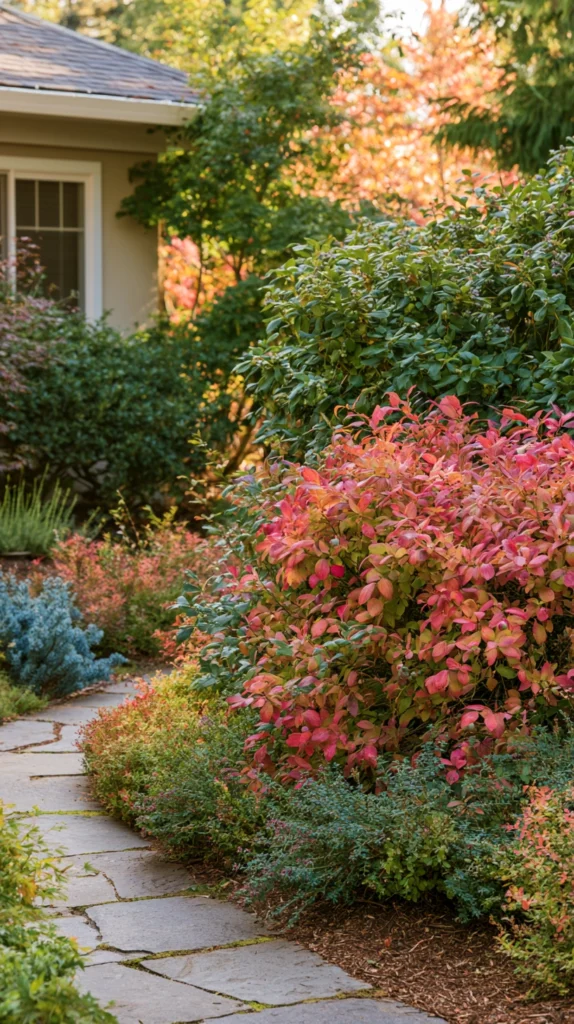
Blueberry plants earn their place in a designed garden landscape on purely aesthetic grounds, independent of their culinary value entirely. The spring blossom is delicate and beautiful. The summer berries hang in decorative clusters of deep blue-grey.
The autumn foliage turns a spectacular range of orange, red, and crimson that rivals any ornamental shrub in the garden centre. The winter structure, with its dark red twiggy stems, provides four-season interest that most ornamentals simply cannot match.
Plant blueberries in groups of three or five for cross-pollination and maximum berry production, in acidic soil or ericaceous compost if growing in containers. They work beautifully as informal hedging, as foundation planting around buildings, or as specimen shrubs in a mixed border — and the harvest in late summer is extraordinary.
11. Grow Artichokes as Architectural Focal Points
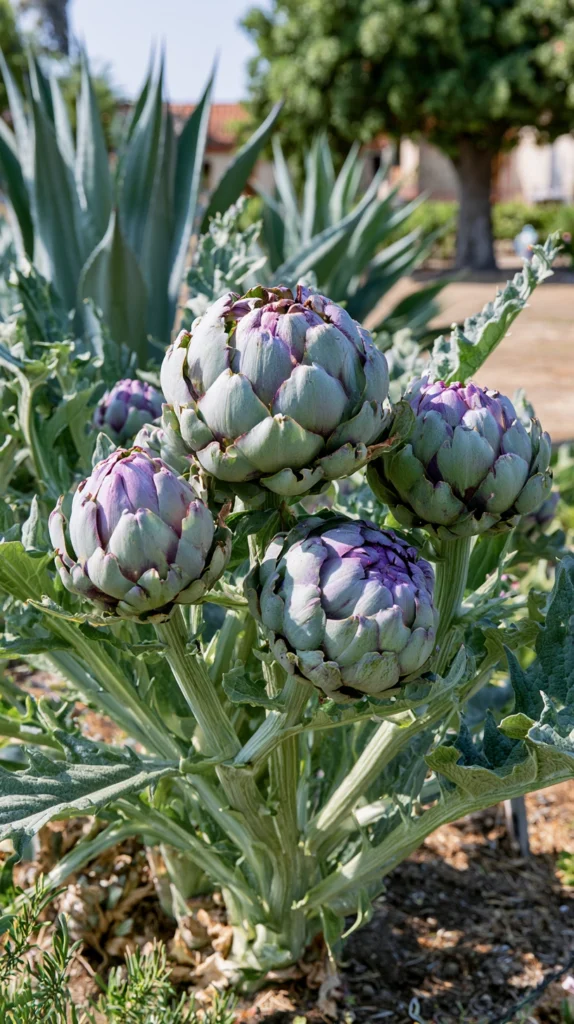
Globe artichokes are among the most dramatically beautiful plants in the edible garden — large, silver-grey, deeply cut foliage that reads as genuinely exotic, and thistle-like flower heads in deep purple-blue that, if left unharvested, are extraordinary as cut flowers and dried arrangements.
As a back-of-border plant or a focal point in a gravel garden, a mature artichoke clump has the kind of bold, sculptural presence that landscape designers typically achieve with expensive architectural ornamentals.
They are also remarkably productive, generous, and easy to grow in most temperate climates, given a sunny position and free-draining soil. The combination of exceptional visual presence and genuine culinary reward makes them one of the most valuable plants available
12. Design a Herb Garden With Formal Structure
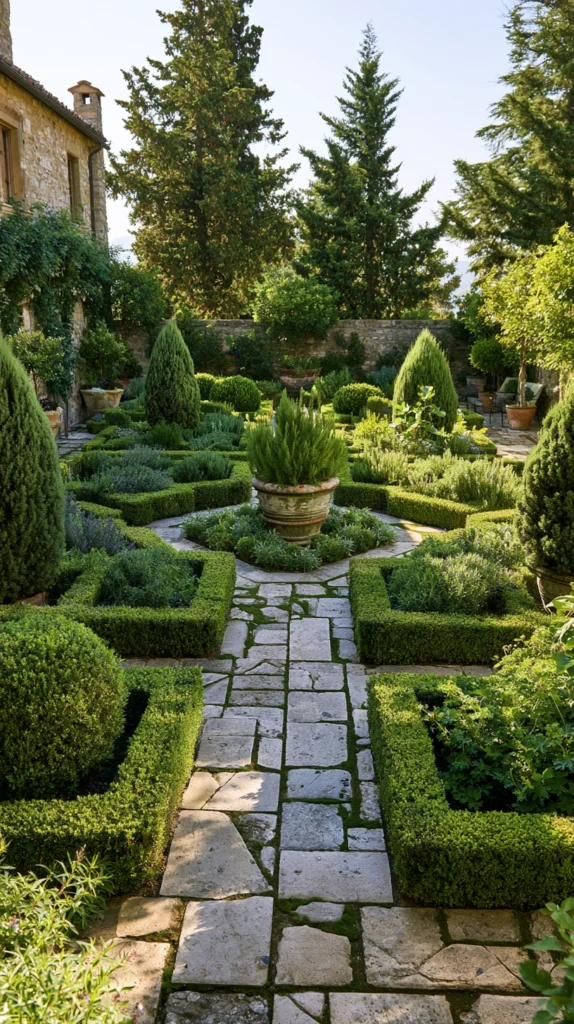
A formally structured herb garden — geometric beds, clean edges, a clear central feature — is one of the oldest and most visually satisfying garden forms in Western garden design, and it manages to look sophisticated and intentional in every garden context from a small urban courtyard to a large suburban backyard. The structure and clipping that give the garden its formal character also keep the naturally sprawling, irregular growth habits of most herbs under disciplined control.
Use a standard rosemary, clipped bay pyramid, or terracotta pot of standard-trained lavender as the central feature. Define the beds with a low clipped hedge of dwarf santolina or thyme. Plant the beds themselves in bold single-variety masses — one bed of sage, one of French tarragon, one of chives — rather than mixing everything together. The formality does all the design work, and the planting provides everything needed for serious cooking year-round.
13. Integrate Fruit Into the Mixed Border
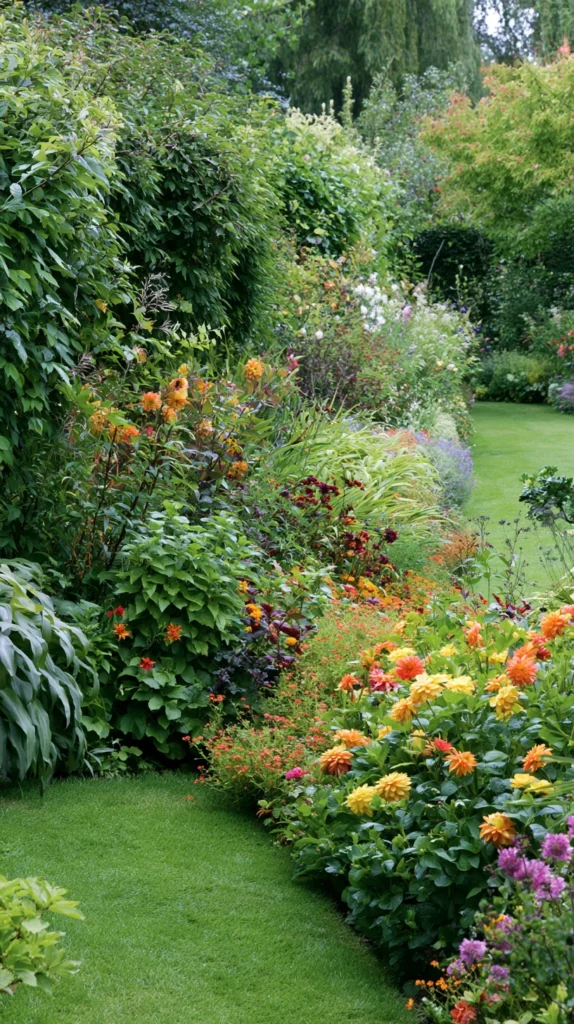
The mixed herbaceous border — the long, layered planting of perennials, grasses, and shrubs that is the backbone of most well-designed residential gardens — is an ideal location for integrating fruiting plants without any visual disruption to the overall design. Redcurrant and whitecurrant bushes, with their elegant pendant clusters of translucent fruit, slot into the middle layer of a mixed border as naturally as any flowering shrub.
A standard-trained gooseberry stands with the same vertical presence as a rose trained to the same form. Strawberries planted as groundcover beneath taller shrubs perform exactly the same visual function as ornamental groundcovers at a fraction of the cost.
The approach requires only a shift in plant selection at the planning stage — choosing fruiting alternatives that match the size, form, and seasonal interest of the ornamental plants they replace rather than treating edible and ornamental as separate categories.
14. Treat Containers as Edible Still-Life Compositions
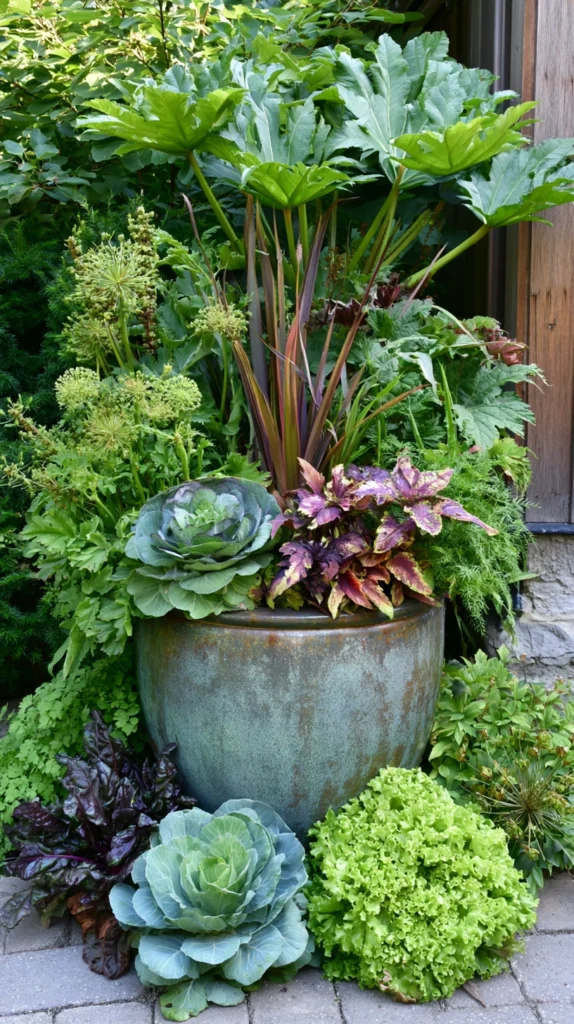
A container planting on a terrace, doorstep, or balcony is an opportunity for a composed still-life arrangement that happens to be edible — and the design principles are identical to those applied to purely ornamental container planting.
Choose one strong thriller plant — a standard-trained bay, a purple basil, a dwarf citrus in fruit — as the vertical centrepiece. Add a mid-height filler in complementary colour and texture — trailing thyme, compact parsley, bronze fennel. Let a trailing plant — nasturtium, creeping thyme, alpine strawberry — spill over the container edge to complete the composition.
The result is a container arrangement that holds its own aesthetically against any ornamental equivalent while contributing fresh herbs, edible flowers, and occasionally fruit to the kitchen throughout the growing season.
Final Thoughts: Designing an Edible Garden That Earns Its Place
The edible landscape that looks genuinely decorative rather than merely functional is the product of the same design thinking applied to any well-considered garden — clear structure, deliberate plant selection, consistent maintenance, and the discipline to edit rather than accumulate. The plants are different. The principles are identical.
Start with structure and geometry, choose plants for both their visual and culinary qualities, and resist the impulse to grow a little of everything in favour of growing meaningful quantities of fewer things. The garden that produces abundantly and looks extraordinary while doing it is entirely achievable — and it begins with the straightforward decision to stop treating beauty and productivity as competing ambitions.