
13 Entryway Decor Ideas for New Orleans Historic Townhouses
The entryway of a New Orleans historic townhouse is one of the most extraordinary transitional spaces in American domestic architecture — a threshold environment of such specific, such layered, and such genuinely irreplaceable architectural and atmospheric character that it demands a decorating approach as historically informed, as culturally specific, and as genuinely ambitious as the building it inhabits.
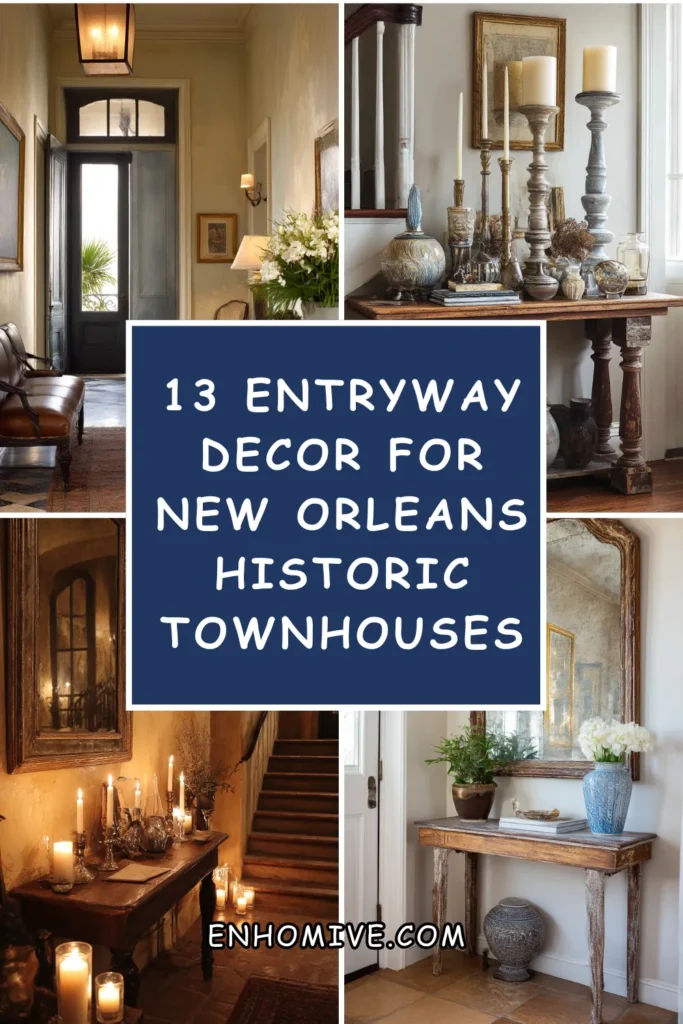
The New Orleans townhouse entry is not the entryway of the suburban American home — not the foyer of the tract development or the hallway of the postwar ranch house whose proportions and whose architectural vocabulary belong to an entirely different domestic tradition. It is the entry of a building that may have been standing for two centuries, that carries in its plaster walls and its cypress floors and its elaborate millwork the specific, accumulated beauty of a city whose architectural heritage is among the most extraordinary and the most completely unrepeatable in the country.
It is a space that opens onto the street life of one of the world’s most vibrant and most beautiful urban environments and closes into the private, cool, deeply intimate world of the New Orleans domestic interior with the specific, magical quality of transition that only the historic city’s finest residential architecture consistently produces. Here are 13 entryway decor ideas for New Orleans historic townhouses that honor this extraordinary architectural inheritance with complete decorative seriousness and complete atmospheric ambition.
1. Restore and Celebrate the Original Cypress Floors
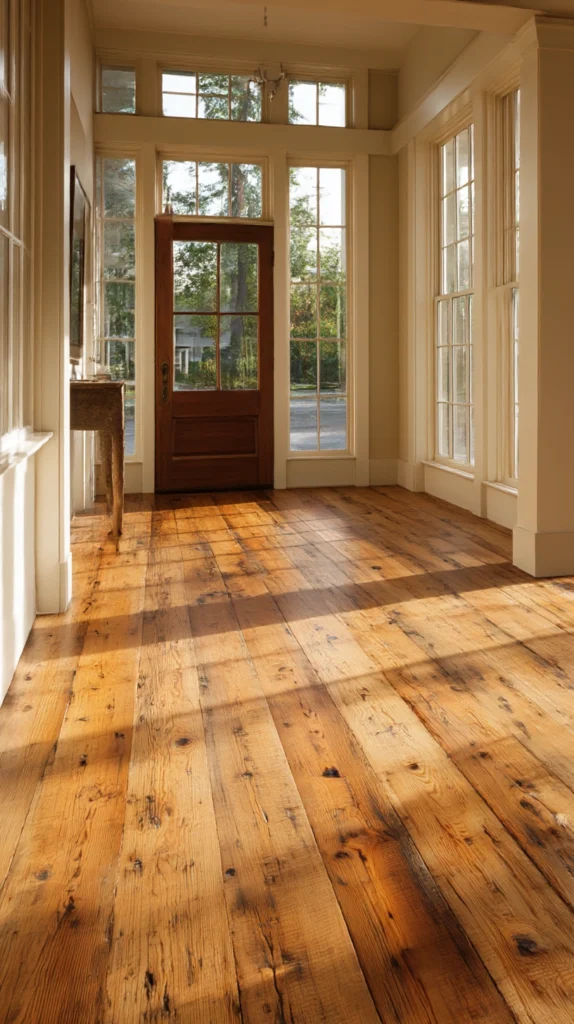
The cypress floor is the New Orleans historic townhouse’s most irreplaceable and most historically significant architectural inheritance — the wide-plank, old-growth Louisiana cypress flooring that the city’s finest nineteenth-century domestic builders specified with such consistency and such genuine understanding of the material’s extraordinary qualities that it has survived in the floors of thousands of historic New Orleans homes through decades of weather, flooding, and the specific physical demands of a subtropical climate that would have long since destroyed flooring of lesser material quality and lesser craft.
Restore the original cypress floors to the highest possible standard of their original beauty — stripping the accumulated layers of paint and polyurethane that may have been applied in less architecturally sensitive periods of the home’s history, sanding to reveal the specific, extraordinary grain and figure of old-growth cypress timber, and finishing with an oil or a wax that enhances the wood’s natural warmth without the plastic quality of a high-gloss polyurethane. The restored cypress floor is the entryway’s most authentic and most emotionally powerful decorative element.
2. Paint the Walls in a Deep, Complex Historic Color
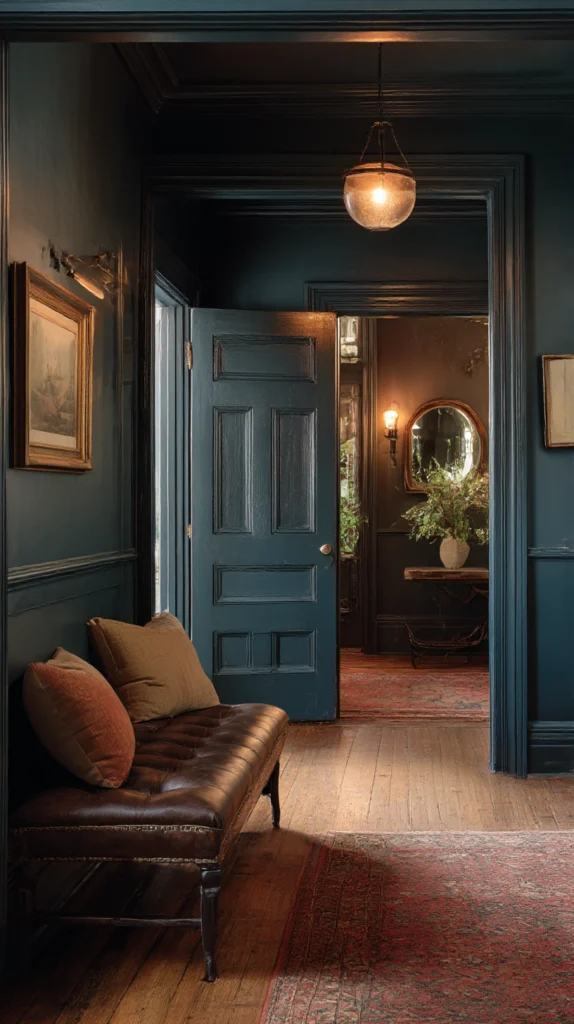
The wall color of a New Orleans historic townhouse entryway should be chosen with genuine knowledge of the specific chromatic tradition of the city’s finest nineteenth-century domestic interiors — the deep, complex, historically resonant colors that the most beautiful New Orleans homes have always used to create the specific quality of atmospheric depth, cool shadow, and genuinely extraordinary interior beauty that the city’s architectural tradition has always valued above the pale, safe, historically inaccurate neutrals that too many historic homes have acquired in periods of decorating fashion less informed by genuine historical understanding.
A deep, slightly greyed teal in the specific blue-green of New Orleans’s celebrated exterior shutters brought inside as a wall color of extraordinary atmospheric complexity. A rich, warm ochre in the specific yellow tone of the plastered Creole cottage walls that has defined the city’s domestic color tradition since the Spanish colonial period. A deep, complex sage green of genuine botanical depth and genuine historic character.
3. Install a Statement Antique Mirror Above the Console
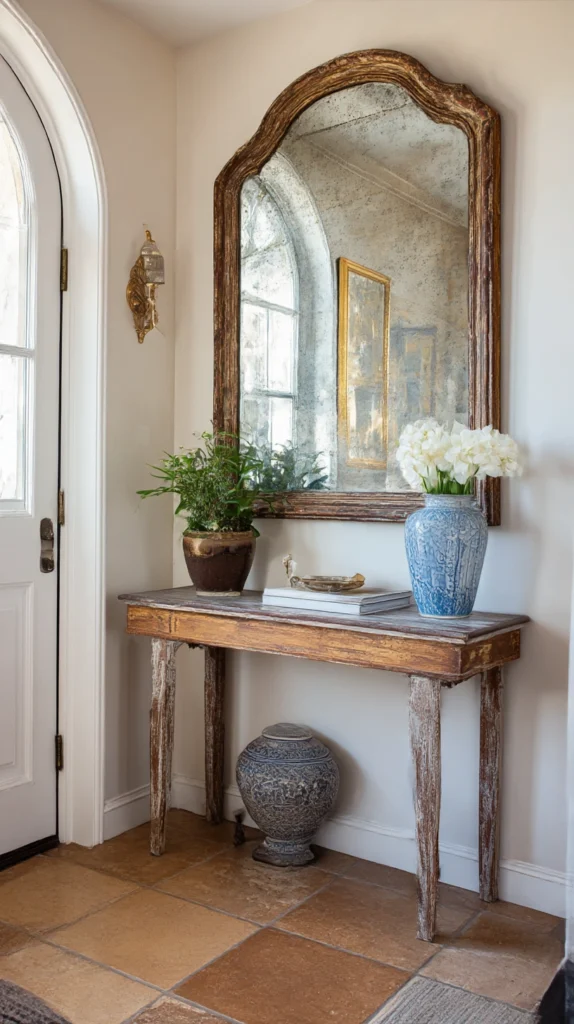
The antique mirror is the New Orleans historic townhouse entryway’s most important secondary architectural element and its most atmospherically powerful light-managing tool — the reflective surface that takes the specific, limited, directional quality of natural light available in a historic townhouse’s often narrow entryway and amplifies it, enriches it, and distributes it through the space with a warmth and a depth and a slightly distorted, foxed-glass beauty that the direct view of the entry space alone cannot produce.
Source the mirror from the antique dealers of Magazine Street or the French Quarter’s Royal Street gallery district — a large, ornately framed piece of genuine age and genuine New Orleans decorative character, its frame gilded or darkly patinated according to the entryway’s overall color palette, its glass surface carrying the specific, irreplaceable imperfections of genuine old glass that give it a reflective quality entirely distinct from and entirely more beautiful than any modern mirror’s perfectly flat surface.
4. Place a Narrow Antique Console of Genuine Character
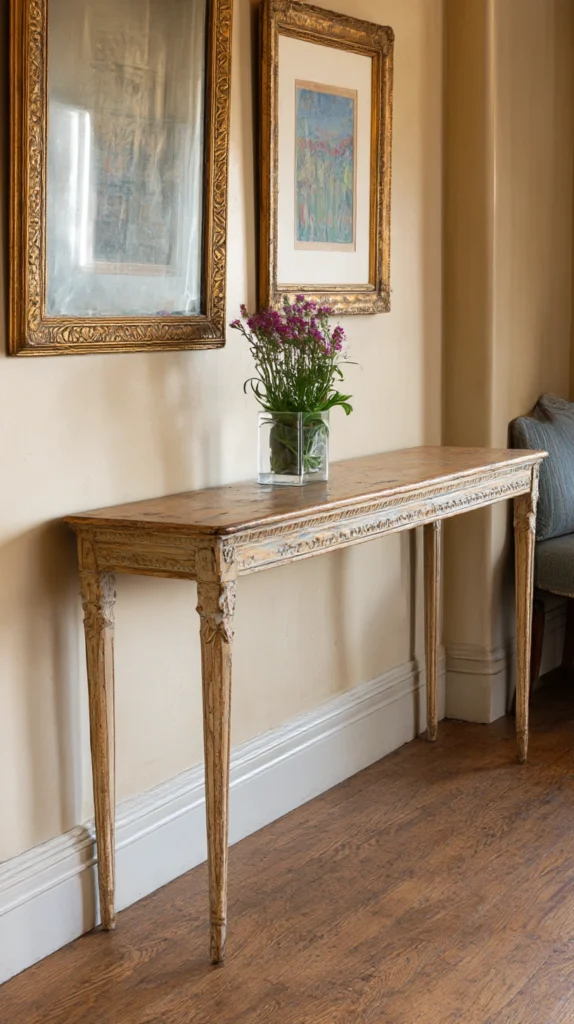
The console table of a New Orleans historic townhouse entryway must be chosen with the same historical intelligence and the same genuine decorative seriousness applied to every other element of the space — selected not from the contemporary furniture market’s offerings of vaguely period-appropriate reproduction pieces but from the city’s extraordinarily rich antique furniture tradition whose dealers maintain stocks of genuinely extraordinary Louisiana and American nineteenth-century furniture of the specific character, the specific material quality, and the specific historical depth that the New Orleans historic townhouse interior deserves and demands. A narrow mahogany console of Louisiana Empire character.
A marble-topped pier table of the specific, slightly ornate, completely extraordinary form that the New Orleans furniture tradition of the 1840s and 1850s produced in such extraordinary abundance. The genuine antique console gives the New Orleans townhouse entryway its most historically authentic and its most materially beautiful horizontal surface.
5. Hang a New Orleans-Appropriate Chandelier or Lantern
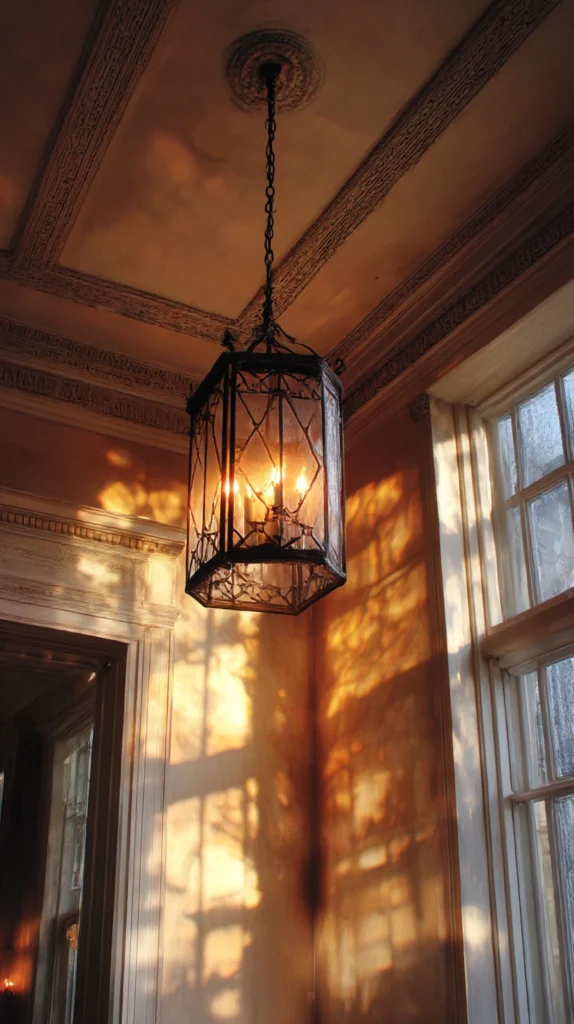
The light fitting of a New Orleans historic townhouse entryway is not a practical afterthought — it is a decorative statement of the first architectural order, the overhead element whose scale, whose material character, and whose specific historical vocabulary most powerfully and most immediately communicates the building’s architectural heritage and the decorator’s genuine understanding of it.
A period lantern of wrought iron or aged bronze — the specific, slightly ornate, glazed lantern form that the New Orleans townhouse’s exterior and interior architectural tradition has favored since the earliest days of the city’s gas lighting era — hung from the original plaster ceiling medallion of the historic entryway creates a light fitting of complete architectural authenticity and complete atmospheric power.
Where the ceiling height permits a larger fixture, a crystal chandelier of generous proportions and genuine historical character creates an entry statement of extraordinary theatrical grandeur and extraordinary New Orleans decorative ambition.
6. Display Botanical and Local Artwork on the Entry Walls
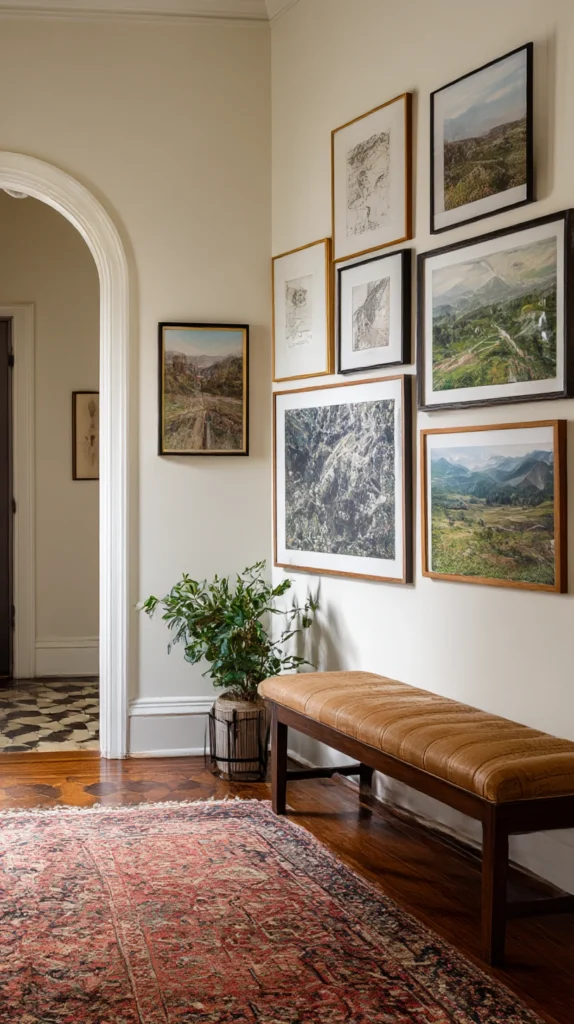
The entryway walls of a New Orleans historic townhouse offer a gallery opportunity of genuine cultural significance — the specific chance to display, in the home’s most publicly visible interior space, artwork that communicates the household’s specific aesthetic sensibility, its knowledge of the city’s extraordinary artistic tradition, and its genuine love for the particular, completely irreplaceable beauty of the Louisiana landscape and the New Orleans cultural environment.
A large-format botanical print of Louisiana native flora — the magnolia, the live oak, the cypress knee rising from the bayou’s dark water — in a gilded or dark timber frame of appropriate period character.
A painting by a New Orleans artist of genuine quality depicting the city’s streets, its cemeteries, its river, or its people with the specific, intimate, completely local knowledge of someone who has looked at this city long enough and lovingly enough to see what the tourist never quite reaches. Local artwork in the historic townhouse entry is the decorative decision of most complete cultural authenticity.
7. Create a Vignette on the Console of Complete New Orleans Character
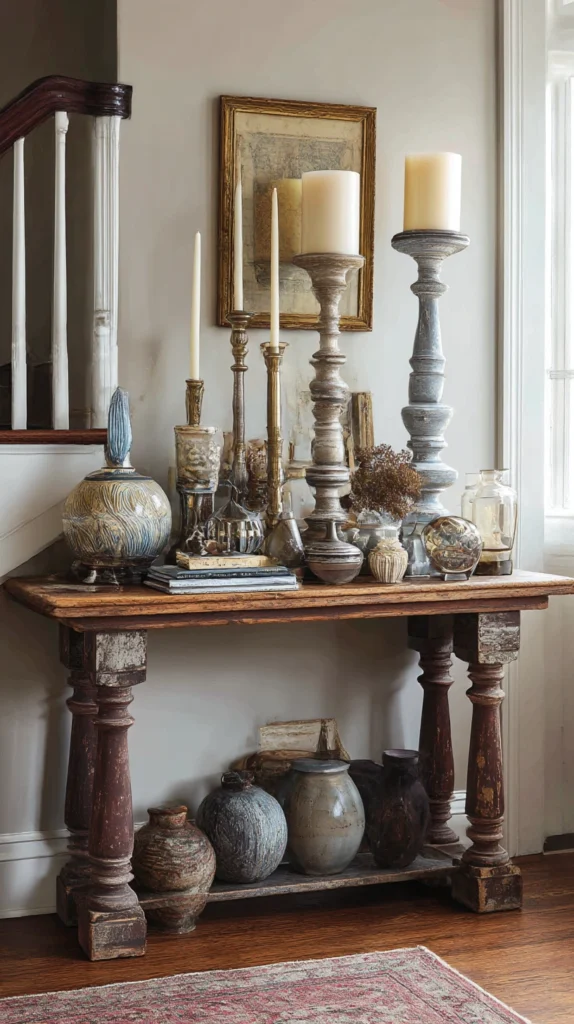
The console table vignette of a New Orleans historic townhouse entryway should be assembled with the specific, accumulated, deeply personal quality of objects that communicate not a generic idea of historic Southern decorating but the specific character, the specific passions, and the specific aesthetic sensibility of the household that has made this extraordinary building its home.
A pair of silver candlesticks of genuine antique quality flanking a low, abundant arrangement of dark, dramatically beautiful flowers — the black dahlias, the deep burgundy roses, the near-black ranunculus that the dark moody New Orleans interior aesthetic deploys with such extraordinary decorative power. A small, beautiful ceramic object of genuine New Orleans artisanal character.
A crystal decanter of the specific Sazerac rye that the city’s cocktail tradition has always regarded as its most sacred and most completely irreplaceable ingredient. A small, framed nineteenth-century map of the French Quarter. These are the objects of a New Orleans townhouse entry vignette of complete cultural specificity and complete decorative authenticity.
8. Install Period-Appropriate Wainscoting and Millwork
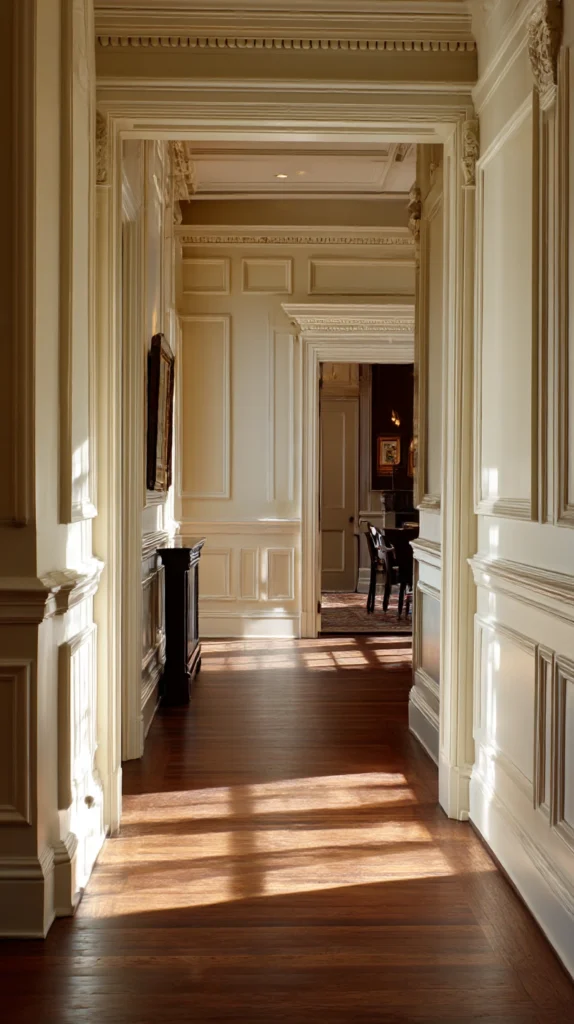
The millwork of the New Orleans historic townhouse entry — the wainscoting, the baseboard, the door surround, the chair rail, and the crown molding that the city’s finest nineteenth-century domestic architecture installed as a matter of course and that the most architecturally sensitive contemporary decorating of historic buildings preserves, restores, and celebrates with complete devotion — is the architectural element that most immediately and most powerfully communicates the building’s specific historical character and the decorator’s genuine understanding of it.
Where original millwork survives, restore it to the highest possible standard of its original condition and paint it in a color that relates to the wall with the specific, considered chromatic intelligence of the historic interior — a tone or two lighter or darker than the wall, or in a contrasting complementary color of appropriate historical authenticity. Where millwork has been lost, restore it with reproduction elements of sufficient historical accuracy and sufficient craft quality to be genuinely indistinguishable from the original.
9. Introduce Living Plants of Lush, Subtropical Character
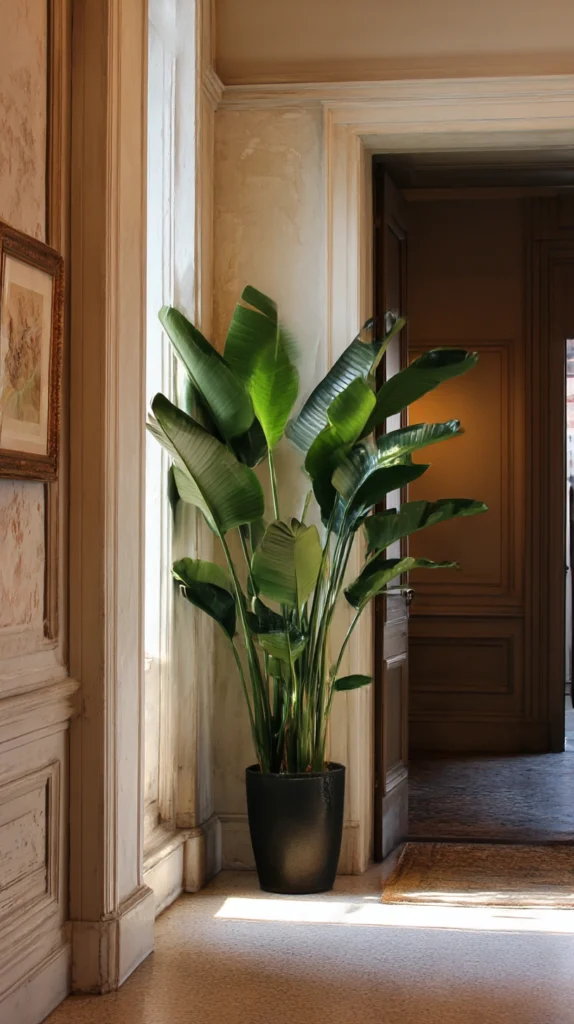
The living plants of a New Orleans historic townhouse entry should reflect the specific, extraordinarily generous botanical character of the Louisiana subtropical climate — the lush, exuberant, completely extraordinary plant growth that the city’s combination of warmth, humidity, and rainfall produces with such effortless generosity that the indoor plant life of the finest New Orleans domestic interiors has always carried the same quality of abundant, slightly wild, completely tropical vitality as the outdoor garden beyond the courtyard gate.
A large, architectural plant of genuine statement scale — a bird of paradise, a monstera deliciosa of mature and genuinely magnificent leaf development, or a large, dark-leafed philodendron of the specific, dramatic, completely extraordinary tropical presence — positioned in the entryway’s most generous corner as a living focal point of botanical authority and subtropical atmosphere.
The living plant in the New Orleans historic townhouse entry is the decorating element that most directly and most organically connects the extraordinary interior to the extraordinary natural landscape surrounding it.
10. Layer the Entry with Atmospheric Candlelight
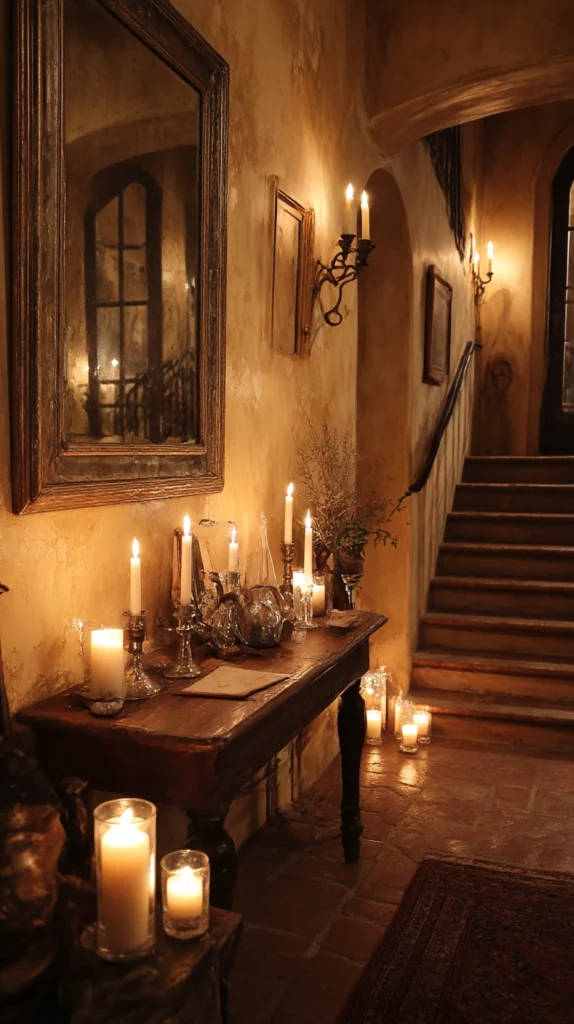
Candlelight in the New Orleans historic townhouse entry is not a decorative gesture toward romantic atmosphere — it is the specific, historically authentic, and genuinely most beautiful lighting solution for a space whose architectural character was designed, in the age of gas and candlelight, to be experienced in exactly this quality of warm, flickering, deeply golden illumination. A pair of tall pillar candles on the console table in silver or bronze holders of appropriate period character. Wall-mounted candle sconces flanking the antique mirror above the console in the wrought iron or aged bronze of the New Orleans decorative metal tradition.
A collection of hurricane glasses at varying heights grouped on a small side table or on the floor beside the console, each containing a pillar candle of sufficient diameter and sufficient quality to burn for the full duration of the evening without guttering. The candlelit New Orleans townhouse entry is the domestic threshold of most complete atmospheric beauty and most genuine historical authenticity.
11. Hang Wrought Iron Hooks for New Orleans Street Character
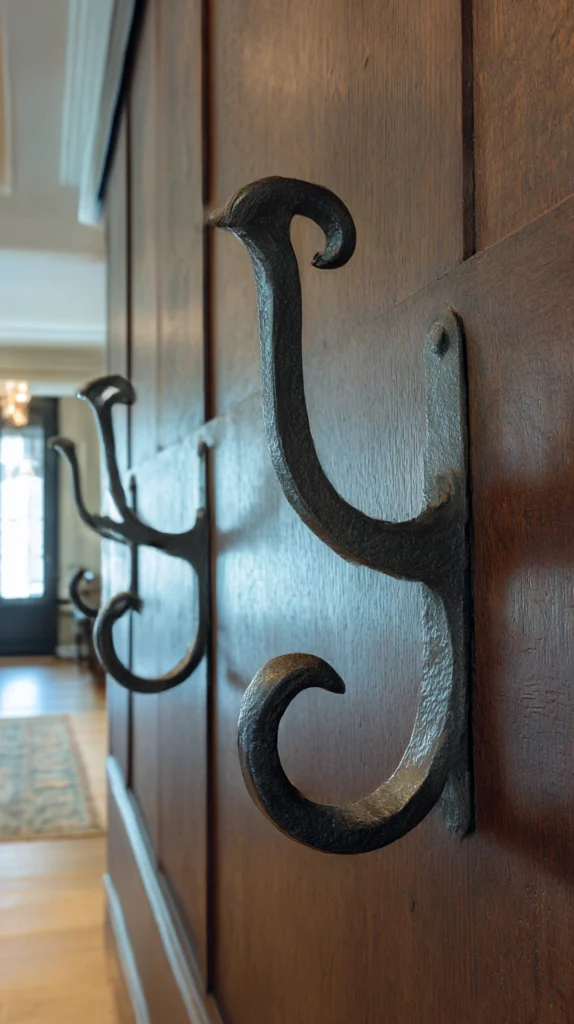
The practical requirements of the entryway — the storage of coats, hats, bags, and the accumulated paraphernalia of daily life — should be addressed in the New Orleans historic townhouse through the specific, completely authentic material vocabulary of the city’s extraordinary ironwork tradition.
Wrought iron hooks — hand-forged in the botanical and geometric patterns that the New Orleans blacksmithing tradition has produced since the eighteenth century, mounted on a timber backboard of cypress or dark-stained oak at the entryway’s most convenient and most architecturally appropriate position — create a practical storage solution of genuine historical character and genuine decorative beauty.
The wrought iron hook board is the New Orleans historic townhouse entry detail of most complete material authenticity — the point at which the city’s most celebrated and most photographed architectural material enters the interior space with complete functional purpose and complete decorative naturalness.
12. Place a French Quarter-Inspired Bench or Chair
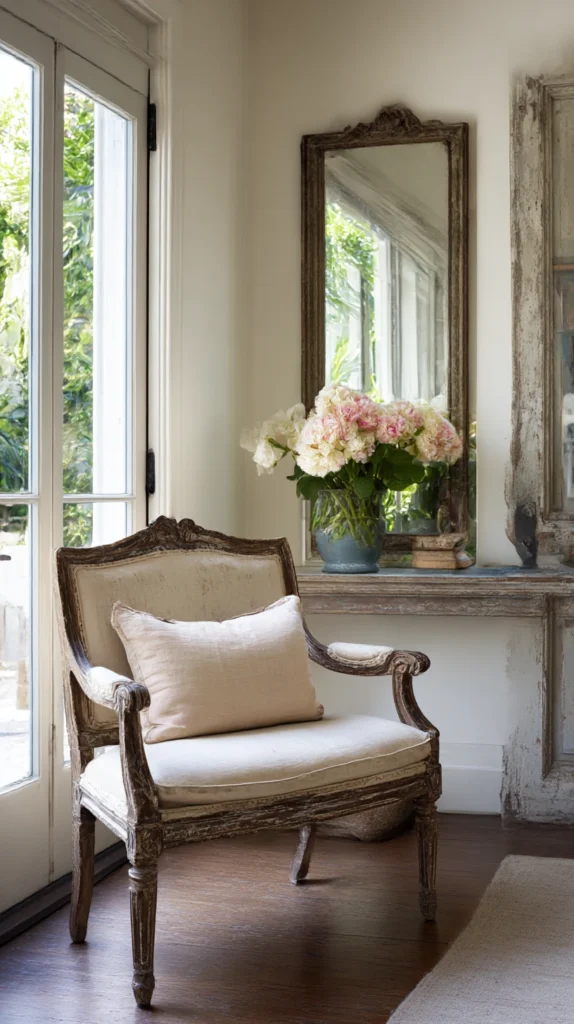
A single, beautifully chosen piece of seating in the New Orleans historic townhouse entry — a carved mahogany hall chair of Louisiana Empire character, a French-influenced fauteuil in a velvet upholstery of appropriate depth and color, or a painted rush-seated country chair of the specific, slightly rustic, completely charming character of the Louisiana Creole domestic tradition — creates a practical seating point for the changing of shoes and the setting down of bags alongside a decorative element of genuine historical specificity and genuine personal warmth.
The entry chair communicates, in the most direct and the most domestic of all possible design languages, that this threshold space has been considered with the same genuine decorating seriousness as every other room in the historic home — that the arrival experience has been designed as carefully and as lovingly as the destination it leads toward.
13. Make the Entry the Most New Orleans Room in the House
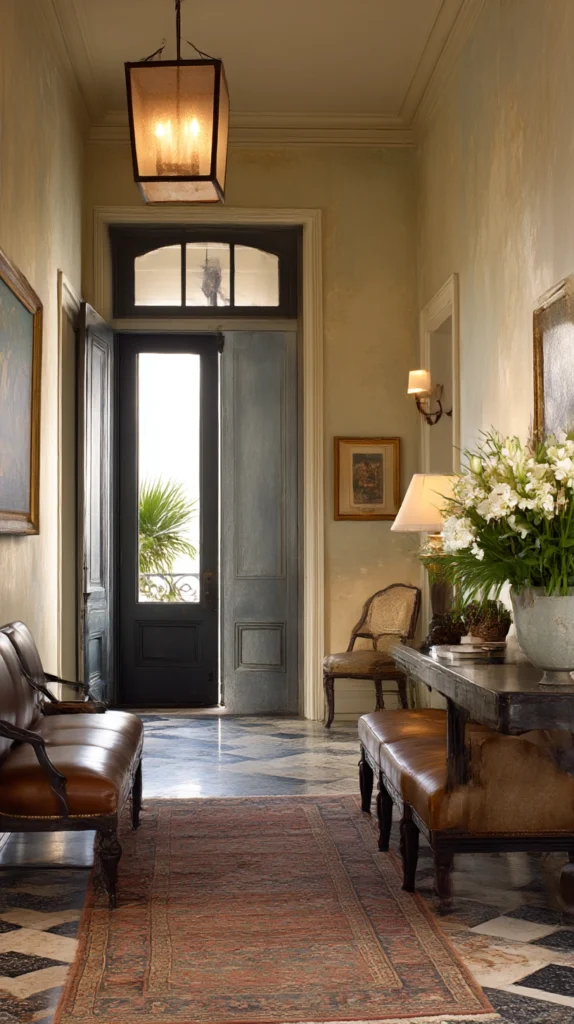
The final and most important entryway decor idea for the New Orleans historic townhouse is the one that elevates every other decision on this list from the competent execution of good historic interior design principles into something altogether more specific, more culturally meaningful, and more genuinely extraordinary — the decision to make the entry not merely the most beautifully decorated but the most completely, most specifically, and most irreducibly New Orleans room in the entire house.
The room that a visitor encounters for thirty seconds before proceeding into the deeper interior and that communicates, in those thirty seconds, the complete cultural intelligence, the complete historical knowledge, and the complete, passionate love for this specific, extraordinary, completely irreplaceable city that the household brings to its stewardship of one of New Orleans’s most precious architectural resources.
The cypress floor was restored to its original beauty. The antique mirror reflecting the candlelight across the deep, historically resonant wall color. The local artwork communicates genuine knowledge of and genuine love for the city’s extraordinary creative tradition.
The living plant brings the Louisiana landscape inside the historic threshold. Make it that entry — completely, confidently, and with the full creative commitment of a household that understands that living in a New Orleans historic townhouse is not merely a housing arrangement but a genuine privilege, a genuine responsibility, and a genuine opportunity to inhabit one of the most beautiful buildings in one of the most beautiful cities in the world with the complete decorative seriousness and the complete cultural love that both the building and the city have always deserved.
The New Orleans historic townhouse entryway decorated with genuine architectural knowledge, genuine historical respect, and genuine love for the extraordinary city whose domestic building tradition it embodies is one of the most beautiful and most culturally resonant transitional spaces in American interior design.
It welcomes every arriving guest not merely into a home but into a living piece of the most extraordinary urban architectural heritage in the American South — and it does so with the complete, warm, generous, and magnificently considered hospitality that New Orleans has always offered to every person fortunate enough to cross its threshold.