
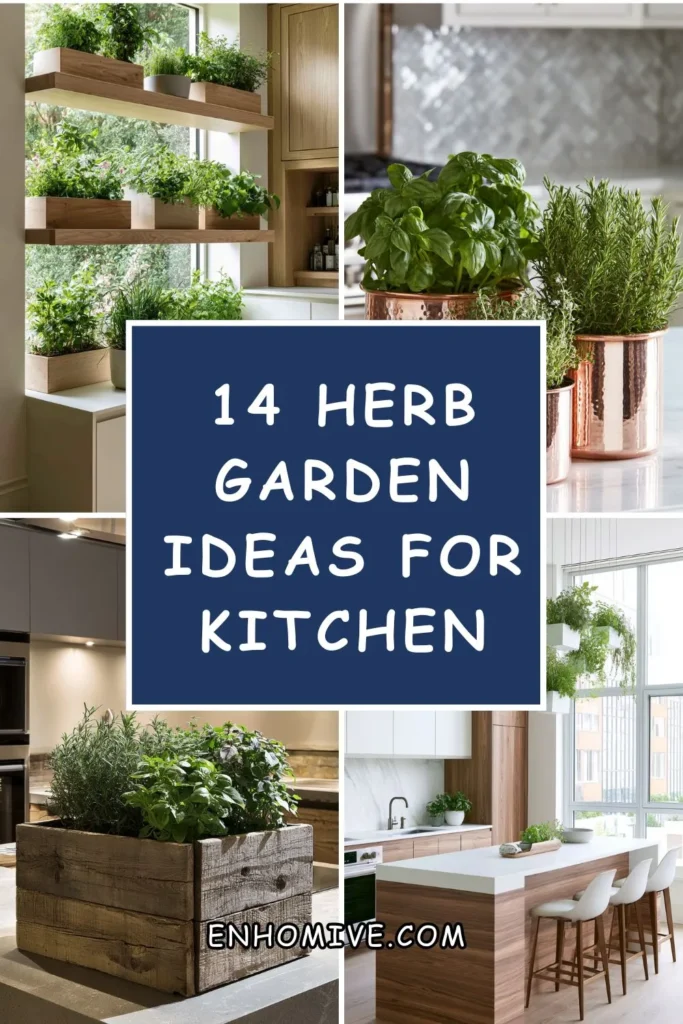
14 Herb Garden Ideas That Double as Beautiful Kitchen Decor
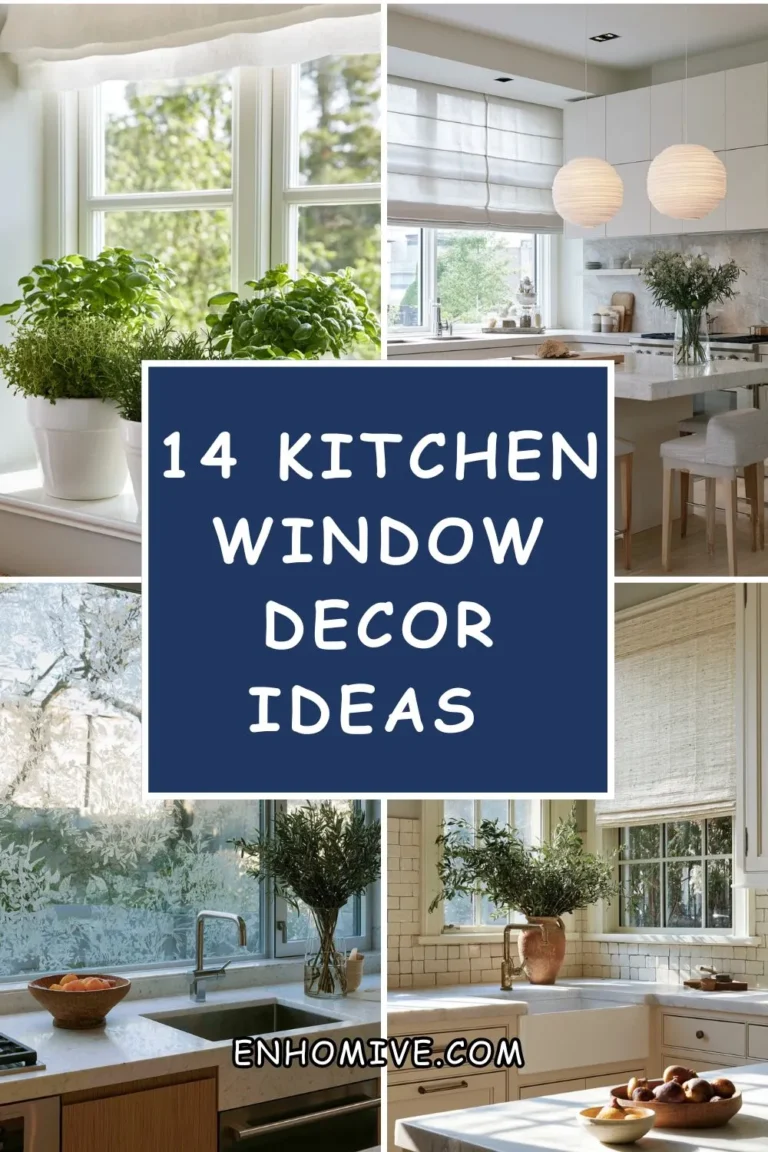
My kitchen windowsill held one sad plastic pot of basil for years, purchased from the grocery store, never repotted, slowly dying in the same spot it had been set down in originally. It served its function poorly and added nothing to look at either.
Tried swapping in a nicer pot for that same basil once. It looked better for about a week, then the single plant alone still read as one green object on an otherwise empty windowsill. Then I stopped treating herbs as a single grocery store afterthought and started building an actual small herb garden, chosen for variety, container, and placement all working together as real kitchen decor.
The kitchen finally has greenery that looks intentional and gets used in actual cooking, not a wilting single pot doing neither job well.
Why One Grocery Store Herb Pot Resists Becoming Real Decor
The single-pot problem:
What one plastic-potted herb does:
- Arrives in disposable nursery packaging never meant for permanent display
- Sits alone without any companion plants, container variety, or deliberate placement
- Often goes unused in actual cooking, since one wilting plant rarely inspires reaching for it
- Resists the layered, considered feeling a true kitchen herb display creates
The variety-and-vessel principle:
- A real herb garden display combines several plants, varied containers, and a deliberate placement strategy
- Choosing the right container matters as much as choosing the right herb when the goal is genuine decor
- This is a different standard than simply keeping a plant alive, and a kitchen’s visible surfaces reward that higher standard
- A single repotted herb, however nice the new pot, still reads as one plant, not a garden
My revelation: A beautiful kitchen herb garden is a small collection of plants, containers, and placement choices working together, not one repotted grocery store herb sitting alone. Variety and vessel matter as much as keeping anything alive.
1. A Windowsill Trio in Matching Terra-Cotta Pots
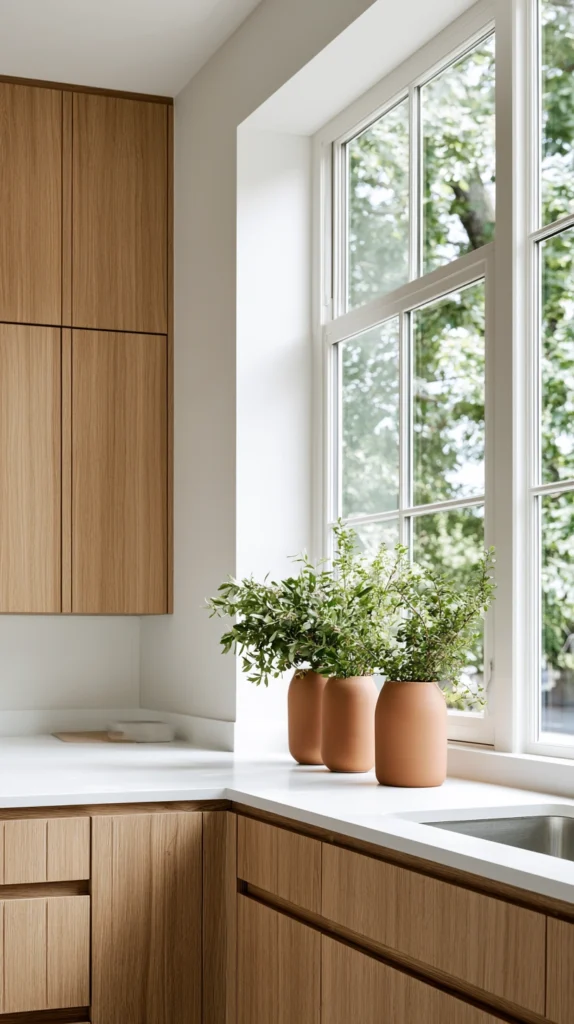
Three different herbs, planted in matching terra-cotta pots, lined along the kitchen’s sunniest windowsill.
Why three matched pots outperform one or several mismatched ones
The matched-grouping principle:
- A single herb pot reads as an isolated object regardless of how nice that one pot is
- Three pots in identical terra-cotta, each holding a different herb, create an immediate sense of an intentional, collected display
- This is one of the simplest and most classic herb garden looks, suited to almost any kitchen style
Best herb choices for this trio
- Basil, thyme, and parsley, a versatile combination suited to a wide range of cooking
- Rosemary, sage, and oregano for a more savory, fall-leaning trio
Budget: $15-30 for three matching terra-cotta pots and starter herb plants
My windowsill trio result
Lining up basil, thyme, and parsley in three matching terra-cotta pots on my kitchen windowsill turned a single sad plant into an actual considered display, and having all three within reach has genuinely increased how often I cook with fresh herbs.
Windowsill Trio Tips
Rotate the pots occasionally for even light exposure:
- Plants closest to the window’s strongest light source can grow unevenly compared to those slightly further back
- A simple quarter turn every few days keeps growth more balanced across all three pots
2. A Hanging Herb Garden Suspended From the Ceiling
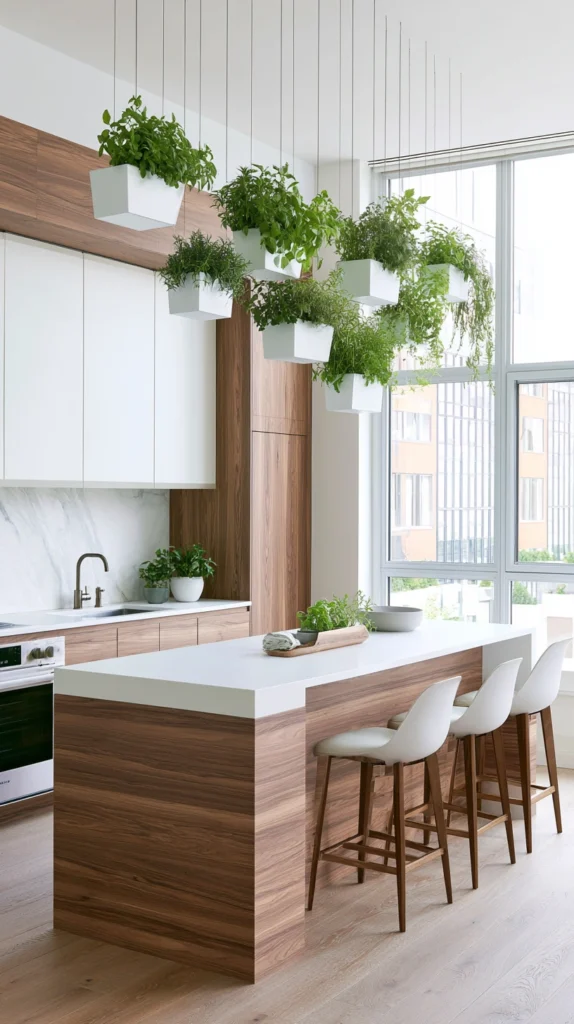
Several small herb pots, hung from the kitchen ceiling on macrame or simple rope hangers, positioned above a window or sink.
Why vertical hanging suits a kitchen with limited counter space
The reclaimed-vertical-space principle:
- Many kitchens have very little spare counter or windowsill space, especially smaller or galley-style kitchens
- Hanging herb pots from the ceiling uses space that would otherwise go completely unused
- This approach also creates a striking visual layer overhead, distinct from anything a countertop display could achieve
Best hanging herb garden setups
- A set of three to five small pots on macrame hangers, varied slightly in length
- A single horizontal rod with multiple hanging pots suspended at even intervals
Budget pick: basic macrame hangers and small pots, $25-50 for a set of four Splurge: custom ceramic hanging planters, $40-80 each
My hanging herb garden result
Hanging four small herb pots on macrame hangers above my kitchen window freed up the entire windowsill for other use while adding a layer of greenery overhead that guests notice immediately upon walking into the kitchen.
Hanging Garden Tips
Confirm the ceiling anchor can support the wet weight of soil and water:
- A fully watered pot weighs considerably more than its dry weight suggests
- Using a proper ceiling anchor rated for the combined wet weight of all hanging pots prevents any risk of the hardware pulling loose
3. A Vertical Wall-Mounted Pallet Herb Garden
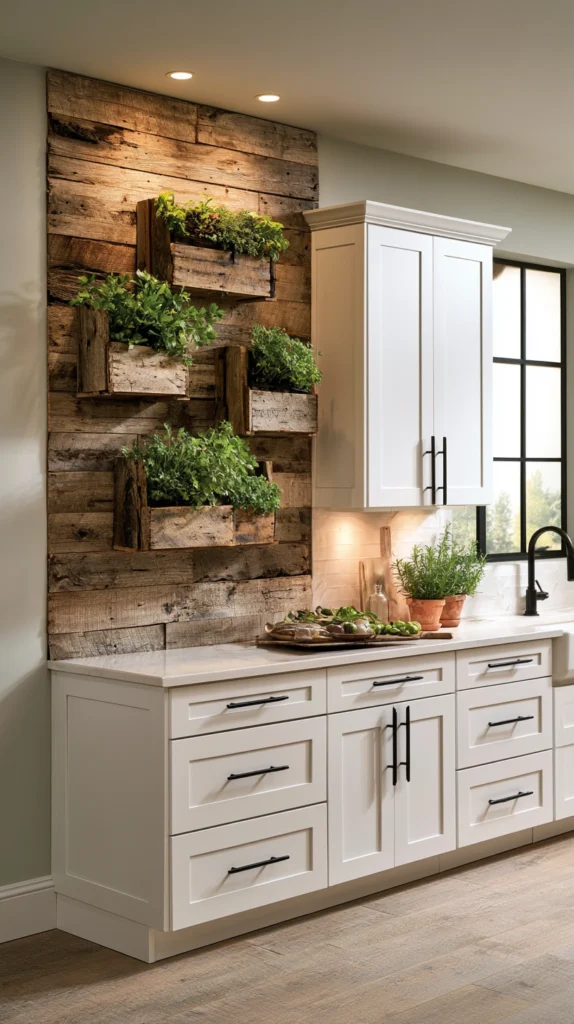
A small reclaimed wood pallet, mounted vertically on a kitchen wall, with multiple herb pockets built into its slats.
Why a vertical pallet suits a kitchen wanting a larger, bolder herb display
The wall-as-garden-bed principle:
- A windowsill or hanging display works well for a few herbs but has natural size limits
- A vertical pallet, mounted on an open wall, can accommodate considerably more plants within the same footprint a single shelf would require
- The reclaimed wood material also adds a rustic, farmhouse-style character distinct from a simple row of pots
Best pallet garden setups
- A small reclaimed pallet with fabric pockets stapled between the slats, each holding one herb
- A pallet with small individual pots wedged securely between horizontal slats
Budget: $30-70 for a small pallet, fabric pockets, and herb starts
My pallet garden result
Mounting a small reclaimed pallet on my kitchen wall, with six different herbs tucked into fabric pockets between the slats, became the single largest and most commented-on piece of decor in the entire kitchen.
Pallet Garden Tips
Seal the wood lightly before planting if reusing an actual shipping pallet:
- Some shipping pallets are treated with chemicals not ideal for direct food-plant contact
- Confirming the pallet’s origin, or applying a food-safe sealant, addresses this concern before planting begins
4. A Tiered Ladder Shelf Display for Multiple Pots
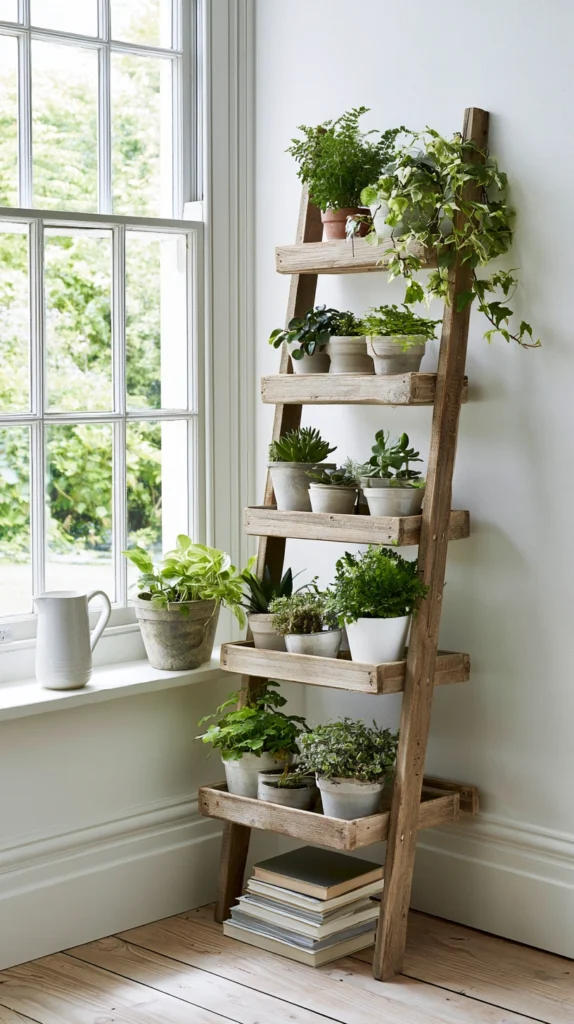
A slim wood ladder shelf, positioned near a kitchen window, holding several herb pots across its multiple tiers.
Why a tiered display adds dimension a flat row cannot
The height-variation principle:
- A single row of pots along a windowsill, however nice, occupies only one visual plane
- A tiered ladder shelf introduces height variation, similar to the same principle used in lamp or candle clustering elsewhere in home styling
- This format also allows for considerably more herb variety within a relatively narrow footprint
Best ladder shelf setups
- A three or four tier slim wood ladder shelf positioned beside a window
- A mix of pot sizes and herb types across the different tiers
Budget pick: a basic wood ladder shelf, $40-80 Splurge: a custom-built shelf with a more refined finish, $120-250
My ladder shelf result
Positioning a four-tier wood ladder shelf beside my kitchen window let me display eight different herbs across varying heights, far more variety than my previous flat windowsill row had room for, while also adding genuine architectural interest to that corner of the kitchen.
Ladder Shelf Tips
Place taller, sun-loving herbs on the uppermost tier:
- The top tier generally receives the most direct light from a nearby window
- Positioning herbs with higher light needs there, while shade-tolerant varieties go lower, suits both the plants and the display’s overall proportions
5. A Repurposed Mason Jar Garden Along the Backsplash
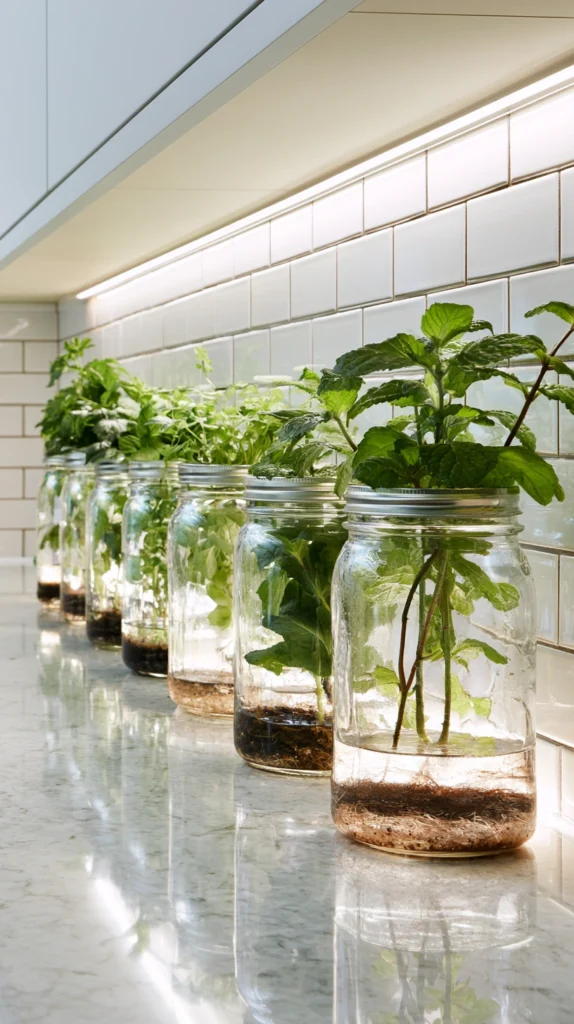
Several mason jars, filled with water and rooted herb cuttings or small soil-based plants, lined along the kitchen backsplash.
Why mason jars suit a casual, farmhouse-leaning kitchen specifically
The accessible-material principle:
- Mason jars are widely owned or cheaply available, making this one of the lowest-cost herb display options on this entire list
- Lined consistently along a backsplash, they create a clean, uniform look despite the casual nature of the container itself
- Water-rooted herbs in particular display an interesting visible root system through the clear glass, adding a layer of visual interest beyond the leaves alone
Best herbs for mason jar display
- Mint, basil, and rosemary, all of which root readily in water
- A mix of water-rooted cuttings and small soil-filled jars for varied texture
Budget: $10-20 for a set of mason jars, using cuttings from an existing plant at no additional cost
My mason jar garden result
Lining five mason jars filled with water-rooted mint and basil cuttings along my kitchen backsplash created a clean, uniform display for almost no cost at all, since the cuttings came from a single existing plant I already owned.
Mason Jar Tips
Change the water every few days for water-rooted herbs:
- Standing water without regular changes can develop algae or an unpleasant odor
- A quick water change every three to four days keeps the display both healthier and more pleasant up close
6. A Built-In Window Box Just Inside the Kitchen Window
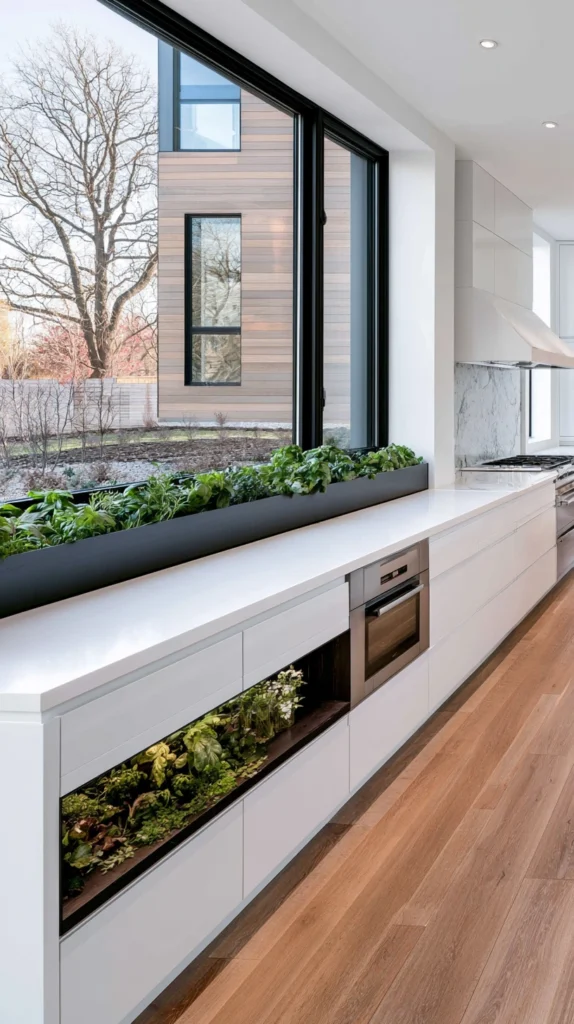
A long, narrow planter box, fitted to rest along the full length of a wide kitchen window’s interior sill.
Why a built-in box suits a kitchen with one especially wide window
The full-width-commitment principle:
- A kitchen with one notably wide window often wastes much of that width on just one or two small pots
- A single long planter box, fitted to the sill’s actual dimensions, fills that entire width deliberately rather than leaving empty sill space on either side of a smaller display
- This approach also allows for a denser, more continuous row of herbs than several individual pots typically achieve
Best window box setups
- A wood or galvanized metal box, measured precisely to the sill’s length
- A mix of five or six herb varieties planted densely within the single box
Budget: $40-90 for a properly sized window box and a full set of herb starts
My window box result
Fitting one long galvanized metal planter box exactly to my kitchen’s wide window sill let me grow six herb varieties in a single continuous row, filling the space far more completely than the three scattered pots I had been using previously.
Window Box Tips
Confirm adequate drainage given the indoor placement:
- A window box without proper drainage holes risks water damage to the sill beneath it
- Adding a drip tray beneath the box, sized to catch any excess water, protects the surface below
7. A Copper Pot Herb Display for a Warmer Metallic Accent
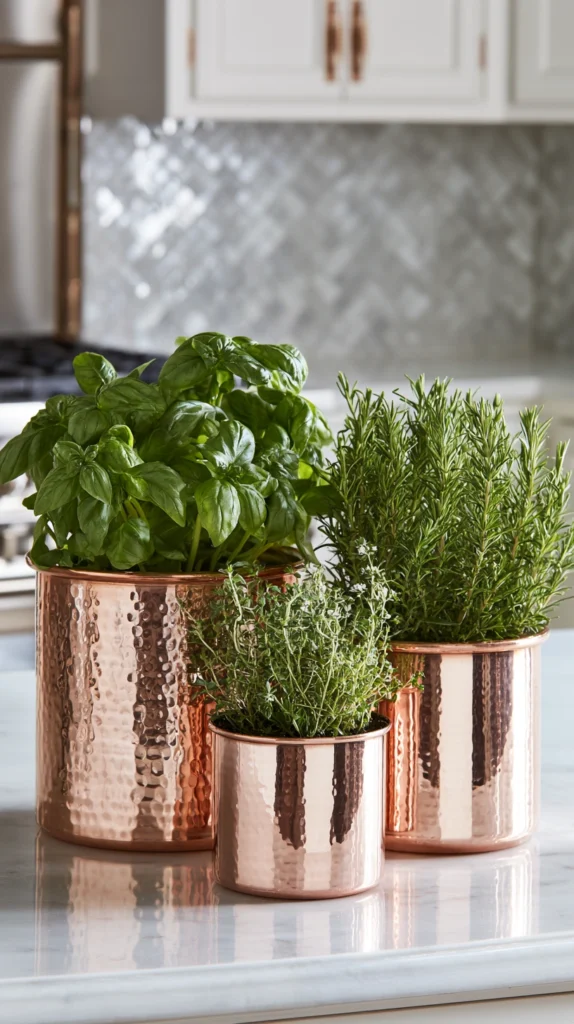
Herbs planted directly in small copper pots or copper-finish containers, chosen specifically for the warm metallic tone they add to the kitchen.
Why copper specifically suits a kitchen herb display
The metal-as-decor principle:
- Most herb containers default to terra-cotta, ceramic, or plain plastic, leaving an opportunity for a warmer metallic option largely unconsidered
- Copper’s warm tone complements green herb foliage particularly well, while also echoing other copper or brass accents commonly found in kitchens
- This choice suits a kitchen wanting a slightly more elevated or vintage-leaning herb display than a standard terra-cotta option provides
Best copper pot setups
- A small cluster of copper pots, varying slightly in height
- A single copper trough-style planter for a more unified, continuous look
Budget pick: copper-finish (rather than solid copper) pots, $20-40 for a small set Splurge: genuine copper pots with a developing natural patina, $60-150 for a small set
My copper pot result
Switching from plain terra-cotta to a small cluster of copper-finish pots for my kitchen herbs added a warm metallic note that ties directly into my existing brass cabinet hardware, elevating the display considerably beyond what the same herbs in plain pots had achieved.
Copper Pot Tips
Choose a liner if using genuine copper pots without drainage holes:
- Solid copper pots are sometimes sold without drainage, intended as a decorative outer pot rather than a direct planting container
- Using a plastic liner with proper drainage, set inside the copper pot, protects both the plant and the copper’s finish
8. A Chalkboard-Labeled Herb Garden for an Organized Look
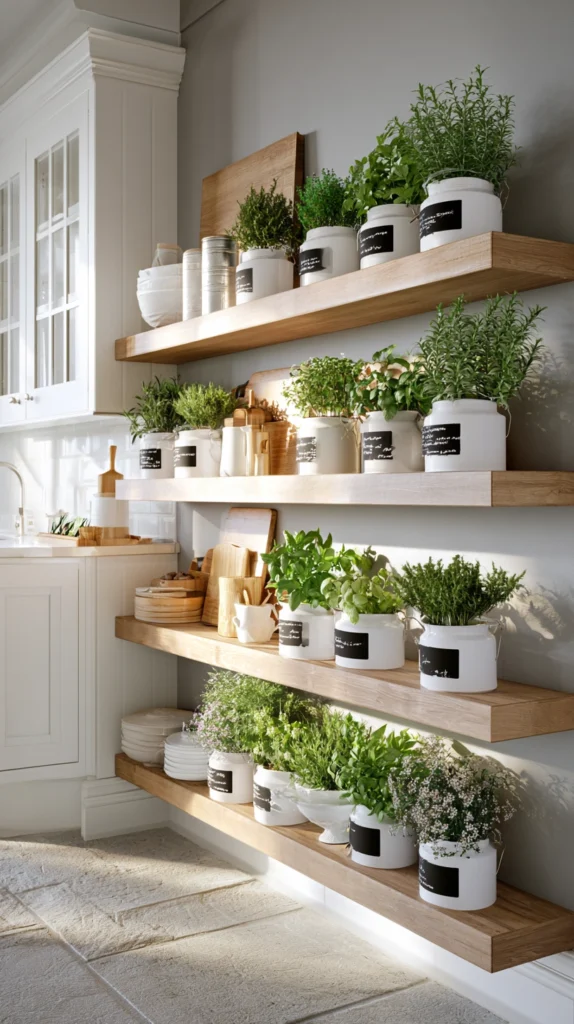
A small grouping of herb pots, each labeled with a chalkboard tag or chalkboard-painted pot surface, identifying the specific herb inside.
Why labeling adds both function and a cohesive visual detail
The identification-as-design principle:
- Several similar-looking herbs, particularly before they mature, can be difficult to distinguish at a glance
- Chalkboard labels solve this practical identification problem while also adding a consistent, charming visual detail repeated across every pot in the display
- This approach works particularly well for a kitchen with several herb varieties that might otherwise blend together visually
Best chalkboard labeling approaches
- Small chalkboard tags tied or clipped to each pot
- Pots painted directly with a chalkboard-finish paint on one face, allowing labels to be rewritten as needed
Budget: $10-20 for a set of chalkboard tags or chalkboard paint, depending on existing pots
My chalkboard label result
Adding small chalkboard tags to each pot in my herb garden solved the recurring “which one is oregano again” confusion while also giving the whole display a consistent, charming detail that ties every pot together visually.
Chalkboard Label Tips
Use chalk markers rather than traditional chalk for better legibility:
- Traditional chalk can smudge easily with regular kitchen handling
- A chalk marker, while still erasable, produces a cleaner, more legible label that holds up better to daily use
9. A Floating Shelf Garden Above the Stove
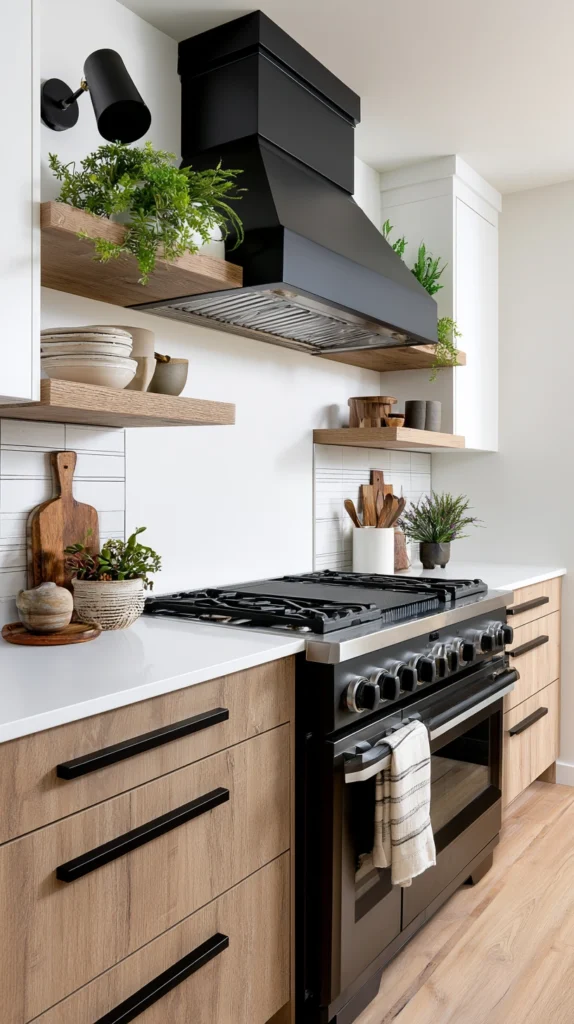
A slim floating shelf, mounted above the stove or range hood, holding a row of herb pots positioned for the most convenient possible access while actually cooking.
Why placement directly above the cooking area matters
The closest-to-use principle:
- Herbs displayed far from the actual cooking area, however nice to look at, often go unused simply due to the extra steps required to reach them
- A floating shelf positioned directly above or beside the stove keeps herbs within arm’s reach during actual meal preparation
- This placement decision often does more to increase real cooking use than any other single factor on this list
Best floating shelf setups
- A single slim floating shelf, positioned with adequate clearance above any heat source
- Heat-tolerant herbs specifically, given the proximity to cooking activity
Budget: $25-50 for a floating shelf and several small pots
My stove-side shelf result
Mounting a floating shelf just beside, rather than directly above, my stove for easy reach during cooking has noticeably increased how often I actually grab fresh herbs mid-recipe, simply because they are now within an arm’s length rather than across the kitchen.
Stove-Side Shelf Tips
Maintain safe clearance from any direct heat or steam:
- Herbs and any wood or fabric elements positioned too close to active cooking heat risk damage or, in some cases, a fire hazard
- Checking manufacturer or general safety clearance guidelines before final placement keeps this convenient spot also a safe one
10. A Repurposed Drawer Herb Garden for Maximum Counter Savings
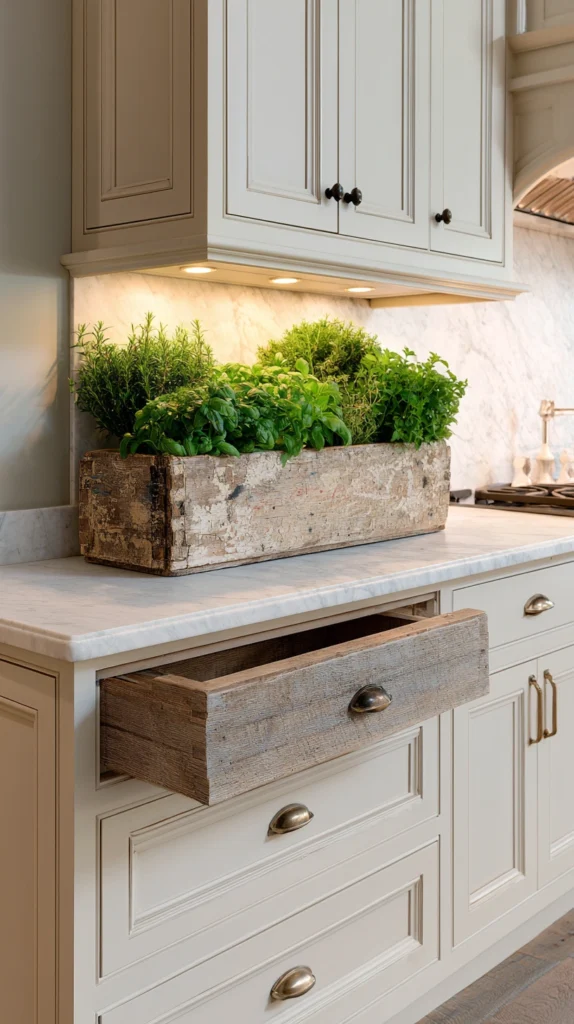
An old dresser drawer, lined and converted into a shallow planter box, mounted on the wall or propped on a stand to hold several herbs.
Why a repurposed drawer suits a kitchen wanting a more unique display
The found-object-character principle:
- A standard planter box, however well chosen, is still a purpose-built container without much individual character
- A repurposed vintage or thrifted drawer brings a distinctive, one-of-a-kind quality that a new planter cannot replicate
- This approach also tends to be quite affordable, particularly if the drawer comes from a piece of furniture already being discarded or repurposed elsewhere
Best drawer garden setups
- A shallow dresser drawer, lined with a waterproof liner before adding soil
- Mounted at an angle on the wall, or set flat on a small stand near a window
Budget: $10-25 if using an already-owned or thrifted drawer, plus a liner and herb starts
My drawer garden result
Converting an old dresser drawer into a lined planter box for my kitchen herbs gave the display a one-of-a-kind, slightly weathered character that no standard purchased planter could have provided, all for the cost of a waterproof liner and a few herb starts.
Drawer Garden Tips
Drill drainage holes through both the liner and drawer bottom:
- A drawer not originally designed for planting has no drainage built in
- Drilling several small holes through both the liner and the wood bottom before adding soil prevents water from pooling and damaging the wood
11. A Spiral Herb Tower for Maximum Variety in Minimal Footprint
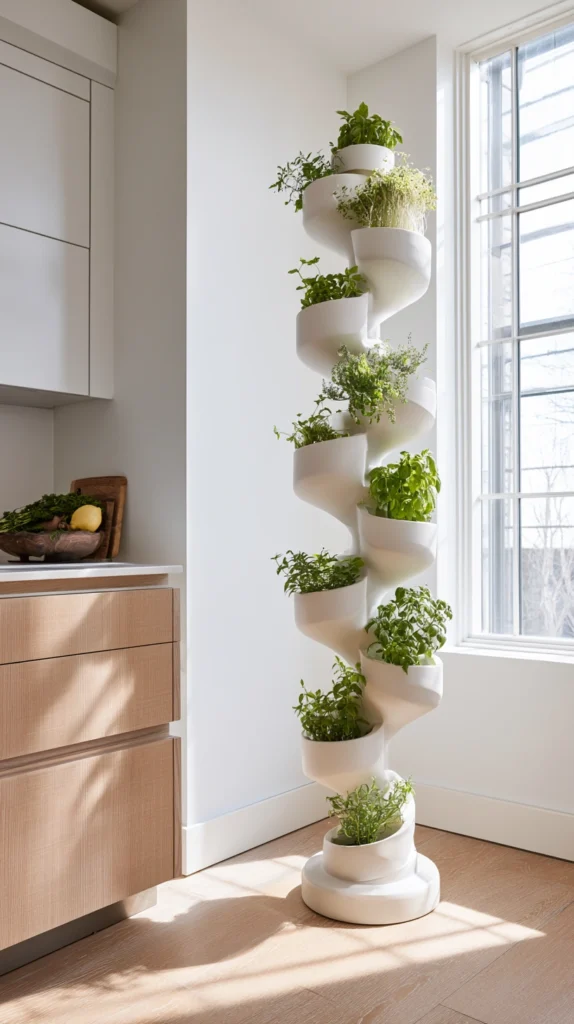
A vertical stacking or spiraling planter tower, holding multiple herb varieties in a single compact column.
Why a tower format suits a kitchen with almost no spare flat surface
The footprint-minimization principle:
- Some kitchens genuinely have no available windowsill, counter, or wall space for even a modest herb display
- A spiral or stacking tower addresses this directly, fitting eight or more individual planting pockets into the same floor or counter footprint a single large pot would require
- This is one of the most space-efficient options on this entire list, suited specifically to the tightest kitchens
Best spiral tower setups
- A stacking terra-cotta tower with multiple planting pockets at different heights
- A rotating tiered planter, allowing even light exposure across all sides
Budget pick: a basic stacking terra-cotta tower, $35-65 Splurge: a rotating multi-tier ceramic tower, $90-180
My spiral tower result
A single stacking terra-cotta tower on my narrow counter end holds eight different herbs in the same footprint one large pot previously occupied, solving my space problem without sacrificing any of the variety I wanted.
Spiral Tower Tips
Water from the top and allow it to filter down through each tier:
- Most tower designs are built to allow water to cascade naturally from the uppermost tier down through each level below
- Watering only the top tier, rather than each section individually, both saves time and matches the tower’s intended design
12. A Repurposed Wine Crate Herb Garden Box
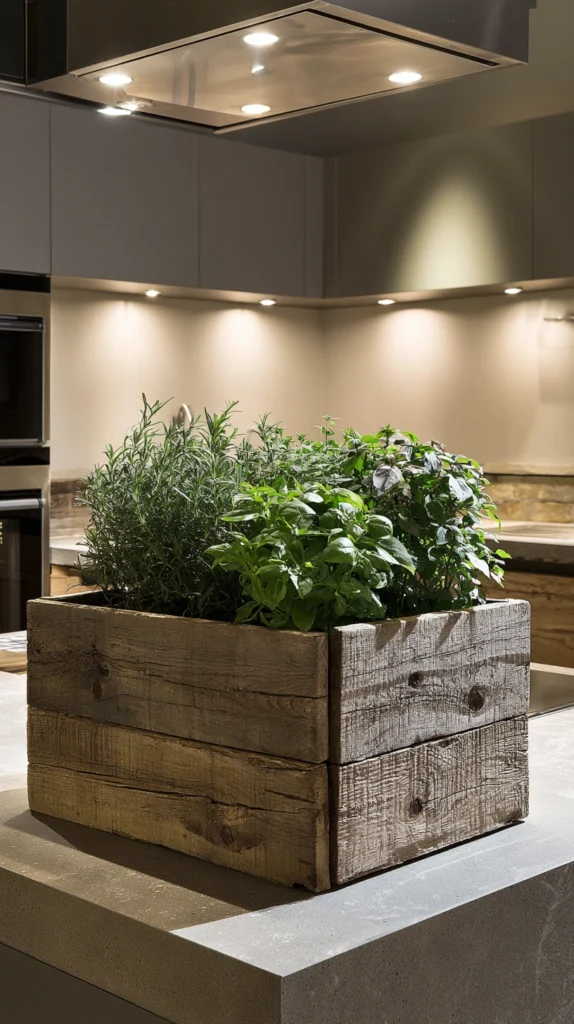
A wood wine crate, lined and filled with soil, used as a rustic herb planter box on a counter or windowsill.
Why a wine crate suits a kitchen wanting an easy, characterful container
The stamped-branding-character principle:
- A wine crate often arrives with stamped branding or lettering already on its exterior, adding character without any additional decoration required
- This container option is also frequently available for free or very low cost, since crates are commonly discarded after the wine itself has been used
- The rustic wood material suits a farmhouse or cottage-style kitchen particularly well
Best wine crate garden setups
- A single crate, lined with a waterproof liner or plastic insert before adding soil
- Multiple herbs planted together within the one crate for a dense, cohesive look
Budget: free to $15, depending on whether a crate is already available secondhand
My wine crate garden result
Lining a free wine crate, sourced from a local shop happy to give away their empties, with a plastic liner and filling it with three herb varieties created a rustic, characterful planter that cost nothing beyond the soil and plants themselves.
Wine Crate Tips
Check for any gaps between slats before lining:
- Wine crates are often built with small gaps between wood slats for ventilation during shipping
- Confirming the liner fully covers these gaps before adding soil prevents soil or water from leaking through
13. A Color-Coordinated Pot Collection Matching the Kitchen’s Palette
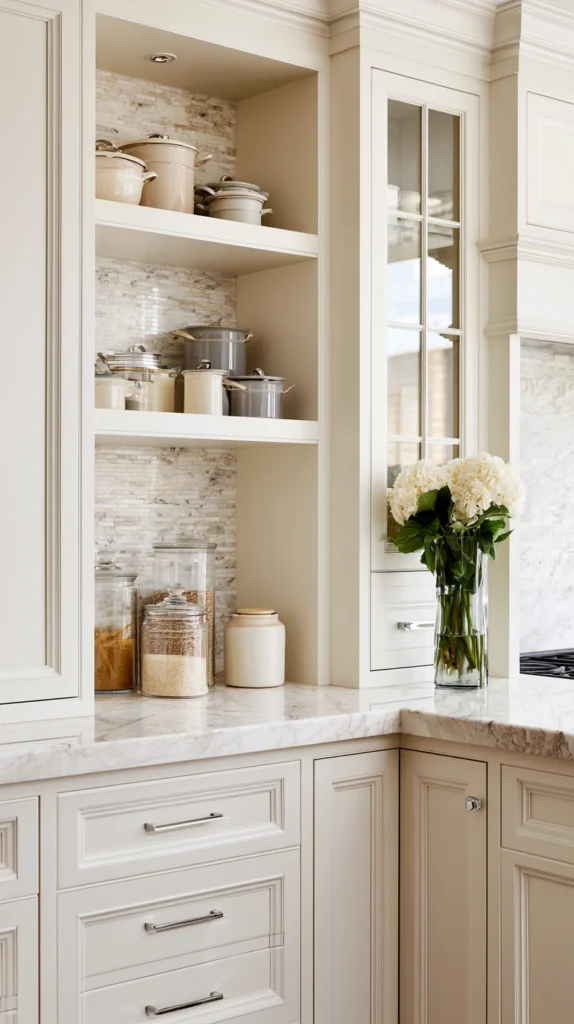
A set of herb pots chosen specifically to match or complement the kitchen’s existing color scheme, rather than defaulting to plain terra-cotta or white.
Why color coordination ties the herb garden into the room’s broader design
The whole-room-cohesion principle:
- Herb pots are often chosen in isolation, without much thought to how their color relates to the rest of the kitchen
- Selecting pots specifically in a color that echoes cabinet hardware, a backsplash tone, or another existing accent ties the herb garden into the kitchen’s overall design rather than treating it as a separate addition
- This single consideration can make even a simple, inexpensive set of pots look considerably more intentional
Best approaches to color coordination
- Pots in a color pulled directly from an existing accent, such as a rust-toned backsplash or sage green cabinets
- A single accent color used consistently across every pot in the display, rather than a different color for each
Budget: $20-45 for a coordinated set of pots in a chosen accent color
My color-coordinated result
Choosing a set of sage green pots specifically because that color already appears on my kitchen cabinets made the herb garden look like part of the original design plan, rather than a separate addition layered on top of an unrelated room.
Color Coordination Tips
Pull the exact color from a paint chip or fabric swatch if possible:
- Matching a color from memory alone often results in a noticeably different shade once the new pots arrive
- Bringing an actual paint chip or fabric swatch while shopping ensures a more reliable match
14. A Fully Combined Multi-Tier Kitchen Herb Display
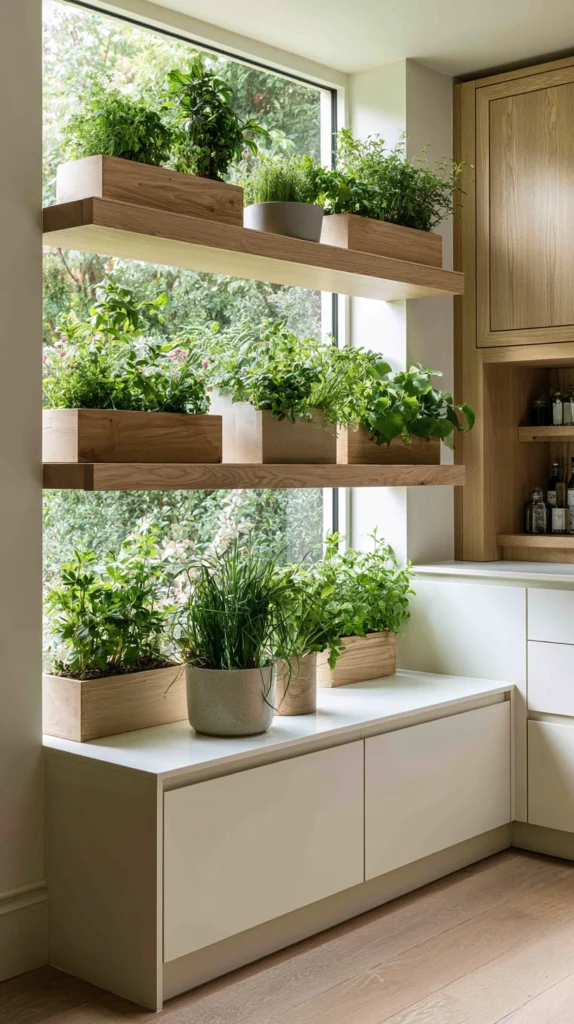
Combining a windowsill row, a hanging tier, a floating shelf near the stove, and consistent labeling into one complete, multi-level kitchen herb garden.
Why combining several display types outperforms any single approach
The complete-display-philosophy:
- Several of the ideas on this list (a windowsill row, a hanging tier, a floating shelf, consistent labeling) address different available spaces within the same kitchen, the sill, the ceiling, the wall near the stove
- Relying on just one display type maximizes only one specific spot, while a kitchen often has several spots worth using together
- This is the most complete and most genuinely abundant version of a kitchen herb garden on this list, suited to anyone wanting a true centerpiece feature rather than a single accent
How the combination works together
The windowsill row (the primary light-access zone):
- Holds the herbs needing the most direct sun exposure
The hanging tier (the reclaimed vertical layer):
- Adds additional plants without consuming any flat surface space
The floating shelf near the stove (the convenience-for-cooking layer):
- Keeps the most frequently used cooking herbs within easy reach
Consistent labeling and pot color (the unifying thread):
- Ties every separate display area back into one cohesive overall garden
Building the full combined display
- Start with the windowsill row, since it occupies the kitchen’s best natural light
- Add a hanging tier nearby for additional plants without using flat surface space
- Include a floating shelf near the stove for the herbs used most often in actual cooking
- Finish with consistent pot color and labeling across every section to tie the whole display together
Budget: $120-300 for a fully combined multi-tier herb garden, covering several of the ideas above
My fully combined result
Combining a windowsill row of basil and thyme, a hanging tier of mint and oregano, and a floating shelf of stove-side rosemary and parsley, all in matching sage green pots with chalkboard labels, turned my kitchen’s herb situation from one sad grocery store plant into a genuine multi-level garden that functions as both decor and an actual working part of my cooking routine.
Full Display Tips
Group herbs by light and water needs across the different tiers, not just by what looks nice together:
- Different display zones in a kitchen receive different amounts of light, from a bright windowsill to a dimmer stove-side shelf
- Matching each herb’s actual needs to the right zone, rather than distributing them purely for visual balance, keeps the whole combined garden healthier long-term
Choosing Your Herb Garden Approach
By available kitchen space:
- Very limited space: spiral herb tower (idea 11), mason jar garden (idea 5)
- Ample wall or window space: vertical pallet garden (idea 3), window box (idea 6), fully combined display (idea 14)
By kitchen style:
- Farmhouse or rustic: wine crate garden (idea 12), pallet garden (idea 3)
- Modern or elevated: copper pot display (idea 7), color-coordinated pots (idea 13)
By budget level:
- Lower budget: mason jar garden (idea 5), wine crate garden (idea 12), chalkboard labels (idea 8)
- Moderate budget: windowsill trio (idea 1), ladder shelf (idea 4), hanging garden (idea 2)
- Higher budget: window box (idea 6), spiral tower (idea 11), fully combined display (idea 14)
The non-negotiable rules across every option:
Always:
- Choose containers with proper drainage, or add a liner and drainage holes to any repurposed container
- Position herbs according to their actual light needs, not purely for visual arrangement
- Keep frequently used cooking herbs within easy reach of the actual stove or prep area
Never:
- Rely on a single grocery store herb pot and expect it to function as genuine kitchen decor
- Mount a hanging garden without confirming the ceiling anchor can support the full wet weight of soil and water
- Place herbs or any wood and fabric elements too close to direct stove heat without checking safety clearance
Remember: a beautiful kitchen herb garden depends on variety, vessel, and placement working together, not on one repotted grocery store plant left to wilt on a windowsill, and the displays that actually get used in real cooking are the ones positioned with both light and convenience in mind from the very start.