
13 Fall Decor Ideas for Your Camper’s Porch and Awning Area
My camper’s awning area stayed completely undecorated for years, just two folding chairs and whatever cooler happened to be sitting nearby. It functioned as outdoor seating and nothing more, regardless of the season or the campsite.
Tried hanging one small wreath on the awning support pole once. It looked fine swaying slightly in the breeze, but the rest of the space around it, the chairs, the ground, the light, stayed exactly as plain as before.
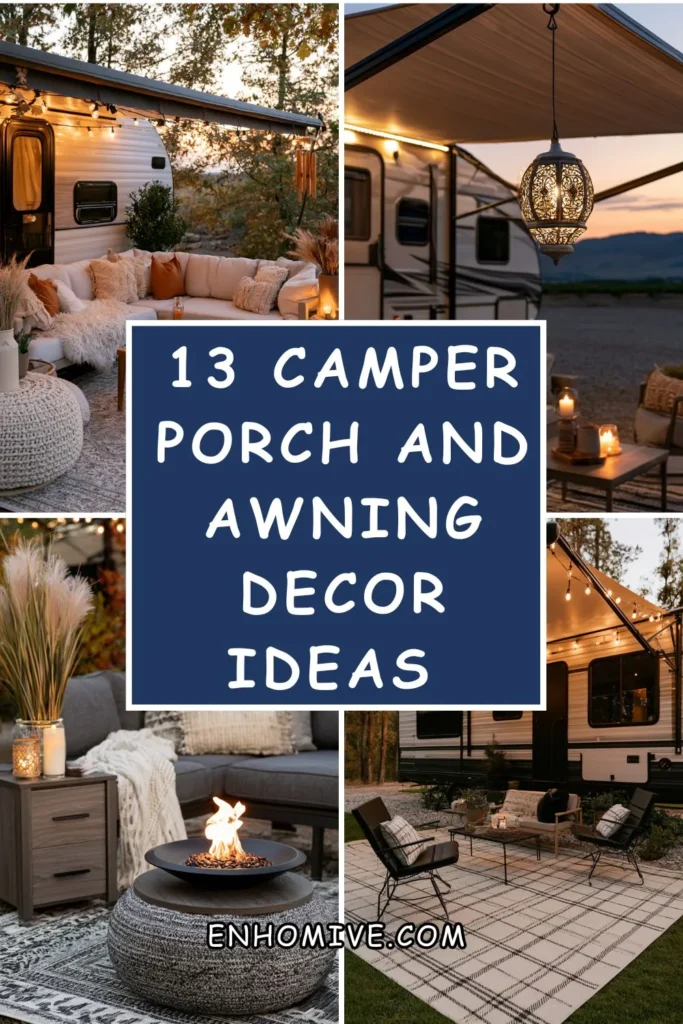
Then I stopped adding single decorative objects and started building a complete small outdoor living space, ground covering, lighting, seating, and a few seasonal touches all working together. The awning area finally feels like an actual outdoor room for fall, not just a patch of gravel with chairs on it.
Why a Single Decoration Resists Transforming an Awning Area
The bare-patch problem:
What an undecorated camper awning space does:
- Functions purely as seating, with no attention paid to ground, light, or atmosphere
- Reads as identical from one campsite to the next, regardless of season
- Leaves the space feeling temporary and unfinished rather than like an extension of the camper itself
- Resists the layered, considered feeling a true outdoor living space achieves
The outdoor-room principle:
- A genuinely decorated awning area treats the space the way a porch or patio would be treated at a stationary home
- Ground covering, lighting, seating comfort, and a few seasonal touches all need to work together, even in a temporary outdoor setup
- This is a different scope than a single hanging decoration, and most campsites reward this fuller approach
- A single wreath on the awning pole, with everything else unchanged, still reads as one decoration in an otherwise bare space
My revelation: A fall camper awning area is a complete small outdoor room, not one decoration hung on a support pole. Ground, light, seating, and seasonal touches all need to come together before the space actually feels finished.
1. An Outdoor Rug Sized to the Awning Footprint
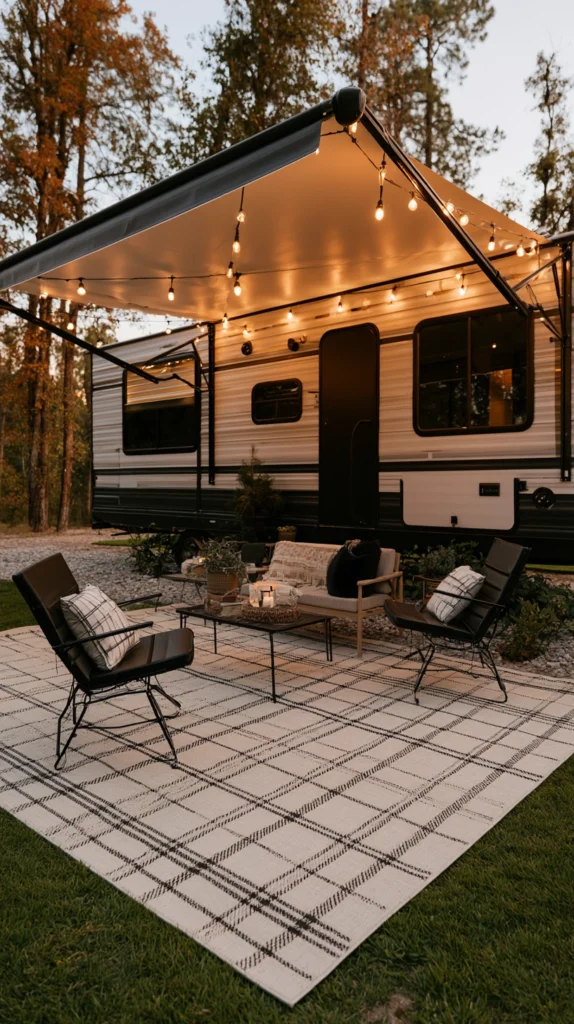
A weather-resistant outdoor rug, sized specifically to fit the area beneath the awning, replacing bare gravel, dirt, or grass underfoot.
Why ground covering is the foundation of the whole space
The underfoot-foundation principle:
- Bare ground beneath an awning, however nice the chairs above it, keeps the entire area feeling unfinished and temporary
- A properly sized outdoor rug defines the space clearly as an intentional living area, the same way a rug defines a seating zone in any home
- This single addition does more to establish the feeling of an actual outdoor room than almost anything added afterward
Best outdoor rug choices
- A reversible polypropylene outdoor rug, easy to hose off and quick-drying
- A rug in a warm fall pattern, such as a muted plaid or a simple striped design
Budget pick: a reversible polypropylene rug, $30-60 Splurge: a thicker, more cushioned outdoor rug with a fall-specific pattern, $80-150
My awning rug result
Adding a reversible outdoor rug sized exactly to my awning’s footprint immediately made the space feel like a defined room rather than just gravel with furniture on it, and rolling it up at the end of a trip takes only a minute.
Awning Rug Tips
Choose a size slightly smaller than the full awning shadow:
- A rug sized exactly to the awning’s edge can extend slightly into unshaded ground depending on sun angle
- Sizing it a foot or so smaller on each side keeps it reliably within the shaded, usable area regardless of time of day
2. Warm String Lights Along the Awning Edge
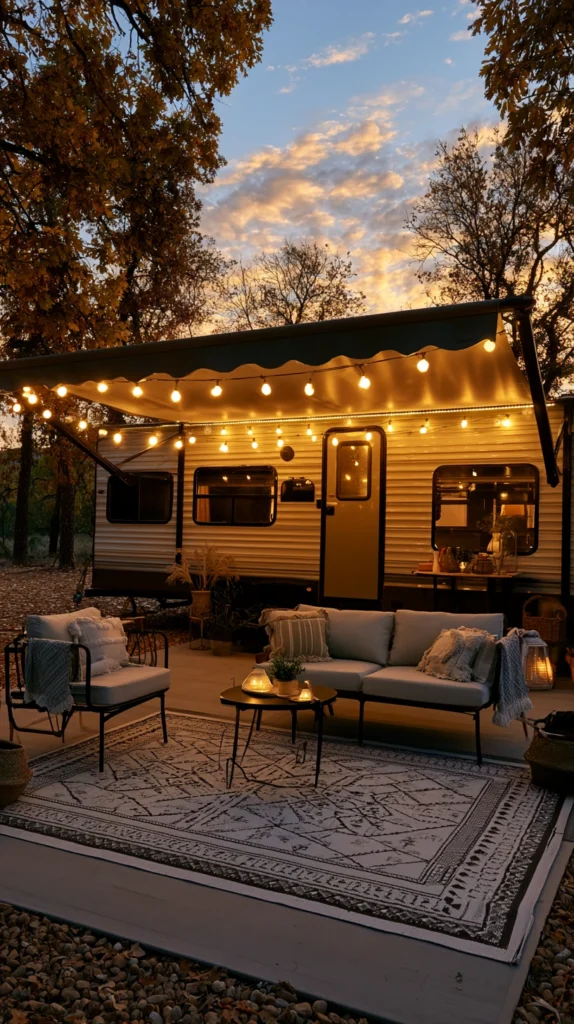
A strand of warm white string lights, run along the awning’s outer edge or support arms, providing both ambient light and a clear seasonal touch.
Why the awning edge is the natural place to establish lighting
The defining-edge principle:
- String lights along the awning’s perimeter visually define the space’s boundary after dark, much like a porch light does for a home’s entry
- Warm white specifically, rather than cool white or multicolor, ties directly into the same fall lighting warmth used throughout indoor seasonal decorating
- This addition also extends the area’s usable hours well into the evening, when it would otherwise go dark
Best string light choices
- A battery-powered or USB-rechargeable warm white strand for sites without consistent outdoor power
- A globe-style string light for a softer, more diffused glow than a bare bulb strand
Budget: $15-30 for a quality warm white string light set
My awning lighting result
Running a warm white globe string light along my awning’s edge extended how late I actually want to sit outside, and the soft glow against the darkening campsite became one of the most-commented-on details of the whole setup.
Awning Lighting Tips
Secure the strand at multiple points along the awning arm:
- A string light only attached at the ends can sag or swing loosely in wind
- Small clips or zip ties at several points along the awning arm keep the strand secure and evenly distributed
3. A Pair of Plaid or Rust-Toned Camp Chair Cushions
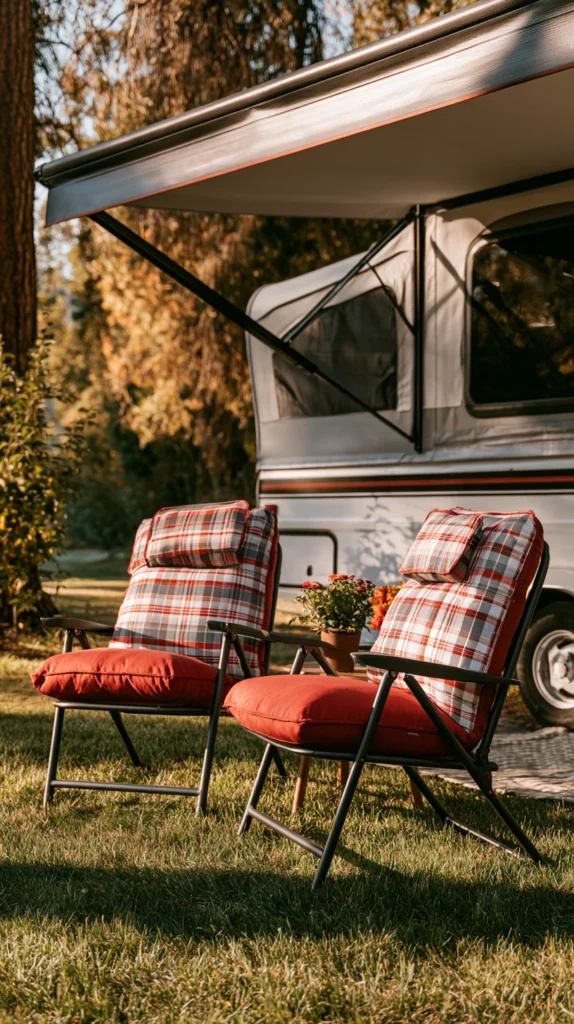
Cushioned seat covers in a warm plaid or solid rust tone, added to the standard folding camp chairs used beneath the awning.
Why chair comfort and color matter together
The seating-comfort-and-warmth principle:
- Standard folding camp chairs are functional but rarely comfortable for extended sitting, regardless of the season
- Adding a cushioned cover in a warm fall tone addresses both the comfort gap and the seasonal color story at once
- This is one of the more practical items on this list, since the cushions also genuinely improve how long anyone wants to sit in the chairs
Best cushion choices
- A simple slip-on cushion cover in plaid or a solid rust tone
- A quick-dry fabric, given regular outdoor moisture exposure
Budget: $15-30 per chair for a basic cushion cover
My chair cushion result
Adding rust-toned cushion covers to my folding camp chairs made sitting outside for a full evening considerably more comfortable, while also tying the chairs visually into the same warm palette as the rest of my awning setup.
Chair Cushion Tips
Bring cushions inside overnight or during rain:
- Even quick-dry fabric performs better when not left out in overnight dew or rain for an entire trip
- A simple habit of bringing cushions in at night keeps them in better condition over a full season of use
4. A Small Folding Side Table With a Warm Wood Finish
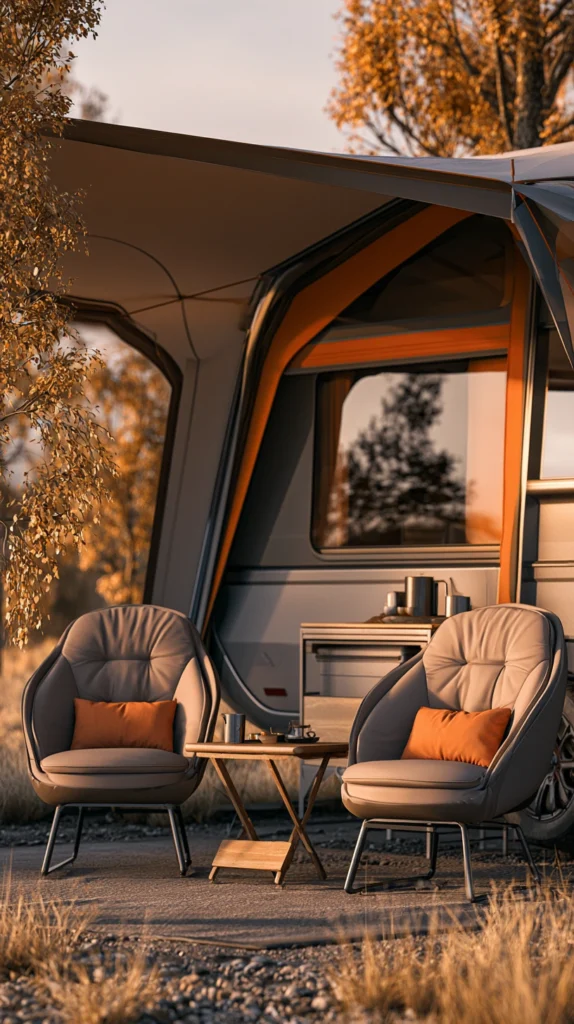
A compact folding side table in a warm wood tone, used beside the camp chairs for drinks, snacks, or a lantern.
Why a wood-finished table elevates the whole seating area
The material-upgrade principle:
- Most folding side tables default to plain metal or plastic, materials that read as purely functional rather than styled
- A warm wood-finished folding table introduces the same material warmth indoor fall decorating relies on, simply in an outdoor-rated form
- This addition also provides a genuinely useful surface that the chairs alone do not offer
Best folding table choices
- A bamboo or acacia wood folding side table, naturally weather-resistant
- A table with a small lip or raised edge, helpful for stability on uneven campsite ground
Budget: $25-50 for a quality wood-finished folding side table
My side table result
Adding a small bamboo folding table between my two camp chairs gave the awning area a genuine surface for drinks and a lantern, and the warm wood tone fits the space’s overall fall styling far better than the plain plastic table it replaced.
Side Table Tips
Choose a table with adjustable or wide feet for uneven ground:
- Campsite ground is rarely perfectly level
- A table with some adjustability or a wider base footprint stays more stable than a narrow, fixed-leg design
5. A Small Pumpkin or Gourd Display on the Table
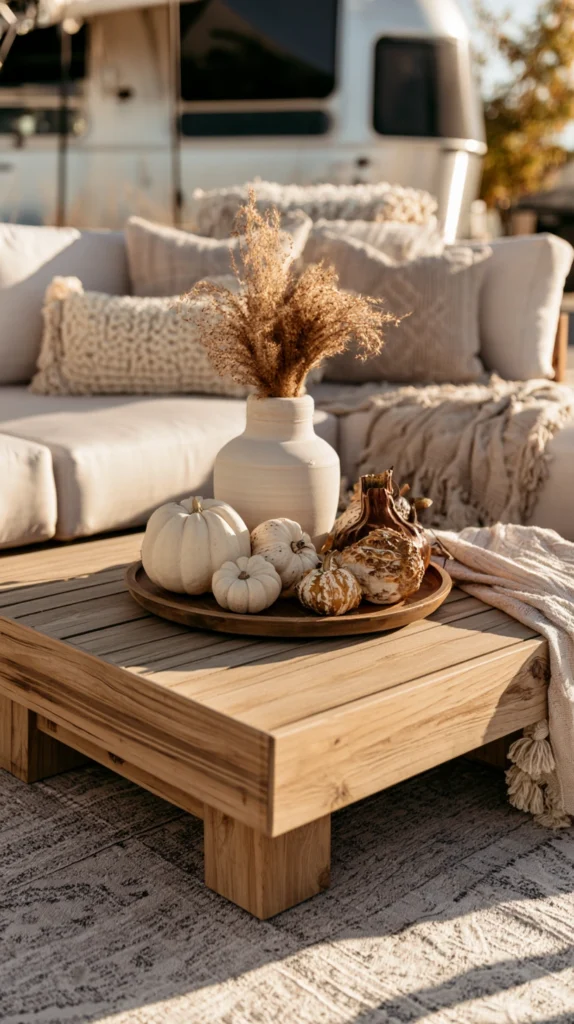
A simple cluster of small pumpkins or gourds, arranged on the folding side table or a nearby flat surface beneath the awning.
Why real or faux gourds suit an outdoor camper setting specifically
The genuine-outdoor-material principle:
- Pumpkins and gourds are an outdoor, harvest-associated decoration by nature, making them a particularly fitting choice for an outdoor awning space rather than feeling borrowed from an indoor theme
- A small cluster, rather than one alone, creates a deliberate vignette even on a modest folding table
- Real gourds also tend to hold up reasonably well outdoors for the length of a typical camping trip
Best gourd and pumpkin choices
- A small mix of real mini pumpkins and ornamental gourds, varying in size and color
- A faux weather-resistant version for longer trips or repeated use across a full season
Budget: $8-15 for a small cluster of real mini pumpkins and gourds
My gourd display result
Arranging a small cluster of mini pumpkins and gourds on my folding side table brought a genuine harvest feeling to the awning area that felt more authentic outdoors than it might have looked indoors.
Gourd Display Tips
Check real gourds periodically for soft spots if left out for an extended trip:
- Real pumpkins and gourds can begin to soften or mold after extended exposure to outdoor moisture
- A quick check every few days, replacing any softening pieces, keeps the display looking fresh for longer trips
6. A Hanging Lantern From the Awning Support Pole
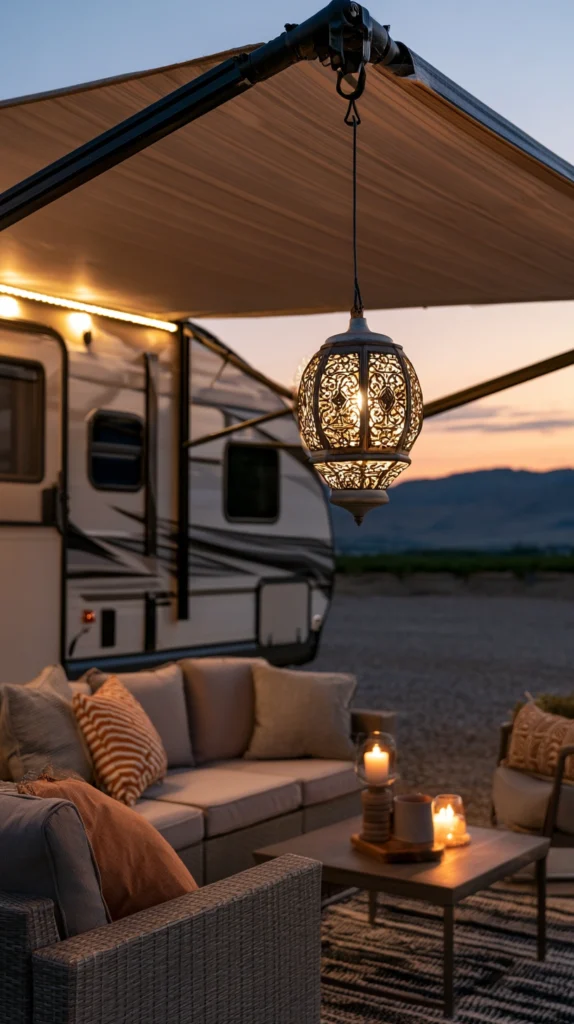
A weather-resistant lantern, either battery-powered or solar, hung directly from one of the awning’s support poles.
Why a hanging lantern adds height and focal interest
The vertical-interest principle:
- Most awning decor naturally clusters at ground or table level, leaving the vertical space along the support poles entirely unused
- A hanging lantern fills that vertical gap, adding both function and a clear focal point at eye level
- This addition also provides genuinely useful supplemental light, particularly valuable as fall evenings darken earlier
Best hanging lantern choices
- A solar-charging lantern for sites without consistent access to outlets
- A lantern with a flame-effect LED for a warmer, more flickering quality of light
Budget: $15-35 for a quality weather-resistant hanging lantern
My hanging lantern result
Hanging a small solar lantern from my awning’s support pole added a focal point at eye level that the string lights and table lantern alone had not addressed, and it charges itself during the day with no extra effort required.
Hanging Lantern Tips
Choose a secure hanging hook rated for outdoor wind conditions:
- A lantern on a loose or simple hook can swing excessively or fall in windy conditions
- A carabiner-style or locking hook keeps the lantern securely in place even on breezier evenings
7. A Plaid or Buffalo Check Door Mat at the Camper Steps
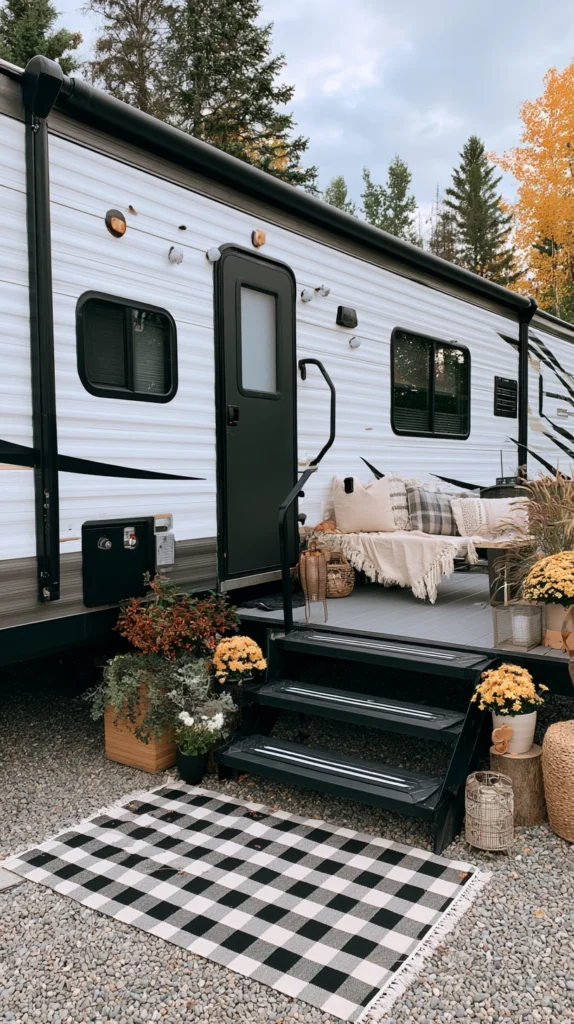
A plaid or buffalo check patterned doormat, placed at the base of the camper’s entry steps within the awning area.
Why the entry steps deserve their own seasonal marker
The transition-point-marker principle:
- The entry steps mark the clear transition between the outdoor awning living space and the camper’s interior
- A patterned doormat at this exact spot reinforces the season right at that transition, while also serving its practical function of catching dirt and debris before it enters the camper
- This is a particularly durable choice among awning decor items, since doormats are built specifically for repeated outdoor use and foot traffic
Best doormat choices
- A buffalo check coir mat, naturally textured and durable
- A rubber-backed plaid mat for better grip on uneven ground near the steps
Budget: $15-30 for a plaid or buffalo check doormat
My doormat result
Placing a buffalo check coir mat at the base of my camper’s entry steps marked the transition into the camper clearly and added one more layer of the season’s pattern to the overall awning setup.
Doormat Tips
Shake out and check the mat regularly for trapped debris:
- A mat used heavily at a dirt or gravel campsite accumulates debris quickly
- A quick daily shake-out keeps both the mat and the camper’s interior floor noticeably cleaner
8. A Small Battery-Powered Fan Heater for Cooler Evenings
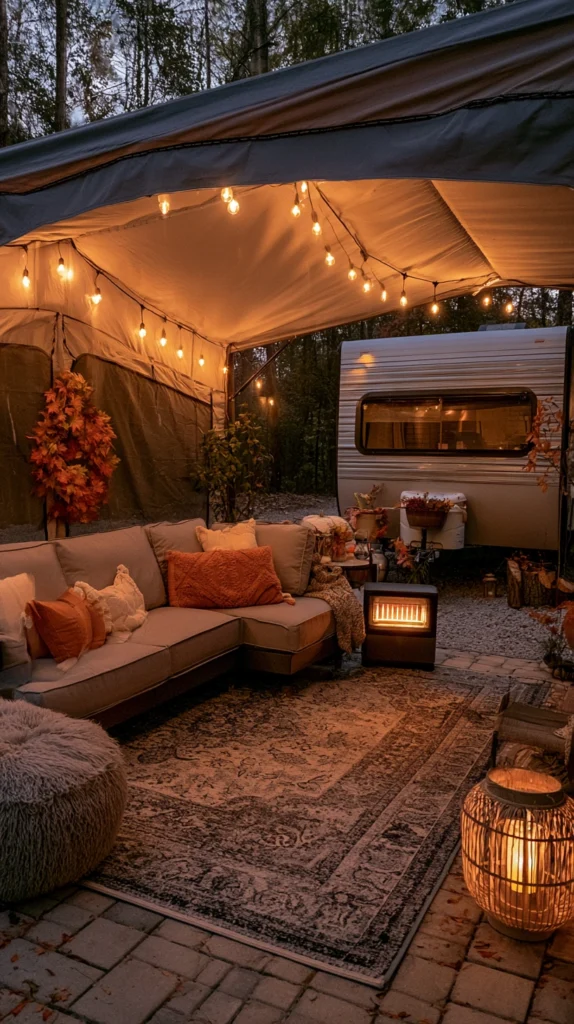
A compact, battery or propane-powered outdoor heater, positioned safely near the seating area for genuinely cold fall evenings.
Why actual warmth extends the season’s usable evening hours
The function-extends-the-season principle:
- Fall evenings at many campsites cool down considerably faster than the daytime temperature might suggest
- A small, properly rated outdoor heater allows the awning area to remain usable and comfortable well into the evening, rather than forcing everyone inside once the temperature drops
- This addition does more to extend actual enjoyable time in the space than any purely decorative choice could
Best small heater choices
- A tabletop propane heater rated specifically for outdoor use
- A battery-powered radiant heater for sites without easy propane access
Budget: $40-90 for a small outdoor-rated heater
My outdoor heater result
Adding a small tabletop propane heater to my awning seating area has meaningfully extended how late into a cool fall evening I can comfortably sit outside, rather than retreating into the camper the moment the temperature drops.
Outdoor Heater Tips
Maintain proper clearance from the awning fabric and any decor:
- Any heat source near an awning’s fabric or nearby decorations carries a fire risk if positioned too closely
- Following the manufacturer’s minimum clearance guidelines, and keeping decor items at a safe distance, is an essential safety step
9. A Wind-Resistant Bunting or Pennant Banner
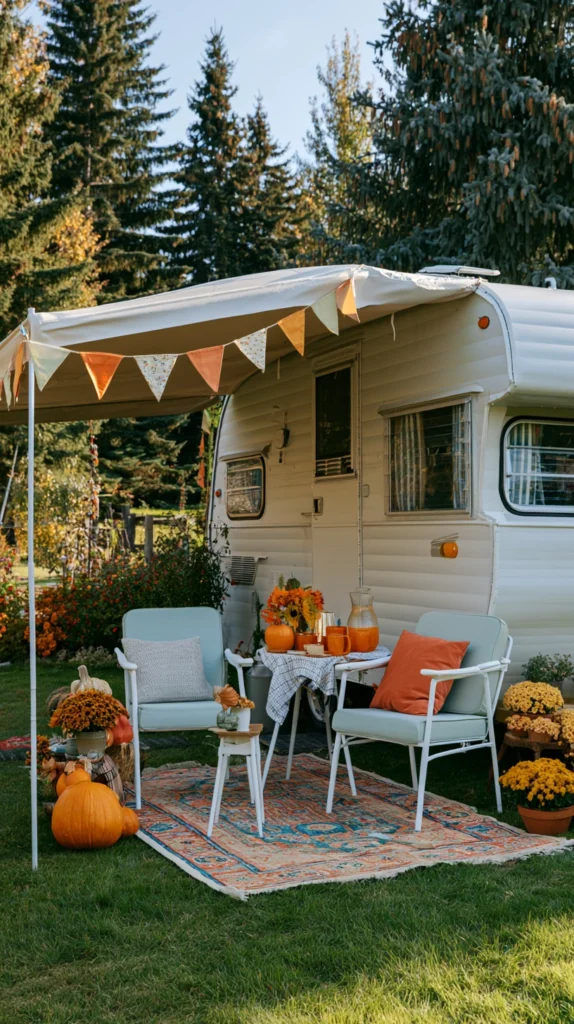
A small fabric bunting or pennant banner, secured firmly along the awning’s edge or support pole, in a fall color palette.
Why a banner needs different handling outdoors than indoors
The wind-exposure principle:
- A bunting banner used indoors, as in a camper’s interior decor, faces no wind exposure at all
- The same item used outdoors beneath an awning needs to be secured considerably more firmly, given regular campsite breezes
- Choosing a slightly heavier fabric and more secure attachment points addresses this difference directly
Best outdoor bunting choices
- A canvas or heavier cotton pennant banner, less prone to fluttering excessively than a lightweight fabric
- Reinforced grommets or ties at both ends for a more secure attachment
Budget: $15-30 for a quality outdoor-suited bunting banner
My bunting result
Securing a heavier canvas pennant banner along my awning’s edge, with reinforced ties at both ends, has held up through several breezy evenings without the fluttering or sagging I worried about before choosing a sturdier fabric.
Bunting Tips
Check and re-secure ties at the start of each trip:
- Repeated setup and teardown, plus travel vibration, can gradually loosen ties over multiple trips
- A quick check and retightening at the start of each outing keeps the banner secure throughout that trip
10. A Small Tabletop Fire Bowl for the Seating Area
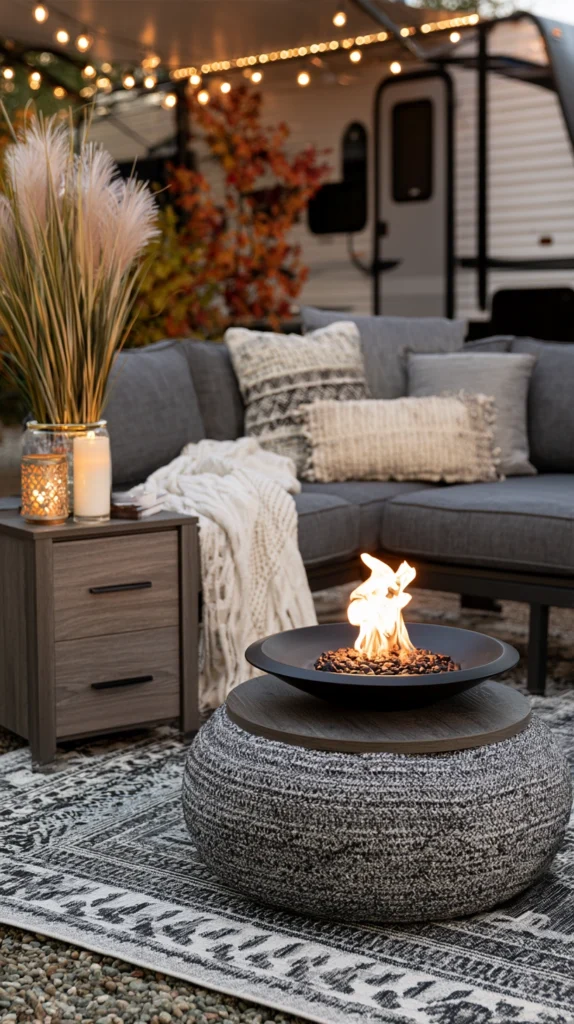
A compact tabletop fire bowl, using gel fuel or a small propane cartridge, placed safely on the folding side table for a contained flame feature.
Why a small flame feature suits an awning area better than a full fire pit
The scaled-flame principle:
- A full-sized campfire setup is not always appropriate or permitted at every campsite, depending on local fire restrictions
- A small, contained tabletop fire bowl provides much of the same flickering, gathering-point quality at a much smaller and often more permitted scale
- This addition also fits within the more compact footprint of an awning seating area, unlike a full fire ring
Best tabletop fire bowl choices
- A small concrete or metal bowl using gel fuel cans
- A compact propane-powered tabletop fire feature with an adjustable flame
Budget: $30-70 for a small tabletop fire bowl, plus ongoing fuel costs
My tabletop fire bowl result
Adding a small gel-fuel tabletop fire bowl to my folding side table gave the awning area a genuine flickering focal point on evenings when a full campfire was not practical or permitted, and the contained size made it considerably easier to manage safely.
Tabletop Fire Bowl Tips
Confirm current local fire restrictions before using any flame feature:
- Fire restrictions vary significantly by location and season, and can change with little notice during dry conditions
- Checking current campground or regional restrictions before using even a small contained flame feature is an essential first step every trip
11. A Set of Stackable Outdoor Storage Bins for Supplies
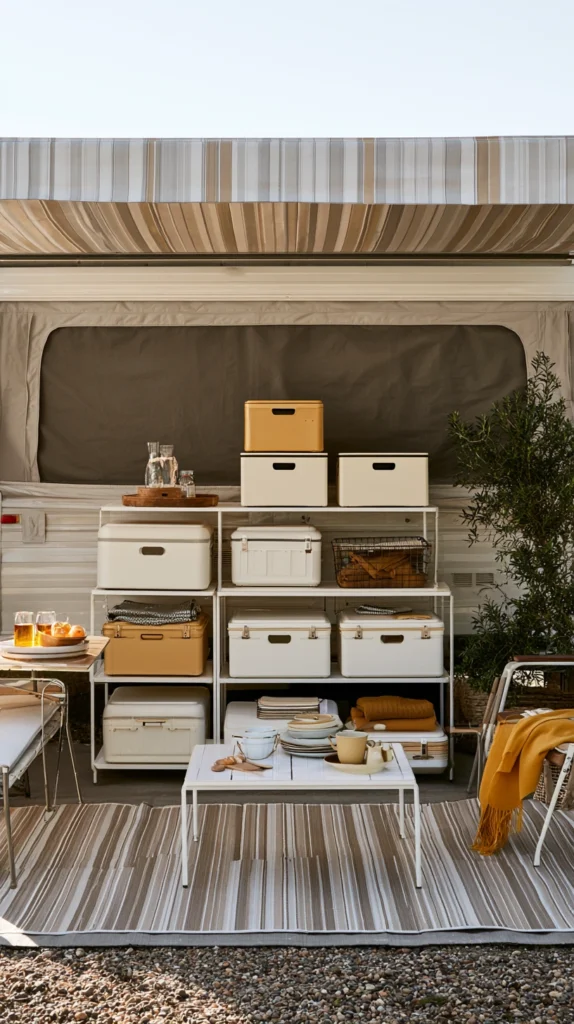
Weather-resistant stackable bins, kept beneath or beside the awning, holding outdoor supplies like firewood, citronella candles, or extra cushions.
Why visible, organized storage belongs in the decor conversation
The function-supports-atmosphere principle:
- A pile of loose supplies scattered around the seating area undercuts even the best lighting and seasonal styling
- Stackable, weather-resistant bins keep these items contained and out of the way, supporting rather than competing with the area’s overall look
- Choosing bins in a coordinating warm tone, rather than plain plastic, also extends the seasonal palette to a functional object
Best stackable bin choices
- Weather-resistant resin bins in a warm tan or rust tone
- Stackable wicker-look bins for a softer aesthetic alongside genuine durability
Budget: $30-60 for a set of two or three stackable outdoor bins
My storage bin result
Adding two stackable rust-toned resin bins beside my awning, one for firewood and one for extra cushions and citronella candles, kept supplies organized and out of the main seating area, letting the rest of the styling actually stand out.
Storage Bin Tips
Choose bins with secure, weighted lids:
- An unweighted lid can blow open or off entirely in windy campsite conditions
- A bin with a snug-fitting or latching lid keeps contents both dry and contained regardless of weather
12. A Small Wind Chime in a Natural Material
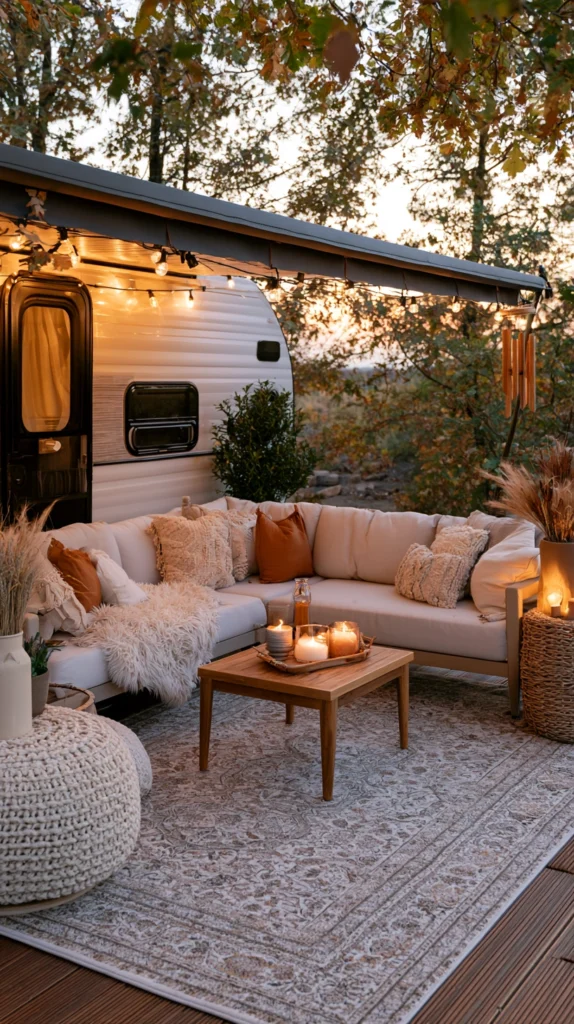
A small wind chime made from wood, bamboo, or metal in a warm tone, hung from the awning’s edge or a nearby tree branch.
Why a wind chime adds a sensory layer beyond visual decor alone
The sound-layer principle:
- Most awning decor addresses only what can be seen
- A wind chime introduces a gentle auditory element, adding to the overall atmosphere of the space in a way purely visual decor cannot
- A natural material specifically, rather than a brighter or more whimsical option, keeps the sound and look consistent with the fall, harvest-associated palette used elsewhere
Best wind chime choices
- A simple bamboo wind chime for a soft, low-pitched sound
- A small wood and metal combination chime for a slightly richer tonal layer
Budget: $12-25 for a small natural-material wind chime
My wind chime result
Hanging a small bamboo wind chime from my awning’s edge added a gentle, low sound to the space that genuinely enhances the relaxed feeling of sitting there in the evening, something none of the purely visual decor had contributed on its own.
Wind Chime Tips
Remove or secure the chime during travel and high wind:
- A wind chime left attached during driving, or during unusually strong campsite winds, risks damage or becoming a hazard
- Taking it down for travel and any forecasted high-wind conditions protects the item for continued use
13. A Fully Coordinated Outdoor Living Room Setup
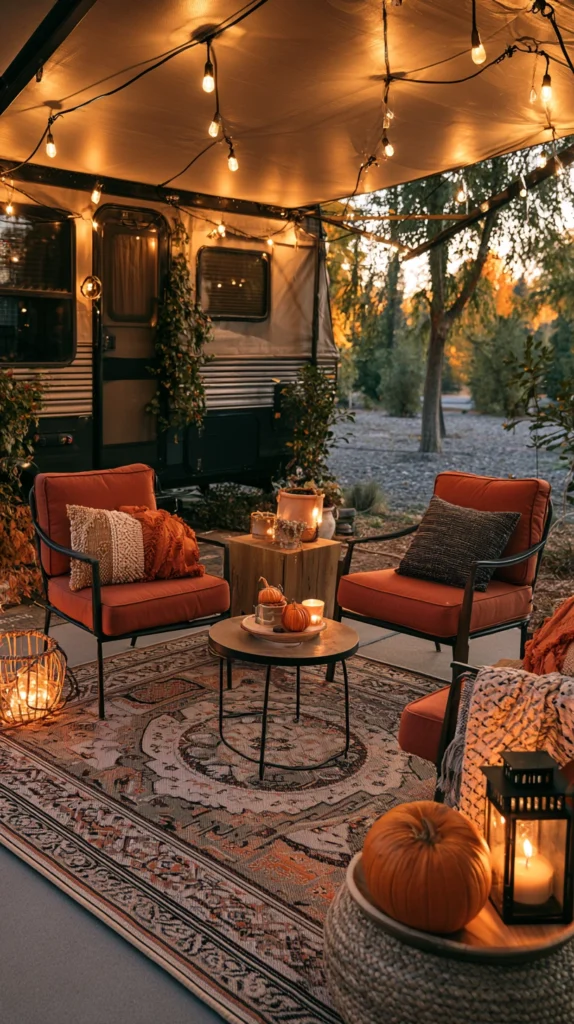
Combining an outdoor rug, warm string lights, cushioned chairs, a side table, and a seasonal centerpiece into one complete fall awning area transformation.
Why combining every element outperforms any single addition
The complete-outdoor-room philosophy:
- Several of the ideas on this list (a defined rug, warm lighting, comfortable seating, a functional table, a seasonal display) address different aspects of what makes any living space, indoor or outdoor, feel complete
- Relying on just one addition, however nice, leaves the rest of the space feeling exactly as unfinished as before
- This is the most complete and most genuinely transformative version of an awning area refresh on this list
How the combination works together
The outdoor rug (the spatial foundation):
- Defines the living area clearly, the same role a rug plays in any indoor room
Warm lighting layers (the atmosphere):
- String lights, a hanging lantern, and a tabletop fire feature together extend usable hours and set the evening mood
Comfortable, coordinated seating (the function):
- Cushioned chairs and a side table make the space genuinely usable for extended time, not just brief sitting
A seasonal centerpiece and doormat (the finishing detail):
- A gourd display and a patterned doormat tie the whole space to the actual season
Building the full coordinated setup
- Start with the outdoor rug to define the space’s footprint
- Add string lights and a hanging lantern for layered evening warmth
- Include cushioned chairs and a wood-finished side table for comfort and function
- Finish with a small gourd display and a patterned doormat at the entry steps
Budget: $200-450 for a fully coordinated outdoor living room setup, combining several of the ideas above
My fully coordinated result
Combining a reversible outdoor rug, warm globe string lights, rust-toned cushioned chairs, a bamboo side table, and a small pumpkin display turned my camper’s awning area from a patch of gravel with folding chairs into the spot everyone at the campsite gravitates toward once the sun starts to set.
Full Setup Tips
Pack and unpack the full setup as one coordinated kit:
- Keeping all the awning decor items together in one or two designated bins makes setup and teardown for each trip considerably faster
- This also reduces the chance of forgetting a piece of the coordinated look between trips
Choosing Your Awning Decor Approach
By campsite type:
- Sites with fire restrictions: tabletop fire bowl alternatives like the hanging lantern (idea 6) and string lights (idea 2)
- Sites with consistent outdoor power: standard electric string lights and a plug-in heater option
By commitment level:
- Lower commitment: gourd display (idea 5), wind chime (idea 12), doormat (idea 7)
- Full setup commitment: outdoor rug plus seating upgrade (ideas 1 and 3), fully coordinated setup (idea 13)
By budget level:
- Lower budget: gourd display (idea 5), doormat (idea 7), wind chime (idea 12)
- Moderate budget: outdoor rug (idea 1), string lights (idea 2), chair cushions (idea 3)
- Higher budget: tabletop fire bowl (idea 10), outdoor heater (idea 8), fully coordinated setup (idea 13)
The non-negotiable rules across every option:
Always:
- Check current local fire restrictions before using any flame feature, however small
- Secure lightweight or hanging items firmly against wind, more so than an equivalent indoor item would require
- Choose weather-resistant materials for anything left out for the duration of a trip
Never:
- Position a heater or flame feature too close to the awning fabric or any decor
- Leave a wind chime, banner, or lantern attached during travel
- Assume an indoor-rated decor item will hold up to outdoor moisture and wind without modification
Remember: a fall camper awning area depends on ground, light, seating, and seasonal touches all coming together, not on one decoration hung from a support pole, and the setups that actually get used and enjoyed are the ones built as a complete small outdoor room rather than a single decorative addition.