
15 Indoor Courtyard Ideas That Blur the Line Between Inside & Out
The indoor courtyard is one of the most ancient, most culturally universal, and most genuinely extraordinary spatial ideas in the entire history of human architecture. From the Roman atrium to the Moorish riad, from the Chinese siheyuan to the Spanish colonial patio, virtually every great building culture in human history has independently arrived at the same fundamental spatial insight.
that the most beautiful and most genuinely livable domestic space is one that brings the sky, the air, the rain, and the living world of plants and water into the protected interior of the home, creating a space that is simultaneously sheltered and open, simultaneously interior and exterior, simultaneously private and connected to the natural world in the most direct and most immediate way that architecture allows.
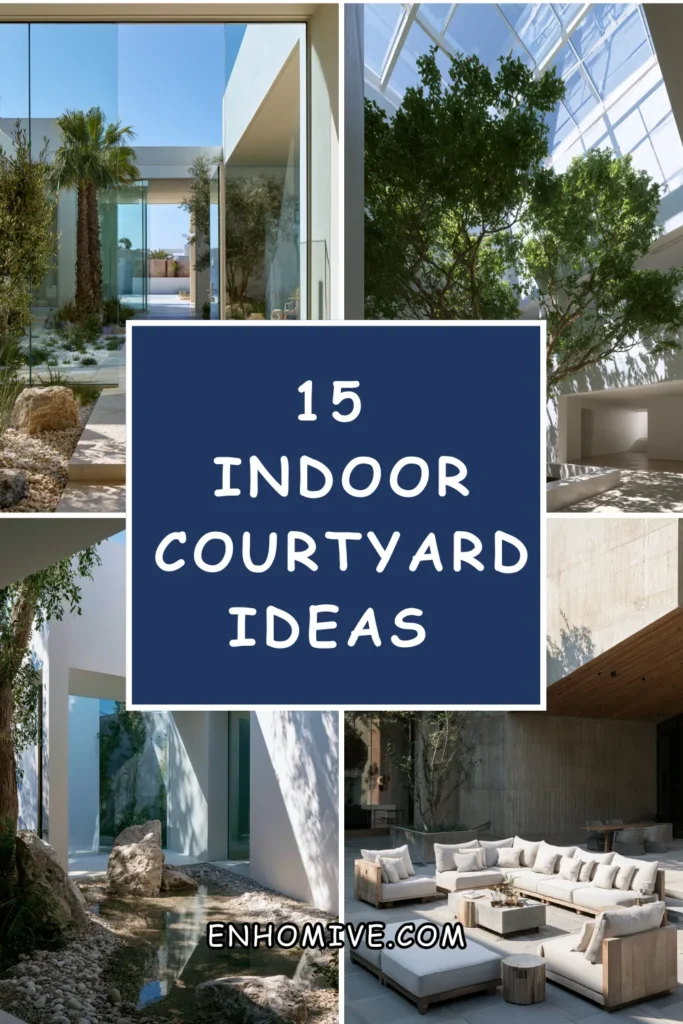
The contemporary indoor courtyard — brought into the modern home through the intelligent use of glass roofing, structural glazing, planted interior volumes, and the deliberate blurring of the material boundary between inside and outside .
Creates a domestic space of extraordinary atmospheric beauty, genuine biophilic richness, and the specific quality of luminous, plant-filled, sky-connected interior calm that no purely enclosed room can replicate. These fifteen ideas will help you bring the indoor courtyard into your home with genuine architectural ambition, genuine natural beauty, and the full transformative power of one of humanity’s oldest and most enduring spatial ideas.
1. Install a Glass Roof Over a Central Atrium
The glass roof is the single most architecturally transformative element available in any indoor courtyard design — the intervention that converts a standard interior room into a genuinely sky-connected, naturally illuminated, atmospherically extraordinary space of a fundamentally different quality from every other room in the home. A structural glass roof over a central atrium — whether a full flat glass ceiling, a pitched glass lantern, or a dramatic barrel-vaulted glass structure.
Floods the space below with natural daylight of extraordinary quality and genuine luminous beauty throughout the full day, creating an interior atmosphere that changes character with the weather, the season, and the hour in the same dynamic and genuinely alive way that the outdoor garden does. Specify thermally broken glazing frames and solar control glass for the most comfortable and most energy-efficient result.
2. Extend the Same Flooring Material Inside and Out
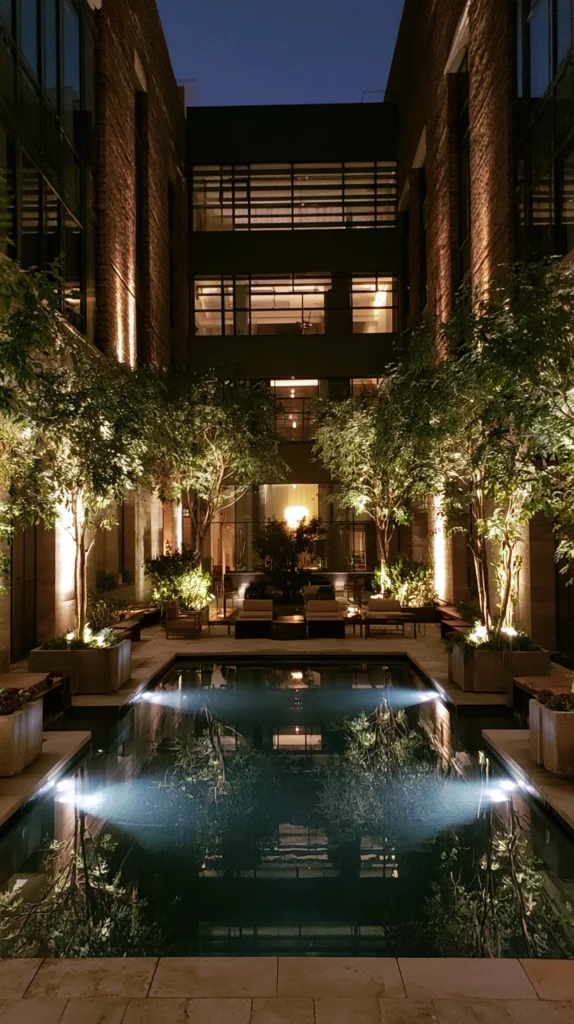
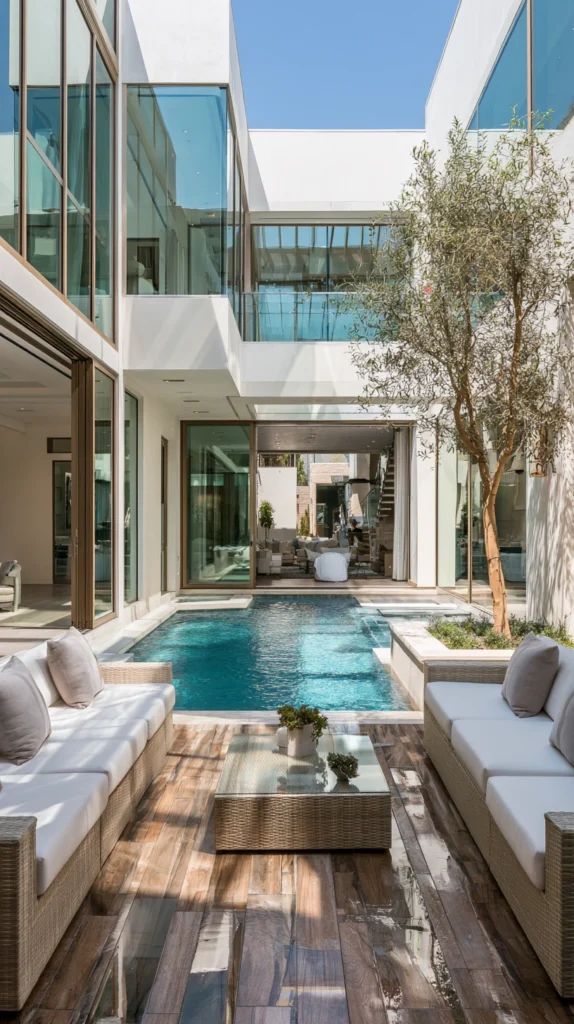
The most powerful and most immediately effective technique for blurring the material boundary between the indoor courtyard and the exterior garden is the seamless continuation of a single flooring material across both the interior and exterior surfaces — the same large-format stone tile, the same textured concrete, or the same warm timber decking running without interruption from the interior living space across the glass threshold and into the outdoor courtyard beyond.
This material continuity creates a visual and spatial connection of extraordinary power — the eye reads the floor as a single continuous surface and the brain reads the two spaces as a single unified environment rather than two separate rooms divided by a glazed wall. Specify the flooring material in a slip-resistant finish for the exterior section and ensure the drainage falls away from the interior for a genuinely seamless indoor-outdoor connection.
3. Plant a Full Canopy Tree at the Center
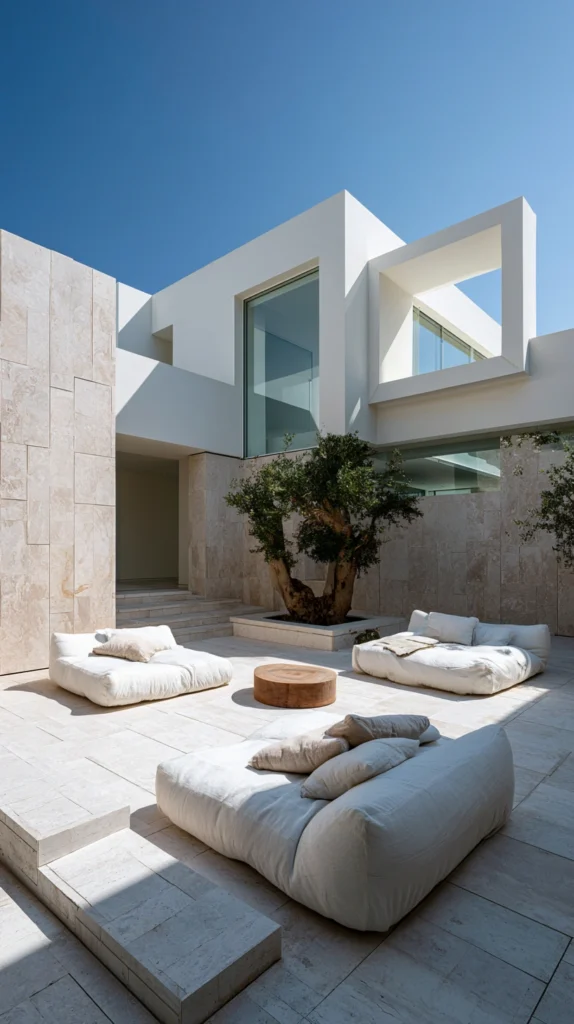
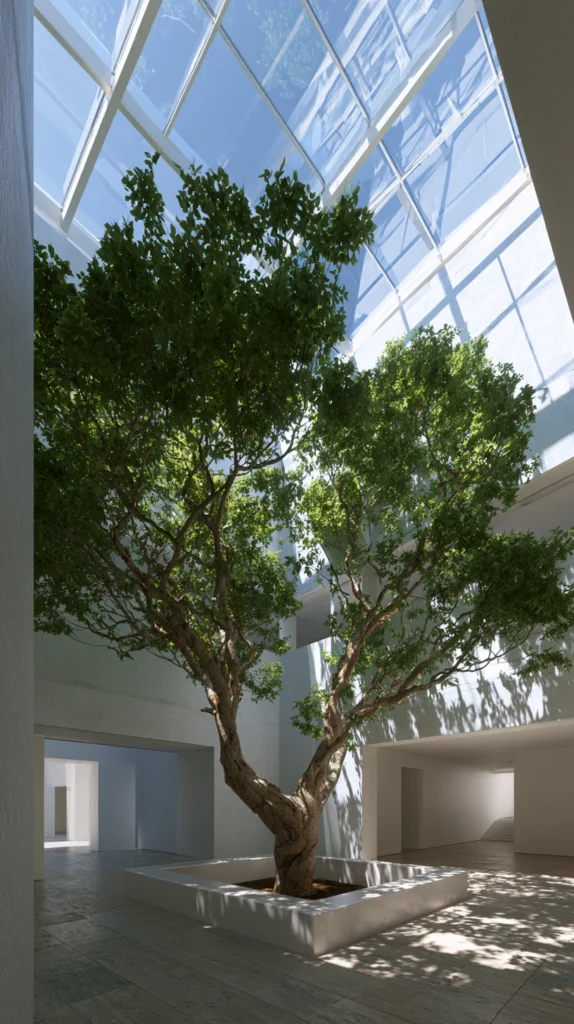
A single generously scaled tree planted at the center of the indoor courtyard — its canopy spreading beneath the glass roof, its roots contained in a deep planted bed at floor level, its trunk rising through the full height of the space — creates an indoor courtyard of extraordinary biophilic presence and genuine spatial drama that no other planted element provides with the same architectural authority or the same deeply moving quality of a living, growing, seasonally changing organism inhabiting the heart of the home.
Choose a species suited to the light levels available beneath the glass roof — olive trees, ficus varieties, and certain palms all thrive in well-glazed indoor courtyard conditions — and allow it the years it needs to grow into the space with the full, generous, architecturally commanding presence that makes the indoor courtyard tree so extraordinary.
4. Use Retractable or Sliding Glass Walls
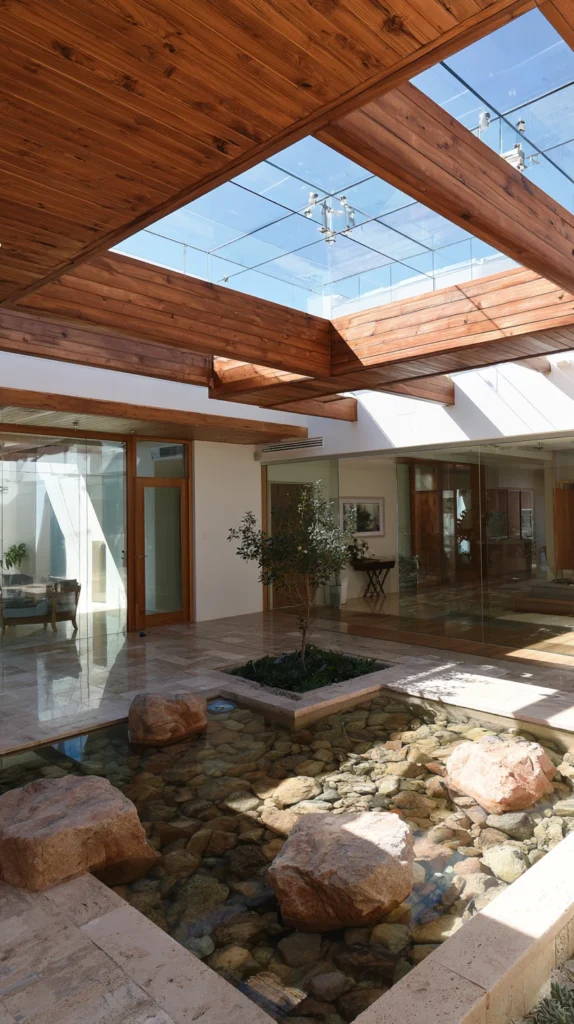
The retractable or sliding glass wall system that opens the indoor courtyard completely to the exterior garden during warm weather and closes it completely against rain and cold during the cooler months creates the most functionally flexible and most genuinely transformative indoor-outdoor connection available in any residential design. When the glass walls are fully open, the indoor courtyard and the exterior garden become a single continuous space of extraordinary spatial generosity.
The interior volume of the home extending outward into the garden without boundary or interruption. When the walls are closed, the courtyard retains its connection to the exterior through the glass while maintaining the thermal comfort, the acoustic calm, and the weather protection of a fully enclosed interior room.
5. Create a Planted Green Wall on One Interior Face
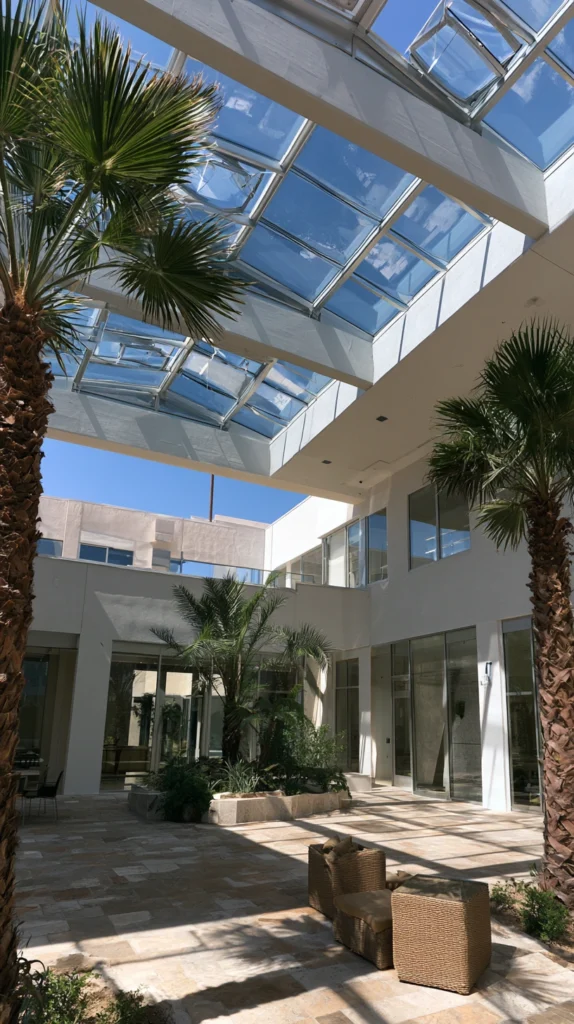
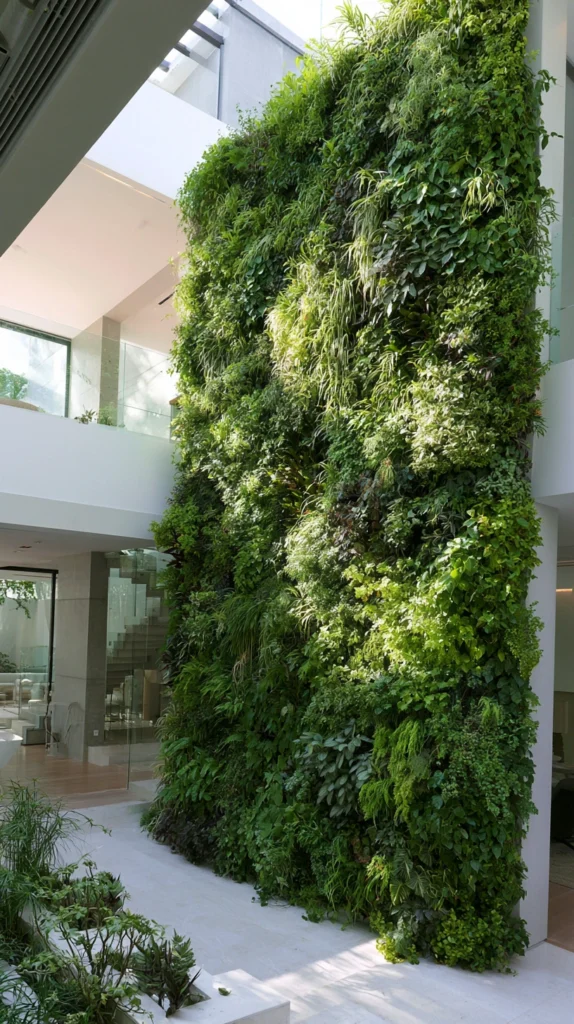
A full-height planted green wall — a living wall system of climbing, trailing, and rosette-forming plants covering an entire interior wall surface in a dense, richly textured, continuously growing tapestry of green — creates an indoor courtyard of extraordinary biophilic richness and genuine natural beauty that transforms the boundary between architecture and landscape into something genuinely alive, genuinely complex, and genuinely extraordinary.
The planted green wall in the indoor courtyard improves air quality, moderates humidity, absorbs sound, and creates a visual experience of such lush, enveloping natural beauty that the room it occupies feels fundamentally different in character from any room without it — closer to a garden than an interior, closer to a forest clearing than a domestic space.
6. Introduce a Reflecting Pool or Water Feature
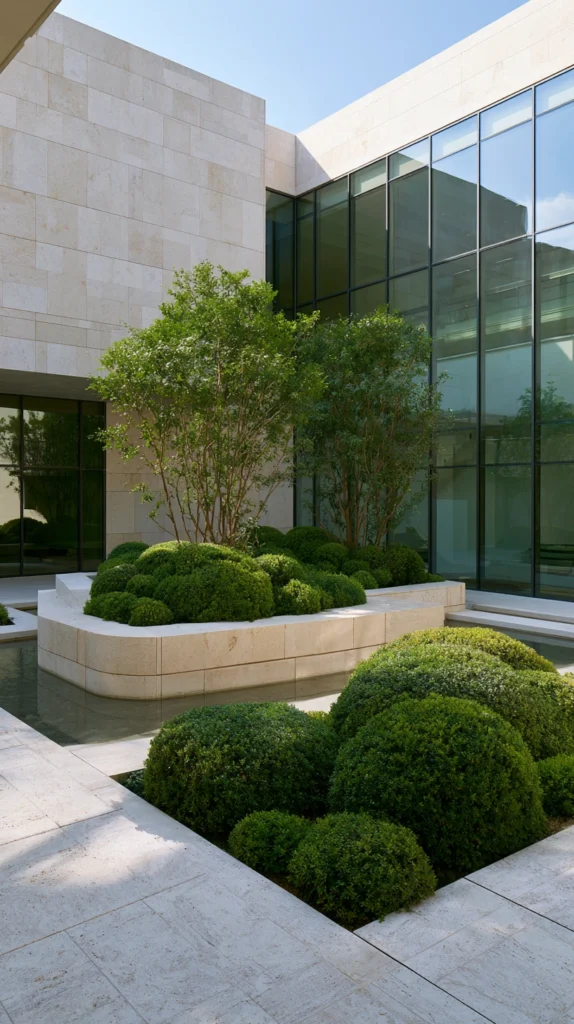
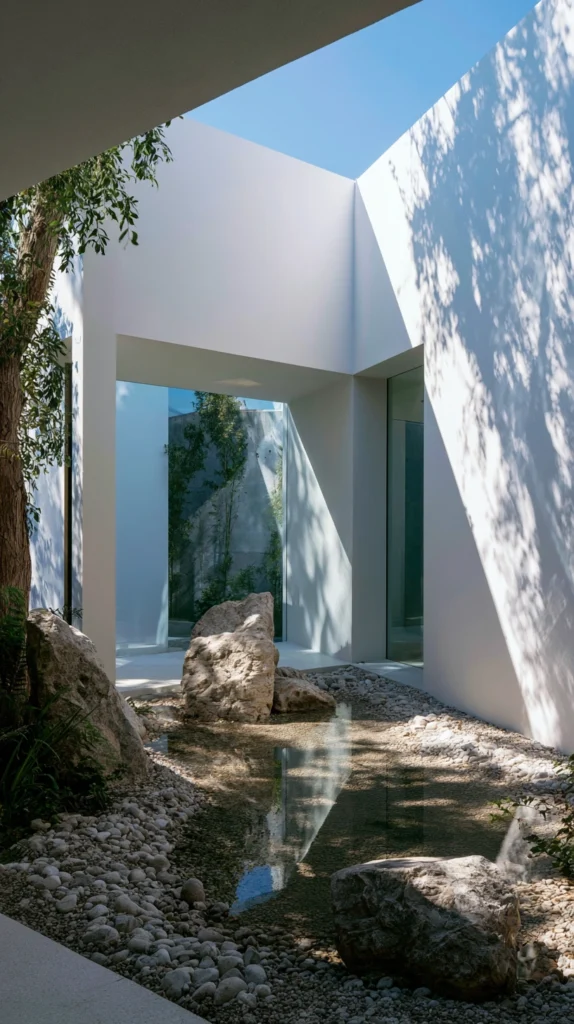
Water in the indoor courtyard — a shallow reflecting pool set flush with the floor surface, a simple channel of moving water running along one wall, or a more elaborate fountain feature at the center of the space — creates an acoustic, visual, and atmospheric contribution of extraordinary sensory richness that transforms the indoor courtyard from a beautifully planted interior space into a fully sensory environment of genuine meditative beauty and profound daily restorative power.
The sound of moving water in an enclosed courtyard creates an acoustic environment of remarkable calm — softening exterior noise, creating a private sound world of genuine natural beauty, and producing the specific quality of auditory peace that human beings respond to with immediate and instinctive pleasure.
7. Design Seamless Threshold Details
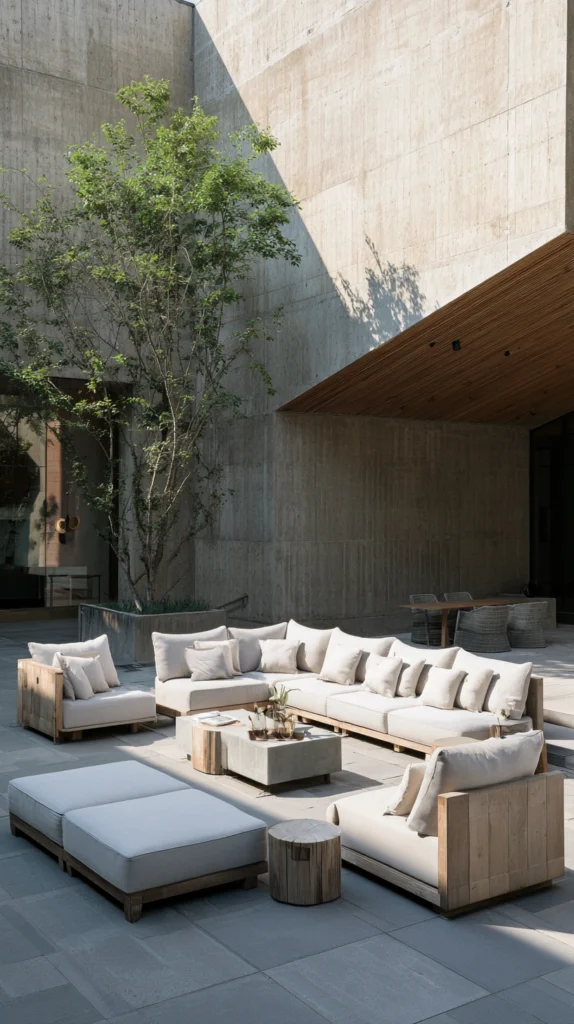
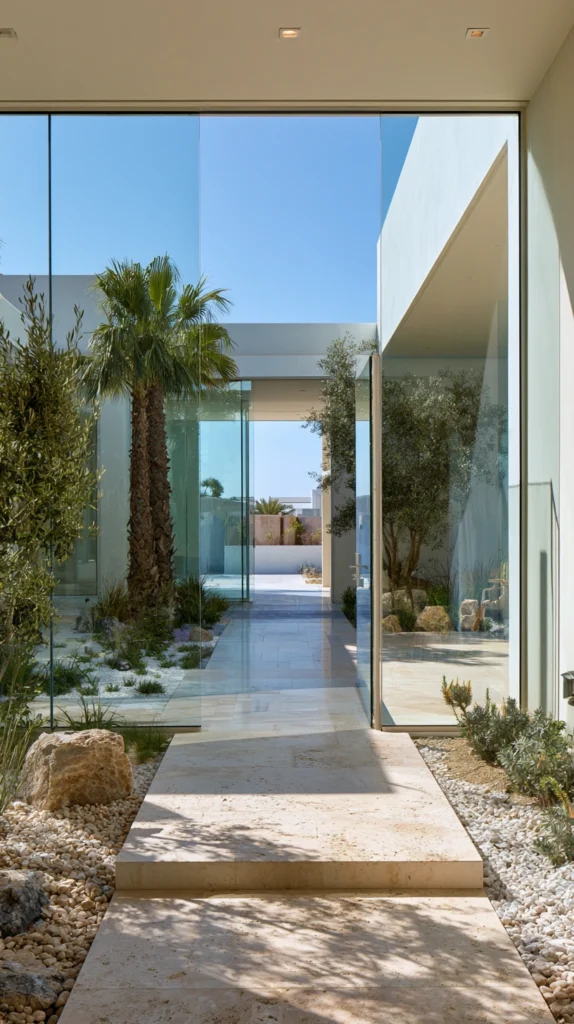
The physical threshold between the indoor courtyard and the exterior garden — the junction between the interior flooring and the exterior surface, the point at which the glazed wall meets the floor plane — should be designed with the most meticulous attention to material continuity, height consistency, and visual seamlessness that the construction budget and the structural constraints of the project allow.
A threshold that requires a step, that involves a visible change of flooring material, or that creates a visible frame of structural material between the interior and exterior surfaces breaks the spatial and visual continuity of the indoor-outdoor connection with a physical interruption of considerable perceptual significance. The truly seamless threshold — level, continuous, materially unified — creates a spatial connection of genuine architectural elegance and profound experiential quality.
8. Use Pergola Structures to Create Transition Zones
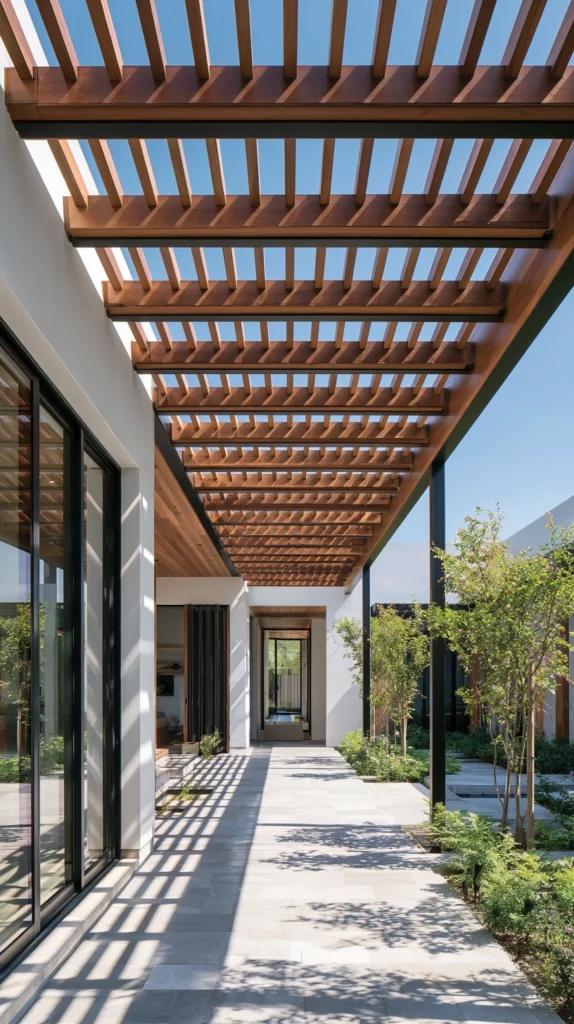
A pergola structure — a partially covered, partially open overhead framework of timber or steel beams — positioned between the fully enclosed indoor courtyard and the fully open exterior garden creates a transitional zone of extraordinary atmospheric quality and genuine spatial interest that neither fully interior nor fully exterior space can provide independently.
The pergola zone, dappled with the shifting light and shadow of sun through its overhead structure, hung with climbing plants that soften its geometry with organic growth, and furnished with comfortable outdoor seating that encourages lingering in this most beautiful and most climatically generous of spaces, creates the most genuinely blur-inducing indoor-outdoor threshold available in any residential design.
9. Furnish with Weather-Resistant Natural Materials
The furniture of the indoor courtyard should be specified in materials of genuine weather resistance and genuine natural beauty — teak, eucalyptus, powder-coated steel, all-weather rattan, and concrete.
That can remain in the space through all weather conditions without damage, without the constant movement between inside and outside storage that conventional indoor furniture demands, and without the visual incongruity of obviously indoor pieces placed in an environment of genuine outdoor character.
Furniture that belongs in the space through all seasons creates an indoor courtyard of genuine settled, inhabited permanence — a room that feels continuously ready for occupation rather than seasonally assembled and dismantled.
10. Plant in Large, Generous Volumes
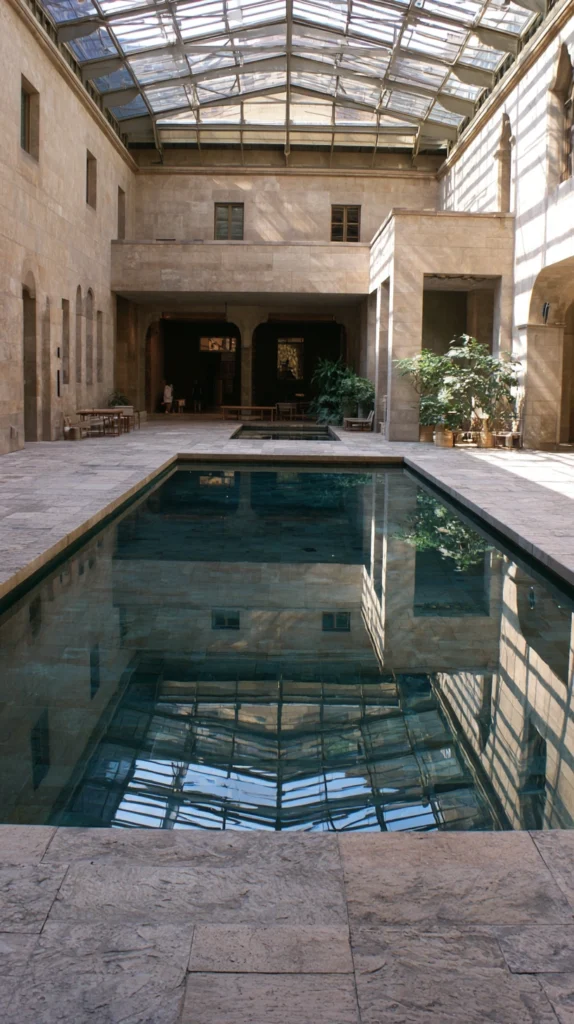
The planting of the indoor courtyard should be specified and executed with genuine generosity of scale — large planted beds rather than small pots, trees rather than shrubs, dense plantings rather than sparse individual specimens.
For the simple and irrefutable reason that the most beautiful and most genuinely atmospheric indoor courtyard is the one where the plants feel genuinely at home, genuinely at scale, and genuinely in control of the space rather than decoratively positioned within it.
The indoor courtyard where the plants are small, tentative, and clearly subservient to the architecture around them feels like a room with plants in it. The indoor courtyard where the plants are large, confident, and architecturally commanding feels like a garden with a roof over it — and this distinction is everything.
11. Incorporate Natural Ventilation Design
The indoor courtyard that is designed from the outset with genuine natural ventilation — operable roof lights at the highest point of the glass structure, operable panels in the glazed walls at low level, and the careful orientation of the courtyard volume to capture prevailing breezes — creates a space of genuine thermal comfort and genuine connection to the outdoor air that mechanically ventilated alternatives cannot replicate with the same quality of fresh, moving, genuinely natural air.
The stack effect ventilation created by low-level inlets and high-level outlets in a well-designed glass-roofed courtyard produces a continuous, gentle movement of fresh air through the space that makes the interior feel genuinely alive and genuinely connected to the outdoor environment in the most fundamental physical sense.
12. Use Warm Timber on the Ceiling Plane
The ceiling of the indoor courtyard — the underside of the glass roof structure, the soffits of the surrounding building that frame the glazed opening — finished in warm, naturally grained timber creates a visual warmth and genuine organic material beauty in the overhead plane of the space that the raw steel, painted plaster, or exposed concrete alternatives cannot provide with the same sensory generosity.
Warm timber above, natural stone below, and living plants throughout creates a material palette of extraordinary organic coherence and genuine natural beauty — three materials that belong together in the landscape and that create, in the indoor courtyard, the specific quality of a sheltered natural environment of profound and lasting beauty.
13. Create Day Beds and Reclining Seating
The indoor courtyard deserves seating of the most generous, most physically committed, and most deeply comfortable kind — not the upright dining chairs of a purely functional outdoor space but the deeply cushioned day beds, the generously proportioned reclining loungers, and the hammocks strung between structural columns that invite the kind of long, horizontal, genuinely restful occupation that the extraordinary quality of the space — the light, the plants, the water, the sky — so powerfully rewards.
The person reclining on a day bed in a beautifully designed indoor courtyard, looking up through the glass roof at the sky above, surrounded by the sound of water and the presence of living plants, is experiencing one of the most genuinely restorative domestic moments available in any home interior.
14. Design for Night as Deliberately as for Day
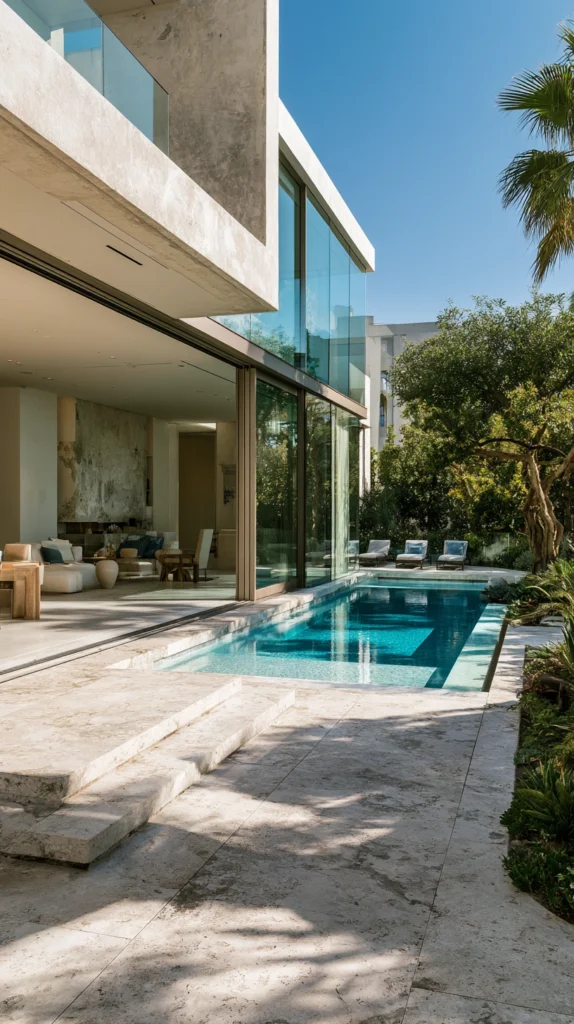
The indoor courtyard at night — lit with warm, carefully positioned garden lighting that illuminates the plants from below, reflects in the water feature, and creates pools of warm amber light within the darker volume of the glass-roofed space — is an entirely different and entirely extraordinary spatial experience from the same courtyard in daylight, and it deserves the same quality of deliberate, considered, genuinely ambitious design attention.
Uplighting on the central tree creates a dramatic, theatrical canopy of illuminated leaves against the dark glass roof above. Underwater lighting in the reflecting pool creates a shimmering, reflected light of great atmospheric beauty. Warm pendant lights hung within the pergola zone create an intimate, lantern-lit quality of genuine evening magic.
15. Let the Seasons Inhabit the Space
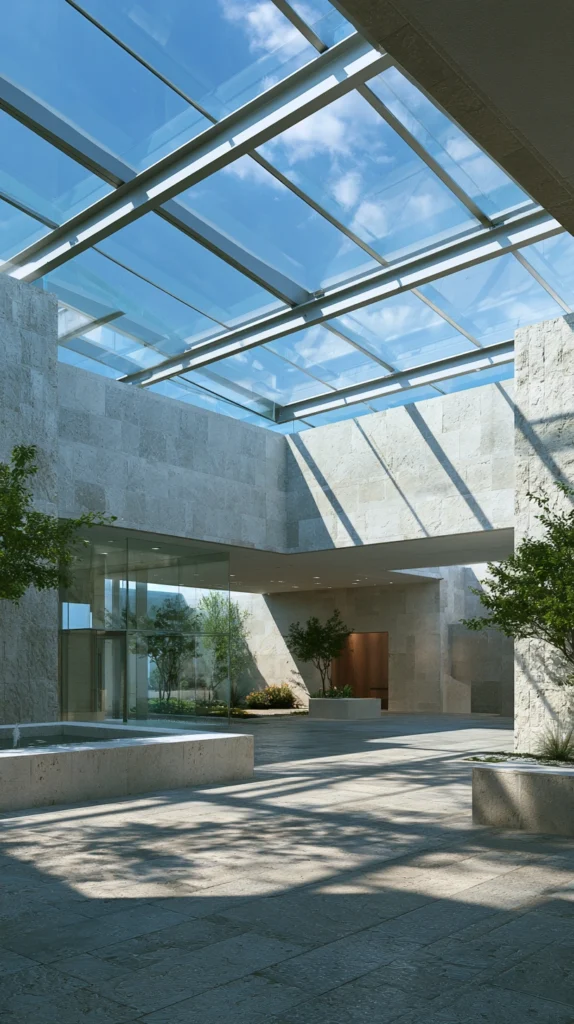
The final and most essential principle of the genuinely extraordinary indoor courtyard is one of deliberate openness to the seasonal changes of the natural world — the rain that falls on the glass roof and creates its particular percussion of natural sound, the winter light that enters at a lower angle and creates longer, more dramatic shadows across the stone floor, the spring growth that transforms the planted tree from its winter skeleton into its summer fullness, the autumn color that briefly makes the indoor courtyard as spectacular as any outdoor garden.
The indoor courtyard that is designed to welcome the seasons rather than resist them — that celebrates the rain, that honors the winter light, that allows the full seasonal drama of the living plants within it to unfold without interference — is the indoor courtyard that justifies every architectural ambition, every construction complexity, and every moment of design effort that brought it into being.