
14 Small Summer Backyard Ideas That Make a Big Impact
There is a particular stubbornness required to make something good from a small outdoor space. The instinct — reasonable but wrong — is to scale everything down: smaller furniture, fewer plants, more modest ambitions. The result of this instinct is a backyard that looks like a large backyard that has been reduced rather than a small backyard that has been designed, and the distinction matters enormously because one reads as diminished and the other reads as complete.
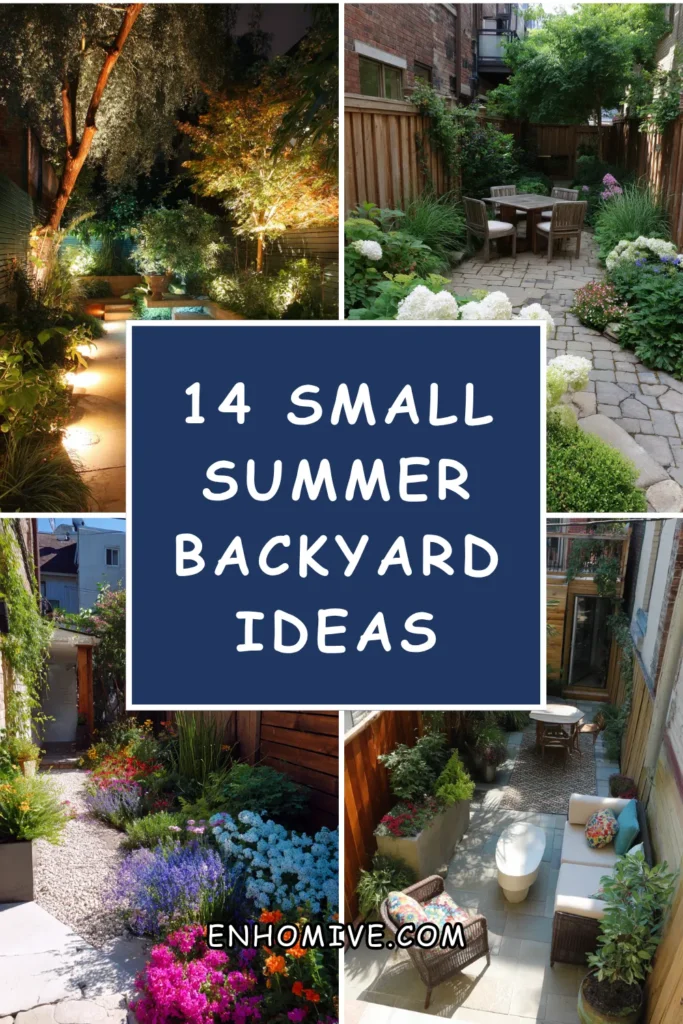
The small backyard that makes a big impact does not shrink. It edits. It chooses one thing and does it properly rather than attempting several things at a reduced scale. It uses the boundaries as walls rather than apologising for them as limitations. It treats the 20 square metres it has with the same seriousness that a landscape architect would treat 200, and it produces a result that is not an approximation of a larger garden but a genuinely finished version of itself.
Each idea below is an approach to a small backyard that maximises impact rather than minimises ambition. Each includes what you will need, what it will cost, and a practical tip to make the transformation as complete as the idea deserves.
1. The Statement Paving
Budget: $100 – $600
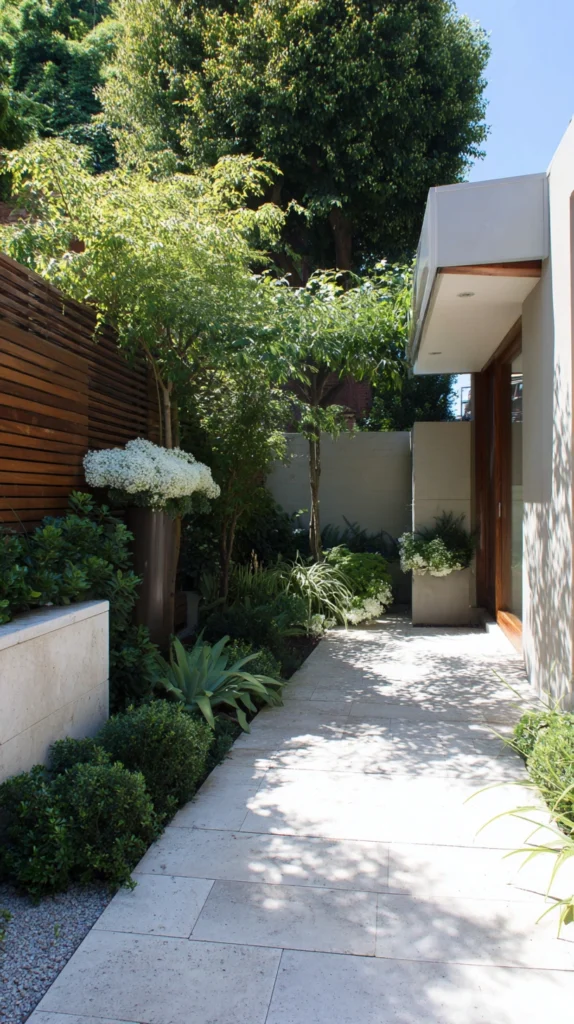
Choose one paving material — large-format natural stone, warm terracotta tile, herringbone brick, geometric concrete tile — and use it consistently across the entire floor surface of the small backyard without breaking it up into zones with different materials. A small outdoor space paved in a single consistent material reads as a designed floor; the same space in three different surface materials reads as three different projects that ran out of money before connecting.
Large-format porcelain tiles of 60 by 60 centimetres cost $4–$10 each. Natural sandstone or limestone in a similar size runs $5–$12 each. Terracotta pavers cost $3–$8 each. Lay the largest format tile the space will accommodate rather than a modest size — a large tile in a small space makes the space feel larger by reducing the number of grout lines the eye crosses when reading the floor. A small tile in a small space makes the floor look busy and the space feel smaller.
Style tip: Lay the paving on a diagonal rather than parallel to the fence lines. A diagonal pattern draws the eye toward the corners of the space — the furthest points — rather than across its narrow width, and the visual trick of the diagonal adds an apparent 15–20 percent to the perceived size of the floor without changing any actual dimension.
2. The Full-Boundary Planting
Budget: $60 – $300
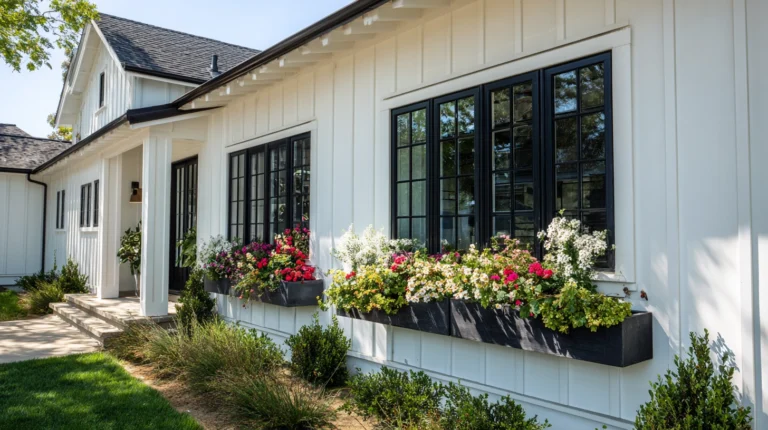
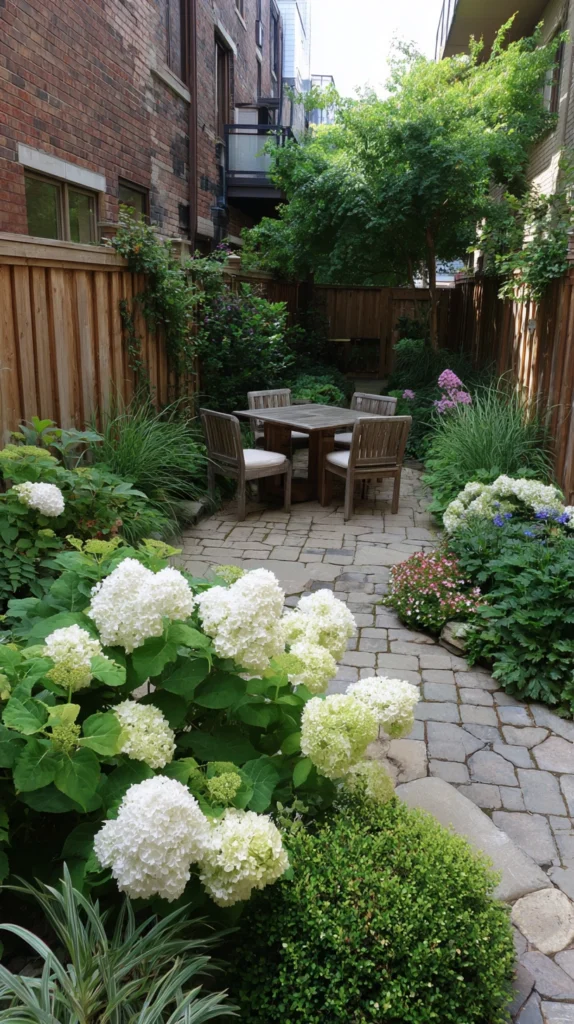
Plant the full perimeter of the small backyard — every fence, every wall, every boundary — rather than leaving bare surfaces between planted sections. A small backyard where every boundary is softened by planting does not feel enclosed; it feels like a room with living walls, and the distinction between those two experiences is the distinction between a small outdoor space and a small outdoor room.
Climbing plants for the boundaries cost $10–$30 each. Tall background shrubs run $15–$40 each. A continuous border of mixed planting along all boundaries costs $80–$250 in plants for a standard small backyard. Do not leave gaps in the boundary planting for a tidy path along the fence line — the narrow strip of bare soil between the planting and the fence is the detail that makes a planted boundary look like a planted border rather than a planted room. Plant to the fence, not near it.
Style tip: Plant the boundary in three layers — a tall climber against the fence itself, a medium shrub in front of it, and a low ground-covering plant at the front edge of the border — rather than a single row of plants at one height. The three-layer planting creates the visual depth that makes a small garden boundary look like a garden rather than a row of plants along a fence.
3. The Focal Point Installation
Budget: $30 – $300
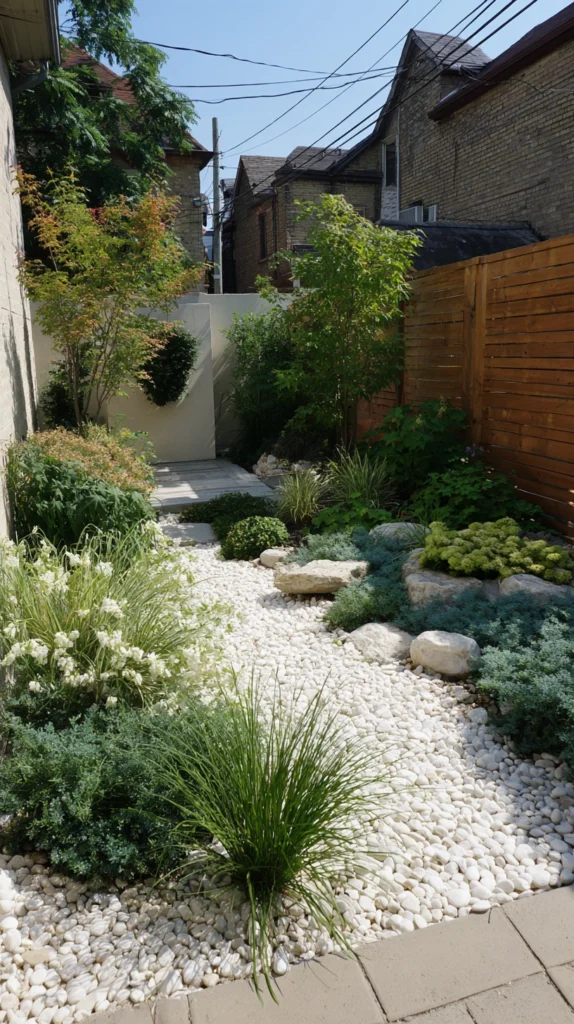
Install a single strong focal point at the far end of the backyard — the point furthest from the house — and let everything else in the space be arranged in relation to it. A focal point in a small garden does two things simultaneously: it gives the eye a destination and it makes the journey to that destination feel longer than the physical distance. A garden with a focal point always feels larger than a garden without one, regardless of their actual dimensions.
A large ceramic pot planted with an architectural specimen costs $60–$150. A simple garden sculpture runs $30–$150. A painted arch or an obelisk costs $25–$100. A water feature of any scale runs $30–$200. The focal point needs to be strong enough to command attention from the furthest seating position — which in a small backyard may only be 5 or 6 metres — and it needs to be positioned slightly off-centre in the back boundary rather than at its exact midpoint. A centred focal point is formal and static; a slightly off-centre one creates movement.
Style tip: Light the focal point from below with a single uplight ($8–$20) so it remains visible and commanding after dark. A focal point that disappears at sunset is a focal point for half the day; one that is uplighted becomes the most dramatic element of the garden in the hours when the garden is most atmospherically lit and most likely to be seen from inside the house through the back door.
4. The Vertical Garden Wall
Budget: $40 – $200
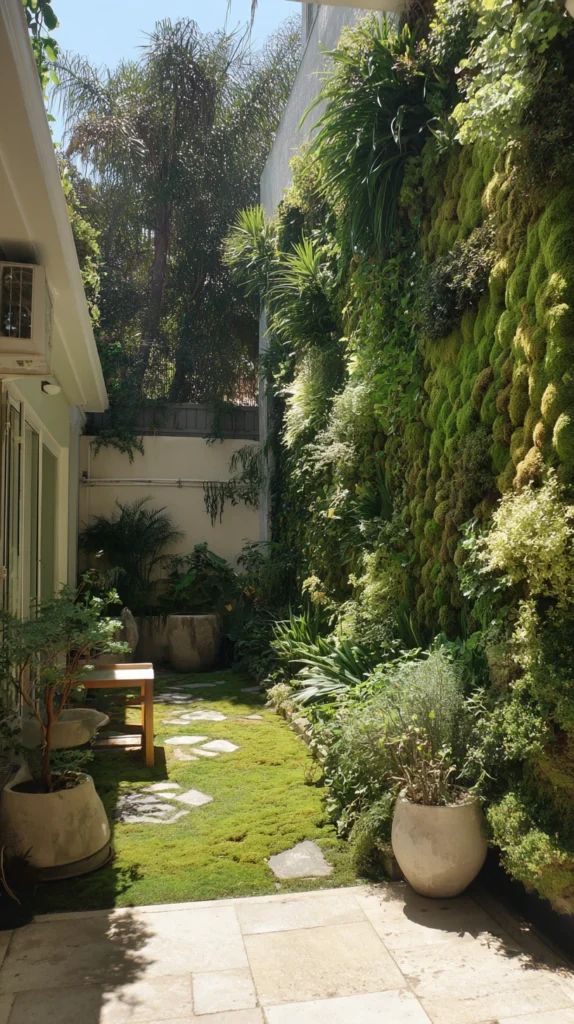
Claim the most visible wall or fence panel of the small backyard as a vertical garden — installing a pocket planter system, a modular wall planter, or a combination of brackets at different heights — and the garden gains an entire additional growing surface without consuming a single centimetre of floor space. In a small backyard where the floor is already fully occupied, the vertical surface is the expansion that the ground cannot provide.
A pocket felt planter system costs $25–$70. Modular wall planters run $40–$150 for a section that covers a standard fence panel. Individual wall-mounted pot brackets cost $3–$8 each. The vertical garden wall works best on the boundary most visible from the primary seating position — the wall you look at rather than the wall behind you — because a vertical garden on the wall you look at is a living artwork rather than a boundary treatment.
Style tip: Mix plant types on the vertical garden wall — trailing plants that fall downward from the upper pockets, upright herbs or flowers in the middle, and compact ground-covering plants at the lowest level — rather than planting the same species throughout. A vertical garden of one plant species looks like a product demonstration; one with varied plants at different levels looks like a garden that grew there.
5. The Outdoor Mirror Installation
Budget: $30 – $150
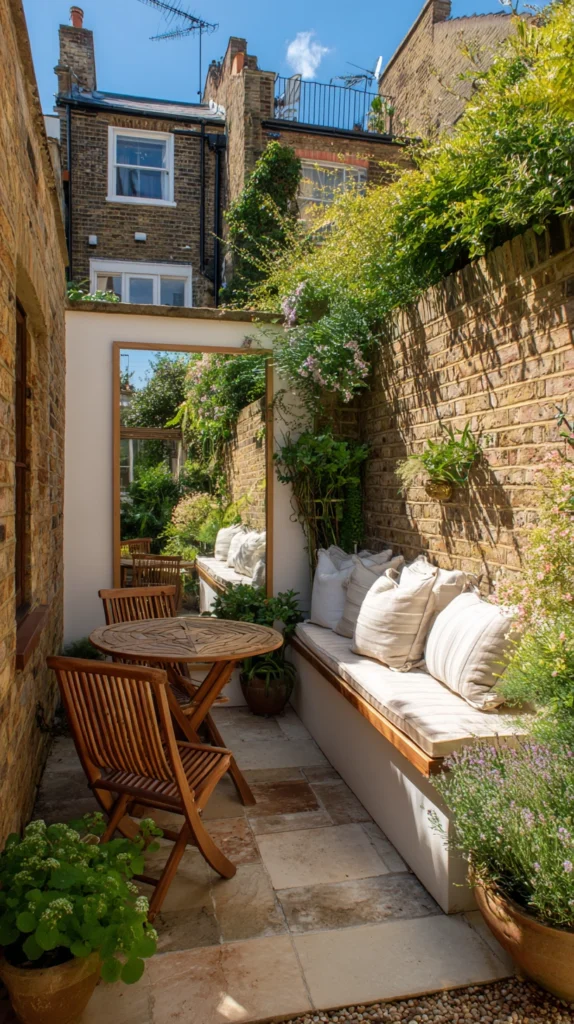
Fix a large weatherproof mirror to the back wall or fence of the small backyard — framed in a style that suits the garden, positioned to reflect the sky or the planting rather than another fence — and the garden immediately appears to contain twice as much space as it actually does. The mirror is the oldest small-space trick in garden design and it remains the most reliably effective single purchase available for expanding the perceived size of an outdoor space.
A purpose-built outdoor mirror with a weatherproof frame costs $40–$150. An interior mirror sealed with outdoor varnish and used on a sheltered wall costs $20–$80. Position the mirror so it reflects the most interesting view the garden offers — ideally the planting, the sky, or a focal point seen from a new angle — rather than reflecting the house wall or the seating area, which doubles the domestic rather than the garden.
Style tip: Position plants in front of the mirror so that what is reflected is a view through plants to more planting rather than a clear reflection of the space. A mirror reflecting empty space doubles the empty space; one reflecting foliage with more foliage behind it creates the illusion of a garden that continues beyond the boundary — which is the specific illusion that makes a small garden feel genuinely larger.
6. The Single Seating Zone
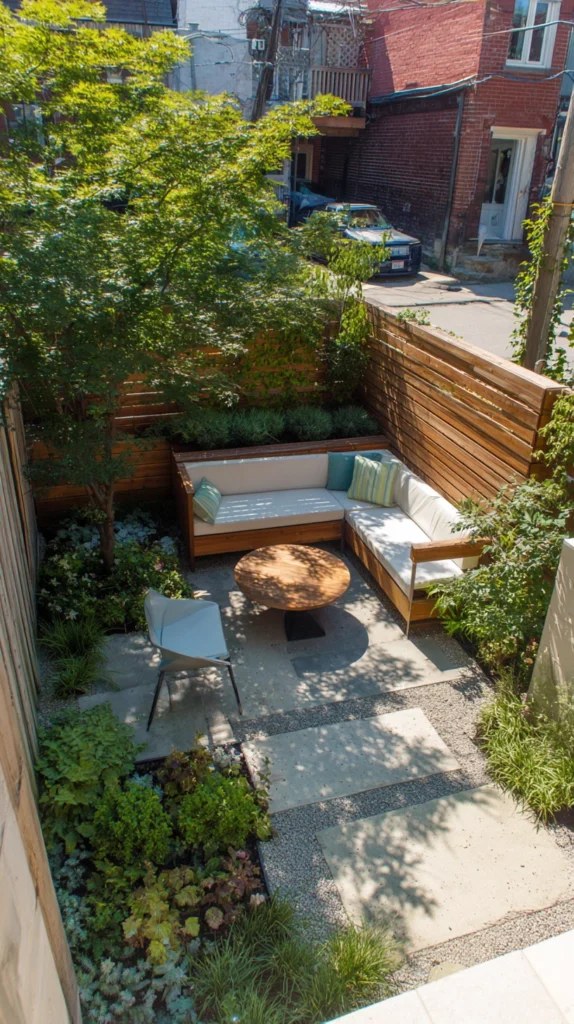
Budget: $80 – $400
Define one seating zone in the small backyard and furnish it completely — a rug, a sofa or chair, a side table, shade above, lighting for the evening — rather than distributing partial furnishing across multiple positions. A small backyard with one properly furnished seating zone reads as a garden with a room in it; the same backyard with several partially furnished positions reads as a garden that hasn’t decided where to sit.
An outdoor sofa costs $150–$400. A single quality outdoor armchair runs $80–$200. An outdoor rug of a size that fits all furniture legs costs $40–$120. A side table runs $25–$60. A shade umbrella or sail costs $50–$200. The complete single zone costs more than a partial multiple-zone approach but produces a result that is categorically different in quality — the complete zone reads as designed, the partial zones read as decorated.
Style tip: Position the seating zone so it faces the focal point and the boundary planting rather than facing the house. A seating area that faces the garden makes the garden feel like something to be in and something to look at simultaneously; one that faces the house makes the garden feel like an extension of the kitchen rather than a destination in its own right.
7. The Pergola or Canopy Frame
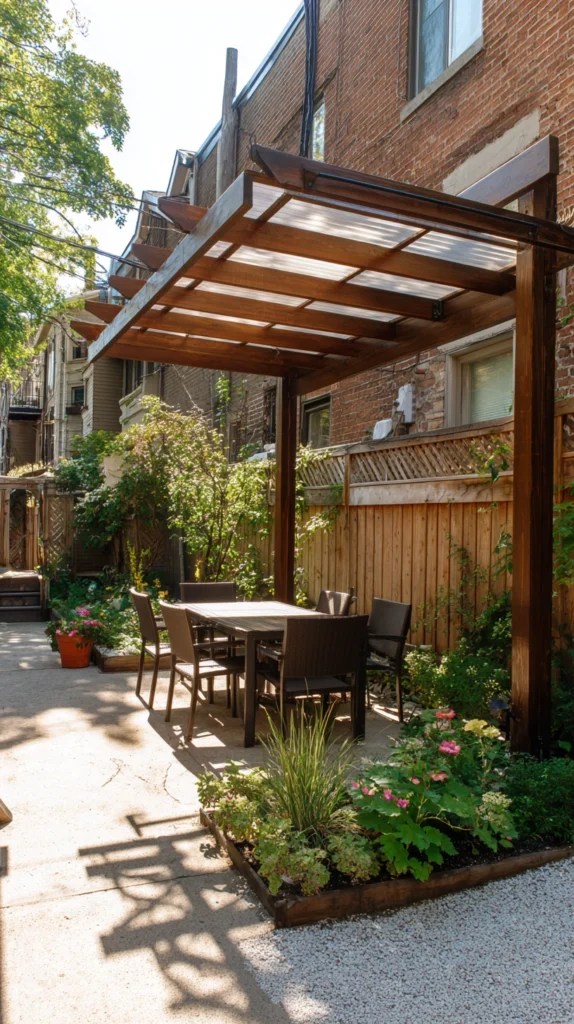
Budget: $150 – $1,000
Install a pergola or a canopy frame over the primary seating area of the small backyard — even a modest one, even a simple one — and the garden immediately acquires an architectural quality that no amount of furniture or planting can provide at ground level alone. The pergola does what a ceiling does in a room: it defines the space below it, gives it a sense of shelter and enclosure, and makes the area beneath it feel designed rather than simply furnished.
A basic freestanding timber pergola in a 2.5 by 2.5 metre size costs $150–$400. An aluminium version with a powder-coated finish runs $300–$800. A sail shade canopy as an alternative costs $50–$200. In a small backyard, a pergola that covers the primary seating area without attempting to cover the full garden is the right scale — it creates an outdoor room within the larger outdoor space rather than attempting to roof the entire space, which in a small garden produces a covered area that feels more like a lean-to than a garden room.
Style tip: Plant climbing plants at each corner post of the pergola from the first season rather than waiting until the structure is established. The climbing plant and the pergola structure are designed to grow together, and a climbing rose or a wisteria started in the first year is established around the uprights and beginning to cross the roof beams by the third or fourth year — which is when the pergola begins to look genuinely integrated into the garden rather than recently installed.
8. The Night Garden Lighting Plan
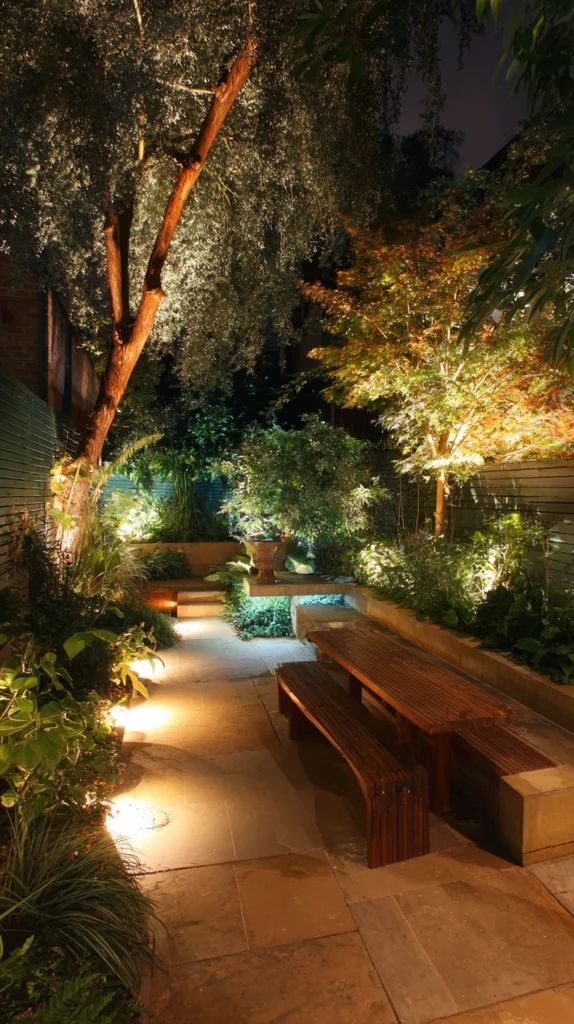
Budget: $40 – $200
Install a complete lighting plan for the small backyard — uplights at plant bases, path lights along the main route, festoon lights overhead, and candles on the table — so that the garden at night is a different and better version of itself rather than simply the daytime garden in reduced visibility. A small garden with a considered lighting plan appears larger after dark than during the day because the boundaries of the space recede into darkness while the lit elements — the plants, the seating area, the focal point — are illuminated in a way that emphasises what is good rather than revealing what is limited.
Outdoor uplights cost $8–$20 each. Path lights run $5–$15 each. Festoon lights overhead cost $20–$60. The complete lighting plan for a small backyard costs $60–$150 in total and produces a transformation after dark that no daytime improvement of equivalent cost achieves. Connect the permanent lights to a single outdoor timer or smart switch so the full plan activates simultaneously at dusk.
Style tip: Light the back boundary of the garden — the furthest point from the house — more prominently than the near boundary. A brighter far boundary and a darker near boundary creates a visual depth that makes the small garden feel longer than it is; the reverse — brighter near, darker far — makes it feel foreshortened, which is the perceptual effect that makes a small space feel smaller rather than larger.
9. The Water Feature Sound
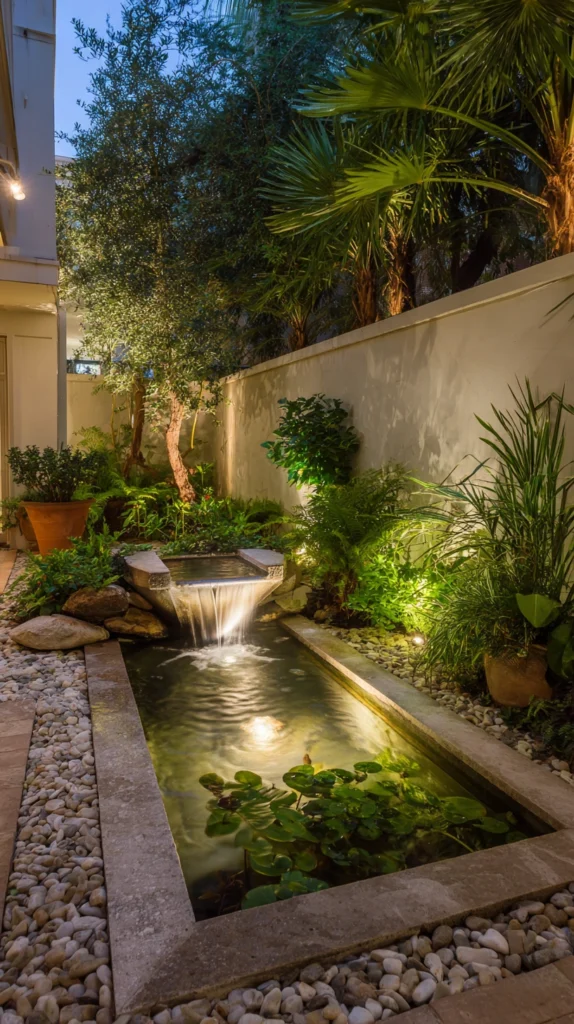
Budget: $30 – $200
Install a water feature — of any scale, from a small self-contained solar fountain to a half-barrel pond with a submersible pump — in the small backyard and add the dimension of sound to the outdoor space. The sound of moving water does two things in a garden: it masks the ambient noise of the urban environment that surrounds most small backyards, and it creates the sense of a natural environment that a purely planted and furnished space does not quite achieve.
A self-contained solar fountain costs $30–$80. A half-barrel with a submersible pump runs $40–$100. A wall-mounted water blade fountain costs $80–$200. Position the water feature within earshot of the primary seating area — within 3–4 metres — rather than at the far end of the garden where the sound is peripheral. The water feature heard clearly from the seating area changes the acoustic experience of the space; one heard faintly in the background provides the sound of water without its effect.
Style tip: Install the water feature where it receives morning rather than full afternoon sun in summer. A water feature in full afternoon sun in a small enclosed backyard heats the water significantly, which accelerates algae growth, reduces oxygen in the water, and in a pond setting stresses aquatic plants and fish. A morning-sun position keeps the water cooler and clearer through the hottest weeks without requiring chemical treatment.
10. The Aromatic Planting Scheme
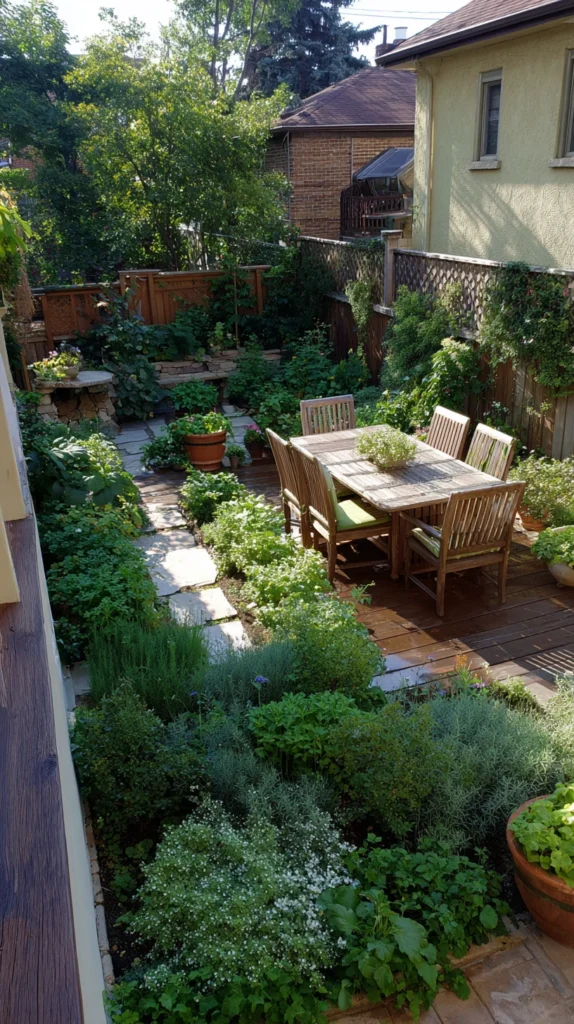
Budget: $30 – $120
Plant the small backyard specifically for scent rather than primarily for visual interest — with lavender, rosemary, sweet peas, jasmine, night-scented stock, and scented-leaf geraniums positioned within reach of the seating area so the garden is experienced through smell as well as sight. In a small enclosed backyard, fragrance concentrates in a way that it cannot in a larger open garden, and a small space planted for scent can be more fragrant than a garden ten times its size.
Lavender plants cost $4–$8 each. Rosemary runs $3–$6 each. Sweet pea seeds cost $2–$4 per packet. Jasmine in a 3-litre pot costs $8–$20. Night-scented stock seeds run $2–$3 per packet. The aromatic planting scheme costs $30–$120 in total for a fully planted small backyard and provides an experience that no visual improvement of equivalent cost can replicate or supplement.
Style tip: Plant at least one species that is fragrant specifically in the evening — night-scented stock, tobacco plant, jasmine — rather than only daytime-fragrant species. A small backyard that smells wonderful in the morning and is without fragrance in the evening is a garden that performs for the hours when it is viewed from inside the house rather than the hours when it is actually used.
11. The Colour-Blocked Planting
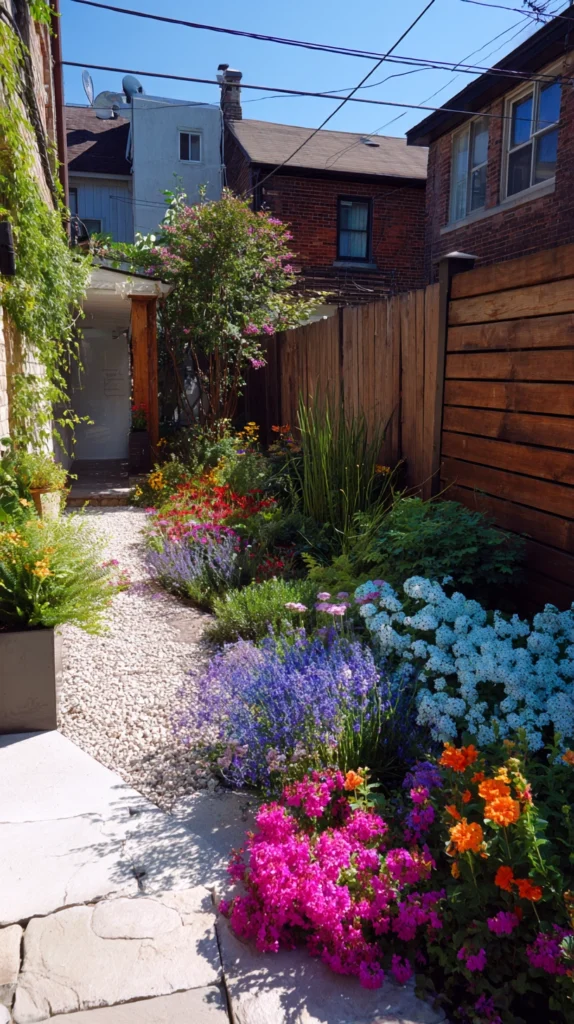
Budget: $40 – $180
Choose a single planting palette of two or three colours and plant the entire backyard in those colours only — all the containers, all the borders, all the climbers. A small backyard planted in a single colour scheme reads as designed and intentional from the first glance; one planted in every available colour reads as a collection of individual plant choices that never adds up to a garden.
A monochrome planting in all white — white cosmos, white sweet peas, white hydrangea, white geranium — costs $40–$100 in plants for a small backyard. A two-colour scheme in blue and white, or in pink and cream, or in yellow and orange, costs a similar amount. The colour discipline is the design decision, and it costs nothing beyond the resolve to return plants that are the wrong colour to the garden centre when the impulse to bring them home is strong.
Style tip: Choose a colour scheme that works in both fresh and dried forms if the planting will be left standing through the end of summer. A white planting that turns to cream and pale gold as it dries is beautiful in both stages; a vibrant red and orange planting that fades to brown is beautiful only in its fresh stage. The longevity of the colour through the season determines how long the planting scheme earns its place.
12. The Compressed Garden Journey
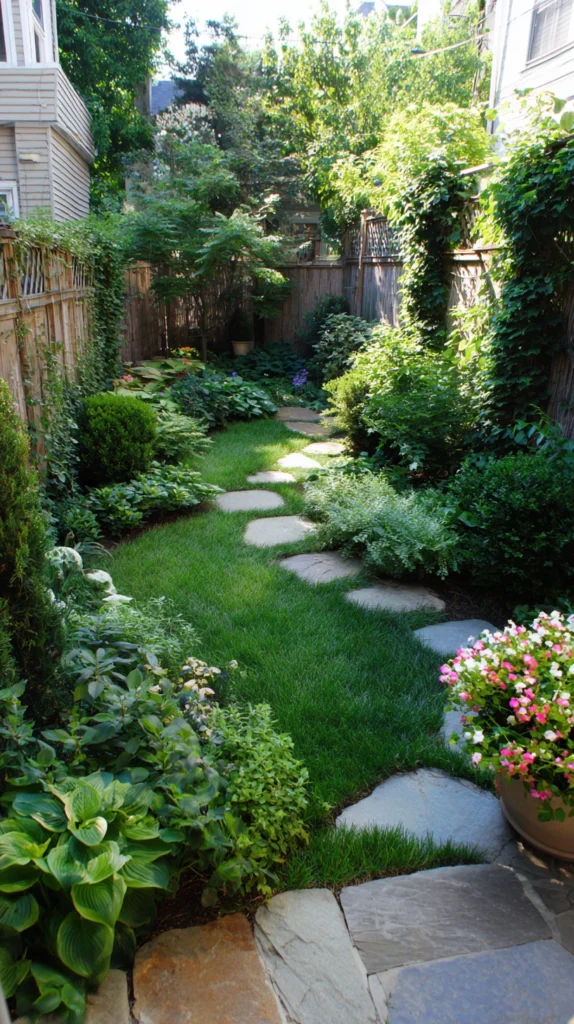
Budget: $40 – $200
Create a path through the small backyard — even a path of only 3 or 4 metres — that winds rather than runs straight, so that the journey through the space takes longer than the distance requires. A winding path through a small garden makes the garden feel significantly larger than it is because the experience of the space — the time spent moving through it — is extended beyond what a straight crossing would provide.
Stepping stones cost $3–$8 each. Gravel for a path surface runs $8–$15 per bag. Planting along each side of the path costs $30–$100 in plants. A path that is flanked by planting tall enough to brush against — waist-high or above — feels longer than a path with low ground-cover planting on each side, because the taller planting narrows the visible space ahead and makes the end of the path seem further away than it is.
Style tip: Position the focal point at the end of the path rather than beside the seating area so the path has a visible destination. A path that leads to something — a specimen plant, a water feature, a seating nook — gives the small garden a narrative that a path leading to nothing does not. The path with a destination is a journey; the path without one is a route.
13. The Overhead Plant Installation
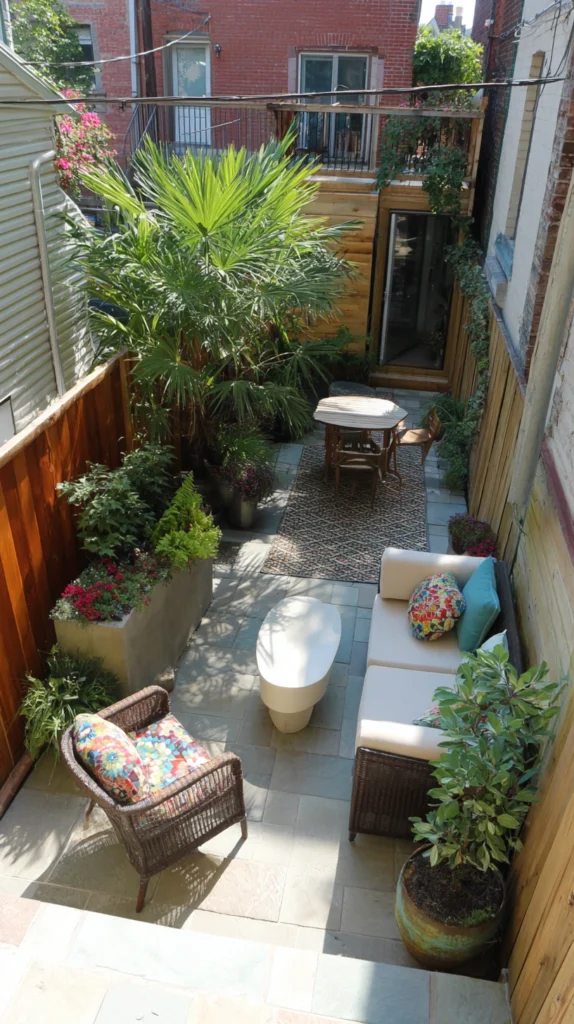
Budget: $30 – $150
Hang plants overhead — from a pergola beam, from a tensioned wire, from a hook fixed to a wall — so that the garden is experienced in three dimensions rather than two. Most small backyards are planted only at ground level and along boundaries, which means the space above the seating area is unused and uninhabited. Hanging plants bring the planting into the air around the seated person and create the enclosed, garden-within-a-garden quality that three-dimensional planting produces.
Hanging baskets with outdoor plants cost $15–$40 each. A tensioned wire to hang them from runs $10–$20. Outdoor hanging planters in ceramic or metal cost $20–$50 each. Choose trailing plants — trailing petunias, fuchsias, lobelia, or nasturtiums — rather than upright ones for hanging positions, since trailing growth that falls from the hanging point is both more beautiful and more structural than upright growth that simply sits in a pot at height.
Style tip: Position the hanging plants within the seating area rather than at its perimeter — hanging from directly above the table or the chair rather than from the edges of the pergola. A plant hanging within the seating zone is a plant that is part of the experience of being in the space; one hanging at the perimeter is a plant that frames the space without entering it. The within-zone position produces the immersive garden quality; the perimeter position produces the bordered quality.
14. The Summer Evening Ritual Setup
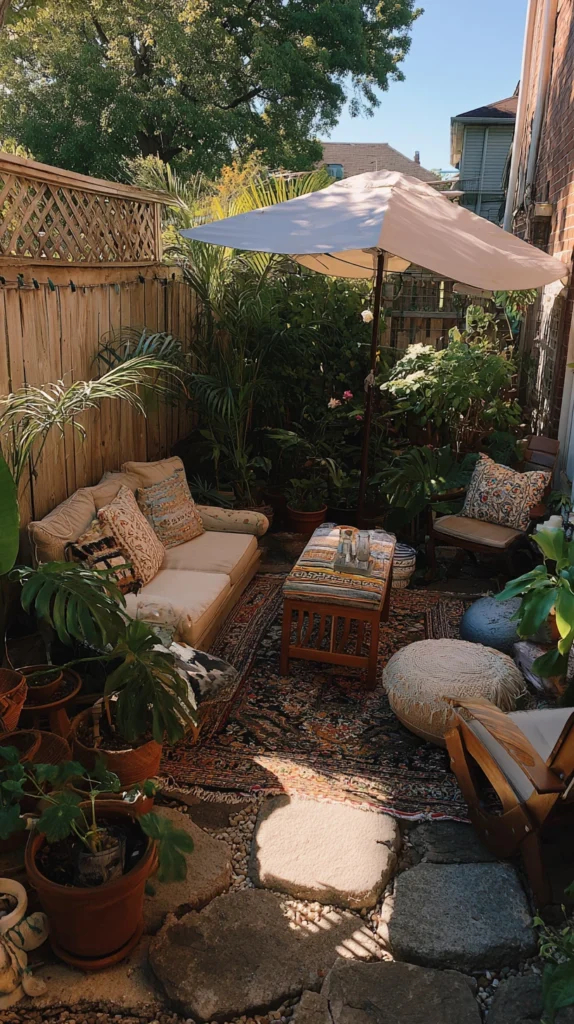
Budget: $30 – $150
Set the small backyard up specifically for the summer evening ritual — the specific sequence of activities that constitutes a good summer evening outside — and make each element of that ritual as effortless and as pleasurable as possible. The garden that is set up for a specific use is always a more satisfying garden than the one that is set up for general outdoor occupation, and a small backyard designed for the specific pleasures of a warm evening is the small backyard that gets used every evening rather than occasionally.
A fire pit or a candle collection for the evening light costs $40–$100. A drinks tray or bar cart for the outdoor drinks costs $20–$80. A warm throw within reach for the cooler hours costs $15–$40. A Bluetooth speaker for outdoor music costs $30–$80. The ritual setup costs less than any structural improvement and is used more consistently than any of them, because the quality of a summer evening in a small backyard is determined more by whether everything needed is within reach than by whether the paving is beautiful or the planting is lush.
Style tip: Set the evening ritual up before guests arrive rather than as the evening progresses — the fire lit, the drinks ready, the candles waiting to be lit — so that the outdoor space is welcoming from the first moment people arrive rather than assembled in stages while they stand holding drinks and watching. The prepared garden is the garden that sets the tone; the garden assembled in the presence of guests is the garden that delays it.
The small backyard that makes a big impact is the one that was designed rather than furnished, that chose one thing to do properly rather than several things to do approximately, and that treats its limited dimensions as the frame within which everything happens rather than the constraint that prevents things from happening.
Work within the space, design for the hours it is most used, and resist the instinct to scale everything down. A small backyard taken seriously is a seriously good garden. The size is the frame, not the limitation.