
12 Summer Mood Board Ideas for Home Decor Inspiration
There is a specific creative frustration that precedes every room change or seasonal refresh that most people cannot name until someone names it for them. It is not uncertainty about budget or indecision about furniture. It is the absence of a clear image — a felt sense of what the room should feel like that has not yet been made concrete enough to act on.
The mood board is the tool that resolves this frustration. Not by making decisions but by making the felt sense visible, which is the step that has to come before any decision can be made well.
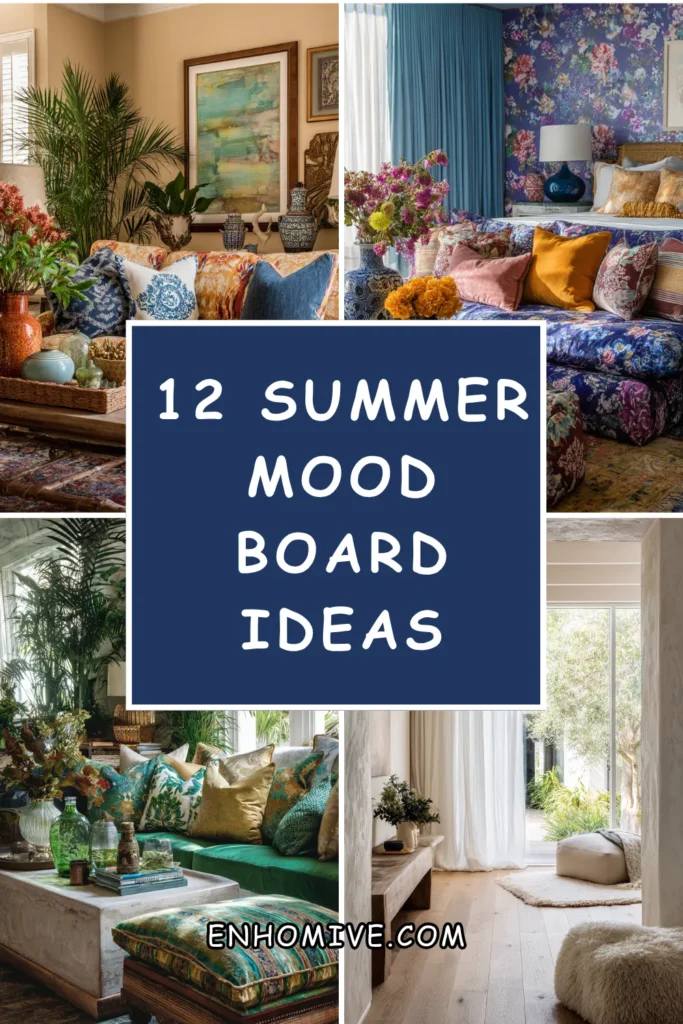
A summer mood board is not a shopping list and it is not a design plan. It is a collection of images, materials, colours, and objects that, assembled together, communicate the atmosphere of the room before any of the physical changes that will produce it have been made. It is the room imagined before it is built, and the value of imagining it first — clearly, specifically, with real images rather than vague descriptions — is that every subsequent decision can be tested against the image rather than against a feeling that may shift from day to day.
Each idea below is a complete mood board concept for a specific summer interior atmosphere. Each includes what to collect, what to prioritise, and a practical tip to make the board as useful as the room it is pointing toward.
1. The Coastal Calm Board
Budget to create: $0 – $20
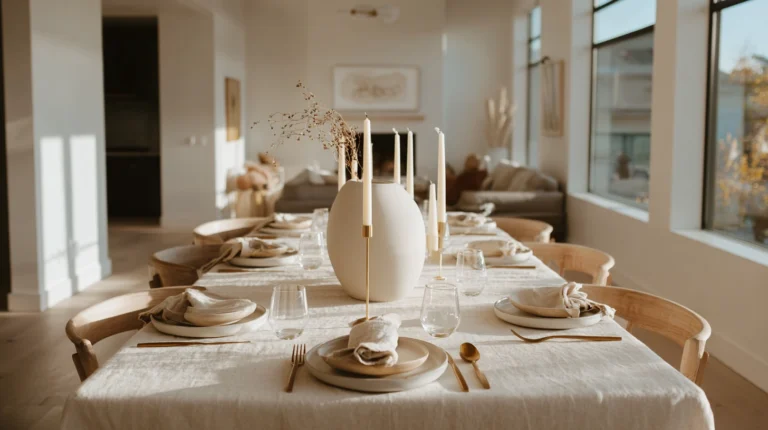
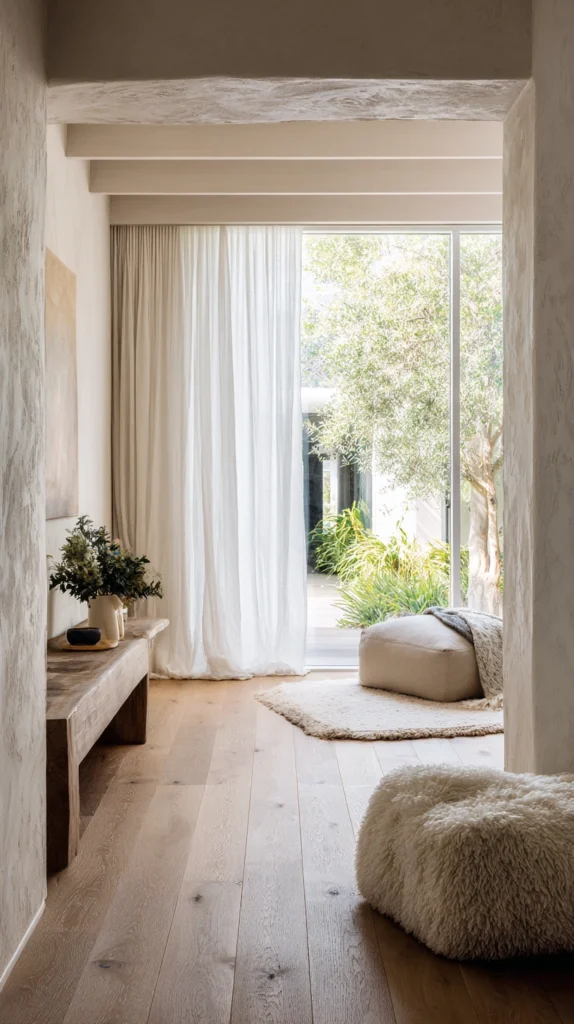
A coastal calm mood board works in sand, stone, salt white, and the particular blue-grey of the sea on an overcast day rather than the bright turquoise of holiday brochure photography. It is the board for a room that wants to feel like a beach house inhabited by people who actually live there — worn timber, linen that has been washed many times, shells collected rather than purchased, glass bleached by salt air.
Collect images of: whitewashed walls with visible texture, natural timber floors with grey wash finish, linen in undyed and pale blue tones, large-format black and white coastal photography, ceramic in matte white and pale sand tones, driftwood, rope detail, woven seagrass, and the specific quality of light that comes through a sheer white curtain near the sea. Avoid: bright turquoise, nautical illustration, anchor motifs, anything that depicts the sea as a tourist attraction rather than a lived environment.
Style tip: Pin one actual material sample alongside the images — a small piece of linen fabric, a fragment of rope, a single shell — rather than working entirely from photographs. The material sample is the proof that the board is heading toward a room that can be built rather than a room that exists only as a photograph, and the specific texture of the linen against the images tells you more about whether the combination works than the images alone.
2. The Mediterranean Heat Board
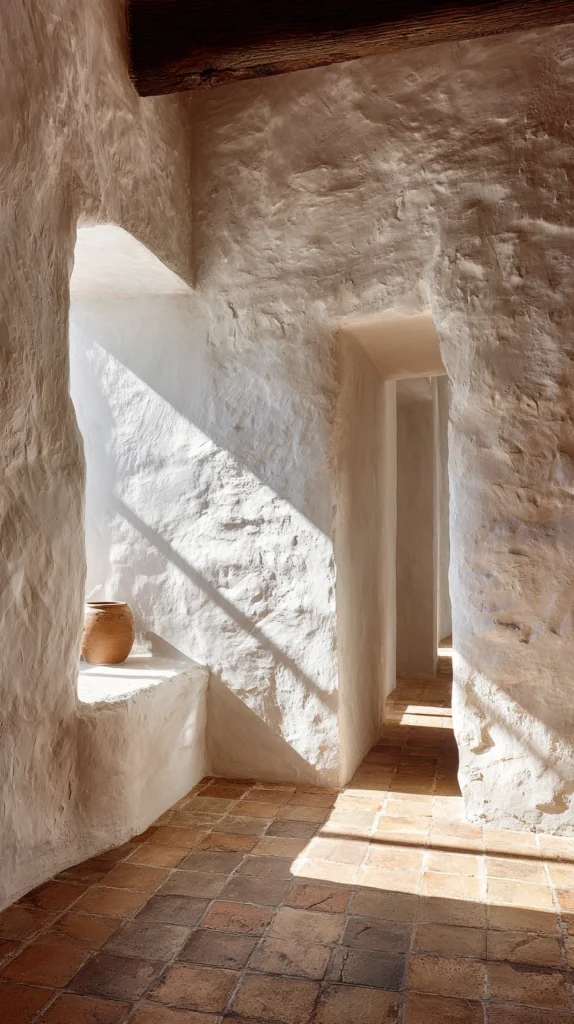
Budget to create: $0 – $20
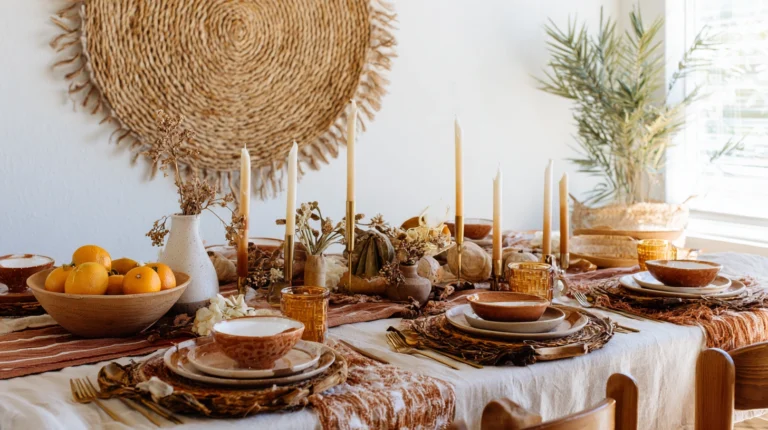
A Mediterranean heat board works in terracotta, warm white, dusty olive, aged timber, and the particular quality of afternoon light in a room with thick walls and small windows. It is the board for a room that wants to feel like somewhere the heat is excluded rather than defeated — cool surfaces, shuttered windows, terracotta floors that stay cool underfoot regardless of the outdoor temperature.
Collect images of: terracotta tile floors both glazed and unglazed, whitewashed plaster walls with visible brush marks, wooden shutters in faded green and grey, ceramic in earthy Mediterranean tones, copper and brass vessels, dried herbs and lavender, fig branches, aged linen in undyed and warm sand tones, low timber furniture, and the specific quality of dappled light through a vine canopy. Avoid: the bright primary colours of tourist signage photography, painted furniture in high gloss, and anything that reads as themed rather than inhabited.
Style tip: Collect one or two images of actual Mediterranean interiors — specifically village houses and farmhouses rather than hotels and restaurants — rather than relying entirely on styled editorial photography. The inhabited interior has a quality of daily life and accumulated detail that styled photography edits out, and that quality is what makes the atmosphere feel genuinely Mediterranean rather than Mediterranean-inspired.
3. The Tropical Maximalist Board
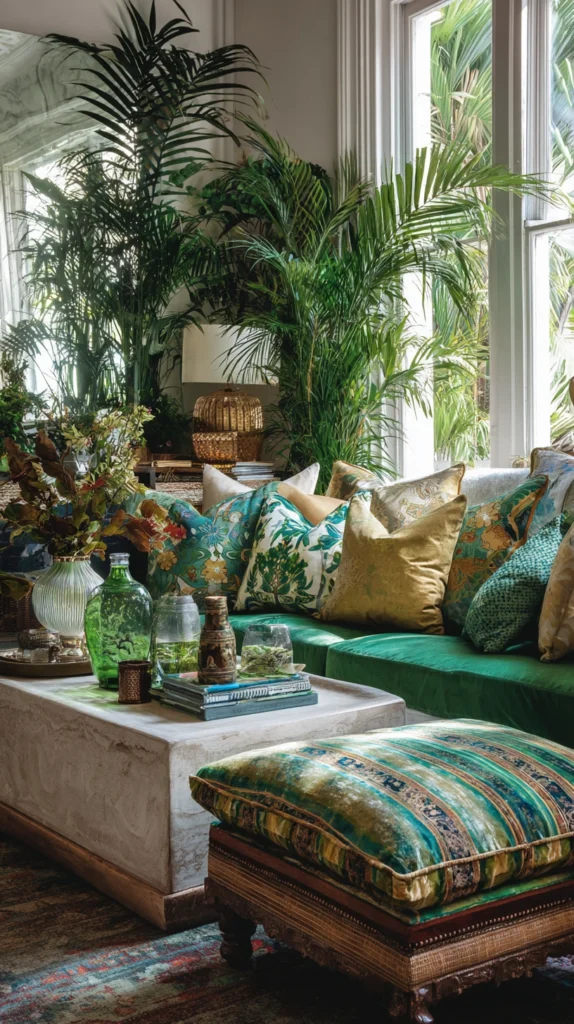
Budget to create: $0 – $30
A tropical maximalist mood board works in deep green, warm white, gold, and every shade of botanical between them — monstera leaves, banana palms, birds of paradise, trailing vines, and the kind of lush, layered planting that makes a room feel like it is being reclaimed by the natural world from the inside out. It is the board for a room that wants to be genuinely abundant rather than decoratively green.
Collect images of: very large-leafed tropical plants in interior settings, rattan and cane furniture in natural tones, printed botanical fabric in two or three colours, ceramic pots in terracotta and warm white, brass and gold metal details, layered rugs in natural fibres, floor-to-ceiling curtains in sheer white or botanical print, and specific plant species — not plant photography in general but the specific species that will actually grow in the light conditions of the room. Avoid: plastic or artificial plants, neon green, and any imagery that references the jungle as a concept rather than a botanical reality.
Style tip: Research the actual light requirements of the plants that appear in the mood board images before adding them to the board. A tropical maximalist interior that includes plants which cannot survive in the room’s actual light conditions is a mood board pointing toward a room that will require replacing dying plants every six weeks — which is the maintenance reality that no amount of atmospheric photography prepares the occupant for.
4. The Scandi Summer Board
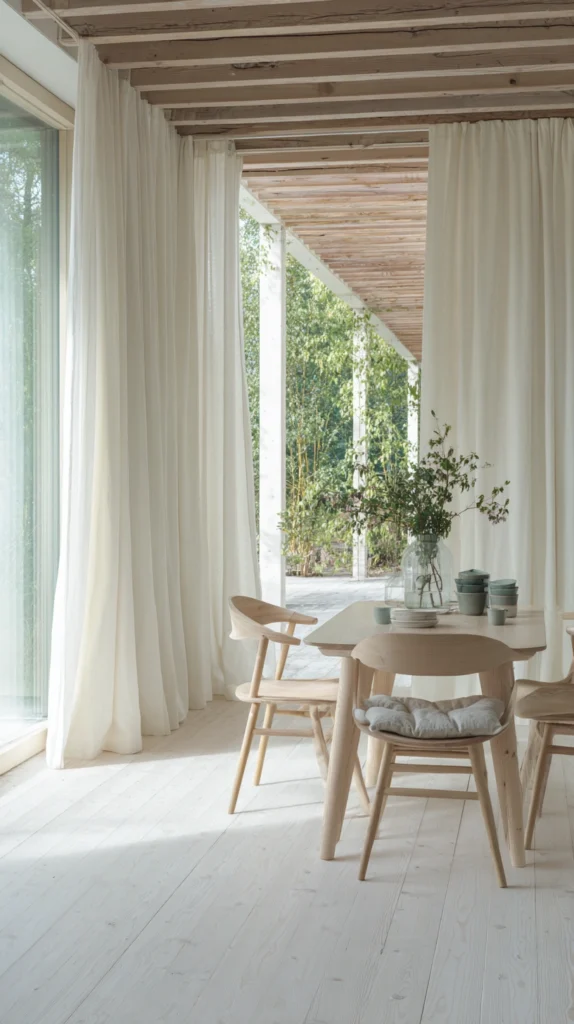
Budget to create: $0 – $20
A Scandi summer mood board works in the specific palette of Scandinavian summer — pale birch, powder blue, dusty rose, warm white, and the particular quality of light that arrives in the north at a low angle and stays for twenty hours a day. It is lighter and warmer than winter Scandi and specifically concerned with the way Scandinavian summer interiors blur the boundary between inside and outside — the glass walls, the simple timber furniture brought into the garden, the wildflowers on the table.
Collect images of: pale birch and pine furniture with simple joinery, white-painted floors, powder blue and dusty rose textiles, simple white ceramic, wildflowers in clear glass jars, lightweight linen curtains in white and natural, outdoor furniture brought inside, open windows with light curtains moving, and the specific quality of light on pale timber surfaces in summer sun. Avoid: the dark and heavy elements of winter Scandi — the sheepskins, the dark throws, the candles in dark holders — which belong to a different board and a different season.
Style tip: Pin images of the outdoor spaces alongside the interior images — the Swedish garden with its simple timber chairs, the Finnish summer cottage with its dock and its sauna — to capture the inside-outside relationship that is central to Scandi summer and that distinguishes it from Scandi winter, which turns inward, and Scandi summer, which turns outward as completely as the season allows.
5. The Maximalist Floral Board
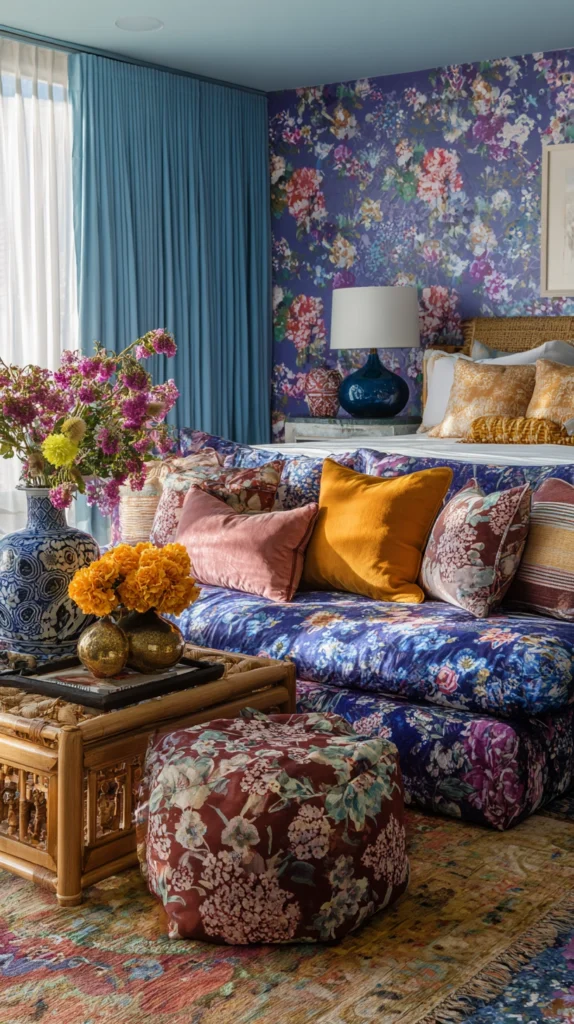
Budget to create: $0 – $25
A maximalist floral mood board works in every colour that flowers produce — but selected and arranged with the same discipline that a skilled florist applies, where colour combinations are chosen rather than accumulated. It is the board for a room that wants to feel genuinely abundant with botanical imagery without tipping into the visual chaos that floral maximalism becomes when it lacks a controlling palette.
Collect images of: large-scale floral wallpaper in two or three coordinating colours, floral printed fabric in the same palette, ceramic with botanical relief or painted floral detail, fresh flower arrangements of genuine scale and abundance, vintage botanical illustration, flower markets and flower stalls, and the specific quality of a room where pattern is layered — floral wallpaper behind floral cushions behind a plain-coloured sofa — rather than applied in isolation. Pin a colour palette card beside the images showing the two or three colours that control the florals throughout.
Style tip: Define the floral palette to three colours maximum before beginning to collect images — a warm dominant, a complementary secondary, and a neutral base — and exclude any floral image that introduces a fourth colour regardless of how beautiful it is in isolation. The three-colour discipline applied at the image collection stage prevents the maximalist floral board from becoming the visual chaos it is trying to avoid.
6. The Japanese Summer Board
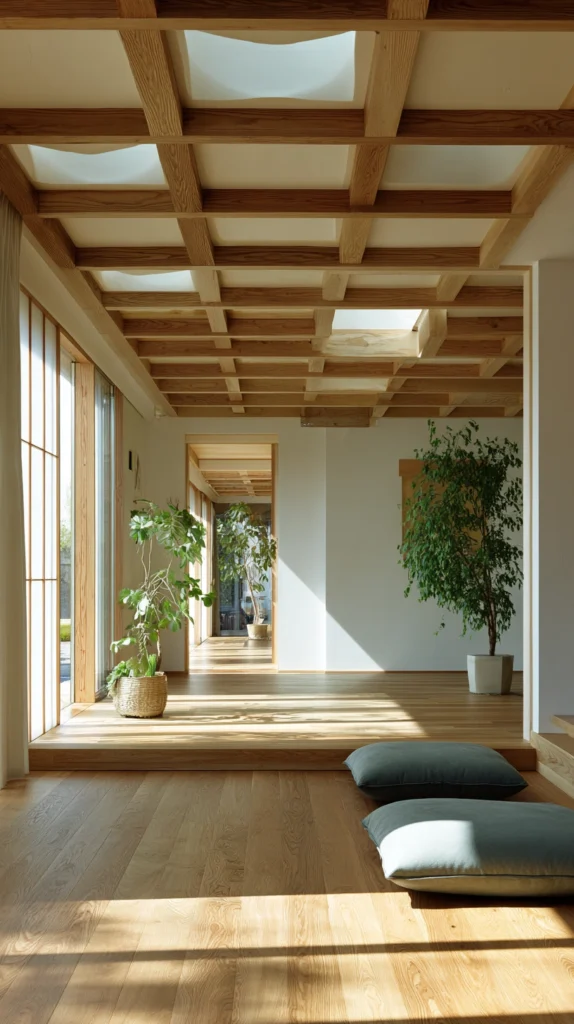
Budget to create: $0 – $20
A Japanese summer mood board works in the specific aesthetics of Japanese summer interiors — bamboo, woven grass, the particular quality of light through shoji screens, ceramics with imperfect glazes, simple wooden furniture close to the ground, and the deliberate emptiness that is the Japanese design principle most consistently misunderstood and most consistently valuable in practice. It is the board for a room that wants to feel genuinely restful rather than styled for restfulness.
Collect images of: shoji screens and their specific filtered light quality, bamboo and woven rush matting, low furniture in pale timber, ceramic in earth tones with visible glaze irregularity, a single ikebana arrangement rather than a full floral display, wooden combs and simple objects of daily use arranged deliberately, garden views from low interior positions, linen in natural and pale sage tones, and the specific emptiness of a Japanese interior room where the absence of objects is the design statement. Avoid: the commercial version of Japanese aesthetics that cherry-blossoms everything into decoration.
Style tip: Include one image of a truly empty room — a Japanese tatami room or a simple interior with nothing in it — at the centre of the board. The empty room is the reference point against which every other image should be tested: does this object or this element belong in the emptiness, or does it fill the emptiness in a way that loses it? The board that includes the empty room produces better editing decisions than the board that only includes things.
7. The Vintage Resort Board
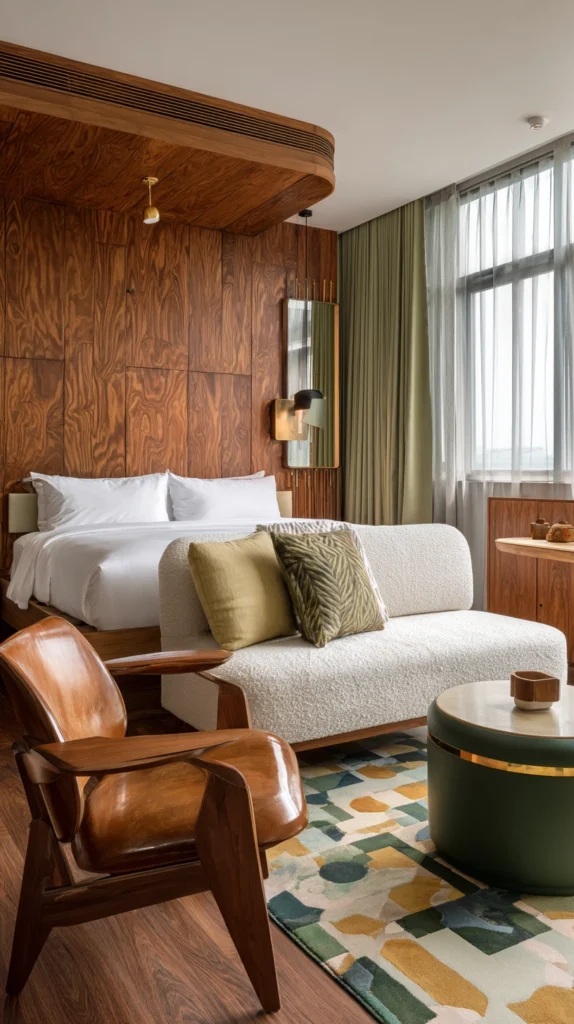
Budget to create: $0 – $25
A vintage resort mood board works in the specific visual language of mid-century resort design — the particular palette of 1950s and 1960s holiday destinations, the optimistic colours, the generous proportions, the rattan and the terrazzo and the pastel tones that reference warmth and leisure and the specific quality of a holiday that has not yet been interrupted by screens. It is the board for a room that wants to feel like somewhere that takes pleasure seriously.
Collect images of: mid-century modern furniture in teak and rattan, terrazzo surfaces in warm tones, tiles in geometric patterns in mustard, rust, and teal, vintage travel posters, pastel-toned ceramics, large potted plants in simple vessels, printed fabric in geometric and botanical patterns of the period, and the specific quality of a room that was designed for leisure rather than efficiency — the generous seating, the low coffee tables, the bar cart in the corner. Avoid: the cooler, harder version of mid-century modern that references the office rather than the resort.
Style tip: Collect images from the actual period — 1950s and 1960s resort and hotel photography — alongside contemporary interiors that reference the aesthetic, and keep the period images in a separate section of the board. The period images communicate what the aesthetic actually looked like in its original context; the contemporary images show what it looks like reproduced now. The comparison reveals which contemporary interpretations are faithful and which are superficial.
8. The Earthy Organic Board
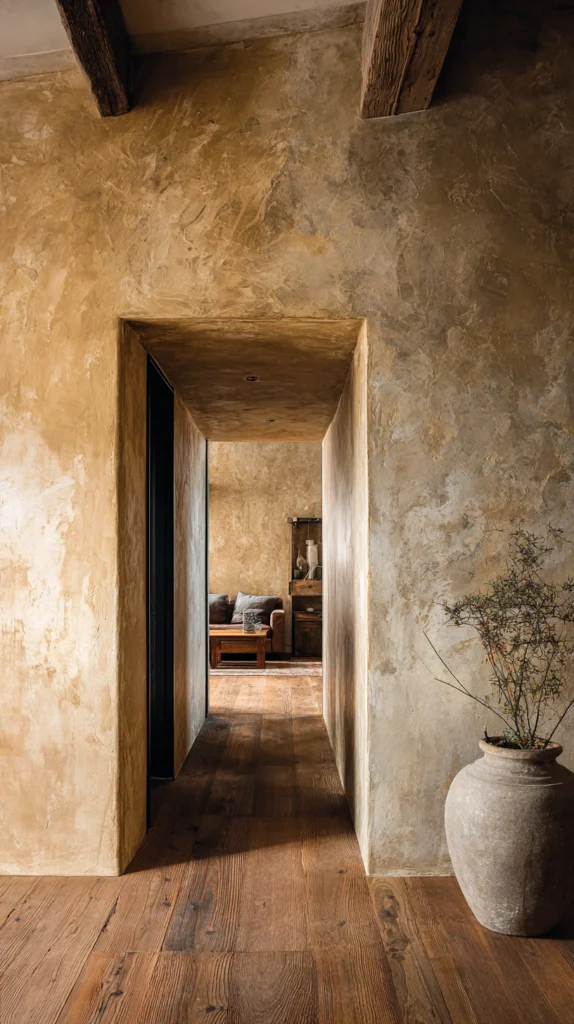
Budget to create: $0 – $20
An earthy organic mood board works in clay, stone, warm terracotta, deep sand, dried grass, and the specific palette of the natural world in midsummer — not the vivid greens of spring but the drier, warmer, more complex tones of a landscape in July. It is the board for a room that wants to feel grounded and unhurried, where the materials are honest about what they are made from and the textures carry the record of their making.
Collect images of: hand-thrown ceramic in earth tones, raw linen and undyed cotton, limewash plaster walls in warm white and ochre, terracotta tile in varying tones, dried botanical arrangements, timber with visible grain, woven baskets in natural grasses, stone surfaces — limestone, travertine, sandstone — in pale warm tones, and the specific quality of afternoon light on a rough-textured surface. Avoid: the synthetic version of the organic aesthetic — the faux-textured wallpaper, the plastic that looks like stone, the printed linen pattern that does not reference any actual natural material.
Style tip: Include material samples on the earthy organic board rather than limiting it to images — a fragment of raw linen, a shard of terracotta, a piece of dried grass, a sliver of limestone — because the earthy organic aesthetic is fundamentally tactile and the quality of the materials cannot be fully assessed from photographs alone. The material samples on the board are the proof that the room being imagined is a room that can be touched as well as seen.
9. The Grandmillennial Summer Board
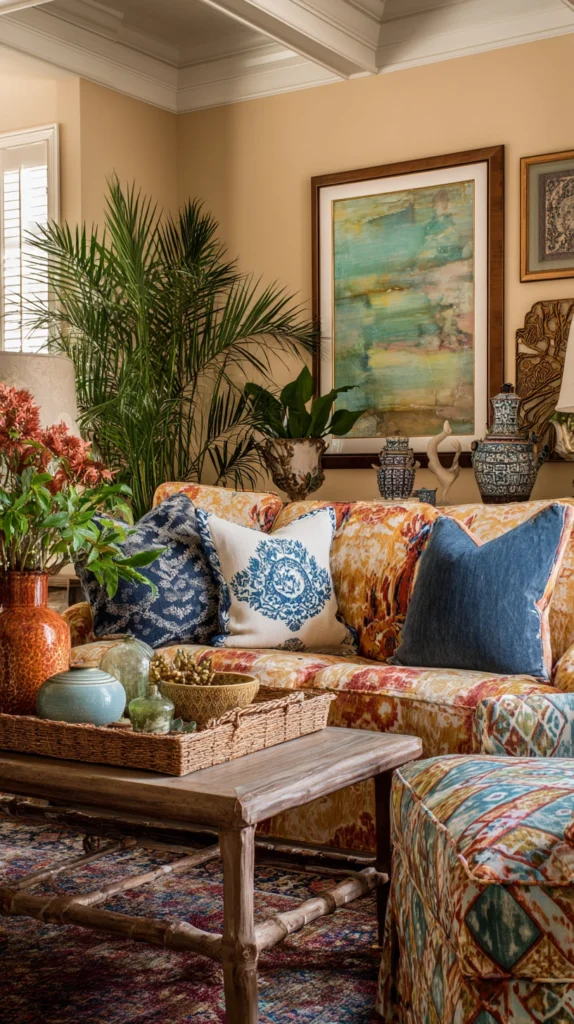
Budget to create: $0 – $25
A grandmillennial summer mood board works in the collected, layered, overtly comfortable aesthetics of a house that has been loved for a long time — florals, pattern-on-pattern, framed botanical prints, generous upholstery, mix of antique and vintage and new, and the specific quality of a room that contains more than it strictly needs because everything in it was kept because it was loved rather than curated because it was correct.
Collect images of: chintz fabric in summer florals, layered patterned rugs, framed collections of botanical or natural history prints in mismatched frames, antique furniture with visible patina, embroidered cushions, ceramic collections arranged on shelves, fresh flowers in imperfect arrangements, vintage linen tablecloths, glass-fronted cabinets with collected objects, and the specific quality of a room where every surface tells a story rather than maintaining a visual standard. Avoid: the museum version of the aesthetic — rooms that have been curated to look grandmillennial rather than rooms that have accumulated into it naturally.
Style tip: Pin images of actual inherited or accumulated interiors alongside styled editorial photography — old family photographs of living rooms, estate sale images of houses being cleared — to capture the quality of genuine accumulation that the grandmillennial aesthetic is attempting to honour. The real accumulated room is the reference against which the styled versions should be assessed, and the gap between them reveals where the styling has been too deliberate.
10. The Modern Prairie Board
Budget to create: $0 – $20
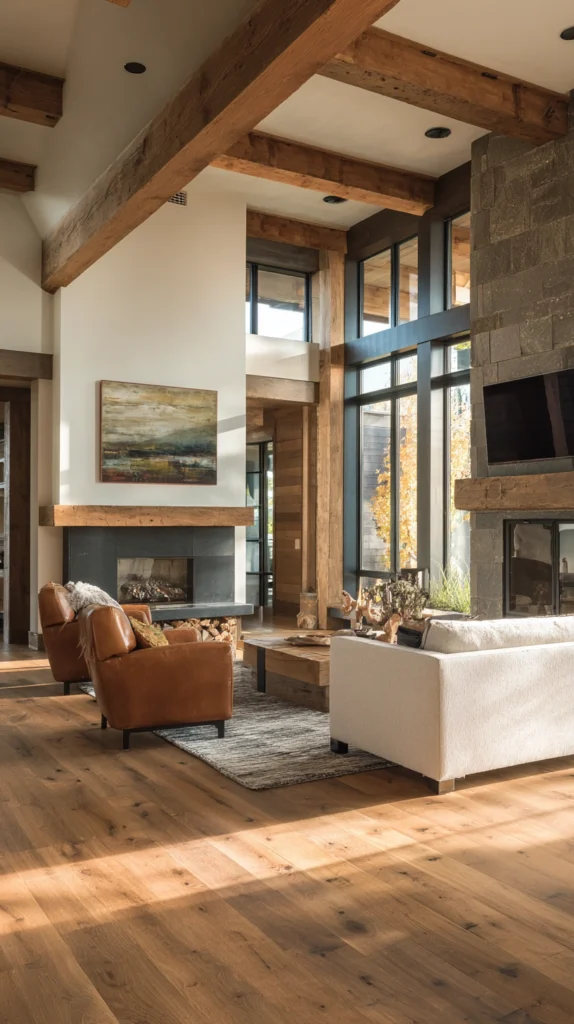
A modern prairie mood board works in the specific palette and material language of a contemporary farmhouse aesthetic that is more honest about its agricultural references than the whitewashed shiplap version that preceded it — warm timber, aged linen, hand-thrown ceramic, dried botanicals, the particular quality of a room that was designed for working people rather than for entertaining the idea of working people.
Collect images of: wide-plank oak floors in warm tones, linen curtains in undyed and warm natural shades, ceramic in irregular organic forms, dried flower and grass arrangements, simple timber furniture with visible joinery, cotton quilts in geometric patchwork, warm white walls with visible texture, farmhouse sinks and simple timber shelving, cast iron and aged brass details, and the specific quality of light through a deep-silled window onto a warm timber surface. Avoid: the commercialised version of the farmhouse aesthetic — the matching sets of galvanised metal, the word-art signs, the shiplap that covers rather than expresses.
Style tip: Include one or two images of actual working farm interiors — not styled farmhouse photography but documented working agricultural buildings and their domestic spaces — to maintain the honesty of material and purpose that distinguishes the modern prairie aesthetic from its commercial dilution. The working interior is the origin; the styled interior is the interpretation, and keeping the origin visible on the board keeps the interpretation honest.
11. The Art Studio Summer Board
Budget to create: $0 – $20
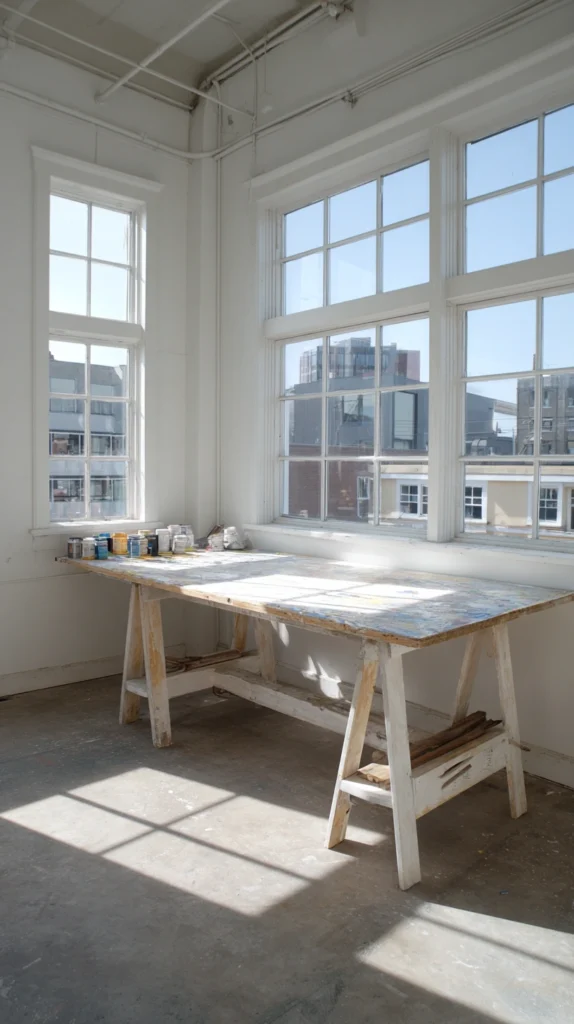
An art studio summer mood board works in white, raw linen, natural timber, paint-stained surfaces, organised tools, abundant natural light, and the specific quality of a room that exists primarily as a working environment and has acquired its beauty as a byproduct of that purpose rather than as the purpose itself. It is the board for a room that wants to feel genuinely creative rather than creatively themed.
Collect images of: white walls with visible texture and the occasional mark or stain that communicates use, raw linen and cotton in work-wear weight, simple timber work surfaces, organised art supplies in ceramic pots and wooden trays, large windows without coverings, concrete or pale timber floors with the evidence of previous work, botanical and natural objects used as reference material rather than decoration, and the specific quality of northern light on a white work surface. Avoid: the commercial art studio aesthetic that aestheticises the tools without acknowledging the work.
Style tip: Include images of actual working artists’ studios rather than styled studio spaces — the studios of documented artists where the work is clearly the primary occupant and the aesthetics emerged from the working practice. The actual studio contains the quality that makes the aesthetic interesting, which is the evidence that the space is seriously used, and a board that keeps that evidence present produces a room that feels genuinely creative rather than decoratively so.
12. The Slow Living Board
Budget to create: $0 – $15
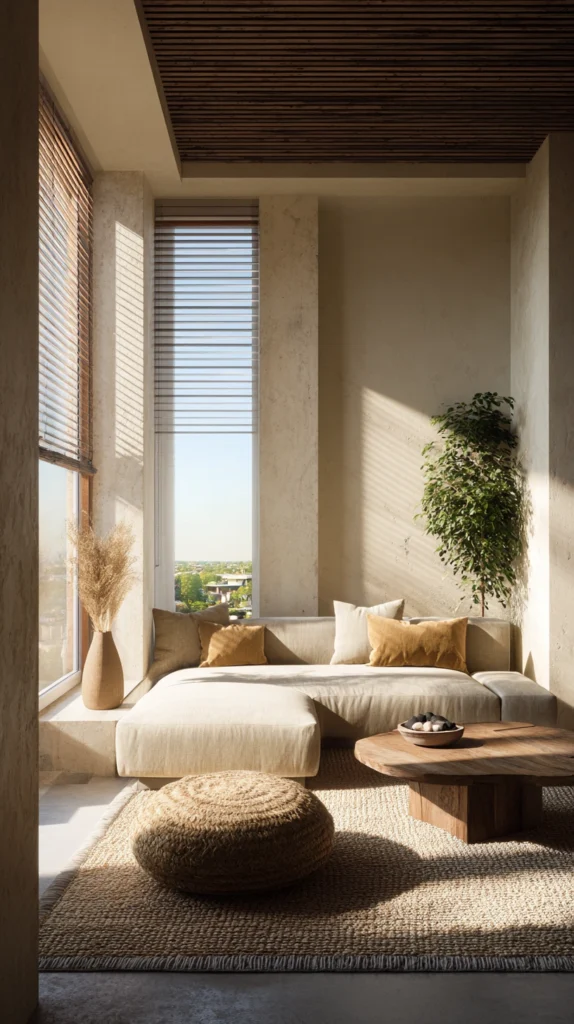
A slow living mood board works in the specific visual language of a life lived deliberately rather than efficiently — simple meals on simple tables, afternoon light on an open book, a garden chair in the right position at the right time of day, textiles that were chosen because they were loved rather than because they were practical. It is the board for a room — and a life — that wants to feel genuinely unhurried rather than aspirationally so.
Collect images of: simple meals served on handmade ceramic, afternoon light on a reading chair, open windows with a garden view, a writing desk with one object on it, herbs growing in terracotta on a sunny windowsill, a single flower in a clear glass, a pile of books rather than a styled bookshelf, linen drying in the sun, a cup of something warm on a wooden surface, and the specific quality of a room where time feels different than it does in a busy one. Avoid: images of slowness that have been too carefully composed — the aspirational version of slow living that is itself a form of efficiency applied to the aesthetic of leisure.
Style tip: Include one image with a person in it — reading, eating, sitting still — rather than limiting the board to empty rooms and styled surfaces. An empty room can be designed; a room with a person in it who is visibly comfortable and genuinely unhurried communicates the quality that the slow living board is actually pointing toward. The person in the image is the evidence that the room works rather than simply that the room looks a particular way.
The best mood board is not the most beautiful collection of images — it is the most honest one. The board that contains images of rooms that could actually be built in the specific house, with the specific light, on the specific budget, by the specific person who will live in them, is the board that is worth making. The board that contains rooms that would require a different house, a different climate, a different income, and a different life is a board that is pleasant to look at and useless to act on.
Make the board honest first and beautiful second, keep the material samples beside the images, and test every new image against the question of whether it belongs to the same room as the images already there. The board that passes that test is the room that is waiting to be built.