
15 Statement Tree and Shrub Combinations That Frame Your Home Like a Trophy Podium
There is something deeply satisfying about a home that appears to rise confidently from its landscape — anchored by bold planting, framed by structure, and elevated by the kind of considered greenery that makes the entire property look intentional, proud, and polished.
The right combination of trees and shrubs around a home does exactly what a trophy podium does for its winner: it elevates, frames, and celebrates. It draws the eye upward, creates a sense of occasion, and communicates that something worthy of attention stands at the center.
Achieving this effect is less about spending enormous sums on mature specimens and more about understanding the principles of layering, contrast, and repetition in planting design.
The most striking home landscapes are built from combinations — tall trees that anchor and frame, mid-level shrubs that provide body and transition, and lower planting that grounds the entire composition. When these layers work together harmoniously, the result is a home that looks genuinely magnificent from the street, regardless of its size or architectural style.
Here are 15 statement tree and shrub combinations that will frame your home with the confidence, structure, and visual grandeur of a championship podium.
1. Japanese Maple and Box Ball Combination
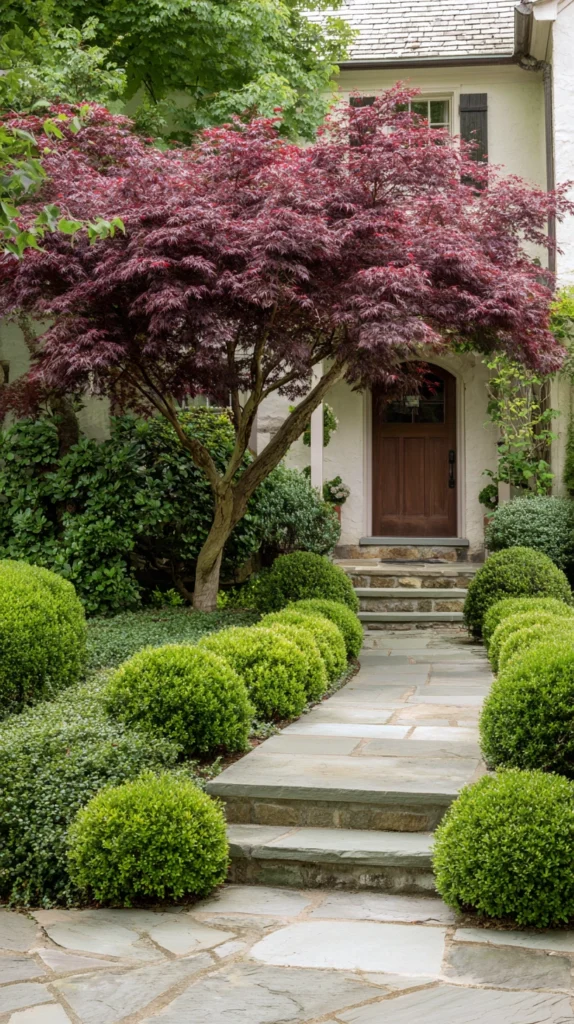
Few planting combinations deliver as much visual drama and refined elegance as a Japanese maple paired with clipped box balls. The Japanese maple provides spectacular seasonal interest — delicate, deeply cut foliage in rich burgundy or fiery orange — while the smooth, geometric forms of box balls provide year-round structure and a sense of formal order.
Together, they create a combination that feels simultaneously artistic and architectural, perfectly suited to framing an entrance or anchoring a front garden composition with understated confidence.
2. Silver Birch Grove and Lavender Underplanting
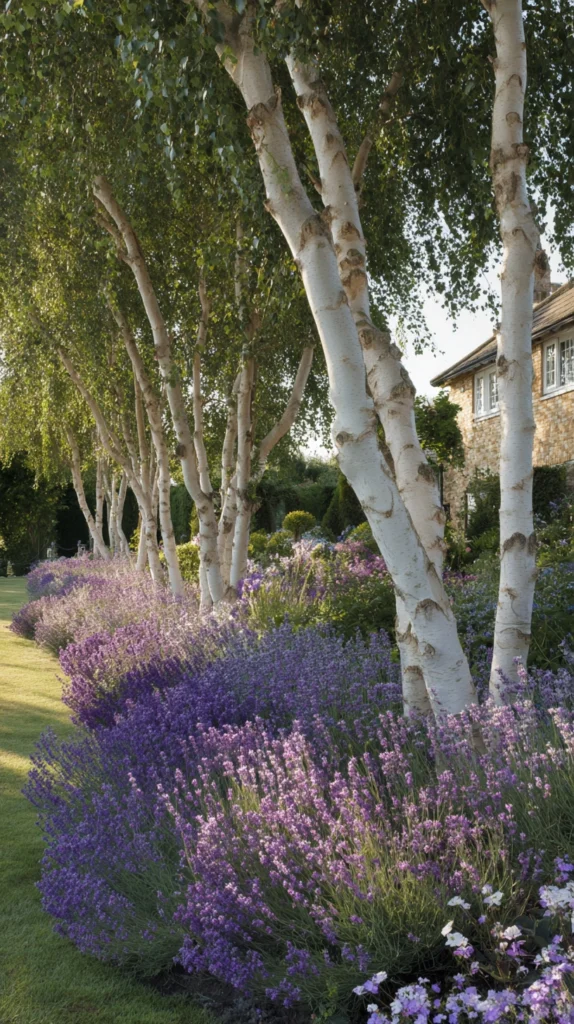
A trio or small grove of silver birch trees planted together creates an instantly striking vertical element that draws the eye upward and frames a home with graceful, natural elegance. Their white, papery bark is luminous in all seasons and particularly beautiful in low winter light.
Underplant the base of the grove with generous sweeps of lavender, and you have a combination that delivers fragrance, pollinator appeal, and a soft purple haze of color throughout summer that contrasts beautifully with the silver-white bark above. This pairing suits cottage-style and contemporary rural homes equally well.
3. Olive Tree and Rosemary Border
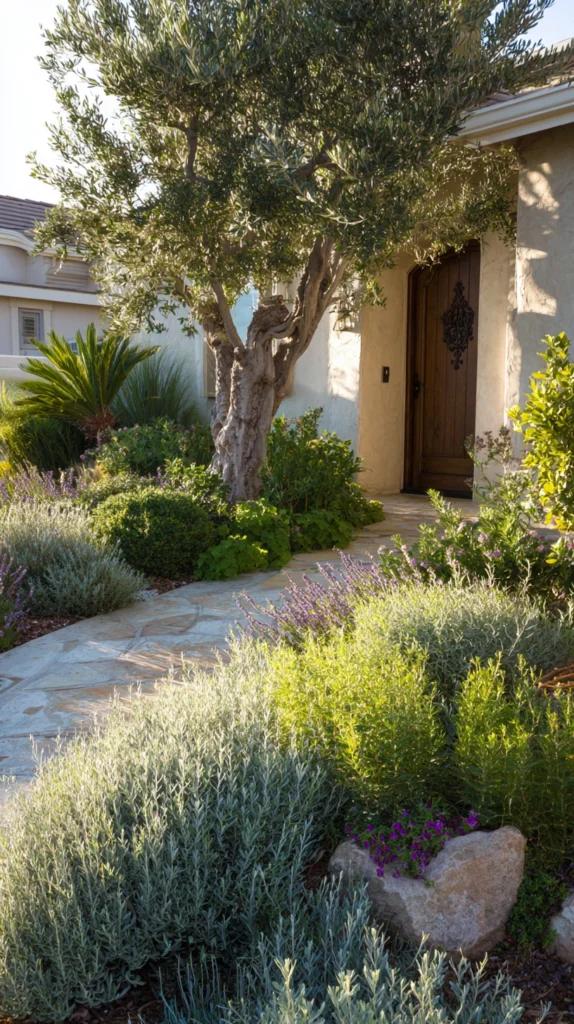
The olive tree has become one of the most sought-after statement trees in modern garden design, and its combination with rosemary as a border or low hedge is a pairing of genuine Mediterranean sophistication.
The olive’s silvery-grey foliage, gnarled trunk, and architectural presence create an immediate focal point, while rosemary planted in a sweeping border beneath echoes those grey-green tones and adds fragrance and texture at ground level. This combination works beautifully in warm, sunny positions and suits modern, minimalist, and Mediterranean-inspired homes with particular elegance.
4. Hornbeam Columns and Hydrangea Masses
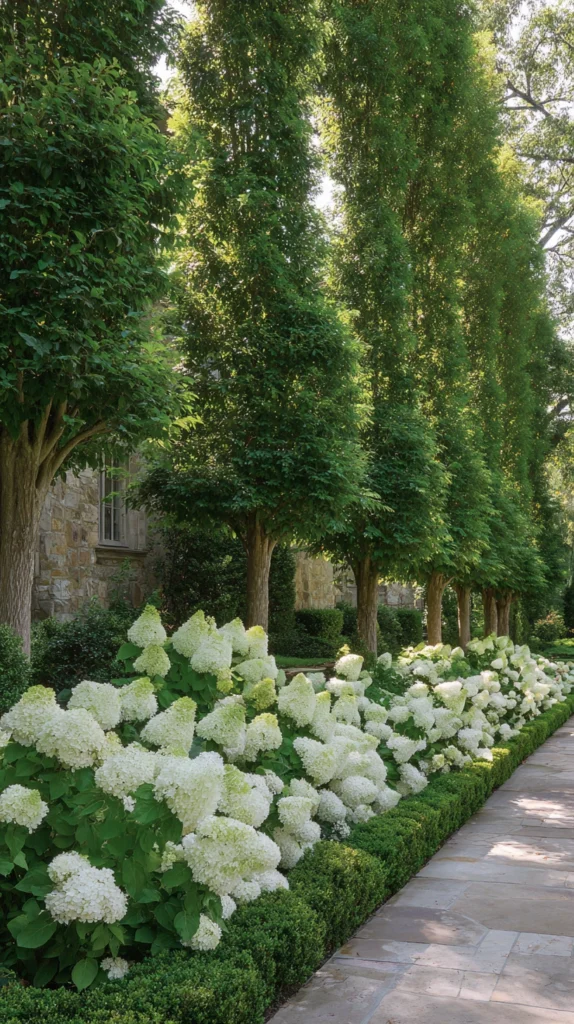
Upright hornbeam trees trained into tall, narrow columns are one of the most architecturally powerful tools available in garden design. Their strict vertical form creates a sense of ceremony and grandeur, framing a home the way columns frame a classical building.
Planted in pairs or repeated at intervals along a driveway or garden boundary, they create a powerful structural framework. Combine them with mass plantings of hydrangeas — particularly the reliable Annabelle variety with its enormous white flower heads — and the combination of rigid formality and generous, romantic blooms is genuinely spectacular.
5. Magnolia and Pittosporum Combination
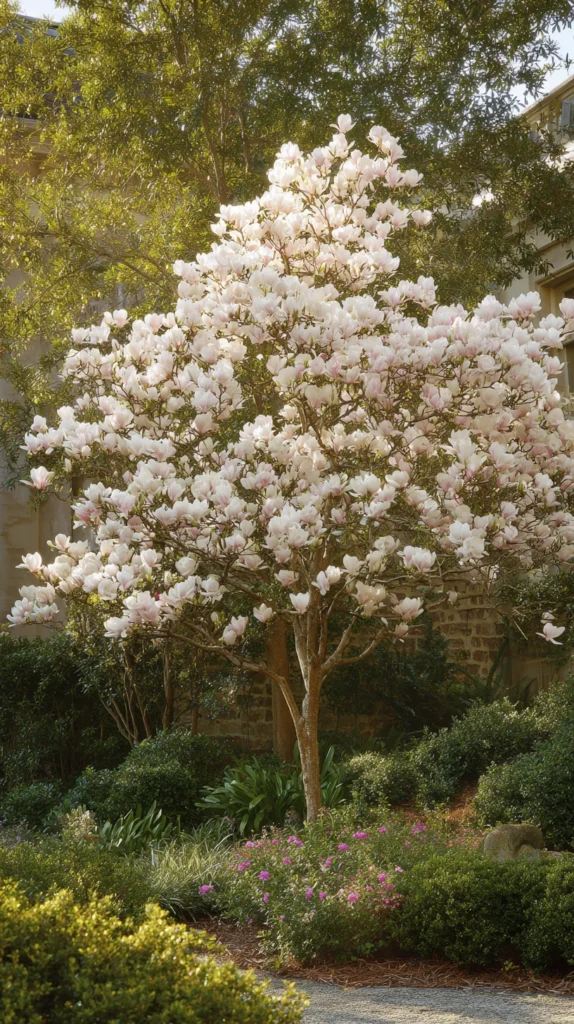
A magnolia tree in full spring bloom is one of the most breathtaking sights in any garden, its large, sculptural flowers appearing before the leaves and creating a display of almost theatrical beauty.
Pair it with the deep, glossy evergreen foliage of pittosporum as a backdrop or surrounding shrub, and the magnolia’s pale blooms are set against a rich dark green canvas that makes them appear even more striking and luminous. This combination delivers dramatic seasonal spectacle while maintaining year-round structure and interest.
6. Pleached Lime Trees and Yew Hedging
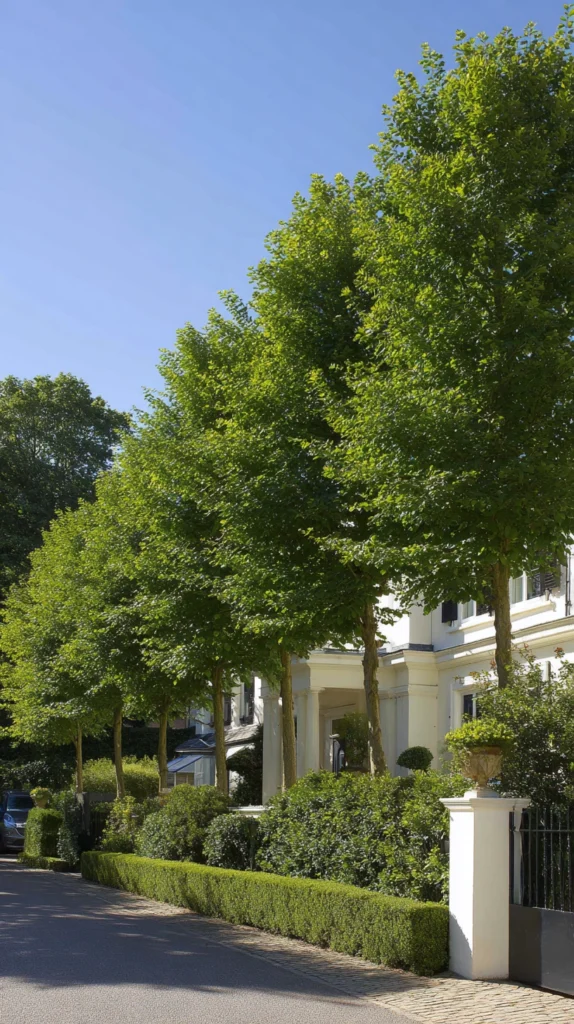
Pleached lime trees — trained to produce a raised canopy of interlocking horizontal branches on clear stems — are among the most sophisticated and formally beautiful elements available in garden design. When combined with precisely clipped yew hedging at ground level, the result is a layered composition of extraordinary elegance and architectural confidence.
This pairing suits large, formal properties particularly well, creating a sense of enclosure, grandeur, and horticultural mastery that frames any home with the quiet authority of a truly considered landscape.
7. Amelanchier and Salvia Combination
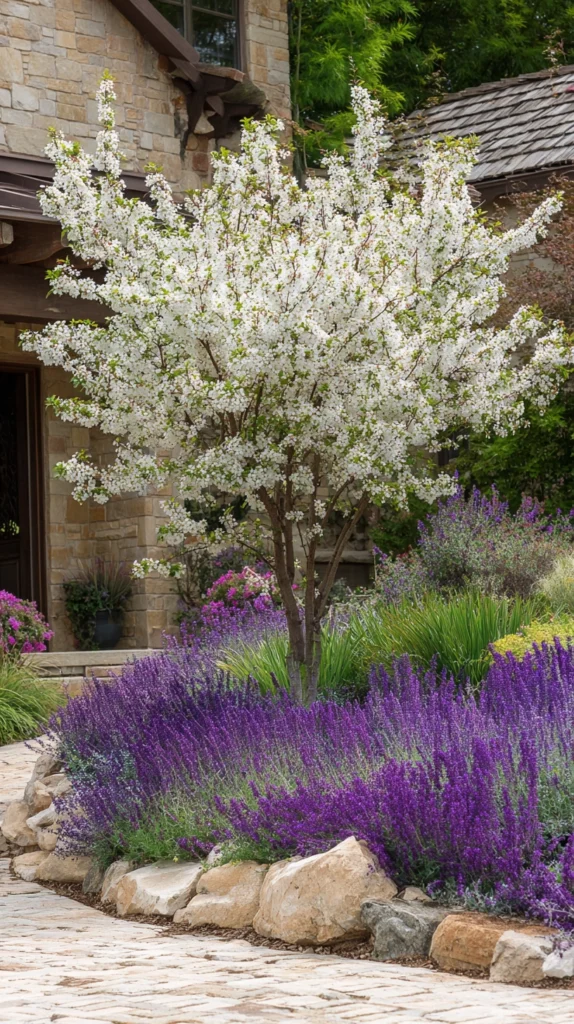
The amelanchier, or snowy mespilus, is a multi-stemmed small tree of exceptional seasonal versatility. It produces delicate white spring blossom, fresh green summer foliage, spectacular fiery autumn color, and attractive winter structure — making it one of the hardest-working trees available to the home gardener.
Combined with masses of salvia in deep purple and blue tones planted beneath and around its base, the amelanchier creates a combination that is colorful, wildlife-friendly, and visually rich across every season. It suits informal, naturalistic, and contemporary garden styles with equal success.
8. Cloud-Pruned Pine and Ornamental Grass Combination
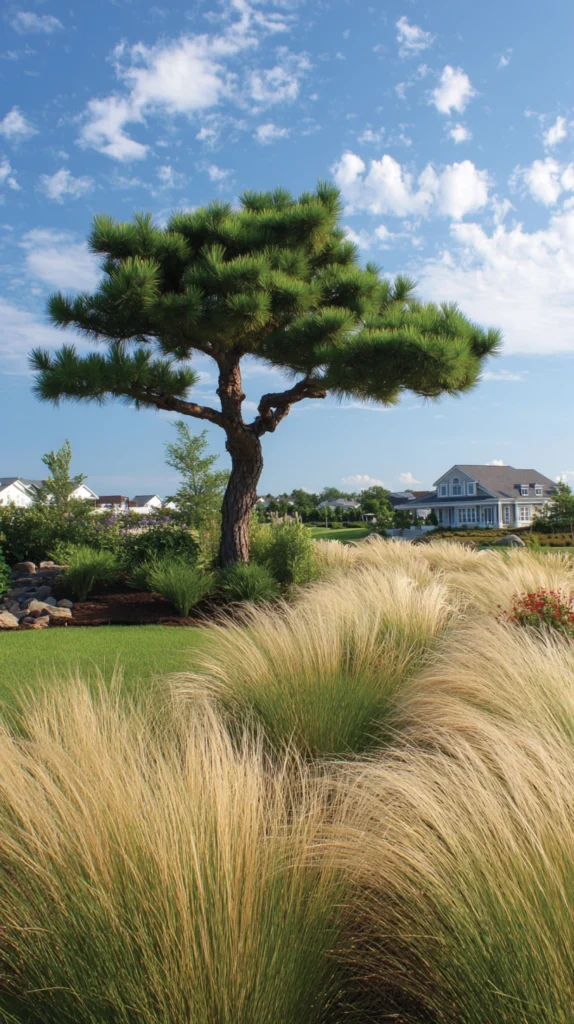
Cloud pruning — the Japanese art of trimming trees and shrubs into rounded, billowing cloud-like forms — has become increasingly popular in Western garden design, and a cloud-pruned pine or box shrub paired with flowing ornamental grasses creates a combination of extraordinary contrast and visual tension.
The disciplined, sculptural forms of the cloud-pruned specimens sit in beautiful opposition to the loose, free-flowing movement of grasses like Karl Foerster or miscanthus. This contrast between control and freedom, structure and movement, creates a planting combination with genuine artistic quality.
9. Crab Apple Tree and Allium Underplanting
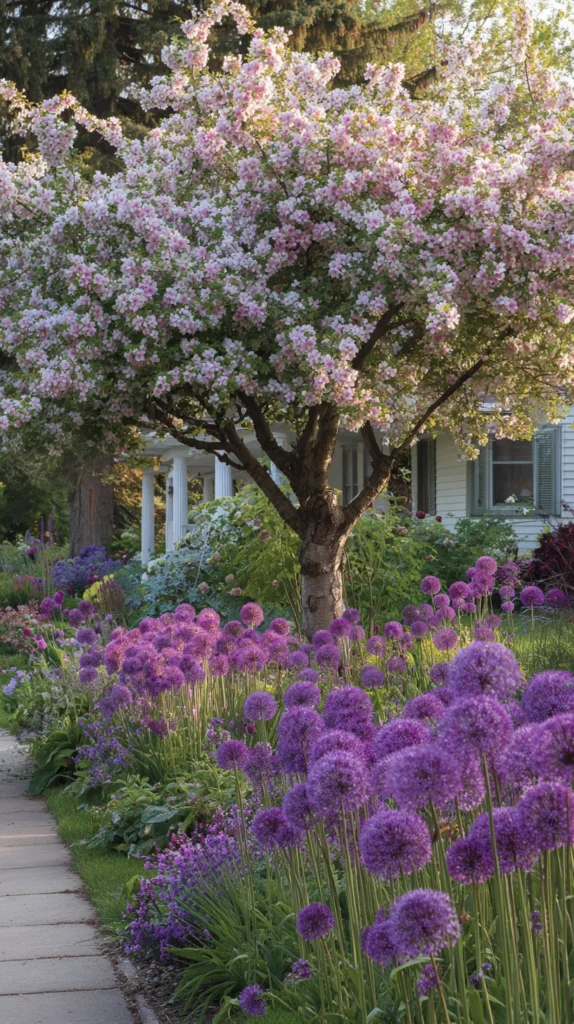
The crab apple is a magnificent small tree that earns its place in any front garden through its extraordinary seasonal generosity. Spring brings masses of blossom in white, pink, or deep rose, summer offers attractive foliage and developing fruit, and autumn delivers jewel-bright berries that persist well into winter.
Underplant with alliums — their spherical purple flower heads appearing in late spring just as the blossom fades — and you create a seamless succession of interest that frames your home beautifully from March through to December with virtually no gaps in the display.
10. Fastigiate Oak and Photinia Combination
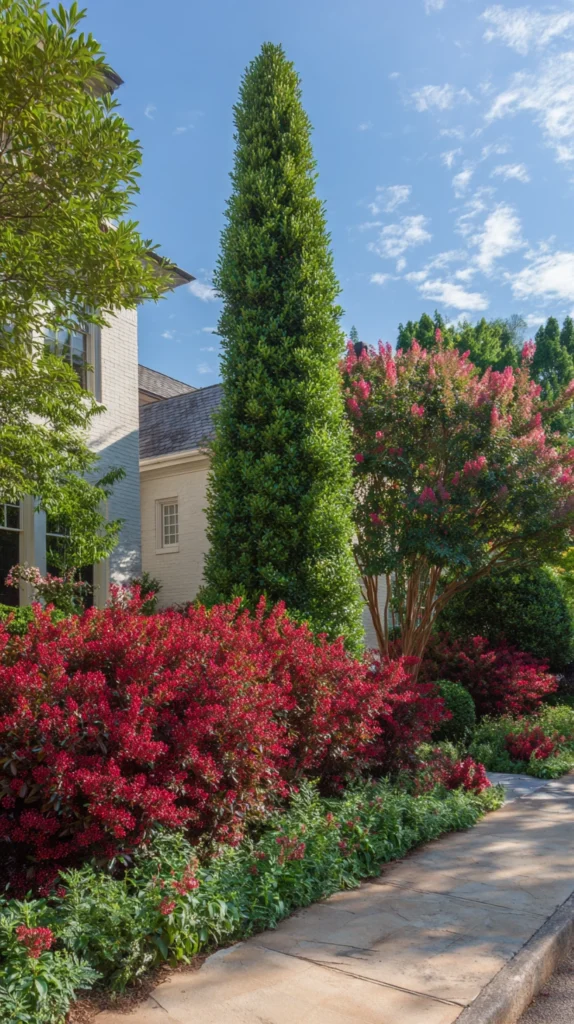
For a combination that delivers both impressive scale and reliable year-round color, the fastigiate or columnar oak paired with photinia is an outstanding choice.
The oak provides vertical drama and a sense of permanence and longevity, its narrow upright form taking up far less horizontal space than a standard oak while delivering all the majesty.
Photinia, with its brilliant red new growth flushing repeatedly throughout the growing season against a backdrop of deep glossy green, provides vivid color and evergreen body at mid level, creating a combination of real presence and visual energy.
11. Weeping Pear and Lavender Combination
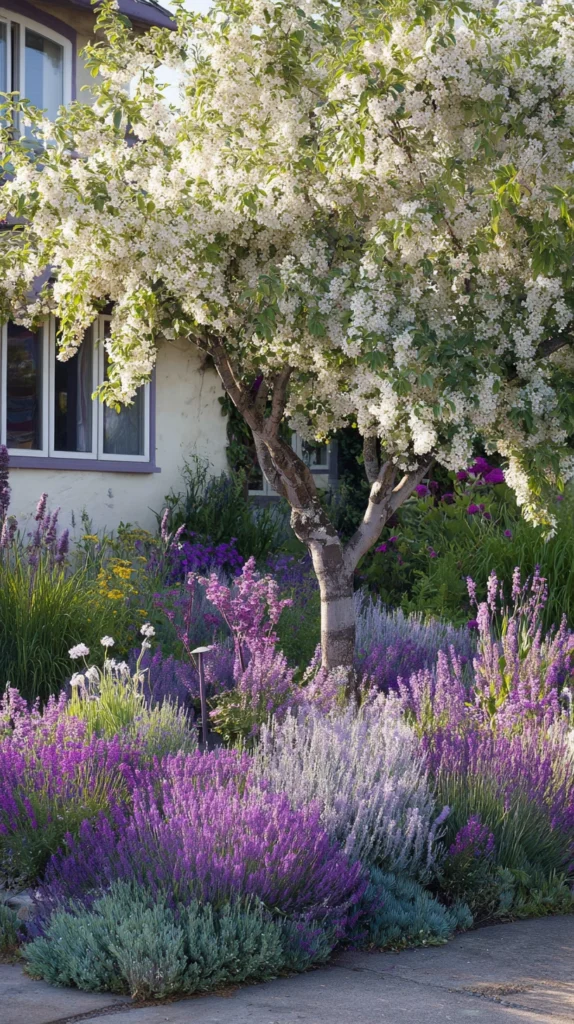
The weeping silver pear — Pyrus salicifolia Pendula — is one of the most elegant small trees available, its cascading silver-grey foliage creating a soft, fountain-like form that is graceful and romantic in equal measure.
Planted as a focal specimen and surrounded by a generous planting of lavender, the combination of silver foliage and purple-blue flower spikes creates a tonal harmony that is quietly beautiful and deeply sophisticated. This pairing suits formal, cottage, and contemporary gardens equally well and requires minimal maintenance once established.
12. Multi-Stem Birch and Fern Ground Cover
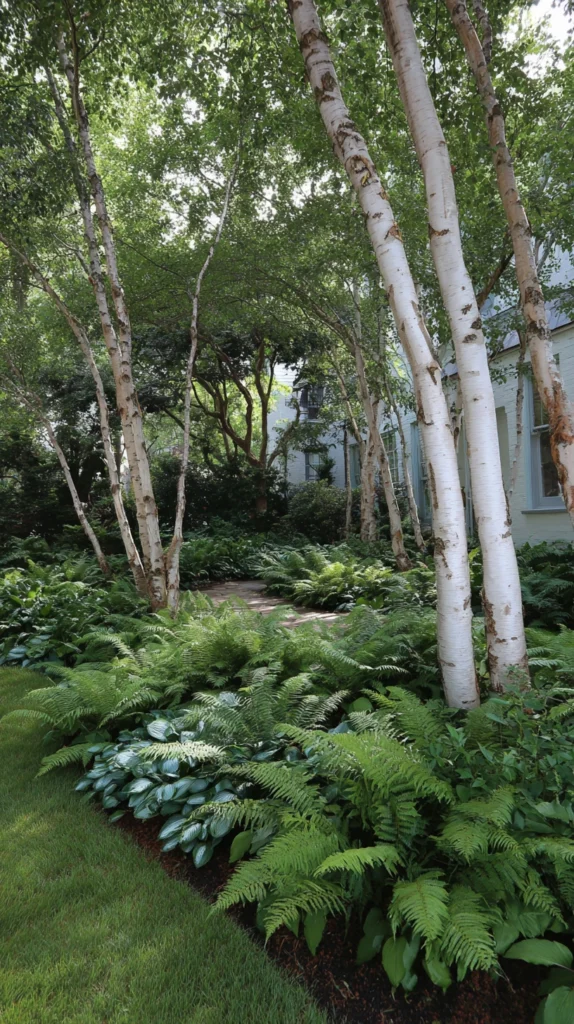
Multi-stem birch trees — grown with several trunks emerging from a single base rather than a single central stem — have a sculptural quality that makes them feel more like living art installations than conventional garden trees.
Their multiple white stems create complex patterns of light and shadow, particularly in winter when the canopy is bare. Underplant with a sweeping ground cover of hardy ferns in deep, lustrous green, the combination creates a woodland-inspired composition of striking elegance that requires very little ongoing maintenance once the ferns have established.
13. Camellia and Japanese Forest Grass Combination
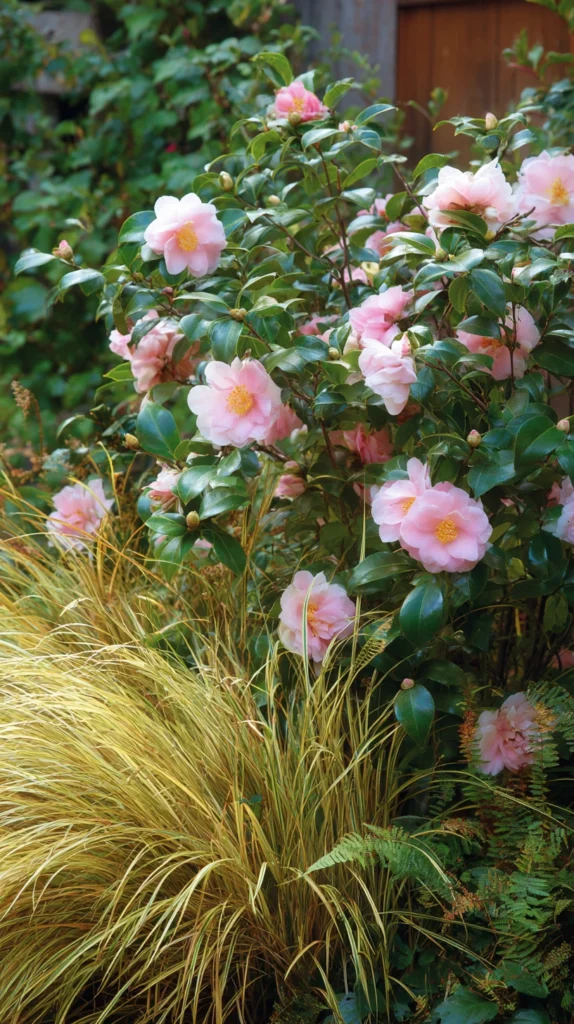
Camellias are among the most spectacular flowering shrubs available, producing extraordinary blooms in deep red, soft pink, white, and bicolor varieties from late winter through spring. Their year-round glossy dark evergreen foliage provides reliable structure and backdrop value, while their flowering season delivers a display of almost tropical exuberance.
Pair them with the gently arching, golden-toned Japanese forest grass — Hakonechloa macra — at their base for a combination that brings textural contrast, gentle movement, and a complementary warm tone that flatters the camellia’s blooms beautifully.
14. Standard Wisteria and Box Hedging Frame
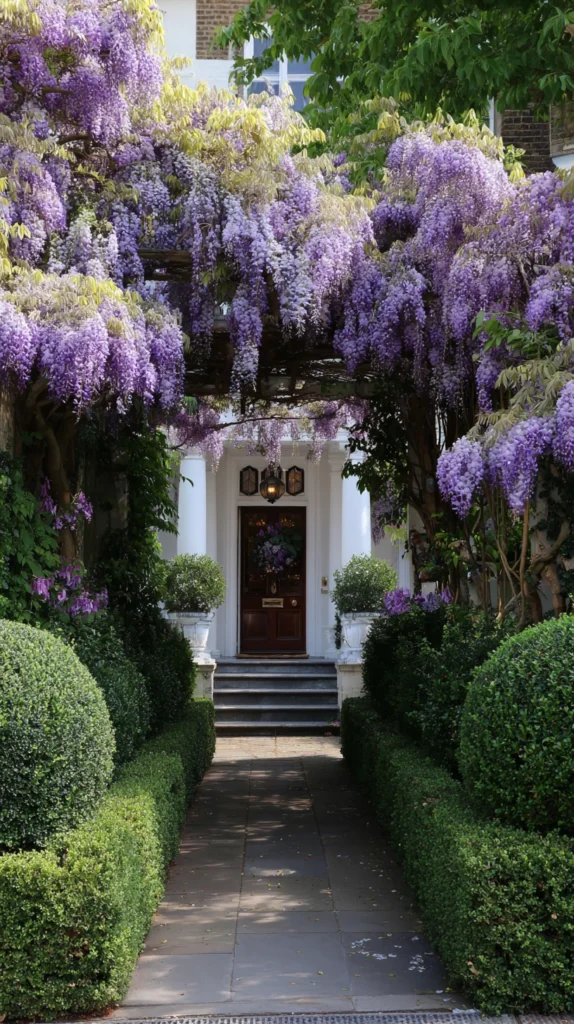
Training wisteria as a standard — a single upright stem crowned with a rounded head of cascading purple flower racemes — transforms one of gardening’s most romantic climbers into a sculptural focal point of breathtaking beauty.
Pair a pair of standard wisterias flanking a front entrance with a low, clipped box hedging frame defining the boundary, and you create an entrance composition of genuine grandeur and romance. The contrast between the disciplined geometry of the box and the extravagant, cascading blooms of the wisteria is one of the most beautiful combinations in all of garden design.
15. Scots Pine and Heather Combination
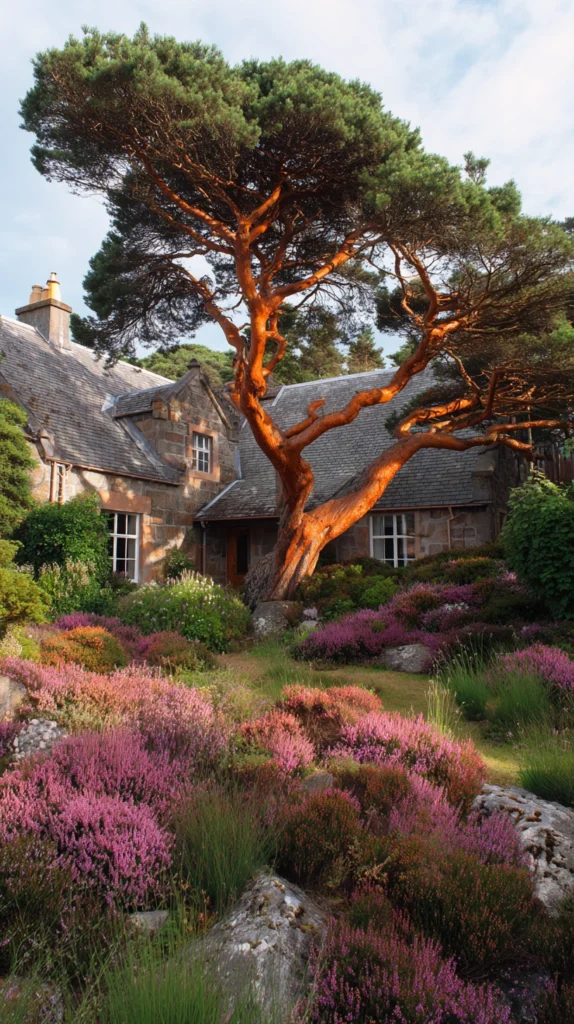
For a front yard composition with a wild, elemental quality that feels connected to ancient landscapes, the combination of a statement Scots pine and sweeping heather planting is unmatched. The Scots pine’s distinctive orange-red bark, sculptural branching structure, and blue-green needles create a specimen of extraordinary character and presence.
Underplanted with heather in a range of flowering varieties — covering pink, purple, white, and crimson across different seasons — the combination creates a naturalistic tapestry that looks magnificent year-round and requires almost no maintenance once the heather is established.
Final Thoughts
The trees and shrubs you choose to frame your home are among the most significant and long-lasting design decisions you will ever make for your property. Unlike paint colors or furniture, great planting only improves with time — growing in stature, confidence, and beauty with every passing season.
Choose combinations that work in layers, that provide interest across multiple seasons, and that suit both your home’s architectural character and your local growing conditions. Do this thoughtfully, and your home will rise from its landscape like a champion deserving of every podium moment.