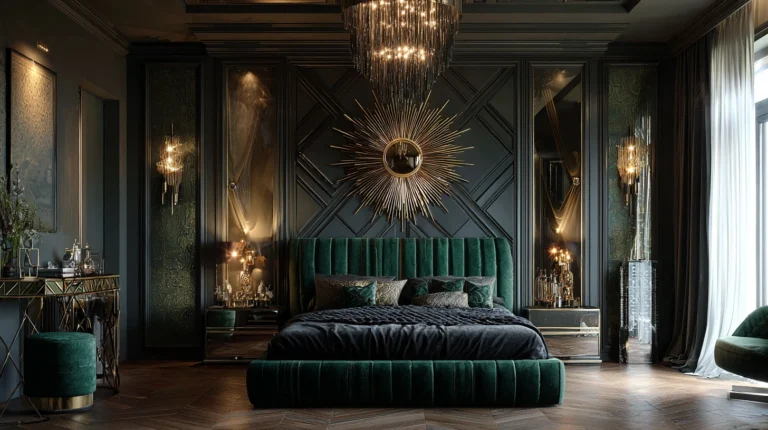

14 Windowless Room Ideas That Feel Bright and Airy Anyway
A windowless room is one of the most common and most consistently mishandled design challenges in residential interiors — a space that most people approach with resignation, treating the absence of natural light as a permanent sentence to darkness, heaviness, and the particular kind of oppressive claustrophobia that poorly handled interior rooms almost inevitably produce.
The reality is that a windowless room, designed with genuine intelligence and a clear understanding of how light, colour, material, and spatial perception interact, can feel remarkably bright, surprisingly airy, and genuinely comfortable to occupy for extended periods — not despite the absence of windows but through a series of deliberate design decisions that compensate for that absence so effectively that it ceases to feel like a limitation at all.
The principles that govern successful windowless room design are not complicated, but they require commitment — to pale palettes, to layered artificial lighting, to reflective surfaces, to the spatial tricks that create the perception of volume where the architecture provides none. These fourteen ideas demonstrate exactly how to apply those principles across a range of room types, budgets, and design aesthetics.
1. Paint Everything the Same Warm White
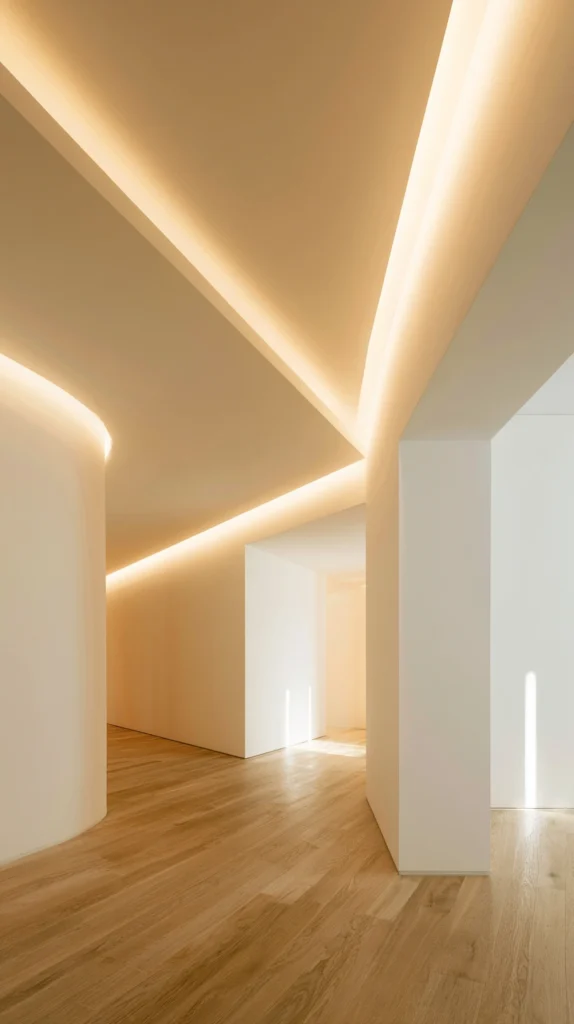
The single most powerful intervention available in a windowless room — and the one that costs least and delivers most — is painting every surface, including the ceiling and any architectural woodwork, in the same warm white.
The elimination of contrast between wall, ceiling, and trim removes every visual boundary that makes a room feel contained and defined, creating instead a continuous pale envelope that the eye reads as more expansive and more luminous than any multi-tone scheme.
Choose a warm white with a yellow or pink undertone rather than a cool white with grey or blue bias — cool whites read as flat and institutional under artificial light, while warm whites glow and create the impression of reflected natural light even when none is present.
2. Layer Artificial Lighting Across Multiple Sources and Heights
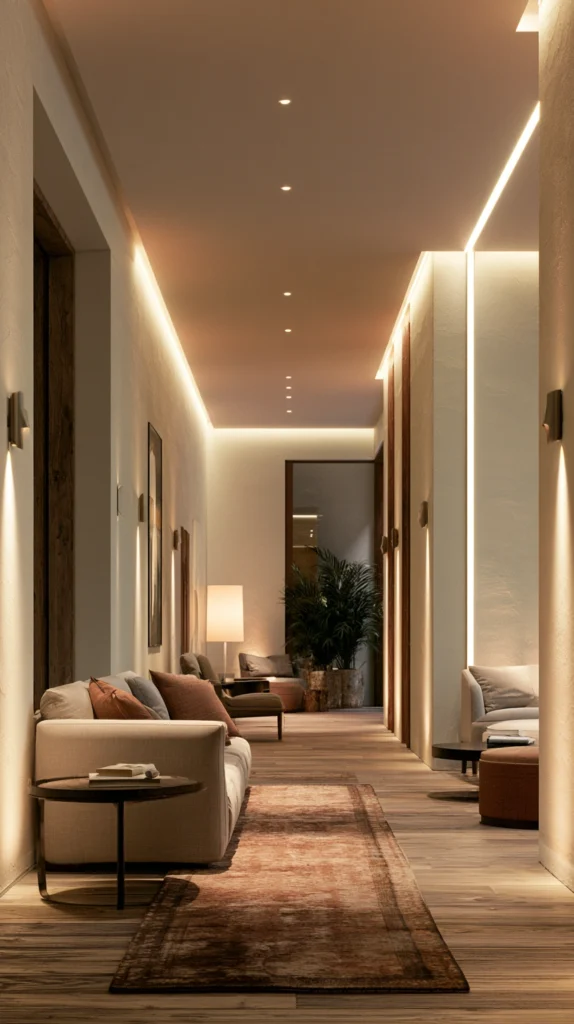
A windowless room lit from a single overhead fixture is a windowless room doing the worst possible version of itself — the flat, shadowless, uniformly distributed light of a single ceiling source creates exactly the oppressive, institutional quality that makes people uncomfortable in interior spaces.
Replace it with a minimum of four light sources at different heights: recessed downlights for general ambient illumination, wall sconces at eye level for warmth and dimension, table or floor lamps for pools of intimate light in seating or working areas, and perhaps uplighters positioned in corners to wash light up the walls and create the impression of height.
All on dimmer switches, all in warm bulb temperatures between 2700K and 3000K, the layered scheme creates a room that feels genuinely alive with light rather than merely illuminated.
3. Install a Large Backlit Mirror or Mirror Wall
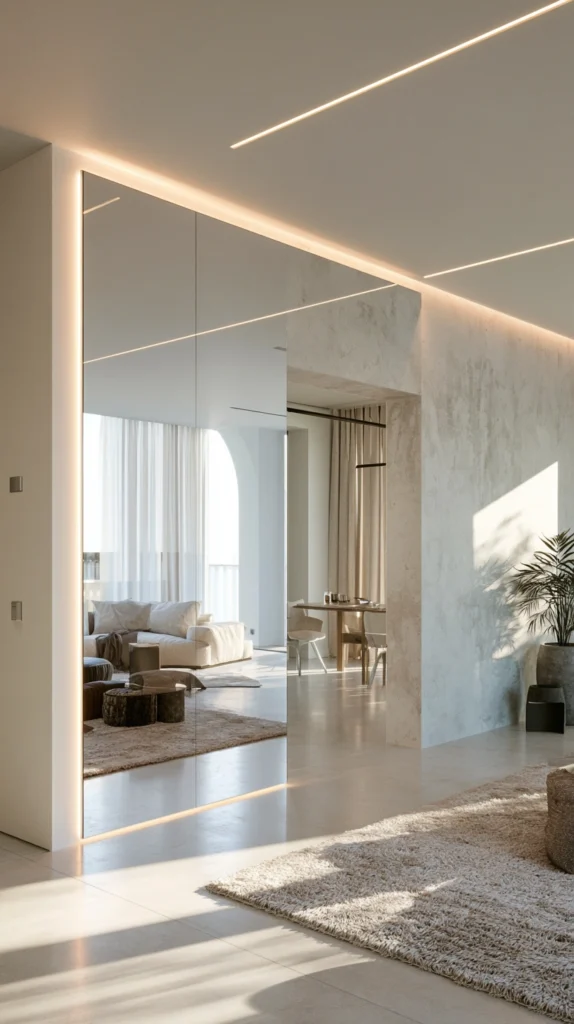
A full-length mirror, a large framed mirror positioned on the room’s primary wall, or a run of mirror panels covering an entire wall surface creates a spatial doubling effect that is the closest thing available to actually cutting a window into a solid wall.
The reflection creates depth, apparent volume, and the visual impression of a second space existing beyond the room’s physical boundary. For maximum effect, position the mirror or mirror wall directly opposite the room’s primary light sources so that the artificial lighting is reflected into the space and the room appears lit from two directions rather than one.
A backlit mirror — LED strip lighting installed behind a frameless mirror panel, the light glowing around its perimeter — adds a further layer of luminosity that reads as genuinely architectural rather than simply decorative.
4. Use Skylights or Sun Tunnels if the Architecture Allows
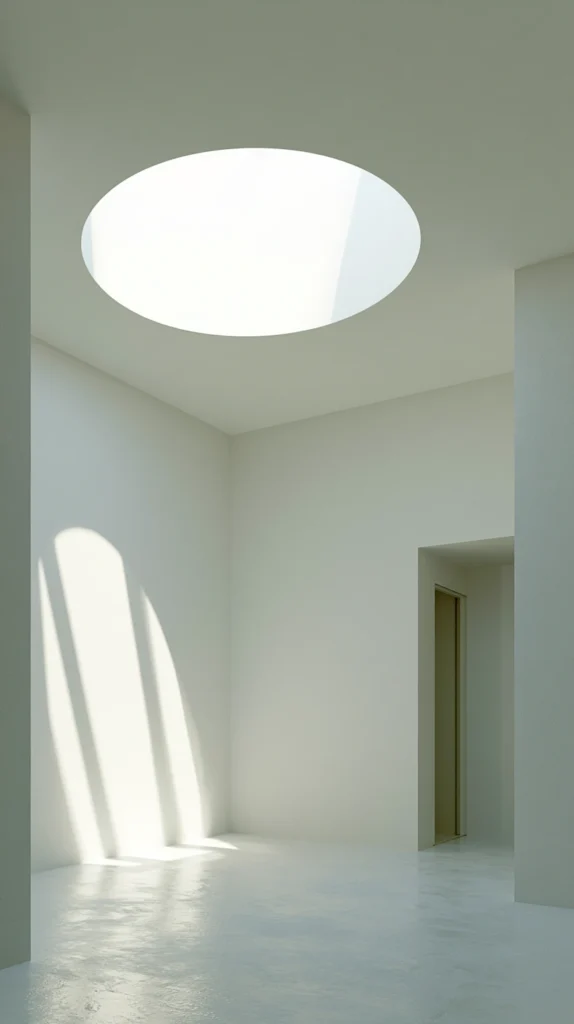
Where the ceiling of the windowless room is directly below a roof or an accessible floor above, the installation of a skylight or a sun tunnel — a highly reflective tubular shaft that captures daylight at roof level and delivers it through a diffuser at ceiling level — is the most complete and most genuinely effective solution to the absence of natural light, introducing real daylight rather than simulating it through artificial means.
Sun tunnels in particular are remarkably effective even in rooms where a full skylight is structurally impractical — the reflective tube can negotiate joists, insulation, and moderate roof-to-ceiling distances while delivering a quality of natural light that transforms the room’s atmosphere completely and immediately.
The installation cost is modest relative to the impact, and the quality of natural light delivered, while less than a full window, is real, changing through the day, and immediately distinguishable from artificial light by the human nervous system.
5. Choose Furniture in Light, Pale, and Reflective Materials
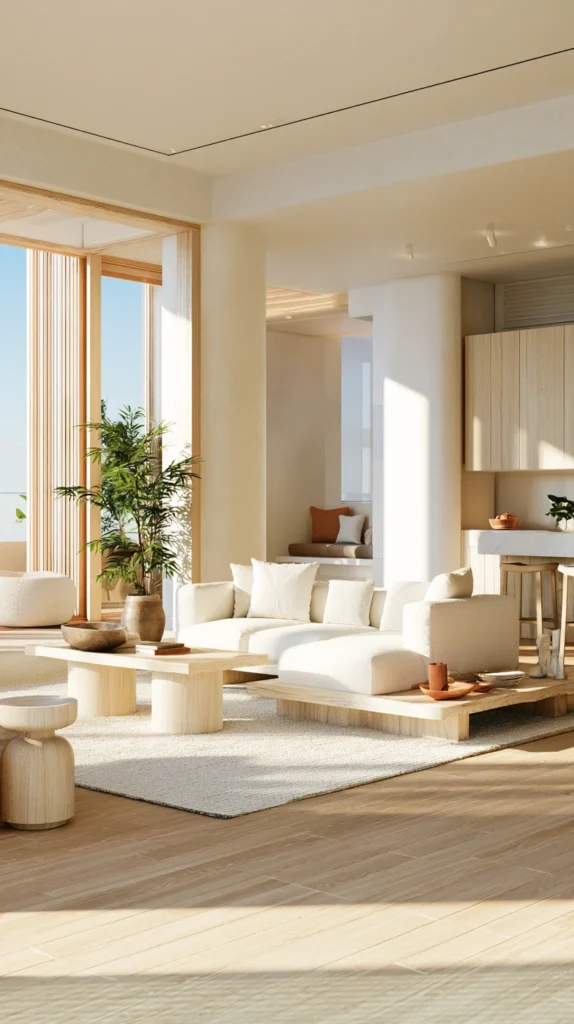
The furniture in a windowless room should be selected with the same discipline applied to the wall colour — pale tones, light materials, reflective surfaces, and a scale that keeps the room’s visual weight as low as possible.
White-painted furniture, natural pale timber like ash or light oak, glass-topped tables, acrylic or lucite chairs that occupy visual space without blocking light, pale linen or cotton upholstery: each of these choices contributes to the room’s overall luminosity by reflecting available light rather than absorbing it.
Avoid dark wood furniture, deep-toned upholstery, and heavy, visually dense pieces that absorb the room’s artificial light and make the space feel more enclosed rather than less — in a windowless room, every dark surface is a small subtraction from the room’s overall brightness that the artificial lighting scheme must work harder to compensate for.
6. Hang Full-Height Curtains Around a False Window
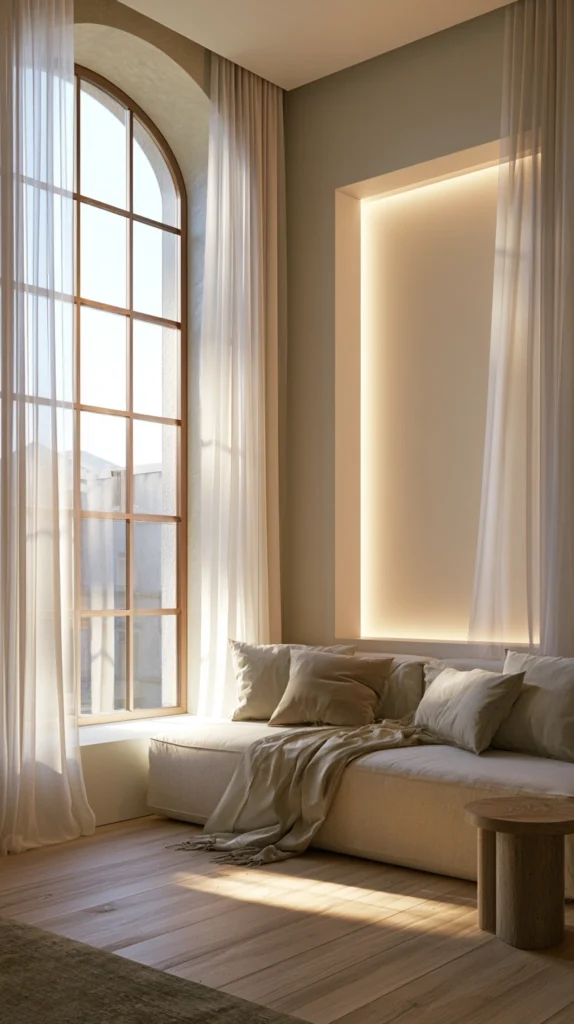
A false window — a rectangular frame mounted on the wall at window height and proportion, hung with full-length curtains on either side that can be drawn back during the day as though revealing a real window behind them.
It is one of the most effective and most psychologically convincing spatial tricks available in a windowless room, creating the visual suggestion of an exterior opening even in the complete absence of one. Install a warm white LED panel or a daylight-temperature light source within the frame behind a frosted or translucent panel that diffuses the light to read as outdoor light coming through glass.
The combination of the window frame, the hanging curtains, and the backlit panel creates an impression that genuinely registers as a window at the level of peripheral vision and spatial intuition, even when it does not withstand close inspection. Add a window box of artificial or preserved plants along the frame’s lower edge to complete the illusion.
7. Introduce Vertical Lines to Create the Perception of Height
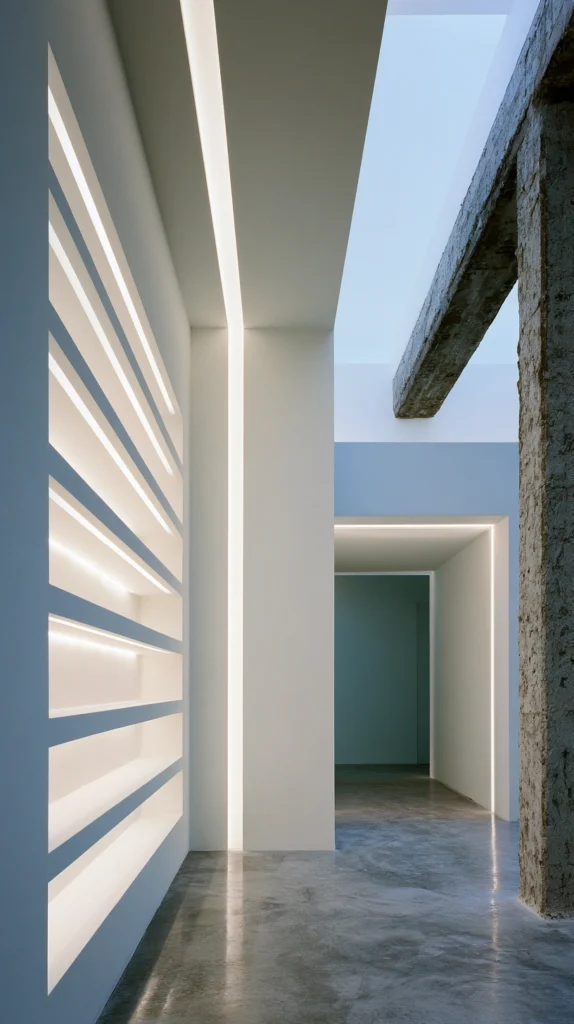
Vertical elements — floor-to-ceiling bookshelves, vertically panelled walls, tall narrow mirrors, floor-length curtains hung from the highest point of the ceiling rather than from the window top, vertical stripe wallpaper in a tonal pale palette — draw the eye upward and create the perception of height in a room that the ceiling height alone may not genuinely possess.
The perception of height is closely linked to the perception of spaciousness and airiness — a room that reads as tall reads as less enclosed, and a room that reads as less enclosed reads as more comfortable and more livable, regardless of its actual dimensions. In a windowless room where every spatial perception tool is valuable, the deliberate use of vertical lines is one of the most consistently effective and most easily implemented.
8. Use Glass Partitions to Borrow Light From Adjacent Spaces
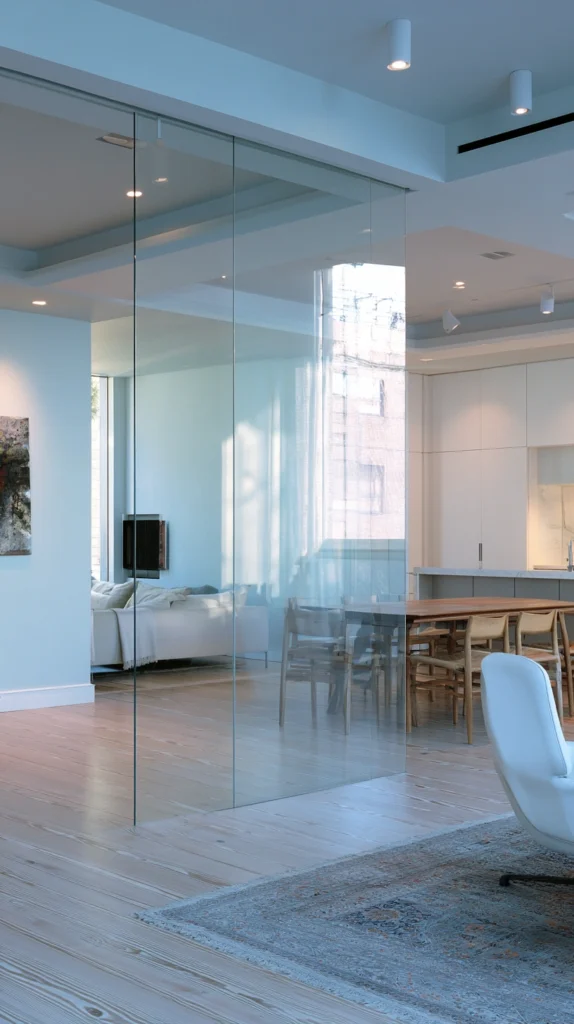
Where a windowless room adjoins a naturally lit corridor, hallway, or neighbouring room, replacing the solid wall or door between them with a glass partition or a glazed internal door allows natural light from the adjacent space to penetrate the windowless room without compromising privacy or the room’s spatial definition.
Frameless glass panels, steel-framed glass partitions in the Crittall style, or simply replacing a solid door with a glazed one: each intervention introduces the quality of changing natural light — moving through the day as the light in the adjacent space moves — that transforms the atmosphere of the windowless room far more effectively than any static artificial lighting solution.
The borrowed light is never as generous as a direct window, but its quality — natural, shifting, connected to the exterior — is immediately and significantly better than artificial light alone.
9. Install Gloss or Satin Finish on Walls and Ceilings
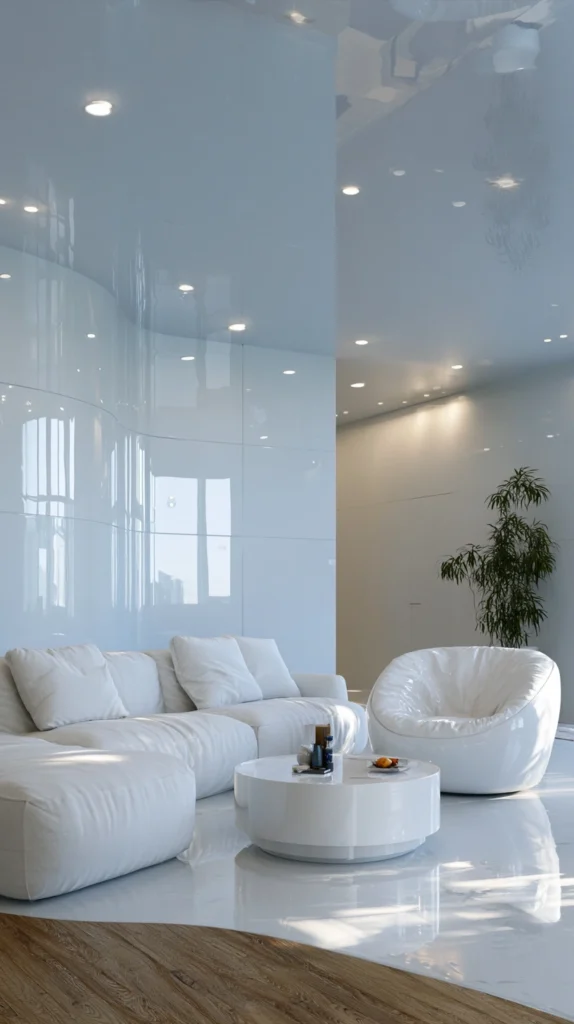
A wall painted in a flat matt finish absorbs a measurable percentage of the light that strikes it, while the same wall painted in an eggshell, satin, or low-sheen finish reflects significantly more of that light into the room — a difference that is imperceptible in a well-lit room with natural light but genuinely significant in a windowless room where every photon of artificial light needs to work as hard as possible.
Painting the ceiling in a white satin finish is the single most cost-effective lighting upgrade available in a windowless room — the light from downlights and pendants reflects off the ceiling surface and redistributes throughout the space, increasing the room’s overall perceived brightness without any additional electrical installation.
Avoid high-gloss finishes on walls, which create distracting reflections and a commercial rather than residential quality — satin or eggshell provides the reflectivity benefit without the visual drawback.
10. Keep the Floor Pale and Reflective
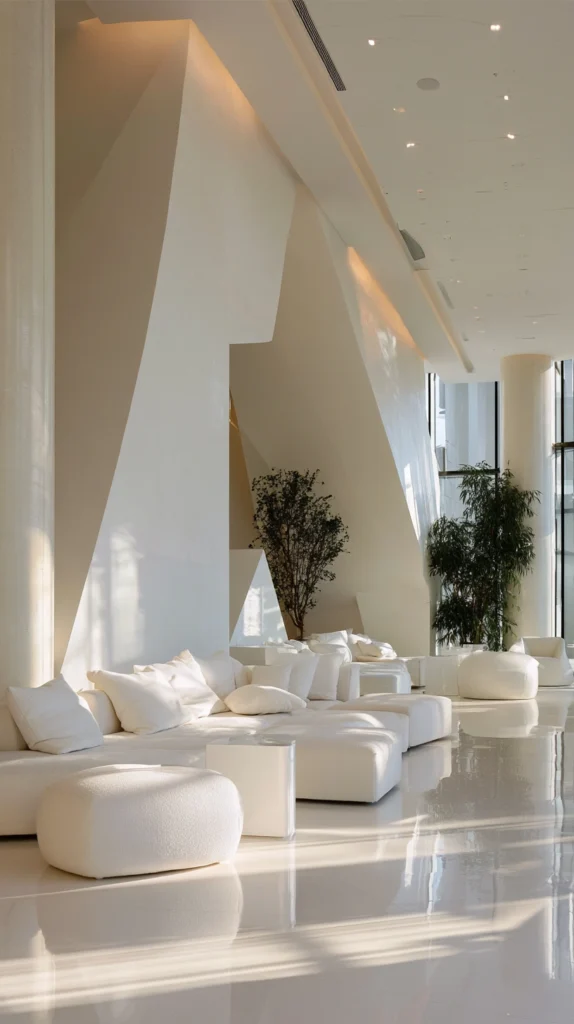
A pale floor — white-washed timber, light stone, cream-toned large-format porcelain, or bleached concrete — reflects upward light from floor-level sources and contributes to the room’s overall luminosity in a way that dark flooring entirely prevents.
The floor is the largest single surface in the room and the one most consistently ignored in lighting calculations — a dark floor absorbs a significant quantity of the room’s artificial light at the lowest level of the space, where uplighting and lamp light is most active, while a pale floor bounces that same light upward and outward, distributing it more evenly through the room’s lower half. Keep rugs pale and limited in area so that they do not cover the reflective floor surface to a degree that negates its contribution to the room’s brightness.
11. Use Scent and Sound to Create the Perception of Openness
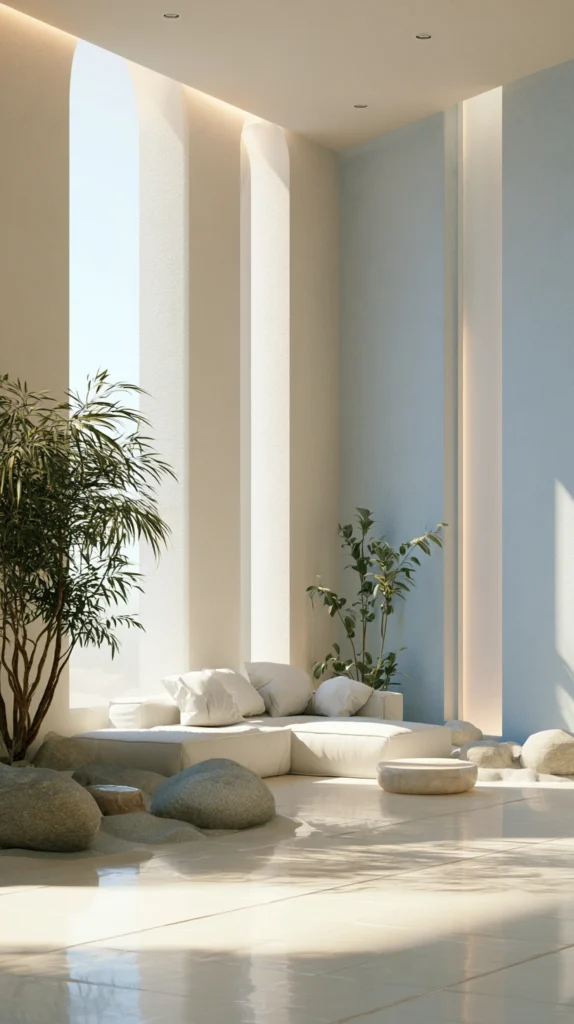
The perception of a room as bright, airy, and spacious is not exclusively a visual experience — it involves the full sensory environment of the space, and a windowless room that smells of fresh air, coastal botanicals, or clean linen, and that contains the ambient sound of nature through a well-positioned speaker, engages the senses in ways that reinforce the visual impression of openness rather than the physical reality of enclosure.
Diffusing essential oils of eucalyptus, sea salt, white tea, or green fig — scents that the brain associates with outdoor and coastal environments — creates a subtle but measurable shift in how the room is experienced. A low-volume ambient soundtrack of birdsong, gentle wind, or light rainfall playing from a discreet speaker completes the sensory suggestion of connection to the exterior that the room’s architecture cannot provide.
12. Choose Art That Introduces Visual Depth and Landscape
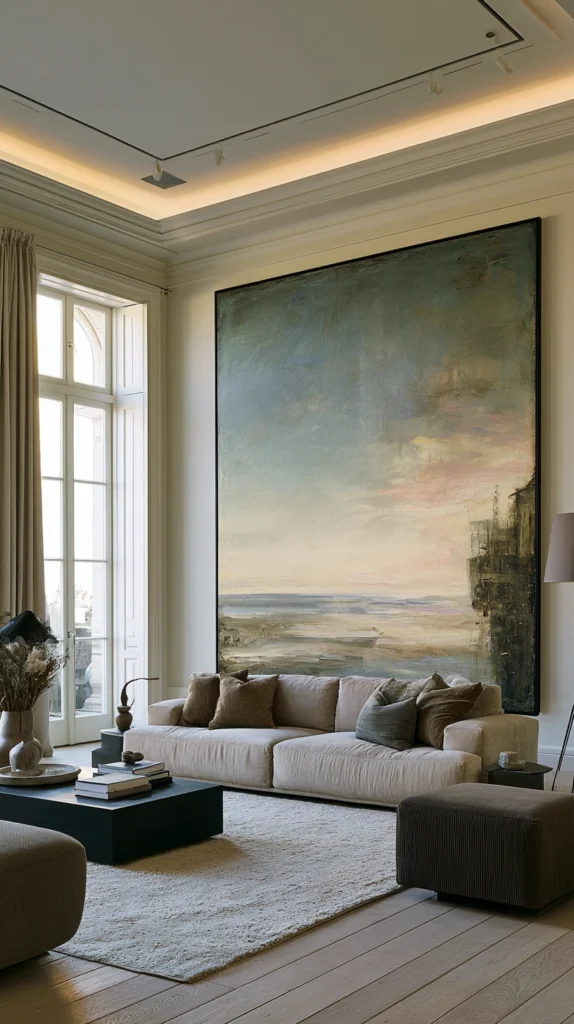
A large landscape painting, a photographic print of an expansive exterior view — a seascape, a mountain horizon, a forest canopy, an open sky — or a trompe-l’oeil mural that creates the illusion of a doorway or window opening onto a garden beyond is the decorative intervention in a windowless room that works hardest and contributes most to the perception of spatial depth and visual openness.
The brain responds to represented landscape with many of the same responses it produces when viewing actual landscape — a degree of spatial expansion, a reduction in the sense of confinement, a quality of visual rest — and a large, well-chosen landscape image on the primary wall of a windowless room exploits that response directly and effectively. Choose images with strong horizon lines, generous sky, and the particular quality of light that makes outdoor spaces feel genuinely open.
13. Edit Ruthlessly to Prevent Visual Clutter
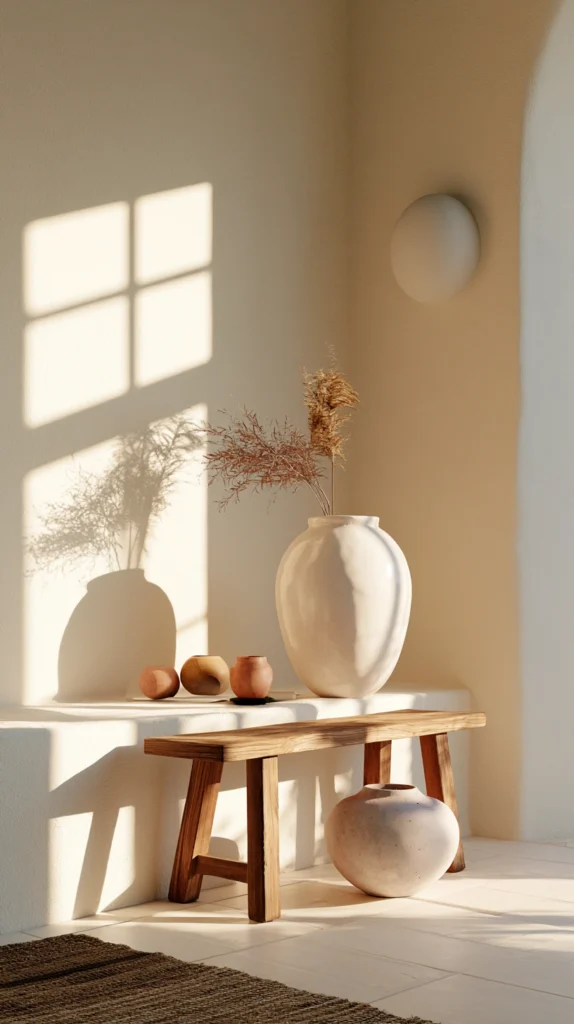
A windowless room that is visually cluttered — crowded surfaces, competing objects, too much furniture, too many colours, too much pattern — feels smaller, darker, and more claustrophobic than the same room edited to a fraction of its object count, because visual clutter engages the eye in constant micro-movement that the brain interprets as spatial compression.
Apply a more stringent editing standard to a windowless room than to any other space in the house — remove every object that does not earn its place with genuine beauty or genuine function, reduce furniture to the minimum required for the room’s purpose, and leave surfaces as clear as the room’s use allows.
The windowless room that breathes — that has genuine negative space, genuine visual pauses between objects and between surfaces — is the one that feels airy despite its architecture, and the one that feels most comfortable to spend time in over extended periods.
14. Install Circadian Rhythm Lighting That Changes Through the Day
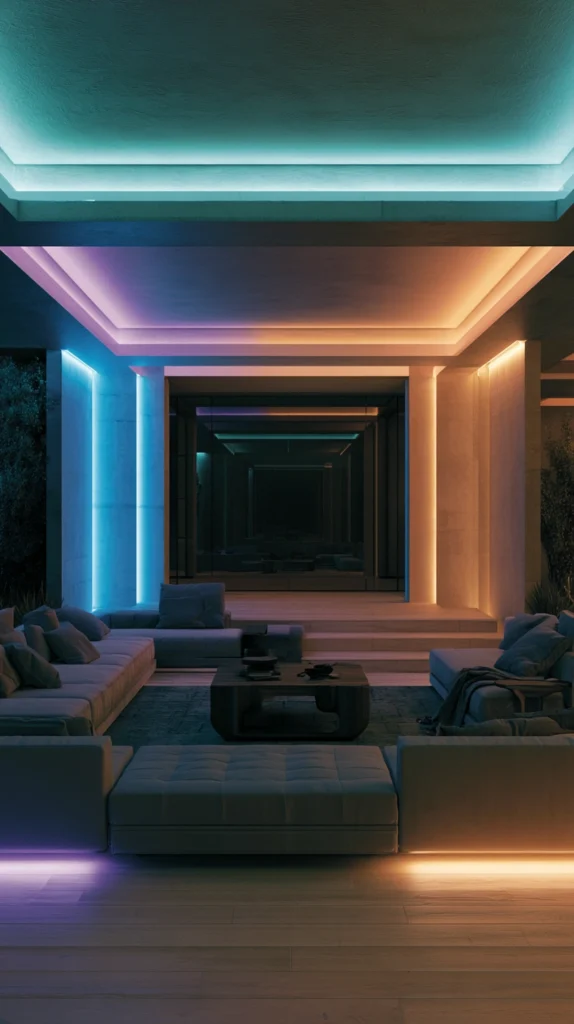
A smart lighting system capable of shifting colour temperature and intensity through the day — replicating the natural progression from cool, bright morning light through warm afternoon tones to the amber quality of evening — gives a windowless room the one quality that fixed artificial lighting cannot provide and that natural light delivers automatically: the sense of time passing, of being connected to the rhythm of the day outside.
Cool white light at 5000K in the morning creates an alertness and brightness that mimics the quality of early daylight. Warming gradually through the afternoon to 3000K and settling at 2200K by evening, the shifting light temperature creates a room that feels dynamically connected to the exterior world rather than sealed off from it in an unchanging artificial environment.
Final Thoughts: Designing a Windowless Room Worth Spending Time In
The windowless room that feels genuinely bright and airy is the product of a committed, comprehensive approach to every variable the designer can control — colour, lighting, material, scale, reflection, and sensory environment — rather than a single clever intervention applied to an otherwise unconsidered space.
Start with the pale palette and the layered lighting scheme, address the floor and ceiling as reflective surfaces rather than neutral backgrounds, and edit the room’s contents with more discipline than any other space in the house.
The windowless room done properly is not a compromise — it is a design problem solved with intelligence and care, and the solution, when complete, is a space that surprises everyone who enters it with how little the absence of windows actually matters.