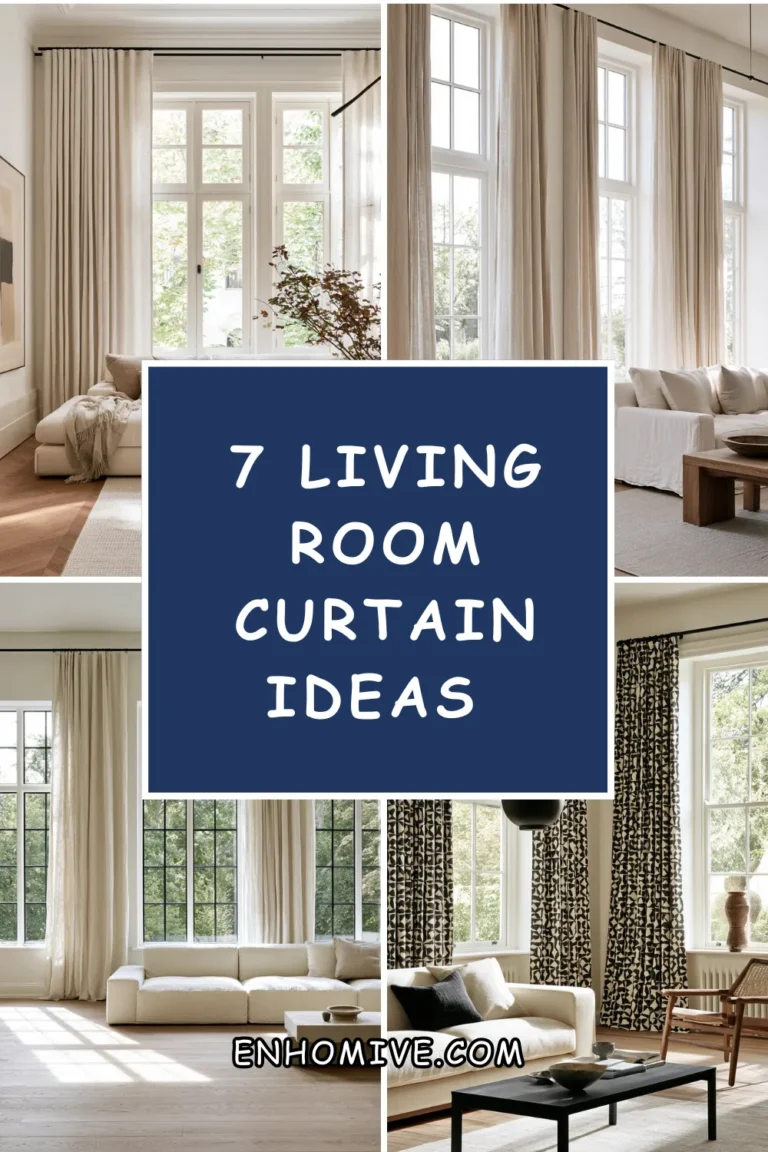

14 “Ugly Corner” Transformations You’ll Want to Copy Immediately
Every home has one. The corner that collects things without purpose, that accumulates the visual residue of indecision — the pile of items that were set down temporarily six months ago and never moved, the awkward angle that no piece of furniture fits, the narrow slice of wall beside the door that is too small to hang art on and too visible to ignore.
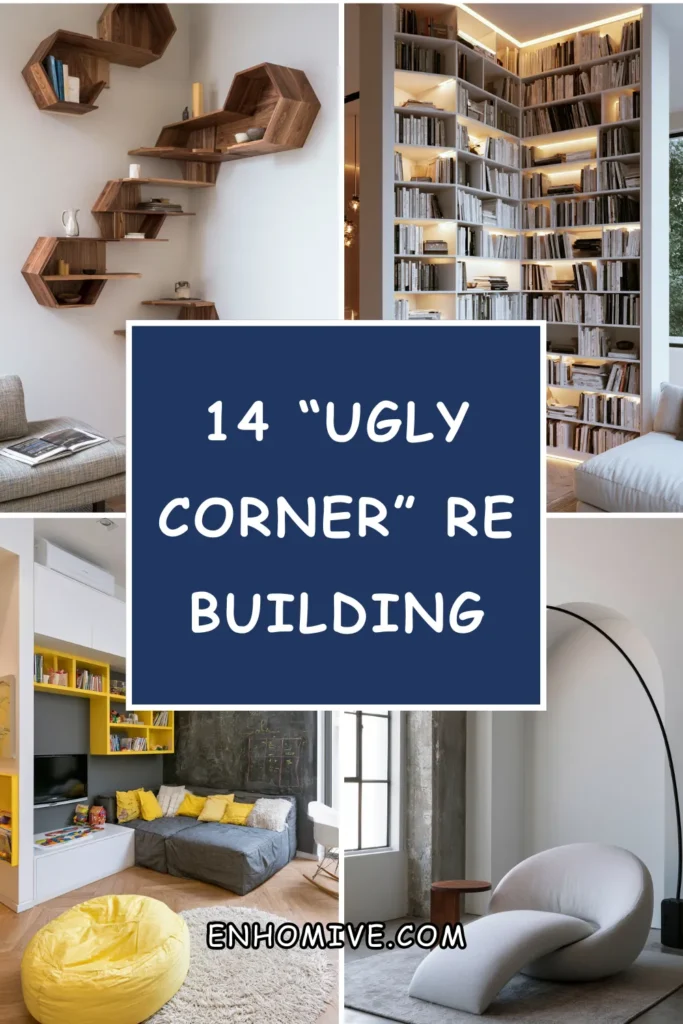
The ugly corner is not a design failure but a design opportunity that has not yet been addressed, and the transformation of a genuinely awkward, genuinely neglected corner into something beautiful, purposeful, and worth looking at is one of the most satisfying and most immediately impactful improvements available to any home at any budget level.
The corner transformation works because it is contained — it asks for decisive action within a limited area rather than the comprehensive rethinking of an entire room, and the result of getting it right is disproportionate to the effort invested. A corner transformed beautifully makes the entire room around it look more considered, more complete, and more deliberately designed than it did before. These fourteen ideas demonstrate exactly how to achieve that transformation across a range of styles, budgets, and corner types.
1. Build a Floor-to-Ceiling Bookshelf Into the Corner
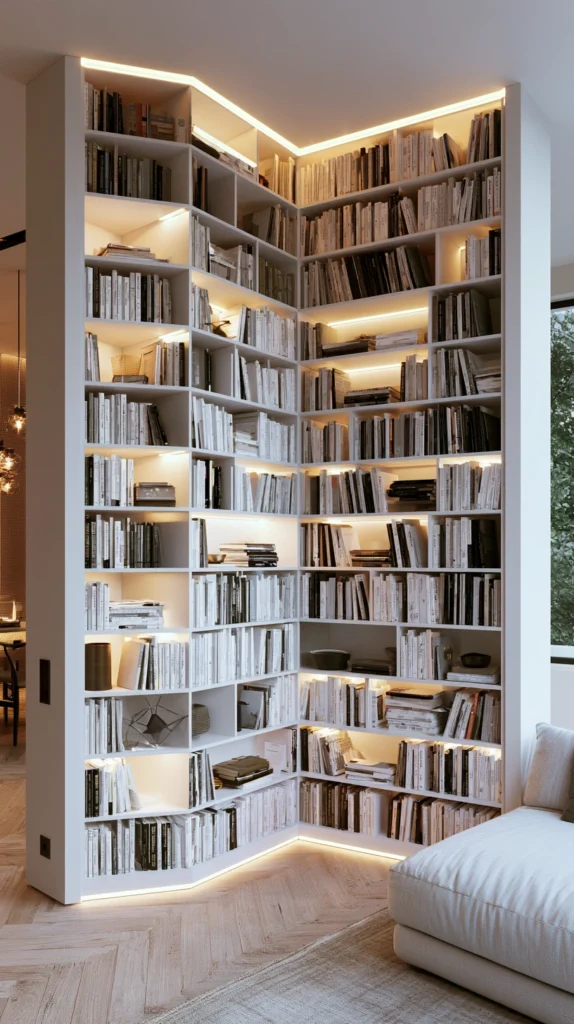
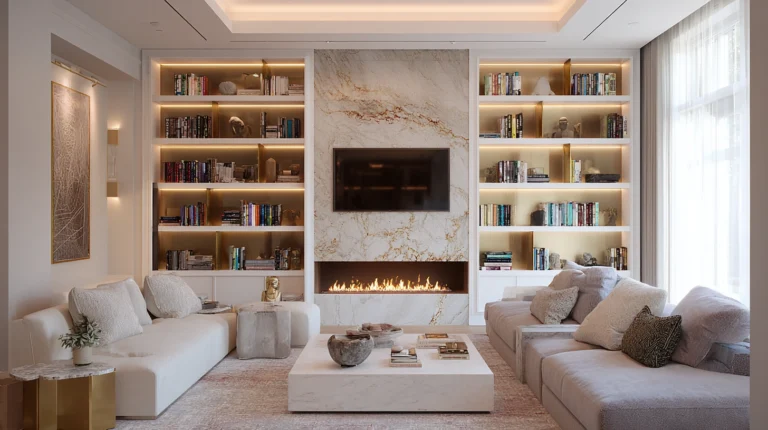
A floor-to-ceiling corner bookshelf — custom-built to fit the specific angle and dimensions of the corner, painted in the same colour as the surrounding walls so it reads as an architectural feature rather than a piece of furniture — transforms the most structurally awkward corner type into the most visually compelling feature in the room.
The wraparound format, with shelves running along both walls of the corner and meeting at the apex, creates a reading alcove of extraordinary character that makes the corner feel intentional, generous, and deeply functional simultaneously. Fill it with genuinely read books arranged by colour or spine tone for maximum visual coherence, and add a single good reading lamp positioned at the corner’s inner edge to complete the transformation from dead space to destination.
2. Create a Maximalist Gallery Wall That Claims the Corner
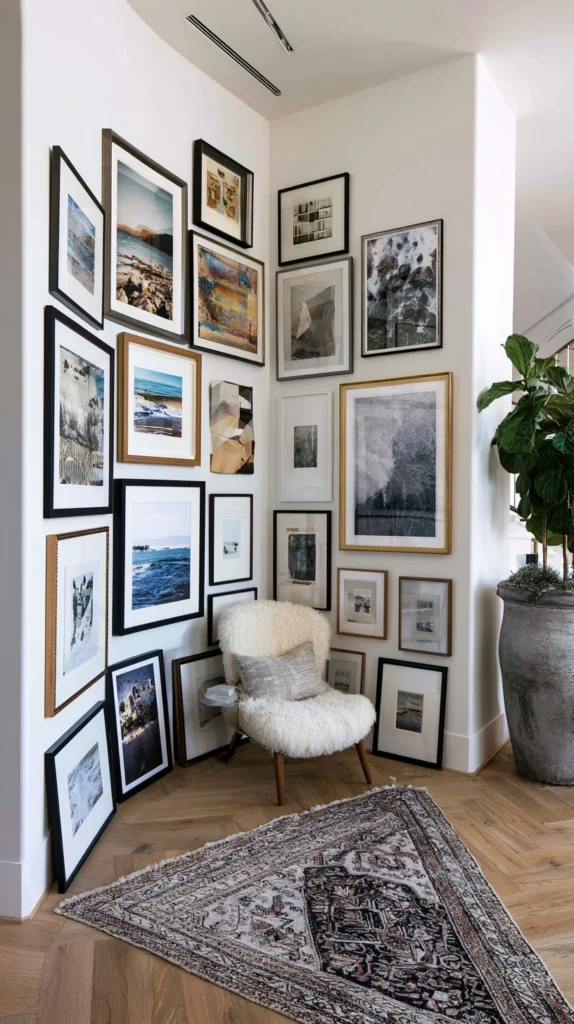
A gallery wall that wraps around the corner — frames of varying sizes, materials, and styles hung across both wall surfaces and continuing through the corner angle itself — is one of the most visually dramatic and most immediately impactful corner transformations available, turning an awkward architectural junction into a composed, energetic display of considerable personality.
The key to making a corner gallery wall work rather than simply covering the walls with frames is the continuity of the arrangement across the corner — frames hung as though the corner does not exist, the composition flowing from one wall to the other without interruption or visual hesitation at the angle. Use frames in a unified finish — all black, all natural timber, all antique gold — to create coherence across a diverse collection of images, prints, and artwork.
3. Install a Window Seat in a Corner Alcove
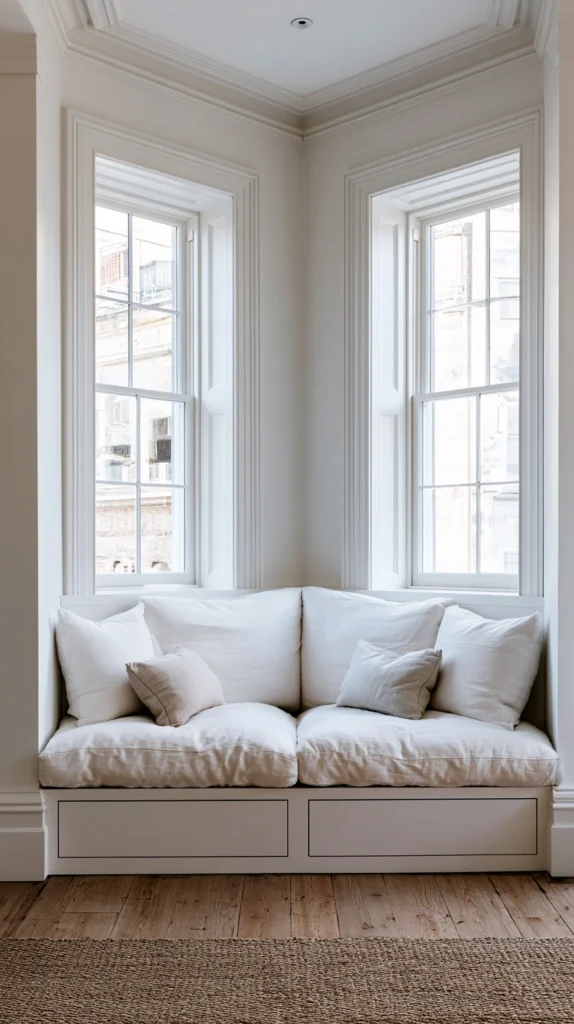
A corner window seat — a cushioned platform built across the corner angle between two windows or beneath a pair of adjacent windows, with storage drawers or hinged lid compartments beneath the seat surface — is the corner transformation that delivers the most complete combination of architectural beauty, practical storage, and genuine daily comfort.
The built-in quality of a corner window seat is the detail that elevates it above a merely placed piece of furniture — it reads as part of the house rather than part of the furnishing, as though it was always there and the room was designed around it. Upholster the seat cushion in a durable fabric that complements the room’s palette, add scatter cushions at the back for reading support, and finish the surround in the same paint or panelling treatment used elsewhere in the room.
4. Transform the Corner Into a Dedicated Bar Area
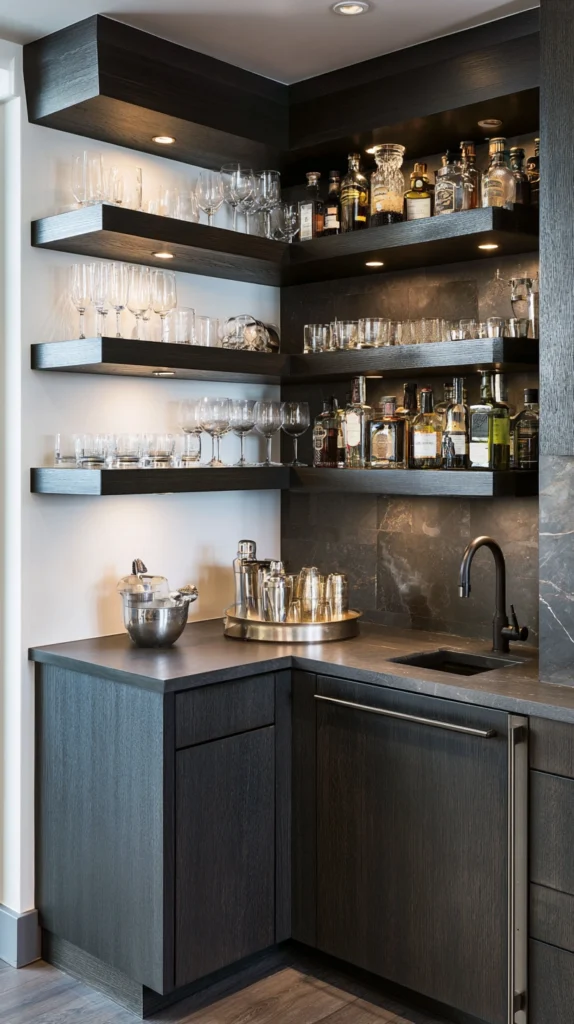
A corner bar — a compact arrangement of open shelving for glassware and bottles, a small counter surface at standing height for drink preparation, and a low-level wine or drinks refrigerator beneath — transforms a redundant corner into the most socially animated feature in any living or dining room, the point around which guests naturally gather and from which every evening gathering is served.
The corner location is ideal for a home bar because it uses the most spatially awkward zone of the room.
The one that standard furniture placement cannot efficiently address — and converts it into a functional, visually distinctive feature that earns its position completely. Install simple floating shelves in timber or painted MDF, add a small marble or stone counter surface, and light the shelving with warm LED strip lighting behind the bottles for a genuine bar atmosphere after dark.
5. Design a Meditation or Reading Nook With Curtains
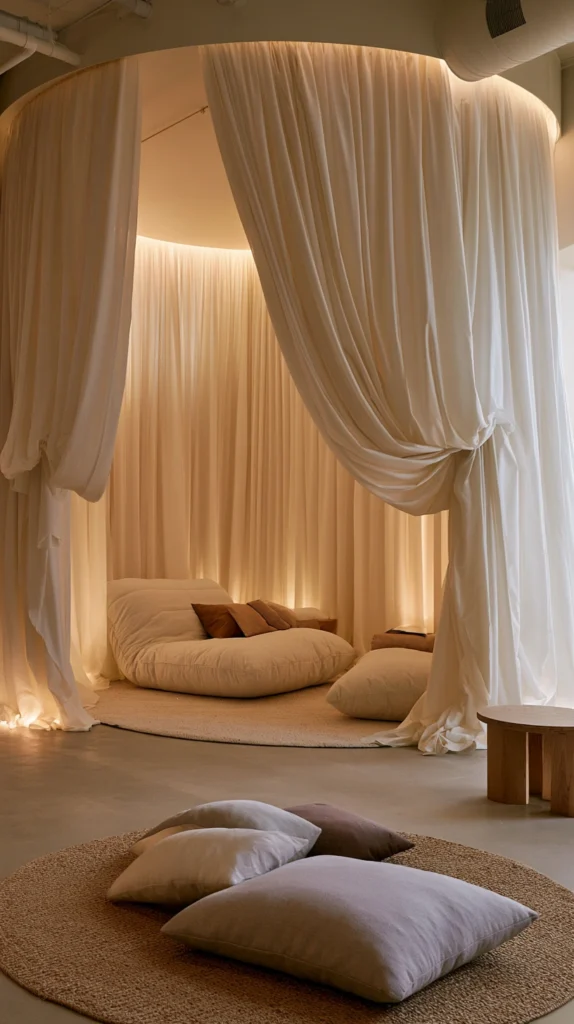
A corner meditation or reading nook — a floor cushion or small low chair positioned in the corner, surrounded by soft textiles, and enclosed on two sides by floor-length curtains hung from ceiling-mounted rods that can be drawn closed for privacy and opened to reconnect with the room.
It creates a genuinely cosy, deliberately intimate space within the larger room that addresses both the practical problem of the awkward corner and the lifestyle need for a small, separate space of quiet and stillness within a busy home.
The drawn curtains are the transformative element — they convert an open corner into an enclosed room-within-a-room that feels surprisingly private and surprisingly effective as a retreat, even within a shared open-plan living space. Choose a curtain fabric in a warm, soft textile — velvet, heavy linen, or brushed cotton — that adds acoustic softness to the visual enclosure.
6. Install a Statement Floor Lamp and Sculptural Chair
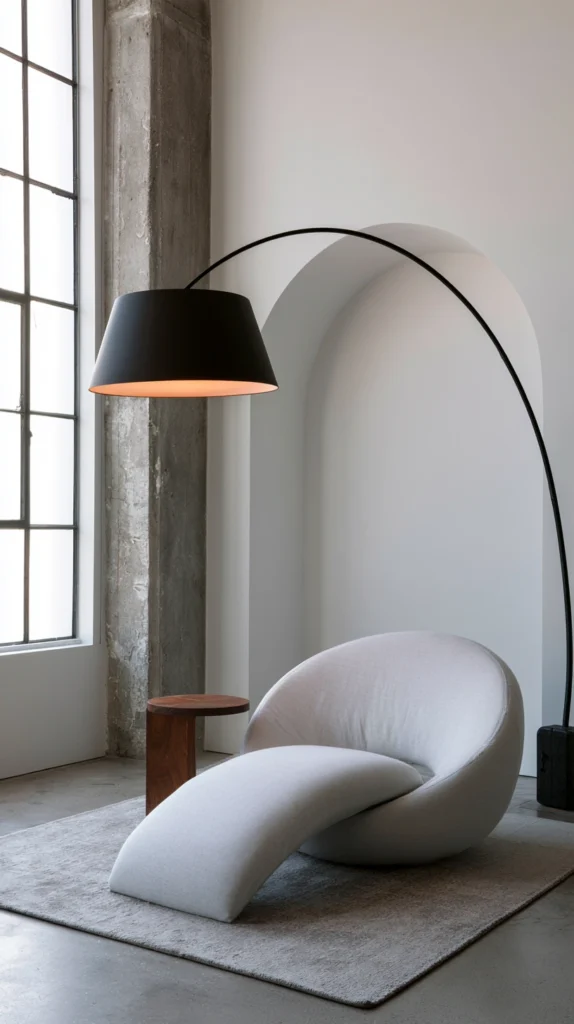
The simplest and most immediately achievable corner transformation — a genuinely beautiful arc floor lamp positioned in the corner with its head extending over a single sculptural or distinctive armchair, a small side table beside the chair for a drink or a book — requires no construction, no custom work, and no significant time investment while delivering a visual impact completely disproportionate to its simplicity.
The arc lamp and chair combination works because it takes the corner from empty and undefined to occupied and purposeful in a single decisive move.
A composed vignette that reads as intended from across the room and that creates a secondary seating position that the room previously lacked. Choose the chair for its sculptural quality rather than its comfort alone — in a corner vignette, the chair is as much an object to be looked at as a surface to be sat in.
7. Create a Vertical Plant Corner With Climbing Greenery
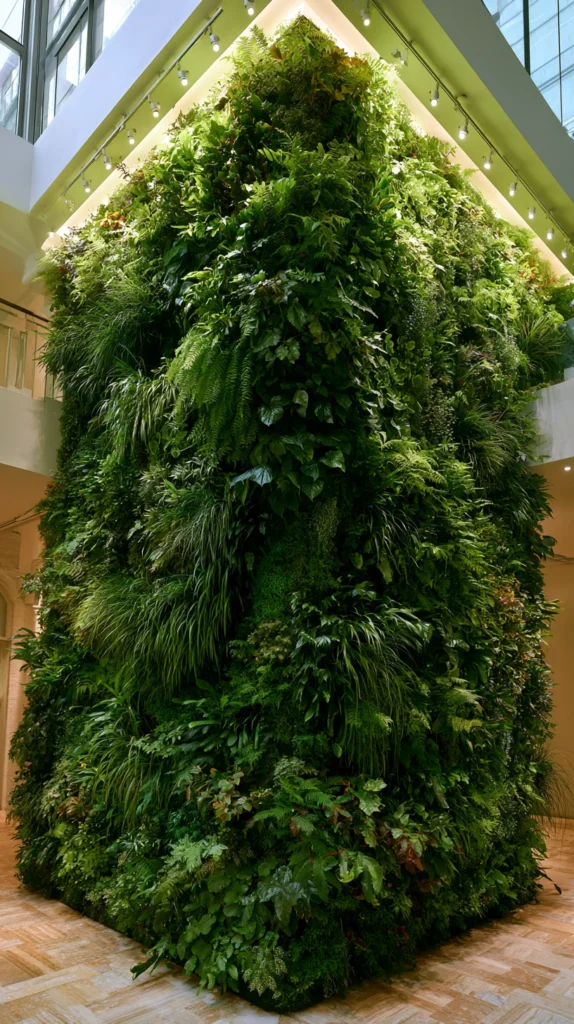
A corner dedicated entirely to living plants — a tall architectural specimen at the apex, supplemented by trailing plants on floating shelves at varying heights, their stems cascading downward in overlapping layers of green — transforms the most neglected corner in the home into a genuinely extraordinary vertical garden of living material that brings organic vitality, natural humidity, and the particular quality of botanical abundance that no decorative object can replicate.
The key is height — plants at multiple levels from floor to ceiling create the impression of a living wall rather than a plant collection, a distinction that is entirely a matter of vertical coverage rather than plant quantity.
Install a simple grow light directed at the corner if natural light is insufficient, and choose trailing varieties — pothos, philodendron, string of pearls — that spread and cascade naturally without requiring training or support.
8. Build a Corner Desk and Home Office Alcove
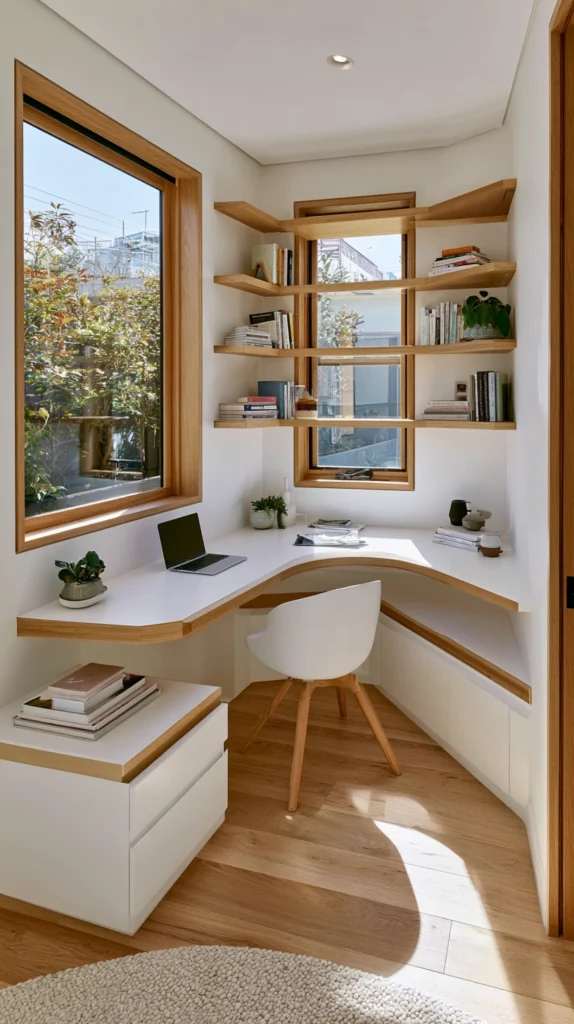
A corner desk — a continuous L-shaped work surface that follows the corner angle, with shelving above on both walls and cable management built into the desk surface — converts the most geometrically awkward corner type into the most spatially efficient home office configuration available, making complete and intelligent use of the right-angle that standard rectangular furniture cannot address.
The corner desk works particularly well in a bedroom, a spare room, or a living room where a dedicated home office room is not available, but a dedicated work zone is genuinely needed.
The corner location provides a degree of visual separation from the surrounding living space while requiring no architectural intervention beyond the desk installation itself. Paint the walls within the desk alcove in a slightly deeper tone than the surrounding room to visually define the work zone and create the sense of a dedicated space within the larger room.
9. Install Panelling and a Console Table Vignette
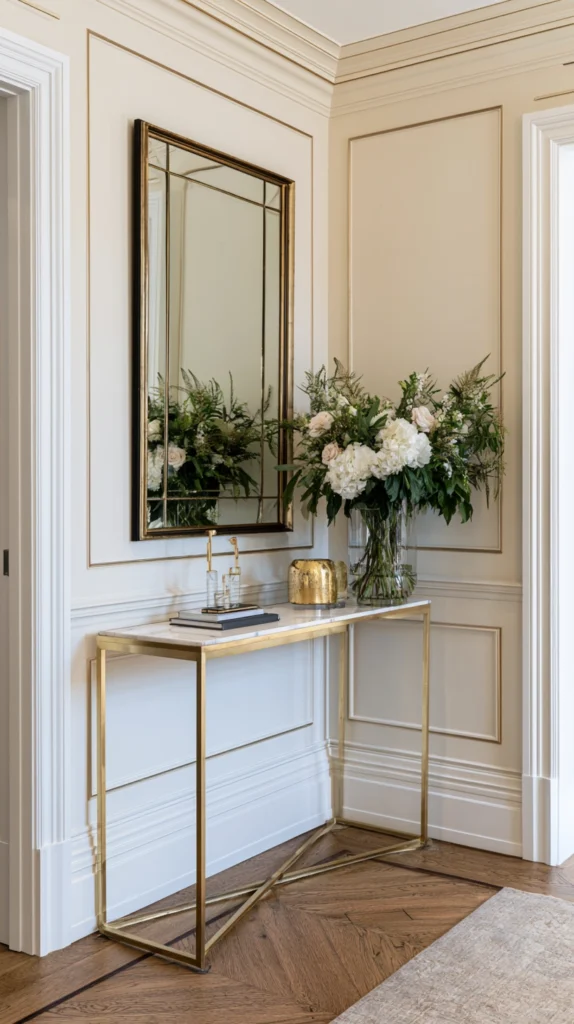
Wall panelling — painted timber panels in a simple shaker or Edwardian profile, applied to both walls of the corner and meeting at the apex — combined with a slim console table positioned against one panelled wall and a mirror above it creates a corner transformation of genuine architectural character that makes the corner read as the most intentionally designed part of the room rather than the least.
The panelling adds depth, texture, and the quality of craftsmanship to what was previously a bare, featureless junction of two plain walls, while the console and mirror provide the functional and decorative elements that complete the composition. Style the console with genuine restraint — one ceramic object, one small plant, one candle — and resist the impulse to add more than the surface needs to feel complete.
10. Convert the Corner Into a Children’s Play Space
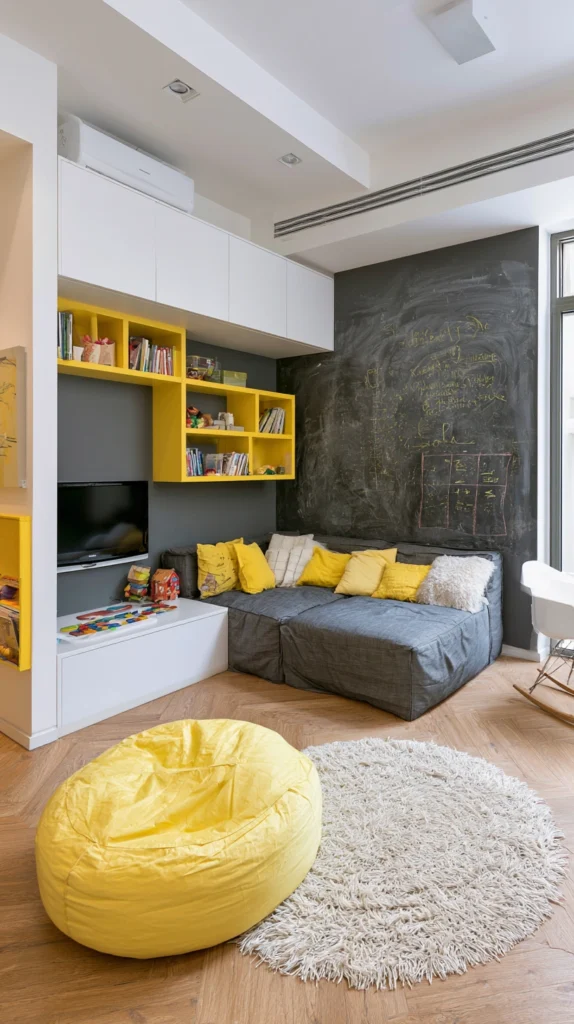
A corner of a living room or bedroom dedicated specifically to children’s play — a low reading nook with a cushioned floor surface, simple open shelving for books and toys at a child-accessible height, and perhaps a small chalkboard painted directly onto one of the corner walls — creates a defined, self-contained play zone that keeps the activity and its associated clutter concentrated in a single corner rather than distributed through the entire room.
The child-scaled proportions of the corner play space — the low ceiling if a canopy or tent structure is added, the shelving at reaching height, the soft floor surface — create an environment that children experience as genuinely theirs within a room that is primarily designed for adult use. Paint the corner walls in a colour that distinguishes the play zone from the surrounding room without clashing with the broader interior palette.
11. Hang a Large Convex or Unusual Mirror
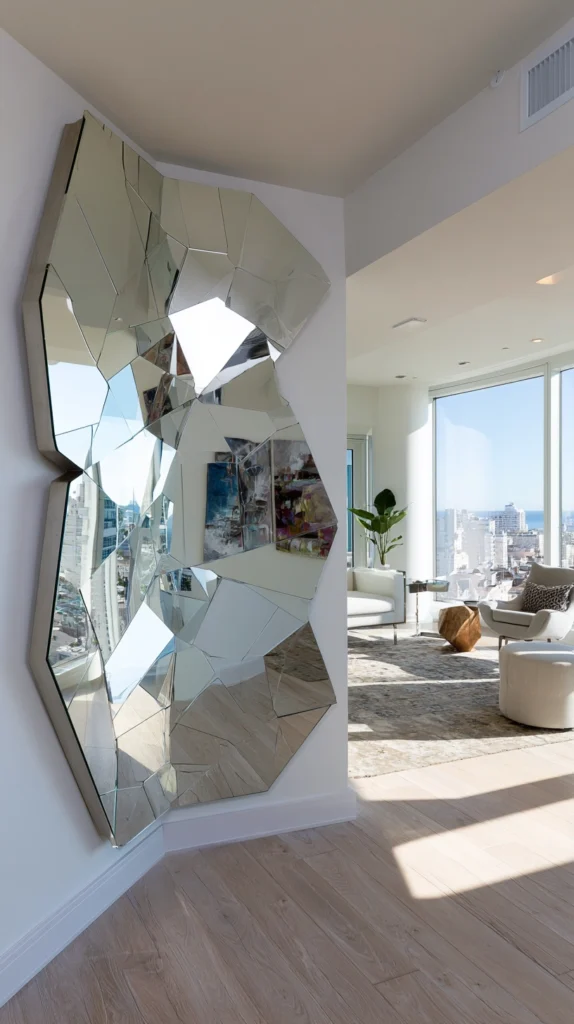
A single large, distinctive mirror — convex, asymmetric, sunburst-framed, or in an organic, irregular form — hung on the primary wall of a corner at a height and position that allows it to reflect the most interesting part of the adjacent room into the corner’s sightline creates a corner transformation of remarkable impact and remarkable simplicity.
The mirror addresses the corner’s most fundamental problem — its tendency to be a visual dead end, a place where the eye arrives and finds nothing worth stopping for — by converting it into a point of visual interest and spatial depth, a surface that reflects rather than absorbs the room’s light and life.
Choose a mirror whose frame is itself a sculptural object of genuine interest — the frame is the art in a corner mirror installation, and it should earn its position independently of the reflective function.
12. Create a Scent and Candle Corner Altar
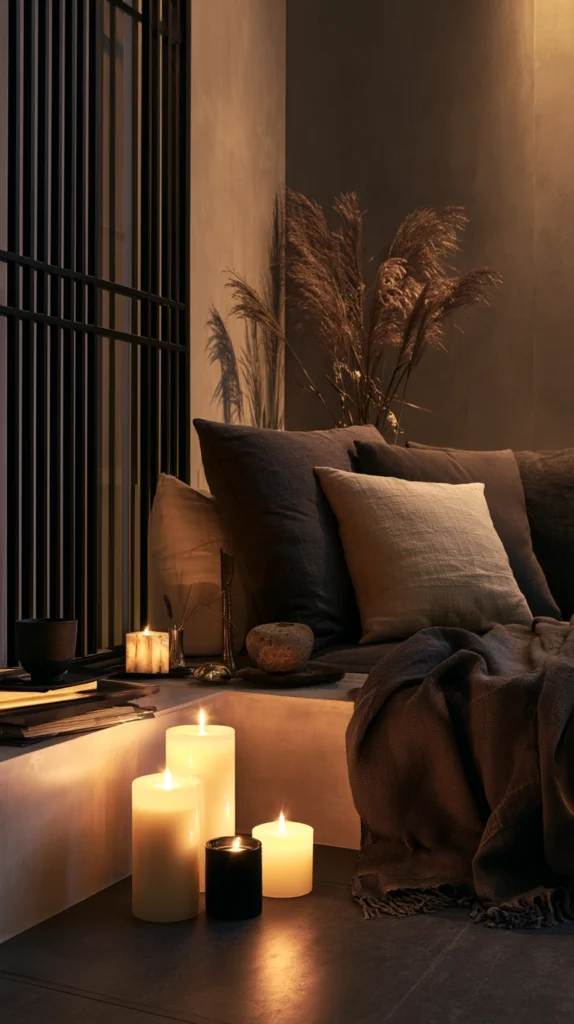
A corner styled as a dedicated display of candles, diffusers, botanical objects, and personal meaningful items — a low timber or stone platform, clusters of pillar candles at varying heights, a single ceramic vessel of dried botanicals, perhaps a small framed print or a meaningful object — creates a sensory corner that contributes to the room’s atmosphere through scent, warm light, and the quality of deliberate, composed stillness that a well-arranged altar-style display communicates.
The scent and candle corner works because it addresses the room through multiple senses simultaneously — the visual arrangement, the fragrance released by the candles and botanicals, the warm flickering light — creating a corner that is experienced rather than simply seen. Keep the arrangement genuinely minimal and edit it regularly, removing anything that does not contribute to the composition’s overall calm and coherence.
13. Install Corner Floating Shelves in a Geometric Arrangement
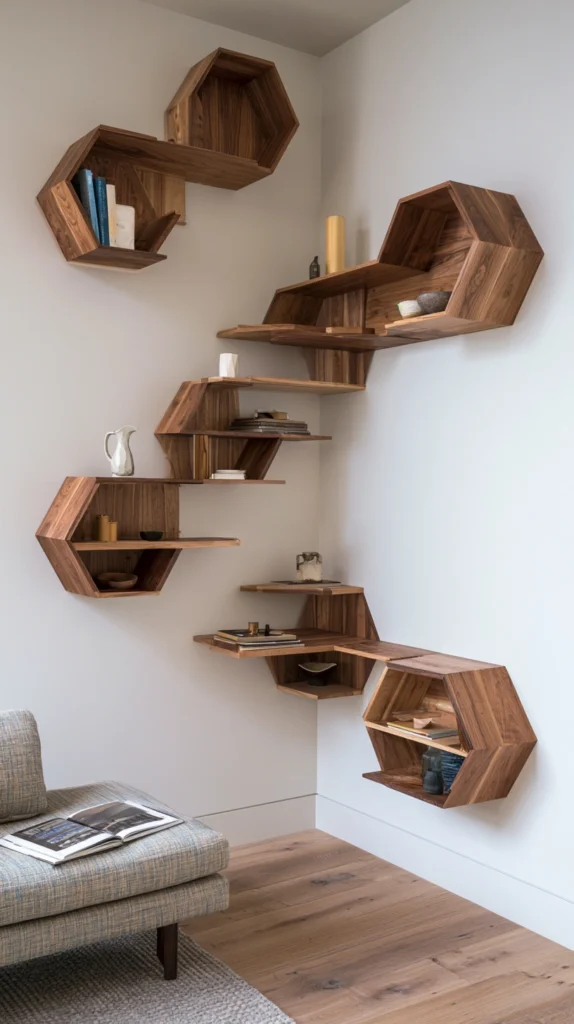
Corner floating shelves — installed not in a simple vertical stack but in a deliberate geometric arrangement, perhaps a diamond pattern, an asymmetric progression of varying depths and widths, or a continuous wraparound shelf at a single height that follows the corner angle — create a display surface of genuine visual interest that addresses the corner architecturally rather than simply filling it with furniture.
The geometric arrangement is the design decision that separates this transformation from a merely practical shelf installation — the pattern of the shelves on the wall is itself the decorative element, and the objects placed on them contribute to but do not create the corner’s visual character. Style each shelf with a maximum of two or three objects, maintaining generous negative space between items and between shelf levels.
14. Paint the Corner a Different Colour to Create a Colour-Drenched Moment
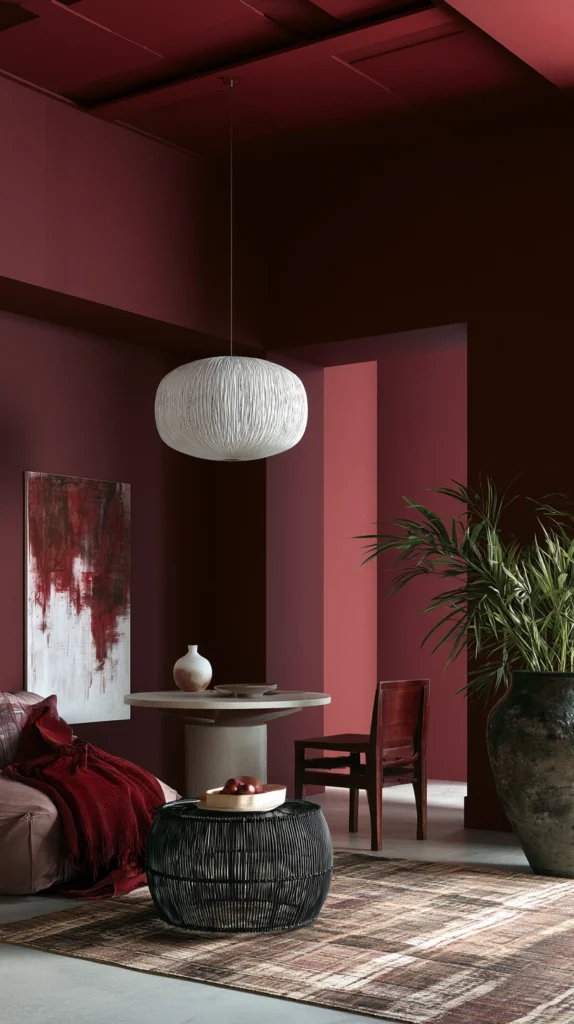
A corner painted in a single deep, rich colour — applied to both walls and the ceiling section above — while the surrounding room remains in a lighter neutral, creates a colour-drenched moment of considerable drama that defines the corner as a deliberate design feature rather than an architectural accident.
The colour-drenched corner works because it converts the corner’s most problematic quality — its inwardness, its tendency to gather darkness — into its defining visual asset, a depth of colour that reads as intentional and sophisticated rather than simply dark.
Choose a colour with genuine warmth and depth — a forest green, a deep terracotta, a rich navy, a warm charcoal — rather than a cold dark tone that makes the corner feel oppressive rather than atmospheric, and style whatever occupies the corner simply so the colour remains the primary experience.
Final Thoughts: Transforming Every Corner With Confidence
The ugly corner that becomes a genuinely beautiful one is always the result of a single decisive commitment — the decision to treat the corner as a design opportunity rather than a spatial problem, to address it with the same intention and the same care applied to the most prominent and most visited spaces in the home.
Choose one transformation approach that suits the corner’s dimensions, the room’s function, and your genuine aesthetic preferences, commit to it completely, and execute it with as much material quality and design precision as the budget allows.
The corner that is half-transformed — the bookshelf installed but not painted, the gallery wall started but not finished, the reading nook cushioned but not lit — is worse than the corner left untouched. Commit fully, finish, and the result will make every other part of the room around it look better than it did before.