
14 Backyard Potluck Table Setup Ideas for Effortless Hosting
My potluck table used to be one long folding table with everything crammed onto it in whatever order people set their dishes down, no flow, no labels, and a constant traffic jam of guests trying to serve themselves at the same three feet of space.
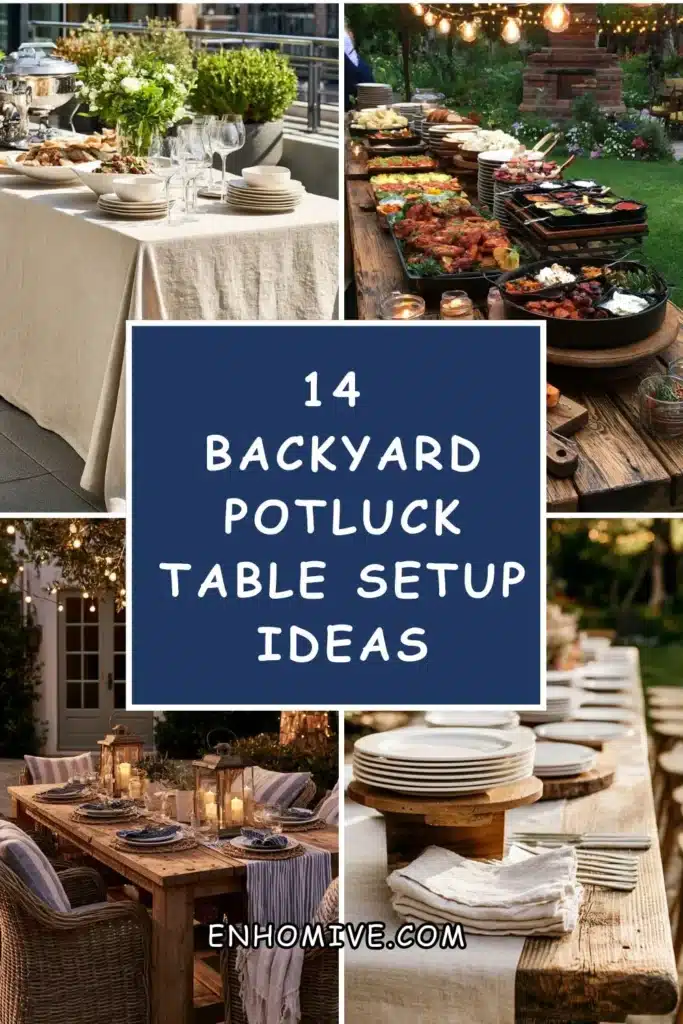
Then I started thinking about the table the way a buffet line actually works, plates first, food organized by type, drinks somewhere else entirely, and the whole thing got dramatically easier to host without me doing anything more than rearranging what guests already bring.
1. Put Plates and Napkins at the Very Start of the Line
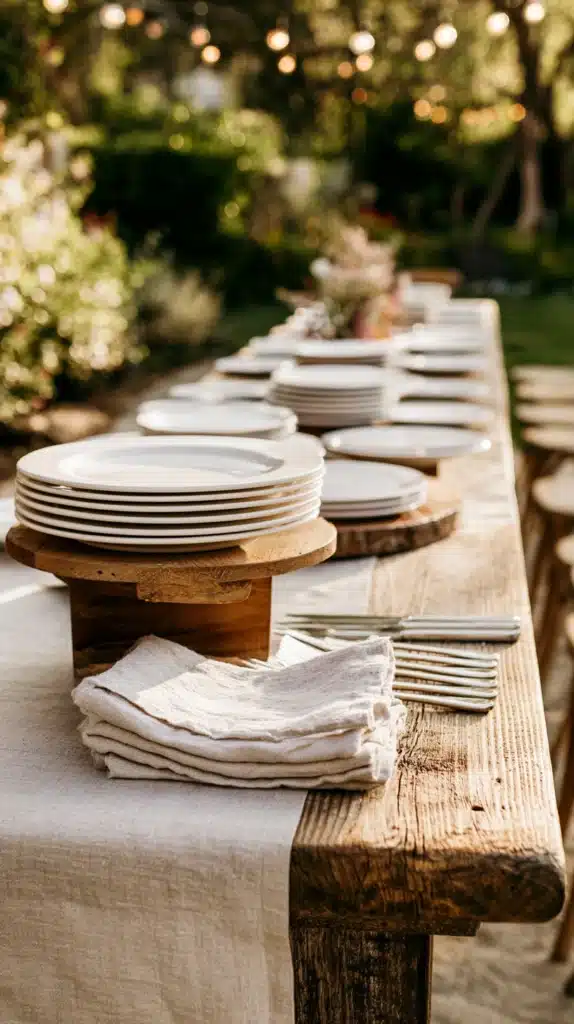
The single biggest bottleneck at most potluck tables is guests grabbing a plate from the middle of the spread, which backs up the whole line behind them. Moving plates, napkins, and utensils to one dedicated end, before any food at all, keeps everyone moving in the same direction without crossing paths. Budget: free, just a rearrangement of what’s already there.
Stack plates on a small riser or box so the top plate sits at a comfortable grabbing height instead of buried at table level.
2. Group Dishes by Type, Not by Arrival Order
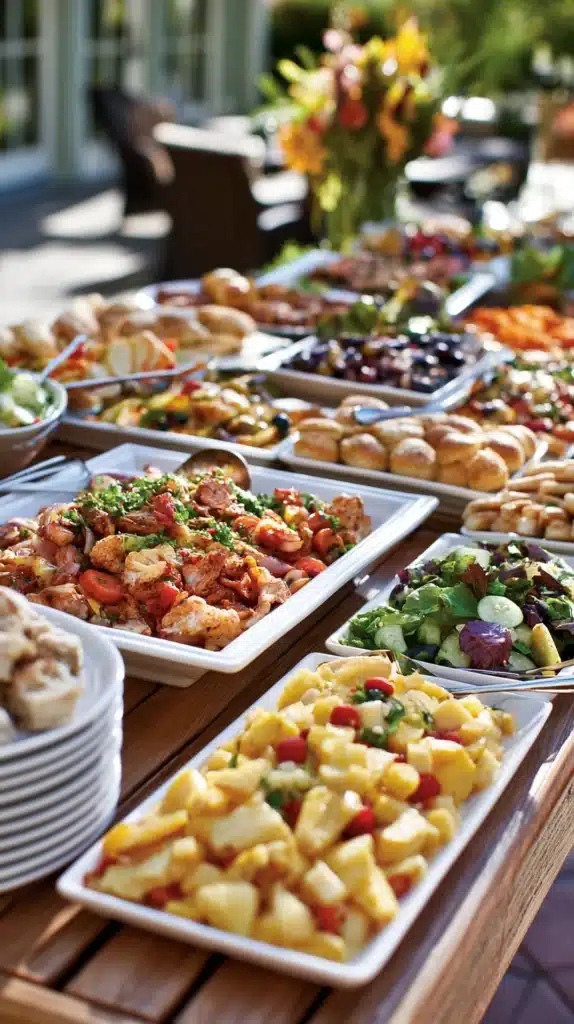
Potluck food naturally lands on the table in whatever order it arrives, which means a salad might sit between two desserts with no logic to the layout. Spending five minutes regrouping into mains, sides, salads, and desserts as guests arrive makes the table self-explanatory and prevents the dessert-before-dinner problem entirely. Budget: free.
Ask whoever drops off a dish what category it fits, then point them to where it should go, this also saves you from doing all the rearranging yourself later.
3. Use Small Chalkboard or Paper Tags for Each Dish
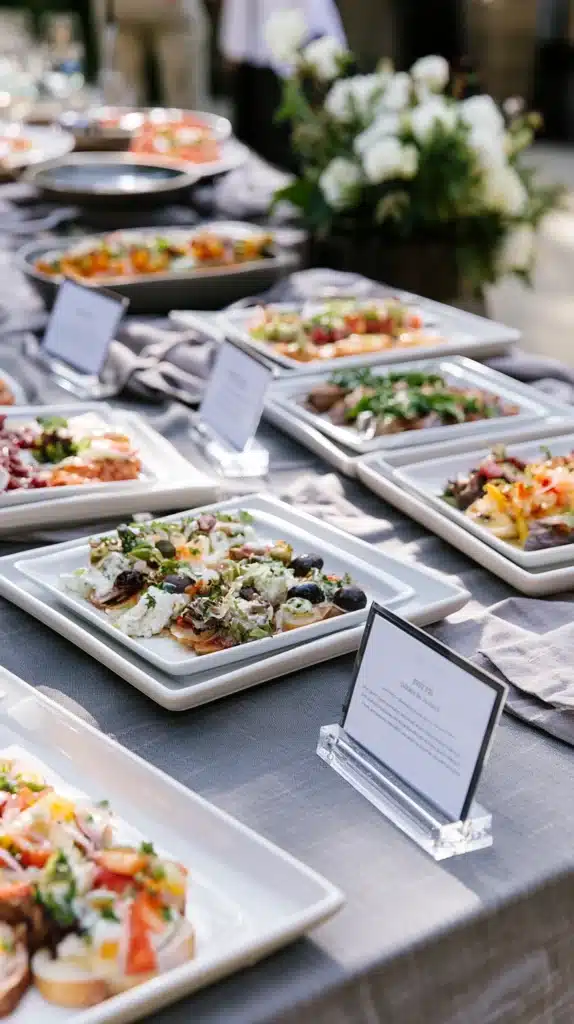
A simple tag in front of each dish, noting what it is and who made it, solves the recurring “what’s in this” question and gives credit to whoever brought it. This matters even more for dishes with common allergens, since a quick label can prevent a real problem rather than just a minor inconvenience. Budget: $8-15 for a pack of small chalkboard or paper tags.
Note major allergens directly on the tag (nuts, dairy, gluten) rather than relying on guests to ask the host individually.
4. Set Up a Separate Drink Station Away From the Food
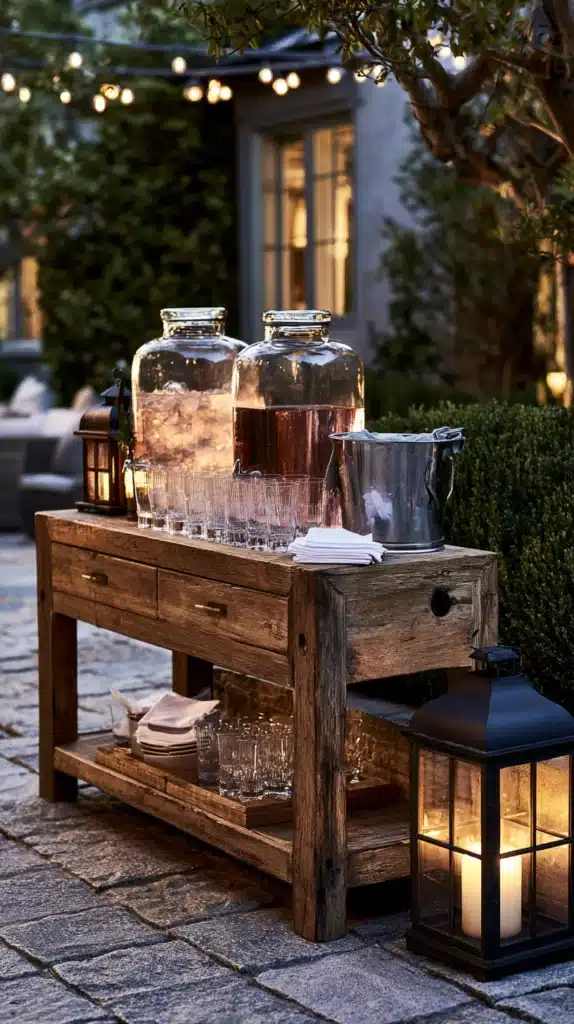
Keeping drinks at their own table, away from the food line entirely, prevents the single worst potluck bottleneck: people standing at the food table just to grab a soda while everyone behind them waits. A separate station also lets the drink area get restocked without disrupting food service. Budget: free if using an existing side table.
Position the drink station somewhere with easy trash and recycling access nearby, since that’s where most cans and bottles end up anyway.
5. Elevate Some Dishes on Risers or Upside-Down Bowls
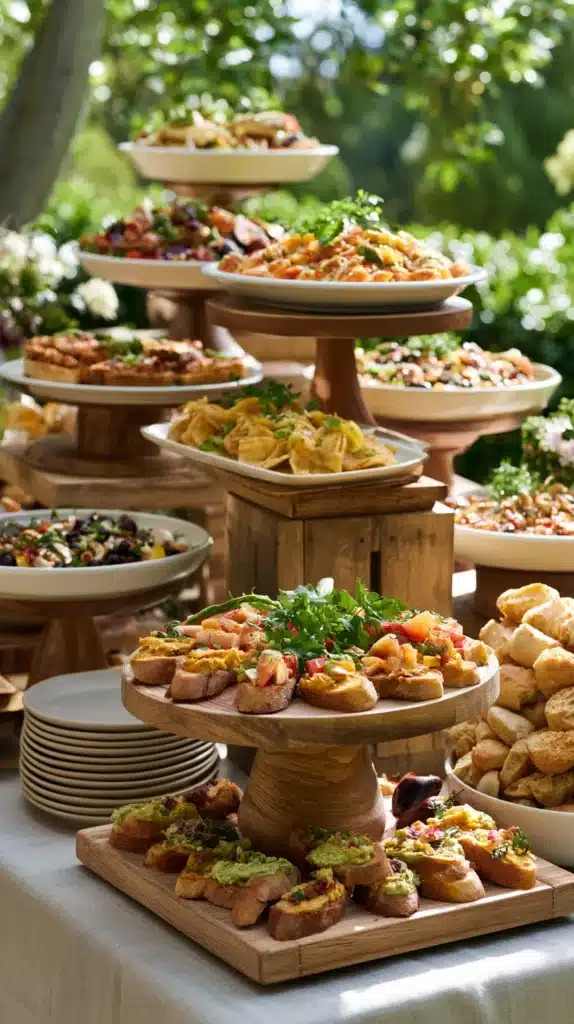
A table where every dish sits at the exact same height is harder to actually see and reach into, especially toward the back. Propping a few dishes on cake stands, upside-down bowls, or simple wood risers creates visual tiers that are both easier to access and nicer to look at. Budget: $10-20 if buying a few risers, free if repurposing items already on hand.
Put the tallest risers toward the back of the table so nothing blocks the view of dishes in front of it.
6. Add a Small Sign Pointing to the Drink Station and Restroom
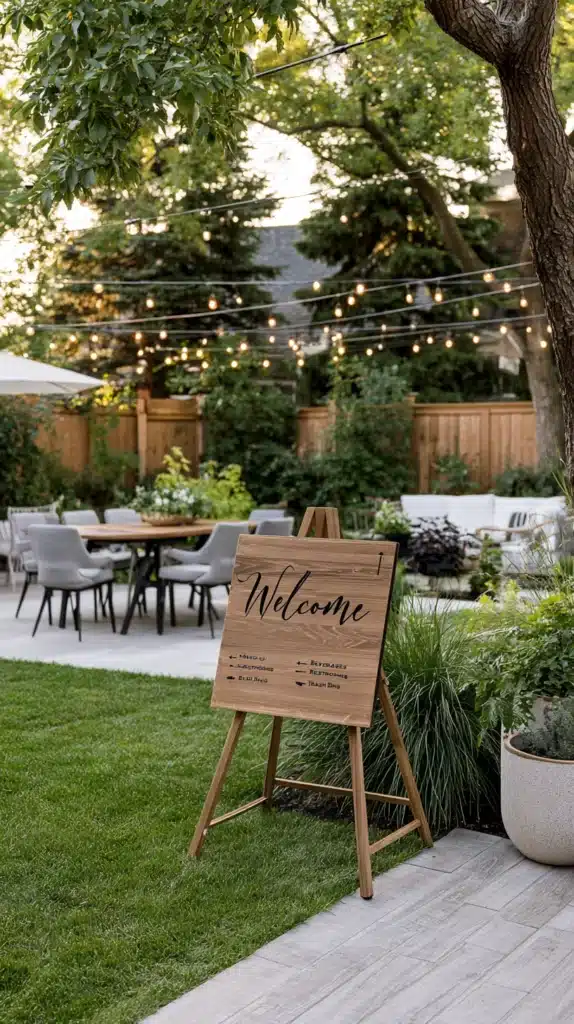
A simple printed or handwritten sign, propped near the food table, pointing guests toward the drink station, restroom, and trash cans, answers the questions you’d otherwise field individually from a dozen different people throughout the afternoon. Budget: $5-10 for poster board or a small printed sign.
Use an arrow rather than just text; people register directional cues faster than they read full sentences in a crowd.
7. Use a Tablecloth with Weighted Clips
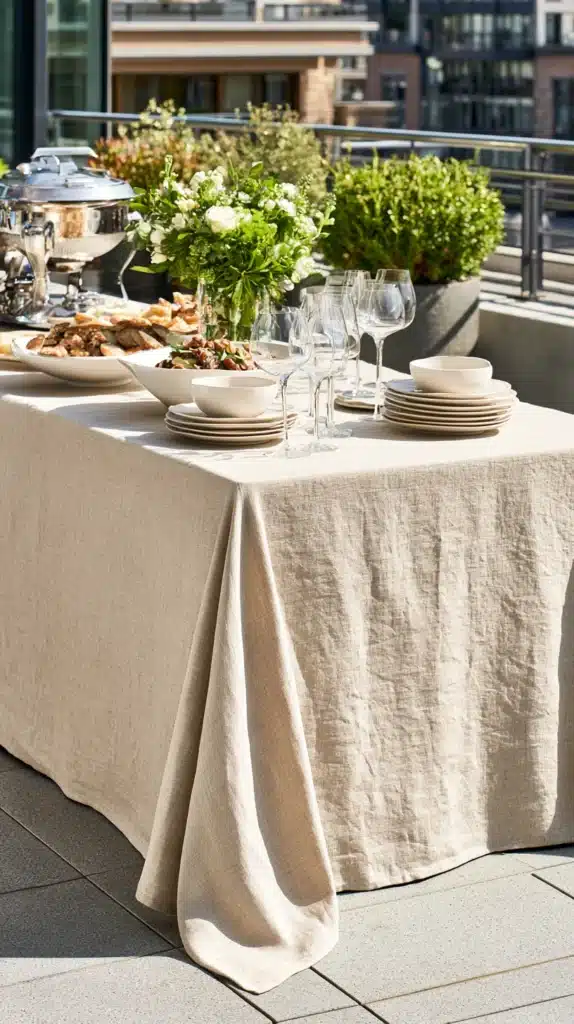
Nothing disrupts a potluck table faster than a gust of wind sending a tablecloth halfway across the yard, dishes and all. Simple weighted clips, sold cheaply at most home goods stores, hold the cloth in place at each corner and along the sides without needing to tape anything down. Budget: $8-15 for a set of weighted clips.
Clip the corners first, then the midpoints along each long edge, since corners alone often aren’t enough in real wind.
8. Set Out Extra Serving Utensils Before You Need Them
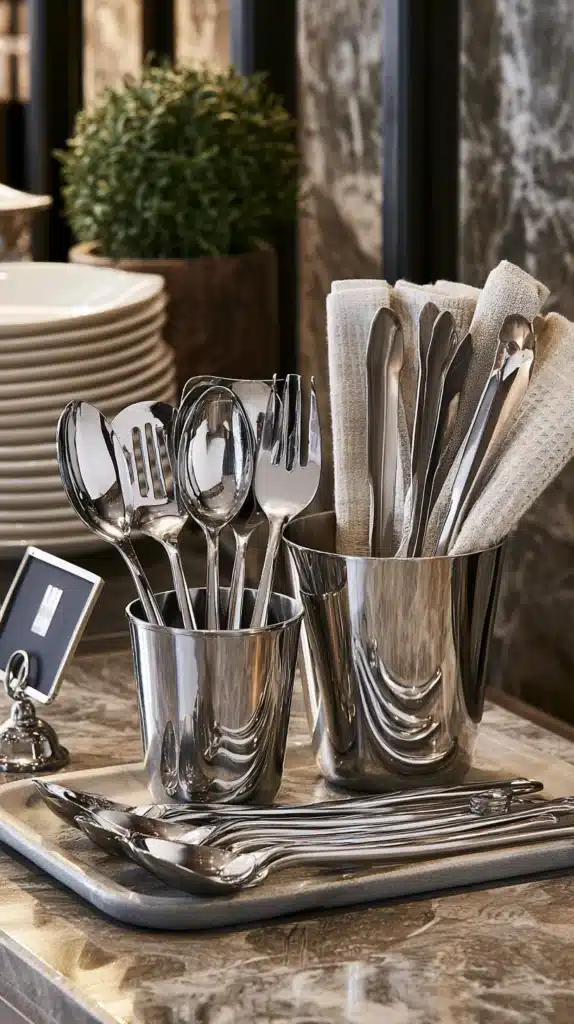
Almost every potluck dish arrives with exactly one serving spoon, which becomes a problem the moment two people want to serve themselves from the same dish at once. Setting out a few extra spoons, tongs, and forks near dishes without their own utensil solves this before it becomes a line backup. Budget: $10-15 for a basic set of extra serving utensils.
Keep a small cup of backup utensils at the end of the table specifically for dishes that arrive without one.
9. Create a Dedicated Kids’ Plate Station
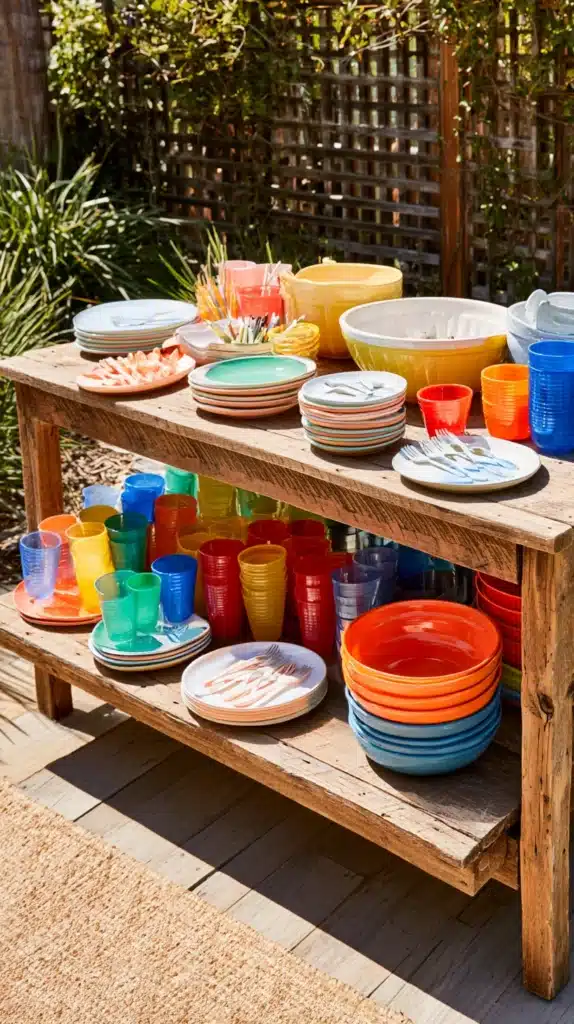
If kids are part of the gathering, a smaller, lower table with kid-friendly portions and easier-to-reach plates keeps them from holding up the adult line and gives them a section sized appropriately for them. Budget: $0-20 depending on whether a small table is already available.
Stock this station with foods that don’t require much cutting, since kids serving themselves at a buffet move faster with simpler options.
10. Use a Lazy Susan for Condiments and Small Sides
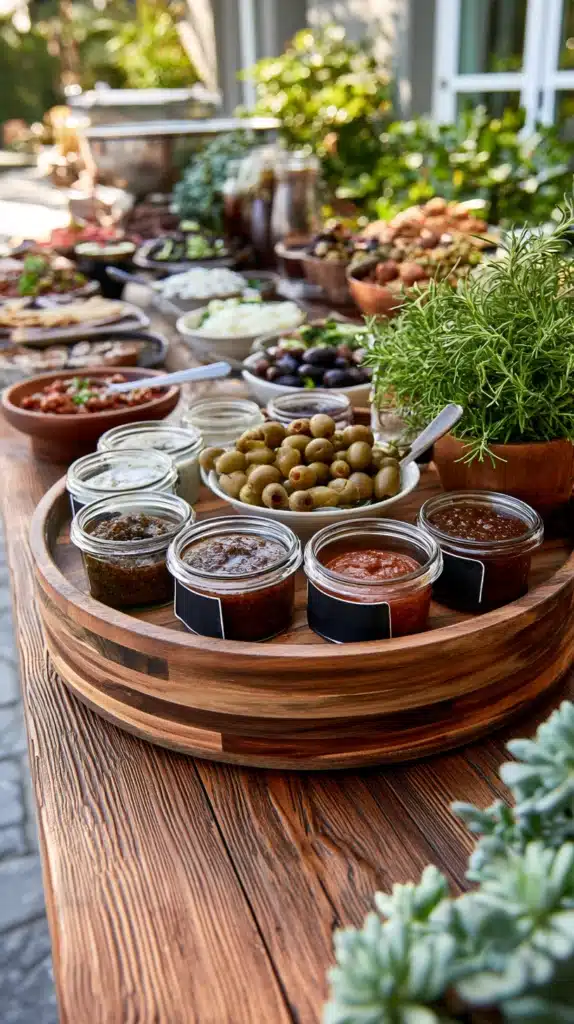
Condiments, dressings, and small sides often end up scattered across the whole table, forcing guests to walk the full length just to find ketchup. A single lazy Susan, loaded with all the small stuff in one spinning hub, keeps these items contained and easy to find. Budget: $15-25 for a sturdy outdoor-safe lazy Susan.
Choose one with a slight lip or rim so smaller bottles and jars don’t slide off during a spin.
11. Add Citronella or Bug-Repellent Candles Along the Table’s Edge
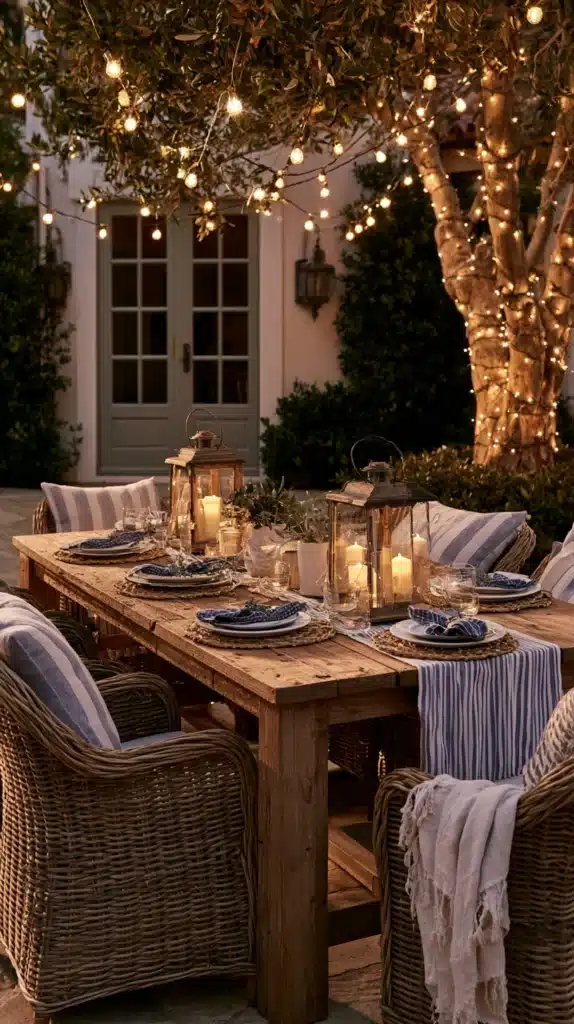
A potluck table left open to evening bugs becomes considerably less appealing fast. A row of citronella candles or torches along the table’s perimeter keeps the area more comfortable without requiring guests to apply repellent themselves. Budget: $20-35 for a few citronella candles or a small set of torches.
Light them about thirty minutes before guests arrive so the scent has time to establish before anyone sits down to eat.
12. Set Up a Self-Serve Coffee and Dessert Table Separately
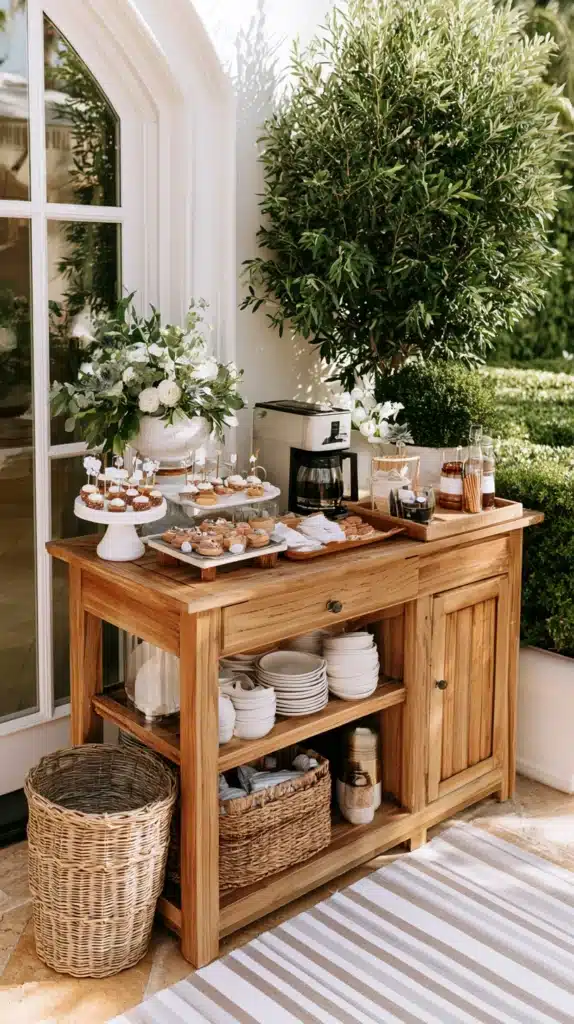
Moving dessert and coffee to their own smaller table, set up later in the gathering rather than alongside the main spread from the start, prevents the common problem of guests grabbing cookies before they’ve even had dinner. Budget: free if using an existing side table.
Wait to put dessert out until the main meal is mostly finished, rather than setting everything out at once at the very beginning.
13. Use Mason Jars or a Drink Dispenser Instead of Individual Bottles
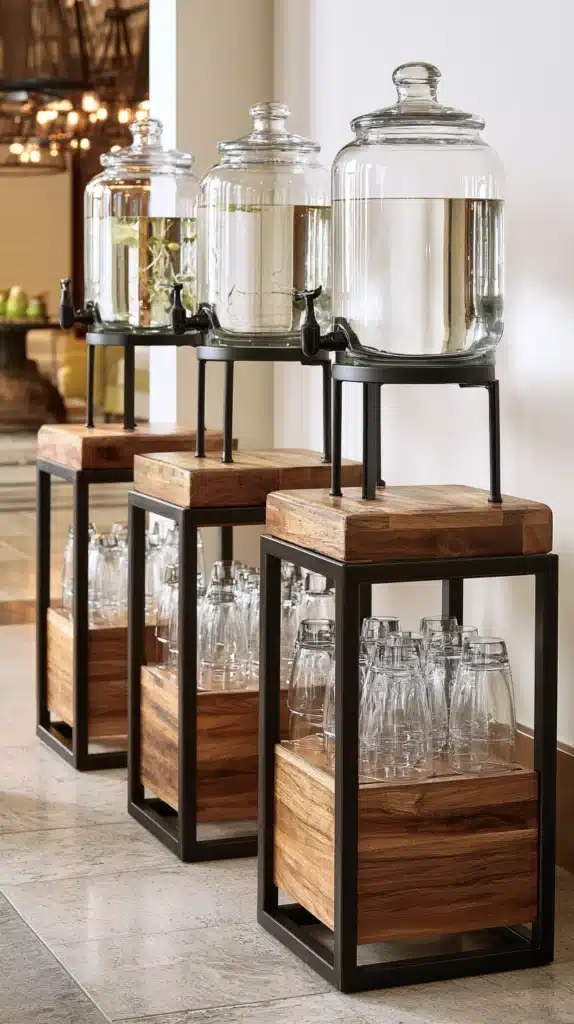
A large drink dispenser, or a row of mason jars pre-filled with iced tea or lemonade, looks more intentional than a cooler of mismatched bottles and reduces the number of individual cans that need opening, pouring, and discarding throughout the day. Budget: $20-40 for a quality drink dispenser.
Add a spigot-friendly base, like a small stand or a stack of bricks, so the dispenser’s spout clears the table edge enough to actually fill a glass underneath it.
14. Build the Whole Table Around a Simple Flow: Plates, Mains, Sides, Condiments, Utensils, Drinks Elsewhere
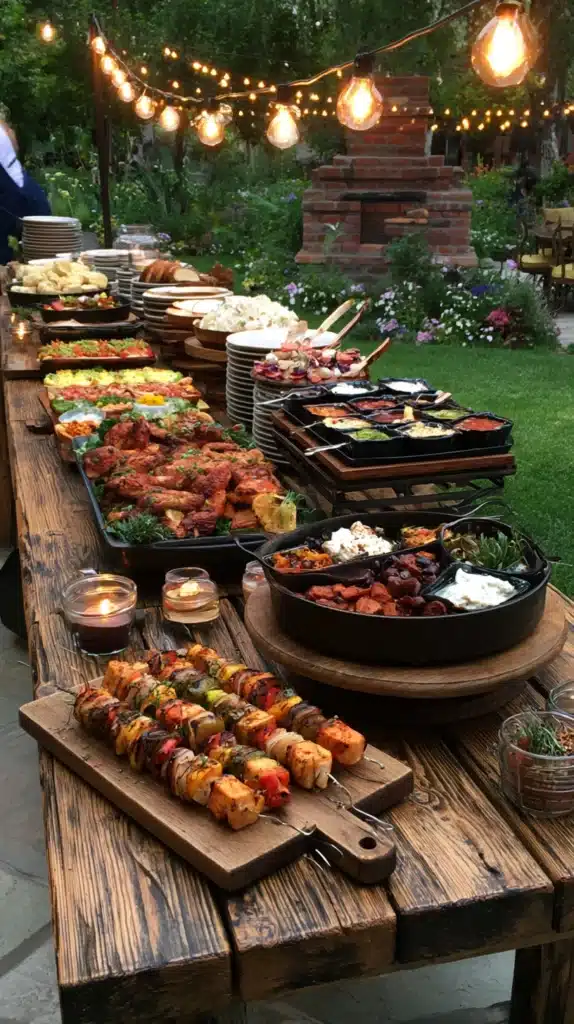
Combining several of these ideas into one deliberate sequence, plates and napkins first, then mains, then sides, then condiments on a lazy Susan, with drinks and dessert at entirely separate stations, turns a potluck table from a cluttered free-for-all into something that runs itself. Guests intuitively follow the line without needing instructions, because the order matches how people naturally want to build a plate. Budget: $50-100 total to set up the full system with risers, tags, a drink station, and a lazy Susan.
Walk the line yourself before guests arrive, pretending to build a plate from start to finish, to catch any awkward gaps or backtracking before it becomes a real bottleneck.
Choosing Your Approach
For a small, casual gathering: the dish tags (idea 3), weighted tablecloth clips (idea 7), and a lazy Susan for condiments (idea 10) cover most of what you’ll need.
For a larger crowd: prioritize the separate drink station (idea 4), the dedicated kids’ table (idea 9), and the full flow setup (idea 14) to prevent bottlenecks before they start.
For an evening event: add the bug-repellent candles (idea 11) and hold dessert back for its own later table (idea 12).
The single biggest shift across all of these ideas is thinking about the table as a path guests move through, rather than a flat surface things get placed on. Once the path makes sense, hosting a potluck stops requiring much hosting at all.