

15 Living Room Micro-Renovation Ideas That Cost Almost Nothing
My living room sat unchanged for years because every idea I had seemed to require a contractor, a weekend, or a few hundred dollars I didn’t want to spend on a room that already worked fine.

Then I started looking for the small structural and functional tweaks that actually change how a room feels, the kind that cost almost nothing but go further than a new pillow ever could. None of these require a permit, a professional, or a real budget.
1. Remove a Door Entirely
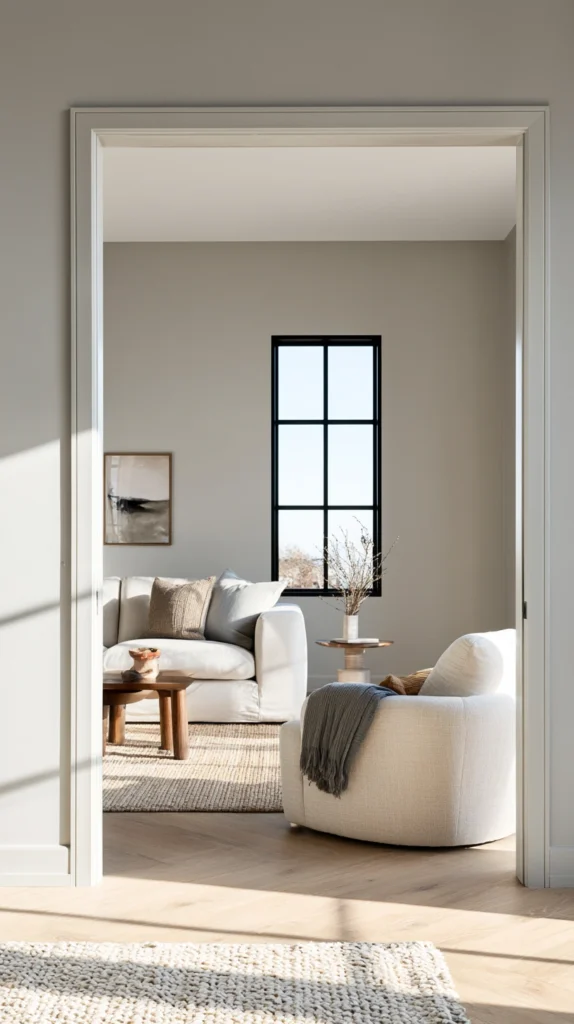
If a living room has an interior door that’s always left open anyway, taking it off its hinges entirely (and storing it in a closet or garage) opens up the sightline and makes the space feel larger immediately. This works especially well on closet doors or a door leading to a rarely-used room. Budget: free, just a screwdriver and a few minutes.
Fill the hinge holes with a bit of wood filler and touch-up paint if you want it to look intentional rather than abandoned.
2. Swap Outlet Covers for a Matching Wall Color
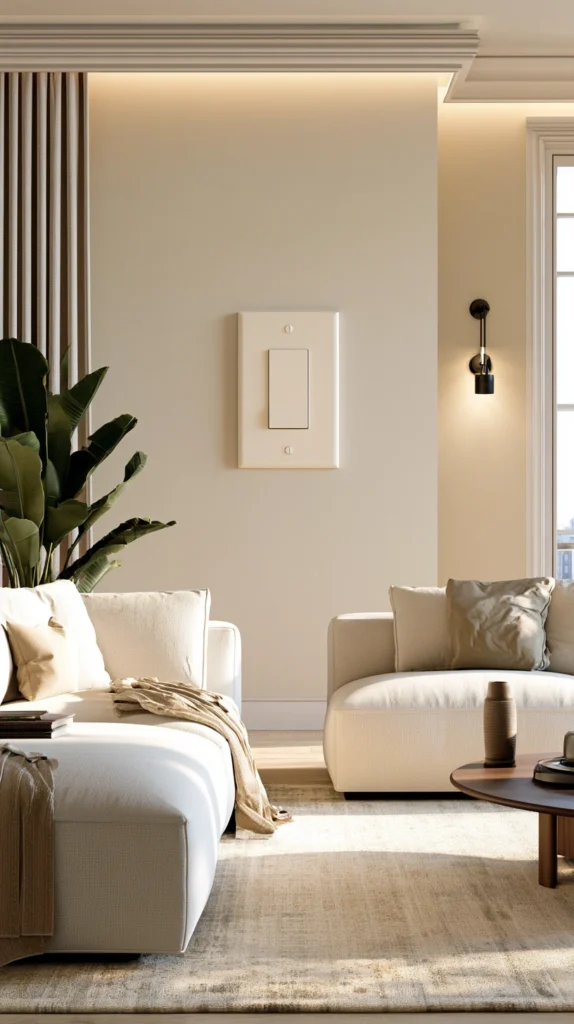
Plain white outlet and switch covers stand out sharply against any wall that isn’t also white. Painting them to match the wall, or swapping in a paintable cover plate, makes outlets disappear into the wall instead of drawing the eye to every single one. Budget: $5-10 for a few covers and a small paint sample.
Use a foam brush for a smoother finish than a bristle brush leaves on the small plastic surface.
3. Reposition Furniture Away from the Walls
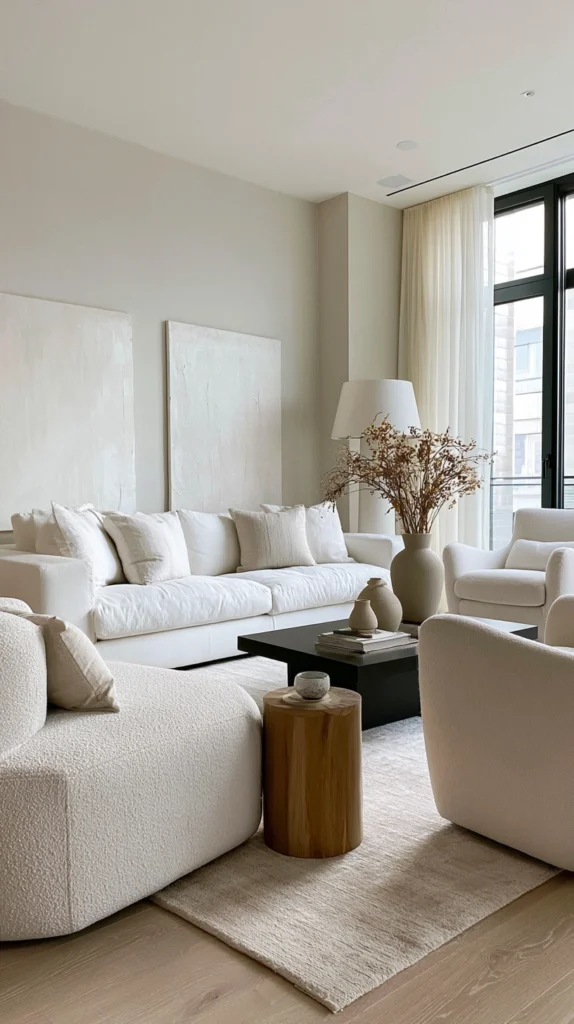
The instinct to push every piece of furniture flush against a wall is the single most common reason a living room feels flat and showroom-like. Pulling the sofa and chairs a few feet in, angled slightly toward each other, creates an actual conversation area instead of a room that just lines its perimeter. Budget: free.
Leave at least 30 inches of walking clearance around any new furniture placement so the room still feels easy to move through.
4. Raise the Curtain Rod Closer to the Ceiling
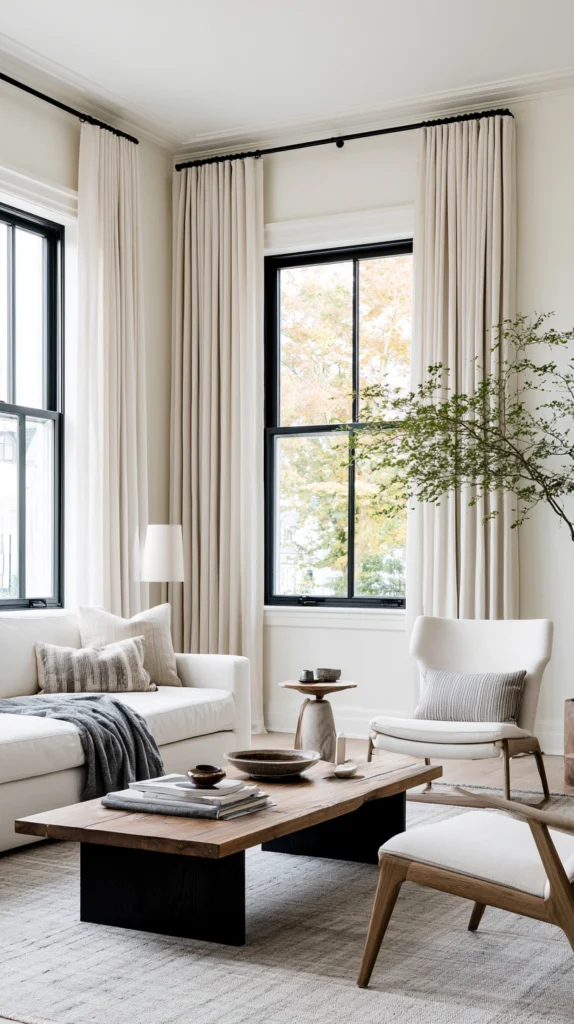
Curtain rods mounted just above the window frame make ceilings look lower and rooms look smaller. Moving the rod up to within a few inches of the ceiling, regardless of the window’s actual height, makes the whole wall look taller. Budget: free if the curtains and rod are reused, otherwise a few dollars for new brackets.
Make sure the curtain length still clears the floor properly once the rod moves up; you may need to rehang at a slightly different drop.
5. Add a Picture Light Above Existing Art
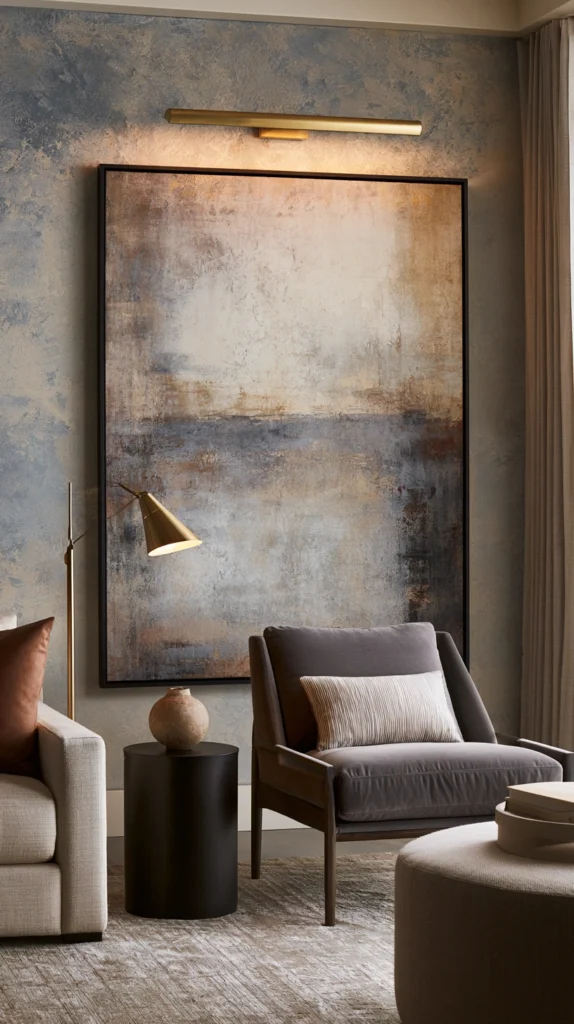
A small plug-in or battery picture light, mounted directly above a piece of art already on the wall, makes that piece look gallery-worthy instead of just hung. It’s one of the cheapest ways to make existing decor look considerably more expensive. Budget: $15-30 for a basic picture light.
Angle the light slightly downward rather than straight ahead to avoid glare on the art’s surface.
6. Swap a Few Bulbs for a Warmer Color Temperature
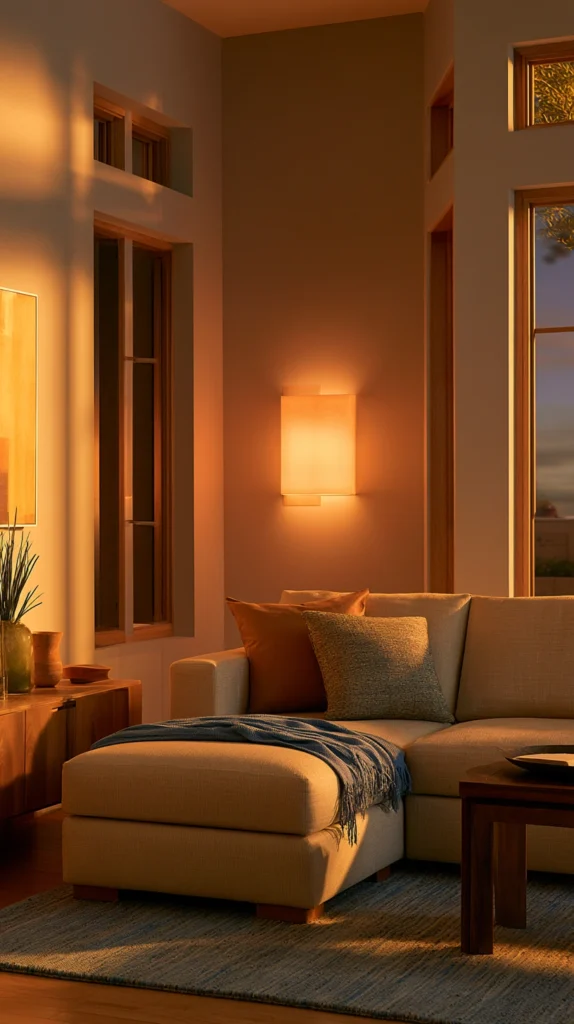
Most living rooms run on whatever bulb temperature came in the original packaging, often a cool, slightly clinical white. Swapping to 2700K warm bulbs throughout the room changes its entire mood without touching a single piece of furniture. Budget: $15-30 for a full set of replacement bulbs.
Replace every bulb in the room at once rather than mixing temperatures, since one cool bulb among several warm ones stands out immediately.
7. Remove Half the Decorative Objects on Every Surface
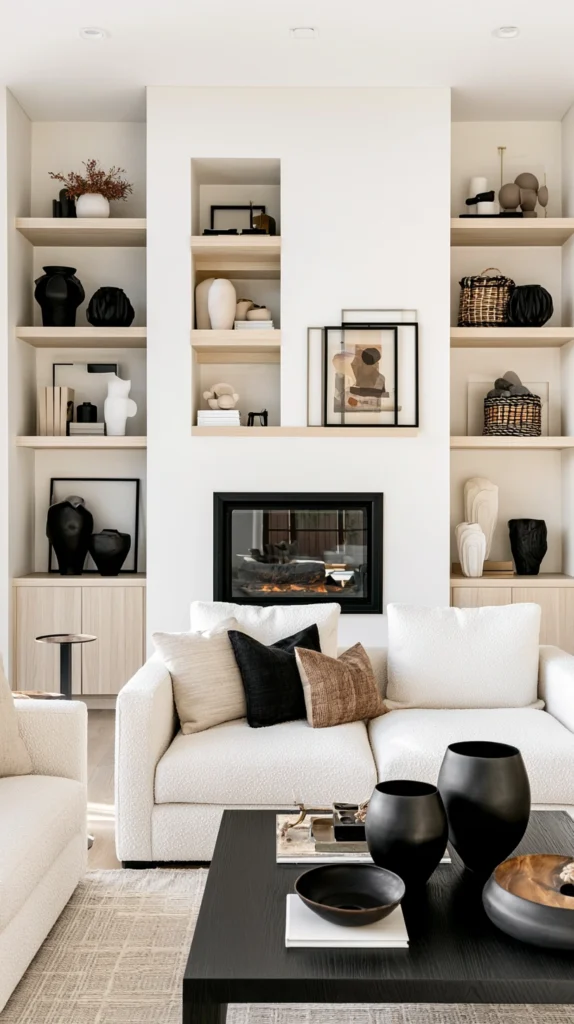
Most living rooms accumulate small decorative objects over time until every shelf and table surface is crowded. Removing roughly half of what’s currently displayed, leaving more breathing room around what remains, makes the remaining pieces look more curated and the whole room feel calmer. Budget: free.
Box up what you remove rather than discarding it; you can rotate pieces back in seasonally instead of buying anything new.
8. Add a Round Mirror to Reflect a Window
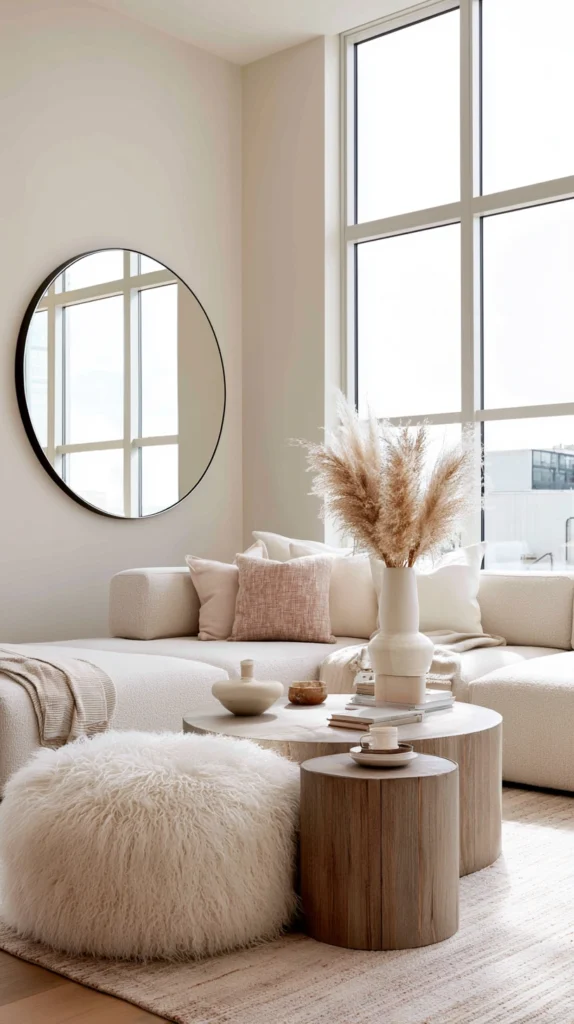
A single round or simple-framed mirror, hung across from a window, bounces additional natural light back into the room and visually doubles whatever view or greenery sits outside. Budget: $20-40 for a basic mirror if one isn’t already on hand.
Hang it at a height where it actually catches the window’s reflection when you’re standing in the room, not just when you’re directly in front of it.
9. Caulk and Touch Up Baseboards
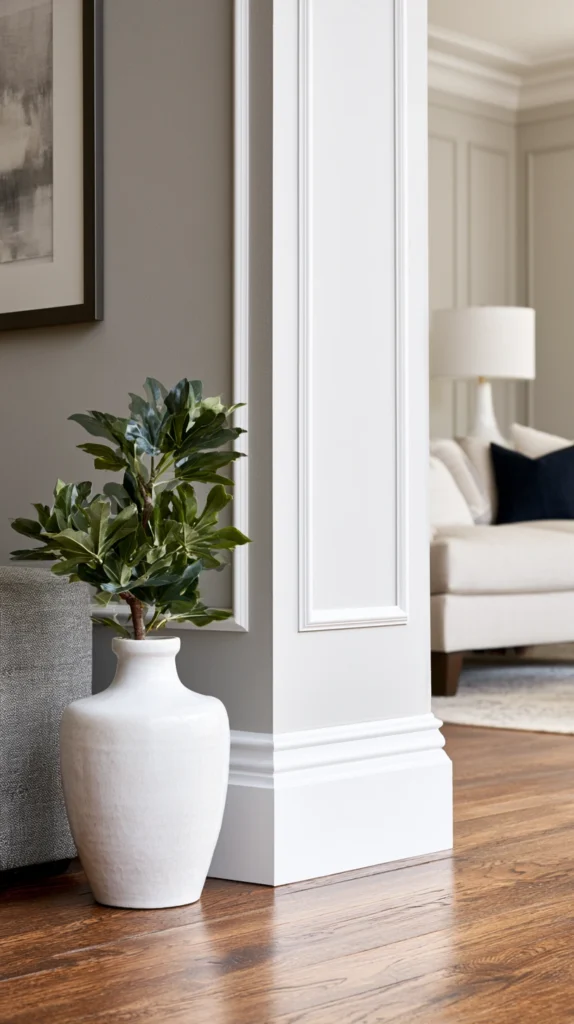
Gaps between baseboards and the wall, or scuffed and chipped paint along the trim, are one of the most common reasons a room looks tired without anyone being able to say exactly why. A tube of caulk and a small can of trim paint fix this in an afternoon. Budget: $15-25 for caulk and paint.
Use painter’s tape along the floor and wall edges before caulking for a cleaner line.
10. Replace Cabinet or Console Knobs
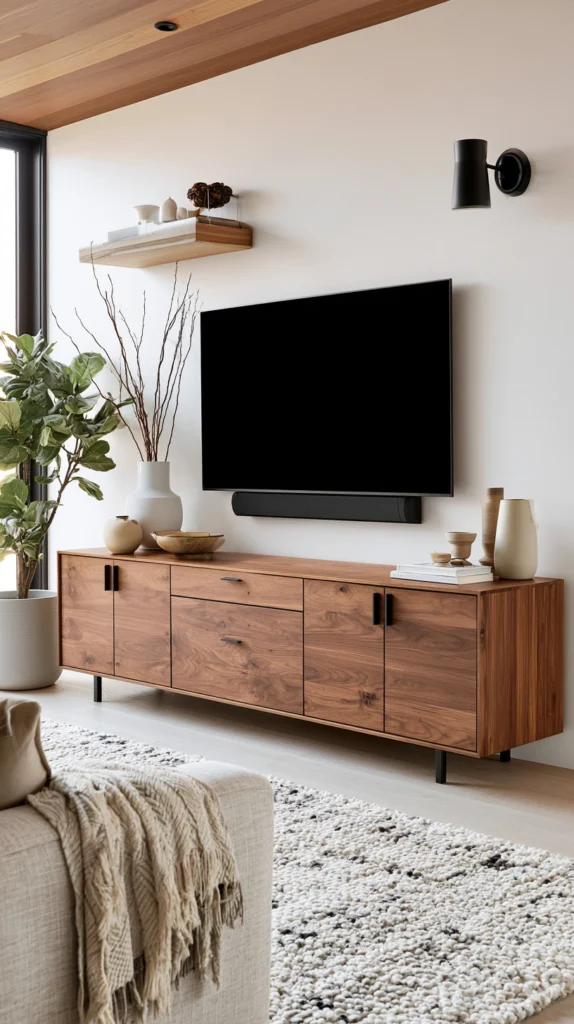
If the living room has a media console, bar cart, or built-in cabinetry, swapping the existing hardware for something in a warmer finish, brass or matte black instead of builder-grade silver, changes the furniture’s whole character for very little money. Budget: $15-30 for a set of new knobs or pulls.
Measure the existing screw spacing before ordering replacements, since pulls and knobs aren’t always interchangeable without redrilling.
11. Add a Plug-In Sconce Where There’s No Wiring
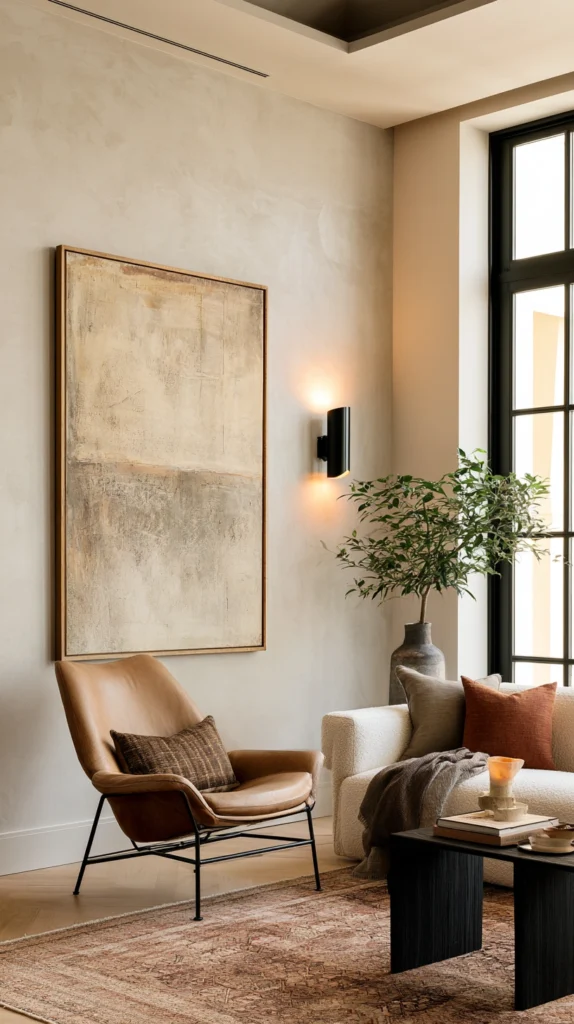
A plug-in wall sconce, with a cord that runs discreetly down to a nearby outlet, gives the look of a hardwired fixture without any electrical work at all. This works particularly well flanking a piece of art or a media console. Budget: $25-40 per sconce.
Use a cord cover channel, sold separately at most hardware stores, to keep the visible cord looking intentional rather than makeshift.
12. Layer a Smaller Rug Over an Existing One
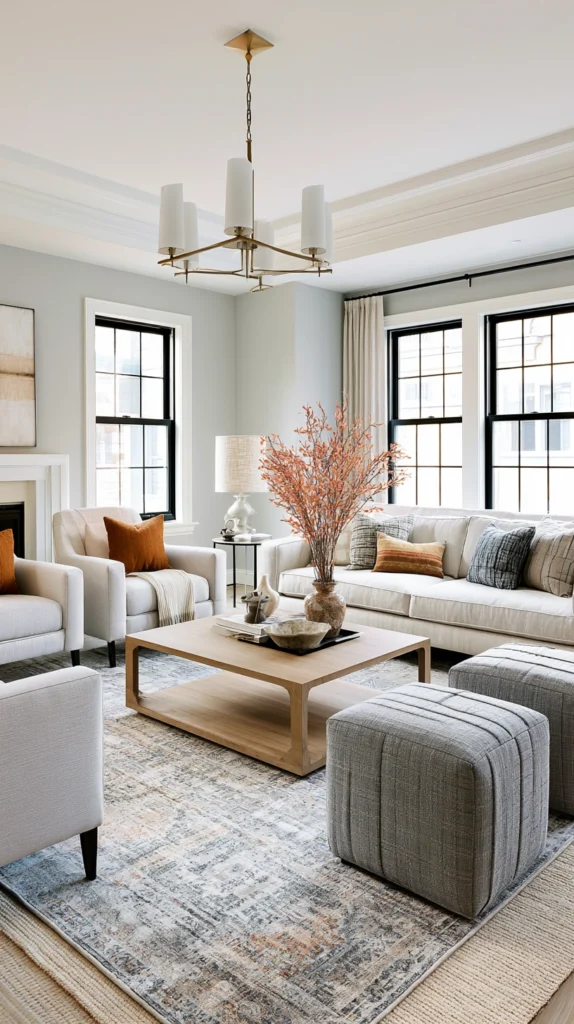
If the current rug is too small for the furniture arrangement but buying a new larger one isn’t in the budget, layering a smaller patterned or textured rug partially on top of the existing one adds visual interest and makes the floor plan look more deliberate. Budget: $0-40 depending on whether a second rug is already on hand.
Use rug tape or a thin non-slip pad between the layers so the top rug doesn’t shift underfoot.
13. Edit the Bookshelf by Color or Height
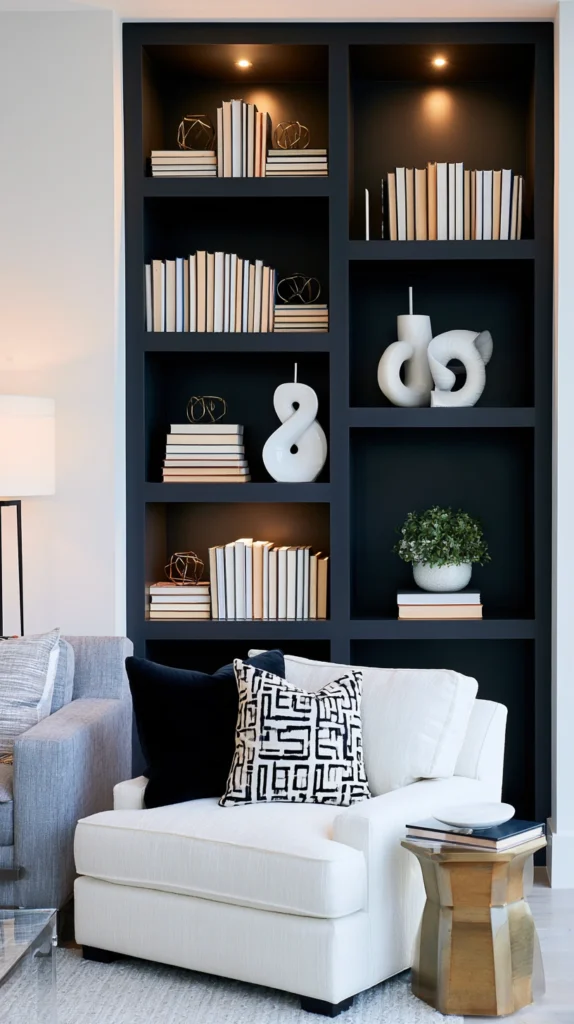
A bookshelf with books and objects arranged randomly reads as cluttered no matter how nice the individual pieces are. Spending one afternoon regrouping books by color, height, or a mix of vertical and horizontal stacks turns the same exact items into something that looks styled. Budget: free.
Leave a few empty pockets of negative space between groupings rather than filling every inch of every shelf.
14. Add Felt Pads Under Every Furniture Leg
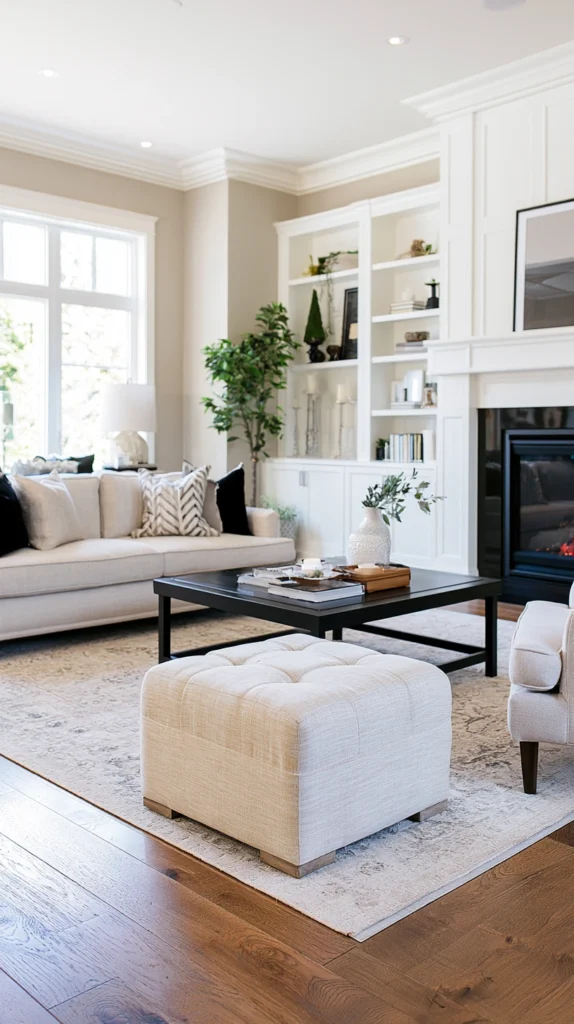
Beyond protecting the floor, felt pads under furniture legs let pieces glide smoothly when nudged into a better position, which makes it far more likely that furniture actually gets rearranged when the room needs a refresh instead of staying put because moving it feels like a hassle. Budget: $5-10 for a multi-pack of felt pads.
Choose a pad size that fully covers the furniture leg’s base, since an undersized pad won’t prevent scratching or provide the same gliding benefit.
15. Combine Several of These Into One Weekend Pass
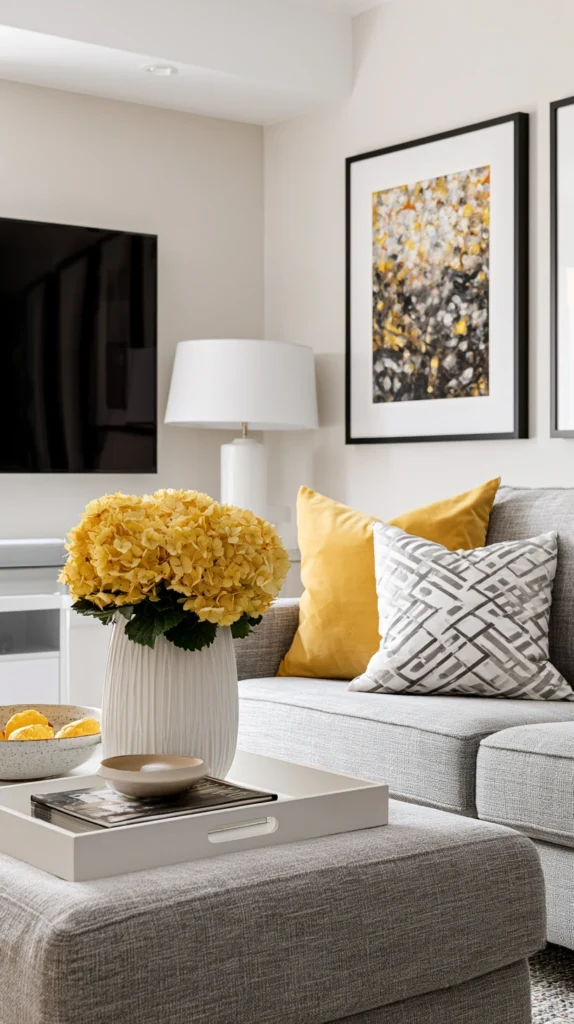
None of these changes takes more than an hour individually, which means a single free Saturday can realistically cover the furniture repositioning, bulb swap, baseboard touch-up, and decor edit all at once. Doing them together, rather than one at a time over months, makes the cumulative difference much more noticeable right away. Budget: $50-100 total for a combined pass covering most of the ideas above.
Take a few “before” photos before starting; it’s easy to forget how much a room has changed once you’re looking at it daily.
Choosing Your Approach
If you have twenty minutes: outlet covers (idea 2), felt pads (idea 14), or removing a few decorative objects (idea 7).
If you have an afternoon: the bulb swap (idea 6), baseboard touch-up (idea 9), or a bookshelf edit (idea 13).
If you have a full free day: combine several into one pass (idea 15) and treat it as a genuine, if budget-free, room refresh.
The common thread across all of these is that none of them require buying new furniture. A room’s bones, light, and arrangement usually matter more than its objects, and all three of those can change for the cost of a few hardware store trips.