
12 Bold Red, White & Green Living Room Looks for a Striking Home Style
There is something genuinely confident about a living room that commits to a colour palette. The homes that linger in the memory are rarely the cautious ones — the all-greige walls and the safe neutral sofas — but the ones that made a decision and followed it through. Red, white, and green is one of the most powerful and versatile three-colour combinations available in interior design. It is vivid without being aggressive, natural without being bland, and classic without being predictable.
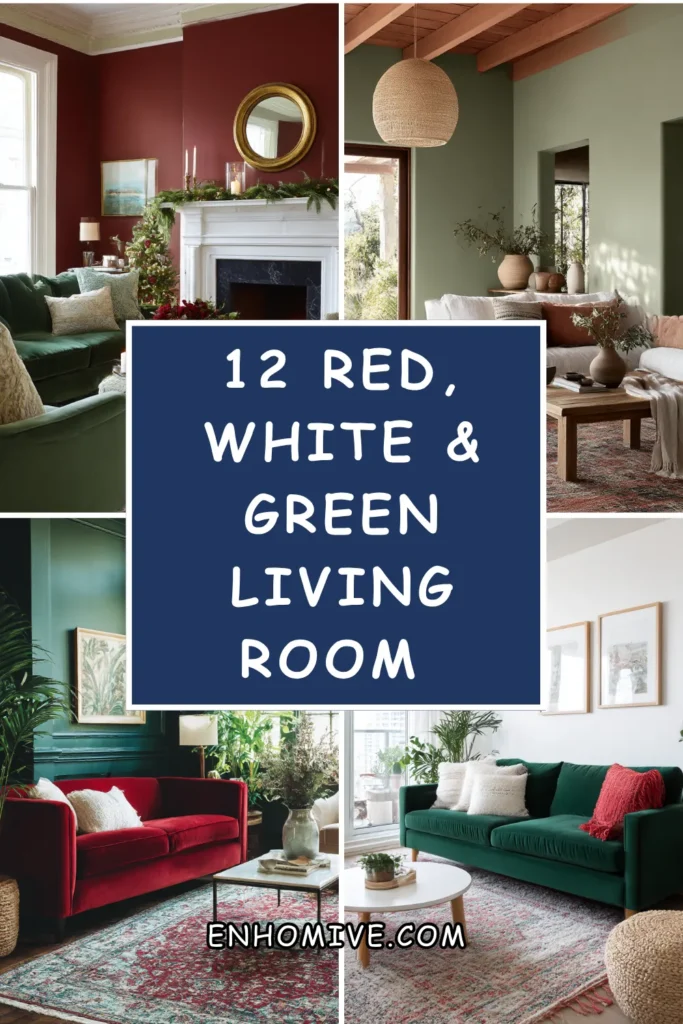
The combination works because each colour does something distinct. Red brings energy, warmth, and a sense of occasion. White provides clarity, breathing space, and contrast that makes the other colours read more vividly. Green grounds the palette in nature, adds depth, and prevents the red from tipping into something overwrought. Together they create rooms that feel alive, considered, and genuinely striking from the moment you walk in.
The twelve looks below each interpret the palette differently — from a barely-there suggestion of all three colours to a full-commitment maximalist statement. Each one includes what makes it work, how to achieve it, and a practical tip for getting the balance right in a real room.
1. The Botanical Statement Look
Budget: $300 – $1,200
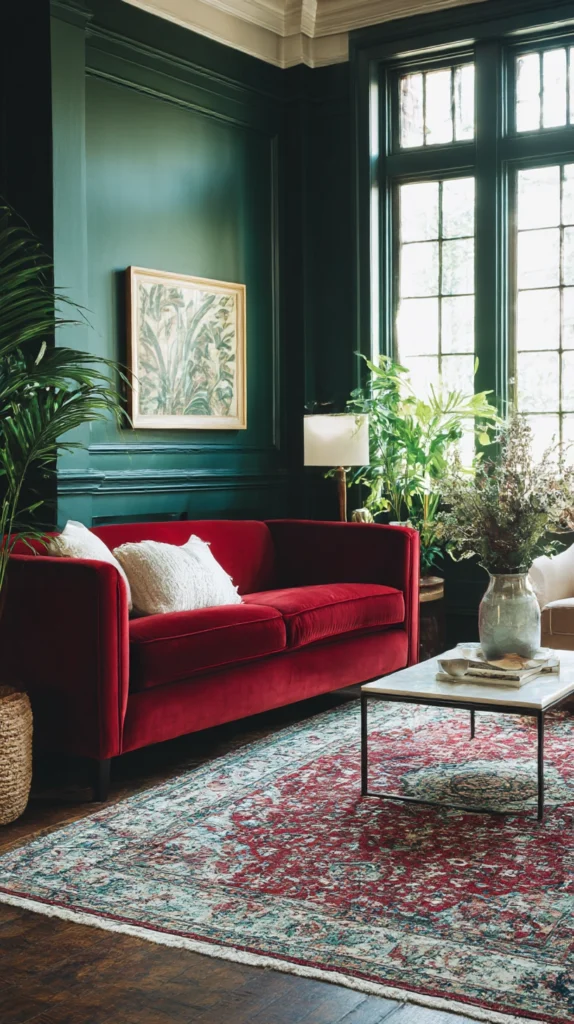
This look takes its lead from the natural world — deep botanical green on the walls, white woodwork and ceiling, and red introduced through a single statement piece like a velvet sofa, a large-scale art print, or a vintage Persian rug with red as its dominant tone. The green reads as a rich, enveloping backdrop that makes white furniture glow and red accents sing without any of the three colours competing for dominance.
Deep forest greens — Farrow and Ball’s Calke Green, Little Greene’s Sage, or Dulux’s Woodlands — work better for this look than bright or mid-tone greens. The depth of a dark botanical green creates the sense of an enclosed, intimate room that feels equally at home with a velvet sofa as with linen upholstery. White cornicing, skirting, and a marble or painted white fireplace provide the contrast that stops the dark walls from feeling heavy.
Styling tip: Introduce the red in one substantial piece rather than scattering small red accents across the room. A single red velvet sofa or an oversized red-ground rug makes a clear, confident statement; a collection of red cushions, a red candle, and a red vase scattered across a green room looks timid and unresolved. One bold red piece is all the palette needs.
2. The Italian Maximalist Look
Budget: $500 – $3,000
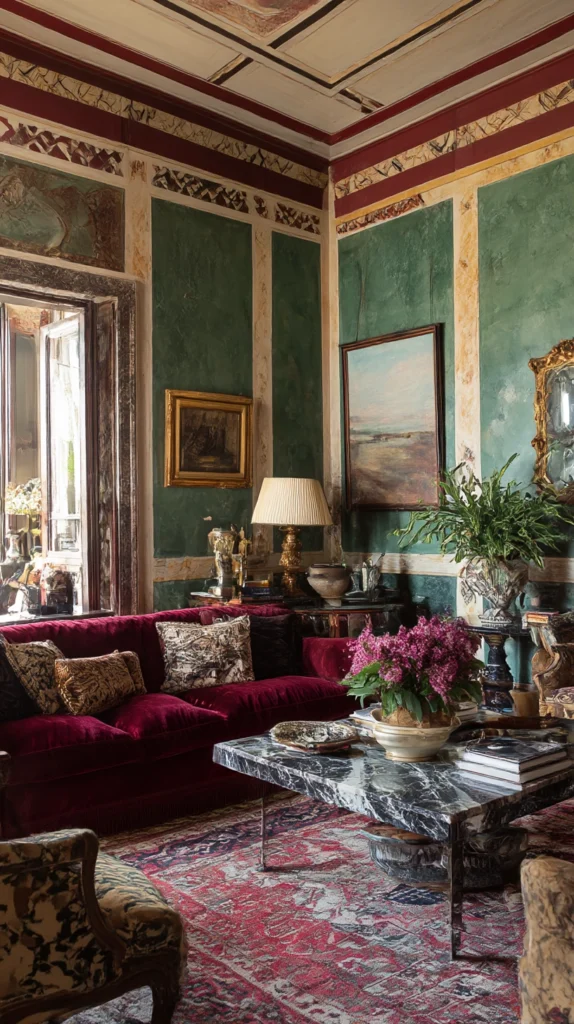
Rich, layered, unapologetically abundant — the Italian maximalist living room takes the red, white, and green palette and fills every surface with pattern, texture, and personality. Toile de Jouy or botanical print wallpaper in green and white covers the walls. A deep red Chesterfield sofa anchors the room. Gold-framed mirrors, marble-topped side tables, ceramic lamps with green and white bases, and a Turkish or Moroccan rug in red, cream, and green complete a room that rewards close inspection from every seat in it.
The maximalist approach works because of the discipline beneath the abundance — every element, however decorative, connects to the core palette. A piece that does not contain at least one of the three colours is examined carefully before it earns a place in the room. The richness comes from layering within the palette, not from introducing additional colour families.
Styling tip: Balance the visual weight of the room by keeping the ceiling and upper wall areas lighter than the lower half. In a maximalist scheme, a white or cream ceiling prevents the room from feeling oppressive regardless of how much pattern and colour fills the walls and floor. The eye needs somewhere to rest, and a pale ceiling provides it.
3. The Scandinavian Clean Look
Budget: $400 – $1,500
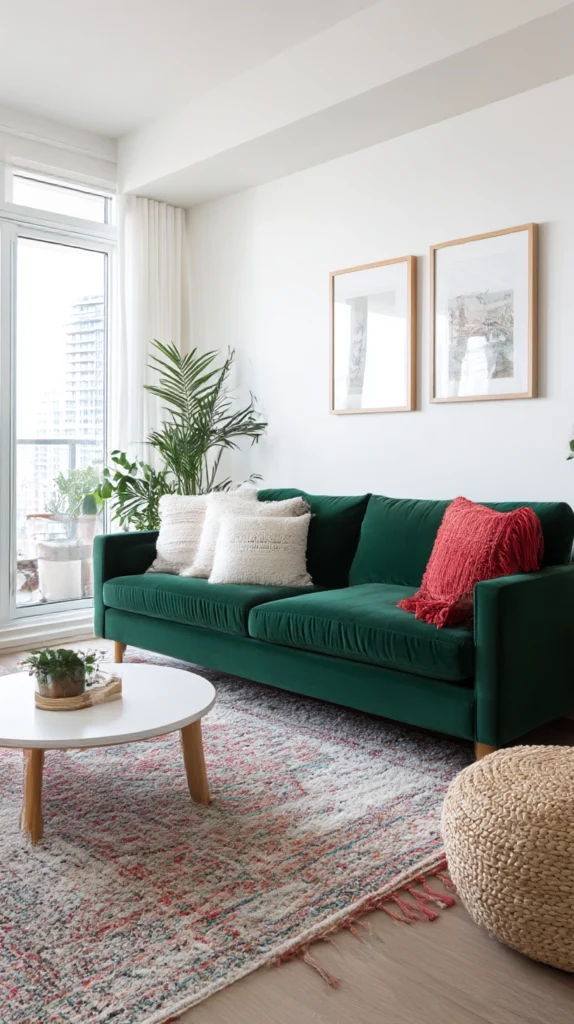
The Scandinavian interpretation strips the palette back to its most restrained and considered form — white walls, white-painted timber floors, a single large dark green sofa or pair of armchairs, and red introduced through carefully chosen textiles. A red and white geometric cushion, a red wool throw, a red-spined book left on a white shelf — the touches are minimal, deliberate, and entirely in keeping with the Scandinavian design principle that every element in a room should earn its place.
The restraint of this look is also its greatest challenge. In a Scandi room, there is nowhere to hide a bad piece or a thoughtless arrangement — the simplicity of the scheme means every element is visible and matters. Quality of materials counts for more here than in any other look on this list. Linen upholstery, solid timber furniture, ceramic vessels, and woven textiles in natural fibres all suit the palette and the aesthetic.
Styling tip: Introduce texture as a substitute for colour in a restrained scheme. When the palette is deliberately limited, the difference between a smooth linen cushion, a chunky knit throw, and a nubby boucle armchair provides the visual variety that colour would supply in a more complex scheme. Textural contrast keeps a simple room interesting.
4. The Vintage Christmas Look
Budget: $200 – $800
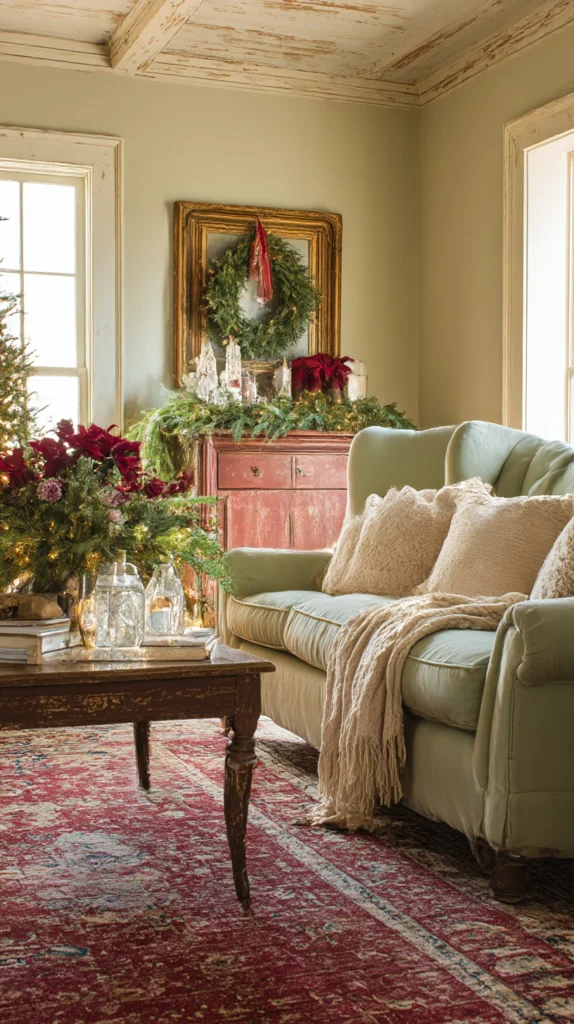
There is a version of the red, white, and green living room that intentionally leans into the classic Christmas palette year-round — and when executed with enough confidence and enough vintage character, it works beautifully in all twelve months. Faded red walls, antique white woodwork, and deep sage green upholstery or curtains create a room that feels warm, nostalgic, and genuinely festive in the best possible sense of that word — not kitschy, but richly celebratory.
Vintage and antique pieces suit this look particularly well. A red painted bookcase, a green velvet armchair with worn arms, a white marble fireplace with a collection of ceramic and glass pieces in the palette — the age and patina of second-hand furniture adds a warmth and authenticity that new pieces rarely achieve. Mix periods freely; a Victorian fireplace with a mid-century armchair and a contemporary rug all work together within a strong colour palette.
Styling tip: Vary the tone of each colour rather than using a single flat version of red, white, and green throughout. Faded red beside deep crimson, chalk white beside ivory, sage green beside forest green — the tonal variation within each colour family gives the room depth and prevents the palette from reading as flat or costume-like.
5. The Modern Art Gallery Look
Budget: $600 – $2,500
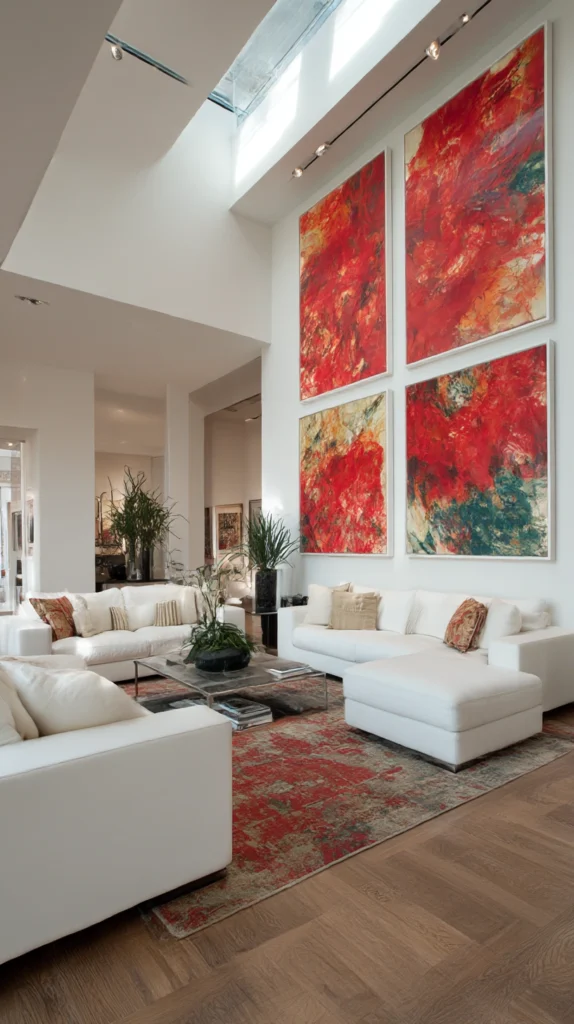
White walls, white ceiling, white polished concrete or timber floor — and then a collection of large-format abstract paintings or prints in red and green hung salon-style across one entire wall. The art provides all the colour; the room provides all the space. This is the most contemporary and gallery-like interpretation of the palette, and it suits high-ceilinged, architecturally spare rooms that would be overwhelmed by wallpaper or coloured walls but feel empty without a strong visual anchor.
The furniture in this look stays deliberately neutral — white or pale grey sofas, natural timber side tables, concrete or stone surfaces — so the art reads clearly against its background. A single large red leather armchair or a green velvet bench at the foot of a sofa introduces the palette into the upholstery in a controlled, minimal way that complements rather than competes with the artwork on the walls.
Styling tip: Light the art wall with dedicated picture lights or track lighting rather than relying on general room lighting. Well-lit artwork creates a focal point that draws the eye the moment you enter the room and makes even modestly priced prints look like serious, considered acquisitions. The difference that proper picture lighting makes is out of all proportion to its cost.
6. The Terracotta and Sage Warm Look
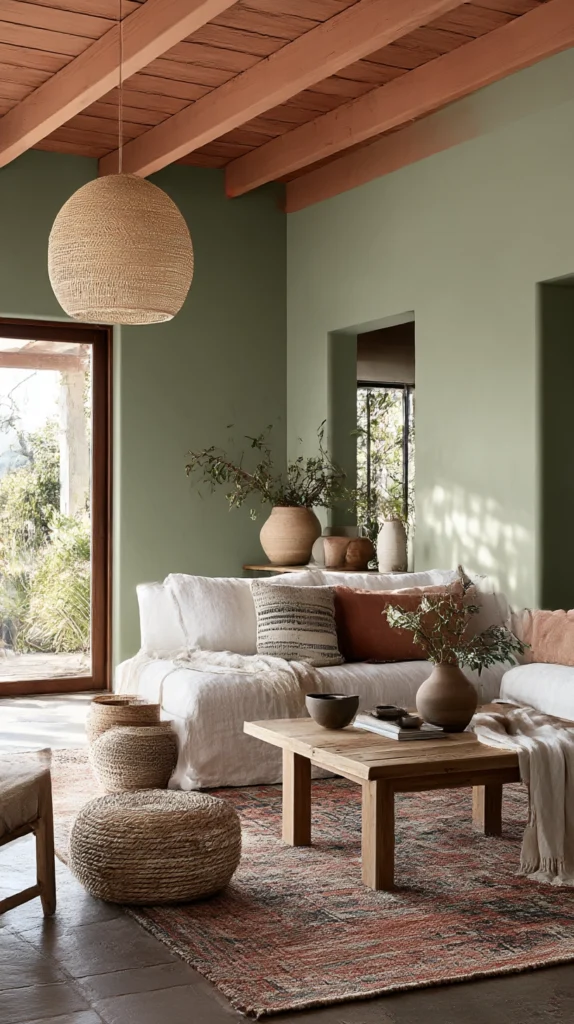
Budget: $350 – $1,400
A warmer, earthier interpretation of the palette that replaces sharp primary red with terracotta and burnt sienna tones and bright green with dusty sage and olive. The white anchors the room in clarity while the warmer versions of red and green create a space that feels sun-warmed, organic, and deeply comfortable rather than bold and graphic. It is the palette of southern Europe — terracotta pots, sun-bleached walls, the grey-green of an olive grove — brought indoors.
Terracotta linen cushions, a sage green painted dresser, a large sienna and cream abstract rug, and walls in warm white or aged plaster tones create the layered, imperfect quality that makes this look work. Aged brass hardware, rattan and wicker accents, and natural terracotta plant pots reinforce the organic warmth of the palette throughout.
Styling tip: Bring living plants into this room in generous quantities. The natural greens of houseplants complement the dusty sage palette and reinforce the organic, earthy character of the look. A large fiddle leaf fig or olive tree in a terracotta pot in a corner, grouped with smaller plants on a plant stand, works better than scattered individual plants across different surfaces.
7. The Classic Preppy Look
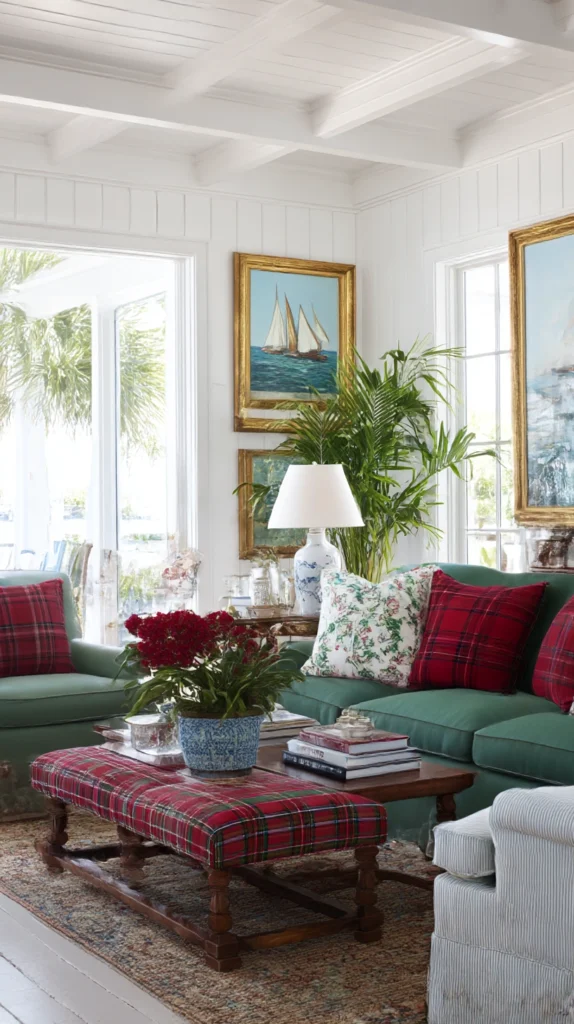
Budget: $300 – $1,200
Crisp, collegiate, and entirely unambiguous — the preppy living room uses the red, white, and green palette in its most graphic, pattern-driven form. Candy-stripe cushions, tartan throws, gingham or buffalo check upholstery, a bright white painted wood floor, a red lacquered coffee table, and a sofa in deep bottle green create a room with the confident, club-like quality of a New England beach house or a traditional British country home.
Pattern mixing is central to this look, and the palette is what makes mixing work. A tartan cushion beside a stripe cushion beside a plain velvet cushion reads as layered and deliberate when all three contain the same red, white, and green — the colour connection is what gives permission for the pattern mix without the arrangement looking chaotic.
Styling tip: Anchor all the pattern mixing with one large, plain upholstered piece — typically the main sofa — in a solid colour from the palette. A plain forest green sofa or red linen sofa beside a patterned cushion collection reads as confident and considered; two heavily patterned sofas in the same room compete with each other and make the space feel restless and busy.
8. The Tropical Maximalist Look
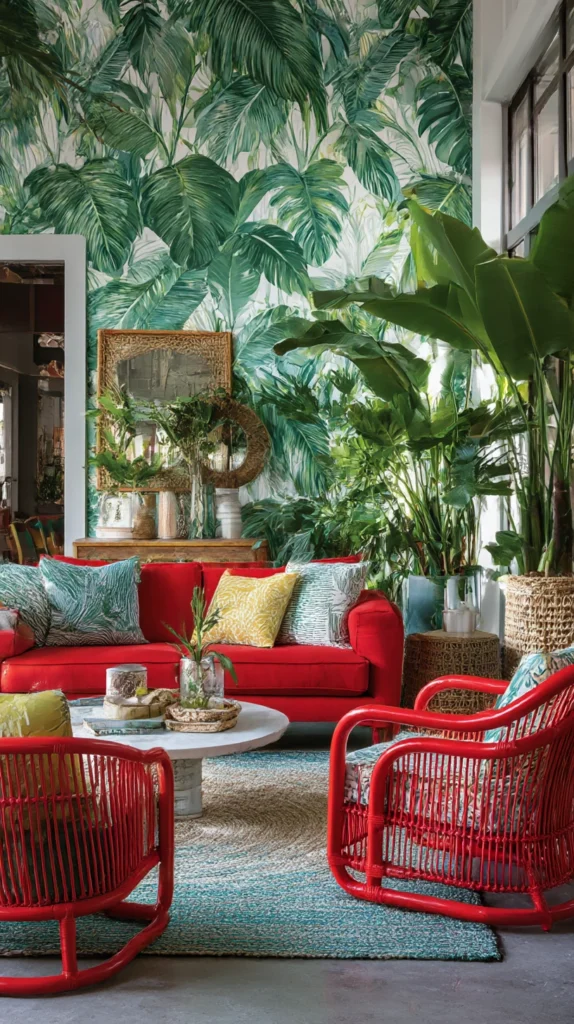
Budget: $400 – $2,000
Large-scale tropical leaf wallpaper in deep greens with white backgrounds, a red rattan sofa or pair of red cane chairs, white painted floorboards, and woven natural fibre accessories create a living room with the exuberant, sun-drenched quality of a Caribbean veranda or a colonial-era tropical bungalow. The large-scale botanical pattern provides the green, the white background of the wallpaper provides the white, and the red furniture and accessories complete the trio.
Banana leaf, palm, and monstera prints on wallpaper or large-scale fabric all work for this look. The key is scale — small tropical prints read as busy and flat, while large oversized leaves create a dramatic, immersive effect that transforms the room into somewhere genuinely unexpected and exciting. This is not a timid look and should not be approached timidly.
Styling tip: Keep the floor simple and pale when the walls carry a large-scale pattern. A white-painted timber floor or a plain natural jute rug gives the eye somewhere neutral to rest and prevents the room from feeling visually overwhelming. A patterned rug beneath a heavily patterned wall tips the balance from maximalist to chaotic.
9. The Mid-Century Modern Look
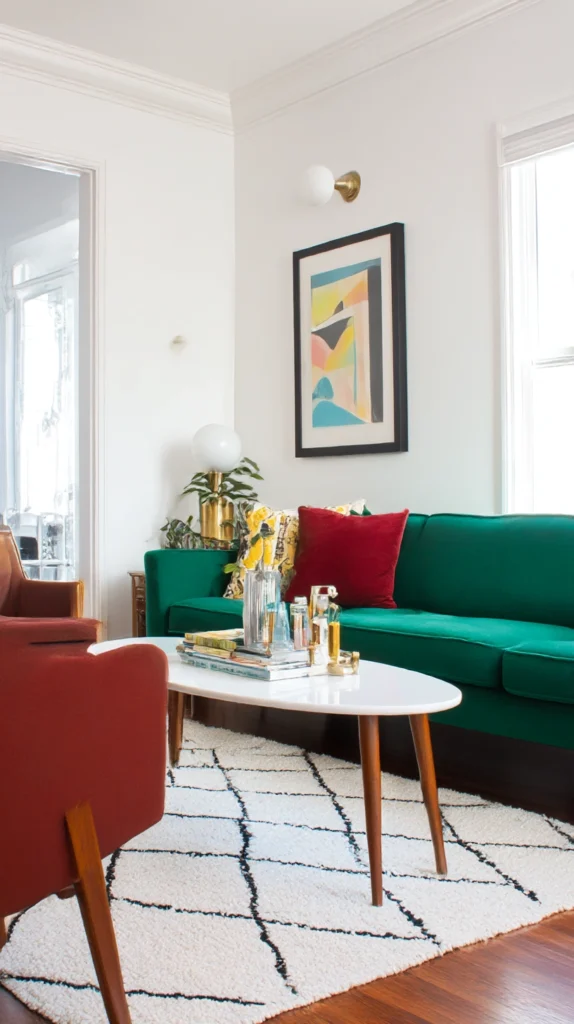
Budget: $500 – $2,500
The mid-century modern living room interprets the palette through the lens of 1950s and 1960s design — clean lines, organic shapes, graphic textiles, and the specific combination of emerald green, cherry red, and crisp white that defined the optimistic interior design of the postwar decades. A green tulip chair, a red Eames-style side table, white walls, and a geometric red and green area rug on pale timber floors compose a room with the graphic quality of a magazine spread and the genuine comfort of well-designed furniture.
Original mid-century pieces are available from vintage dealers and auction houses at prices that vary enormously by piece and condition. Quality reproductions of iconic designs — the Eames lounge chair, the Tulip pedestal table, the Egg chair — cost $300–$1,500 each and suit this palette and aesthetic perfectly. Mix with genuinely vintage pieces found in second-hand shops for a room that feels authentic rather than showroom-assembled.
Styling tip: Resist adding too many decorative accessories to a mid-century room. The aesthetic depends on clear space and uncluttered surfaces — a sideboard with three carefully chosen objects on it looks more in keeping with the style than the same sideboard covered in collections and decorative pieces. Every object in a mid-century room should be able to justify its presence.
10. The Cottagecore Floral Look
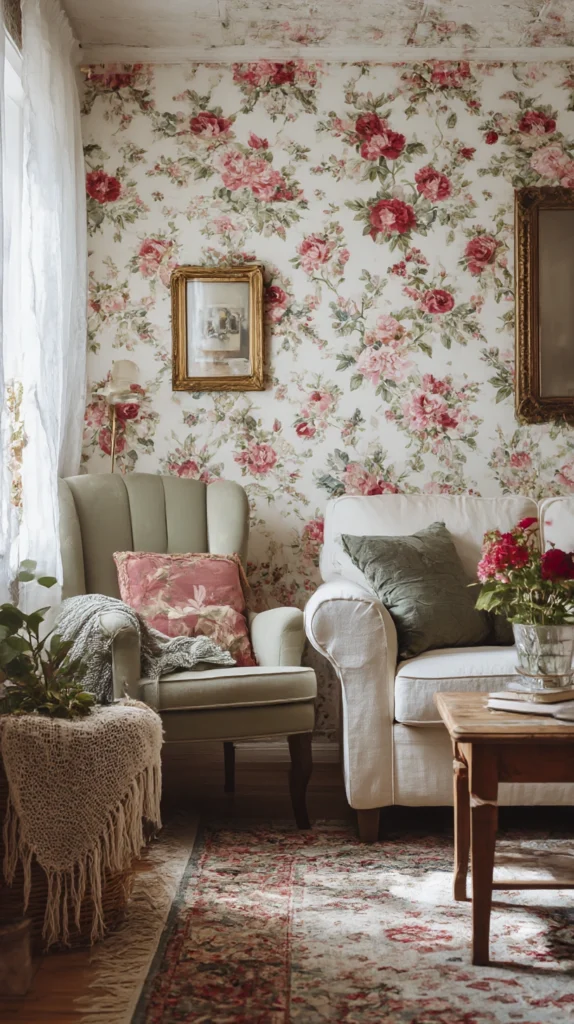
Budget: $250 – $1,000
Floral wallpaper in red roses, green leaves, and white backgrounds. A white painted stone fireplace with a collection of green and red ceramic pieces on the mantel. A red check or floral armchair beside a white painted bookcase filled with books in green and red spines. Linen curtains in cream with a small floral pattern. The cottagecore living room uses the palette in its most romantic, nostalgic form — the colours of an English cottage garden brought inside and kept at a permanently comfortable summer afternoon temperature.
This look is entirely dependent on the quality and character of the wallpaper or fabric pattern that anchors it. A beautifully drawn botanical floral in naturalistic tones sets the character of the room; a flat, digital-looking print undermines it completely. Invest in the wallpaper above everything else and the rest of the room can be assembled gradually from vintage shops, markets, and affordable upholstery.
Styling tip: Mix at least two different floral scales in the same room — a large-scale wallpaper pattern with a small-scale cushion print, or a medium-scale curtain fabric with a tiny sprig-print throw. Rooms furnished entirely in one floral scale look flat; varying the scale of the pattern creates a layered, grown-over quality that makes the look feel genuinely lived-in rather than dressed for a photo shoot.
11. The Jewel Box Look
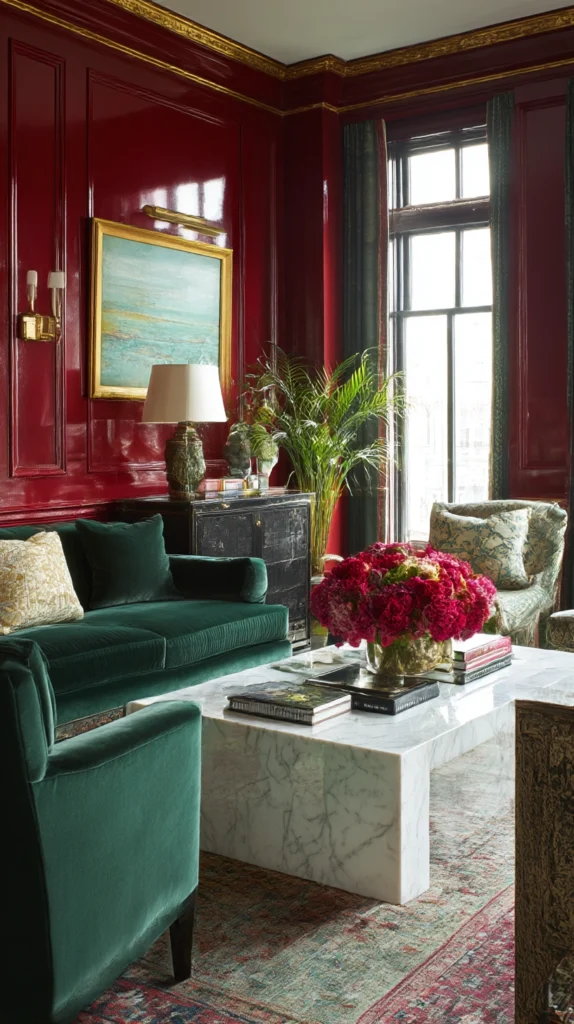
Budget: $600 – $3,000
Every surface saturated in deep colour — lacquer red walls, forest green velvet upholstery, white marble surfaces and white painted ceiling — the jewel box living room uses the palette at maximum intensity and maximum confidence. It is the most committed and the most theatrical look on this list, and it rewards that commitment with a room that genuinely stops people in their tracks and leaves an impression that no neutral room ever could.
The white in a jewel box room is not a background tone but an active contrast element — white marble, white plasterwork, white ceramic lamps, white-painted timber shutters — that stops the intensity of the red and green from becoming overwhelming. Without the white, the combination of deep red and deep green becomes oppressive. With it, the room breathes and the colours glow against each other.
Styling tip: Invest in the quality of the surfaces in a jewel box room. At this level of colour saturation, the texture and finish of every surface is clearly visible — a flat emulsion painted wall reads differently from a lacquered or eggshell finish, a velvet cushion reads differently from a polyester one. Quality of material is what gives an intense colour scheme its richness rather than its garishness.
12. The Festive Year-Round Look
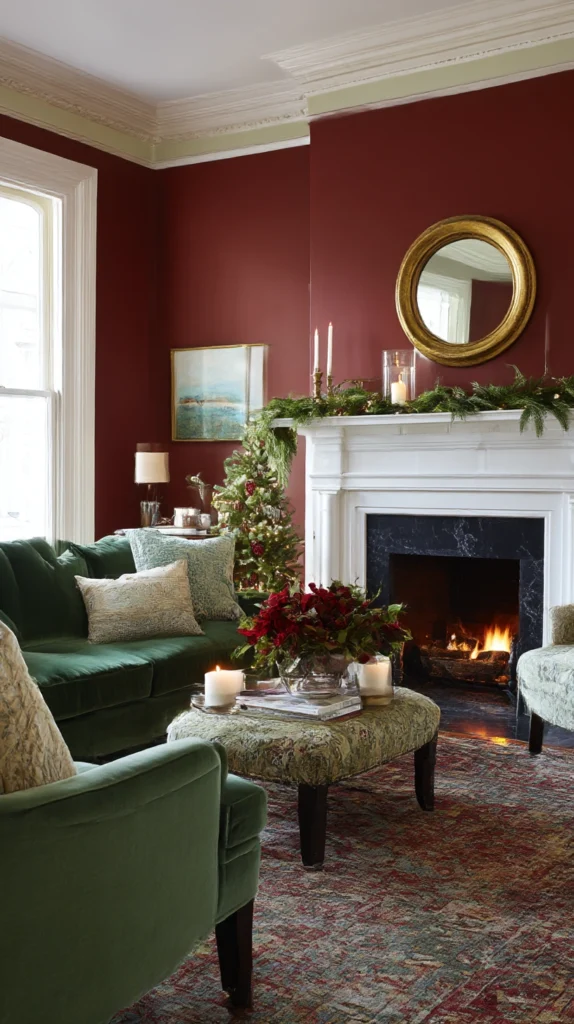
Budget: $300 – $1,500
The final look on this list is the most self-aware and the most fun — a living room that acknowledges the festive associations of the red, white, and green palette and leans into them with warmth and wit rather than trying to disguise them. Deep red walls, a white painted fireplace hung with a garland of preserved eucalyptus and dried greenery, a green velvet sofa loaded with red and white cushions, and the kind of layered, generous, candle-lit warmth that makes a room feel genuinely welcoming at any time of year.
The difference between a room that looks like it is permanently decorated for Christmas and one that looks like a deliberately bold, year-round colour choice is almost entirely one of material quality and restraint. Replace overtly seasonal decorative items with permanent equivalents in the same palette — botanical prints instead of Christmas cards, dried eucalyptus wreaths instead of tinsel, red ceramic vessels instead of baubles — and the festive warmth of the palette remains without a single seasonal reference.
Styling tip: Let the fireplace be the focal point of a festive year-round room. A well-dressed mantelpiece — a large mirror, a pair of green ceramic lamps, a few red and white vessels, and a length of dried greenery — anchors the palette and the warmth of the room in a single visual moment. Everything else in the room can be simpler and the mantelpiece will carry the whole space.
The red, white, and green palette rewards the decorator who commits to it fully. Half-hearted gestures toward the combination — a red cushion here, a green plant there, a white wall throughout — rarely coheres into something that reads as intentional. Pick the look that resonates most with your existing space and your own instincts, choose the version of each colour that suits your light and your furniture, and then follow it through with enough confidence that the room knows exactly what it wants to be. That clarity of intention is what makes a living room genuinely striking.