
15 Garden Seating Spots You’ll Never Want to Leave
The garden seating spot that genuinely earns the description — the one where the intention to sit for twenty minutes becomes two hours without conscious decision, where the book stays unread because the view is better, where the drink is refilled without anyone quite noticing who refilled it — is not an accident of good weather or good company.
It is the result of deliberate design decisions about position, enclosure, comfort, material, and the relationship between the seating and the specific qualities of the garden around it that make one spot genuinely extraordinary, while another equally furnished and equally positioned spot remains merely adequate. The difference between a garden seat that gets used and a garden seat that gets looked at is almost entirely a design difference — the result of understanding what makes a place feel genuinely worth occupying rather than simply worth photographing.
These fifteen ideas demonstrate exactly how to create garden seating spots of the kind that people return to consistently, occupy for longer than intended, and find genuinely difficult to leave.
1. The Enclosed Bower Seat
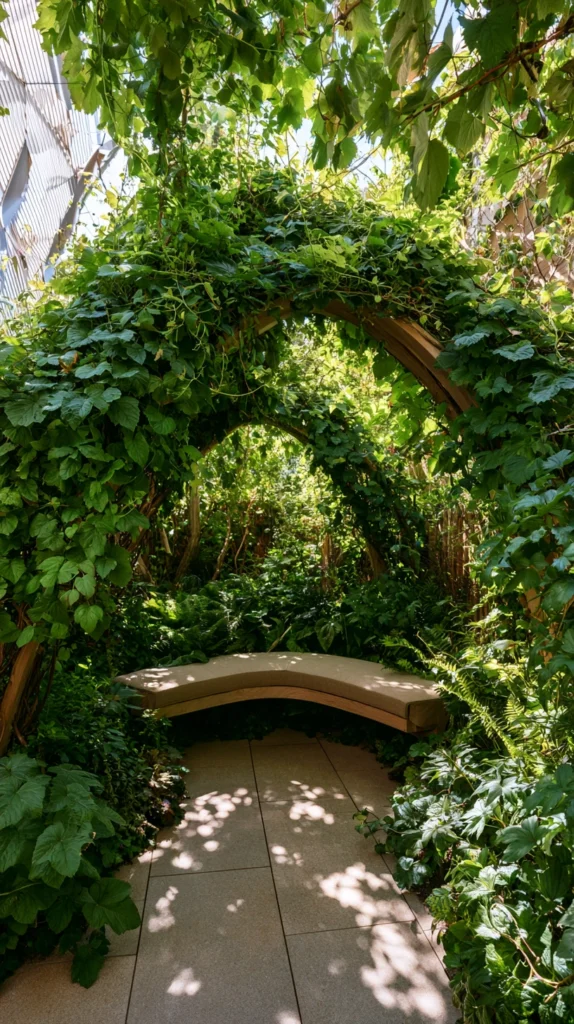
A garden seat positioned within a planted bower — a timber or metal arch structure completely clothed in climbing plants, its interior creating a cool, fragrant, visually enclosed space that feels genuinely separate from the garden around it — is the garden seating experience that most completely fulfils the human desire for a sheltered position with a view, the instinct that landscape psychologists describe as prospect and refuge simultaneously.
Plant the bower with climbing roses for fragrance and seasonal flowers, clematis for colour and density, or jasmine for the evening scent that makes the bower most extraordinary after six. Position the seat facing outward toward the garden’s best view so the framing effect of the planted arch creates a composed, picture-like relationship between the seated person and the landscape beyond.
2. The Tree Canopy Seat
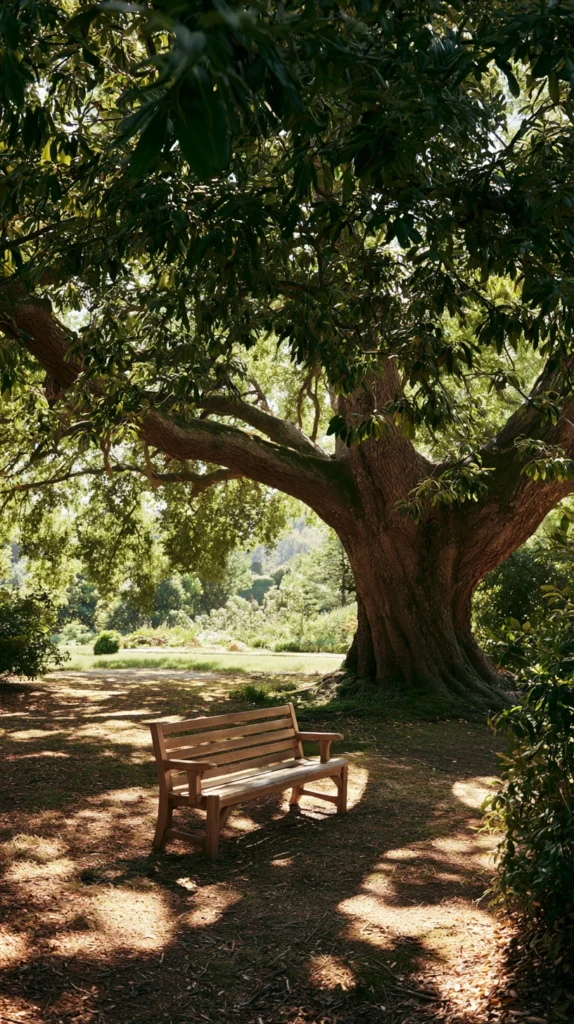
A simple seat — a timber bench, a pair of Adirondack chairs, or a hammock — positioned directly beneath the canopy of a mature tree is one of the oldest and most consistently satisfying garden seating configurations available, its appeal rooted in something deeper than design preference — the instinctive human comfort of being beneath a living overhead structure that provides shelter, filtered light, and the particular quality of acoustic and visual calm that a tree canopy creates beneath it.
The dappled light through a deciduous canopy on a summer afternoon is among the most universally beautiful natural lighting effects available at ground level, and the seat positioned to receive it is the seat that most people in any garden will eventually drift toward, regardless of what other, more deliberately designed seating options exist nearby.
3. The Elevated Platform With a View
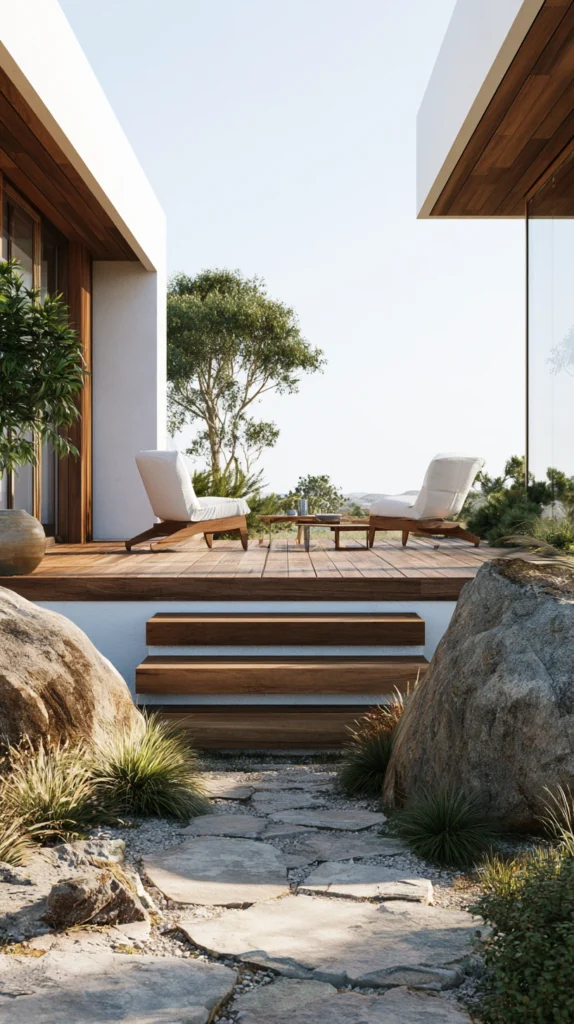
A raised timber platform — elevated above the garden’s general ground level by half a metre or a full metre, accessed by simple timber steps, positioned at the garden’s highest point or at the point from which the best view of the surrounding landscape is available — creates a seating spot of extraordinary spatial quality that the ground-level seat, however beautifully positioned and furnished, cannot replicate.
The slight elevation changes everything — the horizon extends, the garden below reads as a composed landscape rather than an immediate environment, and the seated person has the specific quality of visual authority and spatial pleasure that elevation provides. Furnish simply — two quality outdoor chairs, a low table between them, nothing more — and allow the elevated position and the view it commands to provide everything the seating spot requires by way of experience.
4. The Kitchen Garden Seating Corner
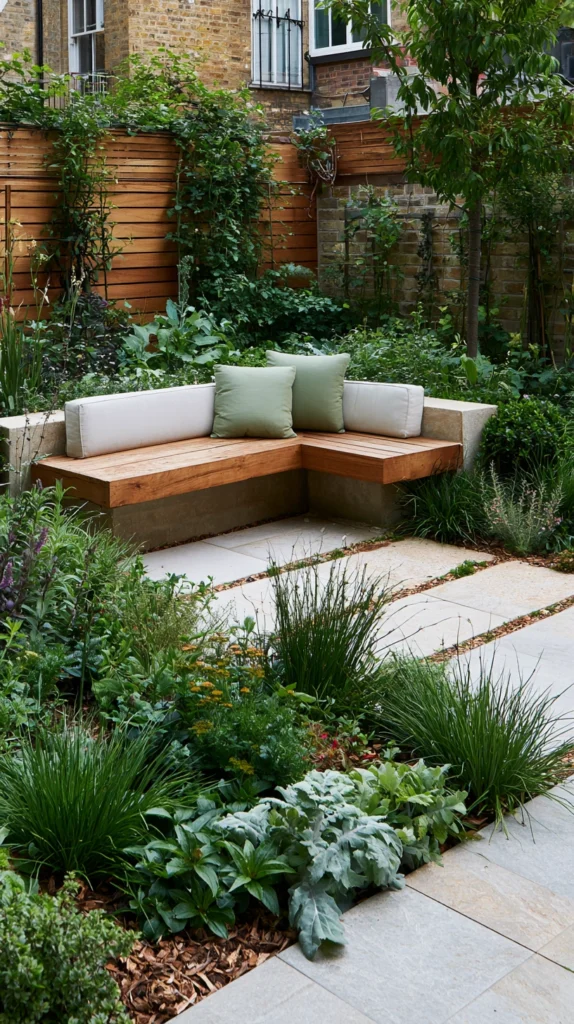
A seat positioned within or immediately adjacent to the kitchen garden — surrounded by the productive planting of vegetables, herbs, and edible flowers, positioned where the fragrance of tomato foliage, fresh basil, and warm-earth garden smell is most concentrated — creates a garden seating experience of extraordinary sensory richness that the purely ornamental garden cannot replicate.
The kitchen garden seat is not primarily a scenic seat, but a sensory one — its pleasure coming from smell, from sound, from the visual satisfaction of productive abundance, and from the particular quality of connection to the cycle of growing and eating that makes time spent within a productive garden feel genuinely restorative in ways that differ from the restorative quality of an ornamental garden. Position a simple timber bench at the kitchen garden’s edge, facing inward toward the planting rather than outward toward the lawn.
5. The Waterside Seat
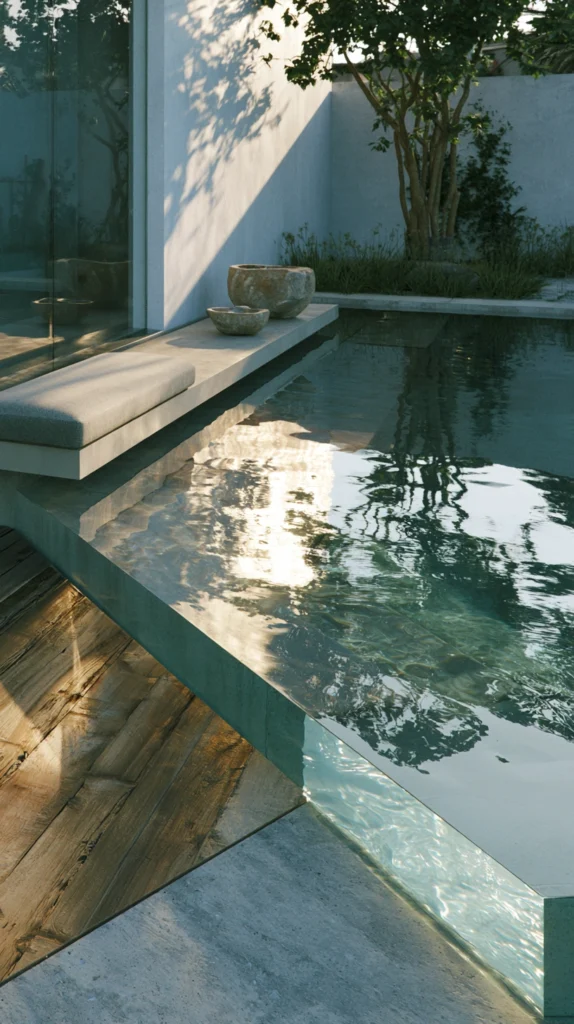
A seat positioned at the edge of a garden pond, a stream, or any water body — its position close enough to the water’s surface that the sound of moving water is the acoustic environment of the seating spot, the reflections in the water’s surface are the primary visual experience, and the particular quality of cool, slightly humid air that water bodies create is physically present — delivers a quality of sensory immersion and genuine restfulness that no land-based seating spot, however beautifully designed, quite achieves.
The sound of water is the single most effective natural sound for masking intrusive external noise, for reducing perceived stress, and for creating the quality of acoustic calm that makes extended outdoor sitting genuinely pleasant rather than effortful. Position the seat low and close to the water — as near to the water’s edge as safety allows — to maximise the acoustic and visual quality of the water’s presence.
6. The Walled Garden Corner Seat
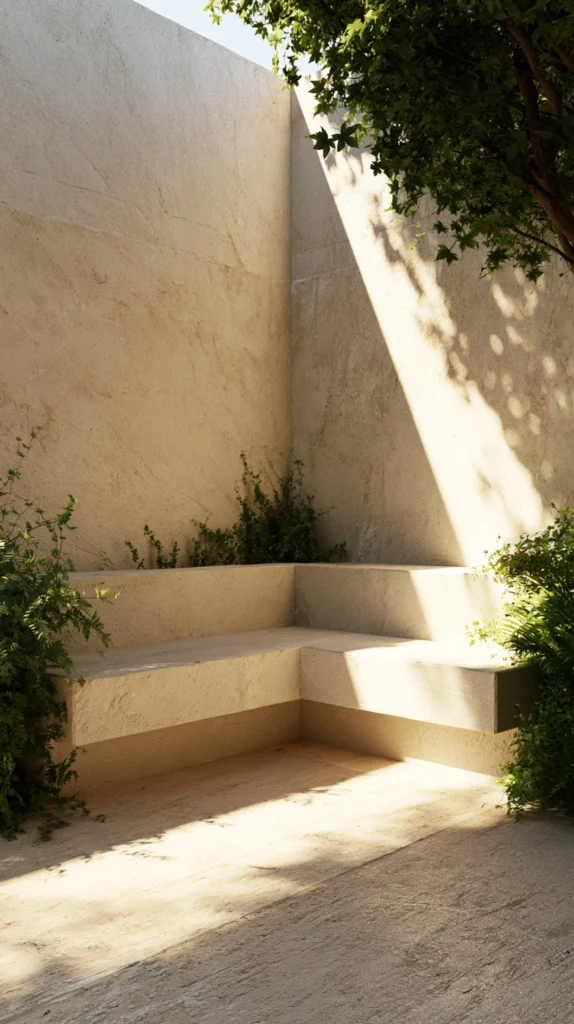
A stone or brick seat built into the corner of a walled garden — its back warmed by the sun-absorbing masonry that retains afternoon heat well into the evening, its enclosure on two sides creating the sense of sheltered intimacy that open garden seating cannot provide — is the seating spot that most effectively extends the garden’s usable season beyond the summer months.
The thermal mass of a sun-warmed wall beside and behind a garden seat raises the perceived temperature of the seating spot by several degrees compared to the open garden, making a well-positioned walled seat comfortable on October evenings that would drive a person indoors from an exposed position. Build in stone or brick to match the existing garden wall materials, add a simple timber or stone seat surface, and plant the adjacent wall with a sun-loving climber that benefits from the same reflected warmth.
7. The Hidden Meadow Seat
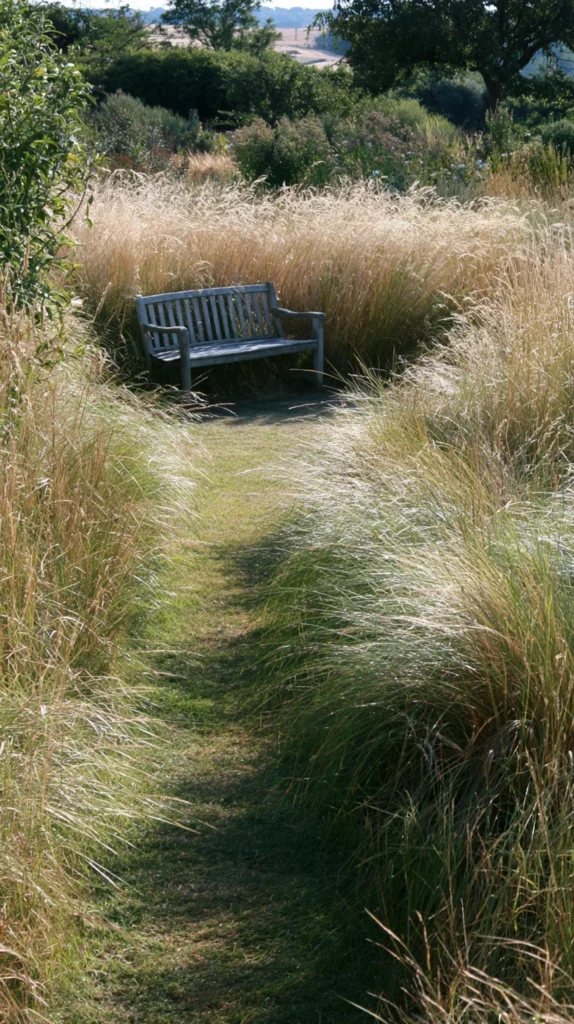
A seat concealed within a wildflower meadow or a tall grass planting — accessible via a narrow mown path that parts the grasses to reveal a small cleared circle at its end, the seat surrounded on all sides by the movement and the fragrance of the meadow planting — creates a garden seating experience of extraordinary intimacy and extraordinary sensory richness that the conventional open-lawn garden seat cannot approach.
The concealment is the essential quality — the meadow seat that cannot be seen from the house or from any other position in the garden gives its occupant the specific quality of genuine privacy and genuine seclusion that most garden seats, however beautifully positioned, entirely lack. Mow the access path just wide enough for comfortable single-file walking, clear the central seating circle to a diameter of approximately two metres, and furnish with a single simple timber seat or a low platform with cushions.
8. The Greenhouse Reading Corner
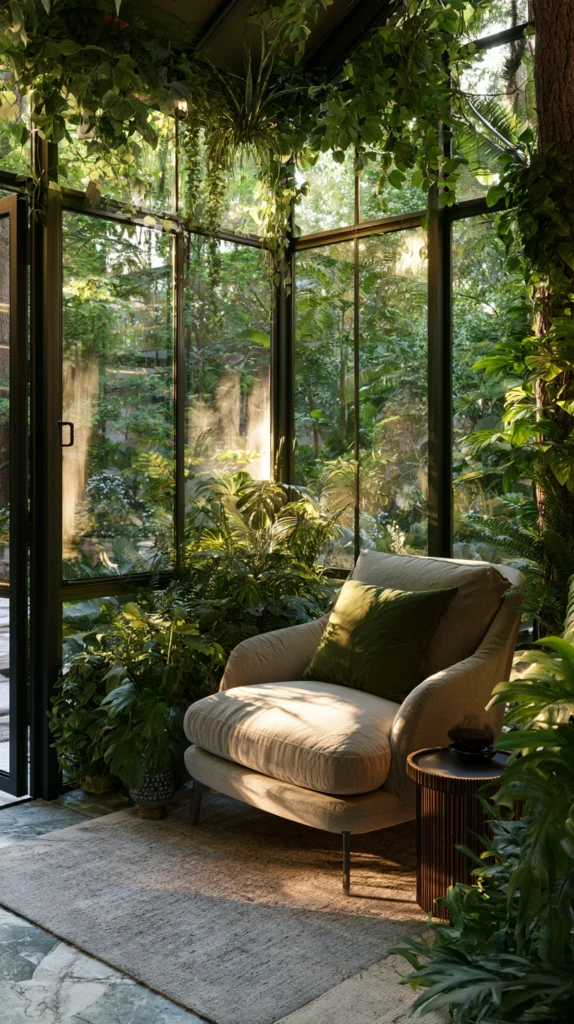
A corner of a working greenhouse — its glass walls creating a warm, slightly humid microclimate of extraordinary pleasantness on cool days, the fragrance of warm soil, growing plants, and the particular earthy sweetness of a productive glass house creating one of the most distinctive and most deeply comforting sensory environments available in any garden — fitted with a simple comfortable chair and a reading lamp is the garden seating spot for the cooler months that no other outdoor or semi-outdoor position can substitute for.
The greenhouse reading corner extends the garden seating season into months when no outdoor seat is genuinely comfortable, providing a connection to the garden and to growing plants that the indoor seat entirely lacks. Choose a corner that receives the most direct sunlight through the glass for the warmest microclimate and the best reading light.
9. The Sunken Garden Seat
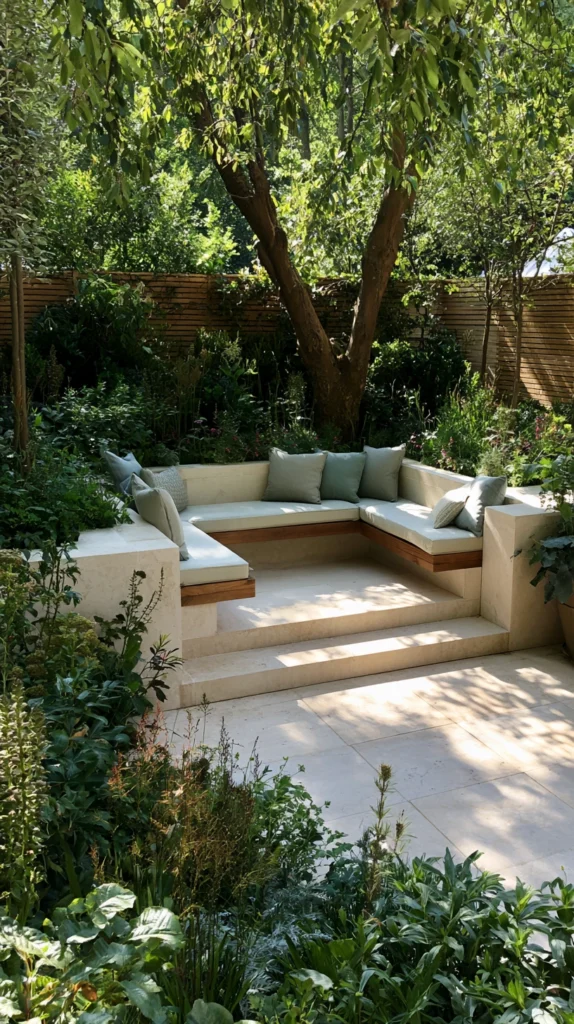
A sunken seating area — steps descending from the garden’s general level into a lower space whose walls are the cut earth or the stone retaining walls of the excavated area, the seating arranged within the sunken space and looking upward at the surrounding planted borders — creates a garden seating experience of remarkable intimacy and remarkable acoustic shelter that the above-ground seat cannot replicate.
The sunken position reduces wind exposure dramatically, raises the perceived eye level of surrounding planting to an immersive height, and creates the sense of being within the garden rather than observing it from above — a quality of garden immersion that makes the sunken seat one of the most consistently pleasurable positions in any garden that contains one. Line the sunken walls with fragrant planting at proximity — lavender, rosemary, thyme — and the sensory environment of the sunken seating area becomes genuinely extraordinary.
10. The Treehouse or Elevated Cabin Seat
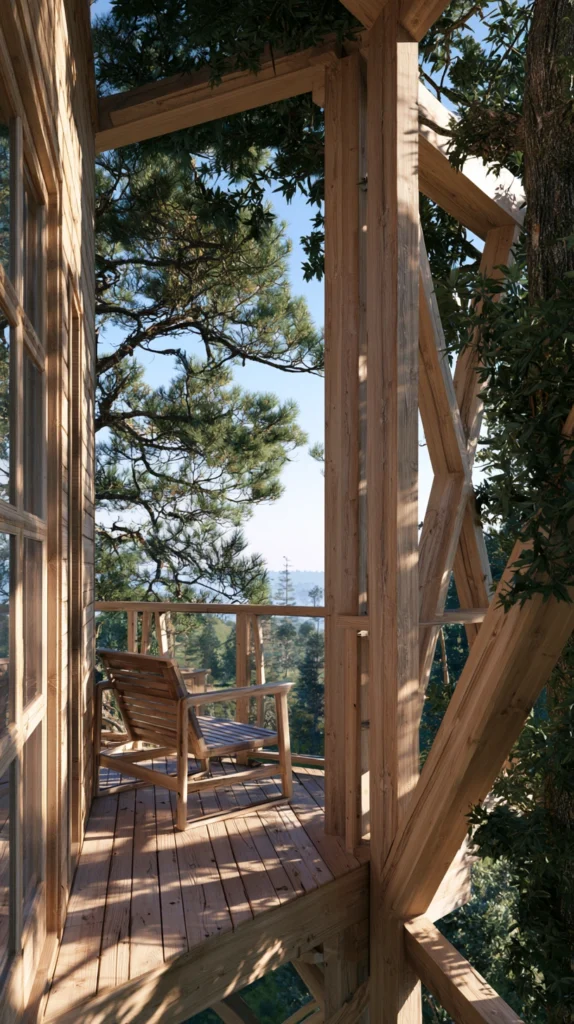
An elevated seating position within a treehouse structure or a simple elevated cabin — its floor raised to the level of the lower tree canopy, its outlook from within the branches rather than beneath them — creates the garden seating experience of greatest spatial novelty and greatest consistent delight, the quality of being within rather than beneath the tree canopy providing a relationship to the garden’s plant life that no ground-level position can replicate.
The treehouse seat does not require elaborate construction — a simple platform of three by three metres, elevated on four posts to three metres, with a simple railing and a comfortable seat facing the garden’s best view, is sufficient to deliver the canopy-level seating experience completely. Add a reading lamp on a weatherproof outdoor circuit, and the treehouse platform becomes a genuinely functional garden room for the months when the foliage is on the tree, and the platform is genuinely within the canopy.
11. The Formal Garden Bench in a Yew Alcove
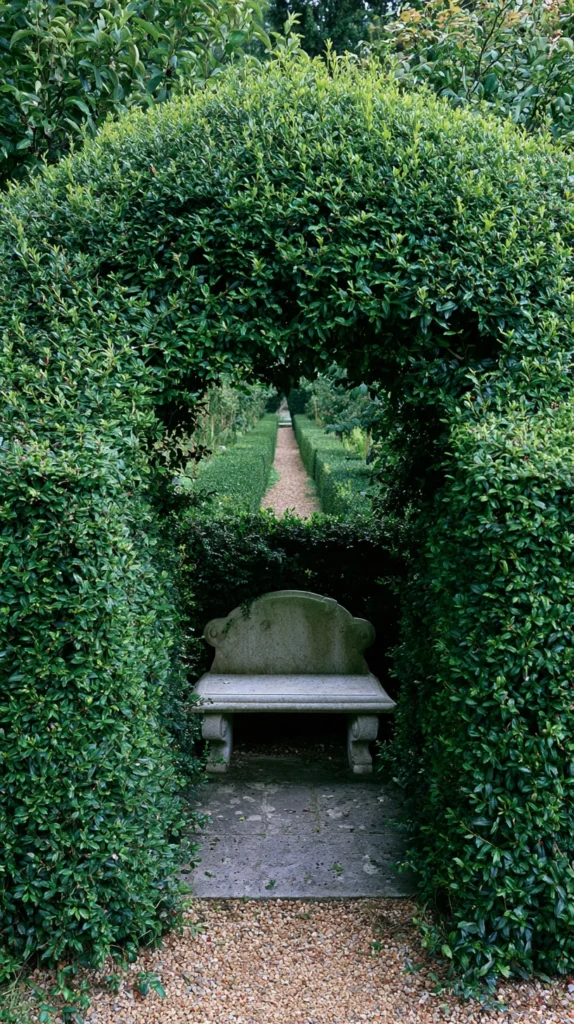
A stone or timber bench positioned within a niche cut into a formal yew or box hedge — the hedge’s depth on three sides creating a naturally enclosed seating alcove of considerable formality and considerable atmospheric quality.
It is the garden seating spot most associated with the great formal garden tradition and most completely suited to the garden aesthetic that values structure, enclosure, and the particular quality of cool, still, deeply shaded calm that a mature clipped hedge creates within its cut alcove.
The yew hedge alcove seat faces outward toward the formal garden’s primary axis — a view composed with the same precision as any interior arrangement, the clipped topiary, the gravel path, and the planted borders reading as a garden room viewed from its most intimate and most considered position. The hedge enclosure also provides the acoustic shelter of dense evergreen planting, creating a seating spot of remarkable quiet within even a relatively noisy garden environment.
12. The Rooftop or Balcony Garden Seat
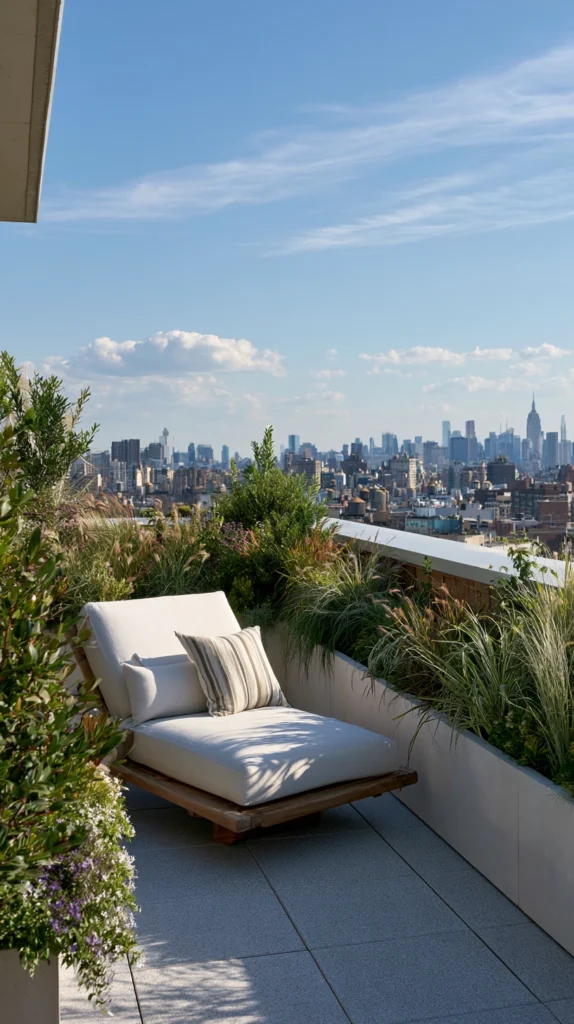
A garden seating spot on a rooftop terrace or a generous balcony — its elevated urban position providing a quality of sky, horizon, and cityscape view that no ground-level garden can offer, its planted container garden creating a botanical environment above the city that makes the seat feel genuinely garden-connected rather than simply outdoor — is the garden seating experience most specific to urban living and most completely irreplaceable by any ground-level alternative.
The rooftop garden seat at golden hour — the city’s skyline turning amber, the potted grasses and herbs moving in the elevated breeze, the quality of light and space above the urban street entirely different from the light and space within it — is one of the finest garden seating experiences available to a city dweller and one that requires only a well-positioned chair, a well-planted container, and the willingness to go upstairs.
13. The Fragrance Garden Seat
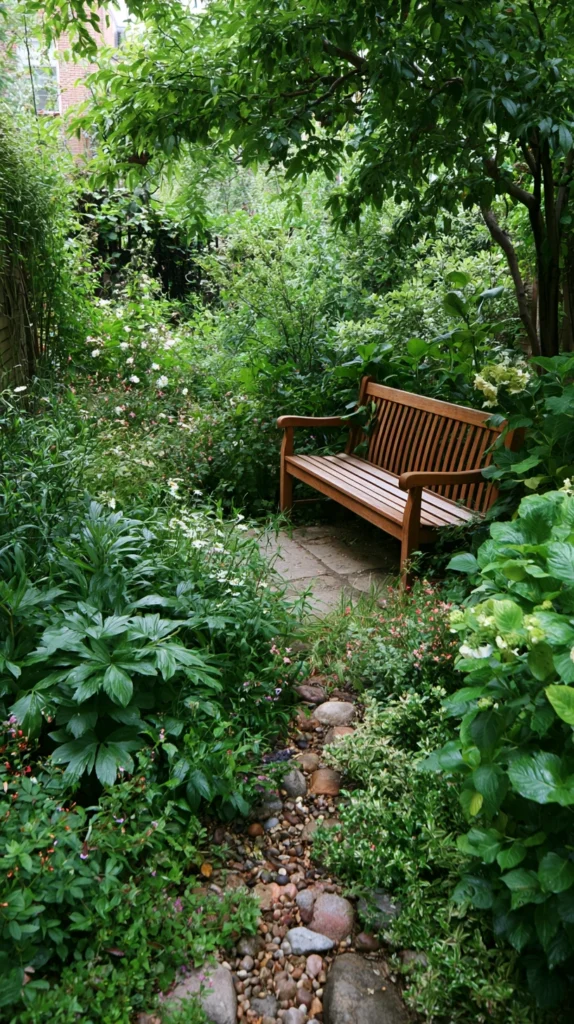
A seating position established specifically within the garden’s most intensely planted fragrant zone — surrounded on multiple sides by the most generously fragrant plants of the garden, positioned where the prevailing breeze carries the combined fragrance of rose, lavender, jasmine, and sweet pea directly to the seated position — creates a garden seating experience where the primary quality is olfactory rather than visual, where the garden’s most invisible quality becomes the most powerfully present one.
Plant the fragrance garden seat’s surroundings with a succession of fragrant species chosen for different seasons — winter-flowering viburnum and sarcococca, spring hyacinths and narcissus, summer roses and jasmine, late summer sweet peas and nicotiana — so the fragrance of the seating spot changes through the season rather than peaking briefly and then disappearing. A simple seat of any material, furnished with a comfortable cushion, is sufficient — the planting provides everything else the spot requires.
14. The Stone Seat With Moss and Age
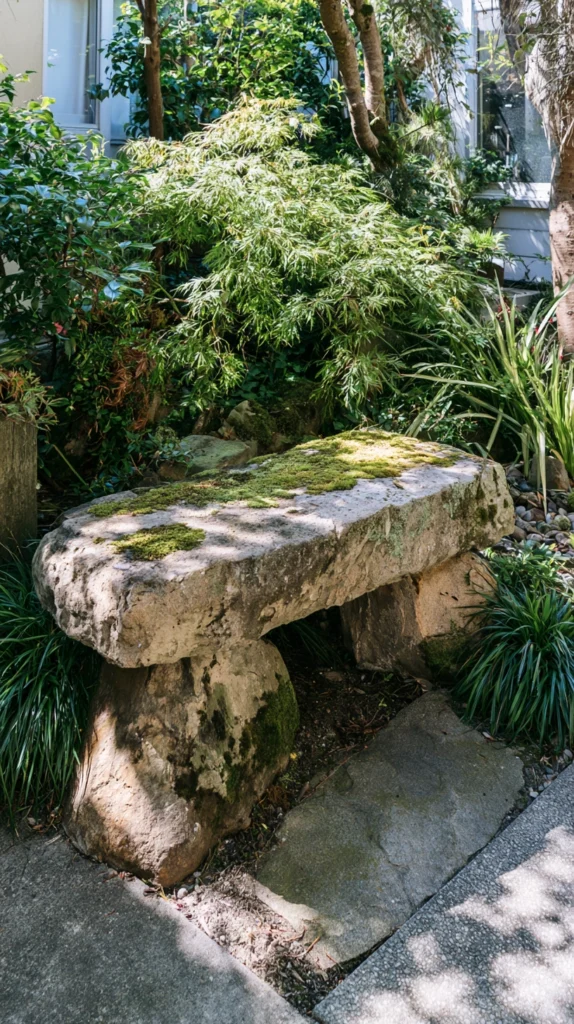
A stone garden seat — not a manufactured garden bench but a genuine piece of worked stone, a large flat boulder, a section of reclaimed stone step repurposed as seating — positioned in the garden with the permanence and the material authority of an object that was never going to be anywhere else, its surface beginning to develop the moss, lichen, and weathering that only genuine stone in a genuine garden position over genuine time produces — is the garden seating spot that carries the most profound sense of belonging to its specific place in the garden and the most complete sense of having always been there.
The aged stone seat asks nothing of the garden around it and receives everything from it — the moss that grows in its shaded recesses, the lichen that colours its sunny faces, the crack that develops over a decade of frost and thaw: these are not deterioration but the specific beauty of stone in a garden, and the seat that has been there long enough to develop them fully is the garden seating spot that feels most genuinely and most completely at home.
15. The Evening Fire Seat

A comfortable seat positioned within the warmth radius of a garden fire pit or an outdoor fireplace — close enough to feel the heat directly, sheltered enough from wind that the fire burns steadily and the warmth is reliable, positioned on a surface of natural stone or compacted gravel that stays dry and clean through the evening hours .
It is the garden seating spot that earns the most consistent and most extended occupation of any seating position in the garden because it addresses the specific conditions of the outdoor evening with the most complete and most direct response available.
The fire pit seat is where garden evenings end — not because people want to stop but because eventually they must, and the measure of a garden seating spot’s quality is precisely how long the decision to leave is deferred. The seat by the fire defers it longest of all.
Final Thoughts: Making a Garden Seat Worth Sitting In
The garden seating spot that people never want to leave is always the one that was placed with genuine attention to the specific qualities of that specific position — the light, the view, the enclosure, the fragrance, the sound, and the physical comfort that together create the complete sensory environment that makes a place feel genuinely worth being in rather than simply available to sit at.
Choose the position before choosing the furniture, understand what the position offers before deciding how to furnish it, and invest in the quality of comfort that allows the seating spot’s other qualities to be experienced for as long as they deserve. The garden seat that is genuinely worth sitting in is never empty for long.