

15 High-Impact Decor Changes That Take Less Than 1 Hour
Most significant improvements to a home’s interior do not require a renovation budget, a contractor’s schedule, or a weekend of disruption. They require the specific combination of a clear decision, the right object or material, and the willingness to act on an improvement that has been mentally noted and physically postponed for longer than it deserves.

The hour-or-less decor change is not a compromise version of a proper design intervention — it is frequently the most intelligent version of it, the one that addresses the visual problem most directly and most efficiently without the surrounding complexity of a larger project that can delay the simplest improvement for months.
These fifteen changes are genuinely achievable within an hour, genuinely impactful in their result, and genuinely worth making today rather than adding to the list of things that will happen eventually when the time is right. The time is right now.
1. Replace Every Lightbulb With a Warm-Toned Alternative
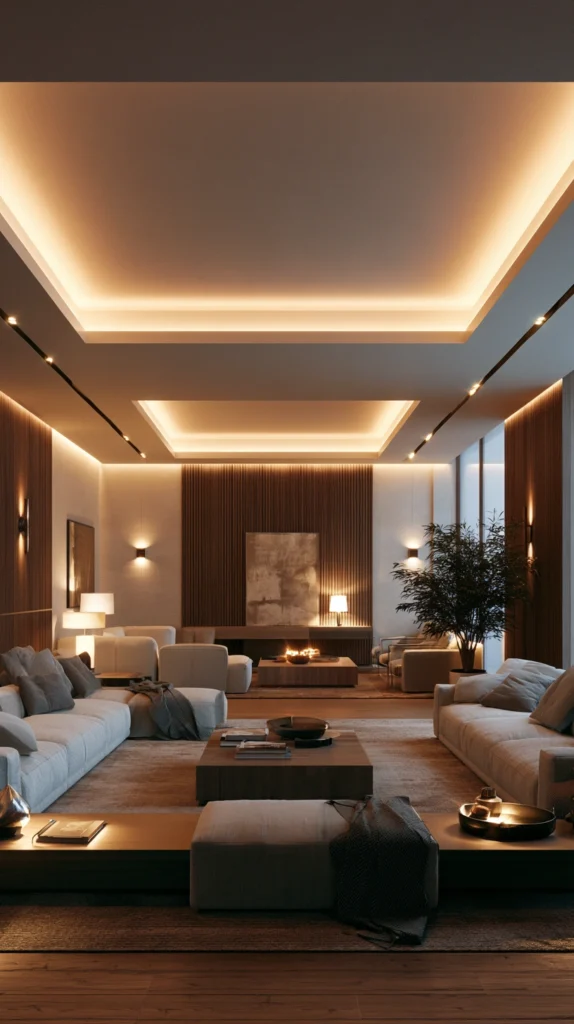
The single fastest improvement available to any room’s atmosphere costs less than twenty pounds and takes less than ten minutes — replacing every existing lightbulb with a warm-toned LED equivalent in the 2200K to 2700K colour temperature range.
The difference between a room lit by cool white bulbs and the same room lit by warm white bulbs at the same wattage is the difference between a room that feels clinical and a room that feels genuinely inviting — a transformation so immediate and so comprehensive that it is consistently the most underestimated improvement available to any domestic interior. Buy a multipack, replace every bulb in the room simultaneously, and the improvement is instant.
2. Rehang Every Piece of Art at the Correct Height
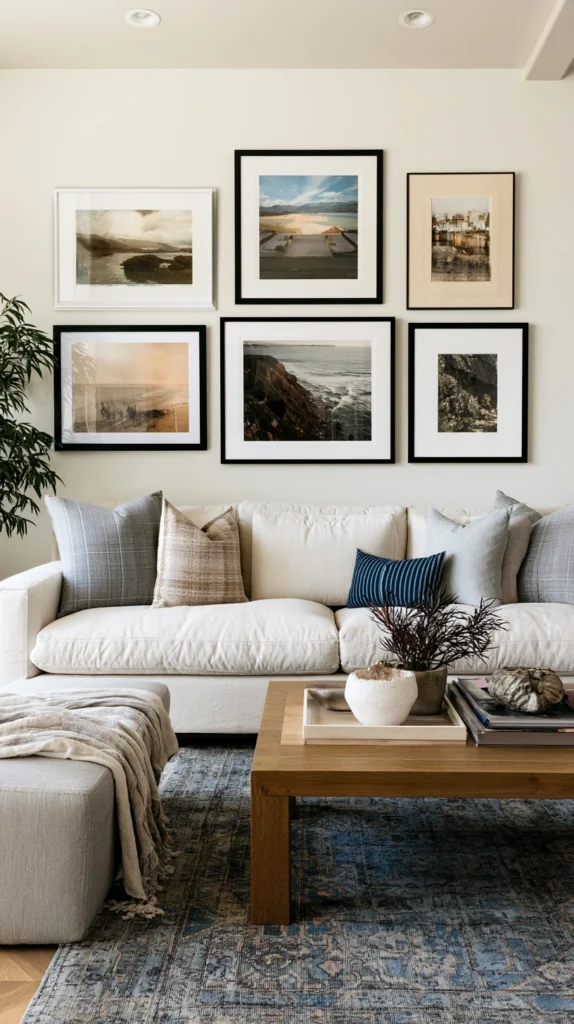
The majority of domestic art installations suffer from a single consistent error — the artwork is hung too high, its centre above the conventional eye height of 145 to 150 centimetres from floor to frame centre, its visual relationship to the furniture below it too distant to create the composed, grounded arrangement that art beside furniture should produce.
Take everything off the walls, measure 150 centimetres from floor to mark the hanging point of each piece’s centre, rehang consistently at that height throughout the room, and the improvement to the room’s visual composition is immediate, comprehensive, and costs nothing beyond the time and a tape measure.
3. Declutter Every Visible Surface to Its Minimum
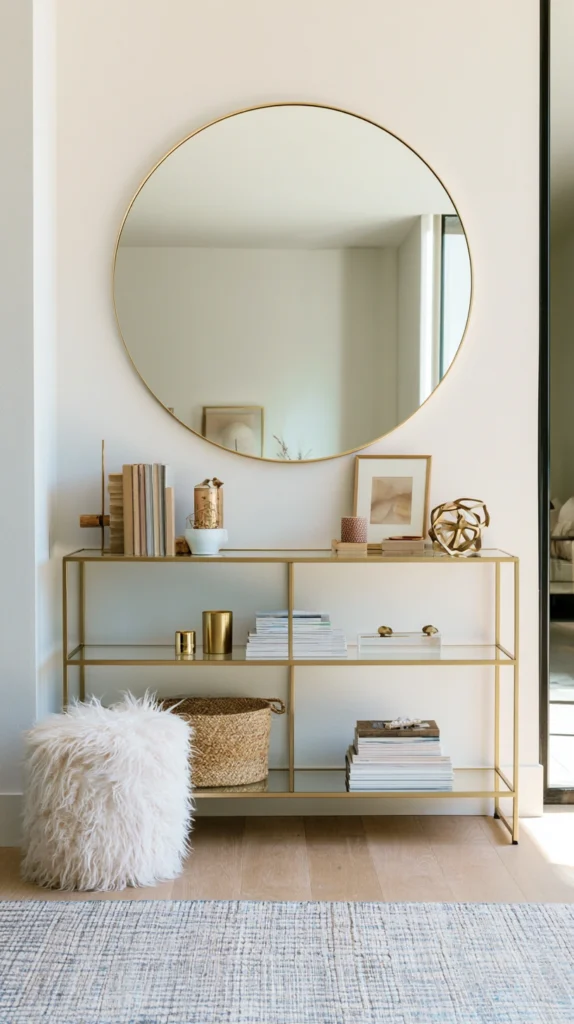
Choose one room, set a timer for thirty minutes, and remove every object from every visible surface that does not contribute genuine beauty or genuine daily function — placing removed items in a box in another room rather than a different position in the same room.
The surface that remains after genuine decluttering — the bedside table with two objects rather than nine, the console with one lamp and one ceramic rather than an accumulated collection of fifteen items — is immediately more beautiful, more composed, and more generous in its spatial quality than the same surface before the editing process began. The box of removed objects can be reviewed later — most of its contents will find permanent homes elsewhere or will be let go entirely.
4. Add a Large Mirror to the Darkest Wall
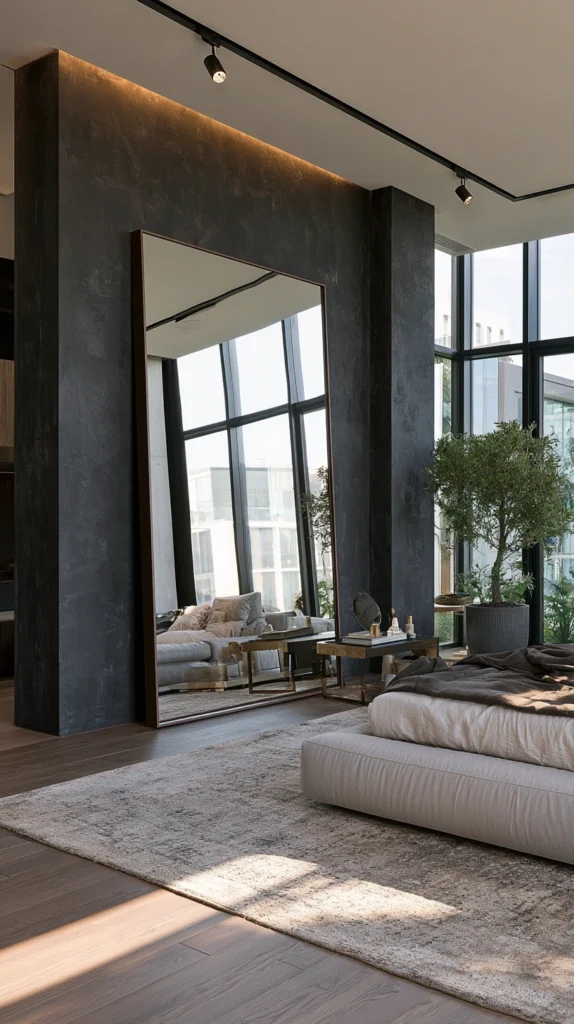
A large mirror — leaned against the darkest wall of the room’s most light-challenged space, or hung on the wall directly opposite the primary light source — doubles the room’s apparent light, creates the impression of significant additional depth, and addresses the two most common spatial complaints about small or dark domestic spaces simultaneously.
Purchase the largest mirror the wall can accommodate, lean it rather than hanging it if the hanging process feels like a barrier to immediate action, and the improvement to the room’s light quality and apparent dimensions is immediate and significant. The leaned mirror is also more visually relaxed and more contemporary in its styling than the formally hung alternative — both options work, the leaned one simply requires less installation time.
5. Change the Throw Pillows on the Sofa
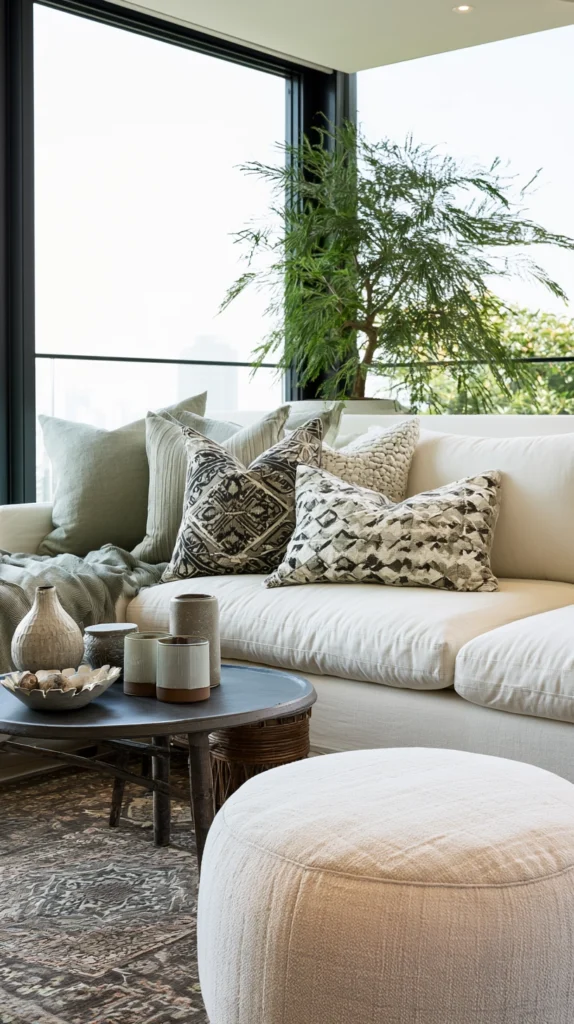
The sofa throw pillow is the room’s most accessible and most frequently changed decorative variable — the element that most immediately updates the room’s colour palette, its textural character, and its seasonal feeling without requiring any permanent change to the room’s primary surfaces or furniture.
Remove every existing throw pillow, replace with a coordinated selection in a palette drawn from the room’s existing colours but refreshed in tone or texture — warmer, deeper, or more textured versions of the existing palette rather than an entirely new colour scheme — and the sofa reads as refreshed and considered rather than default and unchanged. Limit the new pillow count to three or four on a standard sofa — the pillow arrangement that requires removal before sitting is too many.
6. Steam or Iron Every Fabric in the Room
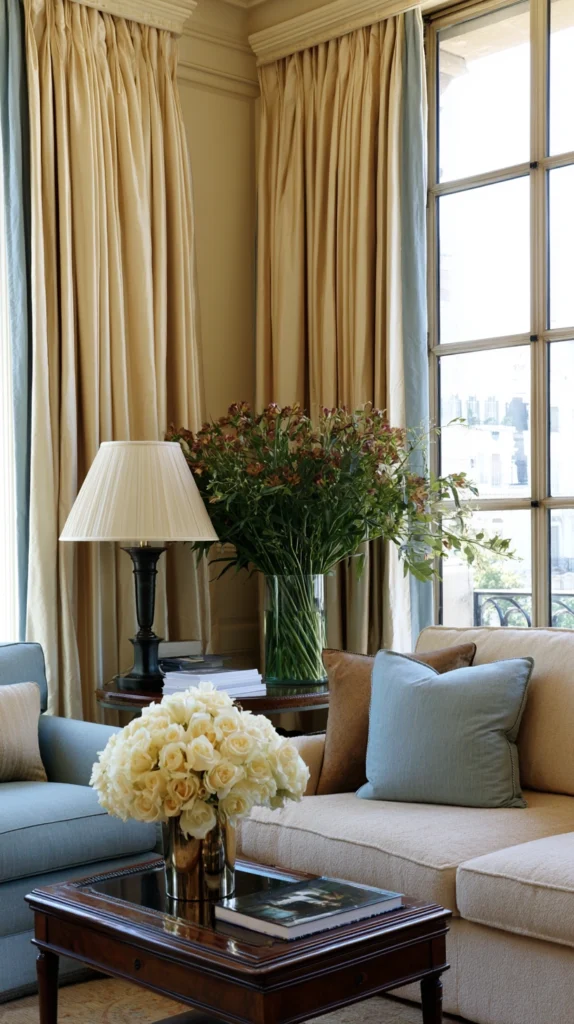
The curtains that have hung unironed since installation, the throw that has been folded and refolded into a slightly crumpled arrangement on the sofa arm, the linen cushion covers that have been on the same cushions for six months without pressing: the room that contains creased, wrinkled, or unsteamed fabric looks less considered and less cared for than the same room with every fabric surface smoothed, pressed, or steamed to a clean hang and a clean fold.
A handheld fabric steamer — available for under thirty pounds — is the tool that makes this transformation achievable in under thirty minutes for an average room, and the visual improvement to the room’s overall quality of finish is immediate and disproportionate to the effort involved.
7. Rearrange the Furniture Toward the Best Feature
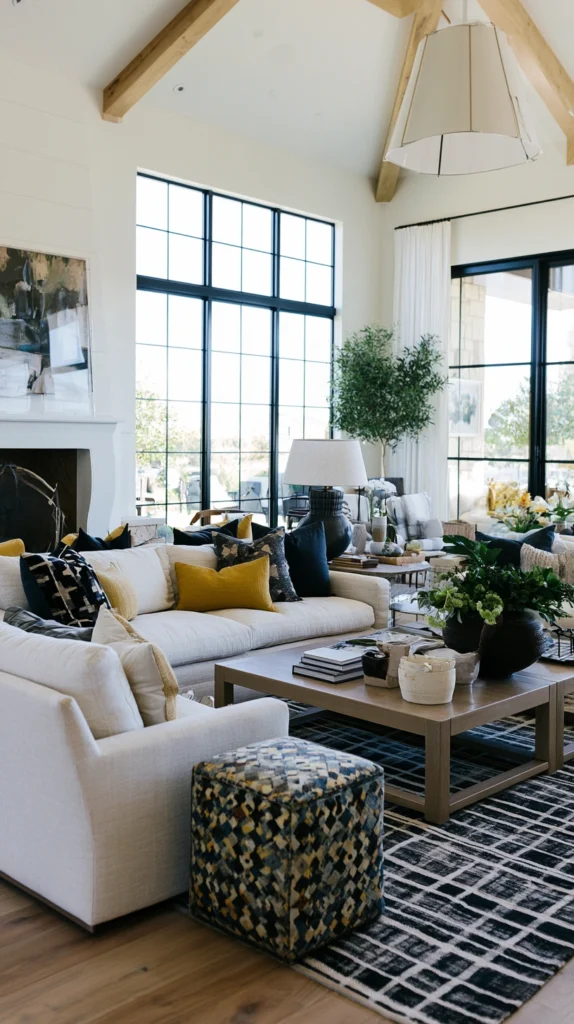
Most rooms are arranged by default — furniture placed against walls in the configuration that seemed logical during the move-in process and never reconsidered despite the room’s visual logic having become clear through months of daily occupation. Identify the room’s best feature.
The fireplace, the bay window, the view, the best wall — and rearrange the primary seating to face it directly rather than facing another wall or the television by default. The furniture arrangement oriented toward the room’s best feature creates a sightline of genuine pleasure from every primary seating position and makes the room feel designed rather than simply furnished.
8. Add Fresh Flowers or a Single Quality Plant
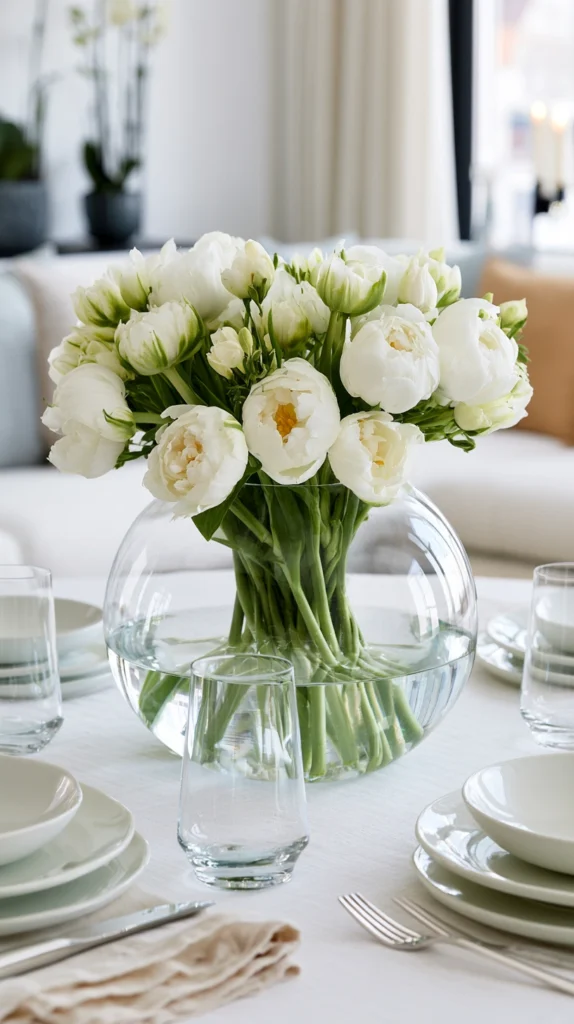
A bunch of fresh flowers — not an elaborate florist arrangement but a generous bunch of a single variety, peonies or ranunculus or sunflowers or whatever is available locally and seasonally — placed in a simple vessel on the room’s primary surface changes the atmosphere of the room immediately and completely in a way that no manufactured decorative object, however beautiful, can replicate.
The living quality of fresh flowers — the particular organic vitality, the fragrance, the slight movement of petals in the room’s air — contributes to the room’s atmosphere a dimension that the fully decorated room without them consistently lacks. Alternatively, a single quality plant in a ceramic pot positioned in the room’s best corner delivers the same living quality more permanently and at lower recurring cost.
9. Edit the Bookshelf by Colour or Tone
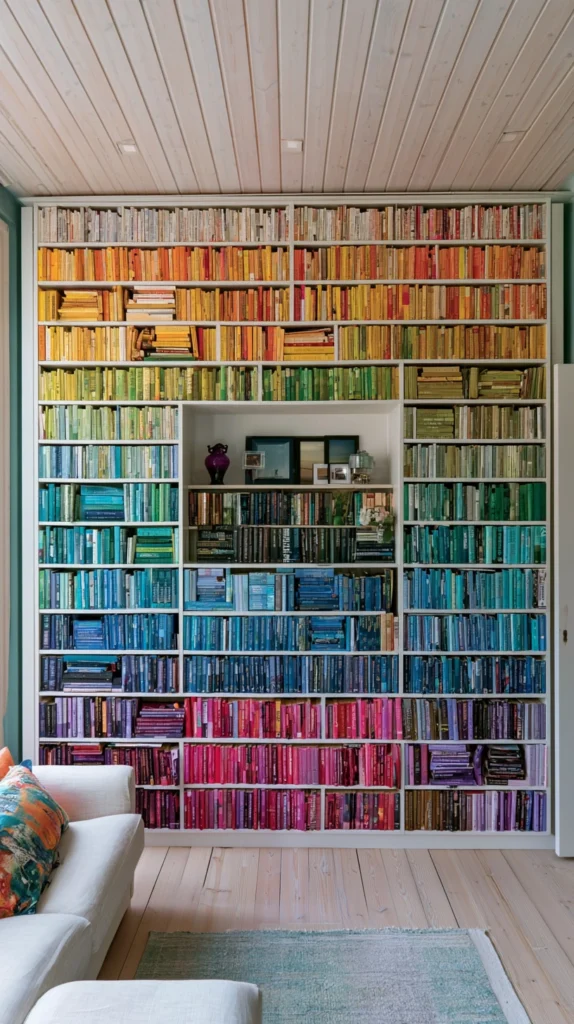
A bookshelf arranged by colour — books grouped by spine tone in a gradual progression from warm to cool, from dark to light, or in discrete colour blocks of three or four related tones — reads as a composed, curated design element rather than a storage solution, its visual organisation transforming the bookshelf from the room’s most visually chaotic surface to one of its most deliberately designed.
The process takes twenty to thirty minutes for a standard bookshelf, requires no additional purchases, and produces the single most frequently commented-upon decorative detail in any room that contains it. Remove bookends, small objects, and horizontal stacks temporarily during the reorganisation and return only those that genuinely contribute to the shelf’s visual composition after the colour organisation is complete.
10. Hang a Curtain Higher and Wider Than the Window
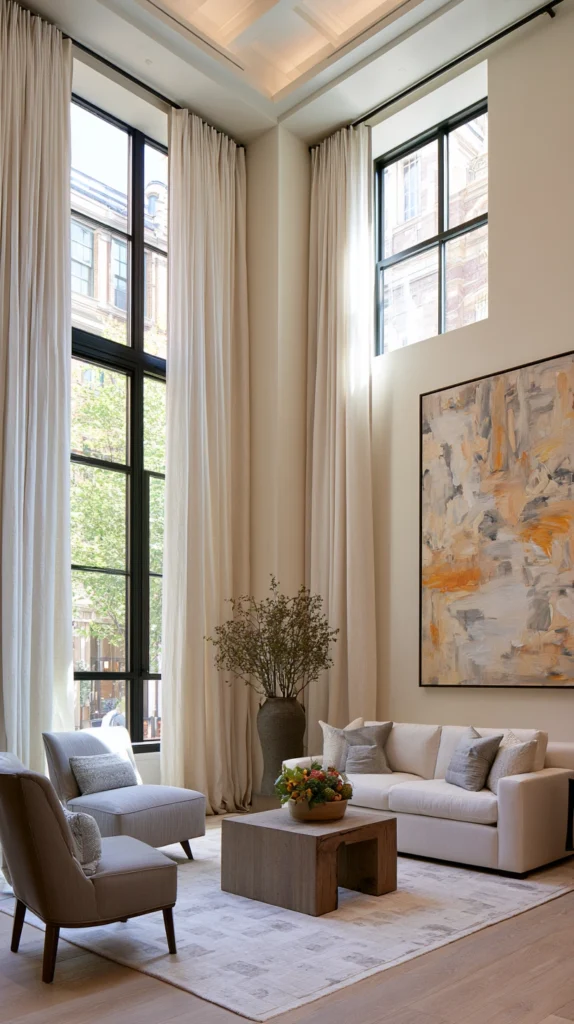
Curtains hung from a rod positioned at ceiling height rather than window frame height, extending laterally beyond the window’s actual width on both sides by at least 30 centimetres, make the window appear taller, wider, and more architecturally generous than its actual dimensions — the single most effective visual trick available for improving a room’s apparent proportions without structural intervention.
Rehang existing curtains on a new rod positioned higher and wider, or replace with longer panels that reach from ceiling height to the floor — either intervention takes less than an hour including the hardware installation and delivers an immediate improvement to the room’s spatial quality and the window’s visual presence within it.
11. Replace the Toilet Roll Holder and Towel Rail
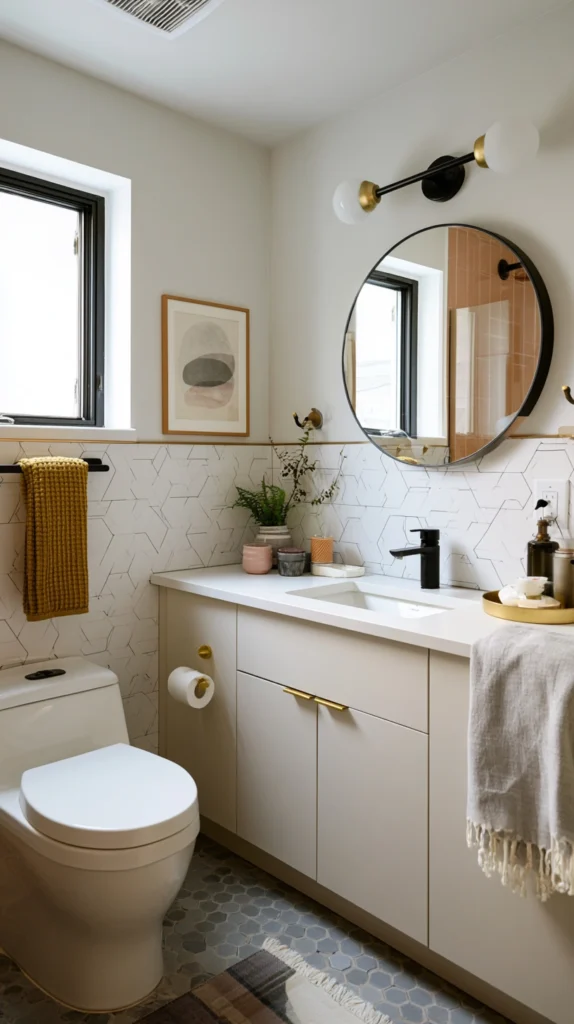
The bathroom hardware that came with the house or the apartment — the chrome toilet roll holder, the basic towel rail, the standard robe hook — is frequently the most easily changed and most consistently neglected decorative variable in the bathroom, the element that most directly dates a space and most immediately updates it when replaced with a quality alternative in aged brass, matte black, or brushed nickel.
The replacement hardware installation takes less than thirty minutes with a basic drill and the correct wall fixings, and the visual improvement to the bathroom’s quality of finish is immediate and significant — the quality hardware that costs thirty to fifty pounds per fitting reads as a deliberate, high-quality design choice rather than the default specification of a standard fitting.
12. Make the Bed Properly and Layer the Bedding
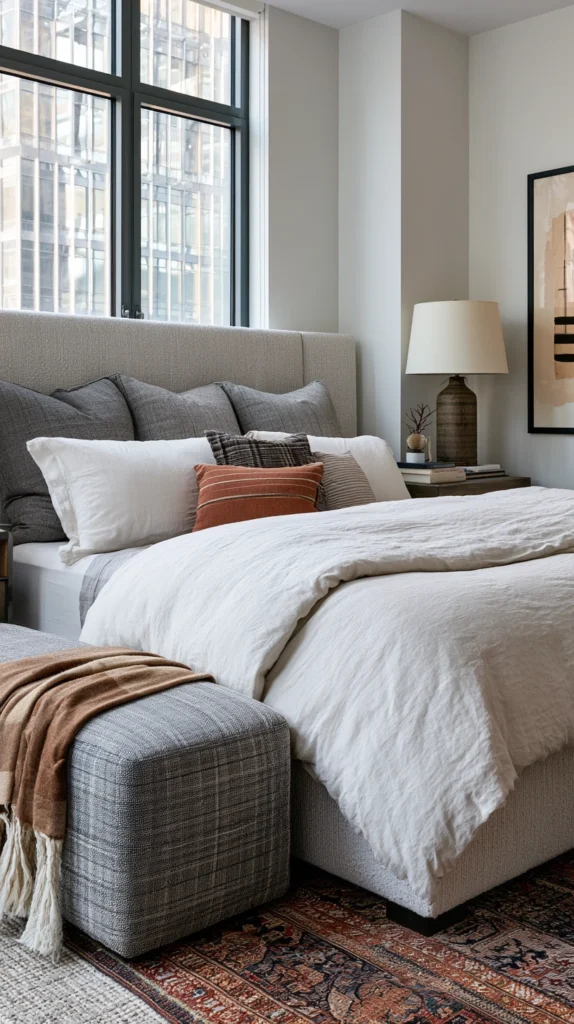
The bedroom whose bed is properly made — duvet straightened, pillows arranged, a throw folded across the lower third, the pillowcases oriented with their openings facing inward — looks genuinely more beautiful, more considered, and more restful than the same bedroom with an unmade or casually made bed, and the improvement takes less than five minutes.
Extend the bed-making process to include a proper layering of the bedding — a flat sheet beneath the duvet, a waffle blanket above it, a throw folded across the foot — and the bedroom achieves the hotel-like quality of composed textile layering that makes the room’s primary surface genuinely beautiful rather than simply occupied. The made bed is the bedroom’s single most impactful daily maintenance task and its most immediately visible quality indicator.
13. Group Small Objects Into Composed Vignettes
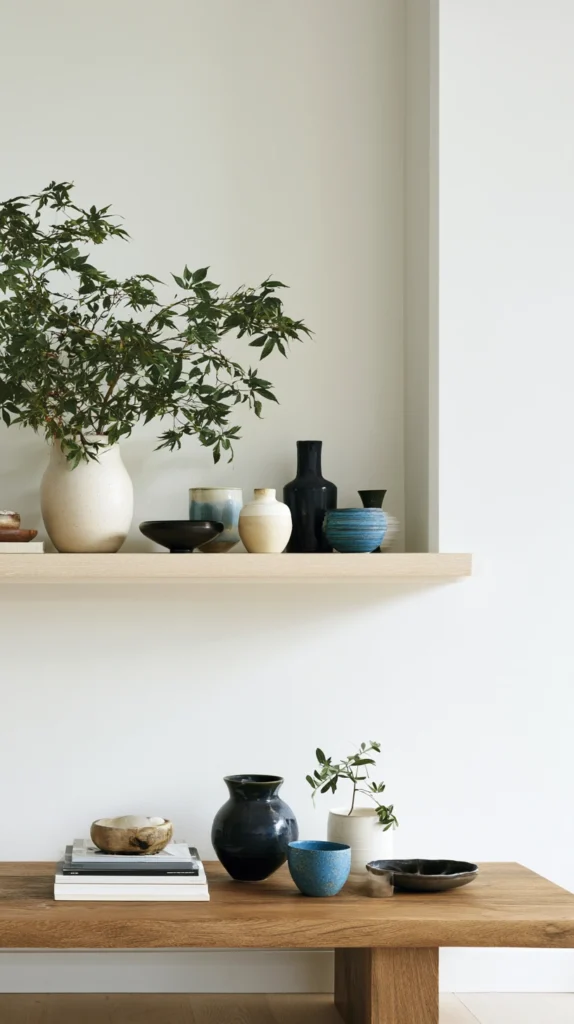
The small objects scattered individually across multiple surfaces throughout a room — the single ceramic piece on the windowsill, the lone candle on the bookshelf, the isolated object on the coffee table — read as random accumulation rather than deliberate decoration when displayed in isolation.
Gather the room’s small objects from their scattered positions and group them into composed vignettes of three to five items each on the room’s two or three primary display surfaces — varying height through the grouping by using books, small risers, or the objects’ own varying scales, choosing items with a common material, colour, or tonal language for visual coherence. The vignette reads as deliberate, composed, and genuinely designed, where the same objects displayed individually read as random and unresolved.
14. Paint One Wall in a Deep, Confident Colour
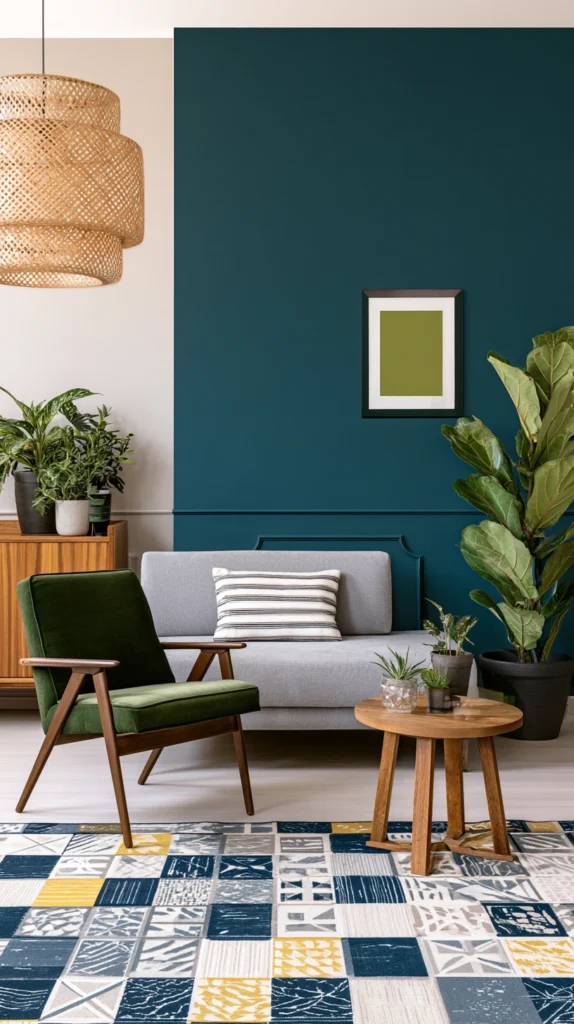
A single wall painted in a deep, rich, genuinely bold colour — forest green, terracotta, deep navy, warm charcoal — while the remaining three walls stay in their existing neutral transforms the room’s spatial quality, its atmosphere, and its design confidence in a single hour of painting that requires one tin of paint, one roller, and the decision to commit to the colour rather than continuing to consider it.
The single painted wall creates depth, creates a focal point, and makes the room’s furniture read as composed against it in a way that four white walls entirely prevent. It is the most dramatic improvement on this list in terms of its visual impact relative to its time investment, and it is reversible with a second hour of painting if the commitment feels premature — though it rarely does once the colour is on the wall.
15. Clean Every Window Inside and Out
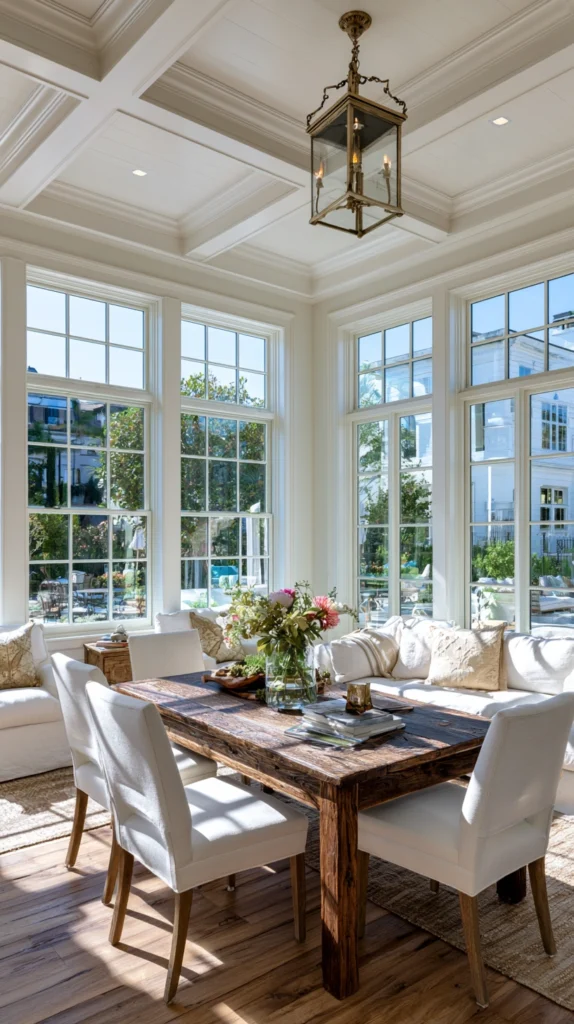
The room that looks dull, grey, and slightly flat despite adequate furniture, adequate lighting, and adequate decoration is frequently a room that simply needs its windows cleaned — the accumulated film of dust, pollution, and condensation residue on both glass surfaces reducing the quality and quantity of natural light entering the room by a measurable and visually significant degree.
Clean every window in the room on both the interior and exterior faces with a quality glass cleaner and a lint-free cloth, and the improvement to the room’s natural light quality is immediate — the room appears brighter, the colours appear more accurate, and the view to the outside appears sharper and more visually engaging than it did through the dulled glass surface before cleaning.
Final Thoughts: The Hour Well Spent
The home that looks genuinely well-designed is not always the home where the most money has been spent or the most elaborate interventions have been made — it is frequently the home where a series of small, decisive, well-chosen improvements have been made consistently and completed fully rather than considered endlessly and executed partially.
Choose three ideas from this list, execute all three completely within a single afternoon, and the cumulative improvement to the room’s quality will be more immediately visible and more immediately satisfying than any larger project that remains perpetually planned but never quite begun.