
15 Stone & Wood Exterior Combos That Look High-End and Timeless
The combination of stone and wood on the residential exterior is the material pairing that the history of high-end architectural design returns to with the greatest consistency, the greatest confidence, and the most enduring aesthetic justification of any exterior material combination available in the entire vocabulary of residential construction.
It is the pairing of the two most ancient, most culturally resonant, and most genuinely beautiful natural building materials that human beings have used to construct their shelters since the beginning of architectural history — materials that come from the earth and from the forest, that carry the specific warmth, the specific texture, and the specific quality of natural origin that manufactured cladding materials cannot replicate regardless of how sophisticated their production technology becomes.
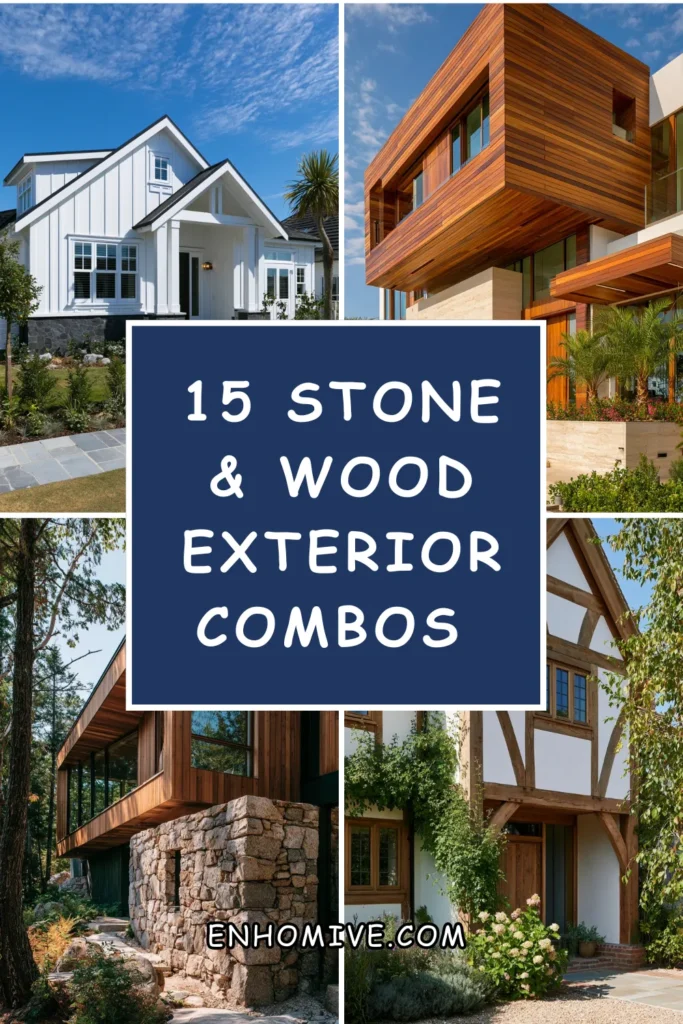
Stone and wood together on the exterior of a home create a facade of extraordinary material richness, genuine natural beauty, and the specific quality of rooted, permanent, deeply place-appropriate architectural character that makes a house look as though it belongs entirely and inevitably to the landscape it occupies. These fifteen combinations will help you achieve an exterior of genuine high-end quality and lasting timeless beauty.
1. Dark Stained Cedar with Pale Limestone Base
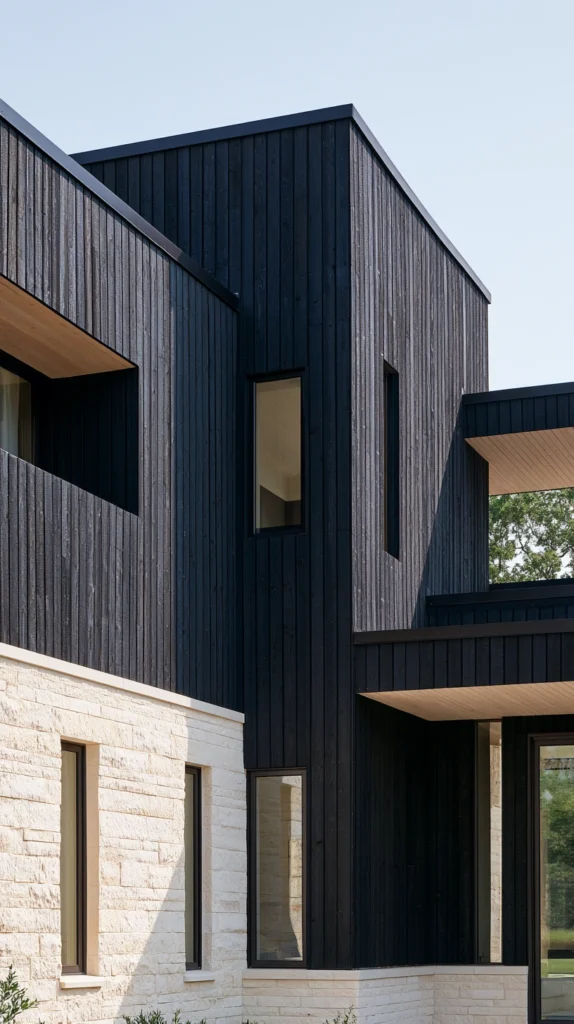
Dark-stained cedar cladding — a deep charcoal, a rich ebony, or a warm dark brown applied to horizontal or vertical cedar boards — combined with a pale limestone base course running from the foundation to the windowsill height of the ground floor, creates an exterior of extraordinary tonal drama and genuine material sophistication.
The pale, warm, slightly textured surface of natural limestone against the deep, rich, grain-revealing tone of dark-stained cedar creates a material contrast of remarkable visual power and considerable architectural elegance.
The pale stone grounds the home in the landscape with a solidity and a permanence that the timber above it requires for genuine architectural authority, while the dark cedar creates the visual drama and the material warmth that plain masonry construction alone cannot provide.
2. Weathered Grey Timber with Rough-Cut Granite
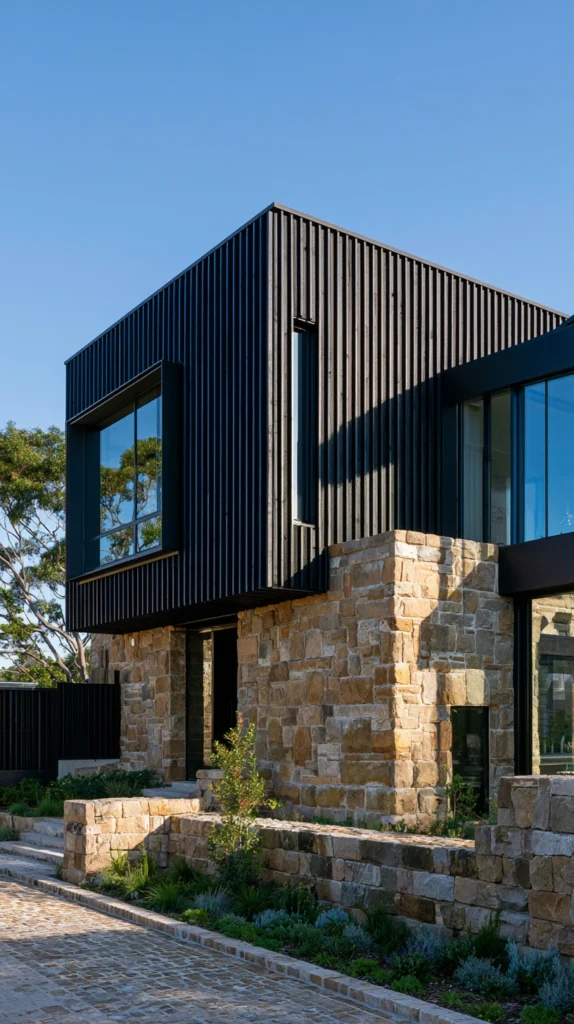
Weathered grey timber cladding — cedar, larch, or Douglas fir allowed to silver naturally over time, or treated with a grey stain that accelerates the natural weathering process — combined with rough-cut granite stone in a warm grey-brown tone, creates an exterior of extraordinary natural character and genuine landscape integration.
The material relationship between weathered grey timber and rough-cut granite is one of the most powerfully place-specific and most genuinely beautiful material combinations available in residential exterior design.
A pairing that references the stone walls and timber barns of the northern European and New England building traditions simultaneously and creates an exterior of remarkable historical resonance and profound natural beauty.
3. Vertical Black Timber Battens with Warm Sandstone
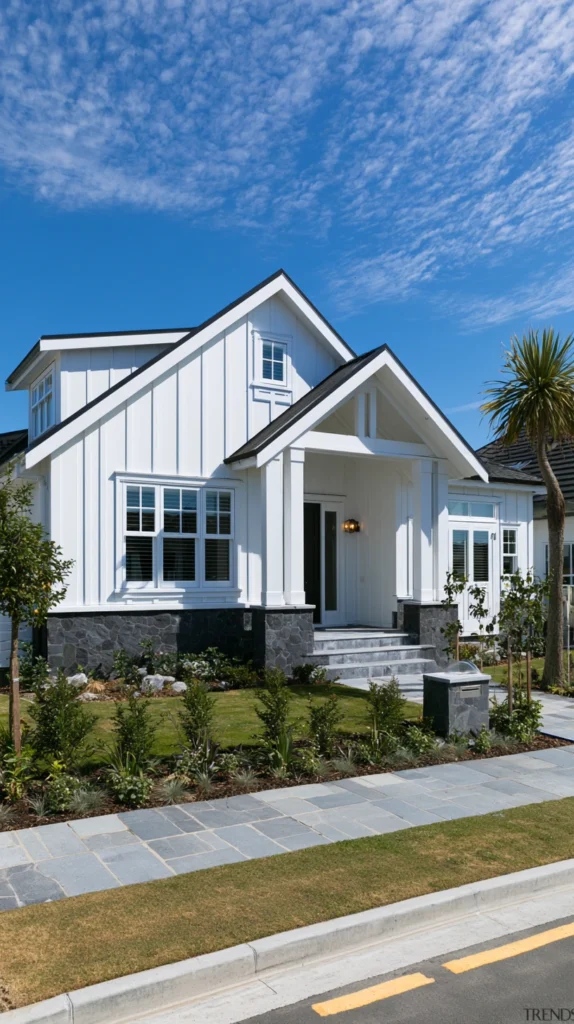
Vertical black timber battens — thin, closely spaced vertical timber strips in a deep matte black finish applied over a weather-resistant substrate — combined with generous courses of warm sandstone on the lower third of the facade, create an exterior of considerable contemporary sophistication and genuine material warmth.
The strong vertical rhythm of the black timber battens creates a facade of elegant graphic power and considerable architectural presence, while the warm, honey-toned sandstone at the base grounds the composition in natural material warmth and genuine geological beauty.
This combination suits the contemporary residential exterior with particular success — bringing the timeless quality of natural stone into direct material conversation with a timber treatment of genuine contemporary design ambition.
4. White Painted Timber with Dark Basalt Stone
White painted timber cladding — shiplap, board and batten, or smooth rendered timber in a crisp, warm white finish — combined with dark basalt or bluestone at the base and around the window and door openings, creates an exterior of remarkable tonal contrast and genuine architectural elegance.
The white timber creates a luminous, light-reflecting facade of considerable freshness and visual warmth, while the dark basalt provides the architectural gravitas, the material weight, and the visual grounding that white-painted exteriors require to read as genuinely sophisticated rather than merely clean. This combination references the painted timber and stone farmhouses of the French and Belgian countryside with great natural authority.
5. Reclaimed Brick with Rough Sawn Timber Accents
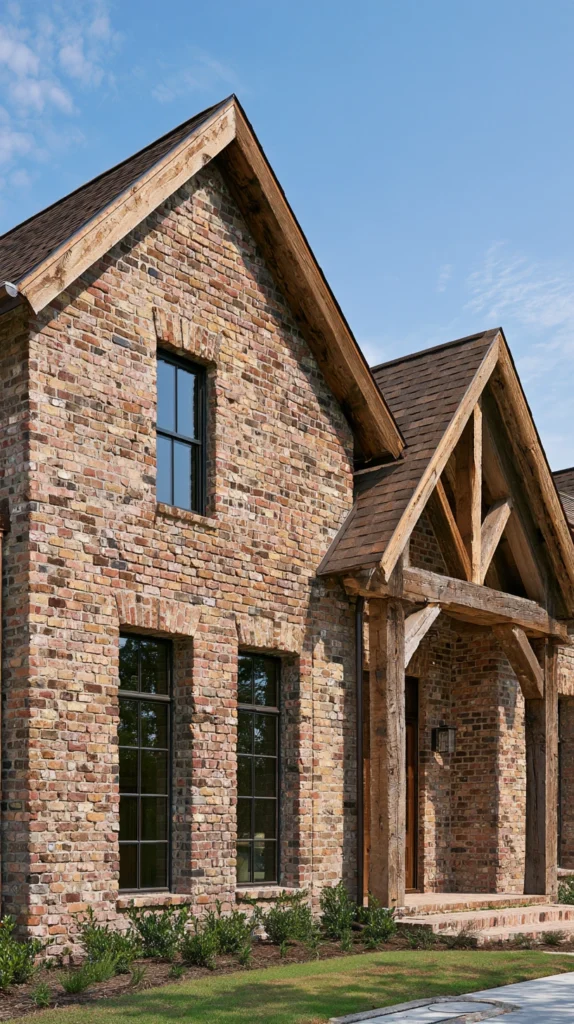
Reclaimed brick — warm, variably colored, slightly irregular brick salvaged from demolished industrial buildings or historic structures — combined with rough-sawn timber accents at the eaves, the window surrounds, and the entrance canopy creates an exterior of extraordinary material warmth and genuine historical character.
The warm, humanly scaled surface of reclaimed brick — with its color variation, its surface imperfection, and the specific quality of aged material that carries the evidence of previous use and previous life.
It creates a facade of living, historically resonant beauty that new brick cannot approach. The rough-sawn timber accents introduce the warm, organic material of the forest into the masonry facade with a contrast of material texture and organic warmth of considerable architectural beauty.
6. Larch Cladding with Coursed Flint Stone
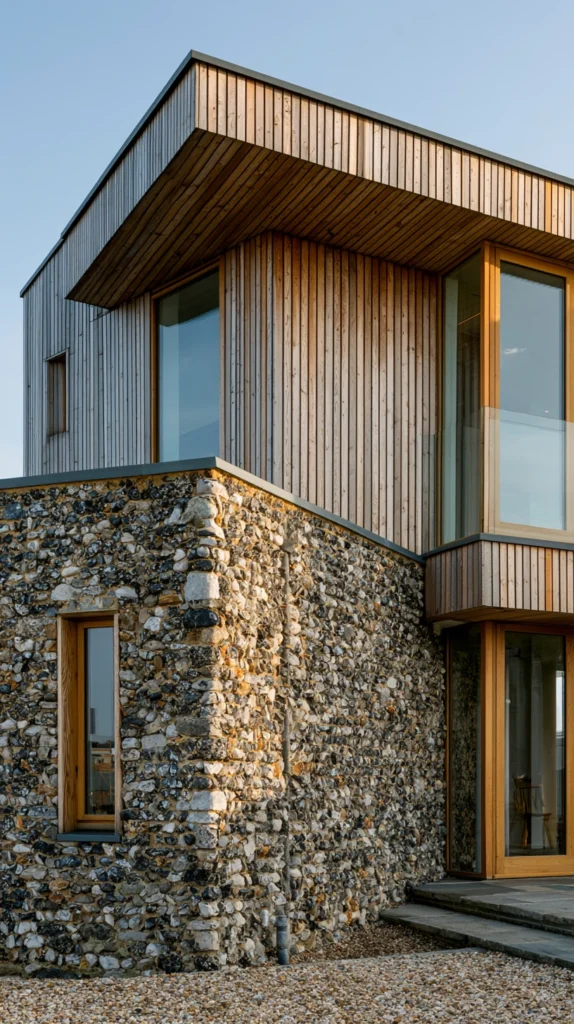
Larch cladding — a naturally durable, resinous softwood that weathers to a beautiful silver-grey over time without the surface deterioration that less durable timber species suffer in exterior applications — combined with coursed flint stone in a warm grey-brown palette, creates an exterior of extraordinary natural texture and genuine landscape integration.
Flint — the dense, silica-rich stone of the English chalk landscape — creates a wall surface of remarkable visual complexity and genuine geological beauty, its smooth, slightly glossy fracture surfaces catching the light in endlessly varied ways that no other stone surface provides. The natural weathering grey of larch beside the complex, richly textured surface of coursed flint creates an exterior of profound natural beauty.
7. Horizontal Teak Cladding with Travertine Base
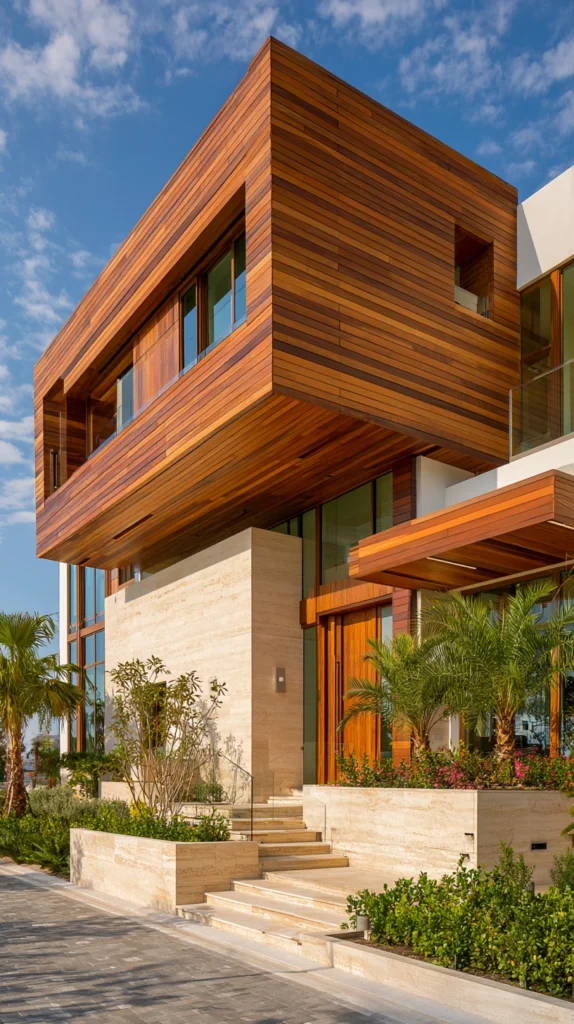
Horizontal teak cladding — the warm, golden, richly grained tropical hardwood in a natural oiled finish that preserves its color and enriches its grain — combined with a travertine stone base in a warm cream-gold tone creates an exterior of considerable material luxury and genuine tropical warmth.
Travertine — the warm, slightly porous, naturally varied limestone of the Italian thermal spring environment — creates a base course of extraordinary natural beauty and genuine material warmth that suits the golden richness of oiled teak with remarkable material coherence. This combination brings the specific warmth and luxury of high-end Mediterranean and tropical resort architecture into the residential exterior with great material authenticity.
8. Charcoal Timber Shingles with River Stone
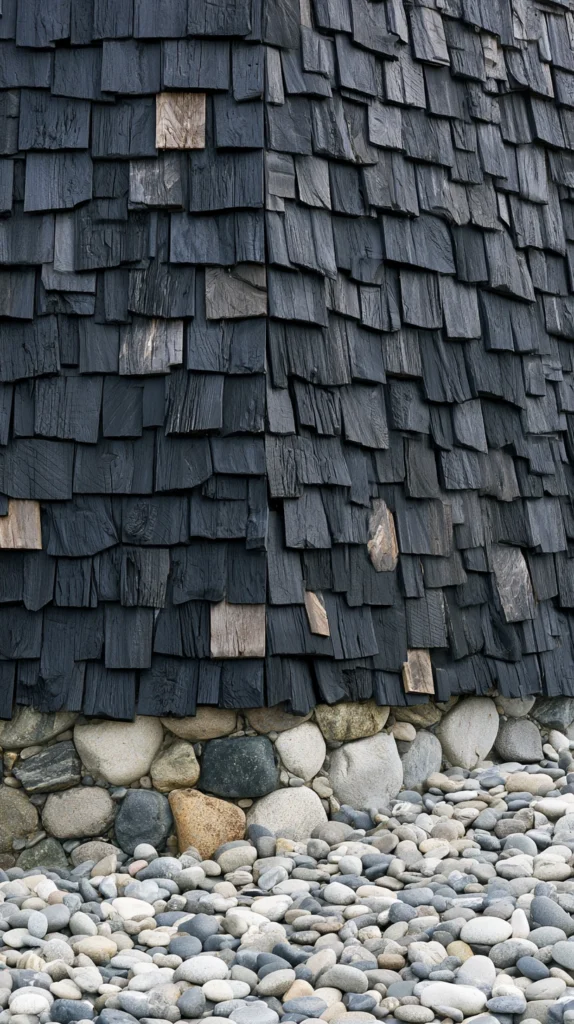
Charcoal-stained timber shingles — individually applied, slightly overlapping, creating the characteristic scaled texture of the shingled facade — combined with a river stone base of smooth, rounded, variably colored stones set in a natural arrangement, create an exterior of extraordinary organic texture and genuine natural warmth.
The river stone base references the waterway landscape with great material directness — the smooth, rounded, water-polished quality of genuine river stones creates a base course of remarkable natural beauty and considerable tactile richness. The charcoal timber shingles above create a visual drama of considerable presence that the pale, warm tones of the river stone beneath counterbalance with natural material warmth.
9. Bleached Timber with White Marble Accents
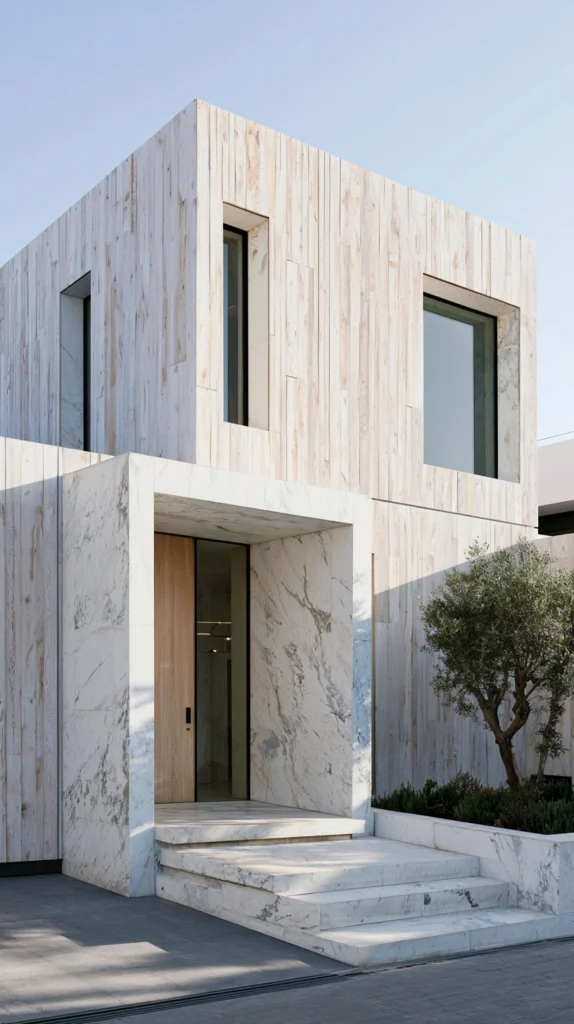
Bleached timber cladding — cedar or pine treated with a white bleaching oil that preserves the natural grain while creating a pale, almost luminous surface tone — combined with white marble accents at the entrance surround, the window sills, and the base course creates an exterior of extraordinary luminous beauty and considerable architectural refinement.
The combination of bleached timber and white marble creates a facade of remarkable tonal unity and genuine material sophistication — two naturally pale, light-reflecting materials of entirely different surface quality and entirely different geological and biological origin that create together an exterior of profound natural beauty and considerable high-end architectural presence.
10. Dark Walnut Timber with Corten Steel and Stone
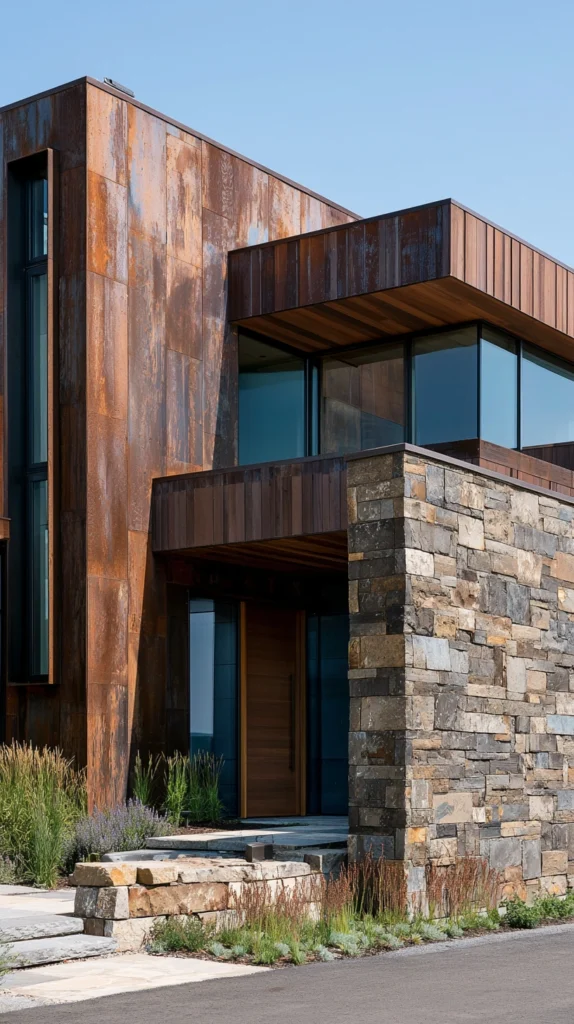
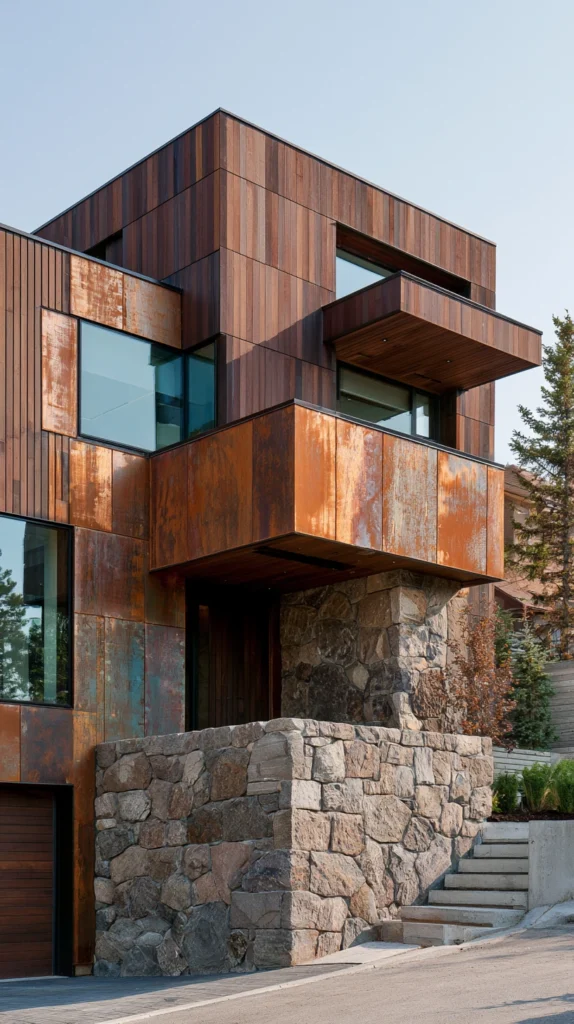
Dark walnut timber cladding combined with Corten weathering steel panels and a rough stone base creates an exterior of remarkable material complexity and genuine contemporary architectural ambition.
The warm, rich brown of the walnut, the warm rust-orange of the aged Corten steel, and the cool grey-brown of the rough stone base create a three-material facade composition of extraordinary tonal richness and considerable material sophistication that suits the ambitious contemporary residential exterior with particular success.
The Corten steel ages naturally over time, developing its characteristic warm, rust-toned patina that coordinates beautifully with both the timber and the stone as all three materials weather and age together.
11. White Lime Render with Oak Timber Frame
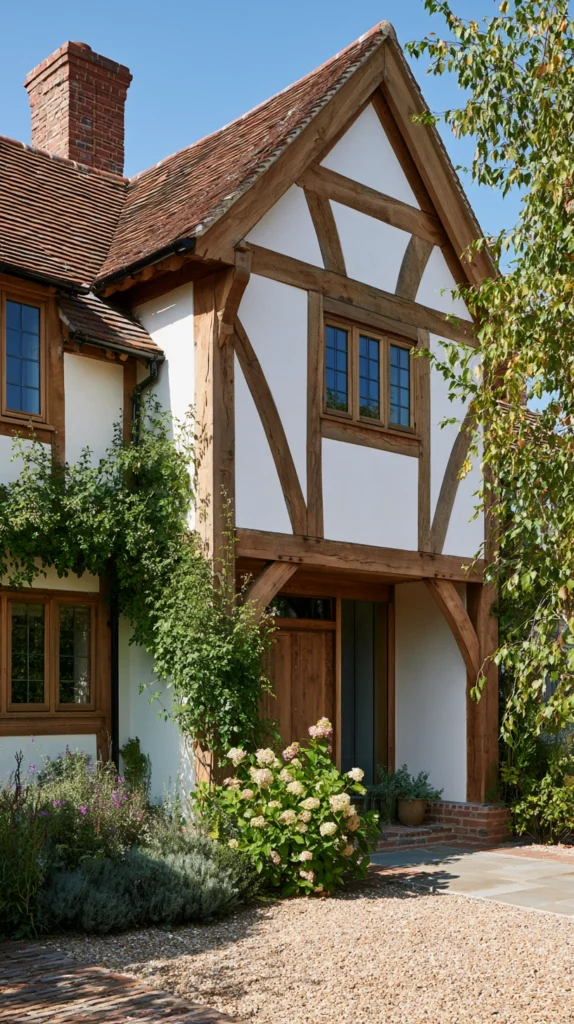
White lime render — the warm, slightly textured, genuinely organic wall surface of traditional lime plaster applied to a masonry substrate — combined with an exposed oak timber frame, creates an exterior that references the half-timbered building traditions of medieval northern European architecture with great material authenticity and considerable contemporary architectural elegance.
The white lime render between the dark, aged oak structural members creates a facade of remarkable graphic clarity and genuine historical resonance — a building exterior of extraordinary architectural character and profound cultural meaning that connects the contemporary home to one of the oldest and most beautiful building traditions in the entire history of residential construction.
12. Smoked Timber with Raw Concrete and Stone
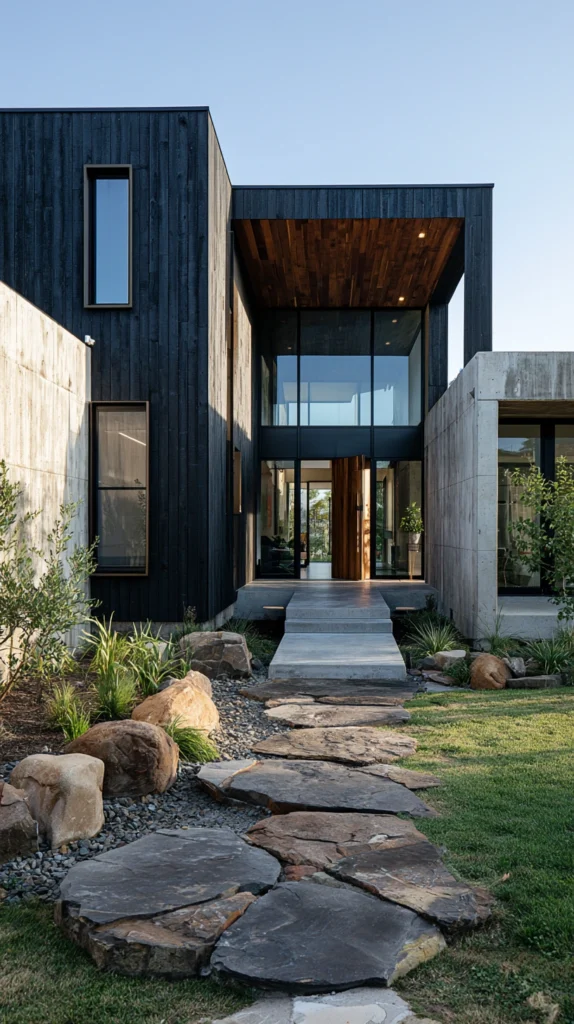
Smoked or shou sugi ban timber — the Japanese technique of charring timber surfaces to create a deeply blackened, carbon-sealed, extraordinarily durable exterior cladding of remarkable visual drama — combined with raw board-formed concrete panels and a rough stone base, creates an exterior of considerable contemporary architectural ambition and genuine material honesty.
The deep, matte, slightly textured surface of charred timber beside the cool grey of raw concrete and the warm, rough texture of natural stone creates a three-material exterior composition of extraordinary visual power and considerable architectural sophistication that references both the Japanese building tradition and the raw material honesty of contemporary brutalist residential design.
13. Warm Cedar with Dry-Stone Wall Base
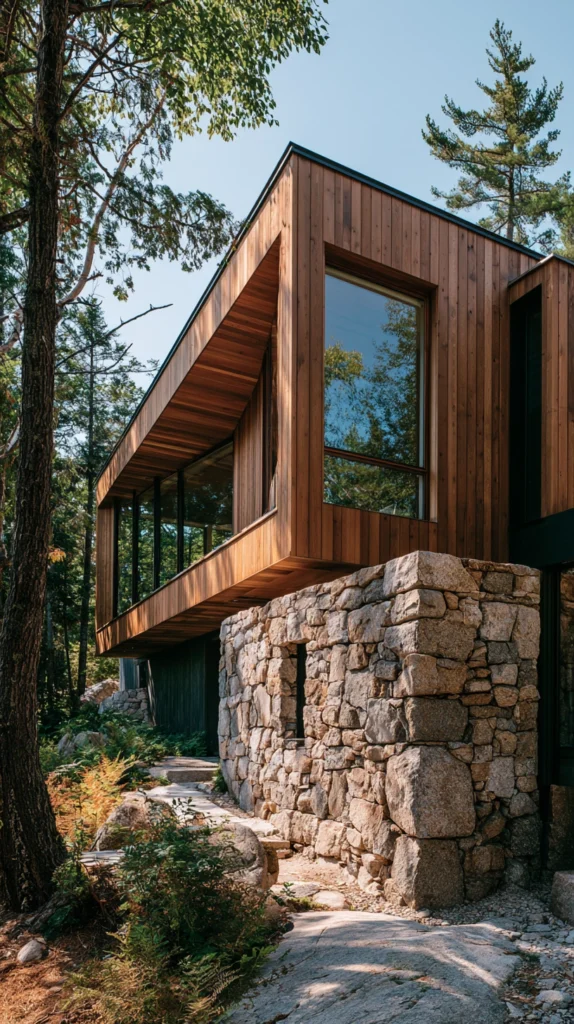
Warm cedar cladding — horizontally applied cedar boards in a natural, slightly golden oiled finish — combined with a dry-stone wall base constructed without mortar in the traditional dry-stone walling technique, creates an exterior of extraordinary natural character and profound landscape integration.
The dry-stone wall base — built from locally sourced stone laid without mortar in the time-honored technique of the skilled dry-stone waller — creates a base course of genuine craft beauty and remarkable natural authority that grounds the timber facade above it in the specific geology and the specific building culture of its landscape with a directness and an authenticity that no other wall construction technique provides.
14. Shiplap Timber with Fieldstone Chimney Stack
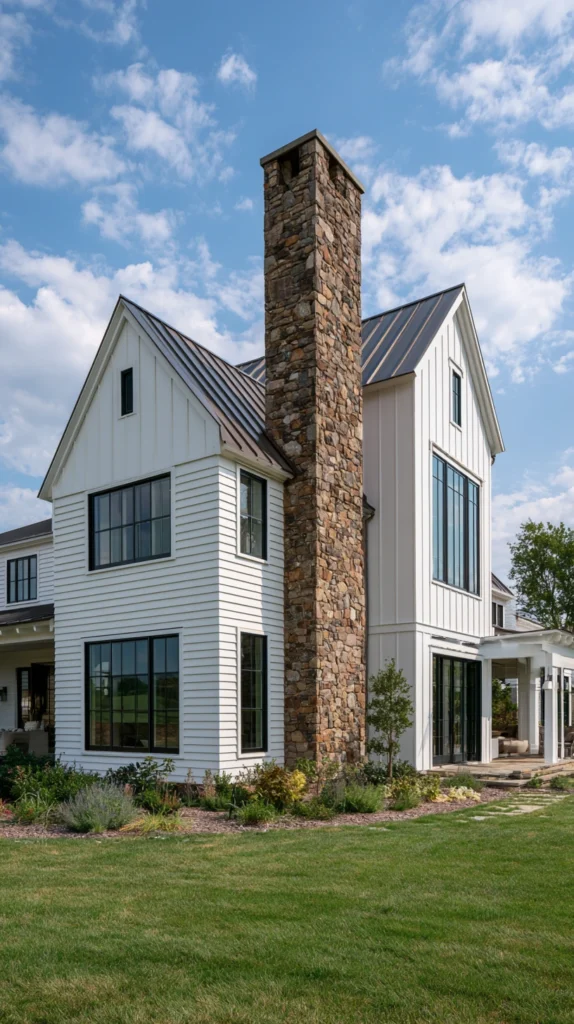
Horizontal shiplap timber cladding in a warm painted or naturally oiled finish, combined with a fieldstone chimney stack — a generously proportioned chimney of rough, irregular, naturally gathered fieldstone rising above the roofline — creates an exterior of considerable American vernacular beauty and genuine architectural warmth.
The fieldstone chimney is among the most powerful and most immediately characterful single architectural elements available in any residential exterior design — its rough, irregular, naturally gathered stone construction references the specific geological character of the landscape with great material directness and creates a vertical element of considerable architectural presence and genuine natural beauty.
15. Let the Materials Age Together Beautifully
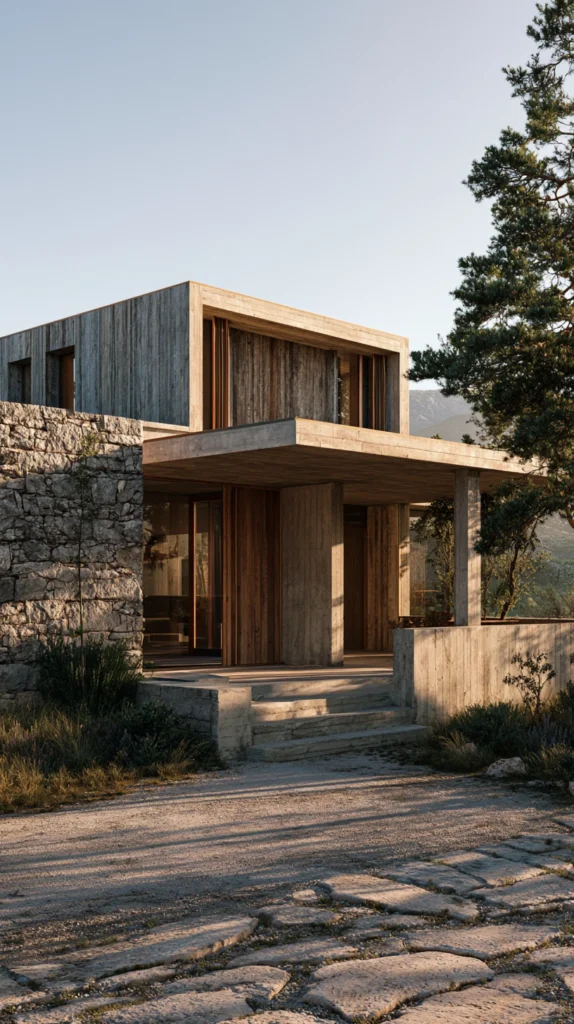
The final and most essential principle of the stone and wood exterior combination — the principle that unifies all fifteen of these pairings and gives each of them its specific quality of genuine high-end timeless beauty.
It is the understanding that the most extraordinary stone and wood exteriors are not those that look most perfect on the day of their completion, but those that age most beautifully over the years and decades of their existence. Stone weathers and develops patina. Timber silvers or deepens in tone.
Moss and lichen colonize the stone surfaces. The materials settle into each other and into the landscape with a naturalness, a permanence, and a genuinely extraordinary beauty that only time and genuine natural materials together can create. Design for aging, choose materials of genuine natural quality, and allow the exterior to become more itself — more rooted, more beautiful, more genuinely at home in its landscape — with every passing year.