
13 Small Yard Ideas for Renters Who Can’t Landscape
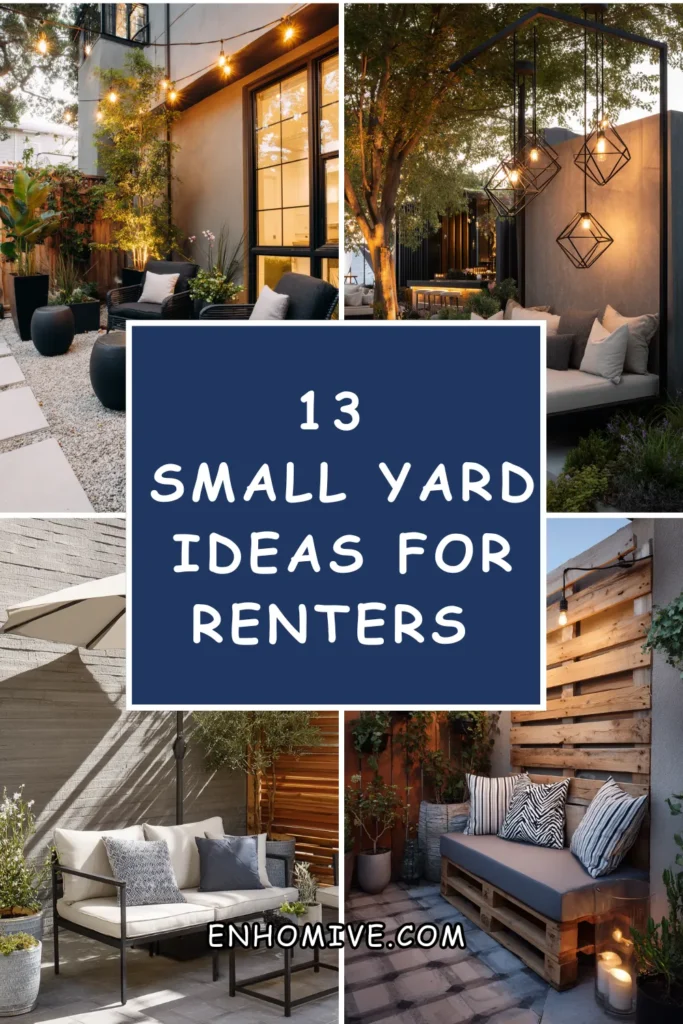
Renting doesn’t have to mean living with a bare, uninspired yard, even when a lease specifically prohibits digging, planting in the ground, or making permanent changes. Nearly every high-impact landscaping idea has a container, freestanding, or removable version that delivers a similar effect without touching the actual soil or structure.
Below are 13 small yard ideas built specifically around renter constraints, with real numbers on cost, size, and setup so the space feels genuinely cared for without risking a security deposit.
Before You Start: Know Your Lease Terms
Typically allowed without permission:
- Container gardening and potted plants
- Freestanding furniture and decor
- Battery-powered or solar lighting
- Temporary, removable items (rugs, planters, screens)
Usually requires landlord approval:
- Anything requiring digging or in-ground planting
- Permanent structures (pergolas, fences, raised beds built into the ground)
- Attaching anything directly to exterior walls or fences
- Irrigation or plumbing changes
1. Build a Container Garden Instead of In-Ground Beds
Large planters filled with vegetables, herbs, or flowers deliver nearly all the benefits of an in-ground garden bed without disturbing any soil or requiring landlord permission in most cases. Standard large planters run 16-24 inches in diameter, roomy enough for a small tomato plant, a mix of herbs, or several flowering annuals.
Budget: $20-50 per quality large planter, plus $10-20 in potting soil per container, with a full container garden of 4-6 planters typically running $150-350 total. Choosing planters with drainage holes and a saucer underneath protects the deck, patio, or balcony surface from water damage, which matters for maintaining a good relationship with a landlord.
Grouping planters of varying heights together, rather than lining them up in a single uniform row, creates a more visually layered garden that reads as intentional rather than makeshift. This is one of the most flexible ideas on this list, since the entire container garden can be packed up and taken along at the end of a lease, unlike anything planted directly in the ground.
2. Add an Outdoor Rug to Define a Seating Area
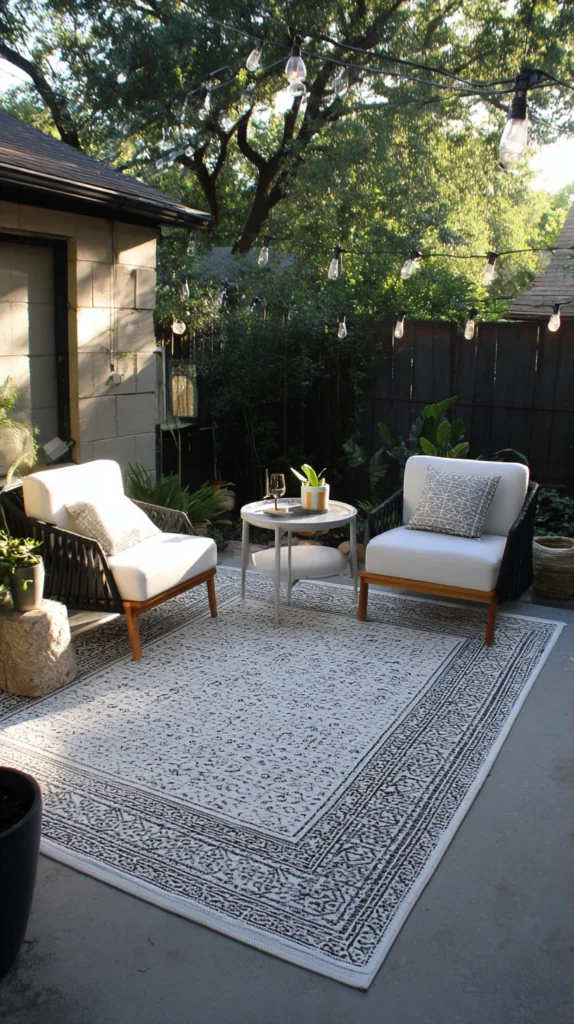
A weatherproof outdoor rug instantly makes a bare patio, balcony, or small yard section feel like an intentional living space rather than an afterthought. Standard outdoor rugs run 5×7 or 6×9 feet, appropriately sized for a small seating area with a couple of chairs or a small bistro set.
Budget: $40-90 for a quality weatherproof rug in that size, one of the most affordable, high-impact additions on this entire list. Choosing a polypropylene or other synthetic weatherproof material, rather than a rug meant for indoor use, ensures it holds up to sun exposure and occasional rain without fading or mildewing quickly.
This is a fully portable item that requires no installation, no permission, and no permanent commitment, making it one of the lowest-risk ways to add real visual impact to a rented outdoor space. Rolling and storing the rug during harsh winter weather, rather than leaving it out year-round, extends its usable lifespan across multiple rental seasons.
3. Use a Freestanding Trellis for Vertical Greenery
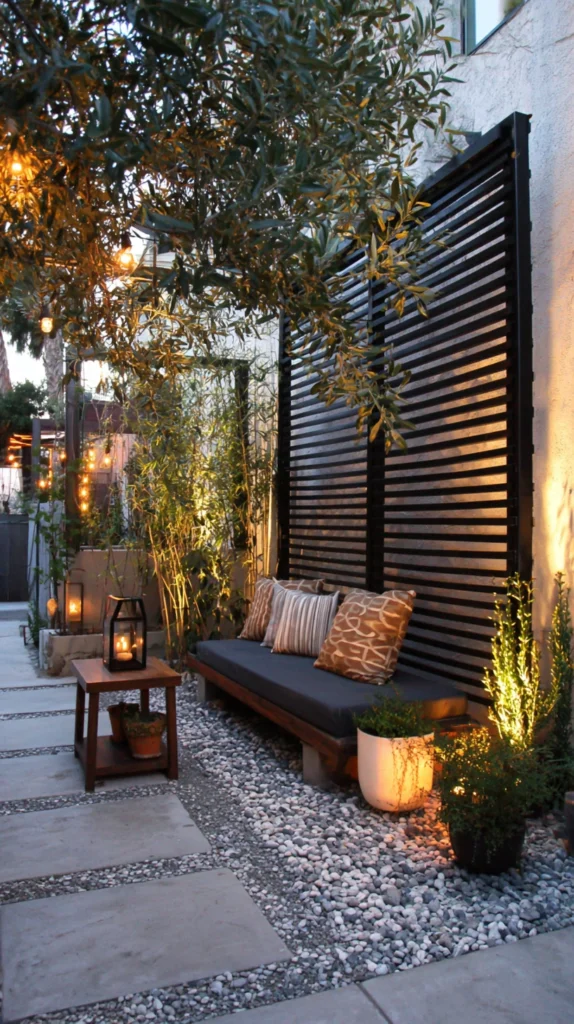
A freestanding trellis, weighted or placed in a large planter base, allows climbing plants like vining flowers or certain vegetables to grow vertically without attaching anything to a fence, wall, or structure. Standard freestanding trellises run 5-6 feet tall, tall enough for most flowering vines to make a meaningful visual impact within a single growing season.
Budget: $30-70 for a quality freestanding trellis, plus the cost of a large planter base if not already using one from the container garden described earlier. Choosing fast-growing annual vines (like morning glory or sweet peas) rather than slower perennial vines delivers a fuller look within the same season, which matters for renters who may not stay in the same unit long enough to see a slow-growing perennial vine mature.
This is a good solution for adding privacy or visual height to a small yard or balcony without installing anything into the ground or attaching hardware to a rented structure. The trellis and its planter base can be relocated easily if the growing conditions in one spot aren’t working, offering more flexibility than a permanently mounted option.
4. Add Solar String Lights for Evening Ambiance
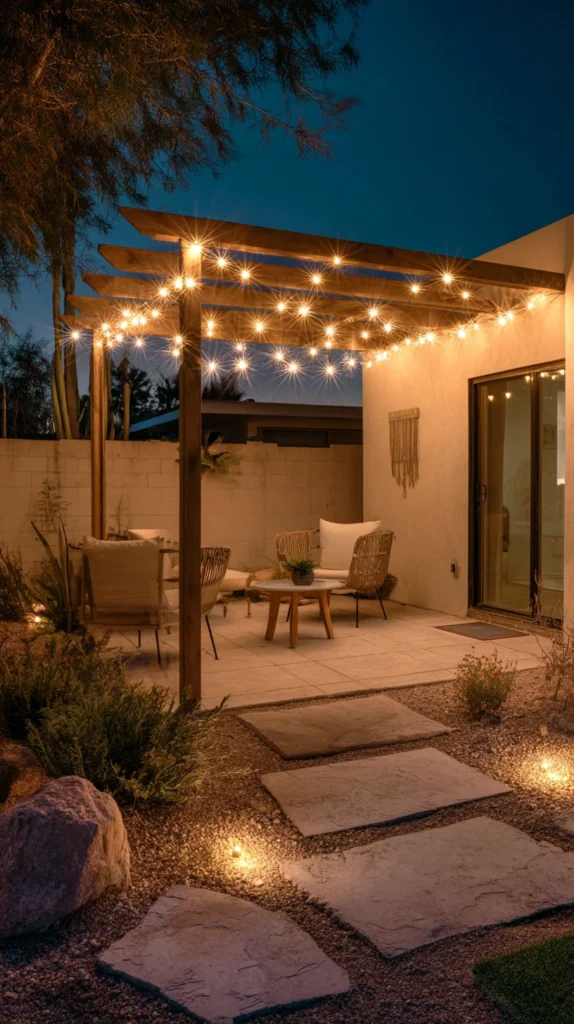
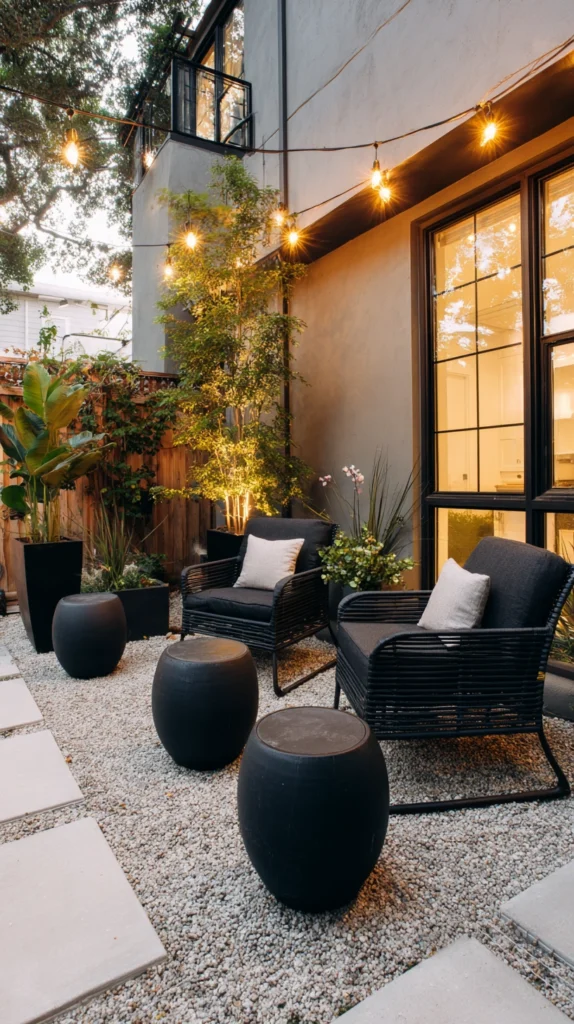
Solar-powered string lights require no wiring, no outdoor outlet access, and no permanent installation, making them one of the most renter-friendly ways to transform a small yard’s evening atmosphere. Standard solar string light sets run 20-48 feet, enough to wrap around a small patio, fence line, or a cluster of potted trees.
Budget: $20-40 for a quality solar string light set, a low-cost addition that meaningfully changes how a small outdoor space feels after dark. Positioning the small solar panel where it gets several hours of direct sun daily, even if that’s a different spot than where the lights themselves are strung, ensures reliable charging and consistent evening light.
These lights can be draped over a freestanding trellis, wrapped around porch railings without any hardware, or simply strung between two portable shepherd’s hooks pushed into large planters. This is one of the most universally loved additions on this list, since warm evening lighting does as much to make a rented outdoor space feel like home as almost any other single item.
5. Use a Portable Fire Pit Where Permitted
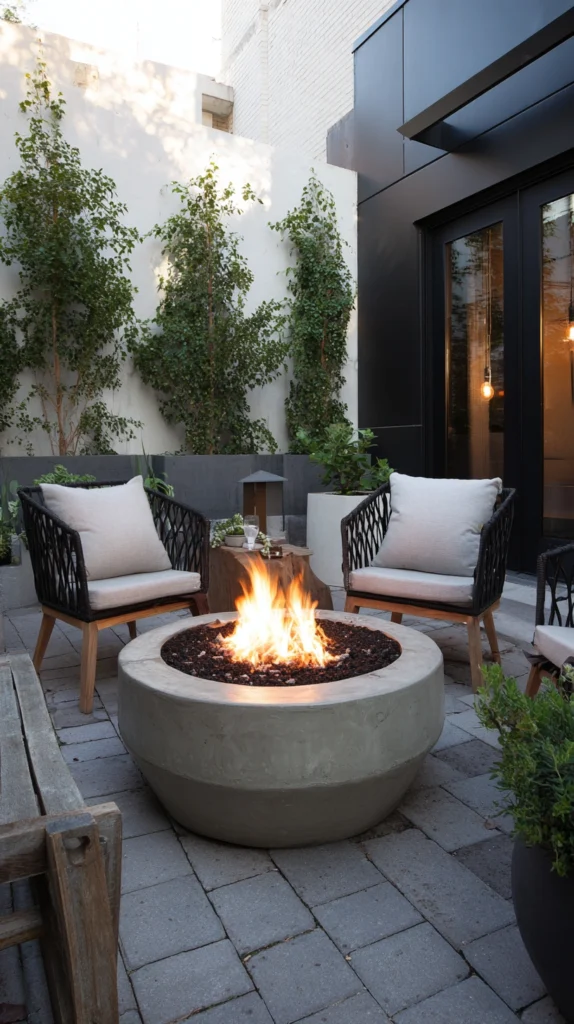
A small, freestanding propane or bioethanol fire pit adds warmth and a gathering point to a small yard without requiring any construction or fixed installation, though it’s essential to confirm local fire codes and lease terms allow this specifically before purchasing. Standard portable fire pits run 20-24 inches in diameter, appropriately scaled for a small patio or yard.
Budget: $80-200 for a quality portable propane or bioethanol fire pit, depending on size and fuel type. Propane models tend to be more convenient for regular use, while bioethanol models avoid the need for a propane tank but typically cost more per session to fuel.
Checking specifically whether a lease or local ordinance restricts open flame or fire pits before purchasing is an essential first step, since this is one of the few items on this list genuinely likely to require explicit permission rather than being a safe default assumption. This addition transforms a small outdoor space into a genuine year-round gathering spot, extending usable outdoor time well into cooler evenings and shoulder seasons.
6. Add a Vertical Pallet Garden for Herbs
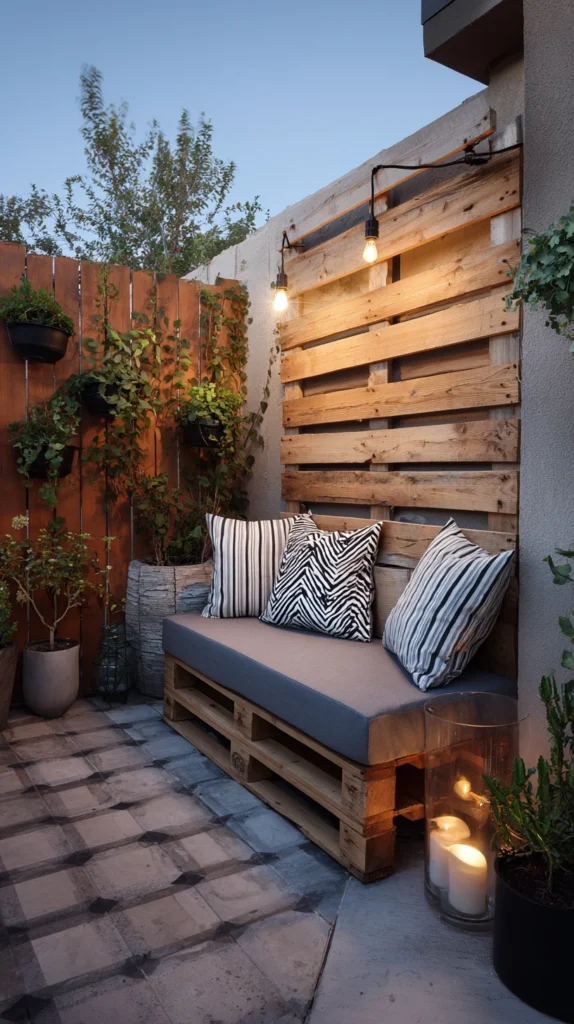
A single wood pallet, stood upright and lined with landscape fabric to create small planting pockets, turns unused vertical space into a compact herb or small plant garden without needing any ground space at all. Standard pallets run about 40×48 inches, providing several small planting pockets across the slats.
Budget: often free if sourced from a local business clearing pallets, plus $10-20 in landscape fabric and staples to build the planting pockets. This is one of the most budget-friendly projects on this entire list, particularly appealing for renters working with a tight decorating budget.
Leaning the pallet against an existing fence or wall (without attaching it) rather than mounting it directly keeps this project fully renter-compliant while still achieving the vertical growing effect. This is a particularly good project for a small balcony or patio with very limited floor space, since the entire garden occupies only the vertical footprint of the pallet itself rather than spreading out horizontally.
7. Use Furniture Covers to Extend the Life of Outdoor Pieces
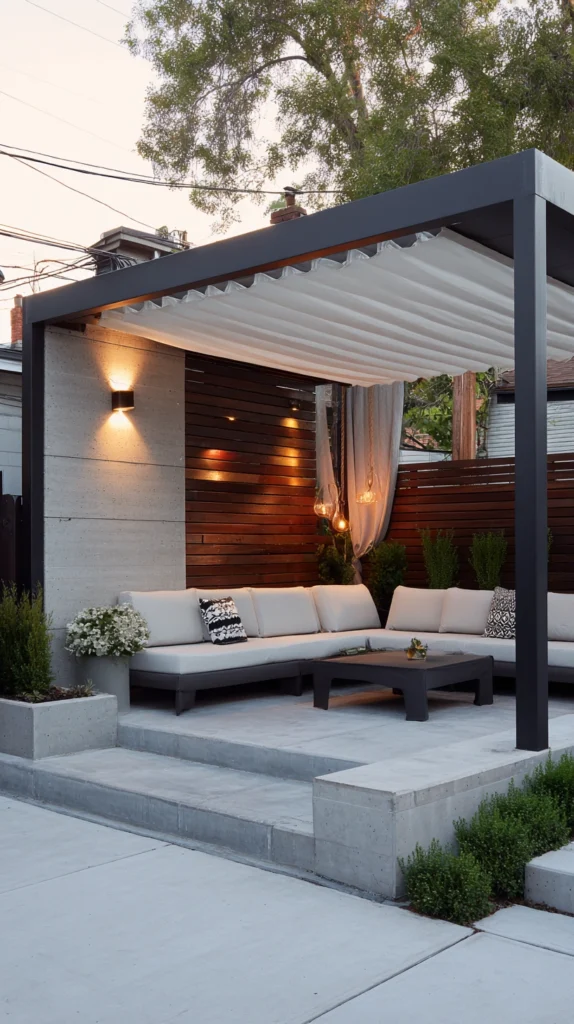
Investing in quality weatherproof covers for any outdoor furniture protects the investment across multiple moves and rental seasons, which matters significantly more for renters who may need to relocate furniture between different outdoor spaces over time. Standard furniture covers are sized to the specific piece, whether a small bistro set, a single chair, or a compact loveseat.
Budget: $15-40 per cover depending on furniture size, a relatively small additional cost that significantly extends the usable life of outdoor furniture pieces that renters often can’t easily replace between moves. This is a practical, less visually exciting item on this list, but it protects what’s often one of the larger investments in an outdoor space from sun damage, rain, and general wear.
Choosing furniture in the first place that’s specifically designed to be lightweight and easy to move (rather than heavy, built-in-feeling pieces) also supports the broader renter-friendly principle of keeping everything in an outdoor space portable and reusable across different homes. This consideration is worth factoring in when initially purchasing outdoor furniture, not just after the fact.
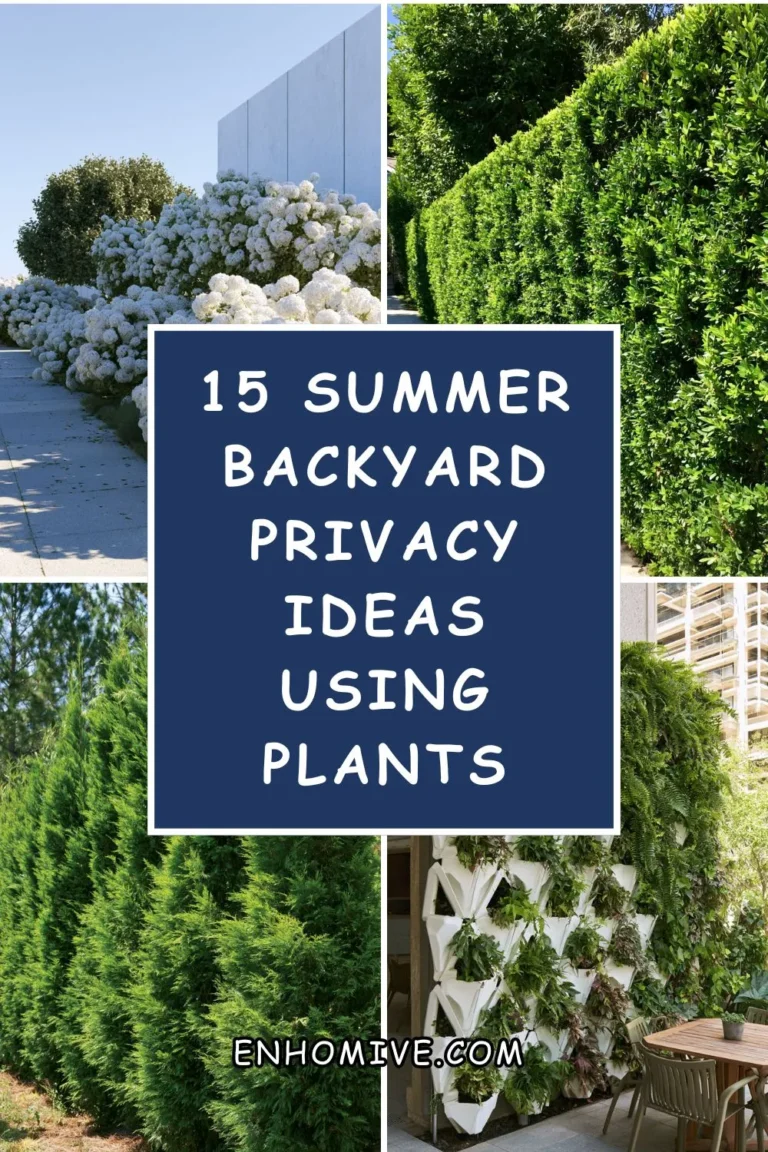
8. Add a Freestanding Privacy Screen
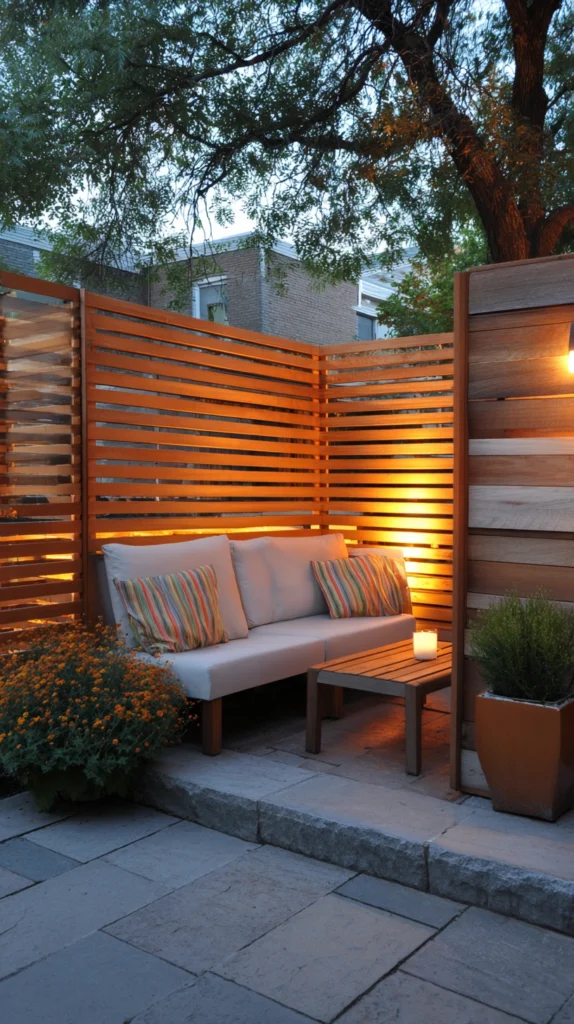
A folding or freestanding privacy screen, whether wood, bamboo, or a fabric-covered frame, adds visual separation and privacy to a small yard or patio without requiring any fence installation or permanent structure. Standard freestanding screens run 5-6 feet tall and 4-6 feet wide per panel, with 2-3 panels typically enough to create meaningful separation.
Budget: $60-150 per screen panel, with a full 2-3 panel setup running $120-450 depending on material quality. Bamboo or wood-look panels tend to blend more naturally into a small yard setting than a starkly modern metal or plastic screen, though the right choice depends on the space’s overall style.
Positioning the screen to block a specific sightline — a neighboring window, a shared fence gap — rather than trying to enclose the entire space is usually more effective and requires less material than attempting full perimeter privacy. This is one of the higher-cost items on this list, but it addresses one of the more common frustrations renters face with small, exposed outdoor spaces.
9. Use Faux Grass Mats for Instant Green Coverage
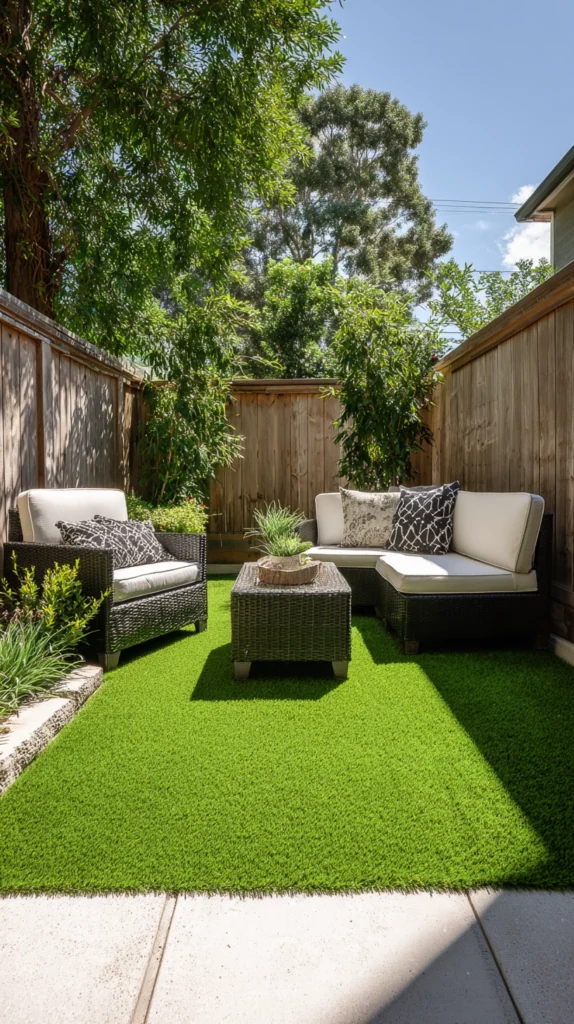
Interlocking faux grass mats or a rolled artificial turf remnant can be laid directly over a bare patio, concrete slab, or dirt patch to instantly add green coverage without any digging or permanent installation. Standard faux grass mats run 2×2 feet per interlocking tile, or come in rolls sized to fit a specific patio or balcony area.
Budget: $2-5 per sq ft for quality faux grass matting, meaning a 100 sq ft patio area typically costs $200-500 to fully cover. This is a bigger investment than some other items on this list, but it solves the specific problem of a bare concrete or dirt yard that a renter has no ability to actually landscape or reseed.
This is fully removable and can be rolled up and taken to a new rental, making it one of the more genuinely portable big-impact solutions available for renters specifically. Choosing a quality product with proper drainage backing prevents water pooling and mildew issues that can occur with lower-quality artificial turf products left outdoors long-term.
10. Add Hanging Planters to Maximize Vertical Space
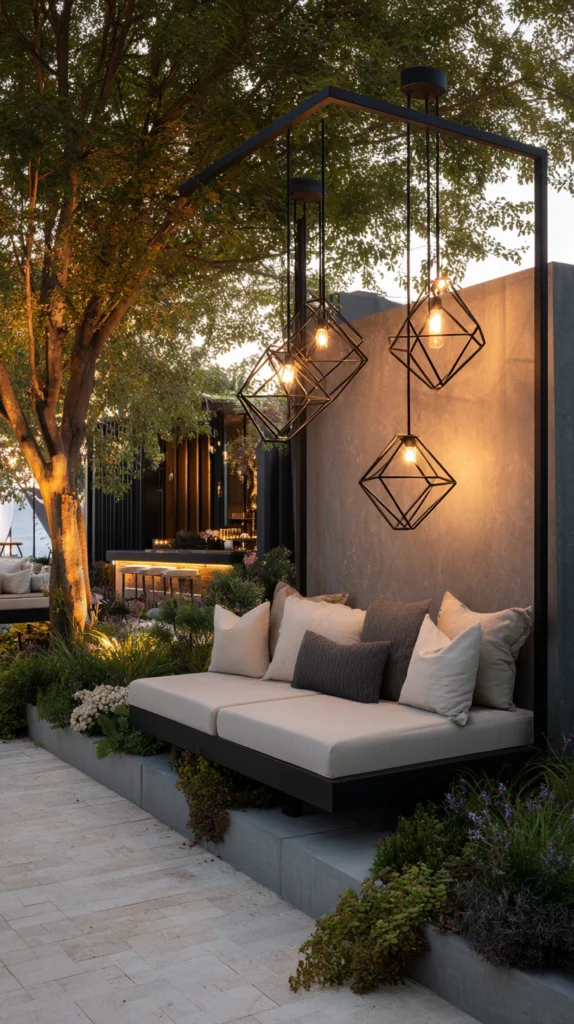
Hanging planters, suspended from a freestanding shepherd’s hook or a portable plant stand rather than mounted to any structure, bring greenery to eye level and above without requiring any hardware installed into walls, ceilings, or railings. Standard hanging planters run 10-14 inches in diameter, appropriately sized for trailing plants like ivy, petunias, or a small fern.
Budget: $15-30 per hanging planter, plus $20-40 for a freestanding shepherd’s hook or plant stand to hang it from. A single sturdy shepherd’s hook can often support 2-3 smaller hanging planters if arranged with a multi-arm design, maximizing the display for the cost of one stand.
This approach adds vertical visual interest to a small space without needing to attach anything to a porch ceiling or railing, which many rental agreements specifically prohibit. Trailing plants in particular add a lush, established look relatively quickly, since their cascading growth habit fills visual space faster than many upright plant varieties.
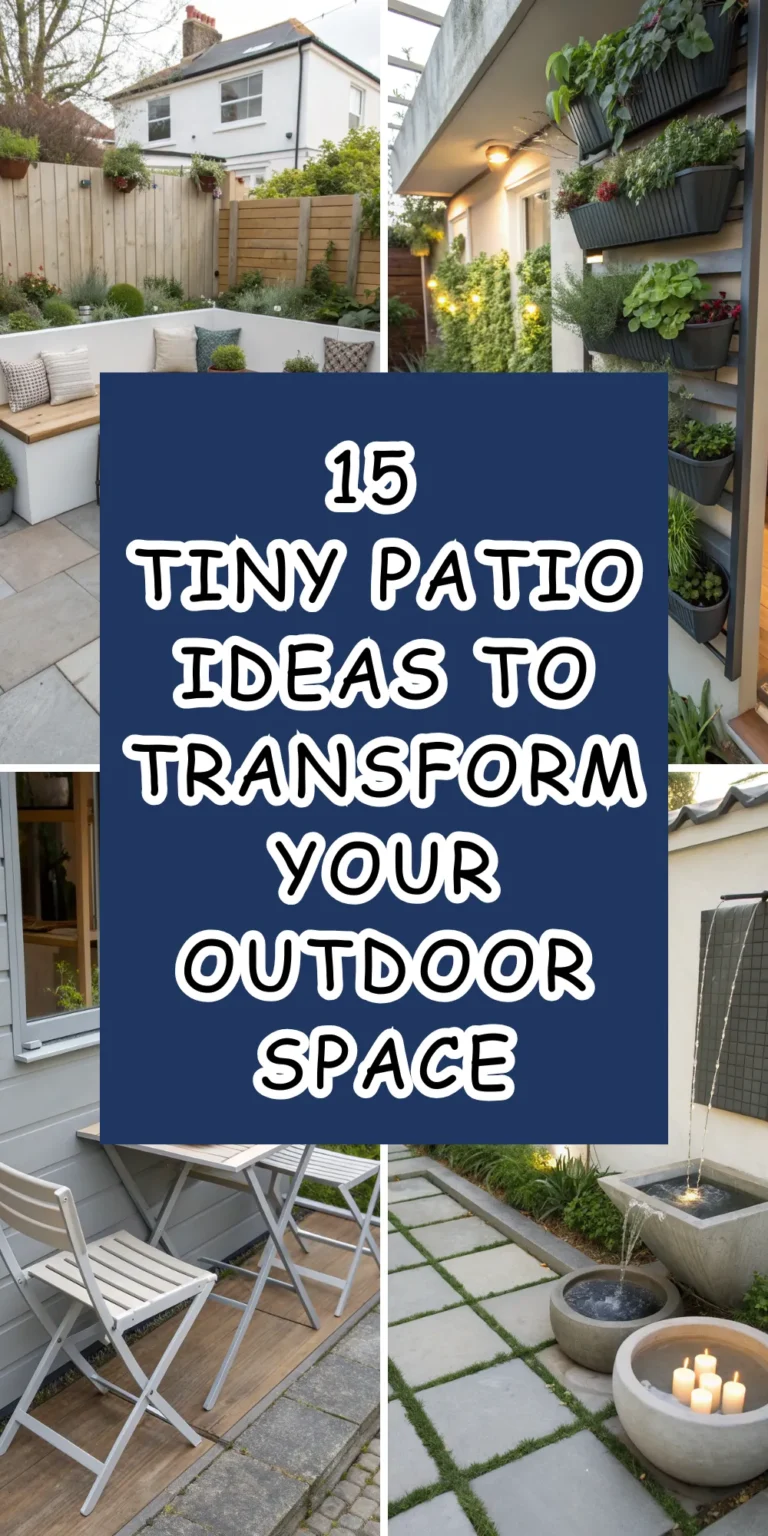
11. Create a Cafe-Style Bistro Set for a Compact Dining Spot
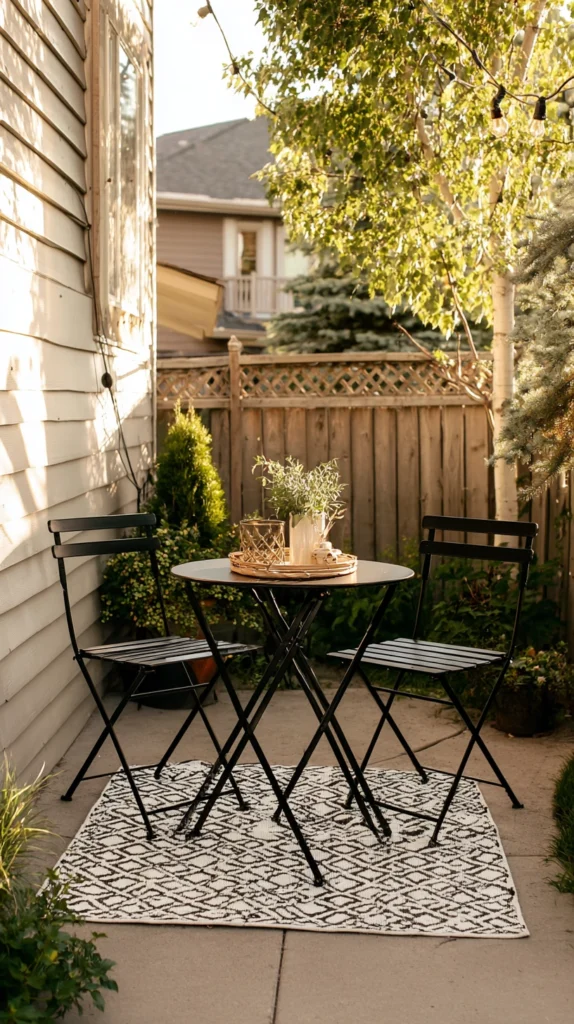
A small two-person bistro table and chair set fits into even the tightest balcony or patio space, providing a genuine outdoor dining or coffee spot without requiring significant square footage. Standard bistro sets take up roughly 3×3 feet of floor space when chairs are pushed in.
Budget: $80-200 for a quality small bistro set, a moderate investment that delivers significant functional value in even a very small outdoor space. Choosing a folding bistro set specifically offers added flexibility for renters, since the furniture can be collapsed and stored easily during a move or when extra floor space is needed for other purposes.
This is one of the more functional additions on this list, transforming an otherwise underused small outdoor space into a genuine spot for morning coffee or a quick meal outside. A small tablecloth or a couple of outdoor cushions, both fully portable, personalize the set further without any permanent changes to the space itself.
12. Add Battery-Operated or Solar Motion Lights for Practical Lighting
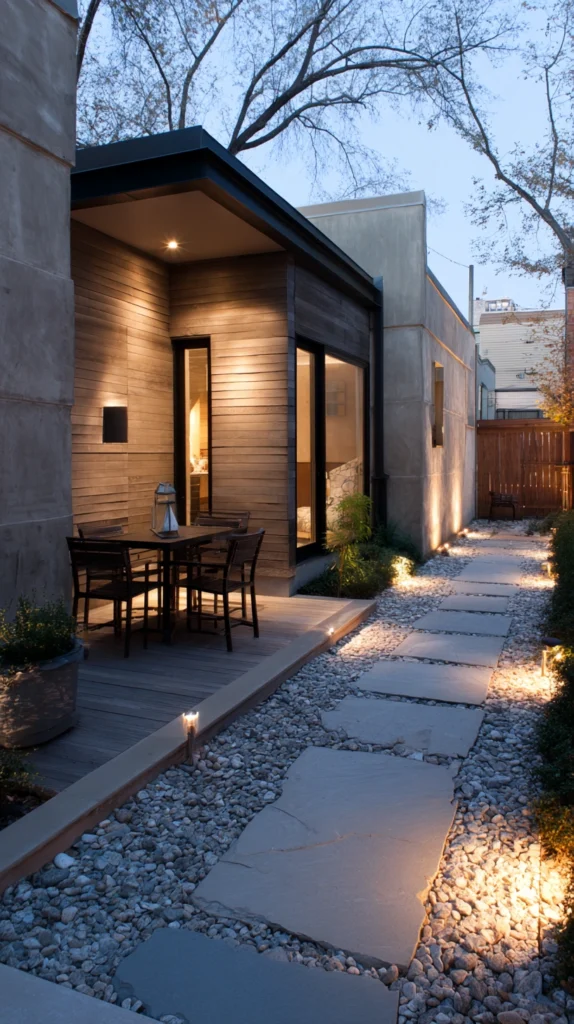
Beyond ambient string lights, a battery-operated or solar motion-sensor light near an entry point or dark corner adds genuine functional lighting without requiring any electrical work or landlord permission. Standard motion lights detect movement within 10-20 feet and run on replaceable batteries or solar charging.
Budget: $15-35 for a quality battery or solar motion light, an affordable, practical addition addressing safety and visibility rather than purely decorative goals. Positioning these lights near a step, a dark walkway, or an entry door improves both convenience and safety for a rented outdoor space that may not have adequate built-in exterior lighting.
This is a good complement to the decorative solar string lights described earlier, since motion lights serve a different, more functional purpose while still avoiding any permanent electrical installation. Testing the light’s sensor range and placement over a few evenings helps fine-tune positioning before assuming the initial spot is the correct final location.
13. Use a Portable Shade Structure for Sun Protection
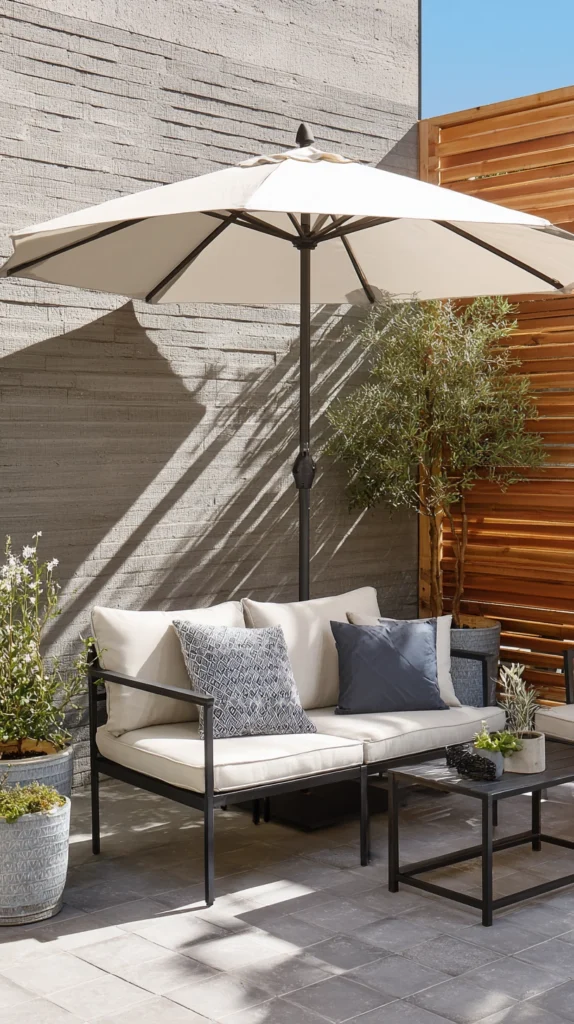
A freestanding umbrella, pop-up canopy, or portable shade sail provides genuine relief from direct sun in a small yard or patio without requiring any permanent structure or attachment to the building. Standard patio umbrellas run 7-9 feet in diameter, appropriately scaled for a small table or seating area.
Budget: $50-150 for a quality patio umbrella with a weighted or filled base, or $80-200 for a small pop-up canopy offering broader coverage for a slightly larger area. Choosing a base that can be filled with sand or water, rather than a lightweight base prone to tipping in wind, is an important safety consideration for any freestanding shade structure.
This is one of the more practically important additions on this list for anyone in a hot climate, since a small, sun-exposed patio or yard often goes unused during peak summer months without adequate shade. Like most other items on this list, this is fully portable and can move to a new rental without any modification or loss of investment.
Quick Start Shopping List
This weekend, under $150:
- Two large planters with soil and starter plants: $70
- A solar string light set: $30
- An outdoor rug: $50 (budget option)
Lease-Safe Checklist
Confirm before purchasing anything requiring:
- Open flame (fire pits, certain lighting)
- Attachment to any exterior wall, fence, or railing
- Digging or in-ground installation of any kind
- Shared space use if the yard isn’t exclusively assigned to your unit
Success Indicators
- Every item added can be removed or relocated without landlord involvement
- The space feels genuinely used and personalized, not sparse or temporary
- No damage or lasting marks are left on the property’s structure or ground
- The setup could reasonably move with you to a future rental
- The yard gets used regularly, not just decorated and then ignored
Remember
Confirm lease terms before purchasing anything involving open flame, attachment to structures, or ground disturbance, prioritize fully portable and freestanding items over anything requiring installation, invest in quality containers and covers since these protect your investment across multiple moves, start with the highest-impact low-cost items (lighting, a rug, planters) before larger purchases like a bistro set or privacy screen, and remember that nearly every landscaping idea has a renter-friendly version, even if it takes a bit more creativity to execute without a shovel.