
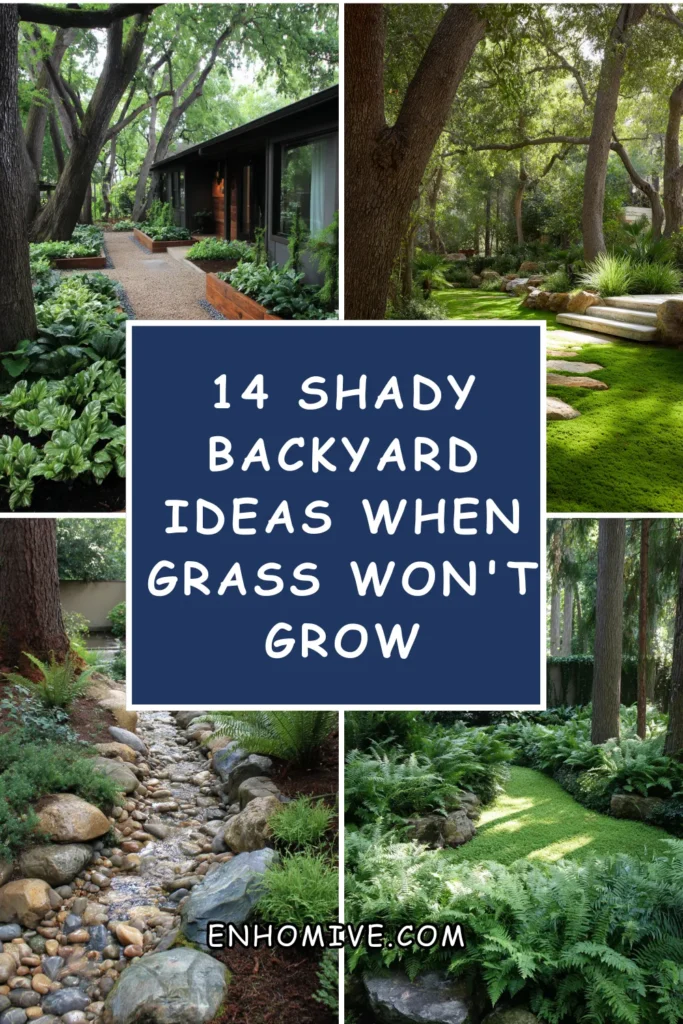
14 Shady Backyard Ideas When Grass Won’t Grow
Grass simply isn’t built for deep shade, and no amount of reseeding, fertilizing, or watering fully fixes a lawn that isn’t getting enough direct sunlight. Rather than fighting the shade, the more reliable long-term solution is usually replacing struggling grass with something actually suited to low-light conditions.
Below are 14 ways to work with a shady backyard instead of against it, from full ground cover replacements to hardscape solutions, with real numbers on coverage, cost, and light requirements so the fix actually holds up over time.
Understanding Your Shade Level First
Light-shade (4-6 hours of filtered sun):
- Some shade-tolerant grass blends may still work
- Widest range of shade-loving plants available
- Best candidate for a mixed grass-and-groundcover approach
Moderate shade (2-4 hours of direct or dappled sun):
- Grass becomes unreliable even with shade-tolerant blends
- Groundcovers and shade perennials perform well
- Mulch and hardscape options become more practical
Deep shade (under 2 hours of direct sun):
- Grass will not sustain itself long-term in this zone
- Best suited to hardscape, mulch, or true shade-loving groundcover
- Consider whether nearby tree canopy thinning is possible to add light
1. Replace Grass With Moss as a Living Ground Cover
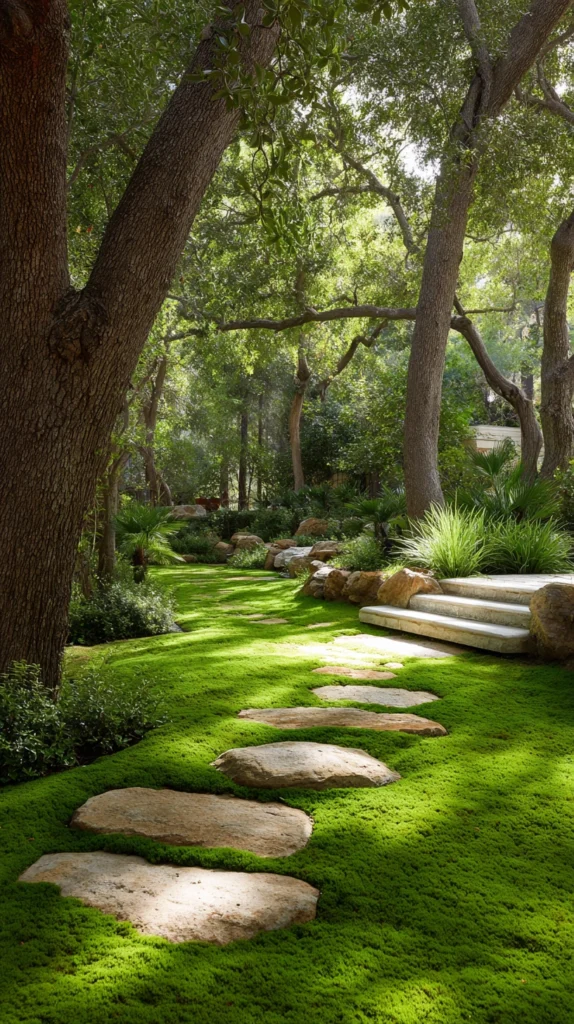
Moss actually thrives in the low light and consistent moisture that kills grass, making it one of the most direct swaps for a struggling shady lawn area. Standard moss coverage establishes over 200-400 sq ft using either moss plugs or a moss “milkshake” slurry application.
Budget: $80-200 for moss plugs or spore slurry covering a 200 sq ft area, significantly less than ongoing yearly reseeding attempts that never fully take in deep shade. Moss requires acidic soil (a pH around 5.0-6.0) and consistent moisture to establish, so testing and adjusting soil pH before planting improves the odds of successful coverage.
Once established, moss requires no mowing, no fertilizing, and minimal watering beyond its initial establishment period, making it one of the lowest-maintenance ground cover solutions available for deep shade specifically. This works best in areas that are already naturally moist or that receive regular irrigation, since moss struggles in shade paired with dry, sandy soil.
2. Install a Mulched Bed Instead of Fighting for Grass
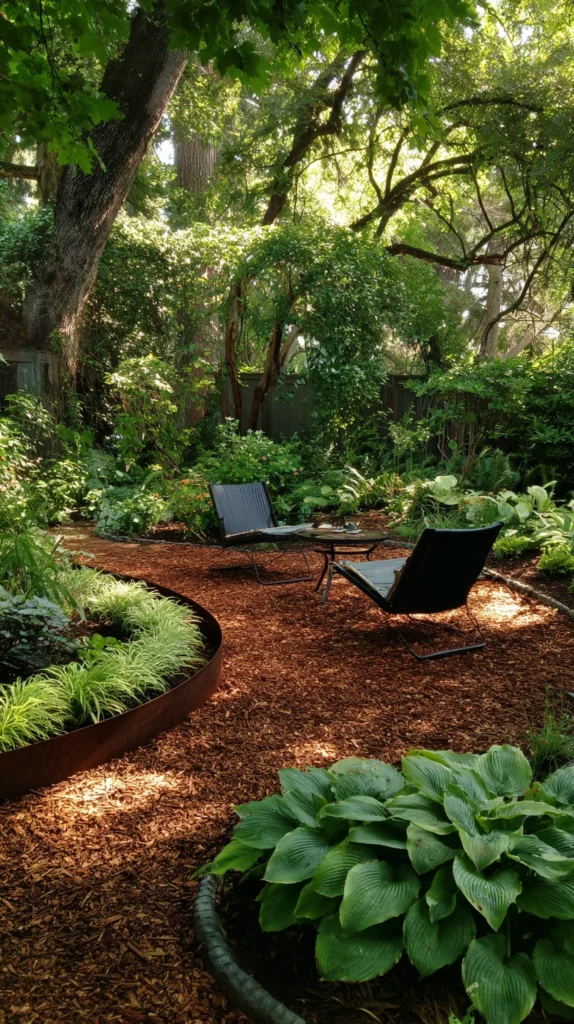
Simply converting a struggling shady lawn section into a mulched planting bed sidesteps the grass problem entirely while giving the area a clean, intentional look. Standard mulch coverage requires a 2-3 inch depth, meaning a 200 sq ft area needs roughly 1-1.5 cubic yards of mulch.
Budget: $60-120 for enough mulch to cover a 200 sq ft area, one of the more affordable options on this list, especially compared to the ongoing cost of repeatedly reseeding grass that won’t establish. Choosing a natural wood or bark mulch, rather than dyed varieties, tends to look more at home in a shaded, woodland-adjacent yard setting.
Adding a few shade-tolerant shrubs or perennials into the mulched bed, rather than leaving it as bare mulch, gives the area more visual interest and breaks up what could otherwise look like an empty patch. Refreshing the mulch layer annually, as it breaks down and compacts over time, keeps the bed looking maintained and also continues to suppress weed growth.
3. Plant Hostas for Reliable Shade Coverage
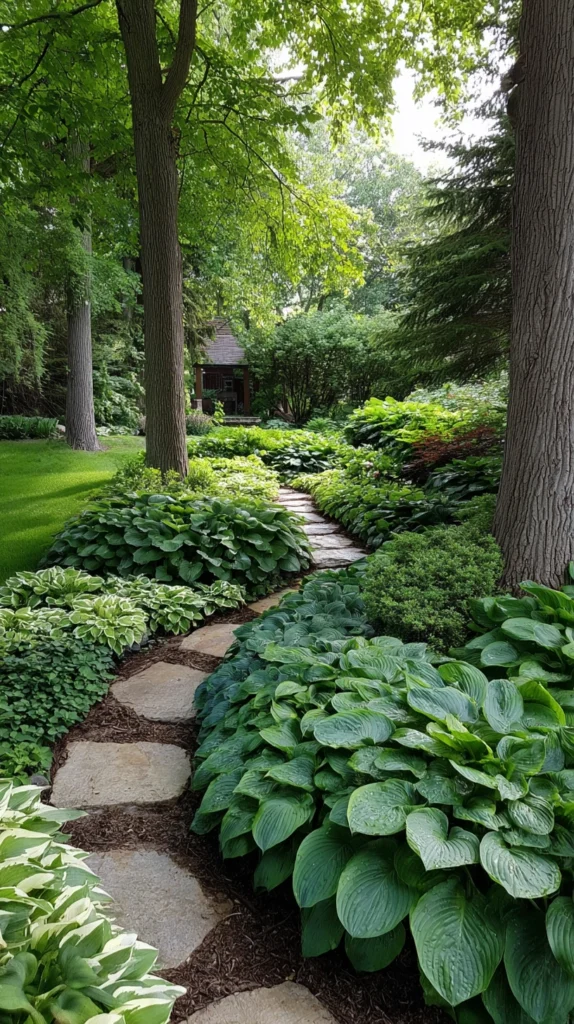
Hostas are one of the most dependable shade perennials available, tolerating everything from partial to deep shade while providing lush, broad-leafed coverage that fills in a bed quickly once established. Standard hostas are planted 18-24 inches apart, with mature plants reaching 12-36 inches wide depending on variety.
Budget: $8-25 per hosta plant depending on size and variety, or roughly $150-400 to fill a 200 sq ft bed at standard spacing. Choosing a mix of leaf colors and sizes (blue-green, variegated, and solid green varieties) creates more visual interest than a single uniform planting.
Hostas are also easily divided every few years once established, meaning an initial planting can be expanded to cover additional shady areas over time without needing to purchase entirely new plants. Deer and slugs are common pest issues for hostas specifically, so checking whether either is a problem in your specific yard before committing to a large-scale planting is worth the extra research.
4. Add a Gravel Path or Seating Area Under Trees
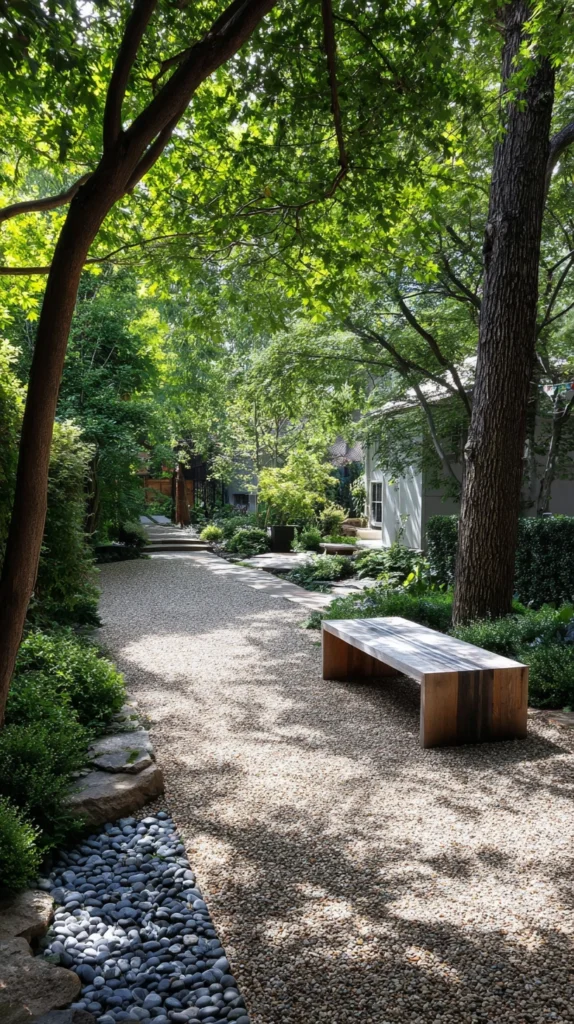
Rather than trying to grow anything at all directly beneath a dense tree canopy, installing a simple gravel path or small seating area acknowledges that some spots are better suited to hardscape than any living ground cover. Standard gravel paths run 3-4 feet wide, with a small seating nook needing roughly 8×8 feet.
Budget: $8-15 per sq ft for a basic gravel installation including edging, or roughly $600-1,200 for a combined path and small seating area. A compacted base layer beneath the gravel is worth the extra step, since skipping it leads to uneven settling and drainage problems over time.
This approach turns what might otherwise be viewed as a “failed” lawn spot into an intentional design feature, often becoming one of the more pleasant areas of the yard to actually spend time in during hot summer months when shade is genuinely valuable. Adding a simple bench or a couple of chairs makes this a functional destination rather than just a walkway, maximizing the practical benefit of an already-shady spot.
5. Plant Ferns for a Lush, Woodland Feel
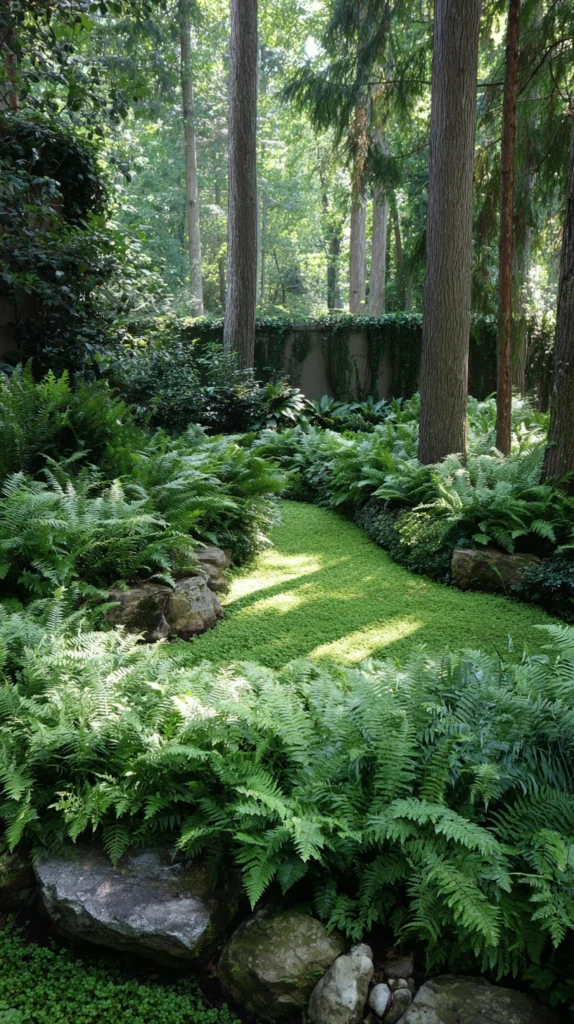
Ferns are naturally adapted to forest floor conditions, making them one of the most reliable and visually lush options for deep shade areas where almost nothing else, including most shade-tolerant grasses, will thrive. Standard ferns are planted 12-18 inches apart, with mature clumps reaching 18-36 inches depending on variety.
Budget: $10-20 per fern plant, or roughly $200-400 to fill a 200 sq ft bed at standard spacing. Native fern varieties (which vary by region) tend to establish more reliably and require less supplemental watering than non-native ornamental varieties once established.
Ferns pair particularly well with hostas and other broad-leafed shade perennials, creating a layered, textural look that reads as an intentional woodland garden rather than a bare or struggling lawn area. Consistent moisture matters more for ferns than for many other shade plants, so this option works best in areas that don’t dry out completely between waterings.
6. Build a Small Patio or Deck Extension
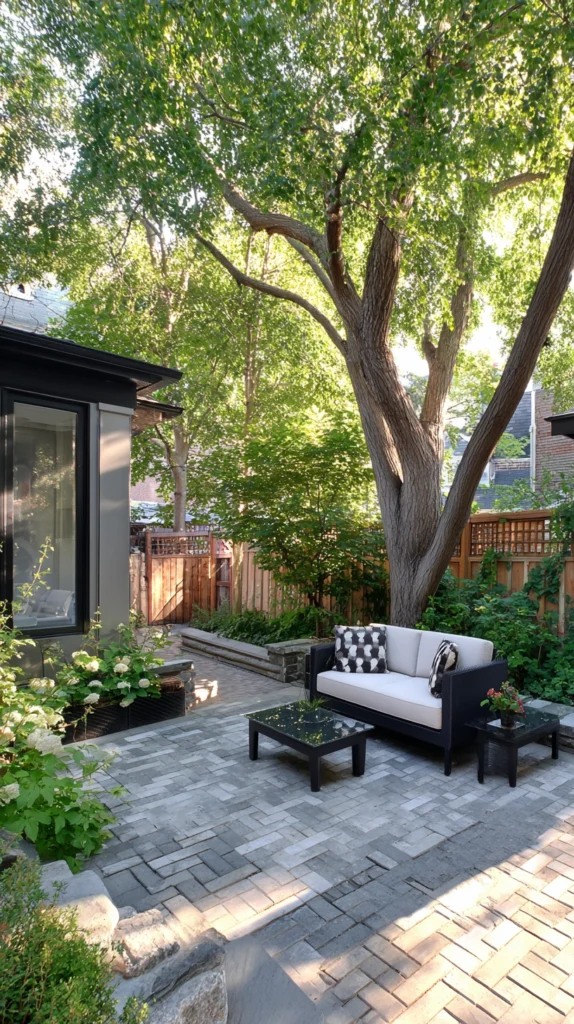
Converting a shady, grass-resistant section of the yard into a small patio or deck extension is a permanent, maintenance-free solution that also adds genuine outdoor living space. Standard small patio additions run 10×10 to 12×14 feet, a manageable size for a single dining or lounging area.
Budget: $10-25 per sq ft for a basic paver or concrete patio, or roughly $1,000-3,500 for a 10×10 to 12×14 foot addition, depending on material choice and whether the installation is DIY or professionally done. A raised wood deck typically costs somewhat more than a ground-level paver patio but can be a better option in areas with drainage issues or significant grade changes.
This is one of the larger investments on this list, but it also permanently solves the shady grass problem in that specific area while adding functional value to the yard rather than requiring ongoing plant maintenance. Positioning the patio to take advantage of the shade itself — as a cool spot to sit during hot afternoons — turns what was a landscaping problem into one of the yard’s more usable features.
7. Plant Hellebores for Winter and Early Spring Color
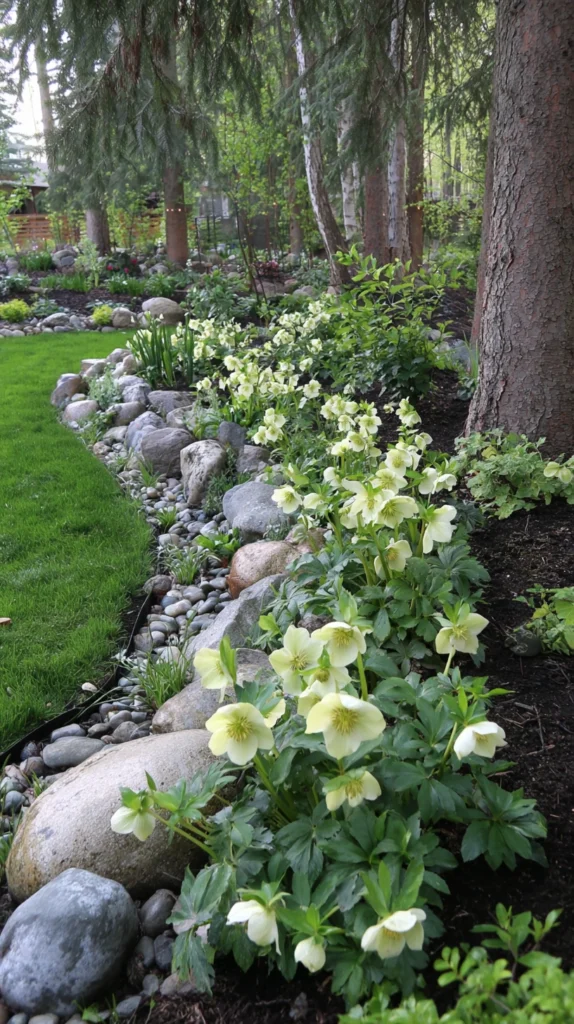
Hellebores, sometimes called Lenten roses, are one of the few shade-tolerant perennials that bloom in late winter and early spring, providing color in a shaded yard during a time of year when most other plants are still dormant. Standard hellebores are planted 18-24 inches apart, with mature plants reaching 12-18 inches tall and wide.
Budget: $15-30 per hellebore plant, or roughly $250-500 to fill a 200 sq ft bed at standard spacing, a bigger investment than hostas or ferns given their slower growth rate and higher individual plant cost. Hellebores are also deer-resistant and require minimal maintenance once established, making them a good long-term, low-effort choice for a shaded bed.
This plant works particularly well combined with spring bulbs (planted beneath or around the hellebores) since both bloom during a similar early-season window, creating a more layered display than either planted alone. Hellebores are slow to establish in their first year or two but become increasingly full and floriferous in subsequent seasons, so patience during the initial establishment period pays off with a longer-term perennial bed.
8. Add a Dry Creek Bed for Drainage and Visual Interest
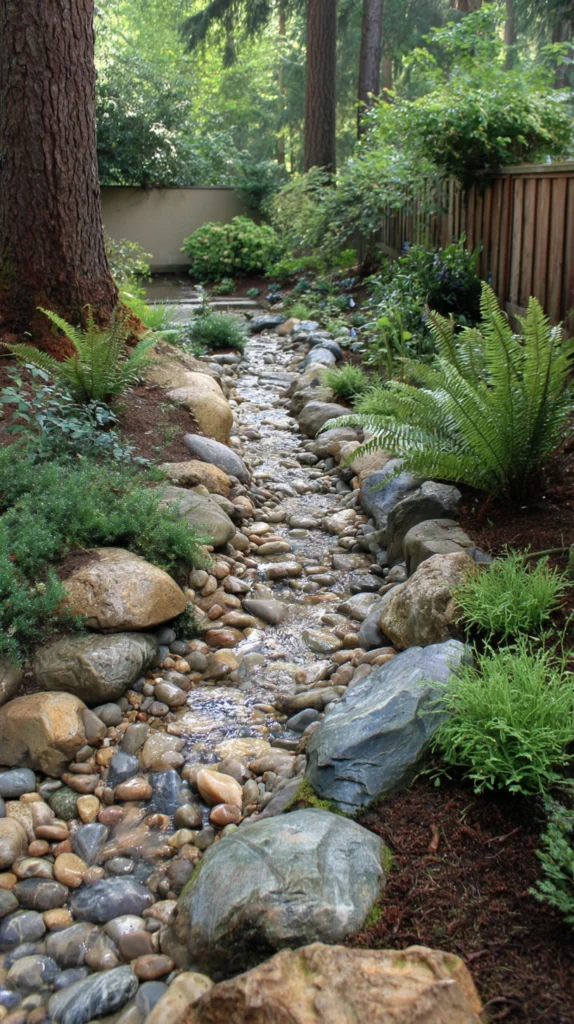
A dry creek bed, using river rock and stones arranged to mimic a natural waterway, addresses both the shade-and-grass problem and any drainage issues common in shaded, often damper areas of a yard. Standard dry creek beds run 2-4 feet wide and can extend as long as needed to follow the yard’s natural drainage path.
Budget: $15-25 per linear foot for a basic dry creek bed installation, or roughly $450-1,000 for a 30-foot run. Lining the bed with landscape fabric beneath the rocks helps suppress weed growth while still allowing water to drain through naturally.
This is a particularly good solution for shaded areas that also tend to stay damp or collect runoff from nearby downspouts, since a dry creek bed manages water flow functionally while also solving the visual problem of bare, muddy ground where grass has failed. Planting moisture-loving shade perennials, like ferns or astilbe, along the edges of the dry creek bed adds softness and integrates the hardscape feature into the surrounding garden.
9. Use Pea Gravel for a Low-Maintenance Open Area
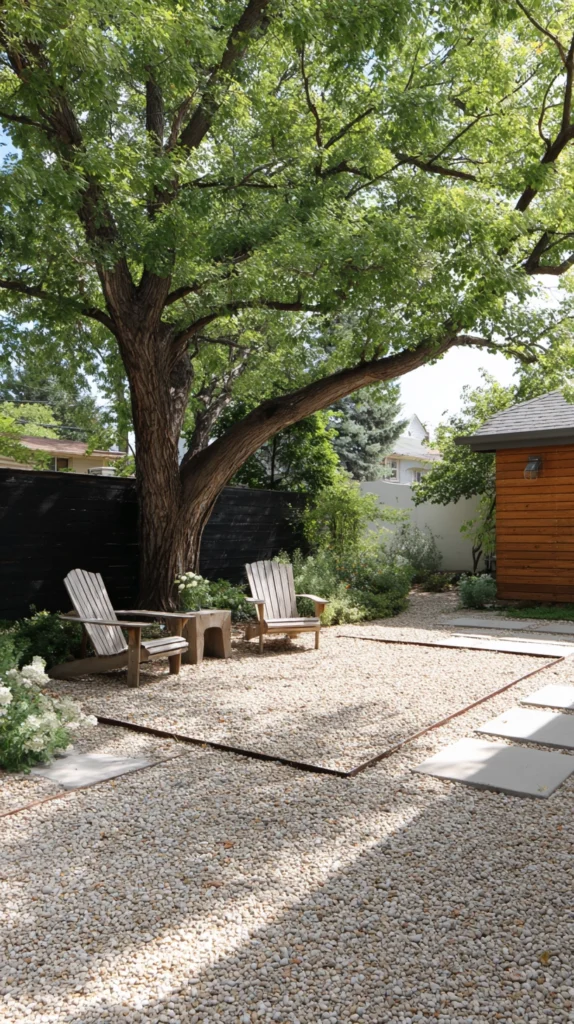
Pea gravel offers a softer, more walkable surface than larger landscape rock, making it a practical option for a shaded play area, a small patio substitute, or simply an open, low-maintenance ground cover where grass has failed. Standard pea gravel coverage requires a 2-3 inch depth, with a 200 sq ft area needing roughly 1-1.5 cubic yards.
Budget: $50-100 for enough pea gravel to cover a 200 sq ft area, plus $50-100 for edging material to keep the gravel contained within its intended boundary. A weed barrier fabric installed beneath the gravel significantly reduces future weed growth, which is worth the small additional cost and installation time.
This is one of the more budget-friendly hardscape options on this list, and pea gravel’s smaller, rounder stone size makes it more comfortable underfoot than sharper crushed gravel, which matters if the area will see regular foot traffic or serve as an informal kids’ play space. Choosing a neutral gray or tan pea gravel tends to blend more naturally into a shaded, wooded yard setting than a bright white variety.
10. Plant Native Woodland Wildflowers
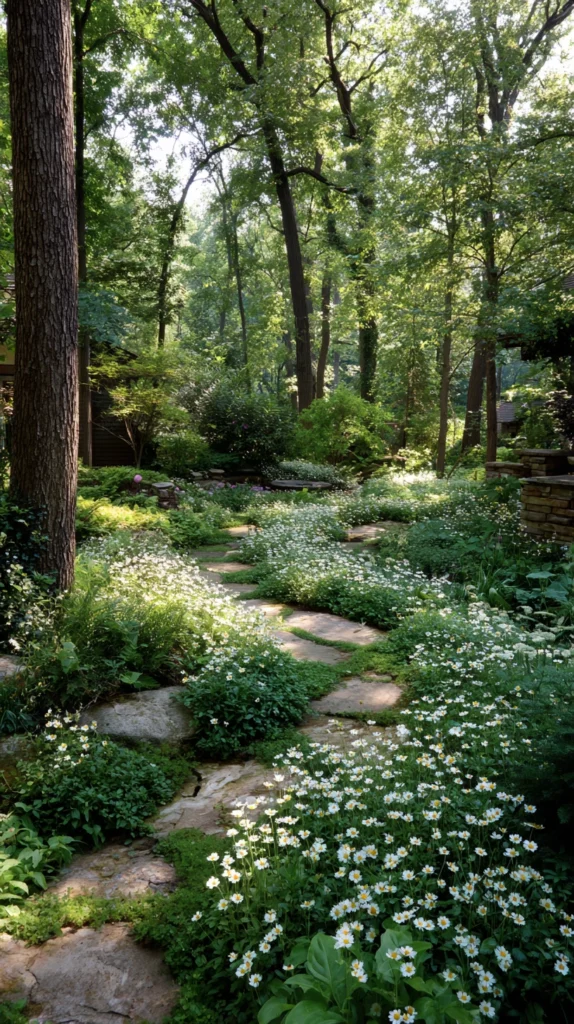
Native wildflower species adapted to your specific region’s forest floor conditions often perform far better in deep shade than a generic wildflower mix designed for full sun, since these species evolved specifically to thrive under a tree canopy. Standard native shade wildflower plantings use a mix of species at varying spacing depending on the specific plants selected.
Budget: $8-20 per plant for native shade wildflowers, or $100-300 for a seed mix covering a larger area if starting from seed rather than transplants. Checking with a local native plant nursery or extension office for species specific to your exact region produces far better results than a generic national wildflower mix, since shade-tolerant native species vary significantly by climate zone.
This approach also supports local pollinators and wildlife more effectively than ornamental non-native plantings, adding an ecological benefit beyond simply solving the bare-grass problem. Native woodland wildflowers often naturalize and spread over time once established, meaning a modest initial planting can fill in and expand across a shaded area over several growing seasons without additional investment.
11. Build Raised Planting Beds to Improve Soil and Drainage
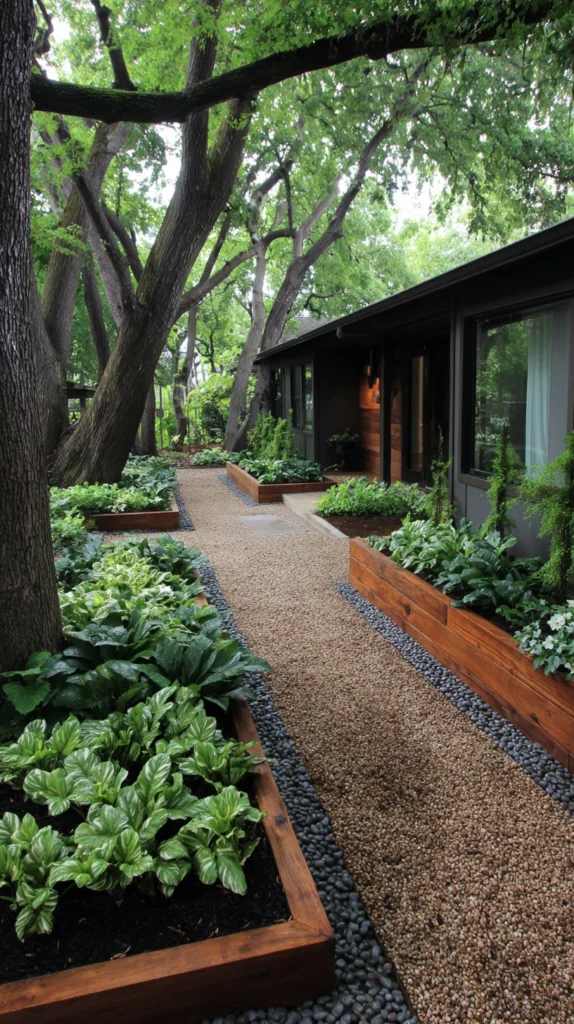
In shaded areas where soil quality, tree root competition, or drainage are contributing to grass failure beyond just the lack of light, raised beds sidestep these underlying soil problems by providing a fresh, controlled growing medium above the existing ground. Standard raised beds run 4×8 feet and 12-18 inches deep, though sizing can be adjusted to fit the specific space available.
Budget: $150-400 for materials to build a single 4×8 foot raised bed, plus $80-150 for quality soil to fill it. This is a good solution specifically when tree roots are a major factor in the area’s struggles, since a raised bed avoids competing directly with an established tree’s root system for water and nutrients.
Choosing shade-tolerant plants suited to the raised bed’s specific light conditions, rather than assuming the elevated soil alone solves the fundamental shade issue, is still necessary for success with this approach. This is one of the more labor-intensive projects on this list, but it directly addresses situations where soil quality, not just light, has been part of why grass has struggled to establish.
12. Add a Shade Garden Focal Point With a Water Feature
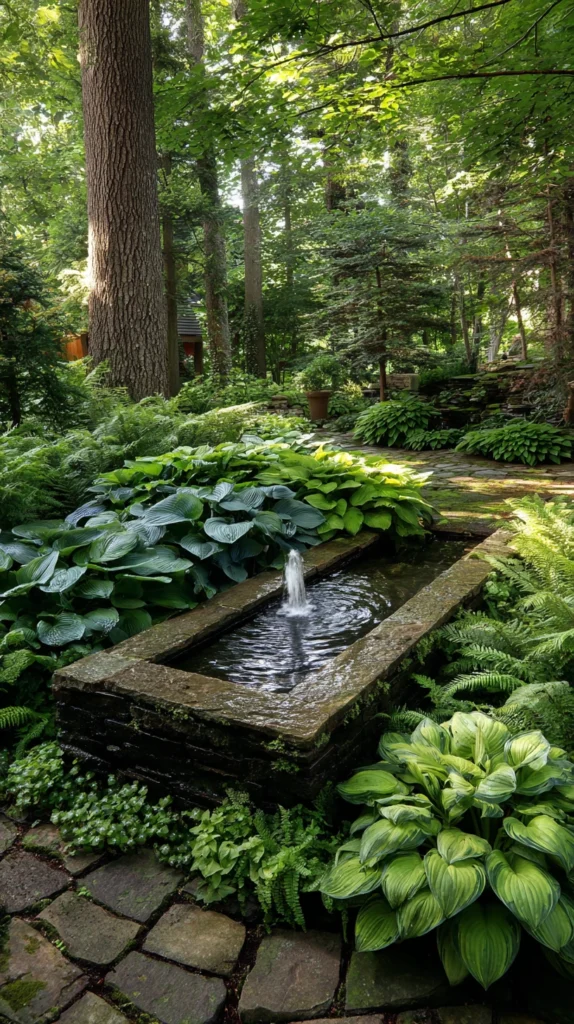
A small fountain or birdbath positioned within a shaded planting bed adds sound, movement, and wildlife interest to an area that might otherwise feel static or purely functional. Standard small garden fountains run 18-30 inches tall, appropriately scaled for a residential shade garden.
Budget: $100-350 for a quality small garden fountain or birdbath, a moderate investment that significantly elevates the overall design of a shaded bed beyond just plant selection alone. Positioning the water feature where it can be heard from a nearby patio or seating area adds to the overall ambiance of the space, not just its visual appeal.
This is a good addition to pair with several other ideas on this list, particularly the fern and hosta plantings, since the combination of lush shade foliage and the sound of moving water creates a genuinely peaceful, intentional garden space rather than reading as an area where the lawn simply failed. Regular cleaning and, in colder climates, proper winterizing of the water feature is an ongoing maintenance consideration worth factoring into the decision.
13. Plant Astilbe for Feathery Texture and Color
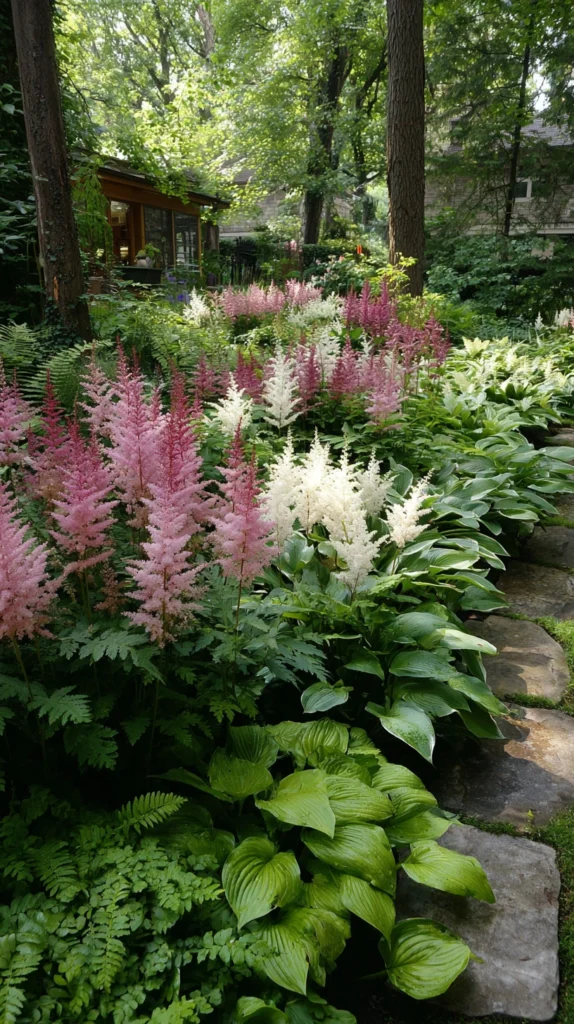
Astilbe offers feathery, plume-like flower spikes in pink, red, and white tones, providing a different bloom shape and texture than the broader-leafed hostas and ferns commonly used in shade gardens. Standard astilbe plants are spaced 18-24 inches apart, with mature plants reaching 18-36 inches tall depending on variety.
Budget: $10-20 per astilbe plant, or roughly $180-350 to fill a 200 sq ft bed at standard spacing. Astilbe performs best in consistently moist, shaded soil, making it a good companion plant alongside ferns in areas that don’t fully dry out between waterings.
The plume-like blooms add valuable textural contrast when planted alongside the broader leaves of hostas, creating a layered look that reads as more deliberately designed than a single-species planting. This plant also attracts pollinators during its bloom period, adding a functional ecological benefit alongside its ornamental value in an otherwise shaded, low-traffic garden bed.
14. Consider Selective Tree Canopy Thinning
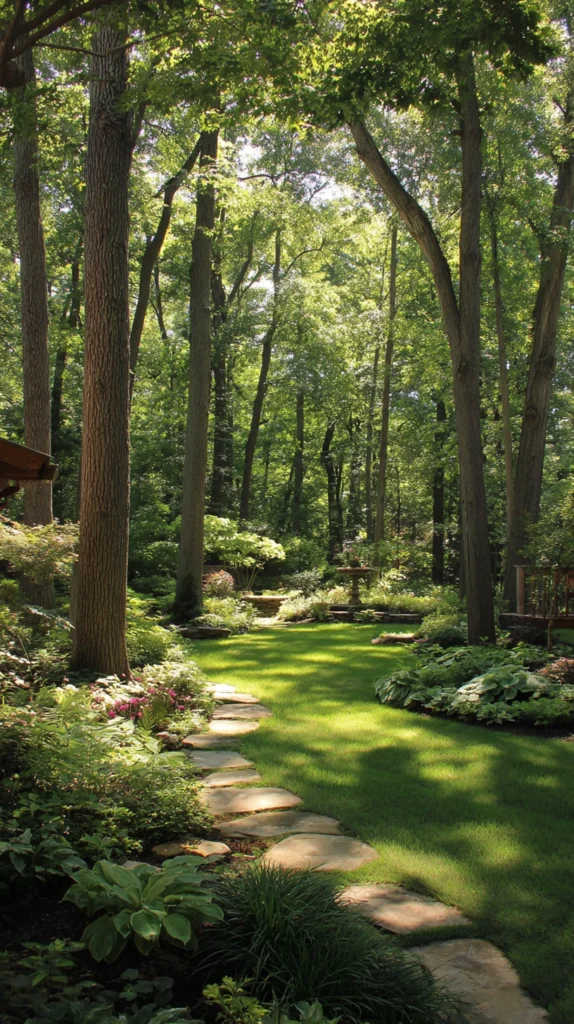
In some cases, the underlying cause of a persistently shady, grass-resistant area is simply an overgrown tree canopy that’s become denser than it was when the lawn was originally established, and selective, professional pruning can restore enough light for grass or a wider range of plants to succeed. This is worth evaluating before assuming the area must be permanently converted to shade-only landscaping.
Budget: $300-800 for professional tree thinning and canopy raising on a single mature tree, depending on the tree’s size and the extent of pruning needed. This should always be done by a certified arborist rather than as a DIY project, both for safety and to ensure the tree’s long-term health isn’t compromised by improper pruning technique.
This option won’t work for every situation, particularly where a tree’s canopy is intentionally close to the ground for privacy or where thinning isn’t structurally advisable for the specific tree species, but it’s worth a consultation with a professional before committing entirely to shade-only landscaping. Combining canopy thinning with a shade-tolerant grass blend afterward sometimes achieves a middle-ground solution where a full landscaping overhaul isn’t necessary.
Quick Start Project List
This weekend, under $150:
- A small mulched bed with a few starter hostas or ferns: $100
- A bag of pea gravel for a small problem patch: $40
- Moss plugs for a small test area: $80
Budget-Friendly Version
Lowest-cost ways to start:
- Mulch alone, without additional plantings, as a starting point
- Moss propagated from an existing patch rather than purchased plugs
- Dividing hostas or ferns from a friend’s or neighbor’s established garden
- Native wildflower seed mixes rather than individual nursery transplants
Success Indicators
- The area no longer shows bare or patchy dirt where grass has failed
- Plants chosen are actually establishing and spreading, not struggling
- The space feels intentional rather than like an abandoned lawn section
- Maintenance needs have decreased compared to repeatedly reseeding grass
- The solution matches the actual light level of the specific area, not a guess
Remember
Test your actual shade level honestly before choosing a solution, since deep shade requires a genuinely different approach than light or moderate shade, stop reseeding grass in areas that get under 3-4 hours of direct sun, since no amount of reseeding will overcome insufficient light, choose plants and materials suited specifically to shade rather than assuming full-sun options will simply perform a little worse, consider hardscape solutions like gravel, patios, or paths for the deepest shade spots where even shade-tolerant plants struggle, and treat a shady yard as an opportunity for a different kind of garden rather than a lawn problem that needs to be solved.