
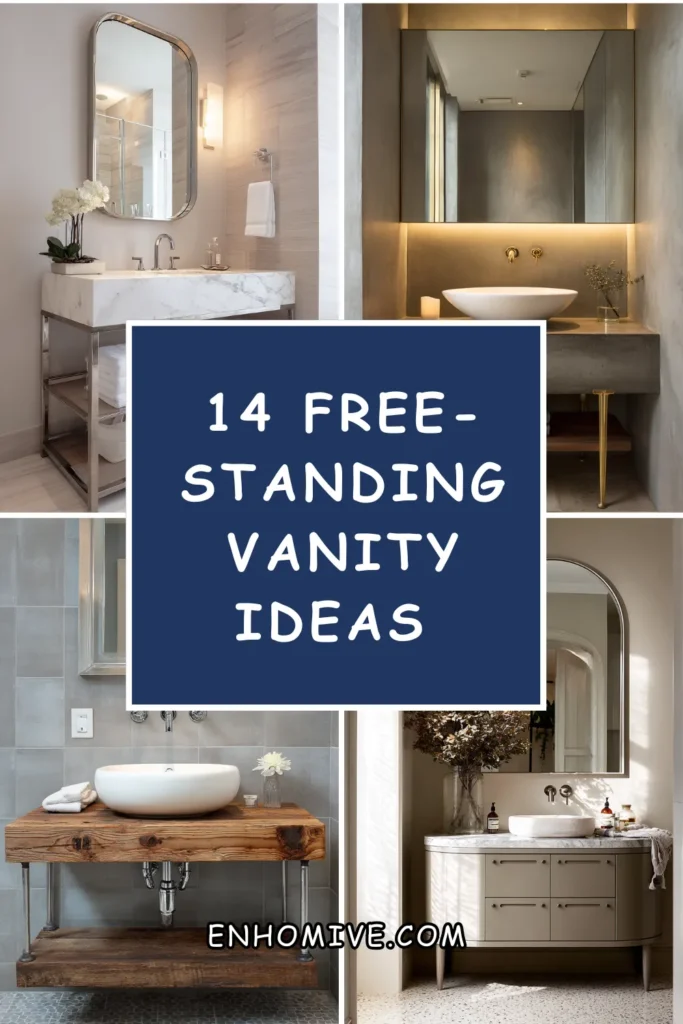
14 Freestanding Vanity Ideas for a Boutique Feel
Our old vanity was a builder-basic box, flush to the wall, drawers that stuck every winter.
It did the job. It also looked like it belonged in every third house on the street.
I pulled it out, swapped in a freestanding piece with actual legs, and the room stopped looking like a rental.
That’s the thing about a freestanding vanity. It reads as furniture, not fixture, and that single shift changes everything around it.
Here are 14 ways to bring that boutique hotel feeling into a real, everyday bathroom.
Why freestanding beats built-in for this look
A vanity with legs and visible floor space underneath does more design work than people expect.
- It makes the room feel larger by showing floor instead of hiding it behind a cabinet base
- It reads as an antique or reproduction furniture piece rather than a plumbing fixture
- It’s easier to swap out later without a full renovation, since it’s not built into the wall
Once the vanity floats, the rest of the room gets to breathe around it.
1. Reclaimed Wood Console Vanity
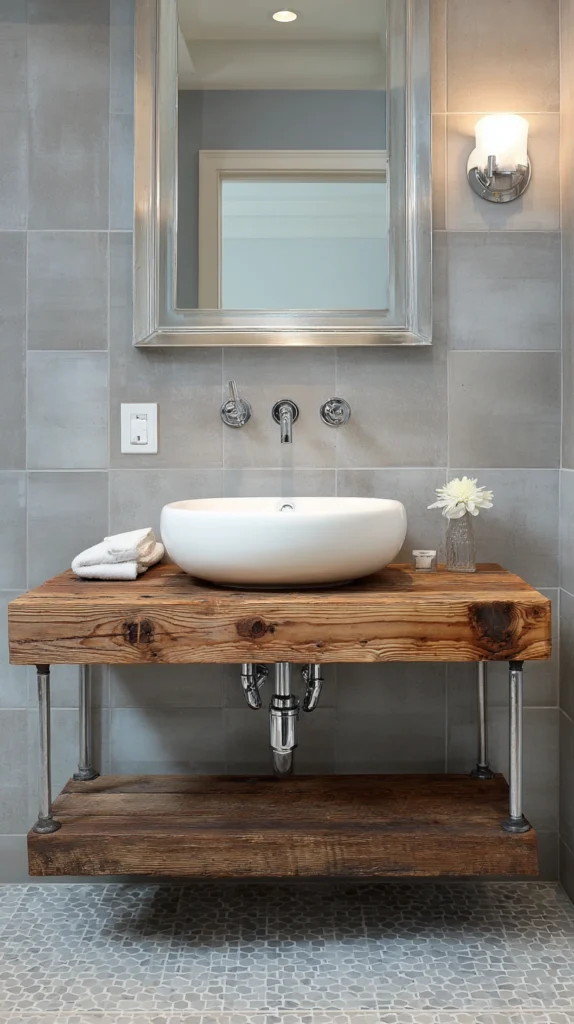
A rustic wood table repurposed with a drop-in basin.
Build it:
- Source a solid wood console table with open legs and no lower shelf blocking airflow
- Cut a hole for an undermount or vessel sink, or top with a vessel basin that needs no cutting at all
- Seal the wood thoroughly with a marine-grade varnish rated for constant humidity
Why reclaimed wood works so well here:
- The visible grain and worn edges add texture no factory vanity can replicate
- Open legs keep the floor visible, reinforcing the airy boutique feel
- Marine varnish means it holds up to daily splashing without warping
Cost breakdown: Reclaimed console tables run $150 to $350 secondhand, plus $60 to $100 for a vessel sink.
2. Marble-Top Iron Frame Vanity
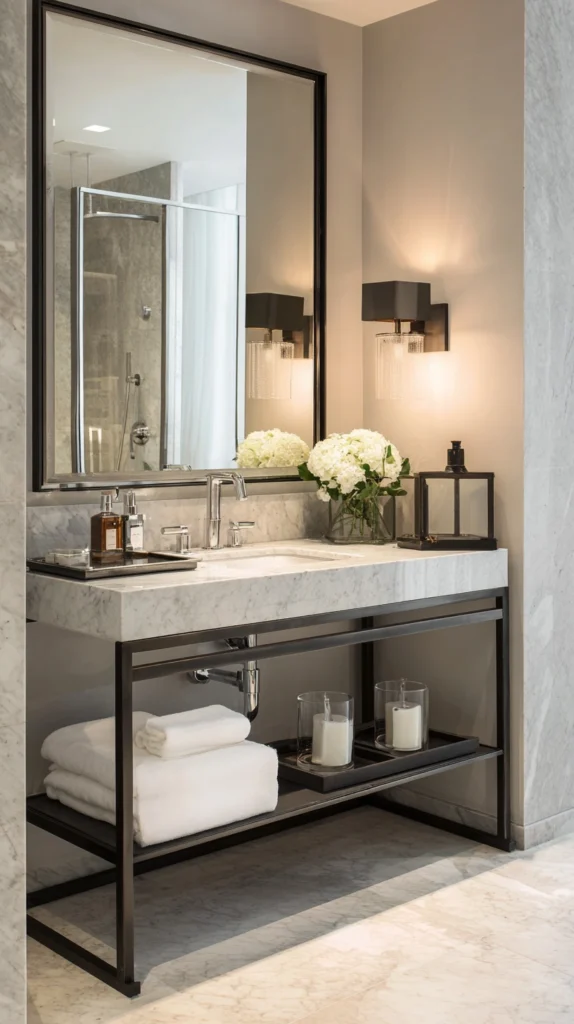
Cool stone paired with a slim black metal base.
What to look for:
- A thin, black powder-coated iron frame with simple straight or slightly tapered legs
- A honed marble top rather than polished, which hides water spots far better
- An integrated or drop-in basin that keeps the marble slab looking continuous
Why this combination reads as boutique instantly:
- The contrast between heavy stone and a slim metal frame feels curated, not accidental
- Honed marble’s matte finish photographs beautifully under warm lighting
- Black iron pairs with almost any faucet finish without clashing
Cost breakdown: Iron-frame marble vanities run $400 to $900 depending on marble grade and sink style.
3. Vintage Dresser Converted to a Vanity
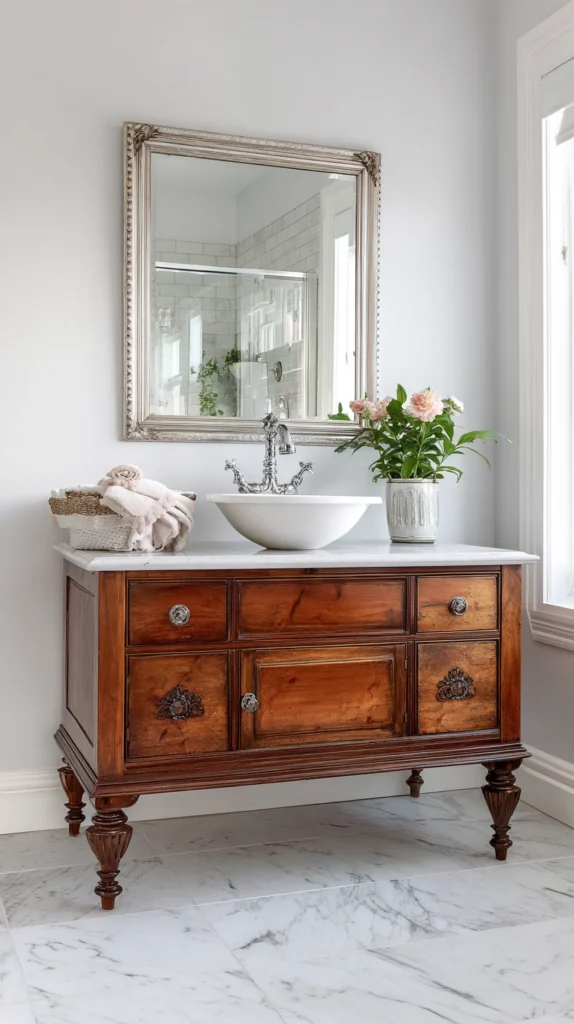
An actual antique dresser, repurposed rather than replicated.
Build it:
- Source a solid wood dresser with legs at a comfortable vanity height, roughly 32 to 36 inches
- Cut the top for a sink basin, keeping at least one working drawer below intact
- Seal the interior of any drawer near plumbing with a waterproof liner to prevent warping
Why a real dresser conversion beats a reproduction:
- Genuine hardware, wood joinery, and proportions are difficult to fake convincingly
- Working drawers give real storage a factory vanity often can’t match in the same footprint
- Each piece is unique, so no two bathrooms built this way look identical
Cost breakdown: Secondhand dressers suited for conversion run $80 to $250, plus $100 to $200 for basin and plumbing modifications.
4. Slim Pedestal-Style Double Vanity
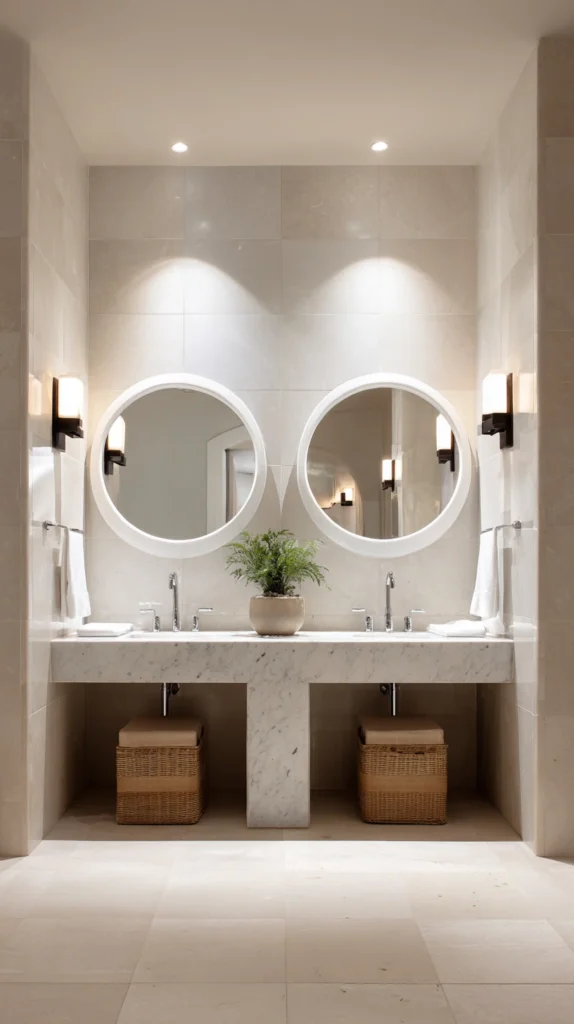
Two separate freestanding basins instead of one long counter.
Setup:
- Two individual pedestal or console vanities placed with a gap of wall space between them
- Matching faucet and hardware finish across both to keep the pairing cohesive
- Individual mirrors and sconces above each, rather than one shared fixture
Why splitting into two pieces feels more boutique than one long vanity:
- It echoes the layout of high-end hotel bathrooms, which rarely use one continuous counter
- The visible wall space between them keeps the room feeling open rather than crowded
- It gives each person a genuinely separate zone in a shared bathroom
Cost breakdown: Budget roughly double a single vanity’s cost, typically $500 to $1,200 total for both pieces and fixtures.
5. Wall-Mounted Floating Vanity With Visible Legs
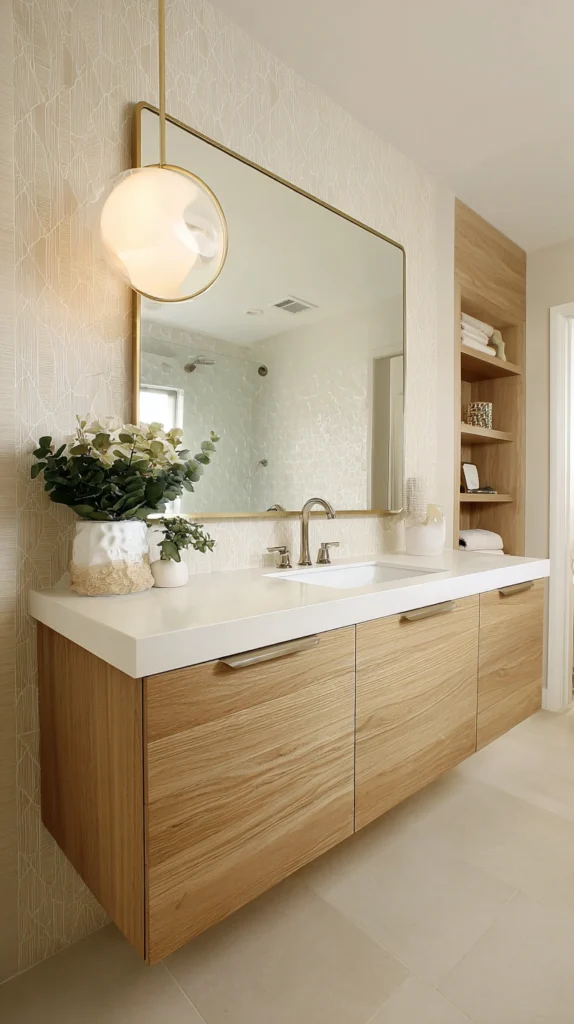
A hybrid that floats off the floor entirely.
Build it:
- A vanity cabinet mounted to the wall with a visible gap beneath, sometimes with slim decorative legs for support
- Concealed mounting brackets rated for the combined weight of the cabinet, water, and daily use
- Under-cabinet lighting installed to highlight the floating gap after dark
Why floating vanities suit small bathrooms especially well:
- The visible floor beneath makes a small room read as significantly larger
- It simplifies cleaning, since there’s no base blocking the mop or vacuum
- The added under-lighting creates a soft, boutique-hotel glow at night
Installation note: Floating vanities require blocking installed inside the wall during framing or renovation, so this is easiest to plan before drywall goes up.
6. Vessel Sink on an Open Iron Table Base
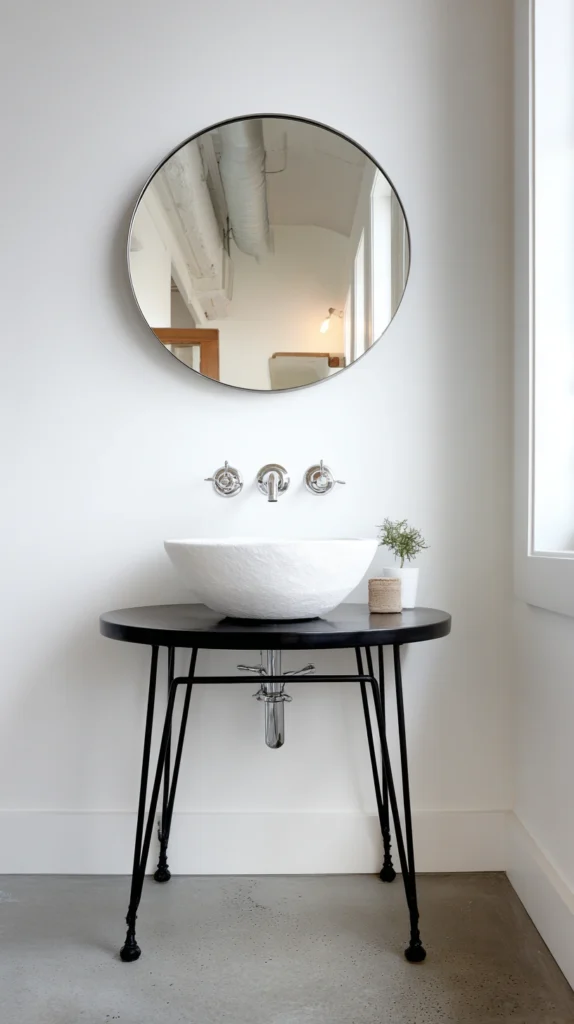
A minimalist industrial take on freestanding style.
What to look for:
- A simple iron or steel table base with an open, unadorned frame
- A single vessel sink sitting entirely on top rather than dropped in
- A wall-mounted faucet instead of a deck-mounted one, since vessel basins sit higher
Why this pairing feels distinctly boutique rather than utilitarian:
- The vessel sink becomes a sculptural object rather than a hidden basin
- Wall-mounted faucets keep the tabletop clean and uncluttered
- The open frame keeps sightlines through the room uninterrupted
Cost breakdown: Iron table bases run $150 to $300, vessel sinks run $80 to $200, wall-mount faucets run $100 to $250.
7. Curved or Kidney-Shaped Vanity Silhouette
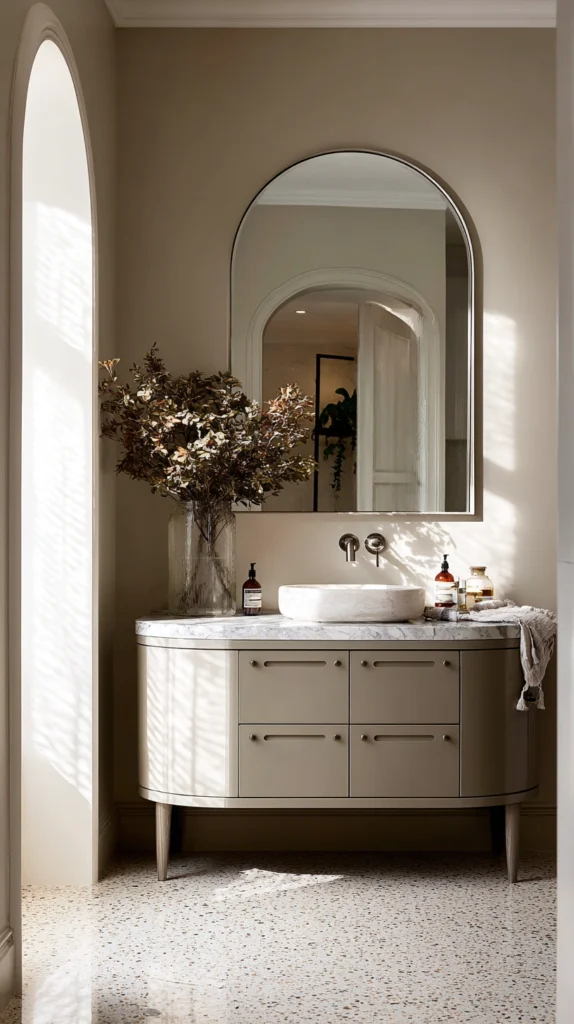
Softening the room’s straight lines with an organic shape.
Build it:
- A vanity top and cabinet front with a gentle curve rather than a hard rectangle
- Rounded cabinet edges to match, avoiding sharp corners entirely
- Curved legs or a plinth base that echoes the same soft silhouette
Why curves read as high-end in this context:
- Straight rectangular vanities are the default everywhere, making curves feel distinctly custom
- Rounded shapes are gentler on a small bathroom’s sightlines and traffic flow
- The look pairs particularly well with arched mirrors and rounded lighting fixtures
Cost breakdown: Curved vanity units typically run 15 to 25 percent more than an equivalent straight model, often landing between $500 and $1,000.
8. Two-Tone Vanity With Contrasting Legs
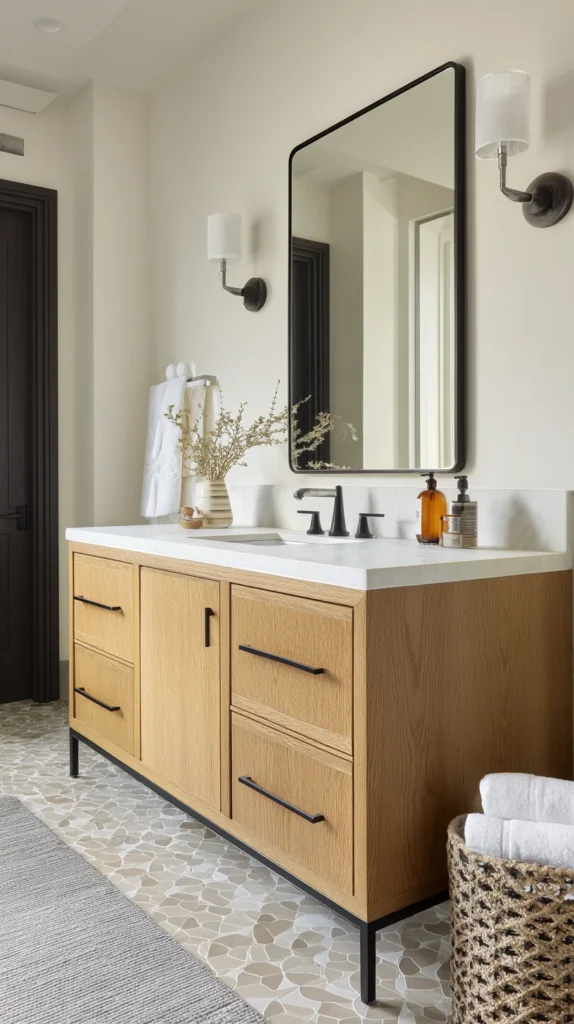
A cabinet body in one finish, legs in another.
What to look for:
- A painted or wood-toned cabinet body paired with black or brass metal legs
- Hardware that matches the leg finish rather than the cabinet color
- A contrasting countertop material to add a third texture into the mix
Why the two-tone approach photographs so well:
- It breaks up what would otherwise be one flat block of color or material
- The metal legs visually lighten the whole piece, even on a larger vanity
- It’s an easy way to make an otherwise standard vanity feel custom-built
Cost breakdown: Two-tone vanities run comparably to standard models, typically $300 to $700, with the design detail built into the manufacturing rather than added separately.
9. Marble Trough Sink on a Wood Console
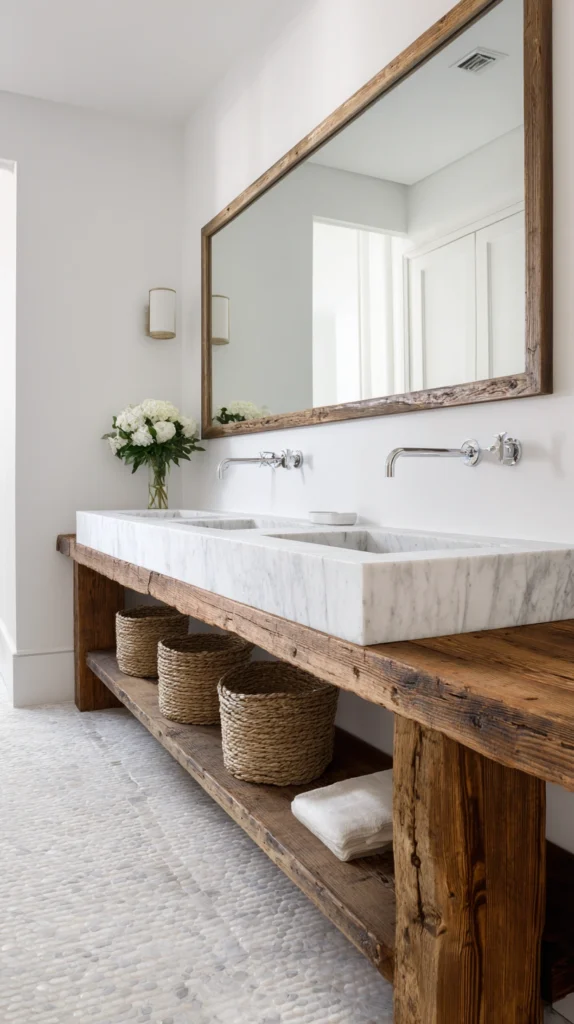
An elongated basin spanning a long, narrow vanity table.
Build it:
- A rectangular marble or stone trough sink set into a long wood console top
- A single wall-mounted faucet positioned centrally, or two faucets for shared use
- Open shelving below rather than closed cabinetry, for a lighter visual footprint
Why a trough sink suits a boutique feel:
- It’s an unusual choice that immediately signals a custom, considered design
- The elongated shape works especially well in narrow powder rooms or long vanity walls
- Open shelving below keeps the piece feeling like furniture rather than plumbing
Cost breakdown: Stone trough sinks run $200 to $500 depending on length and material, plus the console itself at $150 to $300.
10. Vanity With a Woven or Cane Cabinet Front
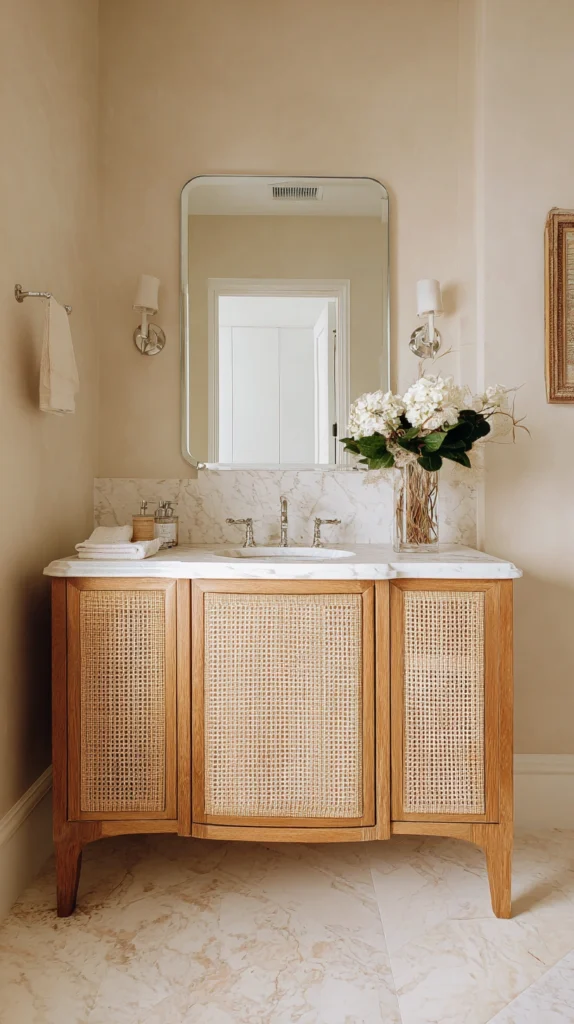
Texture brought in through natural materials.
What to look for:
- Cabinet doors with inset cane or rattan webbing rather than solid wood or painted panels
- A sealed finish on the cane to protect against humidity and daily splashing
- Paired with a stone or wood top to balance the lighter woven texture
Why cane detailing elevates a simple vanity:
- It adds visual texture without adding visual weight or bulk
- It brings a warm, natural material into a room otherwise dominated by hard surfaces
- It photographs beautifully under natural light, which suits boutique-style spaces
Cost breakdown: Cane-front vanities run $400 to $800, or add cane inserts to an existing cabinet for $50 to $150 in materials.
11. Antique Brass Legs With a Poured Concrete Top
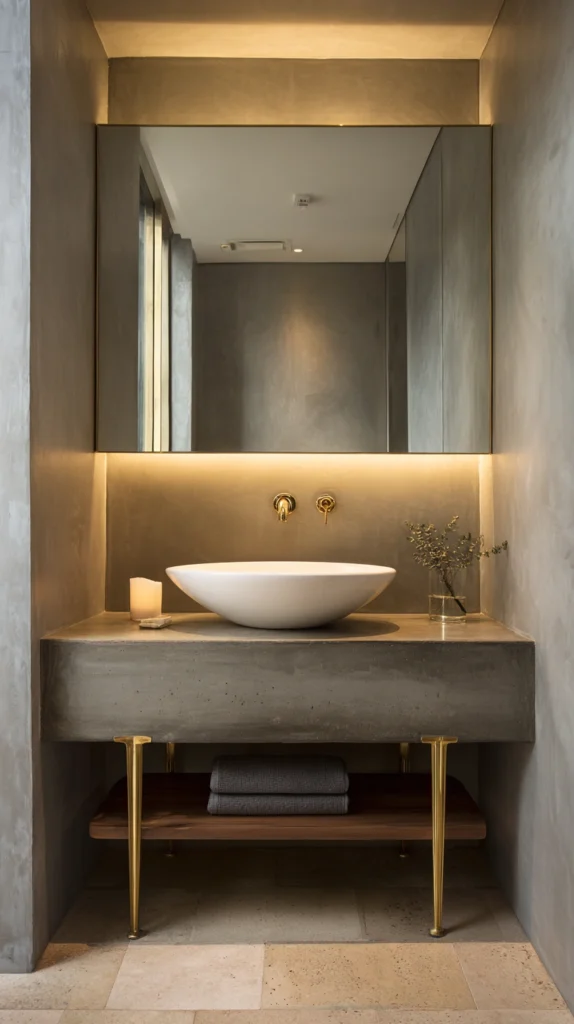
An unexpected pairing of old and new materials.
Build it:
- Slim antique brass or brass-finished metal legs supporting the vanity structure
- A poured concrete countertop, sealed against staining and etching from bath products
- A single vessel or integrated basin depending on the concrete’s poured shape
Why brass and concrete work together despite feeling opposite:
- The warmth of brass softens the industrial coolness of raw concrete
- Concrete can be poured to any custom shape, which suits an irregular or small bathroom footprint
- The combination feels intentional and design-forward rather than mismatched
Cost breakdown: Custom poured concrete tops run $300 to $600 depending on size, plus $150 to $300 for quality brass legs.
12. Freestanding Vanity With an Integrated Towel Bar
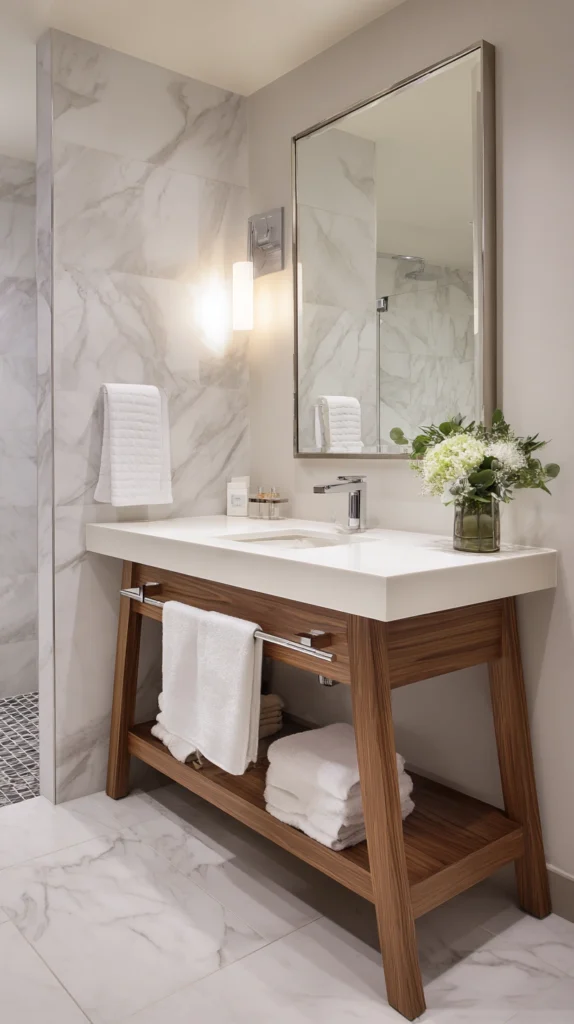
Function built directly into the furniture silhouette.
What to look for:
- A vanity design with a bar or rung built into the leg structure itself
- Positioned at a height that’s actually reachable from the tub or shower, not just decorative
- A finish matched to the rest of the room’s metal hardware
Why an integrated bar beats a separate wall-mounted one:
- It removes the need for an additional wall-mounted fixture and its own installation
- It keeps a small bathroom’s wall space open for art or a larger mirror instead
- It reinforces the furniture-like quality that makes freestanding vanities feel special
Cost breakdown: This feature is typically built into the vanity’s base price rather than an add-on, adding little to no cost over a standard model.
13. Small Boutique Vanity for a Powder Room
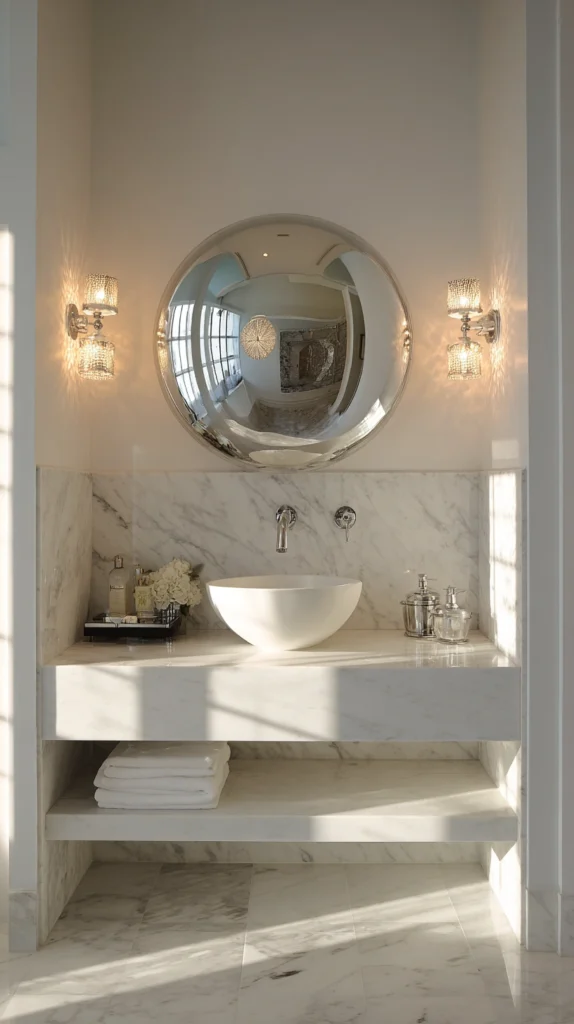
A scaled-down version for the smallest room in the house.
Build it:
- A narrow console vanity, often 24 to 30 inches wide, with open legs beneath
- A small vessel or integrated basin sized proportionally to the narrow top
- A single dramatic light fixture above, since powder rooms can support bolder choices than a full bathroom
Why powder rooms are the best place to experiment:
- Guests see this room more than any other space in the house
- The small footprint means bold materials and finishes cost far less overall
- A striking, unusual vanity here does more design work per square foot than anywhere else in the home
Cost breakdown: Small-format console vanities run $200 to $450 complete with basin and hardware.
14. Vanity Paired With an Open Shelf Instead of Drawers
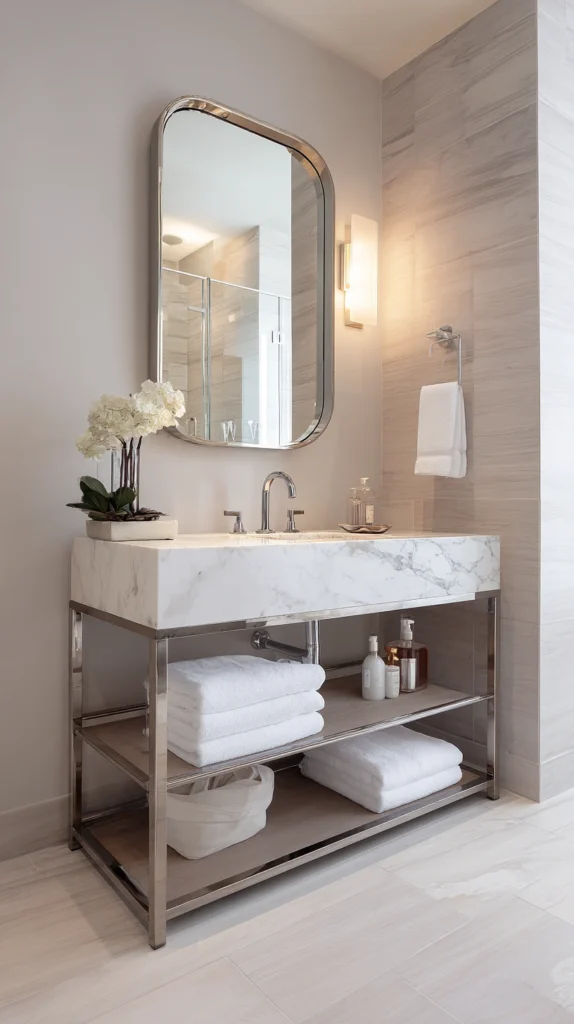
Storage that stays visible rather than hidden.
Setup:
- A vanity base with one or two open shelves instead of enclosed drawers
- Styled with folded towels, a single plant, and one or two glass apothecary jars
- Baskets used sparingly on lower shelves for actual daily clutter, kept out of sight within reach
Why open shelving suits the boutique aesthetic:
- Hotel-style bathrooms rarely hide everything away, favoring a curated, styled display instead
- It keeps the vanity feeling light and furniture-like rather than a storage box
- It forces genuine editing of what stays on display, which naturally declutters the whole room
Cost breakdown: Open-shelf vanity models run comparably to closed-cabinet versions, typically $250 to $600 depending on material and size.
Getting started this weekend
You don’t need a full vanity replacement to start moving toward this feel.
- Start by swapping hardware and faucet finish to something warmer or more architectural
- Move to a secondhand or reclaimed piece before committing to a full custom build
- Save structural changes like floating mounts or plumbing relocation for a dedicated renovation phase
My own bathroom took one secondhand dresser and a weekend of sealing and cutting to get most of the way there.
Budget reality
Boutique style scales from a thrifted weekend project to a full custom build.
- Under $200: Hardware swap, open shelving styling, small powder room vessel setup
- $200-500: Reclaimed dresser conversion, cane-front cabinet, small console vanity
- $500-900: Iron-frame marble vanity, curved silhouette vanity, concrete and brass combination
- $900+: Full double vanity setup, custom floating installation with in-wall blocking
Most of the boutique feeling comes from material choice and proportion, not the largest possible budget.
What actually gives a vanity that boutique feeling
It was never really about finding the most expensive piece available.
It’s the visible floor beneath the legs, the mismatched-on-purpose textures, the sense that someone chose this rather than ordered it from a catalog.
Pick one material or shape that feels unexpected, build the rest of the room to support it, and the boutique feeling follows naturally.