
14 Summer Interior Styling Ideas That Feel Like a Hotel
There is a quality that good hotel rooms possess on arrival that is almost impossible to name precisely and almost impossible to reproduce at home — or so it seems until you start to notice what it actually consists of. It is not the thread count of the sheets or the marble in the bathroom or the view from the window.

It is the absence of accumulation. Every surface has been edited to the point where what remains is only what is needed and what is beautiful, and the two categories have been made to overlap as completely as possible. The room does not contain the evidence of anyone’s difficulty in letting things go.
That edit is available to any home. It costs nothing to remove things and very little to replace what was removed with something better chosen. The summer hotel interior is not a style — it is a standard, and the standard is that every object in the room earns its presence by contributing to the experience of being in it.
Each idea below brings one element of the hotel interior into the home for summer. Each includes what you will need, what it will cost, and a practical tip to make it work as well as the rooms it is inspired by.
1. The White Bed Linen Edit
Budget: $30 – $200
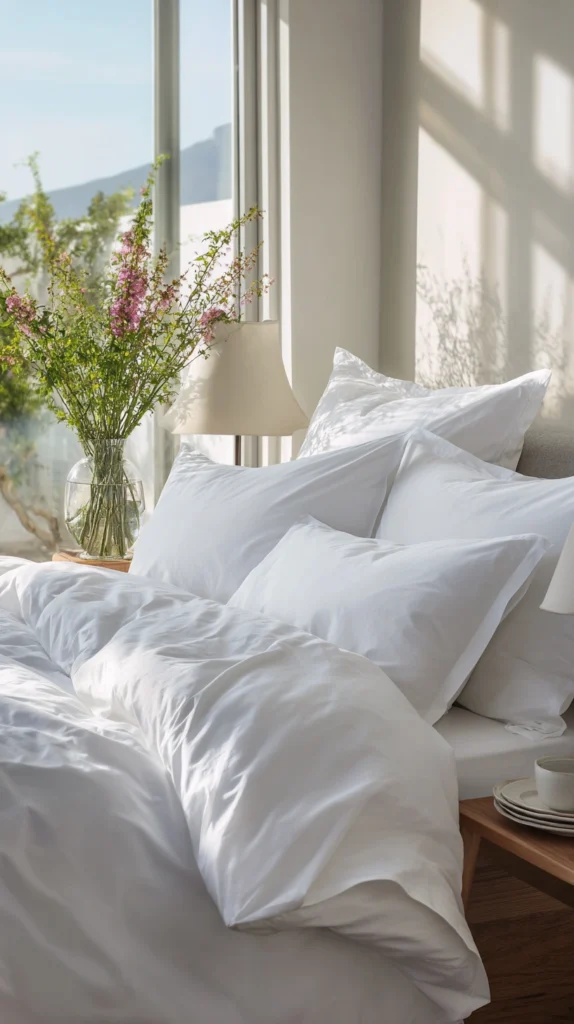
A hotel bed is made with white or near-white linen — always, without exception — because white linen does something that no other bedding colour or pattern does: it makes the bed the brightest surface in the room and the most inviting place to be. The particular quality of a well-made bed in crisp white linen on a summer afternoon — the coolness of it before sleep, the brightness of it in morning sun — is the single most transferable hotel experience available to any bedroom.
A white cotton percale duvet cover in a double size costs $30–$80. A white linen version runs $60–$150. Egyptian cotton pillowcases cost $15–$40 per pair. Wash white linen at 60 degrees to maintain its brightness — white linen washed consistently at 40 degrees develops a grey cast within a season that no amount of whitening product fully reverses. Line dry in direct sun whenever possible — the UV bleaches and freshens white linen in a way that no detergent additive replicates.
Style tip: Make the bed hotel-style rather than home-style — pulled flat, hospital-cornered, pillows stacked at right angles — at least once a week during summer. The hotel bed quality is not about the linen alone; it is about the tension of the surface and the precision of the making. A crumpled duvet in white linen is white linen; a perfectly made bed in white linen is a hotel room.
2. The Bedside Tray Edit
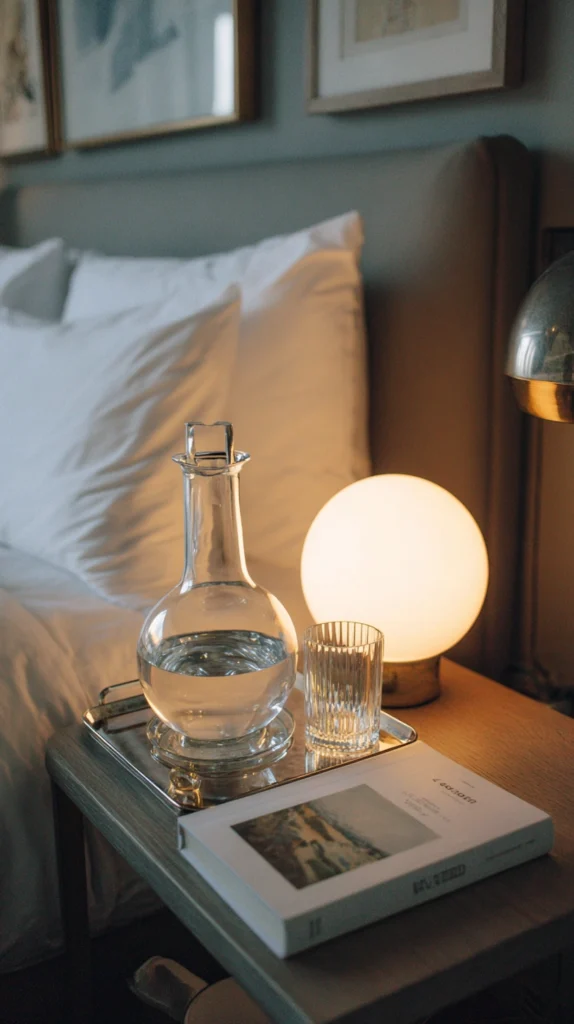
Budget: $15 – $60
A hotel bedside table contains exactly three things: a lamp, a glass of water, and a book or a phone. Everything else — the charging cables, the receipts, the hand cream that has been there since last winter, the coins, the book that was finished three weeks ago — has been removed. Reproducing this edit on a home bedside table costs nothing beyond the discipline of removing things and returning only what is actually used each night.
A ceramic or glass water carafe with a matching glass costs $15–$40. A simple tray to contain the bedside arrangement runs $10–$30. The lamp that is already on the bedside table stays; everything else is assessed against the single criterion of whether it is used every night. If it is not used every night, it does not belong on the bedside table regardless of whether it has lived there for years.
Style tip: Add a single fresh flower in a small bud vase to the bedside tray — one stem of something from the garden or a simple white flower from a florist. A hotel room that contains one fresh flower communicates care in a way that is disproportionate to the cost and the size of the thing — the same principle applies to the bedside table, where one stem in a small vase transforms a tidy surface into a considered one.
3. The Decluttered Surface Rule
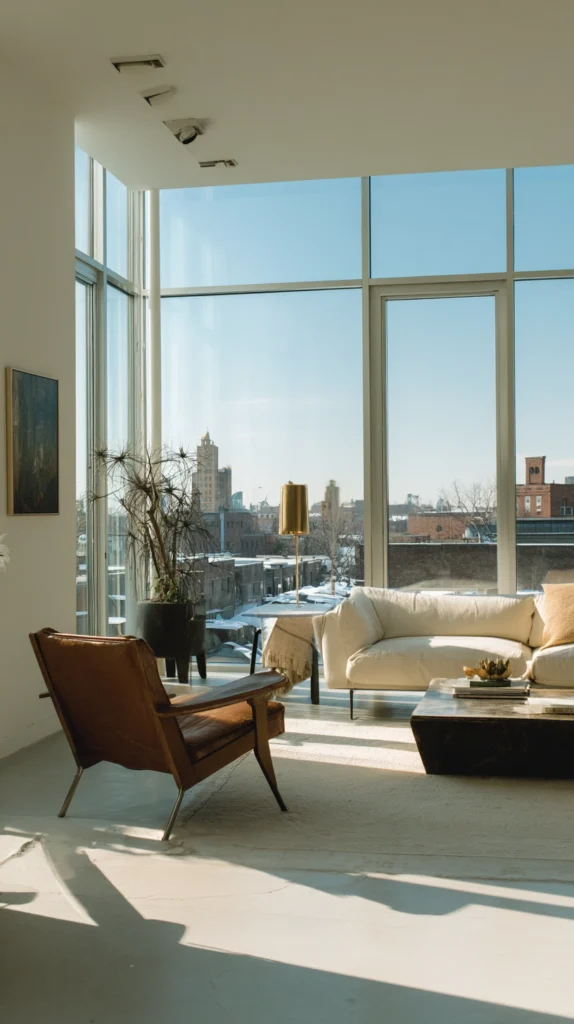
Budget: $0
Walk through every room in the house and remove two-thirds of what is on every surface — the coffee table, the kitchen counter, the bathroom shelf, the hallway console. Place what was removed in a box in a cupboard. Live with the edited surfaces for one week before deciding what to return. The objects that are genuinely missed in that week belong back on the surface; the ones that were not noticed in their absence probably do not.
The surface edit costs nothing and produces more immediate visual improvement than any purchase. A room with clear surfaces reads as larger, calmer, and more considered than the same room with fully occupied surfaces regardless of the quality of the objects on them. The hotel room quality is primarily the surface quality, and the surface quality is primarily the absence of accumulation rather than the presence of beautiful things.
Style tip: Return objects to the surfaces in odd numbers — one, three, or five — rather than the even numbers that accumulate naturally. One candle on a coffee table reads as placed; two reads as paired but unresolved; three reads as arranged. The odd number principle applies to virtually every surface edit and produces a more dynamic and more visually satisfying result than even numbers at equivalent cost and complexity.
4. The Luxury Towel Set
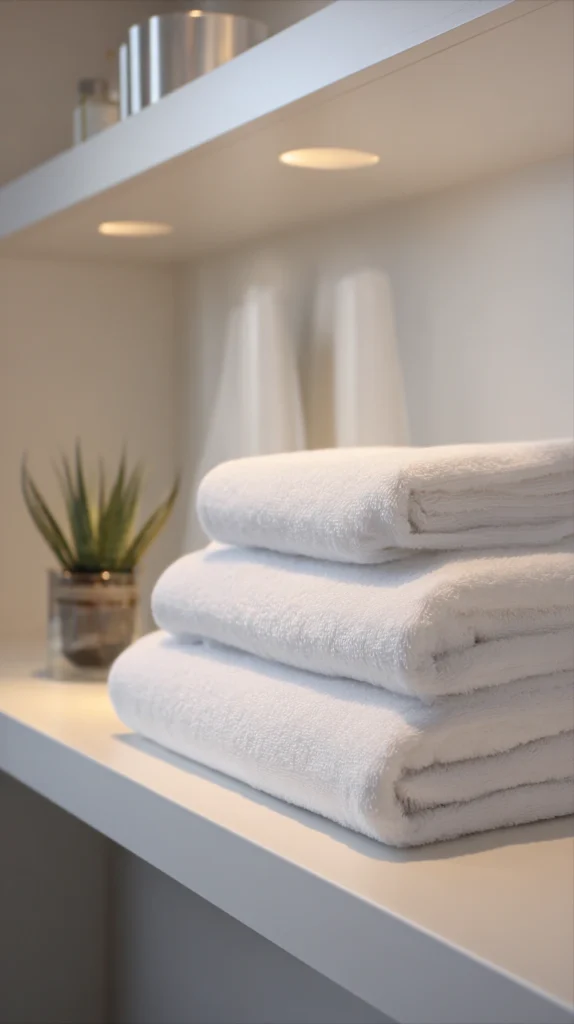
Budget: $30 – $150
Hotel towels are large, white, thick, and folded. Home towels are often none of these things — they are the towels that were purchased at various points over many years, in various colours, at various qualities, and they sit in a stack that communicates the history of different decisions rather than a single considered one. A set of matching white towels, purchased simultaneously, changes the bathroom in the same way that white bed linen changes the bedroom — by making the most-used textile in the room the most resolved.
A pair of large white Egyptian cotton bath towels costs $30–$80. A matching hand towel pair runs $15–$40. A bath sheet — larger than a standard bath towel and the hotel standard — costs $25–$60 each. Fold towels in thirds lengthways and then in thirds widthways before stacking or hanging — the hotel fold produces a rectangular profile with no visible loose edges, which reads as finished in a way that a casual fold does not.
Style tip: Replace bath towels when they lose their pile rather than when they fall apart. A towel that has lost its pile still absorbs moisture adequately — it continues to function as a towel — but it no longer provides the sensory quality that makes a towel feel luxurious, and the hotel bathroom quality depends on towels that are genuinely plush rather than towels that are functionally adequate. Replace them before the pile goes rather than after.
5. The Bathroom Counter Edit
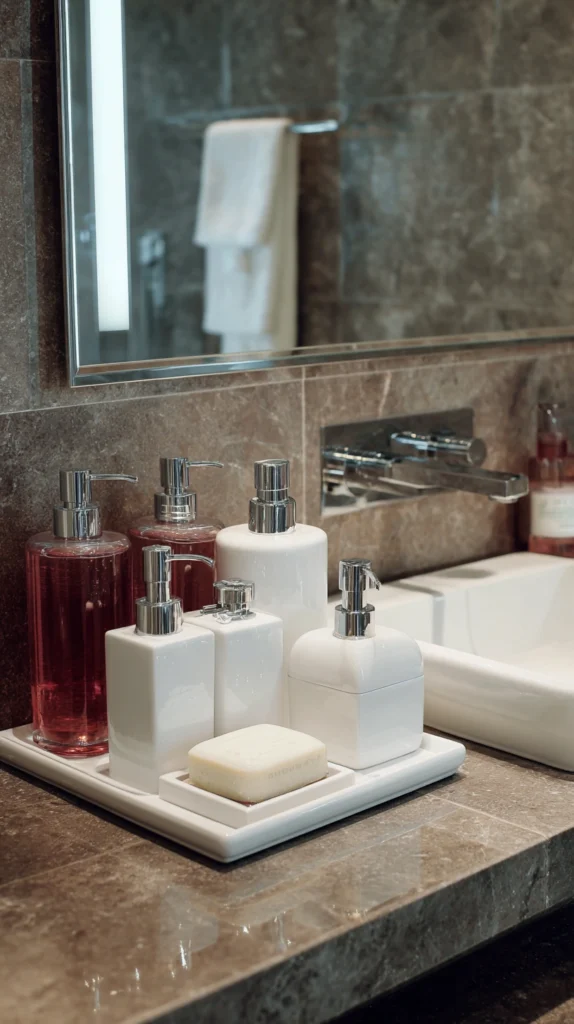
Budget: $0 – $40
A hotel bathroom counter contains nothing that is not in daily use, and everything in daily use is decanted into matching dispensers rather than left in its original packaging. The shampoo bottle with the peeling label, the three different conditioners at various stages of depletion, the collection of soap slivers beside the sink — all of these are cleared from the surface, and what remains is presented in a format that communicates care rather than accumulation.
Matching soap, shampoo, and conditioner dispensers in ceramic or matte black plastic cost $15–$40 for a set. A small tray to contain them runs $10–$25. Decant the same products that were already being used — the change is entirely in the presentation rather than in the product itself, and the improvement in the bathroom’s appearance is almost entirely about the removal of the original packaging rather than the quality of what replaces it.
Style tip: Keep a small basket under the sink or in the bathroom cabinet for products in daily use that do not belong on the counter — the floss, the spare razor, the moisturiser used every other day rather than every day. The basket provides access without surface presence, and the discipline of everything-not-daily-goes-in-the-basket is the maintenance system that keeps the edited counter edited rather than allowing it to accumulate back to its previous state within a week.
6. The Scent Edit
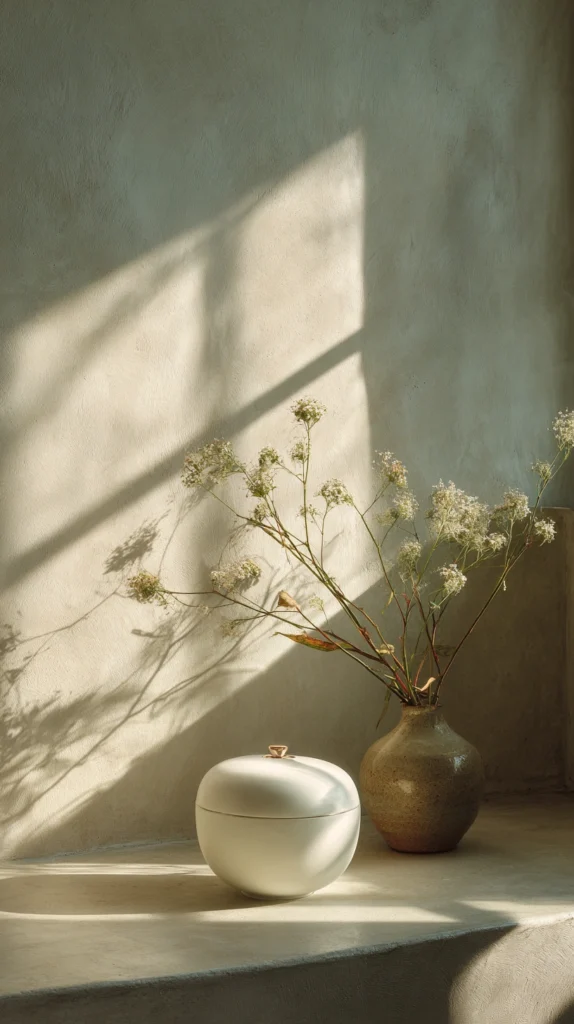
Budget: $15 – $60
Hotel rooms have a scent — specific to the brand, consistent across every room, present in the lobby and the corridor and the bedroom — that communicates arrival at a place where care has been taken. The home equivalent is not a branded fragrance but a chosen one: a single scent, applied consistently in a single room through candles, a diffuser, or linen spray, that makes entering that room feel like arriving somewhere rather than returning somewhere.
A quality room diffuser in a light, clean summer fragrance — linen, citrus, white flowers — costs $15–$50. A scented candle in the same fragrance family runs $10–$35. A linen spray for the bedding costs $8–$20. Use the same fragrance consistently throughout the summer rather than varying it — the consistency is what creates the association between the scent and the room, which is the mechanism by which scent communicates place rather than simply smell.
Style tip: Apply linen spray to freshly made bedding before the sheets fully dry from washing rather than after they have been on the bed for several days. Linen spray applied to slightly damp fabric penetrates the fibre rather than sitting on the surface, which means the fragrance is released gradually over days rather than evaporating within hours of application. The timing of the application is the detail that determines whether linen spray is effective or merely temporary.
7. The Reading Light Upgrade
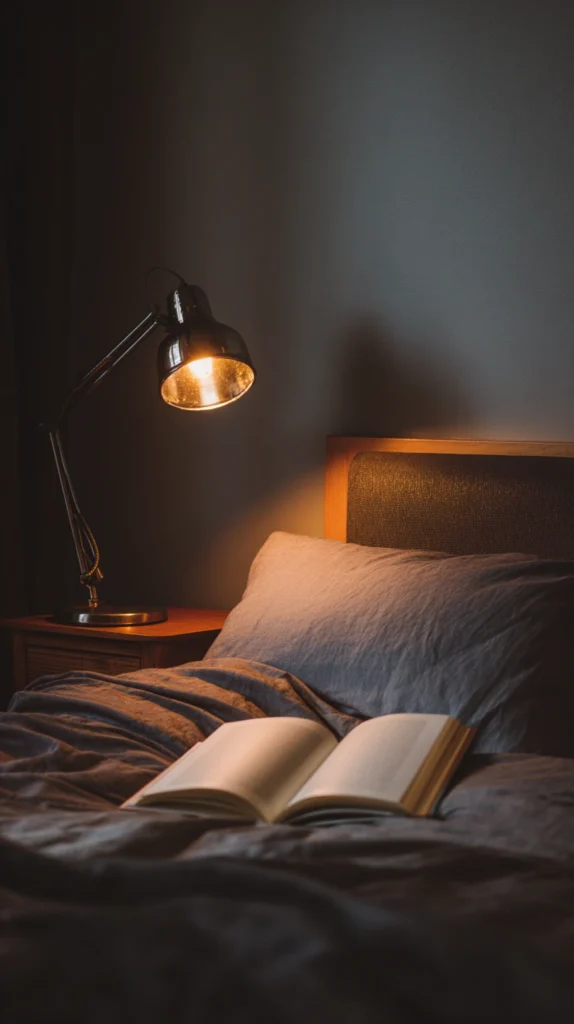
Budget: $20 – $100
A hotel bedside reading light illuminates the book or the phone without illuminating the room — it is directional, warm, and adjustable, so the person reading does not disturb the person sleeping and the room is not flooded with overhead brightness at midnight. Most home bedrooms have a single overhead light and a bedside lamp that illuminates a wide area rather than a reading zone, and the reading light upgrade — a clip-on book light or a directional bedside lamp with a narrow beam — is the functional improvement that most directly changes the quality of the bedtime experience.
A clip-on LED reading light costs $10–$25. A directional bedside lamp with an adjustable arm runs $30–$100. A rechargeable reading light that requires no cord and can be positioned anywhere on the bedside table costs $15–$40. Choose a reading light with a warm white rather than cool white LED — a cool white reading light is bright enough to read by and too activating to sleep after, which is the opposite of what a bedtime reading light should achieve.
Style tip: Position the reading light at the same height as the page being read rather than above it. A light source above the reading surface creates glare on the page and casts the reader’s own shadow onto the text; one positioned level with the page illuminates it from the side without reflection. The horizontal position of the reading light is the adjustment that makes the most difference to reading comfort and is almost never made without deliberate thought.
8. The Curated Minibar Tray
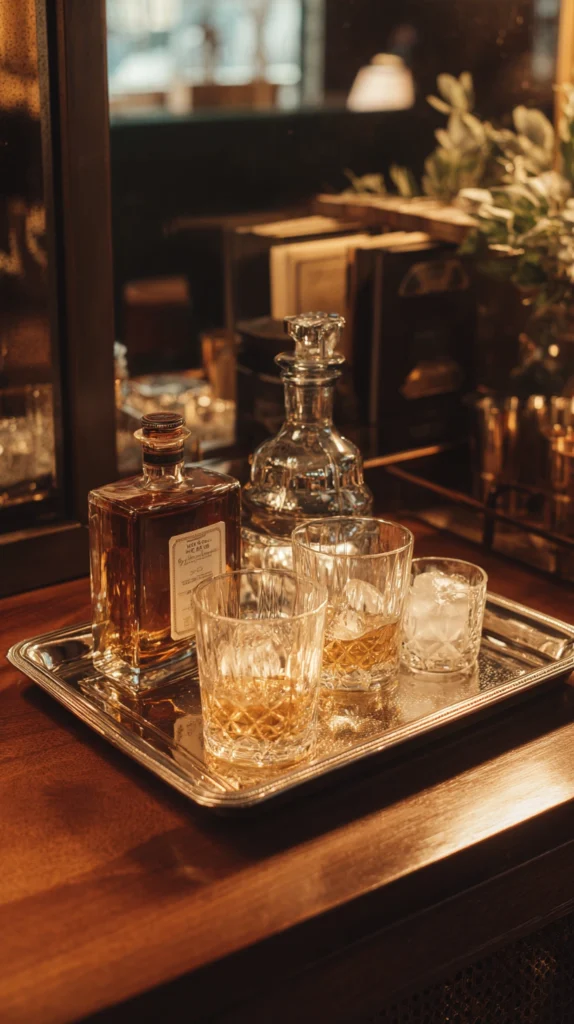
Budget: $20 – $80
A hotel room minibar is not primarily about the drinks — it is about the tray, the arrangement, the sense that everything you might want in the next twelve hours has been anticipated and placed within reach. The home equivalent is a curated bedside or living room tray — a wooden or marble tray with a small carafe of water, two glasses, a bowl of something to eat, and a candle — that communicates the same anticipation of need without requiring a refrigerator or a dedicated surface.
A wooden or marble tray costs $15–$40. A glass carafe with matching glasses runs $20–$50. A small ceramic bowl for almonds, chocolate, or seasonal fruit costs $8–$20. A single candle on the tray costs $5–$15. The tray communicates its quality through its completeness — everything a person in the room might want is on it — and the completeness requires thought rather than expenditure.
Style tip: Stock the minibar tray before guests arrive and replenish it before they return to the room after dinner rather than leaving it depleted from the previous evening. A tray that is always full communicates that it is being maintained; one that is depleted and not refreshed communicates that the initial effort was not sustained. The maintenance of the tray is the detail that distinguishes a gesture of hospitality from a sustained one.
9. The Wardrobe Edit
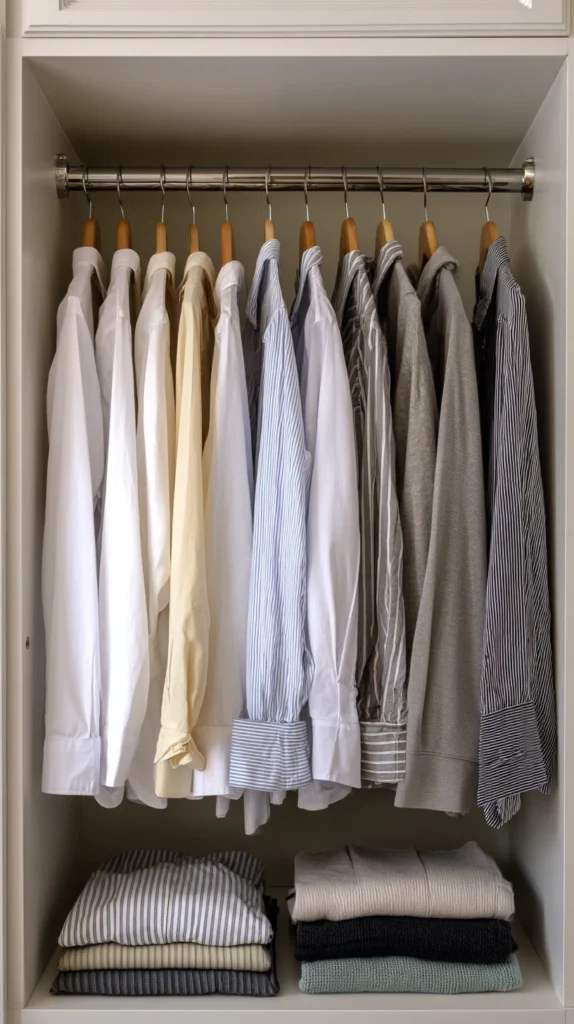
Budget: $10 – $50
A hotel wardrobe contains matching hangers — always the same type, always the same direction, always spaced equally — and nothing that does not belong there. The matching hanger principle, applied to a home wardrobe, produces an immediate visual improvement at a cost of less than $15 and no other change. The visual consistency of matching hangers makes any quantity of clothing look organised; the inconsistency of mixed hangers makes even a small, well-chosen wardrobe look like a jumble.
Matching slim velvet hangers in a single colour cost $10–$20 for a pack of thirty. Wooden hangers for heavier items run $5–$15 for a pack of ten. Replace all existing hangers in a single session rather than gradually — a wardrobe that is half-converted to matching hangers looks like a wardrobe in transition rather than an edited one, and the transition state is not an improvement on what it was before.
Style tip: Turn all hangers in the same direction before replacing them — hooks facing the same way, clothes facing the same way — and space them evenly rather than grouped by type or colour. The even spacing and consistent direction produce the hotel wardrobe quality that matching hangers alone do not fully achieve — it is the combination of matching, directed, and evenly spaced that makes the wardrobe read as considered rather than simply tidy.
10. The Layered Bed Styling
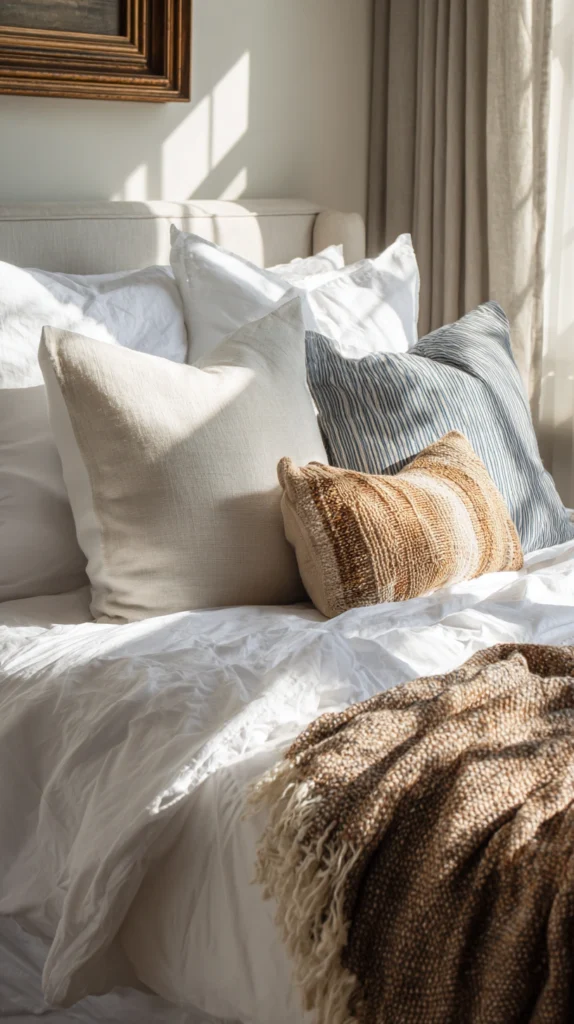
Budget: $20 – $100
A hotel bed is made with layers — a flat sheet, a duvet or blanket, and a folded runner or throw across the foot of the bed — and the layering is what gives it both its visual completeness and its practical flexibility. The folded throw at the foot of the bed is not merely decorative: it is the additional layer available without going to a cupboard, and its permanent presence is an anticipation of need that communicates the same care as the minibar tray.
A folded cotton or linen throw for the foot of the bed costs $20–$60. A bed runner in a complementary tone runs $15–$40. European pillows behind the sleeping pillows add a third layer at the headboard end for $20–$50 per pair of covers. The layering principle requires consistency of tone rather than matching of colour — a white duvet with a cream throw and natural linen pillowcases reads as layered; the same combination with a printed throw in an unrelated pattern reads as covered.
Style tip: Press the top of the duvet and the throw before making the bed for an occasion rather than relying on the weight of the duvet to flatten itself overnight. A well-pressed duvet surface in white cotton has a crispness that reads as hotel quality; the same duvet unpressed reads as comfortable but not considered. The pressing takes ten minutes and produces a surface that lasts through the day without repetition.
11. The Ambient Lighting Plan
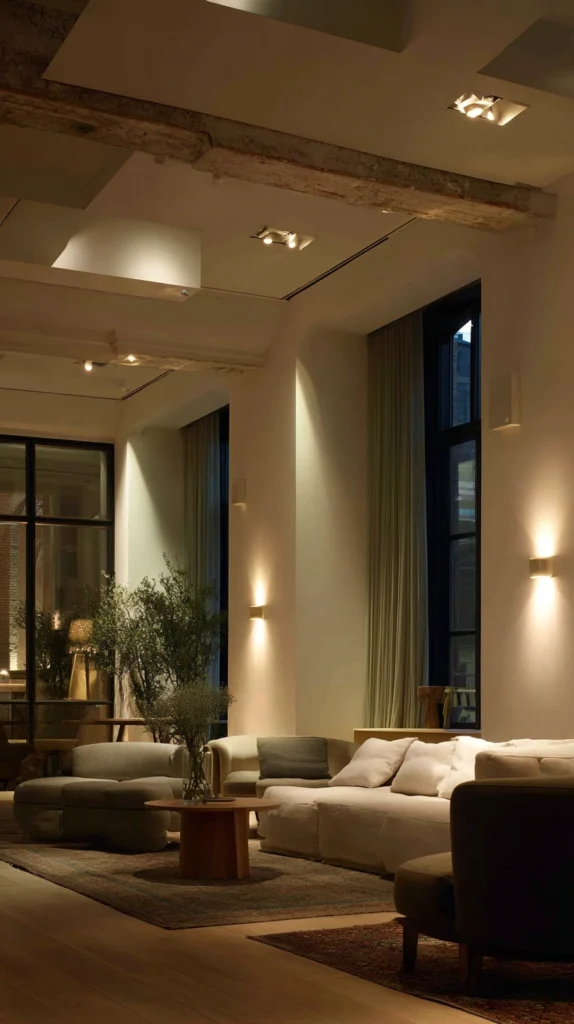
Budget: $20 – $100
A hotel room at ten o’clock in the evening is lit differently from a hotel room at seven in the morning — the same room, managed through a lighting system that dims and shifts according to the time rather than providing a single brightness setting for all purposes. The home equivalent is not a smart lighting system but a layered lighting arrangement that provides different combinations of light sources for different times of day — a plan rather than a single switch.
A plug-in lamp dimmer costs $8–$15. A smart bulb that adjusts colour temperature and brightness by time of day costs $10–$25. A secondary lamp in addition to the primary bedside lamp provides the ambient layer that a single source cannot. The principle is to have at least three light sources in the bedroom at three different heights — ceiling, bedside, and floor or low surface — so that the combination used changes with the hour rather than the brightness changing while the source remains the same.
Style tip: Program smart bulbs or set dimmer switches to a specific brightness for the hours before sleep — 2700K at 30 percent brightness from 9pm onward — and test whether sleeping becomes easier before deciding the investment was worthwhile. The correlation between warm, dim light in the hours before sleep and sleep quality is well-established, and the specific setting of 2700K at low brightness is the detail that makes the difference between a dimmed room and a sleep-supporting one.
12. The Single Artwork Focus
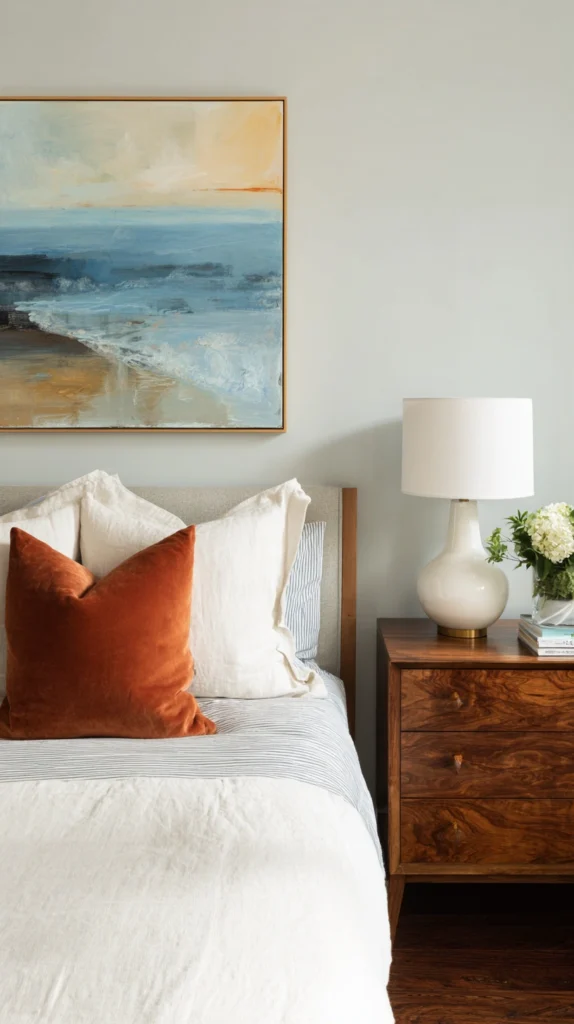
Budget: $15 – $150
A hotel room contains one piece of artwork above the bed, one above the desk, and nothing anywhere else. The single-artwork principle — one piece per wall, positioned correctly, large enough for the wall it occupies — produces a room that feels curated rather than decorated, and the difference between curation and decoration is that curation requires fewer objects at greater cost per object while producing a considerably better result.
A single print at A2 size, framed in a simple frame, costs $15–$50 to produce and $20–$60 to frame. A large-format photographic print runs $30–$100 framed. Position artwork at eye level — the centre of the artwork at approximately 145–150 centimetres from the floor — rather than at the height that seemed right when hanging it. Most home artwork is hung too high, which pulls the eye upward and creates a visual disconnect between the furniture below and the artwork above.
Style tip: Choose artwork for the bedroom that is calm rather than stimulating — a single botanical photograph, an abstract wash of colour, a landscape horizon — rather than the most interesting or complex image available. The bedroom artwork is experienced in the first moments of waking and the last moments before sleep, and artwork that demands attention at those times is artwork that is working against the purpose of the room it is in.
13. The Folded Towel Display
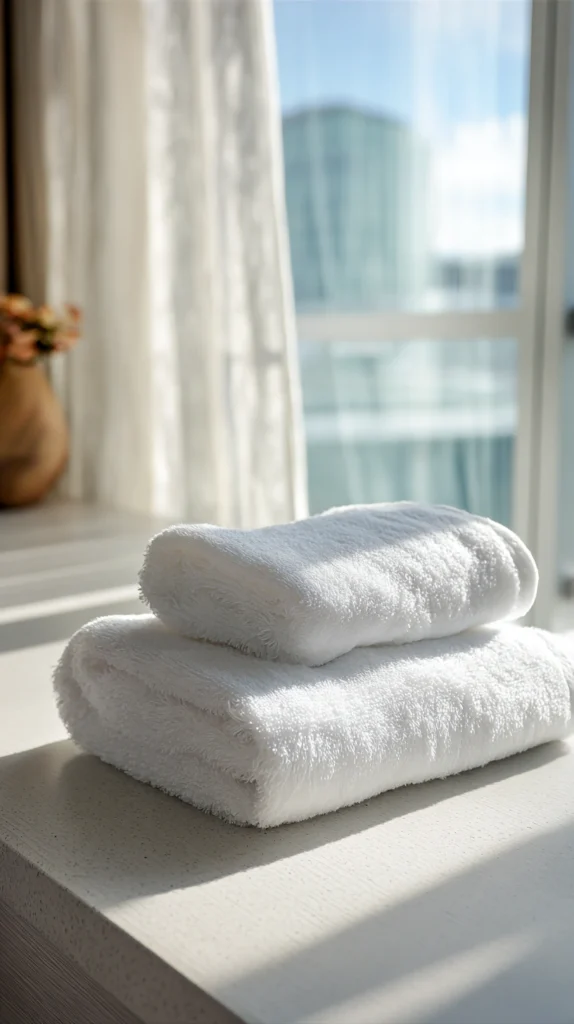
Budget: $0 – $20
The hotel bathroom towel is folded, not hung. Specifically, it is folded in the hotel fold — in thirds lengthways, in thirds widthways, stacked on the towel rail or on the edge of the bath — and the fold is the detail that makes a standard white towel read as a hotel towel rather than a home towel. The fold is free; the towel is the same one that was already there.
A towel rail of sufficient length for three towels folded in the hotel style costs $15–$40 if not already installed. The fold itself requires no equipment and approximately thirty seconds per towel. Fold all bathroom towels simultaneously rather than folding each one as it comes out of the wash — the consistency of a full set folded at the same time and to the same dimensions reads as managed; individual towels folded at different times to slightly different sizes reads as folded.
Style tip: Replace the folded towels on the rail every two to three days during summer rather than waiting until they are used and damp. A freshly folded towel on the rail that has been there for a week has lost the crispness that the fold was designed to communicate — the fold and the freshness are both part of the hotel quality, and one without the other produces only half the effect.
14. The Breakfast Tray Ritual
Budget: $15 – $60
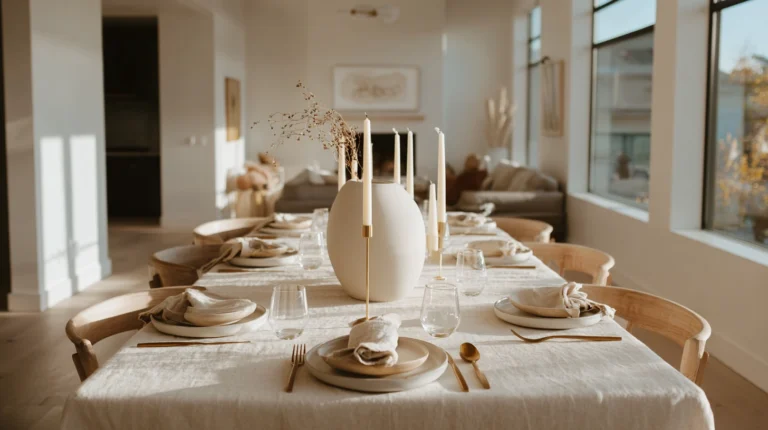
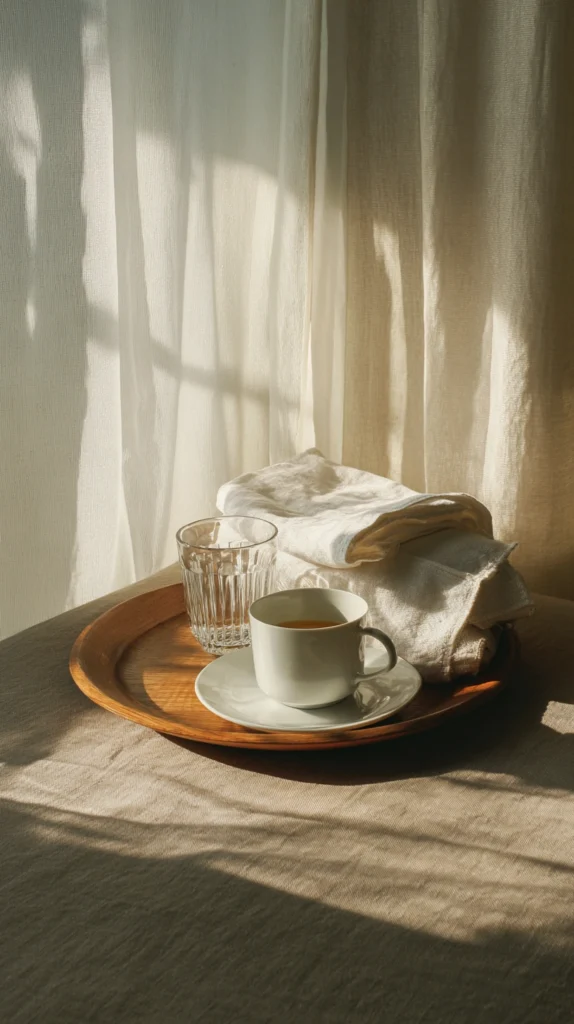
The hotel breakfast tray — a tray with a pot of coffee or tea, a glass of juice, a small plate, a folded napkin, and something to eat — is not primarily about the food. It is about the ritual of everything being in one place, arranged with care, delivered or prepared with the intention of making the first moment of the day pleasant rather than efficient. The home version of the hotel breakfast tray, prepared the evening before and assembled in the morning before the rest of the household wakes, is the ritual that changes the quality of the morning more than any other single element of the hotel experience.
A wooden or lacquered tray costs $15–$35. A small ceramic pot for coffee or tea runs $10–$25. A folded linen napkin adds the specific formality that a paper napkin lacks at no additional cost if linen napkins are already owned. The tray is the object; the ritual is the practice; and the practice — preparing the tray, carrying it to the right room, eating without a screen — is what produces the hotel morning quality rather than the tray itself.
Style tip: Prepare the tray the evening before for everything that does not require refrigeration — the tray in position, the napkin folded, the cup and plate set — so the morning preparation is as simple as boiling the kettle and adding the cold items. The amount of effort that a ritual requires determines how consistently it is performed, and a breakfast tray ritual that requires ten minutes of assembly in the morning will be skipped on the mornings when ten minutes is not available. The preparation that happens the night before is the system that makes the morning ritual sustainable.
The best summer hotel interior at home is not the most expensively furnished or the most completely redesigned — it is the one that applies the hotel’s primary quality — the edit, the maintenance, the anticipation of need — to whatever the home already contains. The sheets that are already there, washed hotter and made more carefully. The towels that are already in the bathroom, folded differently and replaced more often. The surfaces that are already in the room, cleared to the point where what remains is worth seeing.
The hotel quality is a standard of care applied to ordinary objects rather than a collection of extraordinary ones, and that standard is available to any home that is willing to remove more than it adds and to maintain what remains with the specific consistency that makes the difference between a room that is tidy and a room that feels like somewhere worth arriving at.