
10 Summer Home Fragrance Station Ideas
There is a room in almost every home that smells of nothing in particular. Not unpleasant — simply neutral, the olfactory equivalent of a blank wall. And just as a blank wall represents a missed opportunity to communicate something about the space and the person who inhabits it, a room that smells of nothing is a room that has not yet been considered from the perspective of the sense that operates most directly on memory and emotion.
Scent arrives before any other impression. It is processed before the eye has finished reading the room, and it stays long after the visual details have faded.

A home fragrance station — a dedicated surface, corner, or arrangement designed around scent as the primary intention — is the most considered and the most underused domestic ritual available. In summer especially, when the season itself has a scent — cut grass, warm stone, salt air, ripe fruit, the particular dryness of a hot afternoon — a fragrance station that responds to that world rather than contradicting it becomes one of the most pleasurable small investments a home can contain.
The ten ideas below cover every approach to a summer fragrance station, from the simplest single-diffuser setup to a fully layered multi-scent ritual corner. Each one covers what you will need, what it will cost, and a practical tip to make it genuinely effective in a real room rather than a scented candle advertisement.
1. The Essential Oil Diffuser Station
Budget: $40 – $200
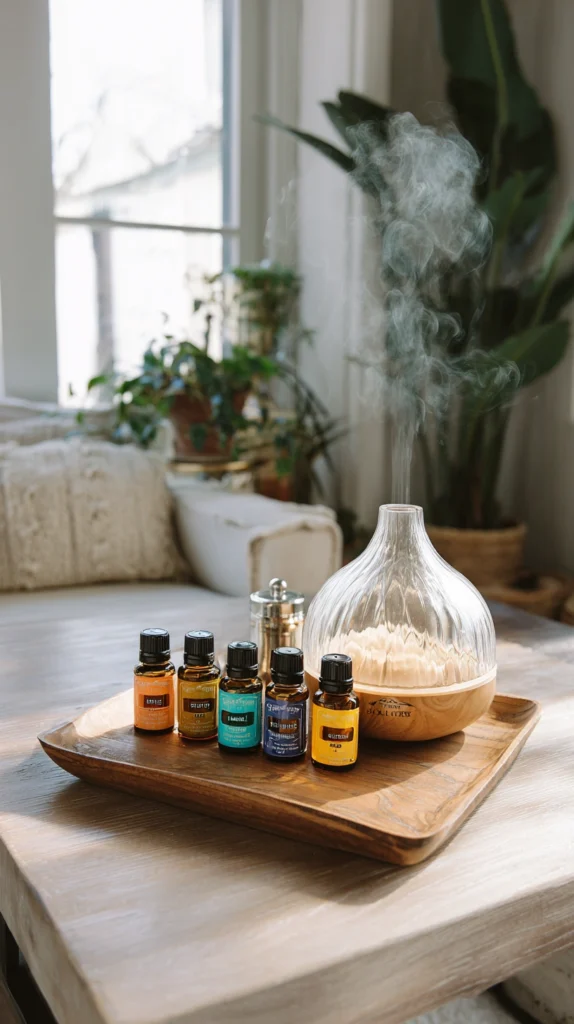
An ultrasonic essential oil diffuser — the kind that disperses a fine cold mist carrying the essential oil molecules into the surrounding air — is the most consistent and the most controllable home fragrance tool available. Unlike a candle, which produces a fixed scent at a fixed intensity, a diffuser allows precise control over both the oil used and the concentration of the fragrance in the room. In summer, the oils that work best are those that lean toward the bright, the clean, and the botanical — bergamot, lemon, lime, eucalyptus, peppermint, and geranium — rather than the warm, heavy, and resinous oils that suit the winter register.
A quality ultrasonic diffuser with a run time of four to eight hours and an automatic shut-off costs $30 – $80. A starter set of summer essential oils — bergamot, sweet orange, eucalyptus, and peppermint — runs $20 – $50 for a quality set of 10ml bottles. A small wooden tray to hold the diffuser and three or four oil bottles adds $10 – $30 and turns a functional object into a styled surface. The total station cost sits at $60 – $160 and the ongoing cost per session — two to three drops of oil per diffuser fill — is negligible.
Fragrance tip: Run the diffuser for 30 to 60 minutes rather than continuously throughout the day. Continuous diffusion causes olfactory adaptation — the phenomenon by which the nose stops registering a scent that has been present at a constant level for more than approximately 20 minutes. A diffuser run for 30 minutes, then off for an hour, then on again produces a scent that the nose registers freshly each time it is reactivated, which is significantly more effective than a diffuser running all day that the occupant has stopped smelling by mid-morning.
2. The Candle and Match Station
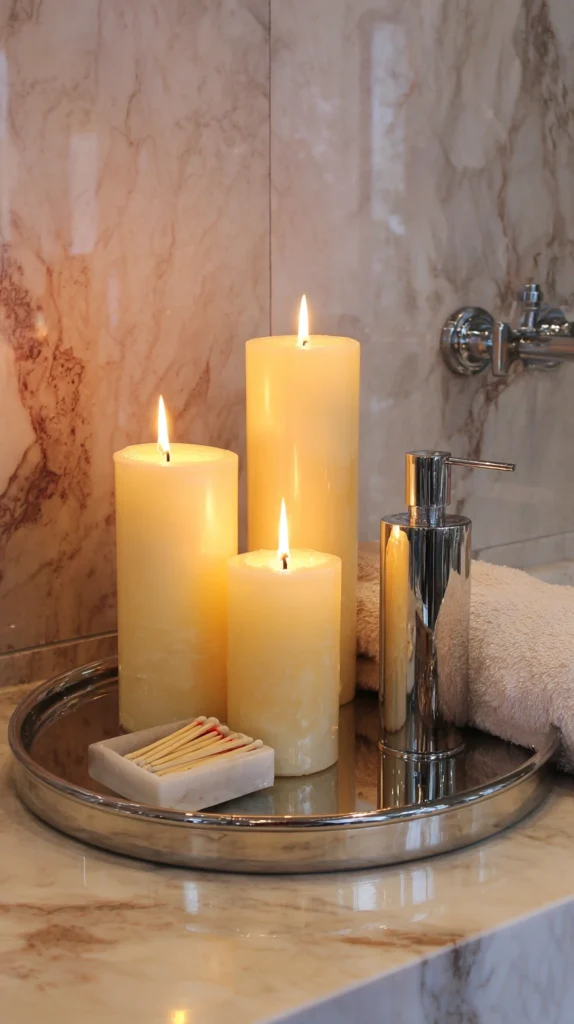
Budget: $30 – $200
A curated candle station — two or three candles in complementary summer scents, a quality match striker or a long-reach lighter, a small ceramic dish for spent matches, and a simple tray to hold everything together — is the home fragrance format that requires the least equipment and produces the most immediate atmospheric result. A lit candle changes a room in two ways simultaneously: the scent it releases and the quality of light it produces, and the combination of those two effects is one of the most reliable domestic pleasures available at any price point.
Summer candle scents that work consistently — citrus and white tea, sea salt and driftwood, green fig, cucumber and mint, lemon verbena — perform best in rooms with some airflow rather than sealed, still rooms where the scent can become overwhelming. Quality candles in summer-appropriate fragrances cost $15 – $50 each depending on size and brand. A ceramic match striker with a box of long matches runs $10 – $30. A small marble, slate, or ceramic tray to anchor the station costs $10 – $30. Total station investment sits at $35 – $110 for a complete setup that performs immediately from the first use.
Fragrance tip: Trim the candle wick to 5 millimetres before every use. An untrimmed wick produces a larger flame than the candle is designed for, which burns the wax too quickly, produces more soot, and generates a scent throw that is less clean and less true to the intended fragrance than a properly trimmed wick. A wick trimmer costs $8 – $15 and is the single most effective tool for improving the performance of any candle regardless of its quality or price.
3. The Reed Diffuser Vignette
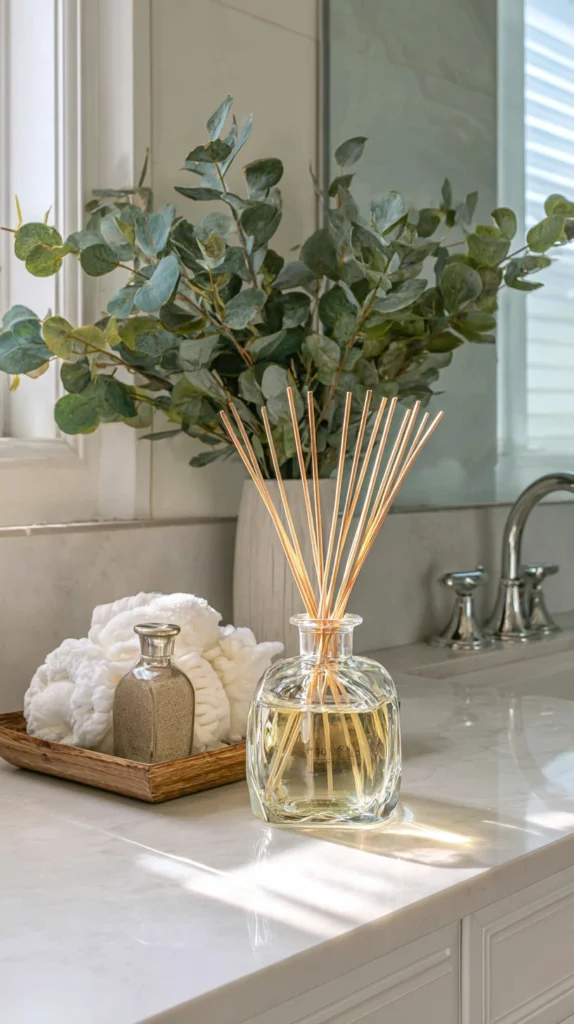
Budget: $25 – $120
A reed diffuser — a glass or ceramic vessel filled with fragrance oil into which natural rattan reeds are placed, drawing the oil upward and dispersing it passively into the surrounding air — is the most effortless fragrance format available because it requires no lighting, no switching on, and no tending. It simply works, continuously and quietly, for as long as the oil lasts. The styling potential of a reed diffuser is also considerable — the vessel, the reeds, and the objects arranged around them can be as minimal or as considered as the surface demands.
A quality reed diffuser in a summer fragrance — sea breeze, citrus blossom, green tea, or white linen — costs $20 – $60. Replacement reeds — which should be swapped every two to four weeks as the existing reeds become saturated and less effective — cost $5 – $15 for a pack. A small wooden or marble surface to display the diffuser alongside a complementary candle and a single botanical object costs $15 – $40 for the tray or surface. The total station investment sits at $40 – $115 for a setup that requires almost no ongoing maintenance.
Fragrance tip: Flip the reeds upside down once a week — immersing the dry end in the oil and exposing the saturated end to the air — rather than replacing them. Flipping refreshes the scent throw immediately and extends the useful life of each set of reeds by several weeks. Flip in the morning rather than the evening so the fresh burst of fragrance disperses through the day rather than overnight when the room is unoccupied.
4. The Botanical Pot Pourri Display
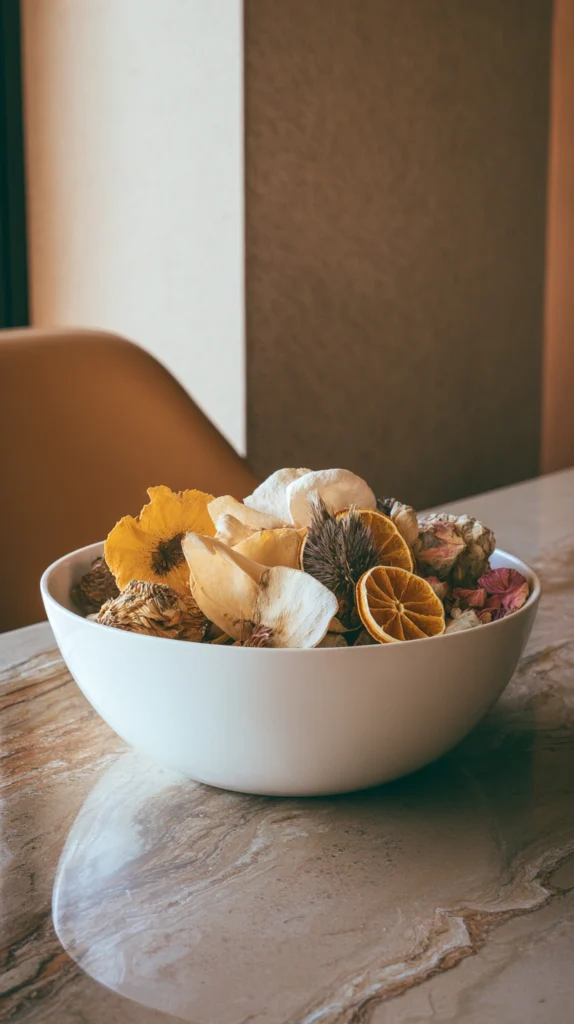
Budget: $20 – $100
Pot pourri — dried botanicals, spices, and essential oils combined in a vessel that releases fragrance passively through evaporation — is one of the oldest home fragrance formats and one of the most underrated in contemporary interiors. A well-made summer pot pourri in a beautiful bowl is simultaneously a fragrance source and a decorative object, and the ingredients used — dried citrus peel, lavender, rose petals, dried mint, and a few drops of essential oil — are among the most beautiful dried botanicals available.
A large shallow ceramic or glass bowl to display the pot pourri costs $15 – $40. Dried botanicals — lavender, rose petals, chamomile, dried citrus peel, and dried mint — cost $10 – $30 for a generous quantity from a herbalist or online botanical supplier. A few drops of a complementary essential oil added to the dry botanical mix refreshes the scent and extends the fragrance life of the display significantly. The total cost for a complete pot pourri display sits at $25 – $70 and the result is a surface object that performs both visually and olfactorily simultaneously.
Fragrance tip: Add three to five drops of essential oil to the pot pourri and stir it through the botanicals once a week rather than replacing the entire display when the scent fades. The dried botanicals retain their visual quality long after their natural oils have evaporated — a weekly refresh with a complementary essential oil maintains both the scent and the display without requiring replacement of the botanical material for several months.
5. The Fresh Herb Fragrance Station
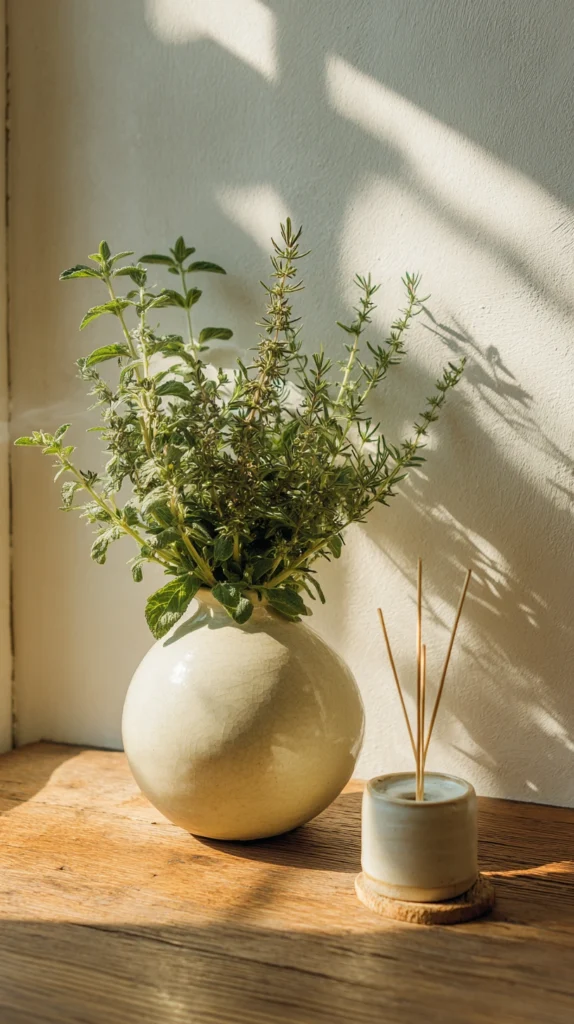
Budget: $15 – $80
A cluster of living herb plants positioned as a fragrance station — mint, basil, rosemary, lemon thyme, and lavender in a grouped arrangement on a windowsill or a small table — releases fragrance into the room passively from the warmth of the sun on their leaves, and releases it more intensely when the leaves are brushed or pinched in passing. It is the most natural home fragrance approach available, the most seasonally appropriate to summer, and the one with the additional benefit of providing fresh herbs for cooking at any moment.
Herb plants in 9-centimetre pots cost $2 – $6 each from a garden centre or supermarket. A set of five herbs — mint, basil, rosemary, lemon thyme, and lavender — sits at $10 – $30 in total. Terracotta pots to repot them in — $2 – $5 each — improve both drainage and the aesthetic of the arrangement. A small wooden tray or crate to group the pots costs $8 – $20 and turns five individual plants into a single, considered fragrance station.
Fragrance tip: Position the herb station on a south or west-facing windowsill where the plants receive direct sun for at least four hours per day. Herbs grown in insufficient light produce fewer aromatic oils and therefore release less scent — the same plant that perfumes a sunny windowsill is almost scentless in a shaded corner. The sun is the mechanism by which the herbs do their fragrance work, and the windowsill position is the non-negotiable condition of the station’s effectiveness.
6. The Linen Spray and Pillow Mist Corner
Budget: $20 – $100
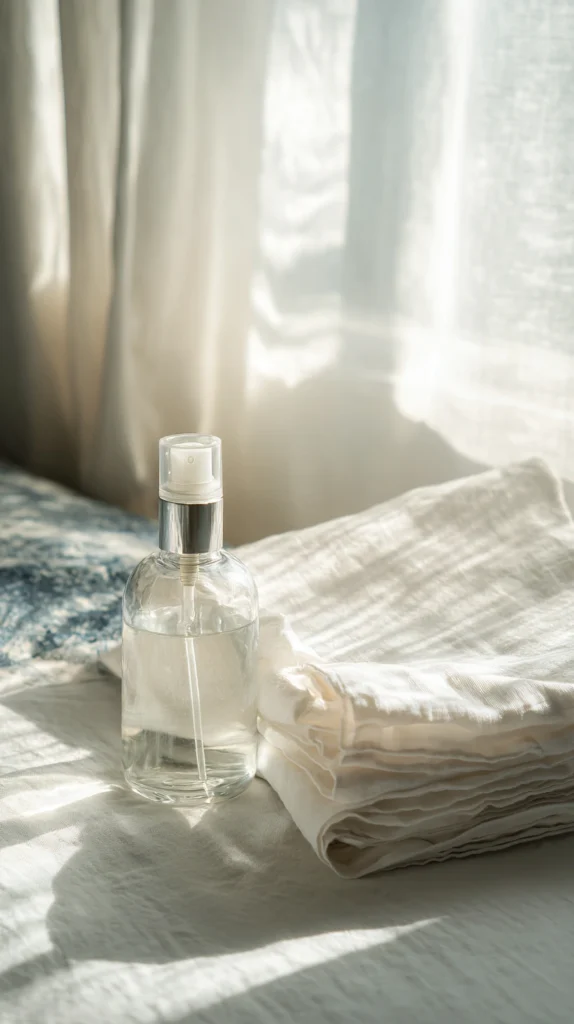
A small arrangement of linen sprays and pillow mists — displayed on a bedside table, a bathroom shelf, or a bedroom console — turns the spraying of fragrance onto textiles into a ritual rather than a practical act. A beautiful glass spritz bottle, a small tray, a single dried botanical beside the bottles, and a handwritten label identifying the scent — these small details transform a functional product into a considered object and make the act of using it feel intentional rather than incidental.
Commercial linen sprays in summer fragrances — lavender and eucalyptus, white tea and linen, cucumber and aloe — cost $10 – $30 each. A DIY linen spray — distilled water, a small amount of isopropyl alcohol as a carrier, and 20 to 30 drops of essential oil in a glass spritz bottle — costs $5 – $15 to make in a quantity that lasts months. A small amber or clear glass spritz bottle costs $5 – $15. A marble or ceramic tray to display the bottles runs $10 – $25. Total station cost sits at $25 – $70 for a complete bedside or bathroom fragrance moment.
Fragrance tip: Spray linen spray onto bedding and upholstery from a distance of at least 30 centimetres and allow the mist to fall naturally rather than directing it at a specific point. A spray applied too close deposits concentrated fragrance oil in a single area, which can leave a faint mark on light-coloured fabric and produces an uneven fragrance distribution across the textile. A mist allowed to fall from height distributes evenly and leaves no concentrated residue.
7. The Wax Melt and Warmer Station
Budget: $20 – $150
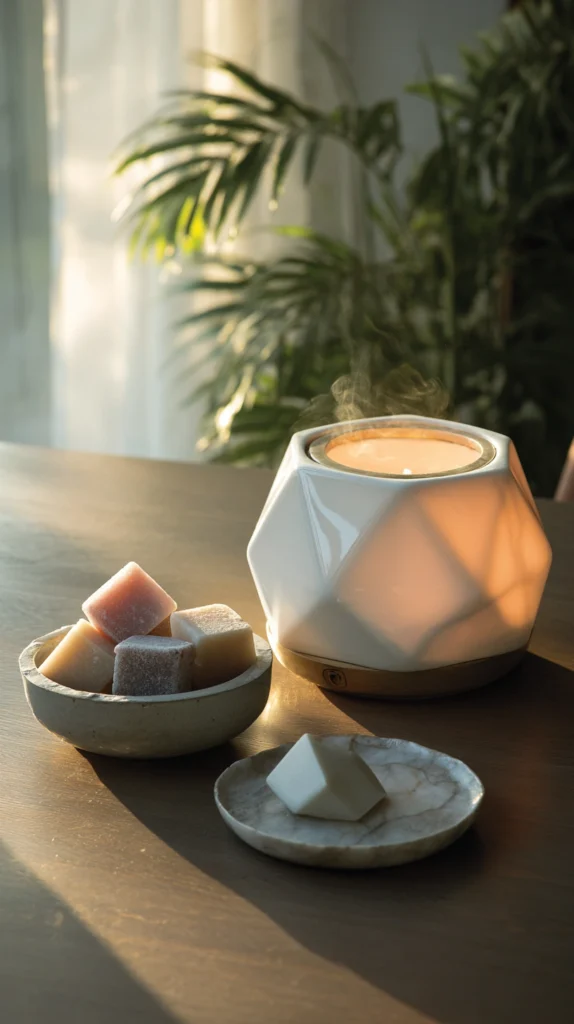
A wax melt warmer — an electric or tea-light-powered dish that melts small scented wax pieces and disperses their fragrance into the room — is the candle’s flameless alternative and one that offers a fragrance intensity considerably higher than a standard candle at a significantly lower ongoing cost. Wax melts are available in every summer fragrance imaginable and can be combined in the warmer dish to create bespoke blends — a practice that dedicated wax melt enthusiasts pursue with the same seriousness that a bartender brings to cocktail construction.
An electric wax melt warmer costs $15 – $50 depending on design — ceramic and marble-effect versions are considerably more attractive than the standard plastic equivalents and cost only marginally more. A tea-light warmer — a ceramic dish above a tea-light candle holder — runs $8 – $25. Wax melts in summer fragrances cost $3 – $8 per pack of six to eight cubes — each cube providing two to four hours of fragrance. A small ceramic dish to hold spare wax melt cubes beside the warmer adds a styling element for $5 – $15.
Fragrance tip: Combine wax melt cubes from two complementary summer fragrances in the warmer dish rather than using a single scent. A cube of sea salt and a cube of lemon verbena combined produce a fragrance that neither provides alone — the brightness of the citrus over the cool clean base of the sea note. Experimentation with combinations costs nothing beyond the melts already purchased and frequently produces a personal signature scent that is more interesting than any single commercial fragrance.
8. The Incense and Holder Ritual Station
Budget: $15 – $80
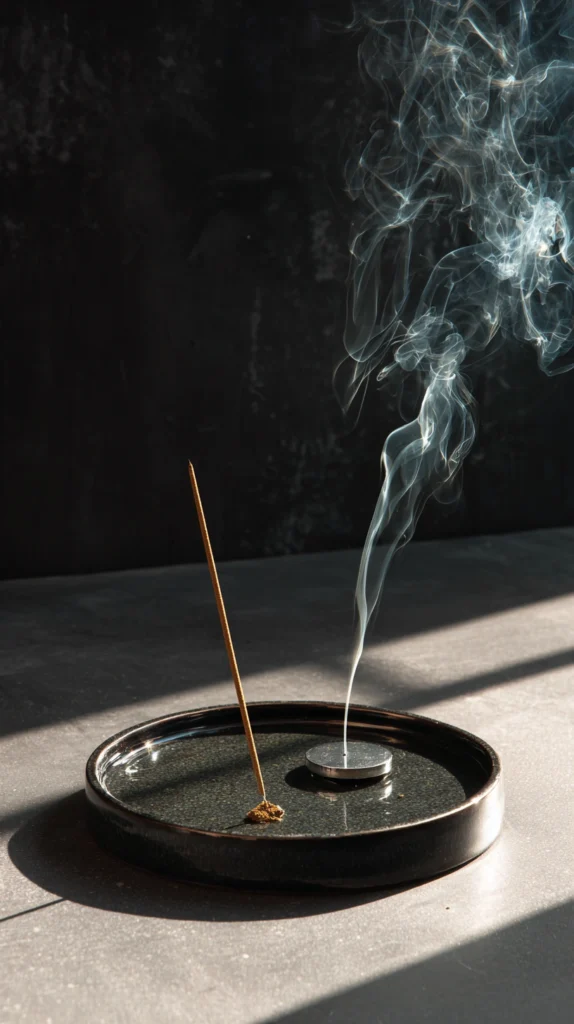
Incense — burnt in stick, cone, or resin form — is the most ancient home fragrance format and one that, in the right fragrance and the right setting, produces a quality of scent that no other format replicates. The smoke carries the fragrance into parts of the room that a diffuser or candle cannot reach, and the visual element of the slowly rising smoke is itself a calming and beautiful thing to observe. In summer, the incense fragrances that work best are those drawn from the botanical and the herbaceous rather than the heavy resinous — sandalwood, green tea, sage, hinoki wood, and jasmine all suit the season.
Incense sticks in quality summer fragrances cost $5 – $20 for a box of 20 to 40 sticks. A ceramic or brass incense holder — the aesthetic centrepiece of the station — runs $10 – $40 depending on material and design. A small ceramic dish to catch the ash from burning sticks costs $5 – $15. A matchbox or long-reach lighter to light the incense adds $3 – $8. Total station cost sits at $23 – $83 for a complete incense ritual setup that is both beautiful in use and beautiful between uses.
Fragrance tip: Burn incense with a window cracked open rather than in a fully sealed room. Incense smoke in an unventilated space accumulates more quickly than the fragrance disperses, producing a heavy, smoky quality that obscures the intended scent rather than expressing it. A small amount of fresh air from a cracked window allows the fragrance to circulate and the smoke to disperse, producing a clean, botanical scent rather than a smoky one.
9. The Citrus and Fruit Bowl Fragrance Moment
Budget: $10 – $50
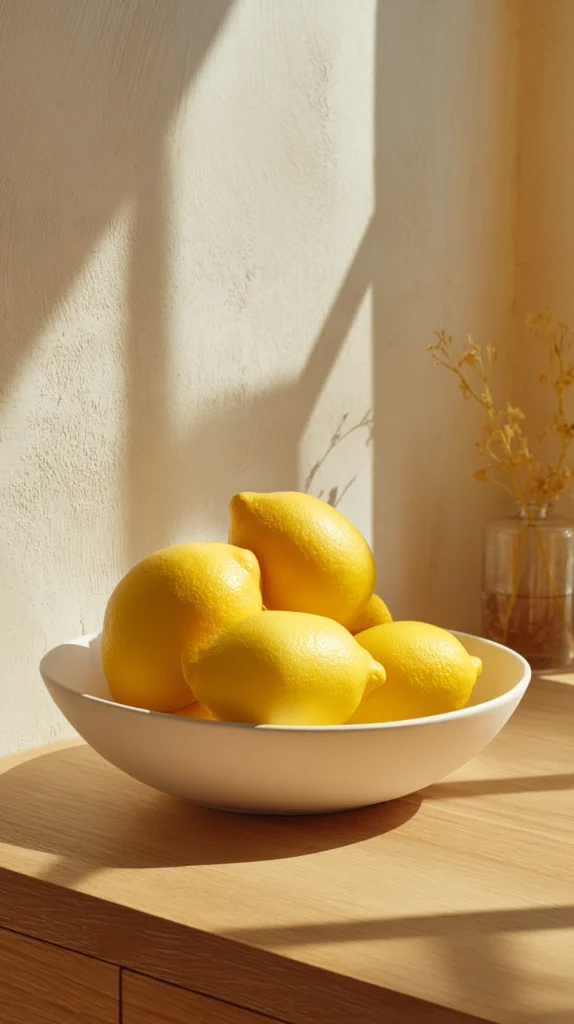
A bowl of fresh citrus fruit — lemons, limes, oranges, and grapefruit — arranged on a kitchen or dining surface is one of the oldest and most effective passive fragrance strategies available, and one of the few that doubles as both a decorative object and a food source. The natural essential oils in the skin of citrus fruit evaporate slowly into the surrounding air, producing a bright, clean, fresh scent that is among the most appropriate summer fragrances imaginable. Scored or lightly pressed citrus — a thumbnail run along the skin of a lemon — releases the oils more intensely and produces a momentary burst of fragrance that the intact fruit cannot match.
A generous bowl of mixed citrus — six to eight pieces of varied sizes and types — costs $5 – $15 from a supermarket or market. A beautiful bowl to display them in — ceramic, glass, rattan, or wooden — costs $10 – $35. The total investment is $15 – $50 for a fragrance station that is replenished naturally as the fruit is used, requires no electricity or flame, and communicates summer more immediately and more naturally than almost any commercial fragrance product.
Fragrance tip: Add a few sprigs of fresh rosemary, mint, or lemon thyme tucked beside the citrus in the bowl. The combination of citrus skin oils and fresh herb fragrance produces a more complex and more interesting scent than citrus alone, and the visual addition of green herb sprigs against the bright citrus colours improves the display significantly at a cost of almost nothing.
10. The Layered Fragrance Ritual Corner
Budget: $80 – $400
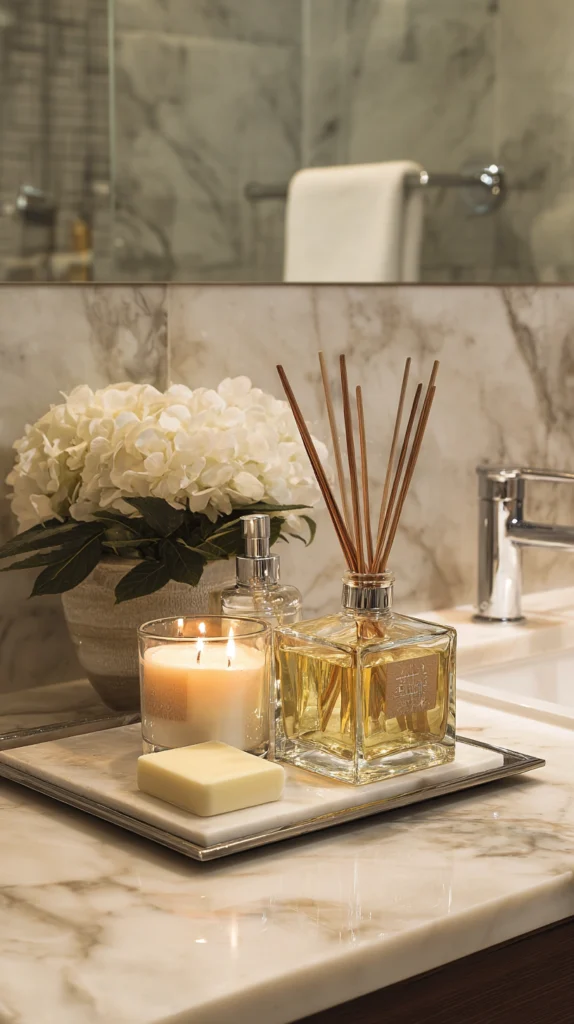
The most complete summer fragrance station is the one that layers multiple formats — a diffuser for continuous background fragrance, a candle for evening ambience, a linen spray for textile freshness, and a botanical element for visual and olfactory coherence — into a single, considered corner of the home. The layered approach produces a fragrance environment rather than a fragrance source: a room that smells of summer from every direction, at every intensity, and through every mechanism the season makes available.
A quality diffuser costs $30 – $80. A summer scented candle adds $15 – $50. A linen spray — commercial or DIY — runs $10 – $30. A small pot pourri display or fresh botanical adds $15 – $40. A wooden or marble tray large enough to hold all elements together costs $20 – $50. The total investment for a fully layered fragrance corner sits at $90 – $250 — and the ongoing cost is limited to the consumables: the oils, the candles, and the occasional botanical refresh.
Fragrance tip: Choose all elements of a layered fragrance station from within the same fragrance family rather than mixing across different scent worlds. A diffuser running bergamot and lemon, a candle in sea salt and white tea, and a pot pourri of rose and vanilla all in the same room simultaneously produce a competing fragrance environment rather than a coherent one. A bergamot diffuser, a lemon verbena candle, and a citrus pot pourri — all within the bright citrus family — layer without competing and produce a room that smells of a single, multi-dimensional summer note rather than three separate sources fighting for dominance.
Whatever combination of these ten ideas finds its way into the home this summer, the underlying principle is the same across all of them: scent is not a finishing touch — it is a foundational decision about the character of a room that operates on every person who enters it before any visual impression has been registered.
Choose the summer fragrance that resonates with the season as it actually presents itself in your life — the garden, the coast, the market, the kitchen — rather than the season as it is marketed. Buy less and choose more carefully. Layer thoughtfully rather than accumulate indiscriminately. And treat the olfactory character of the home with the same seriousness brought to its colour, its furniture, and its light.
The nose knows the room before the eye does. Give it something worth knowing.