
13 Summer Texture Ideas Using Natural Materials
There is a shift that happens in well-considered interiors at the turn of the season that is less about colour and more about touch. The heavy wool blanket leaves. The velvet cushion goes into the ottoman. The sheepskin that lived beside the chair all winter is folded away somewhere.
What remains — or what should remain, or be brought in — is lighter, cooler, rougher in the way that natural things are rough: the particular texture of linen that has been washed many times, the grain of unfinished timber, the weave of a jute rug underfoot in bare feet.

Summer texture is not softness. It is the specific quality of materials that were made from things that grew — fibres, grasses, stones, shells, wood — and that carry in their surfaces the record of what they were before they became objects in a room. That record is what gives them warmth without weight, presence without heaviness, and the particular ability to make a room feel like the season it is in rather than a room that belongs to no particular time of year.
Each idea below introduces a specific natural texture to a summer interior. Each includes what you will need, what it will cost, and a practical tip to make it work as well as it deserves.
1. The Washed Linen Throw
Budget: $20 – $80
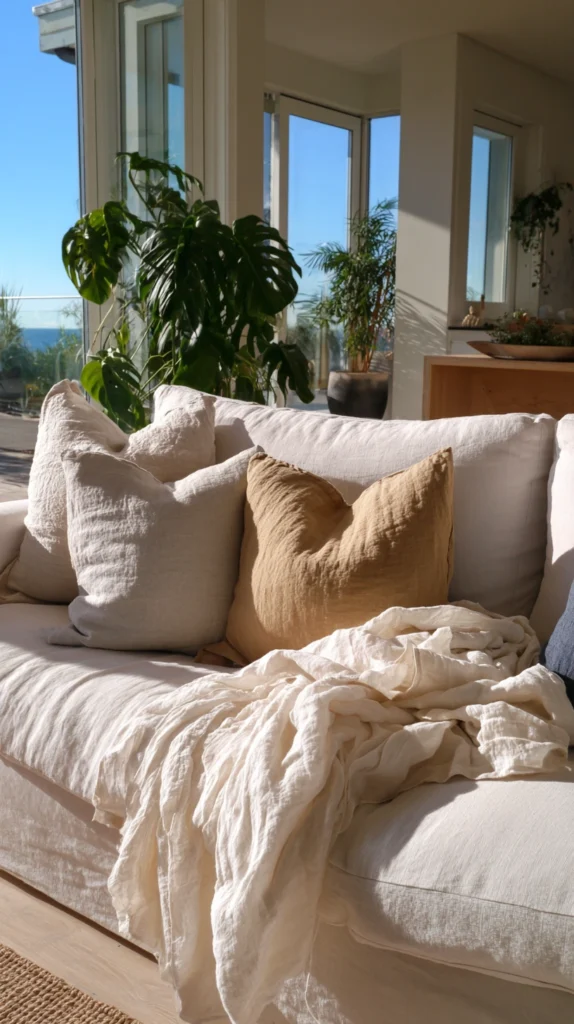
Washed linen — linen that has been laundered enough times that the initial stiffness has left and the fibre has softened into its final, slightly crumpled, perpetually relaxed state — is the summer textile that most accurately replicates the feeling of being on holiday. Not the aspiration of a holiday but the actual physical sensation: the particular combination of cool, slightly rough, and completely comfortable that a linen sheet provides on a warm night.
A washed linen throw in natural, white, or soft sage costs $25–$60. Pre-washed versions ($30–$70) skip the first two or three home washes that the texture requires and arrive already in their best state. Drape over the arm of the sofa or fold at the foot of the bed rather than spreading flat — linen that is draped has the casual quality that is its point; linen spread flat looks like a tablecloth. Wash in cold water and line dry rather than tumble dry to prevent shrinkage and to maintain the particular feel that heat damages.
Style tip: Keep one unwashed linen throw and one washed version of the same colour and compare them side by side before deciding which to use on the sofa. The textural difference between pre-washed and home-washed linen is significant — the pre-washed version is immediately in its best state; the unwashed one requires several cycles before it reaches the same quality of drape and softness, and using it before that point produces a throw that looks stiff and new rather than relaxed and summery.
2. The Jute Rug
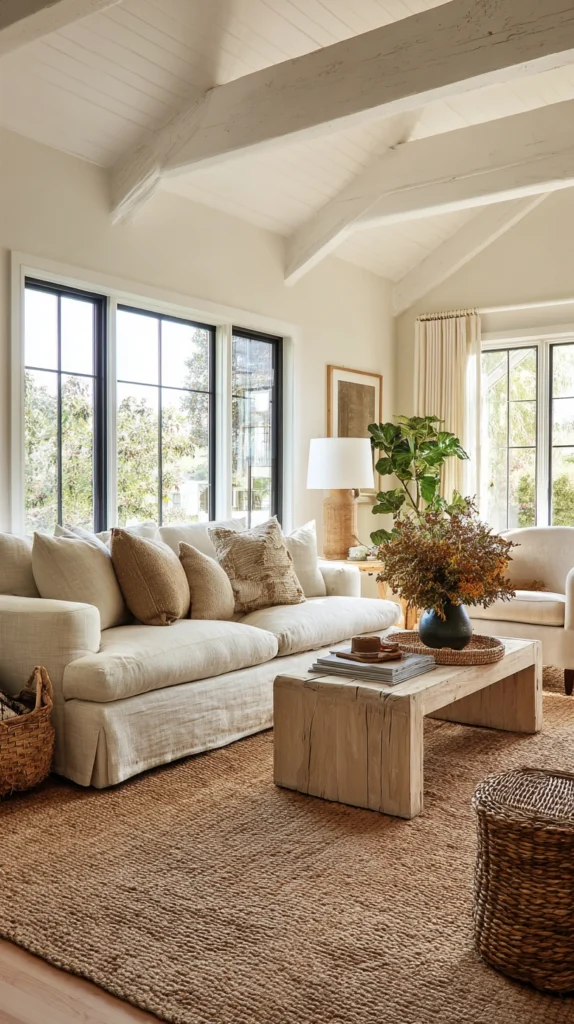
Budget: $40 – $200
Jute underfoot in bare feet is one of the most specific summer sensory experiences available to an interior — the particular slight roughness of the natural fibre, the warmth of the colour, the way it smells faintly of something outdoor and botanical in warm weather. A jute rug replaces whatever was on the floor through winter with something that belongs to summer in both its material and its tone, and it costs considerably less than most seasonal changes that produce equivalent effect.
A jute rug in a 160 by 230 centimetre size costs $40–$120. A larger 200 by 300 centimetre version runs $80–$200. Vacuum regularly rather than beating — beating a jute rug outside dislodges the natural fibres and creates bald patches that develop into structural weakness. Place a non-slip underlay beneath the rug ($15–$30) rather than relying on the rug’s own weight — jute rugs on smooth floors move with foot traffic in a way that becomes a hazard rather than simply an inconvenience.
Style tip: Choose a jute rug with a tight, flat weave rather than a chunky or braided version for a bedroom or living room application. A tightly woven flat jute reads as refined and intentional; a chunky braid reads as casual in a way that suits a beach house or a porch more naturally than a considered interior. The weave tightness is the detail that determines whether the rug elevates the room or simply adds natural material to it.
3. The Rattan Furniture Piece
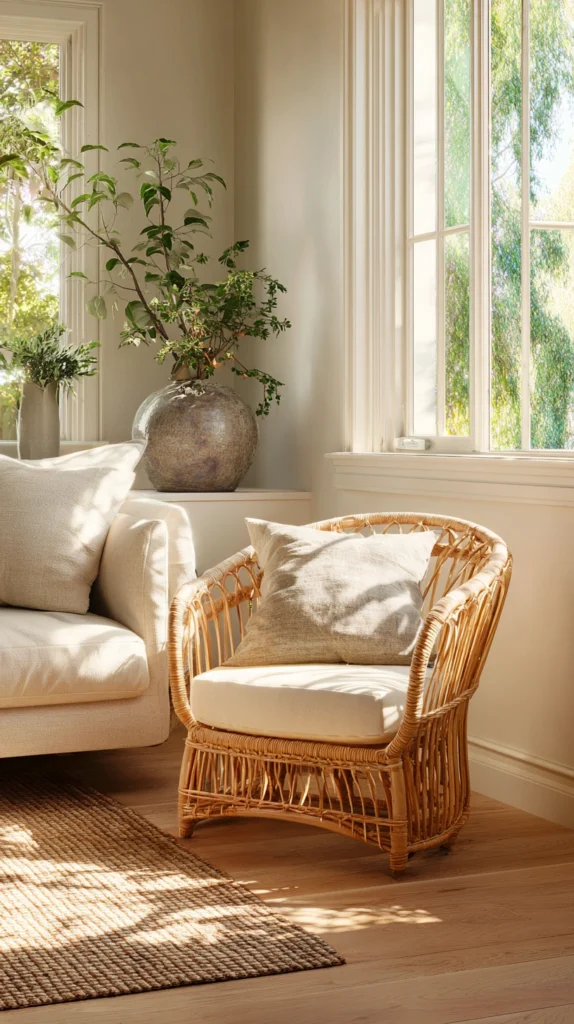
Budget: $60 – $400
A single piece of rattan furniture — a chair, a side table, a pendant light shade, a room divider — introduced into a room for summer brings the most immediately recognisable summer material into the interior in a way that reads as the season rather than as a style. Rattan is the material that most consistently communicates warmth, holiday, and the loosening of the interior that summer calls for, and one piece in the right position does this more effectively than a room full of rattan that tips from seasonal accent into themed interior.
A rattan accent chair costs $80–$250. A rattan side table runs $40–$120. A rattan pendant light shade costs $30–$100. A rattan room divider runs $80–$300. Choose natural, undyed rattan rather than painted or lacquered versions — the natural colour of rattan, which ranges from pale honey to warm amber, is the colour of summer and the reason the material works. A white-painted rattan chair is a rattan chair that has had its most important quality covered over.
Style tip: Introduce rattan through a light fitting rather than through seating if the room already has a strong furniture scheme that rattan seating would disrupt. A rattan pendant shade above a dining table or a rattan table lamp in a corner introduces the material and the texture without displacing any existing furniture — it adds summer from above rather than from floor level, and it reads as a considered seasonal accent rather than a furniture replacement.
4. The Seagrass Basket Collection
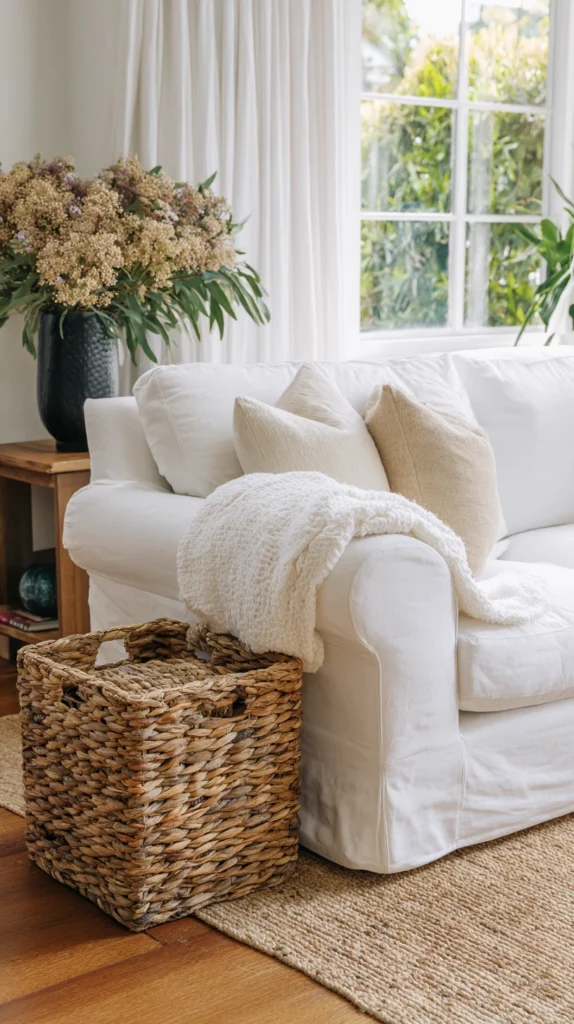
Budget: $20 – $100
Seagrass baskets — in varying heights and widths, placed at floor level in a corner, beside the sofa, or on open shelving — introduce the most overtly botanical natural texture available to an interior at a cost that makes them the most accessible entry point into summer natural textures. Seagrass is a material that carries its origins in it — the smell of it in warm weather, the colour of dried grass, the tightly woven surface that is smoother than jute and cooler to the touch — and a collection of seagrass baskets in a summer room is as close as the interior gets to bringing the outside in without growing anything.
Individual seagrass baskets cost $8–$25 each. A collection of five in varying sizes runs $40–$100. Arrange in groups of odd numbers — three or five — rather than in evenly spaced pairs. The collection reads as gathered rather than purchased when the sizing varies naturally from very small to substantially larger, and the organic variation of sizes produces the gathered quality that makes a basket collection look like it accumulated over time rather than arrived simultaneously in matching sizes.
Style tip: Use the baskets for storage as well as display — blankets in the large floor basket, magazines in the medium, remote controls and chargers in the small — rather than leaving them empty as pure decoration. A basket that stores something is a basket that has a reason to be in the room beyond its appearance, and the functional presence of the collection gives it a permanence that purely decorative objects lack.
5. The Driftwood Display
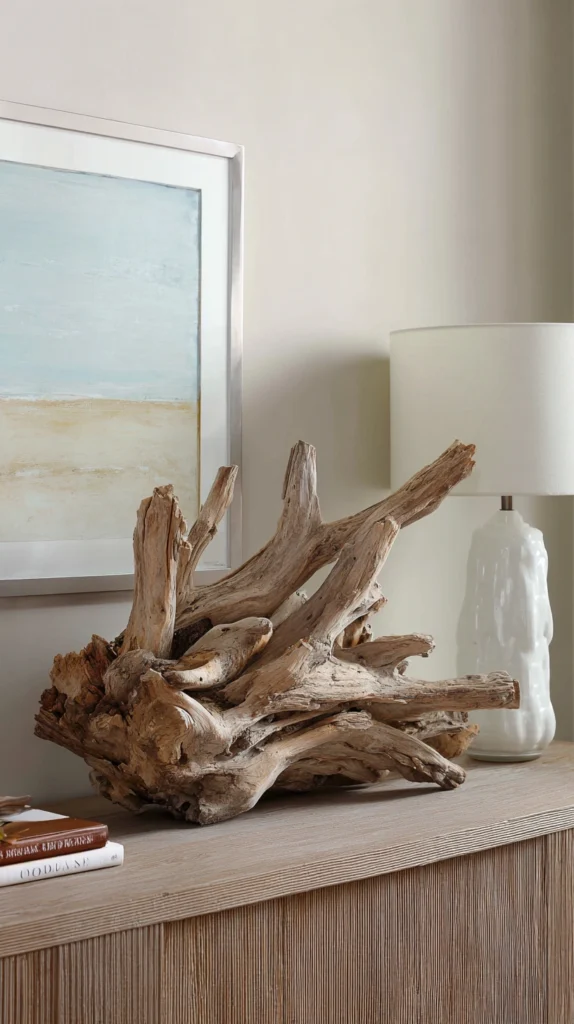
Budget: $0 – $40
A piece of driftwood — collected from a beach or purchased from a craft supplier — placed on a console table, a mantelpiece, or a low shelf, brings into the room the specific texture of something that has been shaped by elements rather than by tools: the smooth where the water wore it, the rough where the grain broke, the silver-grey colour that neither paint nor stain can replicate. Driftwood is the object that most concisely represents what summer textures are about — natural, weathered, found rather than made.
Driftwood from a beach costs nothing. A small piece from a craft supplier runs $5–$20. A large statement piece costs $20–$60. Place driftwood on a simple surface — a wooden board, a ceramic plate, a slate tile — rather than directly on the furniture below it. The base gives the driftwood the status of a displayed object rather than something placed; the distinction is small in the doing and considerable in the result.
Style tip: Choose driftwood with an interesting silhouette rather than simply the largest available piece. A piece of driftwood with branching arms, with a twisted grain, or with a dramatically curved form reads as sculptural from across the room; a straight piece of smooth timber reads as timber. The silhouette is the quality that makes driftwood work as an object rather than as a material sample.
6. The Stone and Pebble Arrangement
Budget: $0 – $30
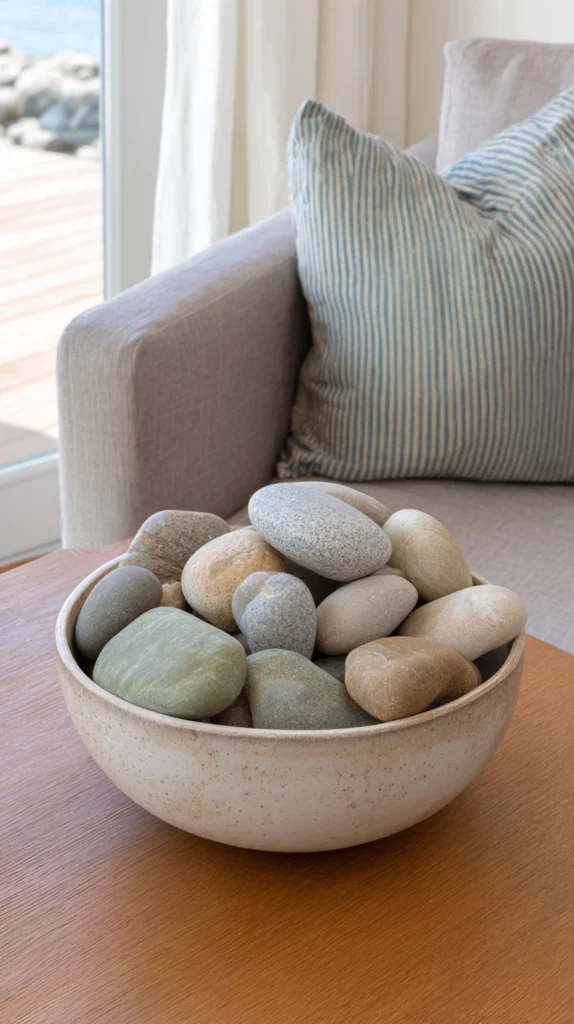
A collection of smooth stones or pebbles — arranged in a low ceramic bowl, on a wooden tray, or simply placed in a loose line along a windowsill — brings the specific texture of handled stone into the interior. Stone in the hand on a summer day is one of the most specific sensory experiences available: cool, smooth, slightly heavy, and completely of the natural world. In a bowl on a shelf it provides the same visual weight and the same material presence without requiring a hand to hold it.
River pebbles or beach stones cost nothing to collect. A ceramic bowl to display them in runs $8–$25. A wooden tray costs $10–$30. Wash collected stones before bringing them inside — outdoor stones carry soil, organic matter, and moisture that creates problems in an interior at an accelerated rate compared to a garden. Dried and clean stones in a ceramic bowl are a still, cool presence; damp stones in an enclosed bowl develop a smell within days.
Style tip: Limit the stone collection to stones of a single colour family rather than collecting every attractive stone regardless of tone. A bowl of stones that range from pale cream to warm buff reads as a considered collection; a bowl of stones in every colour reads as everything that fitted in the bowl. The single-tone constraint reveals the variation within that tone — the different patterns, the different surface textures, the different degrees of polish — in a way that a mixed collection obscures.
7. The Cotton Macramé Wall Hanging
Budget: $25 – $120
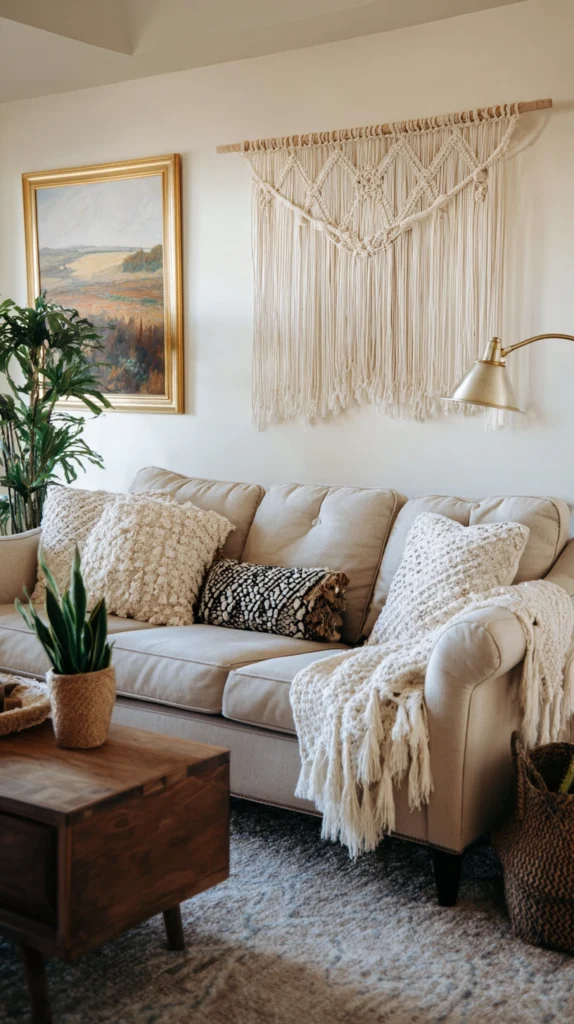
A macramé wall hanging in natural undyed cotton — hung above the bed, the sofa, or in a corner that needs a textile focal point — introduces both the texture of the knotted fibre and the visual pattern of the macramé weave into the room simultaneously. In summer, when the room is lighter and the walls more visible in the longer daylight hours, a macramé wall hanging provides the specific combination of craft texture and botanical material that is the most summer-appropriate wall treatment available.
A hand-knotted macramé wall hanging costs $40–$120 depending on size and complexity. Making one at home requires natural cotton rope ($15–$25 for a 3mm, 100-metre reel) and a wooden dowel ($3–$8) — basic macramé knot patterns are available free online and a simple hanging can be completed in a weekend. Hang from a single point rather than stretched taut between two — a macramé that hangs freely moves slightly in the air from an open window and the movement is part of its summer quality.
Style tip: Hang the macramé at a height where the bottom fringe falls just above the furniture below it rather than touching it. A fringe that rests on the sofa back or the headboard looks accidentally long; one that hangs 5–10 centimetres above the furniture surface looks deliberately placed. The gap between the fringe and the furniture below is the measurement that determines whether the hanging reads as sized correctly for the space.
8. The Linen Cushion Collection
Budget: $30 – $150
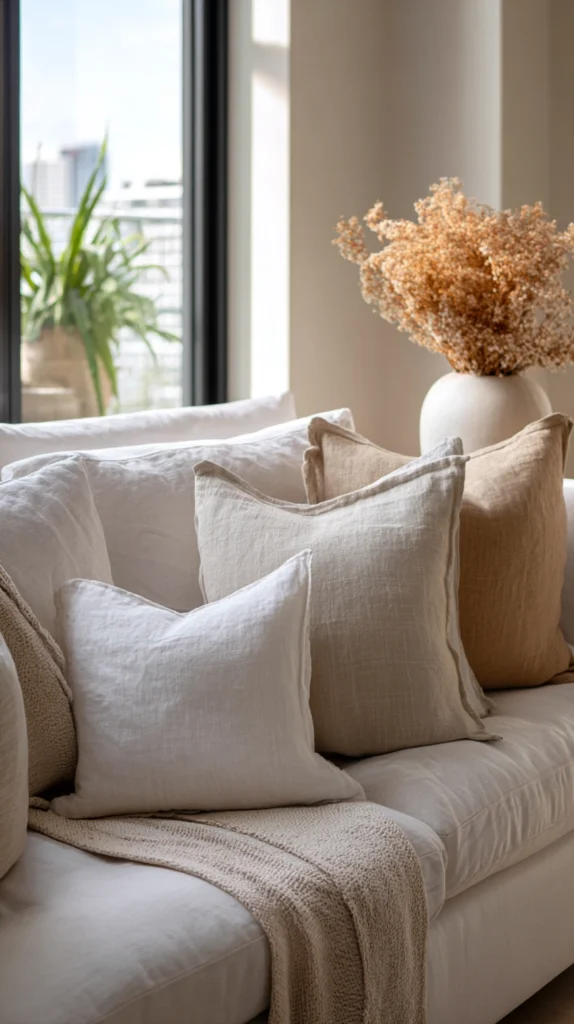
A set of linen cushion covers — in natural, white, soft sage, or warm sand — on the sofa or the bed replaces whatever weight of textile was there through winter with something that belongs to summer. Linen cushions have a texture that changes with use — they soften and crumple and develop the particular quality of fabric that has been in regular contact with warm skin — and they age in a direction that makes them better rather than worse, which is the quality that distinguishes natural materials from synthetic ones most clearly.
Linen cushion covers cost $8–$25 each. A set of four for a two-cushion sofa runs $32–$100. Wash linen cushion covers before the first use to pre-shrink the fabric and begin the softening process that the material requires. Linen cushion covers washed at 40 degrees and line-dried in the sun develop a particular warmth of tone and softness of handle that machine-dried covers never quite achieve — the sun bleaches them slightly toward cream and the air drying preserves the texture that heat destroys.
Style tip: Mix two sizes of cushion cover on the sofa rather than using all the same size. A sofa with four cushions in two sizes — two larger and two smaller — has a more considered arrangement than four cushions all the same size. The size variation creates the layering that makes a sofa look styled rather than cushioned, and the smaller cushions in front of the larger ones produce the depth that a flat row of identical sizes cannot.
9. The Bamboo and Reed Screen
Budget: $20 – $100
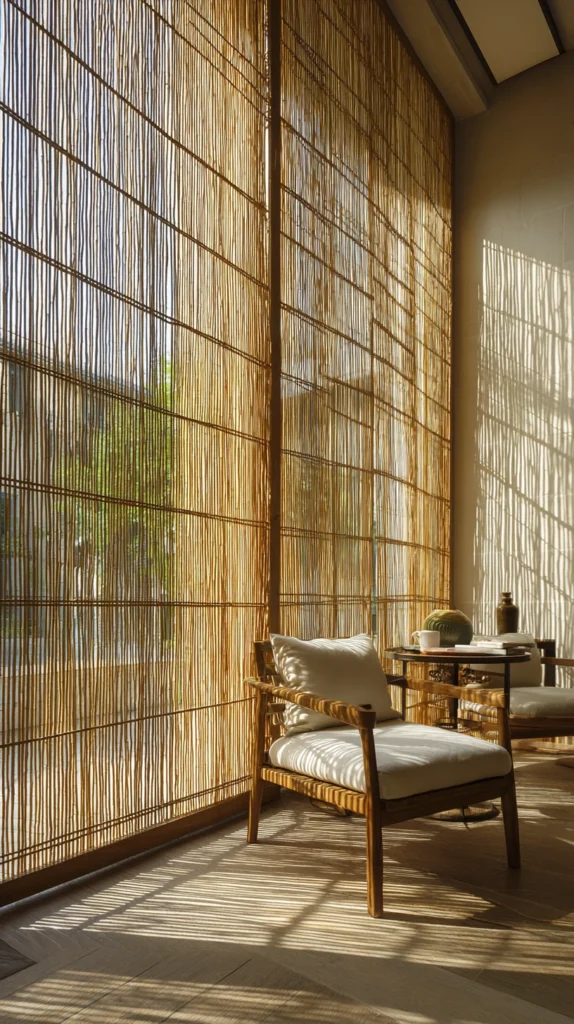
A bamboo or reed screen — used as a room divider, a window treatment, or a panel against a bare wall — introduces the most structured of all natural textures into an interior. The regularity of the bamboo culms or the woven reed provides a grid of natural material that is both organic and geometric simultaneously, and the light that passes through the gaps in a reed screen or a bamboo panel produces the kind of dappled interior light that transforms a room on a summer afternoon.
A bamboo panel of 180 by 90 centimetres costs $15–$40. A roll of woven reed fencing of 2 by 5 metres runs $25–$60. A reed window blind for a standard window costs $15–$40. Used as a window treatment, a reed blind filters the afternoon light into something warm and diffuse rather than blocking it as a fabric blind does — the filtered light through natural reed is the summer light treatment that best replicates the quality of light under a shaded tree.
Style tip: Hang the bamboo or reed screen away from the wall rather than flat against it — with a 10–15 centimetre gap between the screen and the wall surface. The gap allows light to pass behind the screen and illuminate the wall surface beyond, creating a layered light effect that a screen flat against the wall cannot produce. The illuminated gap between the screen and the wall is the detail that transforms a decorative panel into a light installation.
10. The Raw Timber Shelf
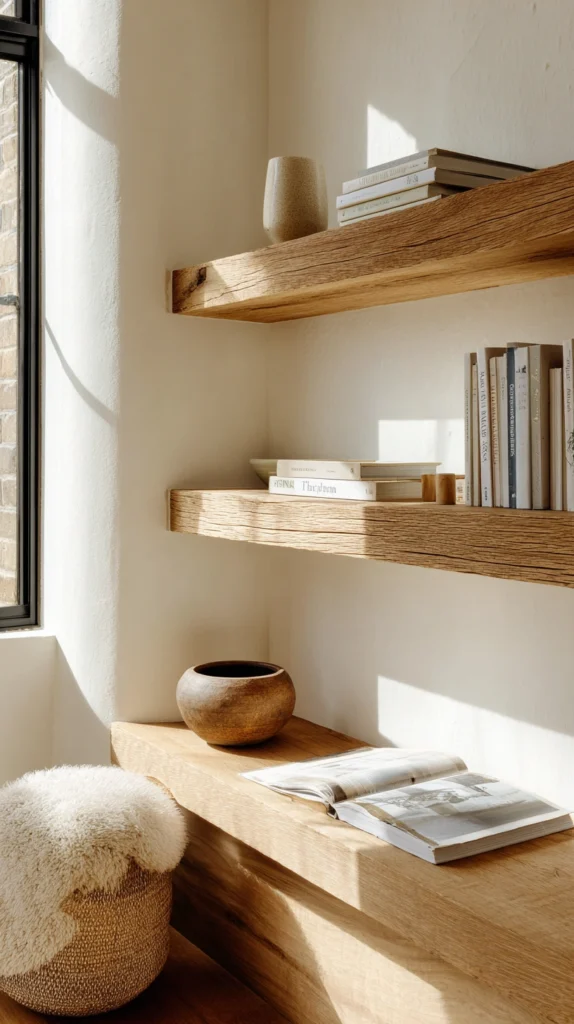
Budget: $15 – $60
A shelf of raw or lightly oiled timber — with the grain visible, the edge unfinished, the surface smooth from sanding rather than sealed to a high gloss — introduces the most fundamental natural material into the room in its most honest form. Timber that has not been lacquered or painted reads as a material rather than as a finish, and the warmth of raw grain in summer light is the specific quality that makes natural timber shelving the right choice for a summer interior where the alternatives are too smooth, too cool, or too finished.
A reclaimed timber plank of 200 by 25 by 5 centimetres costs $15–$40. Steel shelf brackets in a simple profile run $5–$15 each. Danish oil or raw linseed oil for the surface costs $8–$15 per tin. Oil the timber before fixing rather than after — an oiled surface on a shelf that has already been mounted and decorated is difficult to apply evenly and impossible to allow to cure properly before objects are placed on it.
Style tip: Choose timber with visible knots and grain variation rather than the clearest, most uniform piece available. The knots and the grain variation are the evidence of the tree the timber came from — they are the texture that makes raw timber interesting rather than simply wooden — and a shelf chosen for its character rather than its uniformity reads as natural in the way that uniform timber, however beautiful, does not.
11. The Dried Grass and Botanical Display
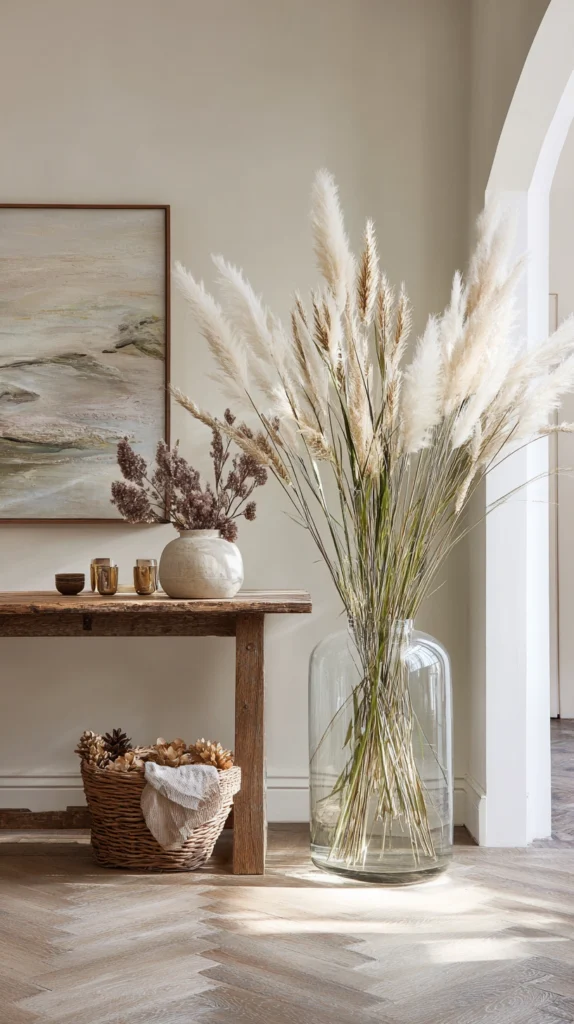
Budget: $5 – $40
A loose arrangement of dried grasses, seed heads, and botanical stems — pampas, lagurus, bunny tail grass, dried wheat, honesty seed pods — in a simple ceramic or glass vase creates a summer texture display of considerable visual sophistication at almost no cost. Dried botanicals provide the texture and the movement of natural material without the maintenance of living plants, and they age gracefully in a way that fresh flowers cannot — becoming more sculptural, more architectural, more interesting as the season progresses.
Pampas grass stems cost $3–$8 each. Dried wheat or rye can be cut from a field edge or purchased for $4–$10 per bunch. Honesty seed pods — the translucent silver discs — cost nothing if grown in the garden and $3–$8 per bunch from a florist. Arrange in a narrow-necked vase that holds the stems upright rather than allowing them to splay — dried grasses in a wide-mouthed vase spread outward rather than upward and lose the architectural quality that makes them effective.
Style tip: Cut the stems to three different heights before arranging — one group significantly taller, one at mid height, one short — and arrange by height group with the tallest at the back and the shortest at the front. The three-height arrangement creates the layered depth that a bundle of stems all cut to the same length cannot produce, and the depth is what makes a dried grass arrangement read as designed rather than gathered and placed.
12. The Woven Wall Textile
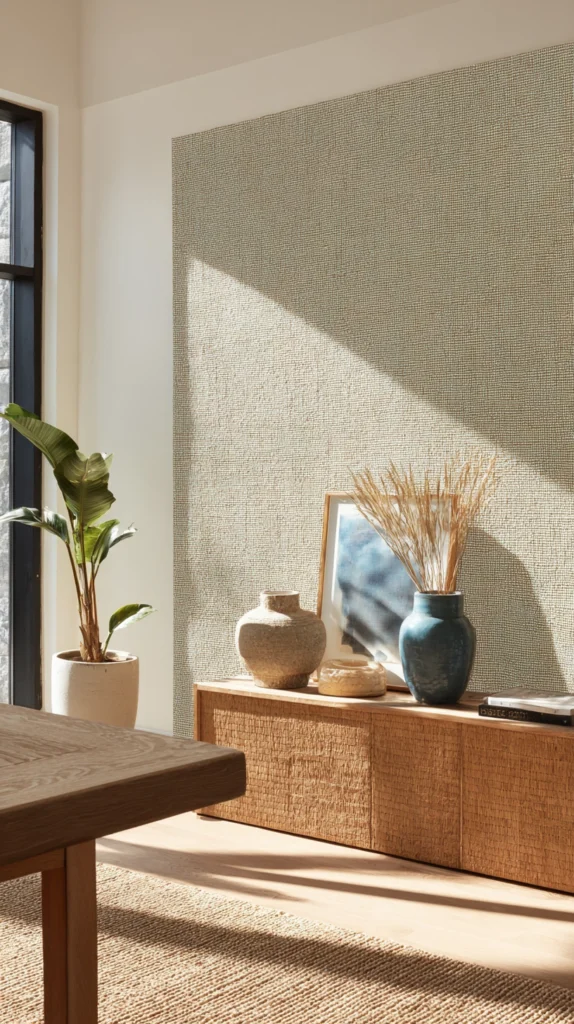
Budget: $30 – $150
A large woven textile — a kilim, a tapestry, a flat-woven cotton rug hung on the wall — brings the texture of hand-weaving into the room in a scale that smaller woven objects cannot achieve. A woven wall textile introduces not just texture but colour and pattern in a single object, and the combination of natural fibre, visible weft, and the particular surface of something made on a loom — where no two square centimetres are identical — is the texture that most clearly communicates human making as well as natural material.
A cotton or wool kilim of 60 by 120 centimetres costs $40–$100. A larger tapestry runs $60–$200. A flat-woven rug used as a wall hanging costs $30–$80 for a small size. Hang from a timber dowel fed through the top hem of the textile rather than from individual hanging points, which distort the weave and create an uneven hang — the dowel distributes the weight evenly and allows the textile to hang as it was woven rather than as the wall fixings dictate.
Style tip: Choose a woven textile with a summer colour palette — natural, warm, and botanical — rather than the jewel tones of a winter interior kilim. The same woven textile in two different colour palettes produces a completely different seasonal reading: a kilim in rust, gold, and deep red reads as autumn; the same pattern in pale sand, faded terracotta, and sage reads as summer. The palette is the seasonal choice; the texture is the constant.
13. The Shell and Coral Collection
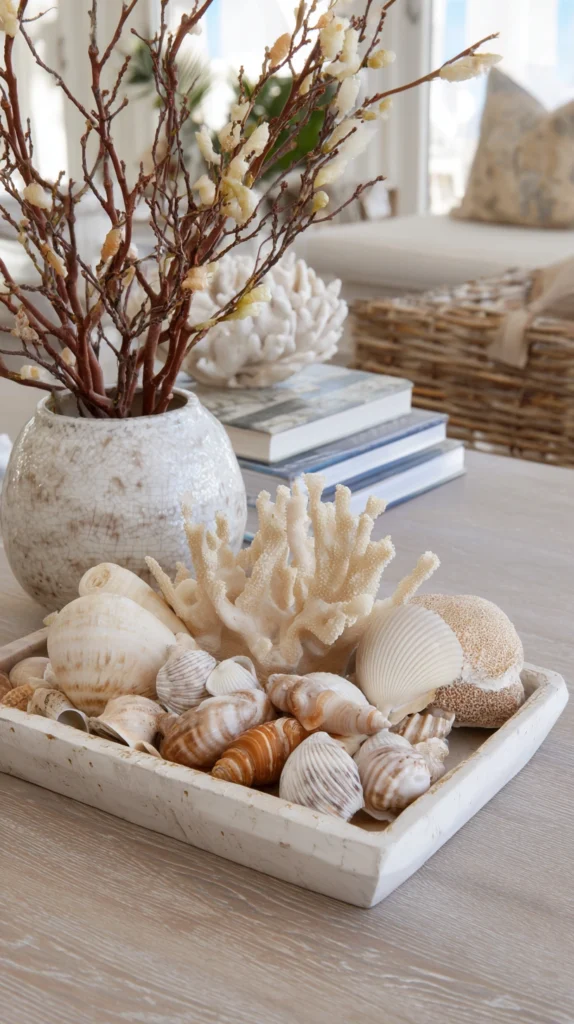
Budget: $0 – $50
A collection of shells, coral fragments, sea urchin cases, or sand dollars — arranged on a tray, in a bowl, or on a wooden board — brings the specific texture of the sea into the interior with the same effect that stones bring the texture of the river or the mountain. Shells in particular carry the record of their formation in their surface — the spiral mathematics of a nautilus, the radial ribs of a scallop, the perfect geometry of a sea urchin — and a collection of them in a room is a collection of natural objects that are simultaneously textural and sculptural.
Beach shells and coral fragments cost nothing to collect. A ceramic or wooden bowl for display costs $8–$25. A flat wooden board or a slate tray runs $10–$30. Wash all collected shells thoroughly in fresh water and allow to dry completely in the sun before bringing inside — damp shells in an interior develop a persistent smell within days that no amount of open windows fully removes. Bleach briefly if any organic material remains inside the shell.
Style tip: Mix scales within the shell collection rather than collecting only one size — one or two very large shells as focal pieces, several medium shells as the body of the collection, and a scattering of very small shells filling the gaps between the larger ones. A collection that varies from large to tiny has the natural randomness of something actually gathered from a beach; one where every shell is roughly the same size has the regularised quality of a collection assembled from a shop.
The best summer natural texture is not the most expensive material or the most elaborately applied one — it is the one that communicates summer most directly through the specific qualities of what it is made from. Linen that has been washed. Jute underfoot. Rattan that catches the afternoon light. Driftwood that arrived on a beach and is now on a shelf. Each of these is a fragment of the natural world placed inside the domestic one, and what they offer the room is not decoration but the particular honesty of material that was never trying to be anything other than what it is.
Choose the textures that suit the room, bring them in before the season peaks rather than during it, and then leave them to do what natural materials do in summer light — which is to make the room feel like the best version of the season it finds itself in.